
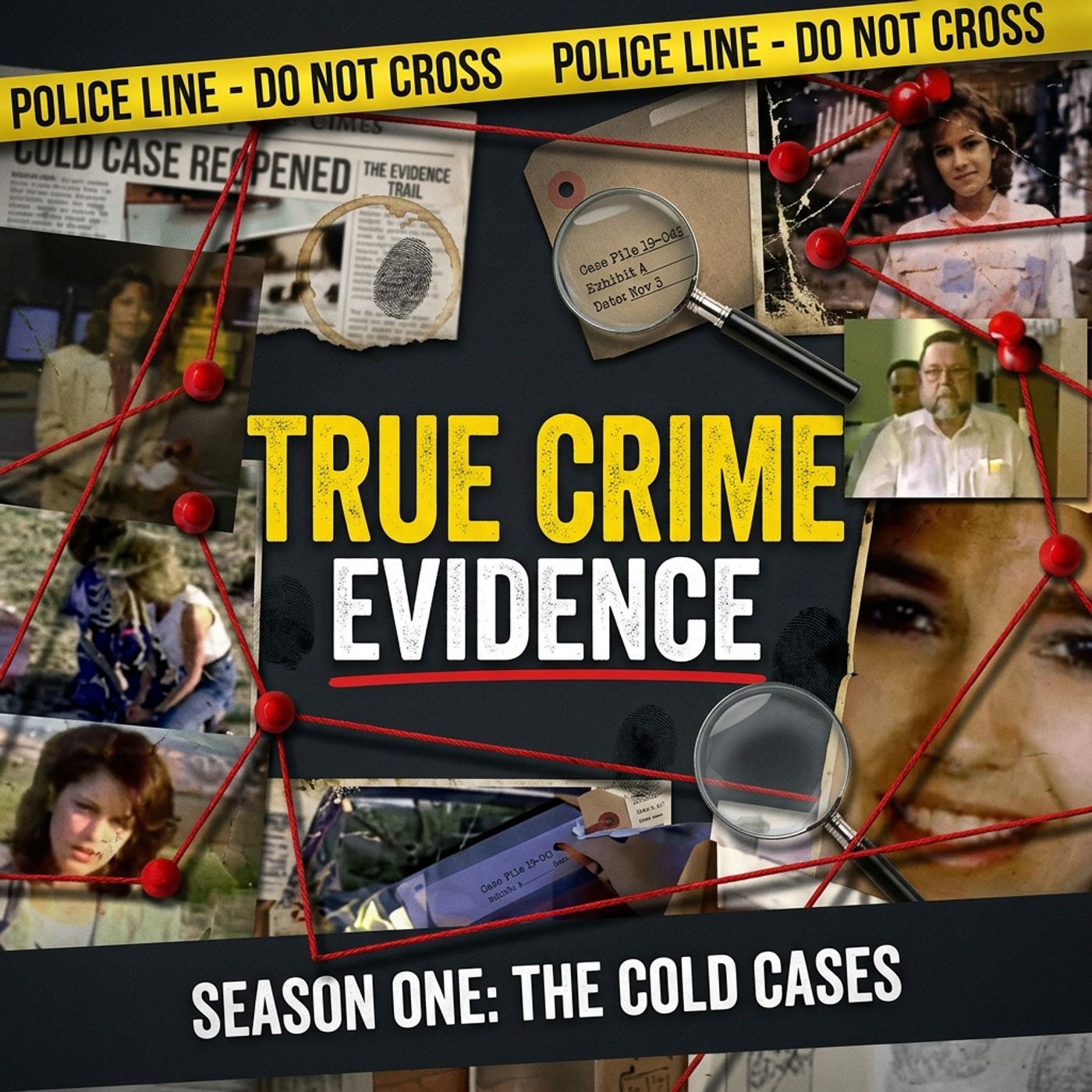
Insights from recent episode analysis
Audience Interest
Podcast Focus
Publishing Consistency
Platform Reach
Insights are generated by CastFox AI using publicly available data, episode content, and proprietary models.
Most discussed topics
Brands & references
Est. Listeners
Insufficient chart data. Estimates will improve as the show charts.
- Per-Episode Audience
Est. listeners per new episode within ~30 days
N/A🎙 Daily cadence·121 episodes·Last published today - Monthly Reach
Unique listeners across all episodes (30 days)
N/A - Active Followers
Loyal subscribers who consistently listen
N/A
Market Insights
Platform Distribution
Reach across major podcast platforms, updated hourly
Total Followers
—
Total Plays
—
Total Reviews
—
* Data sourced directly from platform APIs and aggregated hourly across all major podcast directories.
On the show
Recent episodes
The Chilling Case Fusako Sano. True Crime Documentary.
Jun 25, 2026
29m 21s
An Affair With the Maid Sparked the Bloodiest Massacre in the Neighborhood’s History
Jun 21, 2026
34m 06s
She Told the Police Her Husband Disappeared — But She Forgot One Bloody Clue
Jun 18, 2026
26m 05s
A Cousin’s Love Affair Ends With a Wedding Cake… and a Murder Weapon Inside It
Jun 14, 2026
25m 53s
A Priest Fell in Love. A Housewife Lost Control. Their Secret Child Never Had a Chance
Jun 11, 2026
24m 21s
Social Links & Contact
Official channels & resources
Official Website
Login
RSS Feed
Login
| Date | Episode | Topics | Guests | Brands | Places | Keywords | Sponsor | Length | |
|---|---|---|---|---|---|---|---|---|---|
| 6/25/26 | The Chilling Case Fusako Sano. True Crime Documentary. | All advertisements for True Crime Evidence are placed at the beginning of each episode so they never interrupt the story once it unfolds. That way, when you press play on True Crime Evidence, you can listen without distraction, breathe into the silence, and feel the weight of the truth without sudden breaks. Supporting True Crime Evidence means protecting that immersive experience—the kind where you close your eyes and suddenly you’re there, standing at the edge of a crime scene, heart pounding, wondering how ordinary life can shift so quickly into something unrecognizable.You don’t come to True Crime Evidence by accident. Maybe you’ve watched criminal minds late at night, telling yourself it’s just curiosity. Maybe true detective pulled you in because you wanted to understand the darkness, not glorify it. Maybe the stories of serial killers unsettled you in ways you couldn’t explain, yet you kept listening. In True Crime Evidence, criminal minds are not myths; they are patterns we try to understand. True detective instincts awaken in you as each layer is revealed. The reality of serial killers becomes less cinematic and more human—and that’s what lingers. True Crime Evidence explores criminal minds with empathy and clarity, moves with the tension of true detective storytelling, and examines serial killers without losing sight of the lives forever changed.There’s something about forensic science that feels like hope. A fingerprint. A fiber. A whisper of truth hidden in plain sight. In True Crime Evidence, forensic science isn’t just technique; it’s the quiet promise that facts still matter. For every story of unsolved mysteries that keeps you awake at night, True Crime Evidence leans closer, asking the questions you’ve whispered to yourself. Unsolved mysteries are not just puzzles; they are families waiting, time stretching thin. Through People Crime narratives that center real human impact, True Crime Evidence gives unsolved mysteries a voice. You begin to see how forensic science can illuminate People Crime cases, how unsolved mysteries echo through generations, how True Crime Evidence refuses to let People Crime be reduced to headlines.If you’ve ever binged True Crime Documentaries searching for answers, you know the feeling: the pause after the credits roll, when the silence feels heavier than before. True Crime Evidence exists for that silence. It stands beside the best true crime podcast experiences and asks what comes next. You might compare it to the best true crime documentaries you’ve seen, but True Crime Evidence goes further, weaving True Crime Documentaries into conversations about responsibility and impact. As a best true crime podcast contender, True Crime Evidence reflects on what makes the best true crime documentaries resonate—human depth, accountability, truth. True Crime Documentaries can inform, but True Crime Evidence invites you to feel, question, and grow beyond passive watching.When a crime scene investigator steps into chaos, there is structure beneath the shock. In True Crime Evidence, you walk beside the crime scene investigator, noticing the smallest detail. Fans of casefile podcast and casefile true crime will recognize that steady, grounded tone, but True Crime Evidence brings its own heartbeat. Like casefile podcast, it honors facts. Like casefile true crime, it respects victims. Yet True Crime Evidence expands the frame, asking what happens after the tape is removed. Even listeners who found their way here through casefile podcast or casefile true crime discover that True Crime Evidence lingers longer, staying with the emotional aftermath that a crime scene investigator carries home.True Crime Evidence is, at its core, true crime told with conscience. True crime is not spectacle here; it is context. This podcast understands that behind every murder, every homicide, there is a web of grief. Murder is not entertainment. Homicide is not a twist ending. True Crime Evidence approaches murder and homicide with care, acknowledging the horror without sensationalizing it. The horror exists, yes—but so does resilience. True crime stories can retraumatize, but in True Crime Evidence, true crime becomes a lens for social justice. Each murder and each homicide is examined not only as horror, but as a call toward social justice and systemic reflection.Every investigation in True Crime Evidence asks deeper questions. Investigation is not just about who, but why. Investigation means looking at mental health without stigma, recognizing how mental health systems fail both victims and perpetrators. In cities like Miami, in communities across Florida, in streets stretching to san Francisco, True Crime Evidence traces investigation beyond geography. Miami holds stories of survival. Florida reveals cracks in oversight. San Francisco reflects complex mental health realities. Through each investigation, True Crime Evidence considers mental health as part of the narrative, not an afterthought.Some stories confront suicide with compassion, understanding the fragile intersections between suicide and untreated pain. When cases touch institutions like united healthcare or individuals such as Luigi Mangione or Brian Thompson, True Crime Evidence focuses on verified facts and human impact, never speculation. In a world shaped by social media, where narratives spread faster than evidence, True Crime Evidence slows down. Social media may amplify rumor, but True Crime Evidence returns to documentation. When bipolar disorder appears in a case file, it is handled with care. Bipolar disorder is not villainized. The cycle of abuse is examined with nuance, recognizing how the cycle of abuse can perpetuate harm unless confronted.If you’ve ever listened to morbid or followed Crime Junkie and wondered what responsibility storytellers hold, True Crime Evidence sits with that question. It honors what morbid curiosity reveals about us. It respects the reach of Crime Junkie and the legacy of casefile true crime, yet True Crime Evidence insists on balance—between empathy and accountability, between narrative and fact.By the time an episode of True Crime Evidence ends, you don’t just know more—you understand more. You recognize pieces of yourself in the need for answers, in the urge to make sense of chaos. True Crime Evidence becomes a place where true crime transforms into awareness, where investigation becomes insight, where horror becomes a catalyst for social justice. And as you return to True Crime Evidence again and again, you realize it isn’t only about the cases. It’s about the human need to listen, to question, to heal, and to believe that even in the darkest stories, truth still matters.Become a supporter of this podcast: https://www.spreaker.com/podcast/true-crime-evidence--6710923/support. | 29m 21s | ||||||
| 6/21/26 | An Affair With the Maid Sparked the Bloodiest Massacre in the Neighborhood’s History | All advertisements for True Crime Evidence are placed at the beginning of each episode so they never interrupt the story once it unfolds. That way, when you press play on True Crime Evidence, you can listen without distraction, breathe into the silence, and feel the weight of the truth without sudden breaks. Supporting True Crime Evidence means protecting that immersive experience—the kind where you close your eyes and suddenly you’re there, standing at the edge of a crime scene, heart pounding, wondering how ordinary life can shift so quickly into something unrecognizable.You don’t come to True Crime Evidence by accident. Maybe you’ve watched criminal minds late at night, telling yourself it’s just curiosity. Maybe true detective pulled you in because you wanted to understand the darkness, not glorify it. Maybe the stories of serial killers unsettled you in ways you couldn’t explain, yet you kept listening. In True Crime Evidence, criminal minds are not myths; they are patterns we try to understand. True detective instincts awaken in you as each layer is revealed. The reality of serial killers becomes less cinematic and more human—and that’s what lingers. True Crime Evidence explores criminal minds with empathy and clarity, moves with the tension of true detective storytelling, and examines serial killers without losing sight of the lives forever changed.There’s something about forensic science that feels like hope. A fingerprint. A fiber. A whisper of truth hidden in plain sight. In True Crime Evidence, forensic science isn’t just technique; it’s the quiet promise that facts still matter. For every story of unsolved mysteries that keeps you awake at night, True Crime Evidence leans closer, asking the questions you’ve whispered to yourself. Unsolved mysteries are not just puzzles; they are families waiting, time stretching thin. Through People Crime narratives that center real human impact, True Crime Evidence gives unsolved mysteries a voice. You begin to see how forensic science can illuminate People Crime cases, how unsolved mysteries echo through generations, how True Crime Evidence refuses to let People Crime be reduced to headlines.If you’ve ever binged True Crime Documentaries searching for answers, you know the feeling: the pause after the credits roll, when the silence feels heavier than before. True Crime Evidence exists for that silence. It stands beside the best true crime podcast experiences and asks what comes next. You might compare it to the best true crime documentaries you’ve seen, but True Crime Evidence goes further, weaving True Crime Documentaries into conversations about responsibility and impact. As a best true crime podcast contender, True Crime Evidence reflects on what makes the best true crime documentaries resonate—human depth, accountability, truth. True Crime Documentaries can inform, but True Crime Evidence invites you to feel, question, and grow beyond passive watching.When a crime scene investigator steps into chaos, there is structure beneath the shock. In True Crime Evidence, you walk beside the crime scene investigator, noticing the smallest detail. Fans of casefile podcast and casefile true crime will recognize that steady, grounded tone, but True Crime Evidence brings its own heartbeat. Like casefile podcast, it honors facts. Like casefile true crime, it respects victims. Yet True Crime Evidence expands the frame, asking what happens after the tape is removed. Even listeners who found their way here through casefile podcast or casefile true crime discover that True Crime Evidence lingers longer, staying with the emotional aftermath that a crime scene investigator carries home.True Crime Evidence is, at its core, true crime told with conscience. True crime is not spectacle here; it is context. This podcast understands that behind every murder, every homicide, there is a web of grief. Murder is not entertainment. Homicide is not a twist ending. True Crime Evidence approaches murder and homicide with care, acknowledging the horror without sensationalizing it. The horror exists, yes—but so does resilience. True crime stories can retraumatize, but in True Crime Evidence, true crime becomes a lens for social justice. Each murder and each homicide is examined not only as horror, but as a call toward social justice and systemic reflection.Every investigation in True Crime Evidence asks deeper questions. Investigation is not just about who, but why. Investigation means looking at mental health without stigma, recognizing how mental health systems fail both victims and perpetrators. In cities like Miami, in communities across Florida, in streets stretching to san Francisco, True Crime Evidence traces investigation beyond geography. Miami holds stories of survival. Florida reveals cracks in oversight. San Francisco reflects complex mental health realities. Through each investigation, True Crime Evidence considers mental health as part of the narrative, not an afterthought.Some stories confront suicide with compassion, understanding the fragile intersections between suicide and untreated pain. When cases touch institutions like united healthcare or individuals such as Luigi Mangione or Brian Thompson, True Crime Evidence focuses on verified facts and human impact, never speculation. In a world shaped by social media, where narratives spread faster than evidence, True Crime Evidence slows down. Social media may amplify rumor, but True Crime Evidence returns to documentation. When bipolar disorder appears in a case file, it is handled with care. Bipolar disorder is not villainized. The cycle of abuse is examined with nuance, recognizing how the cycle of abuse can perpetuate harm unless confronted.If you’ve ever listened to morbid or followed Crime Junkie and wondered what responsibility storytellers hold, True Crime Evidence sits with that question. It honors what morbid curiosity reveals about us. It respects the reach of Crime Junkie and the legacy of casefile true crime, yet True Crime Evidence insists on balance—between empathy and accountability, between narrative and fact.By the time an episode of True Crime Evidence ends, you don’t just know more—you understand more. You recognize pieces of yourself in the need for answers, in the urge to make sense of chaos. True Crime Evidence becomes a place where true crime transforms into awareness, where investigation becomes insight, where horror becomes a catalyst for social justice. And as you return to True Crime Evidence again and again, you realize it isn’t only about the cases. It’s about the human need to listen, to question, to heal, and to believe that even in the darkest stories, truth still matters.Become a supporter of this podcast: https://www.spreaker.com/podcast/true-crime-evidence--6710923/support. | 34m 06s | ||||||
| 6/18/26 | She Told the Police Her Husband Disappeared — But She Forgot One Bloody Clue | All advertisements for True Crime Evidence are placed at the beginning of each episode so they never interrupt the story once it unfolds. That way, when you press play on True Crime Evidence, you can listen without distraction, breathe into the silence, and feel the weight of the truth without sudden breaks. Supporting True Crime Evidence means protecting that immersive experience—the kind where you close your eyes and suddenly you’re there, standing at the edge of a crime scene, heart pounding, wondering how ordinary life can shift so quickly into something unrecognizable.You don’t come to True Crime Evidence by accident. Maybe you’ve watched criminal minds late at night, telling yourself it’s just curiosity. Maybe true detective pulled you in because you wanted to understand the darkness, not glorify it. Maybe the stories of serial killers unsettled you in ways you couldn’t explain, yet you kept listening. In True Crime Evidence, criminal minds are not myths; they are patterns we try to understand. True detective instincts awaken in you as each layer is revealed. The reality of serial killers becomes less cinematic and more human—and that’s what lingers. True Crime Evidence explores criminal minds with empathy and clarity, moves with the tension of true detective storytelling, and examines serial killers without losing sight of the lives forever changed.There’s something about forensic science that feels like hope. A fingerprint. A fiber. A whisper of truth hidden in plain sight. In True Crime Evidence, forensic science isn’t just technique; it’s the quiet promise that facts still matter. For every story of unsolved mysteries that keeps you awake at night, True Crime Evidence leans closer, asking the questions you’ve whispered to yourself. Unsolved mysteries are not just puzzles; they are families waiting, time stretching thin. Through People Crime narratives that center real human impact, True Crime Evidence gives unsolved mysteries a voice. You begin to see how forensic science can illuminate People Crime cases, how unsolved mysteries echo through generations, how True Crime Evidence refuses to let People Crime be reduced to headlines.If you’ve ever binged True Crime Documentaries searching for answers, you know the feeling: the pause after the credits roll, when the silence feels heavier than before. True Crime Evidence exists for that silence. It stands beside the best true crime podcast experiences and asks what comes next. You might compare it to the best true crime documentaries you’ve seen, but True Crime Evidence goes further, weaving True Crime Documentaries into conversations about responsibility and impact. As a best true crime podcast contender, True Crime Evidence reflects on what makes the best true crime documentaries resonate—human depth, accountability, truth. True Crime Documentaries can inform, but True Crime Evidence invites you to feel, question, and grow beyond passive watching.When a crime scene investigator steps into chaos, there is structure beneath the shock. In True Crime Evidence, you walk beside the crime scene investigator, noticing the smallest detail. Fans of casefile podcast and casefile true crime will recognize that steady, grounded tone, but True Crime Evidence brings its own heartbeat. Like casefile podcast, it honors facts. Like casefile true crime, it respects victims. Yet True Crime Evidence expands the frame, asking what happens after the tape is removed. Even listeners who found their way here through casefile podcast or casefile true crime discover that True Crime Evidence lingers longer, staying with the emotional aftermath that a crime scene investigator carries home.True Crime Evidence is, at its core, true crime told with conscience. True crime is not spectacle here; it is context. This podcast understands that behind every murder, every homicide, there is a web of grief. Murder is not entertainment. Homicide is not a twist ending. True Crime Evidence approaches murder and homicide with care, acknowledging the horror without sensationalizing it. The horror exists, yes—but so does resilience. True crime stories can retraumatize, but in True Crime Evidence, true crime becomes a lens for social justice. Each murder and each homicide is examined not only as horror, but as a call toward social justice and systemic reflection.Every investigation in True Crime Evidence asks deeper questions. Investigation is not just about who, but why. Investigation means looking at mental health without stigma, recognizing how mental health systems fail both victims and perpetrators. In cities like Miami, in communities across Florida, in streets stretching to san Francisco, True Crime Evidence traces investigation beyond geography. Miami holds stories of survival. Florida reveals cracks in oversight. San Francisco reflects complex mental health realities. Through each investigation, True Crime Evidence considers mental health as part of the narrative, not an afterthought.Some stories confront suicide with compassion, understanding the fragile intersections between suicide and untreated pain. When cases touch institutions like united healthcare or individuals such as Luigi Mangione or Brian Thompson, True Crime Evidence focuses on verified facts and human impact, never speculation. In a world shaped by social media, where narratives spread faster than evidence, True Crime Evidence slows down. Social media may amplify rumor, but True Crime Evidence returns to documentation. When bipolar disorder appears in a case file, it is handled with care. Bipolar disorder is not villainized. The cycle of abuse is examined with nuance, recognizing how the cycle of abuse can perpetuate harm unless confronted.If you’ve ever listened to morbid or followed Crime Junkie and wondered what responsibility storytellers hold, True Crime Evidence sits with that question. It honors what morbid curiosity reveals about us. It respects the reach of Crime Junkie and the legacy of casefile true crime, yet True Crime Evidence insists on balance—between empathy and accountability, between narrative and fact.By the time an episode of True Crime Evidence ends, you don’t just know more—you understand more. You recognize pieces of yourself in the need for answers, in the urge to make sense of chaos. True Crime Evidence becomes a place where true crime transforms into awareness, where investigation becomes insight, where horror becomes a catalyst for social justice. And as you return to True Crime Evidence again and again, you realize it isn’t only about the cases. It’s about the human need to listen, to question, to heal, and to believe that even in the darkest stories, truth still matters.Become a supporter of this podcast: https://www.spreaker.com/podcast/true-crime-evidence--6710923/support. | 26m 05s | ||||||
| 6/14/26 | A Cousin’s Love Affair Ends With a Wedding Cake… and a Murder Weapon Inside It | All advertisements for True Crime Evidence are placed at the beginning of each episode so they never interrupt the story once it unfolds. That way, when you press play on True Crime Evidence, you can listen without distraction, breathe into the silence, and feel the weight of the truth without sudden breaks. Supporting True Crime Evidence means protecting that immersive experience—the kind where you close your eyes and suddenly you’re there, standing at the edge of a crime scene, heart pounding, wondering how ordinary life can shift so quickly into something unrecognizable.You don’t come to True Crime Evidence by accident. Maybe you’ve watched criminal minds late at night, telling yourself it’s just curiosity. Maybe true detective pulled you in because you wanted to understand the darkness, not glorify it. Maybe the stories of serial killers unsettled you in ways you couldn’t explain, yet you kept listening. In True Crime Evidence, criminal minds are not myths; they are patterns we try to understand. True detective instincts awaken in you as each layer is revealed. The reality of serial killers becomes less cinematic and more human—and that’s what lingers. True Crime Evidence explores criminal minds with empathy and clarity, moves with the tension of true detective storytelling, and examines serial killers without losing sight of the lives forever changed.There’s something about forensic science that feels like hope. A fingerprint. A fiber. A whisper of truth hidden in plain sight. In True Crime Evidence, forensic science isn’t just technique; it’s the quiet promise that facts still matter. For every story of unsolved mysteries that keeps you awake at night, True Crime Evidence leans closer, asking the questions you’ve whispered to yourself. Unsolved mysteries are not just puzzles; they are families waiting, time stretching thin. Through People Crime narratives that center real human impact, True Crime Evidence gives unsolved mysteries a voice. You begin to see how forensic science can illuminate People Crime cases, how unsolved mysteries echo through generations, how True Crime Evidence refuses to let People Crime be reduced to headlines.If you’ve ever binged True Crime Documentaries searching for answers, you know the feeling: the pause after the credits roll, when the silence feels heavier than before. True Crime Evidence exists for that silence. It stands beside the best true crime podcast experiences and asks what comes next. You might compare it to the best true crime documentaries you’ve seen, but True Crime Evidence goes further, weaving True Crime Documentaries into conversations about responsibility and impact. As a best true crime podcast contender, True Crime Evidence reflects on what makes the best true crime documentaries resonate—human depth, accountability, truth. True Crime Documentaries can inform, but True Crime Evidence invites you to feel, question, and grow beyond passive watching.When a crime scene investigator steps into chaos, there is structure beneath the shock. In True Crime Evidence, you walk beside the crime scene investigator, noticing the smallest detail. Fans of casefile podcast and casefile true crime will recognize that steady, grounded tone, but True Crime Evidence brings its own heartbeat. Like casefile podcast, it honors facts. Like casefile true crime, it respects victims. Yet True Crime Evidence expands the frame, asking what happens after the tape is removed. Even listeners who found their way here through casefile podcast or casefile true crime discover that True Crime Evidence lingers longer, staying with the emotional aftermath that a crime scene investigator carries home.True Crime Evidence is, at its core, true crime told with conscience. True crime is not spectacle here; it is context. This podcast understands that behind every murder, every homicide, there is a web of grief. Murder is not entertainment. Homicide is not a twist ending. True Crime Evidence approaches murder and homicide with care, acknowledging the horror without sensationalizing it. The horror exists, yes—but so does resilience. True crime stories can retraumatize, but in True Crime Evidence, true crime becomes a lens for social justice. Each murder and each homicide is examined not only as horror, but as a call toward social justice and systemic reflection.Every investigation in True Crime Evidence asks deeper questions. Investigation is not just about who, but why. Investigation means looking at mental health without stigma, recognizing how mental health systems fail both victims and perpetrators. In cities like Miami, in communities across Florida, in streets stretching to san Francisco, True Crime Evidence traces investigation beyond geography. Miami holds stories of survival. Florida reveals cracks in oversight. San Francisco reflects complex mental health realities. Through each investigation, True Crime Evidence considers mental health as part of the narrative, not an afterthought.Some stories confront suicide with compassion, understanding the fragile intersections between suicide and untreated pain. When cases touch institutions like united healthcare or individuals such as Luigi Mangione or Brian Thompson, True Crime Evidence focuses on verified facts and human impact, never speculation. In a world shaped by social media, where narratives spread faster than evidence, True Crime Evidence slows down. Social media may amplify rumor, but True Crime Evidence returns to documentation. When bipolar disorder appears in a case file, it is handled with care. Bipolar disorder is not villainized. The cycle of abuse is examined with nuance, recognizing how the cycle of abuse can perpetuate harm unless confronted.If you’ve ever listened to morbid or followed Crime Junkie and wondered what responsibility storytellers hold, True Crime Evidence sits with that question. It honors what morbid curiosity reveals about us. It respects the reach of Crime Junkie and the legacy of casefile true crime, yet True Crime Evidence insists on balance—between empathy and accountability, between narrative and fact.By the time an episode of True Crime Evidence ends, you don’t just know more—you understand more. You recognize pieces of yourself in the need for answers, in the urge to make sense of chaos. True Crime Evidence becomes a place where true crime transforms into awareness, where investigation becomes insight, where horror becomes a catalyst for social justice. And as you return to True Crime Evidence again and again, you realize it isn’t only about the cases. It’s about the human need to listen, to question, to heal, and to believe that even in the darkest stories, truth still matters.Become a supporter of this podcast: https://www.spreaker.com/podcast/true-crime-evidence--6710923/support. | 25m 53s | ||||||
| 6/11/26 | A Priest Fell in Love. A Housewife Lost Control. Their Secret Child Never Had a Chance | All advertisements for True Crime Evidence are placed at the beginning of each episode so they never interrupt the story once it unfolds. That way, when you press play on True Crime Evidence, you can listen without distraction, breathe into the silence, and feel the weight of the truth without sudden breaks. Supporting True Crime Evidence means protecting that immersive experience—the kind where you close your eyes and suddenly you’re there, standing at the edge of a crime scene, heart pounding, wondering how ordinary life can shift so quickly into something unrecognizable.You don’t come to True Crime Evidence by accident. Maybe you’ve watched criminal minds late at night, telling yourself it’s just curiosity. Maybe true detective pulled you in because you wanted to understand the darkness, not glorify it. Maybe the stories of serial killers unsettled you in ways you couldn’t explain, yet you kept listening. In True Crime Evidence, criminal minds are not myths; they are patterns we try to understand. True detective instincts awaken in you as each layer is revealed. The reality of serial killers becomes less cinematic and more human—and that’s what lingers. True Crime Evidence explores criminal minds with empathy and clarity, moves with the tension of true detective storytelling, and examines serial killers without losing sight of the lives forever changed.There’s something about forensic science that feels like hope. A fingerprint. A fiber. A whisper of truth hidden in plain sight. In True Crime Evidence, forensic science isn’t just technique; it’s the quiet promise that facts still matter. For every story of unsolved mysteries that keeps you awake at night, True Crime Evidence leans closer, asking the questions you’ve whispered to yourself. Unsolved mysteries are not just puzzles; they are families waiting, time stretching thin. Through People Crime narratives that center real human impact, True Crime Evidence gives unsolved mysteries a voice. You begin to see how forensic science can illuminate People Crime cases, how unsolved mysteries echo through generations, how True Crime Evidence refuses to let People Crime be reduced to headlines.If you’ve ever binged True Crime Documentaries searching for answers, you know the feeling: the pause after the credits roll, when the silence feels heavier than before. True Crime Evidence exists for that silence. It stands beside the best true crime podcast experiences and asks what comes next. You might compare it to the best true crime documentaries you’ve seen, but True Crime Evidence goes further, weaving True Crime Documentaries into conversations about responsibility and impact. As a best true crime podcast contender, True Crime Evidence reflects on what makes the best true crime documentaries resonate—human depth, accountability, truth. True Crime Documentaries can inform, but True Crime Evidence invites you to feel, question, and grow beyond passive watching.When a crime scene investigator steps into chaos, there is structure beneath the shock. In True Crime Evidence, you walk beside the crime scene investigator, noticing the smallest detail. Fans of casefile podcast and casefile true crime will recognize that steady, grounded tone, but True Crime Evidence brings its own heartbeat. Like casefile podcast, it honors facts. Like casefile true crime, it respects victims. Yet True Crime Evidence expands the frame, asking what happens after the tape is removed. Even listeners who found their way here through casefile podcast or casefile true crime discover that True Crime Evidence lingers longer, staying with the emotional aftermath that a crime scene investigator carries home.True Crime Evidence is, at its core, true crime told with conscience. True crime is not spectacle here; it is context. This podcast understands that behind every murder, every homicide, there is a web of grief. Murder is not entertainment. Homicide is not a twist ending. True Crime Evidence approaches murder and homicide with care, acknowledging the horror without sensationalizing it. The horror exists, yes—but so does resilience. True crime stories can retraumatize, but in True Crime Evidence, true crime becomes a lens for social justice. Each murder and each homicide is examined not only as horror, but as a call toward social justice and systemic reflection.Every investigation in True Crime Evidence asks deeper questions. Investigation is not just about who, but why. Investigation means looking at mental health without stigma, recognizing how mental health systems fail both victims and perpetrators. In cities like Miami, in communities across Florida, in streets stretching to san Francisco, True Crime Evidence traces investigation beyond geography. Miami holds stories of survival. Florida reveals cracks in oversight. San Francisco reflects complex mental health realities. Through each investigation, True Crime Evidence considers mental health as part of the narrative, not an afterthought.Some stories confront suicide with compassion, understanding the fragile intersections between suicide and untreated pain. When cases touch institutions like united healthcare or individuals such as Luigi Mangione or Brian Thompson, True Crime Evidence focuses on verified facts and human impact, never speculation. In a world shaped by social media, where narratives spread faster than evidence, True Crime Evidence slows down. Social media may amplify rumor, but True Crime Evidence returns to documentation. When bipolar disorder appears in a case file, it is handled with care. Bipolar disorder is not villainized. The cycle of abuse is examined with nuance, recognizing how the cycle of abuse can perpetuate harm unless confronted.If you’ve ever listened to morbid or followed Crime Junkie and wondered what responsibility storytellers hold, True Crime Evidence sits with that question. It honors what morbid curiosity reveals about us. It respects the reach of Crime Junkie and the legacy of casefile true crime, yet True Crime Evidence insists on balance—between empathy and accountability, between narrative and fact.By the time an episode of True Crime Evidence ends, you don’t just know more—you understand more. You recognize pieces of yourself in the need for answers, in the urge to make sense of chaos. True Crime Evidence becomes a place where true crime transforms into awareness, where investigation becomes insight, where horror becomes a catalyst for social justice. And as you return to True Crime Evidence again and again, you realize it isn’t only about the cases. It’s about the human need to listen, to question, to heal, and to believe that even in the darkest stories, truth still matters.Become a supporter of this podcast: https://www.spreaker.com/podcast/true-crime-evidence--6710923/support. | 24m 21s | ||||||
| 6/7/26 | They Swapped Partners for “Fun” — One Ended Up Dead With 57 Stab Wounds | All advertisements for True Crime Evidence are placed at the beginning of each episode so they never interrupt the story once it unfolds. That way, when you press play on True Crime Evidence, you can listen without distraction, breathe into the silence, and feel the weight of the truth without sudden breaks. Supporting True Crime Evidence means protecting that immersive experience—the kind where you close your eyes and suddenly you’re there, standing at the edge of a crime scene, heart pounding, wondering how ordinary life can shift so quickly into something unrecognizable.You don’t come to True Crime Evidence by accident. Maybe you’ve watched criminal minds late at night, telling yourself it’s just curiosity. Maybe true detective pulled you in because you wanted to understand the darkness, not glorify it. Maybe the stories of serial killers unsettled you in ways you couldn’t explain, yet you kept listening. In True Crime Evidence, criminal minds are not myths; they are patterns we try to understand. True detective instincts awaken in you as each layer is revealed. The reality of serial killers becomes less cinematic and more human—and that’s what lingers. True Crime Evidence explores criminal minds with empathy and clarity, moves with the tension of true detective storytelling, and examines serial killers without losing sight of the lives forever changed.There’s something about forensic science that feels like hope. A fingerprint. A fiber. A whisper of truth hidden in plain sight. In True Crime Evidence, forensic science isn’t just technique; it’s the quiet promise that facts still matter. For every story of unsolved mysteries that keeps you awake at night, True Crime Evidence leans closer, asking the questions you’ve whispered to yourself. Unsolved mysteries are not just puzzles; they are families waiting, time stretching thin. Through People Crime narratives that center real human impact, True Crime Evidence gives unsolved mysteries a voice. You begin to see how forensic science can illuminate People Crime cases, how unsolved mysteries echo through generations, how True Crime Evidence refuses to let People Crime be reduced to headlines.If you’ve ever binged True Crime Documentaries searching for answers, you know the feeling: the pause after the credits roll, when the silence feels heavier than before. True Crime Evidence exists for that silence. It stands beside the best true crime podcast experiences and asks what comes next. You might compare it to the best true crime documentaries you’ve seen, but True Crime Evidence goes further, weaving True Crime Documentaries into conversations about responsibility and impact. As a best true crime podcast contender, True Crime Evidence reflects on what makes the best true crime documentaries resonate—human depth, accountability, truth. True Crime Documentaries can inform, but True Crime Evidence invites you to feel, question, and grow beyond passive watching.When a crime scene investigator steps into chaos, there is structure beneath the shock. In True Crime Evidence, you walk beside the crime scene investigator, noticing the smallest detail. Fans of casefile podcast and casefile true crime will recognize that steady, grounded tone, but True Crime Evidence brings its own heartbeat. Like casefile podcast, it honors facts. Like casefile true crime, it respects victims. Yet True Crime Evidence expands the frame, asking what happens after the tape is removed. Even listeners who found their way here through casefile podcast or casefile true crime discover that True Crime Evidence lingers longer, staying with the emotional aftermath that a crime scene investigator carries home.True Crime Evidence is, at its core, true crime told with conscience. True crime is not spectacle here; it is context. This podcast understands that behind every murder, every homicide, there is a web of grief. Murder is not entertainment. Homicide is not a twist ending. True Crime Evidence approaches murder and homicide with care, acknowledging the horror without sensationalizing it. The horror exists, yes—but so does resilience. True crime stories can retraumatize, but in True Crime Evidence, true crime becomes a lens for social justice. Each murder and each homicide is examined not only as horror, but as a call toward social justice and systemic reflection.Every investigation in True Crime Evidence asks deeper questions. Investigation is not just about who, but why. Investigation means looking at mental health without stigma, recognizing how mental health systems fail both victims and perpetrators. In cities like Miami, in communities across Florida, in streets stretching to san Francisco, True Crime Evidence traces investigation beyond geography. Miami holds stories of survival. Florida reveals cracks in oversight. San Francisco reflects complex mental health realities. Through each investigation, True Crime Evidence considers mental health as part of the narrative, not an afterthought.Some stories confront suicide with compassion, understanding the fragile intersections between suicide and untreated pain. When cases touch institutions like united healthcare or individuals such as Luigi Mangione or Brian Thompson, True Crime Evidence focuses on verified facts and human impact, never speculation. In a world shaped by social media, where narratives spread faster than evidence, True Crime Evidence slows down. Social media may amplify rumor, but True Crime Evidence returns to documentation. When bipolar disorder appears in a case file, it is handled with care. Bipolar disorder is not villainized. The cycle of abuse is examined with nuance, recognizing how the cycle of abuse can perpetuate harm unless confronted.If you’ve ever listened to morbid or followed Crime Junkie and wondered what responsibility storytellers hold, True Crime Evidence sits with that question. It honors what morbid curiosity reveals about us. It respects the reach of Crime Junkie and the legacy of casefile true crime, yet True Crime Evidence insists on balance—between empathy and accountability, between narrative and fact.By the time an episode of True Crime Evidence ends, you don’t just know more—you understand more. You recognize pieces of yourself in the need for answers, in the urge to make sense of chaos. True Crime Evidence becomes a place where true crime transforms into awareness, where investigation becomes insight, where horror becomes a catalyst for social justice. And as you return to True Crime Evidence again and again, you realize it isn’t only about the cases. It’s about the human need to listen, to question, to heal, and to believe that even in the darkest stories, truth still matters.Become a supporter of this podcast: https://www.spreaker.com/podcast/true-crime-evidence--6710923/support. | 25m 05s | ||||||
| 6/4/26 | She Fell In Love With Her Student — And Destroyed Three Families In the Process | All advertisements for True Crime Evidence are placed at the beginning of each episode so they never interrupt the story once it unfolds. That way, when you press play on True Crime Evidence, you can listen without distraction, breathe into the silence, and feel the weight of the truth without sudden breaks. Supporting True Crime Evidence means protecting that immersive experience—the kind where you close your eyes and suddenly you’re there, standing at the edge of a crime scene, heart pounding, wondering how ordinary life can shift so quickly into something unrecognizable.You don’t come to True Crime Evidence by accident. Maybe you’ve watched criminal minds late at night, telling yourself it’s just curiosity. Maybe true detective pulled you in because you wanted to understand the darkness, not glorify it. Maybe the stories of serial killers unsettled you in ways you couldn’t explain, yet you kept listening. In True Crime Evidence, criminal minds are not myths; they are patterns we try to understand. True detective instincts awaken in you as each layer is revealed. The reality of serial killers becomes less cinematic and more human—and that’s what lingers. True Crime Evidence explores criminal minds with empathy and clarity, moves with the tension of true detective storytelling, and examines serial killers without losing sight of the lives forever changed.There’s something about forensic science that feels like hope. A fingerprint. A fiber. A whisper of truth hidden in plain sight. In True Crime Evidence, forensic science isn’t just technique; it’s the quiet promise that facts still matter. For every story of unsolved mysteries that keeps you awake at night, True Crime Evidence leans closer, asking the questions you’ve whispered to yourself. Unsolved mysteries are not just puzzles; they are families waiting, time stretching thin. Through People Crime narratives that center real human impact, True Crime Evidence gives unsolved mysteries a voice. You begin to see how forensic science can illuminate People Crime cases, how unsolved mysteries echo through generations, how True Crime Evidence refuses to let People Crime be reduced to headlines.If you’ve ever binged True Crime Documentaries searching for answers, you know the feeling: the pause after the credits roll, when the silence feels heavier than before. True Crime Evidence exists for that silence. It stands beside the best true crime podcast experiences and asks what comes next. You might compare it to the best true crime documentaries you’ve seen, but True Crime Evidence goes further, weaving True Crime Documentaries into conversations about responsibility and impact. As a best true crime podcast contender, True Crime Evidence reflects on what makes the best true crime documentaries resonate—human depth, accountability, truth. True Crime Documentaries can inform, but True Crime Evidence invites you to feel, question, and grow beyond passive watching.When a crime scene investigator steps into chaos, there is structure beneath the shock. In True Crime Evidence, you walk beside the crime scene investigator, noticing the smallest detail. Fans of casefile podcast and casefile true crime will recognize that steady, grounded tone, but True Crime Evidence brings its own heartbeat. Like casefile podcast, it honors facts. Like casefile true crime, it respects victims. Yet True Crime Evidence expands the frame, asking what happens after the tape is removed. Even listeners who found their way here through casefile podcast or casefile true crime discover that True Crime Evidence lingers longer, staying with the emotional aftermath that a crime scene investigator carries home.True Crime Evidence is, at its core, true crime told with conscience. True crime is not spectacle here; it is context. This podcast understands that behind every murder, every homicide, there is a web of grief. Murder is not entertainment. Homicide is not a twist ending. True Crime Evidence approaches murder and homicide with care, acknowledging the horror without sensationalizing it. The horror exists, yes—but so does resilience. True crime stories can retraumatize, but in True Crime Evidence, true crime becomes a lens for social justice. Each murder and each homicide is examined not only as horror, but as a call toward social justice and systemic reflection.Every investigation in True Crime Evidence asks deeper questions. Investigation is not just about who, but why. Investigation means looking at mental health without stigma, recognizing how mental health systems fail both victims and perpetrators. In cities like Miami, in communities across Florida, in streets stretching to san Francisco, True Crime Evidence traces investigation beyond geography. Miami holds stories of survival. Florida reveals cracks in oversight. San Francisco reflects complex mental health realities. Through each investigation, True Crime Evidence considers mental health as part of the narrative, not an afterthought.Some stories confront suicide with compassion, understanding the fragile intersections between suicide and untreated pain. When cases touch institutions like united healthcare or individuals such as Luigi Mangione or Brian Thompson, True Crime Evidence focuses on verified facts and human impact, never speculation. In a world shaped by social media, where narratives spread faster than evidence, True Crime Evidence slows down. Social media may amplify rumor, but True Crime Evidence returns to documentation. When bipolar disorder appears in a case file, it is handled with care. Bipolar disorder is not villainized. The cycle of abuse is examined with nuance, recognizing how the cycle of abuse can perpetuate harm unless confronted.If you’ve ever listened to morbid or followed Crime Junkie and wondered what responsibility storytellers hold, True Crime Evidence sits with that question. It honors what morbid curiosity reveals about us. It respects the reach of Crime Junkie and the legacy of casefile true crime, yet True Crime Evidence insists on balance—between empathy and accountability, between narrative and fact.By the time an episode of True Crime Evidence ends, you don’t just know more—you understand more. You recognize pieces of yourself in the need for answers, in the urge to make sense of chaos. True Crime Evidence becomes a place where true crime transforms into awareness, where investigation becomes insight, where horror becomes a catalyst for social justice. And as you return to True Crime Evidence again and again, you realize it isn’t only about the cases. It’s about the human need to listen, to question, to heal, and to believe that even in the darkest stories, truth still matters.Become a supporter of this podcast: https://www.spreaker.com/podcast/true-crime-evidence--6710923/support. | 26m 13s | ||||||
| 5/31/26 | She Turned Her Husband Into Something Inhuman — And Got Away With It… For Years | All advertisements for True Crime Evidence are placed at the beginning of each episode so they never interrupt the story once it unfolds. That way, when you press play on True Crime Evidence, you can listen without distraction, breathe into the silence, and feel the weight of the truth without sudden breaks. Supporting True Crime Evidence means protecting that immersive experience—the kind where you close your eyes and suddenly you’re there, standing at the edge of a crime scene, heart pounding, wondering how ordinary life can shift so quickly into something unrecognizable.You don’t come to True Crime Evidence by accident. Maybe you’ve watched criminal minds late at night, telling yourself it’s just curiosity. Maybe true detective pulled you in because you wanted to understand the darkness, not glorify it. Maybe the stories of serial killers unsettled you in ways you couldn’t explain, yet you kept listening. In True Crime Evidence, criminal minds are not myths; they are patterns we try to understand. True detective instincts awaken in you as each layer is revealed. The reality of serial killers becomes less cinematic and more human—and that’s what lingers. True Crime Evidence explores criminal minds with empathy and clarity, moves with the tension of true detective storytelling, and examines serial killers without losing sight of the lives forever changed.There’s something about forensic science that feels like hope. A fingerprint. A fiber. A whisper of truth hidden in plain sight. In True Crime Evidence, forensic science isn’t just technique; it’s the quiet promise that facts still matter. For every story of unsolved mysteries that keeps you awake at night, True Crime Evidence leans closer, asking the questions you’ve whispered to yourself. Unsolved mysteries are not just puzzles; they are families waiting, time stretching thin. Through People Crime narratives that center real human impact, True Crime Evidence gives unsolved mysteries a voice. You begin to see how forensic science can illuminate People Crime cases, how unsolved mysteries echo through generations, how True Crime Evidence refuses to let People Crime be reduced to headlines.If you’ve ever binged True Crime Documentaries searching for answers, you know the feeling: the pause after the credits roll, when the silence feels heavier than before. True Crime Evidence exists for that silence. It stands beside the best true crime podcast experiences and asks what comes next. You might compare it to the best true crime documentaries you’ve seen, but True Crime Evidence goes further, weaving True Crime Documentaries into conversations about responsibility and impact. As a best true crime podcast contender, True Crime Evidence reflects on what makes the best true crime documentaries resonate—human depth, accountability, truth. True Crime Documentaries can inform, but True Crime Evidence invites you to feel, question, and grow beyond passive watching.When a crime scene investigator steps into chaos, there is structure beneath the shock. In True Crime Evidence, you walk beside the crime scene investigator, noticing the smallest detail. Fans of casefile podcast and casefile true crime will recognize that steady, grounded tone, but True Crime Evidence brings its own heartbeat. Like casefile podcast, it honors facts. Like casefile true crime, it respects victims. Yet True Crime Evidence expands the frame, asking what happens after the tape is removed. Even listeners who found their way here through casefile podcast or casefile true crime discover that True Crime Evidence lingers longer, staying with the emotional aftermath that a crime scene investigator carries home.True Crime Evidence is, at its core, true crime told with conscience. True crime is not spectacle here; it is context. This podcast understands that behind every murder, every homicide, there is a web of grief. Murder is not entertainment. Homicide is not a twist ending. True Crime Evidence approaches murder and homicide with care, acknowledging the horror without sensationalizing it. The horror exists, yes—but so does resilience. True crime stories can retraumatize, but in True Crime Evidence, true crime becomes a lens for social justice. Each murder and each homicide is examined not only as horror, but as a call toward social justice and systemic reflection.Every investigation in True Crime Evidence asks deeper questions. Investigation is not just about who, but why. Investigation means looking at mental health without stigma, recognizing how mental health systems fail both victims and perpetrators. In cities like Miami, in communities across Florida, in streets stretching to san Francisco, True Crime Evidence traces investigation beyond geography. Miami holds stories of survival. Florida reveals cracks in oversight. San Francisco reflects complex mental health realities. Through each investigation, True Crime Evidence considers mental health as part of the narrative, not an afterthought.Some stories confront suicide with compassion, understanding the fragile intersections between suicide and untreated pain. When cases touch institutions like united healthcare or individuals such as Luigi Mangione or Brian Thompson, True Crime Evidence focuses on verified facts and human impact, never speculation. In a world shaped by social media, where narratives spread faster than evidence, True Crime Evidence slows down. Social media may amplify rumor, but True Crime Evidence returns to documentation. When bipolar disorder appears in a case file, it is handled with care. Bipolar disorder is not villainized. The cycle of abuse is examined with nuance, recognizing how the cycle of abuse can perpetuate harm unless confronted.If you’ve ever listened to morbid or followed Crime Junkie and wondered what responsibility storytellers hold, True Crime Evidence sits with that question. It honors what morbid curiosity reveals about us. It respects the reach of Crime Junkie and the legacy of casefile true crime, yet True Crime Evidence insists on balance—between empathy and accountability, between narrative and fact.By the time an episode of True Crime Evidence ends, you don’t just know more—you understand more. You recognize pieces of yourself in the need for answers, in the urge to make sense of chaos. True Crime Evidence becomes a place where true crime transforms into awareness, where investigation becomes insight, where horror becomes a catalyst for social justice. And as you return to True Crime Evidence again and again, you realize it isn’t only about the cases. It’s about the human need to listen, to question, to heal, and to believe that even in the darkest stories, truth still matters.Become a supporter of this podcast: https://www.spreaker.com/podcast/true-crime-evidence--6710923/support. | 3h 13m 01s | ||||||
| 5/28/26 | What a 10-Year-Old Found in the Attic Solved a Triple Homicide From the 90s | All advertisements for True Crime Evidence are placed at the beginning of each episode so they never interrupt the story once it unfolds. That way, when you press play on True Crime Evidence, you can listen without distraction, breathe into the silence, and feel the weight of the truth without sudden breaks. Supporting True Crime Evidence means protecting that immersive experience—the kind where you close your eyes and suddenly you’re there, standing at the edge of a crime scene, heart pounding, wondering how ordinary life can shift so quickly into something unrecognizable.You don’t come to True Crime Evidence by accident. Maybe you’ve watched criminal minds late at night, telling yourself it’s just curiosity. Maybe true detective pulled you in because you wanted to understand the darkness, not glorify it. Maybe the stories of serial killers unsettled you in ways you couldn’t explain, yet you kept listening. In True Crime Evidence, criminal minds are not myths; they are patterns we try to understand. True detective instincts awaken in you as each layer is revealed. The reality of serial killers becomes less cinematic and more human—and that’s what lingers. True Crime Evidence explores criminal minds with empathy and clarity, moves with the tension of true detective storytelling, and examines serial killers without losing sight of the lives forever changed.There’s something about forensic science that feels like hope. A fingerprint. A fiber. A whisper of truth hidden in plain sight. In True Crime Evidence, forensic science isn’t just technique; it’s the quiet promise that facts still matter. For every story of unsolved mysteries that keeps you awake at night, True Crime Evidence leans closer, asking the questions you’ve whispered to yourself. Unsolved mysteries are not just puzzles; they are families waiting, time stretching thin. Through People Crime narratives that center real human impact, True Crime Evidence gives unsolved mysteries a voice. You begin to see how forensic science can illuminate People Crime cases, how unsolved mysteries echo through generations, how True Crime Evidence refuses to let People Crime be reduced to headlines.If you’ve ever binged True Crime Documentaries searching for answers, you know the feeling: the pause after the credits roll, when the silence feels heavier than before. True Crime Evidence exists for that silence. It stands beside the best true crime podcast experiences and asks what comes next. You might compare it to the best true crime documentaries you’ve seen, but True Crime Evidence goes further, weaving True Crime Documentaries into conversations about responsibility and impact. As a best true crime podcast contender, True Crime Evidence reflects on what makes the best true crime documentaries resonate—human depth, accountability, truth. True Crime Documentaries can inform, but True Crime Evidence invites you to feel, question, and grow beyond passive watching.When a crime scene investigator steps into chaos, there is structure beneath the shock. In True Crime Evidence, you walk beside the crime scene investigator, noticing the smallest detail. Fans of casefile podcast and casefile true crime will recognize that steady, grounded tone, but True Crime Evidence brings its own heartbeat. Like casefile podcast, it honors facts. Like casefile true crime, it respects victims. Yet True Crime Evidence expands the frame, asking what happens after the tape is removed. Even listeners who found their way here through casefile podcast or casefile true crime discover that True Crime Evidence lingers longer, staying with the emotional aftermath that a crime scene investigator carries home.True Crime Evidence is, at its core, true crime told with conscience. True crime is not spectacle here; it is context. This podcast understands that behind every murder, every homicide, there is a web of grief. Murder is not entertainment. Homicide is not a twist ending. True Crime Evidence approaches murder and homicide with care, acknowledging the horror without sensationalizing it. The horror exists, yes—but so does resilience. True crime stories can retraumatize, but in True Crime Evidence, true crime becomes a lens for social justice. Each murder and each homicide is examined not only as horror, but as a call toward social justice and systemic reflection.Every investigation in True Crime Evidence asks deeper questions. Investigation is not just about who, but why. Investigation means looking at mental health without stigma, recognizing how mental health systems fail both victims and perpetrators. In cities like Miami, in communities across Florida, in streets stretching to san Francisco, True Crime Evidence traces investigation beyond geography. Miami holds stories of survival. Florida reveals cracks in oversight. San Francisco reflects complex mental health realities. Through each investigation, True Crime Evidence considers mental health as part of the narrative, not an afterthought.Some stories confront suicide with compassion, understanding the fragile intersections between suicide and untreated pain. When cases touch institutions like united healthcare or individuals such as Luigi Mangione or Brian Thompson, True Crime Evidence focuses on verified facts and human impact, never speculation. In a world shaped by social media, where narratives spread faster than evidence, True Crime Evidence slows down. Social media may amplify rumor, but True Crime Evidence returns to documentation. When bipolar disorder appears in a case file, it is handled with care. Bipolar disorder is not villainized. The cycle of abuse is examined with nuance, recognizing how the cycle of abuse can perpetuate harm unless confronted.If you’ve ever listened to morbid or followed Crime Junkie and wondered what responsibility storytellers hold, True Crime Evidence sits with that question. It honors what morbid curiosity reveals about us. It respects the reach of Crime Junkie and the legacy of casefile true crime, yet True Crime Evidence insists on balance—between empathy and accountability, between narrative and fact.By the time an episode of True Crime Evidence ends, you don’t just know more—you understand more. You recognize pieces of yourself in the need for answers, in the urge to make sense of chaos. True Crime Evidence becomes a place where true crime transforms into awareness, where investigation becomes insight, where horror becomes a catalyst for social justice. And as you return to True Crime Evidence again and again, you realize it isn’t only about the cases. It’s about the human need to listen, to question, to heal, and to believe that even in the darkest stories, truth still matters.Become a supporter of this podcast: https://www.spreaker.com/podcast/true-crime-evidence--6710923/support. | 21m 44s | ||||||
| 5/24/26 | He Offered Her a Job — But What Happened in That Hotel Room Was PURE EVIL | All advertisements for True Crime Evidence are placed at the beginning of each episode so they never interrupt the story once it unfolds. That way, when you press play on True Crime Evidence, you can listen without distraction, breathe into the silence, and feel the weight of the truth without sudden breaks. Supporting True Crime Evidence means protecting that immersive experience—the kind where you close your eyes and suddenly you’re there, standing at the edge of a crime scene, heart pounding, wondering how ordinary life can shift so quickly into something unrecognizable.You don’t come to True Crime Evidence by accident. Maybe you’ve watched criminal minds late at night, telling yourself it’s just curiosity. Maybe true detective pulled you in because you wanted to understand the darkness, not glorify it. Maybe the stories of serial killers unsettled you in ways you couldn’t explain, yet you kept listening. In True Crime Evidence, criminal minds are not myths; they are patterns we try to understand. True detective instincts awaken in you as each layer is revealed. The reality of serial killers becomes less cinematic and more human—and that’s what lingers. True Crime Evidence explores criminal minds with empathy and clarity, moves with the tension of true detective storytelling, and examines serial killers without losing sight of the lives forever changed.There’s something about forensic science that feels like hope. A fingerprint. A fiber. A whisper of truth hidden in plain sight. In True Crime Evidence, forensic science isn’t just technique; it’s the quiet promise that facts still matter. For every story of unsolved mysteries that keeps you awake at night, True Crime Evidence leans closer, asking the questions you’ve whispered to yourself. Unsolved mysteries are not just puzzles; they are families waiting, time stretching thin. Through People Crime narratives that center real human impact, True Crime Evidence gives unsolved mysteries a voice. You begin to see how forensic science can illuminate People Crime cases, how unsolved mysteries echo through generations, how True Crime Evidence refuses to let People Crime be reduced to headlines.If you’ve ever binged True Crime Documentaries searching for answers, you know the feeling: the pause after the credits roll, when the silence feels heavier than before. True Crime Evidence exists for that silence. It stands beside the best true crime podcast experiences and asks what comes next. You might compare it to the best true crime documentaries you’ve seen, but True Crime Evidence goes further, weaving True Crime Documentaries into conversations about responsibility and impact. As a best true crime podcast contender, True Crime Evidence reflects on what makes the best true crime documentaries resonate—human depth, accountability, truth. True Crime Documentaries can inform, but True Crime Evidence invites you to feel, question, and grow beyond passive watching.When a crime scene investigator steps into chaos, there is structure beneath the shock. In True Crime Evidence, you walk beside the crime scene investigator, noticing the smallest detail. Fans of casefile podcast and casefile true crime will recognize that steady, grounded tone, but True Crime Evidence brings its own heartbeat. Like casefile podcast, it honors facts. Like casefile true crime, it respects victims. Yet True Crime Evidence expands the frame, asking what happens after the tape is removed. Even listeners who found their way here through casefile podcast or casefile true crime discover that True Crime Evidence lingers longer, staying with the emotional aftermath that a crime scene investigator carries home.True Crime Evidence is, at its core, true crime told with conscience. True crime is not spectacle here; it is context. This podcast understands that behind every murder, every homicide, there is a web of grief. Murder is not entertainment. Homicide is not a twist ending. True Crime Evidence approaches murder and homicide with care, acknowledging the horror without sensationalizing it. The horror exists, yes—but so does resilience. True crime stories can retraumatize, but in True Crime Evidence, true crime becomes a lens for social justice. Each murder and each homicide is examined not only as horror, but as a call toward social justice and systemic reflection.Every investigation in True Crime Evidence asks deeper questions. Investigation is not just about who, but why. Investigation means looking at mental health without stigma, recognizing how mental health systems fail both victims and perpetrators. In cities like Miami, in communities across Florida, in streets stretching to san Francisco, True Crime Evidence traces investigation beyond geography. Miami holds stories of survival. Florida reveals cracks in oversight. San Francisco reflects complex mental health realities. Through each investigation, True Crime Evidence considers mental health as part of the narrative, not an afterthought.Some stories confront suicide with compassion, understanding the fragile intersections between suicide and untreated pain. When cases touch institutions like united healthcare or individuals such as Luigi Mangione or Brian Thompson, True Crime Evidence focuses on verified facts and human impact, never speculation. In a world shaped by social media, where narratives spread faster than evidence, True Crime Evidence slows down. Social media may amplify rumor, but True Crime Evidence returns to documentation. When bipolar disorder appears in a case file, it is handled with care. Bipolar disorder is not villainized. The cycle of abuse is examined with nuance, recognizing how the cycle of abuse can perpetuate harm unless confronted.If you’ve ever listened to morbid or followed Crime Junkie and wondered what responsibility storytellers hold, True Crime Evidence sits with that question. It honors what morbid curiosity reveals about us. It respects the reach of Crime Junkie and the legacy of casefile true crime, yet True Crime Evidence insists on balance—between empathy and accountability, between narrative and fact.By the time an episode of True Crime Evidence ends, you don’t just know more—you understand more. You recognize pieces of yourself in the need for answers, in the urge to make sense of chaos. True Crime Evidence becomes a place where true crime transforms into awareness, where investigation becomes insight, where horror becomes a catalyst for social justice. And as you return to True Crime Evidence again and again, you realize it isn’t only about the cases. It’s about the human need to listen, to question, to heal, and to believe that even in the darkest stories, truth still matters.Become a supporter of this podcast: https://www.spreaker.com/podcast/true-crime-evidence--6710923/support. | 3h 12m 01s | ||||||
Want analysis for the episodes below?Free for Pro Submit a request, we'll have your selected episodes analyzed within an hour. Free, at no cost to you, for Pro users. | |||||||||
| 5/21/26 | Justice After 41 Years: A Cold Case Finally Comes to Light | All advertisements for True Crime Evidence are placed at the beginning of each episode so they never interrupt the story once it unfolds. That way, when you press play on True Crime Evidence, you can listen without distraction, breathe into the silence, and feel the weight of the truth without sudden breaks. Supporting True Crime Evidence means protecting that immersive experience—the kind where you close your eyes and suddenly you’re there, standing at the edge of a crime scene, heart pounding, wondering how ordinary life can shift so quickly into something unrecognizable.You don’t come to True Crime Evidence by accident. Maybe you’ve watched criminal minds late at night, telling yourself it’s just curiosity. Maybe true detective pulled you in because you wanted to understand the darkness, not glorify it. Maybe the stories of serial killers unsettled you in ways you couldn’t explain, yet you kept listening. In True Crime Evidence, criminal minds are not myths; they are patterns we try to understand. True detective instincts awaken in you as each layer is revealed. The reality of serial killers becomes less cinematic and more human—and that’s what lingers. True Crime Evidence explores criminal minds with empathy and clarity, moves with the tension of true detective storytelling, and examines serial killers without losing sight of the lives forever changed.There’s something about forensic science that feels like hope. A fingerprint. A fiber. A whisper of truth hidden in plain sight. In True Crime Evidence, forensic science isn’t just technique; it’s the quiet promise that facts still matter. For every story of unsolved mysteries that keeps you awake at night, True Crime Evidence leans closer, asking the questions you’ve whispered to yourself. Unsolved mysteries are not just puzzles; they are families waiting, time stretching thin. Through People Crime narratives that center real human impact, True Crime Evidence gives unsolved mysteries a voice. You begin to see how forensic science can illuminate People Crime cases, how unsolved mysteries echo through generations, how True Crime Evidence refuses to let People Crime be reduced to headlines.If you’ve ever binged True Crime Documentaries searching for answers, you know the feeling: the pause after the credits roll, when the silence feels heavier than before. True Crime Evidence exists for that silence. It stands beside the best true crime podcast experiences and asks what comes next. You might compare it to the best true crime documentaries you’ve seen, but True Crime Evidence goes further, weaving True Crime Documentaries into conversations about responsibility and impact. As a best true crime podcast contender, True Crime Evidence reflects on what makes the best true crime documentaries resonate—human depth, accountability, truth. True Crime Documentaries can inform, but True Crime Evidence invites you to feel, question, and grow beyond passive watching.When a crime scene investigator steps into chaos, there is structure beneath the shock. In True Crime Evidence, you walk beside the crime scene investigator, noticing the smallest detail. Fans of casefile podcast and casefile true crime will recognize that steady, grounded tone, but True Crime Evidence brings its own heartbeat. Like casefile podcast, it honors facts. Like casefile true crime, it respects victims. Yet True Crime Evidence expands the frame, asking what happens after the tape is removed. Even listeners who found their way here through casefile podcast or casefile true crime discover that True Crime Evidence lingers longer, staying with the emotional aftermath that a crime scene investigator carries home.True Crime Evidence is, at its core, true crime told with conscience. True crime is not spectacle here; it is context. This podcast understands that behind every murder, every homicide, there is a web of grief. Murder is not entertainment. Homicide is not a twist ending. True Crime Evidence approaches murder and homicide with care, acknowledging the horror without sensationalizing it. The horror exists, yes—but so does resilience. True crime stories can retraumatize, but in True Crime Evidence, true crime becomes a lens for social justice. Each murder and each homicide is examined not only as horror, but as a call toward social justice and systemic reflection.Every investigation in True Crime Evidence asks deeper questions. Investigation is not just about who, but why. Investigation means looking at mental health without stigma, recognizing how mental health systems fail both victims and perpetrators. In cities like Miami, in communities across Florida, in streets stretching to san Francisco, True Crime Evidence traces investigation beyond geography. Miami holds stories of survival. Florida reveals cracks in oversight. San Francisco reflects complex mental health realities. Through each investigation, True Crime Evidence considers mental health as part of the narrative, not an afterthought.Some stories confront suicide with compassion, understanding the fragile intersections between suicide and untreated pain. When cases touch institutions like united healthcare or individuals such as Luigi Mangione or Brian Thompson, True Crime Evidence focuses on verified facts and human impact, never speculation. In a world shaped by social media, where narratives spread faster than evidence, True Crime Evidence slows down. Social media may amplify rumor, but True Crime Evidence returns to documentation. When bipolar disorder appears in a case file, it is handled with care. Bipolar disorder is not villainized. The cycle of abuse is examined with nuance, recognizing how the cycle of abuse can perpetuate harm unless confronted.If you’ve ever listened to morbid or followed Crime Junkie and wondered what responsibility storytellers hold, True Crime Evidence sits with that question. It honors what morbid curiosity reveals about us. It respects the reach of Crime Junkie and the legacy of casefile true crime, yet True Crime Evidence insists on balance—between empathy and accountability, between narrative and fact.By the time an episode of True Crime Evidence ends, you don’t just know more—you understand more. You recognize pieces of yourself in the need for answers, in the urge to make sense of chaos. True Crime Evidence becomes a place where true crime transforms into awareness, where investigation becomes insight, where horror becomes a catalyst for social justice. And as you return to True Crime Evidence again and again, you realize it isn’t only about the cases. It’s about the human need to listen, to question, to heal, and to believe that even in the darkest stories, truth still matters.Become a supporter of this podcast: https://www.spreaker.com/podcast/true-crime-evidence--6710923/support. | 26m 43s | ||||||
| 5/17/26 | This peaceful town had no crime for decades—until a chilling discovery changed everyth | All advertisements for True Crime Evidence are placed at the beginning of each episode so they never interrupt the story once it unfolds. That way, when you press play on True Crime Evidence, you can listen without distraction, breathe into the silence, and feel the weight of the truth without sudden breaks. Supporting True Crime Evidence means protecting that immersive experience—the kind where you close your eyes and suddenly you’re there, standing at the edge of a crime scene, heart pounding, wondering how ordinary life can shift so quickly into something unrecognizable.You don’t come to True Crime Evidence by accident. Maybe you’ve watched criminal minds late at night, telling yourself it’s just curiosity. Maybe true detective pulled you in because you wanted to understand the darkness, not glorify it. Maybe the stories of serial killers unsettled you in ways you couldn’t explain, yet you kept listening. In True Crime Evidence, criminal minds are not myths; they are patterns we try to understand. True detective instincts awaken in you as each layer is revealed. The reality of serial killers becomes less cinematic and more human—and that’s what lingers. True Crime Evidence explores criminal minds with empathy and clarity, moves with the tension of true detective storytelling, and examines serial killers without losing sight of the lives forever changed.There’s something about forensic science that feels like hope. A fingerprint. A fiber. A whisper of truth hidden in plain sight. In True Crime Evidence, forensic science isn’t just technique; it’s the quiet promise that facts still matter. For every story of unsolved mysteries that keeps you awake at night, True Crime Evidence leans closer, asking the questions you’ve whispered to yourself. Unsolved mysteries are not just puzzles; they are families waiting, time stretching thin. Through People Crime narratives that center real human impact, True Crime Evidence gives unsolved mysteries a voice. You begin to see how forensic science can illuminate People Crime cases, how unsolved mysteries echo through generations, how True Crime Evidence refuses to let People Crime be reduced to headlines.If you’ve ever binged True Crime Documentaries searching for answers, you know the feeling: the pause after the credits roll, when the silence feels heavier than before. True Crime Evidence exists for that silence. It stands beside the best true crime podcast experiences and asks what comes next. You might compare it to the best true crime documentaries you’ve seen, but True Crime Evidence goes further, weaving True Crime Documentaries into conversations about responsibility and impact. As a best true crime podcast contender, True Crime Evidence reflects on what makes the best true crime documentaries resonate—human depth, accountability, truth. True Crime Documentaries can inform, but True Crime Evidence invites you to feel, question, and grow beyond passive watching.When a crime scene investigator steps into chaos, there is structure beneath the shock. In True Crime Evidence, you walk beside the crime scene investigator, noticing the smallest detail. Fans of casefile podcast and casefile true crime will recognize that steady, grounded tone, but True Crime Evidence brings its own heartbeat. Like casefile podcast, it honors facts. Like casefile true crime, it respects victims. Yet True Crime Evidence expands the frame, asking what happens after the tape is removed. Even listeners who found their way here through casefile podcast or casefile true crime discover that True Crime Evidence lingers longer, staying with the emotional aftermath that a crime scene investigator carries home.True Crime Evidence is, at its core, true crime told with conscience. True crime is not spectacle here; it is context. This podcast understands that behind every murder, every homicide, there is a web of grief. Murder is not entertainment. Homicide is not a twist ending. True Crime Evidence approaches murder and homicide with care, acknowledging the horror without sensationalizing it. The horror exists, yes—but so does resilience. True crime stories can retraumatize, but in True Crime Evidence, true crime becomes a lens for social justice. Each murder and each homicide is examined not only as horror, but as a call toward social justice and systemic reflection.Every investigation in True Crime Evidence asks deeper questions. Investigation is not just about who, but why. Investigation means looking at mental health without stigma, recognizing how mental health systems fail both victims and perpetrators. In cities like Miami, in communities across Florida, in streets stretching to san Francisco, True Crime Evidence traces investigation beyond geography. Miami holds stories of survival. Florida reveals cracks in oversight. San Francisco reflects complex mental health realities. Through each investigation, True Crime Evidence considers mental health as part of the narrative, not an afterthought.Some stories confront suicide with compassion, understanding the fragile intersections between suicide and untreated pain. When cases touch institutions like united healthcare or individuals such as Luigi Mangione or Brian Thompson, True Crime Evidence focuses on verified facts and human impact, never speculation. In a world shaped by social media, where narratives spread faster than evidence, True Crime Evidence slows down. Social media may amplify rumor, but True Crime Evidence returns to documentation. When bipolar disorder appears in a case file, it is handled with care. Bipolar disorder is not villainized. The cycle of abuse is examined with nuance, recognizing how the cycle of abuse can perpetuate harm unless confronted.If you’ve ever listened to morbid or followed Crime Junkie and wondered what responsibility storytellers hold, True Crime Evidence sits with that question. It honors what morbid curiosity reveals about us. It respects the reach of Crime Junkie and the legacy of casefile true crime, yet True Crime Evidence insists on balance—between empathy and accountability, between narrative and fact.By the time an episode of True Crime Evidence ends, you don’t just know more—you understand more. You recognize pieces of yourself in the need for answers, in the urge to make sense of chaos. True Crime Evidence becomes a place where true crime transforms into awareness, where investigation becomes insight, where horror becomes a catalyst for social justice. And as you return to True Crime Evidence again and again, you realize it isn’t only about the cases. It’s about the human need to listen, to question, to heal, and to believe that even in the darkest stories, truth still matters.Become a supporter of this podcast: https://www.spreaker.com/podcast/true-crime-evidence--6710923/support. | 17m 46s | ||||||
| 5/14/26 | A Wife Caught Her Husband’s Affair Mid-Baptism — What She Did Next Was Unforgivable | All advertisements for True Crime Evidence are placed at the beginning of each episode so they never interrupt the story once it unfolds. That way, when you press play on True Crime Evidence, you can listen without distraction, breathe into the silence, and feel the weight of the truth without sudden breaks. Supporting True Crime Evidence means protecting that immersive experience—the kind where you close your eyes and suddenly you’re there, standing at the edge of a crime scene, heart pounding, wondering how ordinary life can shift so quickly into something unrecognizable.You don’t come to True Crime Evidence by accident. Maybe you’ve watched criminal minds late at night, telling yourself it’s just curiosity. Maybe true detective pulled you in because you wanted to understand the darkness, not glorify it. Maybe the stories of serial killers unsettled you in ways you couldn’t explain, yet you kept listening. In True Crime Evidence, criminal minds are not myths; they are patterns we try to understand. True detective instincts awaken in you as each layer is revealed. The reality of serial killers becomes less cinematic and more human—and that’s what lingers. True Crime Evidence explores criminal minds with empathy and clarity, moves with the tension of true detective storytelling, and examines serial killers without losing sight of the lives forever changed.There’s something about forensic science that feels like hope. A fingerprint. A fiber. A whisper of truth hidden in plain sight. In True Crime Evidence, forensic science isn’t just technique; it’s the quiet promise that facts still matter. For every story of unsolved mysteries that keeps you awake at night, True Crime Evidence leans closer, asking the questions you’ve whispered to yourself. Unsolved mysteries are not just puzzles; they are families waiting, time stretching thin. Through People Crime narratives that center real human impact, True Crime Evidence gives unsolved mysteries a voice. You begin to see how forensic science can illuminate People Crime cases, how unsolved mysteries echo through generations, how True Crime Evidence refuses to let People Crime be reduced to headlines.If you’ve ever binged True Crime Documentaries searching for answers, you know the feeling: the pause after the credits roll, when the silence feels heavier than before. True Crime Evidence exists for that silence. It stands beside the best true crime podcast experiences and asks what comes next. You might compare it to the best true crime documentaries you’ve seen, but True Crime Evidence goes further, weaving True Crime Documentaries into conversations about responsibility and impact. As a best true crime podcast contender, True Crime Evidence reflects on what makes the best true crime documentaries resonate—human depth, accountability, truth. True Crime Documentaries can inform, but True Crime Evidence invites you to feel, question, and grow beyond passive watching.When a crime scene investigator steps into chaos, there is structure beneath the shock. In True Crime Evidence, you walk beside the crime scene investigator, noticing the smallest detail. Fans of casefile podcast and casefile true crime will recognize that steady, grounded tone, but True Crime Evidence brings its own heartbeat. Like casefile podcast, it honors facts. Like casefile true crime, it respects victims. Yet True Crime Evidence expands the frame, asking what happens after the tape is removed. Even listeners who found their way here through casefile podcast or casefile true crime discover that True Crime Evidence lingers longer, staying with the emotional aftermath that a crime scene investigator carries home.True Crime Evidence is, at its core, true crime told with conscience. True crime is not spectacle here; it is context. This podcast understands that behind every murder, every homicide, there is a web of grief. Murder is not entertainment. Homicide is not a twist ending. True Crime Evidence approaches murder and homicide with care, acknowledging the horror without sensationalizing it. The horror exists, yes—but so does resilience. True crime stories can retraumatize, but in True Crime Evidence, true crime becomes a lens for social justice. Each murder and each homicide is examined not only as horror, but as a call toward social justice and systemic reflection.Every investigation in True Crime Evidence asks deeper questions. Investigation is not just about who, but why. Investigation means looking at mental health without stigma, recognizing how mental health systems fail both victims and perpetrators. In cities like Miami, in communities across Florida, in streets stretching to san Francisco, True Crime Evidence traces investigation beyond geography. Miami holds stories of survival. Florida reveals cracks in oversight. San Francisco reflects complex mental health realities. Through each investigation, True Crime Evidence considers mental health as part of the narrative, not an afterthought.Some stories confront suicide with compassion, understanding the fragile intersections between suicide and untreated pain. When cases touch institutions like united healthcare or individuals such as Luigi Mangione or Brian Thompson, True Crime Evidence focuses on verified facts and human impact, never speculation. In a world shaped by social media, where narratives spread faster than evidence, True Crime Evidence slows down. Social media may amplify rumor, but True Crime Evidence returns to documentation. When bipolar disorder appears in a case file, it is handled with care. Bipolar disorder is not villainized. The cycle of abuse is examined with nuance, recognizing how the cycle of abuse can perpetuate harm unless confronted.If you’ve ever listened to morbid or followed Crime Junkie and wondered what responsibility storytellers hold, True Crime Evidence sits with that question. It honors what morbid curiosity reveals about us. It respects the reach of Crime Junkie and the legacy of casefile true crime, yet True Crime Evidence insists on balance—between empathy and accountability, between narrative and fact.By the time an episode of True Crime Evidence ends, you don’t just know more—you understand more. You recognize pieces of yourself in the need for answers, in the urge to make sense of chaos. True Crime Evidence becomes a place where true crime transforms into awareness, where investigation becomes insight, where horror becomes a catalyst for social justice. And as you return to True Crime Evidence again and again, you realize it isn’t only about the cases. It’s about the human need to listen, to question, to heal, and to believe that even in the darkest stories, truth still matters.Become a supporter of this podcast: https://www.spreaker.com/podcast/true-crime-evidence--6710923/support. | 26m 27s | ||||||
| 5/10/26 | The Boy Next Door Was Her Lover… And Her Final Victim | All advertisements for True Crime Evidence are placed at the beginning of each episode so they never interrupt the story once it unfolds. That way, when you press play on True Crime Evidence, you can listen without distraction, breathe into the silence, and feel the weight of the truth without sudden breaks. Supporting True Crime Evidence means protecting that immersive experience—the kind where you close your eyes and suddenly you’re there, standing at the edge of a crime scene, heart pounding, wondering how ordinary life can shift so quickly into something unrecognizable.You don’t come to True Crime Evidence by accident. Maybe you’ve watched criminal minds late at night, telling yourself it’s just curiosity. Maybe true detective pulled you in because you wanted to understand the darkness, not glorify it. Maybe the stories of serial killers unsettled you in ways you couldn’t explain, yet you kept listening. In True Crime Evidence, criminal minds are not myths; they are patterns we try to understand. True detective instincts awaken in you as each layer is revealed. The reality of serial killers becomes less cinematic and more human—and that’s what lingers. True Crime Evidence explores criminal minds with empathy and clarity, moves with the tension of true detective storytelling, and examines serial killers without losing sight of the lives forever changed.There’s something about forensic science that feels like hope. A fingerprint. A fiber. A whisper of truth hidden in plain sight. In True Crime Evidence, forensic science isn’t just technique; it’s the quiet promise that facts still matter. For every story of unsolved mysteries that keeps you awake at night, True Crime Evidence leans closer, asking the questions you’ve whispered to yourself. Unsolved mysteries are not just puzzles; they are families waiting, time stretching thin. Through People Crime narratives that center real human impact, True Crime Evidence gives unsolved mysteries a voice. You begin to see how forensic science can illuminate People Crime cases, how unsolved mysteries echo through generations, how True Crime Evidence refuses to let People Crime be reduced to headlines.If you’ve ever binged True Crime Documentaries searching for answers, you know the feeling: the pause after the credits roll, when the silence feels heavier than before. True Crime Evidence exists for that silence. It stands beside the best true crime podcast experiences and asks what comes next. You might compare it to the best true crime documentaries you’ve seen, but True Crime Evidence goes further, weaving True Crime Documentaries into conversations about responsibility and impact. As a best true crime podcast contender, True Crime Evidence reflects on what makes the best true crime documentaries resonate—human depth, accountability, truth. True Crime Documentaries can inform, but True Crime Evidence invites you to feel, question, and grow beyond passive watching.When a crime scene investigator steps into chaos, there is structure beneath the shock. In True Crime Evidence, you walk beside the crime scene investigator, noticing the smallest detail. Fans of casefile podcast and casefile true crime will recognize that steady, grounded tone, but True Crime Evidence brings its own heartbeat. Like casefile podcast, it honors facts. Like casefile true crime, it respects victims. Yet True Crime Evidence expands the frame, asking what happens after the tape is removed. Even listeners who found their way here through casefile podcast or casefile true crime discover that True Crime Evidence lingers longer, staying with the emotional aftermath that a crime scene investigator carries home.True Crime Evidence is, at its core, true crime told with conscience. True crime is not spectacle here; it is context. This podcast understands that behind every murder, every homicide, there is a web of grief. Murder is not entertainment. Homicide is not a twist ending. True Crime Evidence approaches murder and homicide with care, acknowledging the horror without sensationalizing it. The horror exists, yes—but so does resilience. True crime stories can retraumatize, but in True Crime Evidence, true crime becomes a lens for social justice. Each murder and each homicide is examined not only as horror, but as a call toward social justice and systemic reflection.Every investigation in True Crime Evidence asks deeper questions. Investigation is not just about who, but why. Investigation means looking at mental health without stigma, recognizing how mental health systems fail both victims and perpetrators. In cities like Miami, in communities across Florida, in streets stretching to san Francisco, True Crime Evidence traces investigation beyond geography. Miami holds stories of survival. Florida reveals cracks in oversight. San Francisco reflects complex mental health realities. Through each investigation, True Crime Evidence considers mental health as part of the narrative, not an afterthought.Some stories confront suicide with compassion, understanding the fragile intersections between suicide and untreated pain. When cases touch institutions like united healthcare or individuals such as Luigi Mangione or Brian Thompson, True Crime Evidence focuses on verified facts and human impact, never speculation. In a world shaped by social media, where narratives spread faster than evidence, True Crime Evidence slows down. Social media may amplify rumor, but True Crime Evidence returns to documentation. When bipolar disorder appears in a case file, it is handled with care. Bipolar disorder is not villainized. The cycle of abuse is examined with nuance, recognizing how the cycle of abuse can perpetuate harm unless confronted.If you’ve ever listened to morbid or followed Crime Junkie and wondered what responsibility storytellers hold, True Crime Evidence sits with that question. It honors what morbid curiosity reveals about us. It respects the reach of Crime Junkie and the legacy of casefile true crime, yet True Crime Evidence insists on balance—between empathy and accountability, between narrative and fact.By the time an episode of True Crime Evidence ends, you don’t just know more—you understand more. You recognize pieces of yourself in the need for answers, in the urge to make sense of chaos. True Crime Evidence becomes a place where true crime transforms into awareness, where investigation becomes insight, where horror becomes a catalyst for social justice. And as you return to True Crime Evidence again and again, you realize it isn’t only about the cases. It’s about the human need to listen, to question, to heal, and to believe that even in the darkest stories, truth still matters.Become a supporter of this podcast: https://www.spreaker.com/podcast/true-crime-evidence--6710923/support. | 26m 29s | ||||||
| 5/7/26 | 11 Real Horrifying Murder Cases Decoded #14 || True Crime Stories. | All advertisements for True Crime Evidence are placed at the beginning of each episode so they never interrupt the story once it unfolds. That way, when you press play on True Crime Evidence, you can listen without distraction, breathe into the silence, and feel the weight of the truth without sudden breaks. Supporting True Crime Evidence means protecting that immersive experience—the kind where you close your eyes and suddenly you’re there, standing at the edge of a crime scene, heart pounding, wondering how ordinary life can shift so quickly into something unrecognizable.You don’t come to True Crime Evidence by accident. Maybe you’ve watched criminal minds late at night, telling yourself it’s just curiosity. Maybe true detective pulled you in because you wanted to understand the darkness, not glorify it. Maybe the stories of serial killers unsettled you in ways you couldn’t explain, yet you kept listening. In True Crime Evidence, criminal minds are not myths; they are patterns we try to understand. True detective instincts awaken in you as each layer is revealed. The reality of serial killers becomes less cinematic and more human—and that’s what lingers. True Crime Evidence explores criminal minds with empathy and clarity, moves with the tension of true detective storytelling, and examines serial killers without losing sight of the lives forever changed.There’s something about forensic science that feels like hope. A fingerprint. A fiber. A whisper of truth hidden in plain sight. In True Crime Evidence, forensic science isn’t just technique; it’s the quiet promise that facts still matter. For every story of unsolved mysteries that keeps you awake at night, True Crime Evidence leans closer, asking the questions you’ve whispered to yourself. Unsolved mysteries are not just puzzles; they are families waiting, time stretching thin. Through People Crime narratives that center real human impact, True Crime Evidence gives unsolved mysteries a voice. You begin to see how forensic science can illuminate People Crime cases, how unsolved mysteries echo through generations, how True Crime Evidence refuses to let People Crime be reduced to headlines.If you’ve ever binged True Crime Documentaries searching for answers, you know the feeling: the pause after the credits roll, when the silence feels heavier than before. True Crime Evidence exists for that silence. It stands beside the best true crime podcast experiences and asks what comes next. You might compare it to the best true crime documentaries you’ve seen, but True Crime Evidence goes further, weaving True Crime Documentaries into conversations about responsibility and impact. As a best true crime podcast contender, True Crime Evidence reflects on what makes the best true crime documentaries resonate—human depth, accountability, truth. True Crime Documentaries can inform, but True Crime Evidence invites you to feel, question, and grow beyond passive watching.When a crime scene investigator steps into chaos, there is structure beneath the shock. In True Crime Evidence, you walk beside the crime scene investigator, noticing the smallest detail. Fans of casefile podcast and casefile true crime will recognize that steady, grounded tone, but True Crime Evidence brings its own heartbeat. Like casefile podcast, it honors facts. Like casefile true crime, it respects victims. Yet True Crime Evidence expands the frame, asking what happens after the tape is removed. Even listeners who found their way here through casefile podcast or casefile true crime discover that True Crime Evidence lingers longer, staying with the emotional aftermath that a crime scene investigator carries home.True Crime Evidence is, at its core, true crime told with conscience. True crime is not spectacle here; it is context. This podcast understands that behind every murder, every homicide, there is a web of grief. Murder is not entertainment. Homicide is not a twist ending. True Crime Evidence approaches murder and homicide with care, acknowledging the horror without sensationalizing it. The horror exists, yes—but so does resilience. True crime stories can retraumatize, but in True Crime Evidence, true crime becomes a lens for social justice. Each murder and each homicide is examined not only as horror, but as a call toward social justice and systemic reflection.Every investigation in True Crime Evidence asks deeper questions. Investigation is not just about who, but why. Investigation means looking at mental health without stigma, recognizing how mental health systems fail both victims and perpetrators. In cities like Miami, in communities across Florida, in streets stretching to san Francisco, True Crime Evidence traces investigation beyond geography. Miami holds stories of survival. Florida reveals cracks in oversight. San Francisco reflects complex mental health realities. Through each investigation, True Crime Evidence considers mental health as part of the narrative, not an afterthought.Some stories confront suicide with compassion, understanding the fragile intersections between suicide and untreated pain. When cases touch institutions like united healthcare or individuals such as Luigi Mangione or Brian Thompson, True Crime Evidence focuses on verified facts and human impact, never speculation. In a world shaped by social media, where narratives spread faster than evidence, True Crime Evidence slows down. Social media may amplify rumor, but True Crime Evidence returns to documentation. When bipolar disorder appears in a case file, it is handled with care. Bipolar disorder is not villainized. The cycle of abuse is examined with nuance, recognizing how the cycle of abuse can perpetuate harm unless confronted.If you’ve ever listened to morbid or followed Crime Junkie and wondered what responsibility storytellers hold, True Crime Evidence sits with that question. It honors what morbid curiosity reveals about us. It respects the reach of Crime Junkie and the legacy of casefile true crime, yet True Crime Evidence insists on balance—between empathy and accountability, between narrative and fact.By the time an episode of True Crime Evidence ends, you don’t just know more—you understand more. You recognize pieces of yourself in the need for answers, in the urge to make sense of chaos. True Crime Evidence becomes a place where true crime transforms into awareness, where investigation becomes insight, where horror becomes a catalyst for social justice. And as you return to True Crime Evidence again and again, you realize it isn’t only about the cases. It’s about the human need to listen, to question, to heal, and to believe that even in the darkest stories, truth still matters.Become a supporter of this podcast: https://www.spreaker.com/podcast/true-crime-evidence--6710923/support. | 20m 52s | ||||||
| 5/3/26 | They Thought It Was a Home Invasion — But The Killer Was Already Inside With Them | All advertisements for True Crime Evidence are placed at the beginning of each episode so they never interrupt the story once it unfolds. That way, when you press play on True Crime Evidence, you can listen without distraction, breathe into the silence, and feel the weight of the truth without sudden breaks. Supporting True Crime Evidence means protecting that immersive experience—the kind where you close your eyes and suddenly you’re there, standing at the edge of a crime scene, heart pounding, wondering how ordinary life can shift so quickly into something unrecognizable.You don’t come to True Crime Evidence by accident. Maybe you’ve watched criminal minds late at night, telling yourself it’s just curiosity. Maybe true detective pulled you in because you wanted to understand the darkness, not glorify it. Maybe the stories of serial killers unsettled you in ways you couldn’t explain, yet you kept listening. In True Crime Evidence, criminal minds are not myths; they are patterns we try to understand. True detective instincts awaken in you as each layer is revealed. The reality of serial killers becomes less cinematic and more human—and that’s what lingers. True Crime Evidence explores criminal minds with empathy and clarity, moves with the tension of true detective storytelling, and examines serial killers without losing sight of the lives forever changed.There’s something about forensic science that feels like hope. A fingerprint. A fiber. A whisper of truth hidden in plain sight. In True Crime Evidence, forensic science isn’t just technique; it’s the quiet promise that facts still matter. For every story of unsolved mysteries that keeps you awake at night, True Crime Evidence leans closer, asking the questions you’ve whispered to yourself. Unsolved mysteries are not just puzzles; they are families waiting, time stretching thin. Through People Crime narratives that center real human impact, True Crime Evidence gives unsolved mysteries a voice. You begin to see how forensic science can illuminate People Crime cases, how unsolved mysteries echo through generations, how True Crime Evidence refuses to let People Crime be reduced to headlines.If you’ve ever binged True Crime Documentaries searching for answers, you know the feeling: the pause after the credits roll, when the silence feels heavier than before. True Crime Evidence exists for that silence. It stands beside the best true crime podcast experiences and asks what comes next. You might compare it to the best true crime documentaries you’ve seen, but True Crime Evidence goes further, weaving True Crime Documentaries into conversations about responsibility and impact. As a best true crime podcast contender, True Crime Evidence reflects on what makes the best true crime documentaries resonate—human depth, accountability, truth. True Crime Documentaries can inform, but True Crime Evidence invites you to feel, question, and grow beyond passive watching.When a crime scene investigator steps into chaos, there is structure beneath the shock. In True Crime Evidence, you walk beside the crime scene investigator, noticing the smallest detail. Fans of casefile podcast and casefile true crime will recognize that steady, grounded tone, but True Crime Evidence brings its own heartbeat. Like casefile podcast, it honors facts. Like casefile true crime, it respects victims. Yet True Crime Evidence expands the frame, asking what happens after the tape is removed. Even listeners who found their way here through casefile podcast or casefile true crime discover that True Crime Evidence lingers longer, staying with the emotional aftermath that a crime scene investigator carries home.True Crime Evidence is, at its core, true crime told with conscience. True crime is not spectacle here; it is context. This podcast understands that behind every murder, every homicide, there is a web of grief. Murder is not entertainment. Homicide is not a twist ending. True Crime Evidence approaches murder and homicide with care, acknowledging the horror without sensationalizing it. The horror exists, yes—but so does resilience. True crime stories can retraumatize, but in True Crime Evidence, true crime becomes a lens for social justice. Each murder and each homicide is examined not only as horror, but as a call toward social justice and systemic reflection.Every investigation in True Crime Evidence asks deeper questions. Investigation is not just about who, but why. Investigation means looking at mental health without stigma, recognizing how mental health systems fail both victims and perpetrators. In cities like Miami, in communities across Florida, in streets stretching to san Francisco, True Crime Evidence traces investigation beyond geography. Miami holds stories of survival. Florida reveals cracks in oversight. San Francisco reflects complex mental health realities. Through each investigation, True Crime Evidence considers mental health as part of the narrative, not an afterthought.Some stories confront suicide with compassion, understanding the fragile intersections between suicide and untreated pain. When cases touch institutions like united healthcare or individuals such as Luigi Mangione or Brian Thompson, True Crime Evidence focuses on verified facts and human impact, never speculation. In a world shaped by social media, where narratives spread faster than evidence, True Crime Evidence slows down. Social media may amplify rumor, but True Crime Evidence returns to documentation. When bipolar disorder appears in a case file, it is handled with care. Bipolar disorder is not villainized. The cycle of abuse is examined with nuance, recognizing how the cycle of abuse can perpetuate harm unless confronted.If you’ve ever listened to morbid or followed Crime Junkie and wondered what responsibility storytellers hold, True Crime Evidence sits with that question. It honors what morbid curiosity reveals about us. It respects the reach of Crime Junkie and the legacy of casefile true crime, yet True Crime Evidence insists on balance—between empathy and accountability, between narrative and fact.By the time an episode of True Crime Evidence ends, you don’t just know more—you understand more. You recognize pieces of yourself in the need for answers, in the urge to make sense of chaos. True Crime Evidence becomes a place where true crime transforms into awareness, where investigation becomes insight, where horror becomes a catalyst for social justice. And as you return to True Crime Evidence again and again, you realize it isn’t only about the cases. It’s about the human need to listen, to question, to heal, and to believe that even in the darkest stories, truth still matters.Become a supporter of this podcast: https://www.spreaker.com/podcast/true-crime-evidence--6710923/support. | 28m 40s | ||||||
| 4/30/26 | She Went to Surprise Him for His Birthday — And Walked Into a CRIME SCENE | All advertisements for True Crime Evidence are placed at the beginning of each episode so they never interrupt the story once it unfolds. That way, when you press play on True Crime Evidence, you can listen without distraction, breathe into the silence, and feel the weight of the truth without sudden breaks. Supporting True Crime Evidence means protecting that immersive experience—the kind where you close your eyes and suddenly you’re there, standing at the edge of a crime scene, heart pounding, wondering how ordinary life can shift so quickly into something unrecognizable.You don’t come to True Crime Evidence by accident. Maybe you’ve watched criminal minds late at night, telling yourself it’s just curiosity. Maybe true detective pulled you in because you wanted to understand the darkness, not glorify it. Maybe the stories of serial killers unsettled you in ways you couldn’t explain, yet you kept listening. In True Crime Evidence, criminal minds are not myths; they are patterns we try to understand. True detective instincts awaken in you as each layer is revealed. The reality of serial killers becomes less cinematic and more human—and that’s what lingers. True Crime Evidence explores criminal minds with empathy and clarity, moves with the tension of true detective storytelling, and examines serial killers without losing sight of the lives forever changed.There’s something about forensic science that feels like hope. A fingerprint. A fiber. A whisper of truth hidden in plain sight. In True Crime Evidence, forensic science isn’t just technique; it’s the quiet promise that facts still matter. For every story of unsolved mysteries that keeps you awake at night, True Crime Evidence leans closer, asking the questions you’ve whispered to yourself. Unsolved mysteries are not just puzzles; they are families waiting, time stretching thin. Through People Crime narratives that center real human impact, True Crime Evidence gives unsolved mysteries a voice. You begin to see how forensic science can illuminate People Crime cases, how unsolved mysteries echo through generations, how True Crime Evidence refuses to let People Crime be reduced to headlines.If you’ve ever binged True Crime Documentaries searching for answers, you know the feeling: the pause after the credits roll, when the silence feels heavier than before. True Crime Evidence exists for that silence. It stands beside the best true crime podcast experiences and asks what comes next. You might compare it to the best true crime documentaries you’ve seen, but True Crime Evidence goes further, weaving True Crime Documentaries into conversations about responsibility and impact. As a best true crime podcast contender, True Crime Evidence reflects on what makes the best true crime documentaries resonate—human depth, accountability, truth. True Crime Documentaries can inform, but True Crime Evidence invites you to feel, question, and grow beyond passive watching.When a crime scene investigator steps into chaos, there is structure beneath the shock. In True Crime Evidence, you walk beside the crime scene investigator, noticing the smallest detail. Fans of casefile podcast and casefile true crime will recognize that steady, grounded tone, but True Crime Evidence brings its own heartbeat. Like casefile podcast, it honors facts. Like casefile true crime, it respects victims. Yet True Crime Evidence expands the frame, asking what happens after the tape is removed. Even listeners who found their way here through casefile podcast or casefile true crime discover that True Crime Evidence lingers longer, staying with the emotional aftermath that a crime scene investigator carries home.True Crime Evidence is, at its core, true crime told with conscience. True crime is not spectacle here; it is context. This podcast understands that behind every murder, every homicide, there is a web of grief. Murder is not entertainment. Homicide is not a twist ending. True Crime Evidence approaches murder and homicide with care, acknowledging the horror without sensationalizing it. The horror exists, yes—but so does resilience. True crime stories can retraumatize, but in True Crime Evidence, true crime becomes a lens for social justice. Each murder and each homicide is examined not only as horror, but as a call toward social justice and systemic reflection.Every investigation in True Crime Evidence asks deeper questions. Investigation is not just about who, but why. Investigation means looking at mental health without stigma, recognizing how mental health systems fail both victims and perpetrators. In cities like Miami, in communities across Florida, in streets stretching to san Francisco, True Crime Evidence traces investigation beyond geography. Miami holds stories of survival. Florida reveals cracks in oversight. San Francisco reflects complex mental health realities. Through each investigation, True Crime Evidence considers mental health as part of the narrative, not an afterthought.Some stories confront suicide with compassion, understanding the fragile intersections between suicide and untreated pain. When cases touch institutions like united healthcare or individuals such as Luigi Mangione or Brian Thompson, True Crime Evidence focuses on verified facts and human impact, never speculation. In a world shaped by social media, where narratives spread faster than evidence, True Crime Evidence slows down. Social media may amplify rumor, but True Crime Evidence returns to documentation. When bipolar disorder appears in a case file, it is handled with care. Bipolar disorder is not villainized. The cycle of abuse is examined with nuance, recognizing how the cycle of abuse can perpetuate harm unless confronted.If you’ve ever listened to morbid or followed Crime Junkie and wondered what responsibility storytellers hold, True Crime Evidence sits with that question. It honors what morbid curiosity reveals about us. It respects the reach of Crime Junkie and the legacy of casefile true crime, yet True Crime Evidence insists on balance—between empathy and accountability, between narrative and fact.By the time an episode of True Crime Evidence ends, you don’t just know more—you understand more. You recognize pieces of yourself in the need for answers, in the urge to make sense of chaos. True Crime Evidence becomes a place where true crime transforms into awareness, where investigation becomes insight, where horror becomes a catalyst for social justice. And as you return to True Crime Evidence again and again, you realize it isn’t only about the cases. It’s about the human need to listen, to question, to heal, and to believe that even in the darkest stories, truth still matters.Become a supporter of this podcast: https://www.spreaker.com/podcast/true-crime-evidence--6710923/support. | 25m 26s | ||||||
| 4/26/26 | orsShe Married Into Money — And Into a Nightmare She Couldn’t Escape | All advertisements for True Crime Evidence are placed at the beginning of each episode so they never interrupt the story once it unfolds. That way, when you press play on True Crime Evidence, you can listen without distraction, breathe into the silence, and feel the weight of the truth without sudden breaks. Supporting True Crime Evidence means protecting that immersive experience—the kind where you close your eyes and suddenly you’re there, standing at the edge of a crime scene, heart pounding, wondering how ordinary life can shift so quickly into something unrecognizable.You don’t come to True Crime Evidence by accident. Maybe you’ve watched criminal minds late at night, telling yourself it’s just curiosity. Maybe true detective pulled you in because you wanted to understand the darkness, not glorify it. Maybe the stories of serial killers unsettled you in ways you couldn’t explain, yet you kept listening. In True Crime Evidence, criminal minds are not myths; they are patterns we try to understand. True detective instincts awaken in you as each layer is revealed. The reality of serial killers becomes less cinematic and more human—and that’s what lingers. True Crime Evidence explores criminal minds with empathy and clarity, moves with the tension of true detective storytelling, and examines serial killers without losing sight of the lives forever changed.There’s something about forensic science that feels like hope. A fingerprint. A fiber. A whisper of truth hidden in plain sight. In True Crime Evidence, forensic science isn’t just technique; it’s the quiet promise that facts still matter. For every story of unsolved mysteries that keeps you awake at night, True Crime Evidence leans closer, asking the questions you’ve whispered to yourself. Unsolved mysteries are not just puzzles; they are families waiting, time stretching thin. Through People Crime narratives that center real human impact, True Crime Evidence gives unsolved mysteries a voice. You begin to see how forensic science can illuminate People Crime cases, how unsolved mysteries echo through generations, how True Crime Evidence refuses to let People Crime be reduced to headlines.If you’ve ever binged True Crime Documentaries searching for answers, you know the feeling: the pause after the credits roll, when the silence feels heavier than before. True Crime Evidence exists for that silence. It stands beside the best true crime podcast experiences and asks what comes next. You might compare it to the best true crime documentaries you’ve seen, but True Crime Evidence goes further, weaving True Crime Documentaries into conversations about responsibility and impact. As a best true crime podcast contender, True Crime Evidence reflects on what makes the best true crime documentaries resonate—human depth, accountability, truth. True Crime Documentaries can inform, but True Crime Evidence invites you to feel, question, and grow beyond passive watching.When a crime scene investigator steps into chaos, there is structure beneath the shock. In True Crime Evidence, you walk beside the crime scene investigator, noticing the smallest detail. Fans of casefile podcast and casefile true crime will recognize that steady, grounded tone, but True Crime Evidence brings its own heartbeat. Like casefile podcast, it honors facts. Like casefile true crime, it respects victims. Yet True Crime Evidence expands the frame, asking what happens after the tape is removed. Even listeners who found their way here through casefile podcast or casefile true crime discover that True Crime Evidence lingers longer, staying with the emotional aftermath that a crime scene investigator carries home.True Crime Evidence is, at its core, true crime told with conscience. True crime is not spectacle here; it is context. This podcast understands that behind every murder, every homicide, there is a web of grief. Murder is not entertainment. Homicide is not a twist ending. True Crime Evidence approaches murder and homicide with care, acknowledging the horror without sensationalizing it. The horror exists, yes—but so does resilience. True crime stories can retraumatize, but in True Crime Evidence, true crime becomes a lens for social justice. Each murder and each homicide is examined not only as horror, but as a call toward social justice and systemic reflection.Every investigation in True Crime Evidence asks deeper questions. Investigation is not just about who, but why. Investigation means looking at mental health without stigma, recognizing how mental health systems fail both victims and perpetrators. In cities like Miami, in communities across Florida, in streets stretching to san Francisco, True Crime Evidence traces investigation beyond geography. Miami holds stories of survival. Florida reveals cracks in oversight. San Francisco reflects complex mental health realities. Through each investigation, True Crime Evidence considers mental health as part of the narrative, not an afterthought.Some stories confront suicide with compassion, understanding the fragile intersections between suicide and untreated pain. When cases touch institutions like united healthcare or individuals such as Luigi Mangione or Brian Thompson, True Crime Evidence focuses on verified facts and human impact, never speculation. In a world shaped by social media, where narratives spread faster than evidence, True Crime Evidence slows down. Social media may amplify rumor, but True Crime Evidence returns to documentation. When bipolar disorder appears in a case file, it is handled with care. Bipolar disorder is not villainized. The cycle of abuse is examined with nuance, recognizing how the cycle of abuse can perpetuate harm unless confronted.If you’ve ever listened to morbid or followed Crime Junkie and wondered what responsibility storytellers hold, True Crime Evidence sits with that question. It honors what morbid curiosity reveals about us. It respects the reach of Crime Junkie and the legacy of casefile true crime, yet True Crime Evidence insists on balance—between empathy and accountability, between narrative and fact.By the time an episode of True Crime Evidence ends, you don’t just know more—you understand more. You recognize pieces of yourself in the need for answers, in the urge to make sense of chaos. True Crime Evidence becomes a place where true crime transforms into awareness, where investigation becomes insight, where horror becomes a catalyst for social justice. And as you return to True Crime Evidence again and again, you realize it isn’t only about the cases. It’s about the human need to listen, to question, to heal, and to believe that even in the darkest stories, truth still matters.Become a supporter of this podcast: https://www.spreaker.com/podcast/true-crime-evidence--6710923/support. | 15m 31s | ||||||
| 4/23/26 | A Pastor’s Secret Relationship Exposed — And It Ends With Blood on the Altar✨ | true crimeforensic science+1 | — | True Crime Evidencecasefile+3 | MiamiFlorida+1 | pastorrelationship+3 | — | 27m 54s | |
| 4/19/26 | “Accidental” Car Crash? The Truth Behind This Wreck is PURE EVIL✨ | true crimeforensic science+2 | — | True Crime Evidencecasefile+3 | MiamiFlorida+1 | accidental car crashcrime scene+2 | — | 42m 38s | |
| 4/16/26 | She was found alive after 15 years—but her shocking confession changed everything.✨ | true crimeforensic science+1 | — | True Crime Evidencecasefile podcast+2 | MiamiFlorida+1 | crime sceneserial killers+2 | — | 17m 46s | |
| 4/12/26 | 11 Real Horrifying Murder Cases Decoded #2 || True Crime Stories.✨ | murder casestrue crime+2 | — | casefile podcastcasefile+2 | MiamiFlorida+1 | serial killerscrime scene+2 | — | 1h 06m 51s | |
| 4/9/26 | A Catholic School Was Hiding a Secret So Dark It Took 5 Bodies to Uncover It✨ | true crimeforensic science+1 | — | True Crime Evidencecasefile+3 | MiamiFlorida+1 | Catholic schooldark secrets+2 | — | 24m 44s | |
| 4/5/26 | She Wanted Out of the Marriage — He Wanted Out of Her Life Completely✨ | marriagecrime+3 | — | casefile podcastcasefile+2 | MiamiFlorida+1 | crime sceneserial killers+2 | — | 28m 17s | |
| 4/2/26 | She Wanted to Keep the Affair a Secret — So She Erased His Entire Bloodline✨ | true crimeforensic science+1 | — | True Crime Evidencecasefile+4 | MiamiFlorida+1 | affairbloodline+2 | — | 24m 28s | |
Showing 25 of 141
Pitch Fit is a Pro feature
See how bookable this show is for guests, which brands already advertise, the per-episode ad value, and the best-fit guest and sponsor profile. The numbers are blurred on the free plan.
How readily this show books outside guests like you.
How proven this show is for host-read sponsorships.
For Guests
ProFor Advertisers
ProUpgrade to Pro to unlock guest cadence, sponsor categories, fit scores, and per-episode ad value for this show.