

Insights from recent episode analysis
Audience Interest
Podcast Focus
Publishing Consistency
Platform Reach
Insights are generated by CastFox AI using publicly available data, episode content, and proprietary models.
Most discussed topics
Brands & references
Total monthly reach
Estimated from 4 chart positions in 4 markets.
By chart position
- 🇨🇦CA · Government#1395K to 30K
- 🇬🇧GB · Government#1625K to 30K
- 🇦🇪AE · Government#553K to 10K
- 🇮🇪IE · Government#102500 to 3K
- Per-Episode Audience
Est. listeners per new episode within ~30 days
4.0K to 22K🎙 Daily cadence·344 episodes·Last published 1w ago - Monthly Reach
Unique listeners across all episodes (30 days)
14K to 73K🇨🇦41%🇬🇧41%🇦🇪14%+1 more - Active Followers
Loyal subscribers who consistently listen
5.4K to 29K
Market Insights
Platform Distribution
Reach across major podcast platforms, updated hourly
Total Followers
—
Total Plays
—
Total Reviews
—
* Data sourced directly from platform APIs and aggregated hourly across all major podcast directories.
On the show
From 13 epsHosts
Recent guests
Recent episodes
Leading Public Sector Organisations Successfully: A Conversation with Steve Moore
Jun 1, 2026
22m 06s
Taking Control of Your Money – A Neurodivergent Perspective
May 29, 2026
20m 26s
Early Help, Real Lives: Why Children Still Fall Between the Gaps
May 6, 2026
23m 09s
Upstream by Design: The Corporate Role in Making Prevention Real
Apr 27, 2026
20m 51s
Power‑Sharing and the Future of Councils: A Conversation with Abigail Gallop
Apr 19, 2026
23m 05s
Social Links & Contact
Official channels & resources
Official Website
Login
RSS Feed
Login
| Date | Episode | Topics | Guests | Brands | Places | Keywords | Sponsor | Length | |
|---|---|---|---|---|---|---|---|---|---|
| 6/1/26 |  Leading Public Sector Organisations Successfully: A Conversation with Steve Moore✨ | public sector leadershiporganizational culture+4 | Steve Moore | NHS DevonNHS | — | public sectorleadership+5 | — | 22m 06s | |
| 5/29/26 |  Taking Control of Your Money – A Neurodivergent Perspective✨ | neurodivergencefinancial behaviour+4 | Esther Bangura | The Truth About Local Government | — | neurodivergentmoney management+4 | — | 20m 26s | |
| 5/6/26 |  Early Help, Real Lives: Why Children Still Fall Between the Gaps✨ | emotional wellbeing supportearly intervention+3 | Natashia Leader | BrightPaths Support CIC | — | emotional wellbeingearly help+3 | — | 23m 09s | |
| 4/27/26 |  Upstream by Design: The Corporate Role in Making Prevention Real✨ | local governmentprevention+4 | Simon Higgins | Cumberland | — | preventionlocal government+5 | — | 20m 51s | |
| 4/19/26 |  Power‑Sharing and the Future of Councils: A Conversation with Abigail Gallop✨ | power-sharinglocal government+4 | Abigail Gallop | Local Government Association | Runnymede | power-sharinglocal government+5 | — | 23m 05s | |
| 4/13/26 |  Stepping Up, Stepping In: Lessons from Interim Leadership with Steve Gibling✨ | interim leadershiplocal government+3 | Steve Gibling | Selwyn District CouncilBuller District Council | — | interim leadershiplocal government+3 | — | 18m 02s | |
| 4/8/26 |  ABCD & Beyond: What Local Government Needs Next✨ | Asset-Based Community Developmentlocal government+4 | Dee BrooksLee Griffiths | Jeder InstituteABCD Institute+1 | — | ABCDcommunity development+5 | — | 18m 32s | |
| 4/8/26 |  Managing Conflicting Needs between Neurodivergent Colleagues✨ | neurodiversityinclusive workplaces+3 | Parul Singh | Parallel Minds | — | neurodivergentinclusion+3 | — | 23m 15s | |
| 4/8/26 |  Inside NW Employers’ New Report: Neurodiversity – Line-managers’ Experiences of Support Provision and Skill Gaps Within North West Local Government✨ | neurodiversityline-managers+4 | Kev CollierKaren Roberts+1 | North West EmployersManchester Metropolitan University+1 | — | neurodiversityline-managers+5 | — | 29m 02s | |
| 3/1/26 |  Tracks to Transformation: How Transport and Regeneration Unlock Place Potential✨ | transport infrastructureregeneration+4 | John Plumridge | Birmingham City UniversitySTEAMhouse+2 | BirminghamWest Midlands | transportregeneration+5 | — | 16m 30s | |
Want analysis for the episodes below?Free for Pro Submit a request, we'll have your selected episodes analyzed within an hour. Free, at no cost to you, for Pro users. | |||||||||
| 2/27/26 |  The Moment That Matters: Matt Masters on Joining OPUS and the Future of Workforce Design✨ | public sector workforce leadershipneurodiversity in leadership+4 | Matt Masters | OPUS People SolutionsVertas Group | — | workforce leadershipADHD+5 | — | 24m 41s | |
| 2/24/26 |  Launching the LGR Initiative: Purpose, Partners & the Path Ahead✨ | Local GovernmentPublic Engagement+4 | Rowan ColeProfessor Amelia Hadfield | COALFACE®Centre for Britain and Europe, University of Surrey+3 | — | Local Government ReorganisationLGR Initiative+5 | — | 20m 53s | |
| 2/18/26 |  The Cost of Defiance: Local Government vs Sovereign Citizens✨ | sovereign citizen ideologylocal government challenges+4 | David Bainbridge‑Zafar | Gore District Council | New ZealandGore | sovereign citizenslocal government+5 | — | 20m 21s | |
| 2/14/26 |  Risk, Creativity and Collaboration: Rethinking Urban Infrastructure with CIVIC | “Risk, Creativity and Collaboration: Rethinking Urban Infrastructure with CIVIC” dives into how engineering can become a catalyst for better, more human‑centred places. Matt Masters sits down with Stephen O’Malley, Chief Executive of CIVIC, to explore how their philosophy of “civility from civil engineering” challenges long‑held conventions in the built environment.In just 20 minutes, Stephen unpacks why intelligent risk‑taking matters, how creativity emerges when disciplines fuse rather than compete, and what true collaboration looks like when public and private partners share purpose rather than process. The conversation cuts through technical jargon to focus on what really counts: designing towns and cities that enhance quality of life, respect the natural environment, and work with, not against, the geography and character of a place.This episode offers a sharp, practical look at how the public sector can rethink infrastructure delivery to unlock better outcomes for communities. | 20m 05s | ||||||
| 2/13/26 |  Beyond the Numbers: Why Housing Quality Matters for Health, Homes and Local Systems | For years, the national housing debate has been dominated by one metric: quantity. How many homes can we build, how quickly, and at what scale. But that fixation on numbers has pushed a more fundamental question into the background, are the homes we build, manage, and retrofit actually good for people’s health?In this episode, Matt Masters is joined by Faye Sanders, Doctoral Researcher in Housing and Health, and Co‑Chair of both the Healthy Homes Research Network and the Housing Studies Association. Together, they explore why housing quality is a public health issue, how poor‑quality homes drive avoidable costs for providers and the NHS, and what it really takes to build cross‑sector partnerships that improve outcomes for residents.Faye brings insights from her research, examples of effective collaborations between housing and health, and reflections on how the sector can shift its mindset, from “how many” to “how well.” | 19m 28s | ||||||
| 2/6/26 |  Before the Ballot: What Prospective Councillors Need to Know | Too many people step into elected office without a clear understanding of what the councillor role really involves, the workload, the emotional labour, the strategic responsibility, and the sheer breadth of services they’ll be accountable for.In this episode Matt sits down with sector leader, trainer, mentor, and long‑serving Kingston councillor Liz Green to explore her 3S model, Stewardship, Strategy, and Support, and why councils should start induction before someone even becomes a councillor.Together they unpack what early preparation could look like, how to set realistic expectations for candidates, and why better‑supported councillors lead to better outcomes for residents. This is a must‑listen for officers, political groups, prospective candidates, and anyone who cares about strengthening local democracy. | 19m 19s | ||||||
| 2/6/26 |  Enabling Better Outcomes: RPNA’s SA3 Approach in Bexley | In this episode, the conversation centres on how RPNA is helping councils move beyond traditional transformation pitfalls to deliver better outcomes for residents. Ashley Roper introduces RPNA’s Digital Foundations, a strategic assessment tool designed to help local authorities understand their readiness for change and identify the most impactful areas for intervention. The SA3 process was recently piloted with the London Borough of Bexley, where Chief Executive Paul Thorogood shares his reflections on its value and impact.RPNA’s approach is grounded in the belief that transformation must be outcome-led, not technology-led. The SA3 process begins with a baseline assessment across three dimensions: strategic alignment, organisational capability, and operational readiness. This diagnostic helps councils pinpoint gaps in their transformation plans and develop a roadmap that is both ambitious and achievable. According to RPNA, councils often underestimate the importance of internal capability and over-rely on external solutions, leading to fragile programmes that struggle to embed change.Paul Thorogood, appointed Chief Executive of Bexley in 2023, describes how the SA3 process helped his leadership team clarify priorities amidst financial pressures and rising demand. Bexley’s Medium Term Financial Strategy outlines a significant funding gap, with transformation now central to bridging it. The council has launched five major programmes Customer Experience, Children’s Services, Commercial, Culture, and Corporate Core each designed to improve outcomes while maintaining service quality.Thorogood notes that RPNA’s independent assessment provided “critical friend” insight, helping Bexley avoid common pitfalls such as overambitious timelines, underdeveloped governance, and poor staff engagement. The SA3 process also supported Bexley’s commitment to co-production, ensuring that transformation is shaped by those who deliver and use services.Ashley Roper emphasises that RPNA’s work is not about delivering transformation for councils, but enabling them to own and sustain it. Their methodology, TEN96, includes tools for programme design, diagnostics, and interim leadership support. RPNA’s ethos is to empower brilliant people to break free from legacy constraints and embrace modern, flexible ways of working. | 19m 31s | ||||||
| 2/2/26 |  Surrey at the Frontline: Leadership, Reorganisation, and the Future of Local Government | Matt Masters sits down with Tim Oliver, Leader of Surrey County Council, for an in‑depth conversation about Surrey’s transformation journey and what it means to lead one of the country’s most complex local government systems. With Surrey often viewed as the first major test case for large‑scale reorganisation, Tim reflects on the pressures, opportunities, and leadership choices shaping the council’s future. This episode offers a candid look at decision‑making, system change, and the realities of steering a county through uncertainty, ambition, and national attention. | 16m 01s | ||||||
| 1/30/26 |  Corporate Landlord in Action: Nottinghamshire’s Blueprint for Smarter Assets and Stronger Places | Nottinghamshire County Council has become one of the sector’s standout examples of what a modern, strategic corporate landlord approach can achieve. In this episode, Matt Masters sits down with Wayne Bexton, Director of Economy, Environment and Assets, to unpack how Nottinghamshire has reshaped its estate, accelerated disposals, unlocked capital receipts, and used regeneration as a lever for long‑term place impact.Wayne shares the thinking behind their model, the practical steps that made the biggest difference, and the cultural and organisational shifts required to make it stick. From governance to data, from political alignment to community outcomes, this conversation offers a grounded, honest look at what it really takes to deliver a corporate landlord approach that works.Perfect for Directors of Place, Heads of Property, Section 151 Officers, and anyone navigating the complexity of estate transformation in local government. | 22m 10s | ||||||
| 1/29/26 |  Care as a Public Good: Stopping the Drain on Local Communities | Care in the UK is at a breaking point. With 70% of local authority budgets consumed by care services, rising costs, and profits flowing to private equity and tax havens, the system is failing the people it’s meant to serve. New research from the Centre for Local Economic Strategies, Centre for Thriving Places, Cooperatives UK and the New Economics Foundation reveals that in just three regions, private care providers extracted £256 million in profit over three years, while care workers, disproportionately women and those from global majority backgrounds are often paid below the Real Living Wage.In this episode, Matt Masters speaks with Rosie Maguire, Policy and Programme Manager at the Centre for Thriving Places. Rosie has spent the last 15 years helping organisations use evidence to shape strategy, research, and learning. She works with civil society and the public sector to identify goals, priorities, and how insights can inform better decisions. Together, they explore why care has become a commodity, how this extraction undermines communities, and what a fair, community-focused alternative looks like. | 19m 37s | ||||||
| 1/23/26 |  Beyond the Blueprint: Why Behaviour Matters in Change Leadership. | In this episode, we tackle a critical but often overlooked aspect of change management in local government: the human element. We’re joined once again by Kevan Collier, Strategic Learning and Organisational Development Lead at North West Employers, to explore how senior leadership teams can better understand the behavioural dynamics that make or break change programmes.We discuss why technical plans and project timelines aren’t enough, and how neglecting the emotional, psychological, and cultural dimensions of change can lead to resistance, burnout, and failure. Kevan shares practical insights on how to help leadership teams see the bigger picture and how to embed behavioural thinking into the heart of transformation efforts. | 22m 01s | ||||||
| 1/23/26 | 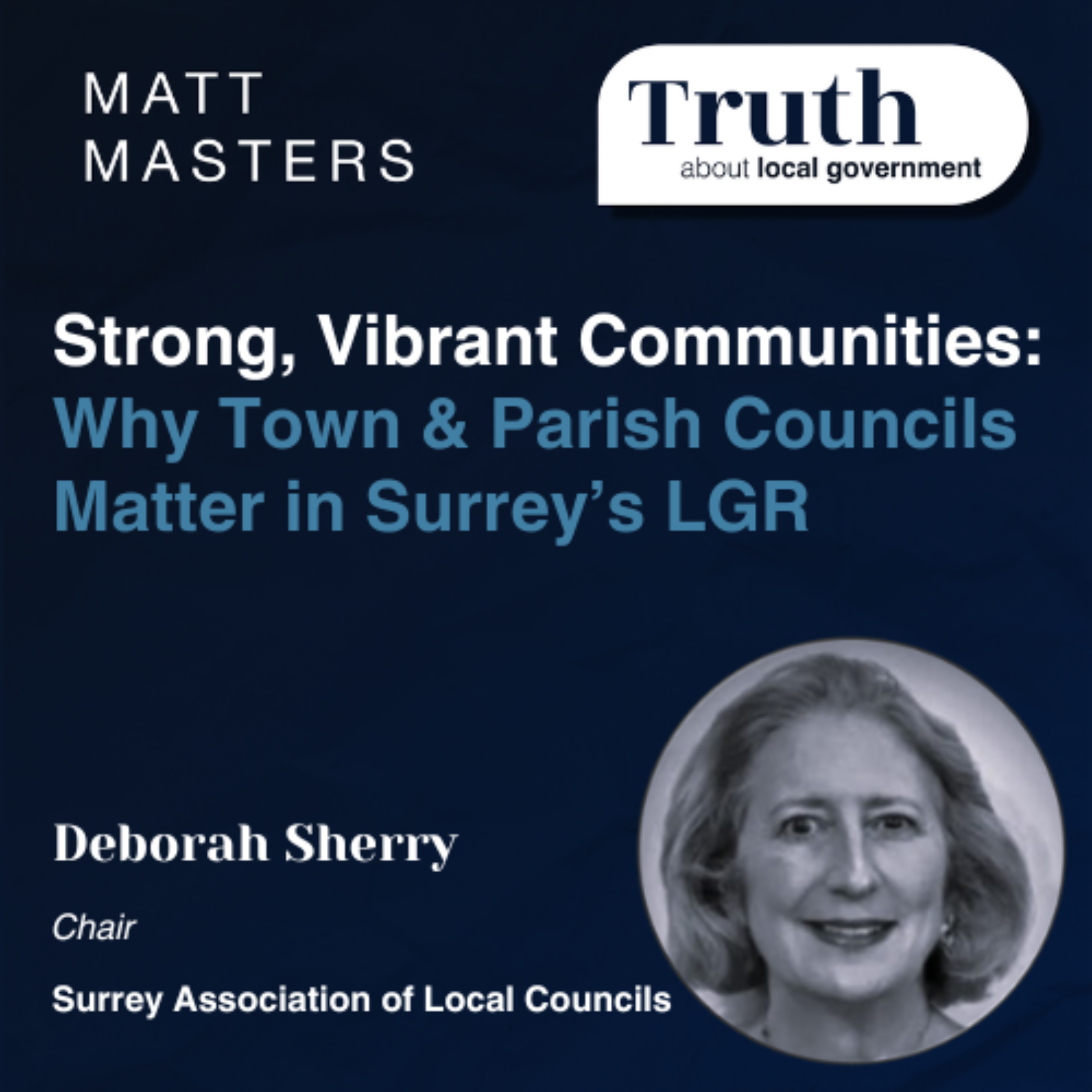 Strong, Vibrant Communities: Why Town & Parish Councils Matter in Surrey’s LGR | Surrey is about to become the national test case for the government’s latest wave of local government reform, and the stakes couldn’t be higher. With two new unitary authorities on the horizon, concerns are growing that statutory pressures and inherited financial challenges could push community services, local assets, and neighbourhood-level engagement to the margins.In this episode, we explore Strong, Vibrant Communities, a new report from the Surrey Association of Local Councils (SALC), which argues that town and parish councils must play a far greater role in the transition. Drawing on lessons from Cornwall’s successful double‑devolution model, SALC is calling for a Devolution Board, clear frameworks for asset and service transfers, and a programme to establish new local councils in currently unparished areas.We’re joined by Deborah Sherry, SALC Chair and a councillor at Woldingham Parish Council. With a fascinating blend of private‑sector leadership and public‑sector experience, Deborah brings a unique perspective on what genuine localism looks like, and what Surrey risks losing if it gets this moment wrong. Together, we unpack the opportunities, the risks, and the practical steps needed to ensure residents continue to live in strong, vibrant communities throughout and beyond LGR. | 19m 10s | ||||||
| 1/18/26 | 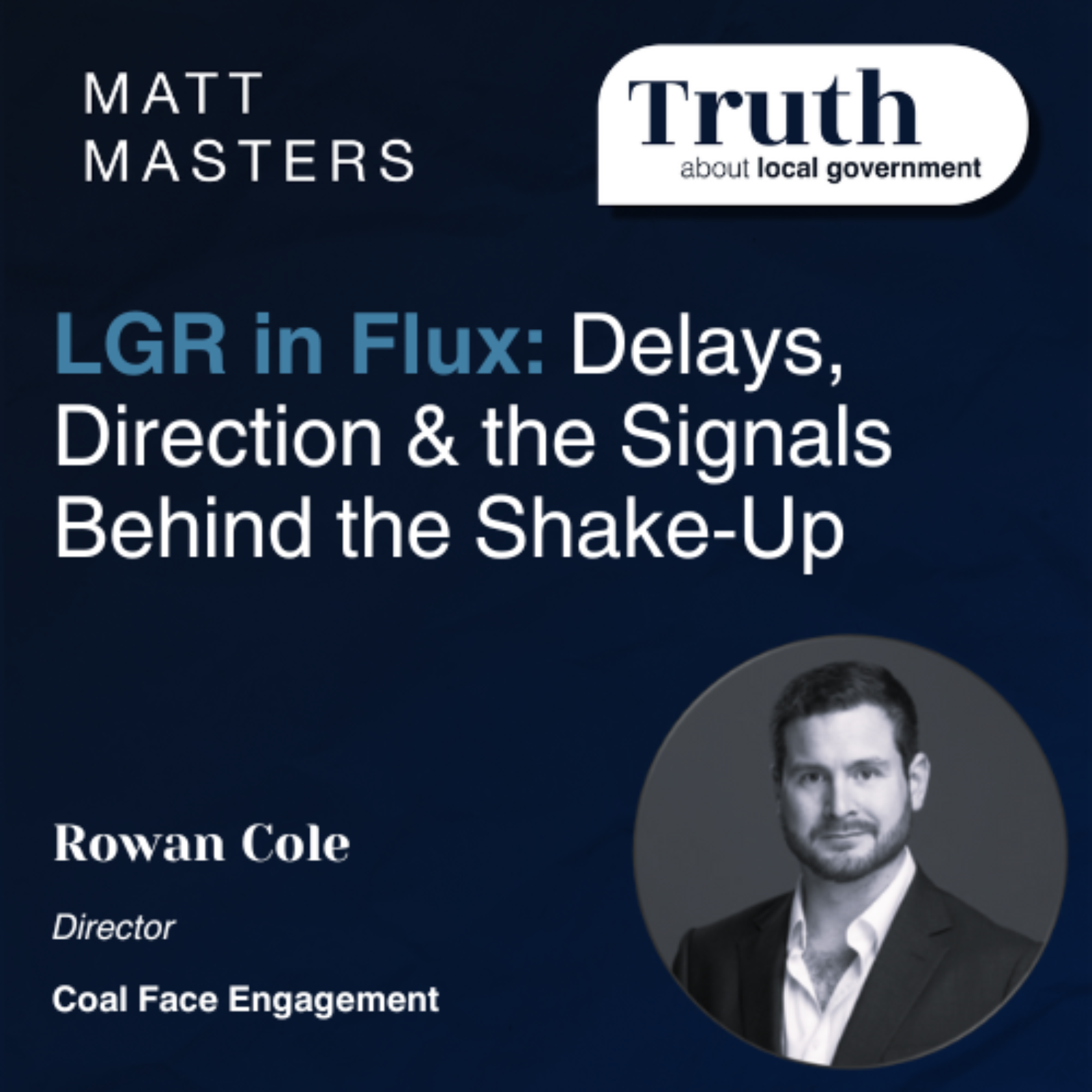 LGR in Flux: Delays, Direction & the Signals Behind the Shake‑Up | This month’s deep dive into local government reorganisation brings a timely and candid conversation with Rowan Cole, Director at Coal Face Engagement, as we unpack the shifting landscape of LGR and what the latest developments really mean for councils, leaders, and local politics.Rowan joins me to break down what has changed, why the Government has delayed elections, and how this fits with the ambitions originally set out for reorganisation. We explore the contrast between last year’s confident narrative and the more hesitant signals emerging since December, including which parts of the programme have quietly progressed and which have clearly stalled.We look closely at the election delay:What exactly has been pushed backWhere the delays are happeningThe official explanationAnd the real‑world consequences for councils trying to plan, budget, and lead through uncertaintyRowan offers grounded insight into what these delays say about confidence, pace, grip, and political alignment, and whether LGR still resembles a coherent, settled programme, or something more fluid and reactive.We close with a forward look at what to watch next, the decisions that will signal whether momentum is returning or further drift is ahead, and how councils can stay prepared in a period where clarity is in short supply.If you’re navigating LGR, advising on it, or simply trying to understand the shifting dynamics, this episode gives you the context, nuance, and practical read‑across you need. | 19m 03s | ||||||
| 1/9/26 | 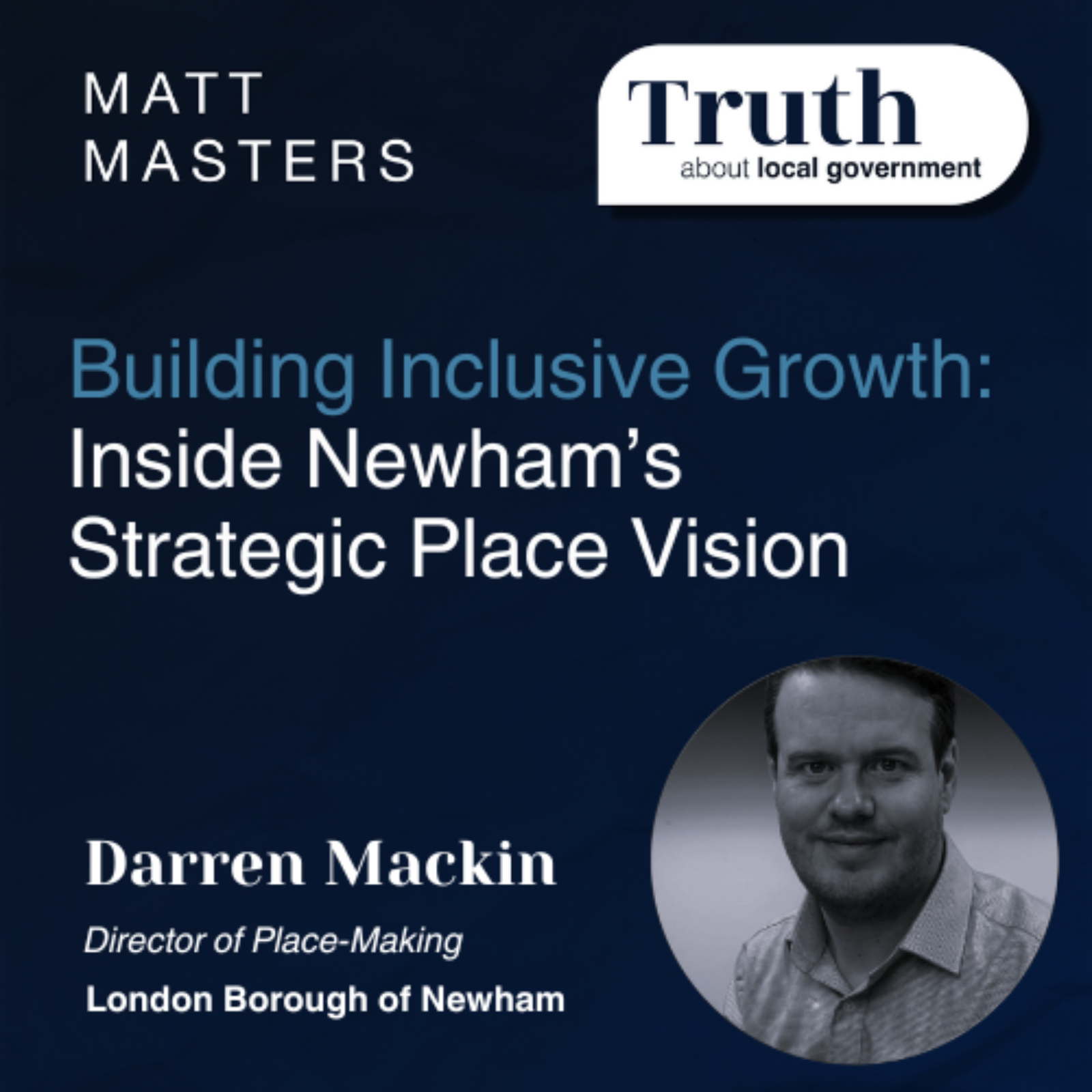 Building Inclusive Growth: Inside Newham’s Strategic Place Vision | In this episode of Truth About Local Government, we dive into how the London Borough of Newham is turning its Growth Plan into reality. With a strong focus on inclusive economy, community wealth building, and strategic investment, Newham is shaping a future where growth benefits everyone. Joining me is Darren Mackin, Director of Place-Making at the London Borough of Newham, to share what the council is doing on the ground to deliver this vision, the challenges they face, and how they’re engaging residents in the journey. | 17m 50s | ||||||
| 12/17/25 | 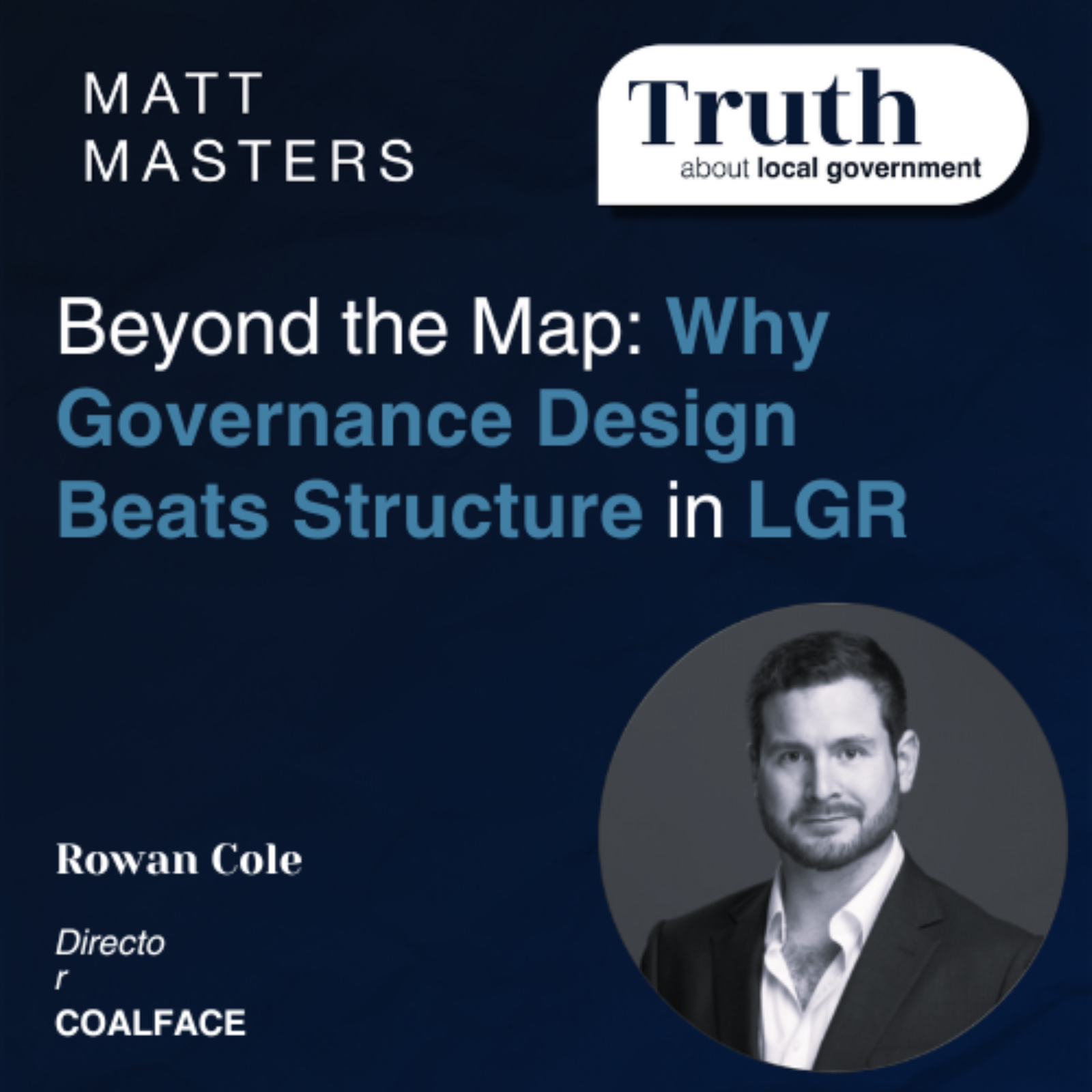 Beyond the Map: Why Governance Design Beats Structure in Local Government Reorganisation | Local Government Reorganisation (LGR) isn’t just about drawing new boundaries it’s about what happens in the first 100 days when governance design, delegation, and political confidence collide with real-world planning decisions. In this episode, we talk to Rowan Cole, Thought Leader on LGR & Founder and Director of COALFACE, about what truly determines whether reorganisation improves planning outcomes. We’ll explore lessons from Dorset, Somerset, and Northumberland, the early warning signs of drift, and why public trust and democratic legitimacy become operational issues. Plus, we’ll dive into The First 100 Days Playbook and how AI could help councils navigate the chaos. | 20m 44s | ||||||
Showing 25 of 349
Sponsor Intelligence
Sign in to see which brands sponsor this podcast, their ad offers, and promo codes.
Chart Positions
4 placements across 4 markets.
Chart Positions
4 placements across 4 markets.