

Insights from recent episode analysis
Audience Interest
Podcast Focus
Publishing Consistency
Platform Reach
Insights are generated by CastFox AI using publicly available data, episode content, and proprietary models.
Est. Listeners
Based on iTunes & Spotify (publisher stats).
- Per-Episode Audience
Est. listeners per new episode within ~30 days
1,001 - 10,000 - Monthly Reach
Unique listeners across all episodes (30 days)
5,001 - 25,000 - Active Followers
Loyal subscribers who consistently listen
501 - 5,000
Market Insights
Platform Distribution
Reach across major podcast platforms, updated hourly
Total Followers
—
Total Plays
—
Total Reviews
—
* Data sourced directly from platform APIs and aggregated hourly across all major podcast directories.
On the show
Recent episodes
Why Skillful Means Still Matter
Oct 3, 2025
Unknown duration
Gratitude and the Boundless Heart of Mettā
Oct 2, 2025
Unknown duration
Mahayana and Theravāda: Two Maps of Buddhist Awakening
Oct 1, 2025
Unknown duration
Humanity's First Guided Meditations: A Comparative History
Sep 30, 2025
Unknown duration
Compassion, Skillful Means, and Self-Protection in Buddhism
Sep 26, 2025
Unknown duration
Social Links & Contact
Official channels & resources
Official Website
Login
RSS Feed
Login
| Date | Episode | Description | Length | ||||||
|---|---|---|---|---|---|---|---|---|---|
| 10/3/25 |  Why Skillful Means Still Matter Why Skillful Means Still Matter | This episode of The Deep Dive argues against the popular nondual spiritual belief that one should "let go of all methods" in pursuit of awakening. Herrick, drawing heavily on Mahayana Buddhist concepts like upāya (skillful means) and the Lotus Sutra's One Vehicle (Ekayāna), contends that while ultimate liberation may be methodless, methods are essential scaffolds for the untrained mind to achieve stability and insight. The author frames the rejection of methods as naïve and exclusionary spiritual elitism, stressing that upāya is compassion made visible, adapting teachings to differing capacities and guiding practitioners toward integration. Ultimately, the essay concludes that method and no-method meet when form is entered so fully that it reveals its emptiness, honoring practice as the bridge between aspiration and full realization. | — | ||||||
| 10/2/25 |  Gratitude and the Boundless Heart of Mettā Gratitude and the Boundless Heart of Mettā | This episode of The Deep Dive explores the dharma talk "Gratitude_and_the_Boundless_Heart.pdf," offers a comprehensive examination of gratitude as a profound spiritual practice rooted in Buddhist philosophy and affirmed by modern psychology. It explains that gratitude is not merely saying thank you but an awakening to interbeing, recognizing that all existence is interconnected and sustained by countless gifts. The text establishes gratitude as inseparable from mettā (loving-kindness), noting that the practice reduces anxiety, strengthens relationships by increasing oxytocin, and leads to a fundamental shift from scarcity to contentment. Furthermore, the document details the practice of gratitude through a guided meditation titled "Sixteen Contemplations on Gratitude," which integrates mindfulness of the body, feelings, mind, and Dharma into a cyclical expression of thankfulness for life's web of support. | — | ||||||
| 10/1/25 | 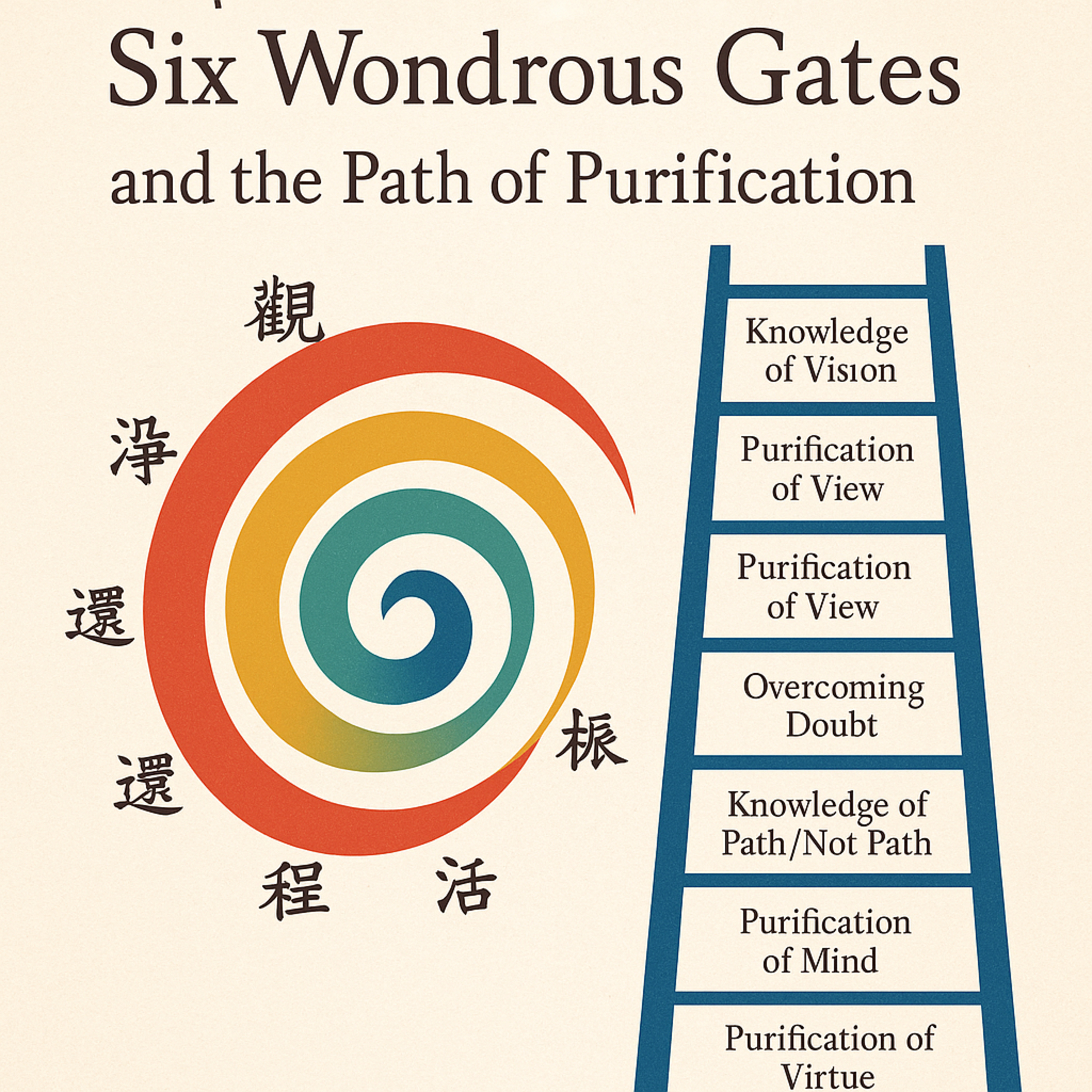 Mahayana and Theravāda: Two Maps of Buddhist Awakening Mahayana and Theravāda: Two Maps of Buddhist Awakening | In this episode of the Deep Dive we present a comparative analysis between two foundational Buddhist meditation systems: Zhiyi's Six Wondrous Gates from the Chinese Tiantai school and Buddhaghosa's Seven Purifications detailed in the Theravāda Visuddhimagga. The essay outlines how both sixth and fifth-century masters mapped the path to awakening, beginning with stabilization through breath; however, they employed fundamentally different approaches. Zhiyi's method is characterized as a holistic, cyclical, and integrative Mahāyāna path focused on revealing the mind's innate purity (Suchness), while Buddhaghosa's is described as a sequential, analytic, and purgative Theravāda ladder aimed at the precise elimination of defilements to achieve cessation (Nibbāna). Ultimately, the comparison highlights a shared architectural movement from ethics to wisdom, even as the two traditions diverge significantly in their underlying metaphysics and pedagogical structures. | — | ||||||
| 9/30/25 |  Humanity's First Guided Meditations: A Comparative History Humanity's First Guided Meditations: A Comparative History | This episode of the Deep Dive offers a comparative overview of the earliest known guided meditation instructions originating primarily from the first millennium BCE in India and China. It contrasts the methods, aims, and structure of contemplative practices found in the Upaniṣads, Jain Āgamas, Daoist Nèiyè, and early Buddhist Suttas. The text highlights that while earlier traditions focused on achieving union with the cosmic absolute (Upaniṣads) or purification through asceticism (Jainism), the Buddha introduced a systematic, procedural approach focused on mindful observation of impermanent processes. Ultimately, the source distinguishes between the mantra tradition, which seeks transcendence through concentration, and the Buddhist mindfulness model, which seeks insight through investigation, explaining why the latter serves as the foundation for most modern guided meditation. | — | ||||||
| 9/26/25 | 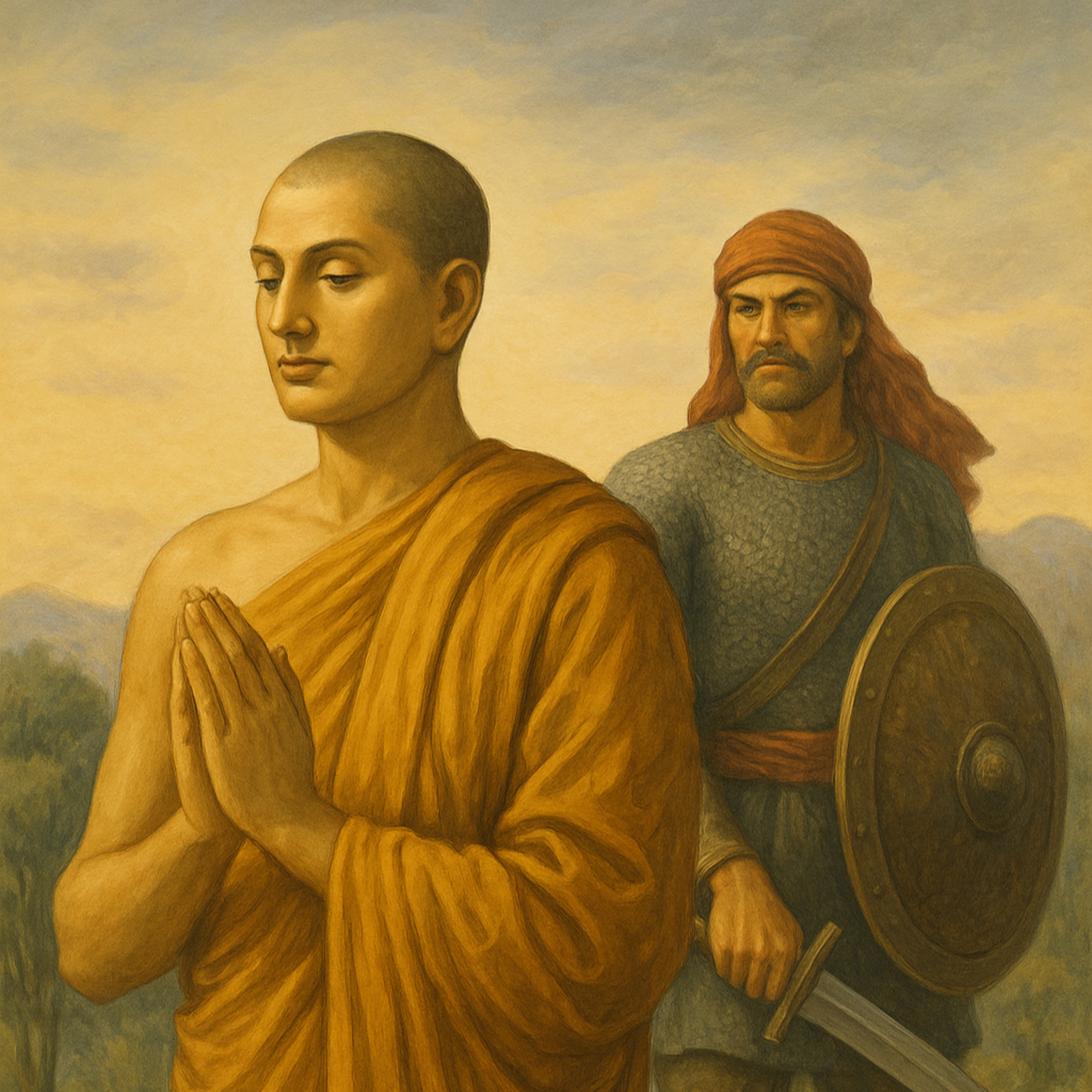 Compassion, Skillful Means, and Self-Protection in Buddhism Compassion, Skillful Means, and Self-Protection in Buddhism | This episode of Deep Dive explores "Compassion Beyond Violence: The Bodhisattva Captain and the Wisdom of Self-Protection" by Nichiryu Mark Herrick, challenges the simplistic notion that Buddhist nonviolence requires passive submission in the face of harm. The author argues that true Buddhist compassion is nuanced and requires wisdom (prajñā), emphasizing that self-protection and defending others can be an expression of skillful means (upāya). Key Buddhist teachings are cited to support this view, including the concept that hatred is overcome only by love and that intention, not the outward act, determines karmic consequence. The text uses the example of the Bodhisattva Captain Jñānottara, who committed a violent act out of pure compassion to prevent greater suffering, to illustrate that extraordinary actions rooted in wisdom and compassion can be karmically blameless. Ultimately, the piece advocates for a Middle Way between passivity and aggression, guided by mindfulness, morality, and concentrated awareness. | — | ||||||
| 9/25/25 | Loving Kindness Guided Meditation | A 7 minute guided meditation on Loving Kindness - or friendliness - led by Mark Willaims, one of my favorite meditation guides | — | ||||||
| 9/23/25 | 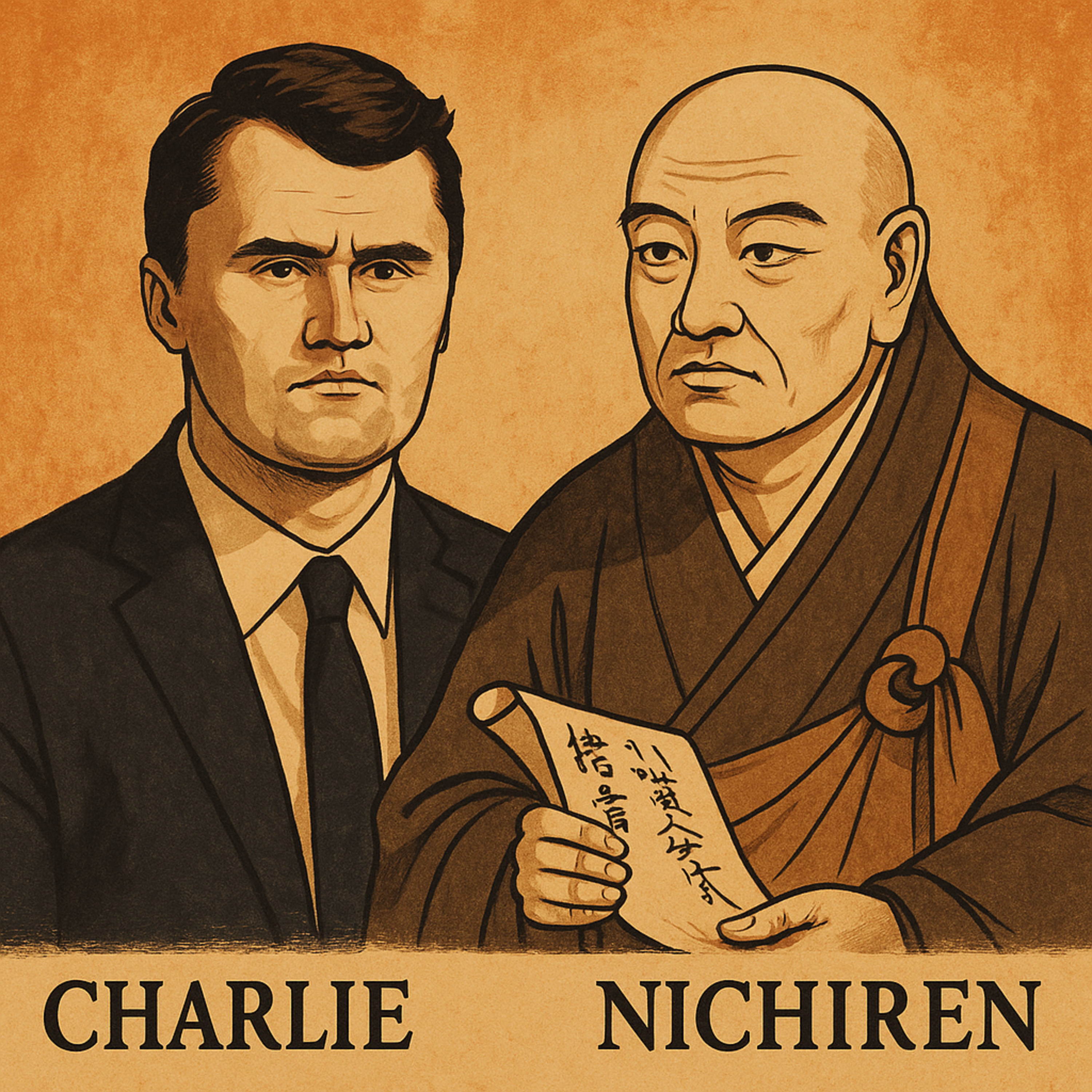 Nichiren and Kirk: A Study in Absolutism and Division Nichiren and Kirk: A Study in Absolutism and Division | This episode draws a sobering parallel between the 13th-century Japanese Buddhist monk Nichiren and the 21st-century American political activist Charlie Kirk, despite their vastly different contexts. The author argues that both figures exhibit absolutist conviction and a powerful tendency toward an "us vs. them" framework, asserting that only their specific path—the Lotus Sutra for Nichiren and Christian identity for Kirk—can save society from existential crisis. The text examines similarities in their exclusivity, crisis mentality, mobilization of followers, and critique of the establishment. However, the comparison ultimately notes a metaphysical divergence, pointing out that Nichiren’s underlying message of universal Buddha-nature contrasts with Kirk's emphasis on eternal damnation, urging modern practitioners to embrace Nichiren's passion without repeating his polemical division. | — | ||||||
| 9/22/25 | Ultimate Reality - Dharmakaya and God | Excerpt from the book Dharmakaya and God | — | ||||||
| 9/20/25 | 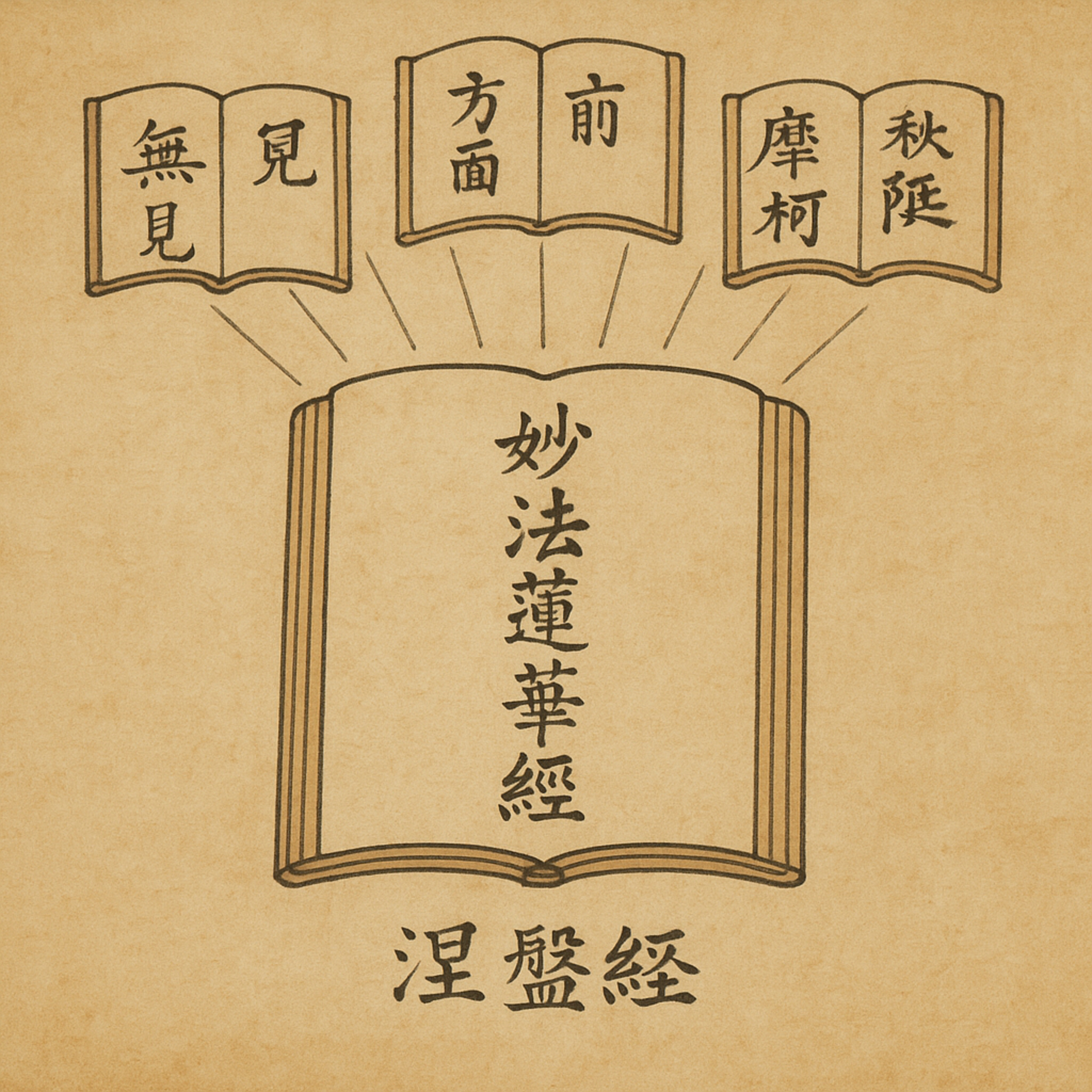 Nichiren's Integral Vision of the Lotus Sutra Nichiren's Integral Vision of the Lotus Sutra | This episode of Deep Dive explores an essay by Nichiryu Mark Herrick, focuses on Nichiren's perspective regarding the supremacy and necessity of the Lotus Sutra within the entirety of the Buddha's teachings. The text establishes that the true significance of the Lotus Sutra cannot be grasped unless it is studied in the context of all previous sutras, which serve as preparatory and provisional teachings leading to the ultimate truth. Through historical classification systems, Nichiren viewed the earlier teachings as a "preface" and skillful means (upāya) that culminated in the Lotus Sutra, which acts as the "universal key" revealing the true meaning of all prior texts. Consequently, while earlier sutras can be understood individually, the Lotus Sutra requires an integral vision to appreciate its role as the completion and illumination of the whole Buddhist Dharma. | — | ||||||
| 9/19/25 | 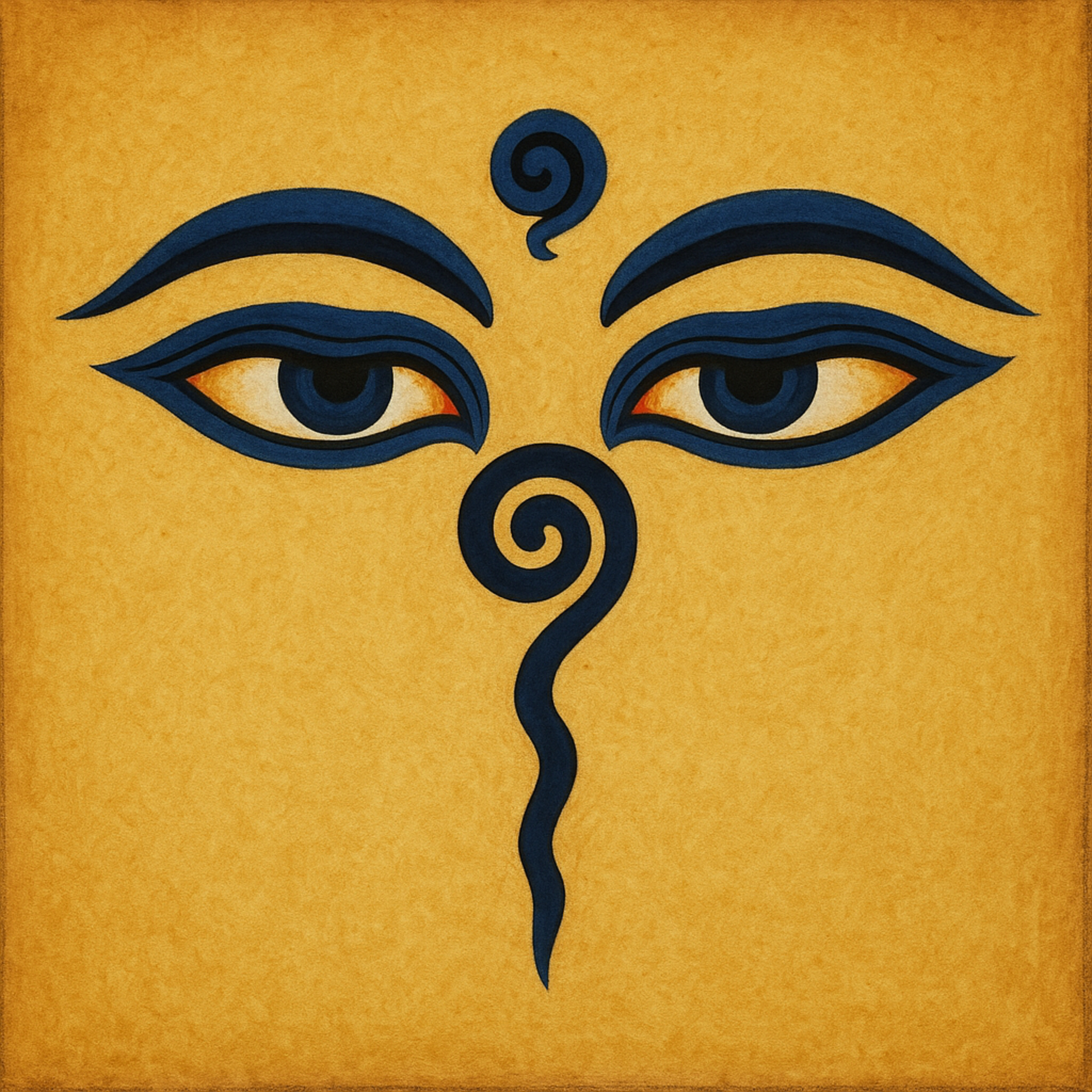 Chanting Embodies Ultimate Reality and Shikan Chanting Embodies Ultimate Reality and Shikan | This episode of Deep Dive explores "Treatise on All Phenomena as Ultimate Reality," discusses Nichiren's reinterpretation of the Tendai Buddhist practice of Shikan, which consists of calm (shamatha) and insight (vipassana). Historically, Shikan required lengthy, structured monastic meditation, but Nichiren made this path accessible to everyday people by teaching that single-minded chanting of Namu Myo Ho Ren Gay Kyo itself embodies both calm and insight. The treatise honors the Tendai tradition while asserting that, in the present age, chanting the Daimoku is sufficient to realize ultimate reality, contrasting the arduous classical methods with Nichiren's immediately accessible practice. This shift is presented as a practical gift to ordinary practitioners, demonstrating how faith and chanting replace the need for formal contemplative stages. The text concludes that chanting carries the full merit of Shikan, offering a direct path to awakening for all people. | — | ||||||
Want analysis for the episodes below?Free for Pro Submit a request, we'll have your selected episodes analyzed within an hour. Free, at no cost to you, for Pro users. | |||||||||
| 9/18/25 | 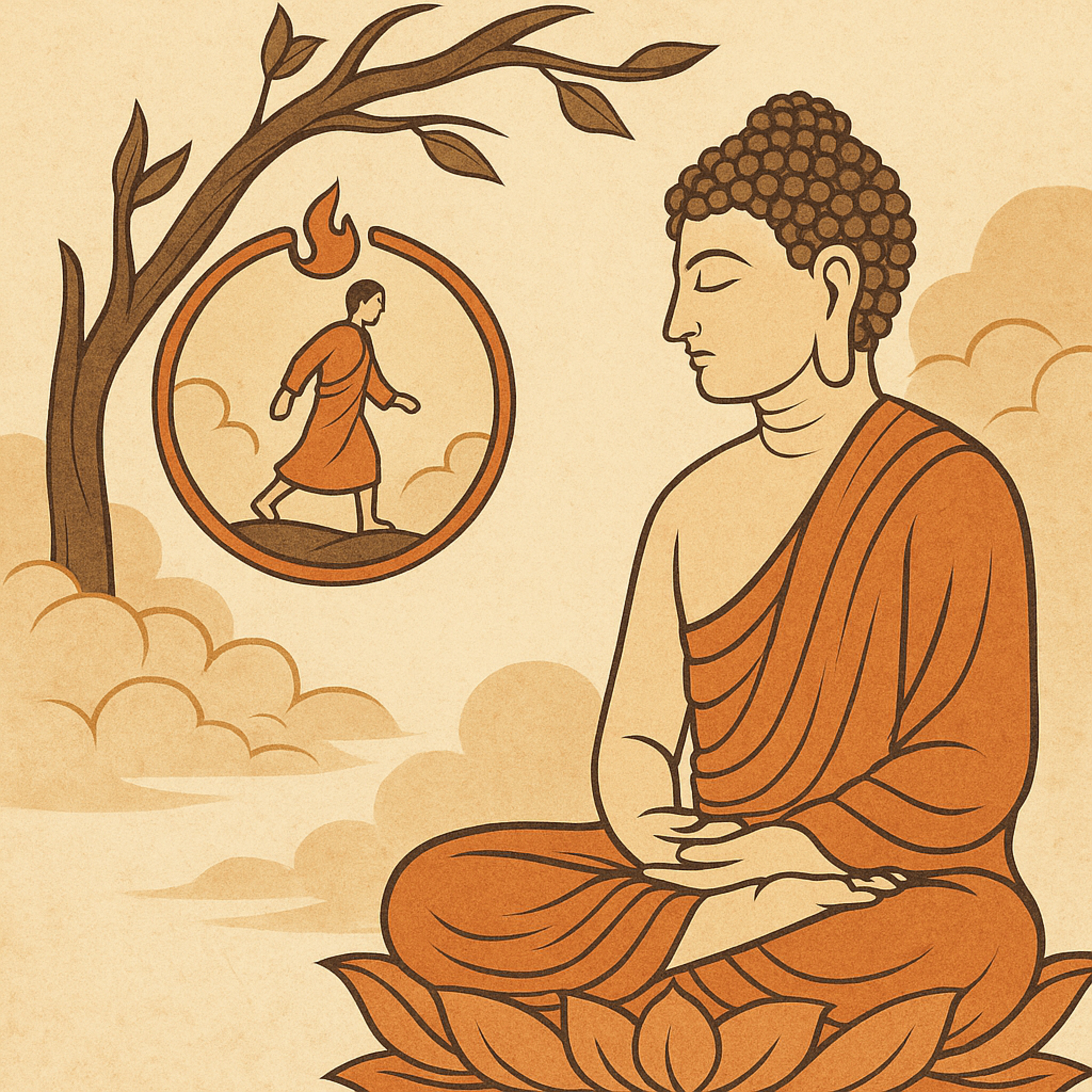 Rebirth, Responsibility, and the Radiance of This Moment Rebirth, Responsibility, and the Radiance of This Moment | In this episode of Deep Dive we explore the Buddhist concept of rebirth, distinguishing it from the Western notion of reincarnation by emphasizing causal continuity without a fixed soul. It highlights how the historical Buddha prioritized ethical living in the present moment over metaphysical speculation about the afterlife, a pragmatic approach mirrored in Western ethical philosophies like Kantianism and secular humanism. The document further contrasts the diverse views on death and liberation across major Buddhist schools, with a particular focus on Nichiren Buddhism's interpretation of life and death as unified phases of an eternal rhythm. Finally, it offers a speculative connection between Buddhist cosmology and modern consciousness studies, suggesting that consciousness may be non-local and karmic patterns persist as information within a universal field. | — | ||||||
| 9/16/25 | 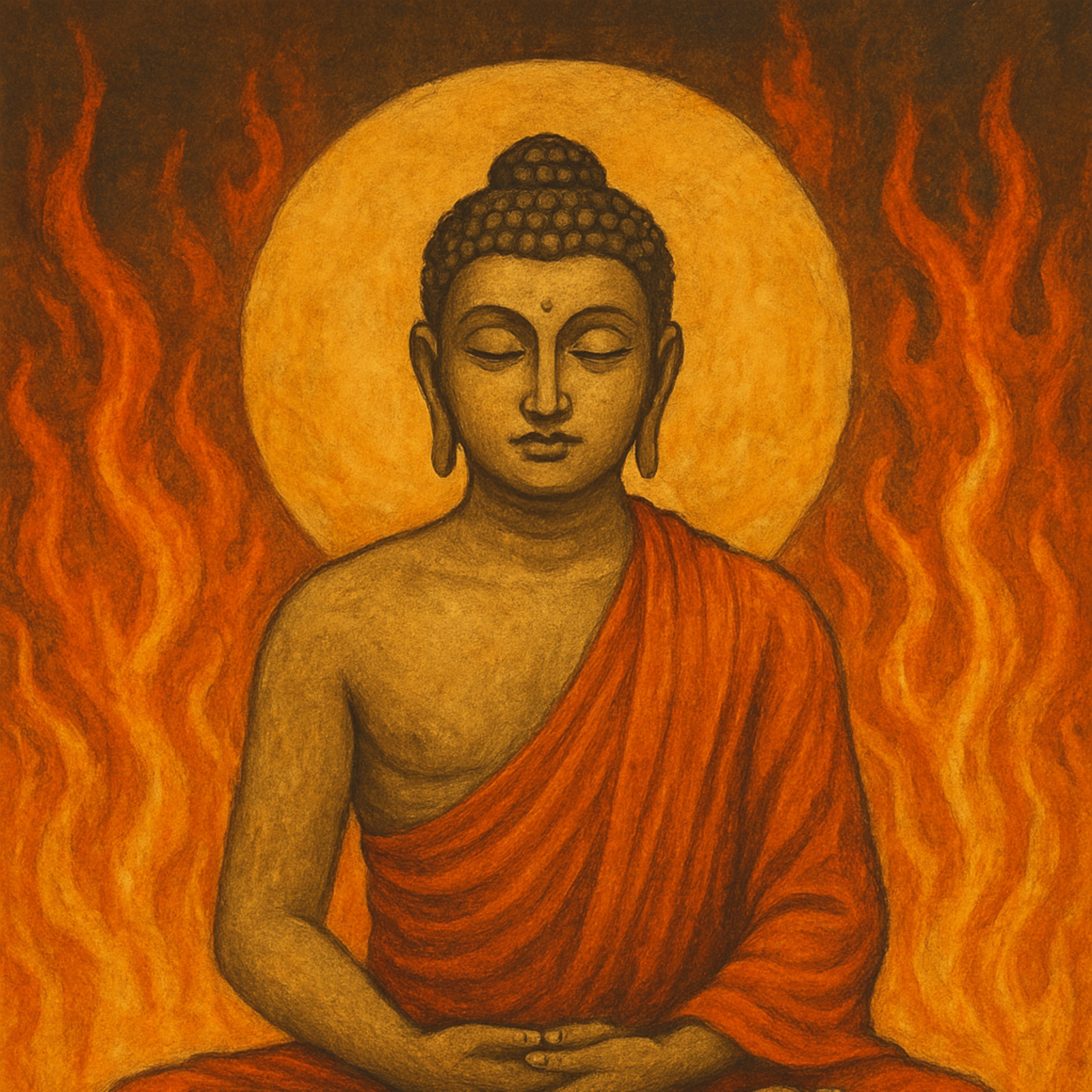 Fear of Death and the Dharma of Liberation Fear of Death and the Dharma of Liberation | In this episode of Dep Dive we explore Nichiryu Mark Herrick's , "Fear of Death and the Dharma of Liberation," examines the pervasive human anxiety surrounding mortality, contrasting modern psychological perspectives with ancient Buddhist teachings. It highlights how Terror Management Theory in psychology identifies fear of death as a core driver of human behavior, often leading to defensive and selfish actions. The article then presents Buddhist philosophy's diagnosis of suffering (dukkha), attributing it to clinging and the refusal to accept impermanence. Ultimately, the piece argues that while fear of death can lead to detrimental behaviors, both psychology and Buddhism suggest it can also catalyze positive change and spiritual awakeningwhen approached with understanding and wisdom, leading to liberation from fear. | — | ||||||
| 9/16/25 | 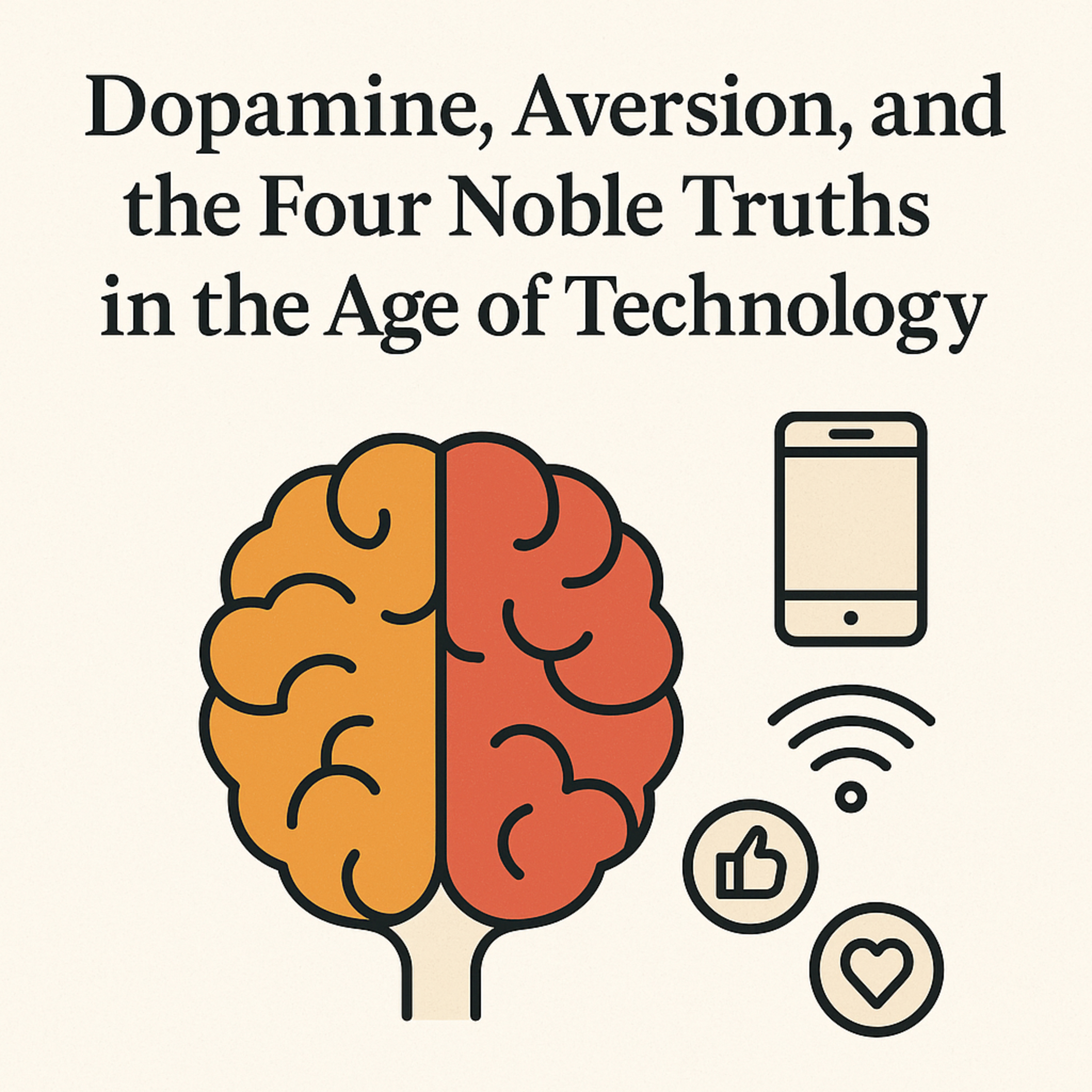 Dopamine, Aversion, and the Four Noble Truths Dopamine, Aversion, and the Four Noble Truths | This episode of Deep Dive explores "Dopamine, Aversion, and the Four Noble Truths in the Age of Technology," explores the intersection of neuroscience and Buddhist philosophy, specifically focusing on how modern technology exploits innate human drives. The author argues that dopamine, often misconstrued as a pleasure chemical, primarily fuels anticipation and craving, a concept mirrored in the Buddhist idea of taṇhā. Conversely, aversion, driven by norepinephrine and glutamate, represents the other side of suffering (dukkha), trapping individuals in a cycle of wanting and fearing. The text emphasizes how social media and app design deliberately amplify these neurochemical loops through mechanisms like variable ratio reinforcement, contributing to addiction and discontent. However, it also presents GABA as a key neurotransmitter for cessation and calm, suggesting that practices like meditation, which increase GABA levels, offer a path toward liberation from these ingrained patterns, aligning with the Buddha's Four Noble Truths. | — | ||||||
| 9/15/25 | 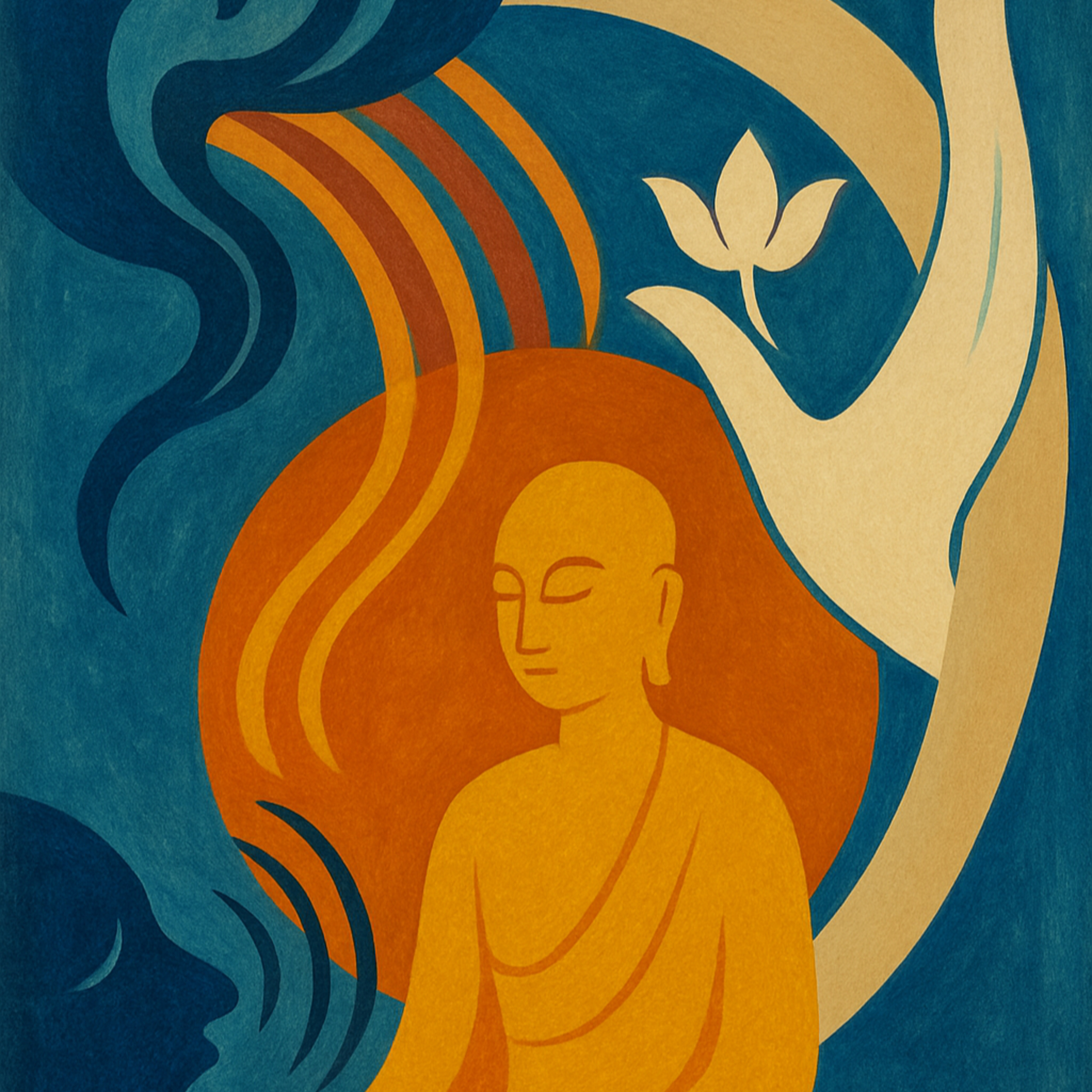 The Mutual Path of Surrender and Response The Mutual Path of Surrender and Response | This episode of Deep Dive explores the concept of "Receptivity and Response" (Kanno Dokkyo), a central idea in Buddhism describing the mutual interaction between a sincere practitioner and Ultimate Reality. It emphasizes that this relationship is reciprocal and dynamic, not a one-sided appeal, where the practitioner's earnest "calling" (Kan) is met by the Buddha's compassionate "response" (No) along the "Way" (Do), leading to "communion" (Ko). The source illustrates this principle through Buddhist teachings, highlighting that surrender is not a loss of self but an opening into a responsive relationship, leading to awakening. Furthermore, the text draws parallels between Kanno Dokkyo and Christian mystical traditions, such as Centering Prayer and Eastern Orthodox synergy, demonstrating a shared understanding of mutual participation and the transformative power of surrendering the ego to divine presence. Both traditions suggest that genuine surrender allows for a profound connection where the infinite meets the finite, leading to inner peace, insight, and a realization of interconnectedness. | — | ||||||
| 9/14/25 | 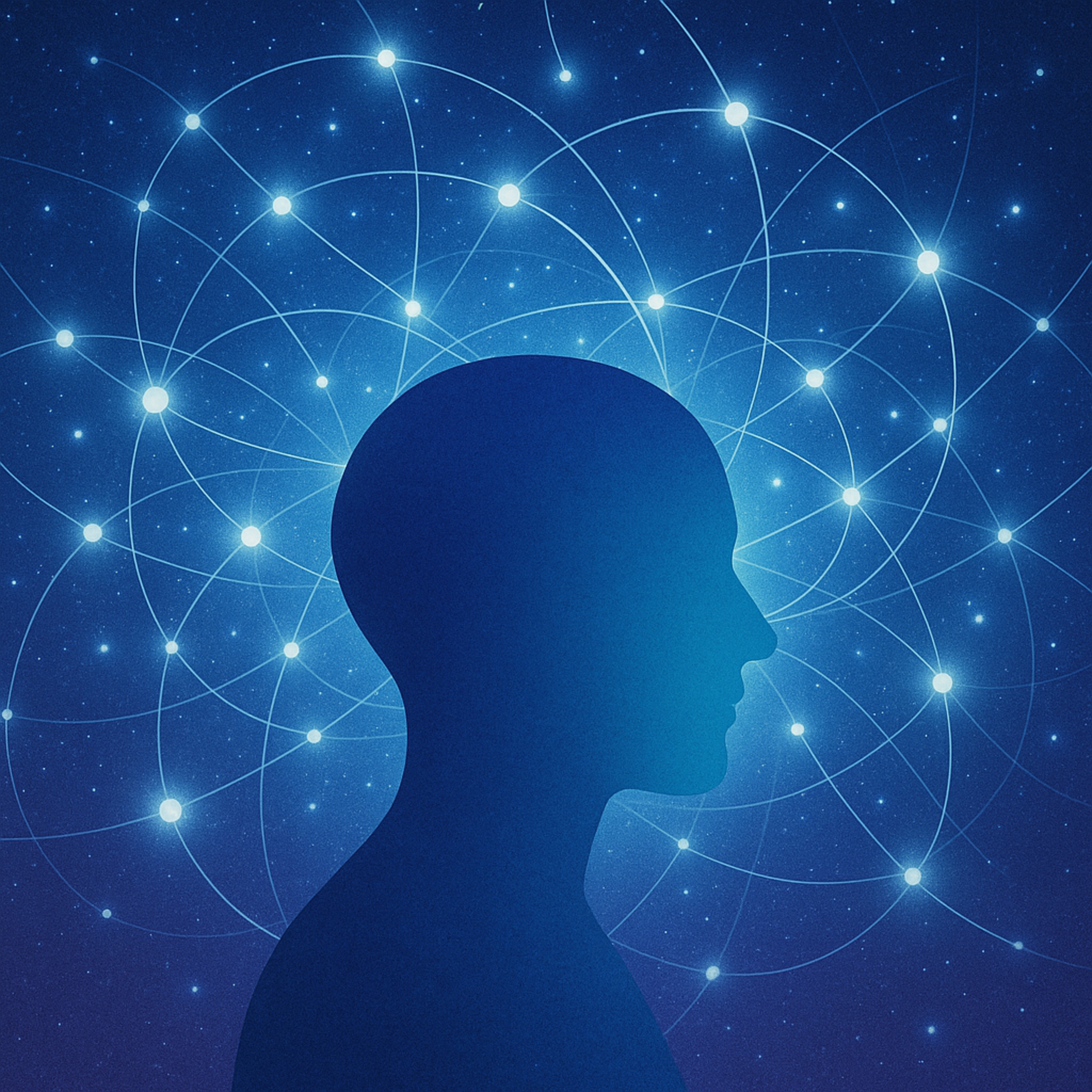 Non-Local Consciousness: A Buddhist Perspective Non-Local Consciousness: A Buddhist Perspective | In this episode of Deep Dive we explore the concept of non-local consciousness by drawing parallels between modern scientific inquiries and ancient Buddhist philosophies. It specifically references the Yogācāra and Madhyamaka schools, using their perspectives to illuminate the nature of consciousness. The Yogācāra view, emphasizing consciousness-only and mind-dependent experience, aligns with the idea that consciousness extends beyond the brain. Conversely, the Madhyamaka school, through Nāgārjuna's teachings on emptiness, challenges the notion of consciousness as an inherent, ultimate essence, even if it is non-local. Ultimately, the text presents Tiantai's Threefold Truth as a reconciliation, suggesting that consciousness is both provisionally existing and empty of self-nature, representing a dynamic interplay rather than a fixed substance. | — | ||||||
| 9/12/25 | 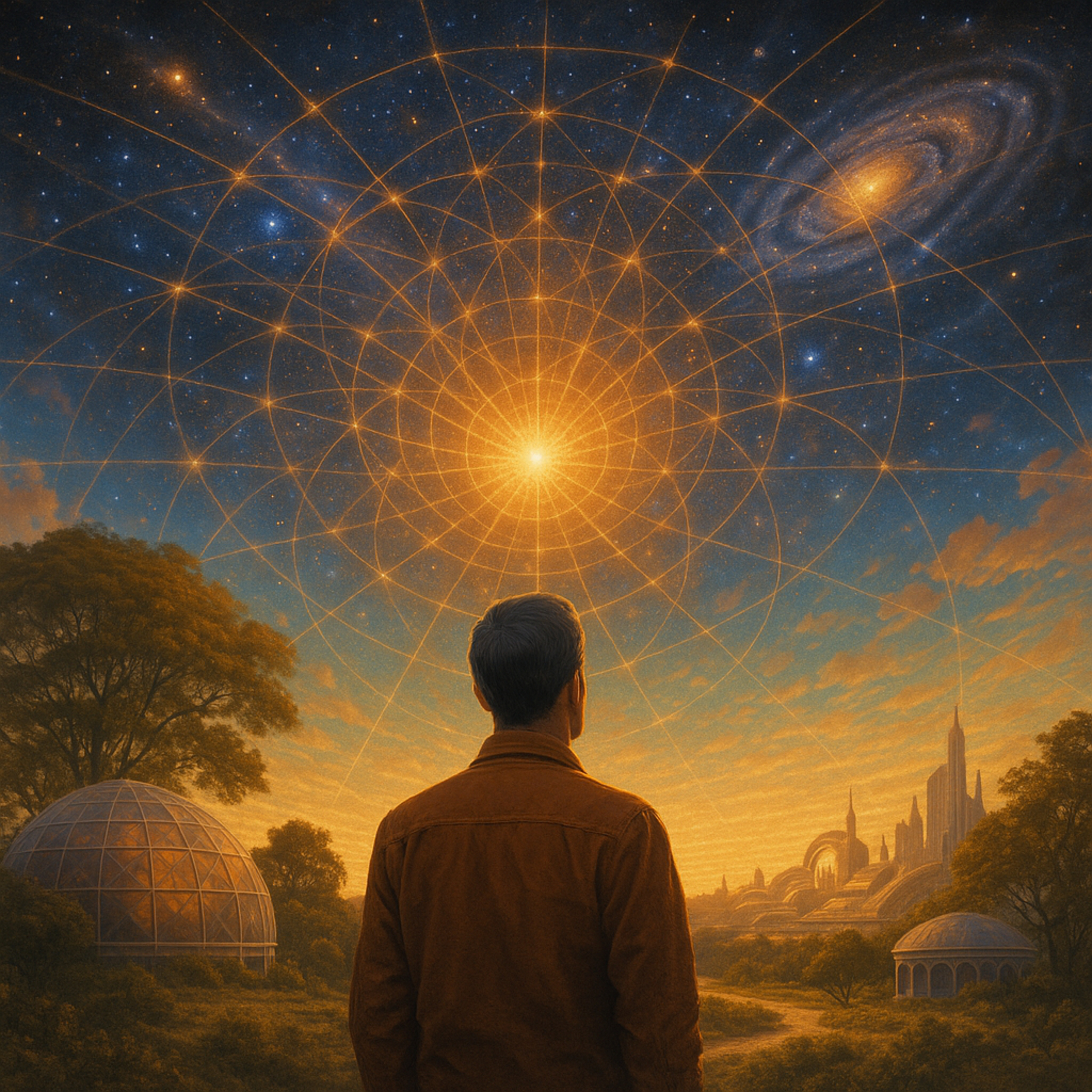 Buddhist Non-Duality: A Response to Saltzman's Feedback Loops Buddhist Non-Duality: A Response to Saltzman's Feedback Loops | This episode of Deep Dive explores the Buddhist Threefold Truth, a foundational concept stating that all phenomena are simultaneously empty of fixed essence, possess provisional existence through interdependence, and embody the Middle Way where these two aspects interpenetrate. The author contrasts this perspective with Robert Saltzman's "feedback loop" model of the self, which, while acknowledging the self as a process, is critiqued for potentially leading to a reductive and nihilistic viewthat overlooks wonder and meaning. The text argues that Buddhism avoids this extreme by embracing the "non-exclusive" Middle Way, recognizing that the self, though without fixed essence, is not nothing, but rather a dynamic, interconnected arising. This understanding is achieved through Shikan meditation, where practitioners observe thoughts and the self through the lens of the Threefold Truth, leading to a realization of interconnectedness and the inherent wonder in all existence. | — | ||||||
| 9/10/25 | 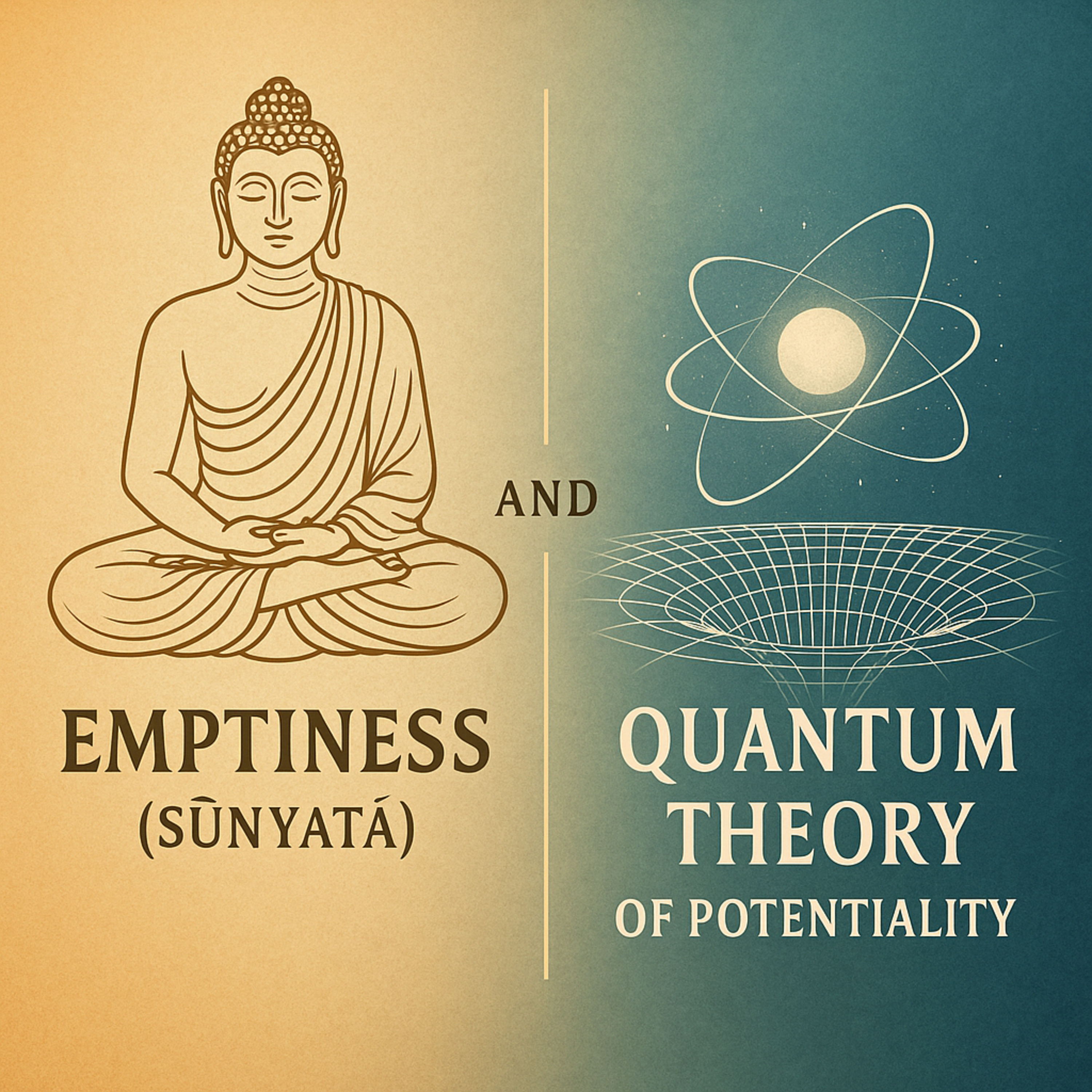 Emptiness, Quantum Reality, and the Threefold Truth Emptiness, Quantum Reality, and the Threefold Truth | In this episode of Deep Dive we explores the Threefold Truth of Buddhism, articulated by Zhiyi, which posits that reality is understood through emptiness, provisional existence, and the middle way. Emptiness signifies that all phenomena lack inherent, fixed essence, arising instead through interdependence. Provisional existence acknowledges that despite this emptiness, things manifest and function in the world. The middle truth unifies these two, illustrating that emptiness enables provisional existence, representing a dynamic interplay rather than separate realities. The author draws a compelling parallel between these Buddhist principles and quantum physics, where particles exist in states of potentiality until observed, echoing the concept of emptiness and dependent arising. Ultimately, both systems are presented as models, imperfect yet useful, for comprehending a reality characterized by the continuous interaction of possibility and manifestation. | — | ||||||
Showing 17 of 17
Sponsor Intelligence
Sign in to see which brands sponsor this podcast, their ad offers, and promo codes.
Chart Positions
6 placements across 6 markets.
Chart Positions
6 placements across 6 markets.