

Ultimate Partner®
by Vince Menzione - Technology Industry Sales and Partner Executive
Is this your podcast?Insights from recent episode analysis
Audience Interest
Podcast Focus
Publishing Consistency
Platform Reach
Insights are generated by CastFox AI using publicly available data, episode content, and proprietary models.
Most discussed topics
Brands & references
Total monthly reach
Estimated from 7 chart positions in 7 markets.
By chart position
- 🇺🇸US · Tech News#1535K to 30K
- 🇪🇸ES · Tech News#1811K to 10K
- 🇮🇪IE · Tech News#4910K to 30K
- 🇨🇴CO · Tech News#983K to 10K
- 🇮🇱IL · Tech News#147500 to 3K
- Per-Episode Audience
Est. listeners per new episode within ~30 days
6.2K to 27K🎙 Daily cadence·100 episodes·Last published today - Monthly Reach
Unique listeners across all episodes (30 days)
21K to 89K🇺🇸34%🇮🇪34%🇪🇸11%+4 more - Active Followers
Loyal subscribers who consistently listen
8.2K to 36K
Market Insights
Platform Distribution
Reach across major podcast platforms, updated hourly
Total Followers
—
Total Plays
—
Total Reviews
—
* Data sourced directly from platform APIs and aggregated hourly across all major podcast directories.
On the show
From 11 epsHost
Recent guests
Recent episodes
301 – Are You Missing Out on $150 Billion in Azure Commitments?
Jun 29, 2026
Unknown duration
300 – The 7 Principles of Successful Partnering in the Age of AI
Jun 22, 2026
Unknown duration
299 – Microsoft CVP Stephen Boyle: Why 95% of Partners Will Miss the AI Wave
Jun 14, 2026
Unknown duration
298 – Jay McBain: The $6 Trillion Shift Rewriting Every Tech Partnership Right Now
Jun 8, 2026
36m 18s
297 – 10 Years of Microsoft Co-Sell: What the Top Partners Do Differently in 2026
Apr 29, 2026
49m 27s
Social Links & Contact
Official channels & resources
Official Website
Login
RSS Feed
Login
| Date | Episode | Topics | Guests | Brands | Places | Keywords | Sponsor | Length | |
|---|---|---|---|---|---|---|---|---|---|
| 6/29/26 | 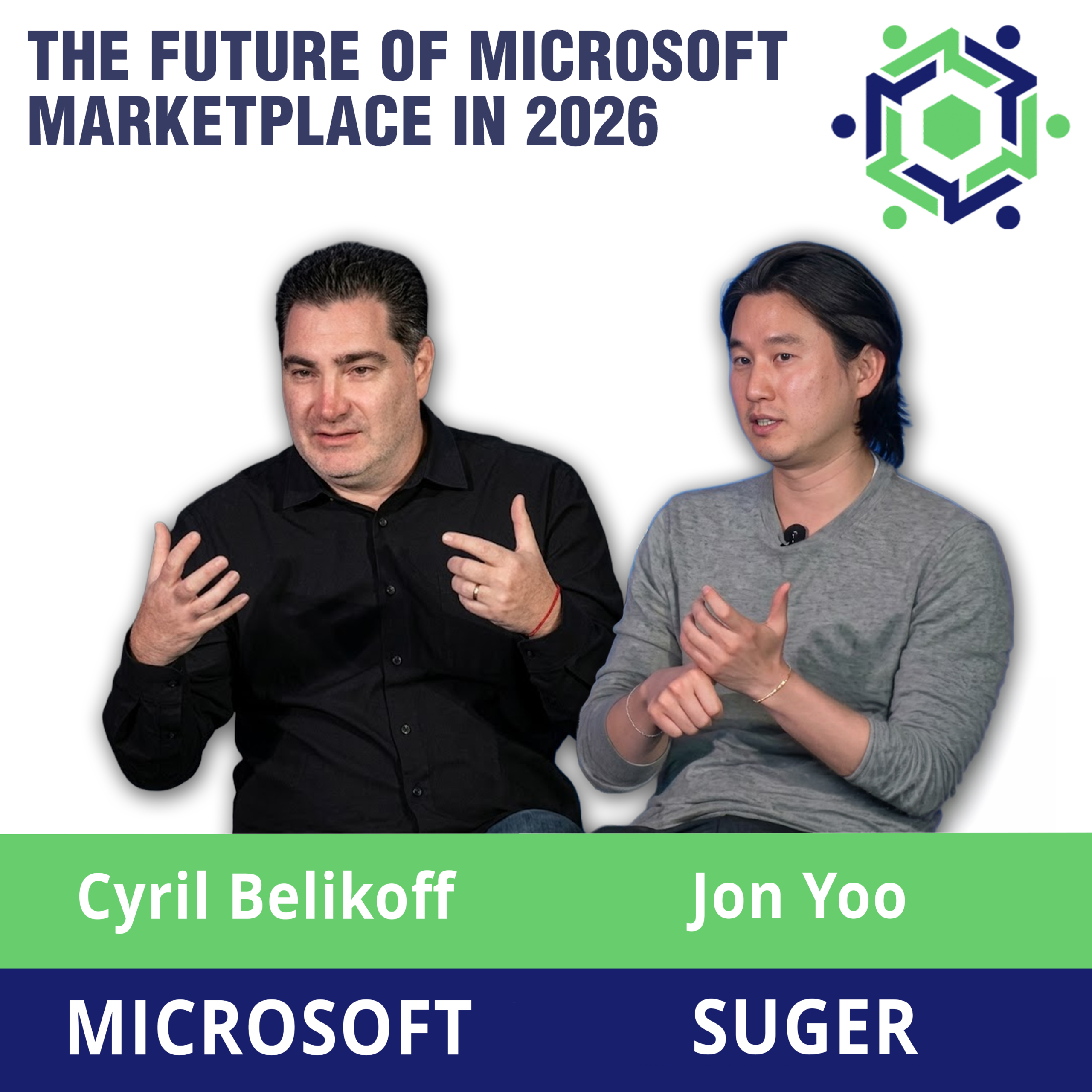 301 – Are You Missing Out on $150 Billion in Azure Commitments? | Master the new Microsoft Marketplace ecosystem. Subscribe to our Newsletter:https://theultimatepartner.com/ebook-subscribe/ Check Out UPX:https://theultimatepartner.com/experience/ Discover the tectonic shifts happening within the Microsoft ecosystem as Cyril Belikoff and Jon Yoo dive deep into the unification of the Microsoft Marketplace and the explosive rise of AI-driven commerce. This comprehensive discussion explores how the marketplace is transitioning from an incubation island to the mainland of Microsoft’s go-to-market strategy, allowing partners to tap into massive Azure consumption commitments. Learn how product-led growth, AI agents, and optimized digital flows are replacing traditional sales motions, making cloud marketplaces the default engine for scaling revenue in 2026 and beyond. https://youtu.be/cAeSIEXbnNo Key Takeaways Microsoft unified its various marketplaces into a single digital flywheel for customers to discover, try, and buy applications. Applications, such as Copilot certified agents, are contextually surfaced directly within Microsoft products to meet users in their flow of work. Customers are making massive Azure commitments, and purchasing full software stacks through the marketplace retires those commitments entirely. Cloud marketplaces have evolved from a secondary channel into the default go-to-market engine with triple-digit revenue growth. Partners must shift from deal-led transactions to product-led growth by optimizing their digital marketplace listings for AI and search engines. The future of software procurement will increasingly involve AI agents acting on behalf of organizations to seamlessly integrate multiple smaller applications. If you’re ready to lead through change, elevate your business, and achieve extraordinary outcomes through the power of partnership—this is your community. At Ultimate Partner® we want leaders like you to join us in the Ultimate Partner Experience – where transformation begins. Key Tags: Microsoft Marketplace, Azure commitments, AI agents, Frontier transformation, M365 Copilot, Foundry, digital flywheel, co-selling, product-led growth, ecosystem shift, SaaS distribution, REO, resale enabled offer, listing optimization, search engine optimization, agentic commerce, cloud go-to-market, revenue recognition, multi-party private offers, Hyperscalers Transcript: Cyril Belikoff and Jon Yoo Audio Podcast [00:00:00] Cyril Belikoff: Why do you have to outsource this or create this vi? Just edit the video right there yourself. Like why do you have to just go do the, as a marketer you want to create a beautiful piece of content, just go and create it. ’cause it can create it for you. Now [00:00:13] Jon Yoo: you can feel it happening. The ecosystem is shifting beneath us, the way Hyperscalers are partnering. [00:00:19] Jon Yoo: How AI is remaking the channel and what it means to win in 2026. [00:00:25] Vince Menzione: Welcome to The Ultimate Partner Podcast. I’m Vince Manzione, your host. [00:00:30] Jon Yoo: We just wrapped up two days in Bellevue with some of the sharpest partner leaders in the business, and what we heard wasn’t incremental, it was tectonic. In this series, we’re going deeper into these conversations, the insights, the frameworks, the real movement we’re seeing in this market right now, because being in the room changes everything and we’re bringing that room to you. [00:00:55] Vince Menzione: And I am thrilled actually for this next one. Uh, I’ve had this opportunity to spend a little bit of time with this gentleman before, and welcoming him back is a pleasure and an honor. Cyril Beov, the vice president. I’m gonna botch up your title ’cause I always say marketplaces, but it’s much more than that. [00:01:14] Vince Menzione: So come on up, zero. And we’re gonna have a conversation and Cyril is amongst other things at Microsoft. Good to see you, sir. Yeah, [00:01:24] Cyril Belikoff: you too, [00:01:25] Vince Menzione: uh, is responsible for the, the Microsoft marketplace. [00:01:29] Cyril Belikoff: Are these your notes here? [00:01:30] Vince Menzione: These are, um, what is that? Yeah, these is gonna be our, our questions, so we, yeah, I, I need help sometimes so prompting, but, uh, so great to have you. [00:01:38] Vince Menzione: So just for purposes of title and context, ’cause your role is much bigger than just marketplace. Yeah. And we’re, we’re gonna sit down and John, is this me? Yes. And then John’s gonna join us. [00:01:47] Cyril Belikoff: Okay. Great. [00:01:48] Joe, [00:01:48] Vince Menzione: well, we’re gonna get started and start having a conversation. And we’ve, we’ve done some of these things before. [00:01:53] Vince Menzione: I’ve, I’ve had, you had me on your stage Yes. In your event at Alyssa Taylor’s event. [00:01:57] Cyril Belikoff: Yes. [00:01:58] Vince Menzione: And then, uh, we’ve, we’ve done some nice things together on stage, both at, at our event in Redmond last year. Yes. Then at our big, uh, ignite breakfast back [00:02:07] Cyril Belikoff: and forth, we had Vince come to our wider org and sort of, uh, I got to do the reverse. [00:02:13] Cyril Belikoff: And so interview him in front of a bunch of, uh, 500 marketers on what do we have to think about for partners. And so he gave us sort of the what’s going on in the partner ecosystem, how to think about it as we think about it, our marketing. [00:02:26] Vince Menzione: And I tried to be candid and represent this group. [00:02:28] Cyril Belikoff: Yeah, that’s great. [00:02:29] Yeah. [00:02:30] Vince Menzione: Was wonderful. Thank you for doing that. [00:02:31] Cyril Belikoff: Yeah. [00:02:32] Vince Menzione: You, you work, you work in an amazing organization. Um, I’ve known Alyssa for many years as well, and you’re an incredible leader. And I just, I wanna frame this maybe with a conversation about, ’cause we’re gonna talk about what’s changed, but, but I think it’s still important for everybody in the room to understand what you did and what your team orchestrated around market. [00:02:52] Cyril Belikoff: Yeah, [00:02:52] Vince Menzione: because it was fragmented, it was in different organizations, it felt very dis disorganized, I guess. Yeah. For lack of a better word. [00:02:59] Cyril Belikoff: Yeah. Thank you. Um, essentially we took it from incubation Island to the mainland Microsoft. I love it. Uh, GTM [00:03:07] Vince Menzione: Yeah. [00:03:07] Cyril Belikoff: Is the simplest way to think about it. Um, and, uh, come September last year now, uh, we unified the, the, the, the many marketplaces. [00:03:19] Cyril Belikoff: Uh, whether it was an Azure marketplace or AppSource and others, and we created the new Microsoft marketplace. Yeah. So one single place for customers to come, discover, try, buy, and for partners, software companies and other NSIs to put their wares up. And, uh, it was the first step in a vision for us to create this digital flywheel for us to bring our customers and our partners together in a more, you know, automated way. [00:03:47] Vince Menzione: Which it, it sounds crazy when you think about it, right? Microsoft has always been like the partnership leader, the leader in the technology, and to have fragmented marketplaces before, right? Yeah. And so what clarity to bring that all together. [00:04:00] Cyril Belikoff: Yeah. It was a big, it was a big step for us and I think what we realized is that customers and partners were saying, Hey, uh, it’s all one place. [00:04:07] Cyril Belikoff: If I’m looking for a SaaS application or an agent or, and plug into teams or whatever it is. I just want to get it all in one spot. Uh, and, uh, and then we need you to connect us to your channel. [00:04:21] Vince Menzione: Yes. [00:04:21] Cyril Belikoff: Uh, and your partners and, uh, can you build out, you know, partner capabilities for that Connects channel to software companies, to, to customers in a digital flywheel way. [00:04:30] Cyril Belikoff: Um, one of the things we actually also announced at that time was this concept of what we call. The marketplace framework. So it’s not just the fact that we have this digital experience or web experience, but that, um, applications that go into the marketplace, depending on the type of applications they get contextually surfaced within Microsoft products. [00:04:53] Vince Menzione: Okay. [00:04:53] Cyril Belikoff: And so if you’re, [00:04:54] Vince Menzione: explain that for this Yeah. For me and for this crap. [00:04:57] Cyril Belikoff: Yeah. So if you are a, um, if you’re a co-pilot certified agent. M 365 copilot agent, you’ll be in the marketplace, but you’ll also be automatically surfaced inside the M 365 copilot, um, product. [00:05:11] Vince Menzione: Nice. [00:05:12] Cyril Belikoff: Same for, uh, large language models in foundry, add-ins in teams, those sort of things. [00:05:18] Cyril Belikoff: ’cause it’s one thing to be where people go to discover Tribu, but users also go into these stores, whether it’s a developer user or an end user. They go in the flow of their work and they want to move quickly. Yes. And so, uh, so they have access. We think that’s very attractive. And the feedback was, Hey, that’s quite differentiated. [00:05:35] Cyril Belikoff: ’cause we have, uh, hundreds of millions of customers in these products every day. [00:05:39] Vince Menzione: Yes. [00:05:39] Cyril Belikoff: And so giving our customers access, our partners access to it and improving their customer experience, um, has worked out well. [00:05:47] Vince Menzione: And something else you did too, because at one point, you know, we were talking about co-selling and single-threaded. [00:05:53] Vince Menzione: And Microsoft has this incredible ecosystem and channel. [00:05:57] Cyril Belikoff: Yes. [00:05:58] Vince Menzione: And it, it was totally disconnected from the whole marketplace strategy, right? Yes. Yeah. [00:06:03] Cyril Belikoff: Yeah. So we, uh, um, we launched, I think in, uh, sorry. At that time in September, we launched five of our largest distributors who were also federating the Microsoft marketplace into their marketplaces. [00:06:16] Cyril Belikoff: And then in the November timeframe at Microsoft Ignite, we launched resale enabled offer [00:06:23] Vince Menzione: RO, [00:06:23] Cyril Belikoff: which is REO, which is a new capability that is proven extremely popular, that connects the software company and the reseller, you know, um, to go and do more deals at scale faster. So [00:06:36] Vince Menzione: we have, we have four of the Es in the room, [00:06:38] Cyril Belikoff: right? [00:06:38] Vince Menzione: Some of the four at the top. Five or six. And then also one of your largest resellers software, one is here as well. [00:06:45] Cyril Belikoff: Yeah. Great. [00:06:46] Vince Menzione: Yeah. [00:06:47] Cyril Belikoff: Great. So it’s, uh, we’ve been busy. [00:06:48] Vince Menzione: Yeah. [00:06:49] Cyril Belikoff: Yeah. Like I said, um, uh, much more work to do. But we are moving from like this incubation project to mainland get it integrated into our core customer, go to market, uh, so that our, uh, software companies and partners have access to those customers. [00:07:03] Cyril Belikoff: And then integration, uh, with the channel. So [00:07:06] Vince Menzione: it’s been a lot happening these last 12 months. Uh. Then Frontier, let’s talk about Frontier. That’s another piece of this. [00:07:14] Cyril Belikoff: Yeah. I’m sure Steven touched on, uh, frontier Transformational or becoming Frontier or Frontier Firm. So probably not helpful to me rehash that. [00:07:23] Cyril Belikoff: I think in general. If you go to a Microsoft discussion or session and you don’t hear about frontier or Frontier transformation, please like, raise your hand and give feedback because that is, um, [00:07:34] Vince Menzione: I kept away from the word frontier with Steve. We were talking about it, but we weren’t using the term frontier. [00:07:38] Vince Menzione: Yeah. ’cause I feel like it gets overused. It’s, [00:07:40] Cyril Belikoff: yeah, it does. It’s, it’s sort of, um, what we try to do with it is articulate it in a way that it’s not just about AI for AI’s sake. [00:07:48] Vince Menzione: Yeah. [00:07:48] Cyril Belikoff: But it’s AI based on what the customer outcome is trying to, what the customer is trying to achieve on their outcome. Um, and so as part of that, of course, you know, agents, AI applications is a big part of what’s driving customers’ capability of, uh, to become frontier. [00:08:05] Cyril Belikoff: And, uh, the marketplace is part of that. ’cause they can either custom build that. Uh, or they can, you know, buy off the shelf, right? Uh, or, and actually in Combin they do mostly they do both, right? And so, um, in order to accelerate their ability to become more frontier, we have these, uh, partners that build, uh, third party solutions through a marketplace. [00:08:27] Cyril Belikoff: And then, uh, uh, those same partners or others that build bespoke solutions around that. So, um, a lot of momentum around, uh, AI apps and agencies, as you can imagine. Um, we have, I think, 5,000 plus AI apps and agents. [00:08:43] Vince Menzione: I was gonna ask you what you’re focused on now, but you, I think you’re tying into this now already. [00:08:47] Cyril Belikoff: Yeah. Um, so of course that’s important. [00:08:50] Vince Menzione: Yeah. [00:08:50] Cyril Belikoff: But really for us it’s about doubling down on driving customer, customer demand. How do we merchandise the right things that customers are looking for? How do we, uh, accelerate any of our flows? Like we will spend hours just looking at like the flow of one scenario. [00:09:07] Cyril Belikoff: Where is it getting stuck? How do we improve it? Um, and then how do we connect it to the channel? And, and what, what more things can we do like EO or multi-party private offers and the like, and we have. Probably an announcement a month in the next three or four months. [00:09:24] Vince Menzione: Oh, come on. Let’s, [00:09:24] Cyril Belikoff: that will, [00:09:25] Vince Menzione: I know, I know it’s early. [00:09:26] Vince Menzione: I know it’s early, but you, you’ve got some, I know you’ve got some things. Think [00:09:29] Cyril Belikoff: about the customer experience. Think about the channel integration and dream about [00:09:33] Vince Menzione: what maybe more of a global scale with some of the offerings, maybe, maybe. Um, so, you know, I, so I, the earnings, we talked about the earnings with Steven, but I thought that there was a very compelling number around the commitment number. [00:09:46] Vince Menzione: Yes. You and you run your Azure as part of your remit. We didn’t go through your entire remit. [00:09:50] Cyril Belikoff: Yep. [00:09:51] Vince Menzione: It’s not just marketplace. You also, you also own the Azure number. [00:09:53] Cyril Belikoff: Yep. [00:09:54] Vince Menzione: Let’s talk about that. [00:09:55] Cyril Belikoff: Yeah. Um. You know, it’s, it’s exciting times for customers. They want to do things not only with us, but with everyone in the room. [00:10:04] Cyril Belikoff: Um, and they are making very large commitments, huge commitments over the next two to three years to spend on Azure. Um, and so it’s now our joint jobs to go and help them identify the right business outcome and go and, you know, consume that commitment. It is just a commitment. It’s not actual. Consumption. [00:10:27] Cyril Belikoff: Yes. And so it’s all of our jobs to take advantage of that. The, the customers are saying, Hey, we have line of sight to the types of things we want to go do over the next two to three years. Uh, probably not everything is, you know, i’s dotted and t’s across, but they have line of sight to most of it. Um, and how do we go help them drive that? [00:10:46] Cyril Belikoff: Um, and so from an Azure perspective, obviously that’s very encouraging for us. It, it allows us to. Invest in more data centers and more capacity that we are doing as fast as we can. Um, and then, um, and then of course on marketplace, the marketplace can retire. [00:11:04] Vince Menzione: That’s [00:11:04] Cyril Belikoff: that Azure commitment. That’s, [00:11:05] Vince Menzione: I wanted to make sure [00:11:06] Cyril Belikoff: people understand that the, in fact, not only the Azure component from the marketplace, but the full software stack from the partner, uh, the software company retires the Azure commitment. [00:11:17] Cyril Belikoff: So if it’s. Uh, I’ll make it up if it’s, uh, a hundred bucks and it’s 50 50, it’s not 50 50, but, um, I won’t disclose any percentages, but let’s say it’s 50 50, it’s much more for the software company, by the way. Um, if it’s 50 50, it’s not just like the $50 for Azure that gets retired. It’s the entire a hundred dollars that gets retired on the customer commitment, commitment, which is great for the software company. [00:11:39] Cyril Belikoff: It’s also great for the customer that they can, you know. Bring that through, uh, to, uh, to their Azure commitment. And we do the same thing with our sellers. So the marketplace sales retire our sellers compensation. So we’re like checking every box so that there’s no friction in the system. So that, so the partner, the customer, our sellers, they’re all juiced to go and. [00:12:03] Cyril Belikoff: Deals with marketplace. [00:12:04] Vince Menzione: I, I hope everybody un understand. I mean, I understand this. I hope everybody else understand this too. ’cause I, I was, watch, you know, I, I, I watched LinkedIn and I see people post things and somebody made a comment about how difficult it was to use Microsoft Portal. And I was thinking to myself, do you realize that there’s, I’ll say 150 billion, but it’s probably a bigger number than that. [00:12:22] Vince Menzione: That’s a total addressable market available to you if you’re a Microsoft partner. You can access these customer commitments. [00:12:30] Cyril Belikoff: Oh yes. [00:12:30] Vince Menzione: If you bring your product on Mark over 400 now [00:12:32] Cyril Belikoff: Yeah. [00:12:33] Vince Menzione: You bring your product into the marketplace, you have access and the customer can retire that commitment. [00:12:38] Cyril Belikoff: Yeah. [00:12:39] Vince Menzione: Without having to justify a new cost justification. [00:12:41] Cyril Belikoff: Yeah. They don’t have to go to procurement. They don’t have to. Yeah. [00:12:44] Vince Menzione: Yeah. I mean, it’s a huge opportunity. [00:12:46] Cyril Belikoff: Yeah. [00:12:46] Vince Menzione: So, um, so you’ve been focused on quite a bit. We wanted to invite John on stage. [00:12:53] Cyril Belikoff: Great. [00:12:53] Vince Menzione: John, you from Sugar is here. Where’s John? Is John in the house? Where’s John? [00:12:57] Cyril Belikoff: There he is. [00:12:58] Vince Menzione: Who’s also an expert in Marketplace. [00:13:00] Vince Menzione: A great friend of Ultimate Partner. Great. Hey, how’s it going? He’s a great partner of Ultimate Partner. Great to see you, sir. All the way from San Fran. Oh, actually we’re on your side of the coast, so, uh, it’s long. He looks [00:13:12] Jon Yoo: cooler than us [00:13:12] Vince Menzione: though. He, he always looks cool. I said that about time. [00:13:15] Jon Yoo: You know, I gotta be comfortable. [00:13:16] Jon Yoo: I gotta be comfortable. [00:13:18] Vince Menzione: So John, good to, good to have you. You’re thanks for having us. You guys are like, every time I see a post from you, you’re moving into a new office space ’cause you’ve outgrown your office space. [00:13:26] Jon Yoo: Yeah, we’re, we’re really excited about the new office. We have hvac, which is a, a big, big, uh, it’s a big thing. [00:13:31] Jon Yoo: Improvements, high ceilings, you know, the whole works h help [00:13:36] Cyril Belikoff: sometimes. Yeah, [00:13:37] Jon Yoo: yeah, yeah, yeah. We, we have our, uh, office opening party if anyone’s an SF on Ally first. [00:13:41] Vince Menzione: Nice. Nice. Yeah. May, may, May 21st. May 21st. That’s right. Well, so, so you’ve been, you’ve had like a front row seat to all of this. I would love to get your perspective on what you’re seeing across partners and what’s changed over the last 12 months. [00:13:55] Jon Yoo: Yeah, so, uh, for those that don’t know, um, sugar is a, uh, a revenue platform for cloud marketplaces and co-selling. Um, so we partner very closely with Microsoft as well as either hyperscalers and other marketplaces like Snowflake, Alibaba, et cetera. And what we, what, what I’m seeing is a couple things. One marketplace is becoming a default to go to market engine. [00:14:17] Jon Yoo: So, you know, I think a lot of people see the stats about how the, the GMV, so, you know, the, the throughput through these marketplaces have been doubling. We’re seeing that in our data as well. So we’re seeing triple digit revenue growth from marketplaces. We’re seeing companies who, you know, maybe the earlier end of marketplaces were infra platform layer of software that used to really adopt it. [00:14:37] Jon Yoo: Now you’re seeing. You know, explosion in a business application layer of companies as well. And so that’s super exciting. I’d say the second piece is channel players are getting more and more involved. Um, I think, you know, I’m the Silicon Valley SaaS bubble, uh, or the AI bubble, so to speak. And I didn’t know as much about the channel world and even these big AI companies. [00:14:59] Jon Yoo: I mean, you’re seeing unprecedented, unprecedented demand, uh, for these, you know, LMS or these AI biz apps. And despite that, they are really working with a partner ecosystem because you’re realizing that most of the world do not really know how to adopt ai. Yeah. And they’re really leaning on expertise. [00:15:18] Jon Yoo: And these AI companies, AI native companies, are looking to channel partners who have these. You know, relationships with their end buyers on how to deliver change managements, how to deliver enablement, not just a system integration site. [00:15:32] Vince Menzione: And they’re also looking to the platform or platforms in the case, Microsoft here also. [00:15:36] Vince Menzione: Right. Which, because like what, where am I gonna do just go out and buy philanthropic or Claude or whatever? I need that to be integrated into my enterprise as well. Right, exactly. [00:15:46] Jon Yoo: So we’re definitely seeing like more adoption of Microsoft Foundry, for example, as people think about security and governance and whatnot. [00:15:52] Vince Menzione: Yeah. Very cool. Any comments on, on? [00:15:55] Cyril Belikoff: Yeah, that makes absolute sense. It’s, uh, um, you know, lots of layers to AI from data. The a, the AI layer itself, the application layer, uh, and innovations happening at all of those pieces of the stack. Um, and so when a software company is trying to, you know, uh, modernize their thought process or build new. [00:16:19] Cyril Belikoff: They ha they have to think about all of those components. Foundry obviously is the AI layer and it provides them with capability to be agile and move quickly and do compliance and, and snap into an organization’s, um, architecture. But it’s the same applies to data, like how it’s fine to have AI but doesn’t, doesn’t do anything without data. [00:16:40] Vince Menzione: Right. [00:16:40] Cyril Belikoff: And so then how do they get data in the cloud? Um, uh, [00:16:44] Vince Menzione: and then how do you security [00:16:45] Cyril Belikoff: govern and govern, right? And how you secure govern, you know, all those sort of things. So obviously we have first party experiences, but they have partners with, um, their own solutions. They’re built on top of, [00:16:53] Vince Menzione: yeah. [00:16:53] Cyril Belikoff: Those Microsoft layers. And, uh, you know, like John says, lots of momentum. [00:16:58] Vince Menzione: So let’s talk about the maturity curve. Like walk us through it. Where do you see partners in this room sitting today? And what does it take to move for them to move to the next stage? Like, what would be your guidance for, for this group? [00:17:11] Jon Yoo: So, you know, we, we work across the entire spectrum of companies. You know, we work with the, the largest enterprises who’ve done billions through these marketplaces like Snowflake, workday, to leading AI companies like Glean or OpenAI, uh, to earlier stage startups who are completely new to marketplaces and really look for, for guidance around what do I do in my first 90 days? [00:17:33] Jon Yoo: How do I get the attention of Microsoft sellers, or how do I. Optimize my marketplace operations so that we can be discovered, uh, really easily on Microsoft Marketplace and others. And the, the way that I think about it is companies first come on, because it is buyer driven oftentimes. So, I mean, that’s just the truth of the nature of you have these big enterprises that want to, you know, burn down their Mac agreements, for example, and that’s how they get started. [00:17:59] Jon Yoo: And or a, a as like this whole space maturing, you’re seeing. A new CRO come in and they’ve done this at X, Y, Z companies and they want to bring that playbook over. But then as they start to do a couple deals through these marketplaces, they think, and this is start of the the flywheel, right? Hey, what do I need for co-selling? [00:18:19] Jon Yoo: And there are systems, you know, integrations and playbooks that need to be done well. Once you do have co-selling figured out, how do I now know which opportunities to co-sell? So we have things like intense signals to be able to. Help them, you know, help overlay a cloud, go to market lens over your existing pipeline. [00:18:36] Jon Yoo: And then now it becomes less of a partnership initiative and actually elevates up to the CRO initiative. And across each of those, um, layers, uh, you have different automation needs because once you actually start to get the flywheel going, it becomes. Holy crap. Now I’m doing 10, 20, 30, 50% of my revenue through these market, you know, through, through marketplace. [00:18:58] Jon Yoo: And it’s creating different data pipelines of work to be done. And now I have to figure out my finance angle of how do I do revenue recognition through these indirect channels. And so that, that, that is kind of the maturity covers. I think about it when you try to retrofit like, uh, all the automation up front, it doesn’t go as well. [00:19:16] Jon Yoo: You have to do a crawl, walk, run approach so that you can also build and bring the rest of the organization with you. So if I look at ’em to the, you know, there’s some familiar faces, some folks that probably are wondering some new faces [00:19:28] Vince Menzione: as well. [00:19:29] Jon Yoo: Yeah. What, what Microsoft marketplace or what marketplace even is. [00:19:33] Jon Yoo: I’d probably say people are in that transformation bucket of, Hey, I’ve done a couple of deals, we’re in this early stages of co-selling. Now I, now I gotta figure out how to supercharge it because this is kind of the future, you know, we can talk more about agenta commerce and whatnot, but, um, I think a lot of people are figuring it out than looking for. [00:19:51] Jon Yoo: For guidance here, [00:19:53] Vince Menzione: zero. [00:19:55] Cyril Belikoff: Yeah. You know, I would say, um, I’ll get what I call tactical yet strategic. [00:20:01] Vince Menzione: Okay. [00:20:01] Cyril Belikoff: Which just think about product-led growth. Yeah. Just think about, uh, similar to the consumer world, if you wanna sell something, you need search engine optimization. If you are thinking about these marketplaces and Microsoft marketplace being one, how are you optimizing your listing so that when a user goes into like the search bar, it’s optimized to bring back the results that make sense to you? [00:20:29] Cyril Belikoff: I think historically we’ve had scenarios where some partners have used the marketplace primarily as like a transaction thing. They’ve done the deal, but then they’re transacted on the marketplace ’cause they wanna retire the the Azure commitment. And that is changing to be sort of product led and marketplace led, uh, versus deal led. [00:20:49] Cyril Belikoff: Uh, but you cannot have a generic one line sentence in your listing. You will not be surfaced unless the customer literally knows your name and will search for you. You’ll not be surfaced if they search for a particular category healthcare app that does something right. And if that’s your thing, you should have the right keywords, you have the right images, have the right videos, and we believed in it so much. [00:21:14] Cyril Belikoff: We actually built a listing optimization AI tool that will auto look at your listing. And based on our best practices, and we know what our search engine is doing, we will make recommendations to you on how to improve. Listing. And so it’s not like a read a document as a best practice. It actually will be an ai, uh, customized tool for your particular listing. [00:21:37] Cyril Belikoff: So lean into those types of things, you know, to, as John says, says, think about the digital flow. This over time will become much more of your, of your business. So make sure you’re thinking about, you know, if someone’s on the marketplace and they decide to trial something for you, how, how are you following up? [00:21:56] Cyril Belikoff: Like, how do you take the next steps? Um, maybe you, maybe you working with a reseller and you don’t have your own sellers, but how do you wiring that into your resellers so your resellers are following up? Or if you have your own sellers, you know, your own sellers are doing it. So you have to sort of digitize your thinking on sales and marketing in this new market, commercial marketplace world, versus in the same way we would’ve done in like the consumer marketplace on Amazon or, you know, um, as you search something on Google. [00:22:26] Cyril Belikoff: Maybe bing. Um, so, um, yeah, yeah. This [00:22:29] Vince Menzione: size. B Come on, come on. [00:22:31] Cyril Belikoff: I [00:22:31] Vince Menzione: had bing. [00:22:32] Cyril Belikoff: Um, [00:22:33] Jon Yoo: I do wanna double click on that, which is when, when we, you know, I talk about like, hey, a lot of it’s buyer driven. A lot of people think about private offers, but then the marketplace offers. But the reality actually, when we look at the data is that there’s a lot more self-service [00:22:46] Vince Menzione: correct [00:22:47] Jon Yoo: offers than there are what they call private offers. [00:22:50] Jon Yoo: So where there’s deal led and that, that, that, that shift. It’s super exciting to see where now these marketplaces are becoming where buyers or users go to discover new products. Let alone, you know, in the future where let’s say there’s an AI agent that has some reward seeking function, and in order to do its job, it needs to go purchase a tool marketplace might be the channel where this happens, which is all the reason why that your listing does need to be optimized. [00:23:16] Jon Yoo: So that one, the agent knows exactly what your tool does and it can match against. Reward. And then second, you have to win the a EO race, right? Yeah. Of, of how you show up in these AI engines. So just wanted to double click on how important that is. Yeah. [00:23:31] Cyril Belikoff: Makes, makes total sense. And we’re, we’re seeing that shift from private office to having a public listed price and a, a public offer as well. [00:23:39] Cyril Belikoff: And so we’re, we’re ourselves investing in our own marketing demand generation. Just in the last three to four months because we’ve seen that taking off and as soon as we saw the signal, we’re like, oh, we should pour fuel on that fire. Because if, if we see organically customers don’t do it, we should, you know, we should go after that and help them understand that we’re here. [00:23:58] Cyril Belikoff: And, uh, if it’s working for some that are doing it by themselves, it’ll work for others and we’re seeing really, really good results. Um, so yeah, get your listing optimized. Think about your digital flows. As John says, the flows of the future are probably agentic wise, maybe not even a human coming to the Microsoft marketplace. [00:24:17] Cyril Belikoff: So you gotta be thinking, not now, it’s okay. You have time. Um, but in the future, you know, six months from now, that quite easily is a scenario. So you really have to start thinking about those, uh, those, uh, digital flows. [00:24:29] Vince Menzione: Yeah. It’s so insightful. Well, it’s what you call product led growth, basically. Yes. And agent led growth. [00:24:35] Vince Menzione: Yes. Right. In some respects. So this is where like we need to think about that. The future model where the agent comes in and actually does the purchasing. We’re not there yet, are we? [00:24:45] Jon Yoo: No. With some products, you know, um, especially, especially if it’s like developer tools. We’re starting to see some of that, but, uh, no one’s gonna buy a cybersecurity solution. [00:24:55] Jon Yoo: Um, that’s seven figures or an agent’s not gonna do that. Right. But the eng the, the search functions are a little bit changing. [00:25:03] Vince Menzione: Yeah. So a lot of ai, you know, we had Steven Boyle on earlier, we were talking about ai, AI natives, you know, that’s Jason Grey’s organization does a lot of work in that area. How do these organizations need to think and act and how do they leverage the cloud marketplaces? [00:25:17] Vince Menzione: Or how do le how do marketplaces fit into the equation? ’cause most of them are coming from a different like paradigm or mindset. [00:25:24] Jon Yoo: I mean, uh, it’s like the number one question, you know, I’ll give a little personal story of like, I get a lot of parking tickets, uh, and I don’t know how to pay off my late fees. [00:25:34] Jon Yoo: So we set up a little open claw that will actually go and ask me questions, and it actually pays off my parking tickets on my behalf. Um, so, so, so, you know, on the other hand, like there, there’s layers to it, right? It could be like layer one, I ask ai, Hey, how do I pay off my parking tickets? Layer two could be. [00:25:52] Jon Yoo: Hey, you know, what’s the best way for me to structure my cadence to pay off the parking tickets? And then layer three is like, Hey, AI, proactively check if I have parking tickets and go pay it on my behalf. Here’s my credit card information, you know, stored in a secure vault. So, uh, what, what I mean by a native as a company bring that analogy is, uh, bringing it at its core. [00:26:12] Jon Yoo: So like a little for, for sugar. We’ve spent the past six months optimizing around our entire, like company brain where we are storing all the context. To a singular, singular place that is queryable, that there’s no coordination tax between teams. Our entire product development process actually is automated where we have multiple agents debating one another, PRDs to code generation, code review, uh, you know, security, qa, et cetera, et cetera. [00:26:40] Jon Yoo: And then there’s humans in the loop across the process. So I would actually think about when we, when we fit that into, into marketplaces, it’s not just thinking about who’s going to send the offers or who’s gonna do the co-sell, or who’s gonna X, Y, Z, but how do you bring all that together so that your sales reps and your partnership person and Microsoft all has to share context in a given deal and it’s done automatically without, you know, back office folks having to update what partner led or partner influence means and reporting things in a, in an old way. [00:27:11] Jon Yoo: So it’s almost re-imagining. Entire workflow, given everyone should have open context of what’s going on in a given deal. So let’s say maybe a hand wavy way of answering that question. Yeah. But it does mean that we should be re-imagining, uh, what the job to be done is, uh, very fundamentally [00:27:28] Vince Menzione: cy, how are you thinking about it since you’re building the, the, the toolkit at Microsoft? [00:27:32] Cyril Belikoff: Yeah. Um, yeah. Well, John says absolutely is right, particularly around marketplace and how that sort of flow and ecosystem will work. Um, in addition to that, it’s. Not only about how marketplace or about developers ’cause the developer, uh, scenario or persona was the first globally to see the value of AI and agents in the flow of their work. [00:27:55] Cyril Belikoff: It was the first to like, oh, one developer can now do much more. I can be empowered, I can build agents to work on my behalf. I can, uh, I can be an architect instead of a hands-on coder. Right. It’s changed the profile of what developers do exactly what. Uh, John mentioned what he’s doing himself. That’s just one profile of a user. [00:28:17] Cyril Belikoff: Th there are many other profiles. A sales person, a marketer, a uh, CFO team, hr. Each of these are literally going through the same transformation. They’re one beat behind developers because developers, you know, was really tech enabled and tech stack driven, and the, and the opportunity was, was obvious quite quickly. [00:28:39] Cyril Belikoff: These are coming really quickly. This is not like the internet adoption cycle that took many multiple years. This is like, we’re talking months. So, and even inside Microsoft, we have our own, what we call, uh, frontier Marketing Internal Initiative to re, um, rewire marketers and how they go about their daily job and stop doing it this way and do it this way. [00:29:04] Cyril Belikoff: Just pick up M 365 copilot with. Coworking Claude, uh, embedded and just go do the work. Why do you have to outsource this or create this? Just edit the video right there yourself. Like, why do you have to just go do the, as a marketer you want to create a beautiful piece of content, just go and create it. [00:29:21] Cyril Belikoff: ’cause it can create it for you now. [00:29:22] Vince Menzione: Yeah, [00:29:23] Cyril Belikoff: three months ago, literally three months ago, it couldn’t do that. And so what is it gonna be in two months for a marketer or a salesperson or finance person? I mean, just co-pilot in Excel. What that is doing to the financial business is in, like if you, any financial person will tell you they live and breathe through in Excel, like it’s just, it’s their equivalent of, it runs [00:29:44] Vince Menzione: most businesses [00:29:44] Cyril Belikoff: their dev tool, right? [00:29:45] Cyril Belikoff: It’s their thing. It’s really [00:29:46] Vince Menzione: is. [00:29:47] Cyril Belikoff: So this is happening over and over again. Again, if you can package those things up and package a package, that piece of IP on a marketplace is, is not only gonna be a big system, it could be a very, very small piece of. Functionality in a flow for a marketer or a salesperson that is so valuable that can be solved many times on a marketplace. [00:30:08] Cyril Belikoff: And in many cases, everyone’s a software company at this point. Everybody can go and package something up. And so I would be stunned if we don’t see cross pollination from system integrators to channel partners, all just publishing on marketplaces based on, oh, I’ve done this thing four times. I cannot do it 400 times. [00:30:26] Cyril Belikoff: Let me just package it up and put it on a marketplace. So. Yeah, I’m sure you know, John alluded to that. It’s, there’s a lot of exciting times. [00:30:33] Vince Menzione: No, the future [00:30:33] Jon Yoo: is [00:30:33] Vince Menzione: great. What do you [00:30:34] Jon Yoo: totally, I mean, it’s, it’s a case of like, how do, what does being marketplace native also mean? [00:30:38] Cyril Belikoff: Yes. [00:30:38] Jon Yoo: You know, and not, I feel like I’ve seen so many people just use it as a, Hey, we’re opportunistically there and if we get some leads out of it, great. [00:30:45] Jon Yoo: Or if there’s some deals, great, but they’re not really leaning in and being marketplace native the way, you know, and right now there’s, this might be uncomfortable, but there’s no excuses. You know, like creating a partner marketing content with your brand guidelines. It should not take so many time. Or it’s a 10 minute exercise. [00:31:02] Jon Yoo: Exactly. Exactly. Three [00:31:03] Cyril Belikoff: prompts. [00:31:05] Vince Menzione: It used to be that ops used to get involved because, oh, we, we know that they have a commitment. Let’s go run it through the marketplace. Right now, what you both have been suggesting here is it becomes a discoverable process. It becomes part of your normal go to market strategy, and you’re, you’re driving pr, product led growth and SEO and all the things you need to do running a a corporation and modern corporation today. [00:31:26] Cyril Belikoff: Yeah, [00:31:26] Vince Menzione: exactly. So, what’s the future like? Where, where do we go in 12 months with this? What do you think? What do you predict? We, we get out a Ouija board or a crystal ball here. What, what, what do we think? [00:31:38] Cyril Belikoff: I think more broadly in the industry, you’re gonna, some of the scenarios that John alluded to, agent to agent interactions, uh, many agents acting on behalf of humans and on behalf of organizations, uh, and doing. [00:31:55] Cyril Belikoff: Simple things and quite complex things. Uh, and those need to be, uh, managed carefully, uh, with, uh, the right, uh, engagements and built carefully. And in, in many cases, customers will look to partners that are quote unquote certified on, uh, uh, HyperCloud platform. Uh, as a way to get going quickly, but also get the, the quality that they need. [00:32:21] Cyril Belikoff: Um, and I think instead of buying this monolithic, massive application, I think we will see lots more of smaller applications being built that have cleaner open, uh, you know, MC, you know, MCP type agent interfaces that can just work together, uh, without, you know. More complicated integration work, [00:32:42] Vince Menzione: cobbled together your own solutions as opposed to big [00:32:45] Cyril Belikoff: monolithic [00:32:45] Vince Menzione: applications. [00:32:46] Cyril Belikoff: Yeah, there’ll be a much more agile, [00:32:48] Vince Menzione: yeah. [00:32:48] Cyril Belikoff: Uh, personalization. I mean, a lot of people saying SaaS is dead. It’s not quite dead. But I think that SaaS will get significantly more agile, more custom and more personal, uh, for, uh, for customers. [00:33:03] Jon Yoo: I, I would agree with that. Um, I mean, I’m biased, but I think marketplace are gonna be even more relevant than ever. [00:33:08] Jon Yoo: I mean, it’s already highly relevant, but, uh, as you, you know, I think in the past the, the narrative was, well, there’s a new generation of buyers and they’re millennials. They, they wanted, you know, uh, I always talk about consumer experience to B2B sales, you know, and, and now it’s like agents that’s that on steroids. [00:33:24] Jon Yoo: Um, but what I, you know, beyond that, I think, uh, there, there’s a lot of talk of like SAS apocalypse or software companies getting. Destroyed by, you know, the, the, the AI labs or SaaS is dead or whatever. I think SaaS is gonna, I mean, there’s gonna be way more software companies because the cost to build is a lot easier. [00:33:46] Jon Yoo: That means that competition will be. Even more fierce than ever. And you have all these AI native companies that are coming out with a quicker time to market, quicker time to value, and they have some recursive loops that makes the product even that much better. Um, so what that means for everyone is like, one, you gotta go back to the, the core differentiations. [00:34:06] Jon Yoo: Or like in the past, maybe the, the time to build was the differentiation, but today it’s, or you know, there’s some other, obviously the core elements, but then there’s. Distribution. Yeah. So how do you partner with Microsoft, for example? How do you have your own self-improving like distribution model? That makes sense. [00:34:22] Jon Yoo: Marketplace being a huge component of that. Two is obviously there, there’s a piece of like network and data. That’s what we think about of hey, what makes our product better as more, more people use it. Um, because yeah, competition is crazy fierce and it finally goes into times deployment. That’s why you see these companies like. [00:34:41] Jon Yoo: Open AI anthropic that are competing for their enterprise, uh, pie. And instead of doing it themselves, they’re, I mean, I think OpenAI just did a joint venture of like $4.1 billion into the deployment company. Anthropics doing the same, they’re surrounding themselves with the ecosystem and channel is going to be more relevant than than ever, as long as you know how to enable AI services and know how to deliver on this technology to the, to the broader world. [00:35:07] Jon Yoo: And so. Channel awesome. Marketplace, awesome. You know, competition’s gonna be fierce. Success is not going anywhere. [00:35:16] Vince Menzione: Good conversation, gentlemen. [00:35:18] Jon Yoo: Awesome. [00:35:18] Vince Menzione: I’ve been told we’re over time. I wanted to open it up to questions. Um, but I do feel like we, yeah, I’ll get, I’ll get yelled at. But this was incredible. Um, some great, I mean, the, the pa it, it’s terrific to see. [00:35:36] Vince Menzione: How far we’ve come in, so shorter period of time, and it’s only gonna continue to get better. I think the one question I’ll have is like, what, what would hold any of these companies back at this point? It feels like it’s such a compelling reason we need to move forward. Is there, is there anything, like why would, why would we hold back? [00:35:54] Cyril Belikoff: Um, you know, some of the discussions we have, um, is about how to balance today’s world with tomorrow’s world a little bit. [00:36:01] Vince Menzione: Yeah. [00:36:02] Cyril Belikoff: Today’s business model with tomorrow’s business model, today’s financial results with tomorrow’s financial results. Um, and there are very different approaches to all of this. [00:36:13] Cyril Belikoff: Those AI natives, they’re like, there is no yesterday. There’s only tomorrow. Um, there those companies that realize they’re being threatened by AI natives and so they have to move quickly. Um, and, uh. Figure out a, a, a business model and then someone else who wants to do a bit of both and bridge into it. [00:36:32] Vince Menzione: Yeah. [00:36:32] Cyril Belikoff: Um, and just within that frame there are different ways to tackle it, whether it’s create two teams, one’s the future team, one’s the current team, and, you know, may the best team win, um, makes sense with the customer and that, uh, or, uh, give the, give the customer the choice and have the teams going together. [00:36:49] Cyril Belikoff: So there are lots of different approaches. [00:36:51] Vince Menzione: Right. So great to have you. Did you have some, did you have a comment to make on that? [00:36:55] Jon Yoo: Uh, no. Just, uh, unwillingness to lean in and learn something new. Yeah. [00:36:59] Vince Menzione: Yeah. [00:37:00] Jon Yoo: I’m, I’m, I’m much more in the burn all boats buckets. Yeah, [00:37:03] Vince Menzione: I know. Me too. [00:37:03] Jon Yoo: Of, uh, no, no old team and new team. [00:37:05] Jon Yoo: Just new team and you know, that’s just push forward. [00:37:07] Vince Menzione: Well, great to have two amazing leaders on stage with [00:37:10] Cyril Belikoff: us. Thanks [00:37:10] Vince Menzione: so [00:37:10] Cyril Belikoff: much. [00:37:10] Vince Menzione: So thank you [00:37:11] Jon Yoo: so much. Yeah, thank [00:37:11] Vince Menzione: you [00:37:15] Jon Yoo: so much. [00:37:16] Vince Menzione: Don’t forget. Ultimate Partner Live is coming soon, October 26th through October 28th in Reston, Virginia. I hope to see you there. [00:37:28] I. | — | ||||||
| 6/22/26 |  300 – The 7 Principles of Successful Partnering in the Age of AI | The 7 Principles of Successful Partnering in the Age of AI Subscribe to our Newsletter:https://theultimatepartner.com/ebook-subscribe/Check Out UPX:https://theultimatepartner.com/experience/ In this engaging session, Vince Menzione reflects on his extensive career transitioning from direct enterprise sales to building massive channel ecosystems, while unveiling the seven core operating principles essential for modern partnering. Highlighting tectonic industry shifts—from the PC and Cloud eras to the current AI revolution—Vince explains how traditional playbooks are becoming obsolete and why adopting a growth mindset, modeled by leaders like Satya Nadella, is critical for survival. He delves into the rising importance of hyperscaler marketplaces and co-selling, urging leaders to cultivate adaptability (AQ), emotional intelligence (EQ), and mutual trust to thrive in this rapidly changing tech landscape. https://youtu.be/5n8dqiamnmE Key Takeaways Traditional industry playbooks are outdated almost immediately due to the rapid acceleration of AI and market changes. Implementing a “growth mindset” is a foundational operating principle that can transform corporate culture and drive massive valuation increases. Executive commitment and clarity of vision are mandatory for aligning an entire organization around successful partnering. Building a strong brand story and maintaining a maniacal focus on OKRs turns strategic vision into executed results. The technology landscape has experienced massive tectonic shifts from the PC era to the Cloud, Mobile, and now AI, requiring high adaptability (AQ). Mutual trust remains the non-negotiable foundation for any successful professional relationship or partnership. If you’re ready to lead through change, elevate your business, and achieve extraordinary outcomes through the power of partnership—this is your community. At Ultimate Partner® we want leaders like you to join us in the Ultimate Partner Experience – where transformation begins. Key Tags Vince Menzione, growth mindset, Satya Nadella, channel building, tech ecosystem, tectonic shifts, AI revolution, co-selling strategies, hyperscaler marketplaces, organizational alignment, executive commitment, OKRs execution, AQ strategy, mutual trust, B2B technology Transcript [00:00:00] Vince Menzione: Because I think we’re all paralyzed by AI and all the changes that are going on in our world, and playbooks are no longer good because they’re outdated the week after they come out. [00:00:12] Vince Menzione: We just came back from Ultimate Partner live in Bellevue, Washington, where we hosted incredible leaders for two amazing days. Come join us for this next session where we explore the tectonic shifts we’ve all been seeing. What a list. Oh my gosh. I gotta tell you, I was just going back this morning and, and looking to see first of all the number, the sheer number is incredible. [00:00:36] Vince Menzione: But look at, look at all these top executives. These are, these are like market movers. The game changers. These are people that are doing more in our world, in our ecosystem than most others. And we are very fortunate to have the representation from these organizations. From these leaders in the room, and we try to curate an event that is more than a, a sales pitch. [00:01:00] Vince Menzione: We’re, in fact, we, we’re not a sales pitch. We’re all about, you know, helping you achieve more. And we try to frame that around operating principles. So, uh, a little bit of a roadmap lately. I mean, this started out like how did we get here in like, maybe five spots along the way. But, uh, for those of you who don’t know me and my background, and I’ve had an incredible career, I’ve been very blessed. [00:01:20] Vince Menzione: I did a startup that we grew from 6 million to 125 million. Went public on the Toronto Exchange. I’m still friends with the CEO, by the way. Helped, helped him grow and exit that company. Uh, I then followed one of the leaders there to go do a turnaround with Golden Gate Capital, and we took that and that’s where I built my first channel. [00:01:37] Vince Menzione: I went from doing enterprise sales as a direct seller, direct sales leader, VP to then going to building a channel. During nine 11, uh, this company was selling rugged notebook computers. Our biggest competitor was not a US company, and I spent a lot of time on Capitol Hill. I met with several congressmen and senators at a time when people did that, and they talked to each other. [00:01:58] Vince Menzione: And, uh, I built a channel. I got its a GSA schedule, and I understood. So I understood intuitively, even from that point in my career, how to move, how to shift from direct selling to building a channel, building a business around that. We became the growth engine of the company. One of my partners was one of the largest defense contractors, general Dynamics. [00:02:19] Vince Menzione: They had the big contract if you were selling to the US Army. And I knocked down the door basically and said, you got a partner with us. And that’s how we got the relationship established. And they wound up buying us for like 10 x what Golden Gate Capital had had spun us out for. And then Microsoft recruited me. [00:02:36] Vince Menzione: And for almost 10 years I was the GM of public sector partner strategy. And so I was, I was there and we’ll talk about Satya and other things, but I was there when we started the cloud. I was there when we pivoted the business from the old model and working with OEMs and trying to, to do things a different way to the cloud and co-selling and things like that. [00:02:56] Vince Menzione: And, uh, had a great experience. And then when I left I was like, oh, I’m just gonna go work for another big tech company. I started a podcast. I had a friend who said, you should do a podcast on partnering. You know a lot about this more than you probably think you do. And almost 10 years ago, I started a podcast in a spare bedroom. [00:03:13] Vince Menzione: And you know, it, it was, it built a following and there’s a lot of work, by the way, people, a lot of people do podcasts today. It was a lot of work for those of you. I congratulate anybody doing that. Uh, I went back inside for two years because I felt like I needed to go back into a big corporate environment. [00:03:29] Vince Menzione: And then I left during COVID and I learned a lot being at a big corporation about how hard it was to partner. Like it’s still hard. I don’t know how many people in the room feel this way. I know, I know the numbers are much better and Jay will talk through the numbers, but it’s not easy and a lot of organizations don’t understand it. [00:03:47] Vince Menzione: And that’s what we talk about here and we try to help people to achieve more and how to, how to get that mindset in the right place. But anyway, so. We started, we started doing the podcast after COVID, it took off. We did an event. Uh, there’s actually four of the five people that did partner. We called it Partner Mastermind. [00:04:06] Vince Menzione: We did an event about four years ago, uh, separately. And that led to Ultimate Partner. And it’s a long, the long history in the last four years of 10 events, like it’s been an incredible blast. And I want to thank each of you for being along this, this incredible ride with us as we continue to grow and expand. [00:04:24] Vince Menzione: We’ve been doubling every year for the last four years and um, I feel very blessed to be part of this. So I did wanna spend a minute with you on this. I don’t like the drain this slide, but I do wanna identify what I believe are seven operating principles of what makes successful partnering. And you know, you might say there’s eight, you might say there are other things I think about principles as opposed to tactics. [00:04:50] Vince Menzione: Tactics are transactional. They’re temporary and a point in time, and it’s how you respond and react to a situation. Principles are things you take with you, and that’s what we hope to do at Ultimate Partner. Take those things with you and then, then apply some of the things to the tactics that we need to have. [00:05:06] Vince Menzione: And so we talk about growth mindset. Uh, you know, depending on where you stand about Microsoft, these days, when this guy came in, stock was $36 a share. Okay. It’s in the four hundreds now. It was up to over 500 not long ago. He applied a different mindset. The first three things he did, Le got a copy of Carol Dweck’s book about mindset. [00:05:28] Vince Menzione: Growth mindset versus fixed mindset. Uh, he brought in Dr. Michael Vet, who’s a leading sports psychologist, like in, in the industry, who was the Seattle Seahawks sports psychologist. Mike’s been a podcast guest of mine. I’ve been to his studio. Um, and then he, we, he, he changed, he, he brought down, he took down the walls of the way Microsoft operated because leaders fought with each other. [00:05:51] Vince Menzione: They competed with each other for resources, for monetization, for everything. And he changed the mindset. Nobody’s a perfect CEO, but if I was to say to you who I think the best CEO of the last 10 years were, I’d give it to Saja Nadella, but it’s about mindset. It’s about changing or having the right mindset and applying that growth mindset to a successful partner. [00:06:12] Vince Menzione: Executive commitment, I talked about that. Other organizational will go nameless, but if you don’t, you can have the CEO down to the selling floor. Everyone needs to speak partnering, like in order to get it right in an organization. The whole company, the resources, the investments, the alignment, all has to align around partnering. [00:06:32] Vince Menzione: Executive commitment is incredible. Tony Saan took a small MSP to a half a billion dollar exit, took them to go, uh, Google Partner of the Year, seven straight years in a row. I think they’re eight this year. Uh, but Tony’s a good friend of mine. He is also been a guest on the podcast and, uh, somebody I’ve admired and worked with. [00:06:50] Vince Menzione: This is Dr. Michael Dravet. We talk about clarity, like once you get your mindset, once you get executive commitment, you then need to determine like how, what’s the vision? How do we drive success together? You need to turn, you need to know internally how to go do that. Then you lock arms with another organization and then you apply it to that partnership. [00:07:10] Vince Menzione: So that’s incredibly critical. Then, then you gotta do everything right? Like I always kid around about my days at Microsoft, we’d have these incredible meetings with leaders. They’d come meet with us at partner conference. I would literally go back to back for several days in the room. Slide deck after slide deck. [00:07:27] Vince Menzione: We’re high fiving at the end. [00:07:29] Vince Menzione: We’re gonna go do it [00:07:31] Vince Menzione: six months later. Crickets. Nothing happens, right? This happens a lot in partnering. Unfortunately, like we, we set up the right situation. We line everybody. We’re gonna go execute, we’re gonna drive results. You have to apply maniacal, focus, OKRs, everything to everything you do. [00:07:48] Vince Menzione: You need to apply. And by the way, you’re gonna hear from a lot of leaders here that do this type of work. So this is incredibly, uh, critical to success, brand and story. Like I wanna work with Microsoft. There’s gonna be probably 40 plus Microsoft leaders in the room, some of ’em sitting here and around the room. [00:08:06] Vince Menzione: How do you do that? Right? This is Ducks Raymond S. Good friend of mine at Point. I knew at point when they were just starting out. Scott Sackett is here. He’ll be up on stage. Uh, this man was expert on brand and story. Learn from people that are successful, how to be successful yourself, if you wanna be a top partner, if you wanna grow your business, whether you’re working with Microsoft, Google, Amazon, or any of the other partners in this room. [00:08:30] Vince Menzione: You need to be very clear about your brand, articulate it well, and drive a story against that. And that’s really super critical for success. And then once we do all those things, we start driving a flywheel of success. Aaron Feiger and some of the other people in the room, Reese Barry, are gonna be talking about how they do that. [00:08:47] Vince Menzione: They will help these organizations be successful. Pick putting that stake in the ground and driving it. And then what happens is after you drive this incredible success, what does my partner do? My tech giant, the company I’ve been working with, they go change everything. The market changes, the dynamics change. [00:09:05] Vince Menzione: This thing in November of 2022 called AI Happens, Chad, GBT hits the market. How do I respond and react to that? I need to be adaptable. I need to drive an AQ strategy on top of my EQ and iq, and we’ll talk more about that. So these are the operating principles, and we lay it out as a, as a diagram. And by the way, you see mutual trust. [00:09:26] Vince Menzione: Trust has to be in every room without trust, you have no partnerships, without trust, you have no business success. Like you can get buy in business, you can get buy in life, but trust is foundational. And I was very blessed to have that like grain ingrained in me as a young boy. Uh, so that’s our, that’s our operating principles. [00:09:48] Vince Menzione: Um, I’m working on a book right now. It’s almost done though. We’re, we’re talk, we’ll talk about that more, but that’s, that’ll be in the book. Um, and then we’ve been talking about tectonic shifts and I don’t know who said it first, Jay or, or me, but I know who you said it in the studio several years ago. [00:10:04] Vince Menzione: Jay’s been in our, our Boca studio many, many times. But we’ve been talking about tectonic shifts and Oh my gosh, right? So think about, I want everybody to think about this for a second. If you’ve been around tech for a while. We’ve gone through several, like these 10 year phases, the PC era, the cloud era, the well, the cloud. [00:10:23] Vince Menzione: We had client server, pc, client server, we had cloud, we had mobile, and now we hit ai. Those eras all took a period of time, right? They didn’t happen overnight. Like there was a trend like five, six years, seven years, maybe eight years, and then COVID happened, and I believe that COVID was the acceleration point because. [00:10:44] Vince Menzione: We were all forced to do things we didn’t do before. People went out and bought PCs that didn’t have them. Kids had to learn from home. Healthcare was administered tele telehealth, we didn’t do telehealth before. We had like 5% of the population to telehealth before that, uh, our work environment changed, right? [00:11:02] Vince Menzione: We were doing Zoom calls or teams calls back when I was at Microsoft Days, but the world started doing it. Our life started to change. That’s why being in the room places like this is so important. And so that really has accelerated everything. And this, you know, all these things have been accelerating over time and these are significant shifts. [00:11:22] Vince Menzione: We have the three leaders of the three marketplace organizations coming on stage here. Uh, the three hyperscalers, because marketplace went from, we were talking about it like, this is really cool. You need to go do it. A few years ago. So Microsoft lowering the rates on it, and then everything changed and then everybody started accelerating and it became the fungible token. [00:11:43] Vince Menzione: ’cause we used to, we used to partner, we used to take spreadsheets and put ’em up against each other and try to figure out deals and fax copies of deals that came in and say, we want credit for this one. And then Marketplace became a way to create a fun non fungible token. And really drive your success. [00:11:59] Vince Menzione: And so we have all the leaders that are running marketplaces in this room, by the way. So this is gonna be like the most incredible rich conversation. Co-selling. Co-selling is a, you know, a non-starter day. You have to co-sell it. People, we used to do vendor channel, which means I had somebody selling my stuff that’s not happening anymore. [00:12:19] Vince Menzione: And Jay, we’ll talk about the seven seats at the table. But this is all, these are all the things that have been changing. And of course, ai. I think that we are sitting here and I, I, I’ll share, and I’m stressing this, like this is, you need to be in this room because you’re gonna hear from leaders about what the next steps are. [00:12:35] Vince Menzione: ’cause I think we’re all paralyzed by AI and all the changes that are going on in our world and playbooks are no longer good because they’re outdated the week after they come out. So I need to, I need to follow this in real time. I think this is super important that you do, and it’s why we exist and it’s why this time is like no other. [00:12:53] Vince Menzione: I think, you know, we said maybe a generation, maybe it’s a lifetime in terms of the shifts that we’re seeing. So I, I kind of started here and I wanted to end here, uh, just because the light doesn’t go out. That’s what it’s all about. And this is it. This is it for me, right? This is my, my last run. I’m not gonna go work for a company after this. [00:13:16] Vince Menzione: I’m not gonna go into become a consultant. And I want this truly to be like special. And I want you to all feel like you’re part, you are part of it, and however much you wanna lean in and be part of it in the future, we want to grow this in the right way. I, I feel that we have an a unique opportunity. [00:13:34] Vince Menzione: Because we’re not a vendor, we’re not selling anything. I feel like we’re a platform. We’re that we’re that lighthouse and others can come in that are experts and I feel like more and more of ’em are showing up. And you know, the PDG guys did a great job today and others in the room and people that have been friends and supporting us for for years as on that sponsor slide. [00:13:56] Vince Menzione: And so we just want to continued this journey with each of you. Um, and so I want your feedback on what we’re doing. I want, I love your support. I love your passion. I love the fact that you’re still here in the room talking with, with or being here, listening to me today. Um, this is, that lighthouse is, you can see these pictures. [00:14:15] Vince Menzione: These are all family photos. Um, we go to that lighthouse, not because it’s a lighthouse, but uh, it happens to be like a landmark in our town. And, uh, it’s kind of cool. And actually the re Joe Namath has owns the restaurant across from the lighthouse, so we, we’ve got to see him a couple of times, which is kind of cool. [00:14:34] Vince Menzione: But I, I, I, I was posting this lighthouse when I started the podcast. And I was, yeah. ’cause that’s where I live and it’s my hometown. And I think about Dakota Rings and I think about other things. But, um, this is what matters. This is what matters is helping others. And we all are gonna need each other in this world because AI is gonna change our lives. [00:15:00] Vince Menzione: And dramatically it’s, I I think this is a once in a lifetime thing. But I think having people that you trust and being in the room with others where you can learn and grow and adapt, adaptability is so important. So, um, analog is the new digital as my, my good friend Gary V now says. And I think there’s this huge opportunity around what we do as ultimate partner to help everybody reach their pinnacle to everybody. [00:15:26] Vince Menzione: Be the ultimate partner. And I want to thank you for coming. I want your, thank you for your support, friendship, love. And, uh, you’re just an incredible group. Thank you. [00:15:41] Vince Menzione: Until next time, we’ll see you in person. Hopefully at our next event. | — | ||||||
| 6/14/26 | 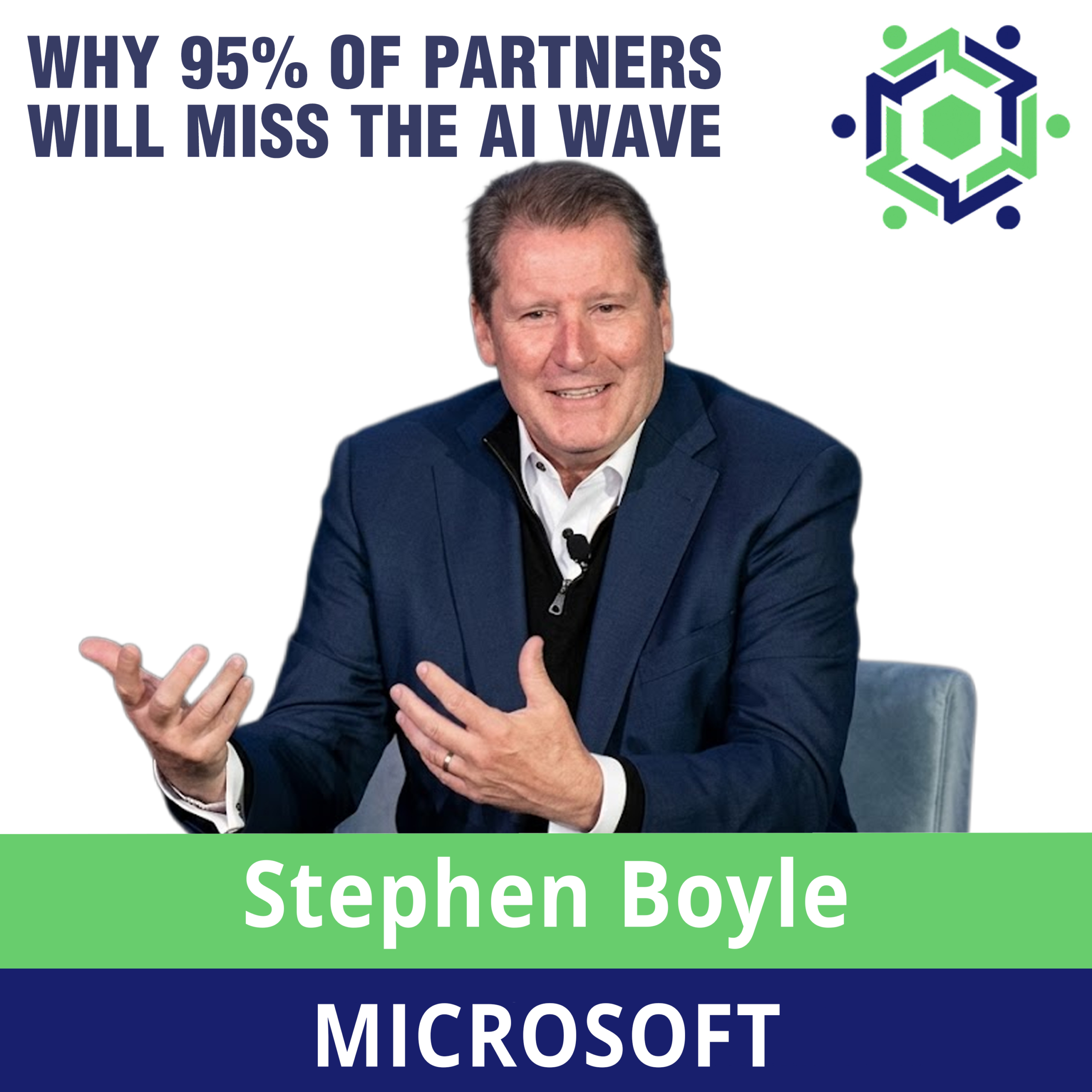 299 – Microsoft CVP Stephen Boyle: Why 95% of Partners Will Miss the AI Wave | Subscribe to our Newsletter:https://theultimatepartner.com/ebook-subscribe/ Check Out UPX:https://theultimatepartner.com/experience/ https://youtu.be/j0TuosYDQe4?si=7mzUwBe4PrQ-eB2E In this insightful session from the Ultimate Partner Live event in Bellevue, Washington, Vince Menzione sits down with Stephen Boyle, Corporate Vice President for Enterprise Partners at Microsoft, to pull back the curtain on the tectonic shifts redefining the tech ecosystem. Boyle details Microsoft’s massive organizational pivot into enterprise and SME/channel divisions , explaining how artificial intelligence acts as the foundational thread unifying systems integrators, software vendors, and digital natives. Moving past market noise surrounding competing foundational models , he highlights Microsoft’s strategy to become the ultimate “platform of platforms” by prioritizing user choice, security, and trust. Emphasizing a shift away from infrastructure technicalities and toward practical business outcomes , Boyle delivers an urgent mandate for partners to scale technical talent, eliminate traditional operational silos, and brace for the incoming consumption-driven, agent-based future of enterprise computing. Key Takeaways Microsoft has restructured its global sales divisions into distinct Enterprise and SME/Channel organizations to better target its massive total addressable markets. Artificial intelligence is fundamentally altering the partner ecosystem by dismantling traditional software and systems integrator silos to build interconnected, multi-party solutions. Rather than forcing alignment to a singular model, Microsoft aims to be the definitive platform of platforms by offering extensive choice across over 1,100 language models. The enterprise landscape is rapidly moving past experimental AI pilot phases and entering production setups completely focused on transforming core business outcomes. Tomorrow’s service organizations are aggressively evolving into software-minded operations that deploy repeatable, highly specialized internal autonomous agents. Managing tokens and monitoring usage metrics represents the emerging operational baseline for balancing efficiency against the scaling expenses of large language models. If you’re ready to lead through change, elevate your business, and achieve extraordinary outcomes through the power of partnership—this is your community. At Ultimate Partner® we want leaders like you to join us in the Ultimate Partner Experience – where transformation begins. Key Tags AI frontier, platform of platforms, enterprise partners, global systems integrators, digital natives, language models, token consumption, agent sprawl, citizen developers, shadow IT, business outcomes, technical enablement, marketplace growth, hyper-scalers, processing fluency, sovereign AI, industry ecosystems, data governance. Transcript [00:00:00] Stephen Boyle: This is the biggest, most transformative, iterative change in technology we’ve ever seen, where, if you wanna call it a paradigm shift or whatever word comes after paradigm shift. [00:00:12] Vince Menzione: We just came back from Ultimate Partner live in Bellevue, Washington, where we hosted incredible leaders for two amazing days. Come join us for this next session where we explore the tectonic shifts we’ve all been seeing. Uh, I am thrilled to invite our next guest up on stage. I’ve known this gentleman for several years back in my days at Microsoft, and, um, we’ve been friends, actually Microsoft, and then we both went and did different things, came he’s come back to Microsoft in a big way. [00:00:46] Vince Menzione: Uh, Steven Boyle, for those of you don’t know, is recently a named the C. We will talk about it in a second, but I, I need to announce you properly. Is the corporate vice president, which by the way in Microsoft is a big deal for enterprise partners. He and Nicole De and I would say are the two Microsoft leaders in the organization. [00:01:06] Vince Menzione: Nicole is the channel chief. Steven has a, a big remit and we’ll talk about that up on stage. But I’m just so delightful for his support and for making the time in a very busy week at Microsoft ’cause this is CEO summit this week to make some time to come with us and be on stage with me. Please welcome my good friend Steven Boyle. [00:01:29] Vince Menzione: Good to see you, sir. To see. So I’m gonna put you on this side. [00:01:33] Stephen Boyle: Okay. [00:01:35] Vince Menzione: The hot seat. So I’m gonna, I, I didn’t do a justice and I, I wanted you to explain your role. I, I think I know, but I think for the, for the people in the room, uh, talk to us what Enterprise Partners means at Microsoft and what that role remit and remit looks like. [00:01:50] Stephen Boyle: Um, CVPs may or may not be important, but one thing they don’t do is get invites to the CEO summit. So I’m super pleased to be here with you guys. No, no, it’s totally cool. It’s totally cool if that phone rings. No, I’m kidding. Doesn’t. So what does it mean? So I’d like quickly, um. January last year, uh, we split the sales organization into enterprise and small to medium enterprise and channel. [00:02:15] Stephen Boyle: You guys probably familiar with that? Nicole is the, uh, chief partner officer lives in the SMA and C world and drives the channel, um, drives our marketplace business and, and a lot of other things. Um, for that 60 billion, um, you know, total addressable market that we have. Down there in SME and C. Um, at the same time, we established enterprise partner as part of Nick Parker’s overall organization. [00:02:40] Stephen Boyle: Um, but for most of 2025 we ran it as global systems integrators and advisories, ISVs and digital natives. So three separate footprints all focused entirely on, on, on enterprise. Um, in December, January, we talked about establishing an enterprise partner leader that would. You know, aggregate all of this stuff. [00:03:00] Stephen Boyle: Um, I was fortunate to come through, um, some frankly, pretty hairy, uh, experiences, I bet with some of our senior leaders. Um, I, I’ve loved to [00:03:08] Vince Menzione: been in the room for that [00:03:09] Stephen Boyle: questions like, why Steven Boyle and things like that, right? And really have to dig deep to, uh, to justify. Anyway, uh, I’m blessed and honored, uh, to run that entire portfolio of partners, uh, for the entirety of the enterprise partner world, which now from a chief revenue officer perspective, belongs to Deb. [00:03:25] Stephen Boyle: Deb Co. So Deb is the enterprise leader for all of our sales that we do into that space. Awesome. Um, I have three regional leaders, Nina Harding here in the United States, Ehab Ra in in Europe, and Heather Gordon in Asia that mirror and replicate and flow down the things that we decide to do from a strategy perspective for the, uh, for the core. [00:03:45] Vince Menzione: And we love Nina. She’s been, she was at our last event, [00:03:47] Stephen Boyle: super, super lady. And, uh, you know, the US is still 50% of our overall business. [00:03:53] Vince Menzione: Yeah. [00:03:53] Stephen Boyle: Too big to fabric. Every time I talk to Nina, I’m like, Nina, you’re too big to fail. We can’t cover you anywhere else. So you know, you’ve gotta be successful here in the Americas. [00:04:01] Vince Menzione: So I think just for breaking it up, I, ’cause I do want to like, it’ll lead to the next question, right? So you have the global systems integrators, all these systems integrators. Essentially you have all of the software companies we used to call ISVs, we now call SDCs or software development corporations. [00:04:17] Vince Menzione: And then you also have the AI stack, I’ll call it. Right? So under Jason Grafe. Yeah. Many, many might know. Jason’s been a guest on the podcast and was Satya’s chief of staff at one time, eight years. Eight years. Wow. I didn’t realize there was that many. [00:04:31] Stephen Boyle: Carry carried a lot of bags for Satya over the years. [00:04:34] Vince Menzione: Unbelievable. Well, let’s, I mean, so AI is an important component, right? And you saw Jay’s, Jay talking, just talking about AI and all these things. I would love to start here, right? Because, uh, you’re, you’re, I wanna get your perspective as Microsoft, your perspective as Microsoft on the biggest shifts you’re seeing in defining this we’ll call AI Frontier. [00:04:54] Vince Menzione: We’re seeing right now, how should partners translate that into how they position and go to market externally? How, how do we need to think about this time? [00:05:02] Stephen Boyle: Yeah, that is, uh, that is a huge question and I’m not sure we’ve got enough time to go into the, into all of the detail. Um, so let me sort of up level it a little bit for you. [00:05:10] Stephen Boyle: And I think, look, the move that we meet at made a couple of months ago and pulling together those three aspects. Nicole had already done it in SME and C. Right. One partner organization across the world with a very common set of goals. We were working closely together, Sandy Gupta, on ISV, Jason on ai, and myself on on si. [00:05:29] Stephen Boyle: But we were still working closely together across silos. So the opportunity for me, 60 days into this role is AI just allows you to wire the partner ecosystem together differently. Right? And even if you look at how we’re going to market an AI today, um. You know, with, with, with chat GPT, with Claude, with Anthropic, um, I think there’s something like 1100 different, you know, language models on Microsoft today. [00:05:55] Stephen Boyle: So the way I think about AI is we are absolutely gonna be the ultimate platform of platforms. Yeah, choice is incredibly important. Um. It’s, it’s, you know, turn the clock back 12 months, everybody was chat gpt five point x, you know, and then six months ago it was Gemini and now it seems to be clawed. And honestly I don’t know what it’s gonna be next quarter. [00:06:15] Stephen Boyle: So the only thing I can do is offer you choice. [00:06:18] Vince Menzione: Yeah. [00:06:18] Stephen Boyle: And from a partner perspective, I think that minimizes or reduces the risk that you have betting on the Microsoft platform because you can go in a multitude of different directions. I know we’re not in Europe, but if you were in Europe and you were worried about G-G-D-P-R and Jay mentioned sovereignty, you’d probably be like lining up really closely to Misra. [00:06:37] Stephen Boyle: Yeah. And a bunch of other Europe, European partners. So wherever you are in the globe, I wanna be that platform choice. Um, and we will lead with our own first party solutions. I hope they’re not coming for me. Um. I parked safely in the hotel. It can’t be me. Um, but you weren’t vibe coding in the room. Um, but you know, wherever you are in the world, in whichever industry you are in, um, it is our intent to, to offer that platform of platforms and to give the broadest set of partners the opportunity to engage with us. [00:07:07] Vince Menzione: I think that’s really important because I, I have found, especially in the last month or two, people are, it’s almost like a knee jerk. Don’t you feel like people don’t know what to do? There’s been so much noise in the press and the media and, and the markets around open AI and anthropic especially. Where do I go? [00:07:26] Vince Menzione: Seems to be like when I, when I sit, I watch everybody in the room here. I think they’re, they’ve all been thinking that as well. So you can, [00:07:31] Stephen Boyle: there’s a, a little bit of a deer in the headlights moment. Yes. And even I like, I get that. Yeah. Um, you know, I saw, uh, Jay slides. Jay, love the presentation. Love the slides, man. [00:07:40] Stephen Boyle: I’m gonna steal several of them. Um, we’ll talk about that later. We, we [00:07:43] Vince Menzione: have the deck, [00:07:45] Stephen Boyle: but, but in all seriousness, you know, this, this is like. It’s a new paradigm. I will date myself a little bit. Some of you might heard me say this. I sold many computers in the 1980s. Mini computers. Some of you in the room are going, what’s a mini computer? [00:07:59] Stephen Boyle: Um, I sold client server for Sun Microsystems in the nineties. I sold an awful lot of Oracle databases in the Auts, I think they’re called, and I’ve done two stints with Microsoft. This is the biggest, most transformative. Iterative change in technology we’ve ever seen. What, if you wanna call it a paradigm shift or whatever word comes after paradigm shift. [00:08:18] Stephen Boyle: Um, and we are building intelligent systems at scale faster than we’ve ever seen. Scalable, mission critical solutions being implemented today inside of Microsoft and with our most important customers. So, and we can’t do it without partners, right? There is absolutely nothing we can do in this industry. I will, I will put the, you know, the elephant in the room out there. [00:08:40] Stephen Boyle: Our ISD organization has between five and 7,000 people. Our forward deployed engineering organization is about a thousand people. [00:08:47] Vince Menzione: Yeah. [00:08:48] Stephen Boyle: So when you look at the scale of the total addressable market that Jay just talked about. We are gonna service directly like this much [00:08:55] Vince Menzione: used to be 5%. Was it even, is it even that high? [00:08:58] Stephen Boyle: I doubt it’s, I doubt it’s even that. And the billions of dollars that we spend every year helping our customers transform to what we’re now calling frontier firms is gonna be, have to be driven with every single person in this room in some way, shape, or form. Judson is not asking Marla to significantly increase ISD. [00:09:15] Stephen Boyle: Not asking John to significantly increase FDE, although we probably will hire in that area just because of the, the newness and the, you know, bright shiny object that everybody’s like, oh, FDE, I’ve gotta have those. We’ve got a thousand already today that have been around in John’s organization for 10 plus years doing the things that we are doing today. [00:09:32] Stephen Boyle: But we are gonna build out that muscle. But the real way we’re gonna build out that muscle is with all of you in this room. That’s like categorical. That is my like, probably number one goal for the next one to three years is make sure that, that story that Jay just told about Microsoft not being involved in AstraZeneca. [00:09:48] Stephen Boyle: I probably won’t tell Judson that Jay, but I love the story. Um, like if you could all do that for me, like win, um, that is so, you know, from our worldwide learning, through our skilling enablement through our cloud solution architects that I personally own. We are pivoting aggressively towards making sure that the partners understand our platforms better than any other job, number one for me right now, if you don’t understand what I’m selling, like I’m kind of dead in the water obviously. [00:10:15] Stephen Boyle: Well, [00:10:15] Vince Menzione: I was gonna ask you why now? Why Microsoft? Why now? Right? Because there is a lot of noise. You know, Google just announced, you all announced your results on the same day, which was astounding. That was freaky, wasn’t it? It was. It was the first time. And the, the total commitment, customer commitment is over a trillion dollars now, I think 1.2 trillion is what I counted up. [00:10:33] Stephen Boyle: Yeah. [00:10:34] Vince Menzione: But it’s saying a lot about like, what do I do now, like as these partners in the room. Um, how, I think you kind of already, and you’ve talked about this, about differentiating where Microsoft is, I think J Slide does a lot of justice there. It says how, uh, Microsoft Partners came into the room, surrounded the customer. [00:10:52] Vince Menzione: It feels like Microsoft has always leaned in big time on partners. Uh, more so I would say than any other organization out there. What would [00:10:59] Stephen Boyle: you say Joe Roses, my chief of staff, business manager and so many other things was telling me last night that, you know, we used to say 500,000 partners. [00:11:05] Vince Menzione: Yeah, [00:11:06] Stephen Boyle: it’s a, it’s a significantly higher number than that as well. [00:11:09] Stephen Boyle: So there’s an element of, you know, back to the deer in the headlights, which partners are, are more important. One of my other phrases that I say on a regular basis, the winners and losers are yet to be decided in this next wave. Like, I want all of us to on the right side of that argument. Right? But, but it’s gonna be a challenge and, and companies are going through shifts. [00:11:28] Stephen Boyle: You know, Accenture, maybe, possibly doesn’t need 750,000 employees in the not too distant future. Maybe TCS at 600,000 doesn’t need 600,000 human employees. So we’re going through this dramatic shift of, you know, what’s the right balance going forward. What I would say about Microsoft is notwithstanding the fact that we’ve figured this out for 51 years, which is a little bit mind blowing, um, that you know, all the way back in the seventies we’ve gone through so many iterative changes. [00:11:56] Stephen Boyle: People have questioned just like they’ve questions. A lot of other technology companies, are you gonna be around for the long haul? I think we’ve proven time and time again, and I love Jay’s story. I’ve used that myself about how many companies disappear on a, on a decade to decade, you know, business. 10 years ago I had the opportunity to listen to Craig Clayton Christensen, who’s sadly no longer with us. [00:12:15] Stephen Boyle: Yeah. But you know, the books that he wrote and the story that he told to Microsoft 2014, we were nowhere in cloud. [00:12:21] Vince Menzione: Yeah. [00:12:22] Stephen Boyle: AWS was so far ahead of us, it was crazy. And he came in and he’s like. You know what? You guys need to be successful. You need to figure out how to cross this chasm again, and we’ve done it time and time again. [00:12:32] Stephen Boyle: You can go back. You know, Microsoft used to be known as a fast follower in ai. I don’t think we’re a fast follower. I think we’re right up there. We’re right at the front, but that race is still being run and the winners are losers are yet to be decided. [00:12:44] Vince Menzione: I was in that room with Clayton Christensen with you, by the way. [00:12:46] Vince Menzione: I remember, I remember that. That was at a Prism conference. [00:12:49] Stephen Boyle: Yeah. Yeah. [00:12:50] Vince Menzione: You men, you touched on this with the GSIs a little bit. How do you see the roles evolving? You know, we, we, we bucketed all, we’ve always been. Fantastic about bucketing ISVs or SDCs and sis and digital natives. Yeah. How does it, how does that all come together? [00:13:06] Vince Menzione: Does it come together any differently in this new AI platform era, or is it the same? [00:13:11] Stephen Boyle: I look, I, I’ve said this for a long time, like if you go into AstraZeneca, the six plus, you know, frontline partners, there’s probably a whole board of second, third tier that, that we don’t know about doing, you know, things across the AstraZeneca group. [00:13:25] Stephen Boyle: It takes several villages and sometimes a small town, especially in my world, in the enterprise world, strategic five hundreds. Yeah. Um, you know, we, we ran some reports a few years ago and it is shocking how many global systems integrators have a footprint in Shell or Exxon or, you know, bank of America or whatever else. [00:13:44] Stephen Boyle: So I’ve always believed that partner to partner is critical. Yeah. I think it became even more critical in the, in the AI world, and I’ll take my new friends at Anthropic. So I went to the first Anthropic partner Summit. Some of you might have been down there in, in San Diego, um, just a couple of months ago. [00:13:59] Stephen Boyle: Same partners, same people from the same partners. In the room, you know, talking about what they’re gonna do together with Anthropic. Um, and I’m looking out across this audience going, okay, well I know him and I know her and I know those guys, and like, I need to figure out how I’m gonna weave this together. [00:14:14] Stephen Boyle: So it’s not just an Accenture and Anthropic or an NTT data and anthropic, but it’s an NTT data plus anthropic plus Microsoft. Story going forward. And then who’s best at delivering those services capabilities? So it’s it at every juncture that I see in the, in the partner community, and this is the, the reason why I argued vehemently with Nick, that it has to be one organization I’m gonna create maybe given a little bit away. [00:14:40] Stephen Boyle: So if you’re recording, stop now. Um, I’m gonna create an enablement organization that is partner agnostic. I don’t necessarily care. I do care about the digital natives, but I don’t care about how I train them. Right. What I’m more important of is how do I train the digital natives in what the sis are doing, and how do I train the sis and what the ISVs Plus digital Natives are doing. [00:15:01] Vince Menzione: Yeah. [00:15:01] Stephen Boyle: That is my, that’s my game plan. If I fail there, then I think we fail to raise the bar and be differentiated in an AI world, and I’m not set up like that today. [00:15:12] Vince Menzione: I wanna, I wanna ask you, uh, uh, because I was looking at Jay’s slide and the, the managed piece is. And we have a lot of managed service providers in this room today. [00:15:20] Vince Menzione: A lot of them, by the way, come from the old school of managed services. The managed piece seems to be like, if I’m doing something today with ai, we’re gonna talk about security next, uh, up on stage here. It seems like there’s a new set of skills or a different approach to the customer, don’t you? Don’t you agree? [00:15:37] Stephen Boyle: I I [00:15:37] Vince Menzione: think you need to keep your hands on the steering wheel at all [00:15:39] Stephen Boyle: times. I think what it boils down to is you can’t do AI unless you do certain other things. [00:15:44] Vince Menzione: Yeah. [00:15:44] Stephen Boyle: Right. You could be a modern work specialist and you could make a lot of money being a modern work specialist, or you could be a, a dynamic specialist. [00:15:52] Stephen Boyle: We just held our, uh, inner A in a circle conference last last week, which I was disappointed to miss for the first time in a few years. Those, those days are, are, are fast becoming over. [00:16:03] Vince Menzione: Yeah. [00:16:04] Stephen Boyle: Um, why? Because everything that I’ve just said is tied together by ai. Yes. And in order to do good ai, you need good data. [00:16:12] Stephen Boyle: And in order to trust everything that you’re getting, as Judson talks about trust and intelligence, you need to wrap that in a really secure [00:16:19] Vince Menzione: Yes. [00:16:19] Stephen Boyle: You know, en en environment. Now we will do our best to provide levels of security into how we deliver ai. But that’s not the end of the game, right? You have to take it all, all the way to the edge. [00:16:30] Stephen Boyle: So that’s why a siloed partner or a singular commercial solution area partner in Microsoft’s terms, has got to transform its business. ’cause if you’re gonna do ai, you’ve gotta do those other things as well. [00:16:41] Vince Menzione: Agreed. I must see the model changing, and in fact, I see like bigger organizations becoming managed service providers in many respects. [00:16:48] Stephen Boyle: Yeah. Yeah. I mean, look, there’s still, there’s still a role for all the old terminology you mentioned is SV to sdc. Yeah. I’m like, I’m been around long enough. Look, it’s ANB still anv, it’s still an isv. Thank you. Independent software vendor. Um, and it’s, you know, where, where AI is allowing software to be, you know, frankly developed in a number of different places. [00:17:07] Stephen Boyle: We are all citizen developers. Um, you know, I was on a call with our internal leadership yesterday, um, and you guys might have heard this story ’cause I think it came out at Ignite. When we turn the agent 365, around and on ourselves. We found 130,000 agents running across Microsoft that had been developed and deployed internally with, I mean, you could call it shadow it. [00:17:28] Stephen Boyle: I guess that would be one phrase that you would use for it, but the reality is if you, if you haven’t got something to do your job today, you have the tools. To build it really, really fast. Um, and that, you know, that’s, that’s a great opportunity for people to be able to do their work, you know, in a better and in a different way. [00:17:45] Stephen Boyle: But it’s also a huge opportunity to make sure that data governance and security and all the other things that we need to deliver are there out of, out of the gate and out of the platform that we deliver. So security’s absolutely critical. Not saying that managed services won’t grow, um, at, at some level as well, but only if they transform into this multifaceted way. [00:18:04] Stephen Boyle: Yeah. Thinking [00:18:05] Vince Menzione: about, well, that’s what I was, I was gonna lead to here with innovating. It’s happening across, I mean, we’re talking about chips, we’re talking about foundational models, LLMs, we’re talking about applications, we’re talking about agents. How should we think about where to play and how to differentiate as partners in this room? [00:18:22] Stephen Boyle: I think. [00:18:25] Stephen Boyle: So look, I mean, one, one of the ways that Judson talks about it is I think silicon’s gonna change over time. Yes. NVIDIA’s definitely the 800 pound gorilla, maybe the 8,000 pound gorilla. Yeah. Uh, but you know, if you read the press, there’s, there’s things happening in, in different places as first party silicon, which we clearly are, are developing, um, in a quantum direction for sure. [00:18:45] Stephen Boyle: Um, there’s lots of different language models that haven’t even been launched on, on, on the marketplace yet, so. You know, Judson’s trying to uplevel our conversations. You’ll hear us talking about conversations more and more as we go into FY 27, um, that obviate all of those layers. Just like even when I was selling Sun Microsystems, it was about the business outcome and the business solution that we were solving for not necessarily the fastest piece of hardware or the best client service solution on, on the market. [00:19:17] Stephen Boyle: So I think what’s gonna happen over the next 12 to 24 months is we’ll have so many different models to choose from. We’ll have more silicon to choose from, but those won’t be the real buying decisions. The real buying decisions of what? How am I trying to transform my finance organization, my HR organization, and my supply chain? [00:19:36] Stephen Boyle: Because the underlying technology, Judson says commodity I, I guess I can go with that. It will be commoditized and we’ll really start to focus back on what the important things are. We’re moving a lot from pilot to production. You guys have probably seen that. The numbers that Jay just showed about how many. [00:19:52] Stephen Boyle: Projects are failing, is getting less and less because we’re getting smarter and smarter about what it takes to actually drive the business outcome. And I need all of us to be talking that same language. Yeah. Having conversations with head of HR about how we’re gonna transform human capital management in the, in the age of agents, if you like, like the underlying platform. [00:20:14] Stephen Boyle: It’s not, don’t worry about it. You wanna be on a secure platform. Don’t get me wrong. But at the same time, I don’t think we, we spent too much time worrying about that. [00:20:21] Vince Menzione: Yeah. We’re not, what you’re saying is we’re not spending enough time on outcomes. On the business outcomes. Right. And that’s where we need to focus. [00:20:27] Vince Menzione: We’re, we’re focusing on, I, I feel like we’re, it’s a signal to, to noise ratio that we’re living through right now. There’s too much noise. [00:20:33] Stephen Boyle: Yeah. [00:20:34] Vince Menzione: And we’re not focusing on the signal. I think that’s what you’re saying. [00:20:36] Stephen Boyle: I, it’s got to be, I mean, to be honest with you, it’s always been, you know, even when I sold what I would perceive, you know, sun in the nineties was a rockman ship to the stars and, you know, kind of sad what happened to that company. [00:20:47] Stephen Boyle: Um, but we, we were, we were fixated on, we had the best client server. But, but nobody was buying, you know, a piece of Sun hardware as a room heater, which is all it did, you know, like for the longest. But if you had SAP, if you had Cybase, if you had Bond, remember Bond, I mean all of those applications that drove the business outcomes, we’ve gotta get back to that kind of mentality. [00:21:09] Stephen Boyle: Yes. And worrying a little bit less about the underlying architecture. Yeah. It needs to be, it needs to be part of the conversation. ’cause it needs to deliver trust and security and intelligence and everything else. Then you need to rapidly move to what are you trying to achieve and how can we ensure the, the, the success of, of your business outcome. [00:21:27] Stephen Boyle: And look, I mean, Palantir pri you know, sort of came out and said, well, the way we do that is through forward deployed engineering. Um, and they stole the show. And, and, you know, they’re, they’re doing very well as a result of doing that. Uh, but if you go and talk to, um, Tom Siebel’s organization at C3 ai. [00:21:43] Stephen Boyle: They’ve had FDS for quite a while. You know, I told you about John Chuchu 10 years ago. John Chu, Chuck’s job was to go and get all the applications that we needed on the Microsoft phone. Remember that? [00:21:54] Vince Menzione: Yes. Um, [00:21:55] Stephen Boyle: you know, so we’ve pivoted John o over the years to doing what he’s doing now, which is to go sometimes in partnership with, with partners into the customer and say, what is it you’re trying to achieve? [00:22:05] Stephen Boyle: Let me show you how I can build that for you in three weeks or three months. That might have taken you three years. We literally just did a hackathon with one partner last, last, last week with, uh, with our ISE organization, the, the, the forward deployed, uh, group that John runs. Um, and one of the big customers said, I’ve just done in three days what would’ve taken me three months. [00:22:26] Stephen Boyle: Now he hasn’t productized it and rolled it out and blah, blah, blah. But the reality is that is how fast things are changing. And this was not a small company. This was a very, very large oil company, and they were like blown away by how much we can achieve. We’ve gotta do that at scale. [00:22:41] Vince Menzione: Yeah. [00:22:42] Stephen Boyle: You know, we, we have a commitment to scale our FDE community through partnerships to touch all of the S 500 in a very personalized way. [00:22:51] Stephen Boyle: And then, you know, at a slightly, you know, lower ratios down through the, through the majors and into, into Nicole’s SME and C world as well. [00:22:59] Vince Menzione: Jay talks about the decade of the ecosystem. He coined that term back, back on a podcast way back in nine, in, uh, in 2020. Microsoft has been at the, for, we used to call partner to partner back, back in the day. [00:23:10] Vince Menzione: Mm-hmm. Do you remember those days? How do you think about this ecosystem evolving and what steps are you taking to help bring these organizations together? Because I, I, again, we look at the seven seats or 6.3 seats at the table. The customer has the power now that they didn’t have before. ’cause they have the commitment with like with Microsoft and they can buy off of the marketplace and pull together multiple organizations to go, go do that. [00:23:34] Vince Menzione: How do you think about helping to orchestrate that as the leader of the enterprise partner business? [00:23:39] Stephen Boyle: So I’ll start with a really big example, and I’ll try and sort of scale it down a little bit. But my friends at Accenture, with the Accenture, Microsoft Business Group, we spend an awful lot of time, you know, in, in each other’s pockets, in each other’s deals. [00:23:51] Stephen Boyle: We know everything that’s going on in the Accenture, Microsoft Business Group. And a couple of weeks, or maybe a month or so ago, I was told that the Microsoft Business Group is now larger than the SAP Business group. It probably flip flops. [00:24:03] Vince Menzione: Yeah, [00:24:04] Stephen Boyle: it won’t be too long before the Anthropic Business Group is bigger than both of those. [00:24:08] Stephen Boyle: So what I need my Microsoft team to do is to not spend all of their lives in the. A MBG, the Azure, the Accenture, Microsoft Business group, but to go make friends in the Anthropic Accenture Business group and frankly still to make friends in the SAP business group and maybe in the Oracle Business Group and the list goes on. [00:24:27] Stephen Boyle: So at a macro 11, in the very largest accounts where we haven multiple practices, where we haven’t spent time before, I’m gonna. Push my people into uncomfortable zones and I’m gonna push them to go into those other areas and I’m gonna load them up with technical talent and cloud solution architects and ai, you know, forward deployed engineers. [00:24:45] Stephen Boyle: And I’m gonna force different people to talk together that haven’t talked together. So I can do that in TCS. I can do that, Capgemini, I can do that. Um, you know, in Europe with Capgemini and Misra is a classic example. Um, with the, with the Indian sis, Indian based sis, they’re all big enough where I know all the practices exist. [00:25:04] Stephen Boyle: I just need to do a better job of, of talking to them. Now, when you downsize that into, you know, into a, a company that doesn’t have all of that scale, this the same truth still holds. I need to talk to people who aren’t necessarily motivated every single day to do something with Microsoft. I need to talk to people who are motivated to do something with an AI partner or even a traditional SaaS partner. [00:25:27] Stephen Boyle: I noticed yesterday, actually no, this morning I got a notification that we just passed, um, a billion dollars in revenue on the marketplace with ServiceNow. [00:25:35] Vince Menzione: Nice. [00:25:36] Stephen Boyle: Um, and I think AWS announced the same thing, by the way this month as well. Um, so thank you to the ServiceNow people. Yeah. Um, you know, that is that there’s a tremendous demonstration of how far we’ve come in marketplace. [00:25:48] Stephen Boyle: ’cause that’s another one where we trailed AWS quite significantly. But with the right partnerships. And driving the right motions, we can, you know, we can definitely catch up and we will continue to pass, uh, some of, some of the other hyperscalers in, in, in that way. So really the bottom line to your question is partner to partner is still real. [00:26:08] Vince Menzione: Yeah, [00:26:08] Stephen Boyle: how we do it and what we use to tie things together. And I know that compensation drives behavior and we’re not gonna get into a compensation about like how we get compensated and everything else, but the reality is I’ve gotta break down those barriers and those silos and I’ve gotta deliver real meaningful enablement and practice development so that, so that the people who sit in the Anthropic business group and the people who sit in the Microsoft Business Group are spending as much time together as they are with me. [00:26:34] Stephen Boyle: That makes sense. Simply put, that’s what I, I need to achieve at scale rapidly. [00:26:40] Vince Menzione: So to, we’re getting close to time here, but as you look forward, what would define the most successful partnerships in this ecosystem? Is it, is it what you described, the opening up the aperture or for the, for the leaders in the room here today, what should they go do better and differently? [00:26:58] Stephen Boyle: Um, so obviously we’re closing out this fiscal, we’ve got Microsoft start and Microsoft start for partners coming up in July. Um, I mentioned the fact that we’re, we’re driving. Cu customer engagement through the lens of conversations and how do we achieve business outcomes? I would encourage you to, to gravitate, if you like, above the commercial solution areas where you might have understood, this is how I interact with Microsoft today. [00:27:23] Stephen Boyle: Um, and abstract it up to that AI layer. You know, think about trust, think about intelligence, think about business outcomes, and how do I potentially weave together a story? If I’m in the dynamic space, how do I get better in data? If I’m in the data space, how do I get better in. In that modern work environment, but really use AI as the overlay to, to help tie that together. [00:27:44] Stephen Boyle: That’s one thing. The second thing is if we’re not training you in the right direction, it’s stevenBoyle@microsoft.com. Let me know. Awesome. Um, we’ve got programmatic stuff, um, you know, and we’ve got high touch stuff as well. So I think this is, this is another time where Microsoft is gonna over pivot on all of the training and enablement that we need to do to make sure that you’re, you know, you’re grounded in our platform. [00:28:07] Stephen Boyle: Um, I think there’s a huge opportunity with this agenda future to become more of a software partner. You know, even the deepest services organizations are going to need agents, and the more successful ones will be the ones that can turn on those agents in a repeatable way. So. Our agents, the new SaaS. I’m not exactly saying that, but I think that the agen future is one where even the more services oriented companies will, will have teams of agents that they’re deploying. [00:28:35] Stephen Boyle: In fact, I had a very, very large systems integrator, um, in, in the EBC just about a month ago, three weeks ago. Um, and I was sat next to their head of consulting and he showed me what he called his God dashboard. Uh, and right in the middle of his God dashboard there are like 450 accounts. All of whom I recognized, ’cause they were all in the enterprise, right in the middle of his dashboard was, how many tokens am I spending? [00:29:00] Vince Menzione: Yeah. [00:29:01] Stephen Boyle: Like, not like what’s my daily runway? You know, not am I making a profit on that account or anything else like that is like, how many tokens have I consumed? Yeah. Because there is an awful lot of, that is the new juice, if you like. That’s, that’s driving the success. You can have the smartest people on the planet, but you’ve got to still arm them with all the best tools that are available out there. [00:29:22] Stephen Boyle: So it’s fascinating to listen to him, how he had gone through that thing of, you know, agent sprawl, how many are really working, how many are not working? How can we prove that? You can prove it through, you know, managing your tokens. There’s a new version of. Finops for tokens, for want of a better phrase, that’s gonna be critical for us all to understand. [00:29:40] Stephen Boyle: ’cause they’re not cheap, they’re not free, that’s for sure. And, and they might not be cheap if you’re not, if you’re not managing them and using them effectively. Yeah. So that’s the other thing that I would really get on top of. And, you know, we’re gonna make some announcements in the not too distant future about the consumption driven future. [00:29:56] Stephen Boyle: Um, that, that we will, that we will deliver with our first party and third party platforms going forward. So that’s another. Another critical thing [00:30:03] Vince Menzione: sounds like some exciting announcements. Pretty soon. [00:30:06] Stephen Boyle: Yeah, could look close. Quarter four, help me close. Quarter four. Yes. That’s priority number one, two, and three right now. [00:30:12] Stephen Boyle: Uh, but get ready for some, you know, for some new announcements in July. Um, look, the future is incredibly bright with Microsoft. It’s incredibly bright in the industry as a whole, right? I mean, let, let’s be honest, the, the growth targets that we will have for ne next year are astronomical, and we will not make them without the partner community that we have, without training and enabling the partner community that we need for tomorrow. [00:30:34] Stephen Boyle: So like, stay close, you know, stay engaged. Talk to your partner development managers, talk to the talk to field reps, talk to the accounts that that, that you are in, and stay as close as you possibly can to our emerging strategy. And, um, you know, look, I, I think if I had fivefold or tenfold the people I have today, I still wouldn’t be able to touch everybody that I would like to touch in the partner community. [00:30:58] Stephen Boyle: So I’ll apologize in advance. Um, but we’re gonna have some, you know, some really cool ways of learning. Um, and we’re gonna make sure that they’re available to the widest possible audience. [00:31:07] Vince Menzione: Well, we bring the practitioners and the experts in the room to help with that as well. Right? Yeah. Because you can’t always have a partner development manager tied to everybody in the room. [00:31:14] Stephen Boyle: I, I would do hackathons on AI every week with every partner and every part of the world, but I can’t. [00:31:19] Vince Menzione: Yeah, exactly. Well, so good to have you today. Thank you. So good to see you again. I don’t know what your schedule is like. I, we didn’t, we don’t have enough time for questions. [00:31:28] Stephen Boyle: That’s cool. [00:31:28] Vince Menzione: From the audience. [00:31:29] Stephen Boyle: I’m gonna stay around for a little [00:31:30] Vince Menzione: while this [00:31:30] Stephen Boyle: morning and I’m coming back [00:31:31] Vince Menzione: for cocktails. Alright, terrific. So. Stephen Boyle will be here for cocktail hour. Thank you. Four 30 and uh, I wanna thank you, sir. So good to have you. Thank you. Good to see you. Absolutely. [00:31:42] Stephen Boyle: So much. Absolutely. Hey, thanks everybody. [00:31:43] Stephen Boyle: Thanks for what you do today, and hopefully thank you for what you do tomorrow as well. [00:31:46] Vince Menzione: Thank you. An incredible leader. [00:31:49] Stephen Boyle: Don’t forget, ultimate [00:31:51] Vince Menzione: partner Alive is coming soon, June 18th at our executive breakfast in New York. I hope to see you there.Description The Future of Tech is Here. Subscribe to our Newsletter:https://theultimatepartner.com/ebook-subscribe/ Check Out UPX:https://theultimatepartner.com/experience/ I | — | ||||||
| 6/8/26 | 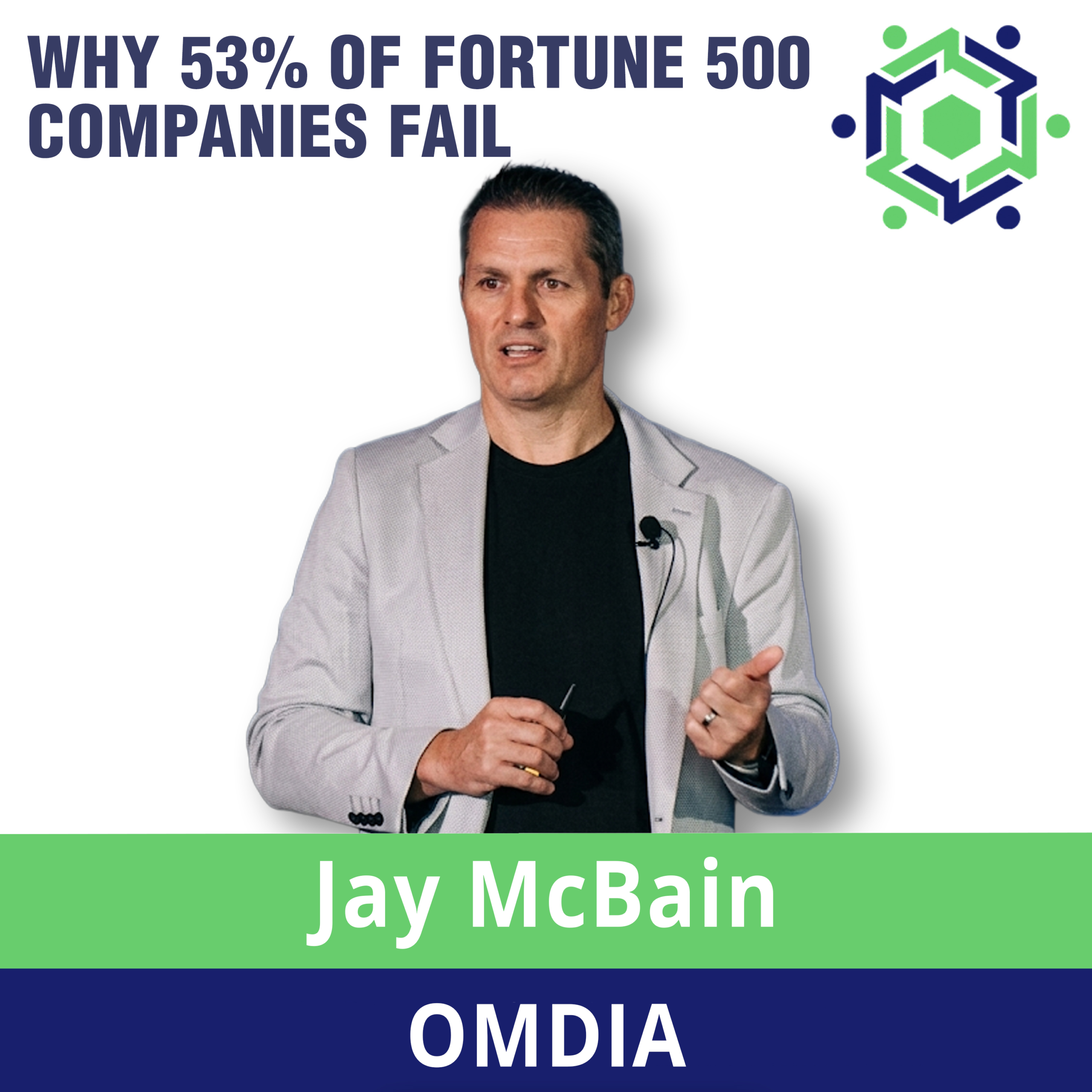 298 – Jay McBain: The $6 Trillion Shift Rewriting Every Tech Partnership Right Now✨ | tech partnershipsmacroeconomic shifts+4 | Jay McBain | MicrosoftAWS+3 | — | tech partnershipsAI boom+5 | — | 36m 18s | |
| 4/29/26 | 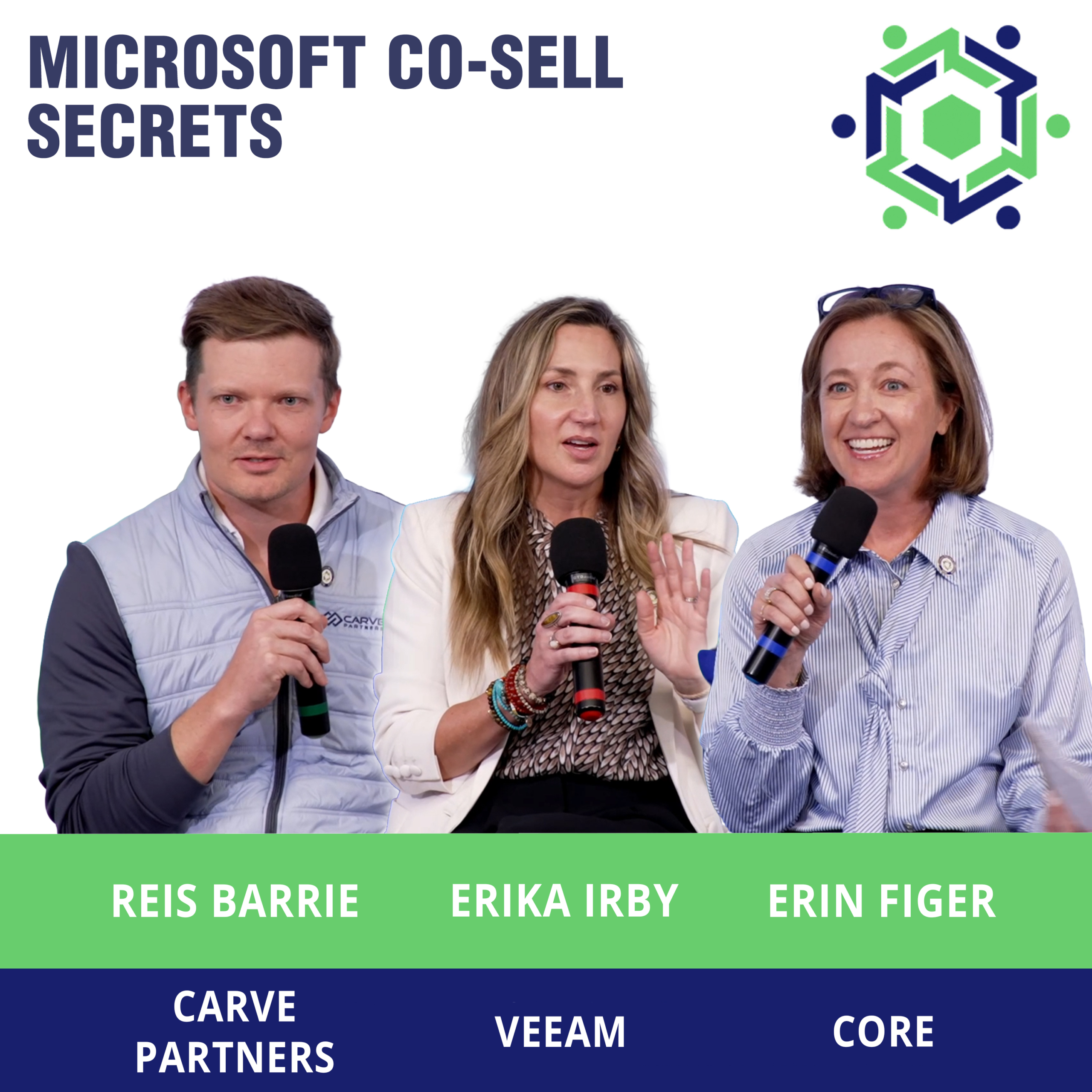 297 – 10 Years of Microsoft Co-Sell: What the Top Partners Do Differently in 2026✨ | Microsoft Co-Sellpartner strategies+4 | Erin FigerErika Irby+1 | MicrosoftUltimate Partner | — | co-sellMicrosoft+4 | — | 49m 27s | |
| 4/21/26 |  296 – Why the Obsolete MSP Model is Dying and How to Join the MIP Elite✨ | Managed Service ProvidersManaged Intelligence Providers+5 | Oguo Atuanya | Pax8Ultimate Partner+1 | — | MSPMIP+7 | — | 40m 18s | |
| 4/14/26 |  295 – What the C-Suite Isn’t Telling You About AI Trust and Governance✨ | AI TrustGovernance+4 | Katharine Kennedy | MicrosoftServiceNow+1 | — | AITrust+6 | — | 21m 31s | |
| 4/7/26 |  294 – The Missing Piece of Your Ikigai: Why Nobody Finds Purpose Alone – Vince Menzione✨ | purposeIkigai+3 | — | MicrosoftIkigai | — | Ikigaipurpose+5 | — | 11m 13s | |
| 3/31/26 |  293 – The $500B Cloud Commitment Opportunity Are You Being Left Behind?✨ | cloud marketplacebusiness transformation+3 | Dexter Hardy | NtegralSpark | — | cloud marketplaceMarketplace Operating System+5 | — | — | |
| 3/23/26 |  292 – Stop Automating Bad Processes: Why Your AI Strategy is Already Failing✨ | AI strategydata governance+4 | Marc MondayAshleigh Vogstad | ServiceNow | — | AI strategydata governance+5 | — | 28m 38s | |
Want analysis for the episodes below?Free for Pro Submit a request, we'll have your selected episodes analyzed within an hour. Free, at no cost to you, for Pro users. | |||||||||
| 3/16/26 |  291 – The Power of Three: How Top Leaders Turn AI Into Growth✨ | AI transformationco-selling model+3 | Rebecca Jones | Bridge PartnersMicrosoft | — | AIco-selling+4 | — | 43m 06s | |
| 3/8/26 |  290 – The AI Pilot Era is Officially Dead—Are You Being Left Behind?✨ | AIROI+5 | Nina Harding | Copilot StudioAgent 365+2 | — | AIreturn on investment+5 | — | — | |
| 3/2/26 |  289 – The End of Attention: Why ‘Business as Usual’ Will Fail in 2026✨ | Trust EconomyAI in business+4 | Ashleigh Vogstad | TranscendsMicrosoft+2 | Oxford | Trust EconomyAI agents+5 | — | 42m 10s | |
| 2/15/26 |  288 – The Millions You’re Losing Without Even Knowing It✨ | B2B buying journeypartner relationships+3 | Jay McBain | SAPAstraZeneca+4 | — | B2Bsales+3 | — | 12m 02s | |
| 2/8/26 |  287 – The $300B Marketplace Shift: Why Agents, REO, and the Channel Will Decide Who Wins | Subscribe to our Newsletter: https://theultimatepartner.com/ebook-subscribe/ Check Out UPX: https://theultimatepartner.com/experience/ https://youtu.be/-flNeKF6CxQ?si=xIIQ4LUl7oraQjkg Microsoft’s Cyril Belikoff joins Vince Menzione to reveal the seismic shift occurring within the newly reimagined Microsoft Marketplace. As the industry moves toward a predicted $300 billion partner opportunity by 2030, this discussion deconstructs the evolution of the “Frontier” vision, the launch of the AI apps and agents category, and the critical “Resale Enabled Offer” (REO) that is currently doubling deal sizes for early adopters. Whether you are a software company looking to scale globally or a reseller aiming to stitch together complex AI solutions, the message is clear: the flywheel is already spinning, and those who wait for a “perfect strategy” risk being permanently displaced by more agile competitors who are getting their feet wet today. Key Takeaways The Microsoft Marketplace has been reimagined into a single destination for discovering, buying, and deploying AI apps and agents. Analysts predict a staggering $300 billion opportunity for partners within the Microsoft Marketplace by 2030. The new Resale Enabled Offer (REO) allows software companies to authorize channel partners to resell on their behalf across specific geographies with minimal overhead. Cloud migration is far from over, as massive amounts of on-premise data and ISV apps still need to be modernized for the AI era. Marketplace deal sizes are doubling as customers use Azure commitments to retire their marketplace acquisition costs. Successful partners are moving away from “boiling the ocean” strategies and instead focusing on transacting one or two deals to learn the ecosystem’s mechanics. If you’re ready to lead through change, elevate your business, and achieve extraordinary outcomes through the power of partnership—this is your community. At Ultimate Partner® we want leaders like you to join us in the Ultimate Partner Experience – where transformation begins. Key Tags: Microsoft Marketplace, AI apps and agents, Resale Enabled Offer, REO, Cyril Belikoff, Azure Marketplace, AppSource, cloud solutions, software companies, digital transformation, AI strategy, channel led sales, ISV solutions, cloud migration, Azure commitments, Microsoft Cloud, Frontier vision, MSP opportunity, marketplace transacting, AI monetization, global scale, procurement, IT deployment, technical modernization, partner ecosystem, business applications. Opening Lines: [00:00:00] Cyril Belikoff: Marketplace is really the extension of our vision for Frontier, uh, and the Microsoft Cloud. You know, the, the Microsoft technology takes a customer a long way, but in many ways to complete the thought. If you’re in football terms, you want to cross over the line and score touchdown. You can’t just get, uh, to the red zone. [00:00:20] Cyril Belikoff: You actually need partner solutions. [00:00:26] Vince Menzione: So let’s, let’s kick off to Marketplace a little bit right, too, because, uh, it’s been a big year for Marketplace, or 20, the first half of 2026 fiscal year 2026 has been a big year. A lot of announcements, a lot of things going on in the world, in marketplace. Where do we wanna start there? Let’s recap some of it. [00:00:44] Cyril Belikoff: Yeah. Um, so, um. It feels like a long time ago, but in, at the end of September, [00:00:51] Vince Menzione: yeah. [00:00:52] Cyril Belikoff: Um, at the AR tour, uh, in Chicago, we announced a new Microsoft marketplace. We reimagined that experience. It’s a new customer experience, single destination for customers to. You know, discover, find, try, buy, and deploy cloud solutions, AI apps and agents all in one place. [00:01:11] Cyril Belikoff: And so historically, we’ve had a little bit, uh, of decentralization. We had this thing called the Azure Marketplace and AppSource for different experiences. AppSource was more for teams and, and copilot. Um, and, and office, Azure Marketplace. Of course, that was for Azure. We brought all of that into one place. [00:01:30] Cyril Belikoff: So customers, whether they are looking for a SaaS solution running on Azure, an agent that snaps into copilot, an experience that runs in our security store, now they can go to one place. Um. marketplace.microsoft.com. It’s one, it’s the new Microsoft marketplace. And we have an, of course, we have a, we had, we launched a brand new category, AI apps and agents, and we launched that category in September. [00:01:54] Cyril Belikoff: Uh, bringing together numerous, uh, uh, partner offerings. Yeah. And today we have the largest catalog, um, probably in the mid four thousands of AI and agents. Wow. Available to customer. So fantastic. There was, there was quite a big moment in September. Um, and then fast forward a little bit to November, we announced a resale enabled offer, um, at Ignite [00:02:15] Vince Menzione: eo. [00:02:16] Vince Menzione: Eo [00:02:16] Cyril Belikoff: eo. I, [00:02:17] Vince Menzione: I like EO reminds me of the band back in the day. [00:02:19] Cyril Belikoff: Yeah. R Speedwagon. There you go. Uh, well, and it’s, it’s not that far from it because Oreo accelerates. Yeah. Um, what partners can do, uh, with the marketplace and really connects. Software companies and resellers, which I’m sure we’ll talk about in a second. [00:02:34] Cyril Belikoff: But that’s really the recap, um, of, uh, you know, the new Microsoft marketplace, how we enabling it for, uh, for partners through the the resell enable offer. [00:02:45] Vince Menzione: So, I know we talked on this a little bit, but I wanna maybe just expand on it. What does the frontier push and the marketplace evolution mean for partners? [00:02:53] Vince Menzione: Because I, I think it’s huge for both, for these partners to really monetize and accelerate their success working with you. [00:03:00] Cyril Belikoff: Yeah. So, um. Marketplace is really the extension of our vision for Frontier, uh, and the Microsoft Cloud. You know, the, the Microsoft technology takes a customer a long way, but in many ways to complete the thought and to, you know, uh, uh. [00:03:20] Cyril Belikoff: If you’re in football terms, you wanna cross over the line and score a touchdown, you can’t just get, uh, to the red zone. You actually need partner solutions. [00:03:28] Vince Menzione: Yeah. [00:03:29] Cyril Belikoff: Uh, and so that’s where the partner solutions, combined with Microsoft’s first party offerings become a really, really. Great offering and powerful offering for our customers to, to become Frontier. [00:03:40] Cyril Belikoff: So we have obviously a ton of AI experiences, our own co-pilot experiences, uh, Microsoft Foundry, which is a platform for ai, but in, in many ways, we need those industry solutions. We need those AI apps and agents from partners to complete that offering. And that’s really. How it comes together and, uh, you know, uh, I heard you from o was just on before me. [00:04:01] Cyril Belikoff: They actually predict that the Microsoft marketplace, uh, is a 300 billion partner opportunity by 2030. Yeah, they’re talking about, I think, mid eighties growth. We have literally seen our business for the last three years, and we are in the middle of our, uh, you know, third year doubling. And so when you get three or four years of doubling every year, that’s compounded doubling. [00:04:24] Cyril Belikoff: Um, so, uh, we have seen lots of momentum from customers, lots of interest. We’ve made it, you know. Interesting for customers. Um, and incentivize our customers with their Azure commitments that can retire their marketplace, uh, acquisitions that way. We’ve made it, we’ve put incentives for partners and for our own sellers. [00:04:44] Cyril Belikoff: So we really creating the flywheel for everybody in the market to see value from, uh, the marketplace. So. Like, like, like you mentioned, like m the, uh, you know, suggested [00:04:55] Vince Menzione: Yeah. [00:04:55] Cyril Belikoff: It’s only exploding the opportunity on marketplace. [00:04:58] Vince Menzione: Well, and you both touched on the fact that the data is not in the cloud yet. [00:05:02] Vince Menzione: Not all the data that needs to be in the cloud in order to drive the future of where we wanna go from a society. Mm-hmm. And from a business application perspective needs to be in the cloud. So huge opportunities for partners around data states, around securing that data, governing that data, and so on, on top of all the business applications, [00:05:19] Cyril Belikoff: right? [00:05:19] Vince Menzione: As promise. So incredible. Yep. So let’s [00:05:22] Cyril Belikoff: talk about, yeah. The call migration. The call migration, people think that is over and it’s long from over because customers have plenty, uh, on premise, uh, not only Microsoft technology, but the, the, the, the software company or the ISV app that sits on top of it. Yeah. [00:05:36] Cyril Belikoff: And that needs to be migrated, managed, modernized, um, and marketplace is a big part of that too. Um, but there’s so many services and, um, opportunities around it. [00:05:45] Vince Menzione: Incredible opportunity. Let’s talk about the channel and the channel opportunity. You, you touched on this earlier, right? So this really lighting up the channel. [00:05:53] Vince Menzione: I saw this loud and clear when we were at Ignite. Like this is a huge opportunity for the Es, for the resellers, for all the partners. And as part of REO, you’ve got huge opportunities you’re laying out for them for the 500,000 part partners. You know, we talk about the Bill Gates moment down here in Boca. [00:06:09] Vince Menzione: This is where it all started. Uh, yep. How, how do you think about marketplace in the channel today? [00:06:16] Cyril Belikoff: Yeah. You know, it’s, um, it’s vital. You know, we have a customer need, um, from. The smallest is small business all the way to enterprise. And the really, the only way we serve that, the only way we know how to serve that is with our partners from the largest of partners that serve our top enterprises down through, um, what we call small and medium and then down to our small business. [00:06:41] Vince Menzione: Yeah. [00:06:41] Cyril Belikoff: Um, and so, you know, we have seen our. You know, while our, we’ve seen a doubling of our business, we’ve seen three, three and a half to four x doubling of our channel led sales. [00:06:53] Vince Menzione: Yeah. [00:06:54] Cyril Belikoff: Um, over the last year. And so while our overall business is doubling, channel is accelerating even, you know, even more. [00:07:02] Cyril Belikoff: And so there, there’s a need from our customers because they buy from our channel and there’s obviously a need from the channel. And so we created this resale enabled offer. As you mentioned, we, um. We announced private preview in September and launched GA at Ignite. So, you know, uh, November, just before Thanksgiving holiday and retail Enable offer is all about scale and how we connect a, a, an independent software vendor or a software company. [00:07:27] Cyril Belikoff: To authorize a channel partner to resell on their behalf on a particular geography. And then that allows software companies to expand into new markets with very little overhead. And it allows the channel partners to create a set of offerings, not only from one partner, but you might have multiple software companies or applications that you stitch that are together to create an end-to-end customer offering or experience. [00:07:51] Cyril Belikoff: And so we are seeing, we are seeing many to many relationships. So software companies might authorize many resellers, many markets they’re in, for example. Yep. And then resellers, um, they’re, they’re becoming authorized resellers from many software companies so that they can really stitch together, end into end solution. [00:08:09] Cyril Belikoff: And it, we’re loving it and we are getting great feedback. It is early days for our global availability for, uh, re office, which. But we had partners that were literally waiting, um, uh, and waiting for deals. And within the first week there was, they were, uh, processing the, the Oreo deals at, at, at quite large scale already. [00:08:31] Cyril Belikoff: So. We are excited about the feedback that we’re getting. We, as you know, we, we stay close to that feedback and we listen well, um, and adjust from it. So we got more work to do, but, um, it’s a great opportunity for, to connect our, our multiple types of partners, software companies, and resellers. [00:08:48] Vince Menzione: Yeah, I agree. [00:08:49] Vince Menzione: And you know, I talk to a lot of these organizations myself, and there is palpable excitement. In the channel from Distees that were sort of disengaged a couple of years ago, maybe, trying to figure out where they were gonna monetize. And the other way area that’s aligned to this as well is the Ms. P community. [00:09:06] Vince Menzione: So these MSPs are getting bigger and bigger, and organizations like Accenture, Avanade, and ndl. Or becoming MSPs or creating Ms. P practices within their own firms. But there’s even these smaller MSPs, but many of ’em are getting to a billion dollars or more. These were little mom and pop companies years ago, but the customer so needs to have, you know, especially with ai, right? [00:09:27] Vince Menzione: Because we’re in a constant state of evolution right now. I need somebody that can help me on the tooling and then also help me on, you know, getting the tooling to work. And so, uh, we’re seeing a lot of excitement from that. Community, which wasn’t really as engaged with Microsoft the way they that they are now. [00:09:43] Vince Menzione: They’re really getting engaged in a big way. [00:09:46] Cyril Belikoff: Yeah, it’s promising. Like you say, you know, the, the, we’re all learning this new AI world and obviously marketplace has taken off. We’ve had the classic SaaS solutions or cloud solutions on marketplace for a while, but really un having the local partner that’s close to the customer, what the customer’s trying to need to do and be able to connect the, the traditional. [00:10:07] Cyril Belikoff: Software as a service applications with these new AI experiences and really, uh, stitch them together and help them operationalize, you know, in their own, you know, cus in their own terms and what they’re trying to, uh, do is so important. You know, um, and to your point there, there are large, they’re the large ones that are seeing opportunity on the marketplace. [00:10:27] Cyril Belikoff: But the, you know, when you get down to, uh, medium and smaller businesses, they really need their local friendly resetter to help them. [00:10:35] Vince Menzione: Yeah. [00:10:35] Cyril Belikoff: Uh, so you’re right. We are seeing an, a new en energy engagement from not only our existing 500,000 partners, but a bunch of those new ones. [00:10:44] Vince Menzione: So, uh, again, second week of 2026, and people are really just starting to wake up from the holidays. [00:10:50] Vince Menzione: Now they’re getting ready for their s ks. All these partners are lining up and getting their teams aligned. Uh, you’re in front of them. Let’s have a conversation like what should they be doing better and differently? What do they need to go do now? It’s 2026. [00:11:06] Cyril Belikoff: Yeah. Um, you know, first of all, if you’re a software company, you know, understand what the, the Microsoft marketplace can help you with, uh, can help you scale to global markets, remove burdens like tax, um, a processing, engaging with customers. [00:11:21] Cyril Belikoff: Um, we’re seeing an acceleration and doubling of, uh, not an acceleration deals, but doubling of deal sizes, as you know, through the marketplace. Uh, and there. It helps with engagement at different types of companies, whether it’s, or different types of, uh, roles in a company, whether it’s a, a procurement person or an IT person or a business person. [00:11:42] Cyril Belikoff: So, you know, get onto the marketplace, create offerings, um, and give us feedback. And then on the reseller side, um, also lots of opportunities, you know, register as, as a reseller, um, you know, understand the benefits and. The, the Azure sponsorships that we have available for you, that you can close deals with their, their, their credits and, and incentives that we provide to you. [00:12:06] Cyril Belikoff: And then figure out how you do your first deal with a software company. Um, yeah. You know, a lot of people will say like, should I have a big strategy? And Yeah. Yeah. I mean, if you want to, that’s okay, but just getting into. Uh, the marketplace, figuring out one or two deals, transacting and seeing the opportunity is many ways the best way to do it and to learn it yourself. [00:12:28] Cyril Belikoff: And then you figure out, okay, where, where’s the opportunity for me in this deal? Am I in the transaction? Uh, am I in the services around the transaction or combination? Um, and just getting your feet wet will get you going and, and, uh, get you learning. [00:12:42] Vince Menzione: You know, I think about this in the, the time the partners are, they have this huge opportunity with Microsoft around marketplace and then thinking about how they build their own ecosystem. [00:12:52] Vince Menzione: And like you said, don’t, don’t try and boil the ocean, right. Don’t try and do it all at once. Mm-hmm. But start out small, but understand, you know, work with the Microsoft teams, understand how, how co-selling works, how to engage with the, with the Microsoft organization. How to, how to be up on marketplace, how to situationally. [00:13:09] Vince Menzione: You know, Jay and I were talking about this 28 moments and he talked about a deal that started out as an AWS deal, but it wound up a Microsoft deal because NTT and Software one were involved in the in the deal and influencing the customer’s decision process. Right working with Microsoft. And so we just need to be smarter, I think. [00:13:28] Vince Menzione: I think today it’s a very different model than it was 20 years ago when you and I got started in this business. Uh, yeah. And people just really need to go think about this more strategically in how they build this. [00:13:39] Cyril Belikoff: It’s great. I totally agree. Um, like I said, getting your feet wet, understanding the co-sell to your point and, and, and how Microsoft sells. [00:13:48] Cyril Belikoff: Um, and then understand what customers are trying to, you know, get, get, get out of it with their, their Azure commitments and how they can retire their Azure commitments through purchases on marketplace, which in sense them, um, to also work on the marketplace. So you, I think partners will find Microsoft sellers. [00:14:04] Cyril Belikoff: Own compensation, um, incentive to work. We’ll find that customers are incentive to transact on the marketplace. And so just enter that, you know, triangle and, and get engaged and, uh, and learn and then give us feedback. Like, like I’ve mentioned many times with you, we, uh, we take feedback every month from customers and partners in, in forums like this, um, in other forums, and then we evolve and, you know, build out, uh, stronger experiences. [00:14:31] Vince Menzione: Yeah. Cyril, I want to thank you again. So great to have you join us today and, uh, so excited to continue our, our mutual relationship and our beneficial relationship in 2026. So thank you again for everything you do and supporting us. [00:14:45] Cyril Belikoff: Yeah, thank you. Thank you. Happy New Year to yourself and uh, and your community and, uh, thanks so much again. [00:14:50] Cyril Belikoff: Appreciate it. [00:14:50] Vince Menzione: Thank you, Cyril. The Ultimate Partner Winter Retreat is gonna be here in the Boca Studio. This is the third year that we’re gonna be here in Boca. This is always a favorite of our community members, our executive members, our sponsors and speakers. We’ll all be here in the studio, which is a really intimate setting. [00:15:12] Vince Menzione: We can see upwards of 40, 50 people. Uh, we’ll be hosting an incredible dinner at the Boca Resort overlooking the golf course. That’s an incredible property and, uh, we’d love to have you join us. Thank you for being part of the ultimate Partner community, and I hope to see you this year at one of our events. [00:15:30] Vince Menzione: Thank you. | — | ||||||
| 2/1/26 |  286 – Why the AI Economy Is a Multiplier Game—and Most Companies Are Playing It Wrong | Stop losing the AI revenue multiplier game. Subscribe to our Newsletter: https://theultimatepartner.com/ebook-subscribe/ Check Out UPX: https://theultimatepartner.com/experience/ In this episode, Jay McBain reveals why focusing solely on consumer AI hype is a massive mistake that causes businesses to miss the real opportunity: the 99% of business data currently sitting in cold storage. We discuss the critical shift toward “Agentic AI” and integrations, where the real money lies for partners—moving from a standard transaction to a $3 to $7 multiplier effect. Jay also issues a stark warning about the “book of failure” waiting for companies that refuse to adopt a platform mindset, explaining why you can’t hire your way out of the talent shortage and must embrace the seven-partner ecosystem to survive the next decade. https://youtu.be/RXRJW027Qz8 https://youtu.be/RXRJW027Qz8 Key Takeaways Partners can unlock a $3 to $7 multiplier on every dollar of Microsoft revenue by focusing on the full customer journey. 99% of the world’s business data is not yet trained into models, representing the massive “Agentic AI” opportunity. The talent shortage is forcing end customers to outsource because they cannot compete with hyperscalers for AI skills. Integration is now the number one buying criteria for modern customers, necessitating a platform approach. We are overestimating the AI change in two years but vastly underestimating the transformation coming in ten years. Your visible pipeline may be less than 10% of your total addressable market because you aren’t seeing the 28 moments before a sale. If you’re ready to lead through change, elevate your business, and achieve extraordinary outcomes through the power of partnership—this is your community. At Ultimate Partner® we want leaders like you to join us in the Ultimate Partner Experience – where transformation begins. Key Tags Agentic AI, AI Multiplier, Cold Storage Data, Business Integration, Jay McBain, Platform Economy, Ecosystem Strategy, Managed Services, Co-selling, Hyperscaler Partnerships, Talent Shortage, Magnificent Seven, Digital Transformation, 28 Moments, AI Governance. Transcript: [00:00:00] Jay McBain: And getting from one to two to $3 a multiplier. So if Microsoft wins a hundred thousand dollars, I win $300,000 at 75% margin. And a sticky customer that’s gonna continue to enrich every 30 days forever. [00:00:16] Vince Menzione: I want to double click here. You talked about ag agentic technology and ai. I just wanna go back in on this. [00:00:21] Vince Menzione: So where is the money? Where’s the real money for the partners that are, that are participating? Microsoft? We’ll talk to Microsoft about Frontier Firm in a little while, but is it on advisory? Is it on build? Is it on managed services or ongoing optimization? Of the, of the stack. Where, where is it? [00:00:36] Jay McBain: Yeah. All the above. [00:00:37] Vince Menzione: All of the above. [00:00:38] Jay McBain: So Microsoft is famous for, you know, $8 and 45 cents of multiplier. We’ve written probably three dozen of these reports. Just this year. So whether you’re in a cyber platform, whether you’re in a hyperscaler platform, big SaaS platform, the first thing the CEO does when they get on CNBC or they get, uh, on their keynote in Vegas is say, Hey, you know, you can make $7 and 5 cents. [00:01:01] Jay McBain: You can make $7 and 13 cents, and here’s where it’s. This percentage of it is in consulting advisory. This percentage is in design and architecture, implementation, integration, managed services. This is how much, it’s a small little slice in procurement. If you wanna resell, that’s fine, but here is the opportunity and there’s no customer on the planet that’s gonna outsource seven to one. [00:01:23] Vince Menzione: Right? [00:01:23] Jay McBain: You know, it’s not advisable that anyone hands over the keys. You have to have some insourced talent Absolutely. To keep the thing running. But what would’ve been in the past, maybe one to one, or you know, two to one, is quickly becoming three to one to say that I can’t find, as an end customer, the AI talent to do this. [00:01:43] Jay McBain: I can’t find the cyber talent. I can’t find the infrastructure talent. I, I can’t find the talent. Even if I did, I can’t compete with these magnificent seven. I can’t compete with these big partners in terms of what they can pay. So now my ability, and now a younger buyer, majority buyer, now being a millennial loves a team sport. [00:02:02] Jay McBain: So they don’t mind this outsourcing of talent where they need it, and that’s why there’s seven partners around the table. But in this multiplier effect, the biggest opportunity for partners is not a specific skill or not a specific part of the journey. It’s actually understanding this multiplier and better serving the customer. [00:02:20] Jay McBain: Through before, during, and after the transaction and getting from one to two to $3 a multiplier. So if Microsoft wins a hundred thousand dollars, I win $300,000 at 75% margin. And a sticky customer that’s gonna continue to enrich every 30 days forever. [00:02:38] Vince Menzione: I love that. Uh, we can talk all day about ai. There’s a couple things specifically though, but what is the one missed? [00:02:45] Vince Menzione: Conception that partners have about Agen, AI’s impact on go-to market? [00:02:50] Jay McBain: Well, the misconception I can broadly at this point is that all of the hype cycle in the first, you know, two to three years of build out has been all consumer. [00:02:58] Vince Menzione: Yeah. [00:02:59] Jay McBain: So, Nvidia being the richest company and you know, Elon Musk becoming the richest person and all the changes that are happening and you know, how, how the world’s mostly it’s a consumer story. [00:03:08] Vince Menzione: It is. [00:03:09] Jay McBain: You know, Chachi PT became the fastest growing product in history. And you know, to the point of having 850 million, you know, daily users. Crazy. You know, just in a couple of years we’ve all changed our behavior from going to do a search and getting a bunch of links and then clicking the links to try to find the answer to answer first. [00:03:25] Vince Menzione: Yeah. [00:03:26] Jay McBain: And you start to think now through the business side of it, 99% of world’s business data has yet to be trained or tuned into models. 83% of it sits in cold storage at the edge. So I, I always tell the story. I mean, probably the most likely story in our industry is when you get your flight canceled and now you’ve got this chat bot [00:03:45] Vince Menzione: Yeah. [00:03:45] Jay McBain: You know, that comes and cancels your flight and is very empathetic, you know, feels really bad for you, but it can’t do anything. [00:03:52] Vince Menzione: No. [00:03:53] Jay McBain: So what I would like as a consumer when you do that, is to go download my 53 years of flying and understand what kind of flyer I am. ’cause I could be the, you know, we’re sorry we canceled your flight. [00:04:05] Jay McBain: We’ve already got a Marriott night for you and an Uber waiting at the curb and we’ll have you back here at 5:00 AM for the next available flight. Or you happen to be like me. We’re gonna get you on a flight. You gotta run across the airport. But we got a flight, you know, waiting to go and that’ll get you about six hours away from your home and your kids. [00:04:24] Jay McBain: We already have a hertz rental waiting. Yeah. And you’re gonna drive that six hours, but you’re gonna be home, you know, to take your kids to school tomorrow. Exactly. So that’s the business data. And that goes to finance, that goes to pharmaceutical. I mean, it goes into every industry, but if that chat bot got access to the business data and being able to act on a richer set of data about you personally, and then became AG agentic. [00:04:46] Jay McBain: Again, I don’t want to go to Marriott. I don’t wanna go to Uber. I don’t wanna go to Hertz. There’s a thousand permutations in a canceled flight and I, and I, you know, wanna notify my family and there’s so many things going on that age Agentic work becomes everything, which I love it, by the way, in our partnership term is called integrations. [00:05:03] Vince Menzione: Yeah. [00:05:04] Jay McBain: Our buyers now in integration, first buyer, it’s their number one criteria and every company thinking through their adjacencies. Including technology companies have to be the most integrated of their set of competitors. [00:05:17] Vince Menzione: So we need to get this part right. [00:05:19] Jay McBain: We have to get this part right. [00:05:20] Vince Menzione: What do you think, what do you think the time horizon is for that? [00:05:23] Vince Menzione: When are we gonna, when are we gonna see that chat bot that comes back and says, Jay, I’ve rebooked your flight. I’ve got the Hertz rental car ready for you. I’ve notified Michelle and the kids, and here you go. [00:05:33] Jay McBain: Yeah. Well for me that’s a 10 year horizon. [00:05:36] Vince Menzione: Okay. [00:05:37] Jay McBain: I mean, the biggest problem is no airline right now. [00:05:39] Jay McBain: No company right now wants to open up their cold storage and, you know, forklift it up into. You know, a consumer level, large language model. Yeah. So the security isn’t set yet. The governance, the compliance, the risk, all the different things. Nobody wants to be first, uh, in, in that area. So we’re running little pilots. [00:05:59] Jay McBain: The pilots, you know, aren’t converting into production at the level we want. But that, that, that goes back to the Bill Gates quote. You know, we tended to overestimate what would happen in two years. Two years, but we’re absolutely underestimating what’s gonna happen in 10. [00:06:12] Vince Menzione: Yeah. [00:06:13] Jay McBain: This has been the fastest growing industry for 50. [00:06:15] Jay McBain: It’s going to be for the next 10 guaranteed, but probably for the next 20 to 50 as well. And, and this is that stage of how do you start to make these integrations? If you go to the platform slide, this is the, you know, I, I tried to think through the, what would the book read when, when 53% of companies that we know and love today fail. [00:06:36] Jay McBain: Somebody writes the book, you know, they invented the thing that killed them or they, you know, as mismanagement or whatever, it’s, you know, the book always starts, you blame the CEO for the first chapter. You blame the board fiduciary responsibility in the second chapter, but now you got like eight more chapters to write. [00:06:51] Jay McBain: I think the answer is here. [00:06:53] Vince Menzione: I [00:06:53] Jay McBain: agree. Winning in the AI era is platforms. Big platforms working with other platforms up on the upper right, the integrations. Yep. That’s the number one criteria. It’s the airline working with all the different pieces. It’s the real estate agent working with all the different pieces the bank working with. [00:07:11] Jay McBain: All our lives all become interconnected, and these agents start working side doors and back doors on our behalf. Before we ever know we need them before the flight’s even canceled. [00:07:20] Vince Menzione: Yeah. [00:07:21] Jay McBain: And then the seven partnerships, the services and channel partnerships. If you’re in cybersecurity, 91.6% of it goes through the channel. [00:07:30] Jay McBain: That’s how it’s transacted. You need channel partnerships, but you also need partnerships with the other six partners around the table. You’re not just gonna win without one reseller. You are gonna have to build the other partnerships. So to get to the two or three, that’s the services and channels you have to win In alliances, this is a big part of ultimate partnerships. [00:07:47] Vince Menzione: Yes. [00:07:47] Jay McBain: Is winning with the hyperscalers, winning with the SaaS companies, winning on these marketplaces, winning with the big cyber platforms, distribution platforms. These bigger platforms are starting to take shape and this is what they look like working well. And you could compete tooth and nail in the morning. [00:08:03] Jay McBain: And be best friends by the afternoon. [00:08:04] Vince Menzione: Your frenemies. [00:08:05] Jay McBain: Your frenemies. Yeah. And then finally it all comes to go to market. You got these 28 moments before a sale and somebody is earning and winning those moments. And in the majority of cases, you’re never gonna see these moments. And that’s why your pipeline is less than half of your TAM and maybe less than 10% of your tam. [00:08:23] Jay McBain: ’cause you just don’t have visibility to where your buyers are. But the more partners, the seven partners that you connect to. You’re gonna start to see them and the more technology and more agentic technology that you connect, you don’t want humans filling out deal registration forms. You don’t want humans calling other humans. [00:08:40] Jay McBain: You want all of this being shared. The more of this you do in go to market, the co-selling, the co-marketing, co-innovation, all of this comes together. This is the rest of the book. If the companies today in every industry aren’t driving a platform in their own industry. They’re going to probably fail. [00:08:58] Vince Menzione: Absolutely. You know, we talk about situational awareness in an account. You talk about the seven seats at the table. The customer is talking to all these companies. You may not know about it. You think you’re, you’re dominant in the account, and they’re relying on all these decision makers that I think you said 6.3 is the actual number, right? [00:09:13] Vince Menzione: Yeah. Uh, analysis wise, how many. Organizations are part of that trusted group. You need to go influence all of those. You need to build the co-develop co, co-create with those organizations as well. And you need to be thinking about the whole ecosystem. This ties into this conversation about the decade of the ecosystem. [00:09:30] Vince Menzione: You know, you’ve been talking about it since 2020, maybe a little bit before. I think you might’ve even in this podcast studio. It might have been one of the first times we talked about the decade of the ecosystem. It really feels like this is the moment that all of this comes together. Maybe this slide defines why organizations need to think ecosystem and not vendor channel, if you [00:09:49] Jay McBain: agree. [00:09:50] Jay McBain: Yeah. And there’s a couple of, you know, companies and more than a couple that kind of have this slide posted in the CEO’s office. [00:09:58] Vince Menzione: Yeah. Should be. [00:09:59] Jay McBain: Every [00:09:59] Vince Menzione: CEO should be, and uh, every CEO should see this. The Ultimate Partner Winter Retreat is gonna be here in the Boca Studio. This is the third year that we’re gonna be here in Boca. [00:10:10] Vince Menzione: This is always a favorite of our community members, our executive members, our sponsors and speakers. We’ll all be here in the studio, which is a really intimate. Setting, we can see upwards of 40, 50 people. Uh, we’ll be hosting an incredible dinner at the Boca Resort overlooking the golf course. That’s an incredible property. [00:10:32] Vince Menzione: And, uh, we’d love to have you join us. Thank you for being part of the ultimate Partner community, and I hope to see you this year at one of our events. Thank you. | — | ||||||
| 1/25/26 | 285 – Why Most Partners Will Fail in the AI Era (If Your Missing the 4 Pillars)! | Subscribe to our Newsletter: https://theultimatepartner.com/ebook-subscribe/ Check Out UPX: https://theultimatepartner.com/experience/ In this episode, we dive deep into Microsoft’s new “Frontier Firm” concept—a strategic framework designed to help organizations become AI-first. We explore the four key pillars of the success framework: enriching employee experiences, reinventing customer engagement, reshaping business processes, and bending the innovation curve. The discussion also covers critical updates from Microsoft Ignite, including the introduction of “IQs” (Work, Fabric, and Foundry) and the new Agent 365 for observability. Finally, we outline the massive opportunities for Azure partners, from core migration to building unified data platforms and deploying AI agents. Key Takeaways A Frontier Firm is an AI-first organization built on a four-pillar success framework. The four pillars are enriching employee experience, customer engagement, business process, and innovation. New “IQs” (Work, Fabric, Foundry) provide the intelligence layer for AI agents to operate effectively. Agent 365 was announced to provide security, identity, and observability for AI agents. Change management is just as critical as technology implementation for AI adoption. Azure partners have three main opportunities: migration, unified data platforms, and building AI apps. If you’re ready to lead through change, elevate your business, and achieve extraordinary outcomes through the power of partnership—this is your community. At Ultimate Partner® we want leaders like you to join us in the Ultimate Partner Experience – where transformation begins. Key Tags: Frontier Firm framework, Microsoft AI strategy, Azure partner ecosystem, AI-first organization, enriching employee experiences, reinventing customer engagement, bending the innovation curve, Work IQ, Fabric IQ, Foundry IQ, Agent 365, AI observability, AI agents, Azure migration, unified data platform, Microsoft Ignite announcements, AI change management, Ultimate Partner winter retreat, Boca studio, ISV success, Azure incentives, tech leadership. https://youtu.be/ZbS61Kr6gGw?si=_ET6-Z5i2JYvFj1c Transcript: [00:00:00] Cyril Belikoff: AI is changing our daily operations. And how can, uh, on a day-to-day, uh, basis can those people get their heads around what AI is and then help them, um, you know, leverage ai more [00:00:16] Vince Menzione: talking about leadership, Microsoft’s leadership around frontier firms. How should partners think about frontier firms? [00:00:23] Cyril Belikoff: Yeah, it’s a great question. [00:00:25] Cyril Belikoff: Uh, in the last, you know, six months or so, we introduced, uh, this concept of a frontier firm, which is really around an organization that is AI first. Yeah. Uh, now of course that’s not new. Um, but really we wanted to try and leverage all the experiences that we’ve had with many, many customers and partners and put it into some sort of. [00:00:47] Cyril Belikoff: Success framework and provide sort of, uh, uh, ingredients, if you will, on how to best get there. And so we came up with the success framework for Becoming Frontier, uh, in, in four areas. One is about, uh, enriching employee experiences, reinventing customer engagement, reshaping business process, and bending the innovation curve. [00:01:07] Cyril Belikoff: And if you look at any of the innovation that’s happened around AI and, and, and becoming AI first, um. All of the projects that we’ve done, the thousands, the tens of thousands of projects on a LA we’ve done have fallen into one of those four categories. So we really, we, we spoke about the success framework and how we can help customers, you know, become frontier. [00:01:28] Vince Menzione: Take us through it one more time. Maybe just a, a, a few, a little comment on each one of those four, because I think, yeah. Every single one of ’em standing on their own is so important for organizations. [00:01:36] Cyril Belikoff: Yeah. That if you really think about it, it’s about how are we driving business outcomes. So the first one is en enriching employee experiences. [00:01:44] Cyril Belikoff: Nice. So each of us is an employee of some organization. And how is that organization enriching that experience, leveraging AI so that individuals can do great work, uh, whether they’re a developer. Or a marketer like myself or a salesperson or someone in HR or finance, AI is changing our daily operations. [00:02:06] Cyril Belikoff: And how can, uh, on a day-to-day, uh, basis can those people get their heads around what AI is and then help them, um, you know, leverage AI more? Then there’s reinventing customer engagement that’s really about. Our, our customer’s customer. And so how do we rethink that, uh, help them rethink those engagements with ai. [00:02:28] Cyril Belikoff: The third is reshaping business process. Of course, uh, we know about the opportunity with AI and agents and how we can streamline process, you know, remove hurdle, move, remove friction, make it faster and easier. Then the final is about bending the innovation curve, and that’s really about the new wave of, of experiences and applications and maybe even business models that might come up for our customers and how we help them with ai. [00:02:54] Cyril Belikoff: So, uh, like I mentioned, this concept of becoming frontier is relatively new, but we have the success framework on those four areas and, and deep experience in those four areas where we’ve helped, you know, thousands and thousands of customers over the last three or four years. [00:03:09] Vince Menzione: So you lead the Azure partner business. [00:03:11] Vince Menzione: How do you think about product strategy and can you share more about Azure partner opportunities specifically? [00:03:21] Cyril Belikoff: Yeah. Um, I’ll take a little, a, a minor step back and talk just more broad, more broadly about, uh, Microsoft and then I’ll drill into Azure. It’s a great question. I love Azure. As you know, I’m Yes. [00:03:32] Cyril Belikoff: Um, part of the Azure team, um, but I, I mentioned becoming Frontier and at. At, um, at Ignite, we announced some company-wide announcements around products that we have available to help fulfill on those promises of becoming Frontier. Um, we announced three, what we call IQs, a work iq, a Fabric IQ, and a Foundry iq. [00:03:54] Cyril Belikoff: Those are really the intelligence within the organization that your AI and agents can leverage as a platform to get smarter. So Work IQ is essentially the knowledge about your employees and how your employees work. Um, of course, that’s, uh, confidential and proprietary to you, so no one else gets to see it. [00:04:12] Cyril Belikoff: Yeah. But we provide you with the ability to leverage that information so that employees can, you know, work better. Then Fabric iq, that’s the how your business operates. Uh, so your business processes and then Foundry iq, that’s the sort of business knowledge, how, you know, different types of knowledge, whether it’s a database or a web storage or. [00:04:31] Cyril Belikoff: Document storage and how you can curate that so that you can have AI and agents sort of get smarter in the organization. Nice. And then of course, observability. You want to be able to observe all of this as an organization. AI can do interesting things and so you want to, you know, govern and observe. And so we announce this thing called Agent 365. [00:04:49] Cyril Belikoff: They’ve got a lot of news, which, um, just think about that as a, um. Like Microsoft 365 provides security and identity for a human agent. 365 does that for agents. So of course you want to make sure that agents, uh, have access to some things, not everything. They have an identity so you can track them and what they’ve, and what they’ve done on your behalf. [00:05:12] Cyril Belikoff: Um, and, uh, there’s observability in terms of, you know, how they operate. So we made a ton of product announcements to serve how we are helping customers becoming frontier. So lots of great new and, and lots of opportunity. ’cause as you, as you know, um, in ai it’s not only about the technology implementation or project identification, there’s a lot of change management there, um, in, in, in the technical systems, but in humans like. [00:05:40] Cyril Belikoff: We all workers today, and we, we operate our daily work in a certain way. In order to operate differently with ai, we have to train ourselves and there’s a bunch of change management opportunity for partners in addition to the technology adopt, uh, adoption implementation opportunity. So that’s sort of at the all up Microsoft level for Azure. [00:06:01] Cyril Belikoff: Obviously Azure’s, you know, fabric and foundry I mentioned earlier, that’s part of Azure and so yeah. Azure is the AI foundation, but we have other areas that customers are looking to us for. First is, you know, core migration and modernization. There are many customers that have plenty on premises estate and in order to Yeah. [00:06:19] Cyril Belikoff: Put AI around their data, it needs to be in the cloud. Exactly. Um, and so we’re still working with customers to migrate and modernize their infrastructure and then build a unified data platform. Uh, sort of the next area. Once they get the, their data in the cloud, they wanna stitch it together, whether it’s structured data or unstructured data into one sort of experience. [00:06:41] Cyril Belikoff: And then finally, obviously you wanna build AI apps and agents on top of all of that. So those are three major areas and tons of opportunities for partners, you know, in those areas. Uh, through things like our incentive programs, uh, Azure accelerates our, our, um, program for software companies or ISVs IV success, all layering out incentives, programs, and assistance to help customers in those three or four areas. [00:07:06] Vince Menzione: The Ultimate Partner Winter Retreat is gonna be here in the Boca Studio. This is the third year that we’re gonna be here in Boca. This is always a favorite of our community members, our executive members. Our sponsors and speakers, we’ll all be here in the studio, which is a really intimate setting. We can see it upwards of 40, 50 people. [00:07:29] Vince Menzione: Uh, we’ll be hosting an incredible dinner at the Boca Resort overlooking the golf course. That’s an incredible property. And, uh, we’d love to have you join us. Thank you for being part of the ultimate Partner community, and I hope to see you this year at one of our events. Thank you. | — | ||||||
| 1/18/26 | 284 – You Are Losing Deals You Never Even Saw (The 28 Moments) | Subscribe to our Newsletter: https://theultimatepartner.com/ebook-subscribe/ Check Out UPX: https://theultimatepartner.com/experience/ In this high-impact podcast episode to kick off 2026, Vince Menzione sits down with Jay McBain (Canalys/Informa) to decode the tectonic shifts reshaping the technology ecosystem. Jay reveals why the tech economy is forecasting double-digit growth while the broader economy lags, introducing a “Tale of Two Cities” where direct infrastructure sales are booming but partner influence is more critical than ever. He explains the drop in channel transact share to 66.7% and why the “96% Partner Assist” is the new metric for success. Jay also details the shift away from traditional “Gold/Silver/Bronze” programs toward point systems that recognize partners at every one of the “28 moments” in the customer journey, from influence to long-term retention. Key Takeaways The tech industry is forecast to grow 10.2% in 2026, outpacing the global economy’s 2.7% growth. Channel transact share has dropped from 75% to a forecast of 66.7% as infrastructure deals go direct. Nvidia and the “Magnificent Seven” are driving a massive direct infrastructure build-out for the next era. Microsoft measures a 96% “Partner Assist” rate, with up to seven partners involved in every deal. 80% of customers now prioritize partner certifications and competencies over relationships when choosing partners. The number one request from partners is to be recognized for value across all 28 moments, not just the point of sale. If you’re ready to lead through change, elevate your business, and achieve extraordinary outcomes through the power of partnership—this is your community. At Ultimate Partner® we want leaders like you to join us in the Ultimate Partner Experience – where transformation begins. Key Tags: Jay McBain, Canalys, Informa Tech, Partner Assist, 28 Moments, Tech Growth 2026, Channel Strategy, Nvidia, Infrastructure Buildout, Partner Economics, Microsoft Ecosystem, AWS, Direct Sales, Indirect Sales, Partner Influence, Multiplier Effect, Customer Journey, Partner Programs, Tech Economy, Ecosystem Orchestration. https://youtu.be/ntogEr6mjKg?si=_AaBPBfv9KcMRA9D Transcript: [00:00:00] Jay McBain: By the way, marketplaces, the massive growth in marketplaces for everyone that doesn’t own the marketplace is also an indirect sale. It should be helping these numbers. Yeah, so, but there’s one company that’s driving and happens to be the most valuable company in the world right now. [00:00:15] Vince Menzione: Let’s start off with the first, my burning question I have first, let’s cover it first. [00:00:21] Vince Menzione: If you had a sum up 2026 for partners in one sentence. What is it and what are people still underestimating? [00:00:29] Jay McBain: Yeah, it’s one, one word is probably opportunity. Opportunity. Um, so we look around the world, uh, the world economy without technology in it is gonna grow at 2.7%. That’s about $120 trillion with technology in it, technology industry, we’re forecasting to grow by double digits. [00:00:47] Jay McBain: Amazing. You know, in a world that’s growing at two, uh, we’re expecting 10.2%. Growth. And this industry, as you know, is surrounded by partners. Yes. And there are opportunities in hardware, in software, in services, in telco, all the different parts of the customer’s budget. And to look through the double digits though, I mean the, the extension of the sentence is, it’s a tale of two cities. [00:01:11] Jay McBain: Yeah. I was gonna ask you about this. Police do. There isn’t an opportunity in every slice. You know, some of the slices are shrinking by single digits. Some of them are growing by low single digits, but some of them are in the 20, 30, 40% growth range. And this is what partners are starting to think, these tectonic shifts that are happening, the ultimate partnerships that are happening are in very specific places that you kicked off this session talking about. [00:01:35] Vince Menzione: Yeah. So I would love to di dive in here because we have your, we have your slide up behind us. In fact, in talking about this $6.1 trillion economy around te uh, tech and telco and this opportunity. So, you know, we’re, there are gonna be winners and losers right in, in terms of these, uh, these segments or slices of the economy. [00:01:55] Vince Menzione: We can talk about that now. I, I think maybe it would be a good idea to talk about both the channel and, and why the par the channel plays such a big role in this growth. And then talk about what the winners and losers are gonna be. [00:02:07] Jay McBain: Yeah, I mean, broader. Um, actually if we go to the next, uh, slide, there is, um, a declining number and in the world economy that 120 trillion, 75% of it. [00:02:20] Jay McBain: Uh, moves indirectly. You bought your last car from a dealer. Yeah. You bought your last, uh, TV from a retailer, you know, peanut butter from a grocer, that type of thing. But the agencies, the brokers, the resellers, the retailers, the franchisees, the gas stations, pharmacies, grocery, all the different parts of the 27 industries, you know, play an incredible role. [00:02:40] Jay McBain: Our industry was at 75, not just three years ago. Wow. It dropped to 73.2. Two years ago, down to 70.1 last year, and this year’s forecast to be 66.7, so it’s dropping by about 3% each year and it’s this how money changes hands. Yeah. By the way, marketplaces, the massive growth in marketplaces for everyone that doesn’t own the marketplace is also an indirect sale. [00:03:05] Jay McBain: It should be helping these numbers. Yeah, so, but there’s one company that’s driving and happens to be the most valuable company in the world right now, Nvidia. Yeah. And the broader data center buildup mostly on consumer side, but this infrastructure data center build out globally happening right now is mostly happening direct. [00:03:22] Jay McBain: Yeah. There are the magnificent seven who are spending hundreds of billions of dollars each. On these chips and on this, uh, capability and capacity for this next 20 year era. And this is not a resell gain. They’re not buying through distribution and not buying through a reseller. And that’s where you talk about haves and have nots. [00:03:40] Jay McBain: You talk about this economy that, you know, Nvidia for example, was growing at triple digits, quarter in, quarter out, you know, becoming the most valuable company. And it’s not. A traditional technology opportunity, right? There isn’t managed service providers inside these data centers. There isn’t technology folks like VARs and system integrators in plugging in the equipment. [00:04:02] Jay McBain: Yeah. So we gotta watch and, and look at where this next shift takes us and where this multiplier opportunity wraps around it. So that’s the second number here. 96%. Which hasn’t changed. This is a number by the way, that Microsoft measures Yes. Understand. And, and Microsoft looks at it and, you know, second most valuable company in the world measures every deal they’re in and then have been for decades. [00:04:26] Jay McBain: And they measure this 96% of partner assist upwards of seven partners in every one of their deals. And looking at this partner assist number is what drives them. And in Microsoft’s case. You know, perhaps without a better product price or uh, promotion than their lead competitor. AWS, they’ve outgrown them for 26 straight quarters. [00:04:45] Jay McBain: Yes. And they point to place as the reason why that two, three, maybe even four of those seven partners may be leading with Microsoft in critical moments. And so every company, large, medium, and small, look at this partner assist number. And this is where we take that ecosystem conversation. [00:05:02] Vince Menzione: So with 96% partner assist, why do partners touch, touching, everything still feel invisible in many cases. [00:05:11] Vince Menzione: And what’s the one move that they, they make? Or need to make to make them undeniable to [00:05:15] Jay McBain: vendors in 2026? Yeah, I mean, this is a long legacy. There’s 44 years of legacy of being measured at the point of sale where programs were built and paid at the point of sale. Yeah. Assuming you did a bunch of stuff like consulting and design and advisory before the point of sale, assuming you’re gonna stay after the sale and get the renewal and get the upsell, cross sell, and enrichment, there was this assumption, but you were really recognized only at one moment. [00:05:41] Jay McBain: And when we did the survey last year across, you know, 20,000 partners around the world, the number one thing they’re asking vendors for now. Is to recognize, measure monitor me at every moment. Mm-hmm. 28 of them before the sale every 30 days. Forever after the sale. Yep. At the point of sale, the provisioning, the procurement, all the pieces of where we add value. [00:06:02] Jay McBain: And now Microsoft was one of the leaders that came out with a point system over three years ago to say, we’re gonna start measuring and, you know, spreading the program dollars around a little bit like peanut butter. There’s over 400 companies now who have followed suit. You know, Cisco goes live in two weeks, so we’re in this mode now where the world is changing of economics, of partnering. [00:06:23] Jay McBain: It’s changing how recognition happens and it’s the number one thing partners want. [00:06:27] Vince Menzione: Yeah, we’re moving away from the gold, silver, bronze, uh, days of the past and, and tying ’em to these moments. In particular, the Ultimate Partner Winter retreat is gonna be here in the Boca Studio. This is the third year. [00:06:41] Vince Menzione: That we’re gonna be here in Boca. This is always a favorite of our community members, our executive members, our sponsors and speakers. We’ll all be here in the studio, which is a really intimate setting. We can see it upwards of 40, 50 people. We’ll be hosting an incredible dinner at the Boca Resort overlooking the golf course. [00:07:01] Vince Menzione: That’s an incredible property and uh, we’d love to have you join us. Thank you for being part of the ultimate Partner community, and I hope to see you this year at one of our events. Thank you. | — | ||||||
| 1/4/26 |  283 – Hyperscaler Domination: How Elastic Won the Triple Crown as a Pinnacle Partner. | Welcome back to the Ultimate Partner® Podcast. AI agents are your next customers. Subscribe to our Newsletter: https://theultimatepartner.com/ebook-subscribe/  Check Out UPX:https://theultimatepartner.com/experience/ In this exclusive interview, Vince Menzione sits down with Darryl Peek, Vice President for Partner Sales (Public Sector) at Elastic, to decode how Elastic achieved the rare “triple crown”—winning Partner of the Year across Microsoft, Amazon, and Google Cloud simultaneously. Darryl breaks down the engineering-first approach that makes Elastic sticky with hyperscalers, reveals the rigorous metrics behind their partner health scorecard, and shares his personal “one-page strategy” for aligning mission, vision, and execution. From leveraging generative AI for cleaner sales hygiene to the timeless lesson of the “Acre of Diamonds,” this conversation offers a masterclass in building high-performance partner ecosystems in the public sector and beyond. https://youtu.be/__GE0r2fPuk Key Takeaways Elastic achieved “Pinnacle” status by aligning engineering roadmaps directly with hyperscaler innovations to become essential infrastructure. Successful public sector sales require a dual approach: leveraging resellers for contract access while driving domain-specific co-sell motions. Partner relationships outperform contracts; consistency in communication is more valuable than only showing up for renewals. Effective partner organizations track “influence” revenue just as rigorously as direct bookings to capture the full value of SI relationships. Generative AI can automate sales hygiene, turning scattered meeting notes into actionable CRM data and reducing friction for sales teams. The “Acre of Diamonds” philosophy reminds leaders that the greatest opportunities often lie within their current ecosystem, not in distant new markets. If you’re ready to lead through change, elevate your business, and achieve extraordinary outcomes through the power of partnership—this is your community. At Ultimate Partner® we want leaders like you to join us in the Ultimate Partner Experience – where transformation begins. Keywords: Elastic, Darryl Peek, public sector sales, hyperscaler partnership, Microsoft Partner of the Year, AWS Partner of the Year, Google Cloud Partner, partner ecosystem strategy, co-sell motion, partner metrics, channel sales, government contracting, Carahsoft, generative AI in sales, sales hygiene, Russell Conwell, Acre of Diamonds, open source search, observability, security SIM, vector search, retrieval augmented generation, LLM agnostic, partner enablement, influence revenue, channel booking, SI relationships, strategic alliances. Transcript: Darryl Peek Audio Episode [00:00:00] Darryl Peek: I say, I tell my team from time to time, the difference between contacts and contracts is the R and that’s the relationship. So if you’re not building the relationship, then how do you expect that partner to want to lean in? Don’t just show up when you have a contract. Don’t just show up when you have a renewal. [00:00:13] Darryl Peek: Make sure that you are reaching out and letting them know what is happening. Don’t just talk to me when you need a renewal, right? When you’re at end of quarter and you want me to bring a deal forward, [00:00:23] Vince Menzione: welcome to the Ultimate Partner. I’m Vince Menzi. Own your host, and my mission is to help leaders like you achieve your greatest results through successful partnering. [00:00:34] Vince Menzione: We just came off Ultimate Partner live at Caresoft Training Center in Reston, Virginia. Over two days, we gathered top leaders to tackle the real shifts shaping our industry. If you weren’t in the room, this episode brings you right to the edge of what’s next. Let’s dive in. So we have another privilege, an incredible partner, another like we call these, if you’ve heard our term, pinnacle. [00:01:00] Vince Menzione: I think it’s a term that’s not widely used, but we refer to Pinnacle as the partners that have achieved the top rung. They’ve become partners of the year. And our next presenter, our next interview is going to be with an organization. And a person that represents an organization that has been a pinnacle partner actually for all three Hyperscalers, which is really unusual. [00:01:24] Vince Menzione: Elastic has been partner of the Year award winner across Microsoft, Amazon, and Google Cloud, so very interesting. And Darrell Peak, who is the leader for the public sector organization, he’s here in the Washington DC area, was kind enough. Elastic is a sponsor event, and Darryl’s been kind enough to join me for a discussion about what it takes to be a Pinnacle partner. [00:01:47] Vince Menzione: So incredibly well. Excited to welcome you, Darryl. Thank you, sir. Good to have you. I love you. I love your smile, man. You got an incredible smile. Thank you. Thank you, Vince. Thank you. So Darryl, I probably didn’t do it any justice, but I was hoping you could take us through your role and responsibilities at Elastic, which is an incredible organization. [00:02:08] Vince Menzione: Alright. Yeah, [00:02:09] Darryl Peek: absolutely. So Darrell Peak vice President for partner sales for the US public sector at Elastic. I’ve been there about two and a half years. Responsible for our partner relationships across all partner types, whether that’s the system integrators, resellers, MSPs, OEMs, distribution Hyperscalers, and our Technology Alliance partners. [00:02:26] Darryl Peek: And those are partners that aren’t built on the Elastic platform. In regards to how my partner team interacts with our team. Our ecosystem. We are essentially looking to further and lean in with our partners in order for them to, one, understand what Elastic does since we’re such a diverse tool, but also work with our field to understand what are their priorities and how do they identify the right partners for the right requirements. [00:02:50] Darryl Peek: In regards to what Elastic is and what it does elastic is a solution that is actually founded on search and we’re an open source company. And one of the things that I actually did when I left the government, so I worked for the government for a number of years. I left, went and worked for Salesforce, then worked for Google ran their federal partner team and then came over to Elastic because I wanted to. [00:03:11] Darryl Peek: Understand what it meant to be at an open source company. Being at an open source company is quite interesting ’cause you’re competing against yourself. [00:03:17] Vince Menzione: Yeah, that’s true. [00:03:18] Darryl Peek: So it’s pretty interesting. But elastic was founded in 2012 as a search company. So when you talk about search, we are the second most used platform behind Google. [00:03:28] Darryl Peek: So many of you have already used Elastic. Maybe on your way here, if you use Uber and Lyft, that is elastic. That is helping you get here. Oh, that is interesting. If you use Netflix, if you use wikipedia.com, booking.com, eBay, home Depot, all of those are search capabilities. That Elastic is happening to power in regards to what else we do. [00:03:47] Darryl Peek: We also do observability, which is really around application monitoring, logging, tracing, and metrics. So we are helping your operations team. Pepsi is a customer as well as Cisco. Wow. And then the last thing that we do is security when we’re a SIM solution. So when we talk about sim, we are really looking to protect networks. [00:04:03] Darryl Peek: So we all, we think that it’s a data problem. So with that data problem, what we’re trying to do is not only understand what is happening in the network, but also we are helping with threat intelligence, endpoint and cloud security. So all those elements together is what Elastic does. And we only do it two ways. [00:04:18] Darryl Peek: We’re one platform and we can be deployed OnPrem and in the cloud. So that’s a little bit about me and the company. Hopefully it was clear, [00:04:24] Vince Menzione: I’ve had elastic people on stage. You’ve done, that’s the best answer I’ve had. What does Elastic do? I used to hear all this hyperbole and what? [00:04:32] Vince Menzione: What? Now I really understand what you do is an organiz. And the name of the company was Elasticsearch. [00:04:36] Darryl Peek: It was [00:04:37] Vince Menzione: elastic at one time when I first. Worked with you. It was Elasticsearch. [00:04:40] Darryl Peek: Absolutely. Yeah. So many moons ago used to be called the Elk Stack and it stood for three things. E was the Elasticsearch which is a search capability. [00:04:48] Darryl Peek: L is Logstash, which is our logging capability. And Cabana is essentially our visualization capability. So it was called Elk. But since we’ve acquired so many companies and built so much capability into the platform, we can now call it the elastic. Platform. [00:05:00] Vince Menzione: So talk to me about your engagement with the hyperscalers. [00:05:02] Vince Menzione: You’ve been partner of the Year award winner with all three, right? I mentioned that, and you were, you worked for Google for a period of time. Yes. So tell us about, like, how does that work? What does that engagement look like? And why do you get chosen as partner of the year? What are the things that stand out when you’re working with these hyperscalers [00:05:19] Darryl Peek: and with that we are very fortunate to be recognized. [00:05:23] Darryl Peek: So many of the organizations that are out there are doing some of the same capabilities that we do, but they can’t claim that they won a part of the year for all three hyperscalers in the same year. We are able to do that because we believe in the power of partnership, not only from a technology perspective, but also from a sales perspective. [00:05:39] Darryl Peek: So we definitely lean in with our partnerships, so having our engineers talk, having our product teams talk, and making sure that we’re building capabilities that actually integrate within the cloud service providers. And also consistently building a roadmap that aligns with the innovation that the cloud service providers are also building towards. [00:05:56] Darryl Peek: And then making sure that we’re a topic of discussion. So elastic. From a search capability, we do semantic search, vector search, but also retrieval augmented generation, which actually is LLM Agnostic. So when you say LLM Agnostic, whether you want to use Gemini, Claude or even Chad, GBT, those things are something that Elastic can integrate in, but it actually helps reduce the likelihood of hallucination. [00:06:18] Darryl Peek: So when we’re building that kind of solution, the cloud service provider’s you’re making it easy for us, and when you make it easy, you become very attractive and therefore you’re. Likely gonna come. So it becomes [00:06:28] Vince Menzione: sticky in that regard. Very sticky. So it sounds like very much an engineer, a lot of emphasis on the engineering aspects of the business. [00:06:35] Vince Menzione: I know you’re an engineer by background too, right? So the engineering aspects of the business means that you’re having alignment with the engineering organizations of those companies at a very deep level. [00:06:44] Darryl Peek: Absolutely. So I’m [00:06:45] Vince Menzione: here. [00:06:45] Darryl Peek: Yeah. And being at Elastic has been pretty amazing. So coming from Google, we had so many different solutions, so many different SKUs, but Elastic releases every eight weeks. [00:06:54] Darryl Peek: So right before you start to understand the last release, the next release is coming out and we’re already at 9.2 and we just released 9.0 in May. So it’s really blazing fast on the capability that we’re really pushing the market, but it’s really hard to make sure that we get it in front of our partners. [00:07:10] Darryl Peek: So when we talk about our partner enablement strategy, we’re just trying to make sure that we get the right information in front of the right partners at the right time, so this way they can best service their customers. [00:07:19] Vince Menzione: So let’s talk about partner strategy. Alyssa Fitzpatrick was on stage with me at our last event, and she Alyssa’s fantastic. [00:07:25] Vince Menzione: She is incredible. Yes, she is. She was a former colleague at Microsoft Days. Yes. And then she, we had a really interesting conversation. About what it takes, like being in, in a company and then working with the partners in general. And you have, I’m sure you have a lot of the similarities in how you have to engage with these organizations. [00:07:42] Vince Menzione: You’re working across the hyperscalers, you’re also working with the ecosystem too. Yes. ’cause the delivery, you have delivery partners as well. Absolutely. So tell us more about that. [00:07:50] Darryl Peek: So we kinda look at it from a two, two ways from the pre-sales motion and then the post-sales. From the pre-sales side. [00:07:56] Darryl Peek: What we’re trying to do is really maximize our, not only working with partners, because within public sector, you need to get access to customers through contract vehicles. So if you want to get access to some, for instance, the VA or through GSA or others, you have to make sure you’re aligned with the right partners who have access to. [00:08:12] Darryl Peek: That particular agency, but also you want domain expertise. So as you’re working with those system integrators, you wanna make sure that they have capability that aligns. So whether it is a security requirement, you wanna work with someone who specializes in security, observability and search. So that’s the way that we really look at our partner ecosystem, but those who are interested in working with us. [00:08:30] Darryl Peek: Because everybody doesn’t necessarily have a emphasis on working with a new technology partner, [00:08:36] Vince Menzione: right? [00:08:36] Darryl Peek: So what we’re trying to do is saying how do we build programs, incentives and sales plays that really does align and strike the interest of that particular partner? So when we talk about it I tell my team, you have to, my grandfather to say, plan your work and work your plan. And if you fail a plan, you plan to fail. So being able to not only have a strong plan in place, but then execute against that plan, check against that plan as you go through the fiscal year, and then see how you come out at the end of the fiscal year to see are we making that progress? [00:09:01] Darryl Peek: But on the other side of it, and what I get stressed about with my sales team and saying what does partners bring to us? So where are those partner deal registrations? What is the partner source numbers? How are we creating more pipeline? And that is where we’re now saying, okay, how can we navigate and how can we make it easier? [00:09:17] Darryl Peek: And how can we reduce friction in order for the partner to say, okay, elastic’s easy to work with. I can see value in, oh, by the way, I can make some money with. [00:09:25] Vince Menzione: So take us through, have there been examples of areas where you’ve had to like, break through to this other side in terms of growing the partner ecosystem? [00:09:33] Vince Menzione: What’s worked, what hasn’t worked? Yes, I’d love to learn more about that. [00:09:36] Darryl Peek: I’ll say that and I tell my team one, you partner program is essential, right? If you don’t have an attractive partner program in regards to how they come on board, how they’re incentivized the right amount of margin, they won’t even look at you. [00:09:49] Darryl Peek: The second thing is really how do you engage? So a lot of things start with relationships. I think partnerships are really about relationships. I say I tell my team from time to time, the difference between contacts and contracts is the R and that’s the relationship. So if you’re not building the relationship, then how do you expect that partner to want to lean in? [00:10:07] Darryl Peek: Don’t just show up when you have a contract. Don’t just show up when you have a renewal. Make sure that you are reaching out and letting them know what is happening. I like the what Matt brought up in saying, okay, talk to me when you have a win. Talk to me when you have something to talk about. [00:10:22] Darryl Peek: Don’t just talk to me when you need a renewal. When you’re at end the quarter and you want me to bring a deal forward, that doesn’t help ab absolutely. [00:10:28] Vince Menzione: So engineering organizations, sales organizations, what are, what does a healthy partnership look like for you? [00:10:35] Darryl Peek: So I look at metrics a lot and we use a number of tools and I know folks are using tools out there. [00:10:41] Darryl Peek: I won’t name any tools for branding purposes, but in regards to how we look at tools. So some things that we measure closely. Of course it’s our partner source numbers, so partner source, bookings, and pipeline. We look at our partner attached numbers and pipeline as well as the amount or percentage of partner attached business that we have in regards to our overall a CV number. [00:11:00] Darryl Peek: We also look at co-sell numbers, so therefore we are looking at not only how. A partner is coming to us, but how is a partner helping us in closing the deal even though they didn’t bring us the deal? We’re also looking at our cloud numbers and saying what amount of deals and how much business are we doing with our cloud service providers? [00:11:15] Darryl Peek: Because of course we wanna see that number go up year over year. We wanna actually help with that consumption number because not only are we looking at it from a SaaS perspective, but also if the customer has to commit we can help burn that down as well. We also look at influence numbers. [00:11:27] Darryl Peek: Now, one of the harder things to do within a technology business is. Capturing all that si goodness. And saying how do I reflect the SI if they’re not bringing me the deal? And I can’t attribute that amount of deal to that particular partner, right? And the way that we do that is we just tag them to the influence. [00:11:44] Darryl Peek: So we’re able to now track influence. And also the M-S-P-O-E-M work that we are also tracking and also we’re tracking the royalties. And lastly is the professional service work that we do with those partners. So we’re looking to go up into the right where we start them out at our select level, we go to our premier level and then our elite level. [00:12:00] Darryl Peek: But left and to the right, I say you gotta go from zero to one, one to five, five to 10, and then 10 to 25. So if we can actually see that progression. That is where we’re really starting to see health in the partnership, but also the executive alignment is really important. So when our CEO is able to meet with the fellow CEO of the co partner company that is really showing how we are progressing, but also our VPs and others that are engaged. [00:12:20] Darryl Peek: So those are things that we really do measure. We do have a health score card and also, we track accreditations, we track certifications as well as training outcomes based on our sales place. [00:12:30] Vince Menzione: Wow. There’s a lot of metrics there. Yeah. So you didn’t bring, you didn’t bring any slides with that out? [00:12:35] Darryl Peek: Oh, no. I’m not looking at slides, by the way. [00:12:40] Vince Menzione: Let’s talk about marketplace. [00:12:42] Darryl Peek: All right? [00:12:42] Vince Menzione: Because we’ve had a lot of conversations about marketplace. We’ve got both vendors up here talking about marketplace and the importance of marketplace, right? You’ve been a Marketplace Award winner. We haven’t really talked about that, like that motion per se. [00:12:55] Vince Menzione: I’d love to s I’d love to hear from you like how you, a, what you had to overcome to get to marketplace, what the marketplace motion looks like for your organization, what a marketplace first motion looks like. ’cause a lot of your cut a. Are all your customers requiring a lot of direct selling effort or is it some of it through Marketplace? [00:13:14] Vince Menzione: Like how does it, how does that work for you? [00:13:15] Darryl Peek: So Elastic is a global organization. Yeah. So we’re, 40 different countries. So it depends on where we’re talking. So if we talk about our international business, which is our A PJ and EMEA business we are seeing a lot more marketplace and we’re seeing that those direct deals with customers. [00:13:28] Darryl Peek: Okay. And we’re talking about our mirror business. A significant amount goes through marketplace and where our customers are transacting with the marketplace and are listing. On the marketplace within public sector, it’s more of a resell motion. Okay. So we are working with our resellers. [00:13:39] Darryl Peek: So we work our primary distribution partner is Carahsoft. So you heard from Craig earlier. Yes. We have a strong relationship with Carahsoft and definitely a big fan of this organization. But in regards to how we do that and how we track it we are looking at better ways to, track that orchestration and consumption numbers in order to see not only what customers we’re working with, but how can we really accelerate that motion and really get those leads and transactions going. [00:14:03] Vince Menzione: Very cool. Very cool. And I think part of the reason why in, in the government or public sector space it has a lot to do with the commitments are different. Absolutely. So it’s not government agencies aren’t able to make the same level of commitments that, private sector organizations were able to make, so they were able to the Mac or Microsoft parlance and also a AWS’s parlance. [00:14:23] Vince Menzione: Yeah, [00:14:24] Darryl Peek: definitely a different dynamic. Yeah. And especially within the public sector. ’cause we have Gov Cloud to work with, right? That’s right. So we’re working with Microsoft or we’re working with AWS, they have their Gov cloud and then we Google, they don’t have a Gov cloud, but we still have to work with them differently. [00:14:35] Darryl Peek: Yeah. Within that space. That’s [00:14:36] Vince Menzione: right. That’s right. So it makes the motion a little bit differently there. So I think we talked through some of this. I just wanna make sure we cover our points [00:14:43] Darryl Peek: here. One thing I’ll do an aside, you talked about the acre of diamonds. I’m a big fan of that story. [00:14:47] Vince Menzione: Yeah, let’s talk about Russ Con. Yeah, [00:14:49] Darryl Peek: let’s talk about it. Do you all know about the Acre Diamonds? Have you all heard that story before? No. You have some those in the audience. [00:14:55] Vince Menzione: I, you know what, let’s talk about it. All [00:14:56] Darryl Peek: See, I’m from Philadelphia. [00:14:57] Vince Menzione: I didn’t know you were a family. My daughter went to Temple University. [00:14:59] Vince Menzione: Ah, [00:15:00] Darryl Peek: okay. That’s all I know. So Russell Conwell. So he was, a gentleman out of the Philadelphia area and he went around town to raise money and he wanted to raise money because he believed that there was a promise within a specific area. And as he continued to raise this money, he would tell a story. [00:15:14] Darryl Peek: And basically it was a story about a farmer in Africa. And the farmer in Africa, to make it really short was essentially looking to be become very wealthy. And because he wanted to become very wealthy, he believed that selling his farm and going off to a long distant land was the primary way for him to find diamonds. [00:15:28] Darryl Peek: And this farmer didn’t sold us. Sold his place, then went off to to this foreign land, and he ended up dying. And people thought that was the end of the story, but there was another farmer who bought that land and one time this big, and they called him the ot, came to the door and said you mind if I have some tea with you? [00:15:43] Darryl Peek: He said, all right, come on in. Have a drink. And as he had the drink, he looked upon the mantle and his mouth dropped. And then the farmer said what’s wrong? What do you say? He says, do you know what that is? No. He said no. Do you know what that is? He says, no. He said, that’s the biggest diamond I’ve ever seen, and the farmer goes. [00:16:01] Darryl Peek: That’s weird because there’s a bunch right in the back where I go grab my fruits and crops every day. So the idea of the acre diamonds and sometimes that you don’t need to go off to a far off land. It is actually sometimes right under your feet, and that is a story that helped fund the starting of Temple University. [00:16:16] Vince Menzione: I’m gonna need to take you at every single event so you can tell this story again. That’s an awesome job. Oh, I love it. And yeah, they founded a Temple University. Yeah. Which has become an incredible university. My daughter, like I said, my daughter’s a graduate, so we’re Temple fan. That’s great story. [00:16:31] Vince Menzione: That is a very cool, I didn’t realize you were a Philadelphia guy too, so that is awesome. Go birds. Go birds. All right, good. So let’s talk, I think we talked a little bit about your ecosystem approach, but maybe just a little bit more on this, like you said, like a lot of data, a lot of metrics but also a lot of these organizations also have to under understand the engineering side of things. [00:16:53] Vince Menzione: Oh, yeah. There’s a tremendous amount to become. Not everybody could just show up one day and become an elastic partner [00:16:58] Darryl Peek: absolutely. Absolutely. So take us [00:16:59] Vince Menzione: through that process. [00:17:00] Darryl Peek: Yeah. So one of the things that we are trying to mature and we have matured is our partner go to market. [00:17:06] Darryl Peek: So in order to join our partner ecosystem, you have to sign ’em through our partner portal. You have to sign our indirect reseller agreement. ’cause we do sell primarily within the public sector through distribution. And we only go direct if it is by exception. So you have to get justification through myself as well as our VP for public sector. [00:17:21] Darryl Peek: But we really do try to make sure that we can aggregate this because one thing that we have to monitor is terms and conditions. ’cause of course, working with the government, there’s a lot of terms and conditions. So we try to alleviate that by having it go through caresoft, they’re able to absorb some, so this way we can actually transact with the government. [00:17:36] Darryl Peek: In regards to the team though we try to really work closely with our solution architecture team. So this way we can develop clear enablement strategies with our partners so this way they know what it is we do, but also how to properly bring us up in a conversation. Also handle objections and also what are we doing to implement our solutions within other markets. [00:17:55] Darryl Peek: So those are things that we are doing as well as partner marketing. Top of funnel activity is really important, so we’re trying to differentiate what we’re doing with the field and field marketing. So you’re doing the leads and m qls and things of that nature also with partner marketing. So our partner marketing actually is driven by leads, but also we’re trying to transact. [00:18:10] Darryl Peek: And get Ps of which our partner deal registration. So that is how we align our partner go to market. And that is actually translating into our partner source outcomes. [00:18:18] Vince Menzione: And I think we have a slide that talks a little bit about your public sector partner strategy. [00:18:23] Darryl Peek: Oh yeah. Oh, I share that. So I thought maybe we could spin it. [00:18:25] Darryl Peek: Absolutely. [00:18:25] Vince Menzione: I know you we can’t see it, but they can. Oh, they can. Okay. Great. [00:18:29] Darryl Peek: There it’s there. [00:18:30] Vince Menzione: It’s career. [00:18:31] Darryl Peek: One thing, I think this was Einstein has said, if you can’t explain it simply, you don’t understand it well enough. So that was the one thing. So I always was a big fan of creating a one page strategy. [00:18:39] Darryl Peek: And based on this one page strategy one of the things when I worked at Salesforce it was really about a couple things and the saying, okay, what are your bookings? And if you don’t have bookings, what does your pipeline look like? If you don’t have pipeline, what does your prospecting look like? [00:18:51] Darryl Peek: Yeah. If you don’t have prospecting what does your account plan look like? And if you don’t have an account plan, why are you here? Why are you here? Exactly. So those are the things that I really talk to my team about is just really a, it’s about bookings. It’s about pipeline. It’s about planning, enablement and execution. [00:19:05] Darryl Peek: It’s about marketing, branding and evangelism, and also about operational excellence and how to execute. Very cool. So being able to do that and also I, since I came from Salesforce, I talk to my team a lot about Salesforce hygiene. So we really talk about that a lot. So make, making sure we’re making proper use of chatter, but also as we talk about utilizing ai, we just try to. [00:19:21] Darryl Peek: How do we simplify that, right? So if we’re using Zoom or we’re using Google, how do we make sure that we’re capturing those meeting minutes, translating that, putting that into the system, so therefore we have a record of that engagement with that partner. So this is a continuous threat. So this way I don’t have to call my partner manager the entire time. [00:19:36] Darryl Peek: I can look back, see what actions, see what was discussed, and say, okay, how can we keep this conversation going? Because we shouldn’t have to have those conversations every time. I shouldn’t have to text you to say, give me the download on every partner. Every time. How do we automate that? And that’s really where you’re creating this context window with your Genive ai. [00:19:53] Darryl Peek: I think they said what 75% of organizations are using one AI tool. And I think 1% are mature in that. But also a number of organizations, it’s 90% of organizations are using generative AI tools to some degree. So we are using gen to bi. We do use a number of them. We have elastic GPT. Nice little brand there. [00:20:11] Darryl Peek: But yeah, we use that for not only understanding what’s in our our repositories and data lakes and data warehouses, but also what are some answers that we can have in regards to proposal responses, RP responses, RFI, responses and the like. [00:20:23] Vince Menzione: And you’re reaching out to the other LLMs through your tool? [00:20:26] Darryl Peek: We can actually interact with any LLM. So we are a LLM Agnostic. [00:20:29] Vince Menzione: Got it. Yep. That’s fantastic. And this slide is we’ll make this available if you don’t have a, yeah, have a chance. We’ll share it. I [00:20:36] Darryl Peek: am happy to share, yeah. And obviously happy to talk, reach out about it. Of, of course. I simplified it in order to account for you, but one of the things that I talk about is mission, vision of values. [00:20:45] Darryl Peek: And as we start with that is what is your mission now? How is anybody from Pittsburgh, anybody steal a fan? Oh wow. No, there’s a steel fan over [00:20:54] Vince Menzione: here. There’s one here. There’s a couple of ’em are out here. So I feel bad. [00:20:57] Darryl Peek: The reason why I put immaculate in there is for the immaculate reception, actually. [00:21:00] Darryl Peek: Yes. And basically saying that if you ever seen that play, it was not pretty at all. It was a very discombobulated play. Yeah. And I usually say that’s the way that you work with partners too, because when that deal doesn’t come in, when you gotta make a call, when you’re texting somebody at 11 o’clock at night, when you’re trying to get that at, right before quarter end. [00:21:17] Darryl Peek: Yeah. Before the end of it. It really is difficult, but it’s really creating that immaculate experience. You want that partner to come back. I know it’s challenging, but I appreciate how you leaned in with us. Yes, absolutely. I appreciate how you work with us. I appreciate how you held our hand through the process, and that’s what I tell my team, that we have to create that partner experience. [00:21:32] Darryl Peek: And maybe that’s a carryover from Salesforce, Dave. I don’t know. But also when we talk about enhancing or accelerating our partner. Our public sector outcomes that is really working with the customer, right? So customer experience has to be part of it. Like all of us have to be focused on that North star, and that is really how do we service the customer, and that’s what we choose to do. [00:21:48] Darryl Peek: But also the internal part. So I used to survey my team many moves ago, and I said, if we don’t get 80% satisfaction rate from our employees how do we get 60% satisfaction rate from our customers? Yeah. So really focus on that employee success and employee satisfaction. It’s so important, is very important. [00:22:03] Darryl Peek: So being able to understand what are the needs of your employees? Are you really addressing their concerns and are you really driving them forward? Are you challenging them? Are you creating pathways for progression? So those are things that I definitely try to do with my team. As well as just really encouraging, inspiring, yeah. [00:22:19] Darryl Peek: And just making sure that they’re having fun at the same time. [00:22:21] Vince Menzione: It shows up in such, I, there’s an airline I don’t fly any longer, and it was a million mile member of and I know it’s because of the way they treat their employees. [00:22:29] Vince Menzione: Because it cascades Right? [00:22:30] Darryl Peek: It does. Culture is important. [00:22:32] Vince Menzione: Yeah. Absolutely. [00:22:32] Darryl Peek: What is it? What Anderson Howard they say what col. Mark Andresen culture eat strategy for [00:22:37] Vince Menzione: breakfast. He strategy for breakfast? Yes. Very much this has been insightful. I really enjoyed having you here today. Really a great, you’re a lot of fun. You’re a lot of fun. [00:22:43] Vince Menzione: Darry, isn’t you? Amazing. So thank you for joining us. Thank you all. Thank And you’re gonna be, you’re gonna be sticking around for a little while today. I’m sticking around for a little while. I’ll be back in little later. I think people are gonna just en enjoy having a conversation with you, a little sidebar. [00:22:55] Darryl Peek: Absolutely. I’m looking forward to it. Thank you all for having me. Glad to be here. And thank you for giving the time today. [00:23:01] Vince Menzione: Thank you Darryl, so much. So appreciate it. And you’re gonna have to come join me on this Story Diamond tool. Yeah, absolutely. Thanks for tuning into this episode of Ultimate Partner. [00:23:12] Vince Menzione: We’re bringing these episodes to you to help you level up your strategy. If you haven’t yet, now’s the time to take action and think about joining our community. We created a unique place, UPX or Ultimate partner experience. It’s more than a community. It’s your competitive edge with insider insights, real-time education, and direct access to people who are driving the ecosystem forward. [00:23:38] Vince Menzione: UPX helps you get results, and we’re just getting started as we’re taking this studio. And we’ll be hosting live stream and digital events here, including our January live stream, the Boca Winter Retreat, and more to come. So visit our website, the ultimate partner.com to learn more and join us. Now’s the time to take your partnerships to the next level. | — | ||||||
| 12/28/25 |  282 – How 7 Partners Decide Your Sale Before You Even Show Up | Welcome back to the Ultimate Partner® Podcast. AI agents are your next customers. Subscribe to our Newsletter: https://theultimatepartner.com/ebook-subscribe/  Check Out UPX:https://theultimatepartner.com/experience/ https://youtu.be/vEdq8rpBM3I In this data-rich keynote, Jay McBain deconstructs the tectonic shifts reshaping the $5.3 trillion global technology industry, arguing that we are entering a new 20-year cycle where traditional direct sales models are obsolete. McBain explains why 96% of the industry is now surrounded by partners and how successful companies must pivot from “flywheels and theory” to a granular strategy focused on the seven specific partners present in every deal. From the explosion of agentic AI and the $163 billion marketplace revolution to the specific mechanics of multiplier economics, this discussion provides a roadmap for navigating the “decade of the ecosystem” where influence, trust, and integration—not just product—determine winners and losers. Key Takeaways Half of today’s Fortune 500 companies will likely vanish in the next 20 years due to the shift toward AI and ecosystem-led models. Every B2B deal now involves an average of seven trusted partners who influence the decision before a vendor even knows a deal exists. Microsoft has outpaced AWS growth for 26 consecutive quarters largely because of a superior partner-led geographic strategy. Marketplaces are projected to grow to $163 billion by 2030, with nearly 60% of deals involving partner funding or private offers. The “Multiplier Effect” is the new ROI, where partners can make up to $8.45 for every dollar of vendor product sold. Future dominance relies on five key pillars: Platform, Service Partnerships, Channel Partnerships, Alliances, and Go-to-Market orchestration. If you’re ready to lead through change, elevate your business, and achieve extraordinary outcomes through the power of partnership—this is your community. At Ultimate Partner® we want leaders like you to join us in the Ultimate Partner Experience – where transformation begins. Keywords: Jay McBain, Canalys, partner ecosystem, channel chief, agentic AI, marketplace growth, multiplier economics, B2B sales trends, tech industry forecast, service partnerships, strategic alliances, Microsoft vs AWS, distribution transformation, managed services growth, SaaS platforms, customer journey mapping, 28 moments of truth, future of reselling, technology spending 2025, ecosystem orchestration, partner multipliers. T Transcript: Jay McBain WORKFILE FOR TRANSCRIPT [00:00:00] Vince Menzione: Just up from, did you Puerto Rico last night? Puerto Rico, yes. Puerto Rico. He dodged the hurricane. Um, you all know him. Uh, let him introduce himself for those of you who don’t, but just thrilled to have on the stage, again, somebody who knows more about what’s going on in, in the, and has the pulse on this industry probably than just about anybody I know personally. [00:00:21] Vince Menzione: J Jay McBain. Jay, great to see you my friend. Alright, thank you. We have to come all the way. We live, we live uh, about 20 minutes from each other. We have to come all the way to Reston, Virginia to see each other, right? That’s right. Very good. Well, uh, that’s all over to you, sir. Thank you. [00:00:35] Jay McBain: Alright, well thank you so much. [00:00:36] Jay McBain: I went from 85 degrees yesterday to 45 today, but I was able to dodge that, uh, that hurricane, uh, that we kind of had to fly through the northern edge of, uh, wanna talk today about our industry, about the ultimate partner. I’m gonna try to frame up the ultimate partner as I walk through the data and the latest research that, uh, that we’ve been doing in the market. [00:00:56] Jay McBain: But I wanted to start here ’cause our industry moves in 20 year cycles, and if you look at the Fortune 500 and dial back 20 years from today, 52% of them no longer exist. As we step into the next 20 year AI era, half of the companies that we know and love today are not gonna exist. So we look at this, and by the way, if you’re not in the Fortune 500 and you don’t have deep pockets to buy your way outta problems, 71% of tech companies fail over the course of 10 years. [00:01:30] Jay McBain: Those are statistics from the US government. So I start to look at our industry and you know, you may look at the, you know, mainframe era from the sixties and seventies, mini computers, August the 12th, 1981, that first IBM, PC with Microsoft dos, version one, you know, triggered. A new 20 year era of client server. [00:01:51] Jay McBain: It was the time and I worked at IBM for 17 years, but there was a time where Bill Gates flew into Boca Raton, Florida and met with the IBM team and did that, you know, fancy licensing agreement. But after, you know, 20 years of being the most valuable company in the world and 13 years of antitrust and getting broken up, almost like at and TIBM almost didn’t make payroll. [00:02:14] Jay McBain: 13 years after meeting Bill Gates. Yeah, that’s how quickly things change in these eras. In 1999, a small company outta San Francisco called salesforce.com got its start. About 10 years later, Jeff Bezos asked a question in a boardroom, could we rent out our excess capacity and would other companies buy it? [00:02:35] Jay McBain: Which, you know, most people in the room laughed at ’em at the time. But it created a 20 year cloud era when our friends, our neighbors, our family. Saw Chachi PT for the first time in March of 2023. They saw the deep fakes, they saw the poetry, they saw the music. They came to us as tech people and said, did we just light up Skynet? [00:02:58] Jay McBain: And that consumer trend has triggered this next 20 years. I could walk through the richest people in the world through those trends. I could walk through the most valuable companies. It all aligns. ’cause by the way, Apple’s no longer at the top. Nvidia is at the top, Microsoft. Second, things change really quickly. [00:03:17] Jay McBain: So in that course of time, you start to look at our industry and as people are talking about a six and a half or $7 trillion build out of ai, that’s open AI and Microsoft numbers, that is bigger than our industry that’s taken over 50 years to build. This year, we’re gonna finish the year at $5.3 trillion. [00:03:36] Jay McBain: That’s from the smallest flower shop to the biggest bank. Biggest governments that Caresoft would, uh, serve biggest customer in the world is actually the federal government of the us. But you look at this pie chart and you look at the changes that we’re gonna go through over the next 20 years, there’s about a trillion dollars in hardware. [00:03:54] Jay McBain: There’s about a trillion dollars in software. If you look forward through all of the merging trends, quantum computing, humanoid robots, all the things that are coming that dollar to dollar software to hardware will continue to exist all the way through. We see services making up almost two thirds of this pie. [00:04:13] Jay McBain: Yesterday I was in a telco conference with at and t and Verizon and T-Mobile and some of the biggest wireless players and IT services, which happen to be growing faster than products. At the moment, there is more work to be done wrapping around the deal than the actual products that the customer is buying. [00:04:32] Jay McBain: So in an industry that’s growing at 7%. On top of the world economy that’s grown at 2.2. This is the fastest growing industry, and it will be at least for the next 10 years, if not 2070 0.1% of this entire $5 trillion gets transacted through partners. While what we’re talking to today about the ultimate partner, 96% of this industry is surrounded by partners in one way or another. [00:05:01] Jay McBain: They’re there before the deal. They’re there at the deal. They’re there after the deal. Two thirds of our industry is now subscription consumption based. So every 30 days forever, and a customer for life becomes everything. So if every deal in medium, mid-market, and higher has seven partners, according to McKinsey, who are those seven people trying to get into the deal? [00:05:25] Jay McBain: While there’s millions of companies that have come into tech over the last 10 to 20 years. Digital agencies, accountants, legal firms, everybody’s come in. The 250,000 SaaS companies, a million emerging tech companies, there’s a big fight to be one of those seven trusted people at the table. So millions of companies and tens of millions of people our competing for these slots. [00:05:49] Jay McBain: So one of the pieces of research I’m most proud of, uh, in my analyst career is this. And this took over two years to build. It’s a lot of logos. Not this PowerPoint slide, but the actual data. Thousands of people hours. Because guess what? When you look at partners from the top down, the top 1000 partners, by capability and capacity, not by resale. [00:06:15] Jay McBain: It’s not a ranking of CDW and insight and resale numbers. It is the surrounding. Consulting, design, architecture, implementations, integrations, managed services, all the pieces that’s gonna make the next 20 years run. So when you start to look at this, 98% of these companies are private, so very difficult to get to those numbers and, uh, a ton of research and help from AI and other things to get this. [00:06:41] Jay McBain: But this is it. And if you look at this list, there’s a thousand logos out of the million companies. There’s a thousand logos that drive two thirds of all tech services in the world. $1.07 trillion gets delivered by a thousand companies, but here’s where it gets fun. Those companies in the middle, in blue, the 30 of them deliver more tech services than the next 970. [00:07:08] Jay McBain: Combined the 970 combined in white deliver more tech services. Then the next million combined. So if you think we live in an 80 20 rule or maybe a 99, a 95 5 rule, or a 99 1 rule, we actually live in a 99.9 0.1 parallel principle. These companies spread around the world evenly split across the uh, different regions. [00:07:35] Jay McBain: South Africa, Latin America, they’re all over. They split. They split among types. All of the Venn diagram I just showed from GSIs to VARs to MSPs, to agencies and other types of companies. But this is a really rich list and it’s public. So every company in the world now, if you’re looking at Transactable data, if you’re looking at quantifiable data that you can go put your revenue numbers against, it represents 70 to 80% of every company in this room’s Tam. [00:08:08] Jay McBain: In one piece of research. So what do you do below that? How do you cover a million companies that you can’t afford to put a channel account manager? You can’t afford to write programs directly for well after the top down analysis and all the wallet share and you know exactly where the lowest hanging fruit is for most of your tam. [00:08:28] Jay McBain: The available markets. The obtainable markets. You gotta start from the community level grassroots up. So you need to ask the question for the million companies and the maybe a hundred thousand companies out there, partner companies that are surrounding your customer. These are the seven partners that surround your customer. [00:08:48] Jay McBain: What do they read, where do they go, and who do they follow? Interestingly enough, our industry globally equates to only a thousand watering holes, a thousand companies at the top, a thousand places at the bottom. 35% of this audience we’re talking. Millions of people here love events and there’s 352 of them like this one that they love to go to. [00:09:13] Jay McBain: They love the hallway chats, they love the hotel lobby bar, you know, in a time reminded by the pandemic. They love to be in person. It’s the number one way they’re influenced. So if you don’t have a solid event strategy and you don’t have a community team out giving out socks every week, your competitors might beat you. [00:09:31] Jay McBain: 12% of this audience loves podcasts. It’s the Joe Rogan effect of our industry. And while you know, you may not think the 121 podcasts out there are important, well, you’re missing 12% of your audience. It’s over a million people. If you’re not on a weekly podcast in one of these podcasts in the world, there’s still people that read one of the 106 magazines in the world. [00:09:55] Jay McBain: There are people that love peer groups, associations, they wanna be part of this. There’s 15 different ways people are influenced. And a solid grassroots strategy is how you make this happen. In the last 10 years, we’ve created a number of billionaires. Bottom up. They never had to go talk to la large enterprise. [00:10:15] Jay McBain: They never had to go build out a mid-market strategy. They just went and give away socks and new community marketing. And this has created, I could rip through a bunch of names that became unicorns just in the last couple of years, bottoms up. You go back to your board walking into next year, top down, bottom up. [00:10:34] Jay McBain: You’ve covered a hundred percent of your tam, and now you’ve covered it with names, faces, and places. You haven’t covered it with a flywheel or a theory. And for 44 years, we have gone to our board every fourth quarter with flywheels and theory. Trust me, partners are important. The channel is key to us. [00:10:57] Jay McBain: Well, let’s talk at the point of this granularity, and now we’re getting supported by technology 261 entrepreneurs. Many of them in the room actually here that are driving this ability to succeed with seven partners in every deal to exchange data to be able to exchange telemetry of these prospects to be able to see twice or three times in terms of pipeline of your target addressable market. [00:11:26] Jay McBain: All these ai, um, technologies, agentic technologies are coming into this. It’s all about data. It’s all about quantifiable names, faces, and places. Now none of us should be walking around with flywheels, so let’s flip the flywheels. No. Uh, so we also look at, and I sold PCs for 17 years and that was in the high times of 40% margins for partners. [00:11:55] Jay McBain: But one interesting thing when you study the p and l for broad base of partners around the world, it’s changed pretty significantly in this last 20 year era. What the cloud era did is dropped hardware from what used to be 84% plus the break fix and things that wrap around it of the p and l to now 16% of every partner in the world. [00:12:16] Jay McBain: 84% of their p and l is now software and services. And if you look at profitability, it’s worse. It’s actually 87% is profitability wise. They’ve completely shifted in terms of where they go. Now we look at other parts of our market. I could go through every part of the pie of the slide, but we’re watching each of the companies, and if you can see here, this is what we want to talk about in terms of ultimate partner. [00:12:43] Jay McBain: Microsoft has outgrown AWS for 26 straight quarters. They don’t have a better product. They don’t have a better price, they don’t have better promotion. It’s all place. And I’ll explain why you guess here in the light green line. Exactly. The day that Google went a hundred percent all in partner, every deal, even if a deal didn’t have a partner, one of the 4% of deals that didn’t have a partner, they injected a partner. [00:13:09] Jay McBain: You can see on the left side exactly where they did it. They got to the point of a hundred percent partner driven. Rebuilt their programs, rebuilt their marketplace. Their marketplace is actually larger than Microsoft’s, and they grew faster than Microsoft. A couple of those quarters. It is a partner driven future, and now I have Oracle, which I just walked by as I walked from the hotel. [00:13:31] Jay McBain: Oracle with their RPOs will start to join. Maybe the list of three hyperscalers becomes the list of four in future slides, but that’s a growth slide. Market share is different. AWS early and commanding lead. And it plays out, uh, plays out this way. But we’re at an interesting moment and I stood up six years ago talking about the decade of the ecosystem after we went through a decade of sales starting in 1999 when we all thought we were born to be salespeople. [00:14:02] Jay McBain: We managed territories with our gut. The sales tech stack would have it different, that sales was a science, and we ended the decade 2009, looking at sales very differently in 2009. I remember being at cocktail parties where CMOs would be joking around that 50% of their marketing dollars were wasted. They just didn’t know which 50%. [00:14:23] Jay McBain: And I’ll tell you, that was really funny. In 2009 till every 58-year-old CMO got replaced by a 38-year-old growth hacker who walked in with 15,348 SaaS companies in their MarTech and ad tech stack to solve the problem, every nickel of marketing by 2019 was tracked. Marketo, Eloqua, Pardot, HubSpot, driving this industry. [00:14:50] Jay McBain: Now, we stood up and said the 28 moments that come before a sale are pretty much all partner driven. In the best case scenario, a vendor might see four of the moments. They might come to your website, maybe they read an ebook, maybe they have a salesperson or a demo that comes in. That’s four outta 28 moments. [00:15:10] Jay McBain: The other 24 are done by partners. Yeah, in the worst case scenario and the majority scenario, you don’t see any of the moments. All 28 happen and you lose a deal without knowing there ever was a deal. So this is it. We need to partner in these moments and we need to inject partners into sales and marketing, like no time before, and this was the time to do it. [00:15:33] Jay McBain: And we got some feedback in the Salesforce state of sales report, which doesn’t involve any partnerships or, or. Channel Chiefs or anything else. This is 5,500 of the biggest CROs in the world that obviously use Salesforce. 89% of salespeople today use partners every day. For the 11% who don’t, 58% plan two within a year. [00:15:57] Jay McBain: If you add those two numbers together, that’s magically the 96% number. They recognize that every deal has partners in it. In 2024, last year, half of the salespeople in the world, every industry, every country. Miss their numbers. For the minority who made their numbers, 84 point percent pointed to partners as the reason why they made their numbers. [00:16:21] Jay McBain: It was the cheat code for sales, so that modern salesperson that knows how to orchestrate a deal, orchestrate the 28 moments with the seven partners and get to that final spot is the winning formula. HubSpot’s number in separate research was 84% in marketing. So we’re starting to see partners in here. We don’t have to shout from the mountaintops. [00:16:44] Jay McBain: These communities like ultimate Partner are working and we’re getting this to the highest levels in the board. And I’ll say that, you know, when 20 years from now half of the companies we know and love fail after we’re done writing the book and blaming the CEO for inventing the thing that ended up killing them, blaming the board for fiduciary responsibility and letting it happen. [00:17:06] Jay McBain: What are the other chapters of the book? And I think it’s all in one slide. We are in this platform economy and the. [00:17:31] Jay McBain: So your battery’s fine. Check, check, check, check. Alright, I’ll, I’ll just hold this in case, but the companies that execute on all five of these areas, well. Not only today become the trillion dollar valued companies, but they become the companies of tomorrow. These will be the fastest growing companies at every level. [00:17:50] Jay McBain: Not only running a platform business, but participating in other platforms. So this is how it breaks out, and there are people at very senior levels, at very big companies that have this now posted in the office of the CEO winning on integrations is everything. We just went through a demographic shift this year where 51% of our buyers are born after 1982. [00:18:15] Jay McBain: Millennials are the number one buyer of the $5 trillion. Their number one buying criteria is not service. Support your price, your brand reputation, it’s integrations. The buy a product, 80% is good as the next one if it works better in their environment. 79% of us won’t buy a car unless it has CarPlay or Android Auto. [00:18:34] Jay McBain: This is an integration world. The company with the most integrations win. Second, there are seven partners that surround the customer. Highly trusted partners. We’re talking, coaching the customer’s, kids soccer team, having a cottage together up at the lake. You know, best men, bate of honors at weddings type of relationships. [00:18:57] Jay McBain: You can’t maybe have all seven, but how does Microsoft beat AWS? They might have had two, three, or four of them saying nice things about them instead of the competition. Winning in service partnerships and channel partnerships changes by category. If you’re selling MarTech, only 10% of it today is resold, so you build more on service partnerships. [00:19:18] Jay McBain: If you’re in cybersecurity today, 91.6% of it is resold. Transacted through partners. So you build a lot of channel partnerships, plus the service partnerships, whatever the mix is in your category, you have to have two or three of those seven people. Saying nice things about you at every stage of the customer journey. [00:19:38] Jay McBain: Now move over to alliances. We have already built the platforms at the hyperscale level. We’ve built the platforms within SaaS, Salesforce, ServiceNow, Workday, Marketo, NetSuite, HubSpot. Every buyer has a set of platforms that they buy. We’ve now built them in cybersecurity this year out of 6,500 as high as cyber companies, the top five are starting to separate. [00:20:02] Jay McBain: We built it in distribution, which I’ll show in a minute. We’re building it in Telco. This is a platform economy and alliances win and you have alliances with your competitors ’cause you compete in the morning, but you’re best friends by the afternoon. Winning in other platforms is just as important as driving your own. [00:20:20] Jay McBain: And probably the most important part of this is go to market. That sales, that marketing, the 28 moments, the every 30 days forever become all a partner strategy. So there’s still CEOs out there that believe platform is a UI or UX on a bunch of disparate products and things you’ve acquired. There’s still CFOs out there that Think platform is a pricing model, a bundle model of just getting everything under one, you know, subscription price or consumption price. [00:20:51] Jay McBain: And it’s not, platforms are synonymous with partnerships. This is the way forward and there’s no conversation around ai. That doesn’t involve Nvidia over there, an open AI over here and a hyperscaler over there and a SaaS company over here. The seven layer stack wins every single time, and the companies that get this will be the ones that survive this cycle. [00:21:16] Jay McBain: Now, flipping over to marketplaces. So we had written research that, um, about five years ago that marketplaces were going to grow at 82% compounded. Yeah, probably one of the most accurate predictions we ever made, because it happened, we, we predicted that, uh, we were gonna get up to about $85 billion. Well, now we’ve extended that to 2030, so we’re gonna get up to $163 billion, and the thing that we’re watching is in green. [00:21:46] Jay McBain: If 96% of these deals are partner assisted in some way, how is the economics of partnering going to work? We predicted that 50% of deals by 2027. Would be partner funded in some way. Private offers multi-partner offers distributor sellers of record, and now that extends to 59% by 2030, the most senior leader of the biggest marketplace AWS, just said to us they’re gonna probably make these numbers on their own. [00:22:14] Jay McBain: And he asked what their two competitors are doing. So he’s telling us that we under called this. Now when you look at each of the press releases, and this is the AWS Billion Dollar Club. Every one of the companies on the left have issued a press release that they’re in the billion dollar club. Some of them are in the multi-billions, but I want you to double click on this press release. [00:22:35] Jay McBain: I’m quoted in here somewhere, but as CrowdStrike is building the marketplace at 91% compounded, they’re almost doubling their revenue every single year. They’re growing the partner funding, in this case, distributor funding by 3548%. Almost triple digit growth in marketplace is translating into almost quadruple digit growth in funding. [00:23:01] Jay McBain: And you see that over and over again as, as Splunk hit three, uh, billion dollars. The same. Salesforce hit $2 billion on AWS in Ulti, 18 months. They joined in October 20, 23, and 18 months later, they’re already at $2 billion. But now you’re seeing at Salesforce, which by the way. Grew up to $40 billion in revenue direct, almost not a nickel in resell. [00:23:28] Jay McBain: Made it really difficult for VARs and managed service providers to work with Salesforce because they couldn’t understand how to add services to something they didn’t book the revenue for. While $40 billion companies now seeing 70% of their deals come through partners. So this is just the world that we’re in. [00:23:44] Jay McBain: It doesn’t matter who you are and what industry you’re in, this takes place. But now we’re starting to see for the first time. Partners join the billion dollar club. So you wonder about partnering and all this funding and everything that’s working through Now you’re seeing press releases and companies that are redoing their LinkedIn branding about joining this illustrious club without a product to sell and all the services that wrap around it. [00:24:10] Jay McBain: So the opening session on Microsoft was interesting because there’s been a number of changes that Microsoft has done just in the last 30 days. One is they cut distribution by two thirds going from 180 distributors to 62. They cut out any small partner lower than a thousand dollars, and that doesn’t sound like a lot, but that’s over a hundred thousand partners that get deed tightening the long tail. [00:24:38] Jay McBain: They we’re the first to really put a global point system in place three years ago. They went to the new commerce experience. If you remember, all kinds of changes being led by. The biggest company for the channel. And so when we’re studying marketplaces, we’re not just studying the three hyperscalers, we’re studying what TD Cynic is doing with Stream One Ingram’s doing with Advant Advantage Aerosphere. [00:25:01] Jay McBain: Also, we’re watching what PAX eight, who by the way, is the 365 bestseller for Microsoft in the world. They are the cybersecurity leader for Microsoft in the world and the copilot. Leader in the world for Microsoft and Partner of the Year for Microsoft. So we’re watching what the cloud platforms are doing, watching what the Telco are doing, which is 25 cents out of every dollar, if you remember that pie chart, watching what the biggest resellers are converting themselves into. [00:25:30] Jay McBain: Vince just mentioned, you know, SHI in the changes there watching the managed services market and the leaders there, what they’re doing in terms of how this industry’s moving forward. By the way, managed services at $608 billion this year. Is one and a half times larger than the SaaS industry overall. [00:25:48] Jay McBain: It’s also one and a half times larger than all the hyperscalers combined. Oracle, Alibaba, IBM, all the way down. This is a massive market and it makes up 15 to 20 cents of every dollar the customer spend. We’re watching that industry hit a trillion dollars by the end of the decade, and we’re watching 150 different marketplace development platforms, the distribution of our industry, which today is 70.1% indirect. [00:26:13] Jay McBain: We’re starting to see that number, uh, solidify in terms of marketplaces as well. Watching distributors go from that linear warehouse in a bank to this orchestration model, watching some of the biggest players as the world comes around, platforms, it tightens around the place. So Caresoft, uh, from from here is the sixth biggest distributor in the world. [00:26:40] Jay McBain: Just shows you how big the. You know, biggest client in the world is that they serve. But understand that we’re publishing the distributor 500 list, but it’ll be the same thing. That little group in blue in the middle today, you know, drives almost two thirds of the market. So what happens in all this next stage in terms of where the dollars change hands. [00:27:07] Jay McBain: And the economics of partnering themselves are going through the most radical shift that we’ve seen ever. So back to the nineties, and, and for those of you that have been channel chiefs and running programs, we went to work every day. You know, everything’s on fire. We’re trying to check hundred boxes, trying to make our program 10% better than our competitors. [00:27:30] Jay McBain: Hey, we gotta fix our deal registration program today, and our incentives are outta whack or training programs or. You know, not where they need to be. Our certification, you know, this was the life of, uh, of a channel chief. Everybody thought we were just out drinking in the Caribbean with our best partners, but we were under the weight of this. [00:27:49] Jay McBain: But something interesting has happened is that we turned around and put the customer at the middle of our programs to say that those 28 moments in green before the sale are really, really important. And the seven partners who participate are really important. Understanding. The customer’s gonna buy a seven layer stack. [00:28:09] Jay McBain: They’re gonna buy it With these seven partners, the procurement stage is much different. The growth of marketplaces, the growth of direct in some of these areas, and then long term every 30 days forever in a managed service, implementations, integrations, how you upsell, cross-sell, enrich a deal changes. So how would you build a program that’s wrapped around the customer instead of the vendor? [00:28:35] Jay McBain: And we’re starting to hear our partners shout back to us. These are global surveys, big numbers, but over half of our partners, regardless of type, are selling consulting to their customer. Over half are designing architecting deals. A third of them are trying to be system integrators showing up at those implementation integration moments. [00:28:55] Jay McBain: Two thirds of them are doing managed services, but the shocking one here is 44% of our partners, regardless of type, are coding. They’re building agents and they’re out helping their customer at that level. So this is the modern partner that says, don’t typecast me. You may have thought of me in your program. [00:29:14] Jay McBain: You might have me slotted as a var. Well, I do 3.2 things, and if I don’t get access to those resources, if you don’t walk me to that room, I’m not gonna do them with you. You may have me as a managed service provider that’s only in the morning. By the afternoon I’m coding, and by the next morning I’m implementing and consulting. [00:29:33] Jay McBain: So again, a partner’s not a partner. That Venn diagram is a very loose one now, as every partner on there is doing 3.2 different business models. And again, they’re telling us for 43 years, they said, I want more leads this year it changed. For the first time, I want to be recognized and incentivized as more than just a cash register for you. [00:29:57] Jay McBain: I want you to recognize when I’m consulting, when I’m designing, when you’re winning deals, because of my wonderful services, by the way, we asked the follow up question, well, where should we spend our money with you? And they overwhelmingly say, in the consulting stage, you win and lose deals. Not at moment 28. [00:30:18] Jay McBain: We’re not buying a pack of gum at the gas station. This is a considered purchase. You win deals from moment 12 through 16 and I’m gonna show you a picture of that later, and they say, you better be spending your money there, or you’re not gonna win your fair share or more than your fair share of deals. [00:30:36] Jay McBain: The shocking thing about this is that Microsoft, when they went to the point system, lifted two thirds of all the money, tens of billions of dollars, and put it post-sale, and we were all scratching our heads going. Well, if the partners are asking for it there, and it seems like to beat your biggest competitors, you want to win there. [00:30:54] Jay McBain: Why would you spend the money on renewal? Well, they went to Wall Street and Goldman Sachs and the people who lift trillions of dollars of pension funds and said, if we renew deals at 108%, we become a cash machine for you. And we think that’s more valuable than a company coming out with a new cell phone in September and selling a lot of them by Christmas every year. [00:31:18] Jay McBain: The industry. And by the way, wall Street responded, Microsoft has been more valuable than Apple since. So we talk in this now multiplier language, and these are reports that we write, uh, at AMIA at canals. But talking about the partner opportunity in that customer cycle, the $6 and 40 cents you can make for every dollar of consumption, or the $7 and 5 cents you can make the $8 and 45 cents you can make. [00:31:46] Jay McBain: There’s over 24 companies speaking at this level now, and guess what? It’s not just cloud or software companies. Hardware companies are starting to speak in this language, and on January 25th, Cisco, you know, probably second to Microsoft in terms of trust built with the channel globally is moving to a full point system. [00:32:09] Jay McBain: So these are the changes that happen fast. But your QBR with your partners now less about drinking beers at the hotel lobby bar and talking dollar by dollar where these opportunities are. So if you’re doing 3.2 of these things, let’s build out a, uh, a play where you can make $3 for every dollar that we make. [00:32:28] Jay McBain: And you make that profitably. You make it in sticky, highly retained business, and that’s the model. ’cause if you make $3 for every dollar. We make, you’re gonna win Partner of the year, and if you win partner of the year, that piece of glass that you win on stage, by the time you get back to your table, you’re gonna have three offers to buy your business. [00:32:51] Jay McBain: CDW just bought a w. S’s Partner of the Year. Insight bought Google’s eight time partner of the year. Presidio bought ServiceNow’s, partner of the year over and over and over again. So I’m at Octane, I’m at CrowdStrike, I’m at all these events in Vegas every week. I’m watching these partners of the year. [00:33:05] Jay McBain: And I’m watching as the big resellers. I’m watching as the GSIs and the m and a folks are surrounding their table after, and they’re selling their businesses for SaaS level valuations. Not the one-to-one service valuation. They’re getting multiples because this is the new future of our industry. This is platform economics. [00:33:25] Jay McBain: This is winning and platforms for partners. Now, like Vince, I spent 20 minutes without talking about ai, but we have to talk about ai. So the next 20 years as it plays out is gonna play out in phases. And the first thing you know to get it out of the way. The first two years since that March of 23, has been underwhelming, to say the least. [00:33:47] Jay McBain: It’s been disappointing. All the companies that should have won the biggest in AI have been the most disappointing. It’s underperformed the s and p by a considerable amount in terms of where we are. And it goes back to this. We always overestimate the first two years, but we underestimate the first 10. [00:34:07] Jay McBain: If you wanna be the point in time person and go look at that 1983 PC or the 1995 internet or that 2007 iPhone or that whatever point in time you wanna look at, or if you want to talk about hallucinations or where chat chip ET version five is version, as opposed to where it’s going to be as it improves every six months here on in. [00:34:30] Jay McBain: But the fact of the matter is, it’s been a consumer trend. Nvidia got to be the most valuable company in the world. OpenAI was the first company to 2 billion users, uh, in that amount of speed. It’s the fastest growing product ever in history, and it’s been a consumer win this trillions of dollars to get it thrown around in the press releases. [00:34:49] Jay McBain: They’re going out every day, you know, open ai, signing up somebody new or Nvidia, investing in somebody new almost every single day in hundreds of billions of dollars. It is all happening really on the consumer side. So we got a little bit worried and said, is that 96% of surround gonna work in ag agentic ai? [00:35:10] Jay McBain: So we went and asked, and the good news is 88% of end customers are using partners to work through their ag agentic strategy. Even though they’re moving slow, they’re actually using partners. But what’s interesting from a partner perspective, and this is new research that out till 2030. This is the number one services opportunity in the entire tech or telco industry. [00:35:34] Jay McBain: 35.3% compounded growth ending at $267 billion in services. Companies are rebuilding themselves, building out practices, and getting on this train and figuring out which vendors they should hook their caboose to as those trains leave the station. But it kind of plays out like this. So in the next three to five years, we’re in this generative, moving into agentic phase. [00:36:01] Jay McBain: Every partner thinks internally first, the sales and marketing. They’re thinking about their invoicing and billing. They’re thinking about their service tickets. They’re thinking about creating a business that’s 10% better than their competitors, taking that knowledge into their customers and drive in business. [00:36:17] Jay McBain: But we understand that ag agentic AI, as it’s going to play out is not a product. A couple of years ago, we thought maybe a copilot or an agent force or something was going to be the product that everybody needed to buy, and it’s not a product, it’s gonna show up as a feature. So you go back in the history of feature ads and it’s gonna show up in software. [00:36:38] Jay McBain: So if you’re calling in SMB, maybe you’re calling on a restaurant. The restaurant isn’t gonna call OpenAI or call Microsoft or call Nvidia directly. They’re running their restaurant. And they may have chosen a platform like Toast Square, Clover, whatever iPads people are running around with, runs on a platform that does everything in their business, does staffing, does food ordering, works with Uber Eats, does everything end to end? [00:37:08] Jay McBain: They’re gonna wait to one of those platforms, dries out agent AI for them, and can run the restaurant more effectively, less human capital and more consistently, but they wait for the SaaS platform as you get larger. A hundred, 150 people. You have vice presidents. Each of those vice presidents already have a SaaS stack. [00:37:28] Jay McBain: I talked about Salesforce, ServiceNow, Workday, et cetera. They’ve already built that seven layer model and in some cases it’s 70 layers. But the fact is, is they’re gonna wait for those SaaS layers to deliver ag agentic to them. So this is how it’s gonna play out for the next three and a half, three to five years. [00:37:45] Jay McBain: And partners are realizing that many of them were slow to pick up SaaS ’cause they didn’t resell it. Well now to win in this next three to half, three to five years, you’re gonna have to play in this environment. When you start looking out from here, the next generation, you know, kind of five through 15 years gets interesting in more of a physical sense. [00:38:06] Jay McBain: Where I was yesterday talking about every IOT device that now is internet access, starts to get access to large language models. Every little sensor, every camera, everything that’s out there starts to get smart. But there’s a point. The first trillionaire, I believe, will be created here. Elon’s already halfway there. [00:38:24] Jay McBain: Um, but when Bill Gates thought there was gonna be a PC in every home, and IBM thought they were gonna sell 10,000 to hobbyists, that created the richest person in the world for 20 years, there will be a humanoid in every home. There’s gonna be a point in time that you’re out having drinks with your friends, and somebody’s gonna say, the early adopter of your friends is gonna say. [00:38:46] Jay McBain: I haven’t done the dishes in six weeks. I haven’t done the laundry. I haven’t made my bed. I haven’t mowed the lawn. When they say that, you’re gonna say, well, how? And they’re gonna say, well, this year I didn’t buy a new car, but I went to the car dealership and I bought this. So we’re very close to the dexterity needed. [00:39:05] Jay McBain: We’ve got the large language models. Now. The chat, GPT version 10 by then is going to make an insane, and every house is gonna have one of the. [00:39:17] Jay McBain: This is the promise of ai. It’s not humanoid robots, it’s not agents. It’s this. 99% of the world’s business data has not been trained or tuned into models yet. Again, this is the slow moving business. If you want to think about the 99% of business data, every flight we’ve all taken in this room sits on a saber system that was put in place in 1964. [00:39:43] Jay McBain: Every banking transaction, we’ve all made, every withdrawal, every deposit sits on an IBM mainframe put in place in the sixties or seventies. 83% of this data sits in cold storage at the edge. It’s not ready to be moved. It’s not cleansed, it’s not, um, indexed. It’s not in any format or sitting on any infrastructure that a large language model will be able to gobble up the data. [00:40:10] Jay McBain: None of the workflows, none of the programming on top of that data is yet ready. So this is your 10 to 20 year arc of this era that chat bot today when they cancel your flight is cute. It’s empathetic, it feels bad for you, or at least it seems to, but it can’t do anything. It can’t book you the Marriott and get you an Uber and then a 5:00 AM flight the next morning. [00:40:34] Jay McBain: It can’t do any of that. But more importantly, it doesn’t know who you are. I’ve got 53 years of flights under my belt and they, I’m the person that get me within six hours of my kids and get me a one-way Hertz rental. You know, if there’s bad weather in Miami, get me to Tampa, get me a Hertz, I’m driving home, I’m gonna make it home. [00:40:56] Jay McBain: I’m not the 5:00 AM get me a hotel person. They would know that if they picked up the flights that I’ve taken in the past. Each of us are different. When you get access to the business data and you become ag agentic, everything changes. Every industry changes because of this around the customers. When you ask about this 35% growth, working on that data, working in traditional consulting and design and implementation, working in the $7 trillion of infrastructure, storage, compute, networking, that’s gonna be around, this is a massive opportunity. [00:41:30] Jay McBain: Services are gonna continue to outgrow products. Probably for the next five to 10 years because of this, and I’m gonna finish here. So we talked a lot about quantifying names, faces, places, and I think where we failed the most as ultimate partners is underneath the tam, which every one of our CEOs knows to the decimal point underneath the TAM that our board thinks they’re chasing. [00:41:59] Jay McBain: We’ve done a very poor job. Of talking about the available markets and obtainable markets underneath it, we, we’ve shown them theory. We’ve shown them a bunch of, you know, really smart stuff, and PowerPoint slides up the wazoo, but we’ve never quantified it for them. If they wanna win, if they want to get access, if they want to double their pipeline, triple their pipeline, if they wanna start winning more deals, if they wanna win deals that are three times larger, they close two times faster. [00:42:31] Jay McBain: And they renew 15% larger. They have to get into the available and obtainable markets. So just in the last couple weeks I spoke at Cribble, I spoke at Octane, I spoke at CrowdStrike Falcon. All three of those companies at the CEO level, main stage use those exact three numbers, three x, two x, 15%. That’s the language of platforms, and they’re investing millions and millions and millions of dollars on teams. [00:42:59] Jay McBain: To go build out the Sam Andal in name spaces and places. So you’ve heard me talk about these 28 moments a lot. They’re the ones that you spend when you buy a car. Some people spend one moment and they drive to the Cadillac dealership. ’cause Larry’s been, you know, taking care of the family for 50 years. [00:43:18] Jay McBain: Some people spend 50 moments like I do, watching every YouTube video and every, you know, thing on the internet. I clear the internet cover to cover. But the fact is, is every deal averages around these 28 moments. Your customer, there’s 13 members of the buying committee today. There’s seven partners and they’re buying seven things. [00:43:37] Jay McBain: There’s 27 things orchestrating inside these 28 moments. And where and how they all take place is a story of partnering. So a couple of years ago, canals. Latin for channel was acquired by amia, which is a part of Informa Tech Target, which is majority owned by Informa. All that being said, there’s hundreds of magazines that we have. [00:44:00] Jay McBain: There’s hundreds of events that we run. If somebody’s buying cybersecurity, they probably went to Black Hat or they probably went to GI Tech. One of these events we run, or one of the magazines. So we pick up these signals, these buyer intent signals as a company. Why did they wanna, um, buy a, uh, a Canals, which was a, you know, a small analyst firm around channels? [00:44:22] Jay McBain: They understood this as well. The 28 moments look a lot like this when marketers and salespeople are busy filling in the spots of every deal. And by the way, this is a real deal. AstraZeneca came in to spend millions of dollars on ASAP transformation, and you can start to see as the customer got smart. [00:44:45] Jay McBain: The eBooks, they read the podcasts, they listened to the events they went to. You start to see how this played out over the long term. But the thing we’ve never had in our industry is the light blue boxes. This deal was won and lost in December. In this particular case, NTT software won and Yash came in and sold the customer five projects. [00:45:07] Jay McBain: The millions of dollars that were going to be spent were solved here. The design and architecture work was all done here. A couple of ISVs You see in light blue came in right at the end, deal was closed in April. You see the six month cycle. But what if you could fill in every one of the 28 boxes in every single customer prospect that your sales and marketing team have? [00:45:30] Jay McBain: But here’s the brilliance of this. Those light blue boxes didn’t win the deals there. They won the deals months before that. So when NTT and Software one walked into this deal. They probably won the deal back in October and they had to go through the redlining. They had to go through the contracting, they had to go through all the stuff and the Gantt chart to get started. [00:45:54] Jay McBain: But while your CMO is getting all excited about somebody reading an ebook and triggering an MQL that the sales team doesn’t want, ’cause it’s not qualified, it’s not sales qualified, you walk in and say, no, no. This is a multimillion deal, dollar deal. It’s AstraZeneca. I know the five partners that are coming in in December to solidify the seven layers, and you’re walking in at the same time as the CMOs bragging about an ebook. [00:46:21] Jay McBain: This changes everything. If we could get to this level of data about every dollar of our tam, we not only outgrow our competitors, we become the platforms of the next generation. Partnering and ultimate partnering is all here. And this is what we’re doing in this room. This is what we’re doing over these couple of days, and this is what, uh, the mission that Vince is leading. [00:46:43] Jay McBain: Thank you so much. [00:46:47] Vince Menzione: Woo. Day in the house. Good to see you my friend. Good to see you. Oh, we’re gonna spend a couple minutes. Um, I’m put you in the second seat. We’re gonna put, we’re gonna make it sit fireside for a minute. Uh, that was intense. It was pretty incredible actually, Jay. And so I’m, I think I wanna open it up ’cause we only have a few minutes just to, any questions? [00:47:06] Vince Menzione: I’m sure people are just digesting. We already have one up here. See, [00:47:09] Question: Jay knows I’m [00:47:10] Vince Menzione: a question. I love it. We, I don’t think we have any I can grab a mic, a roving mic. I could be a roving mic person. Hold on. We can do this. This is not on. [00:47:25] Vince Menzione: Test, test. Yes it is. Yeah. [00:47:26] Question: Theresa Carriol dared me to ask a question and I say, you don’t have to dare me. You know, I’m going to Anyway. Um, so Jay, of the point of view that with all of the new AI players that strategic alliances is again having a moment, and I was curious your point of view on what you’re seeing around this emergence and trend of strategic alliances and strategic alliance management. [00:47:52] Question: As compared to channel management. And what are you seeing in terms of large vendors like AWS investing in that strategic alliance role versus that channel role training, enablement, measurement, all that good stuff? [00:48:06] Jay McBain: Yeah, it’s, it’s a great question. So when I told the story about toast at the restaurant or Square or Clover, they’re not call, they’re not gonna call open AI or Nvidia themselves either. [00:48:17] Jay McBain: When you look out at the 250,000 ISVs. That make up this AI stack, there is the layers that happen there. So the Alliance with AWS, the alliance they have with Microsoft or Google is going to be how they generate agent AI in their platforms. So when I talk about a seven layer stack, the average deal being seven layers, AI is gonna drive this to nine, and then 11, then probably 13. [00:48:44] Jay McBain: So in terms of how alliances work, I had it up there as one of the five core strategies, and I think it’s pretty even. You can have the best alliances in the world, but if the seven partners trusted by the customer don’t know what that alliance is and the benefits to the customer and never mention it, it’s all for Naugh. [00:49:00] Jay McBain: If you’re go-to market, you’re co-selling, your co-marketing strategies are not built around that alliance. It’s all for naught. If the integration and the co-innovation, the co-development, the all the co-creation work that’s done inside these alliances isn’t translated to customer outcomes, it’s all for naugh. [00:49:17] Jay McBain: These are all five parallel swim lanes. All five are absolutely critically needed. And I think they’re all five pretty equally weighted in terms of needing each other. Yes. To be successful in the era of platforms. Yeah. [00:49:32] Vince Menzione: And the problem is they’re all stove pipe today. If, if at all. Yeah. Maintained, right. [00:49:36] Vince Menzione: Alliances is an example. Channels and other example. They don’t talk to one another. Judge any, we’ve got a mic up here if anybody else has. Yep. We have some questions here, Jacqueline. [00:49:51] Question: So when we’re developing our channel programs, any advice on, you know, what’s the shift that we should make six months from now, a year from now? The historical has been bronze, silver, gold, right? And you’ve got your deal registration, but what’s the future look like? [00:50:05] Jay McBain: Yeah, so I mean, the programs are, are changing to, to the point where the customer should be in the middle and realizing the seven partners you need to win the deal. [00:50:15] Jay McBain: And depending on what category of product you’re in, security, how much you rely on resell, 91.6%. You know, the channel partners are gonna be critical where the customer spends the money. And if you’re adding friction to that process, you’re adding friction in terms of your growth. So you know, if you’re in cybersecurity, you have to have a pretty wide open reseller model. [00:50:39] Jay McBain: You have to have a wide open distribution model, and you have to make sure you’re there at that point of sale. While at the same time, considering the other six partners at moment 12 who are in either saying nice things about you or not, the customer might even be starting with you. ’cause there is actually one thing that I didn’t mention when I showed the 28 moments filled in. [00:51:00] Jay McBain: You’ll notice that the customer went to AWS twice direct. AWS lost the deal. Microsoft won the deal software. One is Microsoft’s biggest reseller in the world. They just acquired crayon. NTT who, who loves both had their Microsoft team go in. [00:51:18] Question: Mm. [00:51:19] Jay McBain: So I think that they went to AWS thinking it was A-W-S-S-A-P, you know, kind of starting this seven layer stack. [00:51:25] Jay McBain: I think they finished those, you know, critical moments in the middle looking at it. And then they went back to AWS kind of going probably WWTF. Yeah. What we thought was happening isn’t actually the outcome that was painted by our most trusted people. So, you know, to answer your question, listen to your partners. [00:51:43] Jay McBain: They want to be recognized for the other things they’re doing. You can’t be spending a hundred percent of the dollars at the point of sale. You gotta have a point of system that recognizes the point of sale, maybe even gold, silver, bronze, but recognizing that you’re paying for these other moments as well. [00:51:57] Jay McBain: Paying for alliances, paying for integrations and everything else, uh, in the cyber stack. And, um, you know, recognizing also the top 1000. So if I took your tam. And I overlaid those thousand logos. I would be walking into 2026 the best I could of showing my company logo by logo, where 80% of our TAM sits as wallet share, not by revenue. [00:52:25] Jay McBain: Remember, a million dollar partner is not a million dollar partner. One of them sells 1.2 million in our category. We should buy them a baseball cap and have ’em sit in the front row of our event. One of them sells $10 million and only sells our stuff if the customer asks. So my company should be looking at that $9 million opportunity and making sure my programs are writing the checks and my coverage. [00:52:48] Jay McBain: My capacity and capability planning is getting obsessed over that $9 million. My farmers can go over there, my hunters can go over here, and I should be submitting a list of a thousand sorted in descending order of opportunity. Of where my company can write program dollars into. [00:53:07] Vince Menzione: Great answer. All right. I, I do wanna be cognizant of time and the, all the other sessions we have. [00:53:14] Vince Menzione: So we’ll just take one other question if there are any here and if not, we’ll let I know. Jay, you’re gonna be mingling around for a little while before your flight. I’m [00:53:21] Jay McBain: here the whole day. [00:53:22] Vince Menzione: You, you’re the whole day. I see that Jay’s here the whole day. So if you have any other questions and, and, uh, sharing the deck is that. [00:53:29] Vince Menzione: Yep. Alright. We have permission to share the deck with the each of you as well. [00:53:34] Jay McBain: Alright, well thank you very much everyone. Jay. Great to have you. | — | ||||||
| 12/21/25 |  281 – Why SHI’s Audacious Transformation is Mastering Agentic AI | Welcome back to the Ultimate Partner® Podcast. AI agents are your next customers. Subscribe to our Newsletter: https://theultimatepartner.com/ebook-subscribe/  Check Out UPX:https://theultimatepartner.com/experience/ In this episode, Vince Menzione sits down with SHI leaders Joseph Bellian and Stefanie Dunn, alongside Microsoft’s Marcus Jewett, to dissect SHI’s massive evolution from a traditional Large Account Reseller (LAR) to a strategic Global Systems Integrator (GSI). They explore the cultural and operational shifts required to move from a transaction-heavy model to a services-led approach, highlighting their alignment with Microsoft’s MSEM methodology, the implementation of the Entrepreneurial Operating System (EOS), and their cutting-edge work with AI Labs and Agentic AI. Key Takeaways SHI has evolved from a transactional powerhouse into a Global Systems Integrator (GSI) focused on services and outcomes. The organization implemented the Entrepreneurial Operating System (EOS) to align vision, people, and data across sales and delivery. SHI serves as “Customer Zero” for Microsoft AI, implementing Copilot internally to better guide customers. The partnership mirrors Microsoft’s MSEM methodology to ensure seamless co-selling and customer success lifecycles. SHI’s AI Labs in New Jersey provides a secure environment for clients to build and test custom AI solutions. The shift requires moving from a “Hulk” (strength/sales) mindset to a “Tony Stark” (brainpower/strategy) mindset. Key Tags: SHI International, global systems integrator, Microsoft services, Joseph Bellian, Stefanie Dunn, Marcus Jewett, AI labs, agentic AI, MSEM methodology, entrepreneurial operating system, digital transformation, customer zero, copilot implementation, solution provider, cloud migration, data governance, services led growth. Ultimate Partner is the independent community for technology leaders navigating the tectonic shifts in cloud, AI, marketplaces, and co-selling. Through live events, UPX membership, advisory, and the Ultimate Partner® podcast, we help organizations align with hyperscalers, accelerate growth, and achieve their greatest results through successful partnering. Transcript:Transcript: Joseph Bellian – Stefanie Dunn – Marcus Jewett WORKFILE AUDIO [00:00:00] Vince Menzione: We’ve got it. So it is interesting how these sessions kind of follow each other. Hopefully you’re seeing kind of a flow from marketplaces and the conversation about how to be a really great ISV to how an ISV took and built a channel strategy and how they integrated alliances and channels together. [00:00:16] Vince Menzione: Well, we have an, we have another really great example here to talk through. I have this, uh, incredible like background. Like I’m a hundred years old, basically. I don’t even want to tell anybody that. But, uh, I got to work with this organization way back in my days at Microsoft. They are, they were and are one of the top, I’ll call them, they were classically a reseller company. [00:00:40] Vince Menzione: They one of the largest, we call ’em large account resellers back in the day. Uh, their leader built a multi-billion dollar organization. I’m gonna let them talk through who they are today, but we have an opportunity to talk about transformation. From that lens now too, like how does an organization that’s really good at doing one thing evolve, transform and take advantage of these tectonic shifts we’re seeing? [00:01:03] Vince Menzione: So, uh, we’ve got some incredible leaders. I’m gonna have them come up on stage. And everybody introduced themselves from SHI and also from Microsoft. And we’re gonna have a really great conversation today. Great to have you. [00:01:26] Vince Menzione: So I’m gonna let, I’m gonna let you guys introduce yourselves because, uh, everybody knows you as DJ Marco Polo. So we’re gonna, we’ll start with you over in the far end, Marcus. Okay. Vince, I, [00:01:36] Marcus Jewett: I’ll try to be shy. [00:01:37] Vince Menzione: No, [00:01:37] Marcus Jewett: uh, hi everyone, my name is Marcus Jut, I am the Global Partner Development Manager for the SHI partnership. [00:01:43] Marcus Jewett: Uh, I have been overseeing this partnership for just under 12 years. Wow. So I have seen the evolutional journey of this partner and really proud of where they, uh, have matured their business and the partnership with Microsoft. [00:01:57] Stefanie Dunn: Thank you. Oh. [00:01:58] Marcus Jewett: Is there, is yours on? Oh, [00:02:00] Vince Menzione: mines [00:02:00] Stefanie Dunn: on. Hi, I am Stephanie Dunn, a director of Microsoft Services at SHI. [00:02:07] Stefanie Dunn: And it is an, it’s a pleasure to be here. It’s a pleasure to have Marcus as our PDM and, uh, Joe and Vince, uh, very, very happy to be here. Um, and I lead our Microsoft Services sales, uh, area. So across, uh, cloud AI business transformation and, uh. And, uh, data and ai. [00:02:28] Joseph Bellian: Great, great to have you, Stephanie. Thank you. [00:02:30] Joseph Bellian: Joe. Joe Bellion. I’m the VP of Microsoft Alliances and programs. Uh, I’ve been here at SHI for about eight months now, but been in and around the partner ecosystem for about a decade. Uh, I think of my organization of like kind of two aspects. So leading the charge around alliances, aligning our field sellers and specialists with Microsoft, as well as the, the programs backend incentives and operations. [00:02:51] Joseph Bellian: But, um, the real focus is driving the go to market strategy here at SHI. [00:02:55] Vince Menzione: Yeah. So great. So I started to allude to this earlier about like traditional, one of the top three or four companies actually. And we used to use the term, uh, LSP back in the day, or lar, we’ve got several iterations. Microsoft’s gone through several iterations of that name. [00:03:11] Vince Menzione: Marcus knows all of them probably by heart. Tell us what was the impetus to change the organization? Become more like a ser, a services led company as opposed to a transaction led organization? [00:03:21] Joseph Bellian: Yeah, absolutely. Throw one more acronym. SSP. SSP, that was another one. So, uh, solution provider. Um, but, uh, yeah, I, I’d say probably a couple things. [00:03:29] Joseph Bellian: Um, one, the big one, no news to anybody in the room and online as well. The shift with EAs, director of Microsoft, as well as, uh, the whole CSP hero motion. So we do recognize that opportunity, uh, to have services attached, to engage with our clients as well as our joint partnerships with Microsoft, uh, with services out in the field. [00:03:48] Joseph Bellian: Uh, the second one, probably the biggest one is our clients. Hearing out our clients that shift. Um, we’re talking about ai, ai, everything, AI services. Uh, we’re now in the whole era of agentic ai. What does that mean? How do you take advantage of those offerings? And so we recognize that, that our clients are spending millions of dollars with the Microsoft products, but how do you take advantage of that investment and maximize it in their environment? [00:04:13] Joseph Bellian: And so having services to help navigate those complex solutions, that’s where we’re, we’re leaning in. [00:04:18] Vince Menzione: So what did it take to change? Transformation doesn’t come easy. There’s mindset. There’s all these cultural changes that need to happen. From your perspective, both of your perspectives, what did it take internally for this change to happen? [00:04:31] Joseph Bellian: Yeah. Um, so if you, if you heard of the entrepreneurial operating system EOS Yes. And we’ve adopted that internally. Um, if you’re not familiar, it kind of comprises of six components. So vision, people, data, um, process. Issues and, um, uh, traction. So I apologize, that’s, uh, but take, take that model and put it into our business of what we did. [00:04:57] Joseph Bellian: Um, so two kind of twofold. One, moving our entire services practice organization under one, one operating rhythm, um, under Jordan Ello, our CTO. So pre-sales and delivery. So looking at that, the how we go to market with our services, single vision. Uh, single process. So it’s consistent as we’re engaging not only through our partners, but through our clients, but then also on the other side of the house, our Microsoft practice, having all of our resources under one roof so that it’s a single way we go to market. [00:05:28] Joseph Bellian: Aligning our go to market strategy, one-to-one with Microsoft. Why it, it does two things. One, it allows us to be very clear of how we are going to market to our clients, but it allows us to partner even better with our Microsoft counterparts. Yeah, when, when Microsoft, it’s always ever changing. You’re familiar, every six months to a year solution plays and the go-to-market strategy changes, uh, we’re there at the forefront in ensuring that we have our solutions mapped a hundred percent so that we can just co-sell together. [00:05:58] Joseph Bellian: Break down those walls. Let’s do more together. [00:06:00] Vince Menzione: And, uh, geographically you were sep, your teams were separated. You have a big operation in Texas. You also have a big New Jersey operation, which was where the company was founded, in fact. So I’d love to get the perspective on this, Marcus. From your perspective, like what did it do, what was it like before and what did it become? [00:06:17] Marcus Jewett: Oh yeah, let’s go back in the way back machine to 12 years ago. Um, it was a different partner, a different operating model, uh, in those early days. And this is really when we started to move customers from on-premises to more cloud-based subscription technologies. Uh, SHI was always just an incredible selling machine. [00:06:36] Marcus Jewett: If they could not do anything, they could always sell. And for any of you who are familiar with the Marvel movies, um. I, I, I, I use a reference internally with them. SHI was always like the Hulk root for strength. You know, you tell ’em to go sell something, Hulk Smash, they can knock that out. Well, as we really needed these partners to evolve and really help our customers with their technologies, whether it’s driving adoption, monthly active usage, consumption. [00:07:02] Marcus Jewett: We needed them to be more like Tony Stark, right? We needed the brain power, and so over the last, let’s call it five or six years, SHI has continued to invest in their Microsoft practice. They went from an organization that was really focused on management of EA acquisition of new Microsoft logo. To continuing to develop that muscle, but also investing in ways to help customers through their managed services, through their professional services. [00:07:28] Marcus Jewett: And it’s been a, a journey. Right? SHI is a large organization. For a long time they were Microsoft’s largest partner. And from a transactional build revenue perspective, and they still are in many ways, but we really needed them to demonstrate that they could help our, their customers, our shared customers take full advantage of all of the entitlements and the technology they, that they’ve purchased from us. [00:07:50] Marcus Jewett: And that’s really where the evolution has been with SHI when I first started, uh, this is like, God, 12 years ago, there were 20 people that were Microsoft centric resources that really were focused on. Customer acquisition and net new logos. And today that organization from a sales perspective is over 150 sellers. [00:08:09] Marcus Jewett: Wow. That are just focused on Microsoft. So that CSP, they, they fill the top of the funnel for services to help drive program utilization. And that’s not even talking about the dedicated services resources that works under Stephanie. So it’s been. An incredible journey. Microsoft has invested in SHI and in turn, SHI has invested into Microsoft. [00:08:31] Marcus Jewett: They’ve basically taken their approach in terms of how they go to market with Microsoft, and they’ve mirrored that almost like how Joe and I are wearing the same jacket. That’s really how they’ve aligned their, their go to market strategy, really making it a mirror where they take it. They’ve taken our Microsoft M methodology. [00:08:50] Marcus Jewett: And they’ve essentially adopted it and made it their own. So now when our sellers are talking with SHI sellers, they’re speaking the same language. [00:08:58] Vince Menzione: You’re teeing it up beautifully for your conversation with Stephanie here. Stephanie, I want to hear like how you’ve done all those things. ’cause it’s really your organization that’s focused on this, right? [00:09:06] Stefanie Dunn: Yeah, absolutely. So for us it’s all about shared outcomes. It we’re listening to the. Customer. We’re listening to Microsoft and we’ve really taken that to heart. Uh, the customer is at the center of every single thing that we do. I know all of us as partners. That’s really our vision, likely, and the reason why we’re here is our customers. [00:09:26] Stefanie Dunn: But really understanding how to take advantage of that partnership and build something incredible. And it is transformative. Uh, you know, we started as a licensing powerhouse, as Marcus alluded to, and now we’re going deep into services. So we’re aligning to co-sell motions. We’re aligning to the, the industries. [00:09:46] Stefanie Dunn: Uh, we’re creating marketplace offers. We’ve got our programs, uh, tied to all of our services offerings. And so when we look at the broader ecosystem, we see the vision of Microsoft. Uh, we’ve hired the right people, we’ve put the right processes into place, and we have the technology expertise in-house to really share. [00:10:08] Stefanie Dunn: In the journey with our customers and leading them. [00:10:11] Vince Menzione: And you know, you talk about like solution plays. You talked about industry. People don’t always recognize this when you talk to Microsoft sellers. They’re very focused on the industry they’re in, and you have to have those conversations that, this came up earlier, but we never got into this. [00:10:25] Vince Menzione: But you’re aligning your solution plays, you’re aligning your conversations to be very like healthcare and education, all those different markets, right? [00:10:32] Stefanie Dunn: We are. We are, which is very new for SHI in the services industry, and so you know, we’re taking our CSP plays. Um, our licensing plays and really saying, well, what can you do with that? [00:10:43] Stefanie Dunn: Right. You know, how can we advise you? And then we, we dig into the actual industry verticals to, to get tactical with them. You know, it’s, it’s about providing the strategy. It’s about providing the extra hands. They all need extra hands. They, you know, our, our customers need us. As an extension of their team. [00:11:01] Stefanie Dunn: And so for us it’s really important to dig into that and, and be, and be that, that listening ear and you know, that expert in the room for them, uh, from advisory standpoint. And so all of our se services sellers are advisors as well. They’re not selling a product, they’re not selling, uh, something individual. [00:11:19] Stefanie Dunn: We are selling to. Fill and fulfill their goals and business outcomes, which is extremely unique, I will say, because we do have that end to end. So it does start with the licensing. It starts with assessing what you really have, meeting with those advisors, and then putting together a roadmap to help them. [00:11:37] Stefanie Dunn: Understand. Okay, well this is what it’s gonna take to get you here. Here’s our, uh, we love reverse timelines at SHI and so, um, it’s d minus din and so this is where you wanna go and this is when you wanna get there. So this is how we’re gonna help you, uh, along that roadmap. [00:11:53] Vince Menzione: I am gonna put you on the spot here with m Sem. [00:11:55] Vince Menzione: ’cause I think Microsoft finally laid out a process a couple years ago for you to like line up to, ’cause you were doing one piece of it before. Do you want to talk about m how em plays in here and how SHI is leveraging it? [00:12:07] Marcus Jewett: Right. So, uh, across our SEM stages, there are five different stages, and this is the customer journey from these, you know, pre-sales, scoping, uh, engagements with customers all the way through delivery. [00:12:19] Marcus Jewett: And then of course, like that customer success lifecycle and managed services. Again, this was not a language or a way that SHI really approached their business. Again, it was very much like, let’s. Get the customer to purchase on an EA or let’s renew the customer. And then once that cycle was complete, then it, it was almost like adding fries. [00:12:38] Marcus Jewett: Would you like some services with your ea? Right. And, uh, it took a, it took a while, right? Some very, uh, difficult conversations, but we were able to find, finally get the right people in the room to make the right investments. And now when you think about how SHI goes to market, they don’t necessarily leverage the term SEM internally, but. [00:12:59] Marcus Jewett: All of their customer methodologies or their sales methodologies in terms of how they service their customers aligns perfectly. Even when we get into the descriptive part of building out our, uh, partner business plan, we did that across every stage of the M SEM methodology. So that we can ensure that the teams at SHI are in perfect alignment with the teams at Microsoft. [00:13:20] Marcus Jewett: So, uh, I’m, I’m really excited about how we’ve been able to mature the practice and how SHI is now 100% aligned with Microsoft across all of our solution areas, whether it’s. Security, you know, cloud and infrastructure or AI business solutions. There’s a very mirrored approach to how we support customers. [00:13:39] Marcus Jewett: Yeah. I want [00:13:40] Vince Menzione: to double click on the AI component. You know, we were up here earlier, Irwin and I were up here talking about being a frontier firm, and I’ll open it up to all, all of you to individually answer this. I know, Marcus, you have some insights here about the ai. You mentioned AI already. But also to Stephanie and Joe about how you’re taking AI and modern work and workplace and, and, and, and addressing this market specifically. [00:14:07] Vince Menzione: Where, where, where do we wanna start there? [00:14:09] Joseph Bellian: Yeah. One big one. Um, if you’re not familiar, we have ai, an AI labs, um, onsite, uh, lab, and based out of Jersey, one of our headquarters. So on the forefront of the AI technology, but the real focus there is being able to meet with our clients and obviously joint partnerships, um, to build and develop solutions safe, um, offline in a safe, secure environment. [00:14:33] Joseph Bellian: Because let’s be honest, I mean, ai, it’s moving fast and, and we, we, we need to ensure that our data’s secure. Um, and there’s a lot of risk out there. And so we are partnering, um, um, out there with Nvidia and other other providers, um, but specifically with Microsoft in the cloud, um, and securing that environment. [00:14:51] Joseph Bellian: So AI Labs, bringing our clients in, building custom solutions, the area of a jet AI’s here. It’s [00:14:57] Vince Menzione: there. It is here. Yeah, it is here, Stephanie. [00:15:00] Stefanie Dunn: Thank you. Yes, and I’ll just add, uh, for, for our customers, they need to make sure that their foundation is right. You know, they’re coming from maybe all different other clouds. [00:15:09] Stefanie Dunn: They’ve, you know, got multi-tenant really understanding what their structure looks like, and then. Creating that secure foundation. So we’ve got a lot, you know, we do a lot around, uh, just full M 365 migrations and then into understanding the identity and the security baseline under that, making sure that that’s correct. [00:15:29] Stefanie Dunn: And then we can start journeying into some of these other conversations. Data governance, data engineering, uh, all that is extremely important. We have an entire dedicated team, uh, within services sales. Pre-sales with essays or solution architects and delivery, uh, as well as just the project management. [00:15:48] Stefanie Dunn: And, and it’s just this full life cycle to understand where are you and we need to make sure that, that your structure’s built correctly or else it’s never gonna succeed. So a little bit, we take it back to the foundation level, I’ll just say from a customer, uh, engagement perspective to make sure that what they wanna do, they can do securely. [00:16:06] Marcus Jewett: Very cool. I, I’d like to add one other piece there. Um, you know, obviously to Joe’s point earlier, like if anyone says they know exactly what the AI journey will look like for most customers in six months, they’re probably not telling you the truth. Right? This is, we’re, we’re building the plane in the air. [00:16:22] Marcus Jewett: But, uh, one thing Microsoft has really built a foundation on is looking at our partners. And the ones who have adopted AI internally, especially Microsoft Technologies, and we call it Customer zero, right? Ensuring working with partners who have invested in their internal usage of Microsoft AI technology. [00:16:41] Marcus Jewett: So it’s all the various flavors of copilot. Rolling it out and implementing it across their organizations and building their own internal use cases, which they can go in turn and use to go help drive successful engagements with their end customers. So SHI has also been one of our, uh, brightest partners when it comes to that customer Zero journey. [00:17:01] Marcus Jewett: Uh, and it’s something I’m very, very proud of to see. Uh, we’re leveraging the, the use cases and the learnings our SHI is to really go out there and help customers navigate through their own. Uh, complexities of their AI journey as well. So, uh, my kudos to SHI as customer. Zero. Very proud of you and opera feels great. [00:17:20] Marcus Jewett: And you’re [00:17:20] Vince Menzione: providing support engineering, organ organization that supports this function? [00:17:24] Marcus Jewett: Oh, absolutely. As a globally managed partner, I mean, we’re, we’re gonna always be there to help our partners through the journey, right? So whether they need internal readiness or technical support, uh, whether it’s workshops, however we can help the partners best. [00:17:38] Marcus Jewett: Uh, position and posture themselves to go help customers with these, uh, AI engagements. Uh, we’re, we’re there to invest. Uh, we’ve invested in SHI for the last several years across, uh, ai, and we will continue to do so. [00:17:52] Vince Menzione: So what’s the message for the partner community, Joe, that, that, like, how should they perceive you? [00:17:57] Vince Menzione: How should they think about you? Should they, how should they think about engaging with you? Okay. [00:18:02] Joseph Bellian: Yeah, so I mean, obviously we’re an SSP, we’re never gonna, we’re never gonna, um, lose that, that accreditation with Microsoft. But the, the real focus of what we wanna be recognized as A-G-S-I-A global systems integrator, um, being able to engage our clients jointly, co-selling together and meeting them where they’re at across their digital journey. [00:18:21] Joseph Bellian: Uh, we have the capabilities to handle their licensing and understanding the complex matrix in their environment, their IT infrastructure. But being able to have a solution for every part of the journey of where they’re at, because every client’s in a different situation. Yeah. So, so in reality, it’s A-G-S-I-A global systems integrator, being able to engage across their journey. [00:18:42] Vince Menzione: So that’s a, did everybody hear that? ’cause I, I heard that for the first time. That’s a very different perception of the, of the previous organization and getting there. Uh, and you also, I remember this from the transactional side of the business. You were at the very type, at the top of the pyramid, right? [00:18:56] Vince Menzione: Yeah. You handled some of the largest corporations in the, in the world. Yeah. And you know companies as well as organizations like government, governmental organizations across different markets as well. [00:19:07] Joseph Bellian: Yep. A hundred percent. [00:19:08] Vince Menzione: Yeah. So GS. Yeah. [00:19:11] Marcus Jewett: And it’s really important to, for SHI to, to develop that GSI muscle. [00:19:15] Marcus Jewett: Uh, you mentioned at the beginning, Joe, that Microsoft, uh, we have various routes to market. Uh, one of those routes to market, uh, especially in the enterprise space or in our strategic space, is for customers to procure direct. Uh, SHI has longstanding relationships with those customers, and as these customers renew their agreements into a direct model with Microsoft, the way they stay engaged and add value to these prop, uh, to these customers is through their services, their professional services, their managed services. [00:19:42] Marcus Jewett: So going back to Joe’s Point around really defining themselves as a, uh, A GSI, that is also an SSP has been paramount to their overall transformational journey and their overall success. [00:19:55] Vince Menzione: And you also work, so I would assume you work with some of the ISVs in the room too. Yeah, I would think there’s some really great relationships or synergies. [00:20:01] Vince Menzione: Is that, is that an area of muscle you’ve been building out or, yeah, it’s battle, it’s an opportunity. [00:20:06] Joseph Bellian: I mean, I, I believe you have a segment coming up as well on it, um, around NPO. Um, and so there’s a, there’s a play in every motion from services, play services attached through ISVs, your SaaS offers. Um, we do recognize that that’s an opportunity. [00:20:18] Joseph Bellian: Uh, we’re having great success when you look at the marketplace, um, through the multi private party offers. Um, it allows us to expand our footprint and take, uh, take advantage of those relationships and co-sell together. So, absolutely. Wow. [00:20:30] Vince Menzione: Very cool. So you’re gonna be around most of the day today? Yes. I hope. [00:20:34] Vince Menzione: Mm-hmm. So for the partners that are in the room, I think that great conversations with both of you, Stephanie and Joe, and, uh, great conversation. Is there anything else we wanna share with everyone? [00:20:46] Marcus Jewett: Uh, no. It’s just, I would, I would leave you all with the fact that, again, uh, for every partner. Uh, make certain that you, you’re finding a way to differentiate yourself and tell your story. [00:20:57] Marcus Jewett: Uh, you may be doing some amazing work, uh, but if you’re not finding ways to, to tell that story and make certain your customers, and for me, Microsoft, make certain that, that the Microsoft teams you’re working with have very clear understanding of what your capabilities are today, then you may be missing the mark. [00:21:13] Marcus Jewett: I, I, I use this analogy all the time. Uh, the largest retailer on the planet. Who is it? Come on, help me out. I’m sorry. Largest retailer. Box Box. Walmart. Walmart, that’s right. You can turn on a television on any given day and you will still see a Walmart commercial. So yes, tell your story. Yes, very [00:21:34] Joseph Bellian: smart move. [00:21:34] Joseph Bellian: And one more, um, I just wanna make sure I land out there, is the success and where we go from here. Um, it’s this right here in the room. Um, us partnering together, bringing the partner ecosystem together. Um, in reality, we’re not competing together. We should be collaborating together and working together, um, in our client’s joint environments. [00:21:52] Joseph Bellian: Microsoft says it well, it’s that one Microsoft story. It’s that better together story and the more we can work together, the more success we’ll have together. [00:22:00] Vince Menzione: Awesome. I want to thank you so much for your sponsorship and for being here. Uh, big news here, I think it should be like on the front page of the partner ecosystem journal that you’re now, you’re now GSII think that that says quite, that says volumes to, to the community out there. [00:22:15] Joseph Bellian: Yeah. [00:22:15] Vince Menzione: Thank you. [00:22:15] Joseph Bellian: Absolutely. [00:22:16] Vince Menzione: Yeah. Thank you. Thank you both for joining us. So great to have you both. Thank you. Thank you, Marcus, to have you as well. Thank you. Thank you, Jeff. Thank you very much Stephanie. So great. So great to spend time with you. Thank you. And this. | — | ||||||
| 12/14/25 |  280 – A Half Trillion Dollar Opportunity: How ServiceNow Unlocks Marketplace | Welcome back to the Ultimate Partner® Podcast. AI agents are your next customers. Subscribe to our Newsletter: https://theultimatepartner.com/ebook-subscribe/  Check Out UPX:https://theultimatepartner.com/experience/ Jen Odess, Group Vice President of Partner Excellence at ServiceNow, joins Vince Menzione to discuss the company’s incredible transformation from an IT ticketing solution to a leading AI-native platform for business transformation. Jen dives deep into how ServiceNow has strategically invested in and infused AI into its unified platform over the last decade, enabling over a billion workflows daily. She also outlines the critical role of the partner ecosystem, which executes 87% of all implementations, and reveals the company’s strategic initiatives, including its commitment to the hyperscaler marketplaces, the goal to hit half a billion dollars in annual contract value for its Now Assist AI product, and the push for partners to adopt an ‘AI-native’ methodology to capitalize on the fact that customers still want over 70% of AI buying to be done through partners. Key Takeaways ServiceNow is an ‘AI-native’ company, having invested in and built AI directly into its unified platform for over a decade. The company’s core value today is in its unified AI platform, single data model, and leadership in workflows that connect the entire enterprise. ServiceNow will hit $500 million in annual contract value for its Now Assist AI products by the end of 2025, making it the fastest-growing product in company history. An astonishing 87% of all ServiceNow implementations are done by its global partner ecosystem, highlighting their crucial role. The company is leveraging the half-trillion-dollar opportunity of durable cloud budgets by driving marketplace transactions and helping customers burn down cloud commits using ServiceNow solutions. To win in the AI era, partners must adopt AI internally, co-innovate on the platform, and strategically differentiate themselves to rank higher in the forthcoming agentic matching system. Key Tags: ServiceNow, AI-native platform, Now Assist, Jen Odess, partner excellence, workflow leader, AI platform for business transformation, hyperscalers, Microsoft Azure, Google Cloud, AWS, marketplace transactions, cloud commits, AIDA model, agentic matching, F-Pattern, Z-Pattern, group vice president, MSP, GSI, co-innovation, autonomous implementation, technical constraints, visual hierarchy, UX, UI, responsive design. Ultimate Partner is the independent community for technology leaders navigating the tectonic shifts in cloud, AI, marketplaces, and co-selling. Through live events, UPX membership, advisory, and the Ultimate Partner® podcast, we help organizations align with hyperscalers, accelerate growth, and achieve their greatest results through successful partnering. Transcript: Jen Odess Audio Podcast [00:00:00] Jen Odess: The AI platform for business transformation, and I love to say to people, it sounds like a handful of cliche words that just got stacked together. The AI platform for business transformation. Yeah. We all know these words, so many companies use ’em, but it is such deliberate language and I love to explain why. [00:00:20] Vince Menzione: Welcome to, or welcome back to The Ultimate Partner. I’m Vince Menzi on your host, and my mission is to help leaders like you achieve your greatest results through successful partnering. Today we have a special leader, Jen Odes is the GVP for Partner Excellence at ServiceNow. And joins me here in the studio in Boca Raton. [00:00:40] Vince Menzione: Jen, welcome to the podcast. Thanks, Vince. It’s so great to be here. I am so thrilled to welcome you. To Boca Raton, Florida. Our podcast home look at this amazing background we have Here is this, and this is where we host our ultimate partner Winter retreat. Actually, in February, we’re gonna give that a plug. [00:00:58] Vince Menzione: Okay. I’d love to have you come back. I’d love to have an invite. And you flew in this morning from Washington DC [00:01:04] Jen Odess: I did. It was 20 degrees when I left my house this morning and this backdrop. Is definitely giving me, island South Florida like vibes. It’s fabulous. [00:01:13] Vince Menzione: And we’re gonna talk about ServiceNow. [00:01:14] Vince Menzione: And you’re also opening an office down here? We [00:01:17] Jen Odess: are [00:01:17] Vince Menzione: in West Palm Beach. Not too far from where we are. Yes. Later 2026. Yeah. I love that. And then so we’ll work on the recruiting year, but let’s dive in. Okay. So thrilled to have ServiceNow and to have you in the room. This has been an incredible time for your organization. [00:01:31] Vince Menzione: I have been watching, obviously I work with Microsoft. We’ve had Google. In the studio, Amazon onboard as well. And other than those three organizations, I can’t think of any other legacy organization that has embraced AI more succinctly than ServiceNow. And I thought we’d start there, but I really wanna spend some time getting to know you and getting to know your role, your mission, and your journey to this incredible. [00:01:57] Vince Menzione: Leadership role as a global vice president. We’ll talk about Or [00:02:01] Jen Odess: group. Group Vice president. I know it doesn’t roll off the tongue. I get it. A group vice president doesn’t roll. [00:02:05] Vince Menzione: G-V-P-G-V-P doesn’t roll off the time. And in some organizations it is global. It is in other organizations, it’s group. So let’s, you’re not [00:02:12] Jen Odess: the first to say global vice president. [00:02:14] Jen Odess: Okay. I’ll take either way. It’s fine. [00:02:15] Vince Menzione: Yeah. Yeah. And might be a promotion. Let’s talk. Let’s talk about that. Let’s talk about you and your career journey and your mission. [00:02:22] Jen Odess: Yeah, so I’ve been at ServiceNow for five years. In fact, January will be like the five year anniversary and then it will be the beginning of my sixth year. [00:02:31] Jen Odess: Amazing. And I actually got hired originally to build out the initial partner enablement function. So it didn’t really exist five years ago. There was certainly enablement that happened to Sure. All individuals that were. Using, consuming, buying ServiceNow, working with ServiceNow. But the partner enablement function from pre to post-sale, that whole life cycle didn’t exist yet. [00:02:54] Jen Odess: So that was my initial job. I got hired to run partner enablement and it before. And how big [00:02:59] Vince Menzione: was your partner organization at that point? It must have been pretty small. [00:03:01] Jen Odess: It was actually not as small as you would think. Gosh, that’s a great question. You’re challenging my memory from five years ago. [00:03:08] Jen Odess: I know that we’re over 2,500 partners today and we add hundreds every year, so it had to have been in the low one thousands. Wow. Is where we were five years ago. But the maturity of the ecosystem is grossly larger today than it was then. I can imagine. So back then there was less than 30,000 individuals that were skilled on ServiceNow to sell or solution or deliver. [00:03:34] Jen Odess: Today there’s almost a hundred thousand. Wow. So yeah that’s like the maturity in the capability within the ecosystem. But before I start on my ServiceNow and my group vice president. Which is a great role, by the way. Group Vice President. Yeah. Partner Excellence group. I’m very proud of it. [00:03:49] Jen Odess: But but let me tell you what brought me here, please. So I actually came from a partner, but not in the ServiceNow ecosystem. Okay. I won’t name the partner, but let’s just say it’s a competitor, a competitive ecosystem. And I worked for a services shop that today I would refer to as multinational. [00:04:11] Jen Odess: Kind of a boutique darling, but with over 1,500 consultants, so Okay. A behemoth as well? Yeah. Privately held. And we were a force to be reckoned with, and it was really fun. I held so many roles. I was a customer success manager. I led the data science practice at one point. I ran global alliances and partnerships. [00:04:35] Jen Odess: At one point I was the chief of staff to the CEO at the time that company was acquired. Big global si. And and then at one point I even spun off for the big global SI and helped run a culture initiative to transform co corporate culture. Wow. Very inside the whole organization. Wow. That is very, yeah. [00:04:54] Jen Odess: Really interesting set of roles. And the whole reason I came to ServiceNow is by the time I was concluding that journey in that ecosystem on the services side, I felt like. I didn’t fully understand what it meant to be on the software product side. And I often felt like I approached friction or moments of frustration and heartache with resentment for the software company. [00:05:20] Jen Odess: Sure. Or maybe just a lack of empathy for what they must be going through as well. It always felt like I was on the kind of [00:05:26] Vince Menzione: negative you were on the other side of the table. Totally. [00:05:27] Jen Odess: Yeah. And, or maybe like the redheaded stepchild kind of a concept as a partner. And so I sought out to. Learn more, which is probably a big piece of my journey is just constant curiosity. [00:05:38] Jen Odess: Nice. And I thought I think the thing I’m missing is seeing what it means firsthand to be on the software product side. And that was what led me to a career at ServiceNow. Five years strong. Yeah. So [00:05:50] Vince Menzione: talk about partner experience for those who don’t know what that means. [00:05:53] Jen Odess: Yeah. Today my role is partner excellence, but it used to be partner experience. [00:05:58] Jen Odess: Okay. And so the don’t. Yeah, that’s normal to say both things. And they actually mean two very different things. [00:06:04] Vince Menzione: Yeah, I would say so. [00:06:05] Jen Odess: And we deliberately changed the title about a year ago. So today, partner Excellence is about really ensuring that we build a vibrant AI led ecosystem. And that’s from the whole life cycle of the partner, from the day they choose to be a partner and onboard, and hopefully to the day they’re just. [00:06:23] Jen Odess: Thriving and growing like crazy, and then across the whole life cycle of the customer pre to post sale. So it’s, we are almost like the underpinning and the infras infrastructure. Someone once said it’s like we’re the insurance policy of all global partnerships and channels. That’s how we operate across global partnerships and channels and service Now. [00:06:42] Vince Menzione: And you have a very intimate relationship with those partners. We’re gonna dive in on that as well. Yes. But let’s talk about this time like no other. I talk about tectonic shifts at all of our events. People that listen to our podcasts know we talk about the acceleration of transformation, and it’s happening so fast. [00:06:58] Vince Menzione: It was happening fast even during COVID. But then. I’ll call this date or time period, the November 20, 22 time period when Chat GPT launched. Oh yeah. And that really changed the world in many respects, right? Yeah. Microsoft had already leaned in with chat, GPT, Google, we talked to Google about this. [00:07:17] Vince Menzione: Even having them in the room was like, they were caught flatfooted in a way, and they had a lot of the technology and they didn’t lean in. But it feels like ServiceNow was one of the first, certainly on the ISV side of the house and refer to the term ISV. Loosely, because hyperscalers are ISVs as well. [00:07:34] Vince Menzione: They were early to lean in and have leaned it in such a way from a business application perspective that I believe we haven’t seen embracing and infusing AI into your platform. I was hoping we could dive in a little bit on ServiceNow from a. Kinda legacy, what the organization was and is today. [00:07:56] Vince Menzione: And then also this infusion of AI into the platform. If you don’t mind, [00:07:59] Jen Odess: I love this topic. Okay. And I feel like it’s such a privilege to talk about ServiceNow on this topic because we really are a leader in the category. I’ll almost rewind back to over 20 years ago when the company was founded. [00:08:11] Jen Odess: Today, fast forward, we are so much more than an IT ticketing company. We are, [00:08:16] Vince Menzione: but that was the legacy. That’s how I knew service now 20 years ago. [00:08:19] Jen Odess: And what a beautiful legacy. Yeah. But we have expanded immensely beyond that. And that’s the beautiful story to tell customers. That’s so fun. [00:08:28] Jen Odess: But what what I love is that. So 20 years ago, that was where we started. And today, do you know that over a billion workflows are put to work every single day for our customers? A billion [00:08:38] Vince Menzione: workflows, over a billion workflows. That’s crazy. [00:08:40] Jen Odess: And 87% of all implementations for ServiceNow were done by partnerships. [00:08:46] Jen Odess: And channels. That’s fantastic. So you think about those billion plus workflows daily, all because of our partner ecosystem. This is my small plug. I’m just very proud 80, proud 86%. [00:08:56] Vince Menzione: Did you hear that? Part’s 86%. [00:08:57] Jen Odess: Amazing. And so that’s like what we’re, that’s what we’re a leader in the category. We are a leader in workflows categorically. [00:09:05] Jen Odess: But then over a decade ago, we started investing in ai. We started building it right into our platform, and this becomes the next kind of notch on our belt, which is we are a unified platform. Nothing is bolted on, nothing is just apid in. Yeah, it is a unified platform. So all of that AI that for the past decade we’ve been building in into our platform. [00:09:28] Jen Odess: Just in our AI platform, which is now what we are calling it, the AI platform. [00:09:34] Vince Menzione: And I would say that unless you were a startup starting up from scratch today and building on an LLM, we were building in a way I don’t think any other organization’s gonna actually state that [00:09:45] Jen Odess: what’s actually why we call ourselves AI native. [00:09:47] Jen Odess: Yeah, beca for that exact reason. And that’s who we’re competing with a lot these days, is the truly AI native startups where they didn’t have, the 20 years. Previously that we had, but that’s what makes us so unique in the situation, is that unified AI platform, a single data model that can connect to anything. [00:10:07] Jen Odess: And then the workflow leader. And when you put all those things together, AI plus data, plus workflows and that’s where the magic happens. Yeah. Across the enterprise. It’s pretty cool. [00:10:17] Vince Menzione: That is very cool. And you start thinking about, and we start talking about agent as a, as an example. Let’s talk about this for a second. [00:10:23] Vince Menzione: You, when what is this bolt-on, we could use the terms co-pilot, we could use Ag Agent ai, but they are generally bolted onto an existing application today. So take us through the 10 years and how it has become a portion or a significant portion. Of ServiceNow. [00:10:41] Jen Odess: When say the question a little bit more. [00:10:43] Jen Odess: Like when you say it’s, yeah, when which examples have bolted on? [00:10:47] Vince Menzione: So exa, we, what we see today is the hyperscalers coming out with their own solution sets, right? They’re taking and they’re offering it up to their ecosystem to infuse it into their product and portfolio. To me, those that look like bolted on in many respects, unless it’s an AI need as a native organization, a startup organization. [00:11:07] Vince Menzione: They’re mostly taking and re-engineering or bolting onto their existing solutions. [00:11:12] Jen Odess: I follow. Yeah. Thank you for giving me a little more context. So I call this our any problem. It’s like one of the best problems to have we can connect into. Anything, any cloud, any ai, any platform, any system, any data, any workflow, and that’s where any hyperscaler, and that’s the part that makes it so incredible. [00:11:32] Jen Odess: So your word is bolt on, and I use the word any the, any problem. Yeah. We’ve got this beautiful kind of stack visual that just, it’s like it just one on top of the other. Any. Any, and no one else can really say that. I gotta see [00:11:45] Vince Menzione: that visual. Yeah. Yeah. So talk about this a little bit more. So you’re uniquely positioned. [00:11:52] Vince Menzione: Let’s talk about how you position, you talked about being AI native. What does that imply and what does that mean in terms of the evolution of the platform? From ticketing to workflows to the business applications? What are the type of applications Yeah. Markets, industries that you’re starting to see. [00:12:08] Jen Odess: So I’ll actually answer this with, taking on a small, maybe marketing or positioning journey. So there was a time when our tagline would be The World Works with ServiceNow. There was a time when it was, we put AI to work for people and today and it, I think it was around Knowledge 2025, this came out. [00:12:28] Jen Odess: It was the AI platform for business transformation. And I love to say to people, it sounds like a handful of. Cliche words that just got stacked together. The AI platform for business transformation. Yeah. We all know these words, so many companies use ’em, but it is such deliberate language and I love to explain why. [00:12:46] Jen Odess: So the first is the AI platform is calling out that we are an AI native platform. We are a unified platform. It’s a chance to say all that goodness I already shared with you. Yeah. And the business transformation is actually telling the story of no longer being a solution. Point or no longer being an individual product that does X. [00:13:06] Jen Odess: It’s about saying. The ServiceNow platform can go north to south and east to west across your entire enterprise. Okay. Up and down the entire tech stack. Any. And then east to west, it can cut across the enterprise, the C-suite, the buying centers, all into one unified AI platform. With one data model. [00:13:26] Jen Odess: I love it. And so I love that AI platform for business transformation actually has so much purpose. [00:13:32] Vince Menzione: It does. So you’re going across the stack, so you’re going all the way from the bottom layer, all the way up to the top from the ue. Ui. And then you’re going across the organization, right? You’re going across the C-suite, you’re going across all the business functions of an organization. [00:13:46] Vince Menzione: Correct. And so the workflows are going across each of those business functions? [00:13:49] Jen Odess: Correct. And then our AI control tower is sitting at the very top, governing over all of it. [00:13:53] Vince Menzione: I love the control tower. [00:13:54] Jen Odess: I know the governance, security risk protocol, managing all the agents interoperability. Yeah. [00:14:01] Vince Menzione: And then data at the very bottom right. [00:14:03] Vince Menzione: Controlling all those elements and the governance of the data and the right, the cleanliness of the data and so on. Yeah. That’s incredible. I we could probably talk about business applications. I know one, in fact, I’ve had a person sit in this, your chair from we’ll call it a large GSIA very significant GSI one of the top five. [00:14:21] Vince Menzione: And they took ServiceNow and they applied it to their business partnering function. And they used, and we, you probably don’t know about this one, but I know that that’s a, an example of taking it and applying it all across all the workflows, across all the geographies of the organization and taking a lot of the process that was all done manually. [00:14:40] Vince Menzione: That was stove pipe business processes that were all stove piped and removing the stove pipe and making for a fluid organizational flow. [00:14:47] Jen Odess: And I’ll bet you the end user didn’t even realize ServiceNow was the backend. That’s some of the greatest examples actually. [00:14:53] Vince Menzione: Yeah. Yeah. So Jen, we work with all the hyperscalers. [00:14:56] Vince Menzione: We have a very strong relationship with Microsoft. Goes back many years, my back to my days at Microsoft and we’ve had Google in the room. We have AWS now as well. We bring them all together because we believe that partners work with, need to work with all three. And I know that you have had an interesting transformation at ServiceNow around the hyperscalers. [00:15:16] Vince Menzione: I was hoping you could dive in a little deeper with us. [00:15:19] Jen Odess: Yeah. We are so proud of our relationships with the hyperscalers, so the same three, so it’s Microsoft Azure, Google Cloud, and AWS. And really it’s it’s a strategic 360 partnership and our goal is really to drive marketplace transactions. [00:15:34] Jen Odess: So ServiceNow selling in all of their marketplaces and then. Burn down of our customers cloud commits. I love it. It’s really a beautiful story for our customers and for the hyperscalers and for ServiceNow. And so we’ve, it’s brand, it’s a brand new announcement from late in the year 2025. Love it. And we’re really excited about it. [00:15:51] Vince Menzione: Yeah. And then we, and we get all of the marketplace leaders in the room. So we’ve worked with all of those people. And one of the key points about this is there is over a half a trillion dollars in durable cloud budgets with customers that [00:16:08] Vince Menzione: Already committed to, I know, so that tam available, a half a trillion dollars is available to customers to burn down and utilize your solutions and professional services with partners as well in terms of driving a complete solution. [00:16:21] Jen Odess: That’s exactly the motion we’re pushing is to go and leverage those cloud commits to get on ServiceNow and in some cases, maybe even take out other products to go with ServiceNow and actually end up funding the transition to ServiceNow. Yeah. Yeah. [00:16:37] Vince Menzione: So you serve thousands of customers today, thousands of customers. [00:16:42] Vince Menzione: I can’t even. Fathom the exact number, but you have this partner ecosystem that you described, and their reach is even more incredible, like hundreds of thousands. Yeah. So tell us a little bit more about how you think about that, and then how do you drive the partner ecosystem in the right way to drive this partner excellence that you described. [00:17:02] Jen Odess: Yeah, that’s a great question. So yeah, thousands of ServiceNow customers and we’re barely scratching the surface in comparison to our partners customers. So we have over 2,500 partners Wow. In our ecosystem. And today they cut across what I would call five routes to market. That partners can go to market with ServiceNow. [00:17:21] Jen Odess: Okay. The first is consulting and implementation. This will be your classic kind of consulting shop or GSI approach. The second is resell, just like it sounds. Yep. [00:17:30] Vince Menzione: Transactional. [00:17:31] Jen Odess: Yep. The third is managed service provider. [00:17:33] Vince Menzione: Okay. [00:17:34] Jen Odess: The fourth is what we call build, which is. The ISV, strategic Tech partner realm, and then the fifth is hyperscaler. [00:17:43] Jen Odess: Those are the five routes to market. So partners can choose to be in one or all or two. It doesn’t matter. It’s whichever one fits the kind of business they want to go drive. Nice. Where they’re. Expertise lies. And then we’ve got partners that show up globally, partners that show up multinational and partners that show up regionally and then partners that show up locally, in country and that’s it. [00:18:06] Jen Odess: And we really want a diverse set of partners capable of delivering where any of our customers are. So it’s important that we have that dynamic ecosystem where we really push them. We’re actually trying hard to balance this. Yeah, you would’ve heard it from many of your other partners. This direct versus indirect. [00:18:24] Jen Odess: Yes. Motion. For anyone listening that doesn’t know the difference, right? Direct is ServiceNow is selling direct to a customer, there might be a partner involved influencing that will implement. Yeah, likely but ServiceNow is really driving the sale versus indirect where the whole thing routes through the partner. [00:18:39] Jen Odess: Right? Which is your classic reseller or managed service provider and often a an ISV. And you know that balance is never gonna be perfect ’cause we’re not gonna commit to go all direct or all indirect. We’re gonna continue to sit in this space where we’re trying to find a healthy balance. [00:18:56] Jen Odess: So I find a lot of our time trying to figure out how do you set all those parties up for success? Yeah. The parties are the ServiceNow field sellers? And then you’ve also got the partnerships and channels, so the ecosystem, and then you’ve got the people in global partnerships and channels. So my broader organization, and we’re all trying to figure out how to work harmoniously together and it’s a lot of, it is my job to get us there. [00:19:19] Jen Odess: And so we use lots of things like incentives and benefits and we will put in place gated entry, really strategic gated entry. What does [00:19:29] Vince Menzione: gated entry mean? [00:19:30] Jen Odess: Yeah. What I mean is if you want to have a chance at being matched with a customer Yeah. For a very specific deal. Or it’s really one of three to get matched. [00:19:41] Jen Odess: ‘Cause you can never match one-to-one. It has to be three or more. Okay. We have good compliance rules in place. Yeah. But in order to even. Like surface to the top of the list to be matched. There’s a gated entry, which is, you’ve gotta have validated practices. Okay. Which is how, it’s these various ways, as you described, you quantify and qualify the partner’s capabilities. [00:20:00] Vince Menzione: Yeah. So you have to meet these qualifications. Yes. And you could be one of three to enter and be. Potentially matched, considered significant or Yes. Match for this deal? [00:20:08] Jen Odess: Yes, that’s exactly right. So we use, various things like that. And then we try to carve what I would call dance card space reseller in commercial, try to sit here and like carve by geo, by region, by country dance card space as well to help the partners really know exactly where they can unleash versus, hey, this is the process and the rules of engagement. To go and sell alongside the direct org sales organization [00:20:33] Vince Menzione: and you’re gonna have multiple partners in the same opportunities. [00:20:37] Vince Menzione: Absolutely not. Not necessarily competing with each other. There’s three competing each with each other, but also you’re gonna have other partners that provide different capabilities as well. You might have that have some that are just transac. Those are gonna be those channel or reseller partners. [00:20:52] Vince Menzione: You might have an MSP that’s actually delivering, or at least providing some type of managed service on top of the stack. Like supporting the customer. Yeah. And then you might have an SI GSI an integration partner that’s also doing the con the consulting work around getting the solution to meet with the customer’s requirements. [00:21:12] Vince Menzione: Would you say [00:21:13] Jen Odess: so? That’s exactly right. Yeah. And actually in. AI era, we’re seeing more of it than ever. And even on the smaller deals, maybe not the GSIs on the smaller deals, but we’re seeing multiple partners come in to serve up their specific expertise, which is actually a best practice. That’s [00:21:33] Vince Menzione: terrific. [00:21:33] Jen Odess: We don’t want. If you’ve got an area that’s a blind spot and you’re a partner, but that’s something your customer is buying from you, there’s no harm in saying let’s bring in an expert in that category to deliver that piece of the business. That’s right. And we’ll maybe shadow and watch alongside. [00:21:46] Jen Odess: So we’re seeing more and more of it. And I actually think like the world of. Partnerships and ecosystems. If I go back to like my previous ecosystem as well, it’s become so much more communal than ever before. Yes. This idea that we can share and be more open and maybe even commiserate over the things, gosh, I can’t believe we have the same frustrations or we have the same. [00:22:09] Jen Odess: Wow, that’s amazing. And you’re in this country. And I’m in this country. And so we’re seeing more and more coming together on deals which I really respect a lot. ’cause So one of the new facts we’ve just learned actually, Vince, is that. Of all the ai buying that customers are doing out there, they actually still want over 70% of it to be done by partners. [00:22:32] Vince Menzione: Yes. [00:22:33] Jen Odess: So even though it looks like it could be maybe set up easy configured, easy plug and play it. It to get, it’s not real ROI. You still need a partner with expertise in that industry or that domain, or in that location or in that language to come and bring the value to life. And we will certainly accelerate, help accelerate time to value with things that ServiceNow will do for our partners. [00:22:56] Jen Odess: But if over 70% is gonna go to partners and AI is so new, wouldn’t you want more than one partner Sometimes on a absolutely on a deal, at least while we’re all learning. I think we can keep ebbing and flowing [00:23:07] Vince Menzione: on this. We you, I dunno if Jay McBain, ’cause we’ve had him in the room here and he is a, he’s an analyst that does a lot of work around this topic. [00:23:14] Vince Menzione: And we talk about the seven seats at the table because there are, again, you need more you, first of all, you need to have your trusted, you need to have the organizations that you work with. And you also, in the world of ai, with all of the tectonic shifts, all the constant changing that’s going on right now, I need to make sure that I have the right. [00:23:31] Vince Menzione: People by my side that I can trust, they can help me deliver what I need to deliver. ’cause it might have changed from six months ago. And the technology is changing. Everything is changing so rapidly right now. So again, having all those right people I want to pick up on something ’cause we talked a little bit about MSPs and they’ve become a favorite topic of ours. [00:23:52] Vince Menzione: I have become acutely aware of the Ms P community recently. I kinda looked at them as well. There’s little small partners, but you’ve suggested this as well. They have regional expert, they have expertise in a specific area. And can be trusted, and maybe you’re integrating multiple solution sets for a customer. [00:24:11] Vince Menzione: But we’ve seen this MSP community become very vibrant lately, and I feel like they woke up to technology and to AI in such a big way. Can you comment on that? [00:24:20] Jen Odess: So we feel and see the same thing I’ve always valued what managed service providers bring to the table. It’s like that. [00:24:26] Jen Odess: Classic are you a transformation shop or are you a ta? The tail end or the run business shop? And so many partners are like we’re both, and I wanna be like, but are you? But now I feel like we finally are seeing the run business is so fruitful. So AI is innovating. All the time. [00:24:46] Jen Odess: We, we are innovating as a AI platform all the time. What used to be six month, every six months family releases of our software. Yeah. It became quarterly and now we’re practically seeing releases of new innovation every six to eight weeks. So why wouldn’t you want a managed service provider? Paying close attention to your whole instance on ServiceNow and taking into account all the latest innovation and building it into your existing instance, and then looking out for what new things you should be bringing in. [00:25:20] Jen Odess: So that’s the beauty of the, it’s almost partnerships, observing, and then suggesting how to keep. Doing better and more and better versus always jumping straight back to complete redesign and transformation. Yeah, and that’s one of the things I like about the MSPs in this space. [00:25:36] Vince Menzione: So let’s broaden out from this part of the conversation ’cause you’re giving specific guidance to the MSPs, but let’s think about this whole partner community. [00:25:43] Vince Menzione: And you’ve seen this transformation coming over to ServiceNow and even within ServiceNow these last five years. How do these organizations need to think differently? And how do they need to structure their services in this newent world? [00:25:58] Jen Odess: Great question. There’s really four things that I think they have to be thoughtful of. [00:26:02] Jen Odess: The first is maybe the most obvious they have to adopt AI as their own ways of doing work methodology. Delivery, whatever it is, because only through the, it’s not about taking out people in jobs, it’s about doing the job faster, right? It’s about getting the customer to value faster so that adoption of AI will make or break some partners. [00:26:24] Jen Odess: And our goal is that every partner comes on the other side of this AI journey, thriving and surviving. So we’re really pushing. This agenda. And maybe later I can talk to you a little bit more about this autonomous implementation concept. Please. ’cause I that will [00:26:37] Vince Menzione: resonate. So you’re saying they need to, we used to use the term eat their own dog food. [00:26:41] Vince Menzione: Now it’s drink your own champagne. Yeah. But they need to adopt it as well internally. [00:26:46] Jen Odess: Yeah. And I think whether they’re using, I hope they’re using ServiceNow as like a client, zero. To do some of that adoption. But there’s lots of other tools that are great AI tools that will make your job and your day-to-day life and the execution of that job easier. [00:26:59] Jen Odess: So we want them adopting all of that. The second is, we really need to see partners. Innovating on the ServiceNow platform. Yeah. And whether that’s building agents AI agents that go into the ServiceNow store, whether it’s building a really fantastic solution that we wanna joint jointly go to market with, or maybe it’s one of those embedded solutions you were commenting where the end user doesn’t even know that the backend, like a tax and audit solution that is actually just. [00:27:29] Jen Odess: The backend is all ServiceNow. Yeah. But that partner is going to market and selling it to all their customers. Exactly. So I think this co-innovation is gonna be a place that we will really win in market. The third is if a partner wants to stand out right now, they have to differentiate on paper too. [00:27:47] Jen Odess: It’s gotta like what does that mean? So if there’s 2,500 partners. And it’s not like we don’t walk around and just say, you should talk to this partner. Yeah. Or here’s my secret list. You should, we don’t do that. That’s not good business and it’s not compliant. So we have algorithms that take all the quantitative and qualitative data on our partners and they know all the data points ’cause it’s part of the partner program Nice. [00:28:10] Jen Odess: That they adhere to and then ranks them on status. And all those data points are what I’m referring to as on paper. You’ve gotta be differentiated. So whether or not you wanna be great at one thing or great across the whole thing, think about how all of those quantitative and qualitative data points are making you stand out, because that’s where those matches that I was referring to. [00:28:35] Jen Odess: Yes. That’s where that’s gonna come to life. And it’s skills, it’s capabilities. It’s deployments. So Proofpoint and deployments, customer success stories, csat, all the things. So [00:28:47] Vince Menzione: those are all the qualifi qualifiers for and more, but those are the types [00:28:49] Jen Odess: of qualifications. Yeah. [00:28:51] Vince Menzione: And then do your, does your sales organization do a match against that based on a customer’s requirements that they’re working with and who they work with and co-sell with? [00:29:00] Jen Odess: And I feel like you just lobbed me the greatest question. I didn’t even know you were gonna ask it, but I’m so glad you did. So today. Today there is something called a partner finder, which is which is nice, but it’s a little bit old school in a world of ai. Yeah. So you go to servicenow.com, you click partner from the top navigation, and then it says find a partner and you can literally type in the products you’re buying the country, you’re, that you’re headquartered out of. [00:29:26] Jen Odess: Whatever thing you’re looking for. And it will start to filter based on all those data points, the right partners, and you can actually click right there to be connected to a partner. So lead generation. Okay, interesting. But where we’re going is a agentic matching right in our CRM for the field. Oh. So those data points are gonna matter even more, and that’s where the gated. [00:29:48] Jen Odess: I say gated entry, which is probably too extreme, right? It’s really gated. If you wanna surface toward the top, there’s gated parameters to try to surface to the top, but those data points will feed the algorithm and it will genetically match right in our CRM for the field. Who are the best suited partners? [00:30:09] Jen Odess: Would you like to talk to them? [00:30:10] Vince Menzione: Okay. And so is it. Partner facing? Is it sales team facing [00:30:14] Jen Odess: Right now? It’s sales. It’ll, when it goes live, it will be sales team facing. Okay. But we have greater ambition for what partners can do with it. Yeah. Not just in the indirect motion, but also what partners may be able to do with it to interface with our field. [00:30:30] Jen Odess: The. [00:30:31] Vince Menzione: The, yeah the collaboration [00:30:33] Jen Odess: opportunity. Which is always a friction point that we’re working on [00:30:36] Vince Menzione: always because it’s very manual. It’s people intensive. Yeah. Partner development managers sitting on both sides of the equation and the interface between the sales organization and a partner organization is not always the. The easiest. So right. Automated, quite a bit of that. [00:30:49] Jen Odess: My boss is obsessed with the easy button, which I know is a phrase many of us in the US know from I think it’s an Office Depot, all these ways in which we can have easy button moments for the partner ecosystem is what we’re trying to focus on. [00:31:01] Jen Odess: I love the easy button. [00:31:02] Vince Menzione: Yeah. And I love your boss too. Yeah, he’s fabulous. Fabulous. So Michael and I go back like many years ago. You must have, [00:31:08] Jen Odess: yeah. You must have had paths crossing on numerous occasions. [00:31:12] Vince Menzione: Yeah we we worked together micro I’m going to hijack the session for a second here. [00:31:16] Vince Menzione: But when I first came to Microsoft, he was leading a, the se, a segment of the business, and he invited me to come to his event and interviewed me on stage at his event. [00:31:26] Jen Odess: No way. [00:31:26] Vince Menzione: And we got to know each other and yeah. So he was terrific. He was what a great find for, oh, he’s for service now. [00:31:32] Vince Menzione: He’s really [00:31:32] Jen Odess: has been a fantastic addition [00:31:34] Vince Menzione: to the global partnerships and channels team. And Michael, we have to have you on the podcast. Yes. Or cut down here in the studio at some point too with Jen and I. That’d be great. So this is terrific. We are getting it’s an incredible time. [00:31:44] Vince Menzione: It’s going so fast this time, 2022 was, seems like it was five, it feels like it was almost 10 years ago now. It wasn’t that we just started talking about it and you were implementing AI 10 years ago, but it wasn’t getting the attention that it’s getting today. And it really wasn’t until that moment that it really started to kick off in a way that everybody, yeah. It became pervasive overnight I would say. But now we’re starting 2026, like we’re at. This precipice of time and it’s continuing. I don’t even know what 2030 is gonna look like, right? So I’m a partner. [00:32:16] Vince Menzione: What are the one, two, or three things that I need to do now to win over and work with ServiceNow? [00:32:23] Jen Odess: One, two or three things? I’ll tell you the first thing. So today ServiceNow will end up hitting 500 million in annual contract value in our Now Assist, which is our AI products by the end of 2025, which is the fastest growing product in all of ServiceNow history. [00:32:37] Jen Odess: That’s one product that’s so there’s lots of SKUs. Yeah, but it is. It’s our AI product. Yeah. And it is, but yeah, because of all the various ways. [00:32:45] Vince Menzione: So half a billion dollars, [00:32:46] Jen Odess: half a billion by the end of 2025. And I think, someone’s gonna have to keep me honest here, but if memory serves me right, the first skews didn’t even launch until 2024. [00:32:54] Jen Odess: So we’re talking about wow, in a year it’s fast. Over 1,700 customers are live with our now assist products. Again, in a matter of, let’s call it over, a little over a year, 1,700 partners. So I think the first thing a partner needs to do is they’ve gotta get on this AI bandwagon, and they’ve gotta be selling and positioning AI use cases to their customers, because that’s the only way they’re gonna get. [00:33:20] Jen Odess: Experience and an opportunity to see what it feels like to deliver. So we have to do that. And I think you could sell a big use case like that big, we talked north, south, east, west, you could do that whole thing. Brilliant. But you could also start small. Go pick a single use case. Like a really simple example of something you wanna, some work you wanna drive productivity on. [00:33:41] Jen Odess: Yeah. And make sure you’ve got multiple stakeholders that love it and then go drive proving that use case. That’s what we’re telling a lot of partners. That’s the first thing. The second is they have got to build skills on AI and they have to keep up with it. And so we’re trying to really think about our broader learning and development team at ServiceNow is just next level. [00:34:00] Jen Odess: And they’re really re-imagining how to have more real time bite size. Training and enablement that will help individuals keep up with that pace of innovation. So individuals have got to get skilled. Yes. On AI today, of that a hundred thousand or so individuals in the ecosystem right now, about 35% of those individuals hold one or more AI credential. [00:34:25] Jen Odess: Again, that’s in a little over a year, which is the fastest growing skill development we’ve ever had, but it should be a hundred percent. Yeah. All of our goals should be that every account is being sold ai. ’cause that’s where the customer’s gonna get to value a ServiceNow is if they have the AI capabilities. [00:34:40] Jen Odess: And [00:34:41] Vince Menzione: how are you providing enablement and training? Is it all online? It’s, we have [00:34:44] Jen Odess: all sorts of ways of doing it. So that we have ServiceNow University, which is just a really robust, learning platform. Elba is our professor in residence. Very cool. Which is very cool. And they’re all content. [00:34:57] Jen Odess: Is free to partners. The training is free to partners that is on demand. Beyond that, partners can still get, instructor led training, whether that’s in person or virtual. And then my team offers enablement. That’s a little bit more, it’s like not formal training, it’s more like hands-on labs and experiences. [00:35:17] Jen Odess: We bring in lots of groups that sit around me that help and we very cool hands on with partners face-to-face. And do you do an annual event where you bring all these partners together? No, because we do we have three major milestones a year for partners. So the first is at sales kickoff, which is coming up the third week in January. [00:35:33] Jen Odess: And alongside sales kickoff is partner kickoff. Okay. And so we do a whole day of enabling them. So that’s your [00:35:39] Vince Menzione: partner kickoff? [00:35:40] Jen Odess: That’s partner kickoff. But of the, of all the partners in the ecosystem, it’s not like they can all make it. So we still also record and then live stream some of the content there. [00:35:49] Jen Odess: Then at Knowledge, there’s a whole partner track at Knowledge and same concept. Yeah, it’s like it’s all about customers and we wanna, build as much pipeline and wow as many customers as possible, but we also need to help our partners come along the journey. Then the third and final moment is in September, always, and it’s called our Global Partner Ecosystem Summit. [00:36:08] Jen Odess: We should have you, I’d love to join this next year. I love that. And it’s really, that’s the one time if sales kickoff is all about the sales motion in the field and knowledge is all about the customers and getting customers value. Global Partner Ecosystem Summit is only about the partners, what they need, why they need it, and what we’re doing to make their lives easier. [00:36:28] Jen Odess: I love it. Yeah. I’ll be there September. I love it. Dates yet set yet? I have to, it’s getting locked. I’ll get it to you. [00:36:34] Vince Menzione: Okay. All right. I’ll, we’ll be there. Okay. So you’ve been incredible. I just love having you. We could spend hours, honestly, and I want to have you back here. I’d love to, I have you back for a more meaningful conversation with the hyperscalers. [00:36:45] Vince Menzione: Talk to some of the partners that join us at Ultimate Partner events. We’ll find a way to do that, but I have this one question. It’s a favorite question of mine, and I love to ask all my guests this. Okay. You’re hosting a dinner party. And you could host a dinner party anywhere in the world. We could talk about great locations and where your favorite places are, and you can invite any three guests from the present or the past to this amazing dinner party. [00:37:11] Vince Menzione: We had one guest who wanted to do them in the future, like three people that hadn’t reached a future date. Whom would you invite Jen and why? [00:37:21] Jen Odess: Oh, first of all, you’re hitting home for me because I love to host dinner parties. I actually used to have a catering company. This is like one of those weird facts that, we didn’t talk about my pre services and ecosystem days, but I also had a catering company, so I love cooking and hosting dinner parties. [00:37:38] Jen Odess: So this is a great question. I feel like it’s a loaded question and I have to say my spouse. I love my husband dearly, but I have. To invite Lee to my dinner party. Okay. He’s in [00:37:47] Vince Menzione: Lee’s guest number one. Lee’s [00:37:49] Jen Odess: guest, number one. And the reason why is, first of all, I love him dearly, but he’s super interesting and he has such thought provoking topics to, to discuss and ways of viewing the world. [00:38:00] Jen Odess: He’s actually in security tech, so it’s like a tangential space, but not the same. [00:38:05] Vince Menzione: Yeah. But an important space right now, especially. Yeah. And [00:38:07] Jen Odess: he, yeah. And he’s, he’s just a delight to be around. So he’d be number one. Number two would be Frank Lloyd Wright. [00:38:15] Vince Menzione: Frank. Lloyd Wright. [00:38:17] Jen Odess: Yeah. I am an architecture and design junkie. [00:38:21] Jen Odess: Maybe I don’t do any of it myself, though. I dabble with friends that do it, and I try to apply it to my home life when I can. And Frank Lloyd Wright sort of embodies some of my favorite. Components of any kind of environment that you are experiencing, whether it’s a home or it’s an office building or it’s an outdoor space. [00:38:39] Jen Odess: I love the idea of minimalism and simplicity. I love the idea of monochromatic colors. I love the idea of spaces that can be used for multipurpose. And then I love the idea of the outside being in and the inside being out. I love it. So I would like love to pick his brain on some of his, how he came up with some of his ideas. [00:38:59] Jen Odess: Fascinating for some of his greatest. Yeah. Designs. Okay. That’s number two. Number three, I think it would be Pharrell Williams. Really? Yeah, I, Pharrell Williams. Yeah. I love fashion music and all things creativity. He’s got that, Annie’s philanthropic. He’s just yeah. The whole package of a good person. [00:39:26] Jen Odess: That’s super interesting and I very cool. I would love to pick his brain on what it was like to be behind the scenes on some of the fashion lines he’s collaborated with on some of his music collabs he’s had, and then just some of the work he’s doing around philanthropy. I would. I could just spend all night probably listening to him. [00:39:43] Jen Odess: This would be a [00:39:44] Vince Menzione: really cool conversation night. [00:39:45] Jen Odess: Don’t you wanna come to my dinner? Was gonna say, I’m sorry I didn’t invite you to identify. No [00:39:49] Vince Menzione: I was, can I bring dessert? [00:39:50] Jen Odess: Yeah. I come [00:39:50] Vince Menzione: for dessert. I, but it can’t, [00:39:51] Jen Odess: it has to be like a chocolate dessert. It’s gotta have [00:39:54] Vince Menzione: I love chocolate dessert. [00:39:55] Vince Menzione: Okay, great. So it would not be a problem for me, Jen. This is terrific. You have been absolutely amazing. So great to have you come here. Yeah. Such a busy time of year to have you make the trip here to Boca. We will have you back in the studio. I promise that I’ll have you back on stage. Stage. [00:40:10] Jen Odess: This is beautiful. [00:40:10] Jen Odess: Look at it. Yeah. This is [00:40:11] Vince Menzione: beautiful. And we transformed this into, to a room, basically a conference room. And then we also have our ultimate partner events. I would love to come, we would love to have you join us. Like I said, ServiceNow is such an impactful time. Your leadership in this segment market, and I wouldn’t say segment across all of AI in terms of all the use cases of AI is just so meaningful, especially for within the enterprise. [00:40:33] Vince Menzione: Yeah. Right now. So just really a jogger nut right now within the industry. So great to have you and have ServiceNow join us. So Jen, thank you so much for joining us. [00:40:42] Jen Odess: Thanks Vince. Appreciate the time. It’s a pleasure to be here. [00:40:44] Vince Menzione: Thank you very much. Thanks for tuning into this episode of Ultimate Eye to Partnering. [00:40:50] Vince Menzione: We’re bringing these episodes to you to help you level up your strategy. If you haven’t yet, now’s the time to take action and think about joining our community. We created a unique place, UPX or Ultimate partner experience. It’s more than a community. It’s your competitive edge with insider insights, real-time education, and direct access to people who are driving the ecosystem forward. [00:41:16] Vince Menzione: UPX helps you get results. And we’re just getting started as we’re taking this studio. And we’ll be hosting live stream and digital events here, including our January live stream, the Boca Winter Retreat, and more to come. So visit our website, the ultimate partner.com to learn more and join us. Now’s the time to take your partnerships to the next level. | — | ||||||
| 12/7/25 |  279 – Why Microsoft Sellers Are Ignoring Your Solution (And How to Fix It) | Welcome back to the Ultimate Partner® Podcast. AI agents are your next customers. Subscribe to our Newsletter: https://theultimatepartner.com/ebook-subscribe/  Check Out UPX: https://theultimatepartner.com/experience/ In this insightful session, Vince Menzione is joined by Erika Irby of Veeam and Pat Primavera of Microsoft to discuss the evolution of their strategic partnership. They unpack Veeam’s transition from a “drinking company with a software problem” to a $2 billion enterprise aiming for $5 billion, revealing the tactical shifts in engineering alignment, sales play development, and co-sell activation that led to their landmark five-year agreement. Pat shares his framework for precision execution within the Microsoft ecosystem, while Erika details how Veeam leveraged “customer zero” strategies and internal alignment to drive success. Key Takeaways Engineering alignment is the critical first pillar before attempting to execute go-to-market strategies. Successful co-selling requires specific packaged plays tailored to distinct seller roles like security specialists or ATSs. Alliance leaders and cloud sales leaders must be in the same room to create joint plans rather than doing internal selling later. Veeam’s commitment to Azure and aligning with Microsoft seller compensation was vital for their five-year agreement. Partners should act as “Customer Zero” by using tools like the Data Resilience Maturity Model on themselves first to prove value. The next major growth opportunity lies in Partner-to-Partner (P2P) collaboration to bundle solutions for the marketplace. If you’re ready to lead through change, elevate your business, and achieve extraordinary outcomes through the power of partnership—this is your community. At Ultimate Partner® we want leaders like you to join us in the Ultimate Partner Experience – where transformation begins. Key Tags: Veeam, Microsoft partnership, co-sell activation, ISV strategy, engineering alignment, precision execution, Veeam Data Cloud, Data Resilience Maturity Model, Azure commitment, partner-to-partner, P2P collaboration, channel marketing, sales plays, crossing the chasm, cyber resilience, agentic AI, customer zero, marketplace growth, alliance strategy, ecosystem transformation. Ultimate Partner is the independent community for technology leaders navigating the tectonic shifts in cloud, AI, marketplaces, and co-selling. Through live events, UPX membership, advisory, and the Ultimate Partner® podcast, we help organizations align with hyperscalers, accelerate growth, and achieve their greatest results through successful partnering. Transcript: [00:00:00] Erika Irby: Kinda what you were talking about earlier about the, the idea of the channel is non-existent anymore, right? Like we’re, we’re all in this kind of universe of different entities and we all, you know, work together and orbit each other and compliment even, you know, frenemies. I mean, we look at them like, how can we learn? [00:00:15] Erika Irby: How can we grow? You know, how can we be better? [00:00:19] Vince Menzione: Welcome to The Ultimate Partner. I’m Vince Menzi, own your host, and my mission is to help leaders like you achieve your greatest results through successful partnering. We just came off Ultimate Partner, live at Carahsoft Training Center in Reston, Virginia. [00:00:35] Vince Menzione: Over two days, we gather top leaders to tackle the real shifts shaping our industry. If you weren’t in the room, this episode brings you right to the edge of what’s next. Let’s dive in. We have another incredible group of another organization here, and this is a really great conversation point too. Maybe I kind of alluded to it. [00:00:57] Vince Menzione: Um, you know, those who know me, when I started the podcast, I was actually doing individual consulting work, uh, before we got to do these events and really started to get front and center with the community in a big way. Uh, and Veeam was actually a client of mine back for several years. Um, so this is gonna be a really interesting conversation. [00:01:17] Vince Menzione: Uh, so we have two incredible leaders gonna be joining me up on stage here. Uh, Eric, I guess I’m gonna introduce ’em, right. So, Erica Irby, who recently rejoined Veeam, who’s been on stage before at other ultimate partner events and is a sponsor for us, and Eric Irby, who leads the channel marketing organization. [00:01:38] Vince Menzione: So taking Veeam, which is a large ISV, and making ’em front and center with the channel and the reseller community. And Pat Primavera, who I worked with at Microsoft, in fact, way back in the day, and his wife as well, who is now a leader in the ISV organization. We’re gonna have ’em go in the specifics of their roles, but having them join me on stage today. [00:01:57] Vince Menzione: So welcome you both on stage. Come on up and join me. I feel like come on down. Come on now. [00:02:08] Vince Menzione: Thank you. Thank you. So good to see you, pat. So great to have you here. It’s really great. So, um, yeah, so we are interesting. Great conversation by the way today. Uh, and it kind of flow, it’s kind of flowing into each other, right? ’cause we, we just had a couple of marketplace leaders up on stage talking about marketplace. [00:02:27] Vince Menzione: And at one point people thought that it was ISVs directly selling to customers, right? And there’s this whole other world out there. Uh, when I was working with Veeam, um, there were some, uh. Pratfalls, I guess probably looking for the right word here. Uh, but things have really changed in the last several years. [00:02:46] Vince Menzione: So first of all, Erica, maybe an introduction first to you and your new role. You were at Microsoft before this, but you were at being before that. So you boomerang back and then a leadership role. So take us through your, your role and your organization. [00:03:00] Erika Irby: Yeah. Uh, we call it, uh, Veeam Ringing, er, everything at Veeam. [00:03:05] Erika Irby: Uh, you have to have put Veeam in front of it, but, um, I started back at Veeam in 2014 and you had brought up earlier about, um, you know, when cloud. Was the new thing. And I remember very distinctly, um, attempting to get people to trust that they could put their backup in this nebulous thing called the cloud. [00:03:25] Erika Irby: And, you know, it was pretty wild back then. Yeah. Um, but I, I had several roles and then I ended up, um, moving to Microsoft and my ex-boss is right over there. Yeah. Thank you so much. Um, and then Veeam had an opportunity for me to come back and, and run their America’s channel marketing, and I said, sure. And I have been on board now for th my second three months, and, um, I’m loving it. [00:03:50] Vince Menzione: Very, very cool. Great to have you back again. And Veeam is, and Mark e sponsored the event as well. So really appreciate your support ultimate. Sir, uh, new role for you too, or fairly new. You’ve been around Microsoft. I’ll let you go through your history and [00:04:06] Pat Primavera: background. Sure, [00:04:06] Vince Menzione: sure. [00:04:07] Pat Primavera: Uh, what Vince didn’t share when he introduced me is he actually enjoys working with my wife better than working with me. [00:04:13] Pat Primavera: She, Kelly was an amazing, that’s leader. She was really great to work with. She’s doing great. She’s doing great. Uh, yeah, so Pat Primavera, uh, I’ve been with the company 16 years recently, came back to the ecosystem after doing some other things within Microsoft. I like to joke that I’ve completed my ecosystem Bingo card, where I’ve run distribution. [00:04:32] Pat Primavera: I’ve run the reseller channel. I’ve run OEM. I ran our hardware business, hardware business for a while too. I got to ISB and, and my bingo card is complete. Nice, nice. Uh, but listen, it’s, it’s, I’m super excited. This is right in the growth and heartbeat of the company. Uh, it’s where transformation’s happening with great partners like Veeam. [00:04:51] Pat Primavera: And so I, I wouldn’t want to be in any other place at Microsoft. And so there’s just a ton of opportunity for everybody in this room. Yeah. [00:04:57] Vince Menzione: And you work with some amazing friends of ultimate partner as well? Uh, yeah. Your leader is, was a podcast guest and was up on stage at one of our events. One of our first, yeah. [00:05:05] Vince Menzione: We, we [00:05:05] Pat Primavera: worked with some of the most strategic ISVs in the ecosystem and so, um, you know, I have a, a portfolio of a lot of the, the partners that are driving the application and infrastructure modernization out there happening. And so it’s, it’s just, it’s a great time to, to be in the ecosystem together. [00:05:21] Vince Menzione: So for those, I, I, you know, we, leaving out the audience, we’re, we’re gonna have a great conversation up here on stage, but I do wanna ask people like, how many of you actively working with Veeam or No, Veeam. [00:05:32] Vince Menzione: Uh, so show of hands. So a lot of, a lot of organizations here. That’s really terrific. And then also working with Microsoft. I’m just gonna take the, like a lot of hands there, I’m just assuming. Right. So that’s, I I just thought I also like Gipping and we we’re all gonna dance a little bit later too, so I hope everybody’s up for that. [00:05:47] Vince Menzione: So, uh, so great to have you both. I have a personal, like sit, you know, I worked with Veeam way back at, at a point when I was. Again, doing some consulting work and uh, it was an interesting time for Veeam. Veeam had been a top partner, Microsoft, um, and kind of fallen out of favor, I guess is probably the right term to use. [00:06:10] Vince Menzione: A few years. It was a, that was a way back period of time, but then had a lot of learnings from that experience. And I thought today we would share some of those learnings. And one of the things I, I remember having some early conversations with Microsoft about Veeam. Veeam has an incredible pedigree of selling, not, not only moving all their technology to the cloud. [00:06:30] Vince Menzione: ’cause originally it was on-prem and it was, it was in on boxes and all kinds of things. That was how, how backup and recovery was done, but also building out really a very vibrant channel. I, I don’t think I’ve seen many organizations quite candidly. That were as vibrant, building out the relationships, the level relationships. [00:06:51] Vince Menzione: I remember talking to one leader, one of the top resellers in the market that everybody would know, and that person said, Veeam is my favorite partner. Like hands down by far. And I’ve seen that type, so I thought maybe we’d spend a little bit of time there. Why did that grow first? And then I think there were a lot of lessons learned from that ex from like that time. [00:07:14] Vince Menzione: Like it always hurts. We all have to go through that process, right? We’re on top of the world. We get knocked down, knocked down a rung, and then we overcome and we, we achieve more. So maybe, I thought we’d start there. ’cause both of your perspectives on that. [00:07:28] Pat Primavera: Yeah. Listen, as we think about a lot of the topics that have come up today, I mean, you’ve been talking about it almost every session, which is around data and. [00:07:38] Pat Primavera: You start to get into not just data management, data security, cyber resilience. Yeah. Like it is mission critical. And so, you know, partnering with Veeam is absolutely huge for us because that’s the world of AgTech ai like that is core to what every customer needs to have a plan around. And so that’s where like partnering with them is just amazing because what we’re able to do is scale because of the channel aspect that you had mentioned. [00:08:06] Pat Primavera: Yeah. And so we think across our segments. So while as Erwin mentioned earlier, we have verticalized enterprise industries, we also have horizontal scale. And what we love just around the V model is how we can effectively do that across all fronts. Because speed, as everybody knows right now, matters. And so the pace at which we’re able to move out with our partnership has just been tremendous. [00:08:30] Pat Primavera: Yeah. So, um, you know, we’re seeing that growth, uh, jointly with Veeam. The engagement has never been better. Uh, and so she’ll highlight I think a little bit of the, it didn’t happen overnight. [00:08:40] Vince Menzione: Yeah, it didn’t happen overnight. No. Take us through it. [00:08:43] Erika Irby: Well, first of all, it’s kind of surreal for me to sit up here, right? [00:08:45] Erika Irby: Because back when I first started being the first time, you know, we could hardly get Microsoft to like talk to us, right? We would like beg them to like come to a meeting and, but part of our issue in the very beginning was that. Our connection to them was simply that we sat on Hyper-V, we, we just sat on their product and we didn’t really have a, a strong message other than, look, I promise we’re super cool and we are in the stack, and, and you know, partners love us, customers love us, but we didn’t have that, that solid of a story. [00:09:14] Erika Irby: And I do credit, you know, folks like you. S. Amazing people at Microsoft Veeam brought in some really solid leadership that knew that they had to work really hard to come up with a real story and to be very targeted about our solution plays and to, um, not only on the, the engineering side to be super integrated, but to have that field alignment to really get nitty gritty on like, this is how we’re gonna compensate. [00:09:41] Erika Irby: This is how we’re going to help, this is how we’re gonna drive this. You know, you had mentioned like falling outta favor and I think it was more about Veeam had to definitely grow up a little bit. Um, we started off honestly just at the edge of technology. I mean, Veeam has always been an innovative leader. [00:09:59] Erika Irby: If you read the book, crossing the Chasm, that is how Veeam. It follows that exact path. Yes. And, and Rap Mirror had had told we all had to read that book, by the way, when we first started. It’s a great book. Um, it is a great book and it, it really does talk about like those early adopters and we, we bet on that. [00:10:15] Erika Irby: And so we had all of the makings of being an incredible company, and by the way, we will hit $2 billion at the end of this year and we have a goal to hit 5 billion in three years. We are not messing around. That’s really, [00:10:26] Vince Menzione: that’s incredible. You really have taken up. But, [00:10:28] Erika Irby: but it is because of that, that we’re able to be an a, a true. [00:10:34] Erika Irby: Partner with Microsoft, we can help scale, we can, you know, drive these solutions into our market. And then, and really we have our own skin in the game, and then we’re providing our own value. I mean, obviously Microsoft is a behemoth, right? Yes. They, yes. They’re not gonna choose just anybody. And we take that seriously as a partner. [00:10:52] Vince Menzione: So, um, I, I don’t wanna put you on the spot, but I do recall there were some, there were some pitfalls I wanna make, like I’m, I’m only gonna bring ’em up because I think people need to understand it, like. Uh, in the beginning there was this approach where we’re just gonna put every deal into partner center and some of ’em may not be Microsoft deals and we’re just gonna hope they’re all gonna land, uh, you know, gonna make us look good. [00:11:15] Vince Menzione: ’cause we can get rewarded a certain way. That’s something you don’t do, by the way. And this was when Cracker, right? Oh yeah. So you’re the guy who runs the ISV business. So you could talk about like what to do, what not to do and then, uh, and then connecting the dots was a tough part. And there, maybe there weren’t tools then that there are, now we’re gonna have Jason Rook talk about marketplaces a little bit more. [00:11:36] Vince Menzione: Erwin talked about it a little bit this morning, but, um, you know, it wasn’t, there wasn’t this cohesion between those big resellers that love Veeam by the, that one in particular, if that comes to mind, and how a seller gets paid. Yeah. Like there was a disconnect. Yeah, there was a big disconnect. So it felt like Veeam was operating in its own silo by itself. [00:11:57] Vince Menzione: And hoping that putting stuff in partner center was gonna make them look good and the channel was operating differently down here. Like those three things weren’t connecting. Yeah. [00:12:08] Erika Irby: I, I, I, again, I think, you know, we had to mature and we had to, um, also rethink our own, I think strategy. You know, Veeam plays across multiple. [00:12:20] Erika Irby: Pieces of the market. We support storage partners, we compliment other security partners. We, um, you know, touch an ai like we’re, we have so many alliance partners. We have a slide that has all of our alliance partners, and it just looks like a mess because there’s, we’re like, oh yeah, we play with everybody, but I think we have a slide. [00:12:39] Vince Menzione: Don’t we have a slide? [00:12:39] Erika Irby: And, and it’s awesome, right? Like all of us. You know, kinda what you were talking about earlier about the, the idea of the channel is non-existent anymore, right? Like we’re, we’re all in this kind of universe of different entities and we all, you know, work together and orbit each other and compliment even, you know, frenemies. [00:12:54] Erika Irby: I mean, by the way, we have a lot of respect. Like, I know Cohesity here, Rubrik, we look at them like, how can we learn? How can we grow? You know, how can we be better? And, and that’s, you have to kind of adopt that and change. Our co-founder, he, he’s gone to start another company, but he used to say that we were, um, a drinking company with a software problem. [00:13:16] Erika Irby: And like that was kind of our mentality, which by the way, resellers that thought we were super fun. Yeah. We were freaking fun. [00:13:22] Vince Menzione: Yeah. I [00:13:22] Erika Irby: mean, super fun. I’ve seen [00:13:23] Vince Menzione: some of the things you do. It’s crazy. We were known [00:13:25] Erika Irby: for our veeam parties and things like that. Yeah. And there’s nothing wrong with that. Like we had to establish ourselves, but over time we also had to, you know, we wanna be taken seriously, then we have to be serious. [00:13:35] Erika Irby: Yep. [00:13:37] Pat Primavera: Yeah, I, I’d say especially as you get into where the rubber meets the road, and I’ll kind of dovetail this into to co-sell because I think this is what will be valuable for everybody here. ’cause everybody’s in different states of maturity. But the thing I loved about when I started to engage with Veeam, so I started in the spring and they cornered me at Von and were like. [00:13:57] Pat Primavera: Yeah, it’s not working. How does this work? And it was the perfect timing because yes, I just come from my old role, which I had the accountability of taking all of our commercial solution areas and all the product and solution plays that get built, and then how do you land that across all of our thousands of sellers across workloads in the field. [00:14:17] Pat Primavera: So that was my, that was my jam for the last couple years, is how does Microsoft do that at scale and consistency? Um, and so I was like. Okay. I know what to do. Um, and so it was great because they said it’s not working. We sat down at Beamon and we figured out what is our plan to go change and, and get to a world where we’re not talking about systems, we’re not talking about partner share, we’re talking about pragmatic ways that we’re gonna co-sell together and what does that look like? [00:14:45] Pat Primavera: And so there’s a couple key pillars that, that we anchored on that we gotta get right. Number one was just around engineering alignment and they have done a great job. Aligning with our engineers. Yep. Uh, and our engineering leadership, uh, that has to be in place, uh, as partners. And the reason is, is the business is moving so fast that having those hooks into engineering matters from a product roadmap and build with perspective. [00:15:11] Pat Primavera: Um, and so making sure those hooks were in place, number one. Um, and, and so that helps us around product strategy. The corporate strategy and where the partnership fits in. [00:15:21] Vince Menzione: And that wasn’t there before. [00:15:22] Pat Primavera: Right? The strategic partnership was, but the engineering piece had to get built. The [00:15:26] Vince Menzione: engineering piece had to be built. [00:15:27] Vince Menzione: Yes. Um, [00:15:27] Pat Primavera: and what’s great at, at Microsoft right now is now more than ever, I am seeing our engineering leadership lean into our partners as executive sponsors, as participating in, in actual working meetings, resolving issues. I’ve never seen the level of leader engagement that I’ve ever seen as I do today. [00:15:46] Pat Primavera: So that was number one. Number two was around GTM and sales play alignment. So one of the things that we talk about, and I see this with some partners, is, Hey, we’re working with your engineering team. I’m like, okay, that’s great. [00:15:59] Vince Menzione: Yeah, what? [00:16:00] Pat Primavera: That’s fantastic, but what are we gonna package up from a go to market and take and go sell together? [00:16:06] Pat Primavera: And so really getting specific around what are the actual plays we’re gonna go run. Yep. Because that’s the way our sellers think they think in terms of packaged plays. And so getting the partners to understand, this was where Veeam was like, okay, right? So we sat down, we started talking about Veeam Data Cloud, okay? [00:16:22] Pat Primavera: We broke it down by what’s the play? What’s the messaging and value prop to customers? Is there industry alignment that we need to prioritize around? And who are the sellers, right? Everybody says, oh, I need a Microsoft seller. Who are the sellers we’re gonna actually gonna go target? Ah, is it a security specialist? [00:16:40] Pat Primavera: Is it a AI business solution specialist? It is an account technology strategist. Yeah. Who’s the right role that we can go jointly co-sell with that’s actually going to make this work. And then we got into the co-sell activation piece, which is, okay, great. Don’t tell me you’re great at everything. Where are the pockets of strength that we’re gonna go after? [00:17:01] Pat Primavera: Yes. And we literally came up with a targeted set of accounts. It wasn’t a thousand accounts, it wasn’t 300 accounts, it was a smaller set of accounts that we targeted across several operating units. With strong sponsorship. And we went and went hard on those accounts and then we kind of came back as a team and said, what’s working well? [00:17:21] Pat Primavera: What’s not working well? Is the messaging resonating? Do we want to tune it? Um, and so that’s the type of work that we’re doing. Can tell. It’s very tactical, but that’s how you make it work, in co-sell. And so that’s what I try and guide people to is get really specific prioritize. And then tweak and tune so you can move fast. [00:17:41] Pat Primavera: And so they’ve just done a fantastic job. And we’re not saving month, you know, the talking to monthly business reviews, we’re literally meeting every Thursday. [00:17:51] Vince Menzione: Yes, yes. And it’s [00:17:52] Pat Primavera: a very tactical, we already have the strategy alignment. It’s a very tactical meeting where we’re tuning all the time. Uh, and I just, I appreciate that because we, we like to joke all the time, like my favorite two words are precision execution. [00:18:07] Pat Primavera: Yeah. Right. You do that really well. You focus, you win. And so we’ve been able to get the partnership to a point that that’s what we’re doing. [00:18:14] Vince Menzione: So, uh, um, I wanna hear your input too, but I just want to annotate this. Yeah. One second, because I’ve had, if I had a slide, it would be this one slide. What you did is you took the entire organization, you took the engineering teams on both sides of the company. [00:18:30] Vince Menzione: You took the go to market, the marketing organizations would traditionally just sell, sell through. Like they, they reach audiences, they don’t think about partners. You took the, you took the co-selling piece, so how to, how to work with Microsoft, so the alliances piece, and then you took the, probably you took the customer facing piece. [00:18:46] Vince Menzione: And then you probably put a layer, a leadership layer above that because you wanted to make sure all the executives on both sides were talking to each other, right? [00:18:54] Pat Primavera: That’s right. [00:18:55] Vince Menzione: Yeah. So it takes, it, it takes a village, right? [00:18:57] Pat Primavera: It it, it does. And the timing was great because, again, if you start to think about where Microsoft is at in terms of driving momentum in marketplace, but also our sellers and how they’re compensated now, like the time was now to go do that because we’re gonna get their attention and, and so having a very intentional plan that says. [00:19:16] Pat Primavera: Hey, in healthcare and life sciences, this is the play we’re gonna run. Here’s the 10 accounts we really care about. Yeah. Yeah. Yeah. [00:19:23] Erika Irby: And uh, we started our relationship with Microsoft back in 2010, but we did not sign our five year agreement until 2024. Wow. And we also, earlier this year, Microsoft made an investment in Veeam to really fuel our innovation. [00:19:37] Erika Irby: Very cool. But one of the things that Veeam, I think has made abundantly clear, and it took a while for us to, again, target and hone in on this is our commitment to Azure. Yeah. And we. Realized, you know, hey, if, if we want to have this buy-in with Microsoft, we have to buy into them. We have to have the same goals and, you know, backup for Azure VDC for Azure, all these things are incredible, but we have to make sure it ties back to what their sellers are getting paid on. [00:20:03] Erika Irby: So that in the end, it, you know, it benefits us and, and that agreement definitely, you know, hammered that out. The weekly, you know, rumbles, wallows, it, it’s so critical to give that feedback right away. Now, I, I do wanna emphasize things are not perfect, right? Like, there’s still a lot of sausage making in the back. [00:20:19] Erika Irby: But, you know, you brought up the point about partners. One thing is Veeam is really trying to do is integrate our alliance strategy through our partners. Because at the end of the day, if they are not included. Then to your point, it’s all of us just kinda like spitting on a fire, right? Yeah. We’re not, you know, taking that direct approach and, uh, distribution is actually a huge point for us as well. [00:20:42] Erika Irby: They have everybody, everybody is at the distributor and leveraging that, that entity is kind of, that epicenter of the ecosystem is, I think, you know, a, a great way to have success because we’re all there and, and we can leverage their scale. [00:20:55] Vince Menzione: And what you said is super important, and people don’t realize this too. [00:20:58] Vince Menzione: I see this so many times in ISVs. The Alliance team sits over here and is stove piped? Yeah. From the sales team and the channel team. Sometimes they sit in a marketing function. Nothing wrong with being in a marketing function, but they’re stove pipe. They don’t talk to one another, and I see this continually. [00:21:15] Vince Menzione: There are probably a hundred ISVs either in the room or on on screen watching us today. They probably could say that that’s still the way they’re operating, [00:21:22] Pat Primavera: that that is one of the first questions I ask my team is when we have some of these meetings. Are the alliance folks and the cloud sales leaders in the same room. [00:21:30] Pat Primavera: Yeah. Important. And I ask that they be in the same room because ultimately we’re gonna come out of there with outcomes. And oftentimes those outcomes lead to A CRO that we’re asking for commitment from. Mm-hmm. And so we want to make sure we’re not having to leave our working meeting and then go do internal selling again. [00:21:47] Pat Primavera: It should be a joint plan that we’re gonna run. Yeah. [00:21:49] Vince Menzione: And I just wanna say one other thing about the five year commitment. You touched on really being important. But it wasn’t possible to even do that because you also had to re-engineer your product to get there. Right? And so then you moved it to the cloud. [00:22:01] Vince Menzione: And by you moving to the cloud, then you can make those commitments that got Microsoft excited in investing. Yeah, [00:22:06] Erika Irby: a absolutely. And you know what’s so funny is when I started at Veeam, the first thing I looked for when I opened my laptop was that copilot icon. Because you know, you talked earlier about eating your dog food, by the way, you can say drink your own champagne. [00:22:18] Erika Irby: That is, that is a, a better, um, saying for that. But. I’m glad you talked [00:22:22] Vince Menzione: about [00:22:22] Erika Irby: ai. [00:22:22] Vince Menzione: Let’s, let’s go into this a little. [00:22:24] Pat Primavera: Erica and I actually used Copilot last night. We were looking up some details around the market around, what was it, cyber? Cyber, cyber insurance. Mm-hmm. And some things around cyber insurance. [00:22:33] Pat Primavera: And so we actually, she and I were in my computer digging on copilot, so that [00:22:36] Vince Menzione: is cool. Let’s talk about AI though. Since you brought up ai. ’cause I think you’ve, you’ve infused it into your solutions and you’re driving against it now. [00:22:44] Erika Irby: Absolutely. Yeah. And you know, Veeam, again, cutting edge innovation. We know we, we really wanna make sure that we’re taking advantage of that. [00:22:50] Erika Irby: But one thing, um, I do wanna call out real quickly about the team, um, integration is on our, our VP of channels has a, a alliance leader underneath him. So she’s integrated into our channels. And I have Michael Bowie here with me today. He’s our, um, Alliance Marketing manager. Michael, stand [00:23:07] Vince Menzione: up over there so we can see you. [00:23:09] Erika Irby: Everyone talk to Michael today. Go talk to Michael [00:23:11] Vince Menzione: after. [00:23:11] Erika Irby: Um, I also have, um, some other folks here with me, George Kelly and Brian Morris as well. But, uh, alliances falls under me, so under our channel marketing. So my alignment is with our VP of channels and then everyone has like a direct counterpart. So we’re all, you know, not having 14 meetings to have one meeting, you know, we’re, we’re already on the same page. [00:23:29] Erika Irby: Um, but in terms of ai, yeah. One of the things I think also helps make our, our partnership good is that I kinda referred to this last night as our company Morals. We’re focused on security. You know, Microsoft leads in security and Veeam is absolutely one of the most secure focused companies. You know, we, we want to move into the future, but we wanna do this compliantly safely, you know, protecting that data, making sure that. [00:23:58] Erika Irby: Things are not getting out where they’re supposed to be. At Veeam, we have our own, sorry to copilot, but we call it Veeam, uh, GPT. It’s it a chat, GPT. So the folks will use this, but it is secure only, you know, for our data. Right? Um, so, and, and we have, uh, internal teams, you know, driving our AI usage, and then we also integrate into our, our products. [00:24:17] Erika Irby: So that insights and. Anything that, that, that customers are monitoring, using it for, it is providing, you know, all of that. And it fits so perfectly with Microsoft’s ai. Innovation and threat [00:24:27] Vince Menzione: protection is so important to Right, because you’re really on the front, the front end of that, the ransomware attacks and everything that hit, hit everybody these days. [00:24:35] Pat Primavera: Well, and she, she mentioned it’s really symbiotic. I mean, with us, because if you look at how we go to market, yes. Obviously we have security teams, we have teams that are gonna be focused on cloud and ai. But it’s a really niche specific conversation that you have to have with a customer. And so they are the experts. [00:24:56] Pat Primavera: You know, we obviously can carry a broad conversation, um, and some of our sellers, I mean, our cloud and AI sellers have to carry every workload. And so the fact that they can come in and help us and partner to jointly have that sales call to carry that really specific conversation. That they really lead from is, is just fantastic. [00:25:14] Pat Primavera: Yeah. And [00:25:14] Vince Menzione: you are a leader in this. You have a tool, it’s the data resilience, uh, tool. [00:25:19] Erika Irby: Yes. So take us through that. Thank you for bringing that up. I did wanna call out our, our, our Data Resilience maturity model. Yep. My CTA to you guys today is that that is an assessment tool that’s really designed for partners to leverage for their customers and it, John Jester, our CRO, he really talks about actually leveraging it for, um, opportunities beyond Veeam. [00:25:39] Erika Irby: It is an outstanding tool, but I would encourage everyone who is a partner in this room to leverage it for the. See what kind of resilience gaps that you may have, because if you have a gap, then your customers will have a gap. Yeah. And you know, Microsoft has the customer zero approach around copilot. We all had to use it. [00:25:57] Erika Irby: We, uh, really pushed our partners to use it. Your partners? Our partners did. It’s whatever. And with the DRMM, I really wanna encourage our partners to use that for themselves. Be that customer zero, because then you’ll create your own success story and when you go to your customer, you can demonstrate, this is how it made a difference for us, and this is how it’ll make a difference for you. [00:26:16] Erika Irby: And I guarantee it’ll open up opportunities. [00:26:18] Vince Menzione: Yeah, it’s fantastic. And it is, you know, ransomware, again, I come back to it because I remember all the attacks we had. Healthcare was a big market for attacks as well. So you talked about retiring Mac, uh, through this co-selling and alignment and incentives. [00:26:32] Vince Menzione: What are the most important elements for partners to succeed in this, in this motion with you? What do you see? [00:26:38] Pat Primavera: Yeah, I, listen, I’ll go back ’cause we’re, I know we’re short on time. Is those those pillars that I provided? Yeah. Right. Is going through the, the process of how are we doing in terms of engineering alignment. [00:26:48] Pat Primavera: As we start to think about that build with strategy as an organization on the roadmap, I start to think about go to market and, and sales play development. You know, where are we there? And then I think there’s the co-sell activation piece. And so each of those have very discrete things that you gotta do, right. [00:27:04] Pat Primavera: Uh, to get to a place where you’re actually ready to engage the field. Uh, yes. And data sharing and all the system stuff that we’ve talked about in the path. Yeah, that’ll happen to me. That’s just output. Yes. But all these other pillars you have to get right to be successful and get to the point where you’re sitting face to face. [00:27:21] Pat Primavera: Rep to rep talking about how you’re gonna go engage a customer. And so, um, that’s what I’d say there. Um, my call to action that I would say for the group, uh, ’cause I love how you just did that is the opportunity is awesome for this group to actually partner together. So one of the things that is in my priorities for this year is, yes, we work with Veeam. [00:27:41] Pat Primavera: I work with a lot of great partners, but the opportunity to actually go partner, to partner to partner. And find these solutions that work that eventually we can kind of bundle together and take to marketplace. That is the opportunity. And so I’d encourage everybody in this room to think through what are offerings or opportunities you have across the aisle from other people that are here that we can actually get together and go brainstorm on. [00:28:04] Pat Primavera: I’m working on several right now that actually several people in this room where we’re all kind of coming together. To actually go build some of those things. And so that’s the opportunity for us. The marketplaces are there now to support those scenarios. And that’s my ask I have of this room because again, I start to think about services capability. [00:28:21] Pat Primavera: The MSPs, we gotta accelerate migration from on-prem to cloud. There are, that’s a sweet spot for so many people in this room. [00:28:30] Vince Menzione: Yeah, that’s really great. And Eric, I know you have a lot of insights as well on, on how to work with Microsoft, the SEM process, but we are gonna have some, we’re running outta time and we are gonna have some other sessions that’ll be very specific to that task. [00:28:44] Vince Menzione: But I think what you called out your both of your call outs for this group, it’s just incredible. Yeah. And I want to thank you both the incredible leaders up on stage. So great to see you to be back. Thanks. Great. Great to have you Erica. So good to have you and and the Veeam team as well. [00:28:59] Erika Irby: Yep. [00:29:00] Vince Menzione: Thank you so [00:29:00] Erika Irby: much. [00:29:01] Vince Menzione: Thank you. Alright, thank you. Thanks for tuning into this episode of Ultimate Partner. We’re bringing these episodes to you to help you level up your strategy. If you haven’t yet, now’s the time to take action and think about joining our community. We created a unique place, UPX or Ultimate partner experience. [00:29:23] Vince Menzione: It’s more than a community. It’s your competitive edge with insider insights, real-time education, and direct access to people who are driving the ecosystem forward. UPX helps you get results, and we’re just getting started as we’re taking this studio. And we’ll be hosting livestream and digital events here, including our January live stream, the Boca Winter Retreat, and more to come. [00:29:48] Vince Menzione: So visit our website, the ultimate partner.com to learn more and join us. Now’s the time to take your partnerships to the next level. [00:30:00] I. | — | ||||||
| 11/30/25 |  278 – AWS Marketplace Unlocked: The AI Agent & Tools Strategy You Need to Win | Welcome back to the Ultimate Partner® Podcast. AI agents are your next customers. Subscribe to our Newsletter: https://theultimatepartner.com/ebook-subscribe/  Check Out UPX: https://theultimatepartner.com/experience/ In this critical discussion, Mike Levy from AWS and Jon Yoo from Sugar sit down with Vince Menzione to explore the seismic shifts occurring within the AWS Marketplace, focusing heavily on the recent launch of AI Agents and Tools. Mike Levy details AWS’s comprehensive strategy to provide not just off-the-shelf agents, but the foundational ‘ingredients’—like security, guardrails, and knowledge bases—via the marketplace to help enterprises become “agentic.” Jon Yoo provides the partner perspective, highlighting the immense but often misunderstood role of channel partners in marketplace revenue, and provocatively challenges the current state of AI ‘features,’ emphasizing that the future requires agents to truly understand a business’s tribal knowledge and processes, not just rules-based workflows. The conversation culminates with the two sharing best practices, including the AWS COSS (Characteristics of Successful Sellers) framework, to help ISVs and partners accelerate their growth and effectively monetize in this new, AI-driven cloud economy. Key Takeaways The AWS Marketplace is now offering a comprehensive suite of AI agents and tools, including agent development platforms and essential security ingredients. AWS is working across the AI stack, from underlying hardware like Inferentia chips to foundational services like Bedrock for accessing LLMs. The Marketplace organization at AWS is strategically integrated within the Partner Organization to build go-to-market channels and procurement systems. The growth of the private offer business and the inclusion of Channel Partner Private Offers (CPPOs) is fundamental to the Marketplace’s future strategy. Successful sellers on AWS Marketplace are guided by the COSS (Characteristics of Successful Sellers) framework, which has been shown to accelerate growth by 31 times. Partners new to the Marketplace should “start narrow” by proving their motion manually before investing in automation, focusing on a clear, simple value proposition. If you’re ready to lead through change, elevate your business, and achieve extraordinary outcomes through the power of partnership—this is your community. At Ultimate Partner® we want leaders like you to join us in the Ultimate Partner Experience – where transformation begins. Key Tags AWSMarketplace, AIagents, Bedrock, ISVstrategy, ChannelPartner, COSSframework, CloudMonetization, Sugarplatform, AmazonQ, AgentCore, PrivateOffers, LLMs, GenerativeAI, GoToMarket, CloudEcosystem Ultimate Partner is the independent community for technology leaders navigating the tectonic shifts in cloud, AI, marketplaces, and co-selling. Through live events, UPX membership, advisory, and the Ultimate Partner® podcast, we help organizations align with hyperscalers, accelerate growth, and achieve their greatest results through successful partnering. Transcript [00:00:00] Michael Levy: Uh, if we just double click on, you know, what it, what is an AI agent? ’cause it’s probably important, then we kind of have a shared understanding of what that is. Um, there’s a number of, uh, call it ingredients to the recipe of an AI agent. [00:00:15] Vince Menzione: Welcome to the Ultimate Partner. I’m Vince Menzi, your host, and my mission is to help leaders like you. [00:00:22] Vince Menzione: Achieve your greatest results through successful partnering. We just came off Ultimate Partner live at Caresoft Training Center in Reston, Virginia. Over two days, we gathered top leaders to tackle the real shifts shaping our industry. If you weren’t in the room, this episode brings you right to the edge of what’s next. [00:00:43] Vince Menzione: Let’s dive in. So I am thrilled to welcome. So the first time as a sponsor of Ultimate Partner, and also to be up on stage with me, an organization that I also had a, you know, I was at Microsoft, you have to realize the lineage of how these organizations all work together. Uh, this little company that was a, they were like a bookseller company, a little company. [00:01:10] Vince Menzione: And then they, uh, decided that they were gonna, they had all this computing horsepower and never, but wasn’t being used consistently. And what if we just like, share, you know, sell some, swipe a credit card and we’ll share some timeshare on it. Uh, this little company called AWS incredible and so I’m really privileged to have AWS join us as a sponsor this year. [00:01:32] Vince Menzione: Um, and just I think it gives the world a much more well-rounded view of what we’re seeing in our world of ecosystems as well. And I would love to invite to join me up on stage. Mike Levy from AWS Mike is nearby somewhere. Here he comes. Uh, so, so great to have you, Mike. Join us. Thank you so much for joining us. [00:01:54] Vince Menzione: Absolutely. Um, and then also we’re gonna have, we’re gonna have some really good conversation today. So I want to, you have the distinction of being the very first AWS guest and an ultimate partner event. Hopefully not the last It’s an honor. [00:02:05] Michael Levy: Yeah. First, uh, first of many, hopefully. [00:02:07] Vince Menzione: Yeah. Well, great to have you. [00:02:08] Vince Menzione: Uh, we got to meet recently and we’re, and, and we’re also gonna be joined by a partner, uh, in a little bit here. So, uh, John Yo is a good friend of ours and he is also gonna be up on, on with this as well. But I thought we’d spend a few minutes because you are up on stage this summer, in fact, and really carrying the message. [00:02:26] Vince Menzione: We be, we talk about marketplaces and it’s incredible world, world of mar marketplaces and AWS really led the, the fold on this, right? Because coming from the pedigree of retail and all the automation that AWS had. You were the first to market with marketplace, and you’ve also been an incredible innovator. [00:02:43] Vince Menzione: So I thought we spent a little time, I wanna give you a little time to talk about that, if you don’t mind. [00:02:47] Jon Yoo: Absolutely. [00:02:47] Vince Menzione: And I can stay up here with you or give you a couple minutes alone if you like. Yeah, we can have a seat. That’s fine. Yeah. Okay. Yeah. Let’s, [00:02:52] Michael Levy: let’s [00:02:52] Vince Menzione: sit down and talk. [00:02:53] Michael Levy: Happy to. Um, so yeah, so for those who don’t know me, Mike Levy from the AWS Marketplace Team, um, and as Vince was referring to this summer, we launched, uh, an extension of AWS marketplace. [00:03:04] Michael Levy: Which is AI agents and tools in marketplace. So first I wanna say thank you to, to Vince for having us as a sponsor, uh, and to the incredible community that you built here. It’s, thank you. It’s really super impressive. Thank you. And we’re very glad to be a part of it now. Um, and second, I want to thank all the partners in the room, a number of which were part of that launch of AI agents and tools in marketplace. [00:03:24] Michael Levy: And I think the big thing for us and importantly for our mutual customers is really launching a comprehensive strategy when we say AI agents and tools. We really mean AI agents and tools, because I think we all know in this market, many of our enterprise customers or even startup customers, you’re not just buying an a w you know, you’re not buying an AI agent off the shelf and just setting it free in your production environment. [00:03:47] Michael Levy: Um, and so it’s really the, the tools aspect that’s an important part of the launch for us, um, and really a comprehensive offering. Of kind of, regardless of where a company is on their Ag agent AI journey, the idea is that there’s something for them in marketplace that they can procure and use in, in their own business. [00:04:04] Vince Menzione: So tell us more about that. Take, take us down another level or, or step within that conversation. Yeah, so we’ll [00:04:09] Michael Levy: double click. So the, the launch was big and we’ve seen a lot of momentum since then. Uh, but we had over 900 listings in marketplace. Uh, and that really runs the gamut. So there are off the shelf AI agents that you can take. [00:04:22] Michael Levy: Procure, uh, and deploy through marketplace and through AWS. And there’s, uh, things in between, like agent development platforms, think Salesforce agent force, uh, LR writer, some of these newer companies that are really focusing on this space and how to help enterprises really transform and become agentic, um, or develop their own ai. [00:04:42] Michael Levy: And tons of services partners as well. So obviously tying it all together, really honing, you know, what is the agent strategy for your enterprise is really part and parcel with what a lot, a lot of our services partners are helping customers with. And so the listings that we have in marketplace, uh, and the solutions that we have and the partners that we’ve worked, been working with really kind of run the gamut. [00:05:03] Michael Levy: Um, and then tools. When I say tools, uh, if we just double click on, you know, what it, what is an AI agent? ’cause it’s probably important, then we kind of have a. Shared understanding of what that is. Um, there’s a number of, uh, call it ingredients to the recipe of an AI agent. Things like memory, things like security, things like observability, um, guardrails is a part of it. [00:05:25] Michael Levy: Um, MCP servers, if we’re, if we’re familiar with MCP. Uh, we can double click on that. That’s really just, it’s a common protocol of, uh, basically calling various tools. So an agent is nothing, uh, if it doesn’t have the right data sources, like a knowledge base, if it doesn’t have the right tools, the right capabilities to call and actually implement a, a plan. [00:05:48] Michael Levy: And so we have MCP servers, we have knowledge bases, we have guardrails, um, sort of. Wholly built AI agents and then all the ingredients to the recipe as well. If you’re an enterprise that’s looking to build your own AI agents as well. [00:06:00] Vince Menzione: So you’re working with partners that are building these agents. Is AWS building any of the agents as well, or are you enabling any Yeah, [00:06:06] Michael Levy: I, I think from, uh, from an agent perspective, AWS is kind of operating across the stack. [00:06:11] Michael Levy: Yeah. So we have AI agents, uh, like Kiro is a coding agent, Amazon Q you might be familiar with. Um, and then underlying infrastructure as well. Everything down to to, to the, you know, the hardware and traum chips. Um, to things like Bedrock, which is really the fundamental way that customers access multiple, uh, LLMs through Amazon. [00:06:32] Vince Menzione: Very cool. Yeah. And you sit in the market, so explain the organization for those who don’t know it. Right. I’m, you’re our first guest here from AWS and I think it kind of helps you sit in the marketplace organization, which is foundational to marketplace success, obviously. Yes. And it’s been a, i I mentioned this earlier, like you were fir first footed on marketplace in a big way. [00:06:51] Vince Menzione: So it’s a pretty significant size organization. [00:06:54] Michael Levy: Definitely. And, and just for context, so the marketplace organization, both product engineering, business development, we all sit within the partner organization. [00:07:02] Vince Menzione: Nice. That’s very, which is super important. [00:07:04] Michael Levy: And when I say partners, I mean ISVs and technology partners. [00:07:07] Michael Levy: I mean services partners, migration partners, consulting partners, everything, channel partners, resellers, et cetera. So we’re all part of one overall organization. Right. Um, which is really important because if we think of marketplace as building procurement. Systems for our customers. It’s also building go to market channels for our partners. [00:07:24] Vince Menzione: Yes. [00:07:24] Michael Levy: Um, so I work very closely with our product team who’s building the feature roadmap, um, for our partners that are going to market on marketplace. And importantly for our customers that are using Marketplace really is their primary procurement vehicle. Um, for, for partner solutions, be they services, software data or AI agents. [00:07:42] Michael Levy: Yeah. [00:07:43] Vince Menzione: And that changed a couple years, maybe two years ago. Right. Because wasn’t it an engineering function marketplace? So, so [00:07:50] Michael Levy: there was a, I think one of many reorgs Yeah. Like 2, 3, 4 reorgs ago. Yeah. We all lose, lose track in a large organization. Um, but yes, it was intentional that marketplace was moved into the partner organization. [00:08:02] Michael Levy: Um, and the partner organization now is led, led by uba. Borno, if you’re familiar with her. Um, she leads partners and specialists. So, so specialists associated with our, our AWS service teams marketplace being one of them. [00:08:12] Vince Menzione: Yeah. So then, then those, those resources are available to support those partners in interacting with the marketplace organization as well as developing their own ip. [00:08:21] Vince Menzione: Yeah. So you [00:08:22] Michael Levy: can think of the partner organization as kind of the one entry point for, for you as a partner of AWS, um, whether that’s your partner manager, whether that’s the folks that are developing. Uh, you know, the super important programs like go to market funding, co-sell, co build, co-market. All the programming associated with each, um, is all within the partner organization. [00:08:41] Michael Levy: Very cool. Very cool. Anything [00:08:43] Vince Menzione: else about the announcements you’d like to share? [00:08:45] Michael Levy: Yeah, I think, uh, I’m interested to hear from a lot of the partners in this room, so I’m excited for this opportunity of you bringing the, the community together because we’ve been talking with a number of partners, both ISVs services partners, trying to get a feel for where they are in their age agent journey. [00:09:00] Michael Levy: Mm-hmm. I think what we’ve seen a lot of is some of the newer, maybe startup partners that are born and bred in the ag agentic space. Yeah. Have AI agents that are off the shelves, but then we have ISVs that. Have a SaaS platform and have for decades. And how are they sort of thinking about reinventing themselves? [00:09:18] Michael Levy: Yes. Um, you know, maybe they built an AI agent as a feature of the SaaS platform and I think that’s where we see it. We’re seeing it starting. Um, but how it evolves is how we’re, what we’re really curious about. Um, you know, is it sort of just a trial balloon where you’re putting ’em an ai AI agent ’cause everyone needs an AI agent? [00:09:35] Michael Levy: Or are you sort of fundamentally rethinking how you deploy your software, how you do your commercials? Um, things like that we’re, we’re really interested to, to talk through. [00:09:45] Vince Menzione: Yeah, I think we’re gonna be joined by somebody in a moment here. Absolutely. Who also knows a little bit about marketplace I’ve been told. [00:09:52] Vince Menzione: Yes. [00:09:53] Michael Levy: Uh, just a minute on, on, on Sugar and John in particular. I think he’s really on the leading edge of, uh, partners that work with our partners to help them go to market in cloud marketplaces. Um, and the features that they’re developing together with our product team are really just making a, a really complete experience for our partners that go to Market on Marketplace. [00:10:13] Vince Menzione: So, uh, without further ado, then we won’t keep ’em long. Yeah. Hopefully he won’t mic up over there. So, John. John. Yo, how are you? Is it like [00:10:21] Michael Levy: a talk [00:10:22] Vince Menzione: show where I move over one seat or is that Um, I think, well, no, we’re gonna put John on the other side, I think, but also an incredible friend of mine as well, John. [00:10:30] Vince Menzione: So great to have. Wanna give you a hug for those? Uh, we do. So John has been, uh, he’s been a guest on a podcast. He’s been at our studios in Boca. We did a live stream together and a winter retreat event together. So great to see you again. Thank you for making the trip out from San Fran. [00:10:47] Jon Yoo: Thanks for having me. [00:10:48] Vince Menzione: Are you mic [00:10:48] Jon Yoo: there? Ah, there you go. It, it’s working now. All right. [00:10:51] Vince Menzione: So maybe a little introduction, uh, for those of that don’t know you, John. [00:10:55] Jon Yoo: Yeah. Uh, hello everyone. I’m John, co-founder, CEO of Sugar. Uh, you know, we automate workflows to help companies. Let’s transact and co-sell across cloud marketplaces. So we work super closely with AWS Microsoft as well. [00:11:09] Jon Yoo: Sorry. And, uh, we, you know, I think there’s a lot of interesting things around ai agent marketplaces, especially around. How it’s deployed, some of the adoption that’s happening. So excited to talk about that. [00:11:19] Vince Menzione: Yeah. Good. Well, I, we, we thought having you in the room as well, because a lot of what partners face in terms of implementation, getting onboarded and all those things, I think is a really great perspective here to have both of you up on stage and having, having a conversation. [00:11:34] Vince Menzione: So, um, it’s really evolved over the last couple years, Mike, right? I mean, incredibly, um. What is the strategy today versus what it was when it got started? I think it was 2016. That marketplace really just got started. [00:11:47] Michael Levy: It was more like 2012, was it that far back? Geez. Um, I think we’ve been part of probably many different, as you said, tectonic shifts. [00:11:56] Michael Levy: Yeah. Like the shift away from, you know, AMS and usage base where you can just sort of spin up a workload to now, you know, fully SaaS, uh, you know, software. The private offer business has also been a big evolution. Um, I think the evolution is really changing. Like where, where marketplace started was, you know, it workloads that you can spin up, um, almost like shadow it where, you know, developers could easily spin up a workload and it was very self-service focused. [00:12:26] Michael Levy: And then we really developed, uh, at, at the necessity of our customers and partners, this private offer business. So this negotiation at an enterprise level. For SAS software in particular, and that’s really exploded. And then from, uh, developed channel partner private offers as well. Um, and that, I think if we look at the strategy going forward, incorporating channel partners, uh, as you said, the multiple seats around the table. [00:12:49] Michael Levy: Yeah, that’s really a fundamental partner of the part of the marketplace strategy going forward is how are we talking to channel partners, dis IES resellers, et cetera, um, really to help serve our mutual customers through marketplace. [00:13:03] Vince Menzione: And John, you came to being as an organization just a few years ago. I feel like I met you when you just got started, but probably you were already at it for a couple years and fast [00:13:12] Michael Levy: accelerating. [00:13:13] Michael Levy: Well, fast [00:13:13] Vince Menzione: accelerating. Take us through what you find because I, I think it, organizations still struggle here. Like how do I, how do I become transactable? Right? Remember when this all started, it felt like brochureware originally, right? I mean, it wasn’t, but it was in many respects. And then how do I then. [00:13:31] Vince Menzione: Fulfill or actualize where I need to be to really support your organization. What do you, what do you see John, on your side? [00:13:36] Jon Yoo: Yeah, I mean, I think there’s two, uh, interesting thing that I, that I, I didn’t quite foresee when, when starting the company was like, uh, one, just the amount of PLG, you know, self-serve signup flows that go through. [00:13:50] Jon Yoo: Um, so some of our customers are like Snowflake and five Tran and a lot of people just spin up a cluster, for example. Um, and. That was very interesting for me to see of like, can we actually bring a consumer experience to B2B sales where, you know, the same way that I can go, uh, look at Egyptian cotton threat counts for my bedsheets and be able to one click purchase. [00:14:12] Jon Yoo: Yeah. Uh, you know, you start to see a lot of that. And the second piece of it is just how many channel partners are involved. Um, I mean, I’m from San Francisco. I live in the. Silicon Valley SaaS bubble. Yeah. I, I don’t know the channel world and you know, I know a lot of folks in this room are from the channel world, and it’s just been so like surprising just how prevalent it is in the enterprise software space. [00:14:36] Jon Yoo: Yes. And for marketplaces, like we have certain customers who are doing hundreds of millions of dollars and marketplace volume, and its majority channel partner driven. And I think that’s only gonna be, you know, there, there’s always a concern or kind of thought of, uh, Hey, is Marketplace going to Disin intermediate channel partners? [00:14:54] Jon Yoo: Um, or are they gonna be along for the ride? And I think is very clear that they’re gonna be along for the ride. Uh, there’s, you know, channel partner, private offers, but also in the age of AI where you need like a really. Tight knit implementation, understand tribal knowledge because intelligence is getting commoditized. [00:15:13] Jon Yoo: That channel partners are only gonna be way more prevalent than they’ve ever been. So pretty excited to, to lean into this space. Well, it feels [00:15:19] Vince Menzione: like AWS saw this early, right? In terms of enabling the channel partners to work with the ISVs you brought that, you brought that. Capabilities. Yeah, [00:15:27] Michael Levy: definitely. I think it was, it’s always been part of our partner business, obviously from A GSI migration strategy, all of that. [00:15:33] Michael Levy: But now it’s becoming fundamental to the marketplace business, which is really the default path to market for AWS partners, uh, and more and more how our customers are looking to, to procure, whether it’s the consumer experience that, that John was talking about, be able to kind of point and click. Um, but also the implementation after that is hugely important. [00:15:51] Michael Levy: Um, I would say before and after that. [00:15:54] Vince Menzione: What are you seeing? I’m, I’m kind of curious on the agentic piece too, because you have organizations that are traditional ISVs, but then they’re also building a agentic or, or agents like you talked about Salesforce. I can think of rattle of hundreds of names that are in this room or around, or community. [00:16:10] Vince Menzione: Do they, do they treat them? Do they bifurcate it and treat it separately? They do it together. How do they think through that process of, since you have a separate agent, AI. Capability. [00:16:20] Michael Levy: Yes. Uh, I think we’re seeing a mix. So I think we’re seeing some ISVs that are thinking about ag agentic as like a feature of their overall platform. [00:16:30] Michael Levy: And then we have others that are really kind of thinking big, as we say at Amazon on how they redevelop their entire platform. Yeah. So not just re-architecting some features on the roadmap, but how are they actually transforming their business? And what that looks like starts to change, especially when you think about commercials. [00:16:48] Michael Levy: Before it was, you know, usage based on-prem software, then it was SaaS based seat license. Now everybody’s talking about outcome-based pricing and how do you do that, um, from an agentic perspective. And so we have partners that are thinking about all aspects of that. And from a marketplace perspective, we want to be flexible enough. [00:17:06] Michael Levy: Um, both commercially so you can charge your customers the right way and the way that works for your business and then deploying, right? Yeah. We wanna get your software in the hands of customers more easily, more quickly, and reduce that time to value. What, [00:17:19] Vince Menzione: what are you finding from the monetization process? [00:17:21] Vince Menzione: ’cause you brought up a really interesting point ’cause people are still trying to figure through that. Right? [00:17:25] Michael Levy: I think they’re still trying to figure through that. Yeah. Yeah. Um, I think we’ve had some that are building and launching ag agentic listings. Like you can do an API based or an MCP server on marketplace and you can have that be contract based. [00:17:38] Michael Levy: Uh, well we just released now that you can have container offerings that are, uh, ag agentic and integrated with, uh, Amazon Bedrock Agent Core, and those are contract based or usage based. And so I think we’re seeing combinations of both of those things. Uh, in order to figure out how to reinvent the commercial model, [00:17:56] Vince Menzione: what are you seeing from your side, John, from your clients? [00:18:02] Jon Yoo: I, I’ll be a little bit, uh, maybe provocative is, is the best way. Put it, you know, some big [00:18:05] Vince Menzione: clients we won’t mention, by the way, I’m not [00:18:07] Jon Yoo: talking about our customer. Like when it customer, it snows outside one of your clients’ names starts to come to, but what, what, what I’m seeing in this space is, uh, I, I actually think a lot of these AI features or agents or whatever the heck you wanna call it from a marketing perspective. [00:18:21] Jon Yoo: Are a lot of crap out there. Um, there’s not a lot of differentiation. I think there’s, uh, it’s just a series of prompts and there’s some sort of return output, or they are like messaging workflows or like RP alike functionalities as, you know, agentic workflows when in fact it’s like really deterministic and rules-based, but they just put agent on top because it’s, yeah. [00:18:44] Jon Yoo: This agent is taking a bunch of actions. Oh, I mean, we, we used to do that. Earlier on, like two years ago before, you know, we actually started to develop these AI native functionalities. And I, I think what will be a telling, uh, kind of development is right now when you deploy an agent, you have to con configure the agent. [00:19:03] Jon Yoo: So specifically, uh, to, to set guardrails, to, to feed it the, the context, like the tribal knowledge of a, of a, of a business that may not be codified. But I think what will open the door on this piece is, um. The, the same way that a user can like look at a decision or like make a trade off decision. And a lot of it is based on what they know about those internal processes and teams and make that decision. [00:19:29] Jon Yoo: The agent should be able to make that decision without having like these rules based because they’ve, they’re able to, uh, understand all the historical processes and these travel knowledge, like speak, so, you know, so to speak. And so I think once that happens, we’ll be able to see a lot of these agents deployed in enterprise because now. [00:19:48] Jon Yoo: You’re not having to like configure like these six month POCs and, you know, set up the right evaluation, uh, heuristics almost. But you’re actually able to just like, to your point, like one click deploy this agent and it totally understands your, your tech stack, your, your, you know, SOPs for example, and be able to make these, you know, decisions independently. [00:20:09] Vince Menzione: We’ve talked about data. I dunno if you were gonna respond to, to John first. So, ’cause you also work with these organizations to make sure they’re enabled properly. How do you, how do you both think through this data conversation too? Because the agent relies on the data that’s resting that to access. Um, how do, how do you help them through that process to make sure that they’re, the data that they’re presenting is correct and, and usable. [00:20:34] Jon Yoo: Start. No, go for it. [00:20:38] Michael Levy: Uh, yeah. Yeah. I think it’s a, it’s a big part of data. Architecture’s a big part. Obviously there’s, from an AWS service perspective, making sure they’re architected correctly. And I think partners are a big part of that. Yeah. So whether that’s data transformation partners, data and analytics partners, services partners, that will help kind of prepare you for the next evolution of agentic ai. [00:20:58] Michael Levy: Like it does start with data. Um, and I think we’ve seen partners that sort of try to skip that stage and, uh, you know, falter or like. You know, you have an ai, it’s one thing to have an AI model hallucinate. It’s another to have an AI agent hallucinate because that thing can actually take action. It can do dangerous things. [00:21:15] Michael Levy: So it makes the underlying data structure super important. Uh, I think from a marketplace perspective, we also do have data providers in the marketplace. So when it comes to third party data, uh, that’s super important. Um, when you’re building an AI agent, making sure that has access to the right knowledge base. [00:21:30] Michael Levy: Um, so whether that’s internal knowledge or external knowledge. And then like anything with, like, anything with AWS security and governance is, is paramount. So making sure that it’s respecting all the right, uh, privileges. Um, there’s some building blocks that AWS released recently called Amazon Bedrock. [00:21:47] Michael Levy: Agent Core. Yes. You can think of that as just a series of. Call it Lego blocks to build and deploy agents, rock Agent Core at Rock, agent Core, that name that. Um, so if you’re building agents, uh, that is a very easy framework for you to use and deploy and go to production and to do so in a very secure and compliant manner, um, including data, data structures as well. [00:22:07] Michael Levy: I, [00:22:07] Vince Menzione: I keep thinking about your organization, the fact that the partner organization, the technical resources, and the marketplace, all sit in the same. Organization, do you go across, do you wind up like, I, I need, I need help here. So data, governance, security, all those things. Do you help bring those organizations together? [00:22:24] Michael Levy: We do, and we have specialists. Uh, so the partner organization is actually the partner and specialist organization. Yep. Um, so the bolt on is really some of the specialists data and I special, uh, like product specialists, uh, that focus on a lot of those, particularly gen ai, particularly agent ai. Um, and data and analytics is a huge focus for us. [00:22:42] Michael Levy: And so they help our customers and work with our partners to help our mutual customers understand what are the best AWS services to use? How do they get organized from a data perspective in order to then move to more agentic workflows? [00:22:56] Vince Menzione: So you help broker those conversations. Definitely help broker those relationships. [00:22:59] Vince Menzione: I always, always wonder if AI is helping with that, that process too. Does it also make recommendations? [00:23:04] Michael Levy: AI is helping with our partners in general, particularly when it comes to co-sell. Um, so we’re developing tools internally for our sales teams to use to automatically match partners to specific opportunities, uh, which is just a huge benefit to both. [00:23:18] Michael Levy: I guess all three legs of that, the AWS seller, the end customer, as well as our partners. Nice. Um, so that’s a big focus for us as well. [00:23:25] Vince Menzione: Also, you, John, on the AI side, you’ve been using AI since I met you. In fact, you were like an early implementer. [00:23:30] Jon Yoo: Uh, definitely for internal processes. And then we, we’ve been building like our own AI agents, uh, for the past, like year or so. [00:23:38] Jon Yoo: Um, yeah, I mean, getting access to clean well structured data is definitely very difficult. Um, there’s a lot of concerns around. Hey, what, what do you have access to within our Salesforce? Um, so yeah, I think two themes are emerging. One is there’s like a whole host of startups that are starting to figure out how do I like, kind of help structure the data so that it can be fed into an LLM securely. [00:24:02] Jon Yoo: Uh, that’s certainly one. The, the second piece is, uh, you know, I am, I’m sure CISOs are having like constant nightmares these days just at the, the level of surface area where, you know, these threat vectors can be. Can be introduced, but um, yeah, the quality of the data and how much of it I think is so important even for, as we think about our own agent, how do we feed it not just like, you know, CRM data or like NetSuite data for it to be able to take certain actions or for user to, to query the answer that our user ultimately wants. [00:24:35] Jon Yoo: But, uh, how can we actually read it, uh, internal processes, like if someone has questions around, Hey, at, at my company, right? This is the steps that you should take to create a private offer or here’s the governance. Um, and we want to be able to answer that specific by specific, um, because every company’s quite different. [00:24:55] Jon Yoo: Uh, and so, but, but, but the other piece of it is like, there, there seems to be this, uh, like platform wars, if that makes sense. Yeah, it does feel like that. Something, yeah. Like Gle, gleans a customer. They are, they have a kick butt product that everyone just loves using. You know, they integrate very deeply into a company’s ecosystem or like, of data and whatever. [00:25:18] Jon Yoo: And you know, there, there’s a big announcement about how Salesforce and, and Slack kind of cut off their access and now open AI starting to enter this like knowledge base and you know, kind of generalized agent. And so it’ll be really interesting to see who does the data belong to the customer or like this, you know, Salesforce for example, have the right to cut off access. [00:25:37] Jon Yoo: Yeah. Um, or is that ultimately up to. The, the company. [00:25:43] Vince Menzione: It’s funny ’cause that was part of the conversation earlier about CRM solutions, right? And people have legacy data platforms that are out there. The data’s there. Yeah. I don’t need that structured approach on my screen all the time and try and searching through it. [00:25:55] Vince Menzione: Right. The AI can do it for me. That’s a really interesting point. Do you have a perspective on that, Michael? [00:26:00] Michael Levy: No, I think, uh, I like the earlier point that Erwin made about, uh, you know, are you thinking about your SaaS platform in terms of like the next UI feature? Yeah. Or are you thinking about how to make your SaaS platform accessible to AI agents? [00:26:13] Michael Levy: Right. So if it’s AI agents that are going to be doing some of these workflows, some of these like more manual tasks. Is it, are the, is your platform able to communicate with them? Is your next buyer an AI agent? Or is your next buyer, you know, a a procurement human that’s sitting in a, in a, in a line of business? [00:26:30] Michael Levy: Yeah. Um, it’s a, it’s a, it’s a really good question. Good. I think a lot of ISVs have to try to answer that. [00:26:35] Vince Menzione: Yeah. It’s gonna be interesting. [00:26:36] Jon Yoo: I mean, the, the next conference is gonna be AI agents sitting up here, right? Yeah. Just a panel. Pretty much. I’ll, I’ll be [00:26:41] Vince Menzione: replaced. I’ll be on more break time, by the way. [00:26:43] Vince Menzione: Get that team more break time. Um. So I’d love Agents don’t need breaks. No, I know. That’s why if we have agents, I don’t have to be up here. We could just have little, little facsimile of me. So we’ve got it like three minutes left. So I think that like what I would wanna know if I’m sitting out in the audience. [00:27:01] Vince Menzione: It is like, how do what? Do the best do better? ’cause that’s what I want be, I wanna be the best. Right? So what are the best organizations that work with AWS’s Marketplace do better? And I, and having both of you here on stage is really great ’cause I have the vendor perspective and I have the company that helps hold these companies, get to the marketplace here. [00:27:21] Vince Menzione: I’d love to get both of your perspectives on this. [00:27:23] Michael Levy: Yeah, I, I think I can start. So what, what we’ve done is we’ve tried to distill some of, ’cause we get that question a lot. What does good look like? How do we, yeah. How do we do better? What does great look [00:27:31] Vince Menzione: like? Right? Yeah. What does great [00:27:32] Michael Levy: look like? And we distilled it into a model that we call cost or characteristics of successful sellers. [00:27:38] Michael Levy: Nice. Um, and there’s six pillars to cost and you can look them up. And I think what’s important is we kind of created a rubric for what it looks like to be good on marketplace and how to reach success. And we are, we’re mil, we like to say, we’re like minting. There’s a billionaires club. Of people who are doing over a billion dollars on, on marketplace, and I know we all wanna be there. [00:27:56] Michael Levy: Um, this isn’t like the keys to the castle, but it’s, it’s the next best thing. Um, and so we use that model to work with our partners. So if you’re, if you’re a partner of AWS or interested in becoming a partner, a of AWS to work with your partner manager on that model, um, and it’s, it’s fairly simple. Some of it’s very simple. [00:28:14] Michael Levy: It’s about sales alignment, it’s about sales enablement on marketplace. It’s about putting your best foot forward as far as product selection on marketplace, things like that. We should probably add a seventh pillar, which is maybe working with folks like John and Sugar and the team, um, to get to go to marketplace. [00:28:27] Michael Levy: But that’s really, uh, what we talk about. And I think the benefit there is we did an IDC study that folks that implement this cost framework, uh, basically accelerate 31 times faster than AWS sellers on marketplace that aren’t using the cost framework. So you’re talking about accelerating business and talking about doing more business and what good looks like. [00:28:45] Michael Levy: That’s really what we’re. What we’re focused on. [00:28:47] Vince Menzione: And so if people wanna find that study, [00:28:49] Michael Levy: honestly I did it to make sure it was out there. There’s blog posts. You Google AWS marketplace and cost, and you’ll see cost. KOSS, uh, C, oss CS characteristics [00:28:57] Vince Menzione: C say characteristics. Okay. Very good. [00:28:59] Jon Yoo: John? Um, my, my only like kind of top thing around working with AWS is uh, like start narrow. [00:29:07] Jon Yoo: I think everyone tries to over automate and they try to run before they’ve even proved that some motion works. Uh, within a small subset, you know, so do something manually at the beginning. Figure out what’s the right messaging that actually sticks and works. ’cause you probably got 20 other competitors that’s trying to pitch AWS and other hyperscalers the same thing. [00:29:27] Jon Yoo: And so providing a unique messaging that is very simple to understand. Kind of like a, if X then me, if y then, you know, whatever else I, I think is a type of simple heuristic. Makes it easy for AWS to partner with you. Um. And then three, once you have that you know, piece kind of really figured out, then automate right then, you know, you can kind of drive sales adoption and, uh. [00:29:51] Jon Yoo: You know, have your deal desk and rev ops and finance all align on the same piece. But until that, until that point when you have the engine working, start small, get that flywheel going. Yeah. All [00:30:01] Vince Menzione: set. Yeah. Billion dollar club, you mentioned it earlier. That was a big, that was a big announcement last year and Jay McBain, you know, is gonna be your tomorrow to talk to, talks about that. [00:30:10] Vince Menzione: There were five companies last year, five ISVs. Some announced it publicly, some didn’t. I think one of ’em is actually in the room that was not public about it. We won’t mention any names. Uh, and then there was a services partner, I think it was Presidio. I think they made an announcement. So where are we at? [00:30:25] Vince Menzione: Where are we now with the billion Do billion dollar club? [00:30:28] Michael Levy: We’re, we’re trying our hardest to mint new ones every day. Yeah. Yeah. As best as we can. But how [00:30:31] Vince Menzione: many, how many are we up to [00:30:33] Michael Levy: now? I don’t, I don’t know the number, especially those that are public. I think Salesforce maybe went public that they’re in the $2 billion club. [00:30:38] Michael Levy: Yeah. Um, it’s also, uh, I think the goal is driving as much revenue and we’ve seen so many of our partners. Implementing costs as a seller, but more importantly, just working with marketplaces in general to help drive sort of more deal, win more deals, bigger deals, faster deals, is kind of the goal. Um, and we’ve seen that, uh, work not just in kind of the traditional infrastructure space, but you think about. [00:31:03] Michael Levy: Uh, folks like Salesforce in the business application space, even industry vertical ISVs is really the next frontier. I work with many of them very directly, um, to help just crack, crack open the, the co-sell system. Fantastic. [00:31:14] Vince Menzione: So good to have you on stage. Thanks. And John, also so great to have you. Uh, one point I’ll say it’s, it is really great to see marketplace take this front and center. [00:31:23] Vince Menzione: Uh, I remember just, it was only a few short years ago where I would talk to some big ISVs, and I won’t mention some of ’em are actually in the room. And they’re like, why do, why do we need to do a marketplace? We have a channel or we have something else that we’re doing. We don’t need it. Right. And I think people miss the big point at that, that level. [00:31:40] Vince Menzione: So it’s great to see the Absolutely. The transformation. Michael, so good to have you. So great to have AWS John, you and Sugar, great friends of ours. Great and incredible organization. Uh, these guys will be around hopefully for the rest of the day, and if you want to grab them. Uh, some incredible insights today. [00:31:56] Vince Menzione: I appreciate you spending time with us. Thanks for having us. Thank you. Thanks. Thanks for having us. Thanks for tuning into this episode of Ultimate Partner. We’re bringing these episodes to you to help you level up your strategy. If you haven’t yet, now’s the time to take action and think about joining our community. [00:32:16] Vince Menzione: We created a unique place, UPX or Ultimate Partner experience. It’s more than a community. It’s your competitive edge with insider insights, real-time education, and direct access to people who are driving the ecosystem forward. UPX helps you get results, and we’re just getting started as we’re taking this studio. [00:32:38] Vince Menzione: And we’ll be hosting live stream and digital events here, including our January live stream, the Boca Winter Retreat, and more to come. So visit our website, the ultimate partner.com to learn more and join us. Now’s the time to take your partnerships to the next level. | — | ||||||
| 11/23/25 |  277 – Decoding the 22 Billion Dollar Secret to Partnership Success in 2026! | AI is changing everything: Are you ready?  Subscribe to our Newsletter: https://theultimatepartner.com/ebook-subscribe/ Check Out UPX: https://theultimatepartner.com/experience/ Is your business ready for 2026? Welcome back to the Ultimate Partner® Podcast. As we kick off Thanksgiving in the United States this week, I’m incredibly grateful for this exclusive interview with Craig Abod, President of Carahsoft, which reveals the mindset and unique market strategy that fueled the company’s astronomical growth, hitting over $22 billion in bookings. Craig discusses the crucial role of the channel in serving the government and public sectors, how Carahsoft built its foundation by partnering with emerging technology companies like Salesforce and Splunk before they were giants, and how they balance massive $30 million deals with tiny $30 orders. He also shares his vision for the next chapter, including expansion into a $10 billion hardware business and a focus on accelerating partner implementation services, alongside his perspective on the inevitable, fast-approaching ‘aha moment’ for AI transformation across all industries. Craig shared this journey as we kicked of Ultimate Partner LIVE. This was the second LIVE event we hosted this year and the fourth Ultimate Partner Event of 2025, including Winter Retreat, UP Live Spring, and our Executive Breakfast at Microsoft Ignite. Through our events and community, you have access to exclusive content, workshops, and strategies that help you achieve more and stay ahead of what’s next. The buzz around our community is simply astounding. We are building something I couldn’t even dream of when we started a simple podcast almost 9 years ago out of my spare bedroom. If you haven’t already, please consider joining our Ultimate Partner Community, where the most compelling leaders in the technology partnership world come to experience, share, learn, and grow. Thanks for being on this journey with us. — Vince Key Takeaways Carahsoft has grown by roughly $3 billion annually for the last three years, reaching over $22 billion in bookings. The company’s strategy involves centralizing vendor ecosystems to help partners and government customers find, acquire, and deploy technology successfully. Carahsoft established early success by partnering with emerging tech companies like Salesforce and VMware before they became major franchises. A key element of their philosophy is operational excellence, taking the same care of the smallest customers as the biggest ones. The company is focused on expanding into a $10 billion hardware market and growing its services/MSP capability, which currently processes $1.5 billion in implementation services. Craig Abod believes AI will lead to an “aha moment” in the next few years where the value of self-driving cars and automated systems will become undeniable. If you’re ready to lead through change, elevate your business, and achieve extraordinary outcomes through the power of partnership—this is your community. At Ultimate Partner® we want leaders like you to join us in the Ultimate Partner Experience – where transformation begins. Key Tags Carahsoft, Craig Abod, public sector, government IT, channel ecosystem, technology distribution, VMware franchise, Salesforce, Splunk, emerging tech, hyper-growth, AI adoption, self-driving cars, Max CPV, MSP, implementation services, deal registration, long tail work, verticalization, enterprise healthcare, education market, Google Ads, Ultimate Partnering, Menzione. https://youtu.be/5uhSY9BydrM Ultimate Partner is the independent community for technology leaders navigating the tectonic shifts in cloud, AI, marketplaces, and co-selling. Through live events, UPX membership, advisory, and the Ultimate Partner® podcast, we help organizations align with hyperscalers, accelerate growth, and achieve their greatest results through successful partnering. Transcript [00:00:00] Craig Abod: We’re all gonna wake up and go, yeah, why are we driving our own cars? Why isn’t, you know, why isn’t there a self-driving car in every city, in every, in every parking lot? And we’re gonna have a, an aha moment in, um, 24 months, or 36 months, or 48 months, where we’re all like, why, why do I own this car that, that I have to drive, I have to drive myself. [00:00:18] Craig Abod: And you can apply that to, um, payroll systems and collection systems and bidding systems. There’s an odd moment where, Hey, do I deploy some of this AI today or do I wait just two months and see what’s out there? [00:00:35] Vince Menzione: Welcome to The Ultimate Partner. I’m Vince Menzi, own your host, and my mission is to help leaders like you achieve your greatest results through successful partnering. We just came off Ultimate Partner, live at Caresoft Training Center in Reston, Virginia. Over two days, we gather top leaders to tackle the real shifts shaping our industry. [00:00:57] Vince Menzione: If you weren’t in the room, this episode brings you right to the edge of what’s next. Let’s dive in. I, I am, uh, incredibly privileged. Uh, in many respects I feel like. Like, I had to keep benching myself for just life in general and just, uh, the amazing opportunities that just happenstance come our way in, in so many forms and functions. [00:01:20] Vince Menzione: I, I’m, I wanna save the time with Craig when he comes up here, but, ’cause I, I don’t want to steal the thunder of the conversation, but what an incredible organization he’s built. I want to, I wanna just wanna say thank you. I said this a little bit earlier. The team of people that have just surrounded my team and supported us doing our event here has been incredible. [00:01:39] Vince Menzione: Like they don’t need to do this. They don’t need to make their facilities available to organizations like ours. They make them available to some of their top partners, some of which are in the room here today, are gonna be up on stage over the next two days. And, um, I talk about mindset and I will say without, I haven’t even talked to ’em about this, but I think that mindset really drives how organizations thrive. [00:02:02] Vince Menzione: And so hopefully you’ll see this demonstrated like all these principles that I talked about briefly. You’ll see this print, this, uh, demonstrated in different ways over the next couple of days just by some of the conversations that we’ll have in the room. So, uh, without further. I do, uh, Craig Abbo, I’d love to invite you to the stage here. [00:02:21] Vince Menzione: Uh, thank you sir. Thank you for having us. So Craig, just, uh, ’cause I mean there might be people in the room who don’t know you, but I know there are some people in the room that do maybe just a little bit your title and role at, at Caresoft And is it on [00:02:39] Craig Abod: guys? Thanks everybody for coming out. Um, uh. Vince mentioned the building. [00:02:46] Craig Abod: Um, uh, four years ago, uh, we said, Hey, we ought to, um, use this building for more than just, um, what it was being used for. And we started offering it to our vendors, uh, and reseller partners, uh, for big events and little events. And, um, so far this year we’ve had 40,000. Um, visitors in the building. Wow. For events like this, there’s a Coast Guard event going on downstairs. [00:03:15] Craig Abod: Um, two Saturdays ago we had a charity event. Uh, uh, in the building. Um, and it’s been, it’s been, it’s been really a good, um, privilege to be able to, to do this. We’re a little bit uniquely positioned to, um, uh, to loan the, to loan the space out to people. And, um, it’s been, it’s been fun. So, uh, where did we, where did we come from? [00:03:36] Craig Abod: Uh, we’re, we’re 21 years, uh, in business. Um, we should end this year. A little over 22, uh, billion dollars in, in bookings. Um, we’ve grown, uh, about $3 billion a year for the last three. The last three years. Um, we’re up, we’re up more this year than we were last year. Uh, a little bit. Uh, somebody said, in spite of all the turmoil that’s going on in the, in the public sector market, and maybe it’s a little bit because of all the turmoil, um, we’ve sort of centralized a lot of stuff and a lot of the vendor ecosystem, um, supports us. [00:04:15] Craig Abod: So 20 years ago, 21 years ago, we had a unique opportunity to start a business and, um, have developed it into, it’s funny, we run. We’re gonna switch to mic four. Okay. That’s good. That’s good. Um, and we’ve de developed it into a business that, um, helps our vendors and the, the channel routes to market ecosystem. [00:04:43] Craig Abod: Um, and our government customers, um, find. Technology, acquire technology and then successfully, um, deploy technology. And if you take those three things 20 years ago, what we found was there was a lot of activity from the manufacturers, um, helping TriNet find government customers that need needed their product. [00:05:10] Craig Abod: And there was a lot of work by the reseller community at the procurement office door. Um. Just trying to close a deal. But those two were really, really disconnected and, and we got in the market, um, with a sales and marketing kind of, uh, mindset into the market and found, yeah, if you do a lot of selling and marketing at the front end, you might not get the order at the back end. [00:05:33] Craig Abod: Yeah. And helped the vendor community sort of figure out that, um, deal reg was important and demand creation was important, but you gotta reward the right, um, the, the right partners. Um, and five or six or seven years ago. Um, an interesting phenomenon where a lot of partners were still in a direct mindset. [00:05:54] Craig Abod: Um, we started taking on a lot of small companies and a lot of emerging tech companies, and what we found was the VCs were telling them, Hey, if you don’t start to build out a channel today, you’re gonna be a, a really, really tough business. Um, a year or two from now when all your founder led sales and all the sales you can generate on your own. [00:06:14] Craig Abod: Um, when you’ve plateaued that if you don’t have a channel out there helping you sell and helping you, your customers deploy the technology, you’re gonna be flat. And all the VCs said, Hey, we don’t wanna invest in a company that’s gonna get to a hundred million and, and be stuck there. And, um, they, the, a lot of the VCs have embraced sort of, Hey, bring your products into Caresoft ’cause we can help you get into the, into the rest of the ecosystem. [00:06:37] Craig Abod: So a little bit about our beginning, a little bit about where we end up here today. [00:06:41] Vince Menzione: I, I find it fascinating ’cause I don’t know anyone that’s doing what you’re doing and uh, uh, kudos to you for doing it. But, you know, I talk about growth mindset, but you have a, maybe ’cause you, you do have a unique market. [00:06:53] Vince Menzione: You have kind of the, the government sector and, and, but you, you have expanded beyond that. Um, what, what, what got you started? Like you’ve been, you’ve been in DC your whole life, I think. Um, what was the spark? ’cause you were at other organizations before Carahsoft. What was the spark that. Got you started to do this versus what you were doing prior? [00:07:15] Vince Menzione: Well, um, [00:07:15] Craig Abod: you know, I’ll, I’ll go 20 years back, pat, before we started, I went to work for a guy named Denda Young, who Yeah. Started to sell into the government back when it wasn’t, wasn’t as big a market. Um, and he had two different businesses in a big integration business and a business distributing at the time, apple, uh, into the government. [00:07:34] Craig Abod: And, um, it was really a good first, uh, job. I was with him until he sold both his, his, his companies. And, um, you got to do a million different things and learn the business from the top down. And I’ve told this still, uh, uh, friends with him, I, I told him, Hey, I learned a lot about things to do and a lot about things not to do. [00:07:55] Craig Abod: Um, and then, uh, 21 years ago we had a, we had an opportunity to build this, um, ourselves and, and took the opportunity. [00:08:02] Vince Menzione: That explains quite a bit. I, I remember GTSI was the one company that, they were the behemoth, they were the biggest player out there at the time. Long time. Yeah. And that was, uh, incredible. [00:08:11] Vince Menzione: So now, now I understand that spark. Um, what were some of the ch, I mean, so we talked about like it’s, it seems like you’ve, it’s easy what you’ve done, but. It doesn’t feel like anything is easy when you’re growing a business, especially to $22 billion. I mean, everybody’s sitting in this room probably saying, well, help me get there. [00:08:28] Vince Menzione: Uh, I certainly want to know how to, how to get there, but what were some of the things, the obstacles you faced in the beginning that you had to overcome, and what do you think helped you get, get here? Yeah. I guess is what I would say. Yeah. [00:08:41] Craig Abod: So, um, I, I think there’s two, there’s two sides to it. When we first started, um. [00:08:48] Craig Abod: Uh, we, uh, went to a couple of the big vendors and they had zero use for us. They had, they had no need at all. Um, and thank God I was at, I was at one meeting with a big vendor who said, Craig, you could do all that sales and marketing, you could do all that stuff for us, but you will never, ever get an order. [00:09:07] Craig Abod: All our deals are big ELAs. You’ll never get in that, in that market. So we regrouped a little bit and we went and talked to a lot of little, um, emerging technology companies. And we built the business in the beginning around some emerging technologies that are today really, really big businesses. Um, I have, um, I have, uh, um, uh, a story about, um, our first trip to go talk to Salesforce. [00:09:35] Craig Abod: And Salesforce wasn’t the Salesforce we know today. Um, nobody was really interested in the cloud. Nobody in the government needed A-A-A-A-A-C-R-M. Um, and we, uh, we took Salesforce on, um, their IPO was $120 million, um, initial, um, uh, cash inflection from their, from their IPO. Um, we have a single customer today that buys a hundred bigger than $120 million deal today. [00:10:06] Craig Abod: Wow. Um, and we took on. VMware before VMware was VMware Today, it’s a $2 billion franchise with us. Um, all of the stuff we do for, for Broadcom, um, uh, Splunk is about a, a a billion dollars now, part of, um, part of Cisco. Cisco. Um, and when we took on Splunk, I, I sort of was like, guys, this is the, like, I don’t even understand what this word Splunk is. [00:10:31] Craig Abod: Why, who’s picking this? Who’s picking this vendor? So we had, we had some good fortune with, um, the little guys. And today our business is, hey, we take care of some really, really big guys in the market. We, we take care of AWS Azure, uh, Google. We have almost a billion dollar Google, um, business, and we still take care of, um, um, I’m gonna call it a thousand emerging, um, uh, technology companies that those VCs are bringing us, that our government customers are bringing us, that our channel. [00:11:02] Craig Abod: Uh, ecosystem. So it’s been, it’s been a, a tale of big and, and small, big vendors and, and small vendors. Um, we take care of big channel partners in the Leidos and GD and Northrop’s all the way down to little companies that are just getting started, and we’ve got a path in that that helps the, the, the little companies and, um, sort of big orders and small orders. [00:11:29] Craig Abod: One of the things that we are. Really, really proud of is, um, that hey, we take care of the smallest customers as same way we would take care of the biggest customers. Wow. And, um, half of our orders, so 120,000 orders, um, combined add up to less than 1% of our revenue. Um, now 1% of our orders. Account for half of our revenue and then 49%. [00:11:59] Craig Abod: 49%. And the message there is though, for our vendors, for the channel partners that we support, and for our government customers, hey, they still need to buy one copy of something and there’s gotta be somebody there that takes care of that. And we said, Hey, how do I, how does my customer trust me for their $30 million deal if they don’t trust me for their literally $30? [00:12:18] Craig Abod: Um, deal. And we’ve built a business around this operational excellence that, hey, we take care of the big guys. Really easy to understand how you take care of the big guys, hard to figure out how you take care of all those small, um, customers and small vendors and small, um, resellers, and do it at scale. [00:12:32] Craig Abod: And that’s been, um, the challenge, but also one of the big drivers in our [00:12:36] Vince Menzione: growth. That’s incredible. Did, did you feel like the small, those smaller organizations that were on a growth trajectory helped drive the hyperscalers to you? Because I, I assume the hyperscalers came later. Probably. Yeah. [00:12:49] Craig Abod: Yeah. So, um, um, building out, um, sort of ecosystems of partners. [00:12:57] Craig Abod: We, we kind of started to do that really consciously eight or nine years ago, and now have some significant, um, ecosystems around either customer segments or, um, technology segments. Um, you know, you, you talk about the ecosystem. Um, in marketplaces, um, if I, if I pick on, um, Salesforce one more time. Sure. We represent, um, about 120 of the Salesforce app exchange partners. [00:13:27] Craig Abod: And every Salesforce deal we do has, uh, every other Salesforce deal we do. So half our orders have at least one of those other add-on products that run and enable, and one of our biggest customers. Um, one of our biggest customers and one of Salesforce’s biggest customers. It might be Salesforce’s biggest customer, but I only see my orders. [00:13:48] Craig Abod: I don’t see all of all their orders. Um, uh, they buy, um, $150 million worth of Salesforce every year and they buy $20 million worth of all those little add-on products, and we think we’re taking really good care of those little guys. But the, the, that customer wouldn’t be getting the ROI on that system if they weren’t getting all those ecosystem partners. [00:14:09] Craig Abod: And then one of our sort of verticals that we support and, and the, around this, you know, sort of ecosystem mentality. Um, one of our verticals is healthcare and we’re doing close to a billion dollars in enterprise healthcare today. Um, plus government. Plus government healthcare. Wow. And we had a small, um, emerging healthcare company and we look at healthcare as both. [00:14:36] Craig Abod: The customer set as well as the technology set. So I sell into healthcare products that everybody buys, and I also sell into healthcare products that only healthcare buys. We had a small healthcare, um, VC funded company, and they came to us and they talked to us, explained their product. Everybody was super excited and the, and then the CEO said, but I’m not selling. [00:14:55] Craig Abod: I’m not gonna let you sign you up unless you really have us. Uh, a healthcare practice. And I went, wait, wait, hold it. We do, and we gave ’em our healthcare practice pitch. And it was that sort of moment where, hey, wait, these, these, um, ecosystems and verticals have really become, really, become important. And that translates into what we do with, with AWS. [00:15:14] Craig Abod: We run, we run 200 different vendors through marketplace Wow. Um, transactions in the last, in the last 12 months, um, we’re in the ice in the intelligence community marketplace. Um, we’re in their, we’re in their regular marketplace, so. Um, figuring out how customers take get best, ROI on those kind of investments been important. [00:15:33] Vince Menzione: And you’re in other verticals as well, right? You’re in the education market and other markets? Yeah. [00:15:39] Craig Abod: So, so federal, state and local education, both higher ed and K through K through 12. Yeah. Healthcare, the defense industrial base. And then we’re, we’re helping our vendor partners where they need us in commercial and enterprise. [00:15:54] Craig Abod: Um, um, we do a lot of, we call it long tail work. Where our vendors come to us and say, Hey, you do this really, really well for me in government. Can you help me with all my small orders in, um, in their enterprise and in their commercial, um, segments with, they’re not, they’re not doing, um, for lots of different reasons, not doing really, really well. [00:16:13] Craig Abod: They’re not, they’re not, um, um, tuned, tuned for those small orders. We have one partner that brought us, um, a big bucket of almost a shoebox full of, um. Uh, customers that didn’t renew over the last 24 months and said, here, you guys wanna take these, take these. Wow. Um, so a lot of those kind of things have, are pulling us into, um, enterprise and commercial markets. [00:16:35] Vince Menzione: I’d love to know the convert rate on those. [00:16:37] Craig Abod: Um, pretty high. I’ll tell you. Um, it was a $5 million bucket of business. We showed back up in 90 days with $2 million worth of business, and I was like, what’s our secret? What did we do? And the sales manager said, we called the customer and we got the customer a quote. [00:16:53] Craig Abod: Um, but it was, thank you, thank you. The manufacturer. The manufacturer was just not set up and skilled at calling hundreds and hundreds of 2000, 3000, 5,000 customers. But what they found is if you lose those little customers, those are the ones that grow into 50 K customers and the 50 K customers go into a million dollar orders. [00:17:14] Craig Abod: So you gotta take care of those little, um. Every tree started as a seed. Not every seed grows into a tree, but if you don’t take care of those seeds, you’re in trouble. Yeah, [00:17:24] Vince Menzione: that’s a great philosophy. So, you know, we talk about tectonic shifts. I mean, the world is cha rapidly changing. Um, I’d love to get your perspective, I mean, what you’ve seen in the 20 years of Caresoft and even bor before Caresoft to what we’re seeing now in terms of technology transformation. [00:17:41] Vince Menzione: And, you know, we’ll talk about ai, I’m sure AI is part of all the conversations here in the room as well. But what are you seeing in terms of, and how are you positioning. To lead in this, uh, time of transformation. [00:17:52] Craig Abod: Yeah, so I think we’re in an interesting, uh, clearly we’re in an interesting time. Um, there, there’s an old, uh, adage that technology changes faster than we think it will in the long term, but a lot slower than we think it will in the short term. [00:18:09] Craig Abod: And, um. We are in this mode of where, boy, everybody’s seeing all this great technology out there. Um, and I think the, everybody’s having a hard time, um, digesting it and their expectations that technology is gonna do something really, really good and really, really fast, um, is, is tremendously tremendous high. [00:18:29] Craig Abod: So we’re investing a lot in, um, Hey, how do we enable our partners better? And how do we enable our partners to go, enable their customers? And every day we’re having, I’ll call ’em forward deployed engineer conversations, but it’s a bigger and different topic than forward deployed, uh, engineers. Um, but hey, how do we get this technology into the right customers, um, and get them to get a quick ROI, um, I, I tell a story that I think is. [00:19:00] Craig Abod: Um, something we’re, uh, that I, I consider it sort of a not successful story for me. We had a really, really good partner that won a contract and he’s implementing an, uh, a system for a government agency and he’s explaining to me. Hey, I got this, um, thing and we’re building the system for the government and it’s really, really cool and it’s gonna do all this great stuff. [00:19:22] Craig Abod: And I go, but why? Why are you doing that? He goes, guys, we won this contract. Like this is the, this is the best day of our lives. And I said, no, but, but why are you doing that? He said, Craig, I don’t, don’t understand what you’re talking about. I go, you’re building the system that like eight other people have already built. [00:19:37] Craig Abod: Why don’t you just take something that’s already built into the government? And so that helping our government customers find technology, helping ’em acquire technology, and helping them. Deploy it successfully before they go hire. Uh, God bless ’em, a really good, really good partner, a really good integrator to go build it from scratch. [00:19:53] Craig Abod: And I think it, it’s a measure of the difficulty our customers are having, sorting through everything and getting, and getting to the right, getting to the right solution for themselves. [00:20:02] Vince Menzione: I also think that speaks volumes about trust. You know, we talk about most, most organizations, vendor partner, uh, being able to have that conversation, Craig. [00:20:13] Vince Menzione: Do you agree? I mean, it just seems like they’re, you’re trusted to have a conversation like that with them. [00:20:18] Craig Abod: Well, where we are in the market, right, we’re we sit firmly between the government, the partner ecosystem, and the vendor. And hey, it’s really easy for two of those two guys to talk and figure out that, oh wait, the problem here is that Caresoft didn’t do stuff. [00:20:33] Craig Abod: So we end up being the guys who, okay, the. The vendor needs something to get a deal done. The partner doesn’t have that capability and the government says, yeah, but I’m not placing the order unless I have that. And we’re end up being the guy sort of in the middle, sort of gladly pulling all those pieces together. [00:20:49] Craig Abod: Um, and trust is, is a, on all three sides is pretty important. [00:20:53] Vince Menzione: I love it. I love it. Um, I kind of put you on the spot here about AI because you, you kind of alluded to this, but do we think we’re over pivoting too quickly or we we’re talking about it constantly, right? I mean, what, what do you, what are your, what’s your perspective is, is what I would ask about that. [00:21:09] Craig Abod: Um, so I, I, um, um, I don’t think we’re over pivoting and I think we’re all gonna wake up and, um, uh, I told somebody. We’re all gonna wake up and go, yeah, why are we driving our own cars? Why isn’t, you know, why isn’t there a self-driving car in every city, in every, in every parking lot? And we’re gonna have a, an aha moment in, um, 24 months, or 36 months, or 48 months, where we’re all like, why, why do I own this car that, that I have to drive, I have to drive myself. [00:21:39] Craig Abod: And you can apply that to, um, payroll systems and collection systems and bidding systems and, and, uh, uh, lots of, lots of different, um. Um, systems in the, in the government. Um, but I think that, um, there’s, there’s an odd moment where, Hey, do I deploy some of this AI today or do I wait just two months and see what’s out there, out there? [00:22:05] Craig Abod: Then yes, I, I tell people, Hey, the, what’s worse than graduating from college and having a hundred thousand dollars in student loan debt? What’s worse is not graduating from college and still having a hundred thousand dollars in student loan debt. And hey, if you de, if you pick up technology today and make a generational change on your technology and it’s the wrong one and you do it too soon, um, because because stuff’s changing so, so quickly, um, it’s, it’s, we’re, it’s gonna be, it’s, we’re in an interesting time and these decisions our customers are making are, are really important. [00:22:43] Vince Menzione: So 3 billion, you’ve added 3 billion to the top line each of the last three, four years. Is that what, what’s next? I mean, where, where do you take this? You, it, it seems like you’ve, i I would say lack of a better term, conquered the government market and maybe also moving down this road with verticalization. [00:23:02] Vince Menzione: What’s, what’s the next chapter look like for Caresoft? [00:23:05] Craig Abod: Yeah. So, um, uh, we do, um. We do a couple billion dollars in hardware. Um, and that hardware business for us, um, uh, is growing and growing significantly. Um, it’s a little bit, um, the conversations and workflows are different in hardware than it is in software. [00:23:29] Craig Abod: Um, and so I think I’ve got, I’ve got a, a $10 billion hardware business, um, that’s sitting at, at at 2 billion and we’re in the, um, the education. Market and we do a billion dollars in education. There’s probably a $10 billion market that we’re not, yeah, we’re not there yet. Um, and then our commercial, our commercial business is, is over a billion dollars. [00:23:52] Craig Abod: Um, and that’s a $10 billion, uh, that’s a $10 billion, um, market. And then one piece that underlays all that is, um, we, uh, support. A billion and a half dollars worth of implementation services that get done in the market, that go through us. And, um, every, uh, dollar of that with, with one kind of exception that involves some clearances. [00:24:19] Craig Abod: Um, 99% of that billion and a half dollars we go, we take and bring those deals to an implementation partner or an MSP or to the manufacturer. And, um, that building out that, um. S solution and services capability so that our partners can get better access to, um, uh, selling those services to the customer, and the customer gets faster. [00:24:43] Craig Abod: Deployment is something that we’re, we’re really, really focused on, and that that billion and a half dollars could be a. A, a three or four or $5 billion business if, if a few pieces fall into place. [00:24:53] Vince Menzione: That’s fascinating. ’cause we think the MSP market is ripe for transformation. We’re even have a session on MSPs today. [00:25:00] Vince Menzione: But these are mostly MSPs that have clearances, that have the capabilities and clearances, or No, [00:25:03] Craig Abod: it’s MSPs that deploy for state and local. They deploy for education, they deploy into defense industrial base. What we find is if we have a, a lead generation conversation with a customer and the next meeting we can pull in an MSP or implementation partner. [00:25:18] Craig Abod: That has implemented the same solution for another town or the same solution for another, another customer, the our probability of win goes from 20% to to 80 or 90%. And the speed it takes to get the deal done goes from a year down to six months because the customer’s comfortable that they’ve got the right partner who can, who can implement and has done it before. [00:25:38] Craig Abod: And the partners like us, ’cause hey, you’re bringing me into a customer that’s the exact right fit for them. [00:25:44] Vince Menzione: That’s fascinating. I. I don’t wanna make you blush or, uh, but I, I feel like you’re unique. I really do. I, I, I speak to many leaders in this industry and you, what you’ve done is incredibly unique, Craig. [00:25:58] Vince Menzione: And, um, I mean, just this incredible business you’ve built your philosophy, your mindset around it. I don’t hear this from most CEOs and presidents of organizations, so I just, I, I need to, I need to call that out. And for those of you, uh, I just wanna, I just wanna. Take a moment here, because I do think what Craig has done to this, this organization for our industry, our, our learnings that we all could take forward in terms of how we grow the business. [00:26:22] Vince Menzione: And we like, you know, we do this very rarely, we don’t do like a lot of awards. Uh, we do basically two awards a year. And Craig, I just, you know, I talked to the team before we came out here and we said, you know, the work that your team is doing is it, it’s demonstrated in. What we see, and then everyone we talk to, so many of your partners are in the room speaking at this event too. [00:26:44] Vince Menzione: We rattle off a bunch of names. I don’t wanna just call out one. But I’ve heard so many incredible stories about what Caresoft does and how it represents the partnership world that we wanted to rec recognize you as well. Uh, we do a leadership award, but we also wanted to do this year a separate partner award. [00:27:02] Vince Menzione: And so on behalf of Ultimate Partner on behalf of our community. I want to recognize you as our Partner of the Year award winner. Thank you. And we wanna wanna thank you for everything you do for our industry and that we, it’s, it’s small, but it’s mighty. I understand it’s pretty heavy here, but, uh, just maybe with, I think they’ll one to take a picture of, of, of this with you. [00:27:23] Vince Menzione: Um, and I just wanna thank you a, for inviting us to your beautiful facility B for like engulfing us with incredible support. Your team. Um, it’s just been incredible to work with and just being a, a voice of advocacy in this partnership world. That’s a, that’s a really great voice. It’s, it’s a voice of, of understanding reason about trust around collaboration. [00:27:50] Vince Menzione: I don’t see this at all, and we just really want to thank you for everything you do for this community. [00:27:54] Craig Abod: Vince, you know, thanks, Vince. Thanks, and we appreciate you guys doing this event here. Nothing better than having a room full of great people. Um, here. And, um, I appreciate the recognition on behalf of the whole, the whole company. [00:28:06] Craig Abod: So thank you. Thank you very [00:28:07] Vince Menzione: much, sir. Appreciate it. Thank, thank you. Wow. [00:28:15] Vince Menzione: Thanks for tuning into this episode of Ultimate Eye to Partnering. We’re bringing these episodes to you to help you level up your strategy. If you haven’t yet, now’s the time to take action and think about joining our community. We created a unique place, UPX or Ultimate partner experience. It’s more than a community. [00:28:36] Vince Menzione: It’s your competitive edge with insider insights, real-time education, and direct access to people who are driving the ecosystem forward. UPX helps you get results, and we’re just getting started as we’re taking this studio. And we’ll be hosting live stream and digital events here, including our January live stream, the Boca Winter Retreat. [00:28:59] Vince Menzione: And more to come. So visit our website, the ultimate partner.com to learn more and join us. Now’s the time to take your partnerships to the next level. | — | ||||||
Showing 25 of 98
Pitch Fit is a Pro feature
See how bookable this show is for guests, which brands already advertise, the per-episode ad value, and the best-fit guest and sponsor profile. The numbers are blurred on the free plan.
How readily this show books outside guests like you.
How proven this show is for host-read sponsorships.
For Guests
ProFor Advertisers
ProUpgrade to Pro to unlock guest cadence, sponsor categories, fit scores, and per-episode ad value for this show.
Chart Positions
7 placements across 7 markets.
Chart Positions
7 placements across 7 markets.