

Insights from recent episode analysis
Audience Interest
Podcast Focus
Publishing Consistency
Platform Reach
Insights are generated by CastFox AI using publicly available data, episode content, and proprietary models.
Est. Listeners
Based on iTunes & Spotify (publisher stats).
- Per-Episode Audience
Est. listeners per new episode within ~30 days
1,001 - 10,000 - Monthly Reach
Unique listeners across all episodes (30 days)
5,001 - 25,000 - Active Followers
Loyal subscribers who consistently listen
501 - 5,000
Market Insights
Platform Distribution
Reach across major podcast platforms, updated hourly
Total Followers
—
Total Plays
—
Total Reviews
—
* Data sourced directly from platform APIs and aggregated hourly across all major podcast directories.
On the show
Recent episodes
Rent seeking or competitive oligarchy? The coming global battle
Oct 1, 2025
Unknown duration
Shouldn't tech help us build society, not destroy it? This tech does! - Part 2
Sep 11, 2025
Unknown duration
Why do we only hang out with people like us? - Part 1
Sep 11, 2025
Unknown duration
Don't mention the war: how politics steers clear of everything that matters
Jul 24, 2025
Unknown duration
Could Trump become richer than Putin?
Apr 11, 2025
Unknown duration
Social Links & Contact
Official channels & resources
Official Website
Login
RSS Feed
Login
| Date | Episode | Description | Length | ||||||
|---|---|---|---|---|---|---|---|---|---|
| 10/1/25 | Rent seeking or competitive oligarchy? The coming global battle | Greg Smith has a well thought out, deeply compelling and scary take on the world we suddenly find ourselves in. I thought you should hear from him and so have just recorded this conversation. I strongly recommend you check it out.(Note: this was recorded in March but only hoisted on YouTube until now - early October. But it's still very much current. | — | ||||||
| 9/11/25 | Shouldn't tech help us build society, not destroy it? This tech does! - Part 2 | What if technology stopped keeping us apart and started bringing us back together? In this, part 2 of my conversation with Jim Savage, we turn from diagnosing the problem of loneliness to what we’re doing about it. Jim introduces Feather, the platform he founded to make real-world connection easier, richer, and more meaningful. Unlike traditional social media, Feather is built to help enrich our social interactions in real life, in studios, clubs, dinner parties, and shared experiences IRL. We discuss how Feather is building pro social design into technology: lowering the barriers to invitation, helping organisers thrive, and fostering communities that outlast the events themselves. From acrobats in North America to local yoga studios and comedy clubs, Feather is already showing how digital tools can nurture and repair the fabric of social life.If part 1 asked why loneliness has spread, part 2 asks: what would it look like to build technology that heals society rather than harms it? Here is the link to watch the video version of this conversation. | — | ||||||
| 9/11/25 | Why do we only hang out with people like us? - Part 1 | Why, in an age of constant connection, are so many of us lonelier than ever?In this first part of my conversation with Jim Savage, entrepreneur, dinner party host, acrobat and thinker on social connection, we dive into one of the defining challenges of our time: loneliness. From the rise of singledom and the decline of community institutions, to the way technology amplifies our tendency to seek out people "just like us", we explore why friendship has become harder and why simple acts like talking to strangers seem rarer than ever.We also discuss the paradox of being wired for human connection yet behaving in ways that drive us apart, the subtle ways our social architecture is eroding and the importance of intergenerational exchange. In that regard, check out the intergenerational initiative I talk about here. It’s fantastic. If loneliness is the silent epidemic of modern life, what can we do about it? Check out part 2 of our conversation which turns to solutions, most notably Feather, Jim’s start up designed to bring people back together in the real world.Watch the video of this interview on my YouTube here. | — | ||||||
| 7/24/25 | Don't mention the war: how politics steers clear of everything that matters | In this discussion with Crikey's Bernard Keane, we discuss the "don't mention the war" syndrome - how politicians' technique increasingly avoids discussing anything difficult. We start with the proposed Tasmanian AFL stadium inquiry as a case study.Bernard draws me out on his concern that consultants' reports have become fig leaves for predetermined decisions.I explore the way in which citizen juries just might be able to take us back to the 'glory days' of the Hawke Government. How? By answering the 'Spice Girls' question before it is debated within parliament. What does that even mean? You'll have to listen to find out!What I call 'representation by sampling' is a retrovirus that could restore genuine deliberation to our toxic political culture and enable it to engage with our problems rather than the performative buck-passing it's become.If you'd like to access the video of this discussion, it's available on YouTube at: https://youtu.be/7aYbf3RGktM | — | ||||||
| 4/11/25 | Could Trump become richer than Putin? | In this episode of "Uncomfortable Collisions with Reality," Gene Tunny and I explore the implications of President Trump's tariffs on international trade. We discuss the micro and macroeconomic aspects of tariffs, and how these policies could reshape the U.S. and global economies. We discuss the ways in which foreigners can be induced to pay some of the tariff, even if not as much as Donald Trump says they will, while also addressing the\ impacts on industries and employment. We emphasise how abstract the economists' models are and how poorly they account for supply chain disruptions. The broader implications for U.S. foreign relations, and the rule of law are also touched upon. Why would anyone trust the US when, under this president, it breaks previous agreements whenever it fancies? If you'd like to see the YouTube recording of our conversation, it's here. | — | ||||||
| 7/13/24 | Neoliberalism: what is it good for? | This discussion emerged from an email from my colleague Gene Tunny wondering whatever happened to Australian exceptionalism — that period during which he cut his teeth in the Treasury when Australian policy makers worked tirelessly to reshape the Australian economy to make it more productive and government politicians regarded this as one of their core tasks. We talked about how past leaders made big changes, like reducing tariffs and improving education. I painted a picture from my own — unusual — point of view which is that my father was an important figure in helping 'sell' economic reform to governments in the 1960s and then became part of early neoliberalism as an academic advisor to the Department of Prime Minister and Cabinet beginning shortly after the election of the Whitlam Government to around mid-1976.* I argue that early neoliberalism was highly successful. It picked plenty of low hanging fruit and saw itself as problem solving. As it became a dominant way of thinking, it became formularised — and understood as a summary aesthetic that 'market based' solutions were better. This idea was way too vague and vibey to be of practical use, but it operated to systematically bias the way people thought about things and set them up to make mistakes that were so large that there’s a fair case to be made that late reform did more harm than good. As I wrote in this op ed in 2014: "Australia was a standard-bearer in areas like trade and agricultural protection, the two airline policy and shopping hours. There, with the stroke of a pen, we swept away the detritus of a century’s ad hoc political favouritism. And unlike our peers in the Anglosphere, we also expanded funding for the safety net – bolstering equity. But beyond that, as we’ve learned (or have we?), considering policy alternatives against a criterion as crude as how ‘free market’ they are doesn’t work so well. In infrastructure, utility and financial reform, where monopoly and asymmetric information problems abound, regulation remains inevitable and new rent seeking political pathologies lie in wait for those unpicking the old ones. Here our reform efforts brought forth excessively priced mortgages, toll-ways, desalination plants and airports with the political and official insiders championing the changes parachuting into lucrative careers with the corporate beneficiaries of their reforms to lobby their successors. We’ve seen massive over-investment in electricity transmission and under-investment in other infrastructure." Gene and I discuss a range of policy questions, but Gene is interested in my experience in reforming car manufacturing in Australia and we spend a fair bit of time on that. We also discuss the Higher Education Charge (HECs) and the outsourcing of the Commonwealth Employment Services to illustrate some of the good and the bad of the new approach. And we also talk about the disasters like public-private partnerships for infrastructure, particularly toll roads. We also swapped some ideas about how New Zealand has done so much worse than Australia since the '70s. I don't know about Gene, but my speculations on that subject should be taken as just that — speculations and pretty uninformed. * In case you're interested, the new PM, Malcolm Fraser did not get rid of him. Instead Dad had always felt bad about giving the ANU only half of his time so he withdrew from the arrangement with PM&C when there seemed to be less interest in his services. | — | ||||||
| 4/8/24 | How Australia Post is pulling a magic trick on us and how to stop them | Competition policy created jobs and economic growth but sometimes it harmed smaller communities as rural services were rationalised. So Australia Post thinks it's on a PR winner when it argues that other logistics firms should be denied access to the 'last mile' of their rural network (from rural post office to home address) to deliver parcels to rural customers. But whereas the letter monopoly is legislated specifically to fund a cross-subsidy from the city to the bush, Australia Post's monopoly on its last mile of delivery to the bush is a 'natural monopoly'. It only exists because it's uneconomic for anyone else to invest in that infrastructure — because it's not heavily utilised. In fact Australia Post can't take advantage of the monopoly without charging the bush a monopoly price — which it does. This podcast explains why the government should require Australia Post to grant access to its facilities and how that would be great for rural post offices, generate around two thousand new jobs with half of them being in the bush. | — | ||||||
| 3/19/24 | Popper and Kuhn’s star rose. Michael Polanyi’s slid. Why? | Most of us have heard of the idea that, for a proposition to be scientific, it must be falsifiable — an idea associated with Karl Popper. And Thomas Kuhn's idea of 'paradigms' slid into the language following the publication of his book "The Structure of Scientific Revolutions". In this podcast, I argue that Polanyi should be as well known as Kuhn (Kuhn seems to have got his core idea of the incommensurability of paradigms from Polanyi). And Polanyi scholar Martin Turkis and I ask why that is. I think the answer is also related to another somewhat surprising phenomenon. A remarkably large number of those studying Polanyi today have a particular interest in religion. Though religion was very important to Polanyi, he only mentioned it as a parting thought at the end of his major publications. The corresponding video is here. | — | ||||||
| 11/28/23 | The Guru, the Bagman and the Sceptic: A story of quackery and care | I talk with Seamus O'Mahony who has written a unique and marvellous book. It's about the origins of psychoanalysis, and it's the first serious history I've ever read that is written as a comedy! O'Mahony brings this off brilliantly, and it enables him to skewer the madness and quackery of the early psychoanalysts without any self-righteousness. In the background of all this is O'Mahony's experience as a (now retired) doctor, older and wiser than when he began. The hero of the book is the now obscure Wilfred Trotter, a man of prodigious natural gifts both intellectual and practical. He baled out of psychoanalysis early and went onto become the greatest English surgeon of his generation while remaining a model of modesty and self-restraint, unlike the other two protagonists of the story. In the end, he stands for the centrality and the indispensability of care in medicine. And yet, as O'Mahony laments, care receives short shrift in modern medicine. All up a marvellous conversation. If you want to dive in from the deep end, start from the 16.04 minute timestamp below. 00:00 Trailer 01:00 Unlocking the Writer's Journey: From Medicine to Literature 06:21 The Intersection of Medicine and Writing: A Personal Reflection 11:24 Critiquing Modern Medicine: The Golden Age and Beyond 16:05 The Making of a Masterpiece: Trotter, Jones, and Psychoanalysis 21:26 Behind the Book: Unearthing Letters and Lives 26:53 Psychoanalytic Pioneers: The Congress and Contrasting Views 31:14 Wilfred Trotter: The Surgeon-Thinker's Legacy 36:01 Empathy in Surgery: Trotter's Influence on Medicine 41:16 Literary Inspirations: Embracing a Comedic Lens 46:28 Reflecting on Medical Evolution: The Primacy of Patient Care If you prefer the video, you can find it here | — | ||||||
| 11/25/23 | 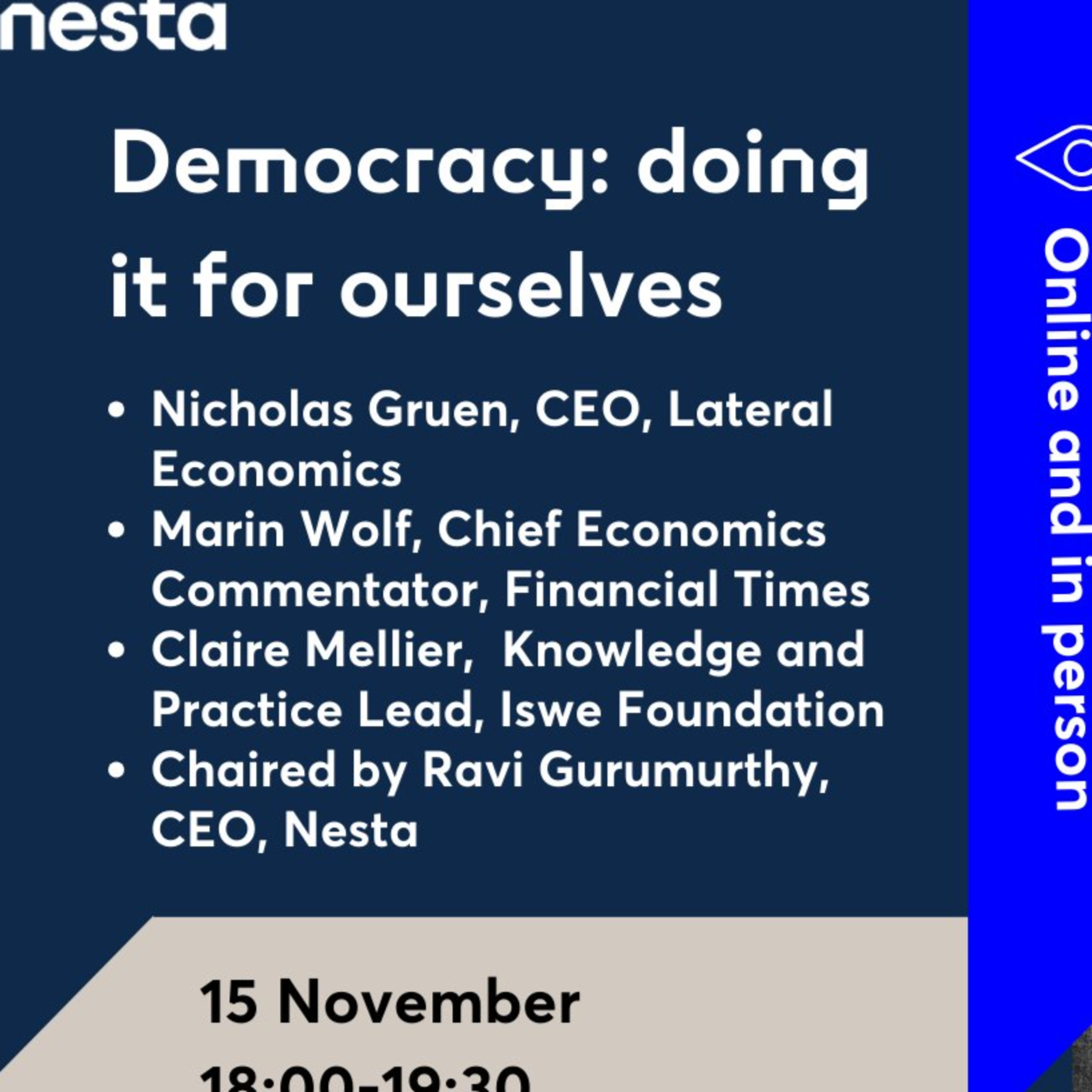 Democracy: doing it for ourselves Democracy: doing it for ourselves | Here's the audio from a great event in London held on the 15th of November in which I outlined my proposal for a privately funded standing citizen assembly. You can find the video at this link. | — | ||||||
Want analysis for the episodes below?Free for Pro Submit a request, we'll have your selected episodes analyzed within an hour. Free, at no cost to you, for Pro users. | |||||||||
| 11/24/23 | 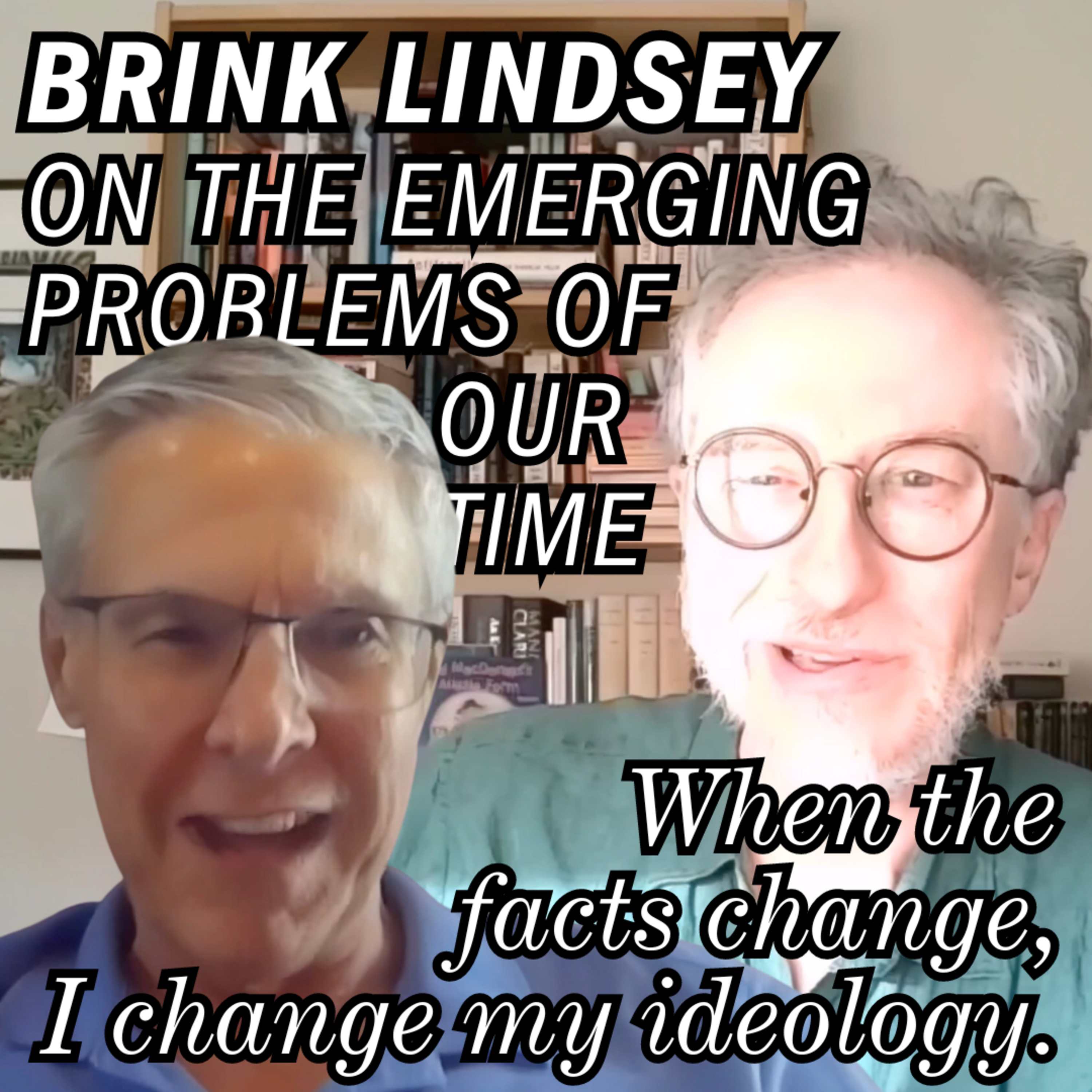 When the facts change, I change my ideology: Brink Lindsey on the emerging problems of our time When the facts change, I change my ideology: Brink Lindsey on the emerging problems of our time | In this episode I chat with Brink Lindsey about his ideological trajectory — he began as an adherent of schlock philosopher Ayn Rand and has gradually transitioned towards the centre of the political spectrum via libertarianism and Hayek. (Rand regarded Hayek as poisonously, treasonously left wing). Sadly Hayekian libertarianism had embarrassingly little to say about the emerging problems of our time — noticeably cultural, political and environmental degradation. We built the conversation around the title of Brink's Substack, "The Permanent Problem". This was inspired by Keynes's essay "Economic Possibilities for Our Grandchildren", in which Keynes sketches out the problems he expects to emerge by around the early decades of the new century. For by then, as Keynes prophecied, we'll have solved the economic problem — and that leaves us with the permanent problem — how to live agreeably and well. Brink's 2007 book, "The Age of Abundance," was optimistic, speaking of a time when humanity underwent a revolutionary change with the advent of mass affluence. However, Brink admits, the world didn't turn out as he'd hoped. Timestamps 1:27 Introduction and getting our bearings. 8:07 The social and economic challenges we face now. 14:47 Technology's impact on social structures and behaviour. 21:27 The interplay between political and societal changes. 28:07 Widening class divisions and social cohesion. 34:47 The mental health crisis. 41:27 The changing roles of education and employment. 48:07 The rise of identity politics, and its effects on societal norms and values. 54:47 Potential solutions. 1:00:27 Final thoughts, summarizing key points and reflecting on the future outlook. If you prefer video, it's here. | — | ||||||
| 9/22/23 |  Willows & Wind Vanes: Fixing Economics Forecasting Willows & Wind Vanes: Fixing Economics Forecasting | In the wake of my column proposing that central banks should hold open forecasting competitions - and particularly suggesting it for Bernanke's review of the Bank of England's forecasting, Gene Tunny and I discuss the issues in more detail and some of the reactions to the column appearing in the comments section. Kenneth Grahame and Wind in the Willows comes up. And why not? I think you’ll find it pretty interesting. If you'd like to watch the video, it's here. 00:00 Trailer 00:53 Proposal for Economic Forecasting 06:19 Comments & Criticisms 10:05 Modeling & Judgements 13:47 Feedback on Gene's Article 16:12 Museum Visit and Kenneth Graham 17:13 Closing Remarks If you'd like to watch the video version, find it here. | — | ||||||
| 9/15/23 |  The two things I'd like to fix: Governments scaling what works and fixing democracy. The two things I'd like to fix: Governments scaling what works and fixing democracy. | In this podcast I got two wishes. What two things would I fix if I could. Chris Vanstone from The Australian Centre for Social Innovation (TACSI) asked to interview me as part of TACSI's thinking about its own future. I agreed but made two suggestions. First, that we record the discussion and make it a podcast. Second, given his description of the process as exploring “what futures do you want to see”, I said that I'd expect to critique that as a starting point right off the bat. Why? Because this kind of framing suffers from grandiosity. I'm not some hero charting a course to the future. I'm a little munchkin noticing things, trying to figure out what problems and opportunities exist in what Humphrey Bogart called our "crazy mixed up woild" in Casablanca. The ensuing session was really engaging I thought. Kudos to Chris for being an unfazed master of silence while he thinks. Oh, and the two things I want to fix? We talk as if we'll scale up social programs that work and scale down the less successful ones. But we haven't done it since, now let me see. Since … Well ever actually! And that's the case in most countries. Oh and democracy — I want to fix that (and this'll make you laugh) I don't think it's that hard! I think we just need to introduce jury-like mechanisms into our democracy. If you're interested, have a look at the trailers for this documentary. If you'd like to listen to the video of this podcast, it’s here. 00:00 Trailer 01:00 Introduction to Democracy and Citizen Juries 11:01 The Texas Experiment: Deliberative Polling 26:01 East Belgium's Standing Citizen Council 41:01 Challenges and Triumphs of Scaling Solutions 51:01 Addressing Democracy's Gaping Wounds 1:01:01 The Future of Citizen Participation | — | ||||||
| 9/8/23 | 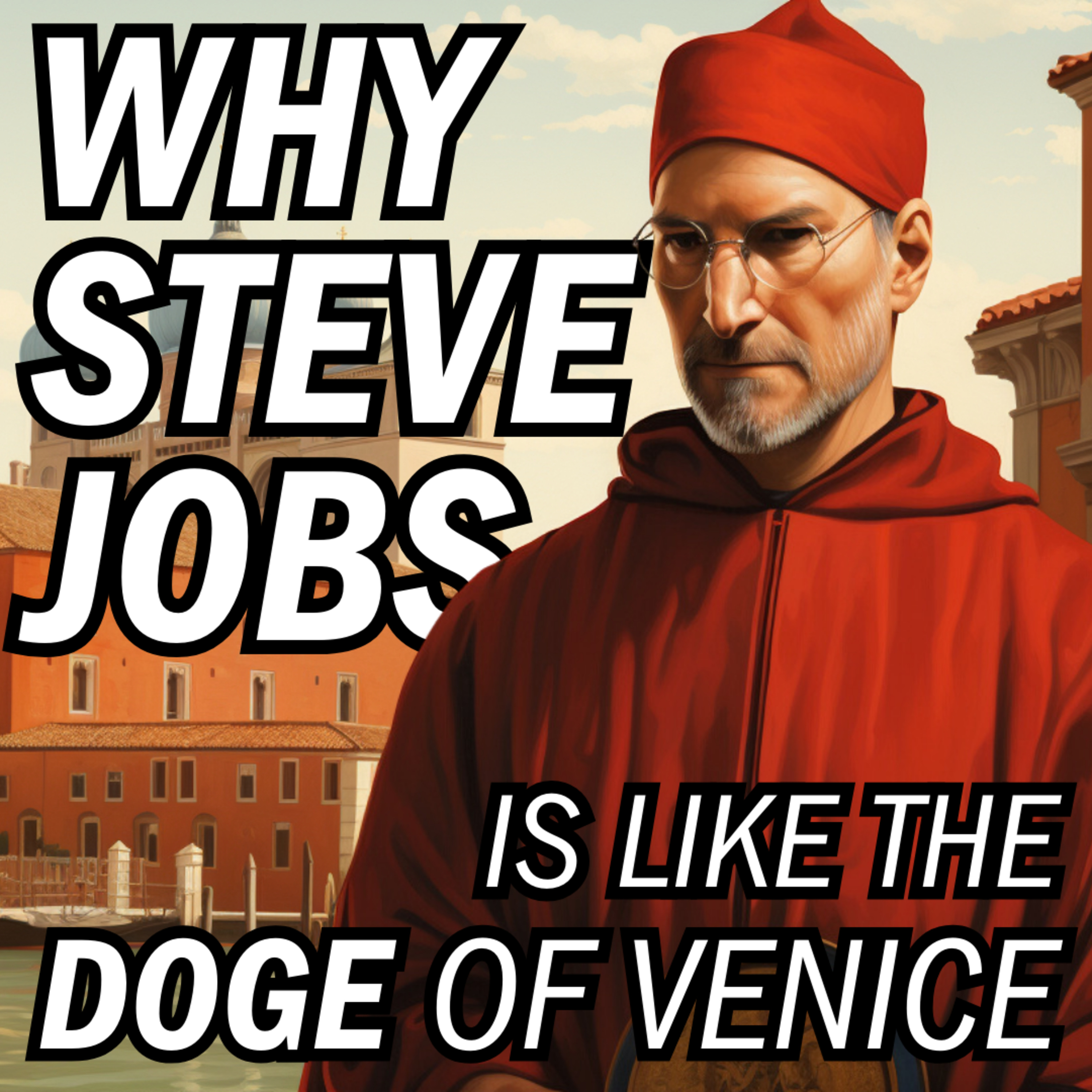 Why Steve Jobs is like the Doge of Venice: The lessons we can all learn from software Why Steve Jobs is like the Doge of Venice: The lessons we can all learn from software | My friend Antonios Sarhanis is a philosophy graduate turned software guy and runs a software business in Melbourne. Whenever I'm detailing various bizarre practices in ordinary white collar workforces Antonios will often say that that doesn't happen in the management of software development. That's because it's really a 'blue collar job' which is to say that it's producing an output which is very tangible — and where there's a fairly straightforward relationship between doing a good or bad job and the software working well or badly. In lots of white collar jobs that's not the case. The upshot is that software development eschews oodles of bad practices that are endemic. We discuss everything from the value of formal education in the field to the intricacies of being a ten x engineer. There are a cast of characters you've heard of — like Bill Gates, Paul Keating, Steve Jobs and the Doge of Venice. If you'd like to access the video, it's here. Timestamps 00:00 - Trailer 01:08 - Start 03:47 - Introduction and the value of a Ph.D. in software 04:40 - The real-world skills required in software development 12:26 - The unique characteristics of software developers 24:03 - The concept of a ten x engineer and their financial remuneration 31:20 - The evolution of software development methodologies 36:47 - The impact of software on global economies 41:33 - Discussion on Paul Keating and his understanding of economics 56:05 - The future of software and its societal implications 1:03:05 - Closing thoughts and the essence of the conversation | — | ||||||
| 8/25/23 | 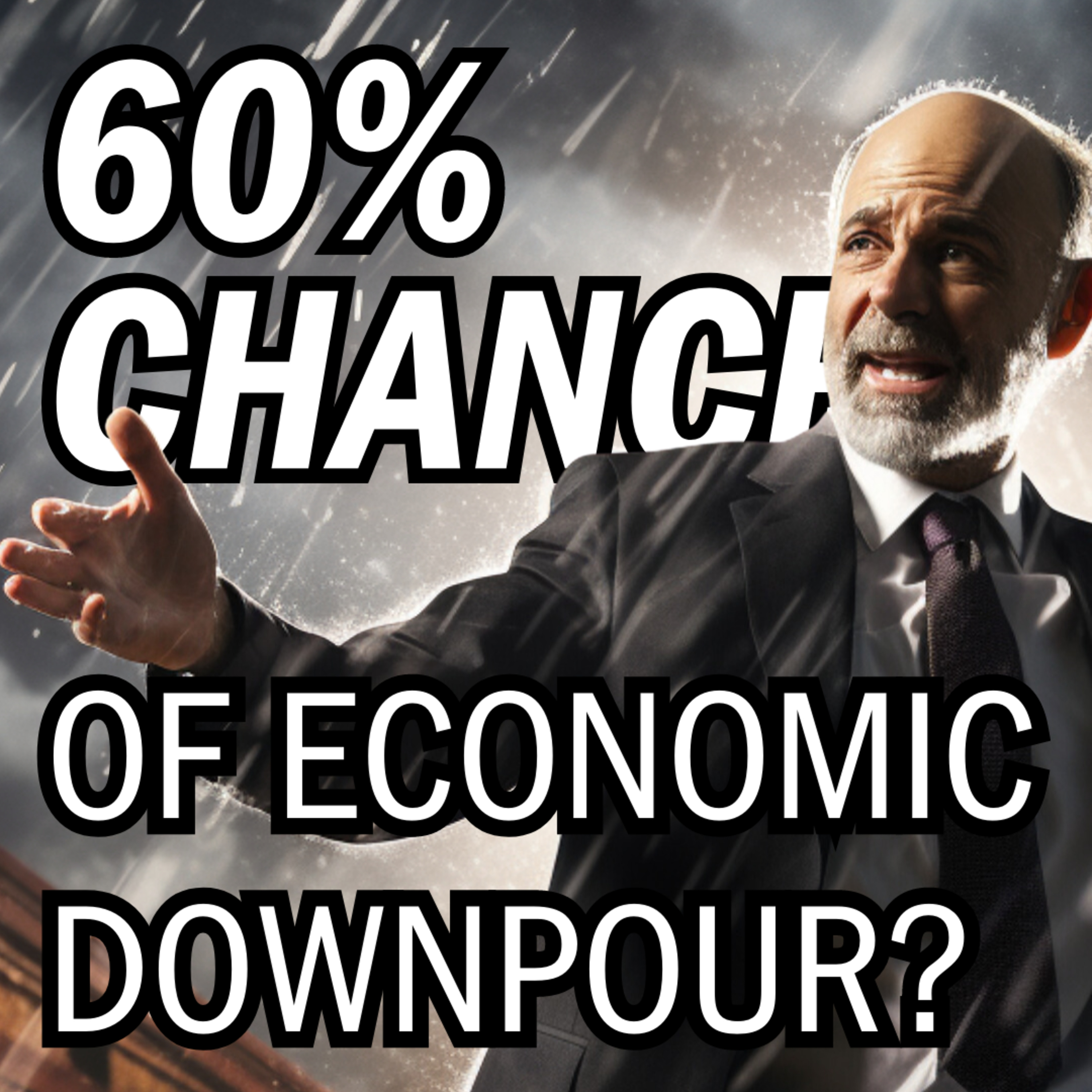 60% chance of economic downpour? 60% chance of economic downpour? | Why can’t economists forecast better? The short answer is they don’t try. The four-day weather forecasts of today are as good as one-day forecasts 30 years ago. Economic forecasts have been consistently lousy throughout the period with no sign of improvement. And yet there's evidence they could improve, though probably not by as much. How could they do that? By taking a leaf out of the weather forecasters' book. We discuss Ben Bernanke's review of the Bank of England's forecasting and ask why Philip Tetlock's work on superforecasting has received so little attention. The answer is "no reason", it's just that he's not an economist. And the profession of economics puts its store in the cleverness and technical prowess of its forecasters, rather than in their ability to consistently outperform other forecasters. If you'd like to access the video, it's here. 00:00 Trailer 00:58 Start 05:15 Introduction to Forecasting 06:27 Philip Tetlock and His Legacy 07:58 The 2008 Economic Downturn: A Case Study 11:38 The Essence of Super Forecasting 12:38 Psychology in Forecasting: Kahneman's Perspective 17:17 The Weather Analogy: Forecasting's Gold Standard 20:39 The Future of Economic Forecasting 23:09 Concluding Thoughts and Reflections | — | ||||||
| 8/11/23 | 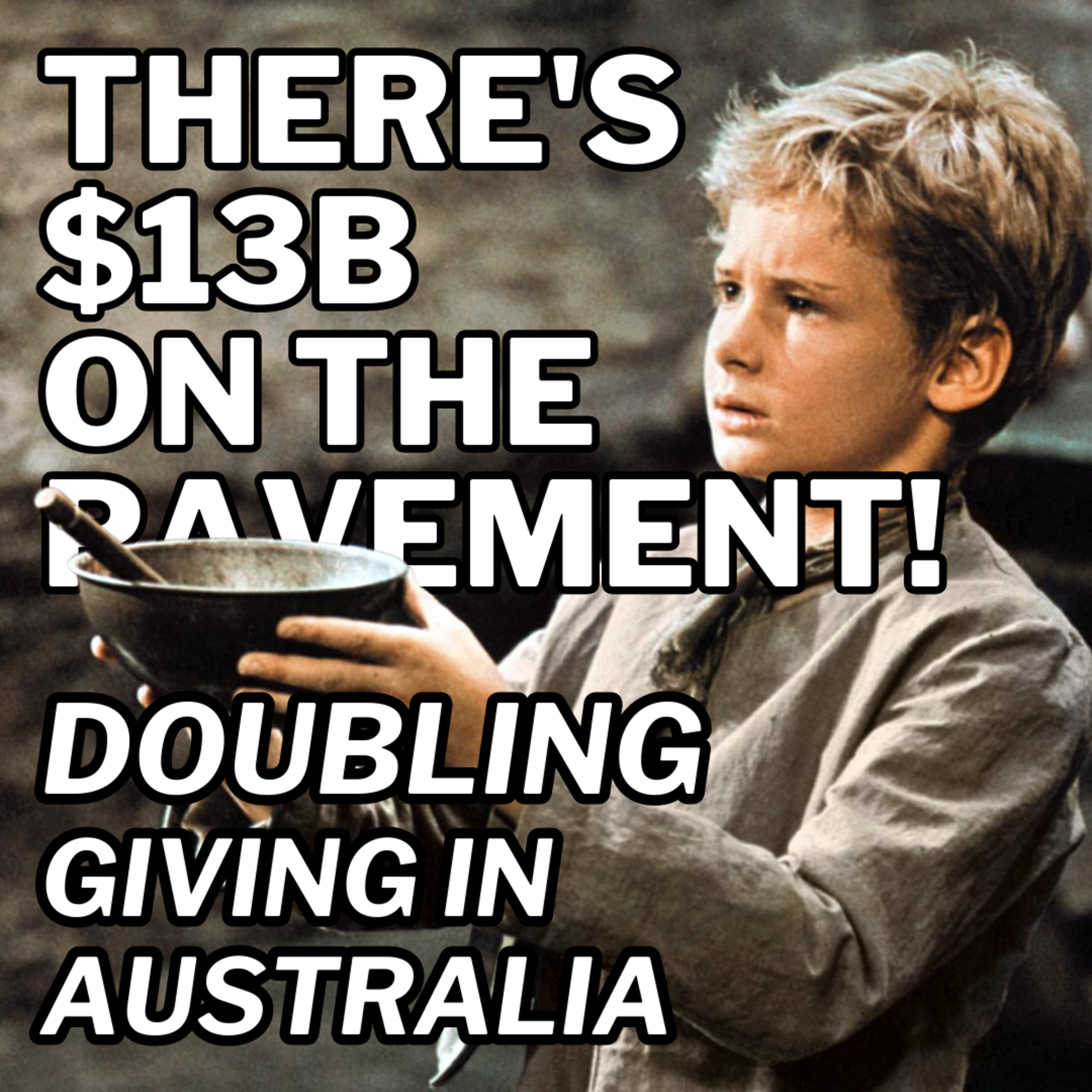 There's $13B on the pavement! Doubling giving in Australia There's $13B on the pavement! Doubling giving in Australia | In this chat with Sam Rosevear, the Executive Director, Policy, Government Relations and Research of Philanthopy Australia we discuss the plan he’s been working on to double donations to charity in Australia by the end of the decade. That’s an additional $13 billion per year! And as you’ll see from our discussion it shouldn't be that hard to do. It shouldn't cost government much because most of the action involves a few nudges. If you'd like to access the video, it's here 00:00 Trailer 01:02 Introduction 20:24 Nudges and Financial Initiatives in Charity 29:17 The Role of Government in Education 31:50 The Meritocracy Trap and Education Inequality 37:26 The Potential of Super Bequests 49:20 Local Community Foundations and Giving 57:12 Partnering with Civil Society and Business | — | ||||||
| 7/21/23 |  Liberty: safety from tyranny or doing what you like? Liberty: safety from tyranny or doing what you like? | In this episode of Policy Provocations, Gene Tunny and I discuss liberty or freedom in the context of the COVID-19 pandemic. As I argue, one can think about liberty in the way most of the demonstrators against lockdowns and vaccine or mask mandates did. They asserted their right to be free to make their own decisions. But I think that's freedom as licence. It's important that we not be needlessly constrained. So it is certainly important for people to raise those issues. But the ability to impose constraints is actually fundamental to liberty. If you think of the London Blitz, imposing blackouts was necessary for preserving liberty. In this case, liberty from German bombing! My point is not just that we impose some constraints on people because not doing so imposes harm on others. It is that what really matters to our liberty is the legitimacy of law-making. In that regard what is remarkable is that there are any number of relatively easy ways our constitution can be subverted by would be authoritarians. You'd expect the champions of liberty to be concerned with this. If they were concerned with liberty wouldn't we be making sure that governments don't appoint the Director of Public Prosecutions? If the US Republicans or the Democrats are really concerned about liberty, wouldn't they be bringing plans to the next election to reign in the presidential pardon power. This is as one presidential candidate openly talks about giving himself a pardon from gaol! The blogpost I mention is here. If you prefer watching the video, it's here. 00:00 Trailer 01:03 Liberty and Policy during the Pandemic 02:01 Contempt of Parliament 05:27 Government powers and safeguards 07:32 Government actions and citizen involvement during the pandemic 10:15 Government's reliance on opinion polling and the need for citizen juries 11:19 Pandemic policies: Scrutiny and overreaction. 15:02 Discussion and compromise in politics 17:35 Institutions to improve political discussion 20:09 Housing policy and crisis management 22:04 Crisis and the presidential Pardon power | — | ||||||
| 7/21/23 |  Elite Capture: Christianity Wrote the Playbook! Elite Capture: Christianity Wrote the Playbook! | Of all the podcasts we’ve done so far, this is my favourite. We discuss Peter Heather’s marvellous book “Christendom: the triumph of a Religion”. It covers the thousand years from the time Christianity becomes embedded in the Roman Empire, via Emperor Constantine’s conversion. Heather’s book shows how much Christianity was spread not by those ‘meek’ whom Jesus would have inherit the earth, but by the powerful for whom conversion offered improved relations with the Emperor’s court. Over time, and through the period of Charlemagne it infiltrated European life via various drives for Christian piety. By the 12th century, the Church had deeply infiltrated people’s lives through the seven sacraments — which marked the weekly rhythms and major milestones of people’s lives — they included baptism, confirmation, the eucharist, penance, and marriage. And by the 12th century, the church was in many ways more powerful than any king or emperor. It controlled Europe’s operating system — it’s systems of information and learning and its transnational legal code. The church is also the template for a specific organisational form. The church was a unitary organisation governed by a monarch supported by a skilled bureaucracy administering an elaborate and time-honoured legal code. Nation states took their form from the church. So too, later on did corporations. If you prefer watching the video, you can find it here. | — | ||||||
| 7/21/23 | Why ESG is a puppet show | There's a spectre haunting ESG, the new trend towards investment funds seeking to consider things other than their financial bottom line. ESG stands for Environmental, Social and Governance. But there's a problem. Often firms are not well placed to improve outcomes beyond their own immediate purview. Thus divestment from high-emissions firms might seem like a good idea, but it turns out to have minimal impact on emissions. This is as one might expect because it simply passes the invest onto investors who don't care about the issue. In fact there's a more powerful reason which is that starving emissions-intensive firms of funds is likely to depress their investment which they need to reduce emissions. And since the 20% of firms with the highest emissions emit 280 times what the least emitting 20% firms emit, reducing the emissions of the high-emissions firms is very likely to be where the biggest climate change action is going to be. These are genuine dilemmas but investment firms who seek to target ESG tend not to level with their retail investors that this is what is going on. They're much more likely to do their best and then 'sell' their members some calming PR on how their investments are making a difference. We talk about a left field way round this dilemma. If you'd like to see the video of this discussion you can find it here. | — | ||||||
| 7/21/23 | How did we get from “How Can I Help” to “How Can Govt. Help Me?” | A couple of months ago I read and admired this article on Palladium, a new(ish) website that “explores the future of governance and society through international journalism, long-form analysis, and social philosophy”. It seemed that there was sufficient overlap between its concerns and mine that I asked if the author, Tanner Greer, would join me on the podcast. The essay begins with this assertion: The first instinct of the nineteenth-century American was to ask, “How can we make this happen?” Those raised inside the bureaucratic maze have been trained to ask a different question: “How do I get management to take my side?” It then elaborates and explores with examples, speculates on the causes of the change and discusses the means by which we might get back to a healthier situation. Greer argues that the 19th-century institutions combined three characteristics: the aspirational ideal of public brotherhood, a commitment to formality and discipline in self-government, and organizational structures that combined decentralization with hierarchy. I hope you enjoy the discussion. If you’d rather watch the episode, it is here. | — | ||||||
| 7/21/23 | Risk: protecting the children or protecting the system? CEO on disadvantaged youth | In this thought-provoking episode of Uncomfortable Collisions with Reality, Nicholas Gruen and guest Jarrod Wheatley, founder and CEO of PIC Professional Individualized Care, delve into the complex issue of risk in out-of-home care for children. As they explore the challenges faced by those involved in child protection, they discuss the delicate balance between prioritizing the child's well-being and managing organizational risk. Drawing parallels to the institutional imperative and transparent decision-making, this episode sheds light on the need for thoughtful consideration and empathy when navigating the intricacies of the out-of-home care system. 0:55 Introduction 1:23 How the system humiliates 4:07 Prioritizing the best interests of the child 7:42 How the system prioritizes its own preservation, more than the children 9:56 Risks surrounding out-of-home care 13:30 It's the interests of the kids we're after 16:45 How would you act if they were your niece or nephew? 20:10 Bernie's advice 22:35 Practical examples 25:54 The role of communication If you prefer to watch this, the video is here. | — | ||||||
| 7/21/23 | Promoting Wellbeing or Anti-thinking? | Another great conversation with my friend, colleague and partner in podcasting crime Gene Tunny. Gene suggested we discuss various ways in which we've placed nationally independent analysis at the centre of government, only to find that it hasn't performed as well as it might. A classic example is regulatory impact statements, which were a good idea back when Australia was among the world's leaders in introducing them in 1986. However, they've not had much impact because although notionally independent, government rewards 'can do' types both at the political and bureaucratic level. So the process degrades into a box-ticking process. Something similar happens with freedom of information as bureaucrats delay and resist release in various ways and the important stuff migrates into whispered conversations in corridors and secure and self-erasing platforms like Signal. And then there's independent assessment of infrastructure. The new ALP Government has cleaned things up a little, but could go a lot further as independent Allegra Spender suggested in this intervention. But the two major parties wouldn't have it. Ultimately this takes us to the question of how firmly democratic principles are anchored in Western Democracies. They're under threat everywhere. Yet there's a simple, radical and democratic way to secure them. Build the institutions in which the people can defend them! If you'd like to watch the discussion the video is here. | — | ||||||
| 7/21/23 | The $100B lying on the pavement | Another great conversation with my friend, colleague and partner in podcasting crime Gene Tunny. Gene suggested we discuss various ways in which we've placed nationally independent analysis at the centre of government, only to find that it hasn't performed as well as it might. A classic example is regulatory impact statements, which were a good idea back when Australia was among the world's leaders in introducing them in 1986. However, they've not had much impact because although notionally independent, government rewards 'can do' types both at the political and bureaucratic level. So the process degrades into a box-ticking process. Something similar happens with freedom of information as bureaucrats delay and resist release in various ways and the important stuff migrates into whispered conversations in corridors and secure and self-erasing platforms like Signal. And then there's independent assessment of infrastructure. The new ALP Government has cleaned things up a little, but could go a lot further as independent Allegra Spender suggested in this intervention. But the two major parties wouldn't have it. Ultimately this takes us to the question of how firmly democratic principles are anchored in Western Democracies. They're under threat everywhere. Yet there's a simple, radical and democratic way to secure them. Build the institutions in which the people can defend them! If you'd like to watch the discussion the video is here. | — | ||||||
| 7/21/23 | Four ways to fix the world | Every society evolves unique ways for people to live together happily and productively. But they change over time. Modernity has eclipsed these four ideas. Recovering them can make us happier and more productive. If I had four words to sum up where I've got to over the last couple of decades thinking how to improve the world, they'd be these. In discussing them with friend, philosopher and school teacher Martin Turkis, I gave myself the challenge of writing them out in a summary form for him to present to his high school students. This has got to be a better test of their value than whether they can be published in a learned journal. If you'd like to check out the video, it's here: 2:13 Part 1 - Four Principles 2:54 Isegoria 6:03 Parrhesia 9:23 Fidelity 18:25 Merit 25:58 Part 2 - Question and Answer 29:14 De-Competitive Representation 1:12:53 Hate Speech | — | ||||||
Showing 24 of 32
Sponsor Intelligence
Sign in to see which brands sponsor this podcast, their ad offers, and promo codes.
Chart Positions
1 placement across 1 market.
Chart Positions
1 placement across 1 market.