Insights from recent episode analysis
Audience Interest
Podcast Focus
Publishing Consistency
Platform Reach
Insights are generated by CastFox AI using publicly available data, episode content, and proprietary models.
Most discussed topics
Brands & references
Total monthly reach
Estimated from 1 chart position in 1 market.
By chart position
- 🇪🇸ES · History#1631K to 10K
- Per-Episode Audience
Est. listeners per new episode within ~30 days
500 to 5K🎙 ~2x weekly·221 episodes·Last published 1w ago - Monthly Reach
Unique listeners across all episodes (30 days)
1K to 10K🇪🇸100% - Active Followers
Loyal subscribers who consistently listen
400 to 4K
Market Insights
Platform Distribution
Reach across major podcast platforms, updated hourly
Total Followers
—
Total Plays
—
Total Reviews
—
* Data sourced directly from platform APIs and aggregated hourly across all major podcast directories.
On the show
From 12 epsHost
Recent guests
Recent episodes
The Statue of Liberty and the Empire State Building
Jun 15, 2026
38m 53s
An American History of Purses
Jun 1, 2026
40m 10s
The Lady Bird Special
May 18, 2026
41m 16s
Policing Slavery & Black Rebellion in the American South
May 4, 2026
50m 30s
The Frontier Myth and the People of the Western United States
Apr 20, 2026
53m 11s
Social Links & Contact
Official channels & resources
Official Website
Login
RSS Feed
Login
| Date | Episode | Topics | Guests | Brands | Places | Keywords | Sponsor | Length | |
|---|---|---|---|---|---|---|---|---|---|
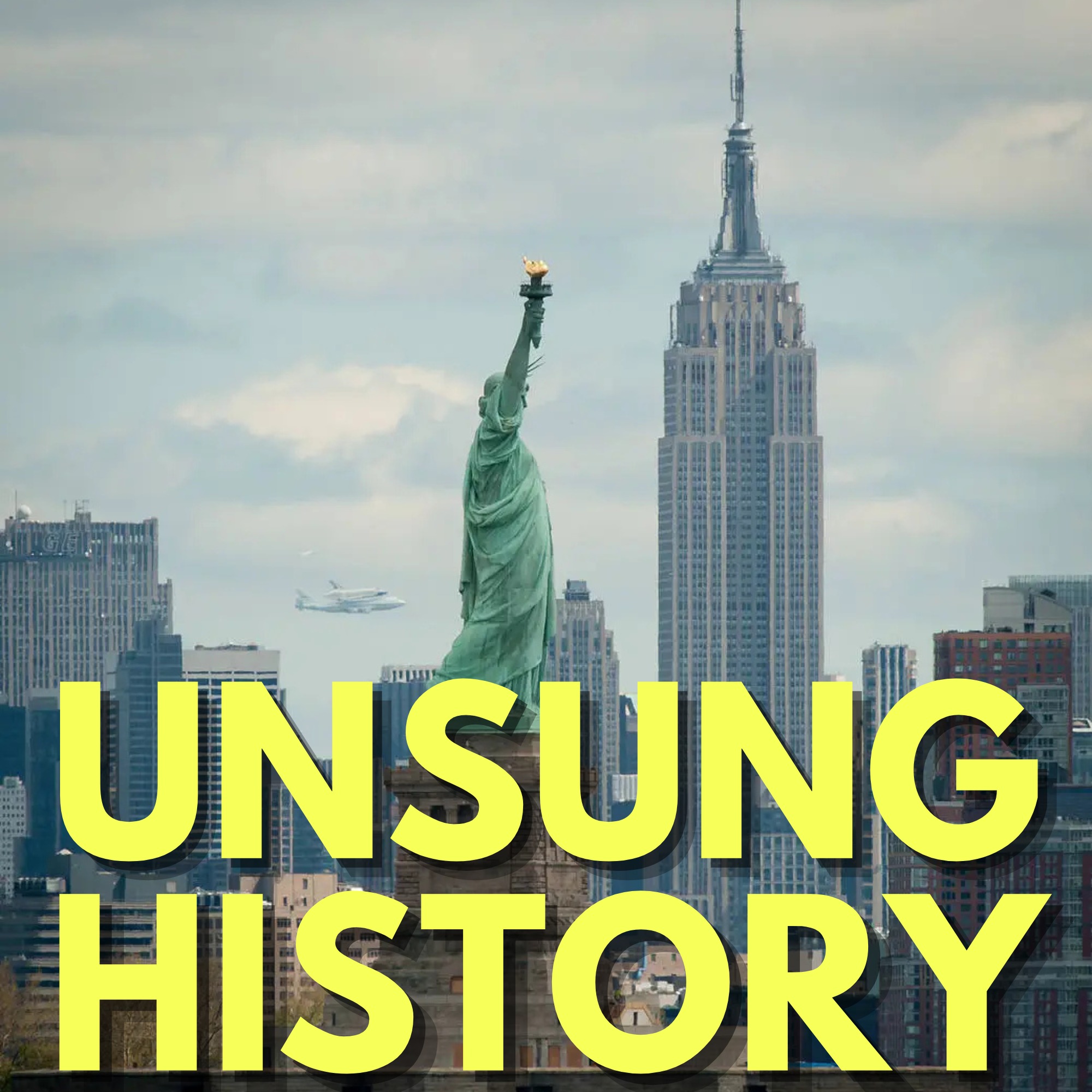
| 6/15/26 | ![]() The Statue of Liberty and the Empire State Building | The Statue of Liberty and the Empire State Building loom large in the American imagination, symbolizing the conflicting ideas of liberty and empire; their meanings and characters have shifted over time as the American ethos has shifted. Joining me in this episode is writer, historian, and freelance editor, Dr. Vaneesa Cook, author of Empire and Liberty: The Tied Histories of Two American Landmarks.Our theme song is “Frogs Legs Rag,” composed by James Scott and performed by Kevin MacLeod, licensed under Creative Commons. The mid-episode audio is “Hail to the spirit of liberty,” composed by John Philip Sousa and performed by Prince’s Orchestra in New York City on January 11, 1912; the audio is in the public domain and is available via the Library of Congress National Jukebox. The episode image is a photograph of NASA’s prototype space shuttle Enterprise, mounted atop a NASA 747 Shuttle Carrier Aircraft 905, during a flyover of New York City on Friday, April 27, 2012; the photographer was Bill Ingalls, and the government image is in the public domain.Additional Sources:“Body of Iron, Soul of Fire: The Statue of Liberty,” by Jessie Kratz, National Archive Pieces of History, October 14, 2024.“Liberty Island Chronology,” Statue of Liberty, National Park Service.“Letter from Frédéric-Auguste Bartholdi (1834–1904) to his mother, June 24, 1871,” Frédéric-Auguste Bartholdi Papers, Manuscripts and Archives Division, New York Public Library.“Édouard Laboulaye and the Statue of Liberty: Forging the Democratic Experience,” by Stephen W. Sawyer, La lettre du Collège de France, 4, 2008-2009.“Gov. Alfred Emanuel Smith,” National Governors Association.“Oral history interviews with John J. Raskob family,” Hagley Digital Archives.“John J. Raskob Dies of a Heart Attack,” New York Times, October 16, 1950.“How the Empire State Building Was Built in Record Time,” by Tim Ott, History.com, Originally published October 10, 2024 and updated November 03, 2025.Advertising Inquiries: https://redcircle.com/brands | 38m 53s | ||||||
| 6/1/26 | ![]() An American History of Purses✨ | history of handbagsgender roles+3 | Dr. Kathleen B. Casey | Furman UniversityThe Things She Carried: A Cultural History of the Purse in America+2 | Camden, New Jersey | handbagspurses+5 | — | 40m 10s | |
| 5/18/26 | ![]() The Lady Bird Special✨ | Lady Bird JohnsonCivil Rights+4 | Shannon McKenna Schmidt | LBJ LibraryYou Can't Catch Us: Lady Bird Johnson's Trailblazing 1964 Campaign Train and the Women Who Rode with Her+2 | — | Lady Bird Johnson1964 campaign+6 | — | 41m 16s | |
| 5/4/26 | ![]() Policing Slavery & Black Rebellion in the American South✨ | slaverypolicing+4 | Dr. Gautham Rao | American UniversityTuskegee Institute Singers+11 | Charleston | slaverypolicing+5 | — | 50m 30s | |
| 4/20/26 | ![]() The Frontier Myth and the People of the Western United States✨ | Frontier MythAmerican Identity+4 | Dr. Megan Kate Nelson | American Historical AssociationThe Westerners: Mythmaking and Belonging on the American Frontier+4 | Camden, New Jersey | Frontier MythAmerican History+5 | — | 53m 11s | |
| 4/6/26 | ![]() Magnus Hirschfeld, Dora Richter, and the Institute for Sexual Science in Weimar Germany✨ | Weimar Republicsexual science+4 | Dr. Brandy Schillace | Institute for Sexual ScienceSoni Ventorum Woodwind Quintet+4 | Weimar Germany | Magnus HirschfeldDora Richter+6 | — | 44m 47s | |
| 3/23/26 | ![]() The Feliciana Parishes of Louisiana✨ | historyLouisiana+4 | Dr. Rashauna Johnson | University of ChicagoLibrary of Congress National Jukebox+3 | East and West FelicianaNew Orleans+4 | Feliciana ParishesWest Florida+5 | — | 44m 38s | |
| 3/9/26 | ![]() The Academy Awards✨ | Academy Awardsfilm history+3 | Dr. Monica Sandler | Academy of Motion Picture Arts and SciencesThe Oscar Industry: Creative Labor, Cultural Production, and the Awards System in Media Industry | Camden, New Jersey | Academy AwardsOscars+3 | — | 47m 36s | |
| 2/22/26 | ![]() Slavery and the Complicated Legacy of George Washington✨ | slaveryGeorge Washington+4 | Dr. John Garrison Marks | American Association for State and Local HistoryThy Will Be Done: George Washington's Legacy of Slavery and the Fight for American Memory+1 | Mount Vernon | George Washingtonslavery+6 | — | 46m 17s | |
| 2/9/26 | ![]() Black History Month✨ | Black HistoryCarter G. Woodson+4 | Dr. Jarvis Givens | Harvard UniversityUnited States Army Field Band+5 | — | Black History MonthCarter G. Woodson+5 | — | 46m 51s | |
Want analysis for the episodes below?Free for Pro Submit a request, we'll have your selected episodes analyzed within an hour. Free, at no cost to you, for Pro users. | |||||||||
| 1/26/26 | ![]() Reed Peggram✨ | LGBTQ historyWorld War II+3 | Dr. Ethelene Whitmire | University of Wisconsin–MadisonPaul Whiteman Orchestra+1 | BostonEurope+1 | Reed PeggramWorld War II+5 | — | 40m 40s | |
| 1/12/26 | ![]() Charles C. Diggs, Jr.✨ | Civil RightsCongress+4 | Dr. Marion Orr | Brown UniversityThe New York Times+2 | Washington, DC | Charles C. Diggs, Jr.Congressional Black Caucus+5 | — | 48m 39s | |
| 12/30/25 | ![]() All in the Family✨ | television historypolitical impact+3 | Dr. Oscar Winberg | Turku Institute for Advanced StudiesJohn Morton Center for North American Studies+4 | — | All in the Familytelevision+5 | — | 51m 27s | |
| 12/15/25 | ![]() Christmas Films, the Early Cold War & the FBI | When It’s a Wonderful Life was first released, it wasn’t a box office hit, but it did draw the attention of the FBI and its investigation into the Communist Infiltration of the Motion Picture Industry (COMPIC). The House Un-American Activities Committee (HUAC) didn’t end up doing anything with the FBI’s allegations of subversion in the film, but the pressure of investigations like this led to a shift in Christmas films over the next 15 years away from stories of social problems to more lighthearted romances and musicals. Joining me in this episode is Dr. Vaughn Joy, author of Selling Out Santa: Hollywood Christmas Films in the Age of McCarthy. Dr. Joy’s public scholarship website with her husband, Dr. Ben Railton, is Black and White and Read All Over.Our theme song is Frogs Legs Rag, composed by James Scott and performed by Kevin MacLeod, licensed under Creative Commons. The mid-episode music is "Carol of the Bells," composed by Mykola Leontovych and performed by the Concert Band of the United States Air Force Band of the Rockies; the performance is in the public domain and available via Wikimedia Commons. The episode image is a still from It’s a Wonderful Life, which is in the public domain.Films Discussed:It’s a Wonderful Life (1946)Susan Slept Here (1954)Babes in Toyland (1961)Additional Sources:“Breaking Hollywood's 'Pattern of Sameness'; That is the task the independent producers have set themselves, says Frank Capra, who is one of them.” by Frank Capra, The New York Times, May 5, 1946.“The Truman Doctrine, 1947,” U.S. Department of State Office of the Historian.“House Un-American Activities Committee,” Harry S. Truman Library & Museum.“Screen Guide for Americans,” by Ayn Rand, the Motion Picture Alliance for the Preservation of American Ideals, 1947.“FBI File on Communist Infiltration- Motion Picture Industry (COMPIC),” via archive.org.“When 'It's a Wonderful Life' Came Under FBI Scrutiny,” by Christopher Klein, History.com, December 11, 2025.“How ‘It’s a Wonderful Life’ Went From Box Office Dud to Accidental Christmas Tradition,” by Jay Serafino, Mental Floss, December 6, 2024.Advertising Inquiries: https://redcircle.com/brands | 43m 25s | ||||||
| 12/1/25 | ![]() An American History of Coffee | Americans love their coffee; according to the Fall 2025 National Coffee Data Trends Report, 66% of adult Americans drink coffee every day, averaging three cups per day. This devotion to the caffeinated beverage is nothing new. Even before Bostonians dumped over 90,000 pounds of tea in the harbor, Americans were sipping cups of joe. George and Martha Washington served tea at the President’s House in New York, and after he stepped down as president, George Washington even tried growing coffee trees at Mount Vernon. Joining me in this episode is Dr. Michelle Craig McDonald, Director of the Library & Museum at the American Philosophical Society, and author of Coffee Nation: How One Commodity Transformed the Early United States.Our theme song is Frogs Legs Rag, composed by James Scott and performed by Kevin MacLeod, licensed under Creative Commons. The mid-episode music is “Coffee in the Morning and Kisses in the Night,” by Gus Arnheim, 1934, Public domain, via Wikimedia CommonsThe episode image is of a coffee pot, made by Robert and William Peaston and accompanying sugar bowl, creampot, and tongs, made by Myer Myers; the items were owned by Dorothy Remsen, who married Abraham Brinckerhoff of New York in 1772. The coffee set is on view at The Met Fifth Avenue in Gallery 704; and the image is available as part of the Met's Open Access policy.Additional Sources:“Coffee’s Creation Myth: How Coffee Conquered the World,” by Blake Stilwell, Coffee or Die Magazine, April 16, 2022.“The Boston Tea Party at 250: History steeped in myth,” by Gabrielle Emanuel, WBUR, December 14, 2024. “Coffee and the White House,” by Tianna Mobley, The White House Historical Association, May 2, 2022.“Coffee,” George Washington’s Mount Vernon.“Coffee: World Markets and Trade,” by United States Department of Agriculture Foreign Agricultural Service, December 2024. “Poll reveals America’s coffee consumption habits,” by Georgia Smith, Global Coffee Report, September 11, 2025.Advertising Inquiries: https://redcircle.com/brands | 43m 49s | ||||||
| 11/17/25 | ![]() The History of Rum | Global rum sales are expected to reach nearly $28 billion USD by the year 2033, making it one of the ten most popular alcoholic beverages in the world. In this episode we look at the early history of rum, how its invention and production were intertwined with the transatlantic slave trade, and how abolitionists tried to find free-labor sources of the popular liquor. Joining me in this episode is Dr. Jordan B. Smith, Associate Professor of History at Widener University, and author of The Invention of Rum: Creating the Quintessential Atlantic Commodity (use code PENN-JSMITH30 at Penn Press for 30% off).Our theme song is Frogs Legs Rag, composed by James Scott and performed by Kevin MacLeod, licensed under Creative Commons. The mid-episode music is “Fun Island,” by Geoff Harvey - Pixabay; used under the Pixabay Content License. The episode image is “Barrels of Rum,” by MAClarke21, CC BY 2.0, via Wikimedia Commons.Additional Sources:“How Authentic Caribbean Rum Is Made [video],” West Indies Rum and Spirits Producers' Association (WIRSPA), YouTube, May 16, 2014.“About Barbados: History Of Barbados,” Barbados, org.“The History of Jamaica,” Jamaica Information Service.“Historical Context: Facts about the Slave Trade and Slavery,” by Steven Mintz, The Gilder Lehrman Institute of American History.“Top 10 best-selling rum Brand Champions 2025,” by Lauren Bowes, The Spirits Business, July 1, 2025.“Global Rum Market Size, Share, Growth, and Regional Forecast, 2025 – 2032,” Persistence Market Research, June 20, 2025.“20 Countries that Export the Most Rum in the World,” by Sultan Khalid, Insider Monkey via Yahoo Finance, March 18, 2024.Donate to Recovery Efforts in Jamaica:Jamaican Office of Disaster Preparedness and Emergency Management (ODPEM)World Central KitchenProject HopeOne Love BrigadeAdvertising Inquiries: https://redcircle.com/brands | 41m 06s | ||||||
| 11/3/25 | ![]() Street Food and Public Markets in New Orleans | New Orleans is known for its unique cuisine that blends and highlights the many cultural roots of the city and its residents. The history of food distribution in New Orleans is just as unique within the American landscape, relying heavily on public food systems, both street vendors and municipally-run public markets. Joining me in this episode is Dr. Ashley Rose Young, a curator and public historian who serves as the American History Curator in the Rare Book and Special Collections Division at the Library of Congress and is a Smithsonian Research Associate. Her book, Nourishing Networks: The Public Culture of Food in New Orleans has just been published.Our theme song is Frogs Legs Rag, composed by James Scott and performed by Kevin MacLeod, licensed under Creative Commons. The mid-episode music is “On my way to New Orleans,” composed by Albert Von Tilzer with lyrics by Ballard MacDonald; this performance was sung by George O’Connor on February 10, 1915, in New York, and is in the public domain and available via the Library of Congress National Jukebox. The episode image is: “French Market, New Orleans, La.,” Detroit Publishing Company, 1910; there are no known restrictions on publication, and the image is accessible via the Library of Congress.Additional sources:“New Orleans History 101: A beginner’s guide to understanding the Crescent City,” by Historic New Orleans Collection Visitor Services Staff, January 21, 2022.“Timeline: New Orleans,” PBS American Experience.“New Orleans Then and Now: The French Market,” by Ellen Terrell, Library of Congress Blog, July 12, 2018.“The Native Roots of the French Market,”by Kalie Rhodes, New Orleans Historical: A project by The Midlo Center for New Orleans Studies at the University of New Orleans, February 11, 2021. “200 Years of Commerce, Community & Culture,” French Market District. “New Orleans Street Vendors: A long history of African American entrepreneurship,” by Zella Palmer, 64 Parishes, December 1, 2019.Advertising Inquiries: https://redcircle.com/brands | 47m 37s | ||||||
| 10/20/25 | ![]() The Girl Scouts of the USA | In 1912, wealthy Savannahian Juliette Gordon Low supposedly called her cousin and exclaimed: “Come right over! I’ve got something for the girls of Savannah, for all of America, and for the world.” That something would become the Girl Scouts of the USA, an organization that throughout its history struggled to fulfill its initial promise of inclusion for all girls while trying to maintain an apolitical stance with deference to local councils. Joining me in this episode is Dr. Amy Farrell, the James Hopes Caldwell Memorial Chair and Professor of American Studies and Women's, Gender and Sexuality Studies at Dickinson College and author of Intrepid Girls: The Complicated History of the Girl Scouts of the USA.Our theme song is Frogs Legs Rag, composed by James Scott and performed by Kevin MacLeod, licensed under Creative Commons. The mid-episode music is “By the campfire,” composed by Percy Wenrich with lyrics by Mabel Elizabeth Girling; the performance by the Sterling Trio on February 18, 1919, in New York, is available via the Library of Congress National Jukebox and is in the public domain. The episode image is “Girl Scouts, circa 1940s,” taken at Camp Long; Item 31422, Ben Evans Recreation Program Collection (Record Series 5801-02), Seattle Municipal Archives; used under CC BY 2.0.Additional sources:“Practical Patriotism: Camp Fire Girls, Girl Scouts, and Americanization,” by Leslie Hahner, Communication and Critical/Cultural Studies, 5(2), 2008, 113–134. https://doi.org/10.1080/14791420801989702.“New Quarter Honors Juliette Gordon Low, Founder of Girl Scouts,” by By Shannon Browning-Mullis, Smithsonian American Women’s History Museum, March 20, 2025.“Early Girl Scouting,” Georgia Historical Society.“Girl Scouts Through the Years,” Women’s History and Cultural Center.“100 years of Girl Scouts: part I,” by Adam Frost, Smithsonian Institute, May 30, 2012“Quick History: Juliette Gordon Low [video],” Northeast Georgia History Center, March 13, 2020.“Golden Eaglet: The Story of a Girl Scout [video],” Girl Scouts USA, 1919.“From 18 girls in Savannah to a global movement to make a difference,” Girl Scouts USA. “Girl Scout Cookie History,” Girl Scouts USA.Advertising Inquiries: https://redcircle.com/brands | 44m 12s | ||||||
| 10/6/25 | ![]() Zoe Anderson Norris | Zoe Anderson Norris, known to her friends in the Ragged Edge Klub as the Queen of Bohemia, was born in Kentucky in 1860, moved to Wichita, Kansas, with her first husband, and then to New York City, where she forged a career for herself as a journalist and novelist, eventually launching her own magazine, The East Side. In The East Side and in her journalism, she often focused on the lives of immigrants and the poor. Joining me in this episode is Eve M. Kahn, author of Queen of Bohemia Predicts Own Death: Gilded-Age Journalist Zoe Anderson Norris.Our theme song is Frogs Legs Rag, composed by James Scott and performed by Kevin MacLeod, licensed under Creative Commons. The mid-episode music is “Come to the land of Bohemia,” composed by George Evans, with lyrics by Ren Shields; this performance by Hatvey Hindermyer was recorded on April 30, 1908, in New York, and is in the public domain and available via the Library of Congress National Jukebox. The episode image is of Zoe Anderson Norris from 1909, CC BY 4.0, via Wikimedia Commons.Additional Sources:“To Fight for the Poor With My Pen: Zoe Anderson Norris, Queen of Bohemia,” Grolier Club Online Exhibitions.“Zoe Anderson Norris,” by W.J. Lampton, New York Times, February 27, 1914.“Zoe A. Norris,” Kentucky in American Letters, 1784-1912,” by John Wilson Townsend, Cedar Rapids, IA: Torch Press, 1913.Advertising Inquiries: https://redcircle.com/brands | 41m 42s | ||||||
| 9/22/25 | ![]() Marguerite Cartwright | Dr. Marguerite Phillips Dorsey Cartwright, born May 17, 1910, in Cambridge, Massachusetts, was a journalist, sociologist, educator, and actress, who served as a correspondent for the United Nations, attended and wrote about both the Bandung Conference and the All-African People's Conference, and was appointed to the Provisional Council of the University of Nigeria, where she became one of five trustees. Joining me in this episode to discuss both Marguerite Cartwright and Black women’s leadership in the fight for human rights is Dr. Keisha N. Blain, Professor of History and Africana Studies at Brown University and author of Without Fear: Black Women and the Making of Human Rights.Our theme song is Frogs Legs Rag, composed by James Scott and performed by Kevin MacLeod, licensed under Creative Commons. The mid-episode audio is “Down South blues,” written by Fletcher Henderson, Alberta Hunter, and Ethel Waters, and performed by The Virginians, in New York City, on September 25, 1923; the audio is available via the Library of Congress National Jukebox and is in the public domain. The episode image is “Portrait of Marguerite Cartwright wearing a dashiki, undated,” by John Schiff; the photograph is courtesy Leo Baeck Institute and is used under fair use guidelines. Additional Sources:“Marguerite Cartwright and African-American Internationalism [video],” Society of Southwest Archivists, August 13, 2021.“M. P. CARTWRIGHT,” The New York Times, May 9, 1986, Section D, Page 22.“Introducing Marguerite Cartwright,” Amistad Research Center.“Cartwright, Marguerite, 1910-1986,” Biographical Note, Marguerite Cartwright papers, Amistad Research Center.“Bandung Conference (Asian-African Conference), 1955,” Office of the Historian, United States Department of State.“AAPC Background,” Institute of African Studies, University of Ghana.Advertising Inquiries: https://redcircle.com/brands | 42m 31s | ||||||
| 9/8/25 | ![]() Black Women's Anti-Rape Activism | The feminist anti-rape movement began in the late 1960s at the height of women’s liberation. As rape crisis centers relied on federal grants aimed at prosecution of those committing sexual violence, feminists worried about the conservatizing influence of those funds, and Black women in particular were not well-served by the developing model. Black women activists found their own methods to combat rape and to care for survivors. Joining me in this episode is Dr. Caitlin Reed Wiesner, Assistant Professor of History at Mercy University in Dobbs Ferry, New York, and author of Between the Street and the State: Black Women's Anti-Rape Activism Amid the War on Crime.Our theme song is Frogs Legs Rag, composed by James Scott and performed by Kevin MacLeod, licensed under Creative Commons. The mid-episode music is “Emotional Piano Music,” by Mikhail Smusev, used under the Pixabay Content License. The episode image is “Black Women Matter,” taken on September 30, 2017, at the March for Racial Justice by Miki Jourdan; the image is available on Flickr and is available for use, CC BY-NC-ND 2.0.Additional Sources:“Feminism: The Second Wave,” National Women’s History Museum, June 18, 2020.“How Ronald Reagan Tried to Shrink Government Spending,” by Christopher Klein, History.com, Published: November 21, 2024, and Last Updated: May 28, 2025.“A brief history of the Victims of Crime Act,” by Blair Ames, U.S. Department of Justice Office of Justice Programs, October 11. 2024.“The 2022 Violence Against Women Act (VAWA) Reauthorization,” Congress.gov.“What are Rape Crisis Centers and how have they changed over the years?” National Sexual Violence Resource Center, September 15, 2021.Rape, Abuse & Incest National Network (RAINN).Advertising Inquiries: https://redcircle.com/brands | 47m 41s | ||||||
| 8/25/25 | ![]() Ideological Exclusion & Deportation | The First Amendment to the US Constitution says that Congress cannot make law abridging the freedom of speech, but by as early at 1798, Congress was restricting immigration to the country on the basis of the ideological beliefs of the people who wanted to immigrate. While the reasons for restrictions have changed over time, as has the mechanism by which they’re enforced, the basic principle continues to today. Joining me in this episode is Dr. Julia Rose Kraut, legal historian and author of Threat of Dissent: A History of Ideological Exclusion and Deportation in the United States. Our theme song is Frogs Legs Rag, composed by James Scott and performed by Kevin MacLeod, licensed under Creative Commons. The episode music is “The Mask of Anarchy 1 (Strings)” by Victory Day from Pixabay in accordance with the Pixabay Content License. The episode image is "The Anarchist riot in Chicago: a dynamite bomb exploding among the police," by Thure de Thulstrup and published in the May 15th, 1886, Harper's Weekly 30 (1534): 312-313; image is in the Public Domain and is available via Wikimedia Commons.Additional Sources:“Nationality Act of 1790,” Immigration History, The Immigration and Ethnic History Society.“Alien and Sedition Acts (1798),” The U.S. National Archives and Records Administration.“The Alien Enemies Act: The One Alien and Sedition Act Still on the Books,” by Scott Bomboy, National Constitution Center, March 17, 2025.“The Sedition Act of 1798,” History Art, and Archives, United States House of Representatives.“Haymarket Affair: Topics in Chronicling America,” Library of Congress.“May 4, 1886: Haymarket Tragedy,” Zinn Education Project.“Emma Goldman (1869-1940),” PBS American Experience. Advertising Inquiries: https://redcircle.com/brands | 55m 23s | ||||||
| 8/11/25 | ![]() Genealogy in Early America | Both Abigail Adams and Benjamin Franklin took trips in England to trace their family histories, and they weren’t alone among 18th century Americans, many of whom took a keen interest in genealogy and family connections. Joining me in this episode is Dr. Karin Wulf, Director and Librarian of the John Carter Brown Library, and Professor of History at Brown University and author of Lineage: Genealogy and the Power of Connection in Early America. Our theme song is Frogs Legs Rag, composed by James Scott and performed by Kevin MacLeod, licensed under Creative Commons. The mid-episode audio is “Nothing like that in our family,” composed by Seymour Furth with lyrics by William A. Heelan and performed by Billy Murray on April 24, 1906; the audio is in the public domain and is available via the Library of Congress National Jukebox. The episode image is “Sampler,” by Sophia Dyer, 1819; the image is in the public domain and is available via the Metropolitan Museum of Art.Additional Sources:“Crossings- Abigail Was Here (Devonshire),” KathleenBitetti.com.“Benjamin Franklin to Deborah Franklin, 6 September 1758,” Founders Online, National Archives, https://founders.archives.gov/documents/Franklin/01-08-02-0034. [Original source: The Papers of Benjamin Franklin, vol. 8, April 1, 1758, through December 31, 1759, ed. Leonard W. Labaree. New Haven and London: Yale University Press, 1965, pp. 133–146.]“Genealogical Chart of the Franklin Family, [July 1758],” Founders Online, National Archives, https://founders.archives.gov/documents/Franklin/01-08-02-0029. [Original source: The Papers of Benjamin Franklin, vol. 8, April 1, 1758, through December 31, 1759, ed. Leonard W. Labaree. New Haven and London: Yale University Press, 1965, p. 120.]“Eliot’s Bible,” by Neely Tucker, Library of Congress Blog, August 6, 2024.“Isaiah Thomas Folio Bible, 1791,” Houston Christian University Dunham Bible Museum.“How Genealogy Became Almost as Popular as Porn,” by Gregory Rodriguez, Time Magazine, May 30, 2014.“Why Are Americans Obsessed with Genealogy?” by Libby Copeland, Psychology Today, October 13, 2020.“Our Story,” Ancestry.com.Advertising Inquiries: https://redcircle.com/brands | 40m 13s | ||||||
| 7/28/25 | ![]() Catholicism in the American Colonies | Before American independence and the Bill of Rights promising religious freedom, the American colonies were English territory governed by English religious law that mandated worship according to the Book of Common Prayer. Even Maryland, which had been founded as a place for Catholics to worship freely, was majority Protestant and intolerant of public Catholicism by the time of the Revolution. Nonetheless, Catholics, including wealthy English landowners, Irish servants, and enslaved Africans, continued to live and worship throughout the American colonies, finding ways to keep their beliefs and customs alive. Joining me in this episode is Dr. Susan Juster, W. M. Keck Foundation Director of Research at the Huntington Library and author of A Common Grave: Being Catholic in English America.Our theme song is Frogs Legs Rag, composed by James Scott and performed by Kevin MacLeod, licensed under Creative Commons. The mid-episode music is “Ave Maria,” composed by Charles Gounod and sung by Florence Hayward; the recording was made on January 30, 1905, in Philadelphia and is in the public domain and can be accessed via the Library of Congress National Jukebox. The episode image is “The Founding of Maryland, 1634,” painted by Emmanuel Leutze in 1860; the painting is in the public domain and is available via Wikimedia Commons.Additional Sources:“Jefferson's Letter to the Danbury Baptists,” Library of Congress.“10 facts about U.S. Catholics,” byJustin Nortey, Patricia Tevington, and Gregory A. Smith, Pew Research Center, March 4, 2025.“Maryland's History,” Maryland Secretary of State.“The Catholic church in colonial days : the thirteen colonies, the Ottawa and Illinois country, Louisiana, Florida, Texas, New Mexico and Arizona, 1521-1763,” by John Gilmary Shea, 1886.“American Catholic History Resources,” The Catholic University of America.“Catholicism in the Early South,” by Maura Jane Farrelly, Journal of Southern Religion 14 (2012).“Descendants of Jesuit Slaveholding and Jesuits of the United States Announce Historic Partnership,” Jesuit Conference of Canada and the U.S.Advertising Inquiries: https://redcircle.com/brands | 46m 22s | ||||||
| 7/14/25 | ![]() Madeleine Pollard, Jane Tucker, and the Sex Scandal that Brought Down a Congressman | In August of 1893, Madeleine Pollard sued Congressman William C.P. Breckinridge of Kentucky for breach of promise, claiming that he had promised to marry her but then had married another woman. By the time of the trial, Pollard and the much-older Breckinridge had been involved in an affair for nearly a decade. Breckinridge’s legal team attempted to paint Pollard as an “adventuress,” going so far as to hire an undercover detective – Jane Tucker – to get dirt on Pollard, but it was Breckinridge’s reputation that suffered as a result of the revelations in the trial, especially with the women of Kentucky. Joining me in this episode is Dr. Elizabeth DeWolfe, Professor of History at the University of New England in Maine and author of Alias Agnes: The Notorious Tale of a Gilded Age Spy.Our theme song is Frogs Legs Rag, composed by James Scott and performed by Kevin MacLeod, licensed under Creative Commons. The mid-episode music is “Wait until you see my Madeline,” composed by Albert Von Tilzer with lyrics by Lew Brown and performed by Billy Jones; the audio was recorded in Camden, New Jersey, on May 4, 1921 and is in the public domain and available via the Library of Congress National Jukebox. The episode image is a photo of Madeleine Pollard, by C.M. Bell, produced between 1873 and ca. 1916; the image is available via the Library of Congress Prints and Photographs Division, and there are no known restrictions on publication.Additional Sources:“The Celebrated Trial, Madeline Pollard vs. Breckinridge, The Most Noted Breach of Promise Suit in the History of Court Records,” American Printing and Binding Company, 1894, via the Internet Archive.“The Court Case That Inspired the Gilded Age’s #MeToo Moment,” by Annie Diamond, Smithsonian Magazine, November 2018.“Sex, politics and broken promises grabbed headlines in Lexington in 1893,” by Liz Carey, The Lexington Herald-Leader, April 23, 2025."“Not Ruined, but Hindered”: Rethinking Scandal, Re-examining Transatlantic Sources, and Recovering Madeleine Pollard," by Elizabeth DeWolfe, in Legacy: A Journal of American Women Writers, vol. 31 no. 2, 2014, p. 300-310. “BRECKINRIDGE, William Campbell Preston,” United States House of Representatives History, Art, and Archives.“W.C.P. BRECKINRIDGE DEAD.; Ex-Congressman's Public Career Ended After the Pollard Suit,” The New York Times, November 20, 1904.Related Episode:Sophonisba BreckinridgeAdvertising Inquiries: https://redcircle.com/brands | 42m 26s | ||||||
Showing 25 of 226
Pitch Fit is a Pro feature
See how bookable this show is for guests, which brands already advertise, the per-episode ad value, and the best-fit guest and sponsor profile. The numbers are blurred on the free plan.
How readily this show books outside guests like you.
How proven this show is for host-read sponsorships.
For Guests
ProFor Advertisers
ProUpgrade to Pro to unlock guest cadence, sponsor categories, fit scores, and per-episode ad value for this show.
Chart Positions
1 placement across 1 market.
Chart Positions
1 placement across 1 market.