
Insights from recent episode analysis
Audience Interest
Podcast Focus
Publishing Consistency
Platform Reach
Insights are generated by CastFox AI using publicly available data, episode content, and proprietary models.
Most discussed topics
Brands & references
Total monthly reach
Estimated from 42 chart positions in 42 markets.
By chart position
- 🇬🇧GB · Social Sciences#7230K to 100K
- 🇺🇸US · Social Sciences#8330K to 100K
- 🇩🇪DE · Social Sciences#1115K to 30K
- 🇦🇺AU · Social Sciences#1755K to 30K
- 🇮🇳IN · Social Sciences#3730K to 100K
- Per-Episode Audience
Est. listeners per new episode within ~30 days
132K to 442K🎙 Daily cadence·451 episodes·Last published 6d ago - Monthly Reach
Unique listeners across all episodes (30 days)
440K to 1.5M🇬🇧7%🇺🇸7%🇮🇳7%+39 more - Active Followers
Loyal subscribers who consistently listen
176K to 590K
Market Insights
Platform Distribution
Reach across major podcast platforms, updated hourly
Total Followers
—
Total Plays
—
Total Reviews
—
* Data sourced directly from platform APIs and aggregated hourly across all major podcast directories.
On the show
From 17 epsHost
Recent guests
Recent episodes
S9 Ep34: Making defence spending pay
Jun 19, 2026
26m 28s
S9 Ep33: Did the Sewing Machine Liberate Women?
Jun 12, 2026
19m 09s
S9 Ep32: The digital money supply
Jun 5, 2026
27m 19s
S9 Ep31: How well does patent screening work?
May 29, 2026
32m 46s
S9 Ep30: Redefining the monetary standard
May 22, 2026
26m 24s
Social Links & Contact
Official channels & resources
Official Website
Login
RSS Feed
Login
| Date | Episode | Topics | Guests | Brands | Places | Keywords | Sponsor | Length | |
|---|---|---|---|---|---|---|---|---|---|
| 6/19/26 |  S9 Ep34: Making defence spending pay | Defence spending is rising whether voters like it or not. The UK has committed to 2.5% of national income and aims for nearer 3.5% over the next decade, £30bn a year for each percentage point. What does the country get back? Can defence spending be pro-growth?In this week's VoxTalk, John Van Reenen (LSE) argues that getting a return on investment based on innovation need not be left to luck. For example nuclear power, GPS and the internet all began as military projects. The spillovers can be planned for; the trick is to make defence spending innovation-rich, and make procurement work better.Traditional top-down procurement mostly produces lock-in: the same firms winning over and over. Van Reenen's study of a project at the US Air Force shows the difference: when it asked firms what they could build, rather than telling them what to make, the competitions brought in startups, generated more original patents, and spilled ideas into the civilian economy. The research behind this episode:Moretti, Enrico, Claudia Steinwender, and John Van Reenen. 2025. "The Intellectual Spoils of War? Defense R&D, Productivity, and International Spillovers." The Review of Economics and Statistics 107 (1). An ungated version is available as NBER Working Paper No. 26483.Howell, Sabrina T., Jason Rathje, John Van Reenen, and Jun Wong. 2025. "Opening Up Military Innovation: Causal Effects of Reforms to US Defense Research." Journal of Political Economy 133 (11). An ungated version is available as NBER Working Paper No. 28700.To cite this episode:Phillips, Tim, and John Van Reenen. 2026. “Making defence spending pay.” VoxTalks Economics (podcast).Assign this as extra listening. The citation above is formatted and ready for a reading list or VLE.About the guestJohn Van Reenen is the Ronald Coase School Professor at the London School of Economics and Director of the Programme on Innovation and Diffusion at the Centre for Economic Performance. He chairs the Council of Economic Advisors to the Chancellor of the Exchequer and is a Research Fellow of the Centre for Economic Policy Research and the NBER. His research spans innovation, productivity, industrial organisation, and the public policies that shape them.Research cited in this episodeCrowding in, not crowding out. Moretti, Steinwender and Van Reenen tracked industries across twenty-three economies over several decades and found that higher defence R&D spending raised private R&D rather than displacing it, with knock-on gains for productivity growth in the following decades.The SBIR Open Topics reform. The US Air Force Small Business Innovation Research programme traditionally ran "conventional" competitions specifying the technology wanted; from 2018 it added "open" competitions inviting firms to propose any idea useful to the Air Force. Howell, Rathje, Van Reenen and Wong compared near-winners with near-losers and found the open awards produced new military technology, more original patents, and civilian spillovers such as venture capital funding; the conventional awards mostly produced lock-in.Spin-offs from military research. Nuclear power, GPS and the internet each began as military projects before becoming civilian technologies; Van Reenen reaches back further to the claw of Archimedes, built to fend off the Roman fleet at Syracuse, as an early example of defence invention finding a wider use.The Draghi report. Van Reenen worked with Mario Draghi on his 2024 report on European competitiveness; he draws on it to argue that fragmented standards and duplicated procurement across Europe waste money, and that common standards and joint procurement would let countries specialise where they hold a comparative advantage.More VoxTalks Economics episodesIn January, Tim spoke to Moritz Schularick of the Kiel Institute for the World Economy about whether Europe can convert its industrial base into credible deterrence. Listen to Can Europe Defend Itself? | 26m 28s | ||||||
| 6/12/26 | 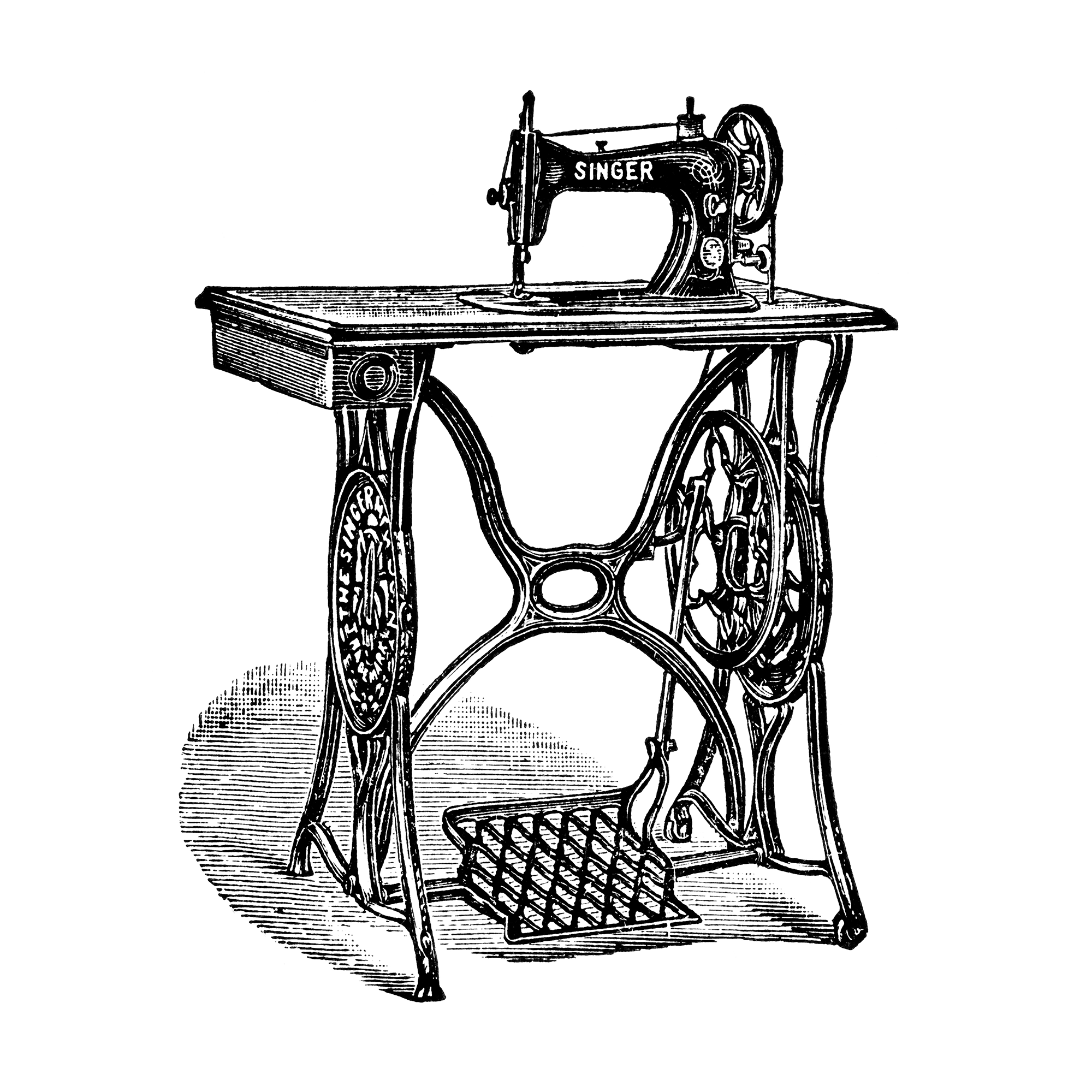 S9 Ep33: Did the Sewing Machine Liberate Women?✨ | sewing machinewomen's liberation+3 | Philipp AgerDavide Coluccia | New York TimesCEPR+2 | — | sewing machinewomen's work+5 | — | 19m 09s | |
| 6/5/26 |  S9 Ep32: The digital money supply✨ | digital moneycentral banks+4 | Stephen Cecchetti | Brandeis UniversityCEPR+3 | USEU+1 | digital currencycentral bank digital currencies+5 | — | 27m 19s | |
| 5/29/26 |  S9 Ep31: How well does patent screening work?✨ | patent screeninginnovation+3 | Mark Schankerman | LSECEPR+2 | — | patentscreening+6 | — | 32m 46s | |
| 5/22/26 |  S9 Ep30: Redefining the monetary standard✨ | monetary policydigital currencies+4 | Livio Stracca | European Central BankRedefining the Monetary Standard in the Digital Age: Digital Innovations and the Future of Monetary Policy | — | fiat moneydigital currencies+5 | — | 26m 24s | |
| 5/15/26 |  S9 Ep29: Guns and Butter✨ | military spendingsocial programs+4 | Christoph TrebeschJohannes Marzian | Kiel Institute for the World EconomyKiel University+2 | — | NATOrearmament+5 | — | 21m 02s | |
| 5/8/26 |  S9 Ep28: Immigration and integration in Europe✨ | immigrationintegration+3 | Tommaso Frattini | University of MilanMigration Observatory+4 | — | immigrationintegration+5 | — | 25m 27s | |
| 5/1/26 |  S9 Ep27: The right to choose to die✨ | assisted dyingend-of-life choices+5 | Al Roth | Stanford Universitynew book | SwitzerlandNew York+3 | assisted dyingDaniel Kahneman+8 | — | 23m 00s | |
| 4/24/26 |  S9 Ep26: The public origins of American innovation✨ | American innovationgovernment funding+5 | Paolo Surico | London Business SchoolCEPR | — | innovationgovernment grants+5 | — | 31m 09s | |
| 4/20/26 |  S9 Ep25: Rebalancing the Chinese economy✨ | Chinese economystructural imbalances+5 | Yiping Huang | National School of Development at Peking UniversityCEPR+1 | ChinaBeijing+1 | Chinaeconomy+6 | — | 27m 52s | |
Want analysis for the episodes below?Free for Pro Submit a request, we'll have your selected episodes analyzed within an hour. Free, at no cost to you, for Pro users. | |||||||||
| 4/13/26 |  S9 Ep24: Stablecoins and Global Imbalances✨ | stablecoinsglobal imbalances+3 | Gilles Moëc | AXACEPR+3 | — | stablecoinsUS government+3 | — | 31m 02s | |
| 4/13/26 |  S9 Ep23: Global imbalances redux✨ | global imbalancesUS trade deficit+4 | Maurice Obstfeld | Peterson Institute for International EconomicsCEPR+2 | — | global imbalancesUS trade deficit+5 | — | 34m 18s | |
| 4/2/26 |  S9 Ep22: World War Trade✨ | world tradetariffs+4 | Richard Baldwin | IMD Business SchoolVoxEU+3 | United StatesChina | tariffsChina+5 | — | 26m 52s | |
| 3/27/26 |  S9 Ep21: The Bank of England's capital mistake?✨ | banking regulationcapital requirements+3 | David AikmanJohn Vickers | Bank of EnglandNIESR+2 | — | Bank of Englandcapital requirements+5 | — | 24m 39s | |
| 3/20/26 |  S9 Ep20: What triggered January 6?✨ | January 6partisanship+5 | Konstantin SoninDavid Van Dijcke+1 | VoxTalks EconomicsParler+2 | — | January 6protests+5 | — | 20m 59s | |
| 3/17/26 |  S9 Ep19: Can blockchain decentralise money, contracts, and finance?✨ | blockchaincryptocurrency+4 | Bruno Biais | BitcoinEthereum | Lebanon | blockchainBitcoin+7 | — | 33m 12s | |
| 3/13/26 |  S9 Ep18: Will AI transform economic growth?✨ | AIeconomic growth+3 | Anton Korinek | University of VirginiaCEPR | — | AIeconomic growth+5 | — | 31m 21s | |
| 3/6/26 |  S9 Ep17: Sanctions and financial repression✨ | financial repressionsanctions+4 | Oleg ItskhokiDmitry Mukhin | Harvard UniversitySanctions, Capital Outflows, and Financial Repression | — | financial repressionsanctions+6 | — | 18m 05s | |
| 3/4/26 | 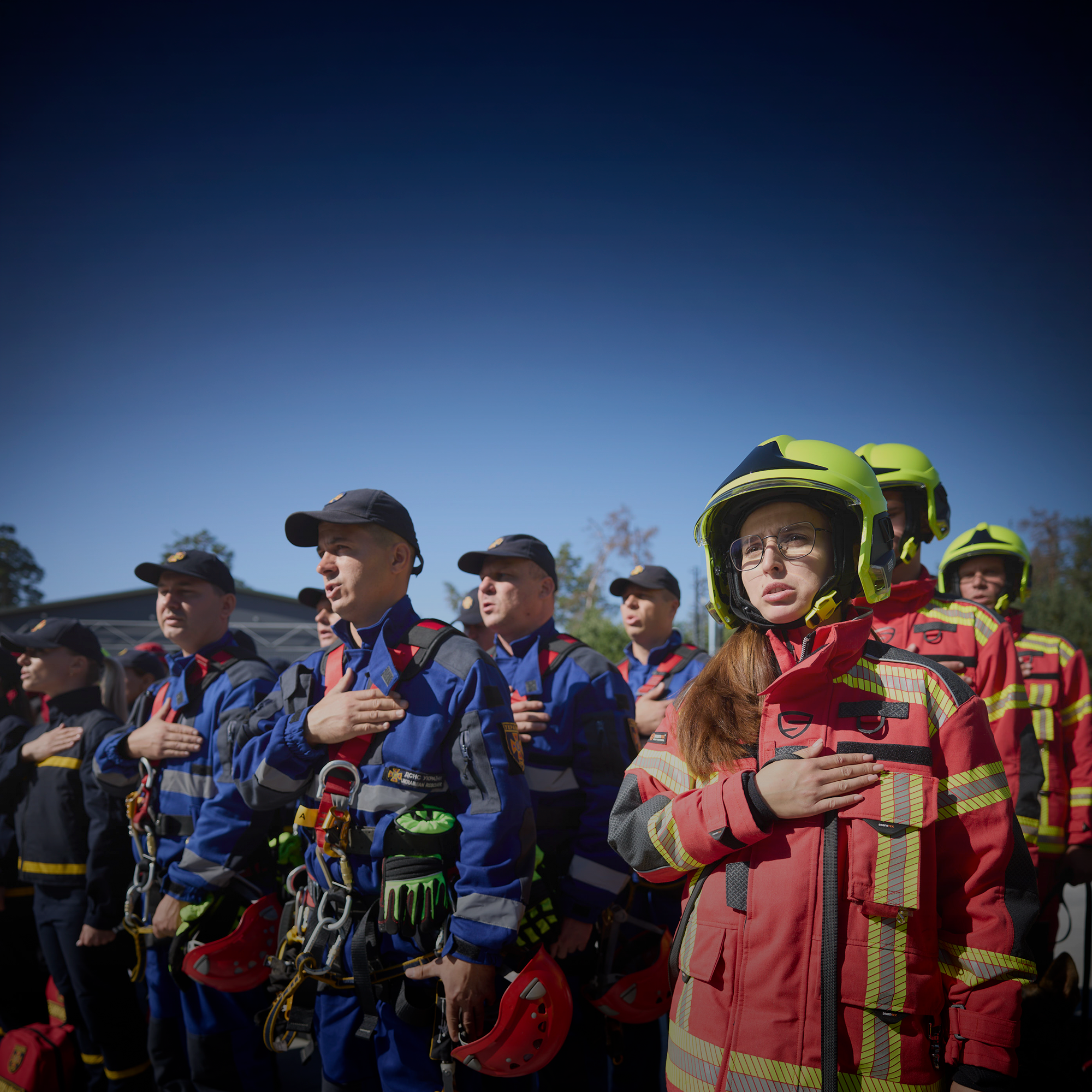 S9 Ep16: What's next for Ukraine: The labour market | Ukraine has lost close to a quarter of its civilian workforce since the invasion. Three and a half million workers left government-controlled areas: mobilised into the armed forces, displaced inside the country, gone abroad as refugees, or killed. Giacomo Anastasia, Tito Boeri, and Oleksandr Zholud draw on an unprecedented wartime dataset to document how Ukraine's labour market adapted under that pressure. What they find is not what you might expect. Aggregate matching efficiency fell by only about 15%; less than the decline recorded in the United States during the 2008 financial crisis. Firms hired women into roles previously closed to them by law, took on older workers and people with disabilities, and expanded remote work to keep displaced employees and refugees connected to Ukrainian payrolls. The collapse was real, but concentrated: in contested territories near the frontline, employment fell to less than half its pre-war level and vacancy postings dropped to virtually zero. The question the paper poses for reconstruction is how to sustain that resilience, absorb close to a million returning soldiers, and begin to reverse what five years of disrupted schooling has done to a generation.The research behind this episode:Anastasia, Giacomo M., Tito Boeri, and Oleksandr Zholud. 2026. "A Wartime Labor Market: The Case of Ukraine." Economic Policy: Papers on European and Global Issues, special issue: "What's Next for Ukraine?"To cite this episode:Phillips, Tim. 2026. "What's Next for Ukraine: A Wartime Labour Market." Economic Policy: Papers on European and Global Issues (podcast).Assign this as extra listening. The citation above is formatted and ready for a reading list or VLE.About the guestsGiacomo Anastasia is a PhD student in Economics at Columbia University and Columbia Business School. His research interests include public economics, labour economics, and industrial organisation.Tito Boeri is Professor of Economics at Bocconi University and one of Europe's leading authorities on labour markets, unemployment insurance, and welfare state reform. He served as President of INPS, Italy's national social security institution, from 2015 to 2019.Oleksandr Zholud is a researcher at the National Bank of Ukraine. He was central to maintaining the economic data systems that continued to function through the war, and which made the empirical work in this paper possible. Research cited in this episodeThe civilian labour force contraction is estimated at roughly twenty to twenty-five per cent of the pre-war workforce in government-controlled areas, equivalent to a loss of around 3.5 million workers. The calculation combines refugees abroad (between six and seven million, of whom approximately seventy per cent are of working age), military mobilisation (at least 800,000 since 2022, up from 250,000 before the war), and combat casualties. The authors note that a shock of this scale has almost no modern precedent; the closest comparisons are Serbia's losses in the First World War and the economic disruption caused by the 1994 Rwandan genocide.Work.ua is the largest online job-search platform in Ukraine, covering around 125,000 firms and 4.5 million workers. The paper draws on weekly data from Work.ua on vacancy postings, job-seeker resumes, and offered and expected wages to track labour market dynamics across sectors and regions throughout the war. This platform data continued to be updated through the conflict and provided the primary source for the paper's matching analysis, replacing the State Statistics Service household survey, which suspended publication after the invasion.The InfoSapiens household survey, commissioned by the National Bank of Ukraine since 2021, serves as the wartime replacement for the State Statistics Service quarterly Labour Force Survey. It interviews around 1,000 individuals per quarter on employment, unemployment, and labour force participation, stratified by gender, age, region, and settlement size. Despite its smaller sample, it remains the primary regular survey-based source on Ukraine's labour market since the full-scale invasion.The State Employment Service (SES) firm survey, conducted in January 2025 in cooperation with Helvetas Swiss Intercooperation, covered 55,000 enterprises employing 4.2 million workers plus 70,000 registered unemployed persons. This cross-sectional survey provided the paper's evidence on how recruitment practices, remote work adoption, and workforce composition changed after the invasion; it is described in the paper as one of the largest wartime enterprise surveys of its kind.Air raid alarm data are used as the paper's proxy for regional exposure to the war. When missiles or drone attacks are detected, sirens activate across affected areas; the authors use the frequency and duration of these alarms to classify Ukrainian regions on a spectrum from low-exposure (western oblasts such as Lviv) to high-exposure (eastern regions such as Kharkiv) to contested (partially or fully occupied territories including parts of Donetsk and Luhansk). This classification is the basis for the paper's finding that war intensity is the primary driver of differences in labour market outcomes across regions.Matching efficiency is a standard labour economics measure of how effectively the market converts a given stock of unemployed workers and open vacancies into new hires. A fall in matching efficiency means that jobs and workers exist but find each other more slowly. The paper estimates that Ukraine's aggregate matching efficiency declined by about fifteen per cent after the invasion; a smaller fall than the more than twenty per cent recorded in the United States during the 2008 financial crisis, though with severe deterioration concentrated in frontline and contested regions, where matching efficiency dropped by close to twenty-five per cent.Remote work as a retention mechanism. A survey of Ukrainian refugees abroad found that roughly forty per cent of those in employment were working for Ukrainian firms remotely. Those maintaining an employment link to a Ukrainian company reported a significantly higher intention to return to Ukraine after the war compared with refugees employed by foreign firms. Anastasia argues this makes remote work not only an economic adaptation but a tool for sustaining the connection between displaced workers and the country they may one day return to rebuild.More in the "What's Next for Ukraine?" seriesThis episode is the third and final in a series based on papers presented at the inaugural Economic Policy winter conference, Paris, December 2025.Episode 1, with Yuriy Gorodnichenko and Maurice Obstfeld: why $40 billion a year in investment is more achievable than it sounds, why deep debt restructuring is a prerequisite for attracting private capital, and what the Euroclear frozen assets could unlock. Episode 2, with Edward Glaeser, Martina Kirchberger, and Andrii Parkhomenko: why the right model for rebuilding Ukraine's cities is postwar Tokyo rather than postwar Berlin or Warsaw, and why directing reconstruction spending towards the most damaged regions would be rebuilding in the wrong direction. Related reading on VoxEUThe labour market in Ukraine: Rebuild better, the companion VoxEU column by Anastasia, Boeri, and Zholud, summarising the paper's findings on matching efficiency, firm adjustment, and the policy priorities for reconstruction. You only live twice: A growth strategy for Ukraine, Gorodnichenko and Obstfeld's companion column to Episode 1, making the case for $40 billion a year in investment and explaining why EU and NATO accession momentum is the key enabling condition.Rebuilding cities in Ukraine, a VoxEU column on the spatial and urban decisions that will shape how Ukraine's cities develop in the decades after the war, and why the Tokyo model of decentralised land readjustment is the right precedent. | 17m 05s | ||||||
| 2/27/26 | 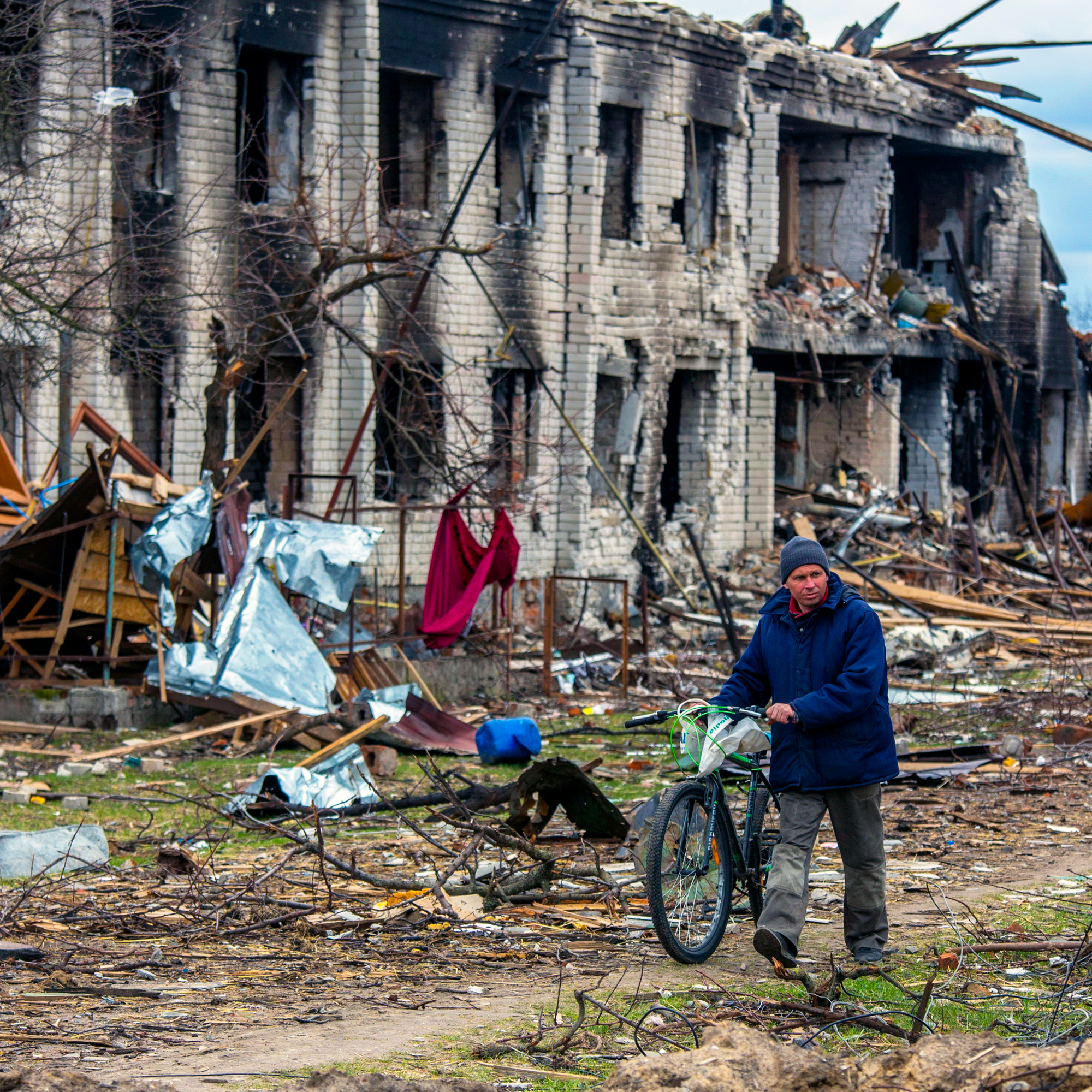 S9 Ep15: What's next for Ukraine: Reconstruction | Ukraine's cities were failing long before the Russian invasion began. Kyiv and Lviv ranked among the 40 most congested cities in the world, yet neither makes the top 100 by population. Ninety per cent of Ukraine's housing stock was built before 1990. Its urban infrastructure was designed for a Soviet economy and never properly adapted for the one that followed. So when reconstruction begins, the question is not simply how to repair what was there: it is whether repairing what was there is the right goal.Edward Glaeser of Harvard, Martina Kirchberger of Trinity College Dublin, and Andrii Parkhomenko of the University of Southern California argue that the most instructive precedent is not post-USSR Warsaw, or postwar Berlin, it is postwar Tokyo. Firebombed into ruin, Tokyo rebuilt in a way that was strikingly decentralised: master plans quickly abandoned, local communities empowered to combine small lots through land readjustment, and figure it out from the bottom up. Before the war, Ukraine's economic activity was already shifting away from heavy industry and the east, towards services and the west. Reconstruction that concentrates investment where the damage is greatest, rather than where people want to build a new life, would repair the buildings and miss the point.The research behind this episode:Glaeser, Edward L., Martina Kirchberger, and Andrii Parkhomenko. 2025. "Rebuilding Ukraine's Cities: Maximizing Benefits and Minimizing Costs." Economic Policy: Papers on European and Global Issues, special issue: "What's Next for Ukraine?" To cite this episode:Phillips, Tim. 2026, "What's Next for Ukraine: Reconstruction." Economic Policy: Papers on European and Global Issues (podcast). Assign this as extra listening: the citation above is formatted and ready for a reading list or VLE.About the guestsEdward Glaeser is Fred and Eleanor Glimp Professor of Economics at Harvard University and a Research Associate of the National Bureau of Economic Research. He is one of the world's leading urban economists, with a research agenda spanning cities, housing markets, economic growth, and governance.Martina Kirchberger is a CEPR Research Affiliate and Assistant Professor in Economics at Trinity College Dublin. Her research focuses on structural transformation, urban economics, and development in low- and middle-income countries.Andrii Parkhomenko is Assistant Professor of Real Estate at the USC Marshall School of Business and a researcher at the Kyiv School of Economics. His work centers on urban and spatial economics, with a particular focus on housing markets and city growth.Research cited in this episodeUkraine Rapid Damage and Needs Assessment, World Bank Group, European Commission, and UN, 2024. The source of the physical damage figure cited in this episode: approximately $175 billion by the end of 2024, with estimates for end-2025 likely exceeding $200 billion. Some independent projections cited by Glaeser run to $500 billion or above.The concept of investing-in-investing, referenced by Kirchberger, originates in work by Paul Collier on how resource-rich developing countries can scale up capital investment effectively. It refers to the prior investments in institutions, skills, and capacity that must be made before large-scale capital flows can be productively absorbed. The implication for Ukraine: there is work to do now, before reconstruction begins at scale.The Tokyo land readjustment model, which Glaeser cited as the most instructive reconstruction precedent, allowed owners of small fragmented lots to pool their land, redevelop it jointly, and receive a share of the new property in exchange for their stake in the old. It enabled large-scale urban reconstruction without central expropriation, and without waiting for government direction. The mechanism remains in active use in Japanese urban planning.The Solidere reconstruction of central Beirut was raised as a cautionary counterexample: a centralised, top-down rebuild that produced a high-end commercial district with questionable benefit to ordinary Lebanese, and which substantially enriched its private shareholders. The contrast with Tokyo's decentralised model is the episode's sharpest illustration of what reconstruction can and cannot achieve when organised from above.More in the "What's Next for Ukraine?" seriesThis episode is the second in a three-part series based on papers presented at the inaugural Economic Policy winter conference, Paris, December 2025.Episode 1: Yuriy Gorodnichenko and Maurice Obstfeld on the investment and financing challenge: $40 billion a year, debt restructuring as a prerequisite for private capital, and why the number is more achievable than it sounds.Episode 3: Demobilisation and the labour market: getting soldiers back into work without breaking the economy that kept the country going. Related reading on VoxEURebuilding cities in Ukraine: A VoxEU column on the urban reconstruction challenge, including the spatial decisions that will shape how Ukraine's cities develop in the decades after the war.A blueprint for the reconstruction of Ukraine: A comprehensive VoxEU overview of the reconstruction architecture: what institutions are needed, how international financing can be coordinated, and what the sequencing of investment should look like.Completing Ukraine's reconstruction architecture: On the remaining gaps in the international framework for financing and coordinating Ukraine's rebuild, and what needs to happen before reconstruction can begin at the required scale.Lessons for rebuilding Ukraine from economic recoveries after natural disasters: What the evidence from post-disaster reconstruction in other countries tells us about what works, what fails, and how quickly economies can return to their pre-shock trajectories. | 16m 58s | ||||||
| 2/25/26 |  S9 Ep14: What’s next for Ukraine: Investment | Ukraine will emerge from this war with enormous debt. The conventional wisdom treats that as an obstacle: investors weigh it before committing capital, and the burden slows the recovery before it starts. Yuriy Gorodnichenko and Maurice Obstfeld of UC Berkeley argue the opposite. A thorough restructuring of Ukraine's war debts – including, for sufficiently large obligations, outright forgiveness – is not just politically defensible but economically essential for attracting private investment. The bill for rebuilding and growing Ukraine, Gorodnichenko estimates, is $40 billion a year: $20 billion to replace destroyed capital, $10 billion to stop Ukraine falling behind its Eastern European peers, and $10 billion to start closing the gap. Put that figure next to what Poland absorbed in FDI during its post-communist transition, or the €200 billion of Russian state assets currently immobilised in Euroclear, or the budgetary support Ukraine has been receiving since 2022 – and it looks achievable. The harder challenge, they argue, is not raising $40 billion. It is directing it: towards investment rather than consumption. Ukraine didn’t grow in the post-Soviet era at the rate that its neighbours achieved. EU accession momentum and secure borders can be a signal to investors that this time the trajectory will be different.The research behind this episode:Gorodnichenko, Yuriy, and Maurice Obstfeld. 2026. "You Only Live Twice: Financial Inflows and Growth in a Westward-Facing Ukraine." Economic Policy: Papers on European and Global Issues, special issue: "What's Next for Ukraine?"To cite this episode:Phillips, Tim. 2025. "You Only Live Twice: Financial Inflows and Growth in a Westward-Facing Ukraine." Economic Policy: Papers on European and Global Issues (podcast).Assign this as extra listening — the citation above is formatted and ready for a reading list or VLE.About the guestsYuriy Gorodnichenko is a CEPR Research Fellow and Professor of Economics at the University of California, Berkeley, where he leads CEPR's Ukraine Initiative. His research spans monetary policy, fiscal policy, and the macroeconomics of growth and business cycles.Maurice Obstfeld is a CEPR Distinguished Fellow and Class of 1958 Professor of Economics at the University of California, Berkeley. He served as Chief Economist of the International Monetary Fund from 2015 to 2018, and as a member of the Council of Economic Advisers under President Obama from 2014 to 2015. He is also a Fellow of the Econometric Society and the American Academy of Arts and Sciences.Research cited in this episodeThe discussion of debt overhang draws on a body of work from the 1980s developing-country debt crises, notably the insight that for sufficiently indebted countries, debt reduction can increase the expected value of what creditors recover. Gorodnichenko and Obstfeld apply this framework directly to Ukraine's war debts, arguing that deep restructuring – supported by bilateral official creditors, many of whom are European – is a prerequisite for private investment to follow.The €200 billion figure for immobilised Russian central bank assets held at Euroclear is the basis for Obstfeld's proposal of a reparations loan that would give Ukraine immediate access to large-scale resources, with repayment contingent on Russian reparations. This is discussed in more detail in the related reading below.More in the "What's Next for Ukraine?" seriesThis episode is the first in a three-part series based on papers presented at the inaugural Economic Policy winter conference, Paris, December 2025. Episodes 2 and 3, on rebuilding and the labour market, are forthcoming.Related reading on VoxEUYou only live twice: A growth strategy for Ukraine — Gorodnichenko and Obstfeld's own VoxEU column summarising the key arguments in this paper: why $40 billion a year is achievable, what the policy levers are, and why the window matters.Euroclear and the geopolitics of immobilised Russian assets — The legal and financial context behind the €200 billion of Russian central bank assets frozen at Euroclear, and what it would take to use them for a reparations loan to Ukraine.Using the returns of frozen Russian assets to finance the victory of Ukraine — A VoxEU proposal for channelling the interest income generated by frozen Russian assets to finance Ukraine's needs, without requiring the more politically contested step of confiscating the assets themselves.Ukraine's recovery challenge — An earlier VoxEU overview of the reconstruction task: the scale of damage, the role of EU accession, and the two-phase approach to restoring growth. | 20m 45s | ||||||
| 2/20/26 |  S9 Ep13: The alpha political male | Recorded live at the CEPR Annual Symposium. We seem to be talking about the behaviour of alpha males on social media a lot recently. But what happens when we put them in charge of a country? The work of Mario Carillo of Universitat Autònoma de Barcelona attempts to answer that question. He talks to Tim Phillips about when and why voters choose alpha males, and how they respond to being given power. | 15m 00s | ||||||
| 2/18/26 |  S9 Ep12: Management under the spotlight | What type of manager would you be? An experiment in Ethiopia set out to measure the management traits of young professionals by setting them challenges in a video studio, and along the way also uncovered valuable (and surprising) information about the type of manager that employees and employers preferred.Simon Quinn of Imperial College London and CEPR and Tom Schwantje of Bocconi University were two of the researchers. They tell Tim Phillips about why it is important to develop better managers, and how we might do that for young professionals. | 20m 13s | ||||||
| 2/13/26 |  S9 Ep11: The next generation: Paris ‘25 | Recorded live at the CEPR Annual Symposium in Paris. When VoxTalks Economics visits a symposium or conference, we try to find the most interesting new research from economists who are just starting out in their careers. In Paris we invited three of them to the CEPR Office to tell us about their work.In this episode, Tim Phillips talks to Lucie Giorgi, Aix-Marseille School of Economics (AMSE), whose research tracks the impact of sex segregation in French elementary schools; Alishuba Philip of the University of Zurich, who has investigated why slum redevelopment often doesn’t benefit the people who live there, and Ali Bakhtawar – also of AMSE – about Lawfare in Pakistan. | 34m 46s | ||||||
| 2/11/26 |  S9 Ep10: How many people die when the US cuts foreign aid? | Another special episode recorded at the CEPR annual symposium in Paris. On 20 Jan 2025 when the Trump administration declared foreign aid “antithetical" to American values and suddenly ended many of its overseas programmes. How many lives were lost as a result, and can others step up to try to minimise that damage? Justin Sandefur is well qualified to speak on this topic – he leads Coefficient Giving’s programme on economic growth in low- and middle-income countries and is one of the authors in a chapter on this topic in the recent CEPR book, The Economic Consequences of the Second Trump Administration. Tim Phillips asked him about the consequences of the cuts on global health. | 18m 26s | ||||||
Showing 25 of 461
Pitch Fit is a Pro feature
See how bookable this show is for guests, which brands already advertise, the per-episode ad value, and the best-fit guest and sponsor profile. The numbers are blurred on the free plan.
How readily this show books outside guests like you.
How proven this show is for host-read sponsorships.
For Guests
ProFor Advertisers
ProUpgrade to Pro to unlock guest cadence, sponsor categories, fit scores, and per-episode ad value for this show.
Chart Positions
48 placements across 42 markets.
Chart Positions
48 placements across 42 markets.