
Insights from recent episode analysis
Audience Interest
Podcast Focus
Publishing Consistency
Platform Reach
Insights are generated by CastFox AI using publicly available data, episode content, and proprietary models.
Most discussed topics
Brands & references
Est. Listeners
Insufficient chart data. Estimates will improve as the show charts.
- Per-Episode Audience
Est. listeners per new episode within ~30 days
N/A🎙 Weekly cadence·97 episodes·Last published 4mo ago - Monthly Reach
Unique listeners across all episodes (30 days)
N/A - Active Followers
Loyal subscribers who consistently listen
N/A
Market Insights
Platform Distribution
Reach across major podcast platforms, updated hourly
Total Followers
—
Total Plays
—
Total Reviews
—
* Data sourced directly from platform APIs and aggregated hourly across all major podcast directories.
On the show
From 1 epsHost
Recent guests
Recent episodes
Center for Media Innovation founding Exec. Dir. Andy Conte: why tech & collaboration is the futre of journalism (S06EP10)
Feb 18, 2026
41m 22s
Building futures where economic reinvention doesn't mean displacement w/ Sonya Tilghman Exec. Dir. Hazelwood Iinitiative (S06EP09)
Feb 4, 2026
40m 43s
Fearless conviction: Environmental health advocate Gillian Graber empowers communities to stand up to fossil fuel industries (SO6EP08)
Jan 21, 2026
41m 05s
Kendra Whitlock Ingram one of nation's largest downtown cultural districts w/ vision & authenticity (S0607)
Jan 7, 2026
39m 08s
Independent journalism innovator Spotlight PA CEO/Pres. Chris Baxter is holding those in power accountable (S06EP06)
Dec 21, 2025
41m 12s
Social Links & Contact
Official channels & resources
Official Website
Login
RSS Feed
Login
| Date | Episode | Topics | Guests | Brands | Places | Keywords | Sponsor | Length | |
|---|---|---|---|---|---|---|---|---|---|
| 2/18/26 |  Center for Media Innovation founding Exec. Dir. Andy Conte: why tech & collaboration is the futre of journalism (S06EP10)✨ | journalismtechnology+5 | Andy Conte | Center for Media InnovationPoint Park University+4 | — | journalismlocal news+5 | — | 41m 22s | |
| 2/4/26 |  Building futures where economic reinvention doesn't mean displacement w/ Sonya Tilghman Exec. Dir. Hazelwood Iinitiative (S06EP09) | Sonya Tilghman, Executive Director of Hazelwood Initiative, joins Heinz Endowments President and “We Can Be” host Chris DeCardy for this episode of “We Can Be.” Communities experiencing the exit of major economic drivers often face a fresh challenge when revitalization opportunities arise: how to ensure that their voice will be heard and respected so new business investments don’t push them out of their longtime homes and neighborhoods. Raised in Washington D.C., Sonya came to Pittsburgh through an AmeriCorps position that sparked her interest in the intricacies of public policy, especially how it often seemed to lack input from the very people it was meant to serve. Sonya has spent nearly 25 years empowering individuals and communities so they can share in the success of revitalization efforts. For the past decade she has led Hazelwood Initiative, an organization that works to build futures in communities where economic reinvention doesn’t mean displacement, and residents have healthy homes and thriving green spaces. Located on the shore of the Monongahela River three miles from Downtown Pittsburgh, Hazelwood is obviously dear to Sonya's heart as demonstrated by her commitment to its people, organizations and environment. Her work to ensure the residents benefit from the major research and tech entities that have moved into the community’s Hazelwood Green development has gained her much-deserved respect. Likewise, her emphasis on uplifting the community’s greenways and trails has brought recognition from the United Nations Climate Conference and the National Recreation & Parks Association. “I think we can be a place where we all prosper,” Sonya says. “And I also believe we can be a place where that cost doesn’t come at the expense of vulnerable people.” Notes on this episode: Special commentary by Rob Stephany, Endowments Senior Director of Community & Economic Development. Produced by Scott Roller, Endowments Strategic Communications Manager; technical production by Josh Franzos and Tim Murray of Treehouse Media. Subscribe, listen and share episodes on all major podcast platforms and YouTube. Use search term “Heinz We Can Be.” | 40m 43s | ||||||
| 1/21/26 |  Fearless conviction: Environmental health advocate Gillian Graber empowers communities to stand up to fossil fuel industries (SO6EP08) | Heinz Endowments President and “We Can Be” host Chris DeCardy welcomes Gillian Graber, Executive Director and Co-Founder of Protect PT. The grassroots community-based nonprofit works to protect southwestern Pennsylvania residents from the harmful health and environmental impacts of fossil fuel activity. Gillian and her family settled in Penn-Trafford, an idyllic borough located along the border of Westmoreland and Allegheny counties near Pittsburgh, in part because of its promise of clean air and water. Shortly after moving into their home, the oil and gas industry encroached on their neighborhood. Legal roadblocks and frustration with the ineffectiveness of government agencies spurred Gillian and her husband to found Protect PT in 2014. Protect PT’s early grassroots fundraising included selling candy bars and popcorn to cover attorney fees. “I literally ran behind the school bus, handing out flyers to moms after they got their kids on the bus,” Gillian tells Chris. “I became an accidental activist.” In the past decade, the organization has grown to a staff of nine and expanded its work to include policy analysis and community environmental education. This increased impact has led to international recognition through a partnership with outdoor apparel company Patagonia’s Dublin, Ireland, location. “One person speaking up is not enough. Communities need to speak up,” Gillian said. “Despite the disparity, despite the amount of money that this industry has, people really have to be fearless and have a sense of conviction.” “We Can Be” is hosted by Heinz Endowments President Chris DeCardy and produced by the Endowments, Josh Franzos and Tim Murray. Special commentary in this episode by Endowments Senior Director of Climate, Environment & Health Philip Johnson. Theme music by Josh Slifkin. Host and guest photos: Josh Franzos. Guest inquiries: Scott Roller at sroller@heinz.org. Subscribe, listen and share new “We Can Be” episodes every two weeks on all major podcast platforms and YouTube. Use search term “Heinz We Can Be.” | 41m 05s | ||||||
| 1/7/26 |  Kendra Whitlock Ingram one of nation's largest downtown cultural districts w/ vision & authenticity (S0607) | Heinz Endowments President and “We Can Be” host Chris DeCardy welcomes Kendra Whitlock Ingram, President and CEO of the Pittsburgh Cultural Trust. Kendra leads the Trust in overseeing one of the largest and most complex downtown arts and culture districts in the country. With a dedication to inclusive and diverse programming, she began her arts management journey with a Duquesne University undergraduate internship with the Pittsburgh Opera. Kendra circled back to the city in 2023 after two decades of leadership positions at renowned arts organizations across the United States. “We’re an economic engine that is utilizing arts and culture as the vehicle to drive excitement, community and activation in Downtown,” says Kendra. “We use data and community input to understand exactly what those who attend our performances and events want from a Downtown experience, and we work with our partners to provide it.” In the past four decades, that approach has helped the Cultural Trust spur a dramatic transformation of Downtown Pittsburgh’s red-light district of the ‘70s and ‘80s to a vibrant, nationally recognized destination for arts and culture programming. The multitude of historic venues and outdoor public spaces managed by the Trust cover more than a million square feet of Downtown real estate across 14 blocks. With a $600 million Downtown revitalization plan underway that includes Arts Landing, a 4.5-acre riverside park with performance spaces and public art installations, Kendra and the Trust will have even more opportunities to bring an increased range of arts and culture to residents and visitors alike. “We work to showcase national and internationally recognized artists as well as our region’s own top-notch creatives in world-class spaces,” says Kendra. “That magic combination gives us one of the most vibrant arts ecosystems in the country.” Learn more about that creative magic in this episode of “We Can Be.” “We Can Be” is hosted by Heinz Endowments President Chris DeCardy and produced by the Endowments, Josh Franzos and Tim Murray. Special commentary in this episode by Endowments Managing Director of Arts & Culture Jasmin DeForrest. Theme music by Josh Slifkin. Host and guest photos: Josh Franzos. Guest inquiries: Scott Roller at sroller@heinz.org. Subscribe, listen and share new “We Can Be” episodes every two weeks on all major podcast platforms and YouTube. Use search term “Heinz We Can Be.” | 39m 08s | ||||||
| 12/21/25 |  Independent journalism innovator Spotlight PA CEO/Pres. Chris Baxter is holding those in power accountable (S06EP06) | Heinz Endowments President and “We Can Be” host Chris DeCardy welcomes Chris Baxter, CEO, President and Founding Editor of Spotlight PA, an independent, non-partisan and nonprofit news organization dedicated to holding those in power accountable. Mr. Baxter has more than two decades of journalism experience and has built his impressive career on a commitment to challenging that status quo. He leads Spotlight PA’s partnerships with over 90 newsrooms, the largest collaborative distribution network of its kind in the United States. “Spotlight PA holds our elected officials accountable because they are making decisions that affect everyone’s day-to-day life,” said Mr. Baxter. “We need trusted regional news that fights back against the noise of the national conversation, which threatens to overpower our dialogue with local, county, city and state officials.” Founded in 2019 to address Pennsylvania’s declining state of local journalism, Spotlight PA has had substantial impact that has made it a model of independent journalism for other states across our nation. The organization’s investigations have saved taxpayers an estimated $20 million dollars and prompted 36 local, state and federal policy changes that enhance transparency across the commonwealth. Mr. Baxter was awarded the 2025 News Media Industry Executive of the Year by the Pennsylvania NewsMedia Association for his innovation, integrity and commitment to the future of local news. “The Spotlight PA model is an opportunity to retake journalism and bring people back into the fold,” he said. “And with that trust comes an incredible power to help people solve the real problems in their lives.” “We Can Be” is hosted by Heinz Endowments President Chris DeCardy and produced by the Endowments, Josh Franzos and Tim Murray. Special commentary in this episode by Endowments Program Director of Civic Participation Matt Barron. Theme music by Josh Slifkin. Host and guest photos: Josh Franzos. Guest inquiries: Scott Roller at sroller@heinz.org. Subscribe, listen and share new “We Can Be” episodes every two weeks on all major podcast platforms and YouTube. Use search term “Heinz We Can Be.” | 41m 12s | ||||||
| 12/10/25 |  Michelle Naccarati-Chapkis on Women for a Healthy Environment's trailblazing & transformative action (S06EP05) | Heinz Endowments President and “We Can Be” host Chris DeCardy welcomes Women for a Healthy Environment Executive Director Michelle Naccarati-Chapkis to “We Can Be.” In 2007 a group of about 20 women attended an information-sharing conference in Pittsburgh that addressed links between environmental factors and women’s health. After the gathering, they determined that there was a need for continued questions and answers, research and community organizing. Three years later, with support from The Heinz Endowments, Women for a Healthy Environment was born. “When Women for a Healthy Environment was publicly launched, we were bringing a lot of new information to communities about environmental hazards that they hadn’t heard about,” Michelle said. “Fifteen years later, I feel like our research, education and awareness-building about environmental hazards has helped drive a transformative journey to more awareness, knowledge and organizing.” The daughter of a police chief and school superintendent, Michelle followed in her parents’ footsteps by choosing a path focused on public service to the community. In recent years, she has guided Women for a Healthy Environment as the organization expanded its work with a significant presence in Philadelphia. That partnership with the Philadelphia Regional Center for Children’s Environmental Health and the University of Pennsylvania aligns with WHE’s data-focused approach to its work. Michelle shares how Women for a Healthy Environment is making a national impact on lead removal in schools and homes, why significantly more women than men identify the environment as a primary concern, and how the organization’s Eco-Student Stewardship Program is inspiring the next generation of environmental leaders. “Our work has shown us that our youngest environmentalists are informed and ready,” Michelle says. “We are in good hands.” “We Can Be” is hosted by Heinz Endowments President Chris DeCardy and produced by the Endowments, Josh Franzos and Tim Murray. Special commentary in this episode by Endowments Senior Director of Climate, Environment & Health Philip Johnson. Theme music by Josh Slifkin. Host and guest photos: Josh Franzos. Guest inquiries: Scott Roller at sroller@heinz.org. Subscribe, listen and share new “We Can Be” episodes every two weeks on all major podcast platforms and YouTube. Use search term “Heinz We Can Be.” | 39m 08s | ||||||
| 11/25/25 |  Riverlife's Matt Galluzzo raises the bar for riverfront preservation & community connection (S06EP04) | Heinz Endowments President and “We Can Be” host Chris DeCardy welcomes Matt Galluzzo, the president and CEO of Riverlife, which serves as the north star for the redevelopment of Pittsburgh’s riverfronts with high-quality design, accessibility and environmental integrity. From ancient Greek philosophy to our country’s own Native American history, cultures around the world have embraced variations of the phrase “water is life.” Millions will see the life that the Pittsburgh region has built along its rivers when the NFL draft comes to Pittsburgh in April of 2026. <Courtney - insert “listen” button here> Much of the beauty, public green space and vibrant activity along Pittsburgh’s Monongahela, Allegheny and Ohio rivers can be traced to Riverlife. The organization was established in 1999 with key support from the Endowments and Heinz family members who recognized the enormous potential of visually and environmentally sound riverfronts. “For me, the real beauty of what we’ve accomplished is that generations from now, people we will never meet are going to benefit from our work,” Matt says. “It is with this longitudinal view that we have developed our community-informed plans to ensure that folks in 30 or 40 years are going to have a healthy, high-quality experience on our riverfronts.” Prior to joining Riverlife in 2019, Matt led the creation and implementation of the first Community Land Trust in western Pennsylvania and oversaw $200 million in public and private investment for the thriving riverfront neighborhood of Lawrenceville. Immerse yourself in Riverlife’s successes, challenges and the high bar it has set as a national leader in riverfront preservation and sustainable development on this episode of “We Can Be.” “We Can Be” is hosted by Heinz Endowments President Chris DeCardy and produced by the Endowments, Josh Franzos and Tim Murray. Special commentary in this episode by Endowments Managing Director of Arts & Culture Jasmin DeForrest. Theme music by Josh Slifkin. Host and guest photos: Josh Franzos. Guest inquiries: Scott Roller at sroller@heinz.org. Subscribe, listen and share new “We Can Be” episodes every two weeks on all major podcast platforms and YouTube. Use search term “Heinz We Can Be.” | 37m 39s | ||||||
| 11/12/25 |  Breathe Project's Matt Mehalik leads clean air advocacy w/ tech, tenacity & community (S06EP03) | “Together, a network of public health professionals, air quality scientists, advocates and community groups can move the needle on air pollution,” Breathe Project Executive Director Matt Melahik tells host Chris DeCardy, president of The Heinz Endowments. Founded with support from The Heinz Endowments in 2011 and now an independent organization, the Breathe Collaborative and its communications platform Breathe Project have set a national standard for community-centered, data-informed environmental groups. Two of their innovative tracking systems have gained national attention. Their Breathe Cam project is a 24/7 live video feed showing visual components of air quality in multiple locations. Their Smell PGH app, developed in partnership with Carnegie Mellon University's CREATE Lab (Community, Robotics, Education and Technology Empowerment), gives citizens an easy way to report their air quality experiences. With a doctorate in systems engineering and as a professor teaching sustainability and environment policy at Heinz College at Carnegie Mellon University, Matt has helped guide a new generation of young people to environmental action. Matt is co-author of “Ethical and Environmental Challenges to Engineering,” and is smart, caring and deeply dedicated to improving the air we share. Listen, learn and be inspired to act with this episode of “We Can Be.” “We Can Be” is hosted by Heinz Endowments President Chris DeCardy and produced by the Endowments, Josh Franzos and Tim Murray. Special commentary in this episode by Endowments Climate, Environment & Health Senior Director Philip Johnson. Theme music by Josh Slifkin. Host and guest photos: Josh Franzos. Guest inquiries: Scott Roller at sroller@heinz.org. Subscribe, listen and share new “We Can Be” episodes every two weeks on all major podcast platforms and YouTube. Use search term “Heinz We Can Be.” | 43m 36s | ||||||
| 10/29/25 |  125 years of groundbreaking, life-changing work of Sarah Heinz House w/ CEO Demeshia Seals (S06EP02) | “My dream for every child is that they understand that there are no limits,” Demeshia Seals tells Heinz Endowments President and “We Can Be” host Chris DeCardy. Demeshia is chief executive officer of the Sarah Heinz House, established by food entrepreneur H.J. Heinz’s son Howard Heinz on Pittsburgh’s North Side in 1901 as a resource for boys from immigrant families. Two years later the Sarah Heinz House had the distinction of being the first organization of its kind in the country to serve both boys and girls at a time when doing so was unprecedented. It has given youth community-building experiences in sports, nature, well-being and life skills ever since. Its accomplishments gained national attention once again when the organization became a charter member of the national Boys and Girls Clubs of America in 1930. Demeshia joined the Sarah Heinz House in 2023, bringing decades of experience with companies including Massaro Construction and Nike Inc., where she led its skills development programs. She now leads the Sarah Heinz House in serving more than 1,000 youth annually and in recent years has expanded its programs to include adults over age 60 and to focus on STEM, robotics and workforce development. “It’s important that we change the manner in which we speak about what opportunity looks like and what success truly is for our young people,” Demeshia says. “Let's not shackle them with our limited understanding of what their opportunities could be. Let’s give them space to dream and become who they are meant to be.” “We Can Be” is hosted by Heinz Endowments President Chris DeCardy, and produced by the Endowments, Josh Franzos and Tim Murray. Special commentary in this episode by Endowments Vice President Carmen Anderson. Theme music by Josh Slifkin. Host and guest photos: Josh Franzos. Guest inquiries: Scott Roller at sroller@heinz.org. Subscribe, listen and share new “We Can Be” episodes every two weeks on all major podcast platforms. Use search term “Heinz We Can Be.” | 38m 27s | ||||||
| 10/15/25 |  Tim Kaulen brings our industrial past into the future in a bold, beautiful & meaningful way (S06EP01) | “The value of public art is the space to ask questions and to imagine answers,” Tim Kaulen, founder and executive director of Industrial Arts Workshop, tells host and Endowments President Chris DeCardy in this episode of “We Can Be.” A successful working artist and educator, Tim is also a thoughtful community advocate committed to public art, creative spaces and workforce development. Under his leadership, Industrial Arts Workshop began a decade ago as a mobile sculpture program that brought together high school students to learn safe welding and metal fabrication techniques, as well as artistic process, community engagement and team building. Now with a permanent home in Pittsburgh’s Hazelwood community, a neighborhood with a deep history in the region’s steel industry, Industrial Arts Workshop has served more than 600 students, with many going on to careers in both the arts and the welding industry. The large-scale welded steel sculptures Tim and his students and have created in prominent locations across Pittsburgh are bringing the region’s industrial past into the future in a bold, beautiful and meaningful way. Early in his career, Tim’s creation of a 25-foot inflatable figure made from recycled billboard segments was featured at the Burning Man Festival and exhibited in Brooklyn and Pittsburgh. His “dino-geese” painting on the 10th Street bridge on Pittsburgh’s South Side has gained mythological status, inspiring joy – and the occasional tattoo – among fans over the years. “What's great for me is to see young people engage with public art and to see their curiosity and their imaginations change in the moment,” Tim says. “That is what public art is about: curiosity, questions, imagination and wonder.” “We Can Be” is hosted by Heinz Endowments President Chris DeCardy, and produced by the Endowments, Josh Franzos and Tim Murray. Special commentary in this episode by Endowments Senior Program Officer for Arts & Culture Mac Howison. Theme music by Josh Slifkin. Host and guest photos: Josh Franzos. Guest inquiries: Scott Roller at sroller@heinz.org. New episode every two weeks. | 39m 42s | ||||||
Want analysis for the episodes below?Free for Pro Submit a request, we'll have your selected episodes analyzed within an hour. Free, at no cost to you, for Pro users. | |||||||||
| 10/29/24 |  Uplifting voices of those facing health effects of fracking w/ environmental health advocate Tammy Murphy | For nearly a decade, Tammy Murphy has been on the front lines of the fight to protect families from the adverse environmental and health effects of fossil fuel extraction. Tammy is the public policy and advocacy manager for Make the Road Pennsylvania, a nonprofit that builds power for justice in Latinx, immigrant, and working-class communities of color, with a key focus on climate and environmental justice. Host and Endowments President Chris DeCardy met Tammy at a convening of environmental funders last year when she was the advocacy director at Physicians for a Social Responsibility Pennsylvania. She spoke movingly about her personal experience in helping amplify the voices of those experiencing serious health issues related to fracking. “It’s hard to talk about families who are losing their children, their spouses, or who have kids doing homework in hospitals because their parent is dying,” Tammy said. Tammy is fearless in speaking truth in corridors of power – evident when she led a demonstration inside the state capitol building with parents whose children had been impacted by fracking-induced health issues. Two days later, then-Governor Wolf announced Pennsylvania fracking health dangers would be investigated and funded. “Fossil fuel extraction companies find the product that they want to go after, and then they find the path of least resistance,” Tammy tells Chris. “They go into the communities that they find the most vulnerable and try to extract from there in a way that doesn't disturb the people with the most power. Because they know those with power would resist.” Be inspired by Tammy and the stories of the communities and families she had helped uplift in this episode of “We Can Be.” “We Can Be” is hosted by Heinz Endowments President Chris DeCardy, and produced by the Endowments, Josh Franzos and Tim Murray. Theme music by Josh Slifkin. Chris DeCardy photo: Josh Franzos. Guest inquiries: Scott Roller at sroller@heinz.org. | 30m 08s | ||||||
| 10/23/24 |  Rainbow Serpent co-founder Marques Redd is reviving ancient traditions to create the future of art | Marques Redd, acclaimed artist and co-founder of multidisciplinary art collective Rainbow Serpent, is helping create the future of art by reviving ancient – and often erased – traditions. By uplifting Black LGBTQ creativity and culture through the exploration of emerging technologies, innovative healing protocols, African cosmologies, and multimedia art, he is sparking important dialogue and reconsideration of the Western artistic canon. He shares with Endowments President and podcast host Chris DeCardy why this dialogue is important, and how art creates a bridge for empathy and understanding. “Public artwork does have a psychic impact and can have a subtle kind of influence over people that might see it.” Marques says. “Ideas that may otherwise be passed over can be sparked into thoughtfulness and conversation when people engage with art.” A celebrated multimedia artist, independent scholar and traditional African cosmologist, Marques has had an impressive impact across the United States and in cities around the globe in the past several years. From the film “Obi MBu (The Primodial House)” to the groundbreaking glass sculptures and virtual reality of “Myth-Science of the Gatekeepers” to large-scale mural installations featuring effervescent, shining Black bodies that merge with a universe of stars, Marques and Rainbow Serpent’s art have been front and center in cities including Atlanta, Boston, Pittsburgh, Denver, Raleigh and Tampa, to name but a few. “The work is so political in the way in which it is raising questions around gender, sexuality, race and Blackness,” Marques says. “I do think that through our art there is continued space for us to contribute to these issues, both here and around the world.” Listen to this episode of “We Can Be” to launch into Marques’ beautiful, fascinating and moving vision of the world. “We Can Be” is hosted by Heinz Endowments President Chris DeCardy, and produced by the Endowments, Josh Franzos and Tim Murray. This episode presentation is a partnership between The Heinz Endowments and the Heinz Family Foundation. Theme music by Josh Slifkin. Guest and host photos: Josh Franzos. Guest inquiries: Scott Roller at sroller@heinz.org. | 34m 20s | ||||||
| 10/16/24 |  Heinz Award winner & Taproot Earth's Colette Pichon Battle stands up to climate change inequities (S05E08) | Colette Pichon Battle, Heinz Award for the Environment honoree and the vision and initiatives partner for the climate justice nonprofit Taproot Earth joins host Chris DeCardy. Colette was inspired to shift her career from corporate law to environmental activism after her family’s experience in the aftermath of Hurricane Katrina nearly two decades ago. As the United States begins recovery from the historic devastation of Hurricanes Helene and Milton and faces increasingly serious effects of climate change, her leadership is helping address the urgent need for knowledgeable insight and direction. “It is an emotional moment because you know that people are not going to pay attention to this issue in a deep and real way until you're hit by it,” Colette tells host and Endowments President Chris DeCardy. “But it is also a moment where I am reassured that the work that I've committed my life to is the right work.” Born and raised in a close-knit family in the Bayou Liberty region of coastal Louisiana, Colette spent time in Ohio at Kenyon College and West Africa after earning her law degree from Southern University Law Center. After settling into her dream life as a lawyer in New York City, she was drawn back to Louisiana to find and assist family when Katrina struck the southern coastal region in 2005. She founded the Gulf Coast Center for Law & Policy to help Gulf South communities of color in in Texas, Louisiana, Mississippi, Alabama and Florida. In 2022, the organization transitioned into Taproot Earth, widening its scope to include BIPOC communities worldwide that are withstanding the worst of climate change. “I think the problem at the root cause of the climate crisis is capitalism and an unjust economic system,” Colette says. “We have a value system that is rooted in extraction, and I think that's wrong. I think we should value creation. I think we should value love. I think we should have a different values system.” Colette and her Taproot Earth team are uplifting those different – and better – values, community by community in the United States and around the world. “We Can Be” is hosted by Heinz Endowments President Chris DeCardy, & produced by the Endowments, Josh Franzos & Tim Murray. This episode presentation is a partnership between The Heinz Endowments & the Heinz Family Foundation. Theme music by Josh Slifkin. Guest & host photos: Josh Franzos. Guest inquiries: Scott Roller at sroller@heinz.org. | 36m 54s | ||||||
| 10/9/24 | 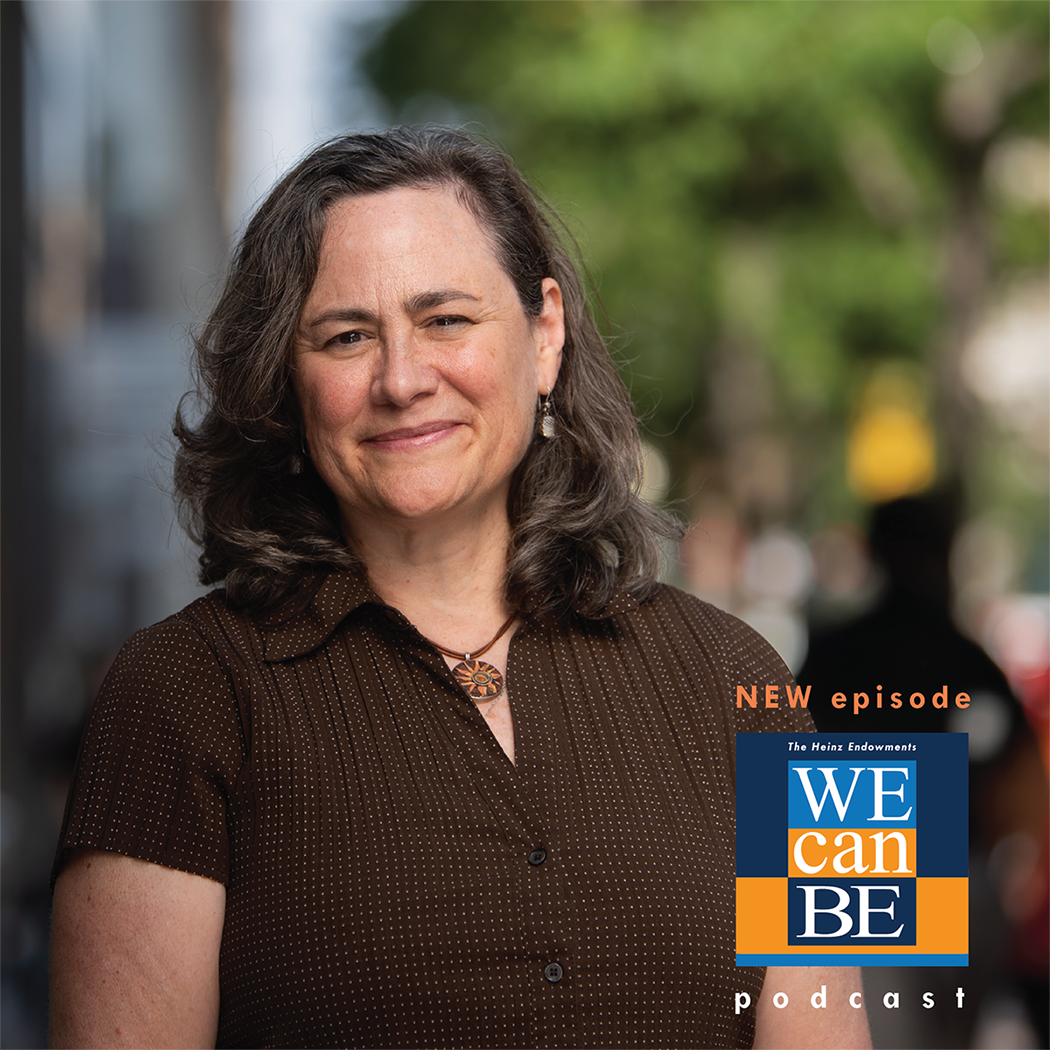 Bringing solar's massive savings & workforce potential to light w/ Sharon Pillar, founder & exec dir Pennsylvania Solar Center (SE05EP07) | Sharon Pillar, Pennsylvania Solar Center founder and executive director, is continuing the solar energy advocacy started nearly a half-century ago by former President Jimmy Carter, who recently marked his 100th birthday. “It’s a lot different now than it was when President Carter put those solar panels on the West Wing roof,” Sharon tells host and Endowments President Chris DeCardy. "We are really seeing this proliferation and adoption of solar energy just taking off. And now with the Inflation Reduction Act, it's become an even bigger and undeniable game changer.” From that first White House solar array in 1979 to the $90 billion in clean energy investment that came in the first six months of the 2022 IRA, a new generation of advocates is working tirelessly to bring the health, financial and workforce development benefits of solar energy to light. Sharon has led solar and climate change programs at both PennFuture, a nonprofit that advocates for the clean energy economy, and the Solar Unified Network of Western Pennsylvania. She trained with Nobel Peace Prize winner and former Vice President Al Gore’s Climate Reality Project. She also is a nationally respected and trusted solar consultant who has helped organizations and municipalities seeking to finance and install solar projects. She talks with Chris about the massive workforce potential the solar sector could see in the next decade and the challenges some communities face in advancing solar. In addition, she describes the eye-opening savings of $19 million over 25 years that a 2024 Pennsylvania Solar Center study found residents of two southwestern Pennsylvania cities could save if they embrace solar energy. Sharon has clearly found her calling to, as Pennsylvania Solar Center says on its website, “help put solar everywhere under the sun.” “We Can Be” is hosted by Heinz Endowments President Chris DeCardy, and produced by the Endowments, Josh Franzos and Tim Murray. Theme music by Josh Slifkin. Guest photo: Tim Murray; host photo: Josh Franzos. Guest inquiries may be made to Scott Roller at sroller@heinz.org. | 32m 08s | ||||||
| 10/2/24 | 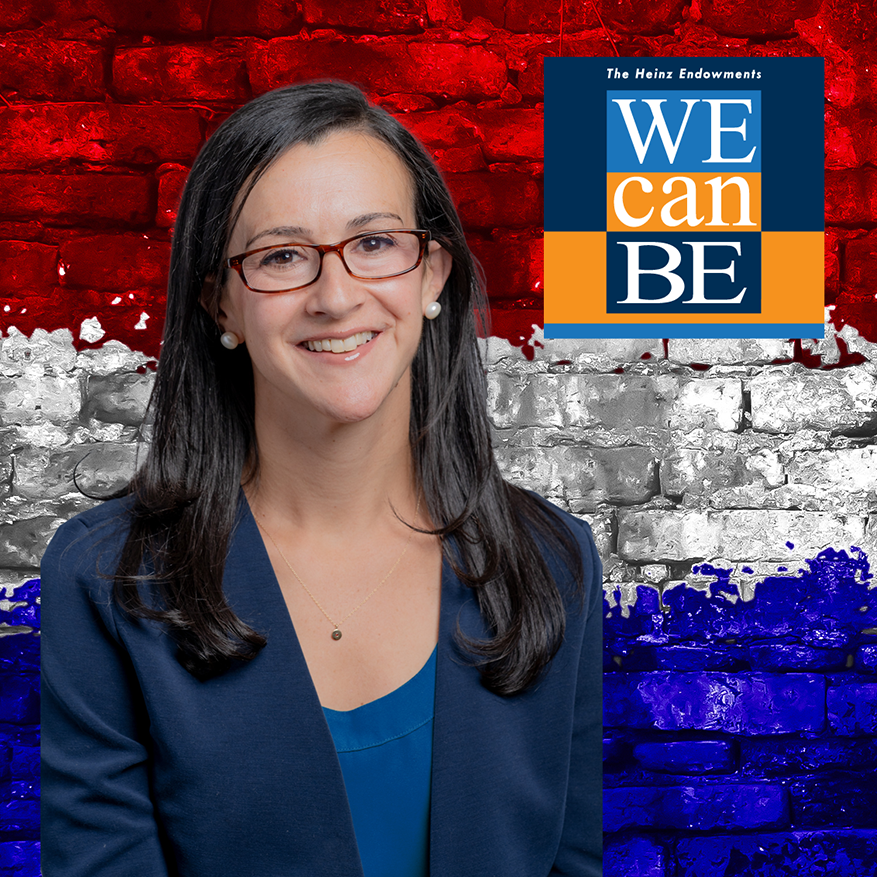 Strengthening democracy by lessening voter suppression w/ VoterRiders CEO Lauren Kunis (S05E06) | VoteRiders CEO and Executive Director Lauren Kunis is clear about what is at stake when it comes to those who are using false claims of voter fraud as the basis for enacting overly stringent voter ID laws. The laws affect 35 million voting-age citizens – a majority of whom are first-time voters, low-income residents, people of color and/or differently abled. “Those who are already underrepresented in our electorate are most harmed and most disproportionately impacted by voter ID laws,” Lauren tells “We Can Be” host and Endowments President Chris DeCardy. “These laws are undermining our shared democracy and impacting all voters, not just ones from certain states or specific communities.” Santa Monica, California-based VoteRiders is a non-partisan, nonprofit organization with a mission to ensure that all citizens can exercise their freedom to vote, with team members or partner organizations in 44 states and more than 10,000 volunteers across the country. A fair, accessible voting experience is critical for the more than 162 million people expected to participate in the fall 2024 election. VoteRiders – whose names honors the civil rights-era Freedom Riders – focuses its efforts not only on civic engagement and voter ID laws, but also touches on economic, social and racial equity for the thousands it helps navigate the voter ID system every day. “That ID helps them vote, but it's also a way for them to open a bank account for the first time or get a job in the formal sector or get more stable housing for their family,” Lauren says. Prior to taking the helm at VoteRiders, Lauren’s leadership experience included work on international democracy and governance programs while with the World Bank and time as national program director at Nonprofit Vote, where she led her team to a record-setting number of voter registrations on voter registration day in 2020. With nearly 40 states now requiring steps beyond simply registering to vote, some states rejecting student IDs as acceptable for voting, and the promise of false claims about election fraud, VoterRiders is leading the charge for lessening voter suppression and strengthening our democracy. “We Can Be” is hosted by Heinz Endowments President Chris DeCardy, and produced by the Endowments, Josh Franzos and Tim Murray. Theme music by Josh Slifkin. Host photo by Josh Franzos; guest photo courtesy of Lauren Kunis/VoteRiders. Guest inquiries may be made to Scott Roller at sroller@heinz.org. | 32m 07s | ||||||
| 9/25/24 | 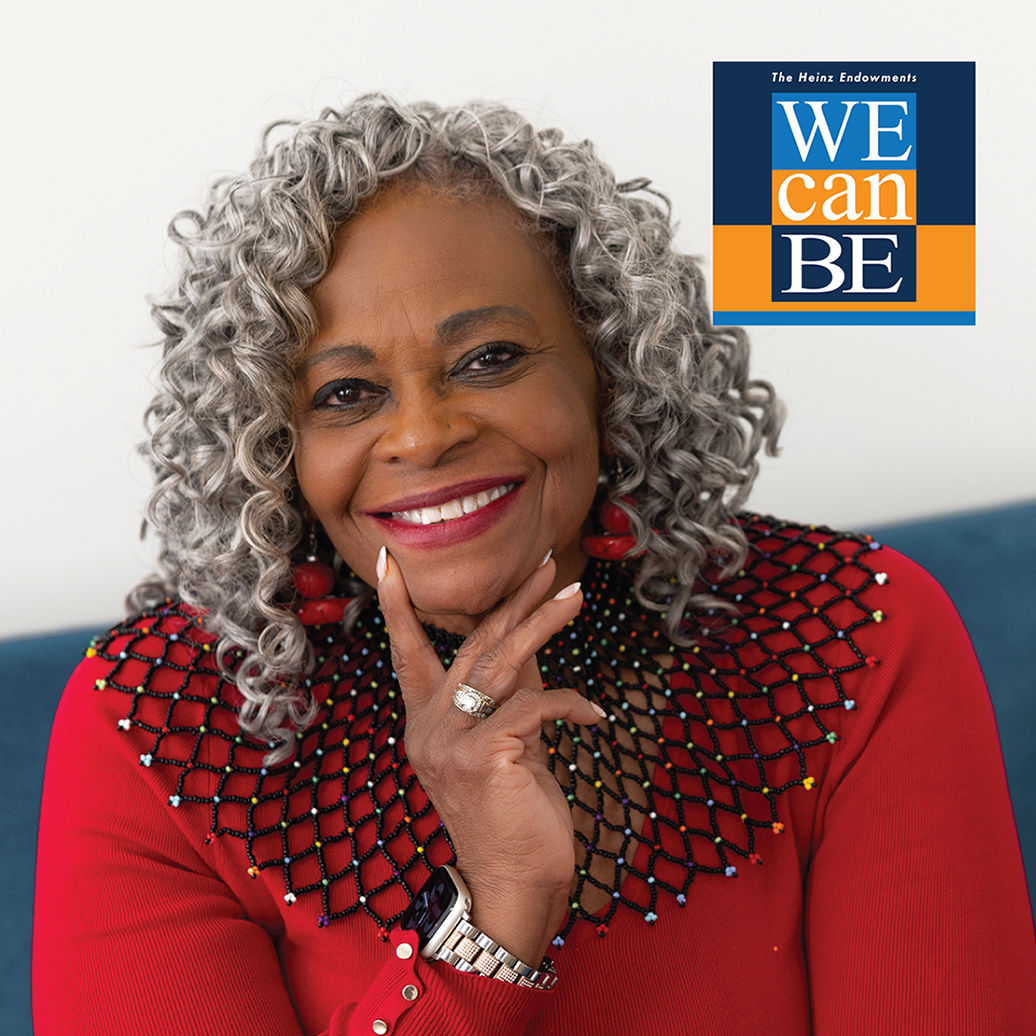 Narrowing the maternal & infant health gap w/ health equity expert Dr. Margaret Larkins-Pettigrew (S05EP05) | Dr. Margaret Larkins-Pettigrew, Allegheny Health Network’s first chief clinical diversity, equity and inclusion officer, wrote in a widely shared 2023 op-ed: “It is perilous to be Black and pregnant in America. We need to do better.” The nationally respected expert in maternal and infant health equity is not afraid to speak out against health injustice or to amplify the startling differences between Black and white mothers and babies’ health outcomes – while helping forge a better way. Dr. Larkins-Pettigrew’s expertise is especially critical in a nation where the number of Black babies who die within one year of birth is three times higher than the death rate of white babies. In Pittsburgh, where Allegheny Health Network is based, female Black infant mortality is higher than in 70% of similar-sized cities. “When we do things that intervene and decrease those higher numbers for Black women, then we also decrease mortality rates for white women, so everyone wins,” Dr. Pettigrew tells “We Can Be” host and Endowments President Chris DeCardy. “Everything we do for one is going to affect everybody and give opportunities to all.” With key leadership and teaching positions at University Hospitals of Cleveland, Case Western Reserve University and Drexel University College of Medicine, Dr Pettigrew has been building a coalition of medical and social work professionals through the groundbreaking First Steps and Beyond initiative. The Endowments-supported First Steps and Beyond program centers a unified care strategy that addresses both medical and social needs through an equity and justice-centered approach to care for mothers and babies. And it works, with data from a five-year study in the Cleveland metro region where the program was implemented showing a 20% decrease in maternal and infant mortality in the first year after birth. Whether appearing on MSNBC, NBC news and PBS, writing “The Colors of My Heart: Embracing My Blackness with History, Family, Fear and Faith,” or founding medical collaboration nonprofit JUSTWONDOOR, Dr. Larkins-Pettigrew, also a U.S. Navy veteran, and her collaborators are leveling the maternal and infant health playing field – and saving lives. “We Can Be” is hosted by Heinz Endowments President Chris DeCardy, and produced by the Endowments, Josh Franzos and Tim Murray. Theme music by Josh Slifkin. Guest and host photos by Josh Franzos. Guest inquiries may be made to Scott Roller at sroller@heinz.org. | 29m 36s | ||||||
| 9/18/24 | 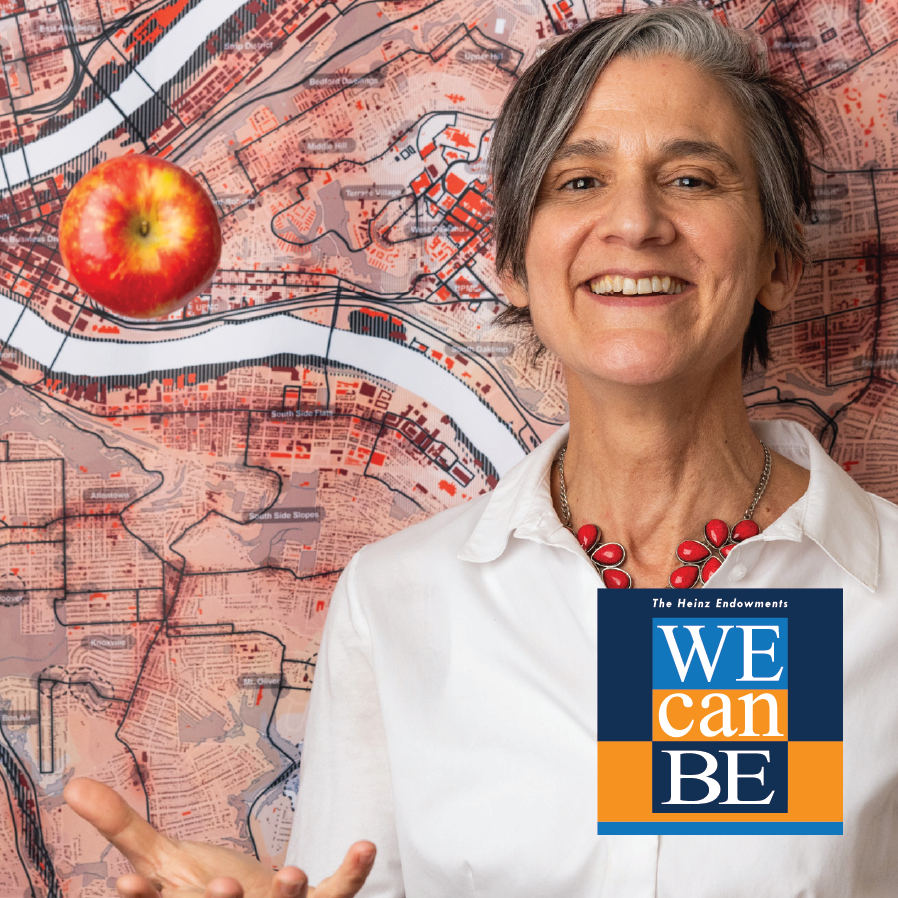 Community Kitchen Pittburgh founder Jen Flanagan is changing lives at intersection of food insecurity & living wage jobs (S05EP04) | Jen Flanagan is founder and executive director of Community Kitchen Pittsburgh, an employment-based social enterprise that empowers people through food service training and life skills mentoring. With an impressive 93% placement rate in professional kitchens for those who complete their training programs, she and her team are giving brighter futures to hundreds who find themselves struggling to overcome systemic barriers at the margins of society. After witnessing the 2001 attack on the World Trade Center’s Twin Towers in NYC from her publishing company office window, Jen felt a change inside. "After 9/11, I decided I wanted to do something more with community service," she said. "I just wanted to change my trajectory." When an AmeriCorps VISTA program placement brought her to Pittsburgh, she soon realized the intersection of two of the most persistent issues our country is facing – food insecurity and access to living wage jobs – provided enormous potential to do good. She launched Community Kitchen Pittsburgh – an affiliate of Catalyst Kitchens, a national system of non-profit teaching kitchens – in 2013 with an aim of addressing both the need for training and judgment-free life skills guidance. “For us, you can’t separate joblessness and hunger. They go hand in hand,” she tells host Chris DeCardy, president of The Heinz Endowments. “We work with employers that pay good wages, provide benefits and treat our people well.” The organization’s wholistic approach is working. It prepares and serves 450,00 meals each year for those experiencing food insecurity, and formerly incarcerated individuals who complete their free-of-charge,12-week training program have a recidivism rate of just 5% – a full 15% lower than the national average. With an estimated 13% of individuals nationwide – and 21% in the Pittsburgh region - experiencing food insecurity, Jen and her team’s successes at the intersection of hunger and workforce development are a welcome stream of light. “We Can Be” is hosted by Heinz Endowments President Chris DeCardy, and produced by the Endowments, Josh Franzos and Tim Murray. Theme music by Josh Slifkin. Guest inquiries may be made to Scott Roller at sroller@heinz.org | 35m 16s | ||||||
| 9/11/24 | 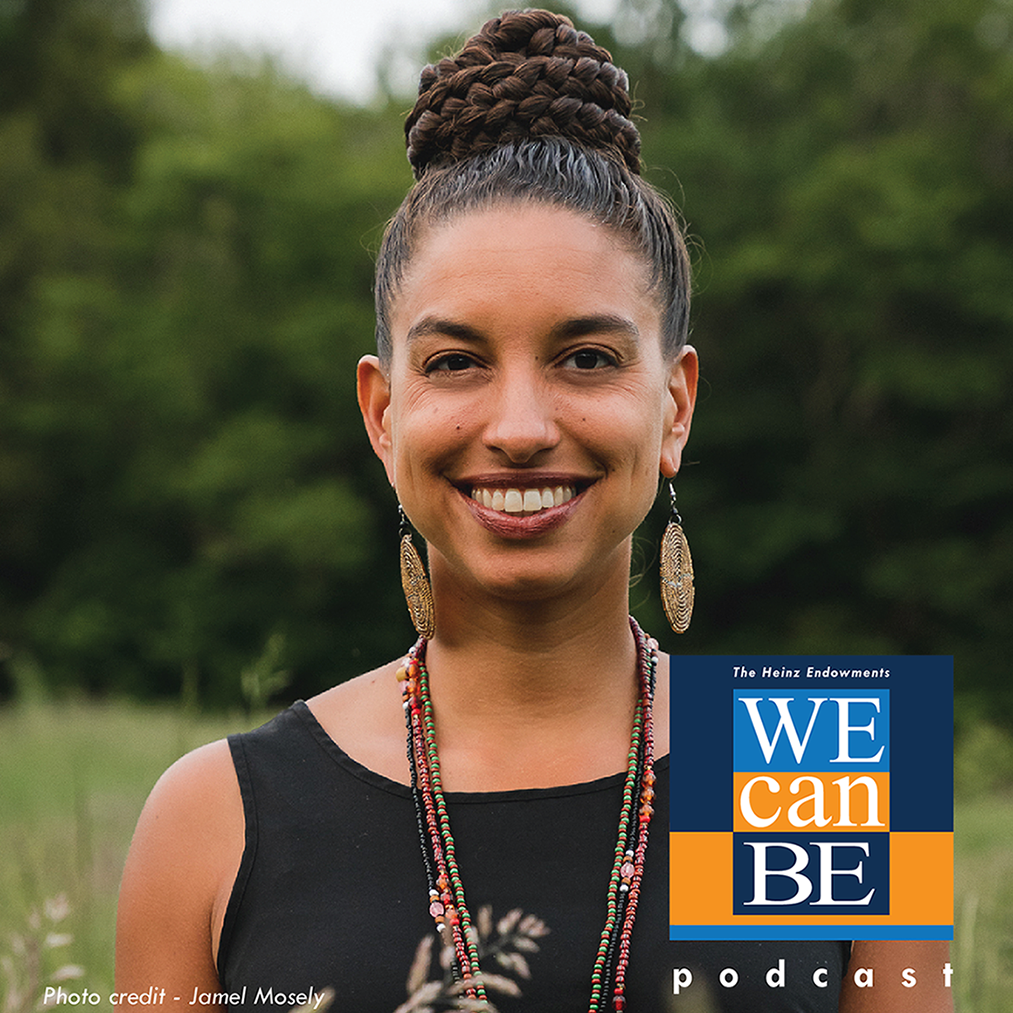 Leah Penniman “Farming While Black” author, Soul Fire Farm cofounder & Heinz Award honoree (S05E03) | Leah Penniman, “Farming While Black” author, co-founder of Soul Fire Farm and Heinz Award for the Economy honoree has a deep commitment to sharing regenerative farming best practices and land stewardship with Black, Indigenous and people of color. Addressing racism and injustice in the food system is a central focus of her work. “When I was a young farmer growing up in the mid-90s and attending agricultural conferences and trainings,” Leah tells host Chris DeCardy, “it was very rare to see someone who looked like me or reflected my heritage, especially among leaders and experts.” Based in Petersburgh, NY, Soul Fire Farm started as an 80-acre family farm and has since blossomed into a nonprofit training center for Black and brown people to reconnect with the land and equip them with the skills needed to become leaders in the farming and food justice movement. Whether in her books – “Black Earth Wisdom: Soulful Conversations with Black Environmentalists” and “Farming While Black: Soul Fire Farm’s Practical Guide to Liberation on the Land” – or leading youth education programs, urban plantings, mobilization training and a community-supported agriculture program, Leah and her Soul Fire Farm colleagues are inspiring a new generation of young farmers. “Stewarding our own land, growing our own food, educating our own youth, participating in our own healthcare and justice systems - this is the source of real power and dignity,” Leah says in this episode, presented in partnership with the Heinz Family Foundation. From the recent well-received “Farming While Black” documentary film to working behind the scenes with Sen. Cory Booker in creation of his Justice for Black Farmers Act, Leah is bringing the long history of Black and brown farmers’ sustainable farming practices into the future. “We Can Be” is hosted by Heinz Endowments President Chris DeCardy, and produced by the Endowments, Josh Franzos and Tim Murray. Theme music by Josh Slifkin. This episode presentation is a partnership between The Heinz Endowments and Heinz Family Foundation. Guest inquiries may be made to Scott Roller at sroller@heinz.org. | 32m 48s | ||||||
| 9/4/24 |  Fearless champion for cleaner air Dr. George Thurston NYU Grossman School of Medicine (S05E02) | Dr. George Thurston, internationally respected scientist, professor and pioneer in the study and communication of the effects of air pollution’s impact on human health joins the “We Can Be” family. ”Science is a way to bridge a lot of our societal division and distrust,” he tells Chris DeCardy, Heinz Endowments president and “We Can Be” host. “People trust science, and we have a responsibility to speak out when we can help.” In 1987, Dr. Thurston published the first research that showed the association between fine particulate matter and human mortality. He was also a brave voice that spoke up in the aftermath of the 9/11 catastrophe in New York City when statements by municipal officials about air safety did not match the results of research that he and his team were undertaking. More recently, Dr. Thurston led a groundbreaking, Endowments-funded study focusing on the myriad of health benefits Pittsburgh-region communities experienced after the closing of the Shenango Coke Works on Neville Island. The study has garnered international attention. He is a professor in the departments of environmental medicine and population health at the New York University Grossman School of Medicine, as well an expert at communicating the scientific complexities of environmental challenges in ways that are more easily understood. Whether testifying before Congress about the human health improvements that go hand-in-hand with climate change mitigation, or being featured in The New York Times, The Guardian, U.S. News & World Report and on major television news networks, Dr. Thurston is a warrior for cleaner air. Dive into the fascinating, brilliant and inspiring career of Dr. George Thurston in this episode of “We Can Be.” “We Can Be” is hosted by Heinz Endowments President Chris DeCardy, and produced by the Endowments & Treehouse Media's Josh Franzos and Tim Murray. Theme music by Josh Slifkin. Guest inquiries: Scott Roller at sroller@heinz.org. | 32m 14s | ||||||
| 8/14/24 | 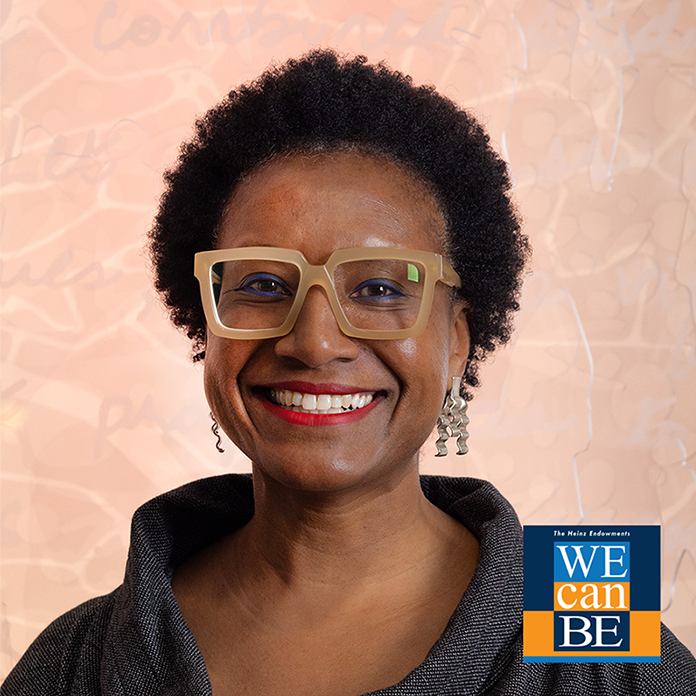 Uplifting Black artists' beauty, depth & vision w/ Kilolo Luckett of art platform ALMA I LEWIS (S05E01) | Kilolo Luckett, nationally renowned art curator & founding executive director of ALMA | LEWIS, believes in the transformative power of art for both artist & audience. “When we genuinely connect with art, we can dream whole other worlds of possibility,” she tells Heinz Endowments President Chris DeCardy, who takes the wheel as our podcast’s host on the first episode of this new season of “We Can Be.” “ With nearly 25 years of experience at respected art spaces including The Andy Warhol Museum & Wood Street Gallery, Kilolo founded ALMA | LEWIS as an experimental, contemporary art platform for critical thinking, constructive dialogue & creative expression dedicated to Black culture. Featuring residencies designed to nurture rising & accomplished Black artists from around the world, Alma I Lewis is named after early 20th-century painter Alma Thomas, who has been cited as a “godmother of abstract painting,” & painter Norman Lewis, the winner of the top art prize at the 1955 Carnegie International. Born in Mississippi, Kilolo’s artistic journey seemed destined from the start. From selling her friends’ art at the lemonade stand in her neighborhood when she was a kid growing up in Bowling Green, Ohio to becoming one of the creative sector’s most respected writers, historians & curators, her path was meant to be. “From an early age, I just knew that people needed art in their lives,” she says. Kilolo’s conversation with Chris dives into both the joys & challenges of overcoming the inequities of underrepresented voices in contemporary art. From curating expositions & writing exhibition books for galleries & museums around the country to working on an upcoming authorized biography of the first Black supermodel, Naomi Simms, Kilolo is helping ensure that the beauty, depth & vision of Black artists and cultural luminaries are a celebrated part of our history. “We Can Be” is hosted by Heinz Endowments President Chris DeCardy, and produced by the Endowments, Josh Franzos and Tim Murray. Theme music by Josh Slifkin. Guest inquiries may be made to Scott Roller at sroller@heinz.org. | 32m 54s | ||||||
| 9/28/22 |  Breaking down the hydrogen hub hype w/ Joanne Kilgour, exec. dir. Ohio River Valley Institute (We Can Be S04EP16) | Ohio River Valley Institute Executive Director Joanne Kilgour joins host Philip Johnson, the Endowments’ senior program director for Environment & Health, in breaking down the hype around hydrogen hubs and carbon capture. Hydrogen hubs have as their centerpiece massive pipeline networks that funnel carbon captured from power plants and factories to injection points for underground sequestration. Some present the process as key to our environmental future, but are the promises of jobs and a reduction in global warming real? Ohio River Valley Institute (ORVI) was founded in 2020 with an aim of providing data-driven environmental research that advances a more prosperous, sustainable and equitable Appalachia. The organization has become a leading voice in researching and communicating what carbon capture and hydrogen hubs would really mean for our country's future. “Our research shows that not only are hydrogen hubs likely to be costly, taking funding away from more sustainable, long-term solutions,” Joanne says, “but they are also unlikely to deliver on significant job creation or to be an effective climate solution.” Joanne grew up in Maine, earned degrees at Carnegie Mellon University and University of Pittsburgh, and has held positions with the Center for Coalfield Justice and the Sierra Club. An avid nature advocate, she holds a doctorate in environmental law, and the opportunity to “reveal surprising realities” about Appalachia’s energy future led her to ORVI. She shares what she has seen about the unwavering sense of pride and place that Appalachians possess; what she has learned about the power of combining data and lived experience in revealing truths; and why she takes care to humanize policy research decisions by keeping the on-the-ground individuals she meets in Appalachian communities front of mind. “I believe we can be compassionate problem solvers,” Joanne says. Learn how she is doing just that in this episode of “We Can Be.” This episode of “We Can Be” is hosted by Heinz Endowments Senior Program Director for Environment & Health Philip Johnson and produced by the Endowments, Josh Franzos and Tim Murray. Theme music by Josh Slifkin. Guest inquiries can be made to Scott Roller at sroller@heinz.org. Guest image credit: PA Dept. of Conservation and Natural Resources. | 32m 03s | ||||||
| 9/21/22 | 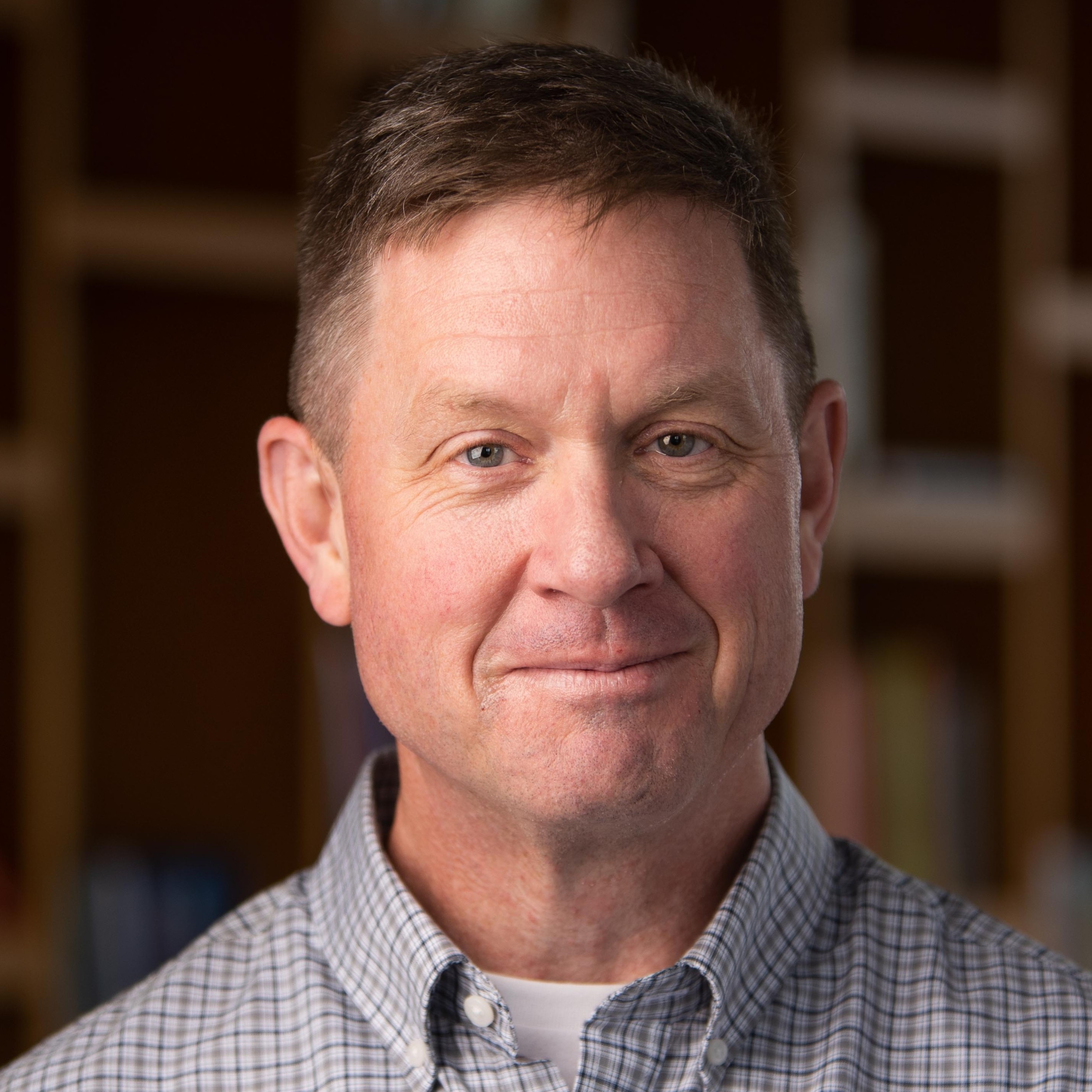 Groundbreaking Post-9/11 veterans data w/ Dr. Daniel Perkins, founder Clearinghouse for Military Family Readiness @ Penn State Uni.(S04EP15) | Dr. Daniel Perkins, professor, founder and principal scientist of the Clearinghouse for Military Family Readiness at Penn State University, leads the largest-ever longitudinal study of post-911 transitioning veterans, “The Veteran Metrics Initiative.” Danny joins host Megan Andros, the Endowments’ senior program officer for veterans, in diving into the startling findings of his team’s research. Beginning with an initial cohort of 10,000 veterans, the study followed an eventual 6,700 veterans over a three-year period as they transitioned from active military duty to civilian life. The resulting data has revealed hard truths about the bureaucratic, financial, health and vocational obstacles veterans often face, and provides a basis for asking: Are we failing our veterans at the moment they need us most? Despite the enormous leadership skills, technical ability, and work ethic veterans bring to our world, the study found that only 34 percent of post-9/11 veterans were deemed successful in transitioning from military to civilian life at the two-and-a-half-year mark. The research makes clear that while a wealth of organizations provide services to those exiting the military, the navigation of those services can be dauntingly difficult for veterans. “Transition is a place where things can go wrong, or it can be a place of great opportunity,” Danny says. “This data helps us understand that by taking action early on, we can help our veterans have better outcomes in the civilian world.” Danny shares how growing up as a son of a military father influenced his dedication to his veterans research; why focusing on coordinated points of contact for service providers is key; and why it is important to remember that behind each data point is a human being who has served our country. “I think as a country we can be a place where we acknowledge veterans for their service by taking action to support them when they need us most.” This episode of “We Can Be” is hosted by Heinz Endowments Senior Program Officer for Veterans Megan Andros and produced by the Endowments, Josh Franzos and Tim Murray. Theme music by Josh Slifkin. Guest inquiries can be made to Scott Roller at sroller@heinz.org. Guest image credit: Tim Murray/Treehouse Media. | 33m 06s | ||||||
| 9/14/22 |  Black Urban Gardeners’ Raqueeb Bey is growing food, minds & leaders (S04EP14) | Raqueeb Bey, the founder and executive director of Black Urban Gardeners and Farmers of Pittsburgh, joins this episode’s host, Endowments Vice President of Sustainability Andrew McElwaine, to discuss food deserts, the healing effects of holistic gardening and the organization’s surprise boost from alt-rock stars Rage Against the Machine. Raqueeb founded Black Urban Gardeners (BUGS), a collective of Black men and women who use education and gardening experiences to address the food desert challenges that persist in many Black and brown communities, in 2015. As she came to recognize a fraying generational knowledge of how to garden, she was moved to take action through BUGS and Mama Africa's Green Scouts, a youth program she founded that teaches community gardening and sustainability. “We don’t just grow food,” Raqueeb says. “We grow minds and leaders.” Raqueeb shares her journey from a career in finance and banking to becoming a prominent figure in the growing food sovereignty movement, as well the the inspiration her godfather gave her that led her to understand the health and healing power of working with the earth. Her work with BUGS – including running a 31,000-square-foot teaching farm in Pittsburgh’s Homewood neighborhood – has gained national attention in media outlets including Environmental Health News and Good Morning America. BUGS also garnered recent headlines for the recognition that alt-rock stars Rage Against the Machine gave the organization during their current world tour. Raqueeb is clear about the historical obstacles that Black and brown communities have long faced in their opportunities to own and work their own land, many of which continue to this day, resulting in food insecurity and limited access to healthy food. As she encourages others to take charge of their food and health, Raqueeb is optimistic about the future of the fight to end food apartheid. “Every day I see the health benefits, community, and emotional healing power that Black urban gardeners of all ages experience when they work with the earth.” This episode of “We Can Be” is hosted by Heinz Endowments Vice President of Sustainability Andrew McElwaine and produced by the Endowments, Josh Franzos and Tim Murray. Theme music by Josh Slifkin. Guest inquiries can be made to Scott Roller at sroller@heinz.org. Guest image credit: Brian Cook/Golden Sky Media. | 22m 44s | ||||||
| 9/7/22 |  PBS NewsHour’s Jeffrey Brown: Yes, the arts are essential & here’s why (S4E13) | Jeffrey Brown, PBS NewsHour chief correspondent for arts, culture and society, joins “We Can Be” host Janet Sarbaugh, The Heinz Endowments’ vice president of Creativity, as they tackle one of the creative realm’s big questions: Are the arts essential? “Art matters because it shows us a bit of the world we might not otherwise see,” Jeffrey says. “It takes us places we might not go because it makes us think, because it makes us know other people, because it makes us laugh and cry.” In his more than 20 years with PBS NewsHour, Jeffrey has reported on a wide range of national and international arts- and culture-related issues. He created PBS NewsHour's online "Art Beat” segments and its monthly book club, "Now Read This," a collaboration with The New York Times. An Emmy and Peabody award-winner, Jeffrey is a talented creative in his own right, too. He wrote the well-received poetry collection “The News” and contributed to a newly released collection of essays titled “Are the Arts Essential?” From the impressive security detail of an interview with Angelina Jolie and the eloquent warmth of Patti Smith to being moved by the Dallas Street Choir, whose members are without permanent homes, Jeffrey shares meaningful behind-the-scenes moments in his storied career. Those moments have cemented his dedication not only to tell stories of art and culture, but also to consider our individual roles in critical societal issues. “Reporting on the arts in a global community matters,” he says. “It matters because it offers a truer and fuller version of the world.” This episode of “We Can Be” is hosted by Heinz Endowments Vice President of Creativity Janet Sarbaugh, and produced by the Endowments, Josh Franzos and Tim Murray. Theme music by Josh Slifkin. Guest inquiries can be made to Scott Roller at sroller@heinz.org. | 29m 39s | ||||||
| 8/31/22 |  ”Your dreams are possible” w/ Dr. Kathy Humphrey, trailblazing pres. of Carlow University (S4E12) | “I’ve had letters from young Black girls saying ‘I now know this is possible,’” Carlow University’s groundbreaking president Dr. Kathy Humphrey, tells “We Can Be” host Michelle Figlar, The Heinz Endowments’ vice president of Learning. As the first Black president in Carlow’s nearly 100-year history, Dr. Humphrey brings a life-long love of teaching and a wealth of experience, including positions at the University of Pittsburgh and St. Louis University. From playing school in her free time when she was a child to an ongoing belief that we must “treat teachers like the gold they are,” she has dedicated her professional life to helping students understand their true worth. “It’s important that students know: ‘You are somebody. Your dreams are possible,’” she says. Renowned for her efforts to “build the whole student” through programs that foster leadership, communication, social and “real world skills,” Dr. Humphrey’s dedication to young people comes naturally: She has 107 nieces and nephews, as well as twin sons of her own. Dr. Humphrey believes in both the moral and financial importance of a progressive, equitable and diversity-focused higher education curriculum, and in the long-term benefits of mentoring students who are the first in their family to attend college. “When you change the life of a first-time student, you are changing generations,” she says. Experience her vibrant energy and learn about her inspiring, life-changing work in this episode of “We Can Be.” This episode of “We Can Be” is hosted by Heinz Endowments Vice President of Learning Michelle Figlar, and produced by the Endowments, Josh Franzos and Tim Murray. Theme music by Josh Slifkin. Guest inquiries can be made to Scott Roller at sroller@heinz.org. | 29m 46s | ||||||
Showing 25 of 97
Pitch Fit is a Pro feature
See how bookable this show is for guests, which brands already advertise, the per-episode ad value, and the best-fit guest and sponsor profile. The numbers are blurred on the free plan.
How readily this show books outside guests like you.
How proven this show is for host-read sponsorships.
For Guests
ProFor Advertisers
ProUpgrade to Pro to unlock guest cadence, sponsor categories, fit scores, and per-episode ad value for this show.