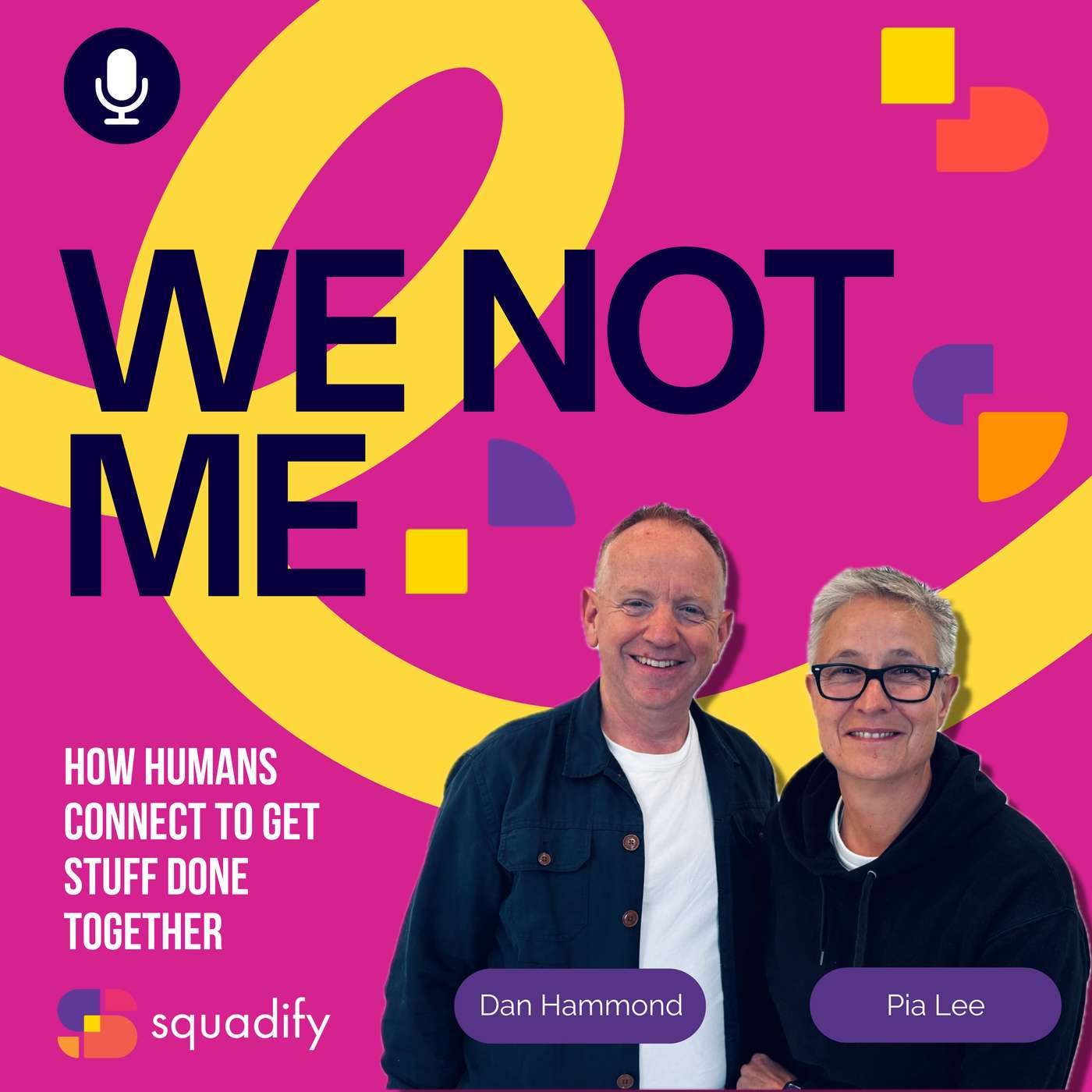
Insights from recent episode analysis
Audience Interest
Podcast Focus
Publishing Consistency
Platform Reach
Insights are generated by CastFox AI using publicly available data, episode content, and proprietary models.
Most discussed topics
Brands & references
Total monthly reach
Estimated from 2 chart positions in 2 markets.
By chart position
- 🇦🇺AU · Management#6730K to 100K
- 🇸🇬SG · Management#102500 to 3K
- Per-Episode Audience
Est. listeners per new episode within ~30 days
15K to 52K🎙 ~2x weekly·141 episodes·Last published 1w ago - Monthly Reach
Unique listeners across all episodes (30 days)
31K to 103K🇦🇺97%🇸🇬3% - Active Followers
Loyal subscribers who consistently listen
12K to 41K
Market Insights
Platform Distribution
Reach across major podcast platforms, updated hourly
Total Followers
—
Total Plays
—
Total Reviews
—
* Data sourced directly from platform APIs and aggregated hourly across all major podcast directories.
On the show
From 10 epsHosts
Recent guests
Recent episodes
Stop fixing people. Fix the system
May 7, 2026
34m 12s
How can high-quality conversations untie the knots holding teams back?
Apr 16, 2026
39m 13s
The family: your first team?
Apr 2, 2026
36m 33s
Q&A: are people in their 60s unemployable?
Mar 20, 2026
19m 52s
AI transformation is a leadership test, not a tech one - with Stephen Hunt
Mar 6, 2026
41m 34s
Social Links & Contact
Official channels & resources
Official Website
Login
RSS Feed
Login
| Date | Episode | Topics | Guests | Brands | Places | Keywords | Sponsor | Length | |
|---|---|---|---|---|---|---|---|---|---|
| 5/7/26 | ![]() Stop fixing people. Fix the system✨ | performance problemsleadership+4 | Brooke Lewis | — | — | performanceleadership+5 | — | 34m 12s | |
| 4/16/26 | ![]() How can high-quality conversations untie the knots holding teams back?✨ | high-quality conversationsleadership skills+4 | Dianna Anderson | International Coaching Federation | — | conversationsleadership+6 | — | 39m 13s | |
| 4/2/26 | ![]() The family: your first team?✨ | family as a teamfamily culture+4 | Danielle DeMarcoGreg Neufeld | — | — | family teamshared identity+4 | — | 36m 33s | |
| 3/20/26 | ![]() Q&A: are people in their 60s unemployable?✨ | age discriminationrelevance in aging+4 | — | — | — | ageemployment+5 | — | 19m 52s | |
| 3/6/26 | ![]() AI transformation is a leadership test, not a tech one - with Stephen Hunt✨ | AI transformationleadership+3 | Stephen Hunt | Square WaveStartups Decoded | — | AI transformationleadership challenges+3 | — | 41m 34s | |
| 3/6/26 | ![]() AI transformation is a leadership test, not a technical one, with Stephen Hunt | AI transformation is fundamentally a human transformation, not a technology project. Success depends on taking deliberate steps to build AI literacy across your entire organisation while managing fear and maintaining team cohesion.Most companies are still at the beginning of their AI journey. The key is to start with a clear plan that's reviewed regularly, ensure everyone from board level to front desk has basic AI literacy, and create psychological safety by addressing fears about job loss.Stephen Hunt is serial entrepreneur whose AI journey dates back to 2011, when he used machine learning and neural networks to for ad targeting. He founded the Square Wave initially as a hobby project to help him understand AI, and he now works with clients on AI transformation, providing training and helping organisations develop AI strategies.Three reasons to listenUnderstand the leadership, rather than the technical challenges posed by AI transformationStart building AI literacy immediately through research, prompting, and trainingReframe AI as an opportunity for humans to be amplified rather than replacedEpisode highlights[00:12:53] What opportunities is AI presenting right now?[00:19:46] How to start taking advantage of AI[00:22:12] Three core AI literacy skills[00:26:40] Start with clarity[00:31:12] Where to start[00:35:52] Steve's media recommendation[00:38:12] Takeaways from Pia and DanLinksConnect with Steve via LinkedInThe Square WaveStartups Decoded – Steve’s podcast recommendationTrack and improve your team performance with SquadifyLeave us a voice note | 41m 34s | ||||||
| 2/20/26 | ![]() Q&A: are you a Team in Name Only?✨ | team dynamicsteam performance+3 | — | — | — | TINOteamwork+4 | — | 14m 22s | |
| 2/6/26 | ![]() Three hidden patterns that could be holding your team back - with Noj Hinkins✨ | team dysfunctionstoxic positivity+3 | Noj Hinkins | SquadifyCovert Processes at Work+1 | — | team dynamicsleadership+3 | — | 51m 14s | |
| 1/23/26 | ![]() Balancing artificial and human intelligence - with Jon Whittle✨ | AI adoptionhuman connection+5 | Jon Whittle | AI for BusinessCSIRO+3 | — | artificial intelligencehuman intelligence+5 | — | 53m 07s | |
| 12/19/25 | ![]() Q&A: how do you lead a team through economic uncertainty?✨ | leadershipeconomic uncertainty+3 | — | Squadify | — | leadershipeconomic uncertainty+5 | — | 19m 43s | |
Want analysis for the episodes below?Free for Pro Submit a request, we'll have your selected episodes analyzed within an hour. Free, at no cost to you, for Pro users. | |||||||||
| 12/5/25 | ![]() Can you have a leaderless team? With Jon Barnes✨ | leaderless teamsautonomy+4 | Jon Barnes | PalaHumankind+3 | — | autonomyteam structure+5 | — | 46m 16s | |
| 11/21/25 | ![]() Q&A: is it OK to have a big team? | There's a scientific basis for understanding optimal team size, including research on connection complexity, social loafing, and performance data that challenges common assumptions about how many people should work together effectively.In this Q&A episode, Dan and Pia dive into the science and the data, to discover the optimum team size.Episode highlights[00:01:27] Is it OK to have a big team?[00:04:15] The Ringelmann effect[00:07:22] What's the optimum team size?[00:08:18] When is a team a group?[00:10:20] What the Squadify data showsLinksRingelmann effectTrack and improve your team performance with SquadifyLeave us a voice note | 12m 23s | ||||||
| 11/7/25 | ![]() Humans in the age of AI - with Larry Chao and Suni Lobo | While AI will dramatically reshape work and careers – potentially displacing entry-level jobs and creating “companies of one” – the true competitive advantage will lie in taking a human-centric approach to AI adoption, where diverse teams maintain creativity, critical thinking and genuine human connection rather than simply automating away people to maximise shareholder returns.Larry Chao is the founding Chief Strategy and Operations Officer at trustme.ai, a startup building tools for AI governance. He’s also involved with nonprofits like Berkeley Skydeck and the Ethical AI Governance Group, where he helps empower the next generation of innovators to develop AI responsibly.Sunaina Lobo has been a Chief Human Resources Officer three times over, and is now a strategic advisor to trustme.aiand co-founder of Momentum Global HR, where she does strategic HR consulting with an AI lens.Three reasons to listenUnderstand the trajectory and implications of AI evolution, and what this means for teams and workflowsNavigate the human impact of AI adoption in your organisationMove beyond AI as a differentiator to focus on human connection and diverse thought as the true sources of organisational strengthEpisode highlights[00:12:47] The evolution of AI[00:16:55] AI and teams[00:17:37] Facts emerging from our continued use of AI[00:29:01] The case for responsible AI[00:32:15] The case against the "company of one"[00:41:50] Driving shareholder value while being human-centred[00:43:43] Suni's media recommendation[00:44:05] Larry's media recommendation[00:45:12] Takeaways from Pia and DanLinksConnect with Larry via LinkedInConnect with Sunaina via LinkedInTrustMe.aiSuni’s podcast recommendations:Pioneers of AIThe AII Daily BriefKPop Demon Hunters – Larry’s recommendationHumankind, by Rutger BregmanTrack and improve your team performance with SquadifyLeave us a voice note | 47m 36s | ||||||
| 10/23/25 | ![]() The three things holding back teams today | Successful team performance requires slowing down to achieve alignment before rushing into action. Spending more time upfront ensuring everyone truly understands the problem statement, decision-making roles, and priorities will save significant time, energy, and relationship breakdowns later.Without this foundational alignment, teams waste enormous amounts of time in ineffective meetings, experience constant breakdowns in execution, and carry baggage from unresolved issues that poisons future decisions. The key is to move with discipline and sophistication rather than mere speed, investing in both the technical frameworks and the relational intelligence needed to bring out the best thinking from diverse perspectives.Susan Asiyanbi is the founder and CEO of the Olori Network, an executive leadership practice that works with CEOs, executive teams, and boards, specialising in studying what the strongest executive teams and boards do differently.Three reasons to listenIdentify the hidden costs of misalignment in your team, from wasted meeting time to breakdowns in relationships that drain energy both at work and at homeApply a disciplined approach to decision-making that balances speed with rigour through five key strandsReclaim control of your calendar by conducting a time audit that reveals the gap between what you say matters and where you actually spend your energyEpisode highlights[00:09:18] Alignment, themes, and relationships[00:11:06] How to get alignment[00:12:32] What happens when alignment isn't found[00:15:48] Asking the right questions[00:17:32] Decision-making is compromised[00:18:40] The five key components of a decision-making framework[00:26:17] How to move more slowly[00:28:41] How will AI affect decision-making?[00:31:44] What are you prioritising for?[00:37:23] What to try this[00:39:57] Susan's media recommendation[00:40:43] Takeaways from Pia and DanLinksConnect with Susan via LinkedInTeam #1, by Patrick LencioniAI-Generated “Workslop” Is Destroying ProductivityHow to turn a group of strangers into a team – Susan’s media recommendationTrack and improve your team performance with SquadifyLeave us a voice note | 46m 11s | ||||||
| 9/18/25 | ![]() The business case for social mobility | Rather than trying to "fix" people or show them rungs on a ladder, social mobility comes from recognising individuals, giving them psychological safety, and allowing them to fulfil their own potential.Diverse workplaces thrive not because of tokenistic inclusion efforts, but because different voices at the table lead to better outcomes and more successful organisations.Dan and Pia are joined by Arad Reisberg, Associate Pro Vice-Chancellor at Brunel University of London, campaigner for social justice and social mobility, and co-founder of the Social Mobility Leaders Forum.Three reasons to listenReframe your understanding of social mobility as social justice, focusing on creating opportunities for people to fulfil their potential rather than just climbing career laddersCreate an environment where people feel comfortable being their authentic selves by asking powerful questions and actively listeningBuild more diverse, successful teams by recognising that different voices at the table lead to better outcomes, challenging conventional thinking about "hiring for fit"Episode highlights[00:09:32] What is social mobility?[00:15:24] How social mobility helps business[00:18:59] How to implement social mobility in your organisation[00:26:31] Arad's media recommendation[00:29:43] Takeaways from Dan and PiaLinksConnect with Arad via LinkedInArad’s media recommendations: the Inward trilogy by Yung Pueblo:InwardClarity & ConnectionThe Way ForwardTrack and improve your team performance with SquadifyLeave us a voice note | 33m 52s | ||||||
| 9/4/25 | ![]() Empowering the next generation of leaders in hospitality | Restaurant franchises can be powerful environments for leadership development, especially for young people. When managed with intentionality, these seemingly entry-level jobs can provide significant opportunities for personal growth, skill development, and career advancement.Melissa Nuttall, along with her partner, is the franchisee of a quick service restaurant in New Zealand. In this conversation with Pia and Dan, she lays out how good customer service and continuous training create positive work cycles that benefit both employees and customers.Three reasons to listenAchieve broader business goals while reducing cognitive load on staffDevelop young team members into capable leaders through progressive responsibilityCreate safe spaces for growth regardless of employees’ long-term career plansEpisode highlights[00:08:38] Helping the next generation of leaders[00:14:21] Turning a culture around[00:18:23] Creating a stable launchpad for new careers[00:24:38] Leading with kindness and humility[00:27:58] Be mindful of your leadership shadow[00:29:20] Mel's media recommendation[00:30:11] Takeaways from Pia and DanLinksConnect with Melissa via LinkedInTrack and improve your team performance with SquadifyLeave us a voice note | 36m 27s | ||||||
| 8/21/25 | ![]() You don’t have a trust problem – you have a clarity problem | While many teams focus on building trust to improve performance, it's actually clarity that needs to be addressed first.Research shows that teams need clear roles, goals and processes before they can effectively build trust and collaborate. This represents a significant shift from traditional thinking about team development, and the data shows that improving clarity drives up trust results, whilst working directly on trust doesn't impact clarity scores.In this episode, Squadify’s Chief Data Officer, Juliet Owen re-joins Dan and Pia to discuss the role clarity plays in driving team performance.This episode will help youBuild team trust by first establishing clarity around roles, goals and processes rather than focusing directly on trust-building exercisesCreate effective one-page team documents that capture why the team exists, their collective goals, and non-negotiable behavioursDrive better team performance by shifting from individual KPIs to collective team goals that encourage collaboration rather than competitionEpisode highlights[00:09:34] How teams are coping with change today[00:15:30] What we mean by trust[00:20:03] The trust gap[00:26:29] Case studies on building trust[00:33:12] What can you do?[00:34:59] Pia and Juliet's media recommendations[00:37:24] Takeaways from Pia and DanLinksThe Five Dysfunctions of a Team: A Leadership Fable, by Patrick LencioniYou Can’t Ask That – Pia’s mdia recommendationThe Ministry of Time, by Kaliane BradleyConnect with Juliet via LinkedInTrack and improve your team performance with SquadifyLeave us a voice note | 44m 16s | ||||||
| 8/7/25 | ![]() How do we make AI more inclusive? | Humans are crucial to AI adoption. While AI technology continues to advance, its effective implementation in business depends on people working with it rather than being replaced by it.Inclusive AI means finding the right balance between technological advancement and human insight, rather than seeing AI as a simple push-button solution to complex knowledge work.Susi O’Neill is a consultant, author, and speaker on frontier technology. She helps organisations implement AI effectively, analyses AI trends, and distills insights in her newsletter.Three reasons to listenTo move past the hype and see how humans will continue to be essential in an AI-enhanced workplaceTo start implementing an effective approach to AI adoption in your organisationTo develop a more balanced perspective on technological change than the one propagated by Silicon ValleyEpisode highlights[00:05:19] The nebulous nature of AI[00:11:17] Change is the constant[00:16:06] The falacy of the competetive advantage[00:18:16] Inclusive AI[00:26:18] How do we use AI responsibly?[00:29:05] Squadify's AI governance[00:33:06] Take your first step into AI[00:37:41] Suzi's media recommendations[00:40:32] Takeaways from Dan and PiaLinksTrack and improve your team performance with SquadifyLeave us a voice noteConnect with Suzi via LinkedInRethinking the Hype Cycle – Suzi’s newsletterWomen Leaders in Tech Outpace Men Counterparts in Generative AI AdoptionChannel 4 Corporate AI PrinciplesSupremacy, by Parmy OlsonThreads (1984)Offal | 49m 43s | ||||||
| 7/24/25 | ![]() Being respected beats being liked | Leaders who are respected are 12x more likely to be seen as effective than those who are simply liked. This is because respect is tied to competence, fairness, and consistency.Respect in leadership isn't about titles or status, but about treating team members as capable adults rather than children. This helps avoid learned helplessness among teams, and creates environments where people feel safe to take risks, speak up, and even fail without fear of punishment.Robyn Djelassi is a Chief People Officer, non-executive director, and coach. She runs her own HR consultancy working with organisations across Australia, with a focus on helping organisations achieve business results through their people.Her approach to HR is a little different from the warm-and-fuzzy cliché that has permeated the industry, but is done with heart.Robyn’s ADULTS leadership frameworkA: Accountability over approval. Don’t lead to be liked; lead to be trusted.D: Debrief, don’t rescue. When mistakes happen, resist fixing them for your team.U: Uncomfortable is useful. Don’t smooth the edges; people grow through the stretch.L: Let go of control. Ask “Have I made it clear what success looks like?”T: Trust before proof. Trust people before they’ve earned it.S: Say less, ask more. Use questions to help people think for themselves.Episode highlights[00:09:03] What new leaders think leadership is[00:10:37] The "cool mum" approach to leadership[00:14:12] What we mean when we talk about respect[00:15:39] We're getting psychological safety wrong[00:20:07] Findings from Google's Project Aristotle[00:23:43] How to garner respect as a new leader[00:24:39] Robyn's ADULTS framework[00:30:32] Robyn's media recommendation[00:31:57] Takeaways from Pia and DanLinksConnect with Robyn via LinkedInWe Used to be Journos – Robyn’s podcast recommendationTrack and improve your team performance with SquadifyLeave us a voice note | 37m 35s | ||||||
| 7/10/25 | ![]() “Best Places to Work” and other half truths | Too many "best places to work" lists focus on performative, low-cost perks like free breakfasts and dog-friendly offices. But they ignore fundamental issues like fair pay, reasonable working hours, and meaningful parental leave.Companies often use marketing language to make minimal benefits sound impressive, like claiming "enhanced parental leave" when they're barely exceeding the statutory minimum. This creates a disconnect between how organisations present themselves and the actual employee experience.Amy Wilson is a commercial consultant advisor, with a background in marketing, who helps companies grow and founders focus on what matters. She mentors young and underrepresented founders, and she joins Dan and Pia to discuss her LinkedIn post critiquing The Times’ Best “Places to Work" list.Three reasons to listenTo be mindful of performative workplace benefits that don't actually improve employee experienceTo identify misleading claims about "enhanced" benefits that barely exceed statutory minimumsTo understand how organisational silos and conflicting KPIs lead to workplace policies that prioritise appearance over substanceEpisode highlights[00:06:48] What constitutes a good place to work?[00:10:55] Amy's response to the New York Times Best Business to Work article[00:17:09] Allies in name only[00:22:14] Why aren't companies doing the right thing?[00:25:27] Are things getting worse?[00:26:39] What can we do about it?[00:33:20] Amy's media recommendation[00:36:08] Takeaways from Dan and PiaLinksConnect with Amy via LinkedInAmy’s response to the Sunday Times Besst Places to Work articleHalt and Catch Fire – Amy’s TV recommendationBuilding a thriving culture from the outside in – Episode 58, with Tom Wedge and Marcus SwalwellTrack and improve your team performance with SquadifyLeave us a voice note | 43m 15s | ||||||
| 6/26/25 | ![]() Your practical guide to conversations that drive change | Effective change management hinges on the quality of our conversations. Asking questions can be an exertion of power, so motivational interviewing seeks to bring clarity and ensure information is shared in a way that respects the recipient's readiness to receive it.Jeffrey Wetherhold is a change management professional who helps organisations and teams navigate difficult changes. He specialises in motivational interviewing and uses this approach to help teams have more effective conversations during periods of change.Three reasons to listenTo learn how to structure change-focused conversationsTo help you make more effective affirmations instead of offering general praiseTo learn how to share information more effectively, to ensure others are ready to receive and engage with itEpisode highlights[00:07:17] Motivational interviewing[00:10:28] Making specific affirmations[00:12:48] Ask, offer, ask[00:15:26] When to ask questions[00:19:23] How to become a better listener[00:21:19] Fitting motivational interviewing into existing skillsets[00:22:46] Busynesss overriding business[00:28:22] Guiding, influencing, or leading conversations[00:31:28] Reflect more, ask less[00:32:58] Dan's media recommendations[00:35:11] Takeaways from Pia and DanLinksConnect with Jeff via LinkedInTeam of Teams: New Rules of Engagement for a Complex World, by David Silverman, Stanley McChrystal, Tantum Collins, & Chris FussellMoral Ambition: Stop Wasting Your Talent and Start Making a Difference, by Rutger BregmanTrack and improve your team performance with SquadifyLeave us a voice note | 42m 50s | ||||||
| 6/12/25 | ![]() The surprising science of hybrid working | The “traditional” understanding of hybrid working is being challenged as organisations try to implement more structured approaches, creating friction with employees who developed their own interpretations of what hybrid working means during the pandemic.Matthew Davis is an associate professor at the University of Leeds. He specialises in organisational and business psychology, with extensive research experience in workplace environments. He researches and consults on hybrid work patterns, and studies how companies are adapting their workspaces and practices.Three reasons to listenTo understand different generational perspectives on hybrid work, from senior leaders pushing for office returns to younger workers concerned about isolation and development opportunitiesTo navigate the evolving definition of hybrid work and how it varies across organisationsTo better grasp how employee choice and control over both where and when to work has become central to how workers define hybrid arrangementsEpisode highlights[00:11:54] What is"hybrid working"?[00:17:14] Is hybrid always a positive?[00:23:39] What do workers want?[00:24:31] Hybrid's benefits for inclusion[00:27:28] What hybrid is missing[00:30:57] Caveats on returning to the office[00:37:23] Matthew's guiding principle[00:40:50] Matthew's media recommendation[00:42:10] Takeaways from Dan and PiaLinksConnect with Matthew via LinkedInThe Prophet and the Idiot, by Jonas JonassonTrack and improve your team performance with SquadifyLeave us a voice note | 48m 30s | ||||||
| 5/29/25 | ![]() Why civility matters, despite what we see on social media | Treating people unkindly at work isn't just a personal issue; it's a systemic problem that affects everyone's performance. The evidence shows that when people understand how behaviour impacts performance, they're more likely to change their own conduct, reducing disrespectful behaviour in the workplace.Dr Chris Turner is an emergency medicine consultant in the UK, and the cofounder of an organisation called Civility Saves Lives. Chris rose to prominence during a local NHS crisis, where he was recognised in official inquiries for speaking truth to power. His work on workplace behaviour started with one small talk that went viral, eventually leading to TEDx talks and broader recognition.Three reasons to listenTo understand how poor treatment affects workplace performanceTo transform your perspective on workplace behaviour from an individual issue to a collective cultural challengeTo see how even the experts struggle with self-regulation in challenging situations, and what to do when that happensEpisode highlights[00:10:40] How behaviour impacts performance[00:14:03] Even the experts get it wrong[00:18:31] What is univil behaviour?[00:21:42] Why civility matters in business[00:23:10] When is it time to change your behaviour?[00:33:14] The case against hot takes[00:35:45] What to do next[00:38:13] Chris' media recommendations[00:39:27] Takeaways from Dan and PiaLinksConnect with Chris via LinkedInCivility Saves LivesThe Culture Code, by Daniel CoylkeYou Can't Outrun the Radio, by Jonathan ByrdTrack and improve your team performance with SquadifyLeave us a voice note | 45m 49s | ||||||
| 5/15/25 | ![]() Is it time to become a “Business Bastard”? | Kindness and productivity are not opposing forces in business. In fact, kindness can be a powerful driver of success when treated as a practical approach rather than just a nice-to-have value.Shifting from a scarcity mindset to an abundance mindset, and focusing on collaboration rather than competition, can transform how teams work together.Graham Allcott is an author and the founder of Think Productive, a global company that helps teams improve their work through productivity and leadership training. He’s written multiple books, including the international bestseller How to be a Productivity Ninja. His latest book, Kind, explores the relationship between kindness and business success.Three reasons to listenShift your thinking to create more opportunities for kindnessBuild stronger teams without defaulting to competitive behaviourCreate ripple effects of positive change by understanding how self-kindness and kindfulness influence team dynamicsEpisode highlights[00:11:24] When you're kind, you win[00:14:05] The scarcity mindset[00:17:06] How we can develop kindness[00:19:07] The myth of the business bastard[00:22:17] Psychological safety in teams[00:23:20] Case study: Timpson[00:27:37] How to build an abondance mindset[00:28:42] Kindness vs niceness[00:30:10] Case study: Jacinda Ardern[00:32:04] Kindness and difficult decisions[00:35:53] Kindness starts with you[00:37:57] Graham's media recommendations[00:40:18] Takeaways from Pia and DanLinksConnect with Graham via LinkedInKind: The Quiet Power of Kindness at Work – Graham’s most recent bookWhy Has Nobody Told Me This Before? by Dr Julie SmithMoral Ambition: Stop Wasting Your Talent and Start Making a Difference, by Rutger BregmanTrack and improve your team performance with SquadifyLeave us a voice note | 47m 43s | ||||||
| 5/1/25 | ![]() Why teams need Agile more than ever | Traditional ways of working are failing in today's complex world, with global engagement levels dropping and productivity losses reaching $438 billion.Adopting business agility – not just its tools and processes, but its mindset shifts – helps organisations move beyond outdated approaches and create more effective ways of working.Joining Dan and Pia is Natal Dank, an HR author, speaker, and consultant specialising in helping businesses become great workplaces. Her work particularly focuses on HR and people teams, bringing business agility principles to organisations.Three reasons to listenTo understand how business agility can help solve multifaceted problems in uncertain environmentsTo build effective teams that break down silos and harness diverse skillsTo focus on solving real business challenges rather than getting caught up in tools and terminologyEpisode highlights[00:09:16] The Agile mindset[00:13:46] Misconceptions around Agile[00:18:19] Agile people teams[00:23:05] Teams in name only[00:24:17] The challenges in adopting Agile[00:27:11] The evidence for Agile[00:31:58] Common objections to Agile[00:40:05] Leaders need to embrace complexity[00:41:26] What does "done" look like?[00:44:20] Protecting time for deep work[00:46:10] Where to start[00:48:58] Natal's media recommendation[00:50:35] Takeaways from Dan and PiaLinksConnect with Natal via LinkedInOn the Level – Margaret Heffernan’s Substack newsletterTrack and improve your team performance with SquadifyLeave us a voice note | 59m 49s | ||||||
Showing 25 of 142
Sponsor Intelligence
Sign in to see which brands sponsor this podcast, their ad offers, and promo codes.
Chart Positions
2 placements across 2 markets.
Chart Positions
2 placements across 2 markets.
