
Weekly Torah Reading (Read by an AI Voice)
by Scott Lorsch
Is this your podcast?Insights from recent episode analysis
Audience Interest
Podcast Focus
Publishing Consistency
Platform Reach
Insights are generated by CastFox AI using publicly available data, episode content, and proprietary models.
Total monthly reach
Estimated from 3 chart positions in 3 markets.
By chart position
- 🇰🇷KR · Judaism#1300K to 800K
- 🇦🇷AR · Judaism#3610K to 30K
- 🇭🇺HU · Judaism#533K to 10K
- Per-Episode Audience
Est. listeners per new episode within ~30 days
94K to 252K🎙 Daily cadence·29 episodes·Last published 4d ago - Monthly Reach
Unique listeners across all episodes (30 days)
313K to 840K🇰🇷95%🇦🇷4%🇭🇺1% - Active Followers
Loyal subscribers who consistently listen
94K to 252K
Market Insights
Platform Distribution
Reach across major podcast platforms, updated hourly
Total Followers
—
Total Plays
—
Total Reviews
—
* Data sourced directly from platform APIs and aggregated hourly across all major podcast directories.
On the show
Recent episodes
Devarim - Eikev (Deuteronomy 7:12–11:25)
Jul 26, 2026
Unknown duration
Devarim - Va’etchanan (Deuteronomy 3:23–7:11)
Jul 19, 2026
Unknown duration
Devarim - Devarim (Deuteronomy 1:1–3:22)
Jul 12, 2026
Unknown duration
Bamidbar - Matot (Numbers 30:2–32:42)
Jul 5, 2026
Unknown duration
Bamidbar - Masei (Numbers 33:1–36:13)
Jul 5, 2026
Unknown duration
Social Links & Contact
Official channels & resources
Official Website
Login
RSS Feed
Login
| Date | Episode | Description | Length | ||||||
|---|---|---|---|---|---|---|---|---|---|
| 7/26/26 | Devarim - Eikev (Deuteronomy 7:12–11:25) | All recordings are created by copying Sefaria using the Kehot Chumash from Chabad english translation. The Text to Voice is using English AI... sorry for any weird speech.Please note that release schedule is based on the year 5786. Some weeks do not have a Parsha. You can always look up the current Parsha Here.If you like the recording please consider donating to Chabad to help continue their effort to make resources like this more accessible to the Jewish population!DevarimEikev (Deuteronomy 7:12–11:25)“If you listen,” blessing will follow: health, harvest, victory. Moses warns against pride—“Not because of your righteousness”—and retells the golden calf, broken tablets, and second tablets to teach humility and mercy. God asks for reverence, to “walk in His ways,” to circumcise the heart, and to love the stranger. Rain becomes a teacher: early and late showers depend on fidelity. The second paragraph of the Shema links love, mitzvot, mezuzah, and tefillin to daily life, promising longevity and wide borders. Themes to listen for: gratitude after scarcity, humility after success, and practices that bind memory to the body. | — | ||||||
| 7/19/26 | Devarim - Va’etchanan (Deuteronomy 3:23–7:11) | All recordings are created by copying Sefaria using the Kehot Chumash from Chabad english translation. The Text to Voice is using English AI... sorry for any weird speech.Please note that release schedule is based on the year 5786. Some weeks do not have a Parsha. You can always look up the current Parsha Here.If you like the recording please consider donating to Chabad to help continue their effort to make resources like this more accessible to the Jewish population!DevarimVa’etchanan (Deuteronomy 3:23–7:11)Moses pleads to enter the land; God lets him see it from afar and tells him to strengthen Joshua. He recounts the Sinai revelation, warns against idolatry, and sets up three cities of refuge east of the Jordan. The Ten Commandments are restated, and the Shema calls Israel to love God “with all your heart, soul, and might,” teaching these words to children and binding them to hand and doorway. Israel is chosen not for size or merit but out of divine love and oath. Themes to listen for: love expressed in loyalty, teaching faith at home, and guarding covenant in a world of tempting substitutes. | — | ||||||
| 7/12/26 | Devarim - Devarim (Deuteronomy 1:1–3:22) | All recordings are created by copying Sefaria using the Kehot Chumash from Chabad english translation. The Text to Voice is using English AI... sorry for any weird speech.Please note that release schedule is based on the year 5786. Some weeks do not have a Parsha. You can always look up the current Parsha Here.If you like the recording please consider donating to Chabad to help continue their effort to make resources like this more accessible to the Jewish population!DevarimDevarim (Deuteronomy 1:1–3:22)On the plains of Moab, Moses begins his farewell: a candid retelling of the journey from Sinai—appointing judges, the scouts’ mission, the people’s fear and forty-year detour—through victories over Sihon and Og. He distributes the Transjordan to Reuben, Gad, and half-Manasseh and charges Joshua, “Do not fear,” for God will fight for Israel. This is not mere history but moral memory, shaping a new generation to enter the land with courage, humility, and trust. Themes to listen for: leadership as accountability, remembrance as guidance, and strength rooted in God’s past faithfulness. | — | ||||||
| 7/5/26 | Bamidbar - Matot (Numbers 30:2–32:42) | All recordings are created by copying Sefaria using the Kehot Chumash from Chabad english translation. The Text to Voice is using English AI... sorry for any weird speech.Please note that release schedule is based on the year 5786. Some weeks do not have a Parsha. You can always look up the current Parsha Here.If you like the recording please consider donating to Chabad to help continue their effort to make resources like this more accessible to the Jewish population!BamidbarMatot (Numbers 30:2–32:42)Vows bind the soul; Torah outlines when and how they stand or may be annulled, balancing commitment with family structures. Israel wages a limited war on Midian for the Peor atrocity; Balaam is killed, and strict rules govern the division of spoils and purification after battle. Then the tribes of Reuben and Gad (and half of Manasseh) ask to settle east of the Jordan for their herds. Moses challenges their timing, fearing it will discourage others; they pledge to fight at the front until the land west is secured. Towns are built for families and pens for flocks—promises recorded in detail. Themes to listen for: the weight of words, ethics of conflict, and compromise that binds self-interest to shared destiny. | — | ||||||
| 7/5/26 | Bamidbar - Masei (Numbers 33:1–36:13) | All recordings are created by copying Sefaria using the Kehot Chumash from Chabad english translation. The Text to Voice is using English AI... sorry for any weird speech.Please note that release schedule is based on the year 5786. Some weeks do not have a Parsha. You can always look up the current Parsha Here.If you like the recording please consider donating to Chabad to help continue their effort to make resources like this more accessible to the Jewish population!BamidbarMasei (Numbers 33:1–36:13)A travel log recounts forty-two stages from Egypt to Moab, turning memory into map. God sets Canaan’s boundaries and names tribal leaders to oversee land allotment. Forty-eight Levitical towns are designated, including six cities of refuge where one who kills unintentionally can flee until trial and the High Priest’s death—no ransom for a murderer, for blood pollutes the land. The book closes by preserving inheritance within tribes: the daughters of Zelophehad marry within their clan so their portion stays with Manasseh. Themes to listen for: journeys remembered as identity, justice that protects life and land, leadership for fair distribution, and hope poised on the Jordan’s edge. | — | ||||||
| 6/28/26 | Bamidbar - Pinchas (Numbers 25:10–30:1) | All recordings are created by copying Sefaria using the Kehot Chumash from Chabad english translation. The Text to Voice is using English AI... sorry for any weird speech.Please note that release schedule is based on the year 5786. Some weeks do not have a Parsha. You can always look up the current Parsha Here.If you like the recording please consider donating to Chabad to help continue their effort to make resources like this more accessible to the Jewish population!BamidbarPinchas (Numbers 25:10–30:1)Pinchas receives a “covenant of peace” and priesthood for stopping the crisis at Peor. A new census counts the nation by families as they prepare to enter the land. The daughters of Zelophehad courageously claim inheritance for their father’s line, and God affirms their just request—establishing laws for future cases. God then tells Moses to view the land from the mountain and appoints Joshua as successor, investing him before the people. The portion concludes with a detailed calendar of communal offerings: daily and Shabbat, new moons, and festival sacrifices for Passover, Shavuot, Rosh Hashanah, Yom Kippur, and Sukkot—structuring national worship through the year. Themes to listen for: courage that shapes law, leadership handed on with dignity, and time itself offered as devotion. | — | ||||||
| 6/21/26 | Bamidbar - Balak (Numbers 22:2–25:9) | All recordings are created by copying Sefaria using the Kehot Chumash from Chabad english translation. The Text to Voice is using English AI... sorry for any weird speech.Please note that release schedule is based on the year 5786. Some weeks do not have a Parsha. You can always look up the current Parsha Here.If you like the recording please consider donating to Chabad to help continue their effort to make resources like this more accessible to the Jewish population!BamidbarBalak (Numbers 22:2–25:9)Moab’s king Balak summons the seer Balaam to curse Israel. On the road, Balaam’s donkey sees an angel blocking the way and famously speaks, exposing the seer’s blindness. Three times Balaam seeks omens from hilltops—and three times he blesses instead of cursing: Israel’s tents are good; God’s promise stands; a star will arise from Jacob to defeat foes. Unable to curse from without, Moab and Midian corrupt from within: Israel is lured to Baal Peor with idolatry and immorality, and a plague ravages the camp until Pinchas acts decisively to stop the outrage. Themes to listen for: vision vs. vantage point, the futility of cursing what God blesses, the danger of seduction after success, and zeal harnessed to covenant fidelity. | — | ||||||
| 6/21/26 | Bamidbar - Chukat (Numbers 19:1–22:1) | All recordings are created by copying Sefaria using the Kehot Chumash from Chabad english translation. The Text to Voice is using English AI... sorry for any weird speech.Please note that release schedule is based on the year 5786. Some weeks do not have a Parsha. You can always look up the current Parsha Here.If you like the recording please consider donating to Chabad to help continue their effort to make resources like this more accessible to the Jewish population!BamidbarChukat (Numbers 19:1–22:1)The ritual of the red heifer provides purification from death’s impurity—mystery at the heart of holiness. Miriam dies, and the well that accompanied Israel seems to cease; the thirsty people protest. God tells Moses to speak to the rock, but in anger he strikes it; water gushes, yet Moses and Aaron are told they will not enter the land. Edom refuses Israel passage; detours and grief follow as Aaron dies on Mount Hor and the people mourn thirty days. When attacked by a Canaanite king, Israel prevails; soon, complaints erupt again, and venomous serpents strike. God instructs Moses to raise a bronze serpent—those who look upon it live. Marching east, Israel sings at a well and defeats Sihon and Og, arriving at Moab’s plains across from Jericho. Themes to listen for: mortality and mystery, leadership under strain, healing that lifts eyes upward, and resilience forged on the road. | — | ||||||
| 6/14/26 | Bamidbar - Korach (Numbers 16:1–18:32) | All recordings are created by copying Sefaria using the Kehot Chumash from Chabad english translation. The Text to Voice is using English AI... sorry for any weird speech.Please note that release schedule is based on the year 5786. Some weeks do not have a Parsha. You can always look up the current Parsha Here.If you like the recording please consider donating to Chabad to help continue their effort to make resources like this more accessible to the Jewish population!BamidbarKorach (Numbers 16:1–18:32)Korach, Dathan, and Abiram challenge Moses and Aaron, framing holiness as a reason to flatten leadership. A test with incense follows: the earth swallows the rebels, fire consumes 250 men, and a plague breaks out—halted when Aaron runs with incense into the midst of the people. To end the dispute, staffs from each tribe are placed before God; Aaron’s staff blossoms with almonds, signaling a priesthood rooted in life and service. God then details the responsibilities and gifts of priests and Levites, including tithes and safeguards around the sanctuary. Themes to listen for: ambition cloaked in piety, leaders who step forward to save even their accusers, and authority validated by fruitfulness and responsibility. | — | ||||||
| 6/7/26 | 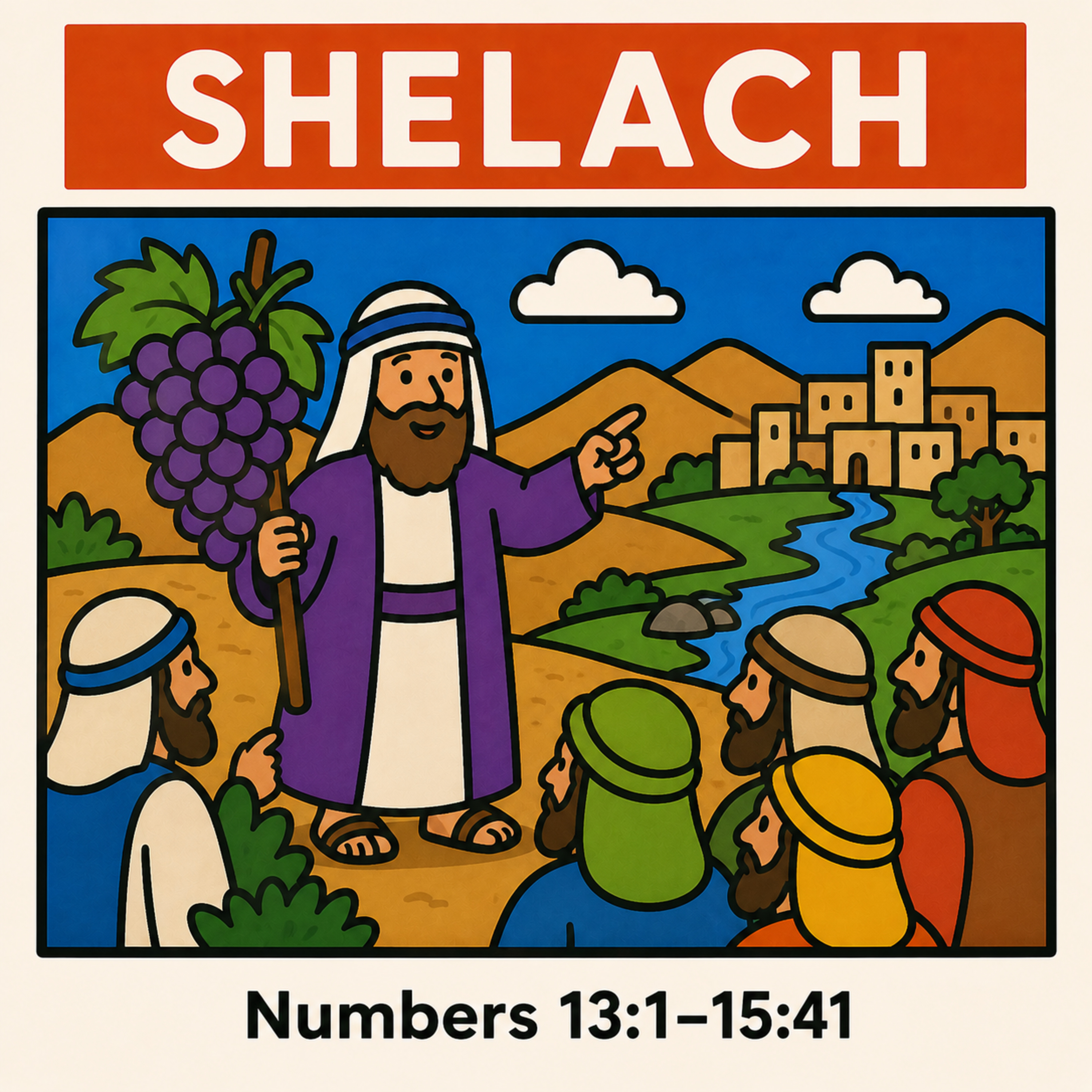 Bamidbar - Shelach (Numbers 13:1–15:41) | All recordings are created by copying Sefaria using the Kehot Chumash from Chabad english translation. The Text to Voice is using English AI... sorry for any weird speech.Please note that release schedule is based on the year 5786. Some weeks do not have a Parsha. You can always look up the current Parsha Here.If you like the recording please consider donating to Chabad to help continue their effort to make resources like this more accessible to the Jewish population!BamidbarShelach (Numbers 13:1–15:41)Twelve scouts tour Canaan and return with a split vision: a land flowing with goodness, yet “giants” and fortified cities. Fear spreads; the people weep and rebel, yearning for Egypt. Caleb and Joshua insist, “We can surely ascend,” but the community chooses despair. God decrees forty years of wandering—one year per day scouted—so the fearful generation will pass, though He stays with Israel. A rash attempt to storm the hills without divine backing ends in defeat. Laws about offerings, first dough (challah), and atonement for unintentional sins re-center life around hope and practice, while a willful violator is punished. The portion closes with tzitzit—fringes to “remember and do all My commandments”—a daily antidote to the eyes’ misdirection. Themes to listen for: perception vs. reality, the cost of collective fear, and habits that anchor courage. | — | ||||||
Want analysis for the episodes below?Free for Pro Submit a request, we'll have your selected episodes analyzed within an hour. Free, at no cost to you, for Pro users. | |||||||||
| 5/30/26 | 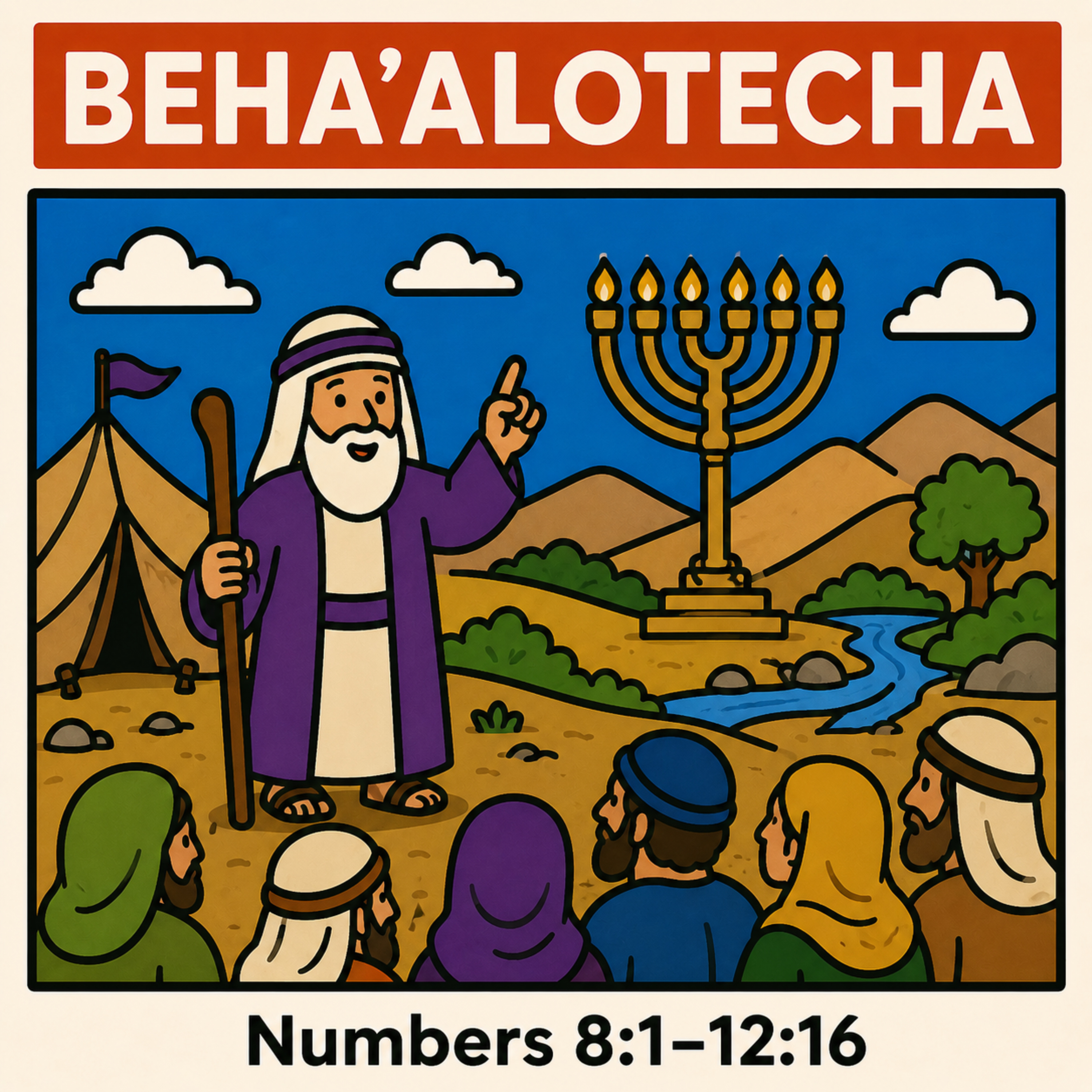 Bamidbar - Beha'alotecha (Numbers 8:1–12:16) | All recordings are created by copying Sefaria using the Kehot Chumash from Chabad english translation. The Text to Voice is using English AI... sorry for any weird speech.Please note that release schedule is based on the year 5786. Some weeks do not have a Parsha. You can always look up the current Parsha Here.If you like the recording please consider donating to Chabad to help continue their effort to make resources like this more accessible to the Jewish population!BamidbarBehaalotecha (Numbers 8:1–12:16)The menorah’s lamps are directed to cast light forward, and the Levites are consecrated for service. Those who missed Passover due to impurity receive Pesach Sheni, a second-chance ritual that makes room for life’s disruptions. A cloud above the Mishkan and silver trumpets guide departures and encampments; Israel leaves Sinai, and early steps falter—complaints rise, fire breaks out, and craving for meat brings quail and a hard lesson. Seventy elders share Moses’ spirit to carry the burden, while Eldad and Medad prophesy in the camp—Moses longs for a nation of prophets. Then Miriam and Aaron speak against Moses; God defends him, Miriam is struck with tzara’at, and the whole nation waits seven days for her healing. Themes to listen for: guidance by light and signal, the holiness of second chances, shared leadership, and a community that pauses for one person’s restoration. | — | ||||||
| 5/24/26 | 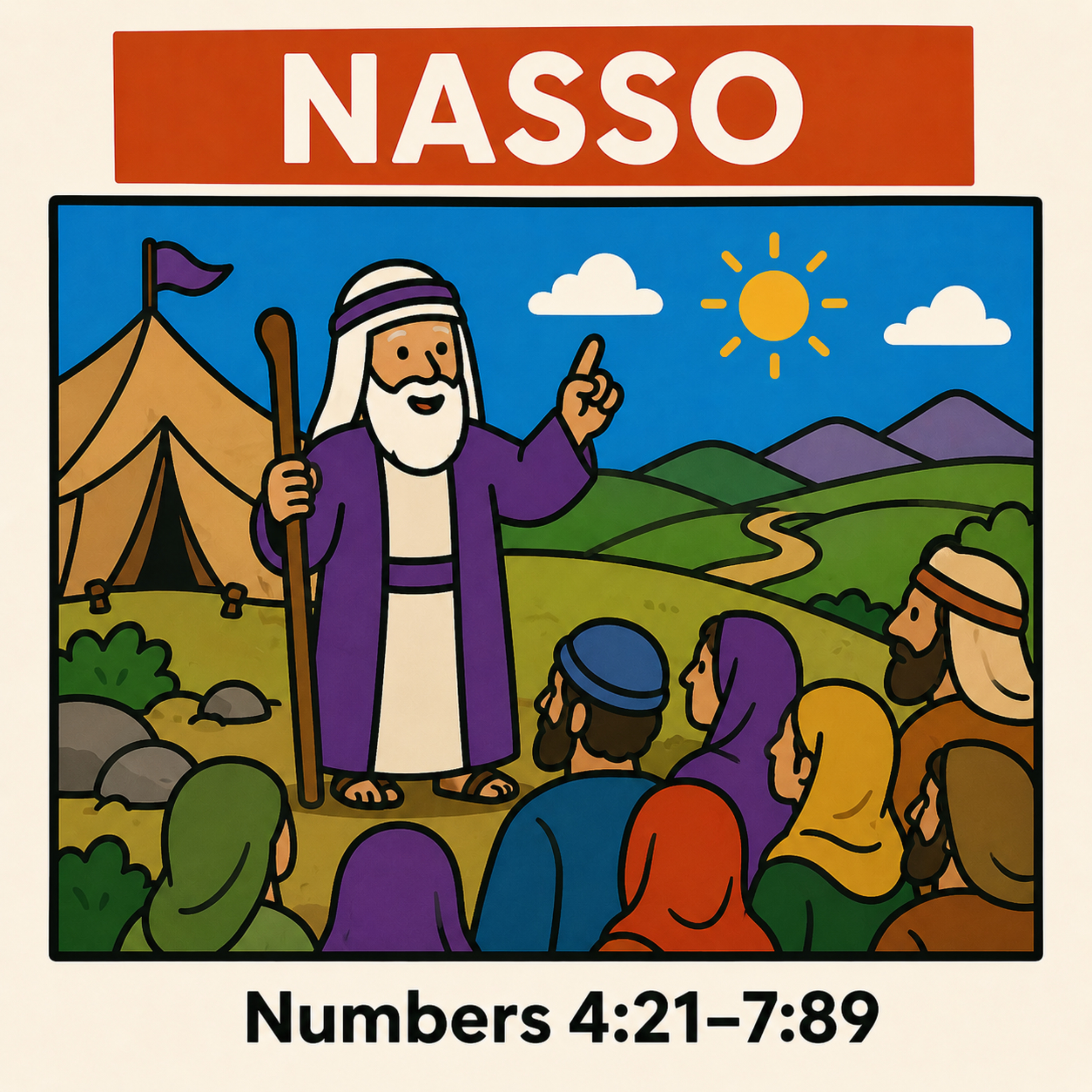 Bamidbar - Nasso (Numbers 4:21–7:89) | All recordings are created by copying Sefaria using the Kehot Chumash from Chabad english translation. The Text to Voice is using English AI... sorry for any weird speech.Please note that release schedule is based on the year 5786. Some weeks do not have a Parsha. You can always look up the current Parsha Here.If you like the recording please consider donating to Chabad to help continue their effort to make resources like this more accessible to the Jewish population!BamidbarNasso (Numbers 4:21–7:89)The census of Levite duties continues, then the camp is refined: impurity is moved outside, stolen goods are repaid with an added fifth, and the ritual of sotah addresses marital suspicion before God, aiming to resolve jealousy and restore peace. The nazir vow offers a path of heightened devotion—abstaining from wine, avoiding impurity, and not cutting hair—culminating in offerings that return the nazir to ordinary life sanctified. God teaches the priests to bless the people with protection, grace, and peace (Birkat Kohanim). Twelve tribal leaders then dedicate the altar with identical gifts, day by day, underscoring unity in diversity. The portion closes intimately: Moses hears the divine voice speaking from above the Ark. Themes to listen for: repairing trust, optional pathways of holiness, blessing as public good, and generosity that equalizes honor. | — | ||||||
| 5/10/26 | 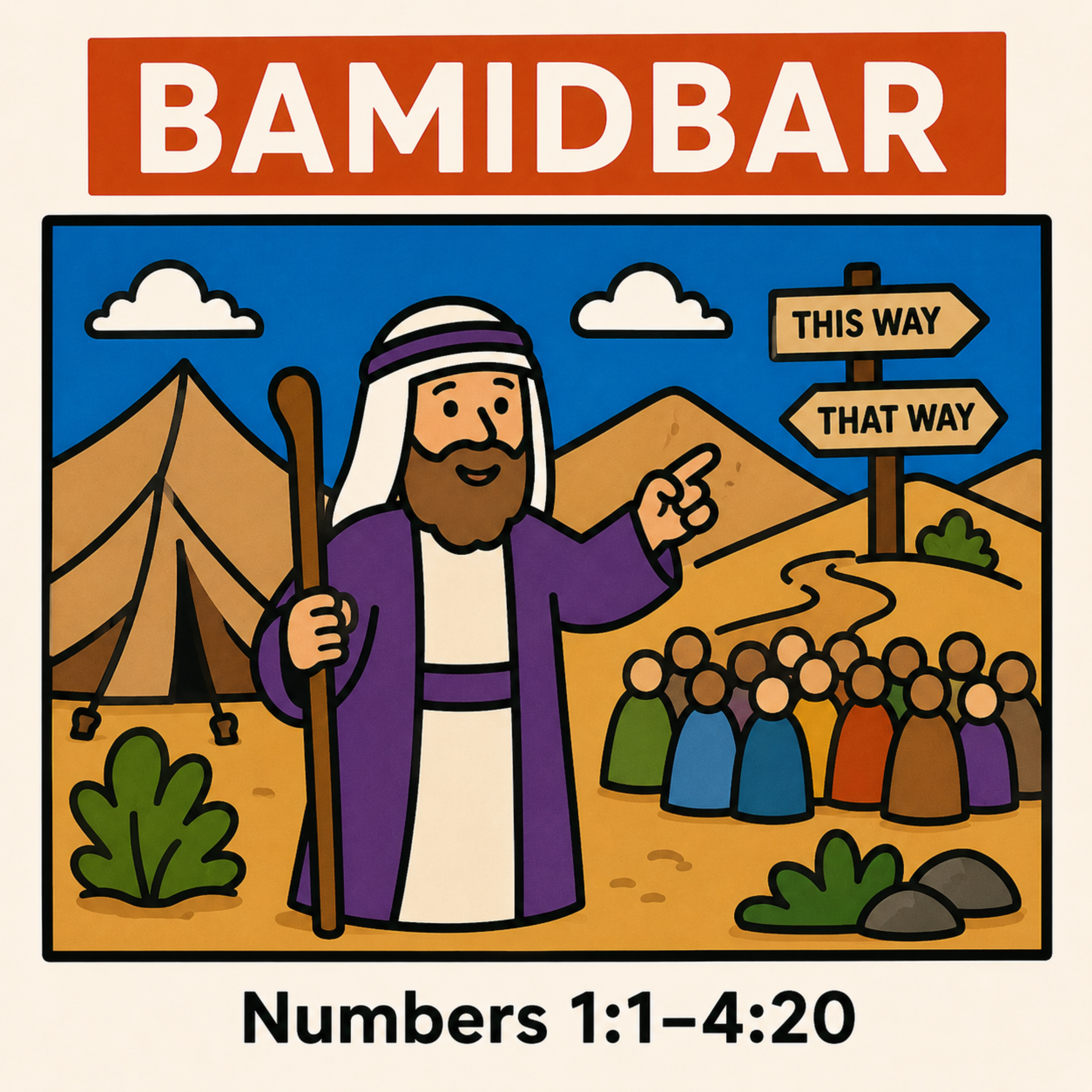 Bamidbar - Bamidbar (Numbers 1:1–4:20) | All recordings are created by copying Sefaria using the Kehot Chumash from Chabad english translation. The Text to Voice is using English AI... sorry for any weird speech.Please note that release schedule is based on the year 5786. Some weeks do not have a Parsha. You can always look up the current Parsha Here.If you like the recording please consider donating to Chabad to help continue their effort to make resources like this more accessible to the Jewish population!BamidbarBamidbar (Numbers 1:1–4:20)In the wilderness of Sinai, a census counts every able-bodied man for Israel’s defense, tribe by tribe, establishing leaders and the camp’s orderly formation around the Tent of Meeting—Judah to the east, then Reuben, Ephraim, and Dan leading their respective sides. The Levites replace the firstborn for sacred service and camp nearest the Mishkan, safeguarding it on every journey. Their clans receive distinct roles: Gershon transports curtains, Merari the frames and sockets, and Kohath the most holy vessels—but only after the priests cover them. Holiness requires distance, precision, and teamwork so the Presence can dwell in the midst of a people on the move. Themes to listen for: order as a vessel for holiness, service matched to calling, and the dignity of being counted with purpose. | — | ||||||
| 5/3/26 | 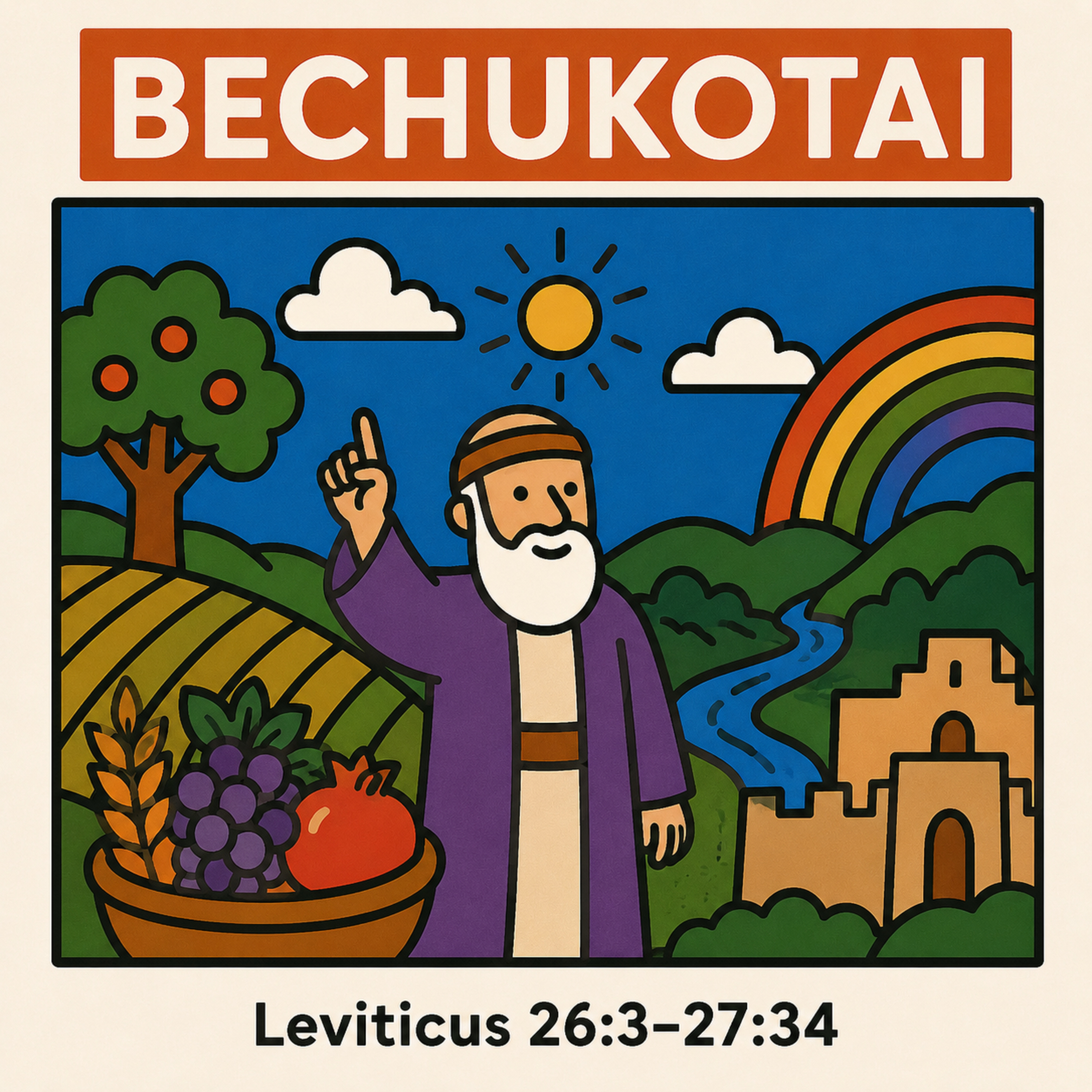 Vayikra - Bechukotai (Leviticus 26:3–27:34) | All recordings are created by copying Sefaria using the Kehot Chumash from Chabad english translation. The Text to Voice is using English AI... sorry for any weird speech.Please note that release schedule is based on the year 5786. Some weeks do not have a Parsha. You can always look up the current Parsha Here.If you like the recording please consider donating to Chabad to help continue their effort to make resources like this more accessible to the Jewish population!VayikraBechukotai (Leviticus 26:3–27:34)Blessings and curses spell out covenant consequences: obedience brings rain, abundance, security, and God’s presence walking among the people; defiance triggers escalating losses—fear, famine, defeat, desolation, and exile—until hearts soften. Yet even in exile God promises to remember the covenant with Jacob, Isaac, and Abraham and not to reject Israel utterly. The book closes with laws of vow valuations, consecrated property, firstlings, and tithes, clarifying what is redeemable and what is holy to God. Themes to listen for: freedom with responsibility, the moral ecology of a people and its land, hope that outlives failure, and dedication that turns possessions into offerings. | — | ||||||
| 5/3/26 | 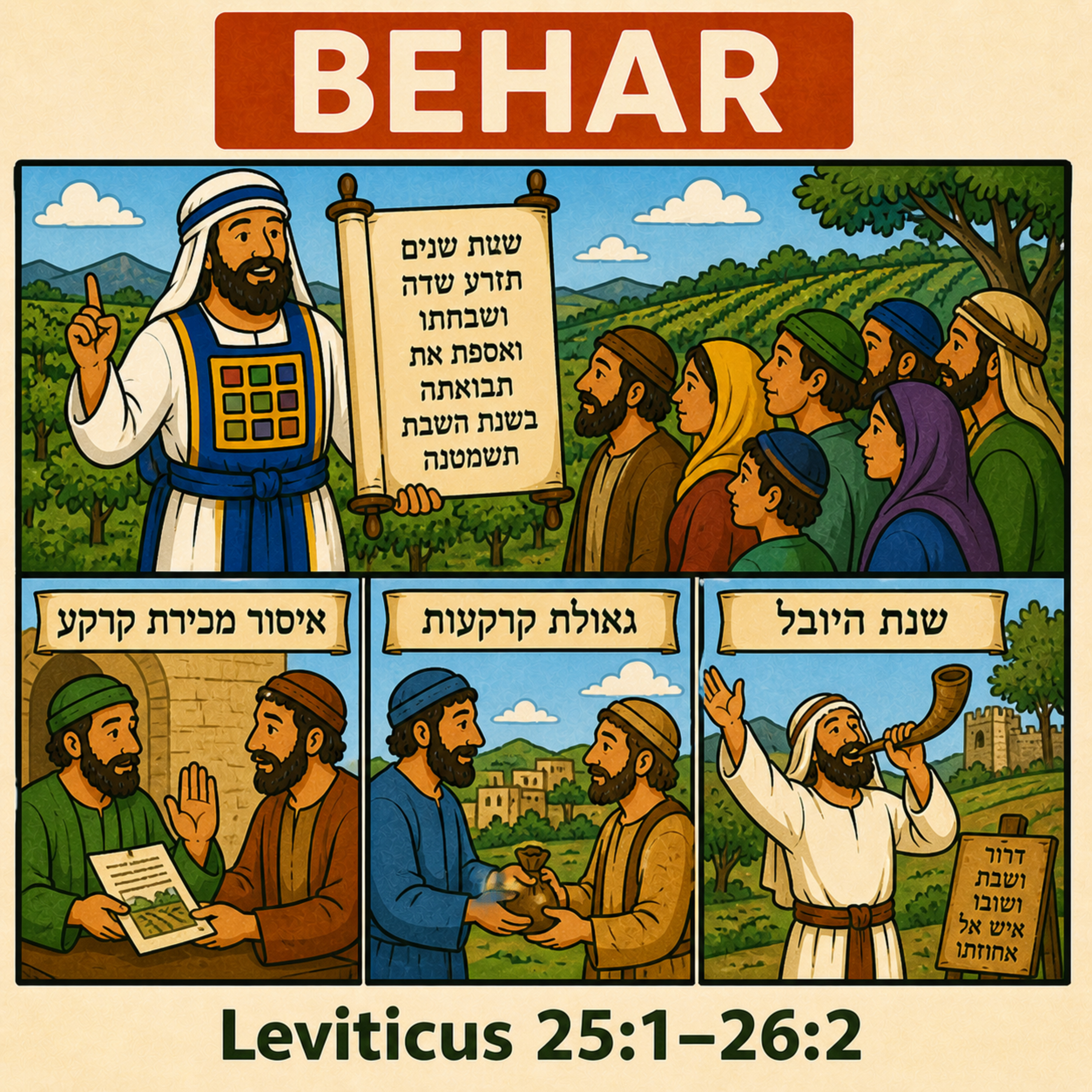 Vayikra - Behar (Leviticus 25:1–26:2) | All recordings are created by copying Sefaria using the Kehot Chumash from Chabad english translation. The Text to Voice is using English AI... sorry for any weird speech.Please note that release schedule is based on the year 5786. Some weeks do not have a Parsha. You can always look up the current Parsha Here.If you like the recording please consider donating to Chabad to help continue their effort to make resources like this more accessible to the Jewish population!VayikraBehar (Leviticus 25:1–26:2)From Sinai come laws of the land’s rest: the sabbatical year (shemittah) every seventh year and the Jubilee (yovel) every fiftieth, when land reverts to ancestral families and indentured Israelites go free. Sales are priced by harvest years remaining; exploitation and interest are banned; kin-redeemers help restore property and dignity. Even when poverty strikes, “your brother” is to be supported so he can live beside you. Slavery is limited and humanized for Israelites—“they are My servants”—and strangers are treated justly. The section closes by tying it all back: no idols, revere the sanctuary, keep the Sabbaths. Themes to listen for: economic reset as holiness, time healing inequality, land as God’s, and compassion as policy. | — | ||||||
| 4/26/26 | 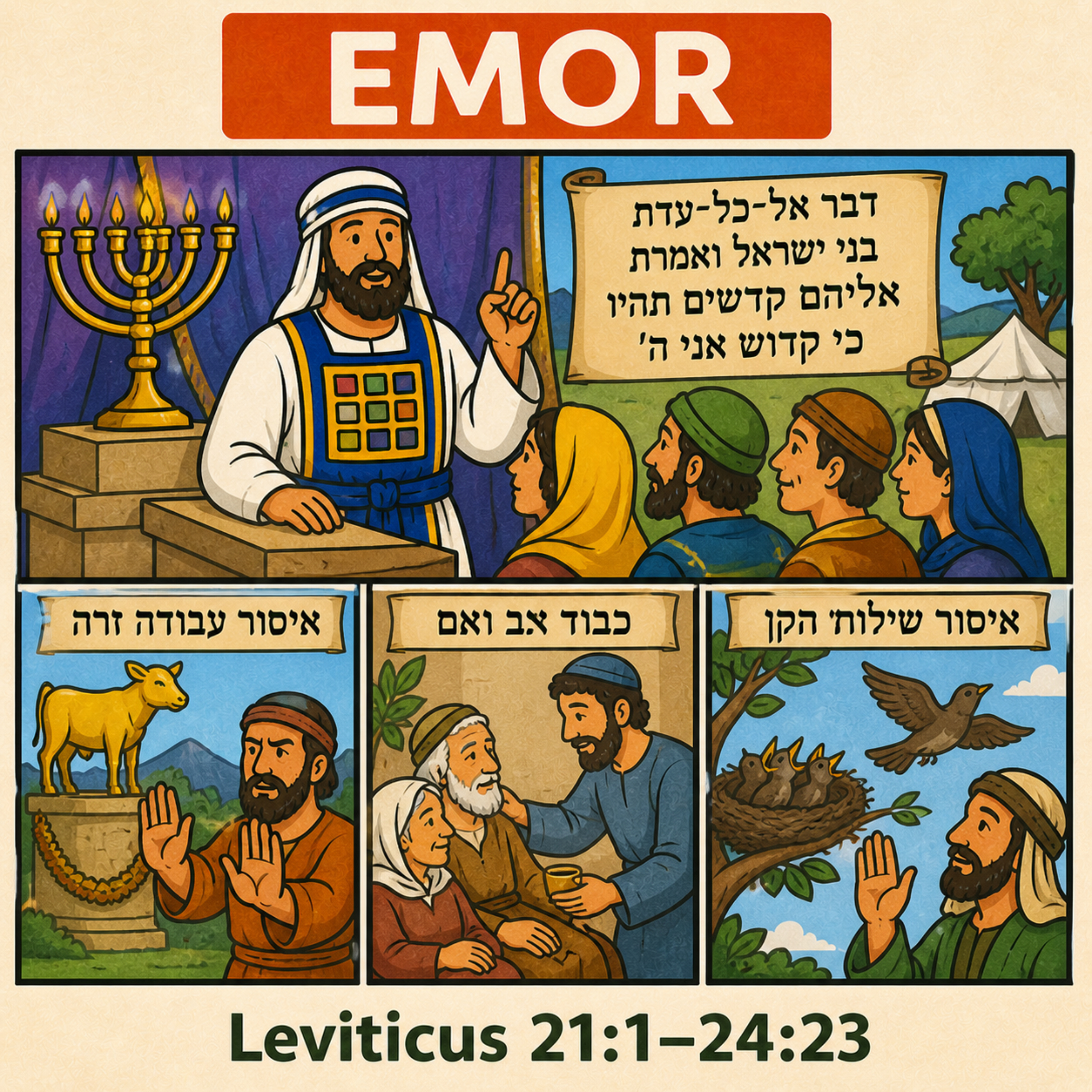 Vayikra - Emor (Leviticus 21:1–24:23) | All recordings are created by copying Sefaria using the Kehot Chumash from Chabad english translation. The Text to Voice is using English AI... sorry for any weird speech.Please note that release schedule is based on the year 5786. Some weeks do not have a Parsha. You can always look up the current Parsha Here.If you like the recording please consider donating to Chabad to help continue their effort to make resources like this more accessible to the Jewish population!VayikraEmor (Leviticus 21:1–24:23)Priests have heightened standards—limits on mourning, marriage, and service for those with disqualifying blemishes—reflecting the intensity of their role. Offerings must be unblemished; profanation of God’s Name is forbidden. The calendar of sacred times then unfolds: Shabbat; Passover and the Omer leading to Shavuot; the shofar day (Rosh Hashanah); Yom Kippur; and Sukkot with its rejoicing. Sanctuary rhythms continue with the ever-lit menorah and the weekly bread of presence. A case of blasphemy leads to judgment and the articulation of measure for measure (lex talionis) alongside compensatory damages. Themes to listen for: time as a sanctuary, leaders as living symbols, careful speech, and communal joy anchored in sacred cycles. | — | ||||||
| 4/19/26 | 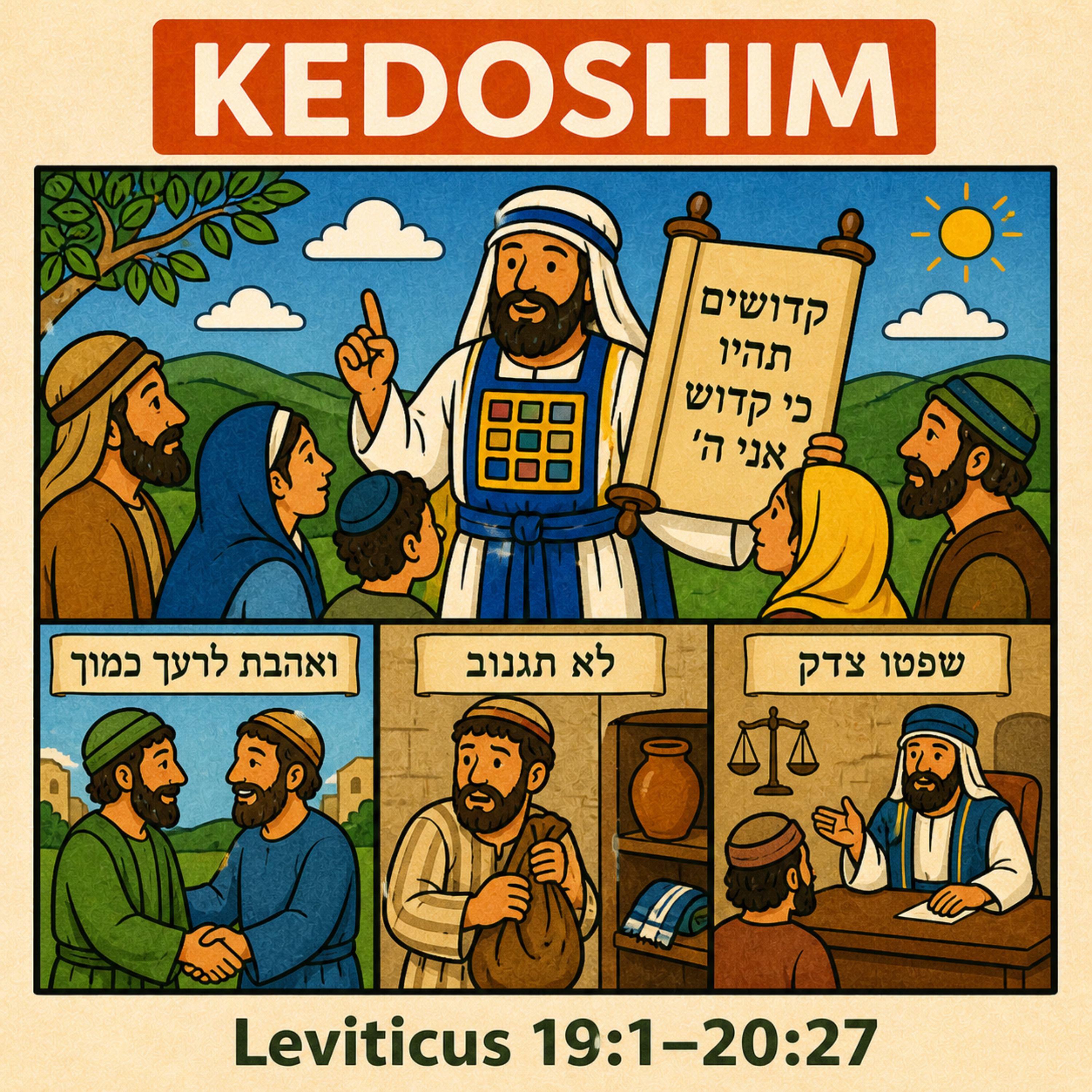 Vayikra - Kedoshim (Leviticus 19:1–20:27) | All recordings are created by copying Sefaria using the Kehot Chumash from Chabad english translation. The Text to Voice is using English AI... sorry for any weird speech.Please note that release schedule is based on the year 5786. Some weeks do not have a Parsha. You can always look up the current Parsha Here.If you like the recording please consider donating to Chabad to help continue their effort to make resources like this more accessible to the Jewish population!VayikraKedoshim (Leviticus 19:1–20:27)“Be holy, for I the Lord your God am holy.” Holiness here is everyday ethics: revere parents and Shabbat; reject idols; leave gleanings for the poor and stranger; don’t steal, lie, or withhold wages; do not curse the deaf or trip the blind; judge fairly; avoid gossip; rebuke lovingly; love your neighbor as yourself and love the stranger as yourself. Honest measures, no occult practices, integrity in sexuality, and boundaries around mixtures (kilayim) all shape a distinctive people. Chapter 20 adds penalties for grave transgressions and calls Israel to be set apart. Themes to listen for: holiness woven into justice, love as law, and difference in service of dignity. | — | ||||||
| 4/19/26 | 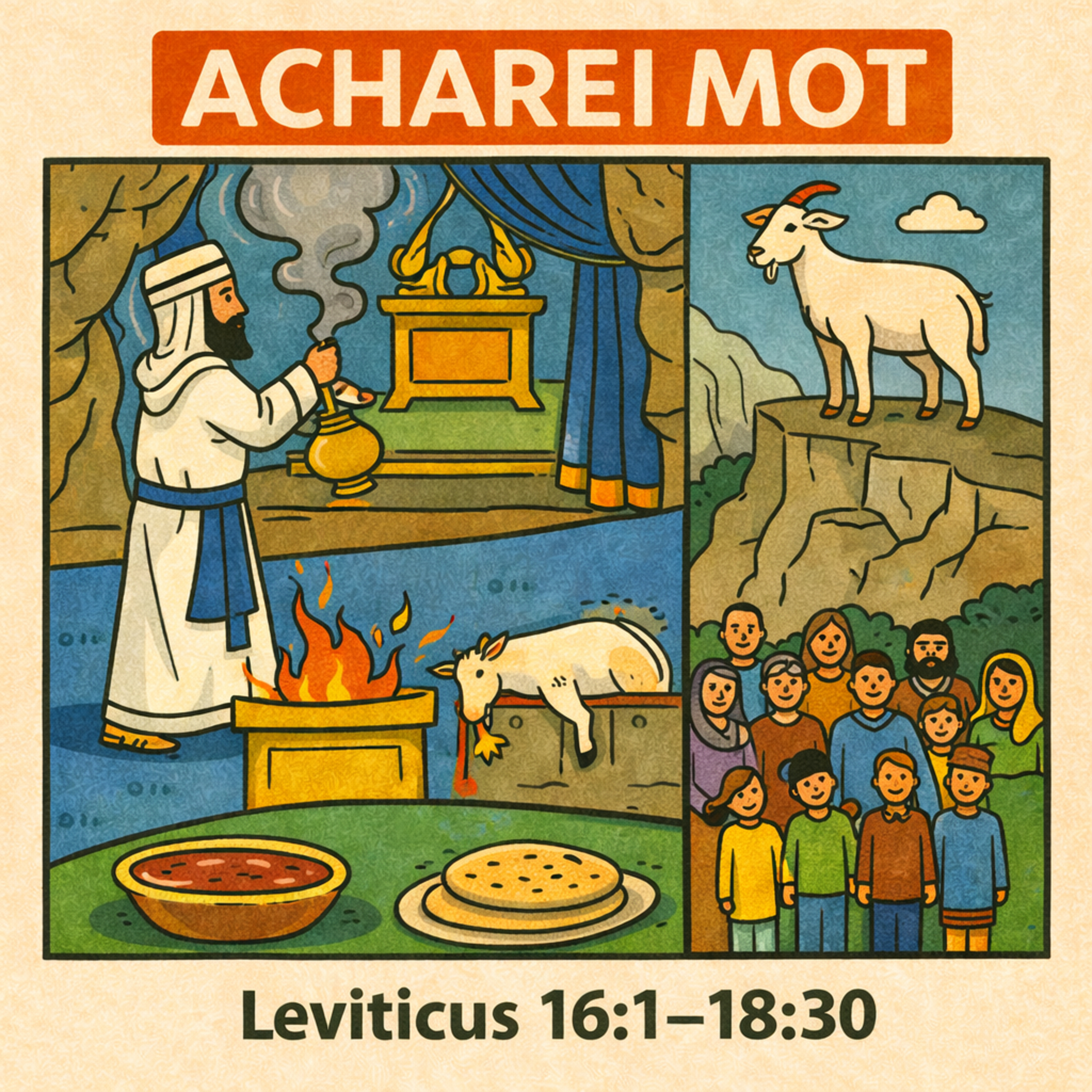 Vayikra - Acharei Mot (Leviticus 16:1–18:30) | All recordings are created by copying Sefaria using the Kehot Chumash from Chabad english translation. The Text to Voice is using English AI... sorry for any weird speech.Please note that release schedule is based on the year 5786. Some weeks do not have a Parsha. You can always look up the current Parsha Here.If you like the recording please consider donating to Chabad to help continue their effort to make resources like this more accessible to the Jewish population!VayikraAcharei Mot (Leviticus 16:1–18:30)In the shadow of Aaron’s loss comes the Yom Kippur service: the High Priest enters the Holy of Holies with incense and blood, atoning for sanctuary, priests, and people. Two goats stand at the center—one offered to God, one sent to the wilderness bearing Israel’s sins—while the people “afflict” themselves and cease work in a Shabbat Shabbaton. Laws then guard the sanctity of blood and demand that offerings be brought only to the Tent. Chapter 18 sets sexual boundaries and bans idolatrous practices like Molech, warning that defilement can cause the land to “vomit out” its inhabitants. Themes to listen for: access with awe, atonement that renews the whole system, life revered in the blood, and covenant boundaries that protect community. | — | ||||||
| 4/12/26 | 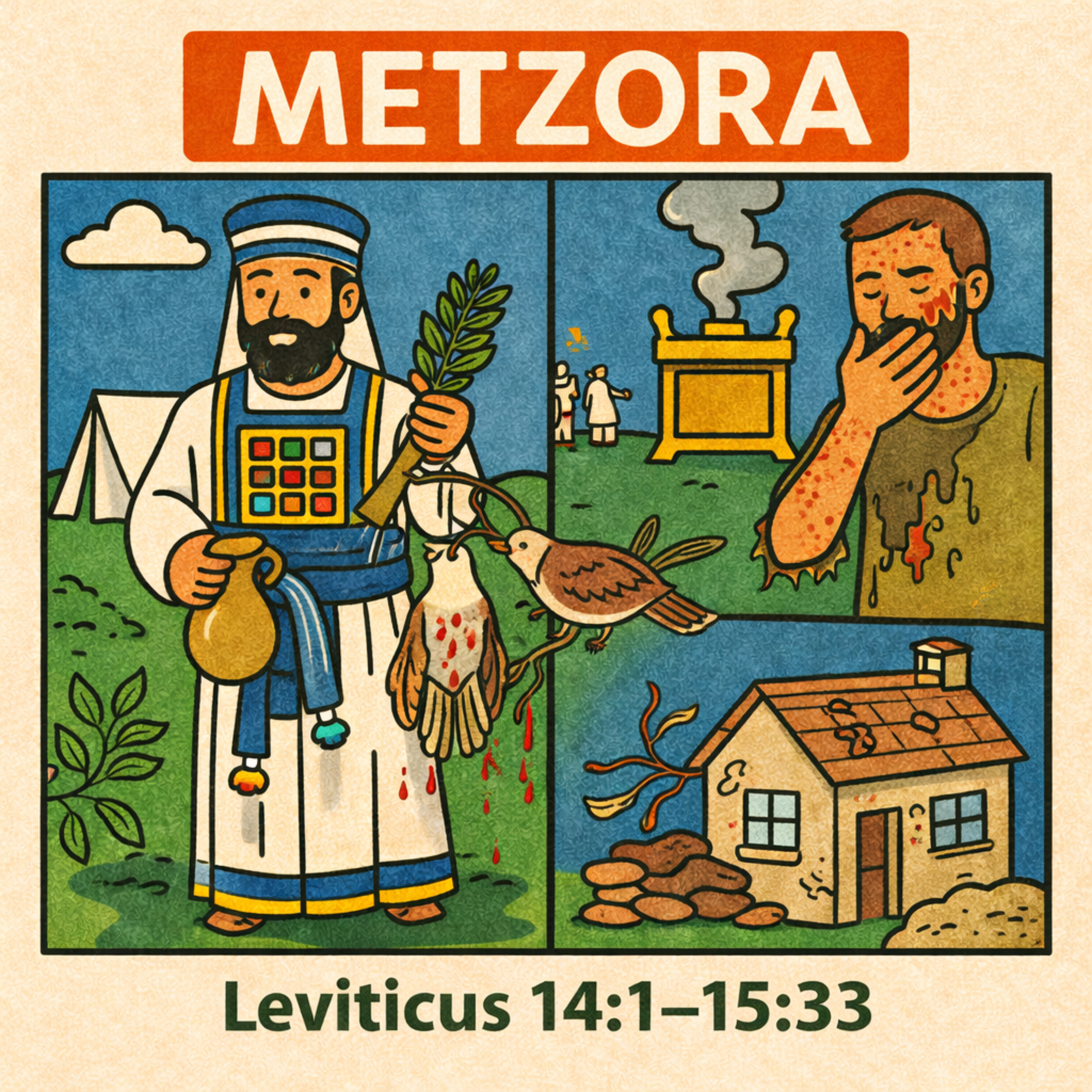 Vayikra - Metzora (Leviticus 14:1–15:33) | All recordings are created by copying Sefaria using the Kehot Chumash from Chabad english translation. The Text to Voice is using English AI... sorry for any weird speech.Please note that release schedule is based on the year 5786. Some weeks do not have a Parsha. You can always look up the current Parsha Here.If you like the recording please consider donating to Chabad to help continue their effort to make resources like this more accessible to the Jewish population!VayikraMetzora (Leviticus 14:1–15:33)Restoration takes center stage. The metzora’s return involves living water, cedar, hyssop, and two birds—one sent free—followed by offerings and anointing that echo priestly consecration. Tzara’at can also strike a house; stones are removed, walls scraped, or the structure dismantled if the plague persists—home itself is part of covenant care. The portion concludes with laws of bodily discharges (zav, zavah, niddah): contact, waiting periods, immersions, and offerings that let intimacy and community resume safely. Themes to listen for: pathways back from isolation, holiness in our homes, and compassion structured into embodied life. | — | ||||||
| 4/12/26 | 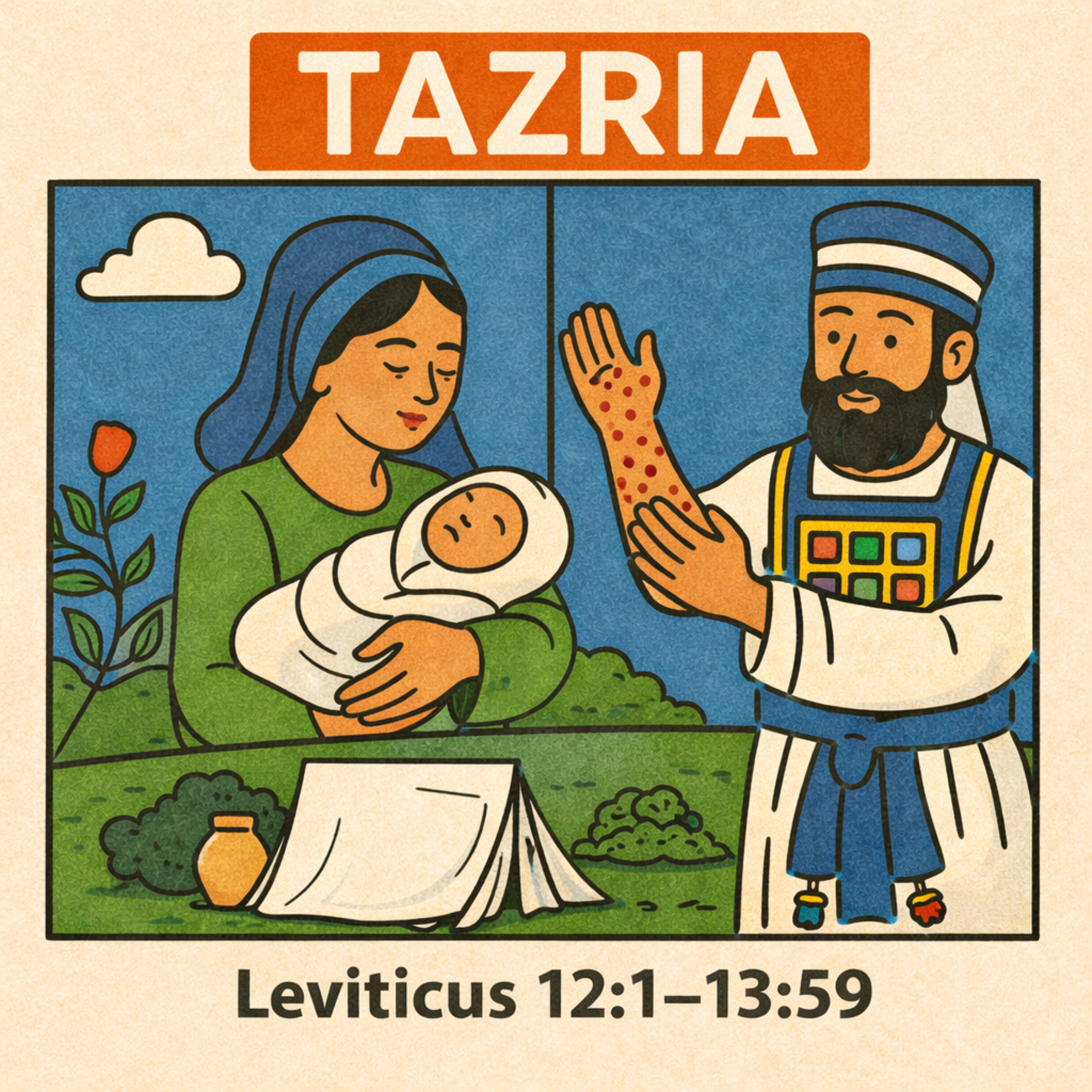 Vayikra - Tazria (Leviticus 12:1–13:59) | All recordings are created by copying Sefaria using the Kehot Chumash from Chabad english translation. The Text to Voice is using English AI... sorry for any weird speech.Please note that release schedule is based on the year 5786. Some weeks do not have a Parsha. You can always look up the current Parsha Here.If you like the recording please consider donating to Chabad to help continue their effort to make resources like this more accessible to the Jewish population!VayikraTazria (Leviticus 12:1–13:59)After childbirth, a mother’s days of impurity and offerings mark the passage back to sanctuary life. The text then maps tzara’at—a scaly affliction—on skin, scalp, and beard, with the priest as careful diagnostician. Signs, quarantines, and rechecks protect the community while avoiding shame or haste; garments can also show spreading stains and require burning if persistent. Purity here is about fit condition, not moral worth. Themes to listen for: patient assessment, public health with dignity, and a holiness that cares for bodies as well as souls. | — | ||||||
| 4/5/26 | 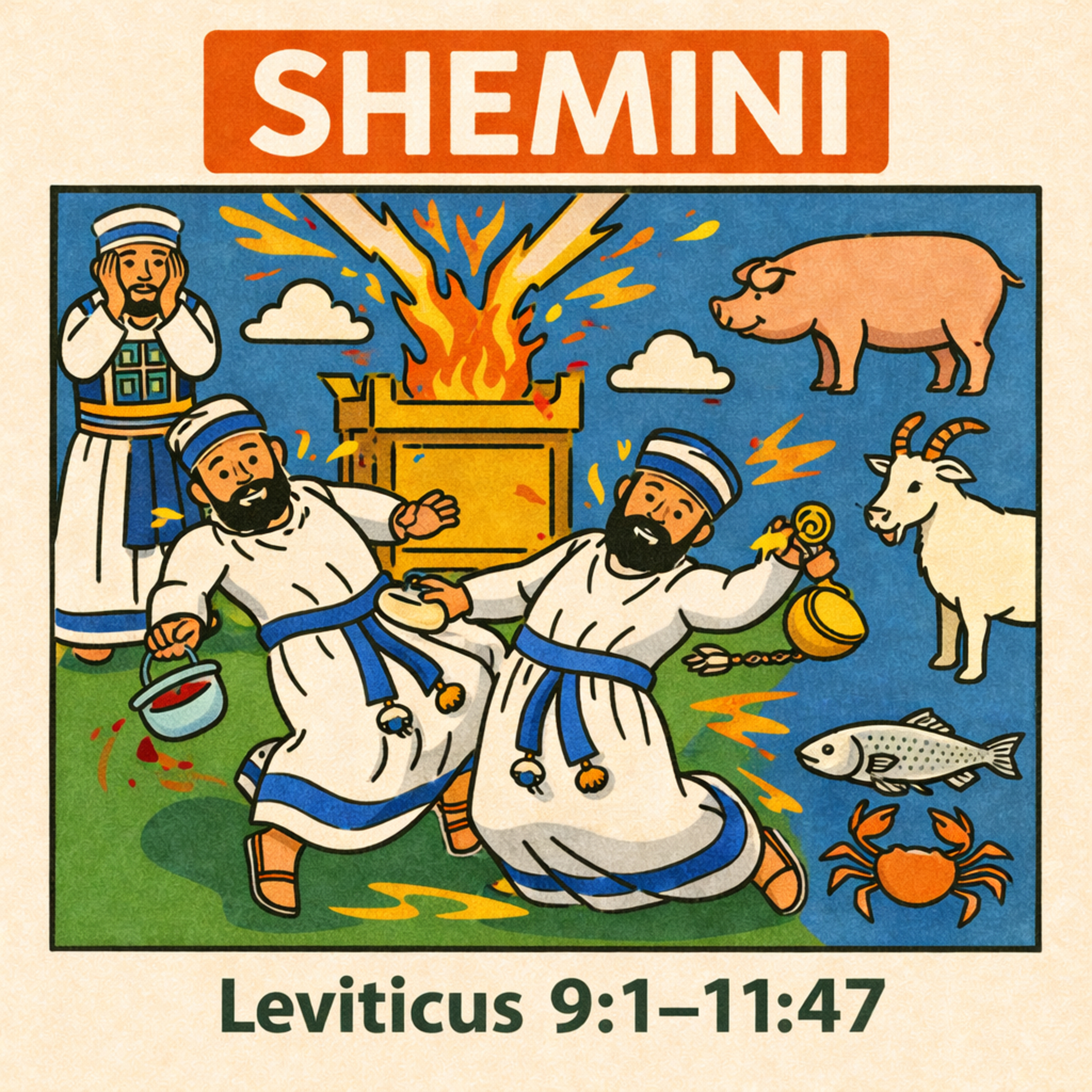 Vayikra - Shemini (Leviticus 9:1–11:47) | All recordings are created by copying Sefaria using the Kehot Chumash from Chabad english translation. The Text to Voice is using English AI... sorry for any weird speech.Please note that release schedule is based on the year 5786. Some weeks do not have a Parsha. You can always look up the current Parsha Here.If you like the recording please consider donating to Chabad to help continue their effort to make resources like this more accessible to the Jewish population!VayikraShemini (Leviticus 9:1–11:47)On the eighth day, fire descends from Heaven to consume the offerings—joy erupts as God’s glory appears. Then tragedy: Nadav and Avihu bring “strange fire” and die before God. In the aftermath, priests are warned against serving intoxicated; discernment between holy and profane becomes paramount. The portion then outlines the laws of permitted and forbidden animals—signs for land creatures, fish with fins and scales, a list of birds, and a few winged insects—along with purity rules tied to carcasses and contact. “Be holy, for I am holy” frames a diet that trains awareness. Themes to listen for: the closeness and danger of holiness, disciplined service, and identity shaped by daily choices. | — | ||||||
| 3/22/26 | 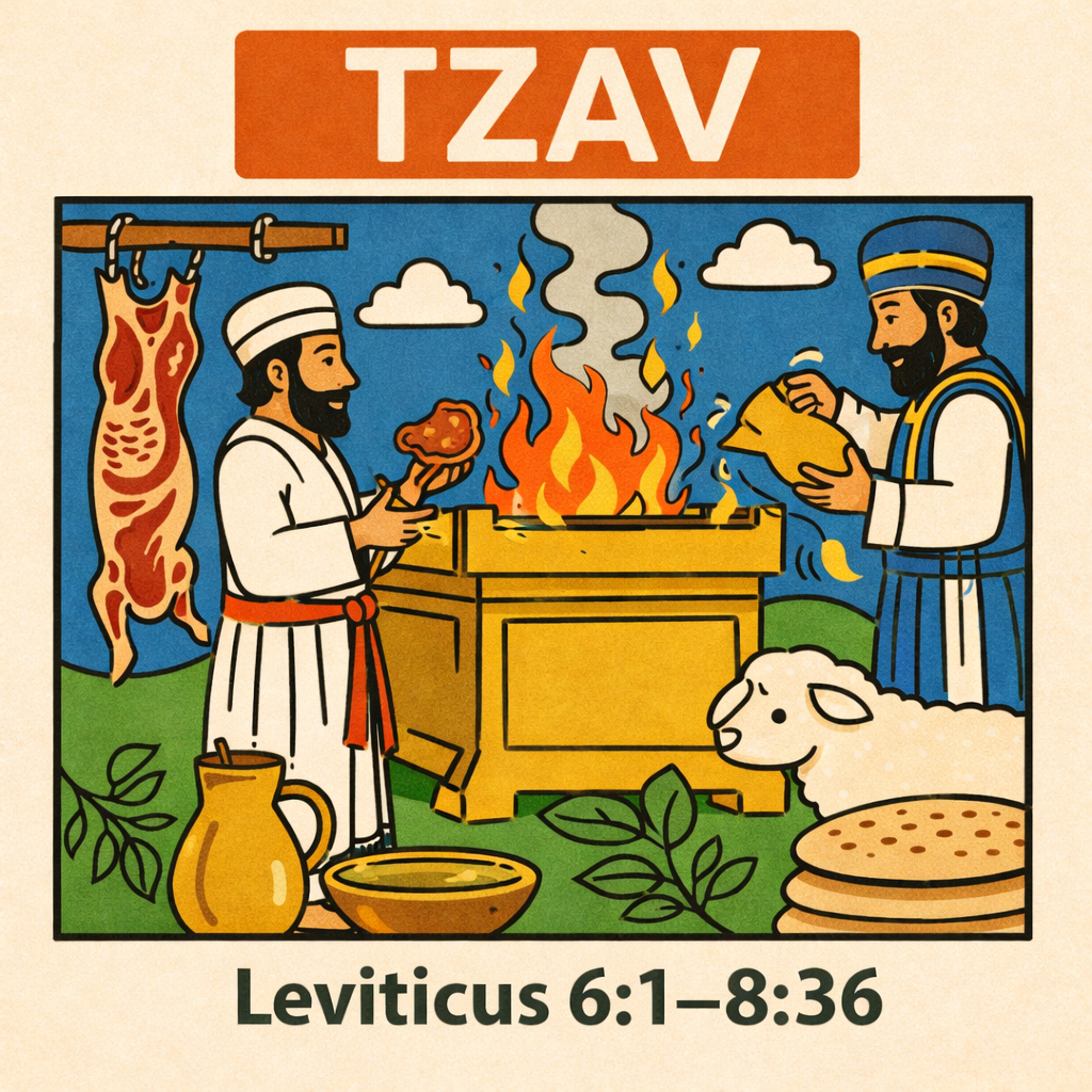 Vayikra - Tzav (Leviticus 6:1–8:36) | All recordings are created by copying Sefaria using the Kehot Chumash from Chabad english translation. The Text to Voice is using English AI... sorry for any weird speech.Please note that release schedule is based on the year 5786. Some weeks do not have a Parsha. You can always look up the current Parsha Here.If you like the recording please consider donating to Chabad to help continue their effort to make resources like this more accessible to the Jewish population!VayikraTzav (Leviticus 6:1–8:36)Further instructions emphasize constancy and care: removing ashes each dawn, keeping the altar fire perpetually burning, and precise portions for priests. The minchah has priestly variants; chatat and asham are eaten in holiness; shelamim must be consumed in time—no leftovers into a third day—and the fat and blood are forbidden. The portion culminates in the seven-day ordination (milu’im) of Aaron and his sons: washing, vesting, anointing, and offerings at the entrance of the Tent. Moses performs the rites exactly “as commanded,” installing a priesthood that will serve on behalf of the people. Themes to listen for: sacred routines that sustain flame and focus, boundaries that protect holiness, and leadership clothed in responsibility. | — | ||||||
| 3/15/26 | 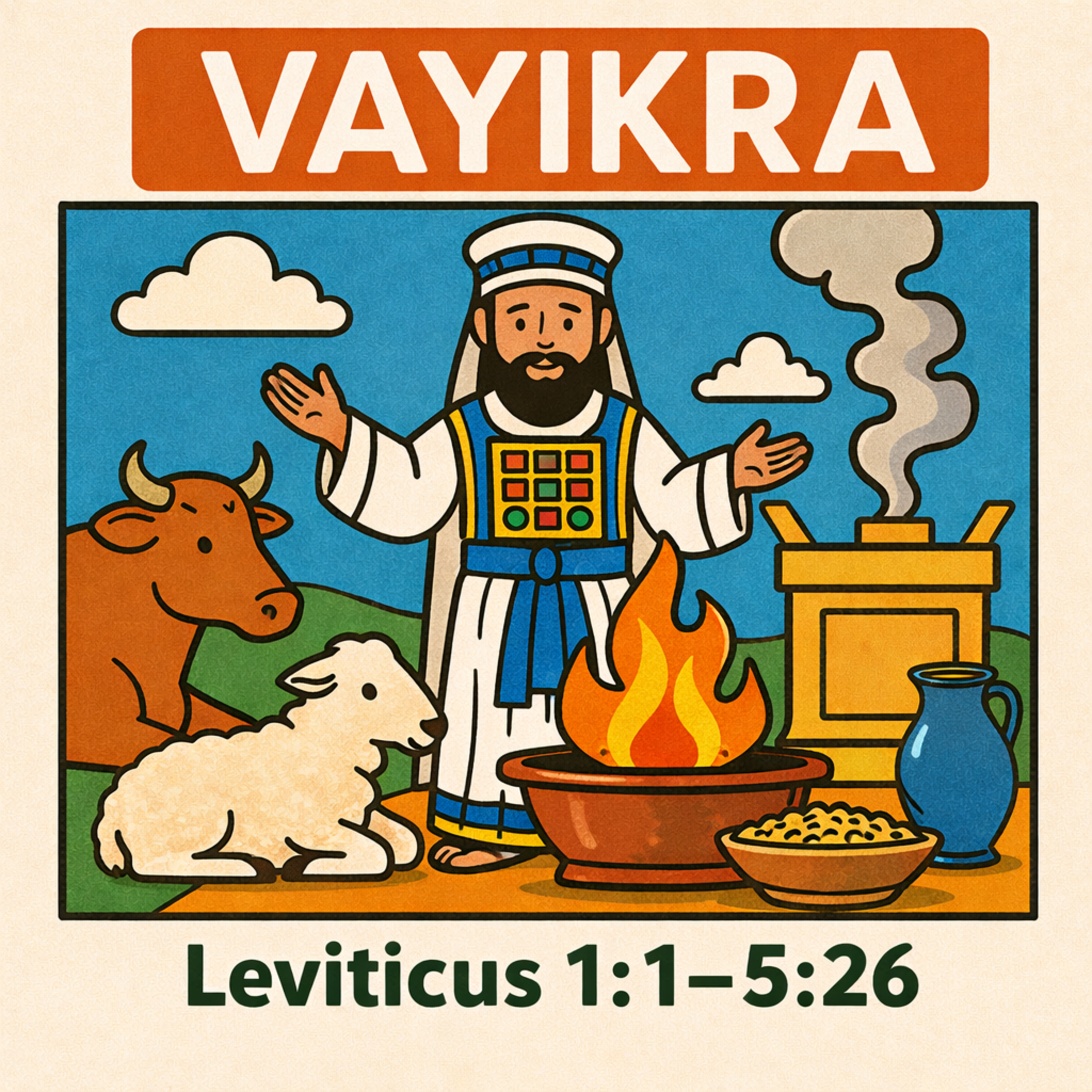 Vayikra - Vayikra (Leviticus 1:1–5:26) | All recordings are created by copying Sefaria using the Kehot Chumash from Chabad english translation. The Text to Voice is using English AI... sorry for any weird speech.Please note that release schedule is based on the year 5786. Some weeks do not have a Parsha. You can always look up the current Parsha Here.If you like the recording please consider donating to Chabad to help continue their effort to make resources like this more accessible to the Jewish population!VayikraVayikra (Leviticus 1:1–5:26)The book opens with a language of nearness—korbanot, offerings that “draw close.” God calls to Moses from the Tent of Meeting and details five core offerings: the olah (burnt offering), wholly given over; the minchah (grain offering), turning simple flour and oil into worship; the shelamim (well-being/peace offering), shared as a sacred meal; the chatat (sin offering) for unintentional wrongs; and the asham (guilt/reparation offering) for specific breaches with confession and restitution. Responsibility scales with influence—priest, community, leader, individual—and a “sliding-scale” sin offering keeps atonement within reach for all. Themes to listen for: repair that’s relational, honesty that transforms error, leadership held to higher standards, and a God who meets people in everyday gifts. | — | ||||||
| 3/8/26 | 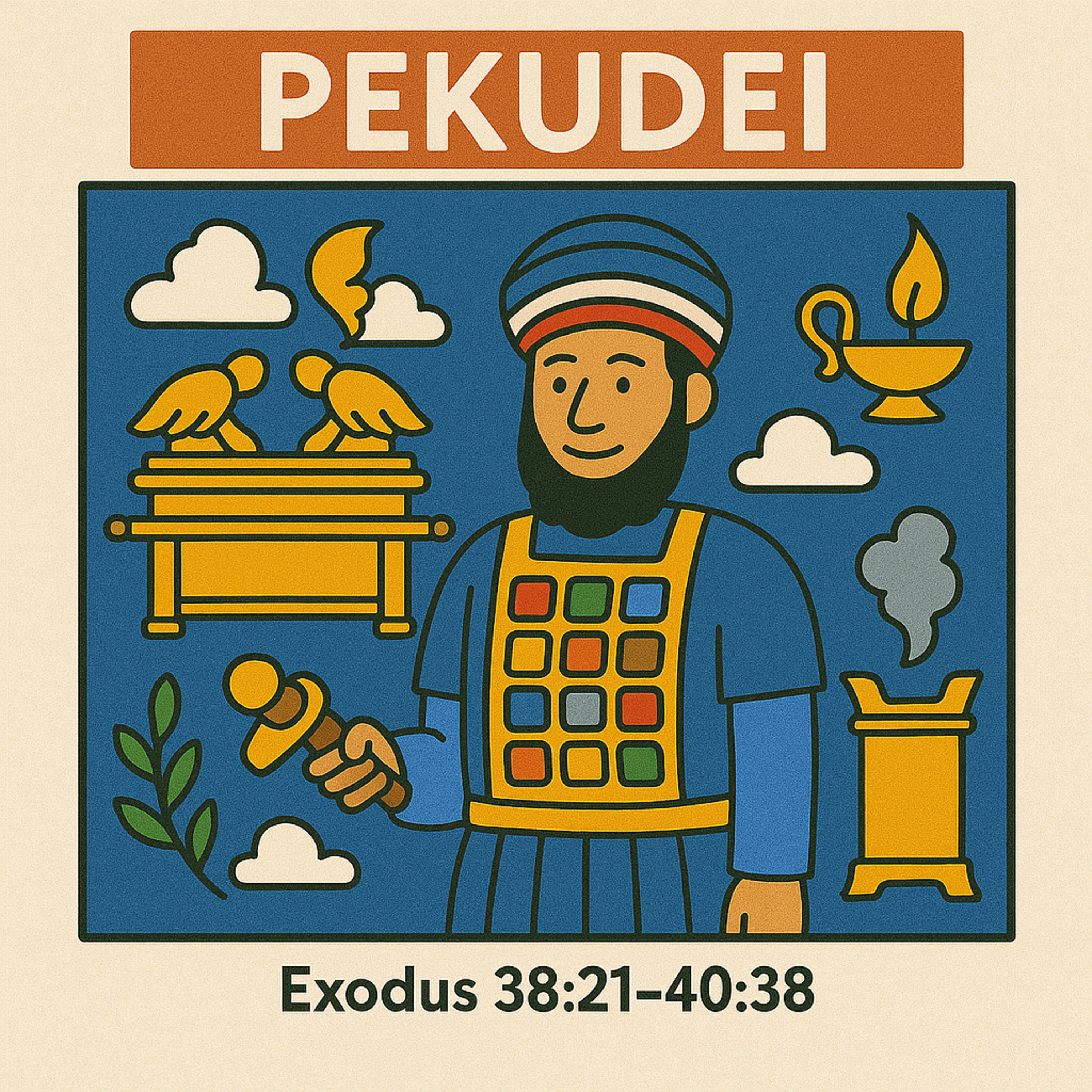 Shemot - Pekudei (Exodus 38:21–40:38) | All recordings are created by copying Sefaria using the Kehot Chumash from Chabad english translation. The Text to Voice is using English AI... sorry for any weird speech.Please note that release schedule is based on the year 5786. Some weeks do not have a Parsha. You can always look up the current Parsha Here.If you like the recording please consider donating to Chabad to help continue their effort to make resources like this more accessible to the Jewish population!ShemotPekudei (Exodus 38:21–40:38)An exact accounting (“pekudei”) tallies every ounce of gold, silver, and bronze donated for the Mishkan, overseen by Ithamar of Aaron’s line and crafted by Bezalel and Oholiav. The artisans complete each vessel and garment to specification—the Ark and its cover, the table, menorah, altars, basin, curtains, and courtyard—along with the priestly garments, including the breastplate set with twelve stones and the golden frontlet inscribed “Holy to the Lord.” All the finished pieces are brought to Moses, who inspects the work and finds it precisely as God commanded.On the first day of the first month, Moses erects the Mishkan: he positions the furnishings, lights the menorah, sets out the bread, offers incense, places the altar and basin, and anoints the Tabernacle and its vessels. Aaron and his sons are clothed and anointed to serve. Then the cloud covers the Tent of Meeting, and the divine glory fills the sanctuary so intensely that Moses cannot enter. From this point forward, the cloud by day and fire by night guide Israel’s journeys—rising to signal travel, settling to call the people to make camp. Themes to listen for: transparency and trust in sacred giving, excellence in craft as an act of devotion, leadership that verifies and blesses faithful work, and God’s presence dwelling in the midst of a community prepared for it. | — | ||||||
| 3/8/26 | 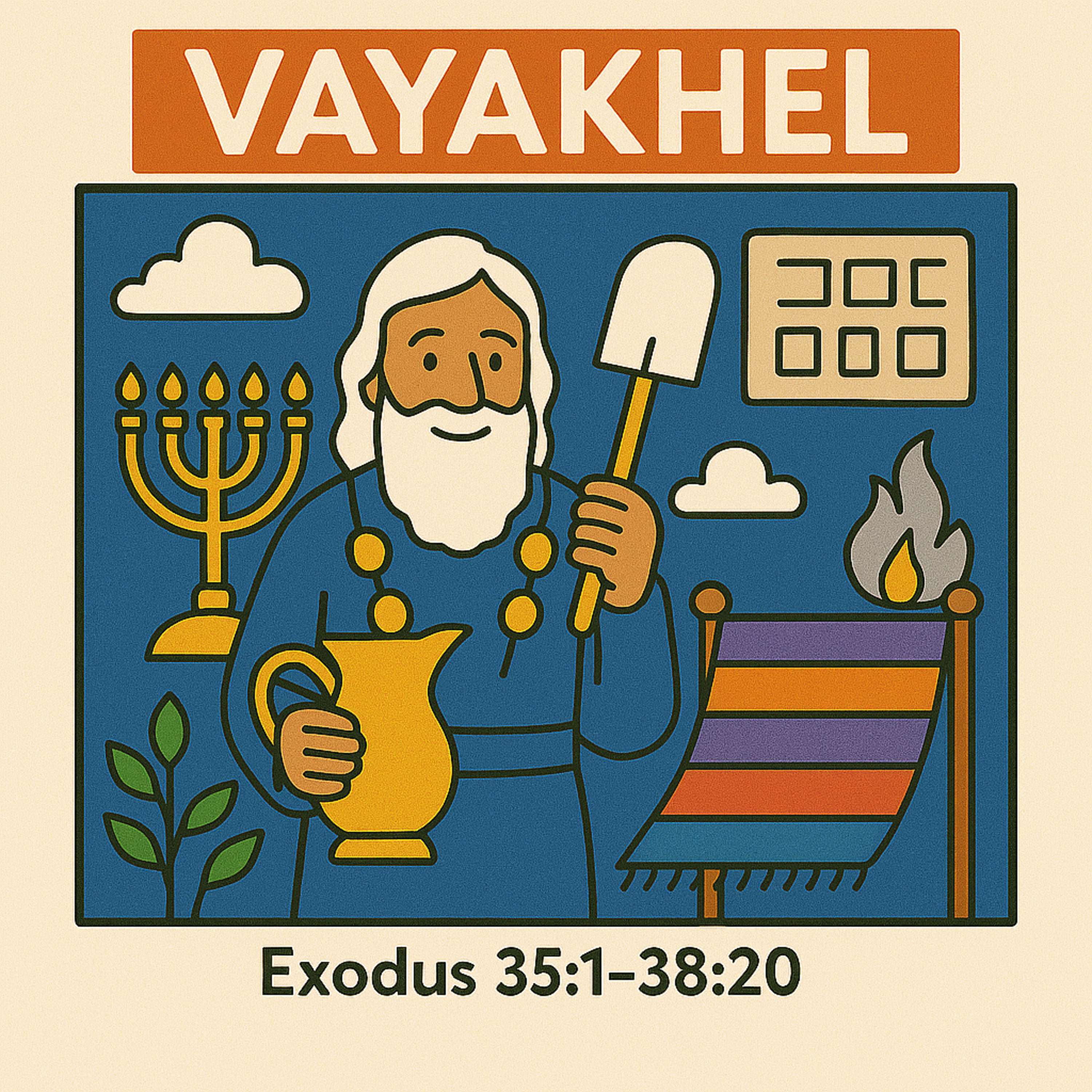 Shemot - Vayakhel (Exodus 35:1–38:20) | All recordings are created by copying Sefaria using the Kehot Chumash from Chabad english translation. The Text to Voice is using English AI... sorry for any weird speech.Please note that release schedule is based on the year 5786. Some weeks do not have a Parsha. You can always look up the current Parsha Here.If you like the recording please consider donating to Chabad to help continue their effort to make resources like this more accessible to the Jewish population!ShemotVayakhel (Exodus 35:1–38:20)Moses gathers the entire community and begins with Shabbat—six days of work, the seventh for rest—teaching that sacred time frames sacred space. He then invites freewill gifts for the Mishkan: metals and dyed yarns, fine linen and skins, acacia wood, oil and spices, precious stones. Men and women respond with overflowing generosity; “wise-hearted” artisans step forward, including Bezalel and Oholiav, whom God fills with skill and a spirit of teaching. The donations become so abundant that Moses must proclaim a halt—there is more than enough.The building now moves from blueprint to reality: curtains and coverings are woven; the acacia frames and silver sockets rise; the parochet (veil) and entrance screen are crafted. The artisans make the Ark with its cherubim cover, the table for the bread of presence, the hammered menorah, the altars for incense and burnt offerings, the copper basin, and the courtyard hangings with their pillars and pegs. Every stitch and socket turns generosity into presence, culminating in a portable sanctuary ready to be assembled. Themes to listen for: Shabbat as the boundary that dignifies work, communal giving that creates holiness, craftsmanship as a form of worship, and the power of “enough” to complete a sacred task. | — | ||||||
Showing 25 of 47
Pitch Fit is a Pro feature
See how bookable this show is for guests, which brands already advertise, the per-episode ad value, and the best-fit guest and sponsor profile. The numbers are blurred on the free plan.
How readily this show books outside guests like you.
How proven this show is for host-read sponsorships.
For Guests
ProFor Advertisers
ProUpgrade to Pro to unlock guest cadence, sponsor categories, fit scores, and per-episode ad value for this show.
Similar Audience Demographics
Podcasts that attract a similar listener profile

Chart history for Weekly Torah Reading (Read by an AI Voice)
Peaked at #1 in South Korea, top 10 in 1 of 3 tracked markets, currently #1 in South Korea.
| Market | Genre | Peak | Current | Trend |
|---|---|---|---|---|
| South Korea | — | #1 | #1 | — |
| AR | — | #36 | #36 | — |
| HU | — | #53 | #53 | — |
Chart Positions
3 placements across 3 markets.
Chart Positions
3 placements across 3 markets.