

Insights from recent episode analysis
Audience Interest
Podcast Focus
Publishing Consistency
Platform Reach
Insights are generated by CastFox AI using publicly available data, episode content, and proprietary models.
Most discussed topics
Brands & references
Total monthly reach
Estimated from 1 chart position in 1 market.
By chart position
- 🇳🇿NZ · Science#116500 to 3K
- Per-Episode Audience
Est. listeners per new episode within ~30 days
250 to 1.5K🎙 Weekly cadence·31 episodes·Last published 7mo ago - Monthly Reach
Unique listeners across all episodes (30 days)
500 to 3K🇳🇿100% - Active Followers
Loyal subscribers who consistently listen
150 to 900
Market Insights
Platform Distribution
Reach across major podcast platforms, updated hourly
Total Followers
—
Total Plays
—
Total Reviews
—
* Data sourced directly from platform APIs and aggregated hourly across all major podcast directories.
On the show
From 10 epsHost
Recent guests
Recent episodes
Pursuing the Inconceivable | Peter Guy Jones
Dec 4, 2025
1h 41m 40s
A Life of Philip K Dick | Anthony Peake
Nov 20, 2025
1h 55m 01s
Science of Magic | Dean Radin
Nov 6, 2025
1h 07m 49s
Signs of Reincarnation | Jim Matlock
Oct 16, 2025
1h 49m 14s
Free Will in Nature | Jem Bendell
Jun 5, 2025
1h 33m 13s
Social Links & Contact
Official channels & resources
Official Website
Login
RSS Feed
Login
| Date | Episode | Topics | Guests | Brands | Places | Keywords | Sponsor | Length | |
|---|---|---|---|---|---|---|---|---|---|
| 12/4/25 | 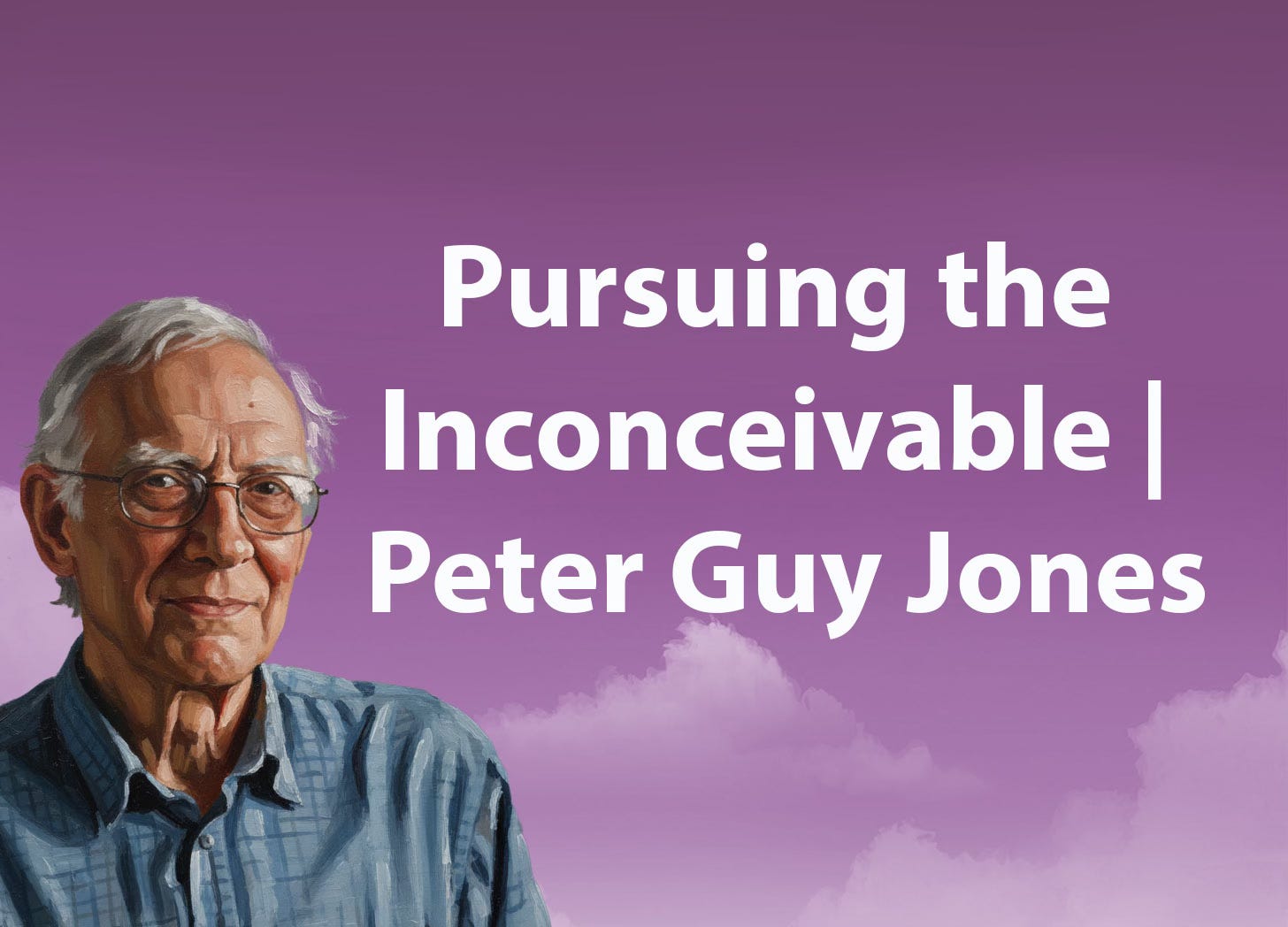 Pursuing the Inconceivable | Peter Guy Jones✨ | philosophymetaphysics+4 | Peter Guy Jones | In Pursuit of the InconceivableEssentia Books+3 | — | philosophymetaphysics+7 | — | 1h 41m 40s | |
| 11/20/25 | 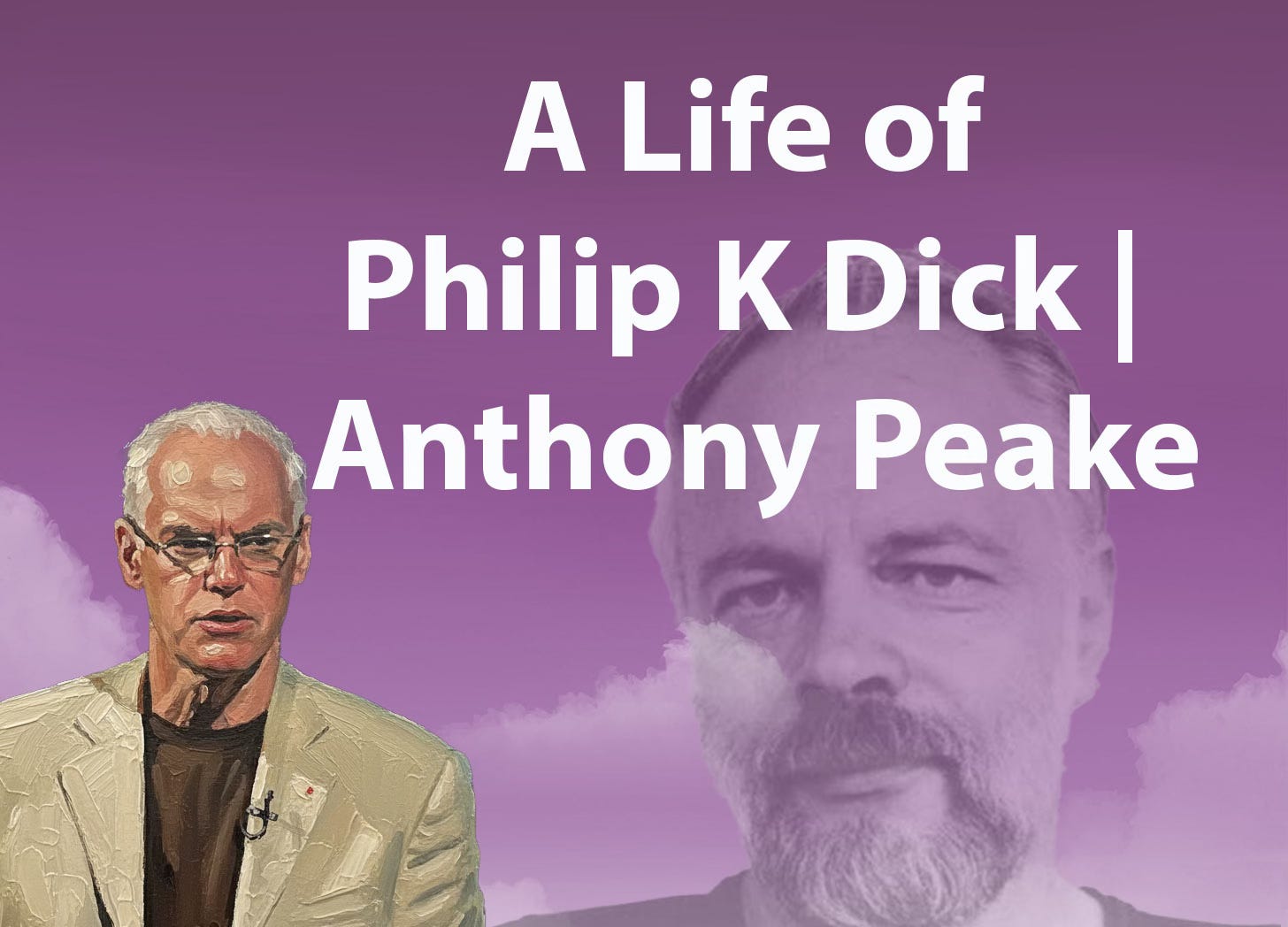 A Life of Philip K Dick | Anthony Peake✨ | Philip K. Dickconsciousness+3 | Anthony Peake | ArcturusIs There Life After Death?+2 | — | Philip K. DickAnthony Peake+6 | — | 1h 55m 01s | |
| 11/6/25 | 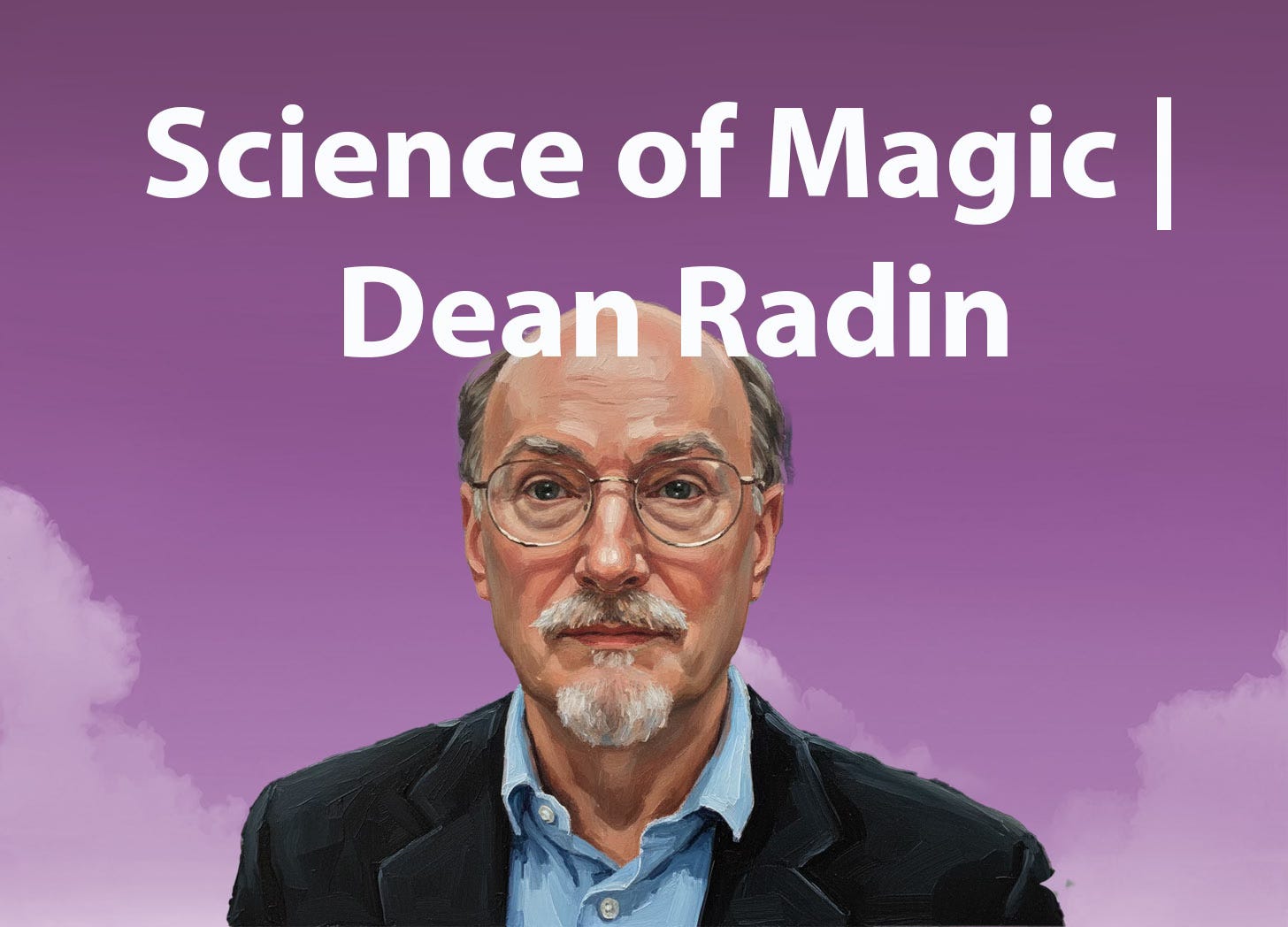 Science of Magic | Dean Radin✨ | parapsychologymagic+3 | Dean Radin | Institute of Noetic SciencesCalifornia Institute of Integral Studies+10 | — | Dean Radinparapsychology+3 | — | 1h 07m 49s | |
| 10/16/25 | 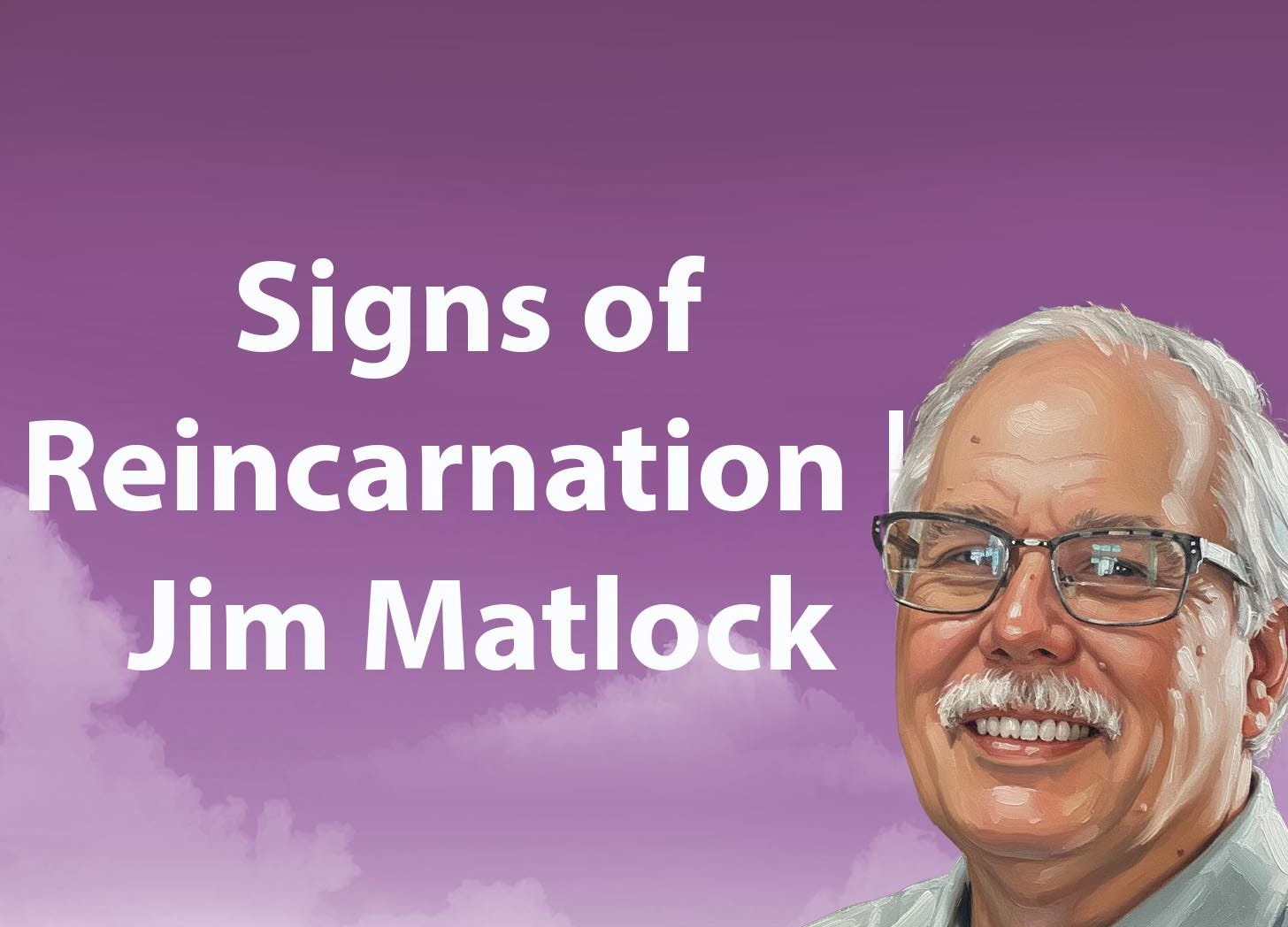 Signs of Reincarnation | Jim Matlock✨ | reincarnationparapsychology+4 | Dr. James Matlock | American Society for Psychical ResearchRhine Research Center+2 | — | reincarnationparapsychology+5 | — | 1h 49m 14s | |
| 6/5/25 |  Free Will in Nature | Jem Bendell✨ | free willclimate change+4 | Jem Bendell | University of CumbriaDeep Adaptation Forum+2 | Bali | free willclimate breakdown+6 | — | 1h 33m 13s | |
| 5/29/25 |  Transpersonal Psychology for Global Flourishing | Jessica Bockler✨ | transpersonal psychologymental health+3 | Jessica Bockler | Alef TrustCreative Alternatives+1 | — | transpersonal psychologymental wellbeing+3 | — | 1h 05m 49s | |
| 5/22/25 |  Free What Lies Beyond Chapter One Audio Reading✨ | audiobookconsciousness+4 | — | AmazonMusic Unlimited+2 | — | audiobookWhat Lies Beyond+5 | — | 48m 07s | |
| 5/15/25 |  Miracles of Our Own Making | Liz Williams✨ | AI and consciousness studiesintersection of consciousness and creativity+3 | Liz Williams | University of CambridgeMiracles of Our Own Making: A History of Paganism+2 | Glastonbury, England | AIconsciousness+5 | — | 54m 17s | |
| 5/8/25 |  The Ghost Experience | Ciaran O'Keeffe✨ | ghost experiencesparapsychology+3 | Ciaran O'Keeffe | Bucks New UniversityLiving TV+3 | Hampton Court PalaceRoyal Festival Hall | ghost experienceparanormal+3 | — | 1h 21m 47s | |
| 5/1/25 |  The Transliminal Mind | Christine Simmonds-Moore✨ | transliminal mindanomalous experiences+4 | Christine Simmonds-Moore | University of NorthamptonRhine Research Center+3 | — | transliminal mindanomalous experiences+5 | — | 1h 17m 19s | |
Want analysis for the episodes below?Free for Pro Submit a request, we'll have your selected episodes analyzed within an hour. Free, at no cost to you, for Pro users. | |||||||||
| 4/24/25 | 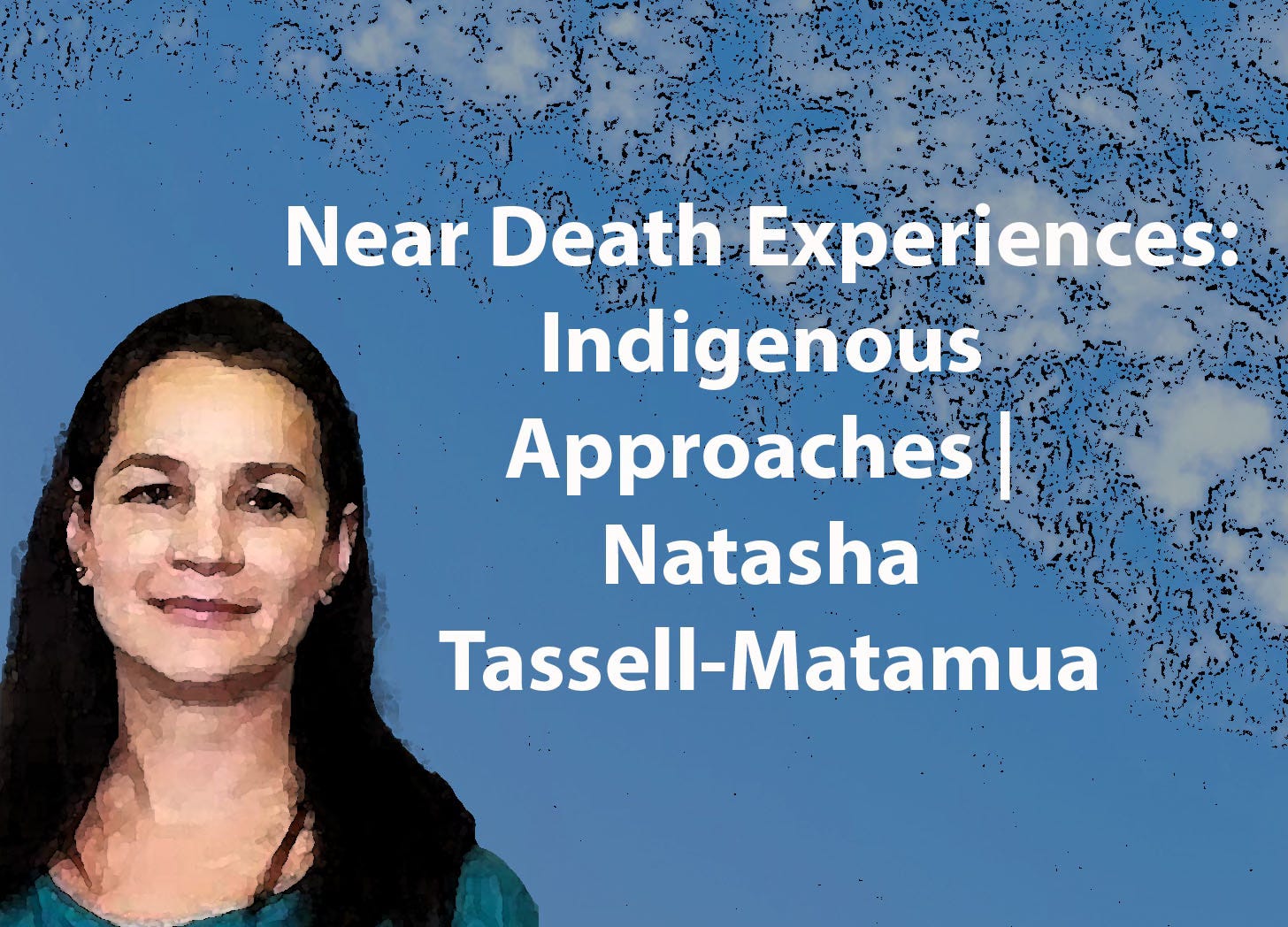 Near Death Experiences: Indigenous Approaches | Natasha Tassell-Matamua | Show Notes‘Season 2 Episode 6 Near Death Experiences: Indigenous Approaches’Associate Professor Natasha Tassell-Matamua is a Senior Lecturer and Deputy Head of the School of Psychology at Massey University in Aotearoa New Zealand. She is also co-Director of the recently established Centre for Indigenous Psychologies. Her research and teaching is in the area of indigenous psychologies, indigenous knowledges and Exceptional Human Experience. This research focusses on the interplay between spirituality, well-being and the wider ecosystem. She has spent the last decade researching the phenomenology, after-effects and cultural specificity of Near Death Experiences, and has published extensively in the area as well as providing numerous presentations both nationally and internationally.In today’s talk, we discuss Natasha’s work in Near Death Experiences and the importance of indigenous psychologies and indigenous knowledges. We talk about the problem of power and privilege in Near Death studies, which often leads to the domination of materialist-reductionist approaches. And we talk about how Māori conceptions of spirituality might contribute to better mental health and wellbeing.ResourcesNatasha’s page at Massey University, Aotearoa New Zealand:https://www.massey.ac.nz/massey/expertise/profile.cfm?stref=830930And at the Centre for Indigenous Psychologies, with her writing and some media appearances:https://www.doorofthenight.co.nz/natashaHer page on Google Scholar:https://scholar.google.co.nz/citations?user=aKsLIN0AAAAJ&hl=enThe Centre for Indigenous Psychologies:https://www.indigenouspsychologies.nzNatasha’s talk at the Alef Trust can be viewed here.Terminal Lucidity project:https://www.indigenouspsychologies.nz/terminal-lucidity-in-childrenThe Door of the Night project:https://www.doorofthenight.co.nzReference for the NDE paper we discuss:Tassell-Matamua, N. (2024). Power and privilege in the study of near-death experiences. In The Routledge Handbook of Research Methods in Spirituality and Contemplative Studies. (pp. 271 - 281).Thanks for reading WHAT LIES BEYOND! Subscribe for free to receive new posts and support my work.Other Resources“Near-death experiences are ‘electrical surge in dying brain’” — Borjigen lab’s framing of NDEs.Vandana Shiva’s chapter on Monocultures of the Mind and the exclusion of indigenous knowledges:https://journals.sagepub.com/doi/abs/10.1177/0019556119930304Title Music: ‘Stranger things’ by Music Unlimited on Pixabey. This is a public episode. If you would like to discuss this with other subscribers or get access to bonus episodes, visit whatliesbeyond.substack.com | 1h 07m 35s | ||||||
| 3/27/25 |  Near Death Experiences: Cheating the Ferryman? | Anthony Peake | Show NotesSeason 2 Episode 5 ‘Near Death Experiences: Cheating the Ferryman?’Today my guest is Anthony Peake. Anthony is a writer who deals with borderline areas of human consciousness. At university he specialised in the sociology of religion, the theory of language development and the art of the Italian Renaissance. A post-graduate course in management led Anthony away from his calling as a writer and into a career as a manager in various UK businesses.In the year 2000 he was able to take a year’s sabbatical from his business career and he decided to research and write a book. This book was a distillation of all his areas of interest, quantum physics, neurology, ancient myths, altered states of consciousness and the mystery of death. Thanks to the help of Professor Bruce Greyson of the University of Virginia, an article based upon Anthony’s Cheating the Ferryman hypothesis was to appear in the Winter 2004 edition of the Journal of Near-Death Studies, the academic periodical of the International Association of Near-Death Studies (IANDS).Anthony’s first book, Is There Life After Death?, was eventually published by Arcturus books in 2006. This book has now sold over 60,000 copies world-wide and has been translated into various foreign language editions including Spanish, Russian and Polish. Anthony has now written thirteen books. All of them further develop his speculative idea of ‘Cheating the Ferryman’. His latest book, an exhaustive review of the history, anthropology and science of the much-discussed Near-Death Experience (NDE) was published in November 2024.Today’s dialogue focusses on controversies over Near-Death Experiences. We begin with a look at some of the anomalous features of NDEs, and with the tension between researchers who favour materialistic explanations in terms of brain function and those who advocate afterlife interpretations. We discuss the phenomenon of brain activity surges at the point of death. We also discuss some of the stranger features of NDEs, including commonalities with psychedelic experiences and apparent alien abductions. Anthony then describes his ‘Cheating the Ferryman’ idea. We finish with a critical discussion of the high-profile Pam Reynolds NDE, and the challenge of veridical Out of Body Experiences.ResourcesAnthony’s website:https://www.anthonypeake.comSome of his books:Peake, A. (2024). Near Death Experiences: The Science, Psychology and Anthropology Behind the Phenomenon. Arcturus.Peake, A. (2022). Cheating the Ferryman: The Revolutionary Science of Life After Death: The Sequel to the Bestselling Is There Life After Death? Arcturus.Peake. A. (2006/2021). Is There Life After Death?: The Extraordinary Science of What Happens When We Die. Arcturus.Links for all of Anthony’s books can be found on his website book shop.NDE topics1988 BBC QED Documentary ‘Glimpses of Death’, presented by Peter FenwickBlackmore, S.J. (1988). Visions from the Dying Brain. New Scientist May 1988. No 1611, pp. 43—46.Anita Morjani’s TEDx talk where she discusses her NDE.Thanks for reading WHAT LIES BEYOND! Subscribe for free to receive new posts and support my work.Vicente paper on brain activity in a dying man:Vicente, R., Rizzuto, M., Sarica, C., et al. 2022. ‘Enhanced Interplay of Neuronal Coherence and Coupling in the Dying Human Brain’. Frontiers in Aging Neuroscience 14, (21 February). https://doi.org/10.3389/fnagi.2022.813531. Pam Reynolds case:https://psi-encyclopedia.spr.ac.uk/articles/pam-reynolds-near-death-experienceRelated ExperiencesIssue of the Journal of Scientific Exploration where Survival research is debated (pp. 348—447).Description of the ‘intensified’ route of trance. Includes discussion of Mesolithic cave art as records of trance:Lewis-Williams, D. (2004). The Mind in the Cave. Thames & Hudson.Ken Ring on the link between NDEs and alien abductions:Ring, K. (1992). The Omega Project: Near-Death Experiences, Ufo Encounters, and Mind at Large. William Morrow. Whitley Strieber’s alien abduction is described in his book:Strieber, W. (1987). Communion. Avon.Title Music: ‘Stranger things’ by Music Unlimited on Pixabey. This is a public episode. If you would like to discuss this with other subscribers or get access to bonus episodes, visit whatliesbeyond.substack.com | 1h 39m 48s | ||||||
| 3/20/25 |  Being, Time and Altered States | Marc Wittmann | Show NotesSeason 2 Episode 4 ‘Being, Time and Altered States’Today’s podcast is the last of a trilogy on consciousness and time. My guest is Marc Wittmann, Ph.D. Marc is a research fellow at the Institute for Frontier Areas in Psychology and Mental Health in Freiburg, Germany. He studied psychology and philosophy at the Universities of Fribourg, Switzerland, and Munich, Germany. He received his Ph.D. at the Institute of Medical Psychology, University of Munich. From 2000 to 2004 he was head of the Generation Research Program, Bad Tölz, University of Munich. Between 2004 to 2009 he was a research fellow in the department of psychiatry at the University of California, San Diego.In today’s interview, we discuss Marc’s book Altered States of Consciousness, from MIT press. We begin with a discussion of the history of psychedelic research. Then we move onto the central issue: the intimate relationship between time, consciousness and the self. We look at the phenomenon of time expansion experiences in meditation. We touch upon a famous controversy on the nature of time between Albert Einstein and the philosopher, Henri Bergson. We discuss the disturbing disintegration of the present moment in conditions like schizophrenia. And we finish by considering the implications of mystical states, which commonly feature a profound sense of unity with the cosmos.ResourcesMarc’s book:Wittmann, M. (2018). Altered States of Consciousness: Experiences Out of Time and Self. MIT Press.First flotation tank study:Hruby, H., Schmidt, S., Feinstein, J.S. et al. Induction of altered states of consciousness during Floatation-REST is associated with the dissolution of body boundaries and the distortion of subjective time. Sci Rep 14, 9316 (2024). https://doi.org/10.1038/s41598-024-59642-yMarc’s website:https://sites.google.com/site/webmarcwittmann/Institute for Frontier Areas of Psychology and Mental Health (IGPP):https://www.igpp.de/allg/welcome_EN.htmMarc on the Psi EncyclopaediaThanks for reading WHAT LIES BEYOND! Subscribe for free to receive new posts and support my work.Topics discussedEssential Foundation’s Time and Mind conference( first talks)Hans Bender’s entry on the Psi encyclopaedia.The life and work of John Lilly, who invented floatation tanks.Roland GriffithsSteve Taylor on time expansionPhysicist Carlo Rovelli on time (YouTube)Bergson versus Einstein:Cancales, J. (2015). The Physicist and the Philosopher: Einstein, Bergson, and the Debate That Changed Our Understanding of Time. Princeton University Press.Wittmann, M. & Montemayer, C. (2022). Reinterpreting the Einstein-Bergson Debate through Contemporary Neuroscience, De Gruyter, 2022. https://doi.org/10.1515/9783110753707-019Philip K. Dick’s novel involving schizophrenia and time: Dick,P.K. (1964). Martian Time Slip. Ballantine.Iain McGilchrist’s websiteWilliam James’ Varieties of Religious Experience (discusses mystical experiences):https://www.gutenberg.org/ebooks/621Title Music: ‘Stranger things’ by Music Unlimited on Pixabey. This is a public episode. If you would like to discuss this with other subscribers or get access to bonus episodes, visit whatliesbeyond.substack.com | 1h 13m 22s | ||||||
| 3/13/25 |  Contact with the Future | Jon Taylor | Show NotesSeason 2 Episode 3 ‘Contact with the Future’Today’s podcast is the second of a trilogy on consciousness and time. Jon Taylor is an interdisciplinary scientist dedicated to the study of anomalous phenomena related to cognition. He graduated from the University of Cambridge with an MA in Natural Sciences. A long-time enthusiast of parapsychology, Taylor returned to Spain in 1992 to embark on a 25-year investigation into the physical and biological principles underlying precognition. In August 2024, a revised edition of his book Contact with the Future: The Astonishing Power of Intuition and Precognition, featuring a foreword by Stanley Krippner, was published on Amazon. Jon is also a Professional Member of the Parapsychological Association.In this fascinating interview, Jon discusses his theory that precognition is the major form of Extra Sensory Perception. He also thinks that there might be a physical explanation for seeing the future, basing his theory on ideas from quantum physics developed by the late David Bohm. He questions the assumption that psi is linked to consciousness. He also questions the claim that the acceptance of precognition would also mean the acceptance of a post-material view of consciousness. He believes that the priority is to develop a physical theory for parapsychological effects because this might lead to a more general acceptance of the field in mainstream science.Thanks for reading WHAT LIES BEYOND! Subscribe for free to receive new posts and support my work.ResourcesJon Taylor’s website:https://jontaylor.orgHis book:Taylor, J. (2024). Contact with the Future: The Astonishing Power of Intuition and Precognition. Amazon.Other precognition booksJ.W. Dunne’s book:Dunne, J.W. (1927). An Experiment with Time. A. & C. BlackEric Wargo’s book:Wargo, E. (2018). Time Loops: Precognition, Retrocausation, and the Unconscious. Anomalist Books.Danah Zohar’s book:Zohar, D. (1982). Through the Time Barrier. Heineman.Experimental Evidence for ESP/PrecognitionGuy Lyon Playfair’s work on twin telepathy:https://psi-encyclopedia.spr.ac.uk/articles/twin-telepathyHonorton, C., & Ferrari, D. C. (1989). “Future telling”: A meta-analysis of forced-choice precognition experiments, 1935-1987. Journal of Parapsychology, 53, 281–308.Storm, L. & Tressoldi, P. (2023). Assessing 36 Years of the Forced Choice Design in Extra Sensory Perception Research: A Meta-Analysis, 1987 to 2022. Journal of Scientific Exploration, 37,3, 517-535.Summary of Bem precognition controversy:https://psi-encyclopedia.spr.ac.uk/articles/feeling-future-precognition-experimentsIt is also worth reviewing my talk with skeptic Chris French on problems with replication in precognition experiments, especially in the context of the Transparent Psi project.Main paper for Transparent Psi project:Kekecs, Z., Palfi, B., Szaszi, B., Szecsi, P., Zrubka, M., Kovacs, M., ... & Aczel, B. (2023). Raising the value of research studies in psychological science by increasing the credibility of research reports: the transparent Psi Project. Royal Society Open Science, 10, 2, 191375; doi: 10.1098/rsos.191375Patrizio Tressoldi’s nonlocal perception papers, including meta-analyses, can be found here:http://www.patriziotressoldi.it/cmssimpled/index.php?page=nonlocal-perceptionMaimonides Dream Laboratory:https://psi-encyclopedia.spr.ac.uk/articles/maimonides-dream-telepathy-researchDean Radin’s presentiment experiments:https://psi-encyclopedia.spr.ac.uk/articles/presentimentGertrude Schmeidler (coined term ‘sheep-goat’ effect in parapsychology):https://psi-encyclopedia.spr.ac.uk/articles/gertrude-schmeidlerPhysicsPhysicist David Bohm’s book on the implicate order (available in full):Bohm, D. (1980/20020. Wholeness and the implicate order. Routledge & Kegan Paul.Physicist Carlo Rovelli on time lecture here.Title Music: ‘Stranger things’ by Music Unlimited on Pixabey. This is a public episode. If you would like to discuss this with other subscribers or get access to bonus episodes, visit whatliesbeyond.substack.com | 1h 22m 46s | ||||||
| 3/6/25 |  Dreaming Ahead of Time | Gary Lachman | Show NotesSeason 2 Episode 2 ‘Dreaming Ahead of Time’Today’s podcast is the first of a loose trilogy on consciousness and time. My guest is the writer and musician Gary Lachman. Gary is the author of many books on topics ranging from the evolution of consciousness to literary suicides, popular culture and the history of the occult. He has written a rock and roll memoir of the 1970s, biographies of Aleister Crowley, Rudolf Steiner, C. G. Jung, Helena Petrovna Blavatsky, Emanuel Swedenborg, P. D. Ouspensky, and Colin Wilson. He also written histories of Hermeticism and the Western Inner Tradition, studies in existentialism and the philosophy of consciousness, and about the influence of esotericism on politics and society. As Gary Valentine he was a founding member of the pop group Blondie and in 2006 was inducted into the Rock and Roll Hall of Fame. Gary was born in New Jersey, but since 1996 has lived in London, UK.We begin our talk discussing the persistent and remarkable phenomenon of dreaming the future. This leads to a discussion of the writer and existential philosopher Colin Wilson, who associated future dreaming with something he called Faculty X. We discuss the phenomenon of ‘peak experiences’, times when life seems replete with meaning. And we talk about how general lack of meaning might have contributed to the rise of extreme politics in the US and elsewhere.Thanks for reading WHAT LIES BEYOND! Subscribe for free to receive new posts and support my work.ResourcesGary Lachman’s website:https://www.gary-lachman.comSome of his books:Lachman, G. (2022). Dreaming Ahead of Time: Experiences with Precognitive Dreams, Synchronicity and Coincidence. Floris Books.Lachman, G. (2016). Beyond the Robot: The Life and Work of Colin Wilson. Tarcherperigee. (Out of Print).Lachman, G. (2016). The Caretakers of the Cosmos: Living Responsibly in an Unfinished World. Floris Books. (Contains a critique of philosopher John Gray and ‘everything is pointless’ philosophies).Lachman, G. (2018). Dark Star Rising: Magick and Power in the Age of Trump. TarcherPerigee.J.W. Dunne’s book on precognitive dreaming:Dunne, J.W. (1927). An Experiment with time. A. & C. BlackColin Wilson Books mentioned:Wilson, C. (1956). The Outsider. Gollancz.Wilson, C. (1959). The Age of Defeat. Gollancz.Wilson, C. (1971). The Occult: A history. Random houseWilson, C. (2009). Super Consciousness. Watkins books.The Essential Colin Wilson LP (YouTube) (Discusses psychologist Abraham Maslow).Title Music: ‘Stranger things’ by Music Unlimited on Pixabey.Aldous Huxley’s essay “Beliefs” is in the HarperPerrenial edition of The Perennial Philosophy. This is a public episode. If you would like to discuss this with other subscribers or get access to bonus episodes, visit whatliesbeyond.substack.com | 1h 33m 18s | ||||||
| 2/27/25 |  The Case for Skepticism | Chris French & Cal Cooper | Show NotesSeason 2 Episode 1 ‘The Case for Skepticism’Today’s episode is about skeptical perspectives on the paranormal. My first guest is Professor Chris French. Chris is the Head of the Anomalistic Psychology Research Unit in the Psychology Department at Goldsmiths, University of London. He is a Fellow of the British Psychological Society and of the Committee for Skeptical Inquiry and also a Patron of the British Humanist Association. His main current area of research is the psychology of paranormal beliefs and anomalous experiences. He frequently appears on radio and television casting a sceptical eye over paranormal claims. His most recent book is The Science of Weird S**t, published by MIT press.Dr. Cal Cooper appears on What Lies Beyond for the second time. Cal’s a Chartered Psychologist with the British Psychological Society, holding postgraduate degrees in psychology, social science research methods and education. He has a long-time association with the University of Northampton, and is based there as a senior lecturer in psychology.In this episode, Chris talks about his transition from paranormal believer to skeptic. We then discuss Anomalistic Psychology, which attempts to find ordinary psychological explanations for the apparently paranormal. We also discuss problems with replication in parapsychology, which means that some researchers seem to find positive results in their experiments, but others don’t. Our discussion demonstrates why multiple perspectives are important, and why anomalistic psychology can make a crucial contribution to our understanding of paranormal experience.Thanks for reading WHAT LIES BEYOND! Subscribe for free to receive new posts and support my work.ResourcesWebsite of Chris French:http://profchrisfrench.comWebsite of Cal Cooper:https://www.callumecooper.comChris French’s book:French, C. (2024). The science of weird S**t: Why our mind conjure the paranormal. MIT Press.Jim Matlock’s reincarnation course:https://jamesgmatlock.com/signs-of-reincarnation-course/Chris French and Chris Roe British Psychological Society debate: Will the debate over psi ever be settled?Transparent psi project:https://psi-encyclopedia.spr.ac.uk/articles/transparent-psi-projectTitle Music: ‘Stranger things’ by Music Unlimited on Pixabey. This is a public episode. If you would like to discuss this with other subscribers or get access to bonus episodes, visit whatliesbeyond.substack.com | 1h 16m 57s | ||||||
| 1/6/25 |  Why I wrote WHAT LIES BEYOND.... | Welcome to 2025! Here’s a short video on my book What Lies Beyond, which is out in May and now available to preorder on Amazon. In the video, I talk a little about my motivation for writing What Lies Beyond: consciousness science, the paranormal and the post-materialist future. I say a little about my intended readership, which is basically anyone who feels the need to re-think basic assumptions about consciousness, mind and the world. It’s for anyone who’s concerned about our dysfunctional responses to things like climate breakdown. Anyone who’s curious about controversies over psi phenomena and mystical or transpersonal experience. Anyone who is tired of dehumanising and disempowering visions of the future. And it’s for people who are experiencing a crisis of meaning and purpose in their lives. What Lies Beyond is an invitation to explore, re-discover and re-think, for a more humane future.Season 2 of the What Lies Beyond Podcast is coming in February 2025.WHAT LIES BEYOND is a reader-supported publication. To receive new posts and support my work, consider becoming a free or paid subscriber. This is a public episode. If you would like to discuss this with other subscribers or get access to bonus episodes, visit whatliesbeyond.substack.com | 8m 54s | ||||||
| 12/13/24 |  Important Announcement! | My book What Lies Beyond: Consciousness, Science, the Paranormal, and the Post-Material Future is now available on Amazon to preorder! Available 27th June 2025. Thank you to all my followers, and Merry Christmas.Amazon UKAmazon USPsychedelic muse for the full immersion reading experience:https://www.youtube.com/@ThePsychedelicMuseThanks for reading What Lies Beyond! Subscribe for free to receive new posts and support my work. This is a public episode. If you would like to discuss this with other subscribers or get access to bonus episodes, visit whatliesbeyond.substack.com | 5m 30s | ||||||
| 12/12/24 |  Human-Centred Futures | Jennifer Gidley | Show notesThis is the final episode of season one. Today’s guest is Dr Jennifer Gidley. Jennifer is an Author, Climate Educator, Psychologist, and International Futurist. She’s a global thought leader and advocate for human-centred futures in an era of hi-tech hype. Jennifer is an Adjunct Professor, Institute for Sustainable Futures (UTS) Sydney, and has held academic posts in four Australian universities. She is a Fellow at the Botin Centre, Santander, Spain, and a non-Resident Fellow of TRENDS Research & Advisory in Abu Dhabi. She’s held a Visiting Professorship at Olomouc University, Czech Republic and a Visiting Research Fellowship at SciencesPo, Paris, France. She was also the longest serving elected President of the World Futures Studies Federation from 2009 to 2017.Jennifer's most recent project is the founding of Global Futures Education, as a platform to provide high-level online education for professionals and executives. Over several years she has created a series of executive-level online courses on 'Grand Global Futures Challenges and Solutions'. She’s also the author of 2016’s The Future: A very short introduction from Oxford University Press.In this interview, recorded September 2024, we discuss the difference between what Jennifer calls a technocentric future and a human-centred one. Advocates of technocentric futures tend to assume that technology can solve everything. These sorts of futures are also based in a strongly materialist worldview. By contrast, Jennifer advocates human-centred futures, which see human beings as kind, fair, consciously evolving agents with a responsibility to maintain ecological balance between humans, world and cosmos.If you’re feeling disempowered about the future, then I hope you’ll find our dialogue as inspiring as I did. And I’d like to thank all my audience for listening this season. What Lies Beyond will be back in February 2025 for season 2!Thanks for reading What Lies Beyond! Subscribe for free to receive new posts and support my work.Jennifer’s official site:https://www.jennifergidley.comHer book:Gidley, J. (2016). The Future: A Very Short Introduction. Oxford University Press.Site for Grand Global Challenges:https://www.globalfutureseducation.comResourcesSome of the books discussed: Erlich, P.H. & Erlich, A.H. (1968). The population bomb. Sierra Club.Herbert, F. (2018). The Great Dune Trilogy (Dune, Dune Messiah and Children of Dune). Gollancz. (Denis Villeneuve’s movie series is pretty excellent too!)Jungk, Robert & Johan Galtung, eds, (1969) Mankind 2000. Oslo & London: Norwegian University Press & Allen & Unwin. Future Research Monographs (1).Meadows, D.H., Meadows,D.L., Randers, J., Behrens, W. (1972). The Limits to Growth. https://www.clubofrome.org/publication/the-limits-to-growth/MacAskill, W. (2022). What we owe the future. Oneworld. (Longtermism).Murphy, M. (1992). The Future of the Body. Tarcher Putnam.Reubenstein, M. (2022). Astrotopia: The Dangerous Religion of the Corporate Space Race. University of Chicago Press.Rushkoff, D. (2022). Survival of the Richest: escape fantasies of the tech billionaires. Scribe.Zuboff,S. (2019). The Age of Surveillance Capitalism: The Fight for a Human Future at the New Frontier of Power. Profile Books.Some of the people mentioned:Henri BergsonTeilhard De ChardinJean GebserTristan Harris and Humane technology movementThomas MalthusMarshall McLuhan. “Any invention or technology is an extension or self-amputation of our physical bodies.”Thanks for reading What Lies Beyond! Subscribe for free to receive new posts and support my work. This is a public episode. If you would like to discuss this with other subscribers or get access to bonus episodes, visit whatliesbeyond.substack.com | 1h 01m 19s | ||||||
| 12/5/24 |  The Long Trip | Paul Devereux | Show NotesToday my guest is Paul Devereux. Paul is an independent scholar, writer, lecturer and researcher. He has authored over 20 published books since 1980, including his latest, The Powers of Ancient and Sacred Places. Paul is a trained artist and photographer and the former editor of a peer-reviewed journal, Time and Mind. He has a long-standing interest in consciousness and prehistory.This show begins with a long description of Paul’s powerful experience on the psychedelic drug LSD in the 1960s. Paul took LSD a number of months before the drug was criminalised in the UK. Today in Britain psychedelics are schedule 1 drugs which means you can get 7 years in prison, an unlimited fine or both for possession. Because of this I feel it’s important to offer a disclaimer for this episode.Here goes: The information presented in this podcast is for educational and entertainment purposes only. It does not constitute medical advice or endorse the use of illegal substances. We strongly advise against engaging in any activities that are illegal or harmful to yourself or others.There are also mental health dangers with the illicit and uncontrolled use of psychedelics. Paul himself reports having to face significant psychological issues in the wake of his experience. One problem is that because of criminalisation, there was, and is, no safe social framework in the UK to take these drugs.However, I’m far from alone in finding the legal situation in the UK regarding psychedelics totally unsatisfactory. Human beings have been taking psychedelics since prehistoric times. Paul himself suggests, in his book The Long Trip, that the yearning to reach other states of consciousness may be as strong as the sexual drive. So I remain strongly supportive of legal reform in this area. I believe that adults have the right to alter their consciousness in any way they see fit, and there is by now good evidence that psychedelics have a positive use as therapeutic tools and in the context of personal development. However, they do need to be taken in supervised, legal clinical settings. This is possible in places like the Netherlands. There are also good quality retreats in South America.Paul’s opening description of his powerful LSD experience is also important for anyone interested in consciousness. He reports a worldview shattering, full-blown mystical experience of the kind reported repeatedly in Hindu, Buddhist and Christian contemplative writings.His trip also seemed to leave him open to anomalous experience. Paul later describes the shared experience of a strange aerial light phenomenon at Art College, which eventually led, somewhat tangentially, to an abiding fascination with the intersection of prehistory and consciousness.Thanks for reading What Lies Beyond! Subscribe for free to receive new posts and support my work.Paul’s website:https://pauldevereux.co.ukBooks by Paul:Devereux, P. (2022). The Powers of Ancient and Sacred Places. Daily Grail.Devereux, P. (2001). Stone Age Soundtracks. Vega Books.Devereux, P. (1997). The long trip: A prehistory of psychedelia. Penguin Arkana.Devereux, P. (1996). Revisioning the Earth: A Guide to Opening the Healing Channels Between Mind and Nature. Fireside.Devereux, P. (1982). Earthlights: Towards an understanding of the UFO enigma. Book Club Associates London.ResourcesAldous Huxley’s books:Huxley, A. (2004). The Doors of Perception: And Heaven and Hell. Vintage.Huxley, A. (2005). Island. Vintage.Mysticism:Underhill, E. (2002). Mysticism: A study in the nature and development of spiritual consciousness. Dover. This is a public episode. If you would like to discuss this with other subscribers or get access to bonus episodes, visit whatliesbeyond.substack.com | 59m 57s | ||||||
| 11/28/24 |  Consciousness Unbound? | Ed Kelly | Show NotesToday my guest is Professor Ed Kelly. Ed has a BA in psychology from Yale and a Phd in psycholinguistics and cognitive science from Harvard. From 2002 to the present he has been a research professor in the Division of Perceptual Studies, which is part of the department of psychiatry and neurobiological sciences at the University of Virginia. His research interests are psychical research and functional neuroimaging.Ed is also a member of the survival seminar or ‘Sursem’ group at Esalen. The Sursem group was formed in 1998 to examine and collate evidence suggestive of the survival of human personality beyond bodily death. The group ended up producing three large volumes exploring post-materialist theories of consciousness. These were Irreducible Mind in 2007, Beyond Physicalism in 2015 and Consciousness Unbound in 2021. Each of these volumes is co-edited by Ed.In today’s talk we discussed Ed’s early disillusion with the theory of computer-as-mind, and his lab work with a psychic ‘star’ that convinced him of the reality of psi phenomena. We go on to discuss his work with the Sursem group, developing an alternative to mainstream, materialist theories of mind and consciousness. We finish looking at signs that a major revolution might be underway in terms of our understanding of life and consciousness. Thanks for reading What Lies Beyond! Subscribe for free to receive new posts and support my work.The Division of Perceptual Studieshttps://med.virginia.edu/perceptual-studies/Sursem groupKelly, E.F. (2015b). ‘Toward reconciliation of science and spirituality: A brief history of the “Sursem” project’, Edgescience No. 22, pp. 3— 7. Available here.Esalen’s website:https://www.esalen.orgThe Sursem Group books:Kelly, E.F., Kelly, E.W., Crabtree, A., Gauld, A., Grosso, M., Greyson, B. (2007). Irreducible mind: toward a psychology for the 21st century. Rowman & Littlefield.Kelly, E.F., Crabtree, A. & Marshall, P. (eds) Beyond Physicalism: Toward Reconciliation of Science and Spirituality. Rowman & Littlefield.Kelly, E.F. & Marshall, P. (2021). Consciousness unbound: Liberating mind from the tyranny of materialism. Rowman & Littlefield.My essay review of Irreducible Mind can be downloaded here.ParapsychologyCardeña, E. (2018) ‘The experimental evidence for parapsychological phenomena: A review, American Psychologist Vol. 73 No. 5, 663–677. https://doi.org/10.1037/amp0000236Skeptical response:Reber, A. S., & Alcock, J. E. (2020) ‘Searching for the impossible: Parapsychology’s elusive quest,’ American Psychologist 75(3), 391–399. https://pubmed.ncbi.nlm.nih.gov/31192620/Stigmata:Arthur C. Clarke's World of Strange Powers - Ep. 4 - Stigmata: The Wounds of Christ‘Voodoo death’:Arthur C. Clarke's World of Strange Powers - Ep. 11 - The Roots of EvilConsciousness and LifeEastman, T. (2021). Untying the Gordian Knot: Process, Reality, and Context (Contemporary Whitehead Studies). Lexington Books.Faggin, F. (2024). Irreducible: Consciousness, Life, Computers, and Human Nature. Essential Books.Nagel, T. (2012). Mind and Cosmos: Why the Materialist Neo-Darwinian Conception of Nature Is Almost Certainly False. Oxford University Press.A video of the biologist Dennis Noble discussing the current revolution in biology is available here. The great biologist Lynn Margulis’ last interview can be heard here. Includes an introduction to her work. This is a public episode. If you would like to discuss this with other subscribers or get access to bonus episodes, visit whatliesbeyond.substack.com | 1h 17m 14s | ||||||
| 11/21/24 |  Psi Wars | Craig Weiler | Show NotesToday’s guest is Craig Weiler. Craig is a San Francisco Bay Area based author. He covers controversies in parapsychology, such as the Wikipedia controversy and the TED controversy of 2013, which we discuss today. He’s an associate member of the Parapsychological Association and author of Psi Wars: TED, Wikipedia and the battle for the Internet. He pays the bills with his small construction business on the peninsula in northern California, where he lives with his wife and just enough cats.Today we discuss some key campaigns of organised skepticism in the last decade. In the interview we make clear that there is a distinction between the kind of skepticism we might called informed critique and what sociologist Thomas Gieryn calls boundary work. Informed critiques in parapsychology might point to flaws in experiments, or important weaknesses in eyewitness testimony. They’re very important and part of the scientific process. Boundary work in this context means dismissing parapsychology as pseudoscience or ‘woo-woo,’ and trying to shut down debate. This second often problematic strategy is the main focus of this fascinating talk.ResourcesCraig’s book:Weiler, C. (2020). PSI WARS: TED, Wikipedia and the Battle for the Internet (2nd ed). White Crow.Craig’s page at the Parapsychological Association:https://www.parapsych.org/users/cweiler/profile.aspxCraig at the Paranormal Daily News:https://paranormaldailynews.com/author/craig-weiler/On Linked In:https://www.linkedin.com/in/craig-weiler-5288b616/Link to Graham Hancock’s banned TED talk.Link to Rupert Sheldrake’s banned TED talk.Rupert Sheldrake’s website.Graham Hancock’s website.Thanks for reading What Lies Beyond! Subscribe for free to receive new posts and support my work. This is a public episode. If you would like to discuss this with other subscribers or get access to bonus episodes, visit whatliesbeyond.substack.com | 1h 03m 19s | ||||||
| 11/15/24 |  Science and Magic | Serena Roney-Dougal | Show NotesToday’s guest is Dr. Serena Roney-Dougal. Serena is one of the few people in Britain to have obtained a PhD for parapsychology, exploring the relationship between subliminal perception and psychic awareness. She has had over 40 years of study and experience in scientific, magical and spiritual explorations of the psyche, has lectured and taught courses, seminars and workshops in America, Britain, Europe, Japan and India; has written numerous articles both technical and popular, and two books; Where Science and Magic Meet and The Faery Faith. She is currently a green councillor in Glastonbury, England.In today’s conversation, we discussed Serena’s early work comparing psi to subliminal perception and also her work linking the pineal gland in the brain to psychic experience. We spoke about her experiments with meditation and psi, which were conducted in India and included a life-changing visit to Ladakh, or ‘Little Tibet’. We discussed the Tibetan view of consciousness and rebirth, and the experiences of some the Tibetans with whom she worked. We also briefly spoke about an experiment at Samye Ling Monastery in Scotland, linking psi performance with geomagnetic cycles. We finished off with some discussion of the links between environmental awareness and consciousness.Serena’s website and Bookshttps://www.psi-researchcentre.co.ukRoney-Dougal, S. (2010). Where Science and Magic Meet. Green Magic.Roney-Dougal, S. (2003). The Faery Faith: An Integration of Science with Spirit. Green Magic.Referenced booksDavid-Neel, A. (2007). Magic and Mystery in Tibet. Souvenir Press.Meadows, D.H, Meadows,D.L., Randers,J, Behrens III, W. (1972). The Limits to Growth. Universe Books. This is a public episode. If you would like to discuss this with other subscribers or get access to bonus episodes, visit whatliesbeyond.substack.com | 58m 31s | ||||||
| 10/31/24 |  Cal Cooper | Halloween Special | Show NotesToday’s guest is Cal Cooper. Callum is a Chartered Psychologist with the British Psychological Society (BPS) holding postgraduate degrees in psychology, social science research methods and education. He has a long time association with the University of Northampton, and is based there as a senior lecturer in psychology. He also conducts research on amongst other things Death and Bereavement and Parapsychology.In today’s Halloween special, Cal and I discussed a number of suitably spooky topics. We talked about Cal’s early experiences as a ghost hunter and his move into professional psychology and parapsychology. We talked about classic ghost hunters, some of the interesting results from Northampton’s parapsychology experiments and finished up with phone calls from the dead. So light your Jack O’Lantern, hang up your rubber bats, kick back and enjoy this foray into the unknown.Thanks for reading What Lies Beyond! Subscribe for free to receive new posts and support my work.ResourcesCal’s website & a guide to his work:https://www.callumecooper.comDuggan, M. (2020). ‘Callum E Cooper’. Psi Encyclopedia. London: The Society for Psychical Research.(Includes details of Cal’s research).Video: statistician Jessica Utts on taking psi seriously.Ghost HuntersFraser, J. (2017). ‘Harry Price’. Psi Encyclopedia. London: The Society for Psychical Research.Borley RectoryWillin, M. (2015). ‘Borley Rectory’. Psi Encyclopedia. London: The Society for Psychical Research. Ganzfeld & Remote ViewingParker, A. (2017). ‘Ganzfeld ESP’. Psi Encyclopedia. London: The Society for Psychical Research.Schwartz, S. (2017). ‘Remote Viewing’. Psi Encyclopedia. London: The Society for Psychical Research.Chris Roe’s chapter in the following book:Smith, M. (eds). (2009). Anomalous Experiences: Essays from Parapsychological and Psychological Perspectives. McFarland & Co.Phone Calls from the Dead:Cooper, C. (2012). Telephone calls from the dead. Tricorn books.Scott-Rogo, D. & Bayliss, R. Phone calls from the dead (2nd ed.) White Crow Books. This is a public episode. If you would like to discuss this with other subscribers or get access to bonus episodes, visit whatliesbeyond.substack.com | 49m 51s | ||||||
| 10/24/24 |  High Strangeness Anthropology | Jack Hunter | Welcome to What Lies Beyond with your host Matt Colborn. Conversations on consciousness science, the paranormal and the post-material future. Visit us and subscribe on whatliesbeyond.substack.comToday my guest is Dr. Jack Hunter. Jack is an anthropologist exploring the borderlands of consciousness, religion, ecology and the paranormal. He lives in the hills of Mid-Wales with his family. He is a tutor with the Sophia Centre for the Study of Cosmology in Culture, University of Wales Trinity Saint David. He is also a tutor with the Alef Trust on their MSc in Consciousness, Spirituality and Transpersonal Psychology. His PhD at the University of Bristol took the form of an ethnographic study of contemporary trance and physical mediumship. He is also a musician and an ordained Dudeist Priest.In today’s conversation, we discussed the anthropology of high strangeness experiences and why we need to take them seriously. Jack has himself experienced a number of strange things, including a vision in Bristol Spirit lodge while he was researching his doctorate. We discussed how strange experiences might feed into and enrich consciousness studies, and how a rejection of animistic worldviews is connected to the exploitation of the Earth.WARNING: This episode contains some discussion of illicit drug use.Thanks for reading What Lies Beyond! Subscribe for free to receive new posts and support my work.Websitehttps://jack-hunter.yourwebsitespace.comJack’s article on anthropology and psi research:https://psi-encyclopedia.spr.ac.uk/articles/anthropology-and-psi-researchRecent books by JackHunter, J. (ed). (2023). Deep Weird: The Varieties of High Strangeness Experience. August Night Press.Hunter, J. (2023). Ecology and Spirituality: A Brief Introduction. Sophia Centre Press.Hunter, J. (ed). (2019). Greening the Paranormal: Exploring the Ecology of Extraordinary Experience. August Night Press.Hunter, J. & Ironside, R. (eds). (2023).Folklore, People, and Places: International Perspectives on Tourism and Tradition in Storied Places. Routledge.ResourcesThe Oz Factor was first described in the following book: Randles, J. (1983). UFO Reality: A critical look at the physical evidence. Hale.Numinosity:Otto, R. (1917). The Idea of the Holy: An Inquiry into the Non-Rational Factor in the Idea of the Divine and its Relation to the Rational. https://archive.org/details/in.ernet.dli.2015.22259Edith Turner’s webpage:https://anthropology.as.virginia.edu/people/edith-turnerThe Bristol Spirit Lodge:http://the-bristol-spirit-lodge.blogspot.comAndrew Lang:https://psi-encyclopedia.spr.ac.uk/articles/andrew-langDeclarations on Animal and Insect consciousness:2012 Cambridge Declaration on Consciousness2024 New York Declaration on Animal Consciousness.The ecological perspective:White, L. (1967). The Historical Roots of Our Ecologic Crisis. Science 155(3767), pp. 1203-1207. https://www.kuleuven.be/thomas/uploads/file/hoger_onderwijs/modules/Lynn%20White%20Historical%20Roots(1).pdfRoszak, T. (1992). The voice of the Earth. Phanes Press.Transformative effect of paranormal experience:Kripal,J. (2020). The Flip: Who You Really Are and Why It Matters. Penguin. This is a public episode. If you would like to discuss this with other subscribers or get access to bonus episodes, visit whatliesbeyond.substack.com | 57m 47s | ||||||
Showing 25 of 31
Pitch Fit is a Pro feature
See how bookable this show is for guests, which brands already advertise, the per-episode ad value, and the best-fit guest and sponsor profile. The numbers are blurred on the free plan.
How readily this show books outside guests like you.
How proven this show is for host-read sponsorships.
For Guests
ProFor Advertisers
ProUpgrade to Pro to unlock guest cadence, sponsor categories, fit scores, and per-episode ad value for this show.
Chart history for What Lies Beyond Podcast
Peaked at #116 in New Zealand, currently #116 in New Zealand.
| Market | Genre | Peak | Current | Trend |
|---|---|---|---|---|
| New Zealand | — | #116 | #116 | — |
Chart Positions
1 placement across 1 market.
Chart Positions
1 placement across 1 market.