

Insights from recent episode analysis
Audience Interest
Podcast Focus
Publishing Consistency
Platform Reach
Insights are generated by CastFox AI using publicly available data, episode content, and proprietary models.
Total monthly reach
Estimated from 2 chart positions in 2 markets.
By chart position
- 🇦🇺AU · Running#7730K to 100K
- 🇬🇷GR · Running#523K to 10K
- Per-Episode Audience
Est. listeners per new episode within ~30 days
9.9K to 33K🎙 Daily cadence·42 episodes·Last published 3w ago - Monthly Reach
Unique listeners across all episodes (30 days)
33K to 110K🇦🇺91%🇬🇷9% - Active Followers
Loyal subscribers who consistently listen
13K to 44K
Market Insights
Platform Distribution
Reach across major podcast platforms, updated hourly
Total Followers
—
Total Plays
—
Total Reviews
—
* Data sourced directly from platform APIs and aggregated hourly across all major podcast directories.
On the show
Recent episodes
The Tactical Runner: Engineering Metabolic Efficiency and Mental Resilience with Dr. Krista Austin
Apr 23, 2026
Unknown duration
The Visionary: Michael Nishi: Architecting the Marathon of 2077
Apr 13, 2026
Unknown duration
Your Shoes Live for 1,000 Years: Tony Piedade on Ending the Running Waste Crisis
Apr 4, 2026
Unknown duration
The 1.8 Million Cup Conundrum: How Chicago Runs the World’s Greenest Marathon
Mar 28, 2026
Unknown duration
From Barkley Marathons to The Green Runners: A Manifesto for the Modern Athlete
Mar 23, 2026
Unknown duration
Social Links & Contact
Official channels & resources
Official Website
Login
RSS Feed
Login
| Date | Episode | Description | Length | ||||||
|---|---|---|---|---|---|---|---|---|---|
| 4/23/26 |  The Tactical Runner: Engineering Metabolic Efficiency and Mental Resilience with Dr. Krista Austin | In this episode, Dr. Krista Austin shares insights on preparing for high performance in endurance sports, focusing on mental readiness, energy fueling, and adaptability. Learn how elite athletes train their bodies and minds to handle unpredictable conditions and push past limits. Krista Gail Austin shares insights on optimizing marathon performance through individualized training, mental resilience, sleep strategies, and the role of technology. Learn practical tips to adapt training plans, manage sleep, and leverage mental drills for better race outcomes.Key topicsReadiness as a foundation for performanceBuilding the engine: sustainable fueling strategiesThe command center: mental management during racesIndividualizing training for optimal results Individualized training plansSleep banking and circadian rhythmMental resilience and hitting the wallRole of technology and data in trainingLessons from elite athletes and military trainingChapters00:00 Introduction to High Performance Coaching11:15 Rebuilding Elite Athletes: The Case of Meb Kofleski19:32 Fitness vs. Readiness: Key Differences29:34 Fueling for the Long Haul: Efficiency Over Intensity35:35 Training the Gut: Fueling Strategies for Race Day43:05 Hitting the Wall: Physical and Mental Factors48:09 Brain Fuel: Enhancing Focus and Performance55:11 Learning from Experience: Adapting to Race Day Conditions01:00:46 Cognitive Drills and Sleep Banking for Performance01:06:04 The Debate on Sleep Patterns: Individual Preferences01:14:57 Individualizing Training Plans for Runners01:24:28 Navigating Technology Overload in Training01:32:45 Rapid Fire Insights on Nutrition and TrainingReference (s):https://kristaaustin.com/ | — | ||||||
| 4/13/26 |  The Visionary: Michael Nishi: Architecting the Marathon of 2077 | In this episode of What Runs a Run, we go behind the scenes with Mike Nishi, COO of Chicago Event Management, to explore the future of marathon event planning, safety, inclusivity, and industry collaboration. Discover how long-term vision, operational excellence, and open-source sharing are shaping the industry.💡 Key TakeawaysThe "Peak Bib" Reality: We have reached a point where races are permanently sold out. The "product" is no longer the bib; it’s the community impact and the storytelling that happens 365 days a year.Baked-in vs. Bolted-on: Sustainability and DEI should never be "add-ons" to an event; they must be baked into the Standard Operating Procedures (SOPs) from day one.The Rising Tide: Elevating small, local races actually strengthens the World Majors. When the entire industry improves its safety and operational standards, everyone wins.Chapters00:00 Introduction to the Marathon as a Temporary City01:49 The 2077 Mindset: Planning for the Future04:36 Balancing Legacy and Innovation in Event Management07:03 Visualizing Urban Infrastructure for Events09:40 The Evolution of the Chicago Marathon13:23 Safety and Data Management in Event Operations17:06 Decision-Making on Race Day: The Psychology of Cancelation19:39 Tabletop Exercises: Preparing for the Unexpected27:26 Open Sourcing Race Management: Sharing Knowledge for Growth31:07 Building a Compounding Program for Success32:58 Navigating Sold-Out Races and New Opportunities36:12 Logistics and Scalability in Race Management40:49 Inclusivity in Race Operations46:11 Personal Operating Systems for Event Management50:47 Reflections on the Future of the Running Industry🔗 Resources MentionedChicago Event Management: cemevent.comRace Management Program (RMP): https://www.racemanagementprogram.com/NCS4 (National Center for Spectator Sports Safety and Security): ncs4.usm.eduBank of America Chicago Marathon: chicagomarathon.com | — | ||||||
| 4/4/26 |  Your Shoes Live for 1,000 Years: Tony Piedade on Ending the Running Waste Crisis | Your shoes might outlive your great-great-great-grandchildren. 👟⏳Did you know it takes up to 1,000 years for a single pair of running shoes to decompose? Most of us swap our trainers every 400 miles, but we rarely talk about where those "dead" shoes actually go.In our latest episode of What Runs a Run, we sit down with Tony Piedade, the visionary behind @JogOnAgain. We’re diving deep into:🧪 The "Material Cocktail": Why glues and foams make recycling a nightmare.🌍 The 40-Tonne Milestone: How Tony built a global logistics engine to save shoes from landfills.🤝 Sports Equity: Why sustainability is the key to making running more accessible.Stop treating your gear as disposable. Learn how to give your miles a second life.Key TakeawaysJogging Buddy was created to connect runners and promote activity.Jog On was born from the realization of the environmental impact of discarded shoes.Over 300 million pairs of shoes end up in landfills each year.Shoes can still be useful after their running life is over.Changing consumer habits is crucial for sustainability.Recycling running shoes is complex due to their materials.Jog On collects shoes through various community partners.End-of-life shoes are currently incinerated for energy.Brands need to take responsibility for their products' lifecycle.Consumer demand will drive brands towards more sustainable practices.Chapters00:00 Introduction to Sustainability in Running02:29 The Journey of Jogging Buddy06:17 The Birth of Jog On10:43 Challenges in Recycling Running Shoes14:07 The Life Cycle of Donated Shoes18:48 End-of-Life Solutions for Shoes21:18 Brand Responsibility in Shoe Lifecycle25:50 Future of Sustainable Footwear29:33 What's Next for Jog On?32:25 Conclusion and Call to ActionReferences:Jog On - https://www.jogonagain.com/aboutJogging Buddy - https://joggingbuddy.com/ | — | ||||||
| 3/28/26 |  The 1.8 Million Cup Conundrum: How Chicago Runs the World’s Greenest Marathon | Sustainable Practices at the Chicago Marathon: A Deep Dive into Environmental Impact & InnovationIn this episode of #Sustainability in 26.2 series of What Runs a Run podcast, we explore how the Chicago Marathon is innovating sustainable solutions to reduce its environmental footprint, from waste diversion to carbon offset programs. Cat Morris, the Sustainability Manager at Chicago Marathon Events (CME), shares insights into the race's initiatives, challenges, and success stories, offering practical tips for runners and event organizers alike.Key Takeaways:How the Chicago Marathon implements large-scale composting and waste diversion, achieving an 83% rateStrategies for reducing the carbon footprint, including participant travel emissions and renewable energy useThe role and impact of volunteer programs like the Green Team volunteers in sustainability effortsInnovative partnerships with TerraCycle for recycling gel wrappers, heat sheets, and packaging wasteCommunity engagement through soil donation, food recovery, and neighborhood neighborhood impactPractical sustainability tips for runners: reusables, clothing choices, and course hydrationFuture goals including zero waste certification, organizational sustainability certification, and expanding offset programsTime Stamps: 00:00 - Introduction to sustainability in the Chicago Marathon00:28 - Kat Morris’s journey to leading the marathon’s sustainability efforts01:12 - Key initiatives since 2015, including compostable cups02:36 - Achieving large-scale waste diversion and composting strategies03:33 - Partnering with Gatorade and branding reusable cups04:34 - Collecting banana peels and other compostables, donating soil to community gardens05:14 - Soil to soil program and the broader impact on neighborhoods07:01 - Waste diversion metrics and programs for gel and snack wrappers08:10 - Recycling heat sheets and other course materials with Trex09:13 - Challenges and evolution in recycling and composting partnerships11:14 - Volunteer involvement, Green Team programs, and community engagement13:36 - Partnership with College of Chicago and water refill stations15:11 - balancing international participation and carbon emissions16:28 - Initiatives for carbon offsetting, including reforestation and renewable energy18:33 - Electric vehicles in the marathon’s transportation fleet19:22 - Strategies supporting a 50% emissions reduction goal by 203021:52 - Potential for a carbon levy or offsets for overseas travelers23:41 - Recycling sneakers, medals, and sustainable merchandise options25:08 - Community impact: neighborhood management, food recovery, and local economic benefits29:40 - Runner tips for sustainability: reusable water bottles, clothing donation, and eco-friendly gear33:15 - Launch of the new event, "Plugging," for community clean-ups35:39 - Growing participation in environmental volunteer initiatives37:19 - Surprising items found in waste bins and local neighborhood runs38:33 - Favorite neighborhoods for running and tips for eco-conscious training39:39 - Quickfire fun: best post-race snacks, scents, and memorable marathon finds40:27 - Reflecting on a 90% waste diversion goal and imagining a zero-waste world43:34 - What’s next for Chicago's sustainability efforts after achieving Evergreen statusReference (s):Chicago Marathon Sustainability Initiatives - Link | — | ||||||
| 3/23/26 |  From Barkley Marathons to The Green Runners: A Manifesto for the Modern Athlete | Is "Sustainable Running" an Oxymoron? 🌍👟Damian Hall (author of We Can’t Run Away From This) breaks it down in the this episode of Sustainability in 26.2 series. If you think sustainability is just about recycled medals, this episode will challenge you.Here are 3 "Inconvenient Truths" Damian shared for runners and race organizers:1️⃣ The 90% Rule: Participant travel (flights/driving) accounts for the vast majority of a race's footprint. We need to talk about "Racing Local" more than we talk about plastic cups. 2️⃣ The Power of "No": Damian recently walked away from major brand deals to stay true to the Game Changer Sponsorship Pledge. Integrity has a price, but silence costs more. 3️⃣ Longevity is Ecological: His new book Run Forever argues that staying fit into your 50s isn't just about PRs—it’s about becoming a long-term steward of the trails.Whether you're a marathoner or a race director, Damian’s "4 Pillars" framework is a masterclass in systemic change.Time stamps:00:00 - Ultra running as an ecological statement: Damian Hall’s journey02:30 - The complexities and wild terrain of the Barclay Marathons03:52 - Barefoot river crossings and their environmental significance06:19 - Damian’s reflections on race logistics, course secrecy, and planning07:58 - The challenge of recceing off-trail races and how athletes prepare10:34 - Transitioning from a non-running background to ultramarathon excellence12:13 - How early races sparked a passion for ultra-distance running13:34 - Fast escalation: from half marathon to 268-mile race14:40 - Recognizing environmental issues in the running community16:19 - Insights from Damian’s book "Run Forever" on aging and mindset18:07 - Overcoming overconsumption: race waste and kit lifecycle19:02 - The impact of sports washing and industry influence on environmental initiatives20:28 - Industry sponsorship, greenwashing, and promoting responsibility22:33 - The Green Runners’ four pillars for sustainable running: travel, kit, fuel, and advocacy25:43 - Challenging high-footprint races like QAnon and Seven Continent Marathon27:01 - Shoes and gear longevity: the science of durability and reducing waste30:03 - The importance of systemic change over individual efforts31:54 - Damian’s experience with brands and navigating sustainability commitments34:02 - The future of responsible sponsorship in ultra and mainstream sports36:25 - How durable shoes and mindful consumption can transform the sport38:35 - Long-distance shoes, their lifespan, and the importance of design for sustainability41:06 - Damian’s upcoming book "Run Forever" and longevity in running43:02 - The role of mindset, perception, and attitude towards aging and performance44:40 - Practical tips for maintaining health, strength, and running ability over decades46:12 - Rapid fire insights: Should carbon-plated shoes be banned?47:14 - The progress and pitfalls of the London Marathon’s sustainability efforts48:40 - Constraints on racing travel: is a one flight every five years rule feasible?50:34 - Industry-wide responsibility versus athlete individual choices51:46 - The significance of language: understanding "Kerfufflefuck" and metaphorical expressions52:11 - Closing thoughts: Damian’s call for responsibility, systemic change, and resilient gear choices | — | ||||||
| 3/14/26 | 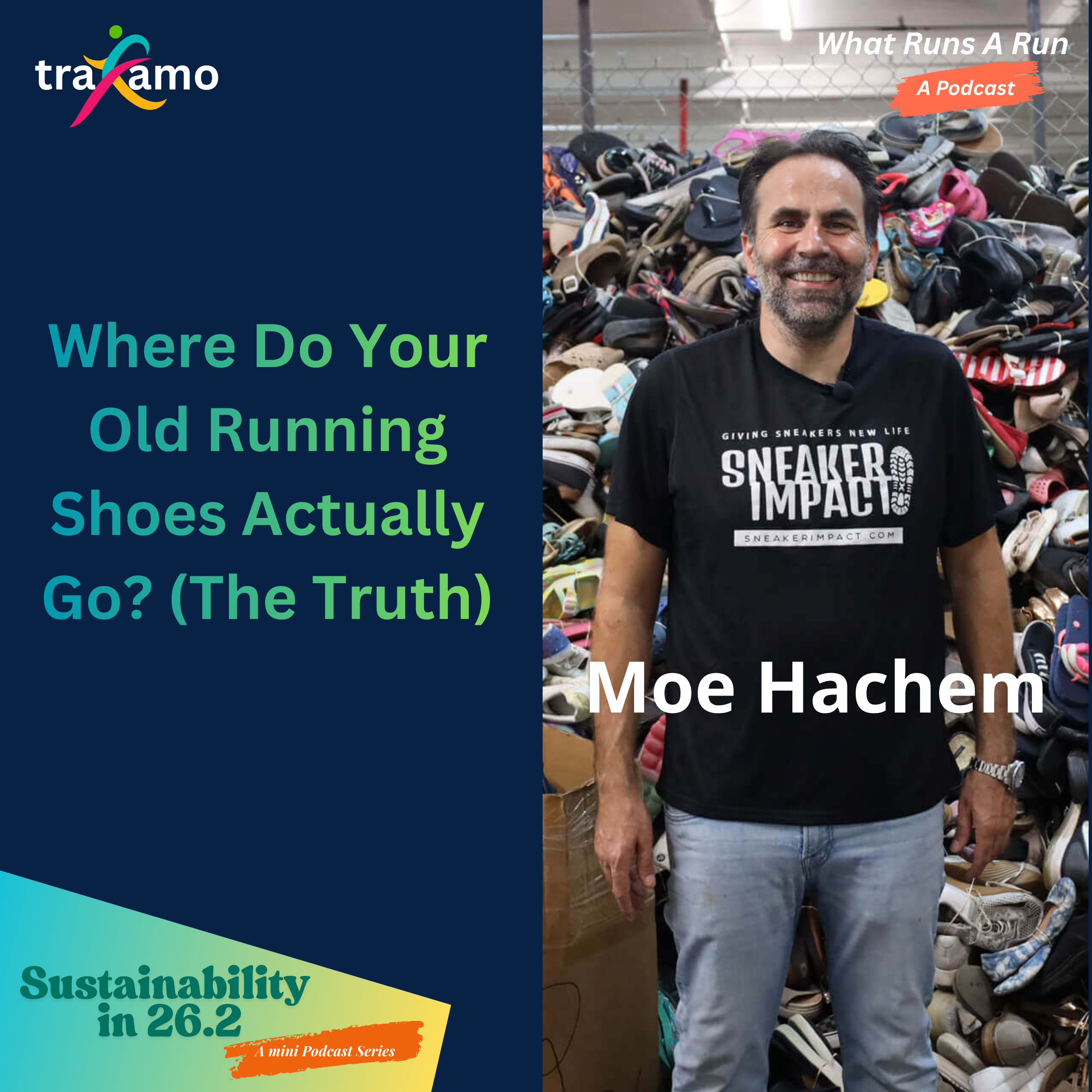 Where Do Your Old Running Shoes Actually Go? (The Truth) | 🌍 Did you know that a staggering 90% of footwear ends up in landfills? Join us on this episode of What Runs a Run as we dive into the world of sustainable sneakers and how we can change the story of our old shoes with Founder & CEO of Sneaker Impact, Moe Hachem.Explore how Sneaker Impact is transforming sneaker disposal and recycling into a social and environmental movement. This episode delves into innovative technologies, industry challenges, and actionable steps for runners and brands to reduce footwear waste.Key Takeaways from the episode:The environmental impact of the global sneaker industry and waste statisticsSneaker Impact’s process: collection, AI sorting, reuse, and recyclingHow shoes are repurposed for developing nations and micro-business opportunitiesAdvanced technology: infrared separation, material purity, and product transformationChallenges in complex material separation and maintaining high purity levelsThe future of circular footwear design and industry movementSimple ways for consumers to participate in shoe recycling programsSneaker Impact’s vision for a future where shoes are designed for end-of-lifeTimestamp00:00 - Introduction to circular economy in footwear00:17 - The importance of designing shoes for end-of-life and current industry movements00:43 - The environmental footprint of sneaker waste globally02:05 - The social impact of reusing sneakers in developing countries04:21 - Using AI and advanced sorting to manage sneaker recycling06:13 - The collection and accountability process for used shoes08:04 - Pathways for reused shoes and micro-entrepreneurship opportunities10:59 - Handling shoes at end-of-life with material separation and recycling12:52 - Innovative use of infrared technology for polymer separation14:35 - Transforming recycled materials into new footwear components16:34 - Challenges with material contamination and achieving high purity levels22:16 - How consumers can easily participate in sneaker recycling24:37 - Industry progress toward circular design and future initiatives28:07 - New product development: sandals, yoga mats, and more from recycled polymers29:45 - Advice for runners: extending shoe life and responsible disposalResources & Links:Sneaker Impact Official WebsiteUniversity of Miami CollaborationFederation of the Footwear Industry (FDRA) | — | ||||||
| 3/7/26 |  The Science of Running: Greg Macmillan on Personalized Training | In this episode of What Runs a Run, host Kamal Datta chats with renowned distance coach Greg Macmillan. They discuss Greg's journey from a young runner in rural Tennessee to becoming a leading coach and creator of the Macmillan running calculator. The conversation covers essential coaching philosophies, including the importance of understanding individual runner needs, the concept of 'experiment of one', and strategies for different levels of runners from beginners to elites. Greg emphasizes the significance of listening to one's body, the role of technology in coaching, and the mental aspects of training. The episode concludes with a rapid-fire round, where Greg shares insights on various coaching topics.Key takeawaysStart where you are and build gradually.Listening to your body is crucial to avoid injuries.Excessive soreness is a sign to back off.A good mobility program can prevent injuries.The talk test is a simple way to gauge effort.Run-walk strategies can help beginners.Intermediate runners often hit plateaus due to repetitive training.The four pillars of performance are essential for success.Lactate threshold training is key for performance improvement.Prehab is critical for injury prevention.Chapters00:00 Introduction to Greg Macmillan03:58 The Golden Rule of Running06:08 Understanding the Experiment of One07:38 Challenges for New Runners11:27 Key Indicators for Beginners12:47 The Talk Test and Strategic Walking15:35 Breaking Through Plateaus for Intermediate Runners17:50 The Four Pillars of Performance18:36 Lactate Threshold and Its Importance20:28 The Concept of Prehab22:10 Insights for Elite Runners24:25 Optimizing Performance Through Nutrition and Recovery25:39 The Fast Finish Long Run: A Game Changer30:43 Listening to Your Body: The Key to Injury Prevention33:15 The Evolution of Coaching: From Faxes to AI35:25 Navigating Technology: Data Overload in Running39:54 The Future of Coaching: AI vs Human InsightReference (s):McMillan Running Website https://www.mcmillanrunning.com/ | — | ||||||
| 3/1/26 |  Running Towards Sustainability: The London Marathon's Green Initiatives | In this episode of the What Runs Around podcast, host Kamal Datta chats with Kate Chapman, the head of sustainability at London Marathon Events. With over 20 years of experience in environmental initiatives, Kate discusses her journey from the marine environmental sector to leading sustainability efforts for major sporting events, including the London Olympics. She emphasizes the pressing waste problem in sports and the ambitious goal of achieving net zero emissions by 2030 for the London Marathon, a target that was moved up from 2040 based on a commitment to environmental responsibility.Kate elaborates on various sustainability initiatives being implemented at the London Marathon, such as encouraging participants to opt-out of traditional finishers' t-shirts in favor of tree planting, introducing a carbon levy for international runners, and promoting the use of reusable hydration systems. She also highlights the importance of reducing waste generated during the event, including innovative solutions like using hydro-treated vegetable oil for generators and partnering with the Salvation Army to manage clothing waste. The conversation wraps up with Kate's vision for the future of sustainable running events, emphasizing the need for collective action and innovative practices to minimize environmental impact.Chapters00:00 Introduction to Sustainability in Sports03:13 Kate's Journey in Environmental Initiatives05:08 Ambitious Net Zero Goals for London Marathon06:56 Sustainability Initiatives at the London Marathon11:35 Carbon Levy and International Participants12:31 Understanding Carbon Removal vs. Offsetting16:22 Measuring Carbon Footprint of Participants18:12 Waste Reduction and Circular Economy Initiatives21:01 Spectator Waste Challenges21:57 Innovative Fuel Solutions22:53 Recycling Urine into Fertilizer25:14 Clothing Waste Management28:14 Future of Sustainability in Marathons31:40 Sharing the Sustainability PlaybookReference (s):Sustainability Initiatives at London Marathon - https://www.londonmarathonevents.co.uk/london-marathon/environmentImpact of sustainability initiatives at London Marathon - https://impact.londonmarathongroup.org/ | — | ||||||
| 2/23/26 |  Data, Dirt, and Distance – Deciphering the Carbon Footprint of Running | In this episode, host Kamal Datta sits down with Dr. Brian McCullough, Associate Professor and Director of the Center for Sport & Sustainability at the University of Michigan and explores explores the environmental impact of events, particularly focusing on the different scopes of emissions (Scope 1, 2, and 3) and the challenges associated with data collection and reporting. The speakers discuss how events, especially those held outdoors, can have varying impacts based on participant numbers and the limitations of available data.Key takeaways:Events are concentrated on one weekend or a week.Scope 3 emissions are significantly high for events.Data collection for events can be inconsistent.Comparisons per participant have limitations.Some data may not be precise or complete.Understanding Scope 1 and Scope 2 impacts is crucial.Outdoor events may have different environmental impacts.Reporting on emissions varies by organization.Gray data presents challenges in analysis.Accurate data is essential for sustainability efforts.Episode Chapters00:00 Introduction to Sport Ecology and Sustainability04:12 The Evolution of Sport Ecology Research06:49 Frameworks for Measuring Sustainability in Events09:36 Understanding Carbon Emissions in Sporting Events12:31 Data Quality and Challenges in Emission Calculations15:28 The Role of Travel in Scope 3 Emissions18:20 Improving Data Accuracy and Methodologies21:12 Future Directions in Sport Ecology Research25:40 Recommendations for Race Organizers29:57 The Importance of Reduction Over Offsetting35:40 Understanding the Sustainable Runner42:31 Future of Marathons and Sustainability48:28 Measuring the Impact of SupportersReferences:Brian's University of Michigan profile - https://experts.umich.edu/13067-brian-mcculloughResearch paper published by Brian - https://www.mdpi.com/2071-1050/15/19/14375Council for responsible sport - https://www.councilforresponsiblesport.org/ | — | ||||||
| 1/26/26 |  Running for Mental Health: with Sasha Wolff, Founder of Still I Run | In this conversation, Sasha, the founder of Still I Run, shares her journey of establishing a nonprofit focused on mental health awareness through running. She discusses the various programs offered by Still I Run, the impact of the pandemic on mental health, and effective fundraising strategies. Sasha emphasizes the importance of community and personal connection in fundraising efforts, as well as the significance of partnerships with major races to further the mission of promoting mental health awareness.Key takeaways: - Sasha founded Still I Run after her own struggles with mental health.- Running can be a powerful tool for mental health recovery.- Community support is crucial for individuals dealing with mental health issues.- The organization has various programs to support runners and raise awareness.- Team Still I Run participates in major races to promote mental health.- The pandemic increased interest in mental health and running.- Personal stories resonate well in fundraising efforts.- Text messaging is an effective way to solicit donations.- Building partnerships with local races can lead to larger opportunities.- Sasha encourages other charities to reach out for support and guidanceChapters00:00 Founding Still I Run: A Journey of Healing02:46 Programs and Initiatives for Mental Health05:59 Team Still I Run: Charity Partnerships and Major Races09:13 Personal Connections: Stories Behind the Runners11:58 Impact of the Pandemic on Mental Health Awareness15:13 Fundraising Strategies: What Works and What Doesn't18:01 Effective Communication for Fundraising20:49 Building Partnerships with Races: Tips for SuccessReference:- https://www.stillirun.org/ | — | ||||||
Want analysis for the episodes below?Free for Pro Submit a request, we'll have your selected episodes analyzed within an hour. Free, at no cost to you, for Pro users. | |||||||||
| 12/29/25 | 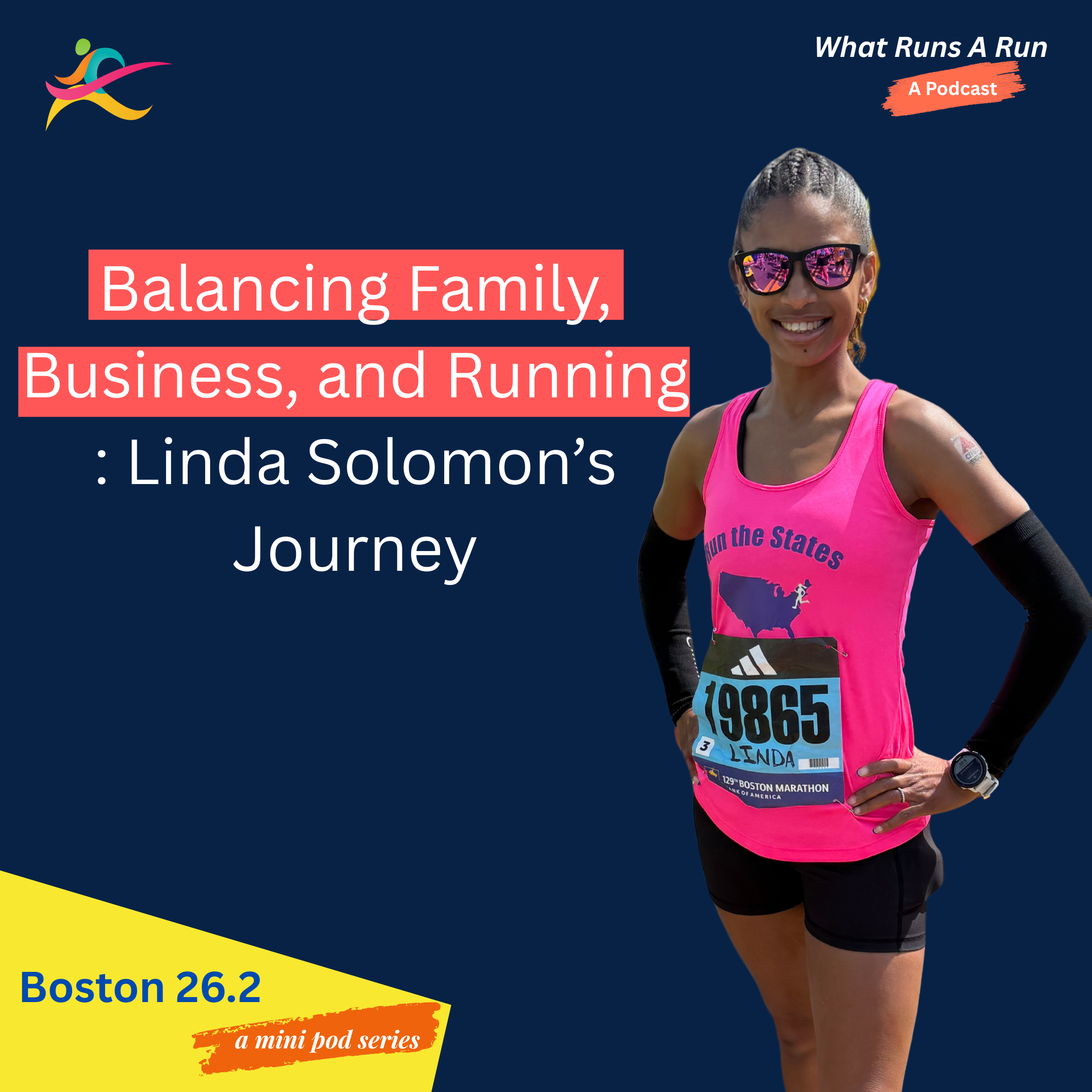 Balancing Family, Business, and Running
: Linda Solomon’s Journey | In this podcast episode, Linda shares her journey as a mother of three, a business owner, and a passionate marathon runner. She discusses the challenges of balancing her family life with her running and business commitments, her experiences with the Boston Marathon, and the mental strategies she employs during races. Linda emphasizes the importance of community support in her running journey and reflects on how running has become a significant part of her lifestyle. The conversation also touches on her training preferences and favorite race day rituals.Key Takeaways:Linda is a mother of three and runs two businesses.Planning is essential for balancing her responsibilities.She has run the Boston Marathon seven times.Community support plays a crucial role in her running journey.Running has become a lifestyle for her.She enjoys the social aspect of running with friends.Linda aims to complete marathons in all 50 states.She finds motivation in inspiring others to run.Mental strategies help her during challenging races.She prefers specific brands for her running gear and nutrition.Chapters00:00 Introduction to Linda's Journey03:00 Balancing Life and Running06:09 Boston Marathon Experience09:53 The Mental Aspect of Running12:48 Running as a Lifestyle16:06 Support Systems in Running18:02 Rapid Fire QuestionsShownotes and Transcripts - https://www.traxamo.com/boston-26-2-linda-solomon | — | ||||||
| 12/28/25 | 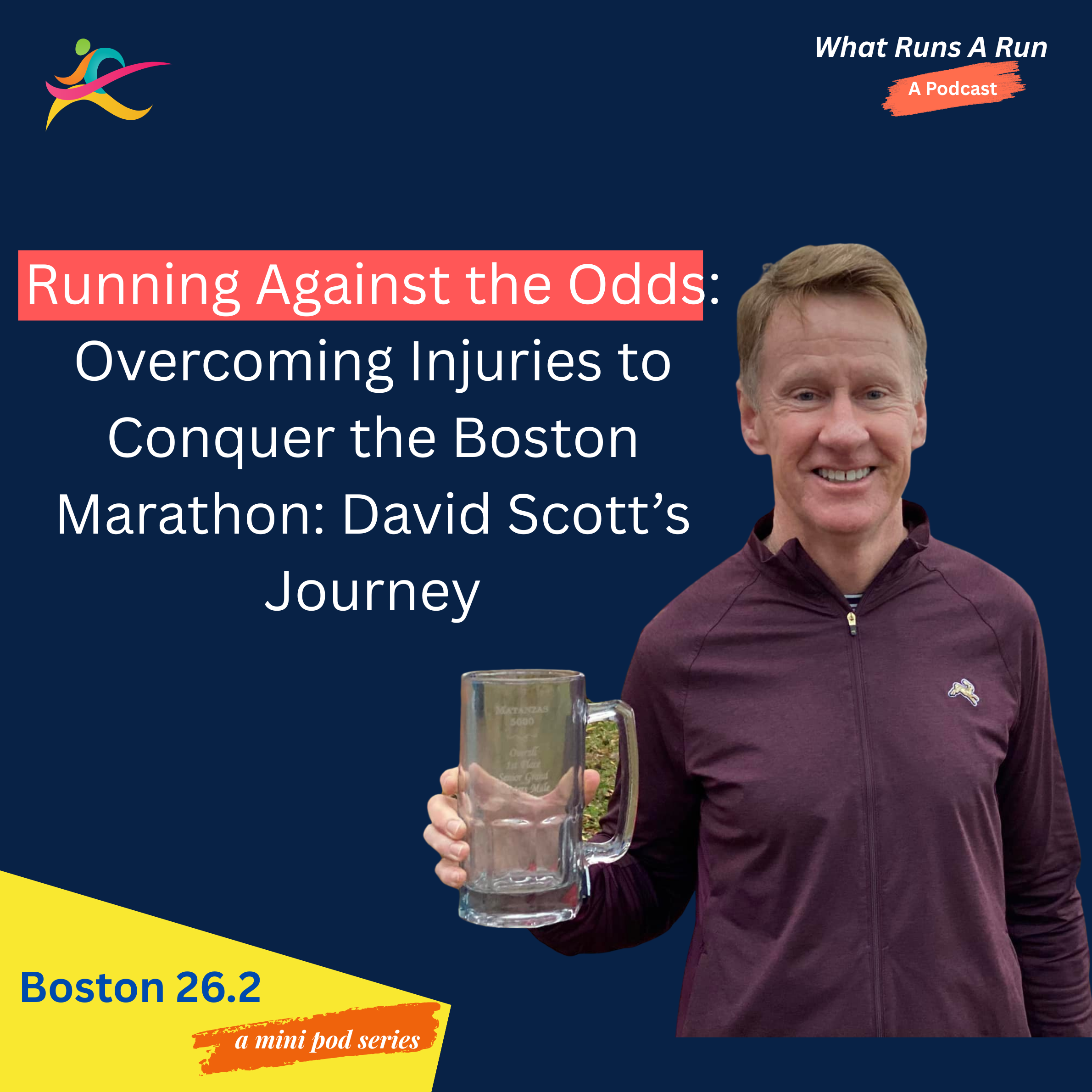 Running Against the Odds: Overcoming Injuries to Conquer the Boston Marathon - David Scott's Journey | In this conversation, David shares his inspiring journey from being a weightlifter to becoming a Boston marathoner, overcoming significant injuries along the way. He discusses his experiences at the Boston Marathon, his strategies for qualifying, and the challenges of training in different weather conditions. David also highlights the importance of community through his Facebook group for runners and shares insights on running gear, nutrition, and the role of coaching in achieving running goals.Key takeaways from the conversation -David transitioned from weightlifting to running after injuries.He faced multiple surgeries but proved doctors wrong by running marathons.The Boston Marathon is a significant achievement for many runners.David emphasizes the importance of community in running.He runs Boston Marathon Facebook group with nearly 19,000 members.Training strategies vary based on location and weather conditions.David prefers to run without music to enjoy the race atmosphere.Nutrition choices during races are crucial for performance.Having a coach can provide valuable insights and strategies.David's journey showcases resilience and passion for running.Chapters:00:00 Introduction to David's Journey02:54 Transition from Weightlifting to Running05:49 Overcoming Injuries and Achieving Marathon Goals09:13 Experiences at the Boston Marathon12:02 Strategies for Qualifying for Boston14:56 Training Insights and Weather Challenges17:47 Running a Successful Facebook Group23:52 Running Gear and Nutrition Preferences30:00 The Role of Coaching in RunningShownotes and transcript - https://www.traxamo.com/boston-26-2-david-scott | — | ||||||
| 12/6/25 | 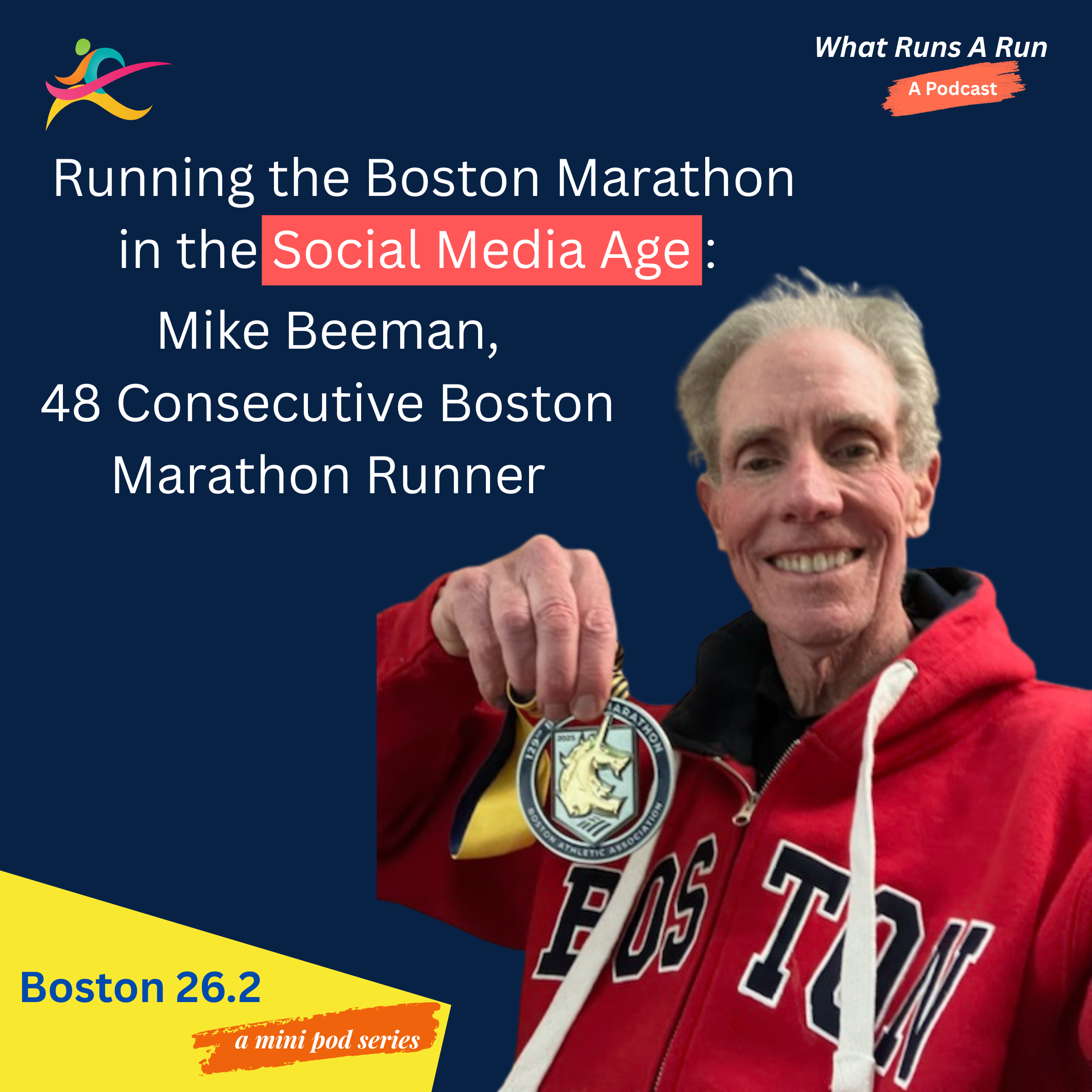 Running Boston Marathon in the Age of Social Media - Mike Beeman | In this conversation, Mike Beeman, who ran 48 consecutive Boston Marathon since 1978, shares his experiences at the 2025 Boston Marathon, highlighting the significant role social media, particularly TikTok, played in enhancing his race experience. He discusses the overwhelming support he received from fans and the community, which made the event memorable. The interaction with fans and the viral content he created post-race exemplifies the modern athlete's relationship with social media and its impact on sporting events.Key takeaways:1. Understanding Your BodyEvery runner has their unique relationship with their body. Kamal Datta, the podcast host, emphasizes the importance of listening to one’s body before every run. He suggests starting with a simple question, "How do you feel today?" This practice encourages runners to adjust their pace according to their physical state that day. Mike echoes this sentiment, sharing his belief in the principle of "long slow distance" running. He advises against running too fast, as it can exacerbate any underlying issues, such as pronation or supination.2. The Journey of a RunnerMike’s journey began in high school, driven by the desire to make the basketball team. After a candid conversation with his coach about his weight, he decided to take up cross-country running. His early experiences were marked by simplicity—no fancy gadgets or apps, just sheer determination. He recalls running laps around a dirt track, believing he was on his way to breaking records, only to discover that his times were far from what he imagined. Yet, this humility molded his passion for running, leading to a remarkable transformation that left a lasting impression on his coaches and peers.3. The Evolution of the Boston MarathonMike reflects on the significant changes he’s witnessed in the Boston Marathon over the years. He notes the technological advancements, including the introduction of digital tracking devices, which were non-existent during his early days of running. Additionally, he discusses how the marathon’s atmosphere has evolved, with a greater number of participants and the inclusion of charity runners. This shift has made qualifying for the event increasingly competitive and has transformed the experience of marathon running into a more inclusive yet challenging endeavor.4. Acceptance and MindsetOne of the most profound insights from the podcast is the need for acceptance as runners age. Mike shares wisdom from elite athletes he has admired, who emphasize that running is simply about the act itself, regardless of speed. He highlights that many runners struggle with the inability to accept slower times as they grow older, yet it is crucial to embrace every step taken, whether it’s a six-minute mile or a ten-minute mile. The focus should shift from competition to personal achievement and sustainability in the sport.Conclusion:The conversation with Mike serves as a reminder that running is more than just a physical activity; it’s a journey of self-discovery, resilience, and community. As he prepares for his next race in Boston, the lessons he shares about listening to one’s body, adapting to changes, and embracing the joy of movement resonate deeply. Key takeaways include the importance of pacing oneself, the evolution of running culture, and the significance of maintaining a positive mindset throughout one’s running journey.#Running #Marathon #BostonMarathon #FitnessJourney #Mindset #LongDistanceRunning #AthleteStories #Wellness | — | ||||||
| 11/30/25 | 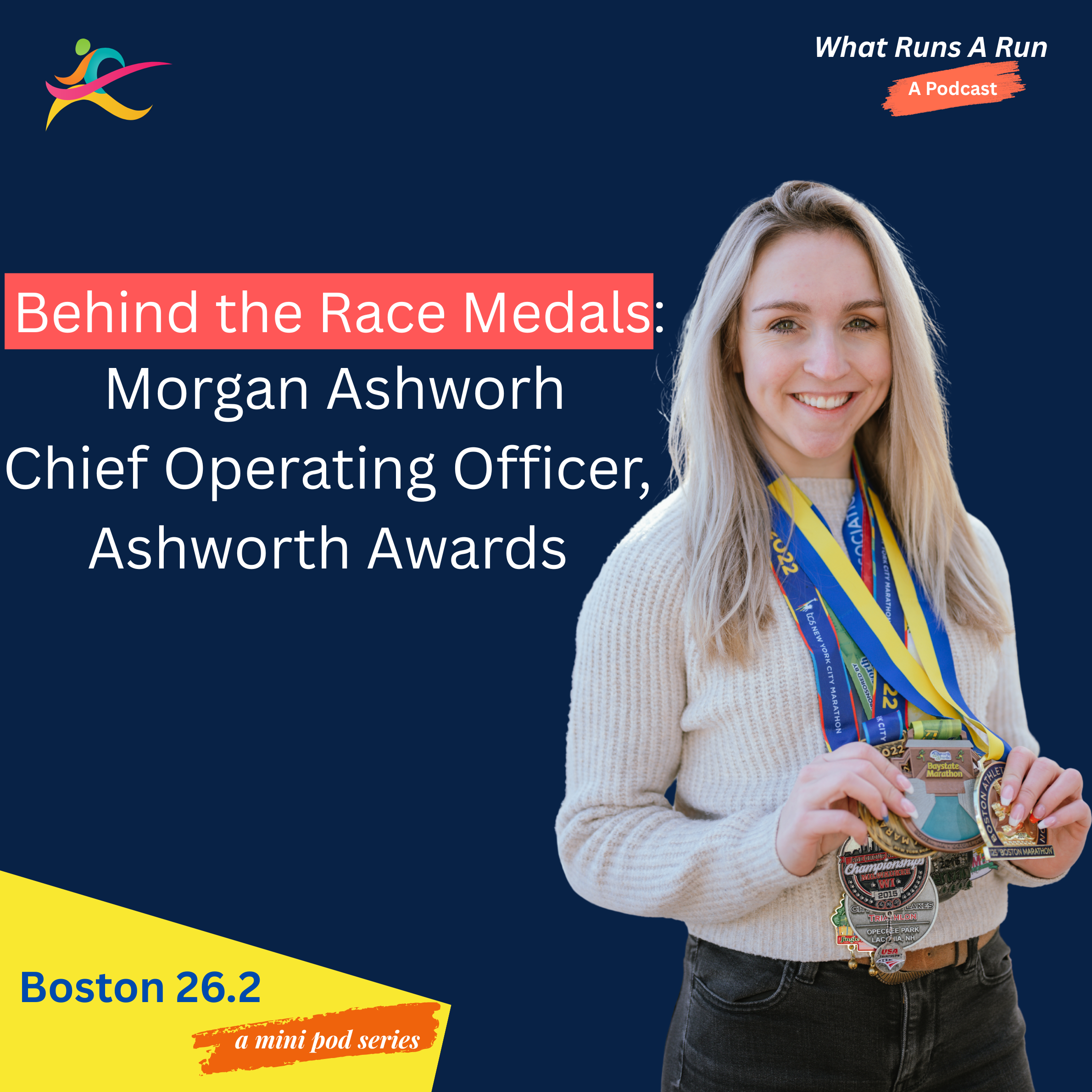 Behind the Race Medals: Morgan Ashworth, Chief Operating Officer, Ashworth Awards | In this episode of What Runs a Run Pod, host Kamal Datta speaks with Morgan Ashworth, COO of Ashworth Awards, about the significance of medals in the running community, the evolution of the medal manufacturing industry, and the intricate processes involved in creating these awards. Morgan shares her personal journey in the family business, insights on leadership, and the importance of sustainability in production. The conversation also touches on the impact of tariffs on the industry and future trends in medal design and production. Here are the key takeaways from the conversation:Morgan's Path and Leadership JourneyThe Story of Ashworth AwardsInside the Medals IndustryHow Ashworth Works with Races like Boston MarathonSustainability and Ashworth AwardsTariff and Medals IndustryFuture of Medals and EventsRapid Fire/Personal Round with MorganEpisode Outline:00:00 The Journey of Ashworth Awards06:53 Leadership Insights from the Running Community 13:53 The Evolution of Medal Production20:58 Sustainability in Medal Manufacturing26:49 Impact of Tariffs on the Industry27:39 Impact of Tariffs on Race Medals30:09 Sustainability in Race Registrations32:03 Ashworth Awards: A One-Stop Shop for Races36:27 The Future of the Medal Industry42:25 Rapid Fire and Personal RoundMentions and References:Ashworth Awards Website - https://www.ashworthawards.com/Order Journey with Ashworth Awards - https://www.youtube.com/watch?v=JDpSFM49y-8WCV Boston News Feature- https://www.wcvb.com/article/sprint-to-finish-line-for-makers-of-boston-marathon-medals/46659133Kim & Dan Ashworth getting inducted to the Running USA Hall of Champions-https://www.runningusa.org/running-usa-news/running-usa-honors-industry-leaders-at-2025-industry-conference-in-louisville/New Article about Morgan Ashworth's run at Boston Marathon & broken foot: https://www.runningusa.org/running-usa-news/running-usa-honors-industry-leaders-at-2025-industry-conference-in-louisville/Shownotes and Transcript - https://www.traxamo.com/boston-26-2-morgan-ashworth | — | ||||||
| 11/16/25 | 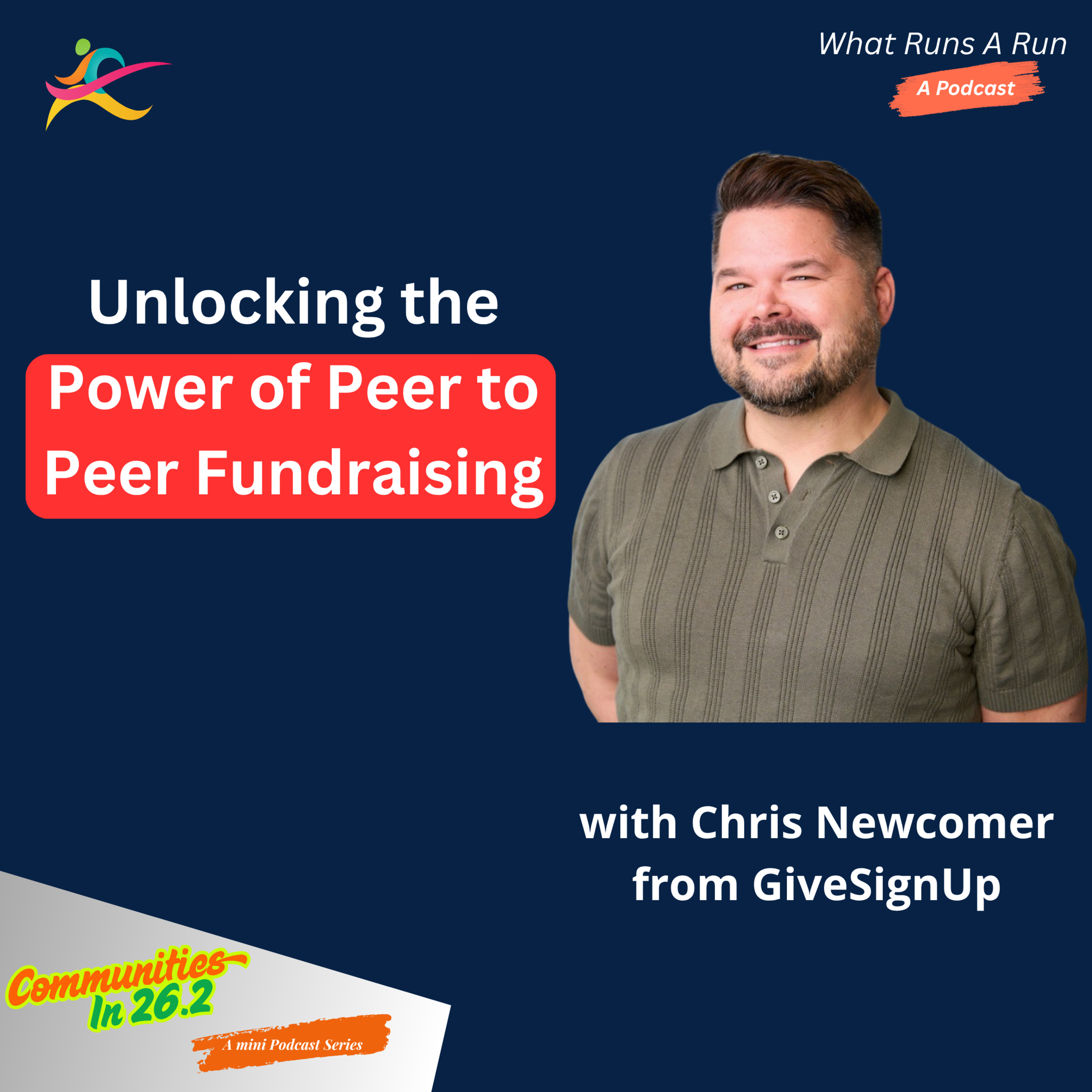 Unlocking the Power of Peer-to-Peer Fundraising | In this conversation, Kamal Datta speaks with Chris Newcomer, a specialist in peer-to-peer fundraising at Give Sign Up. They explore the concept of peer-to-peer fundraising, its significance for nonprofits, and the tools available on the Give Sign Up platform. Chris shares insights from his unique journey from opera singer to fundraising expert, discusses the dynamics between nonprofits and race organizers, and highlights the importance of storytelling and engagement in successful fundraising efforts. The conversation also delves into gamification strategies and the challenges faced by fundraisers, providing valuable takeaways for both nonprofits and individuals looking to make an impact through fundraising. Key takeaways :- Peer-to-peer fundraising involves asking supporters to reach out to their networks.- Chris transitioned from a career in opera to nonprofit fundraising for greater security.- Give Sign Up offers free tools for nonprofits to facilitate fundraising.- Successful fundraising often relies on human stories and personal connections.- Not all nonprofits are suited for peer-to-peer fundraising; it works best with vocal supporters.- Race organizers can partner with nonprofits to streamline fundraising efforts.- Fundraisers should maintain engagement and share their pages regularly.- Gamification can enhance fundraising by providing recognition and milestones.- Post-event communication is essential for building long-term donor relationships.- Nonprofits should provide resources and coaching to their fundraisers for better outcomes.Episode Outline: 00:00 Introduction to Peer-to-Peer Fundraising02:50 Chris Newcomer's Journey to Fundraising06:05 Understanding Give Sign Up's Tools08:58 The Dynamics of Nonprofit and Race Partnerships11:50 Success Factors for Fundraisers15:11 Gamification in Fundraising18:02 Engagement Strategies for Nonprofits20:48 Challenges and Best Practices in FundraisingShownotes and Transcripts - https://www.traxamo.com/fundraising-in-26-2-peer-2-peer | — | ||||||
| 10/23/25 | 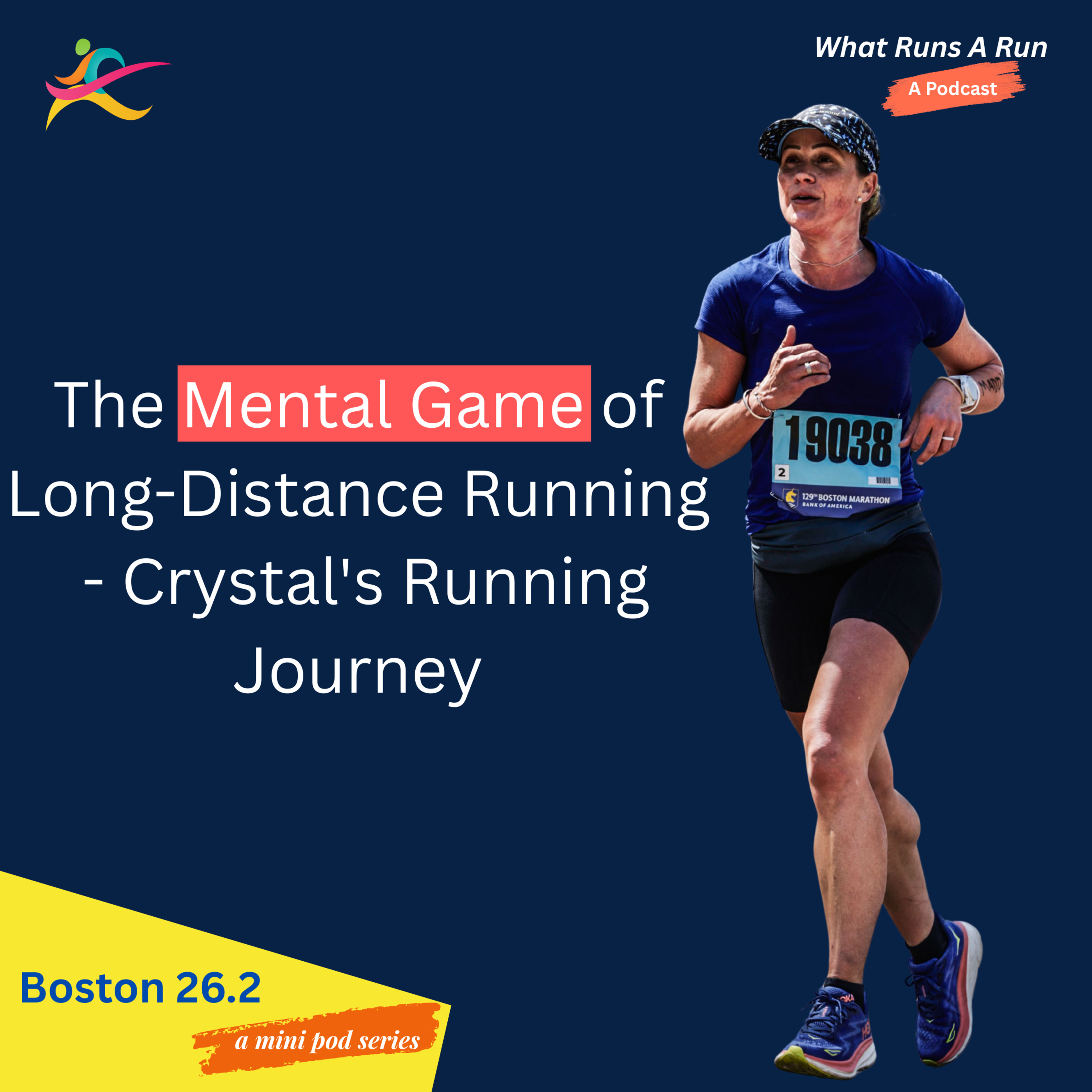 The Mental Game of Long-Distance Running - Crystal's Running Journey | In this conversation, Kamal Datta chats with Crystal Ross about her journey from marathon running to ultra running, discussing the challenges she faced in training and the mental shifts that occurred along the way. She reflects on her experiences at the Boston Marathon, the importance of a supportive community, and her future aspirations in the running world. The discussion highlights the differences between road and trail running, the significance of mental toughness, and the strategies that have helped Crystal succeed in various races. Here are the key takeaways from the conversation:Running on trails helped Crystal rediscover her love for running.Mental strength is crucial in long-distance running.Qualifying for Boston without focusing on pace.Support systems are essential for long-distance runners.Training for ultras differs significantly from road marathons.Race day experiences can vary greatly between events.Running outside regardless of the weather.Building a crew for ultra races is important for success.Camaraderie of running with friends.Future goals include running the Western States 100Episode Outline:00:00 The Journey to Ultra Running02:47 Overcoming Challenges in Marathon Training06:10 The Shift from Road to Trail Running08:54 Race Day Experiences and Mental Preparation11:46 Training Strategies for Different Running Styles15:07 The Importance of Support Systems in Running17:55 Future Goals and Aspirations in RunningShow notes and references - https://www.traxamo.com/boston-26-2-crystal-ross | — | ||||||
| 10/18/25 |  From Lockdown to Marathon - Harp's Running Journey #bostonmarathon | In this conversation, Kamal Datta chats with Harps Hansara, an avid runner who began her journey during the pandemic. Harps shares her experiences training for and running the Boston Marathon, including the challenges she faced and the lessons learned. She discusses the importance of community support, her training regimen, and her aspirations to complete all six major marathons. The conversation highlights the personal growth and fulfillment that comes from pursuing running as a passion. Here are the key takeaways from the conversation:- Running started as a therapeutic outlet during lockdown.- Harps trained for the Boston Marathon after running the London Marathon.- Harps focused on visualizing his goals before races.- Training included local races to test fitness and elevation.- The Boston Marathon experience was surreal and well-organized.- Downhill running posed unexpected challenges during the race.- Harps aims to complete all six major marathons in a year.- Family support plays a crucial role in her running journey.- Harps highlights running with friends for the social aspect.- Harps is self-coached and enjoys learning about running techniques.Episode Outline:00:00 Introduction to Running Journey02:54 The Boston Marathon Experience05:46 Training for the Boston Marathon09:00 Race Day Insights11:41Reflections on the Course14:53 Support Systems in Running17:38 Rapid Fire Questions and ConclusionShownotes - https://www.traxamo.com/boston-26-2-harps-hansara | — | ||||||
| 10/5/25 | 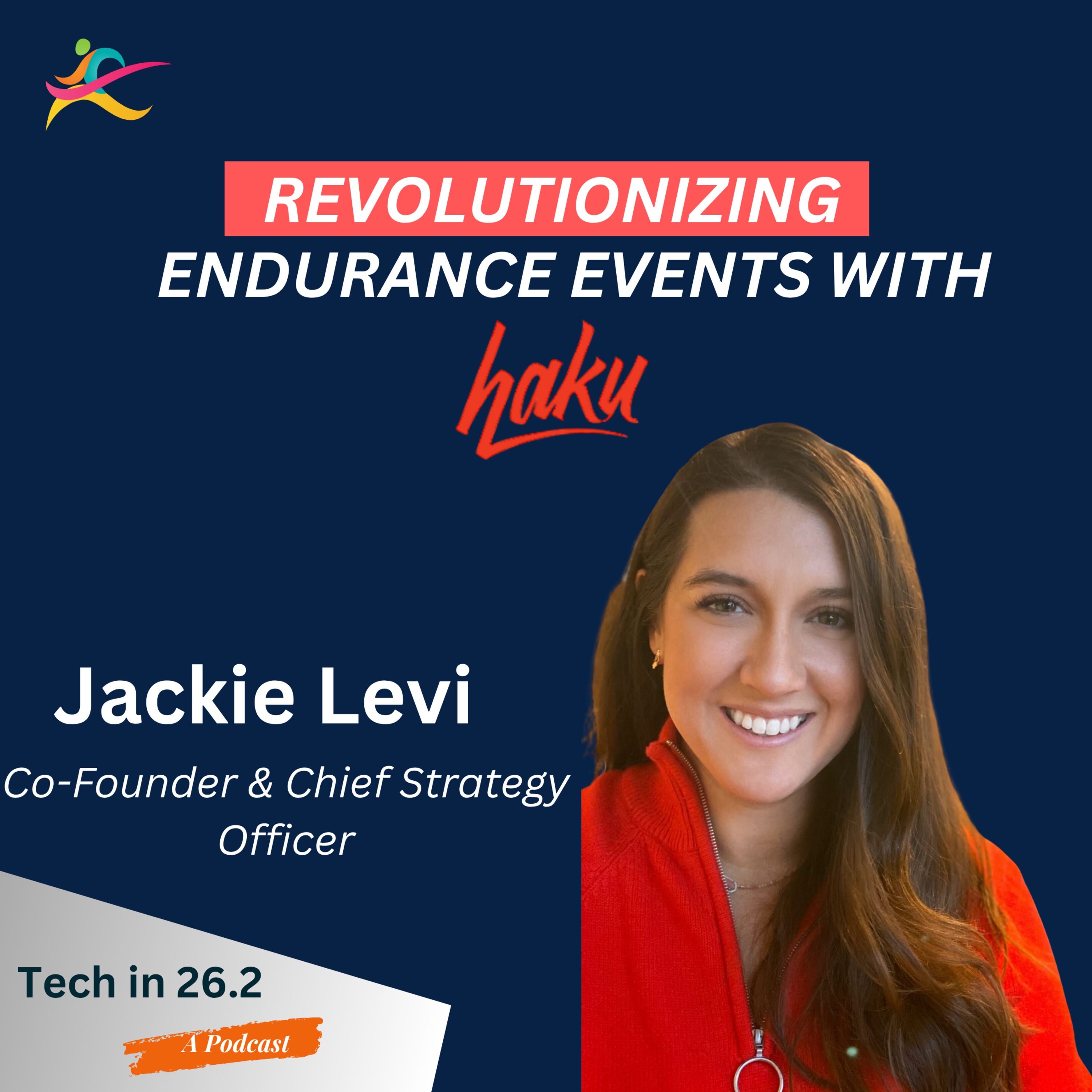 Revolutionizing Endurance Events with Haku : Jackie Levi - Co-Founder & Chief Strategy Officer | In this conversation, Kamal Datta speaks with Jaclyn Levi, Chief Strategy Officer and co-founder of Haku, about the unique technology platform designed specifically for endurance event organizers and nonprofits. They discuss the founding story of Haku, its evolution, the importance of CRM, the impact of AI on the industry, and the strategic partnerships that enhance the platform's offerings. Jaclyn shares insights on trends in the endurance space, the role of nonprofits, and the future direction of Haku as it continues to innovate and support its customers.Key Takeaways- Haku was founded to fill a gap in the endurance event technology space.- The platform is built natively with CRM at its core, tailored for endurance organizations.- AI is becoming increasingly important in the event management industry.- Haku supports nonprofits by providing tools for fundraising and event management.- The user experience is a priority, with a focus on delivering engaging interactions.- Partnerships are key to Haku's strategy, emphasizing collaboration over vendor relationships.- The endurance industry is seeing a demographic shift towards younger participants.- Haku's technology allows for highly segmented marketing campaigns.- The platform is designed to empower event organizers to deliver memorable experiences.- Haku is committed to continuous innovation and building technology that meets customer needs.Episode Outline:00:00 Introduction to Haku and Its Unique Offering02:52 The Founding Story of Haku05:39 Evolution of the Endurance Industry and Haku's Position08:30 The Power of CRM in Event Management11:43 Segmentation and Personalization in Marketing14:23 Comprehensive Features of Haku's Platform17:15 Haku's Commitment to Nonprofits19:58 The Impact of Endurance Sports on Haku's Development22:56 Trends in the Endurance Industry26:06 The Role of AI in Haku's Future28:55 Partnerships and Community Engagement31:39 Future Challenges and Innovations for HakuMentions & links:Haku PlatformWho We Serve – haku5 Hidden Costs of Managing Your Race Without a CRM: A thought leadership piece highlighting why a CRM is critical for race organizers | — | ||||||
| 1/13/25 | 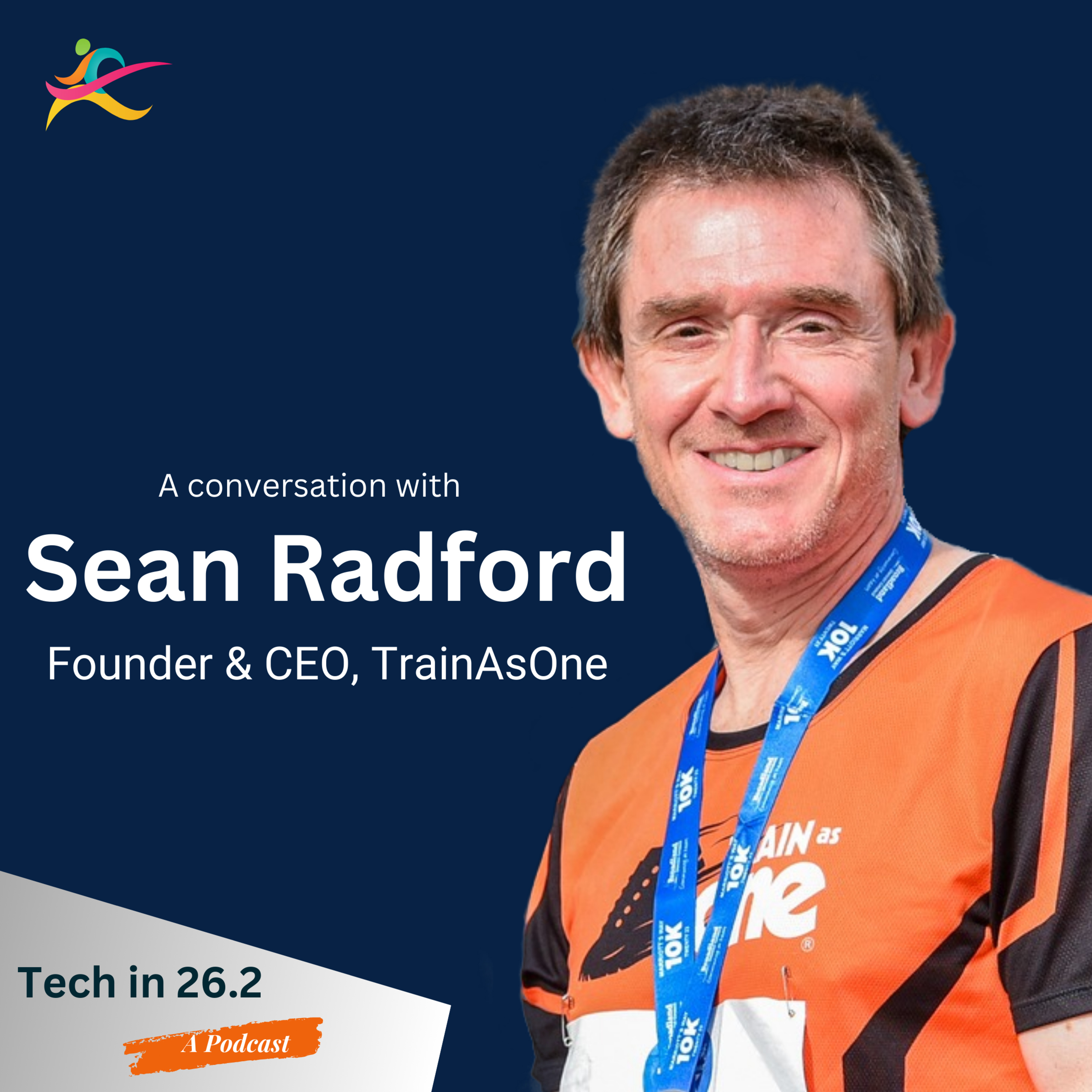 Revolutionizing Running: AI-Powered Training with TrainAsOne's Sean Bradford | In this next episode on Tech in 26.2 podcast, discover the future of personalized running training with Sean Bradford, founder and CEO of TrainAsOne. In this eye-opening interview, Sean shares how his unique background in medicine and technology led to the creation of an AI-powered training app that's changing the game for runners worldwide. Learn about: ⛳ The science behind TrainAsOne's innovative approach to injury prevention ⛳ Why traditional training plans may be outdated and potentially harmful ⛳ The surprising truth about speed work and long runs in marathon training ⛳ How AI analyzes your running data to create truly personalized plans ⛳ The future of multi-sport training and informed decision-making for athletes Whether you're a beginner or an experienced runner, this conversation will challenge your assumptions and provide valuable insights into smarter, safer, and more effective training methods. Podcast Outline 0:05 Episode Summary 1:32 Introduction 2:25 Sean’s journey from medicine to technology entrepreneurship 8:15 Using AI technology to solve for training for running with scientific evidence, that works and with less injury 12:49 Why do we get running related injuries? 17:34 What is TrainAsOne? 22:49 Data TrainAsOne’s data model trained on 38:01 Achieving race day timing goals with TrainAsOne 48:06 You don’t need to run 20+ miles as the longest run to train for marathon References TrainAsOne Website - https://trainasone.com/ Episode info: Youtube - https://youtu.be/4E-QADGa6ag Apple Podcast link - https://bit.ly/4anHcU5 Spotify podcast link - https://bit.ly/3DZAM1s Transcript and Show notes: https://www.traxamo.com/tech-in-26-2-sean-radford Enjoy the episode! | — | ||||||
| 10/19/24 | 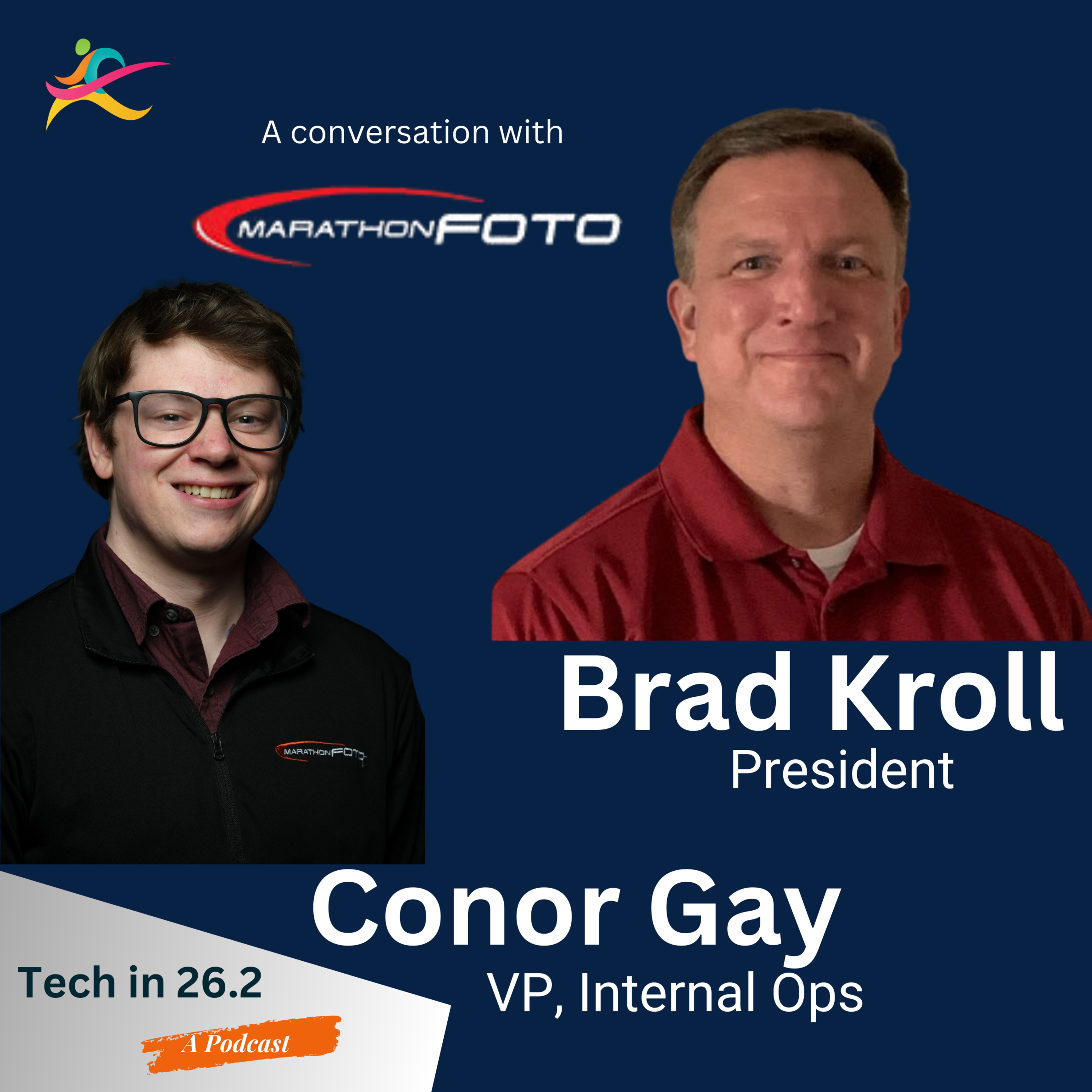 Capturing race day memories for 45 years - chat with Brad Kroll & Conor Gay of MarathonFoto | In the next episode of the Tech in 26.2 Podcast on Traxamo, I sit down with Brad Kroll, President of MarathonFOTO and Conor Gay, VP of Internal Operations at MarathonFOTO. For 45 years, over 10 million runners have trusted MarathonFoto to capture and deliver the best in race and endurance event photography. MarathonFoto partners with the biggest and best names in running including Boston Marathon, Chicago Marathon, NYC Marathon, Stockholm Marathon to name a few. In our discussion, we cover a lot of grounds from state of race photography in early 2000s to how technology has enabled MarathonFoto to share race day moments with the runners almost instantaneously at the finish line. Enjoy listening! Here are the highlights from our conversation: ⛳ Evaluation of race photography ⛳ Overview of MarathonFoto's race day photography workflow and operations ⛳ Technological innovations enabling near-instant photo delivery at race finish lines ⛳ Examining the feasibility of fully automated race day photography ⛳ Exploring potential applications of race photography in identifying unauthorized participants References Marathon Photo - https://www.marathonfoto.com/ Chicago Marathon - https://www.chicagomarathon.com/ NewYork City Marathon - https://www.nyrr.org/tcsnycmarathon Episode info: Youtube - https://youtu.be/up98519yT5k Apple Podcast link - https://apple.co/4hoayFc Spotify podcast link - https://bit.ly/3A2QLKA Transcript and Show notes: https://www.traxamo.com/tech-in-26-2-brad-kroll-conor-gay Enjoy the episode! | — | ||||||
| 10/10/24 | 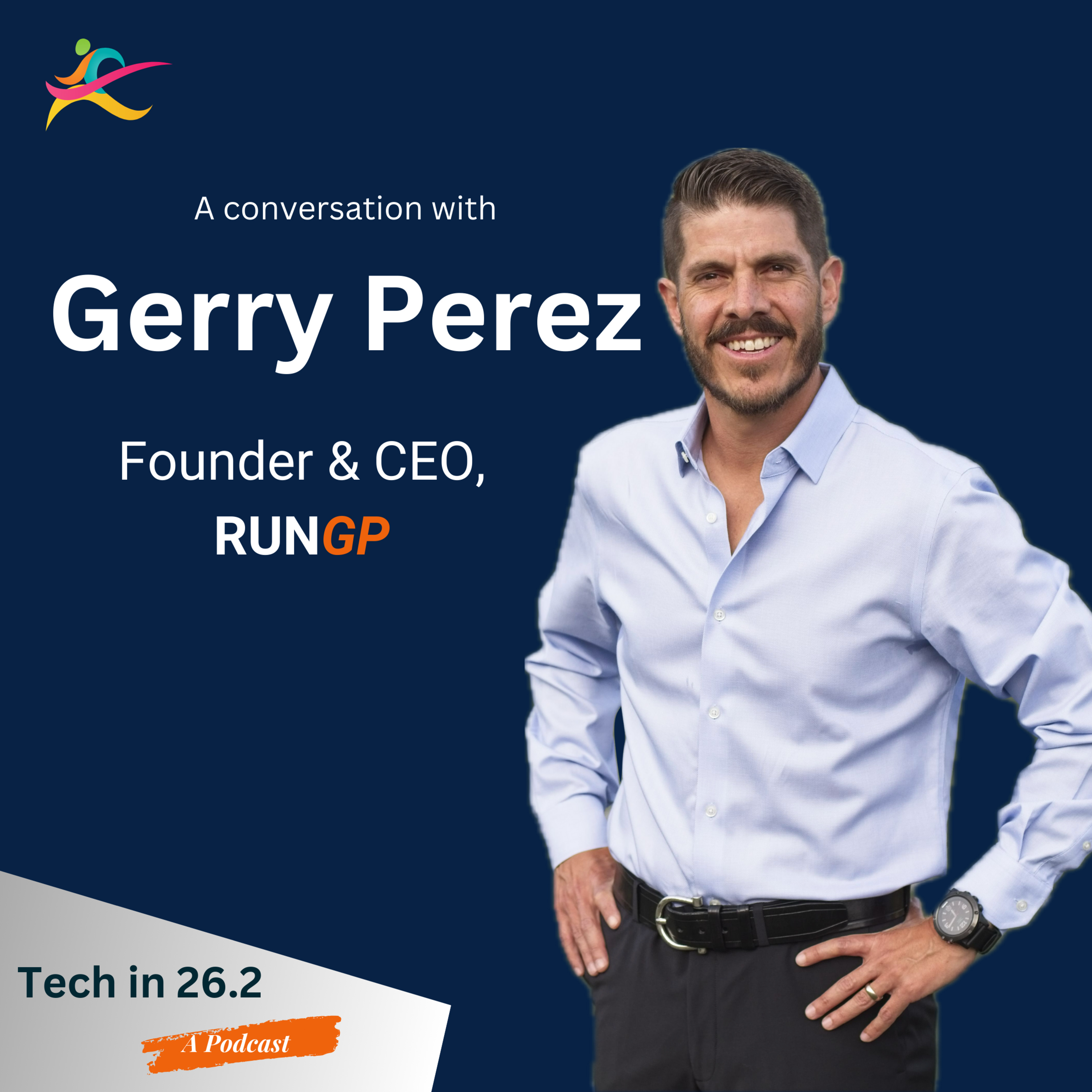 SMS Marketing is the most effective event marketing channel - Gerry Perez, Founder & CEO of RUNGP | In the next episode of the Tech in 26.2 Podcast on Traxamo, I have a conversation with Gerry Perez, the Founder and CEO of RUNGP, the leading CRM platform for the running industry. Gerry, who has a background in digital marketing, recounts how attending an industry event inspired him to transition his digital marketing agency into a software company. We delve into various case studies and the data supporting them, emphasizing the most effective channels that event organizers should prioritize to maximize their marketing ROI. This discussion promises to be extremely beneficial for event marketers and organizers alike. Enjoy listening! Here are the highlights from our conversation: ⛳ Pivoting from digital marketing agency to building a SaaS business ⛳ Deep dive into event marketing landscape in endurance industry ⛳ Why SMS marketing is the best marketing investment for event organizers? ⛳ Intersection of AI and event marketing - ⛳ Navigating compliance and what is SWAS (software with agency service)? Podcast Outline 0:05 Episode Summary 1:05 Introduction 1:51 Founding story of RunGP 3:03 What’s RunGP 3:55 Transitioning from Digital agency to software company 11:45 Background in endurance industry marketing and channels 13:19 RunGP’s core offerings 17:14 Why SMS marketing is the best investment for event organizers 21:29 Key metrics to measure ROI on event marketing investment 26:12 Approaching event marketing for different generation 28:31 Using AI for event marketing for FAQs, content or reputation management Conversation AI Content AI (writing creatives) reviews AI (reputation management) 33:54 Marketing trends in the endurance industry 36:45 Handling compliance in SMS marketing 40:21 Supporting the endurance sports ecosystem through Software as agency service (SWAS) 44:40 Scaling with SWAS business model? 46:19 What’s next for RunGP? References RunGP - https://rungp.io/ RunGP Podcast on SMS Marketing - https://rungp.io/podcast Special mentions Chris Tomlinson Episode info: Youtube - https://youtu.be/EROW332W_Q8 Apple Podcast link - https://apple.co/3zJgkAj Spotify podcast link - https://bit.ly/4eEPJmZ Transcript and Show notes: https://www.traxamo.com/tech-in-26-2-gerry-perez Enjoy the episode! | — | ||||||
| 9/20/24 | 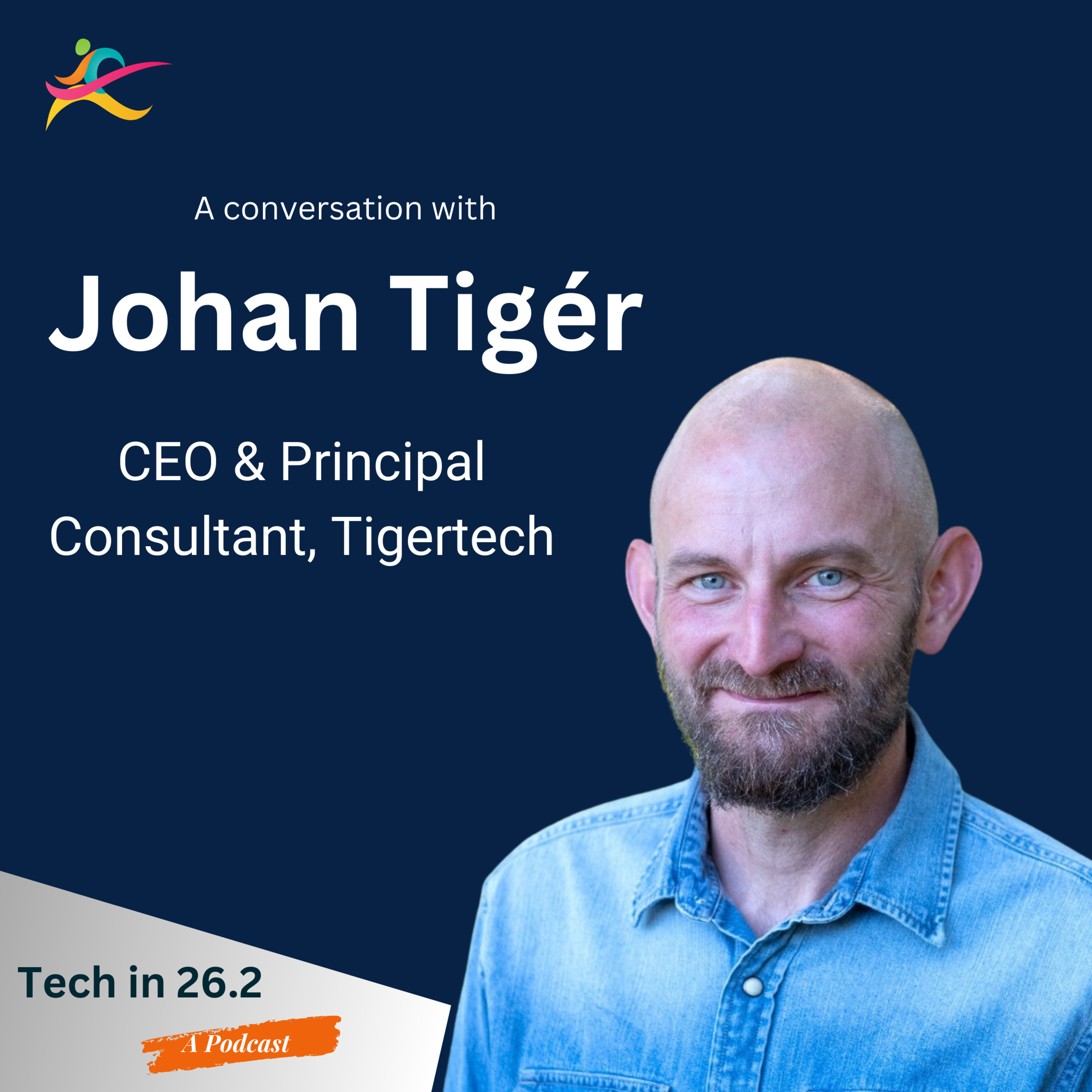 Runredeem - Building loyalty in endurance sports, Johan Tigér, CEO of Tigertech | In this episode of the Tech in 26.2 Podcast on Traxamo, I sit down with **Johan Tigér,** CEO and Principal Consultant of Tigertech based in Sweden. Tigertech provides digitization services for endurance sports events to create bespoke experiences for participants. I was curious to learn about Tigertech’s RunRedeem solution that Johan did for New Balance where the goal was to reward runners for their effort when training. We cover quite a few grounds on different custom solutions Tigertech built since its founding during pandemic to trends and role of AI. Enjoy the episode! ⛳ Founding Story of Tigertech ⛳ Creating fun experience through digitization ⛳ Deep dive into RunRedeem and what’s next for it? ⛳ Scaling Tigertech as a services company ⛳ Trends and role of AI in endurance tech Podcast Outline 0:05 Introduction 4:25 Starting Tigertech - Digitization for endurance sports industry 9:43 Using technology to create fun experience for participants 11:59 What is RunRedeem 20:50 Finding first customer 22:27 Scaling Tigertech 24:23 What’s next for Tigertech 26:06 Trends in technology usage in endurance sports References - Tigertech - https://tigertech.se/ - RunRedeem project with New Balance - https://tigertech.se/projects/breakfaster/ - RunRedeem article on RunningUSA - http://www.run4amc.org/index-466.html - Gothenburg, Sweden Half Marathon - https://www.goteborgsvarvet.se/en Episode info: - Youtube - - Apple Podcast link - - Spotify podcast link - Transcript and Show notes: - Enjoy the episode! | — | ||||||
| 7/16/24 | 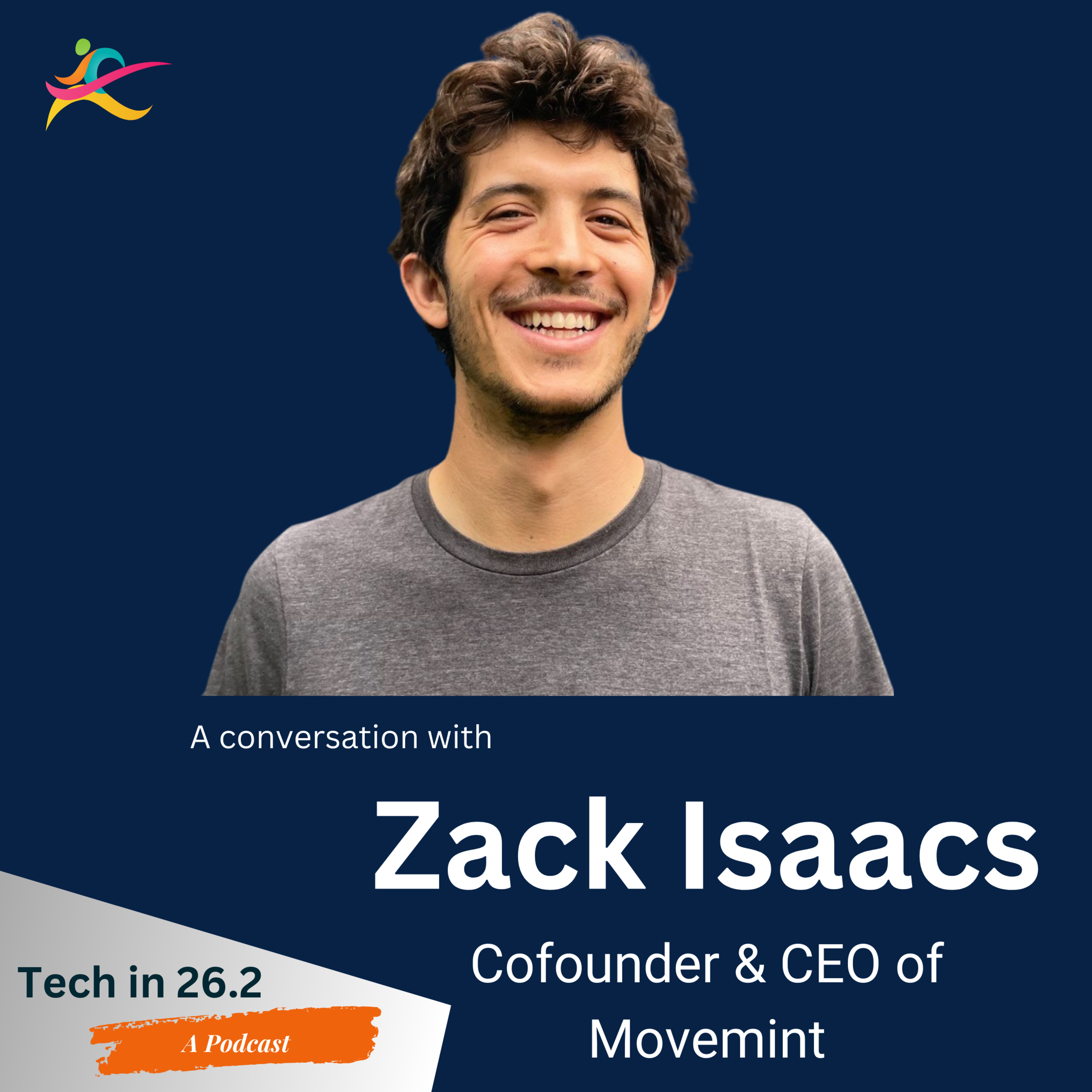 A Conversation with Zack Isaacs, Cofounder & CEO of Movemint | Podcast Outline 0:05 Introduction 2:34 A quick overview of Movemint platform 3:11 Founding Movemint over a bike ride 6:34 Finding a product market fit 9:30 Friction points Movemint platform solves today 12:19 4 Personas supported on Movemint platform 15:14 Deciding on the right Pricing strategy 17:39 Strava integration - supporting athletes and organizers 21:43 Supporting timers solving the frictions between registrations to scoring to results 25:07 Raising pre-seed round 28:00 Fail fast moments when building Movemint 31:20 How does the feedback loop look like at Movemint 32:51 Future of event registration industry 38:36 Is Movemint profitable with adopting industry pricing standards as they scale up? 40:23 AI and future of event registration industry References - Movemint platform - https://www.movemint.cc/ - People can reach out to Zack at [zack@movemint.cc](mailto:zack@movemint.cc) or on [LinkedIn](https://www.linkedin.com/in/zackisaacs/) - Sample event page from [Headlands 27k](https://www.movemint.cc/events/headlands_27k_2024/), global series page for [Tracksmith Twilight 5000](https://www.movemint.cc/organizers/tracksmith), and [Strava segment-powered virtual event on Mt Tam](https://www.movemint.cc/events/tam_trail_time_trial_2024/) (lowest time across all segments wins). - Underscore VC's [Why We Invested](https://underscore.vc/blog/why-we-invested-movemint/), [Boston Road Runners launch](https://www.endurancesportswire.com/boston-road-runners-and-next-generation-donation-support-run-on-movemint/), [Tracksmith Twilight 5000 launch](https://www.endurancesportswire.com/tracksmith-launches-global-twilight-5000-track-races-on-movemint/), and [USA Cycling integration launch](https://www.endurancesportswire.com/movemint-announces-usa-cycling-integration-to-support-cycling-event-organizers/) Podcast production tool credit: Planning - Notion Research and show notes - Perplexity and Microsoft Copilot Recording - Zoom Transcription - [Restream.io](http://restream.io/) Media editing and mixing - Canva MagicAI Episode info: - Youtube - - Apple Podcast link - - Spotify podcast link - Transcript and Show notes: - Enjoy the episode! #endurance #running #runners #coaching | — | ||||||
| 6/9/24 | 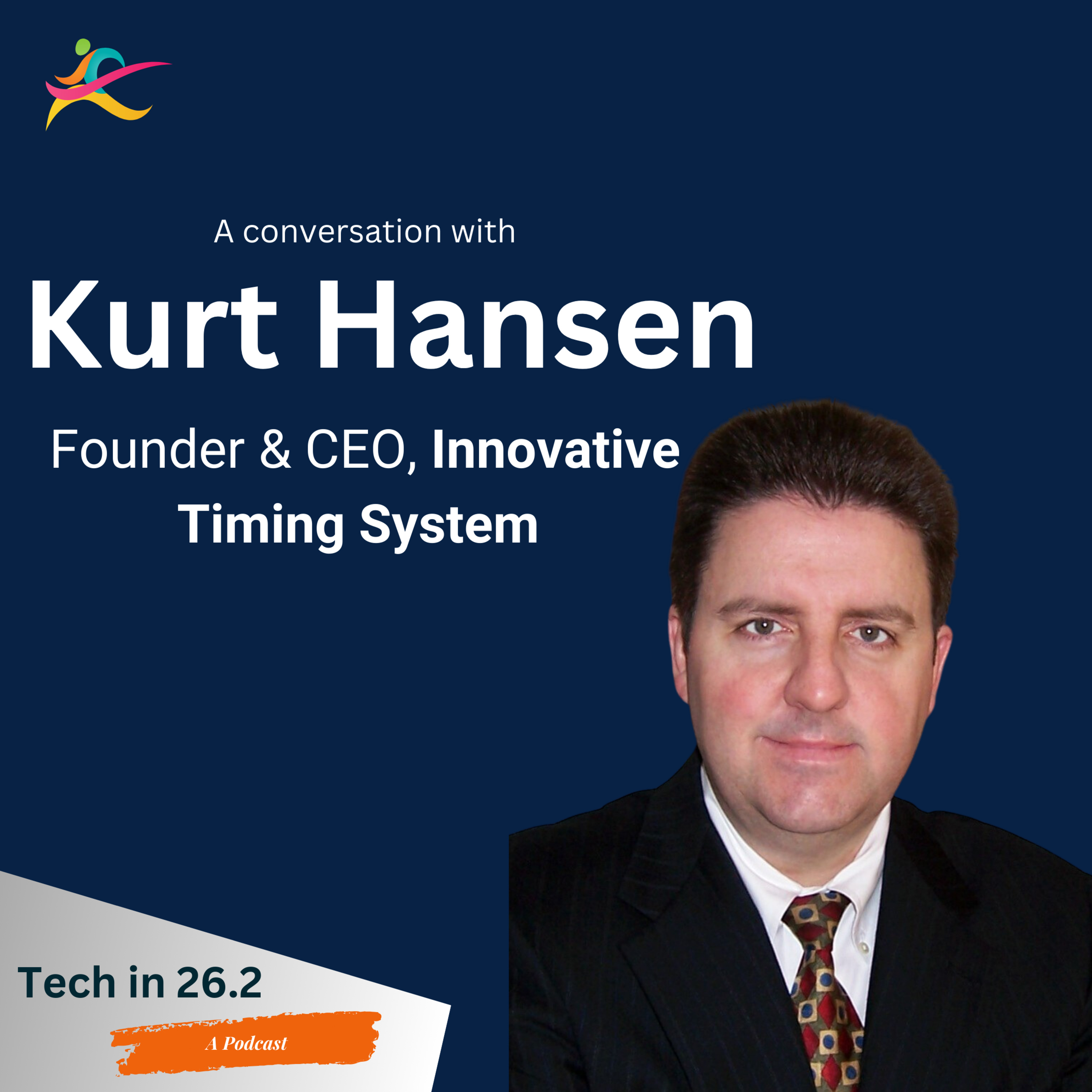 A conversation with Kurt Hansen, Founder & CEO of Innovative Timing Systems | Welcome to the share the next episode on Tech in 26.2 podcast - A conversation with Kurt Hansen Founder & CEO of Innovative Timing Systems, one of the top 4 (@Mylaps, @Chronotrack, @Raceresults) and privately held race timing companies in the world. During our conversation, we focus on the following areas: 👉 It was an accident - founding story of Innovating Timing System 👉 Passion for rescuing animals and love for big cats leading to naming the race timing products after big cats e.g Jaguar timing systems 👉 How frustration and anger due to lack of innovation in the race timing industry led to 32 patents 👉 High level over view of how does Jaguar timing system work? 👉 Building the infrastructure to scale Innovative timing system to 700 offices supporting ~18000 races across 70-80 countries 👉 Why build an unparalleled tech support for its customers, legendary in the industry? 👉 Consolidation underway - Kurt’s take on where is the race timing industry heading? Podcast Outline: 0:05 - Introduction 3:00 - Traveling 140 countries around the world 5:15 - It was an accident - founding story of Innovating Timing System 14:08 - Passion for rescuing animals and love for big cats leading to naming the race timing products after big cats e.g Jaguar timing systems 16:45 - Drive for Innovation so “that 5K was their Olympic experience”. How frustration and anger due to lack of innovation in the race timing industry led to 32 patents 21:10 - Creating the magical experience on race day - high level over view of how does Jaguar timing system work? 33:59 - Building the infrastructure to scale Innovative timing system to 700 offices supporting ~18000 races across 70-80 countries 38:17 - Why build an unparalleled tech support for its customers, legendary in the industry? 47:27 - Consolidation underway - Kurt’s take on where is the race timing industry heading? References:Innovative Timing Systems website - https://www.innovativetimingsystems.com/Jaguar Race timing systems demo by Kurt - https://www.youtube.com/watch?v=vT8-pZXvXEcIronman World Championship, Kailua-Kona, Hawaii - https://www.ironman.com/im-world-championship-kona Podcast production tool credit - Planning - Notion- Research and show notes - Perplexity and Microsoft Copilot- Recording - Zoom- Transcription - Restream.io- Media editing and mixing - Canva MagicAI Episode Info - Apple Podcast link - https://apple.co/4bWDXmD - Spotify podcast link - https://bit.ly/3VjaIDg - Youtube - https://youtu.be/_r1VUANuZuU Transcript & Shownotes- https://www.traxamo.com/tech-in-26-2-kurt-hansen | — | ||||||
| 5/20/24 |  Tech in 26.2 Podcast - Intro | Tech in 26.2 Podcast Intro | — | ||||||
Showing 25 of 43
Sponsor Intelligence
Sign in to see which brands sponsor this podcast, their ad offers, and promo codes.
Chart Positions
2 placements across 2 markets.
Chart Positions
2 placements across 2 markets.