What the Fundraising
by Mallory Erickson
Is this your podcast?Insights from recent episode analysis
Audience Interest
Podcast Focus
Publishing Consistency
Platform Reach
Insights are generated by CastFox AI using publicly available data, episode content, and proprietary models.
Total monthly reach
Estimated from 19 chart positions in 19 markets.
By chart position
- 🇬🇧GB · Non-Profit#13300K to 1M
- 🇺🇸US · Non-Profit#6630K to 100K
- 🇦🇺AU · Non-Profit#7830K to 100K
- 🇨🇦CA · Non-Profit#9030K to 100K
- 🇯🇵JP · Non-Profit#5210K to 30K
- Per-Episode Audience
Est. listeners per new episode within ~30 days
146K to 484K🎙 Daily cadence·303 episodes·Last published today - Monthly Reach
Unique listeners across all episodes (30 days)
485K to 1.6M🇬🇧62%🇺🇸6%🇦🇺6%+16 more - Active Followers
Loyal subscribers who consistently listen
146K to 484K
Market Insights
Platform Distribution
Reach across major podcast platforms, updated hourly
Total Followers
—
Total Plays
—
Total Reviews
—
* Data sourced directly from platform APIs and aggregated hourly across all major podcast directories.
On the show
Recent episodes
320: Fundraising and Funder Behavior: The Tiny Habits That Will Change Your Life with BJ Fogg, PhD
Sep 3, 2026
48m 04s
319: 3 Fundraising Readiness Gaps Standing Between You and Your Next Yes with Mallory Erickson
Sep 1, 2026
19m 16s
318: From Loss to Legacy: How Joey’s Song Scales Volunteer-Led Fundraising
Aug 25, 2026
25m 08s
317: Lead with Trust, Not Control with Rebecca Blume
Aug 18, 2026
50m 49s
316: Campaign Success Starts Before You Fundraise with Amy Eisenstein & Sarah
Aug 11, 2026
26m 14s
Social Links & Contact
Official channels & resources
Official Website
Login
RSS Feed
Login
| Date | Episode | Description | Length | ||||||
|---|---|---|---|---|---|---|---|---|---|
| 9/3/26 |  320: Fundraising and Funder Behavior: The Tiny Habits That Will Change Your Life with BJ Fogg, PhD | We are releasing a special bonus episode of What The Fundraising! In this episode of What the Fundraising Podcast… I talked to behavior scientist and author BJ Fogg, PhD. BJ is one of my biggest teachers and superheroes, he has run a lab at Stanford University for 20 years now, and for the last 10, he’s dedicated his work to behavior design. His book Tiny Habits is a wonderful explanation of how our brains work and what small but effective techniques we can use to create habits and beat fears. His Fogg Behavior Model is perfect for fundraisers out there, it goes from allowing yourself to feel success over small victories, to taking action by tracking down your prompts and abilities. In this conversation BJ shares SO many useful and simple hacks, I felt like I had to write them down. Plus, his approach to people is immensely human, compassionate, and positive, (just like fundraising!) You really don’t want to miss this conversation. | 48m 04s | ||||||
| 9/1/26 |  319: 3 Fundraising Readiness Gaps Standing Between You and Your Next Yes with Mallory Erickson | In this episode of What the Fundraising Podcast, What if the reason you're avoiding fundraising outreach isn't because you're bad at fundraising, but because you have a readiness gap? In this solo episode of What the Fundraising, Mallory Erickson breaks down three common fundraising readiness gaps that can quietly stand between you and your next yes: confidence, clarity, and consistency. She shares the behavioral science behind why we avoid outreach, why vague to-do lists create procrastination, and how frantic bursts of fundraising can make relationship-building feel transactional. Most importantly, Mallory gives you one concrete move for each readiness gap that you can put into practice this week. From rewriting the story you tell yourself when a donor doesn't respond to turning vague fundraising tasks into tiny physical actions, these strategies are designed to make fundraising feel more doable—and help you build the muscle memory that creates sustainable momentum. In this episode, you will be able to: Understand why fundraising avoidance isn't a character flaw, but a potential readiness gap. Recognize how anticipatory anxiety and negative assumptions can affect your fundraising outreach. Reframe donor silence and rejection without turning them into judgments about your worth or competence. Turn vague fundraising to-dos into specific, actionable next physical steps. Use tiny habits to lower the activation energy around fundraising. Build consistency by anchoring small donor touchpoints to routines you already have. Understand why relationship fundraising benefits from consistency rather than frantic bursts of activity. Create simple habits that help you become the fundraiser who never fully goes quiet. Get all the resources from today’s episode here. Support for this show is brought to you by Donor Perfect. Our friends at Donor Perfect really understand fundraising on so many levels. Stay aligned while working online with a seamless and secure payments experience for your donors and your team. Empower donors to give where they are, whenever they like, automate data entry, and process online, monthly, and mobile payments, and accept payments over the phone. Connect with me: Instagram: https://www.instagram.com/_malloryerickson/ Facebook: https://www.facebook.com/whatthefundraising YouTube: https://www.youtube.com/@malloryerickson7946 LinkedIn: https://www.linkedin.com/mallory-erickson-bressler/ Website: malloryerickson.com/podcast Loved this episode? Leave us a review and rating here: https://podcasts.apple.com/us/podcast/what-the-fundraising/id1575421652 If you haven’t already, please visit our new What the Fundraising community forum. Check it out and join the conversation at this link. If you’re looking to raise more from the right funders, then you’ll want to check out my Power Partners Formula, a step-by-step approach to identifying the optimal partners for your organization. This free masterclass offers a great starting point. | 19m 16s | ||||||
| 8/25/26 |  318: From Loss to Legacy: How Joey’s Song Scales Volunteer-Led Fundraising | In this episode of What the Fundraising Podcast, What if music could do more than entertain people? For Mike, concerts have become a way to bring people together and raise money for an important cause: finding better treatments for epilepsy. Mike Gomoll founded Joey's Song, a 100% volunteer organization, following the loss of his son. Based in Madison, Wisconsin, the organization is dedicated to funding research grants aimed at minimizing and ultimately eliminating seizures. Rather than spreading its efforts across awareness campaigns and patient services, Mike has kept the mission deliberately focused on research, making it easier for sponsors, artists, and supporters to understand and champion the cause. Mike explains how Joey's Song uses unique music concerts to raise funds. Well-known artists, including The Bangles, Goo Goo Dolls, and Tears for Fears, come together to perform covers and create a special experience for both musicians and audiences. Moreover, he talks about why artists return every year and shares lessons from ideas that did not work as expected. The conversation also covers taking smart risks, protecting donor money, and being willing to change plans. Mike believes organizations should keep their main purpose clear while listening to their teams, learning from experience, and following new opportunities. In this episode, you will be able to: - Understand how a clear mission can guide an organization. - Explain how music events can support fundraising. - Identify ways to engage and retain artists. - Understand the value of community building. - Recognize the importance of taking smart risks. - Learn from unsuccessful ideas and mistakes. - Understand how to balance risk and responsibility. - Recognize when an organization needs to adapt. Get all the resources from today’s episode here. Support for this show is brought to you by Donor Perfect. Our friends at Donor Perfect really understand fundraising on so many levels. Stay aligned while working online with a seamless and secure payments experience for your donors and your team. Empower donors to give where they are, whenever they like, automate data entry, and process online, monthly, and mobile payments, and accept payments over the phone. Connect with me: Instagram: https://www.instagram.com/_malloryerickson/ Facebook: https://www.facebook.com/whatthefundraising YouTube: https://www.youtube.com/@malloryerickson7946 LinkedIn: https://www.linkedin.com/mallory-erickson-bressler/ Website: malloryerickson.com/podcast Loved this episode? Leave us a review and rating here: https://podcasts.apple.com/us/podcast/what-the-fundraising/id1575421652 If you haven’t already, please visit our new What the Fundraising community forum. Check it out and join the conversation at this link. If you’re looking to raise more from the right funders, then you’ll want to check out my Power Partners Formula, a step-by-step approach to identifying the optimal partners for your organization. This free masterclass offers a great starting point. | 25m 08s | ||||||
| 8/18/26 |  317: Lead with Trust, Not Control with Rebecca Blume | What if becoming a better leader starts with letting go of who you think you should be? Meet Rebecca Blume, the Vice Chancellor for Advancement at the University of Washington Bothell. She has 22 years of fundraising experience and has worked with organizations including Fair Start and the YWCA in downtown Seattle. To start the conversation, Rebecca shares how her experiences helped her become more confident and comfortable with her leadership style. She discusses viewing life as seasons rather than chasing perfect balance, using a pendulum to shift attention toward what matters most. Moreover, Rebecca shares a powerful exercise for challenging limiting beliefs and explains how letting go of the need for total control can strengthen trust within a team. The discussion also touches on people-pleasing, healthy boundaries, holding space for difficult emotions, and responding rather than reacting. Finally, Rebecca encourages leaders to intentionally shape workplace culture and make small, daily shifts toward authenticity, connection, and trust. In this episode, you will be able to: Lead more authentically by being comfortable with who you are. Manage different life priorities by thinking in seasons. Identify limiting beliefs that may affect your leadership. Let go of unnecessary control and build trust within your team. Set healthy boundaries without feeling guilty. Handle difficult emotions without reacting defensively. Communicate clearly during challenging situations. Create a positive workplace culture that reflects your values. Reduce people-pleasing habits and focus on what truly matters. Make small daily changes to become a more confident and authentic leader. Get all the resources from today’s episode here. Support for this show is brought to you by Donor Perfect. Our friends at Donor Perfect really understand fundraising on so many levels. Stay aligned while working online with a seamless and secure payments experience for your donors and your team. Empower donors to give where they are, whenever they like, automate data entry, and process online, monthly, and mobile payments, and accept payments over the phone. Connect with me: Instagram: https://www.instagram.com/_malloryerickson/ Facebook: https://www.facebook.com/whatthefundraising YouTube: https://www.youtube.com/@malloryerickson7946 LinkedIn: https://www.linkedin.com/mallory-erickson-bressler/ Website: malloryerickson.com/podcast Loved this episode? Leave us a review and rating here: https://podcasts.apple.com/us/podcast/what-the-fundraising/id1575421652 If you haven’t already, please visit our new What the Fundraising community forum. Check it out and join the conversation at this link. If you’re looking to raise more from the right funders, then you’ll want to check out my Power Partners Formula, a step-by-step approach to identifying the optimal partners for your organization. This free masterclass offers a great starting point | 50m 49s | ||||||
| 8/11/26 |  316: Campaign Success Starts Before You Fundraise with Amy Eisenstein & Sarah | In this episode of What the Fundraising Podcast, Capital campaigns don't succeed by luck; they succeed through preparation, education, and strong leadership. Today, let's discover why empowering board members with the right knowledge can transform uncertainty into confidence and lay the foundation for a successful fundraising campaign. Meet Amy Eisenstein, CEO and Co-Founder of Capital Campaign Pro, who brings over 30 years of nonprofit experience, including two decades as a fundraising consultant. She is joined by Sarah Plimpton, Vice President and Chief Happiness Officer at Capital Campaign Pro, whose extensive background spans fundraising, campaign leadership, consulting, and nonprofit advisory work. Together, they share practical insights from their experience helping organizations raise transformational gifts and explain the inspiration behind their book, A Board Member's Guide to Capital Campaign Fundraising. Today's discussion explores why board education is essential, when organizations should begin preparing for a campaign, and how the book can be used as an ongoing resource throughout the fundraising journey. Amy and Sarah explain how stronger partnerships between staff and board members lead to better campaign outcomes, why challenges should be viewed as opportunities for growth, and how redefining feasibility studies as "campaign readiness studies" creates a more strategic, relationship-driven approach. They also share actionable recommendations on strategic planning, organizational readiness, and building the confidence needed to execute successful capital campaigns. In this episode, you will be able to: Understand the role of board education in campaigns. Learn when to start campaign preparation. Build board confidence and fundraising knowledge. Address common campaign fears and myths. Strengthen staff-board collaboration. Align campaigns with strategic goals. Small changes can lead to significant cultural shifts over time. Agency in giving is crucial for fostering genuine generosity. Get all the resources from today’s episode here. Support for this show is brought to you by Donor Perfect. Our friends at Donor Perfect really understand fundraising on so many levels. Stay aligned while working online with a seamless and secure payments experience for your donors and your team. Empower donors to give where they are, whenever they like, automate data entry, and process online, monthly, and mobile payments, and accept payments over the phone. Connect with me: Instagram: https://www.instagram.com/_malloryerickson/ Facebook: https://www.facebook.com/whatthefundraising YouTube: https://www.youtube.com/@malloryerickson7946 LinkedIn: https://www.linkedin.com/mallory-erickson-bressler/ Website: malloryerickson.com/podcast Loved this episode? Leave us a review and rating here: https://podcasts.apple.com/us/podcast/what-the-fundraising/id1575421652 If you haven’t already, please visit our new What the Fundraising community forum. Check it out and join the conversation at this link. If you’re looking to raise more from the right funders, then you’ll want to check out my Power Partners Formula, a step-by-step approach to identifying the optimal partners for your organization. This free masterclass offers a great starting point. | 26m 14s | ||||||
| 8/7/26 |  315: Conscious Fundraising: How to Move From Reaction to Intentional Action | After a week of executive coaching tools, reflections, and strategies, Mallory closes out this series with one of the most important foundations of sustainable growth: consciousness. In this episode of What The Fundraising, Mallory explores how increasing awareness of our thoughts, emotions, and behaviors can help fundraisers move from stress-based reactions into more intentional, empowered action. Many fundraisers spend their days in response mode—reacting to challenges, uncertainty, donor behavior, and endless priorities. Mallory shares how executive coaching helps create more space between what happens and how we respond, allowing us to make decisions from a place of clarity instead of fear, stress, or automatic patterns. Listeners will learn how to build daily and weekly consciousness practices, give themselves grace while changing old habits, and embrace growth without perfectionism. This episode is a reminder that transformation does not require a complete overhaul—it happens one degree at a time. In this episode, you will be able to: Understand the role consciousness plays in fundraising success. Recognize when you are operating from stress responses. Create habits that increase awareness and intentionality. Shift from reactive fundraising to proactive decision-making. Practice self-compassion while building new skills. Move away from perfectionism in your growth journey. Use curiosity instead of criticism when reflecting on your actions. Embrace small, consistent changes that create lasting transformation. Get all the resources from today’s episode here. Support for this show is brought to you by Donor Perfect. Our friends at Donor Perfect really understand fundraising on so many levels. Stay aligned while working online with a seamless and secure payments experience for your donors and your team. Empower donors to give where they are, whenever they like, automate data entry, and process online, monthly, and mobile payments, and accept payments over the phone. Connect with me: Instagram: https://www.instagram.com/_malloryerickson/ Facebook: https://www.facebook.com/whatthefundraising YouTube: https://www.youtube.com/@malloryerickson7946 LinkedIn: https://www.linkedin.com/mallory-erickson-bressler/ Website: malloryerickson.com/podcast Loved this episode? Leave us a review and rating here: https://podcasts.apple.com/us/podcast/what-the-fundraising/id1575421652 If you haven’t already, please visit our new What the Fundraising community forum. Check it out and join the conversation at this link. If you’re looking to raise more from the right funders, then you’ll want to check out my Power Partners Formula, a step-by-step approach to identifying the optimal partners for your organization. This free masterclass offers a great starting point. | 10m 58s | ||||||
| 8/6/26 |  314: You Are Enough: A Reminder for Every Fundraiser Doing The Hard, Important Work | Fundraising is deeply human work. It requires vulnerability, connection, courage, and the ability to hold the hopes and dreams of an entire community. But in a profession that often carries immense pressure, it can be easy for fundraisers to forget something essential: they are already enough. In this special executive coaching episode of What The Fundraising, Mallory Erickson offers a heartfelt reminder to fundraisers everywhere. She shares why self-love, self-compassion, and recognizing your own worth are not barriers to growth—they are the foundation for sustainable impact and meaningful change. Mallory invites listeners to pause, reflect, and reconnect with themselves beyond their fundraising goals, job titles, and accomplishments. This episode is a reminder that the people moving resources toward what matters most deserve the same compassion and care they extend to others. In this episode, you will be able to: Recognize the true impact and importance of fundraising work. Understand why fundraising is the work—not just what supports the work. Practice self-compassion as a foundation for growth. Release the belief that achievement determines your worth. Reflect on the pressure fundraisers carry every day. Build a healthier relationship with yourself. Replace self-criticism with encouragement and care. Celebrate the meaningful work you are already doin Get all the resources from today’s episode here. Support for this show is brought to you by Donor Perfect. Our friends at Donor Perfect really understand fundraising on so many levels. Stay aligned while working online with a seamless and secure payments experience for your donors and your team. Empower donors to give where they are, whenever they like, automate data entry, and process online, monthly, and mobile payments, and accept payments over the phone. Connect with me: Instagram: https://www.instagram.com/_malloryerickson/ Facebook: https://www.facebook.com/whatthefundraising YouTube: https://www.youtube.com/@malloryerickson7946 LinkedIn: https://www.linkedin.com/mallory-erickson-bressler/ Website: malloryerickson.com/podcast Loved this episode? Leave us a review and rating here: https://podcasts.apple.com/us/podcast/what-the-fundraising/id1575421652 If you haven’t already, please visit our new What the Fundraising community forum. Check it out and join the conversation at this link. If you’re looking to raise more from the right funders, then you’ll want to check out my Power Partners Formula, a step-by-step approach to identifying the optimal partners for your organization. This free masterclass offers a great starting point. | 11m 36s | ||||||
| 8/5/26 |  313: How Fleeing Discomfort Is Holding Back Your Fundraising | Fundraising is filled with uncertainty, vulnerability, and moments of discomfort—but what happens when those feelings start driving our decisions? In this episode of What The Fundraising, Mallory Erickson dives into the hidden ways fundraisers respond to discomfort and how those stress responses can unintentionally derail fundraising success. Drawing from her executive coaching work and research on fundraiser behavior, Mallory explores how flight and freeze responses show up in everyday fundraising activities. From avoiding donor conversations to endlessly perfecting reports and strategies, these patterns can keep fundraisers stuck in cycles of busy work, scattered action, and missed opportunities. Listeners will learn how to recognize when stress is influencing their fundraising decisions and how to build the capacity to sit with uncertainty, have deeper donor conversations, and take the actions that truly move their organizations forward. In this episode, you will be able to: Recognize how discomfort impacts fundraising decisions. Understand the connection between stress responses and fundraising behaviors. Identify when busy work is replacing meaningful fundraising action. Learn why uncertainty can feel so dysregulating. Understand how perfectionism can prevent fundraising progress. Build awareness around avoidance patterns. Develop more conscious responses to fundraising challenges. Create stronger donor relationships through vulnerability and connection. Get all the resources from today’s episode here. Support for this show is brought to you by Donor Perfect. Our friends at Donor Perfect really understand fundraising on so many levels. Stay aligned while working online with a seamless and secure payments experience for your donors and your team. Empower donors to give where they are, whenever they like, automate data entry, and process online, monthly, and mobile payments, and accept payments over the phone. Connect with me: Instagram: https://www.instagram.com/_malloryerickson/ Facebook: https://www.facebook.com/whatthefundraising YouTube: https://www.youtube.com/@malloryerickson7946 LinkedIn: https://www.linkedin.com/mallory-erickson-bressler/ Website: malloryerickson.com/podcast Loved this episode? Leave us a review and rating here: https://podcasts.apple.com/us/podcast/what-the-fundraising/id1575421652 If you haven’t already, please visit our new What the Fundraising community forum. Check it out and join the conversation at this link. If you’re looking to raise more from the right funders, then you’ll want to check out my Power Partners Formula, a step-by-step approach to identifying the optimal partners for your organization. This free masterclass offers a great starting point. | 14m 58s | ||||||
| 8/4/26 |  312: Conscious Values vs. Fear-Based Values: Making Decisions That Truly Align | Have you ever felt torn between competing priorities—wanting to excel at work while also being present for your family, or saying "yes" to helping everyone even when you're overwhelmed? The tension you feel may not be because your values are unclear, but because they're competing with one another. In this solo coaching episode, Mallory Erickson explores the difference between conscious-based values and fear-based values, and why understanding that distinction can transform the way you make decisions. She explains why it's impossible to express all of your core values all the time, and how consciously choosing which value to prioritize in a given moment can reduce guilt, overwhelm, and decision paralysis. Mallory also introduces a powerful coaching exercise that helps uncover whether a value is truly yours or if it's being driven by fear, people-pleasing, or external expectations. Through practical examples and thoughtful reflection, she invites listeners to examine the beliefs underneath their values so they can make more intentional choices in both fundraising and life. In this episode, you will be able to: Identify your core personal values. Understand why your values naturally compete with one another. Reduce guilt when you can't honor every value simultaneously. Recognize the difference between conscious-based and fear-based values. Identify fear-based beliefs that influence your decisions. Practice converting fear-driven values into conscious choices. Make decisions with greater clarity and intention. Build a values-based approach to fundraising and leadership. Get all the resources from today’s episode here. Support for this show is brought to you by Donor Perfect. Our friends at Donor Perfect really understand fundraising on so many levels. Stay aligned while working online with a seamless and secure payments experience for your donors and your team. Empower donors to give where they are, whenever they like, automate data entry, and process online, monthly, and mobile payments, and accept payments over the phone. Connect with me: Instagram: https://www.instagram.com/_malloryerickson/ Facebook: https://www.facebook.com/whatthefundraising YouTube: https://www.youtube.com/@malloryerickson7946 LinkedIn: https://www.linkedin.com/mallory-erickson-bressler/ Website: malloryerickson.com/podcast Loved this episode? Leave us a review and rating here: https://podcasts.apple.com/us/podcast/what-the-fundraising/id1575421652 If you haven’t already, please visit our new What the Fundraising community forum. Check it out and join the conversation at this link. If you’re looking to raise more from the right funders, then you’ll want to check out my Power Partners Formula, a step-by-step approach to identifying the optimal partners for your organization. This free masterclass offers a great starting point | 14m 53s | ||||||
| 8/3/26 |  311: Why Discomfort Isn't the Problem: A Better Way to Handle Stress in Fundraising | Fundraising can be uncomfortable—but what if discomfort isn't actually the problem? In this solo coaching episode, Mallory Erickson introduces one of the foundational concepts of executive coaching: understanding the difference between discomfort and stress. While many fundraisers believe that feeling nervous before a donor meeting means they're doing something wrong, Mallory explains why discomfort is actually a natural sign of growth, uncertainty, and courage. Rather than trying to eliminate uncomfortable feelings, she shares a practical framework for noticing what's happening in your body, acknowledging your emotions without judgment, and preventing negative self-talk from turning temporary discomfort into chronic stress. Through simple practices you can implement immediately, this episode offers a powerful mindset shift that can help you become a more grounded, confident, and effective fundraiser. In a nutshell: Discomfort isn't something to avoid, it's something to understand. When we stop judging our emotions, we create space to show up with more courage, clarity, and confidence. In this episode, you will be able to: Understand the difference between discomfort and stress. Recognize how judgment amplifies difficult emotions. Notice physical signs of discomfort before they affect your actions. Interrupt negative self-talk before it escalates. Practice acknowledging and validating your emotions. Build a healthier relationship with discomfort. Develop greater nervous system regulation. Take fundraising action from courage instead of fear. Get all the resources from today’s episode here. Support for this show is brought to you by Donor Perfect. Our friends at Donor Perfect really understand fundraising on so many levels. Stay aligned while working online with a seamless and secure payments experience for your donors and your team. Empower donors to give where they are, whenever they like, automate data entry, and process online, monthly, and mobile payments, and accept payments over the phone. Connect with me: Instagram: https://www.instagram.com/_malloryerickson/ Facebook: https://www.facebook.com/whatthefundraising YouTube: https://www.youtube.com/@malloryerickson7946 LinkedIn: https://www.linkedin.com/mallory-erickson-bressler/ Website: malloryerickson.com/podcast Loved this episode? Leave us a review and rating here: https://podcasts.apple.com/us/podcast/what-the-fundraising/id1575421652 If you haven’t already, please visit our new What the Fundraising community forum. Check it out and join the conversation at this link. If you’re looking to raise more from the right funders, then you’ll want to check out my Power Partners Formula, a step-by-step approach to identifying the optimal partners for your organization. This free masterclass offers a great starting point | 16m 01s | ||||||
Want analysis for the episodes below?Free for Pro Submit a request, we'll have your selected episodes analyzed within an hour. Free, at no cost to you, for Pro users. | |||||||||
| 7/28/26 |  310: Fear, Mindset, and Money: How Fundraisers Build Courage for Major Donor Asks | Behind every successful fundraiser is someone who has learned to face fear, embrace discomfort, and build the confidence to keep moving forward. In this conversation, we explore why mindset, not just strategy, is often the biggest factor in fundraising success. Michael Mitchell, Co-Founder and CEO of The Fundraising Academy, shares insights drawn from years of coaching fundraisers and nonprofit leaders. Rather than focusing solely on scripts, templates, or techniques, he explains why lasting success begins with understanding the beliefs, emotions, and internal barriers that influence how people approach fundraising. His coaching philosophy emphasizes self-awareness, courage, and personal growth as essential ingredients for becoming a more effective fundraiser. Throughout the conversation, Michael discusses the emotional realities of fundraising, including fear, rejection, and overwhelm, and why these feelings should be normalized instead of ignored. He explores the powerful coaching principle of "naming it to tame it," showing how identifying underlying emotions can reduce their influence. The discussion also highlights the value of safe yet challenging coaching relationships, constructive feedback, emotional regulation, and the importance of leaning into discomfort rather than avoiding it. In a nutshell, fundraising isn't just about making the ask. It's about mastering the emotions that come with it! In this episode, you will be able to: - Understand the emotional side of fundraising. - Recognize fear and discomfort as normal. - Shift from tactics to mindset. - Identify limiting beliefs around fundraising. - Apply the "name it to tame it" approach. - Build emotional regulation skills. - Develop courage to make the ask. - Build a resilient fundraising mindset. Get all the resources from today’s episode here. Support for this show is brought to you by Donor Perfect. Our friends at Donor Perfect really understand fundraising on so many levels. Stay aligned while working online with a seamless and secure payments experience for your donors and your team. Empower donors to give where they are, whenever they like, automate data entry, and process online, monthly, and mobile payments, and accept payments over the phone. Connect with me: Instagram: https://www.instagram.com/_malloryerickson/ Facebook: https://www.facebook.com/whatthefundraising YouTube: https://www.youtube.com/@malloryerickson7946 LinkedIn: https://www.linkedin.com/mallory-erickson-bressler/ Website: malloryerickson.com/podcast Loved this episode? Leave us a review and rating here: https://podcasts.apple.com/us/podcast/what-the-fundraising/id1575421652 If you haven’t already, please visit our new What the Fundraising community forum. Check it out and join the conversation at this link. If you’re looking to raise more from the right funders, then you’ll want to check out my Power Partners Formula, a step-by-step approach to identifying the optimal partners for your organization. This free masterclass offers a great starting point. | 37m 31s | ||||||
| 7/21/26 |  309: Responsible AI Adoption for Grassroots and Justice-Focused Nonprofits with DeAnna Hoskins | AI is no longer a future trend. It is reshaping how organizations lead, innovate, and create impact today, and nonprofits are no exception. DeAnna Hoskins is the President and CEO of JustLeadershipUSA, an organization led by formerly incarcerated people. She also served as a senior policy advisor during the Obama administration. Her experience in government and nonprofit leadership gives her a unique view on how technology, policy, and community work can come together to create positive change. During the conversation, DeAnna explains why nonprofits should invest in AI training before adopting new tools. She mentions that AI should support people, not replace them, and that human oversight is always important. She also talks about the need to reduce bias in AI, to create clear guidelines for its use, and to continue learning as the technology evolves. Furthermore, DeAnna discusses the role of philanthropy in funding AI education and helping organizations build the skills they need. In this episode, you will be able to: Recognize the value of AI training. Use AI with human oversight. Build responsible AI guidelines. Identify AI bias and risks. Create long-term AI strategies. Use AI to support teams. Understand AI funding needs. Get all the resources from today’s episode here. Support for this show is brought to you by Donor Perfect. Our friends at Donor Perfect really understand fundraising on so many levels. Stay aligned while working online with a seamless and secure payments experience for your donors and your team. Empower donors to give where they are, whenever they like, automate data entry, and process online, monthly, and mobile payments, and accept payments over the phone. Connect with me: Instagram: https://www.instagram.com/_malloryerickson/ Facebook: https://www.facebook.com/whatthefundraising YouTube: https://www.youtube.com/@malloryerickson7946 LinkedIn: https://www.linkedin.com/mallory-erickson-bressler/ Website: malloryerickson.com/podcast Loved this episode? Leave us a review and rating here: https://podcasts.apple.com/us/podcast/what-the-fundraising/id1575421652 If you haven’t already, please visit our new What the Fundraising community forum. Check it out and join the conversation at this link. If you’re looking to raise more from the right funders, then you’ll want to check out my Power Partners Formula, a step-by-step approach to identifying the optimal partners for your organization. This free masterclass offers a great starting point. | 28m 29s | ||||||
| 7/14/26 |  308: Using Donor Matching to Grow Impact and Community with Pooya Pourak | What if the best way to raise more money is not just to find new donors, but to help existing donors give more meaningfully? Today, let's explore how matching campaigns can turn fundraising into a shared experience that builds trust, excitement, and community. Pooya Pourak is an industrial and systems engineer, human-centered designer, host of The Nonprofit Lab podcast, and the founder of MatchNice. His career began in consulting, where he created human-centered solutions for health and human services programs that support families through Medicaid, foster care, food assistance, and childcare. Passionate about creating social impact, he built MatchNice to help nonprofits, businesses, communities, and donors work together to make a bigger difference. In this conversation, Pooya shares how the COVID-19 pandemic led to the creation of MatchNice and why donation matching is a powerful but often overlooked fundraising approach. He explains how matching works, why transparency and urgency motivate donors, and how nonprofits can engage everyday supporters and mid-level donors as matching partners. Through real examples, Pooya shows how matching campaigns can increase donations, bring in new supporters, strengthen donor relationships, and help nonprofits create greater impact. In this episode, you will be able to: Explain how donation matching boosts fundraising. Understand the psychology of matching gifts. Identify different types of matching donors. Engage existing donors as match sponsors. Create milestone-based matching campaigns. Use progress tracking to motivate giving. Get all the resources from today’s episode here. Support for this show is brought to you by Donor Perfect. Our friends at Donor Perfect really understand fundraising on so many levels. Stay aligned while working online with a seamless and secure payments experience for your donors and your team. Empower donors to give where they are, whenever they like, automate data entry, and process online, monthly, and mobile payments, and accept payments over the phone. Connect with me: Instagram: https://www.instagram.com/_malloryerickson/ Facebook: https://www.facebook.com/whatthefundraising YouTube: https://www.youtube.com/@malloryerickson7946 LinkedIn: https://www.linkedin.com/mallory-erickson-bressler/ Website: malloryerickson.com/podcast Loved this episode? Leave us a review and rating here: https://podcasts.apple.com/us/podcast/what-the-fundraising/id1575421652 If you haven’t already, please visit our new What the Fundraising community forum. Check it out and join the conversation at this link. If you’re looking to raise more from the right funders, then you’ll want to check out my Power Partners Formula, a step-by-step approach to identifying the optimal partners for your organization. This free masterclass offers a great starting point. | 28m 11s | ||||||
| 7/7/26 |  307 - The Partnerships That Change More Than Metrics with Renee Daniel Flagler | Raising young people out of poverty takes far more than good intentions. It requires trust, healing, opportunity, and unwavering community support. Also, meaningful mentorship can become a powerful force for breaking generational barriers. Meet Renee Daniel Flagler, President of the National CARES Mentoring Movement. Today, she reflects on her personal journey into nonprofit leadership, inspired by a transformative volunteer experience that revealed the life-changing impact of supporting vulnerable youth. She discusses her organization's mission to empower young people through mentoring, trauma-informed healing, wellness, and workforce development. Moreover, the conversation explores the organization's holistic mentoring model, which combines mentor recruitment, emotional wellness, workforce readiness, and economic mobility to address the complex realities facing underserved communities. Renee explains why trauma-informed care is essential for long-term success, particularly in the aftermath of COVID-19, and discusses the challenges of securing funding for comprehensive programs. She also highlights the importance of mission-aligned philanthropic partnerships, organizational adaptability, and reimagining philanthropy by removing unnecessary barriers so nonprofits can focus on creating lasting, life-changing impact. In this episode, you will be able to: Understand how mentoring can help break the cycle of generational poverty. Recognize the importance of trauma-informed and healing-centered approaches in youth development. Explain why mental health and emotional well-being are essential for long-term success. Identify the value of combining mentoring, workforce development, and wellness into one holistic model. Understand why addressing root causes leads to more meaningful and lasting impact. Learn how strong, mission-aligned partnerships can strengthen nonprofit outcomes. Get all the resources from today’s episode here. Support for this show is brought to you by Donor Perfect. Our friends at Donor Perfect really understand fundraising on so many levels. Stay aligned while working online with a seamless and secure payments experience for your donors and your team. Empower donors to give where they are, whenever they like, automate data entry, and process online, monthly, and mobile payments, and accept payments over the phone. Connect with me: Instagram: https://www.instagram.com/_malloryerickson/ Facebook: https://www.facebook.com/whatthefundraising YouTube: https://www.youtube.com/@malloryerickson7946 LinkedIn: https://www.linkedin.com/mallory-erickson-bressler/ Website: malloryerickson.com/podcast Loved this episode? Leave us a review and rating here: https://podcasts.apple.com/us/podcast/what-the-fundraising/id1575421652 If you haven’t already, please visit our new What the Fundraising community forum. Check it out and join the conversation at this link. If you’re looking to raise more from the right funders, then you’ll want to check out my Power Partners Formula, a step-by-step approach to identifying the optimal partners for your organization. This free masterclass offers a great starting point. | 27m 29s | ||||||
| 6/30/26 |  306: Healing Starts Within with Dawn Wensel | Sometimes the biggest breakthroughs begin with the hardest struggles! Today, Mallory and Dawn Wensel, the Director of Development at Hope Street Group, talk about healing, resilience, and the powerful connection between the mind and body. Their honest stories remind us that growth often starts with understanding ourselves. During the conversation, Dawn shares her journey from being a teacher to building a successful career in fundraising. Alongside her career, Dawn opens up about her long battle with chronic pain and how it affected both her work and personal life. She explains how reading John Sarno's book helped her see the link between stress and physical pain. Through journaling, reflection, and self-awareness, she found healthier ways to manage her symptoms and regain confidence. The conversation explores how stress can show up in the body and why it is important to address the root causes instead of only treating symptoms. Dawn introduces Positive Intelligence and explains how it can improve both personal well-being and fundraising success. Dawn also discusses the value of supportive leaders, self-compassion, curiosity, and community. In this episode, you will be able to: Recognize the connection between mind and body in health and performance. Explore how stress can show up physically in everyday life. Learn how journaling supports emotional balance and stress relief. Build self-awareness to notice and shift thought patterns. Use curiosity to better understand emotions and reactions. Shift from perfectionism toward self-compassion and acceptance. Value community support in building resilience and reducing isolation. See how openness about struggles builds connection with others. Get all the resources from today’s episode here. Support for this show is brought to you by Donor Perfect. Our friends at Donor Perfect really understand fundraising on so many levels. Stay aligned while working online with a seamless and secure payments experience for your donors and your team. Empower donors to give where they are, whenever they like, automate data entry, and process online, monthly, and mobile payments, and accept payments over the phone. Connect with me: Instagram: https://www.instagram.com/_malloryerickson/ Facebook: https://www.facebook.com/whatthefundraising YouTube: https://www.youtube.com/@malloryerickson7946 LinkedIn: https://www.linkedin.com/mallory-erickson-bressler/ Website: malloryerickson.com/podcast Loved this episode? Leave us a review and rating here: https://podcasts.apple.com/us/podcast/what-the-fundraising/id1575421652 If you haven’t already, please visit our new What the Fundraising community forum. Check it out and join the conversation at this link. If you’re looking to raise more from the right funders, then you’ll want to check out my Power Partners Formula, a step-by-step approach to identifying the optimal partners for your organization. This free masterclass offers a great starting point. | 26m 15s | ||||||
| 6/23/26 |  305: Turning Online Communities into Powerful Fundraisers with Michael Wasserman | Fundraising is changing, and organizations need new ways to connect with younger people! In this conversation, Michael Wasserman explains how digital communities and online creators are shaping the future of fundraising. He shares why traditional methods are no longer enough and how organizations can build stronger relationships with younger supporters. Michael Wasserman, CEO and co-founder of Tiltify, talks about his journey and the inspiration behind creating the platform. While working as a consultant for charities, he repeatedly heard the same problem: organizations struggled to attract younger donors. He realized that younger generations were already active on platforms such as Twitch and TikTok, but charities were not reaching them. This led him to create Tiltify in 2014, a platform designed around the needs of fundraisers rather than charities. The conversation also explores the shift from one-time donations to community-based fundraising. Michael explains that people want to participate, interact, and feel connected, rather than simply make a donation and leave. He discusses the challenges organizations face in adopting new technology and shares practical ideas, such as simplifying fundraising processes, improving communication, and creating engaging digital spaces that encourage long-term donor support. In this episode, you will be able to: Understand the shift from traditional to digital fundraising. Recognize the importance of meeting donors on modern platforms. Learn why email is less effective for younger audiences. See the value of community-driven fundraising models. Understand the move from transactional to participatory giving. Learn how digital communities increase engagement. Recognize resistance to adopting new technology. See the benefit of simpler, easier donation processes. Understand the impact of influencers on donor behavior. Learn the need to adapt to changing donor expectations. Get all the resources from today’s episode here. Support for this show is brought to you by Donor Perfect. Our friends at Donor Perfect really understand fundraising on so many levels. Stay aligned while working online with a seamless and secure payments experience for your donors and your team. Empower donors to give where they are, whenever they like, automate data entry, and process online, monthly, and mobile payments, and accept payments over the phone. Connect with me: Instagram: https://www.instagram.com/_malloryerickson/ Facebook: https://www.facebook.com/whatthefundraising YouTube: https://www.youtube.com/@malloryerickson7946 LinkedIn: https://www.linkedin.com/mallory-erickson-bressler/ Website: malloryerickson.com/podcast Loved this episode? Leave us a review and rating here: https://podcasts.apple.com/us/podcast/what-the-fundraising/id1575421652 If you haven’t already, please visit our new What the Fundraising community forum. Check it out and join the conversation at this link. If you’re looking to raise more from the right funders, then you’ll want to check out my Power Partners Formula, a step-by-step approach to identifying the optimal partners for your organization. This free masterclass offers a great starting point. | 31m 14s | ||||||
| 6/16/26 |  304: The Hidden Challenges of Skill-Based Hiring with A.P Porch | Fundraising and alumni relations are evolving faster than many institutions are prepared for. But the concept of hiring people who make us feel comfortable remains the biggest threat to innovation since these practices often remain rooted in familiarity, rigidity, and outdated ideas of “fit.” A.P. Porch is a higher education and philanthropy professional with nearly 15 years of experience in nonprofit and advancement spaces, currently serving as the University-Wide Director of Alumni Engagement at Loyola University, New Orleans. Her work centers on strengthening alumni and donor relationships while supporting the “life of the mind” through mission-driven engagement, leadership, and community building. She joined Mallory to talk about what it takes to build stronger, more sustainable advancement teams in the fundraising sector. In this episode, you will be able to: Recognize the hidden challenges behind skill-based hiring in fundraising and alumni relations. Have a clear understanding about the difference between hiring for competency versus hiring for familiarity. Learn why burnout and turnover are often symptoms of deeper organizational issues. Discover how curiosity, adaptability, and emotional intelligence can strengthen donor relationships. Learn how “culture fit” can unintentionally limit innovation and diversity of thought. Get all the resources from today’s episode here. Support for this show is brought to you by Donor Perfect. Our friends at Donor Perfect really understand fundraising on so many levels. Stay aligned while working online with a seamless and secure payments experience for your donors and your team. Empower donors to give where they are, whenever they like, automate data entry, and process online, monthly, and mobile payments, and accept payments over the phone. Connect with me: Instagram: https://www.instagram.com/_malloryerickson/ Facebook: https://www.facebook.com/whatthefundraising YouTube: https://www.youtube.com/@malloryerickson7946 LinkedIn: https://www.linkedin.com/mallory-erickson-bressler/ Website: malloryerickson.com/podcast Loved this episode? Leave us a review and rating here: https://podcasts.apple.com/us/podcast/what-the-fundraising/id1575421652 If you haven’t already, please visit our new What the Fundraising community forum. Check it out and join the conversation at this link. If you’re looking to raise more from the right funders, then you’ll want to check out my Power Partners Formula, a step-by-step approach to identifying the optimal partners for your organization. This free masterclass offers a great starting point. | 39m 13s | ||||||
| 6/9/26 |  303: The Culture Behind Successful Fundraising Teams with Jill Anderson | The secret to a successful campaign is a culture shaped by trust, collaboration, emotional resilience, and a shared sense of purpose. A successful implementation of a fundraising team is more than just hitting financial goals; it demands leadership that understands and values institutional culture, supports people through high-pressure moments, and creates a system that will thrive without burning out. From donor relationships to preventing isolation, this conversation explores how transparency, accountability, empathy, and collective support can build a sustainable fundraising culture. Jill C. Anderson is the current Vice President of Development and Alumni Engagement at Moravian University, Pennsylvania. She is an expert in campaign strategy, major gifts, and donor engagement. With nearly 26 years of experience in advancement and an earlier career in finance, she brings a strategic, systems-oriented approach to philanthropy and organizational growth. She is also a doctoral student at the Indiana University Lilly Family School of Philanthropy. Having grown up as a daughter to a professional baseball coach, Jill believes deeply in team-centered leadership and cross-functional collaboration. In this episode, you will be able to: Understand the unique challenges of building and leading fundraising teams. Learn about the effect of organizational culture on donor relationships and campaign success. Understand the importance of accountability and transparency during periods of growth and crisis. Explore strategies for reducing isolation and strengthening team connection in fundraising environments. Discover how collaboration and cross-functional understanding strengthen fundraising teams. Get all the resources from today’s episode here. Support for this show is brought to you by Donor Perfect. Our friends at Donor Perfect really understand fundraising on so many levels. Stay aligned while working online with a seamless and secure payments experience for your donors and your team. Empower donors to give where they are, whenever they like, automate data entry, and process online, monthly, and mobile payments, and accept payments over the phone. Connect with me: Instagram: https://www.instagram.com/_malloryerickson/ Facebook: https://www.facebook.com/whatthefundraising YouTube: https://www.youtube.com/@malloryerickson7946 LinkedIn: https://www.linkedin.com/mallory-erickson-bressler/ Website: malloryerickson.com/podcast Loved this episode? Leave us a review and rating here: https://podcasts.apple.com/us/podcast/what-the-fundraising/id1575421652 If you haven’t already, please visit our new What the Fundraising community forum. Check it out and join the conversation at this link. If you’re looking to raise more from the right funders, then you’ll want to check out my Power Partners Formula, a step-by-step approach to identifying the optimal partners for your organization. This free masterclass offers a great starting point. | 30m 38s | ||||||
| 6/2/26 |  302: Philanthropy's Role in Preserving Black History with Kristi Williams & Emma Willis | History doesn't only live in books. It lives in who gets remembered, who gets silenced, and who chooses to speak anyway! Meet Kristi Williams, a descendant of the 1921 Tulsa Race Massacre and member of Historic Vernon AME Church, who brings a deeply personal lens to historical preservation, and Emma Willis, who complements this perspective by focusing on advocacy, ethical philanthropy, and the importance of treating lived experience with care and dignity. Together, they emphasize how community memory and historical truth are shaped by those closest to it. The discussion expands into the erasure of Black history in education, including policies such as Oklahoma's House Bill 1775, and the broader challenge of restricted narratives in schools. Kristi and Emma highlight practical ways everyday people can contribute, such as reading widely, including banned books, journaling present-day experiences, and preserving family and ancestral documents. They also explore philanthropy as a relational practice rather than transactional giving, stressing collaboration with communities. Ultimately, the conversation connects personal storytelling, institutional responsibility, and collective action as essential tools for preserving history and strengthening democracy. In this episode, you will be able to: Understand how everyday people contribute to preserving history. Recognize the importance of descendant-led storytelling in historical preservation. Identify how oral histories and personal archives protect erased narratives. Analyze the impact of banning or restricting historical books. Appreciate the role of Black history in strengthening democratic understanding. Describe how philanthropy can support community-led cultural preservation. Distinguish between transactional giving and relational philanthropy. Apply journaling as a tool for documenting lived experience for future history. Get all the resources from today’s episode here. Support for this show is brought to you by Donor Perfect. Our friends at Donor Perfect really understand fundraising on so many levels. Stay aligned while working online with a seamless and secure payments experience for your donors and your team. Empower donors to give where they are, whenever they like, automate data entry, and process online, monthly, and mobile payments, and accept payments over the phone. Connect with me: Instagram: https://www.instagram.com/_malloryerickson/ Facebook: https://www.facebook.com/whatthefundraising YouTube: https://www.youtube.com/@malloryerickson7946 LinkedIn: https://www.linkedin.com/mallory-erickson-bressler/ Website: malloryerickson.com/podcast Loved this episode? Leave us a review and rating here: https://podcasts.apple.com/us/podcast/what-the-fundraising/id1575421652 If you haven’t already, please visit our new What the Fundraising community forum. Check it out and join the conversation at this link. If you’re looking to raise more from the right funders, then you’ll want to check out my Power Partners Formula, a step-by-step approach to identifying the optimal partners for your organization. This free masterclass offers a great starting point. | 29m 35s | ||||||
| 5/26/26 |  301: Building Values-Based Alumni Relationships in Higher Education with Howard Heevner | In this episode of What the Fundraising Podcast, Alumni relationships are shifting from tradition-bound loyalty to something more dynamic, personal, and value-driven. In this conversation, the focus turns toward what institutions are getting wrong and how listening more carefully could reshape the future of fundraising and engagement. Howard Heevner brings deep experience from a 30-year career in higher education fundraising, beginning at the University of Iowa and later serving as executive director of annual programs at UC Berkeley. He is also a co-founder of the National Alumni Survey. This large-scale initiative has grown significantly over time, expanding from tens of thousands of responses across dozens of institutions to well over 150,000 surveys. His work centers on understanding donor behavior patterns and challenging long-held assumptions about alumni generosity and awareness. The discussion highlights key shifts: declining donor participation, the emergence of distinct giving cultures across age groups, and the misconception that non-donors are simply uninformed. Instead, many already give elsewhere, signaling a need for institutions to move from assumed loyalty to earned trust. The conversation also emphasizes personalization, better use of technology for listening rather than broadcasting, and the importance of making alumni feel seen, relevant, and considered. Ultimately, it calls for a more responsive, value-aligned approach to engagement and fundraising systems. In this episode, you will be able to: - Understand shifting trends in alumni engagement and fundraising behavior. - Recognize the importance of moving from assumed trust to earned trust. - Identify how alumni giving patterns vary across age and value systems. - Learn why personalization improves relevance and alumni connection. - Understand the need to make alumni feel seen and considered. - Identify gaps between investment in student vs alumni experiences. Get all the resources from today’s episode here. Support for this show is brought to you by Donor Perfect. Our friends at Donor Perfect really understand fundraising on so many levels. Stay aligned while working online with a seamless and secure payments experience for your donors and your team. Empower donors to give where they are, whenever they like, automate data entry, and process online, monthly, and mobile payments, and accept payments over the phone. Connect with me: Instagram: https://www.instagram.com/_malloryerickson/ Facebook: https://www.facebook.com/whatthefundraising YouTube: https://www.youtube.com/@malloryerickson7946 LinkedIn: https://www.linkedin.com/mallory-erickson-bressler/ Website: malloryerickson.com/podcast Loved this episode? Leave us a review and rating here: https://podcasts.apple.com/us/podcast/what-the-fundraising/id1575421652 If you haven’t already, please visit our new What the Fundraising community forum. Check it out and join the conversation at this link. If you’re looking to raise more from the right funders, then you’ll want to check out my Power Partners Formula, a step-by-step approach to identifying the optimal partners for your organization. This free masterclass offers a great starting point. | 31m 19s | ||||||
| 5/19/26 |  300: Rethinking Nonprofits as Businesses: Earned Revenue, Sustainability & Innovation with Pradnya Haldipur | The nonprofit world is changing faster than ever, and organizations are being forced to rethink how they survive and grow in uncertain times! This episode features Pradnya Haldipur, who brings more than 30 years of experience across the nonprofit landscape. Her career has spanned the arts, software, academic medicine, and global humanitarian work with Doctors Without Borders. Recently, she transitioned to running her own consultancy, advising mission-driven organizations on strategy and sustainability. Her diverse background gives her a unique intersectional perspective on funding, leadership, and organizational growth, making her insights both practical and deeply informed by real-world experience. In this conversation, Pradnya dives into the realities of modern fundraising, the pressure nonprofits face in today's economy, and why innovation can no longer be optional. From controversial revenue ideas to challenging long-held beliefs about mission-driven work, the discussion explores how organizations can remain financially sustainable without losing sight of their purpose. It is a conversation that pushes listeners to question traditional nonprofit thinking and consider bold new possibilities for the future of the sector. In this episode, you will be able to: Understand why nonprofits need diversified revenue streams. Learn how earned revenue can support long-term sustainability. Explore innovative funding strategies beyond traditional philanthropy. Learn why flexibility and innovation matter in the nonprofit sector. Explore the stigma around nonprofits generating revenue. Gain insights into building self-sustaining program models. Get all the resources from today’s episode here. Support for this show is brought to you by Donor Perfect. Our friends at Donor Perfect really understand fundraising on so many levels. Stay aligned while working online with a seamless and secure payments experience for your donors and your team. Empower donors to give where they are, whenever they like, automate data entry, and process online, monthly, and mobile payments, and accept payments over the phone. Connect with me: Instagram: https://www.instagram.com/_malloryerickson/ Facebook: https://www.facebook.com/whatthefundraising YouTube: https://www.youtube.com/@malloryerickson7946 LinkedIn: https://www.linkedin.com/mallory-erickson-bressler/ Website: malloryerickson.com/podcast Loved this episode? Leave us a review and rating here: https://podcasts.apple.com/us/podcast/what-the-fundraising/id1575421652 If you haven’t already, please visit our new What the Fundraising community forum. Check it out and join the conversation at this link. If you’re looking to raise more from the right funders, then you’ll want to check out my Power Partners Formula, a step-by-step approach to identifying the optimal partners for your organization. This free masterclass offers a great starting point. | 24m 36s | ||||||
| 5/12/26 |  299: What Most Fundraisers Are Doing Wrong Today with Meredith Johnston | This conversation explores why modern fundraising still struggles with outdated systems despite living in a technology-driven world. It raises important questions about how fundraisers are expected to manage hundreds of donor relationships while spending hours on administrative tasks rather than building meaningful connections. The discussion challenges traditional fundraising methods and reveals how technology, automation, and better workflows can completely transform donor engagement and fundraising success. Meet Meredith Johnston, who serves as the Vice President of Development at Family Health Centers of San Diego (FHCSD). Since 1970, FHCSD has been dedicated to delivering compassionate, affordable, and high-quality health care and supportive services to all individuals, with a strong focus on uninsured, low-income, and medically underserved communities. Today, FHCSD is recognized as one of the 10 largest federally qualified health centers in the United States, operating more than 90 locations throughout San Diego County. Each year, the organization serves over 227,000 patients, including 91% who are low-income and 29% who are uninsured. Throughout the conversation, Meredith shares practical insights from her career journey, explaining how fundraising has evolved and why organizations must adapt to changing expectations. Her experience gives credibility to the discussion around leadership, donor management, and operational efficiency. Meredith discusses the importance of using technology to support fundraisers rather than overwhelm them with manual tasks. She explains the value of tracking donor behavior, improving data quality, and focusing on active relationship-building. The conversation also addresses perfectionism, anxiety, and the fear of making mistakes, encouraging fundraisers to take action, embrace imperfection, and prioritize meaningful donor interactions over passive busywork. In this episode, you will be able to: Recognize the importance of technology in modern fundraising. Understand how outdated systems limit fundraiser effectiveness. Identify tasks that should be automated to save time. Learn how data quality improves donor engagement and workflows. Recognize the value of focusing on relationship-building activities. Understand the difference between active and passive fundraising actions. Recognize how perfectionism can prevent meaningful action. Learn why major gift officers should focus on tasks only they can do. Understand how leadership support improves fundraiser productivity. Get all the resources from today’s episode here. Support for this show is brought to you by Donor Perfect. Our friends at Donor Perfect really understand fundraising on so many levels. Stay aligned while working online with a seamless and secure payments experience for your donors and your team. Empower donors to give where they are, whenever they like, automate data entry, and process online, monthly, and mobile payments, and accept payments over the phone. Connect with me: Instagram: https://www.instagram.com/_malloryerickson/ Facebook: https://www.facebook.com/whatthefundraising YouTube: https://www.youtube.com/@malloryerickson7946 LinkedIn: https://www.linkedin.com/mallory-erickson-bressler/ Website: malloryerickson.com/podcast Loved this episode? Leave us a review and rating here: https://podcasts.apple.com/us/podcast/what-the-fundraising/id1575421652 If you haven’t already, please visit our new What the Fundraising community forum. Check it out and join the conversation at this link. If you’re looking to raise more from the right funders, then you’ll want to check out my Power Partners Formula, a step-by-step approach to identifying the optimal partners for your organization. This free masterclass offers a great starting point. | 33m 37s | ||||||
| 5/5/26 |  298: What if Fundraising Were Really About Connection, Not Money? with Matt Roben | Fundraising is often seen as simply asking for money, but it is much deeper than that. What makes people truly connect with a cause? How can fundraisers create moments that donors remember long after an event ends? Meet Matt Roben, benefit auctioneer & farm sanctuary co-founder, who brings a unique background to fundraising, shaped by diverse careers. Before working in fundraising, he spent time as a performer, personal trainer, dietitian, and even a police officer. In each role, his main goal was always the same! It was helping people. He explains that whether he was performing for a crowd or speaking with donors, creating a real human connection was always the most important part. The discussion focuses on how connection and presence are important in fundraising. Matt explains that fundraisers should create meaningful experiences, just like performers connect with their audience. He talks about being intentional by clearly understanding the purpose of an event, preparing well, and linking every fundraising activity to the mission. He also breaks common fundraising myths by reminding people that fundraising should be thoughtful, personal, and deeply connected to the cause, not just about collecting donations. In this episode, you will be able to: Recognize how connections improve fundraising outcomes. Understand the importance of intentionality in fundraising. Identify common fundraising myths and how to challenge them. Recognize the importance of audience awareness in events. Learn how follow-up builds trust and lasting support. Understand how empathy improves donor experience and connection. Get all the resources from today’s episode here. Support for this show is brought to you by Donor Perfect. Our friends at Donor Perfect really understand fundraising on so many levels. Stay aligned while working online with a seamless and secure payments experience for your donors and your team. Empower donors to give where they are, whenever they like, automate data entry, and process online, monthly, and mobile payments, and accept payments over the phone. Connect with me: Instagram: https://www.instagram.com/_malloryerickson/ Facebook: https://www.facebook.com/whatthefundraising YouTube: https://www.youtube.com/@malloryerickson7946 LinkedIn: https://www.linkedin.com/mallory-erickson-bressler/ Website: malloryerickson.com/podcast Loved this episode? Leave us a review and rating here: https://podcasts.apple.com/us/podcast/what-the-fundraising/id1575421652 If you haven’t already, please visit our new What the Fundraising If you’re looking to raise more from the right funders, then you’ll want to check out my Power Partners Formula, a step-by-step approach to identifying the optimal partners for your organization. This free masterclass offers a great starting point | 26m 24s | ||||||
| 4/28/26 | 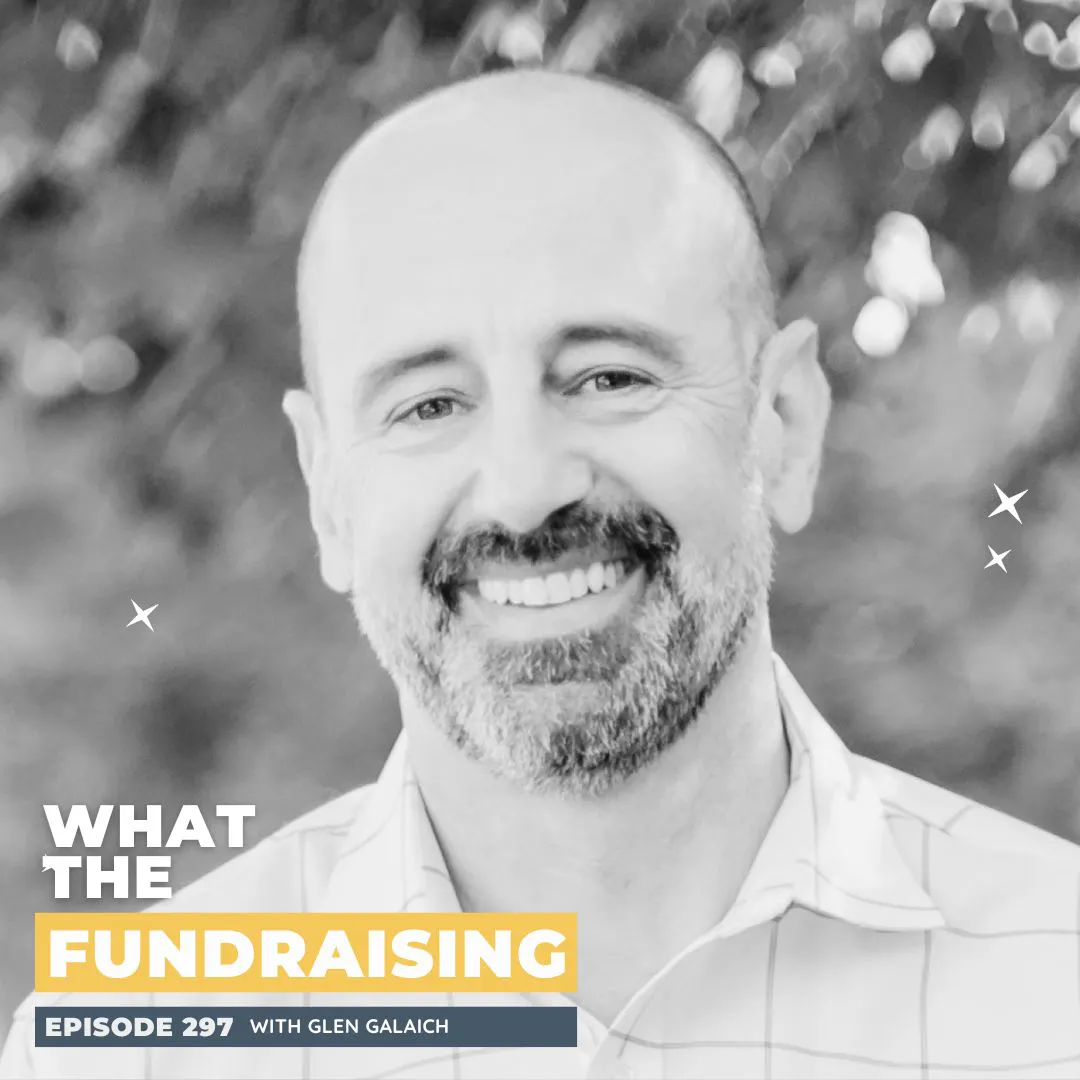 297: Why Big Giving Falls Short and How Fundraisers Can Push Back with Glen Galaich | What happens when philanthropy becomes more about control than community? Can generosity still be called generosity when tax benefits and personal recognition take center stage? Join us for today's episode to question the hidden dynamics behind modern fundraising and explore what true public stewardship really looks like! This conversation features Glen Galaich, a respected philanthropy leader with more than 25 years of experience in donor education and fundraising. As the founder of the Stupski Foundation, which works across San Francisco, Oakland, and Hawaii, Glen has spent years examining how wealth shapes giving. He is also the author of the book Control: Why Big Giving Falls Short, in which he challenges traditional philanthropic systems and calls for greater accountability, trust, and honesty in the sector. Throughout the conversation, Glen unpacks the idea of donor-centric fundraising and its historical roots, tracing it back to Andrew Carnegie's "Gospel of Wealth." He discusses how philanthropy often becomes tied to power, ego, and tax advantages rather than genuine generosity. Glen explains the psychological shifts that can happen when people gain significant wealth, often leading to insecurity and a stronger desire for control. He also explores trust-based philanthropy, participatory grantmaking, and the importance of unrestricted funding. Furthermore, Glen emphasizes that donors should act as public stewards, staying accountable to the communities they aim to serve, while fundraisers must create honest conversations and challenge unhealthy power dynamics within philanthropy. In this episode, you will be able to: - Recognize the difference between generosity and philanthropy. - Learn how donor control can affect community impact. - Understand the importance of trust-based philanthropy. - Identify why unrestricted funding supports stronger outcomes. - Learn how tax benefits influence philanthropic decisions. - Recognize the role of fundraisers in guiding donor accountability. - Understand how wealth can shape donor behavior and mindset. - Learn why public stewardship should guide charitable giving. Get all the resources from today’s episode here. Support for this show is brought to you by Donor Perfect. Our friends at Donor Perfect really understand fundraising on so many levels. Stay aligned while working online with a seamless and secure payments experience for your donors and your team. Empower donors to give where they are, whenever they like, automate data entry, and process online, monthly, and mobile payments, and accept payments over the phone. Connect with me: Instagram: https://www.instagram.com/_malloryerickson/ Facebook: https://www.facebook.com/whatthefundraising YouTube: https://www.youtube.com/@malloryerickson7946 LinkedIn: https://www.linkedin.com/mallory-erickson-bressler/ Website: malloryerickson.com/podcast Loved this episode? Leave us a review and rating here: https://podcasts.apple.com/us/podcast/what-the-fundraising/id1575421652 If you haven’t already, please visit our new What the Fundraising community forum. Check it out and join the conversation at this link. If you’re looking to raise more from the right funders, then you’ll want to check out my Power Partners Formula, a step-by-step approach to identifying the optimal partners for your organization. This free masterclass offers a great starting point. | 46m 43s | ||||||
| 4/21/26 | 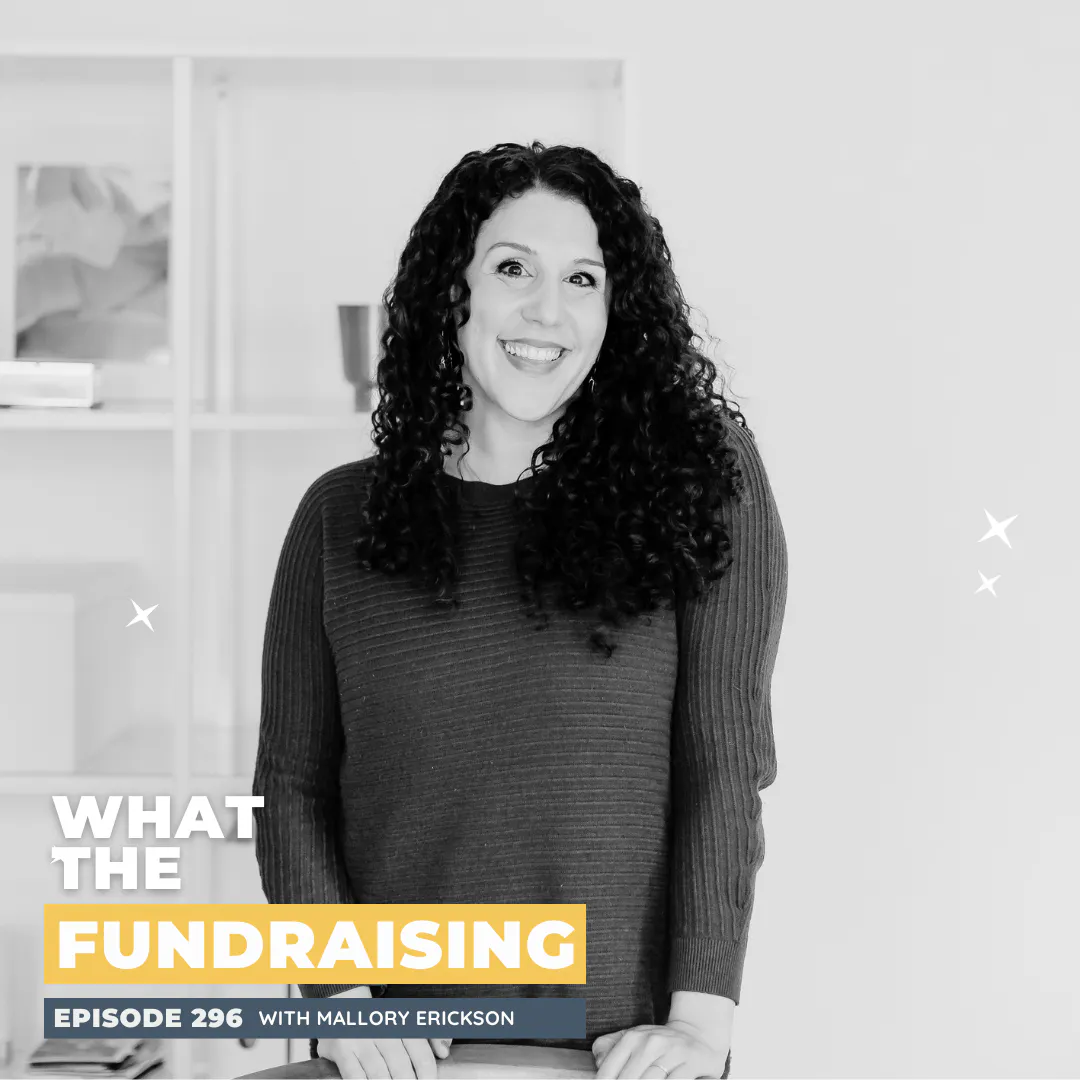 296: Real Talk on Confident Fundraising: Answering Your Questions with Mallory Erickson | This episode takes a slightly different approach. Instead of the usual format, Mallory responds directly to a range of thoughtful questions from her community! She begins by discussing how to handle anxiety before donor conversations, encouraging fundraisers to acknowledge their feelings rather than push them away. Simple techniques, such as validating emotions with phrases such as "that makes sense," can help reduce stress more quickly. She also explains that preparation and practice are key to building confidence, introducing AI-based tools that allow fundraisers to rehearse conversations and develop strong muscle memory. Mallory also highlights how confidence impacts fundraising success, noting that low confidence can lead to missed opportunities and inefficiency. She further addresses burnout and loss of motivation, explaining the "freeze" response and suggesting that sometimes people need energizing activities rather than just rest to regain momentum. A key theme in the episode is a shifting mindset. Mallory encourages fundraisers to stop feeling guilty about asking for money and instead see it as an opportunity for donors to contribute to meaningful change. She also emphasizes curiosity when handling objections, focusing on understanding donors rather than persuading them. Overall, the episode reinforces the importance of practice, emotional awareness, and purpose. Mallory also points to the growing role of AI in supporting fundraisers, helping them build skills while keeping human connection at the center. In this episode, you will be able to: Recognize practical ways to manage anxiety before donor conversations. Learn how validating emotions can reduce stress and improve performance. Understand the role of preparation and practice in building fundraising confidence. Explore how mindset shifts can transform asking for money into meaningful invitations. Gain insights into handling donor objections with curiosity and alignment. Identify the impact of confidence on time management and fundraising success. Understand the nervous system’s role in stress, burnout, and motivation. Learn simple grounding techniques to stay present during donor conversations. Discover the importance of consistent practice and role-play in skill development. Explore how AI tools can support training and enhance fundraising effectiveness. Get all the resources from today’s episode here. Connect with me: Instagram: https://www.instagram.com/_malloryerickson/ Facebook: https://www.facebook.com/whatthefundraising YouTube: https://www.youtube.com/@malloryerickson7946 LinkedIn: https://www.linkedin.com/mallory-erickson-bressler/ Website: malloryerickson.com/podcast Loved this episode? Leave us a review and rating here: https://podcasts.apple.com/us/podcast/what-the-fundraising/id1575421652 If you haven’t already, please visit our new What the Fundraising community forum. Check it out and join the conversation at this link. If you’re looking to raise more from the right funders, then you’ll want to check out my Power Partners Formula, a step-by-step approach to identifying the optimal partners for your organization. This free masterclass offers a great starting point | 45m 53s | ||||||
Showing 25 of 328
Pitch Fit is a Pro feature
See how bookable this show is for guests, which brands already advertise, the per-episode ad value, and the best-fit guest and sponsor profile. The numbers are blurred on the free plan.
How readily this show books outside guests like you.
How proven this show is for host-read sponsorships.
For Guests
ProFor Advertisers
ProUpgrade to Pro to unlock guest cadence, sponsor categories, fit scores, and per-episode ad value for this show.
Chart history for What the Fundraising
Peaked at #11 in IS, currently #11 in IS.
| Market | Genre | Peak | Current | Trend |
|---|---|---|---|---|
| IS | — | #11 | #11 | — |
| United Kingdom | — | #13 | #13 | — |
| PL | — | #27 | #27 | — |
| Ireland | — | #43 | #43 | — |
| CZ | — | #43 | #43 | — |
| Japan | — | #52 | #52 | — |
| IL | — | #53 | #53 | — |
| Spain | — | #54 | #54 | — |
| HK | — | #55 | #55 | — |
| SG | — | #56 | #56 | — |
| New Zealand | — | #59 | #59 | — |
| United States | — | #66 | #66 | — |
| Australia | — | #78 | #78 | — |
| Canada | — | #90 | #90 | — |
| CH | — | #114 | #114 | — |
| Denmark | — | #124 | #124 | — |
| BE | — | #126 | #126 | — |
| SA | — | #127 | #127 | — |
| Netherlands | — | #142 | #142 | — |
Chart Positions
19 placements across 19 markets.
Chart Positions
19 placements across 19 markets.