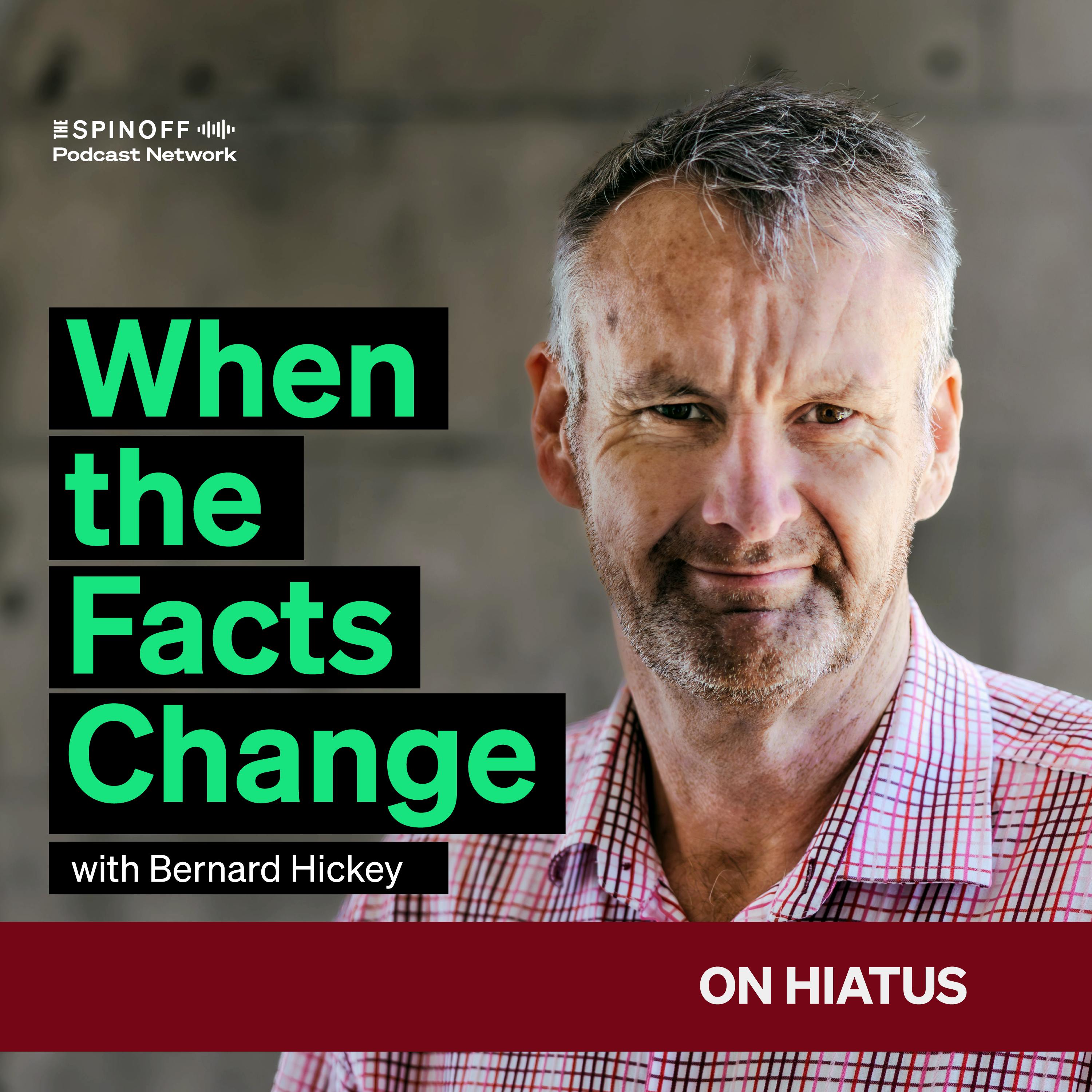
Insights from recent episode analysis
Audience Interest
Podcast Focus
Publishing Consistency
Platform Reach
Insights are generated by CastFox AI using publicly available data, episode content, and proprietary models.
Total monthly reach
Estimated from 4 chart positions in 4 markets.
By chart position
- 🇦🇺AU · Business News#9730K to 100K
- 🇳🇿NZ · Business News#4100K to 300K
- 🇻🇳VN · Business News#104500 to 3K
- 🇸🇬SG · Business News#109500 to 3K
- Per-Episode Audience
Est. listeners per new episode within ~30 days
92K to 284K🎙 Weekly cadence·253 episodes·Last published 1mo ago - Monthly Reach
Unique listeners across all episodes (30 days)
131K to 406K🇳🇿74%🇦🇺25%🇻🇳1%+1 more - Active Followers
Loyal subscribers who consistently listen
39K to 122K
Market Insights
Platform Distribution
Reach across major podcast platforms, updated hourly
Total Followers
—
Total Plays
—
Total Reviews
—
* Data sourced directly from platform APIs and aggregated hourly across all major podcast directories.
On the show
Recent episodes
At Large with Toby Manhire: Is the Reserve Bank’s blunt tool just too blunt?
Jul 15, 2026
35m 30s
Going up after digging down
Jul 10, 2025
27m 04s
To cut or not to cut?
Jul 3, 2025
20m 17s
Post Covid hybrid work
Jun 19, 2025
31m 13s
How big do we want to be?
Jun 12, 2025
31m 49s
Social Links & Contact
Official channels & resources
Official Website
Login
RSS Feed
Login
| Date | Episode | Description | Length | ||||||
|---|---|---|---|---|---|---|---|---|---|
| 7/15/26 |  At Large with Toby Manhire: Is the Reserve Bank’s blunt tool just too blunt? | Since 1990 the Reserve Bank has been tasked with taming inflation independently from the government of the day. But is the tool it uses today, the official cash rate, with its focus on hitting an inflation rate of 1%-3%, causing more pain that it’s alleviating? Bernard Hickey joins Toby to make the case. Plus, in How Good, Liam Rātana on NZ Wars: Stories of Waerenga-a-Hika. Follow At Large with Toby Manhire now on Spotify, Apple Podcasts, YouTube or wherever you get your podcasts. Learn more about your ad choices. Visit megaphone.fm/adchoices | 35m 30s | ||||||
| 7/10/25 | Going up after digging down | Billions has been spent on the construction of Auckland’s City Rail Link, largely at the cost of taxpayers and ratepayers. The current Auckland council zoning rules, however, prevent the building of high-rise residential and commercial buildings at Mt Eden, Kingsland and Morningside stations. Sooner or later, something has got to give. CBRE director of residential research Tamba Carleton joins Bernard Hickey to discuss the need for Auckland to grow up, and grow upwards, in order to make the most of it’s brand new tunnel. Learn more about your ad choices. Visit megaphone.fm/adchoices | 27m 04s | ||||||
| 7/3/25 | To cut or not to cut? | The Reserve Bank gets another chance to cut interest rates next week. So far 2025 has seen the RBNZ make three consecutive cuts to the official cash rate, which was widely expected by economists up and down the country. But next week, for the first time this year, there’s doubt. Kiwibank economist Sabrina Delgado joins Bernard Hickey to assess our central bank’s options leading into next week’s monetary policy statement. Learn more about your ad choices. Visit megaphone.fm/adchoices | 20m 17s | ||||||
| 6/19/25 | Post Covid hybrid work | Many bosses now want their workers back in the office full time, but for a while in the immediate aftermath of Covid, workers had the power to demand the flexibility to stay home. Now the jobs market has sagged, the balance has shifted and a new hybrid way of working is becoming more common. Bernard Hickey speaks on this week’s When The Facts Change with Robert Half NZ MD Megan Alexander about these trends, including those younger workers who prefer a nice open plan office to a pokey, mouldy flat. Learn more about your ad choices. Visit megaphone.fm/adchoices | 31m 13s | ||||||
| 6/12/25 | How big do we want to be? | It’s no secret that Aotearoa is facing a range of monumental infrastructure challenges — much has been made lately of the state of our water pipes, ferries, railways and roads. Successive generations of decision makers have kicked the infrastructure maintenance can down the road, and now we are facing a huge bill if we want to keep pace with our growing population. Infrastructure NZ chief executive Nick Leggett joins Bernard Hickey to discuss the scale of the infrastructure challenge facing New Zealand, and how overseas countries have approached similar issues. Ultimately, it all comes down to one key question: how big do we want our population to be in the future? Learn more about your ad choices. Visit megaphone.fm/adchoices | 31m 49s | ||||||
| 6/5/25 | An abundance of energy | ‘Abundance’ is the hottest word in the political economy right now all around the world. A book by Derek Thompson and Ezra Klein called ‘Abundance: How we build a better future’ argues the centre-left should adopt urbanisation and electrification as central aims to improve affordability of housing and transport, rather than framing emissions reduction as an expensive and painful necessity that the right has successfully weaponised into electoral suicide. This week on When The Facts Change, Bernard Hickey talks to Rewiring Aotearoa about what could be done right now to electrify our transport fleet and the cost of living savings within our grasp. Learn more about your ad choices. Visit megaphone.fm/adchoices | 34m 12s | ||||||
| 5/29/25 | Dissension in the RBNZ ranks | The Reserve Bank cut the Official Cash Rate this week, as expected, but one of the six members of the bank’s rate setting committee voted to hold the OCR. That surprised markets and pushed up the wholesale interest rates that drive fixed mortgage rates. Bernard Hickey speaks with Kiwibank’s Mary Jo Vergara about a very uncertain outlook for rates in the wake of Donald Trump’s Liberation Day shock. Learn more about your ad choices. Visit megaphone.fm/adchoices | 24m 17s | ||||||
| 5/22/25 | Budget special: When The Facts Change x Gone By Lunchtime | In the year of growth, Nicola Willis has presented a growth budget. But does the Investment Boost initiative, which speeds up depreciation for businesses, promise the kind of growth that the economy needs? In this special Spinoff pod for budget day, Toby Manhire asks Bernard Hickey for his take on the headline changes, and whether or not David Seymour’s earlier commentary that his colleague Brooke van Velden had “saved the budget” through its controversial and hurried changes to the pay equiry scheme, has been proven true. Plus: what are the cumulative impacts of the changes to KiwiSaver and Best Start, as compared to the SuperGold cohort? And how much did the global political and economic volatility influence the documents published today? Learn more about your ad choices. Visit megaphone.fm/adchoices | 29m 31s | ||||||
| 5/15/25 | Let the Budget battles commence | Fresh off a pre-Budget speech that took aim at the recent changes to pay equity, Labour Party leader Chris Hipkins joins Bernard Hickey to discuss the government’s plans to cut $4.4 billion of spending over the next four years. What are the potential downsides of Nicola Willis’ austerity approach to budget management? What other types of debt might we be accruing without realising it? Listen in to find out. Learn more about your ad choices. Visit megaphone.fm/adchoices | 33m 41s | ||||||
| 5/8/25 | Warmer, drier - and cheaper in the long run | In 2010, the NZ Green Building Council introduced the Homestar sustainability certification, a framework that aims to allow designers, architects and builders to build better, more environmentally friendly, energy efficient housing. The upfront cost of building to the Homestar certification can be more, but the potential savings over time - not to mention the quality of life improvements - are significant. Brad Olsen from Infometrics, an economic consultancy that has just published a detailed report on the Homestar certification, joins Bernard Hickey to dig into the broad range of benefits of Homestar-rated housing, for both the planet and the back pocket. Learn more about your ad choices. Visit megaphone.fm/adchoices | 26m 56s | ||||||
Want analysis for the episodes below?Free for Pro Submit a request, we'll have your selected episodes analyzed within an hour. Free, at no cost to you, for Pro users. | |||||||||
| 5/1/25 | Housing market psychology 101 | This week, Bernard Hickey dives into the psychology of the housing market and talks to realestate.co.nz CEO Sarah Wood about why so many home sellers are holding on and simply not selling, rather than lowering their price to “meet the market” and “clear the market” in a way other markets do when there’s too much supply and not enough demand. Learn more about your ad choices. Visit megaphone.fm/adchoices | 26m 31s | ||||||
| 4/24/25 | How do we create the ‘2degrees Effect’ for supermarkets, banking and electricity? | More than half of consumer spending is dominated one way or another by a collection of monopolies, duopolies and quadropolies that generate higher prices and profits than would be normal if there was true and tough competition, as a myriad of market studies and inquiries have found for supermarkets, fuel retailing, building materials, electricity, banking, insurance and real estate agencies. Twenty years of finger-wagging and report writing has failed in all of these sectors, except for telecommunications, where an aggressive breakup of a monopoly (Telecom) and regulation of number portability and interchange fees, along with the arrival of third competitor in 2degrees, sparked a flourishing of competition and ever-lower prices for ever-more data. The Reserve Bank called it the “2degrees Effect” in creating deflation for a significant part of the economy. Bernard Hickey talks to Monopoly Watch spokesman and one of the founders of 2degrees, Tex Edwards, about how to create the “2degrees Effect” for supermarkets, banking and electricity. Learn more about your ad choices. Visit megaphone.fm/adchoices | 37m 04s | ||||||
| 4/17/25 | An AI-powered startup | Bernard Hickey talks to the co-founders of Christchurch-based AI start-up, Contented. Lucy Pink and Hannah Hardy-Jones tell their story from meeting over coffee and jam, to working with US news publishers to turn live-streamed council meetings into news articles. Learn more about your ad choices. Visit megaphone.fm/adchoices | 31m 30s | ||||||
| 4/10/25 | The global aftermath of Trump’s ‘Liberation Day’ | Donald Trump’s bigger-and-stupider-than-expected tariffs have upended the global trading system and are threatening to create a new financial crisis. Bernard Hickey talks with Kiwibank chief economist Jarrod Kerr about the latest day “when the facts changed”, and what might happen next. Learn more about your ad choices. Visit megaphone.fm/adchoices | 35m 32s | ||||||
| 4/3/25 | The green shoots and brown roots of our economy | If New Zealand’s economy was a grass paddock, it would be in pretty rough shape. We’re coming out of a pretty bad drought (economic recession) and there’s widespread political disagreement about how to get our worn-out field of brown grass back to the lush green pasture it once was. Bernard Hickey speaks to Kiwibank economist Sabrina Delgado about what looks promising (green shoots) and what looks worrying (brown roots) in the meadow of our national economy. Learn more about your ad choices. Visit megaphone.fm/adchoices | 25m 25s | ||||||
| 3/27/25 | Planting the trees we’ll never sit under | For 30 years, a little-known number in government circles has quietly stymied investment for future generations. Set by Treasury, the ‘discount rate’ was once set at 10%, and it meant future benefits and costs were heavily devalued, becoming worth almost nothing after six or seven years. In a nutshell, higher discount rates discourage long-term investment and incentivise short-term projects. Treasury has recently reduced the discount rate to 5%, but is that enough? Bernard Hickey talks with Arthur Grimes, senior fellow at Motu Research and professor at Victoria University, about a big shift to new discount rates that could make big future projects much more viable. Learn more about your ad choices. Visit megaphone.fm/adchoices | 28m 21s | ||||||
| 3/20/25 | New Zealand’s greatest invention: a monetary policy framework? | Bernard Hickey chews the monetary policy fat with returning guest Reserve Bank chief economist Paul Conway. Was inflation targeting (a policy framework first introduced in Aotearoa 35 years ago) actually our greatest invention? Was quantitative easing a success? Is inflation different now? And should Reserve Banks and Governments work more in tandem, rather than against each other? Listen in to find out. Learn more about your ad choices. Visit megaphone.fm/adchoices | 41m 09s | ||||||
| 3/13/25 | A handy Primer for the global AI economy | This week we dive deep into the worlds of AI, defence technology businesses and the great technological arms race between China and the US. Bernard is joined by Sean Gourley, a New Zealander who founded US-based tech success story Primer, an AI intelligence company helping governments understand the mathematical patterns underlying modern warfare. Gourley shares his insights about New Zealand’s position in this great contest, along with the opportunities for New Zealand to grow high-value businesses (think Rocketlab) in the AI and tech space. Learn more about your ad choices. Visit megaphone.fm/adchoices | 36m 44s | ||||||
| 3/6/25 | Shock and Orr | Adrian Orr resigned as Reserve Bank Governor this week after 7 years in the job, but three years early, effective immediately and without explanation. Bernard Hickey talks in an emergency edition of When The Facts Change with NZ Initiative executive director Oliver Hartwich, an Orr critic, about his legacy and how his replacement should change the bank, and with Kiwibank chief economist Jarrod Kerr about Orr’s operation of monetary policy. Learn more about your ad choices. Visit megaphone.fm/adchoices | 34m 42s | ||||||
| 2/27/25 | Mortgage rates, braking and accelerating | Even as New Zealand’s economy was in the depths of a recession, the Reserve Bank kept a firm grip on monetary policy, only easing up in mid-2024. This week, Bernard Hickey sits down with Kiwibank chief economist Jarrod Kerr to discuss whether the Reserve Bank should be hitting the accelerator now, rather than simply lifting its foot off the brake. Learn more about your ad choices. Visit megaphone.fm/adchoices | 29m 55s | ||||||
| 2/20/25 | The startup savant behind Trade Me and Xero | Described by The Spinoff’s Duncan Greive as “the most important figure in New Zealand technology you’ve never hear of”, Rowan Simpson has had a guiding hand in Aotearoa’s most successful tech companies. His new book “How to be Wrong: a crash course in startup success” shares the close calls and near misses that happened on the way to success (read: the staggering purchase of Trade Me by Fairfax Media in 2006). He talks to Bernard Hickey about his journey through tech, the keys to startup success, and whether he ought to have just bought in to residential property instead. Learn more about your ad choices. Visit megaphone.fm/adchoices | 38m 04s | ||||||
| 2/13/25 | ‘Show me the money’: What Kiwi are buying this summer | Retail spending figures from shops, cafes, restaurants, hotels and holiday hotspots over December and January are the ultimate barometer for spending appetites, income levels and general confidence in job security. Kiwibank senior economist Mary Jo Vergara joins Bernard Hickey to discuss a note she published this week, diving in to the latest spending data collected over the summer break. How relaxed were Kiwi with their holiday spending money? What are the experts predicting for 2025? Listen in to find out. Learn more about your ad choices. Visit megaphone.fm/adchoices | 26m 10s | ||||||
| 2/10/25 | Rising tides and sinking boats | Free trade agreements are the global political economy’s hottest topics at the moment, especially since a tariff-toting Donald Trump recently argued (to great political success) that the rising tide of global free trade wasn’t lifting all boats. While global economic growth has lifted many out of poverty, the benefits have been unevenly distributed, leading to increasing wealth inequality and stagnant wages for the middle-class in many parts of the world. Inequality and wealth researcher Max Rashbrooke joins Bernard Hickey to discuss recent inequality trends here in Aotearoa, and to share an interesting idea he has to use KiwiSaver to jumpstart the personal wealth of every single New Zealander, right from the moment they are born. Learn more about your ad choices. Visit megaphone.fm/adchoices | 20m 49s | ||||||
| 1/30/25 | How do we measure the value of social investment? | Our social welfare system is complicated, expensive - and incredibly necessary. How do we know when it’s working properly? And when it’s not? ImpactLab CEO Maria English joins Bernard to unpack the data and evidence-based metrics they use to assess the “social return on investment” of social services funding, and how the company uses their insights to help make Aotearoa a better place. Learn more about your ad choices. Visit megaphone.fm/adchoices | 34m 11s | ||||||
| 1/23/25 | Is 2025 the year to thrive? | Last June the economists at Kiwibank published an article titled “Survive ‘til 25”, outlining what they saw as a tough six months ahead for our economy. Well we’ve made it to 2025, but is the economic year ahead going to be about surviving or thriving? Kiwibank economist Sabrina Delgado joins Bernard Hickey to try and find out. Learn more about your ad choices. Visit megaphone.fm/adchoices | 21m 14s | ||||||
Showing 25 of 254
Pitch Fit is a Pro feature
See how bookable this show is for guests, which brands already advertise, the per-episode ad value, and the best-fit guest and sponsor profile. The numbers are blurred on the free plan.
How readily this show books outside guests like you.
How proven this show is for host-read sponsorships.
For Guests
ProFor Advertisers
ProUpgrade to Pro to unlock guest cadence, sponsor categories, fit scores, and per-episode ad value for this show.
Similar Audience Demographics
Podcasts that attract a similar listener profile




Chart history for When the Facts Change
Peaked at #4 in New Zealand, top 10 in 1 of 5 tracked markets, currently #4 in New Zealand.
| Market | Genre | Peak | Current | Trend |
|---|---|---|---|---|
| New Zealand | — | #4 | #4 | — |
| Australia | — | #97 | #97 | — |
| VN | — | #104 | #104 | — |
| SG | — | #109 | #109 | — |
| New Zealand | — | #159 | #159 | — |
Chart Positions
5 placements across 4 markets.
Chart Positions
5 placements across 4 markets.