
Insights from recent episode analysis
Audience Interest
Podcast Focus
Publishing Consistency
Platform Reach
Insights are generated by CastFox AI using publicly available data, episode content, and proprietary models.
Total monthly reach
Estimated from 3 chart positions in 3 markets.
By chart position
- 🇮🇹IT · Tech News#1401K to 10K
- 🇹🇼TW · Tech News#883K to 10K
- 🇳🇿NZ · Tech News#190500 to 3K
- Per-Episode Audience
Est. listeners per new episode within ~30 days
2.3K to 12K🎙 ~2x weekly·40 episodes·Last published yesterday - Monthly Reach
Unique listeners across all episodes (30 days)
4.5K to 23K🇮🇹43%🇹🇼43%🇳🇿13% - Active Followers
Loyal subscribers who consistently listen
1.8K to 9.2K
Market Insights
Platform Distribution
Reach across major podcast platforms, updated hourly
Total Followers
—
Total Plays
—
Total Reviews
—
* Data sourced directly from platform APIs and aggregated hourly across all major podcast directories.
On the show
Recent episodes
Down the Rabbit Hole: How Alice Turned Computer Coding Into a Wonderland
Jun 24, 2026
Unknown duration
Encore: Curtain Up - What’s Next for Theatre Arts
Jun 11, 2026
Unknown duration
Bold Builds: How a Class Project Sparked World-Changing Startups
May 28, 2026
Unknown duration
The Shape of Everyday Life: How Carnegie Mellon Revolutionized Industrial Design
May 13, 2026
Unknown duration
Making Machines Make Music
Apr 29, 2026
Unknown duration
Social Links & Contact
Official channels & resources
Official Website
Login
RSS Feed
Login
| Date | Episode | Description | Length | ||||||
|---|---|---|---|---|---|---|---|---|---|
| 6/24/26 | 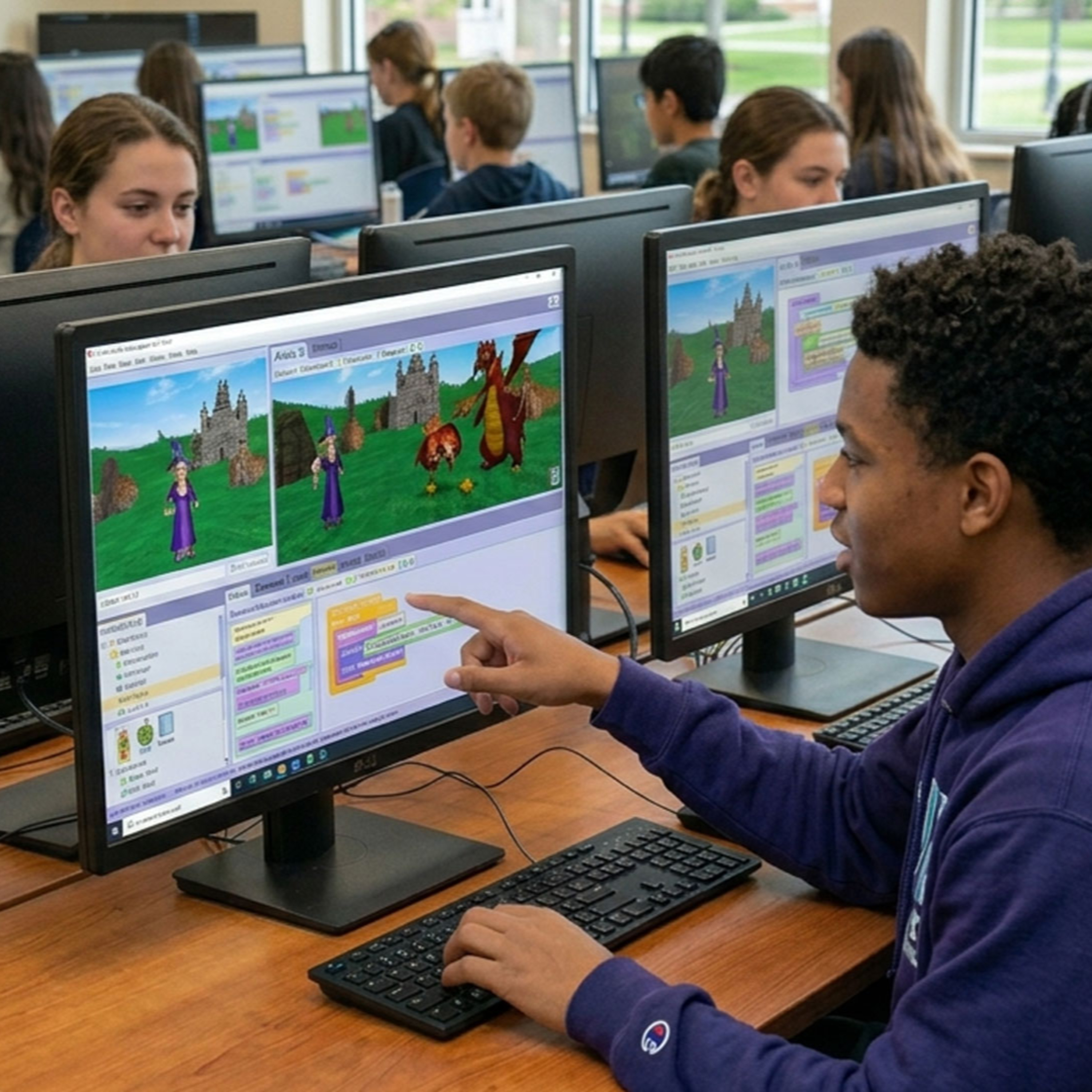 Down the Rabbit Hole: How Alice Turned Computer Coding Into a Wonderland | Thirty years ago, Carnegie Mellon University professor Randy Pausch asked a simple question: What if anyone could learn to program a computer? Not just computer scientists, not just engineers. What if kids could learn coding the same way they learned to tell stories, build worlds, and play games?In this episode we explore one of Carnegie Mellon's most enduring innovations: Alice, the drag-and-drop program that has introduced millions of students to coding through storytelling. As CMU marks its 125th anniversary and Alice turns 30, guest Melanie Lam — Director of the Alice Project at CMU's Entertainment Technology Center — traces the software's remarkable journey.Created by legendary professor Randy Pausch, Alice began in 1995 as a Virtual Reality prototyping tool created for Pausch’s famed Building Virtual Worlds course. Lam shares how she first encountered Alice at CMU as a journalism graduate with no coding background, used it to tell a moving story in her very first week, and went on to design games at Activision and Electronic Arts before returning to steward Pausch's legacy back at CMU with the Alice Project.The conversation follows Alice's evolution from CD-ROMs to free online access to Sims 2 character integration for better storytelling. Currently, Lam is leading a major interface update and exploring ways AI can make Alice even more accessible for students.Subscribe now on Apple Podcasts, Spotify, or wherever you get your podcasts. For more, info visit: cmu.edu/whatsnextpodcast.Explore moreAliceRandy Pausch’s The Last Lecture | — | ||||||
| 6/11/26 |  Encore: Curtain Up - What’s Next for Theatre Arts | Greatness is inevitable when focus marries passion, and theatre arts educator Freddie Hendricks lives by, and teaches, that mantra to his students. On June 7, Carnegie Mellon University and the Tony Awards named Hendricks the winner of the 2026 Excellence in Theatre Education Award — the honor that, for over a decade, has celebrated K–12 theatre educators who set the standard for the profession while transforming the lives of their students. A teacher at Utopian Academy for the Arts in Georgia, Hendricks has spent more than 30 years using theatre to spark greatness, creativity, confidence, and leadership in young people. It was also a great year for Carnegie Mellon University at the 79th Tony Awards. CMU alumni earned a record-breaking 15 Tony nominations — the most they have ever received in a single year. To honor Hendricks’ award and Carnegie Mellon's historic nominations, we're releasing an encore performance of one of our favorite Season 2 episodes: "Curtain Up: What's Next for Theatre Arts." What role should new technologies – such as robots, artificial intelligence and virtual reality – play in theatre arts education? And how are educators preparing their students for the future?We spoke with theatre visionary Kyle Haden, the Senior Associate Head at the Carnegie Mellon University School of Drama. And we heard from the 2022 winner of the Excellence in Theatre Education Award – Roshunda Jones-Koumba, Theatre Director at George Washington Carver Magnet School in Houston.Subscribe now on Apple Podcasts, Spotify, or wherever you get your podcasts. For more, info visit: cmu.edu/whatsnextpodcast.Explore more Carnegie Mellon University School of Drama | — | ||||||
| 5/28/26 | 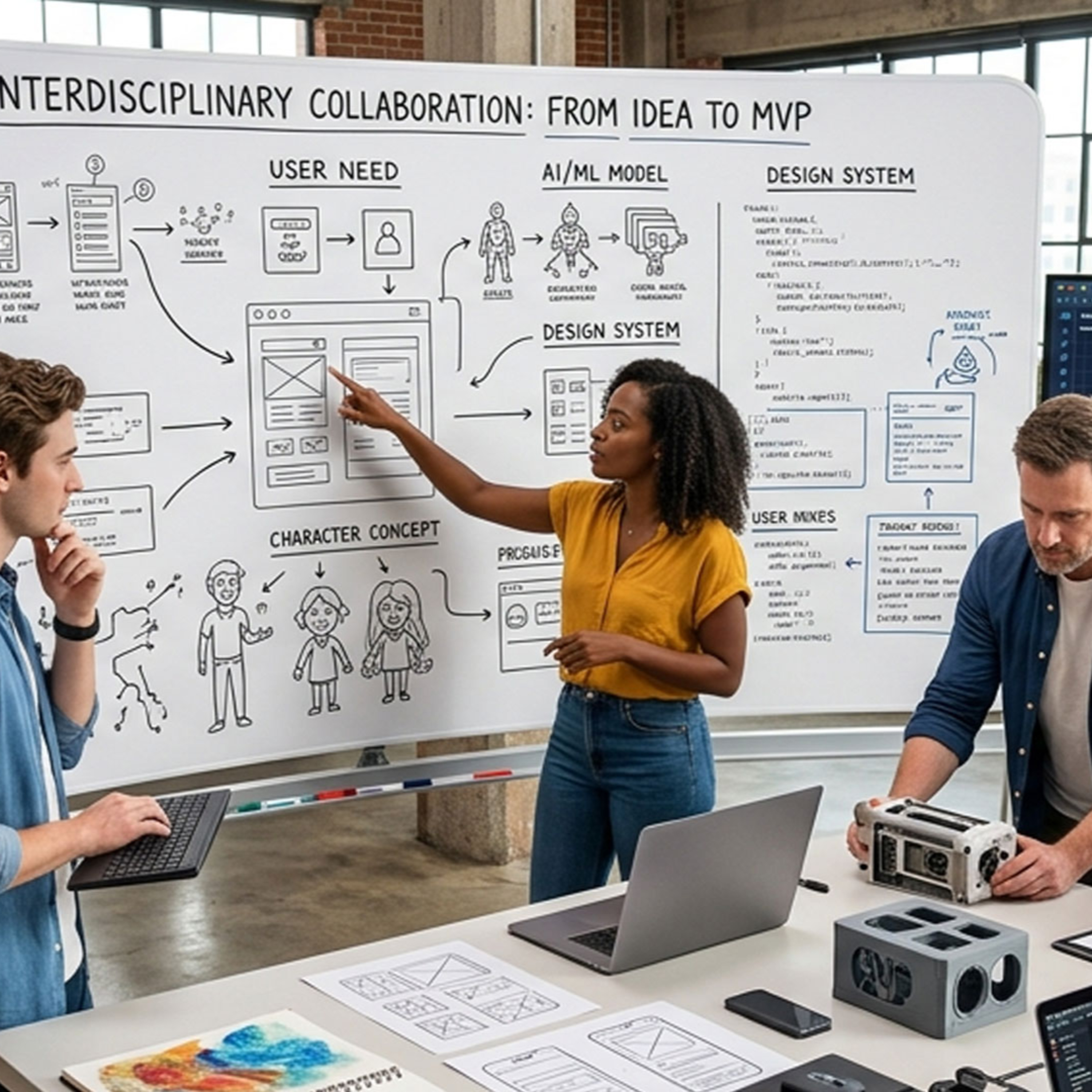 Bold Builds: How a Class Project Sparked World-Changing Startups | What if a successful startup began with a collaborative class project instead of a business plan?For CMU alum Shanna Tellerman that’s exactly what happened, and it sparked an entrepreneurial career that has reshaped how we design and experience spaces.In this episode, Tellerman shares her journey from a fine arts undergraduate, to a CMU technology masters, to a pioneer at the intersection of design and technology. Inspired by a virtual reality course taught by legendary CMU professor Randy Pausch, Tellerman discovered how to blend her passions for art, math, and science and use a collaborative interdisciplinary approach to starting and building companies. This foundational experience led her to start her first company, Sim Ops Studios, a spin-out from a CMU class project. Sim Ops utilized video game technology to help train firefighters before pivoting to a technology that enabled users to create and play browser-based 3D games. The conversation explores Tellerman's diverse career, highlighting her time as a partner at Google Ventures and her subsequent creation of Modsy, an innovative 3D home design platform later acquired by home-building giant, Lennar. She outlines her core entrepreneurial philosophy, emphasizing the power of interdisciplinary teams, relentless customer focus, and the importance of avoiding distractions. Looking ahead, Tellerman discusses her latest startup, which leverages artificial intelligence to automate the tedious aspects of architecture and design software, and offers valuable advice for the next generation of innovators searching for their own paths. Subscribe now on Apple Podcasts, Spotify, or wherever you get your podcasts. For more, info visit: cmu.edu/whatsnextpodcast.Explore more Swartz Center for EntrepreneurshipCMU.edu/125CMU.edu/WhatsNextPodcast | — | ||||||
| 5/13/26 | 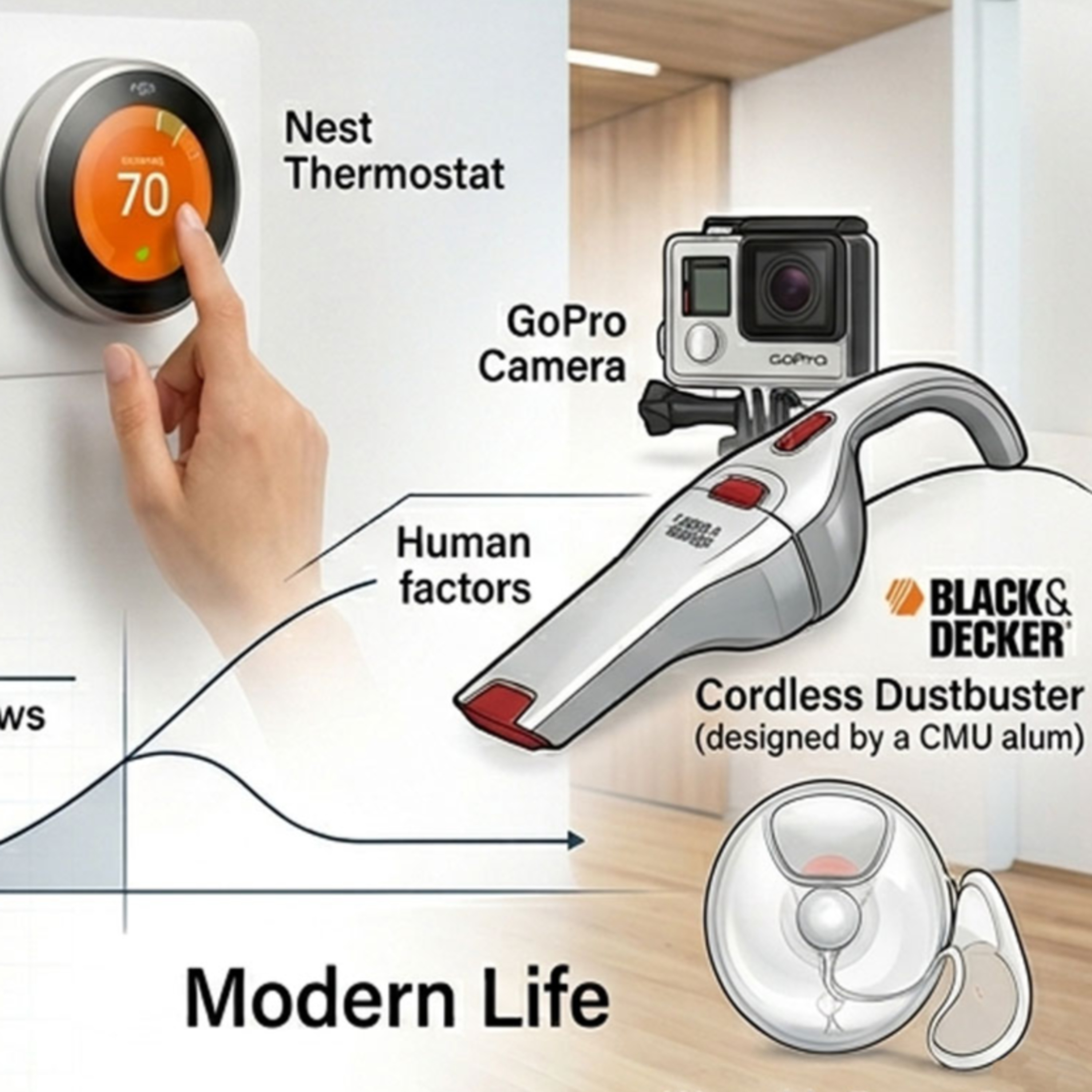 The Shape of Everyday Life: How Carnegie Mellon Revolutionized Industrial Design | What if the objects around you weren't just built, but carefully designed to shape how you live? In this episode, we trace the origins of industrial design from Pittsburgh's factory floors to the iconic products defining modern life — and explore how Carnegie Mellon University – and its faculty and alumni – have been at the center of it all.In 1934, Carnegie Tech launched the first degree-granting program in industrial design in the United States — sparked by a student petition. That revolutionary curriculum, grounded in real manufacturing visits and human-centered thinking, would shape generations of designers and transform everyday objects from clunky contraptions into intuitive, beautiful tools.We're joined by Rachel Delphia, curator at the Carnegie Museum of Art and CMU alum, who walks us through the program's beginnings, the remarkable legacy of silversmith-turned-designer and CMU professor Peter Muller-Munk, the story of Maude Bowers — the program's very first graduate — and the design thinking behind icons such as the revolutionary cordless Black & Decker Dustbuster, also created by a CMU alum.Then, CMU alum and founder of Bould Design, Fred Bould, joins to discuss how CMU's design philosophy shaped his work on the Nest Thermostat and dozens of other products ranging from the GoPro Camera to a wearable breast pump to a humane chicken coop. He also shares his vision for where AI and sustainability are taking the field over the next decade.Good design, it turns out, doesn't just make things look better — it makes life work better for the consumer – and for humanity. Subscribe now on Apple Podcasts, Spotify, or wherever you get your podcasts. For more, info visit: cmu.edu/whatsnextpodcast.Explore moreSilver to Steel: The Modern Designs of Peter Muller-MunkBould DesignThe Normandie Water PitcherThe Nest Thermostat Origin Story - WWIBWN Episode #4 | — | ||||||
| 4/29/26 | 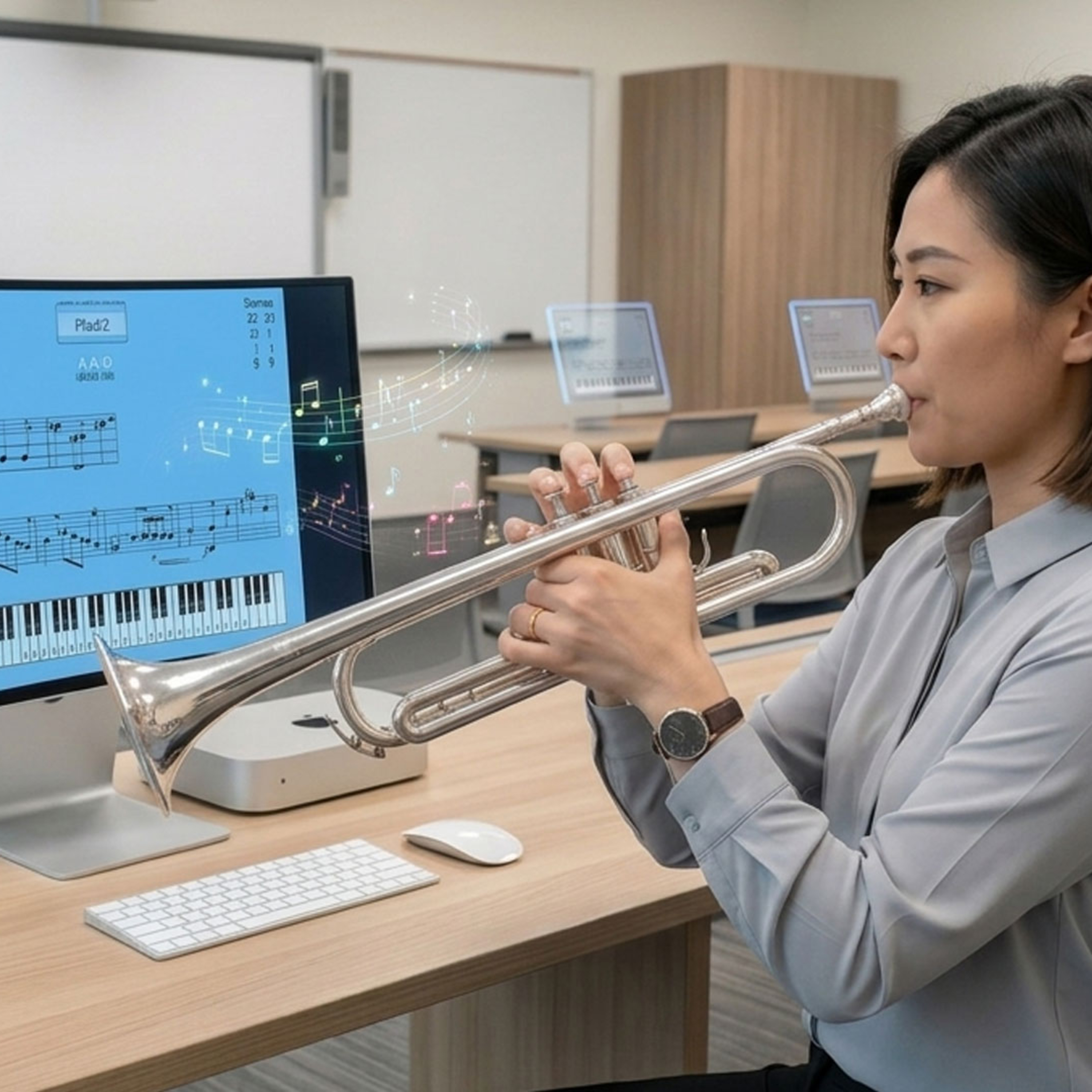 Making Machines Make Music | What happens when a computer scientist is also a trumpet player? Meet Roger Dannenberg — CMU professor, pioneer of computer music, and co-creator of Audacity — one of the most widely used free audio editing tools in the world. In this episode, drawing from CMU’s Oral History Archives, Roger reflects on a career spent bridging two worlds. From building a custom computer in 1984 to accompany live musicians in real time, to developing Nyquist, a programming language built just for music, to developing one of the most popular programs for teaching music to students, Roger’s work has redefined how computers play with and play music.He also shares the unexpected origin story of Audacity, born not from a product vision, but from a research project on "query by humming." And he reveals how early gesture research in his CMU lab — including pinch-to-zoom — foreshadowed the touchscreen interactions we use every day. Roger also looks ahead, imagining a future where AI becomes a true musical collaborator, as he acknowledges how far computers still have to go in understanding the importance of rhythm, anticipation and surprise in music.Subscribe now on Apple Podcasts, Spotify, or wherever you get your podcasts. For more, info visit: cmu.edu/whatsnextpodcast. | — | ||||||
| 4/16/26 |  Designing for the Planet: The Clever Thermostat and the Odorless Food Recycler | What if the secret to saving the planet was hiding in your hallway and under your kitchen sink? Matt Rogers, Carnegie Mellon University electrical and computer engineering alumnus, joins us to trace a remarkable career path — from engineering iPods and iPhones at Apple to co-founding Nest, the learning thermostat now in millions of homes, to his current venture Mill, a food waste technology company.Matt shares how his CMU robotics training shaped his instinct for systems thinking, and how working alongside Tony Fadell at Apple taught him the power of focus and user-centric design. He explains how Nest's learning thermostat has saved more than 100 billion kilowatt hours of energy worldwide — and how the same design philosophy (make the right choice, the easy choice) now drives Mill's odorless, AI-powered trash can that dehydrates food waste overnight and turns it into “rocket fuel” for the garden and the food chain (including backyard chickens). Matt makes the case that profitability and planetary impact aren't just compatible — they need to be inseparable. Subscribe now on Apple Podcasts, Spotify, or wherever you get your podcasts. For more, info visit: cmu.edu/whatsnextpodcast. | — | ||||||
| 4/1/26 |  Watching the Universe Change: A New Era in Astronomy Begins | The Vera C. Rubin Observatory in Chile is now operational, and humanity's view of the universe will never be the same. In this episode, we return to Carnegie Mellon University’s Rachel Mandelbaum, professor and head of the physics department – and a key architect of the observatory's data infrastructure — to hear what's happened since the revolutionary telescope first opened its eye to the sky.Mandelbaum walks us through the observatory's first scientific data release, the launch of its public alert system, and the successful measurement of gravitational lensing using early commissioning data. She explains how CMU and the LINCC Frameworks team are building the software tools that will allow scientists worldwide to make sense of up to 10 million nightly cosmic alerts. And we discuss the Legacy Survey of Space and Time (LSST), the observatory’s decade-long mission to track 40 billion celestial objects that will essentially create a 10-year movie of our universe.In this episode, you’ll learn: How the Rubin Observatory acts as a time machine for light from billions of years ago; the role of "alert brokers" in processing the 10 million nightly cosmic events the Observatory will track; and why understanding dark energy could be as transformative as the discovery of quantum mechanics.ResourcesLearn more about the Vera C. Rubin Observatory | — | ||||||
| 3/18/26 | 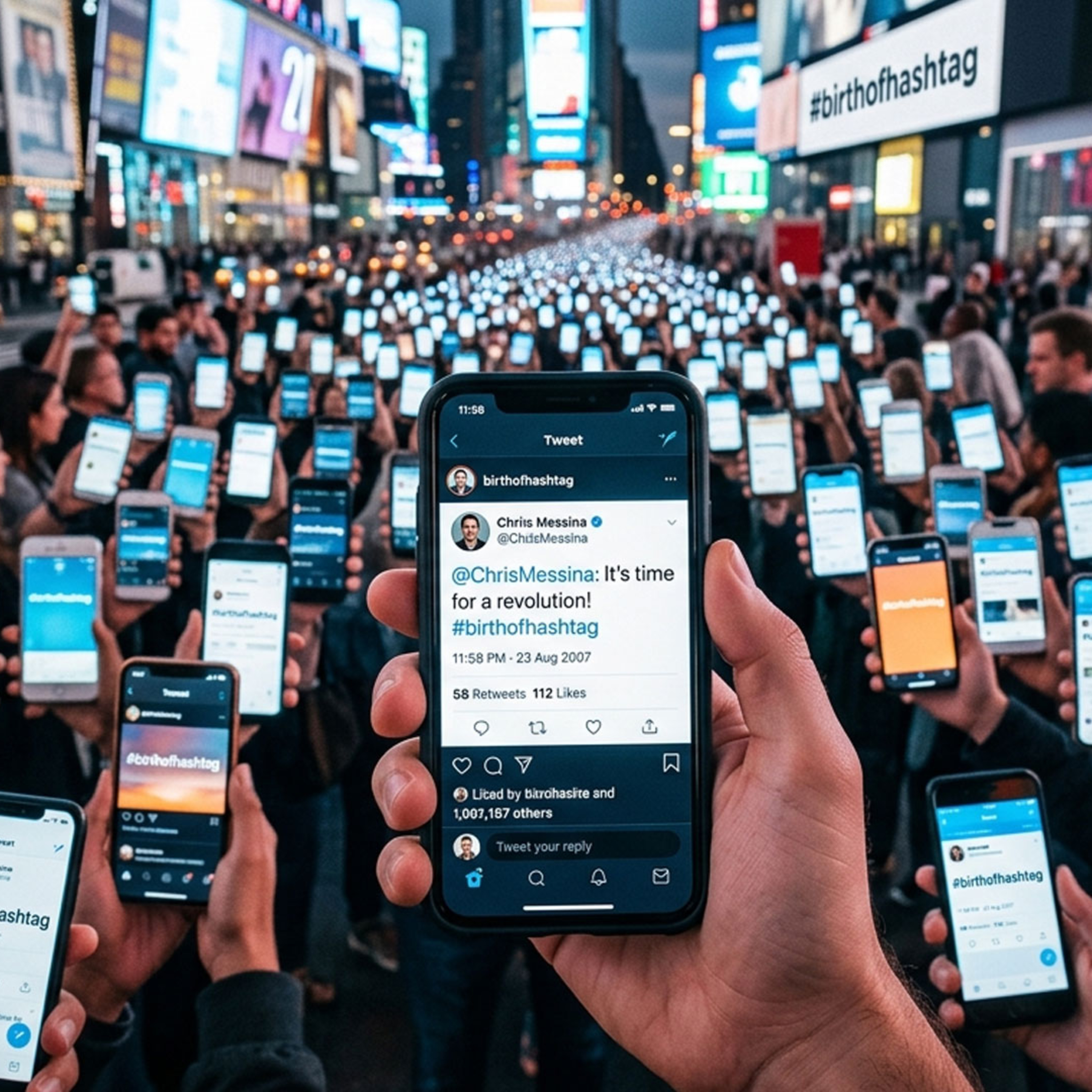 The Birth of the Hashtag: How a Simple Symbol Changed the World | In 2007, an unused key on the phone keypad became the internet's most powerful organizing tool. In this episode, we sit down with Chris Messina, the Carnegie Mellon University alumnus who invented the hashtag – now used more than three billion times a day – and famously gave it away for free.Messina shares the fascinating journey of the hashtag, from its roots in early "nerd centers" like his BarCamp meetup to its rejection by Twitter’s founders as "too nerdy." You’ll hear how a 2007 wildfire in San Diego turned the symbol into a life-saving tool for citizen journalism, ultimately forcing tech giants to embrace it. The conversation explores the hashtag's evolution from a simple metadata tag to a catalyst for global social movements like #MeToo and #BlackLivesMatter.Messina reflects on his principled decision to forego intellectual property rights, ensuring the hashtag remained free for the world to use.Subscribe now on Apple Podcasts, Spotify, or wherever you get your podcasts. For more, info visit: cmu.edu/whatsnextpodcast. | — | ||||||
| 3/5/26 | Season 3 Trailer: Where What If Becomes What’s Next | The smiley face in your last text, the Kevlar protecting first responders, and the Wi-Fi signal connecting us all—where did they actually come from?Welcome to Season 3 of Where What If Becomes What's Next, where we take you on a journey through 125 years of innovation at Carnegie Mellon University. To celebrate this milestone anniversary, we’re digging into the university archives to reveal the definitive stories behind 15 breakthroughs that didn't just advance technology—they redefined our world. From the spam saving benefits of CAPTCHAs, to the birth of artificial intelligence, to the pinch to zoom gesture on your smartphone—these are just some of the inventions you’ll learn about in Season 3.This isn't a dry history lesson. It’s also a roadmap for the next century of innovation. With host Randy Scott, every other Thursday we’re going behind the scenes with the CMU makers and visionaries to bring you the stories you may know and the ones you won't believe.The future is waiting. Let’s find out what’s next.Subscribe now on Apple Podcasts, Spotify, or wherever you get your podcasts. For more, info visit: cmu.edu/whatsnextpodcast. | — | ||||||
| 10/22/25 | Guiding a Safe Future for AI – Part 2 | What if machines could reason like humans? We're racing toward that reality. It's called artificial general intelligence. The question is, can we build it safely?In the second part of our conversation with Dr. Zico Kolter, head of Carnegie Mellon University's Machine Learning Department and OpenAI board member, where he chairs their Safety and Security Committee, we explore the critical challenges facing AI development today.Dr. Kolter addresses deepfakes and the erosion of trust in media, explaining how AI accelerates existing problems while offering potential technological solutions. We examine privacy concerns, debunking common misconceptions about how chatbots use personal data. The discussion covers data scarcity, infrastructure challenges, and the massive energy demands of AI systems.We also explore bias in AI models, the psychological impact of human-AI relationships on vulnerable populations, and the concept of artificial general intelligence (AGI). Dr. Kolter shares his optimistic yet cautious vision for the next five years, emphasizing the importance of building AI systems that safely serve humanity's best interests.This is the Season Two finale of Where What If Becomes What's Next from Carnegie Mellon University. | — | ||||||
Want analysis for the episodes below?Free for Pro Submit a request, we'll have your selected episodes analyzed within an hour. Free, at no cost to you, for Pro users. | |||||||||
| 10/8/25 | Guiding a Safe Future for AI – Part 1 | What if AI is automating the one thing that's always made us human—Intelligence itself? And how do we ensure that it's developed safely?In this first of a two-part series, we speak with Dr. Zico Kolter, head of Carnegie Mellon University's Machine Learning Department and newly appointed OpenAI board member, where he chairs their Safety and Security Committee, to explore the critical challenge of developing artificial intelligence safely. Dr. Kolter discusses CMU's pioneering machine learning department and outlines four essential categories of AI safety concerns: immediate security threats like data exfiltration and prompt injection; societal impacts on jobs, economy, and mental health; catastrophic risks from malicious actors wielding AI-powered capabilities; and long-term scenarios of uncontrollable superintelligence.Unlike previous technological revolutions that automated physical labor or computation, AI represents something unprecedented—the automation of intelligence itself. Dr. Kolter argues this fundamental difference demands collaborative oversight from industry, academia, and government to ensure AI serves humanity's best interests. The conversation emphasizes why getting AI safety right matters more than ever as we integrate thinking machines into our critical infrastructure. | — | ||||||
| 9/24/25 | Unlocking the Future of Gene Therapy | What if AI could help design gene therapies so precise they eliminate chronic pain while leaving other senses completely intact? And what if the secret to treating Parkinson's Disease lies hidden in the genome of a mouse?In this episode, we explore groundbreaking advances in genetic medicine with Andreas Pfenning, Associate Professor in Carnegie Mellon University's Computational Biology Department and School of Computer Science. Professor Pfenning discusses research in his experimental lab, and how AI is revolutionizing gene therapy by making treatments more targeted while reducing toxic side effects.The conversation covers Pfenning's work developing precision gene therapies for chronic pain originating in the spine, where AI helps identify exactly which spinal cord cells transmit pain signals while preserving normal touch and movement functions. The episode also explores KGWAS (Knowledge Graph Genome-Wide Association Study), an AI-powered tool developed at CMU in partnership with other research institutions, that helps identify genetic problems that can cause rare diseases or disorders.Pfenning shares insights from his collaboration on the ambitious Vertebrate Genomes Project, which aims to map genomes from more than 500 vertebrate species. This massive international effort is revealing surprising genetic similarities across species that could unlock new treatments for human diseases including Parkinson's, Alzheimer's, and other neurological disorders.The discussion also highlights how machine learning is accelerating the path from laboratory discovery to clinical applications, with promising results already emerging in Parkinson's disease treatment trials. | — | ||||||
| 9/10/25 | Critical Choices: AI in Disaster Management and Healthcare | What if AI could help emergency responders make split-second decisions that save lives during disasters? And what if that same technology could be used in healthcare to identify which patients desperately need care before it's too late?In this episode, we explore how artificial intelligence is revolutionizing emergency response and healthcare decision-making. Host Randy Scott interviews Aarti Singh, a professor in the Machine Learning Department at Carnegie Mellon University and the director of the National Science Foundation's AI Institute for Societal Decision Making. Professor Singh discusses breakthrough technologies like the CLARKE System, developed by the Institute’s partner Texas A&M University, which can analyze disaster damage to 2,000 homes in just seven minutes using drone footage and AI, compared to hours or days with traditional methods. The Institute has trained more than 60 emergency managers from 38 agencies on using the CLARKE System for rapid damage assessment and resource allocation during disasters like hurricanes and wildfires. In healthcare, Singh discusses how AI is addressing the U.S.'s alarming maternal mortality rate—the worst among developed nations—by creating patient risk profiles and prioritizing health care worker interventions or text-message alerts to the maternal patients. Field tests in India showed a 30 percent improved patient engagement. The conversation also covers the Institute's work on responsible AI adoption frameworks, emphasizing the importance of accountability, proper training, and human-AI collaboration to ensure these life-saving technologies can be trusted and effectively integrated into real-world emergency and healthcare systems. | — | ||||||
| 8/27/25 | Farm to Future: How Robotics and AI are Revolutionizing Agriculture | What if robots could pick apples without bruising them, detect diseases in tomatoes before farmers can see them, or even help prevent catastrophic wildfires?In this episode, host Randy Scott speaks with Professor George Kantor from Carnegie Mellon University's Robotics Institute. Professor Kantor’s two decades of pioneering work in agricultural robotics are shaping the future of food and sustainability.As the global population races toward 10 billion by 2050, robotics and AI may be key to feeding the world while protecting the planet. Professor Kantor shares breakthroughs in robotic harvesters, disease-detecting drones and robots and AI-driven "digital twins" that simulate and optimize farm operations. He also explains how robots are optimizing specialty crops, balancing labor shortages, and reducing reliance on pesticides and fertilizers with real-time monitoring of nitrogen—all while lowering the negative impact of agriculture on the environment. He explains how robots and drones are helping to prevent wildfires in the Safe Forest program by mapping and then clearing potentially flammable vegetation.Building on last July's Season One discussion about teaching robots to pick apples, Professor Kantor shares new "learning from demonstration" methods where robots learn by analyzing videos of humans performing complex tasks. The conversation extends beyond the farm to CMU's new Robotics Innovation Center at Hazelwood Green in Pittsburgh, which will be a world-class testing facility for next-generation robots. He also discusses the Girls of Steel Robotics program, which he co-founded 15 years ago and runs through CMU—a K-12 initiative giving students of all genders and ages hands-on robot-building experiences. The program will soon move to the new facility.From apple orchards to tomato greenhouses to wildfire prevention, discover how robotics is becoming agriculture's most essential tool and a source of hope for a resilient and sustainable future for farming. | — | ||||||
| 8/13/25 | Cracking the Cosmic Code: How Software Powers the Rubin Observatory | Imagine a telescope so powerful it could give us a whole new picture of the cosmos and help answer some of the biggest questions about the universe–if we can handle the data.From a mountaintop in Chile, the Vera C. Rubin Observatory is revolutionizing astronomy. The Observatory began capturing images of the entire night sky in June 2025, launching the most ambitious astronomical survey in history. This powerful telescope–with the world’s largest digital camera–generates 20 terabytes of data daily, creating a decade-long "movie" of the cosmos through its Legacy Survey of Space and Time (LSST) initiative.But without the development of innovative software, algorithms and computational systems, much of what the telescope is capturing would be unusable. In this episode, host Randy Scott talks with Carnegie Mellon University’s Professor Rachel Mandelbaum and Jeremy Kubica, who take us behind the scenes to reveal the computational innovations and interdisciplinary collaborations making this massive data collection scientifically useful. Through the LINCC Frameworks initiative, their team has developed innovative open-source software that enables scientists worldwide to analyze data from the telescope with unprecedented access, collaboration and scale. Professor Mandelbaum is the interim head of Carnegie Mellon's Department of Physics and CMU's lead for the LINCC Frameworks, and Jeremy Kubica is the Director of Engineering for the LINCC Frameworks.Our conversation explores groundbreaking technologies like algorithms for measuring galaxy shapes and gravitational lensing effects, software for detecting faint and distant moving objects in our solar system that we otherwise couldn’t see, and collaborative tools that bring researchers to the data rather than downloading massive datasets locally. Over the next ten years, this project will revolutionize our understanding of dark matter, the formation of our solar system, and the fundamental nature of the universe itself.We first reported on the Rubin Observatory in our podcast’s first season in the episode “Stellar Observations: AI’s Journey Into the Cosmos.”The universe is about to reveal its secrets—if our computers can keep up. | — | ||||||
| 7/30/25 | The Science of Sound - Part 2 | The sound of someone chewing can be annoying. But what if only one specific person's chewing bothered you? And what if it went beyond annoyance to actual pain?In this the second of a two-part episode on the Science of Sound, host Randy Scott discusses with Professor Laurie Heller what happens when our brain's relationship with sound goes wrong. Heller is a professor of psychology at Carnegie Mellon University, where she runs the Auditory Perception and Cognition Lab. The discussion covers various sound-related disorders including tinnitus, auditory processing disorder, and misophonia—a debilitating condition where certain sounds like chewing trigger intense emotional reactions. Through an engaging demonstration on the podcast, Professor Heller reveals how our brain's recognition of where a sound comes from, rather than its actual acoustics, controls our emotional responses. The episode also examines noise pollution's impact on wildlife, technological innovations such as enhanced virtual reality experiences, and AI's role in creating and detecting fake audio. Professor Heller further discusses what’s next for hearing technology, including better treatments for sound disorders and more sophisticated hearing aids that can adaptively filter environmental sounds. | — | ||||||
| 7/16/25 | The Science of Sound - Part 1 | We live in an increasingly noisy world. Our cities are louder than ever. Our devices can pump dangerous levels of sound directly into our ears. One in eight kids has permanent hearing damage. And while we count calories and track our steps, most of us have no idea how much acoustic damage we're absorbing every day. In Part 1 of a two-part episode, we explore the Science of Sound and its profound impact on our lives. Host Randy Scott speaks with Laurie Heller, a professor of psychology at Carnegie Mellon University where she runs the Auditory Perception and Cognition Lab. We speak with Professor Heller about how our brains process sound, the dangers of noise pollution, and the importance of protecting our hearing. The conversation delves into the physiological aspects of hearing and how too much noise can lead to not only hearing loss but other health consequences such as high blood pressure, sleep disturbances and even heart disease. Professor Heller gives us practical tips for safeguarding our auditory health and emphasizes the need for managing a balanced sound environment that promotes hearing safety and well-being. | — | ||||||
| 7/2/25 | Happy Fourth of July | Happy Fourth of July from the Where What If Becomes What’s Next podcast team and Carnegie Mellon University. As we celebrate independence and look towards the future, our host Randy Scott reflects on the spirit of innovation and forward-thinking embodied by Carnegie Mellon University. For generations, CMU has been a place for questions, like: What if we could teach computers to learn? What if we could create art with algorithms? What if we could build robots that transform industries? These weren't just questions; they were the sparks that ignited groundbreaking research, revolutionary technologies, and world-changing ideas. But the Fourth of July isn't just about looking back; it's about looking forward. And for Carnegie Mellon, the journey from "What if?" is always evolving into "What's Next?" What's next for sustainable energy? What's next for personalized medicine? What's next for the human-AI frontier? As you enjoy your celebrations, take a moment to appreciate the spirit of inquiry and the pursuit of progress. Because between the bold "What if?" and the exciting "What's Next?" – lives the spirit of independence and limitless possibilities! | — | ||||||
| 6/18/25 | The Science of Coping with Stress | What if instead of avoiding stress we actually leaned into it – and built resilience for next time?In this episode, we speak with Dr. David Creswell, a psychology and neuroscience professor at Carnegie Mellon University, about reframing our relationship with stress. Creswell argues that modern "comfort culture" contributes to rising stress levels because we avoid discomfort that actually builds resilience. He advocates for "equanimity reps" – deliberately engaging with uncomfortable experiences through meditation, exercise, or journaling to train a more resilient brain. His research led to the creation of Equa, an AI-powered meditation app that uses smartphone sensors to track breathing patterns during sessions, providing personalized feedback on mindfulness skill development. Our conversation also explores the future of stress management, emphasizing the role of AI and technology in understanding and improving mental health.Dr. David Creswell is the William S. Dietrich II Professor in Psychology and Neuroscience at Carnegie Mellon University. He's also a co-founder of Equa Health. | — | ||||||
| 6/4/25 | Game Theory Decoded - Part 2 | In the second part of a special two-part episode on Game Theory, CMU’s Kevin Zollman discusses how the principles of Game Theory can be used for the betterment of humanity – including improving social interactions, addressing complex global challenges like hunger, and improving personal relationships. He emphasizes the importance of changing the game to create positive outcomes and explores the future of Game Theory in relation to AI, technology and social dynamics.Kevin Zollman is the Herbert A. Simon Professor of Philosophy and Director of the Institute for Complex Social Dynamics at Carnegie Mellon University. | — | ||||||
| 5/21/25 | Game Theory Decoded - Part 1 | Have you ever been stuck in traffic and switched lanes, only to watch your old lane start moving faster? Or perhaps you've stood in a grocery line, debating whether to move to the shorter line, knowing others are thinking the same thing? Welcome to Game Theory in action. In Part 1 of a two-part episode, we explore the fascinating world of Game Theory with Kevin Zollman, a leading game theorist and professor at Carnegie Mellon University. We discuss the fundamentals of Game Theory, its real-world applications, and how it influences various aspects of life, from parenting to business negotiations. The conversation delves into key concepts such as zero-sum games, the Nash Equilibrium, and the Prisoner's Dilemma, illustrating how these theories can help us understand strategic decision-making in everyday situations. We also touch on the future of Game Theory in scientific research – including the behavior of viruses – and its implications for social dynamics.Kevin Zollman is the Herbert A. Simon Professor of Philosophy and Director of the Institute for Complex Social Dynamics at Carnegie Mellon University. | — | ||||||
| 5/7/25 | Future of AI: DeepSeek’s Transformative Impact | What if a small startup transformed the future of artificial intelligence in the blink of an algorithm?This conversation explores the transformative impact of DeepSeek, a groundbreaking AI chatbot that has disrupted the AI landscape by offering competitive performance at a fraction of the cost of its counterparts. Plus, DeepSeek’s open source model offers transparency and crowdsourced improvements while providing greater access to AI technology for developers and even nations. Experts discuss the innovations behind DeepSeek, its implications for the future of AI, and the broader trends and challenges in AI development, including its role in scientific discovery, the potential for agentic AI and the possibility of a “zero click” future.The conversation features insights from Param Vir Singh, the Associate Dean for Research and Carnegie Bosch Professor of Business Technologies and Marketing at CMU’s Tepper School of Business; and Graham Neubig, an Associate Professor at the CMU Language Technology Institute in the School of Computer Science. | — | ||||||
| 4/23/25 | Curtain Up: What’s Next for Theater Arts | What role should new technologies – such as robots, artificial intelligence and virtual reality – play in theatrical arts? And how are educators preparing their students for the future of this art form?This episode explores the future of arts education, particularly in theater, focusing on how educators are preparing students for a tech-driven world. It discusses the importance of arts education for social-emotional learning, the challenges faced by theater programs, and the innovative ways technology is being integrated into the arts. The conversation features insights from theater educators Kyle Haden the Senior Associate Head at the Carnegie Mellon School of Drama and Roshunda Jones-Koumba, Theatre Director at George Washington Carver Magnet School in Houston, and the recipient of the 2022 Excellence in Theater Education Tony Award, sponsored by CMU, highlighting the significance of empathy, collaboration, and the evolving landscape of theater education. | — | ||||||
| 4/9/25 | Healing with Intelligence Part 2: Quantum Science Diagnoses Diseases Faster, Better | What if AI and an emerging new technology called quantum science could save millions of lives from diseases like cancer or pneumonia? In this second part on Healing with Intelligence – we're exploring how quantum science has the potential to transform healthcare by helping doctors to better diagnose, monitor, and treat illness.We meet a pioneer in quantum science and health care – Sridhar Tayur - the Ford Distinguished Research Chair and University Professor of Operations Management at Carnegie Mellon University's Tepper School of Business. Sridhar explains how quantum science not only creates faster diagnoses and medical analysis by astronomical amounts – it can also create better results. He uses pneumonia diagnosis as a case in point. The discussion highlights the differences between quantum and classical computing, the speed and accuracy improvements in diagnostics, and the potential for future innovations in patient care, powered by quantum science and machine learning. | — | ||||||
| 3/26/25 | Healing with Intelligence Part 1: AI and Robots Saving Lives | In today’s episode – the first of a two-parter on Healing with Intelligence – we're exploring how robots, artificial intelligence, and an emerging new technology called quantum science are transforming healthcare by helping doctors to better diagnose, monitor, and treat illness. In part one, we provide a sampling of some of those new technologies – including a head-worn device that can command a robot to help those with limited motion perform daily tasks ranging from making dinner to scratching an itch. And then we meet Justin Chan, an assistant professor at CMU in the School of Computer Science, who has invented several AI-powered healthcare devices, including a wearable AI-powered camera that can help clinicians avoid medication errors while reducing risks and improving patient care. Justin discusses some of his other inventions that use AI to leverage ubiquitous smart devices to help diagnose conditions like ear infections and even predict heart attacks – technologies that not only save lives, but also bridge the gap in healthcare access, especially in underserved populations. The episode concludes with a look at the future of AI in public health and the importance of innovation in addressing global health challenges. | — | ||||||
Showing 25 of 45
Pitch Fit is a Pro feature
See how bookable this show is for guests, which brands already advertise, the per-episode ad value, and the best-fit guest and sponsor profile. The numbers are blurred on the free plan.
How readily this show books outside guests like you.
How proven this show is for host-read sponsorships.
For Guests
ProFor Advertisers
ProUpgrade to Pro to unlock guest cadence, sponsor categories, fit scores, and per-episode ad value for this show.
Chart Positions
3 placements across 3 markets.
Chart Positions
3 placements across 3 markets.