
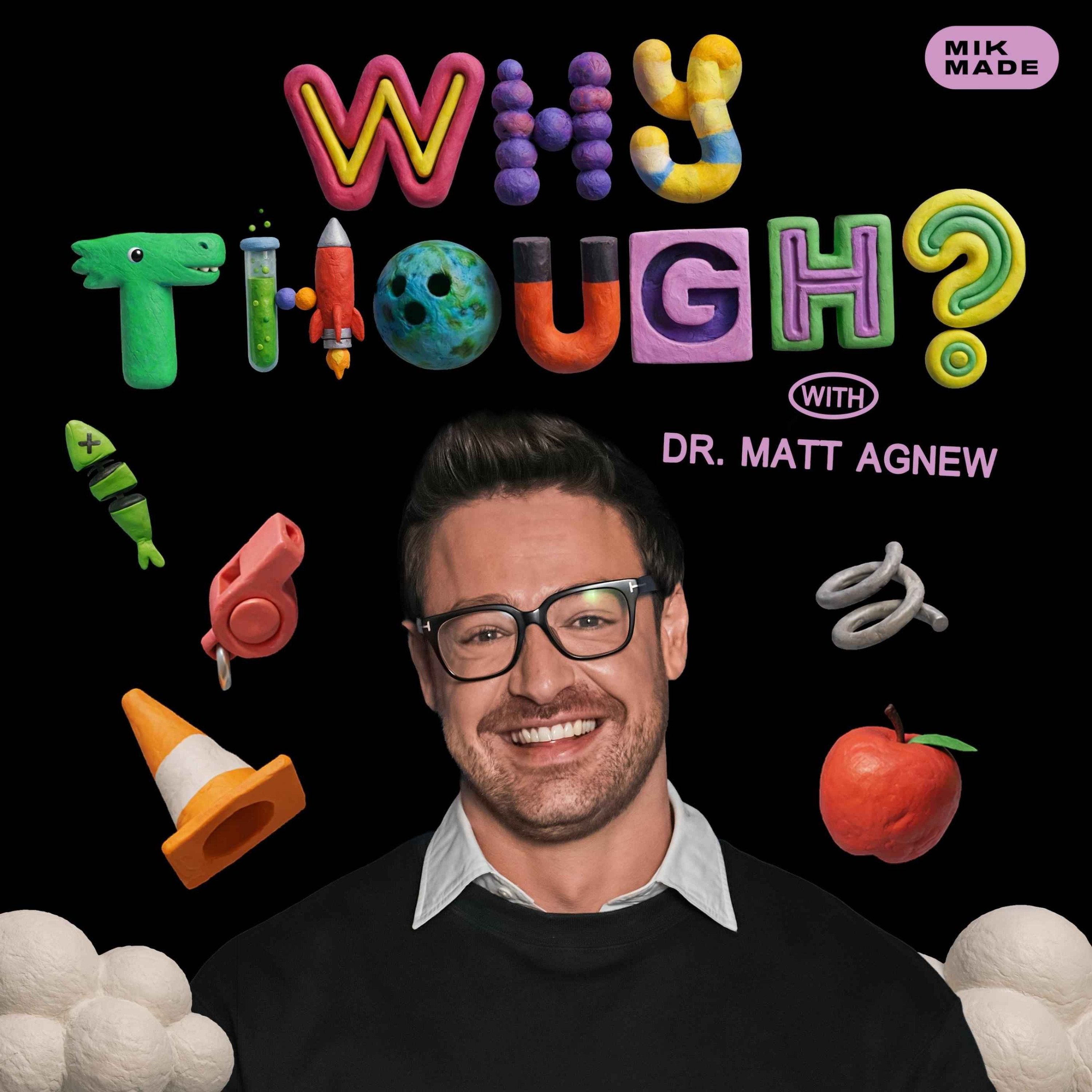
Insights from recent episode analysis
Audience Interest
Podcast Focus
Publishing Consistency
Platform Reach
Insights are generated by CastFox AI using publicly available data, episode content, and proprietary models.
Total monthly reach
Estimated from 7 chart positions in 7 markets.
By chart position
- 🇬🇧GB · Kids & Family#41M to 3M
- 🇦🇺AU · Kids & Family#20300K to 1M
- 🇺🇸US · Kids & Family#24100K to 300K
- 🇨🇦CA · Kids & Family#28100K to 300K
- 🇮🇪IE · Kids & Family#1130K to 100K
- Per-Episode Audience
Est. listeners per new episode within ~30 days
785K to 2.4M🎙 Weekly cadence·1 episodes·Last published 4d ago - Monthly Reach
Unique listeners across all episodes (30 days)
1.6M to 4.8M🇬🇧62%🇦🇺21%🇺🇸6%+4 more - Active Followers
Loyal subscribers who consistently listen
628K to 1.9M
Market Insights
Platform Distribution
Reach across major podcast platforms, updated hourly
Total Followers
—
Total Plays
—
Total Reviews
—
* Data sourced directly from platform APIs and aggregated hourly across all major podcast directories.
On the show
Recent episodes
Why Is Pluto No Longer a Planet?
May 16, 2026
Unknown duration
Why Does Helium Make Our Voice Sound Funny?
May 9, 2026
Unknown duration
Why Does Eating Ice Cream Too Fast Give Me a Headache?
May 2, 2026
Unknown duration
Why Though? is Coming Soon
Apr 14, 2026
Unknown duration
Social Links & Contact
Official channels & resources
Official Website
Login
RSS Feed
Login
| Date | Episode | Description | Length | |
|---|---|---|---|---|
| 5/16/26 | Why Is Pluto No Longer a Planet? | Pluto used to be the ninth planet in our Solar System. Then in 2006 everything changed. Dr Matt Agnew explains why... and it's a better story than you think.In this episode of Why Though?, we travel back to 1930 when astronomer Clyde Tombaugh spotted a tiny moving dot in the night sky and made one of the biggest discoveries in space history. We find out what happened when scientists discovered Eris... a Pluto-like world that was even heavier than Pluto. And we learn the three-rule checklist that decides what actually counts as a planet.Of course Matt's dog Pluto makes a cameo.What you'll learn:- Pluto was discovered in 1930 and taught as the ninth planet for over 70 years- Better telescopes revealed a whole region of icy worlds beyond Neptune called the Kuiper Belt- Scientists found Eris... similar to Pluto but even heavier, which forced a big question- To be a planet, a world must orbit the Sun, be round, and clear its neighbourhood- Pluto does two out of three... but it hasn't cleared its neighbourhood- Pluto became a dwarf planet in 2006... and it's still completely incredibleKey Science Ideas:- Kuiper Belt: A region beyond Neptune full of icy objects- Planet definition: The three-rule checklist astronomers use to classify worlds- Clear its neighbourhood: Being the gravitational boss of your part of space- Dwarf planet: Orbits the Sun, is round, but hasn't cleared its neighbourhood- Scientific change: Science updates its ideas when new evidence appearsFun Experiment: The Planet Checklist ChallengeScientists use a three-rule checklist to decide what counts as a planet. Now it's your turn to be the astronomer.Grab five objects from around the house... a footy, a mandarin, a marble, a 50 cent coin, and a tin of baked beans. These are your space objects. For each one, ask the three planet questions:- Does it orbit a star? Walk it around a lamp- Is it round? Check its shape- Is it the boss of its space? Could it push everything else out of its way, or does it have to share?Only objects that pass all three rules get to be a planet. Then here's the twist... change one rule and see what happens. That's exactly what scientists did in 2006. They didn't move Pluto. They just got clearer about the rules. And Pluto couldn't pass the third test.Why Though? The show for little scientists who love asking big questions. Follow or subscribe so you never miss an episode.Follow Dr Matt Agnew:Instagram: instagram.com/drmattagnewTikTok: tiktok.com/@drmattagnewYouTube: youtube.com/@whythoughpodWebsite: drmattagnew.comFind Why Though? podcast across the internet and share with your friends!Instagram: instagram.com/whythoughpodTikTok: tiktok.com/@whythoughpodFacebook: facebook.com/whythoughpod Hosted on Acast. See acast.com/privacy for more information. | — | |
| 5/9/26 | Why Does Helium Make Our Voice Sound Funny? | Ever heard someone talk after a helium balloon and suddenly sound like a tiny squeaky mouse? There's real science behind it... and it's weirder than you think.In this episode of Why Though?, Dr Matt Agnew investigates the helium voice mystery. Why do balloons float? Why does sound travel faster through helium? And how does all of that flip a normal voice into instant chipmunk mode? Plus we find out about a super-heavy gas that does the exact opposite... making voices go deep and booming. What you'll learn:Helium is less dense than air... that's why balloons floatYour vocal cords and throat work together to shape soundSound travels faster through helium, which shifts the way your voice soundsYour brain hears those shifted sounds as higher and squeakierScientists call the frequencies that shape your voice formants... helium scrambles themKey Science Ideas: states of matter, density, vocal cords, resonance, formants.Fun Experiment: Hum "mmmm" with your mouth closed then slowly open it wider. Hear the change? That's resonance in action... same science, no gas required.Why Though? The show for little scientists who love asking big questions. Follow or subscribe so you never miss an episode.Follow Dr Matt Agnew:Instagram: instagram.com/drmattagnewTikTok: tiktok.com/@drmattagnewYouTube: youtube.com/@whythoughpodWebsite: drmattagnew.comFind Why Though? podcast across the internet and share with your friends!Instagram: instagram.com/whythoughpodTikTok: tiktok.com/@whythoughpodFacebook: facebook.com/whythoughpod Hosted on Acast. See acast.com/privacy for more information. | — | |
| 5/2/26 | Why Does Eating Ice Cream Too Fast Give Me a Headache? | Ever bitten into ice cream too fast and felt a sudden sharp pain in your forehead? That's brain freeze... and there's real science behind it.In this episode of Why Though?, Dr Matt Agnew breaks down exactly what's happening inside your mouth and your brain when ice cream hits too hard and too fast. Why do your blood vessels squeeze and then suddenly open again? And why does your brain sometimes "feel" the pain in your forehead when the cold started on the roof of your mouth?What you'll learn:Brain freeze starts when something super cold touches the roof of your mouth, called the palateCold causes tiny blood vessels to squeeze tight... then open quickly as things warm upThat fast squeeze-and-open triggers pain sensorsYour brain can get tricked into feeling that pain in your forehead, even though the cold never got anywhere near itKey Science Ideas:Palate: The roof of your mouthBlood vessels: Tiny tubes that carry blood around your bodyVasoconstriction: Blood vessels narrowing when coldVasodilation: Blood vessels widening again as things warm upReferred pain: When your brain feels pain somewhere different from where it startedFun Experiment: The Brain Map Glitch Cross your index and middle fingers into an X. Close your eyes. Use your crossed fingertips to gently touch a grape or a pea. It'll often feel like two objects, not one. That's your brain's body map getting confused... just like brain freeze.Why Though? The show for little scientists who love asking big questions. Follow or subscribe so you never miss an episode.Follow Dr Matt Agnew: Instagram: instagram.com/drmattagnew TikTok: tiktok.com/@drmattagnew YouTube: youtube.com/@whythoughpod Website: drmattagnew.comFind Why Though? podcast across the internet and share with your friends!Instagram: instagram.com/whythoughpodTikTok: tiktok.com/@whythoughpodFacebook: facebook.com/whythoughpod Hosted on Acast. See acast.com/privacy for more information. | — | |
| 4/14/26 | Why Though? is Coming Soon | Hey! I'm Dr Matt Agnew and I've got a brand new podcast coming your way very soon.Why Though? is the show for kids who can't stop asking questions. And I mean the really good ones... why do dog paws smell like Doritos? Why are farts smelly? Do fish actually get thirsty?Every episode we take one big question and turn it into a science adventure. Weird facts, real answers, and stuff that'll make you see the world completely differently.Why Though? The show for little scientists who love asking big questions.Hit follow or subscribe now so you're first in line when Episode One drops.Follow Dr Matt Agnew:Instagram: @drmattagnewTikTok: tiktok.com/@drmattagnewYouTube: youtube.com/@whythoughpodWebsite: drmattagnew.com Hosted on Acast. See acast.com/privacy for more information. | — |
Showing 4 of 4
Sponsor Intelligence
Sign in to see which brands sponsor this podcast, their ad offers, and promo codes.
Chart Positions
7 placements across 7 markets.
Chart Positions
7 placements across 7 markets.