Insights from recent episode analysis
Audience Interest
Podcast Focus
Publishing Consistency
Platform Reach
Insights are generated by CastFox AI using publicly available data, episode content, and proprietary models.
Most discussed topics
Brands & references
Total monthly reach
Estimated from 1 chart position in 1 market.
By chart position
- 🇨🇱CL · Management#195500 to 3K
- Per-Episode Audience
Est. listeners per new episode within ~30 days
250 to 1.5K🎙 ~2x weekly·53 episodes·Last published 1w ago - Monthly Reach
Unique listeners across all episodes (30 days)
500 to 3K🇨🇱100% - Active Followers
Loyal subscribers who consistently listen
150 to 900
Market Insights
Platform Distribution
Reach across major podcast platforms, updated hourly
Total Followers
—
Total Plays
—
Total Reviews
—
* Data sourced directly from platform APIs and aggregated hourly across all major podcast directories.
On the show
From 10 epsHost
Recent guests
Recent episodes
The US-Iran Deal: What's Next?
Jun 18, 2026
55m 11s
Operation Epic Fury: Implications for the Middle East
Jun 18, 2026
58m 05s
The War in Iran and the Future of the Gulf
Mar 12, 2026
58m 38s
Operation Epic Fury: Decoding Sentiment Inside Iranian Society
Mar 10, 2026
59m 02s
Iran at War: Survival, Succession, and What Comes Next
Mar 6, 2026
1h 02m 39s
Social Links & Contact
Official channels & resources
Official Website
Login
RSS Feed
Login
| Date | Episode | Topics | Guests | Brands | Places | Keywords | Sponsor | Length | |
|---|---|---|---|---|---|---|---|---|---|
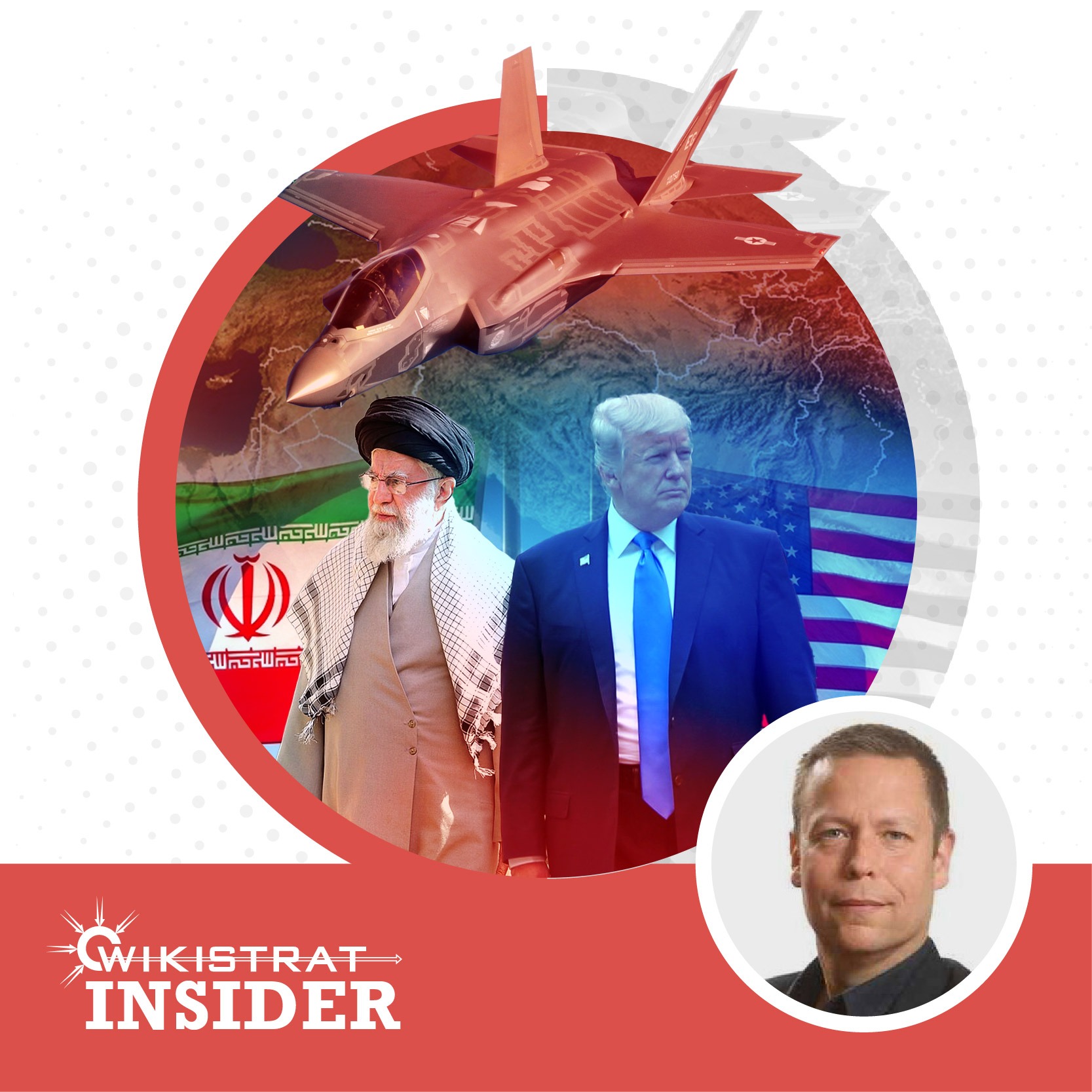
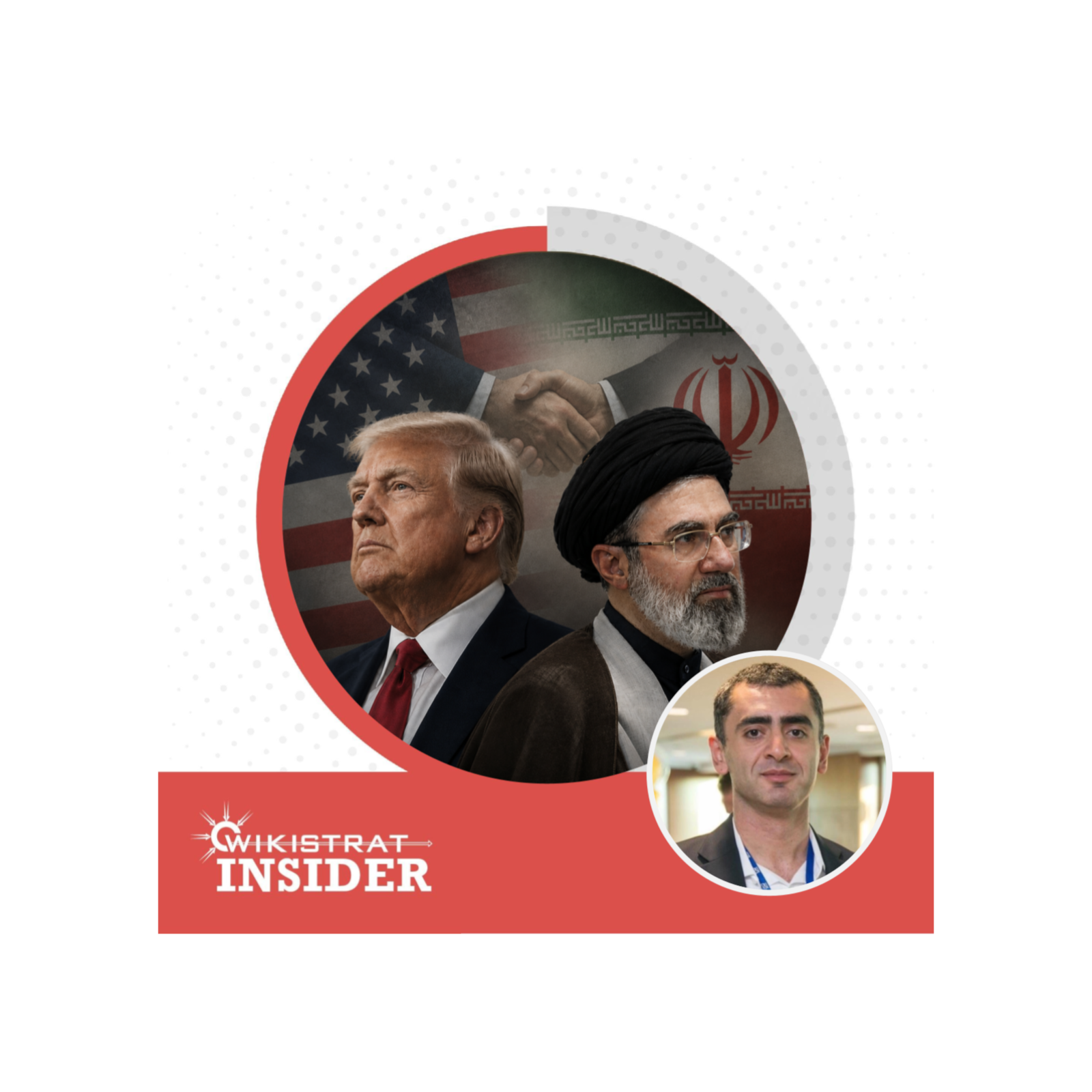
| 6/18/26 | ![]() The US-Iran Deal: What's Next? | A war launched to dismantle Iran's nuclear program has paused with Iran's enriched uranium stockpile intact, its grip on the Strait of Hormuz tighter than before, and a ceasefire document that has already triggered calls for Araghchi's head in Tehran and accusations of capitulation in Washington. On June 17, Wikistrat invited Dr. Sina Azodi, one of the leading voices on US-Iran relations, to assess what the MOU actually establishes, whether Iran will go nuclear, and why Iran emerges from the war more confident than before | 55m 11s | ||||||
| 6/18/26 | ![]() Operation Epic Fury: Implications for the Middle East | Seventeen days into Operation Epic Fury, Iran controls the Strait of Hormuz, the U.S. has no credible exit strategy, and the Gulf States are trapped in a war they never wanted. On March 18, Wikistrat invited award-winning journalist Dr. James M. Dorsey to assess why escalation is more likely than resolution, what President Trump's shrinking options look like, and why the post-war Middle East will be shaped less by who wins than by what Iran looks like when the shooting stops | 58m 05s | ||||||
| 3/12/26 | ![]() The War in Iran and the Future of the Gulf✨ | Gulf geopoliticsIran conflict+3 | Dr. Neil Quilliam | Wikistrat | IranGulf States+2 | IranGulf States+6 | — | 58m 38s | |
| 3/10/26 | ![]() Operation Epic Fury: Decoding Sentiment Inside Iranian Society✨ | Iranian societyU.S.-Israeli air campaign+3 | Ahmad Hashemi | Islamic Republic | IranWashington+1 | IranU.S.-Israeli air campaign+3 | — | 59m 02s | |
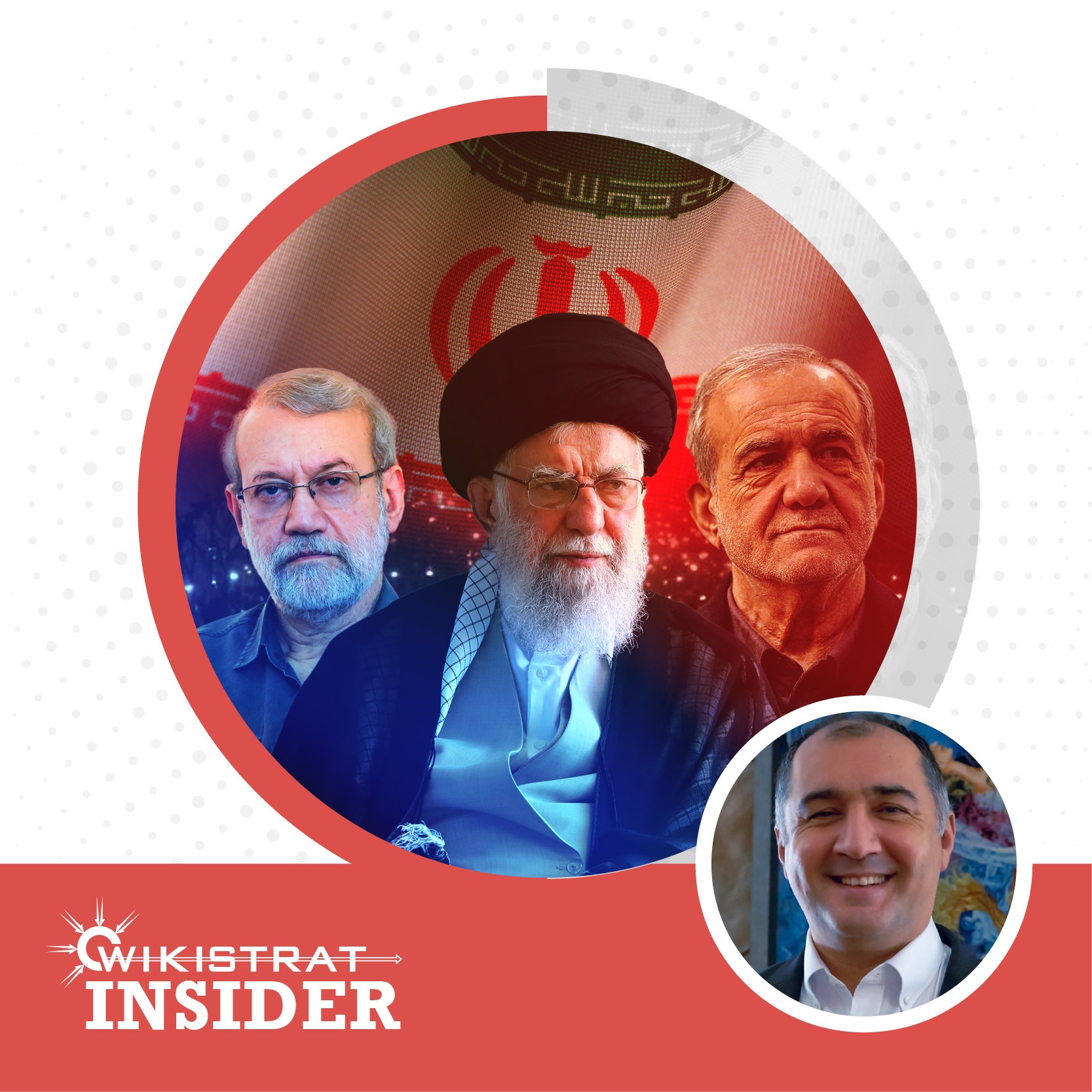
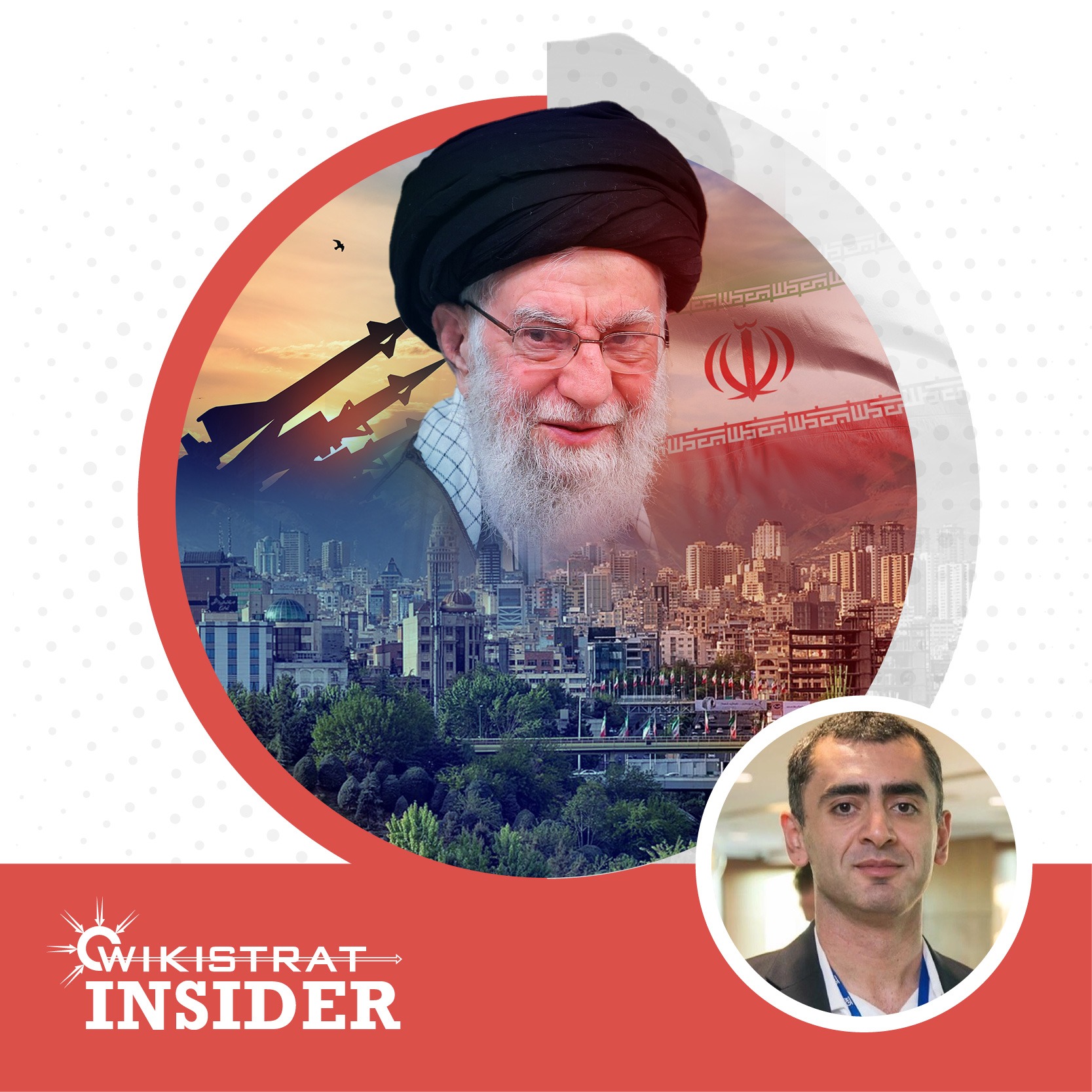
| 3/6/26 | ![]() Iran at War: Survival, Succession, and What Comes Next✨ | Iranwar+3 | Dr. Sina Azodi | Wikistrat | IranU.S.+1 | Iranwar+3 | — | 1h 02m 39s | |
| 3/2/26 | ![]() Operation “Epic Fury”✨ | Iran politicsregime change+4 | Alex Vatanka | Wikistrat | Tehran | Operation Epic FuryIran+5 | — | 57m 49s | |
| 3/1/26 | ![]() On the Brink of War: Iran, the US, and What Comes Next✨ | IranUS foreign policy+4 | Dr. Raz Zimmt | Wikistrat | IranUnited States+1 | IranUS+5 | — | 59m 16s | |
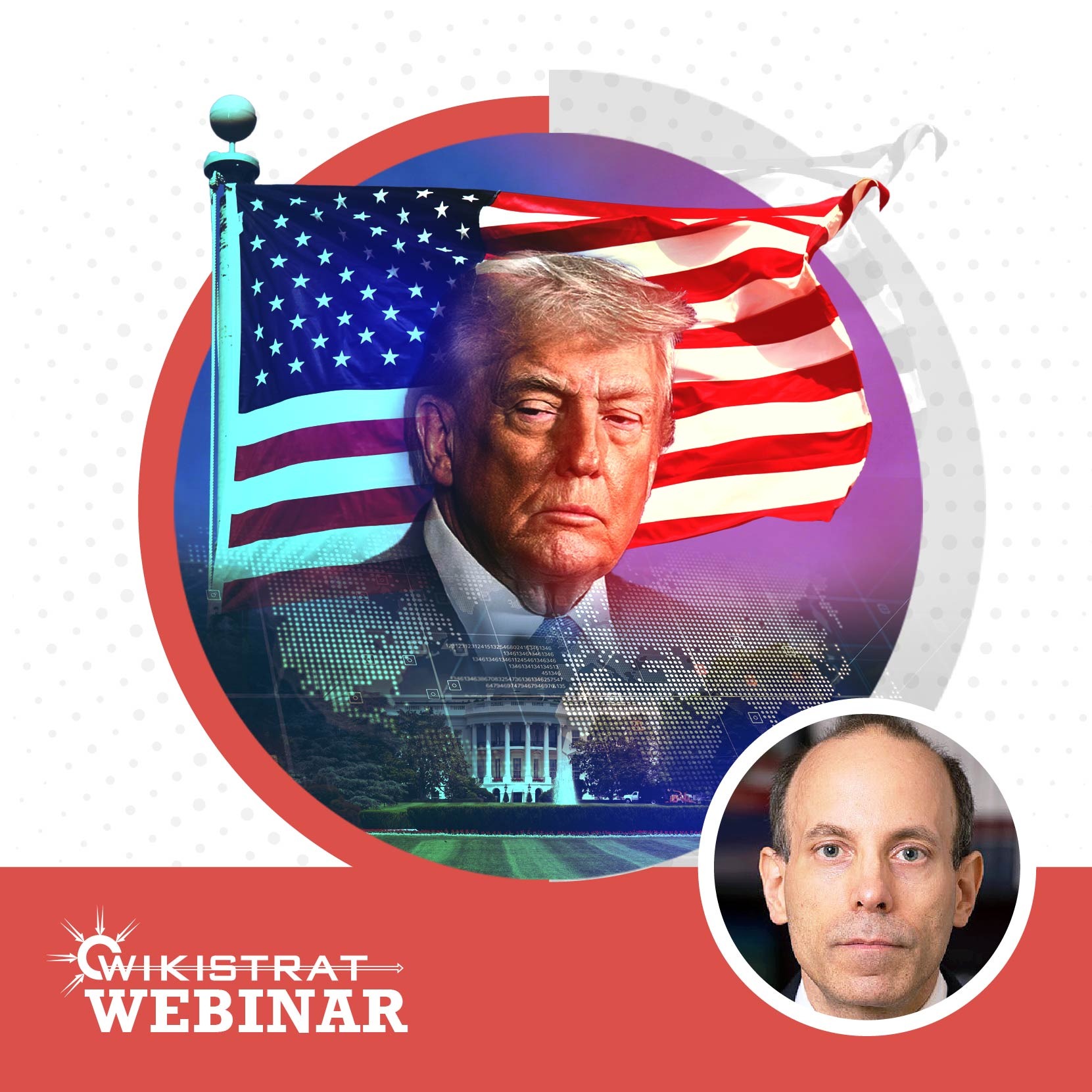
| 1/26/26 | ![]() Marking One Year of Trump 2.0✨ | Trump presidencyforeign policy+3 | Dr. Richard Weitz | Wikistrat | — | Trump 2.0foreign policy+3 | — | 1h 00m 08s | |
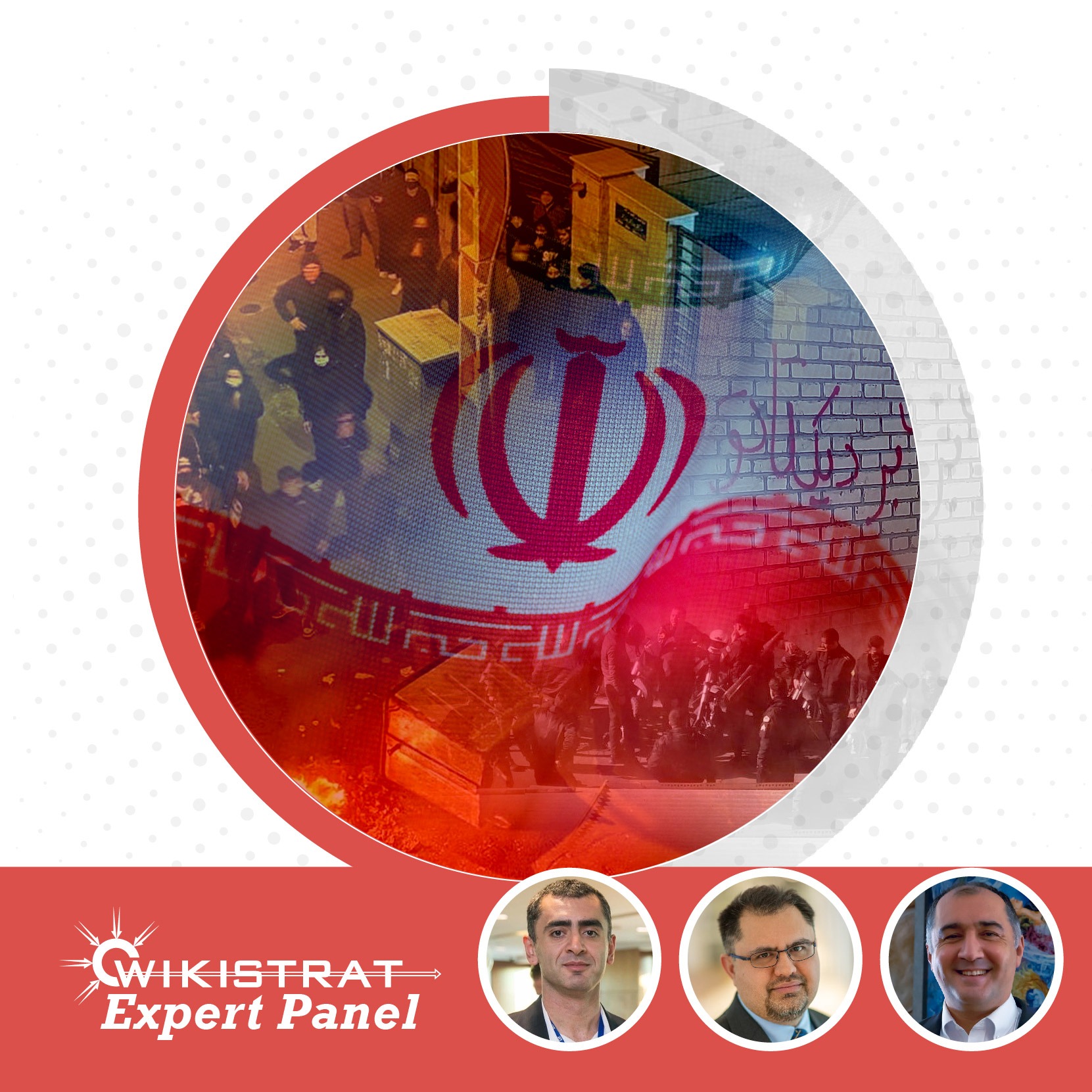
| 1/13/26 | ![]() Iran's Social Unrest and the Future of the Regime✨ | Iransocial unrest+4 | Dr. Sina AzodiAhmad Hashemi+1 | — | IranTehran | Iranprotests+5 | — | 1h 08m 40s | |
| 12/11/25 | ![]() Is Taiwan the Next Ukraine? Scenarios for the Decade Ahead✨ | TaiwanChina+4 | Dr. Minxin Pei | — | TaiwanBeijing+3 | TaiwanUkraine+5 | — | 33m 14s | |
Want analysis for the episodes below?Free for Pro Submit a request, we'll have your selected episodes analyzed within an hour. Free, at no cost to you, for Pro users. | |||||||||
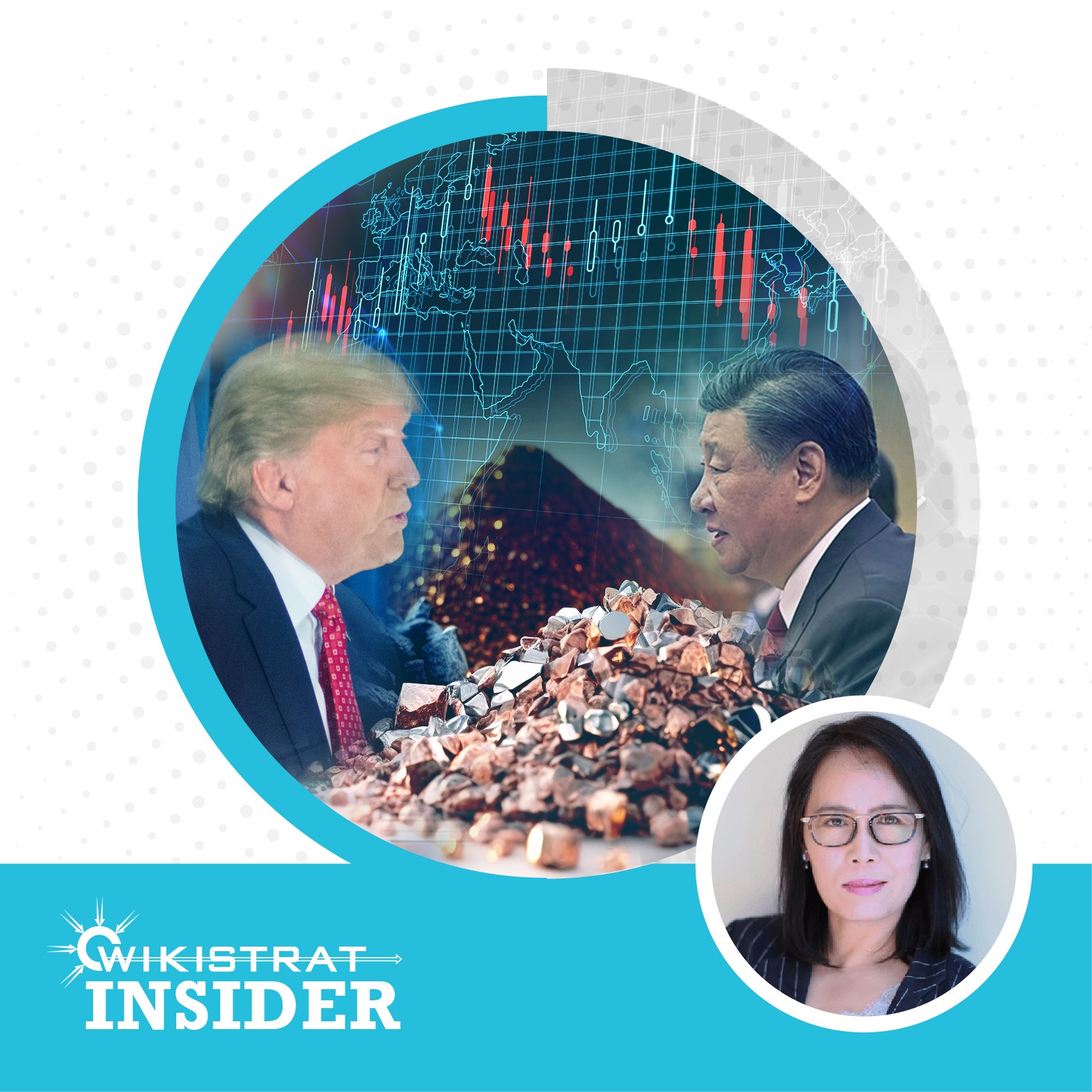
| 12/4/25 | ![]() Exploring the Geopolitics of Rare Earth Minerals✨ | geopoliticsrare earth minerals+4 | Dr. Marina (Yue) Zhang | Wikistrat | ChinaWashington+2 | rare earth elementsclean energy+5 | — | 59m 55s | |
| 11/26/25 | ![]() Tehran at Crossroads: Where Is Iran’s Nuclear Strategy Heading?✨ | Iran nuclear strategygeopolitics+3 | Dr. Sina Azodi | — | IranTehran | Irannuclear program+5 | — | 1h 01m 15s | |
| 11/5/25 | ![]() Understanding Russia's Strategy | Putin isn't losing the war in Ukraine, at least, not in his own mind. He believes time is on his side, that Russia can outlast Ukrainian resistance, and that the West's resolve will crack before his does. But is this confidence justified, or the product of an authoritarian system that can no longer tell him the truth? On November 5, Wikistrat hosted Mark Galeotti to examine the Kremlin's actual objectives, the forces shaping Russian decision-making, whether Moscow's strategy is working, and what might force Putin to change course | 1h 01m 23s | ||||||
| 9/29/25 | ![]() Future-Proofing: How Can Companies Survive Through Times of Political Uncertainty? | Leaders today face not one crisis at a time, but overlapping shocks that feed into each other, what scholars call a polycrisis, creating uncertainty that demands new ways of thinking. In the latest Wikistrat podcast episode, Prof. Benjamin Laker drew from cases of companies that rerouted supply chains to bypass sanctions and firms that leapfrogged competitors by hiring during recessions to present counterintuitive principles for navigating this uncertainty | 53m 50s | ||||||
| 9/9/25 | ![]() Information Warfare in the 21st Century | Information warfare has evolved from leaflets and radio broadcasts to botnets, deepfakes, and AI-generated content. While the technologies have changed, the objective remains constant: shaping perceptions, sowing doubt, and undermining trust. On September 9, Wikistrat hosted information warfare and cyber operations expert Ari Ben Am to analyze one of the most pressing security challenges of our time | 59m 39s | ||||||
| 9/8/25 | ![]() Lessons from Four-Day Workweek Experiments | Is the four-day workweek a passing workplace perk, or the blueprint for how we will work in the future? As trials spread from startups to local governments, the question is no longer hypothetical. On September 8, Wikistrat hosted Professor Brendan Burchell, who led the UK’s groundbreaking 2022 trial, the world's largest four-day workweek experiment at the time, to share insights on what actually happens when organizations make this transition, from the psychological mechanisms that drive success to the implementation factors that determine whether companies thrive or struggle. | 1h 00m 43s | ||||||
| 7/28/25 | ![]() Agentic AI & the Future of Work | As agentic AI moves from research labs into real-world organizations, will it simply enhance how we work—or fundamentally rewrite what work means? On July 28, Wikistrat hosted Matthew Versaggi, White House Presidential Innovation Fellow in AI, to explore how cognitive agents, built on decades of neuroscience-inspired architecture, are reshaping leadership, strategy, and human relevance in the workplace. In a world where machines can reason, act, and collaborate, the line between tool and teammate is quickly blurring—and those who fail to adapt may be left behind.Matthew Versaggi is a White House Presidential Innovation Fellow in Artificial Intelligence (AI), and a patent‑holding specialist in cognitive technology and quantum computing. He has led Fortune‑5 healthcare AI initiatives, founded the "College of Artificial Intelligence," and has over 30 years of experience as an entrepreneur and technologist. | 56m 31s | ||||||
| 7/10/25 | ![]() China, Russia, and the Israel-Iran War: Cracks in the Axis? | As Israel and Iran traded blows in a 12-day war, would Moscow and Beijing truly stand by Tehran if conflict escalated—or is the “Axis” narrative more myth than reality? On July 10, Wikistrat hosted Dr. Richard Weitz, Senior Fellow and Director of the Center for Political-Military Analysis at the Hudson Institute, to assess how China and Russia reacted, what they learned, and what this reveals about the limits of their partnership with Iran. In a world of shifting alliances, the future of this axis may shape the balance of power far beyond the Middle East. | 1h 00m 12s | ||||||
| 7/8/25 | ![]() The War in Ukraine: Entering a New Phase? | Following headlines of front-line shifts and rumors of a “new phase” in the Ukraine war, is the conflict truly evolving—or are these continuations of deeper, long-term trends? On July 3, Wikistrat hosted Keir Giles to assess Russia’s trajectory, Ukraine’s resilience, and Europe’s readiness in a grinding war that may shape the continent’s future. As the conflict slips from the headlines, the stakes for Europe’s security are only growing.Keir Giles is a Senior Consulting Fellow with the Russia and Eurasia Programme at Chatham House, specializing in Russian military strategy, information warfare, and cybersecurity. He is the author of Russia’s War on Everybody (2022), and co-author of the 2023 Chatham House report How to End Russia’s War on Ukraine. | 58m 20s | ||||||
| 7/8/25 | ![]() After the Ceasefire: What's Next for Israel-Iran? | Following Israel’s strikes on Iran’s nuclear and missile programs, Tehran faces its most vulnerable moment since the Islamic Revolution. Its long-standing deterrence doctrine—built on proxies, missiles, and nuclear ambiguity—has been severely shaken. How will Iran’s leadership navigate this crisis while Khamenei’s frail rule nears its end? On June 30, Wikistrat hosted a podcast with Dr. Raz Zimmt to assess Iran’s post-war strategy, internal calculations, and regional trajectory.Dr. Raz Zimmt is Director of the Iran and Shiite Axis Research Program at the Institute for National Security Studies (INSS) and a Research Fellow at the Alliance Center for Iranian Studies at Tel Aviv University. | 56m 39s | ||||||
| 7/8/25 | ![]() The Israel-Iran Crisis: Assessing Future Scenarios | Following a 12-day military confrontation between Israel and Iran, the Islamic Republic faces a critical inflection point. Its long-standing national defense doctrine—centered on regional alliances, missile deterrence, and nuclear ambiguity—has been significantly strained. How will Tehran respond to the setbacks in its regional posture, domestic cohesion, and international standing? On June 26, 2025, Wikistrat hosted a pocast with Dr. Sina Azodi to assess Iran’s strategic outlook, internal dynamics, and post-conflict options.Dr. Sina Azodi is the Program Director of the M.A. in Middle East Studies at George Washington University’s Elliott School of International Affairs, where his research and teaching focus on Iranian foreign policy, nuclear non-proliferation, and U.S.–Iran relations. | 57m 26s | ||||||
| 7/8/25 | ![]() Syria in Flux - What Lies Ahead? | Six months after the collapse of the Assad regime, Syria is undergoing one of the most complex transitions in the modern Middle East. Can a fragile new government navigate economic collapse, armed fragmentation, and shifting regional dynamics—without triggering renewed instability? On June 25, 2025, Wikistrat hosted a podcast with Charles Lister to explore the trajectory of Syria’s post-Assad transition and the evolving balance of power within and beyond its borders.Dr. Charles Lister is a senior fellow and Director of the Syria Initiative at the Middle East Institute (MEI), specializing in Syria, terrorism, and insurgency across the Levant. He also serves as a consultant to the United Nations’ International, Impartial and Independent Mechanism (IIIM) for Syria and as an expert witness and advisor on counterterrorism for U.S., European, and Australian law enforcement and judicial bodies. | 1h 02m 10s | ||||||
| 7/8/25 | ![]() The Israel-Iran War | As Israel’s military campaign against Iran’s nuclear program escalates, Tehran’s leadership is grappling with existential questions about survival, deterrence, and internal cohesion. Can the Islamic Republic navigate simultaneous military strikes, elite fractures, and growing public dissent—without conceding on the very ideological pillars that have sustained it for decades? On June 20, 2025, Wikistrat hosted a podcast with Dr. Saeid Golkar, a leading expert on Iran, to explore the regime’s strategic calculations, the shifting mood inside Iran, and the potential endgames now confronting one of the region’s most entrenched autocracies.Dr. Saeid Golkar is a senior fellow at the Tony Blair Institute for Global Change. | 59m 09s | ||||||
| 7/8/25 | ![]() The Iran Nuclear Negotiations: Closer to a Deal—or a Strike? | Less than 48 hours before Israel launched Operation Rising Lion on Iran’s nuclear sites on June 13, 2025, Wikistrat hosted a podcast featuring Dr. Raz Zimmt, Director of the Iran & Shiite Axis Program at INSS. In a strikingly prescient comment, he warned, “we’re at the closest point to military escalation that we ever were.” He went on to dissect the diplomatic flashpoints, Iran’s probable responses, and the potential ripple effects on regional stability. This timely session—including Q&A—is an essential watch for anyone seeking expert insight into the strategic escalation.Dr. Raz Zimmt is Director of the Iran and Shiite Axis Research Program at the Institute for National Security Studies (INSS) and a Research Fellow at the Alliance Center for Iranian Studies at Tel Aviv University. | 57m 36s | ||||||
| 7/8/25 | ![]() What’s Next for India-Pakistan Relations? | Following the most intense escalation between India and Pakistan in decades, the region faces a critical juncture. The Pahalgam terror attack ended four years of relative calm, prompting large-scale Indian airstrikes and cross-border exchanges that tested deterrence thresholds. What does this crisis reveal about the future of India-Pakistan relations and the risk of renewed conflict? On June 9, Wikistrat hosted a podcast with Michael Kugelman to examine the drivers of escalation, regional implications, and potential trajectories ahead.Michael Kugelman is a leading expert on South Asia, with a focus on India, Pakistan, and Afghanistan. He writes Foreign Policy's weekly South Asia Brief, offering insights on the region’s political and security dynamics. | 58m 34s | ||||||
Showing 25 of 55
Pitch Fit is a Pro feature
See how bookable this show is for guests, which brands already advertise, the per-episode ad value, and the best-fit guest and sponsor profile. The numbers are blurred on the free plan.
How readily this show books outside guests like you.
How proven this show is for host-read sponsorships.
For Guests
ProFor Advertisers
ProUpgrade to Pro to unlock guest cadence, sponsor categories, fit scores, and per-episode ad value for this show.
Chart Positions
1 placement across 1 market.
Chart Positions
1 placement across 1 market.