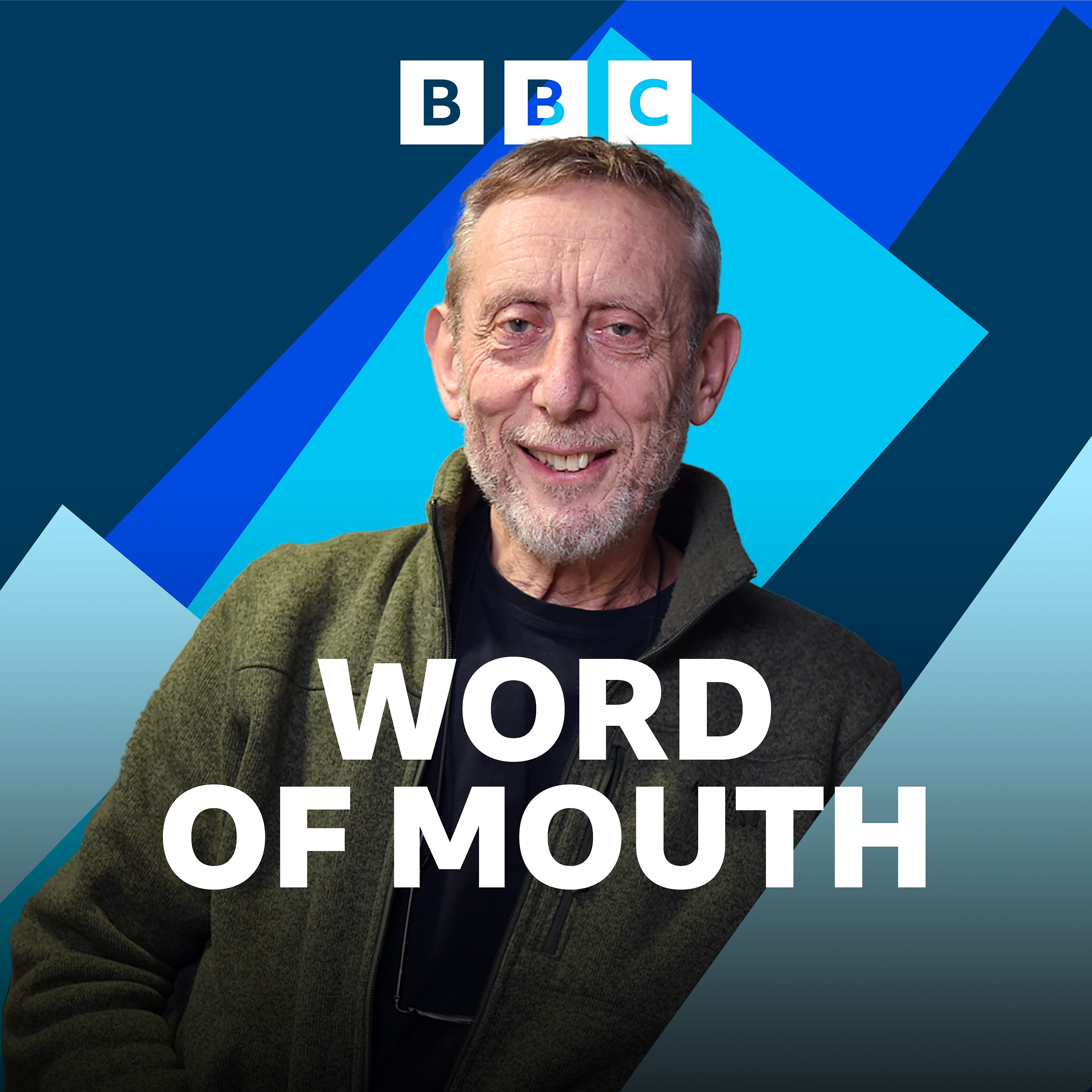
Word of Mouth
by BBC Radio 4
Is this your podcast?On the show
From 18 epsHost
Recent guests
Recent episodes
Where Did Punctuation Come From?
Oct 2, 2026
27m 45s
Bouncer George Bass on de-escalating conflict
Sep 24, 2026
27m 35s
Voices of Manchester
Sep 20, 2026
27m 34s
Bias against women's voices
Sep 10, 2026
28m 30s
How the Normans changed the way we speak
Sep 3, 2026
27m 02s
Insights from recent episode analysis
Audience Interest
Podcast Focus
Publishing Consistency
Platform Reach
Insights are generated by CastFox AI using publicly available data, episode content, and proprietary models.
Most discussed topics
Brands & references
Total monthly reach
Based on 1 signal.
Built from
By chart position
- 🇬🇧United Kingdom · Society & CultureHOME#1231.5K to 7.9K
- 🇻🇳VN · Society & Culture#18822 to 115
- Per-Episode Audience
Est. listeners per new episode within ~30 days
1.5K to 8.0K🎙 ~2x weekly·218 episodes·Last published 2w ago - Monthly Reach
Unique listeners across all episodes (30 days)
3.0K to 16K🇬🇧99%🇻🇳1% - Active Followers
Loyal subscribers who consistently listen
1.7K to 8.8K
Market Insights
Platform Distribution
Reach across major podcast platforms, updated hourly
Total Followers
—
Total Plays
—
Total Reviews
—
* Data sourced directly from platform APIs and aggregated hourly across all major podcast directories.
Social Links & Contact
Official channels & resources
Official Website
Login
RSS Feed
Login
| Date | Episode | Topics | Guests | Brands | Places | Keywords | Sponsor | Length | |
|---|---|---|---|---|---|---|---|---|---|
| 10/2/26 | Where Did Punctuation Come From? | Ever wondered where all our squiggles and dots of modern punctuation come from? Author of On The Mark Florence Hazrat gives us a witty and fascinating insight into how punctuation began and has evolved through the centuries, continuing to adapt and change as our methods of writing and communicating become increasingly short and pithy as we do so much online. Produced in partnership with the Open University by Maggie Ayre for BBC Audio Bristol | 27m 45s | ||||||
| 9/24/26 | Bouncer George Bass on de-escalating conflict | Michael Rosen talks to security guard George Bass, the author of What The Bouncer Saw: Life on the Front Line of the Security Business. George says words and tone are his riot shield. He shares what he's learned about how to talk and joke people down from anti-social behaviour and also how to communicate in code on the radio.Produced for BBC Audio Bristol by Beth O'Dea, in partnership with the Open University Subscribe to the Word of Mouth podcast and never miss an episode: https://www.bbc.co.uk/sounds/brand/b006qtnz | 27m 35s | ||||||
| 9/20/26 | Voices of Manchester | Rob Drummond, Professor of Sociolinguistics at Manchester Metropolitan University, talks to Michael about the ways people talk in Greater Manchester. They discuss which areas are seen as more 'Lancashire' or more 'Manc' in their speech, and what is known as the 'happy vowel.' Plus they dissect the accents of celebrities such as the Gallagher Brothers, Gary Neville and Sara Cox.Rob's project can be found here: https://explore.manchestervoices.org/Produced for BBC Audio Bristol by Sally Heaven, in partnership with the Open University | 27m 34s | ||||||
| 9/10/26 | Bias against women's voices | Jane Setter talks to Michael Rosen about negative attitudes to vocal traits seen as exclusively female, from vocal fry to higher pitch. Can men really not talk in a sexy voice? And why did Margaret Thatcher change hers?Produced for BBC Audio Bristol by Sally Heaven, in partnership with the Open University | 28m 30s | ||||||
| 9/3/26 | Norman ConquestEnglish language+3 | Dr Philip Durkin | Oxford English DictionaryBBC Audio Bristol+1 | — | Norman ConquestEnglish language+3 | — | 27m 02s | ||
| 8/27/26 | Gaelic languageScottish culture+3 | Roddy Maclean | BBC Radio 4The Open University | ScotlandThe Highlands+2 | GaelicScotland+6 | — | 27m 55s | ||
| 6/30/26 | fairy talesanthropology+3 | Jamie Tehrani | Durham UniversityLittle Red Riding Hood+1 | — | fairy talesoral traditions+3 | — | 27m 17s | ||
| 6/11/26 | languagesmell+3 | Asifa Majid | BBC Radio 4Open University+1 | Oxford | smelllanguage+3 | — | 27m 35s | ||
| 6/4/26 | history of languagespeech recreation+3 | Simon Roper | BBC Radio 4BBC Audio Bristol+1 | — | language historyspeech+3 | — | 27m 33s | ||
| 5/28/26 | languagenature+4 | Ella Frances Sanders | BBC Radio 4BBC Audio Bristol+2 | — | languagenature+5 | — | 27m 50s | ||
Want analysis for the episodes below?Free for Pro Submit a request, we'll have your selected episodes analyzed within an hour. Free, at no cost to you, for Pro users. | |||||||||
| 5/21/26 | literary errorsediting+4 | Rebecca Lee | Rogues, Widows and Orphans: Mischief and Misadventures in the World of Books | — | literary errorsediting+4 | — | 27m 39s | ||
| 5/14/26 | oracyeducation+3 | Amy GauntTia | Voice 21BBC Audio Bristol+1 | — | oracyeducation+4 | — | 27m 45s | ||
| 5/7/26 | timelife chapters+3 | Michael RosenDara Ó Briain | BBC Radio 4BBC Audio Bristol+1 | — | timeMichael Rosen+5 | — | 48m 16s | ||
| 2/19/26 | language extinctioncultural preservation+3 | Sophia Smith Galer | BBC Radio 4BBC Audio Bristol+2 | — | language extinctionendangered languages+3 | — | 27m 42s | ||
| 2/12/26 | Tourette Syndromevocal tics+3 | Ione Georgakis | Tourette ActionBBC Audio Bristol+1 | — | Tourette Syndromevocal tics+5 | — | 27m 31s | ||
| 2/5/26 | linguisticslanguage+4 | Teddy Mack | BBC Radio 4BBC Audio Bristol+1 | St Vincent | Vincentian CreoleEnglish language+5 | — | 27m 27s | ||
| 1/29/26 | aphorismsphilosophy+3 | James Geary | BBC Audio BristolOpen University | — | aphorismssayings+5 | — | 27m 42s | ||
| 1/22/26 | AI companionsdigital anthropology+4 | Jennifer Cearns | BBC Radio 4Open University | — | AIchatbots+4 | — | 27m 43s | ||
| 1/15/26 | languageaccents+4 | Tony Crowley | BBC Radio 4lobscouse | LiverpoolOxford University | ScouseLiverpool+5 | — | 27m 44s | ||
| 1/8/26 | linguisticsalphabet+4 | Dr Danny Bate | Open UniversityBBC Radio 4+1 | — | alphabetletters+5 | — | 27m 42s | ||
| 10/2/25 | children's literaturewriting+3 | Julia Donaldson | BBC Radio 4BBC Audio Bristol+4 | — | Julia Donaldsonchildren's books+3 | — | 33m 38s | ||
| 9/25/25 | languageclichés+3 | Derek Bousfield | The Manchester Centre for Research in LinguisticsBBC Audio Bristol+2 | — | languageclichés+5 | — | 27m 54s | ||
| 9/21/25 | The Language of the Manosphere | The 'Manosphere' is a group of loosely affiliated mainly young males who have developed a specialised vocabulary to discuss women online in a negative and hostile way. Some of the vocabulary is a response to feminism which some men claim is diminishing their role in society. For other men a failure to attract women has given rise to phrases such as Chad and Stacey and a belief in the 80/20 theory - that 80% of women are attracted to just 20% of men who are Alpha males or Chads. Acronyms such as AWALT (All women are like that) and MGTOW (Men Going Their Own Way) are also used for the purpose of internet dialogue. Dr Jessica Aiston of Queen Mary University in London is one of several linguistic researchers who submitted evidence to the UK Parliament call for research into online misogyny. She tells Michael Rosen what that research has shown her and explains some of the terms used.How did terms like “down the rabbit hole” and “gaslighting” enter the English language? How do other languages adapt expressions like these? Find out in an interactive guide with The Open University’s experts. Visit the BBC Radio 4Word of Mouth page and follow the links to The Open University.Produced for BBC Audio Bristol by Maggie Ayre, in partnership with the Open University. Subscribe to the Word of Mouth podcast and never miss an episode: https://www.bbc.co.uk/sounds/brand/b006qtnz | 27m 29s | ||||||
| 9/11/25 | Crash Bang Wallop: The Sound of Words | Michael Rosen is joined by linguist Dr Catherine Laing to discuss onomatopoeia and other words that sound like their meanings. Not just words for sounds like 'crash' and 'bang', or words for animal noises like 'woof' and 'quack', but also other words which perhaps hold something of their meaning within their form. Is there something rough about the word 'rough'? Does 'smooth' feel smooth? And how can we play with this in everyday speech and in poetry? Produced by Becky Ripley, in partnership with the Open University. | 27m 18s | ||||||
| 9/9/25 | How to Persuade a Courtroom | Michael Rosen talks to criminal defence barrister Joanna Hardy-Susskind about the legal language of Crown Court cases in England and Wales. From the grandeur of the courtroom and stock phrases like "with respect to my learned friend" to the more colloquial directness of talking to a defendant. How do barristers build persuasive arguments when talking to a jury, or when discussing legal matters with the judge? Do weak arguments hide behind elaborate language? Do the best barristers use more stripped back language? And how do they deliver their words? The tone, the pace, the performance. Produced in partnership with The Open University for BBC Audio Bristol by Becky Ripley. Subscribe to the Word of Mouth podcast and never miss an episode: https://www.bbc.co.uk/sounds/brand/b006qtnz | 27m 36s | ||||||
Showing 25 of 218
Pitch Fit is a Pro feature
See how bookable this show is for guests, which brands already advertise, the per-episode ad value, and the best-fit guest and sponsor profile. The numbers are blurred on the free plan.
How readily this show books outside guests like you.
How proven this show is for host-read sponsorships.
For Guests
ProFor Advertisers
ProUpgrade to Pro to unlock guest cadence, sponsor categories, fit scores, and per-episode ad value for this show.
Similar Audience Demographics
Podcasts that attract a similar listener profile