
Insights from recent episode analysis
Audience Interest
Podcast Focus
Publishing Consistency
Platform Reach
Insights are generated by CastFox AI using publicly available data, episode content, and proprietary models.
Total monthly reach
Estimated from 3 chart positions in 3 markets.
By chart position
- 🇦🇺AU · Parenting#31100K to 300K
- 🇰🇷KR · Parenting#1391K to 10K
- 🇭🇰HK · Parenting#143500 to 3K
- Per-Episode Audience
Est. listeners per new episode within ~30 days
51K to 157K🎙 Weekly cadence·10 episodes·Last published yesterday - Monthly Reach
Unique listeners across all episodes (30 days)
102K to 313K🇦🇺96%🇰🇷3%🇭🇰1% - Active Followers
Loyal subscribers who consistently listen
30K to 94K
Market Insights
Platform Distribution
Reach across major podcast platforms, updated hourly
Total Followers
—
Total Plays
—
Total Reviews
—
* Data sourced directly from platform APIs and aggregated hourly across all major podcast directories.
On the show
Recent episodes
Modern parenting: connection not perfection
Jun 23, 2026
38m 07s
When you're not okay: Postnatal anxiety and depression
Jun 16, 2026
34m 50s
What it’s like to be a young mum
Jun 9, 2026
27m 04s
The early years for Aussie dads
Jun 2, 2026
31m 31s
Childcare in the news for all the wrong reasons
May 26, 2026
36m 54s
Social Links & Contact
Official channels & resources
Official Website
Login
RSS Feed
Login
| Date | Episode | Description | Length | ||||||
|---|---|---|---|---|---|---|---|---|---|
| 6/23/26 | Modern parenting: connection not perfection | Connection, connection, connection. If there’s one thing that parent educator Genevieve Muir wants us to take from her, it’s that it all comes back to connecting with our child. With her trademark good humour and keeping it real, Gen talks to Kate and Amelia about surviving and thriving in today’s parenting world of information overload. Gen shares practical tips for cutting through the noise, the advice you can ignore, setting loving boundaries... and why watching more cat videos might just help! Gen is the founder of Connected Parenting, an obstetric social worker, author and the co-host of her own podcast, Beyond the Chaos. All in addition to being the proud mum of four boys! Learn more: Connected Parenting Follow Gen on Instagram Thanks for listening to the Words Grow Minds Parent Podcast! We love hearing from you, so please subscribe, rate and review this episode. For tools and tips to support your child’s development visit wordsgrowminds.org.au and follow us on Facebook and Instagram Thanks to PodBooth for producing this episode. We acknowledge this land that we record on as the traditional lands for the Kaurna people and that we respect their spiritual relationship with Country. We acknowledge the Kaurna people, as the custodians of the Adelaide region and that their cultural and heritage beliefs are still as important to the living First Nations people today. We extend this respect to the cultural authority of Aboriginal and Torres Strait Islander people from other areas of Australia and elders past and present. | 38m 07s | ||||||
| 6/16/26 | When you're not okay: Postnatal anxiety and depression | New parenthood is joyful, but it can also be overwhelming in ways you never saw coming. For some parents, that overwhelm can tip into something more serious. In this deeply personal episode, Kate and Amelia are joined by Gia Hogarth, a former journalist and host of Mum Mind Unpacked podcast. Gia speaks openly about her own experience with perinatal anxiety and depression, the signs that something wasn't right, what she wishes she’d known then and how she finally found the help she needed. Gia wants you to know you’re not alone, and there are many supports available to help you come through the other side. If you or someone you love might be going through this, this episode is for you. And if it raises any issues for you, please contact free professional support services Please seek professional free support services: Lifeline: 13 11 14 PANDA (Perinatal Anxiety & Depression Australia): 1300 726 306 COPE Centre of Perinatal Excellent Thanks for listening to the Words Grow Minds Parent Podcast! We love hearing from you, so please subscribe, rate and review this episode. For tools and tips to support your child’s development visit wordsgrowminds.org.au and follow us on Facebook and Instagram Thanks to PodBooth for producing this episode. We acknowledge this land that we record on as the traditional lands for the Kaurna people and that we respect their spiritual relationship with Country. We acknowledge the Kaurna people, as the custodians of the Adelaide region and that their cultural and heritage beliefs are still as important to the living First Nations people today. We extend this respect to the cultural authority of Aboriginal and Torres Strait Islander people from other areas of Australia and elders past and present. | 34m 50s | ||||||
| 6/9/26 | What it’s like to be a young mum | With the age of first-time parenthood rising in Australia, what’s it really like for teens and young people becoming parents? In this episode, Kate and Amelia speak with teen mum Katelyn and her Brave Foundation mentor Brooke Whitehead about the realities of young parenthood. Katelyn shares her story, the challenges and joys of becoming a parent at a young age and how support from Brave made all the difference to her family. They explore how we can all help break down stigma and barriers and support young parents and their children to thrive. Brave was established by a young mum who saw a gap in information available to young parents. From there, it has grown to a national not-for-profit that equips expecting and parenting young people with resources, referral and education opportunities to facilitate happy, healthy and connected families over time. Learn more: Brave Foundation Thanks for listening to the Words Grow Minds Parent Podcast! We love hearing from you, so please subscribe, rate and review this episode. For tools and tips to support your child’s development visit wordsgrowminds.org.au and follow us on Facebook and Instagram Thanks to PodBooth for producing this episode. We acknowledge this land that we record on as the traditional lands for the Kaurna people and that we respect their spiritual relationship with Country. We acknowledge the Kaurna people, as the custodians of the Adelaide region and that their cultural and heritage beliefs are still as important to the living First Nations people today. We extend this respect to the cultural authority of Aboriginal and Torres Strait Islander people from other areas of Australia and elders past and present. | 27m 04s | ||||||
| 6/2/26 | The early years for Aussie dads | From the first days of fatherhood, dads have an incredible opportunity to shape their child’s development – but how do they navigate the challenges and make the most of those early moments? And what programs, supports and strategies exist to build confidence and connection? In this episode, Kate and Amelia explore the experiences of new fathers with community leader and social entrepreneur, Thomas Docking. Thomas is former President of the Childbirth and Parenting Educators Association (CAPEA) in Queensland, Chief Executive Officer of Dads Group and Founder of Man with a Pram – an initiative that brings new fathers and their families together across Australia to connect, share experiences and be celebrated within their local community. Connect with Dads Group on Facebook or Instagram. Access further information on mental health and support for Dads via Perinatal Anxiety and Depression Australia (PANDA). Thanks for listening to the Words Grow Minds Parent Podcast! We love hearing from you, so please subscribe, rate and review this episode. For tools and tips to support your child’s development visit wordsgrowminds.org.au and follow us on Facebook and Instagram Thanks to PodBooth for producing this episode. We acknowledge this land that we record on as the traditional lands for the Kaurna people and that we respect their spiritual relationship with Country. We acknowledge the Kaurna people, as the custodians of the Adelaide region and that their cultural and heritage beliefs are still as important to the living First Nations people today. We extend this respect to the cultural authority of Aboriginal and Torres Strait Islander people from other areas of Australia and elders past and present. | 31m 31s | ||||||
| 5/26/26 | Childcare in the news for all the wrong reasons | There’s no denying it’s been a really difficult year for parents of children in childcare. In this thoughtful and timely episode, CEO of The Parenthood, Georgie Dent, joins Kate Ellis and guest co-host Daniela Ritorto to unpack the complex emotions many families are facing after recent revelations about poor quality care and alarming allegations of abuse. With honesty and care, Georgie explores how to navigate very real feelings of fear and uncertainty, what to look for in a safe and supportive childcare centre - the red flags to watch for and the green flags that signal quality care - and how to make confident choices for your child. A former lawyer and journalist, Georgie is also an author, media commentator and highly sought after keynote speaker who is determined to enact positive change for families, women and children. Get involved: The Parenthood Follow The Parenthood on Instagram Thanks for listening to the Words Grow Minds Parent Podcast! We love hearing from you, so please subscribe, rate and review this episode. For tools and tips to support your child’s development visit wordsgrowminds.org.au and follow us on Facebook and Instagram Thanks to PodBooth for producing this episode. We acknowledge this land that we record on as the traditional lands for the Kaurna people and that we respect their spiritual relationship with Country. We acknowledge the Kaurna people, as the custodians of the Adelaide region and that their cultural and heritage beliefs are still as important to the living First Nations people today. We extend this respect to the cultural authority of Aboriginal and Torres Strait Islander people from other areas of Australia and elders past and present. | 36m 54s | ||||||
| 5/19/26 | Raising a reader | In a world full of screens and endless entertainment options, books remain crucial to the human experience, sparking imagination, curiosity and connection. So how do we ensure we are raising the next generation of readers? Kate and Amelia sit down with Ali Durham, children’s picture book author, illustrator and early childhood educator. Ali shares her passion for nurturing early literacy and the magic of storytelling, showing how reading aloud can boost communication, cognitive skills, and even strengthen parent–child bonds. Ali has plenty of practical tips for making reading fun for energetic little ones, choosing age-appropriate books and incorporating stories into daily routines, even for parents who don’t feel confident as readers themselves. Follow Ali Durham on Instagram Words Grow Minds has plenty of practical advice on how to read to your child every day. Thanks for listening to the Words Grow Minds Parent Podcast! We love hearing from you, so please subscribe, rate and review this episode. For tools and tips to support your child’s development visit wordsgrowminds.org.au and follow us on Facebook and Instagram Thanks to PodBooth for producing this episode. We acknowledge this land that we record on as the traditional lands for the Kaurna people and that we respect their spiritual relationship with Country. We acknowledge the Kaurna people, as the custodians of the Adelaide region and that their cultural and heritage beliefs are still as important to the living First Nations people today. We extend this respect to the cultural authority of Aboriginal and Torres Strait Islander people from other areas of Australia and elders past and present. | 23m 03s | ||||||
| 5/12/26 | Understanding attachment | It’s one of the biggest buzzwords in early childhood, but what does attachment really mean? In this powerful episode, Kate and Amelia are joined by clinical psychologist Rachel Samson to unpack why parent-child attachment matters so much in the early years and how it shapes a child’s emotional and psychological development. Rachel shares achievable ways to foster secure attachment, gently reassuring parents that connection doesn’t have to be perfect, and that everyday moments offer meaningful opportunities to build strong, lasting bonds. Rachel is a clinical psychologist with more than a decade of experience working with children and families, specialising in family relationships and the law, parenting, child development, women’s health and infant care. She is an author, media contributor and a board member of the Australian Association of Psychologists. Through her platform Australian Psychologist, she shares clear, evidence-based insights with a growing community of more than 147,000 followers. Get in touch with Rachel here Thanks for listening to the Words Grow Minds Parent Podcast! We love hearing from you, so please subscribe, rate and review this episode. For tools and tips to support your child’s development visit wordsgrowminds.org.au and follow us on Facebook and Instagram Thanks to PodBooth for producing this episode. We acknowledge this land that we record on as the traditional lands for the Kaurna people and that we respect their spiritual relationship with Country. We acknowledge the Kaurna people, as the custodians of the Adelaide region and that their cultural and heritage beliefs are still as important to the living First Nations people today. We extend this respect to the cultural authority of Aboriginal and Torres Strait Islander people from other areas of Australia and elders past and present. | 36m 50s | ||||||
| 5/5/26 | How music powers early learning | Music matters, especially for growing brains. In this episode Kate and Amelia chat with Dr Anita Collins, a neuroscientist, award-winning music educator and author of The Music Advantage. With a PhD in neuroscience and music education, Anita shares the extraordinary ways music supports language, cognitive development and emotional growth in young children, priming the brain for learning. From practical tips for parents who think they can’t sing to exploring how music can be woven into everyday life, Anita explains why music isn’t just fun, it builds brains. Follow Dr Collins on Facebook Words Grow Minds has lots of free resources on how you can add more music into your child’s life visit Words Grow Minds - Sing! Thanks for listening to the Words Grow Minds Parent Podcast! We love hearing from you, so please subscribe, rate and review this episode. For tools and tips to support your child’s development visit wordsgrowminds.org.au and follow us on Facebook and Instagram Thanks to PodBooth for producing this episode. We acknowledge this land that we record on as the traditional lands for the Kaurna people and that we respect their spiritual relationship with Country. We acknowledge the Kaurna people, as the custodians of the Adelaide region and that their cultural and heritage beliefs are still as important to the living First Nations people today. We extend this respect to the cultural authority of Aboriginal and Torres Strait Islander people from other areas of Australia and elders past and present. | 37m 25s | ||||||
| 4/28/26 | Toddler nutrition made easy | Is your toddler stuck in the notorious ‘beige phase’? Don’t worry, you’re not alone! In this episode, Kate and Amelia are joined by Anna Ritan, an accredited pediatric dietitian and nutritionist with over a decade of experience, to chat all things food, nutrition and child development. Together they explore why nutrition in early childhood is so crucial and how a balanced diet supports cognitive growth, oral health and even language skills. Anna explains what really counts as a fussy eater, why the ‘beige phase’ happens and when it’s time to seek professional guidance. Anna also shares her strategies for encouraging healthy eating habits that are family budget friendly. Get more tips from Anna on Instagram Thanks for listening to the Words Grow Minds Parent Podcast! We love hearing from you, so please subscribe, rate and review this episode. For tools and tips to support your child’s development visit wordsgrowminds.org.au and follow us on Facebook and Instagram Thanks to PodBooth for producing this episode. We acknowledge this land that we record on as the traditional lands for the Kaurna people and that we respect their spiritual relationship with Country. We acknowledge the Kaurna people, as the custodians of the Adelaide region and that their cultural and heritage beliefs are still as important to the living First Nations people today. We extend this respect to the cultural authority of Aboriginal and Torres Strait Islander people from other areas of Australia and elders past and present. | 36m 49s | ||||||
| 5/13/25 | Who's in your parenting village? | Parenting babies is a universal experience, but every country and culture does it a little differently. What can we learn from different ways of raising children, especially when it comes to creating the supportive ‘village’ many of us crave? Global early childhood policy powerhouse Ana Nieto takes Kate and Amelia on a trip around the world, exploring some of the incredible ideas other countries are implementing, what we do well here and what more is needed to help parents and children thrive. Ana has 20 years’ experience working at the highest global policy levels for children’s agencies and foundations including UNICEF Headquarters, Plan International and Dubai Cares. She’s now based in Perth as Director of Early Years at the Minderoo Foundation, which has been successfully advocating why the early years matter and working to improve outcomes for all children in Australia. Some of the international programs Ana mentioned: Too Small to Fail Urban 95 Paid grandparents leave in Sweden Thanks for listening to the Words Grow Minds Parent Podcast! We love hearing from you, so please subscribe, rate and review this episode. For tools and tips to support your child’s development visit wordsgrowminds.org.au and follow us on Facebook and Instagram Thanks to PodBooth for producing this episode. We acknowledge this land that we record on as the traditional lands for the Kaurna people and that we respect their spiritual relationship with Country. We acknowledge the Kaurna people, as the custodians of the Adelaide region and that their cultural and heritage beliefs are still as important to the living First Nations people today. We extend this respect to the cultural authority of Aboriginal and Torres Strait Islander people from other areas of Australia and elders past, present and emerging. | 33m 58s | ||||||
Want analysis for the episodes below?Free for Pro Submit a request, we'll have your selected episodes analyzed within an hour. Free, at no cost to you, for Pro users. | |||||||||
| 5/6/25 | Baby talk: Lessons from a speechie | Do dummies affect speech development? Exactly how much should we be talking and reading to our babies? Which speech issues will resolve themselves and when should we be concerned? Kate and Amelia get a wealth of practical advice from Helen Smith, Senior Speech Pathologist at Children’s Health Queensland. Helen has over two decades of experience as a speech pathologist working in both health and educational settings. She has published research on supportive environments for language development and sharing universal messages with families. And she speaks from personal experience as a mother of four! All the online speech pathology resources Helen mentioned: Words Grow Minds family resources Read and Talk to Learn (RATTL) Communication milestones – Speech Pathology Australia First 5 Forever (QLD) Waiting for speech pathology (NSW Health) Thanks for listening to the Words Grow Minds Parent Podcast! We love hearing from you, so please subscribe, rate and review this episode. For tools and tips to support your child’s development visit wordsgrowminds.org.au and follow us on Facebook and Instagram Thanks to PodBooth for producing this episode. We acknowledge this land that we record on as the traditional lands for the Kaurna people and that we respect their spiritual relationship with Country. We acknowledge the Kaurna people, as the custodians of the Adelaide region and that their cultural and heritage beliefs are still as important to the living First Nations people today. We extend this respect to the cultural authority of Aboriginal and Torres Strait Islander people from other areas of Australia and elders past, present and emerging. | 37m 17s | ||||||
| 4/29/25 | Why risky play? | Play is the work of childhood, as the saying goes. But are we denying our children opportunities to learn valuable life skills by making modern-day play not just safe, but ‘too safe’? That’s the view of Dr Justin Coulson, who believes risky play is vital to raising confident and resilient children. In a conversation that definitely challenged Kate and Amelia, Dr Coulson explains what risky play is, and what it isn’t and how to lovingly let our children go a little. Dr Justin Coulson is the co-host and parenting expert on Channel 9's "Parental Guidance", the founder of happyfamilies.com.au and holds a PhD in psychology. Read his article The case for risky play in an age of overprotection. Justin also quotes the Canadian Paediatric Society’s view on risky play, you can read more here. Thanks for listening to the Words Grow Minds Parent Podcast! We love hearing from you, so please subscribe, rate and review this episode. For tools and tips to support your child’s development visit wordsgrowminds.org.au and follow us on Facebook and Instagram Thanks to PodBooth for producing this episode. We acknowledge this land that we record on as the traditional lands for the Kaurna people and that we respect their spiritual relationship with Country. We acknowledge the Kaurna people, as the custodians of the Adelaide region and that their cultural and heritage beliefs are still as important to the living First Nations people today. We extend this respect to the cultural authority of Aboriginal and Torres Strait Islander people from other areas of Australia and elders past, present and emerging. | 35m 15s | ||||||
| 4/22/25 | It's Emma Memma! | As one of Australia's most loved children’s performers, Dr Emma Watkins has made an extraordinary contribution to early childhood development. Emma shares with Kate and Amelia how her years performing live as the Yellow Wiggle inspired her to do more to support deaf and non-verbal children. She explains how she created Emma Memma for children of all abilities while completing her PhD, and assures us that daggy dancing and made-up songs are always okay! Emma is the author of several children’s books and has completed her Diploma of Auslan (Australian Sign Language), along with interpreter training through Deaf Connect. Follow Emma Memma! Emma Memma Official Website Stream music on YouTube, Spotify and Apple Music Instagram: @emmamemmamemma Facebook: EmmaWatkinsOfficial The deaf community resources Emma recommends: Deaf Connect Expression Australia Signbank Thanks for listening to the Words Grow Minds Parent Podcast! We love hearing from you, so please subscribe, rate and review this episode. For tools and tips to support your child’s development visit wordsgrowminds.org.au and follow us on Facebook and Instagram Thanks to PodBooth for producing this episode. We acknowledge this land that we record on as the traditional lands for the Kaurna people and that we respect their spiritual relationship with Country. We acknowledge the Kaurna people, as the custodians of the Adelaide region and that their cultural and heritage beliefs are still as important to the living First Nations people today. We extend this respect to the cultural authority of Aboriginal and Torres Strait Islander people from other areas of Australia and elders past, present and emerging. | 33m 48s | ||||||
| 4/15/25 | The magic of infant interactions | Who doesn’t love a cute baby video! But do you know what’s happening in your baby’s brain every time you make them laugh or they mimic a sound? Early childhood expert Dr Dan Wuori shares videos of loving interactions between babies and parents with his hundreds of thousands social media followers to explain the developmental and attachment neuroscience behind these everyday moments. Dr Dan Wuori has also just released a book about reframing early childhood education in the US called The Daycare Myth and shares his tips for choosing childcare that supports early development. You can watch Dr Wuori’s baby and toddler videos on Facebook. Thanks for listening to the Words Grow Minds Parent Podcast! We love hearing from you, so please subscribe, rate and review this episode. For tools and tips to support your child’s development visit wordsgrowminds.org.au and follow us on Facebook and Instagram Thanks to PodBooth for producing this episode. We acknowledge this land that we record on as the traditional lands for the Kaurna people and that we respect their spiritual relationship with Country. We acknowledge the Kaurna people, as the custodians of the Adelaide region and that their cultural and heritage beliefs are still as important to the living First Nations people today. We extend this respect to the cultural authority of Aboriginal and Torres Strait Islander people from other areas of Australia and elders past, present and emerging. | 28m 31s | ||||||
| 4/8/25 | Noticing early differences | Our babies have a remarkable ability to communicate from birth but not every baby will do so in the same way or at the same time. If parents have a feeling or an instinct about their child’s development, how can they best respond? Kate and Amelia put the question to one of Australia’s leading researchers Professor Andrew Whitehouse, who was instrumental in the development of the Inklings program. Inklings is a new program for babies aged 6-18 months showing early differences in their social interaction and communication development, giving parents the confidence to better understand and respond to their baby’s cues. It is available for families in South Australia and Western Australia. To find out more: SA inklings.org.au/sa WA inklings.org.au/wa Social and communication milestones can be a useful tool to know what to expect from your child as they grow: Social communication milestones fact sheet Thanks for listening to the Words Grow Minds Parent Podcast! We love hearing from you, so please subscribe, rate and review this episode. For tools and tips to support your child’s development visit wordsgrowminds.org.au and follow us on Facebook and Instagram. Thanks to PodBooth for producing this episode. We acknowledge this land that we record on as the traditional lands for the Kaurna people and that we respect their spiritual relationship with Country. We acknowledge the Kaurna people, as the custodians of the Adelaide region and that their cultural and heritage beliefs are still as important to the living First Nations people today. We extend this respect to the cultural authority of Aboriginal and Torres Strait Islander people from other areas of Australia and elders past, present and emerging. | 38m 04s | ||||||
| 4/1/25 | Small children, big feelings | Kate and Amelia are diving straight into the tumultuous world of infant emotional regulation – in other words, tantrums! Guiding us is an expert on coaching kids and parents through the tough stuff, Madhavi Nawana Parker. Madhavi teaches us what to do in that meltdown moment, what's going on, why, and how finding connection helps us as much as our toddlers. Madhavi is a behaviour consultant, counsellor, and Director of Positive Minds Australia who’s written many books on social and emotional wellbeing. Get in touch with Madhavi via positivemindsaustralia.com.au Raising Children Network has some excellent resources on tantrums and self-regulation. Also check out the Gottman Institute’s guide. Thanks for listening to the Words Grow Minds Parent Podcast! We love hearing from you, so please subscribe, rate and review this episode. For tools and tips to support your child’s development visit wordsgrowminds.org.au and follow us on Facebook and Instagram. Thanks to PodBooth for producing this episode. We acknowledge this land that we record on as the traditional lands for the Kaurna people and that we respect their spiritual relationship with Country. We acknowledge the Kaurna people, as the custodians of the Adelaide region and that their cultural and heritage beliefs are still as important to the living First Nations people today. We extend this respect to the cultural authority of Aboriginal and Torres Strait Islander people from other areas of Australia and elders past, present and emerging. | 38m 41s | ||||||
| 4/1/25 | Screen time - help! | Screen time – it’s the battle of our parenting age, especially when guidelines recommend zero screens for children under two. How much is ok, if any? Is zero screen time realistic? What’s the harm of storytelling cartoons like Bluey? What about the educational apps that teach literacy and numeracy? Dr Mary Brushe led a groundbreaking study on how screen time can interfere with children's language development. She joins Kate and Amelia to unpack their findings and give us the tools to set up healthy habits for our kids and ourselves. Mary is a Senior Research Officer at The Kids Research Institute Australia. You can deep dive into screen time study here. She also recommended Children and Media Australia and Common Sense Media. The Kids Research Institute has some great free resources on healthy screen time habits and check out Words Grow Minds for some tips for interactive co-viewing and toddlers and touchscreens. Thanks for listening to the Words Grow Minds Parent Podcast! We love hearing from you, so please subscribe, rate and review this episode. To learn more about your child’s development visit wordsgrowminds.org.au and follow us on Facebook and Instagram Thanks to PodBooth for producing this episode. We acknowledge this land that we record on as the traditional lands for the Kaurna people and that we respect their spiritual relationship with Country. We acknowledge the Kaurna people, as the custodians of the Adelaide region and that their cultural and heritage beliefs are still as important to the living First Nations people today. We extend this respect to the cultural authority of Aboriginal and Torres Strait Islander people from other areas of Australia and elders past, present and emerging. | 37m 06s | ||||||
| 4/1/25 | Building your baby's brain | From the moment they’re conceived, babies’ brains are building the foundations for lifelong learning. But what exactly do they need to grow strong, healthy brains? In this episode, Kate and Amelia dive into developmental neuroscience with Dr Sally Stanton, breaking down the latest research on how babies learn and what we can do to support them. Dr Staton is a Senior Research Fellow in the Science of Learning Research Centre at the Queensland Brain Institute at the University of Queensland. You can read all about the research behind the Words Grow Minds program on our website. Thanks for listening to the Words Grow Minds Parent Podcast! We love hearing from you, so please subscribe, rate and review this episode. To learn more about your child’s development visit wordsgrowminds.org.au and follow us on Facebook and Instagram. Thanks to PodBooth for producing this episode. We acknowledge this land that we record on as the traditional lands for the Kaurna people and that we respect their spiritual relationship with Country. We acknowledge the Kaurna people, as the custodians of the Adelaide region and that their cultural and heritage beliefs are still as important to the living First Nations people today. We extend this respect to the cultural authority of Aboriginal and Torres Strait Islander people from other areas of Australia and elders past, present and emerging. | 31m 10s | ||||||
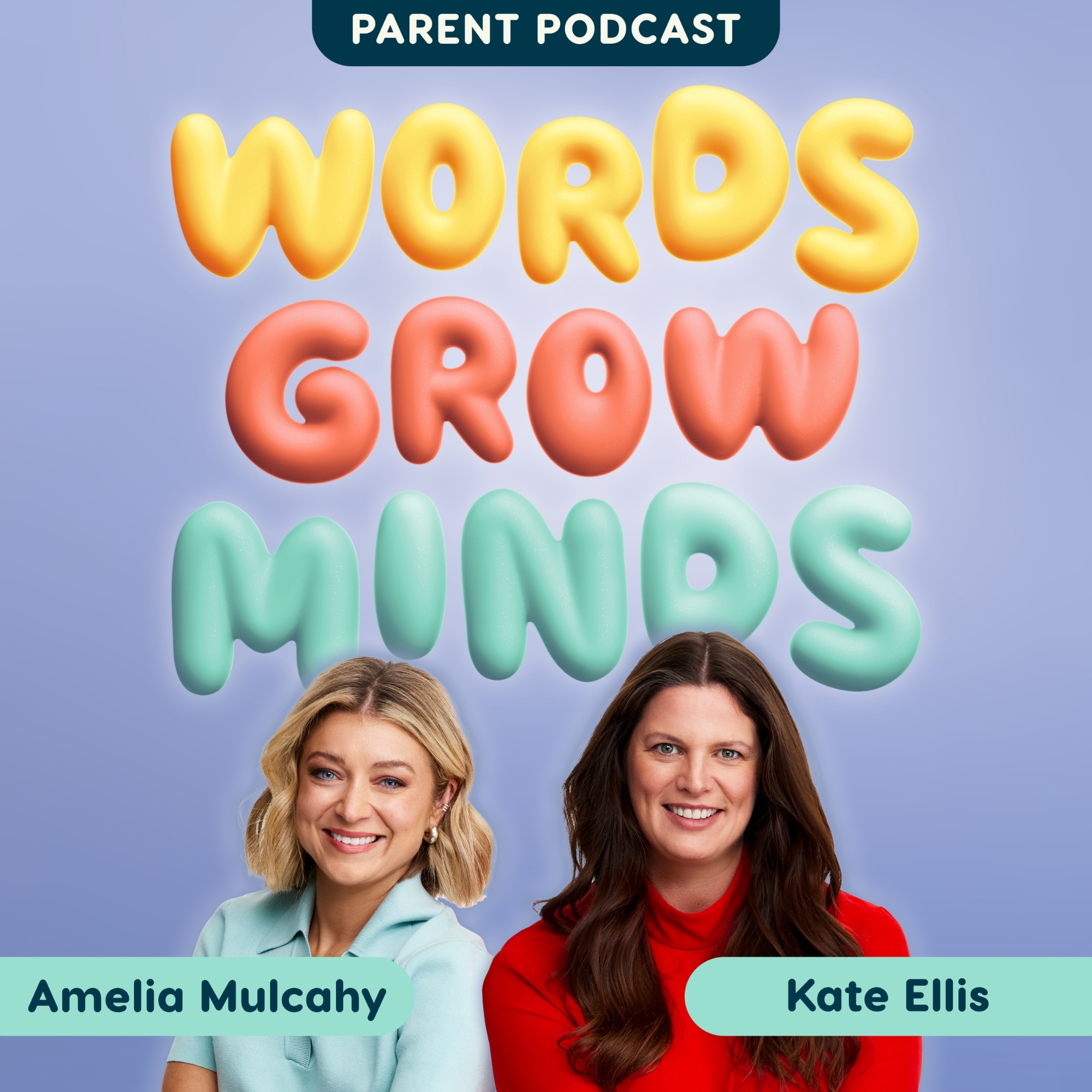
| 3/26/25 | Welcome to the Words Grow Minds Parent Podcast! | Welcome to Words Grow Minds Parent Podcast - LAUNCHING APRIL 2! We are so excited to be bringing you this series on early childhood development for parents, presented by Kate Ellis and Amelia Mulcahy. Did you know your child’s brain grows faster in the first 3 years than at any other time? Kate and Amelia chat with Australian and international experts, breaking down brain science into easy everyday things you can do to help nurture your child’s development in the early years. No pressure, no judgement, just tips and fun conversations to give your child the best start in life. Words Grow Minds is an independently tested, evidence-based and comprehensive program designed to translate the complex neuroscience behind early childhood development into accessible messaging and practical tips for parents, early childhood professionals and the community. We love hearing from you, so please subscribe, rate and review our podcast. To learn more about your child’s development visit wordsgrowminds.org.au and follow us on Facebook and Instagram Thanks to Podbooth for producing this episode. We acknowledge this land that we record on as the traditional lands for the Kaurna people and that we respect their spiritual relationship with Country. We acknowledge the Kaurna people, as the custodians of the Adelaide region and that their cultural and heritage beliefs are still as important to the living First Nations people today. We extend this respect to the cultural authority of Aboriginal and Torres Strait Islander people from other areas of Australia and elders past, present and emerging. | 4m 42s | ||||||
Showing 19 of 19
Pitch Fit is a Pro feature
See how bookable this show is for guests, which brands already advertise, the per-episode ad value, and the best-fit guest and sponsor profile. The numbers are blurred on the free plan.
How readily this show books outside guests like you.
How proven this show is for host-read sponsorships.
For Guests
ProFor Advertisers
ProUpgrade to Pro to unlock guest cadence, sponsor categories, fit scores, and per-episode ad value for this show.
Chart Positions
4 placements across 3 markets.
Chart Positions
4 placements across 3 markets.