
Insights from recent episode analysis
Audience Interest
Podcast Focus
Publishing Consistency
Platform Reach
Insights are generated by CastFox AI using publicly available data, episode content, and proprietary models.
Most discussed topics
Brands & references
Total monthly reach
Estimated from 1 chart position in 1 market.
By chart position
- 🇺🇸US · Management#1725K to 30K
- Per-Episode Audience
Est. listeners per new episode within ~30 days
2.5K to 15K🎙 Weekly cadence·90 episodes·Last published 1mo ago - Monthly Reach
Unique listeners across all episodes (30 days)
5K to 30K🇺🇸100% - Active Followers
Loyal subscribers who consistently listen
1.5K to 9K
Market Insights
Platform Distribution
Reach across major podcast platforms, updated hourly
Total Followers
—
Total Plays
—
Total Reviews
—
* Data sourced directly from platform APIs and aggregated hourly across all major podcast directories.
On the show
From 10 epsHosts
Recent guests
Recent episodes
Hiring with Intention: An Executive Search Case Study (EP.93)
May 30, 2026
56m 04s
Unhooking from Norms (EP.92)
May 15, 2026
53m 10s
Inside the Search (EP.91)
Apr 28, 2026
45m 32s
Hiring in the Age of A.I. (EP.90)
Oct 28, 2025
1h 04m 39s
Building Justice: Rethinking Construction, Climate, and Care (EP.89)
Oct 15, 2025
58m 46s
Social Links & Contact
Official channels & resources
Official Website
Login
RSS Feed
Login
| Date | Episode | Topics | Guests | Brands | Places | Keywords | Sponsor | Length | |
|---|---|---|---|---|---|---|---|---|---|
| 5/30/26 | 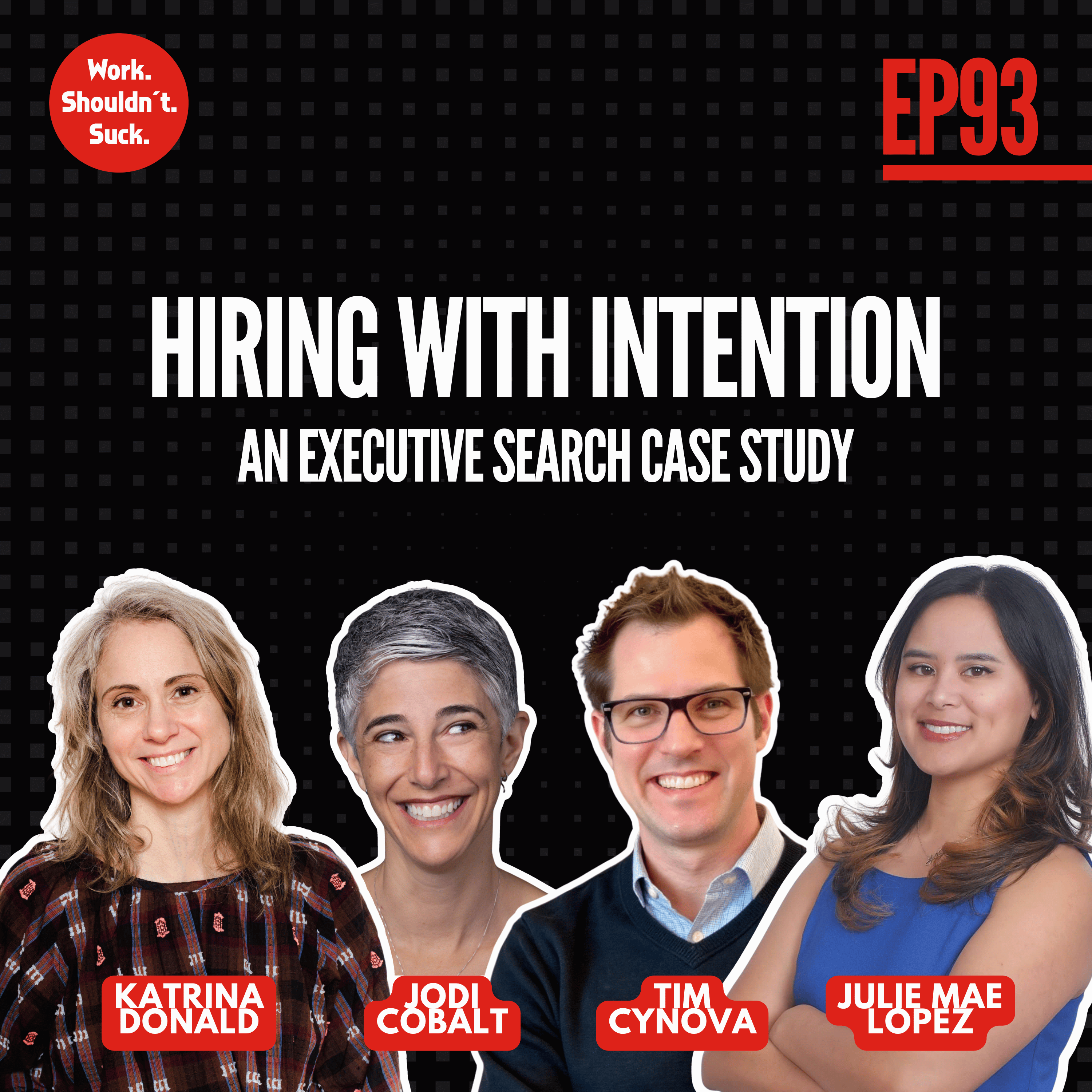 Hiring with Intention: An Executive Search Case Study (EP.93)✨ | hiring processescandidate experience+3 | Jodi Cobalt | Yerba Buena Center for the ArtsPeople Power Solutions+1 | — | hiringcandidate experience+5 | — | 56m 04s | |
| 5/15/26 | 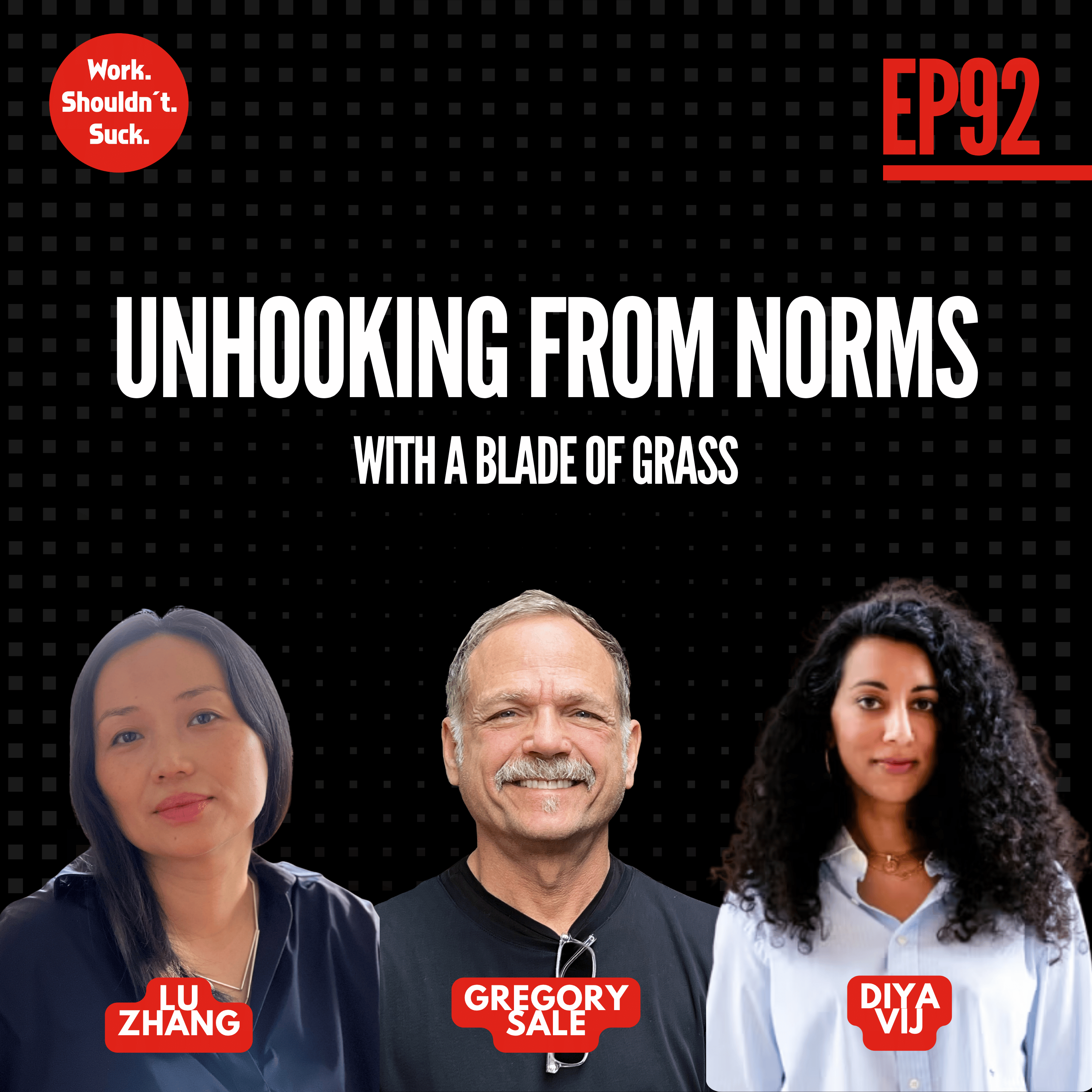 Unhooking from Norms (EP.92)✨ | organizational designsocially engaged artists+3 | Lu ZhangGregory Sale+1 | A Blade of GrassLandscapes | — | organizational normsartist support+3 | — | 53m 10s | |
| 4/28/26 | 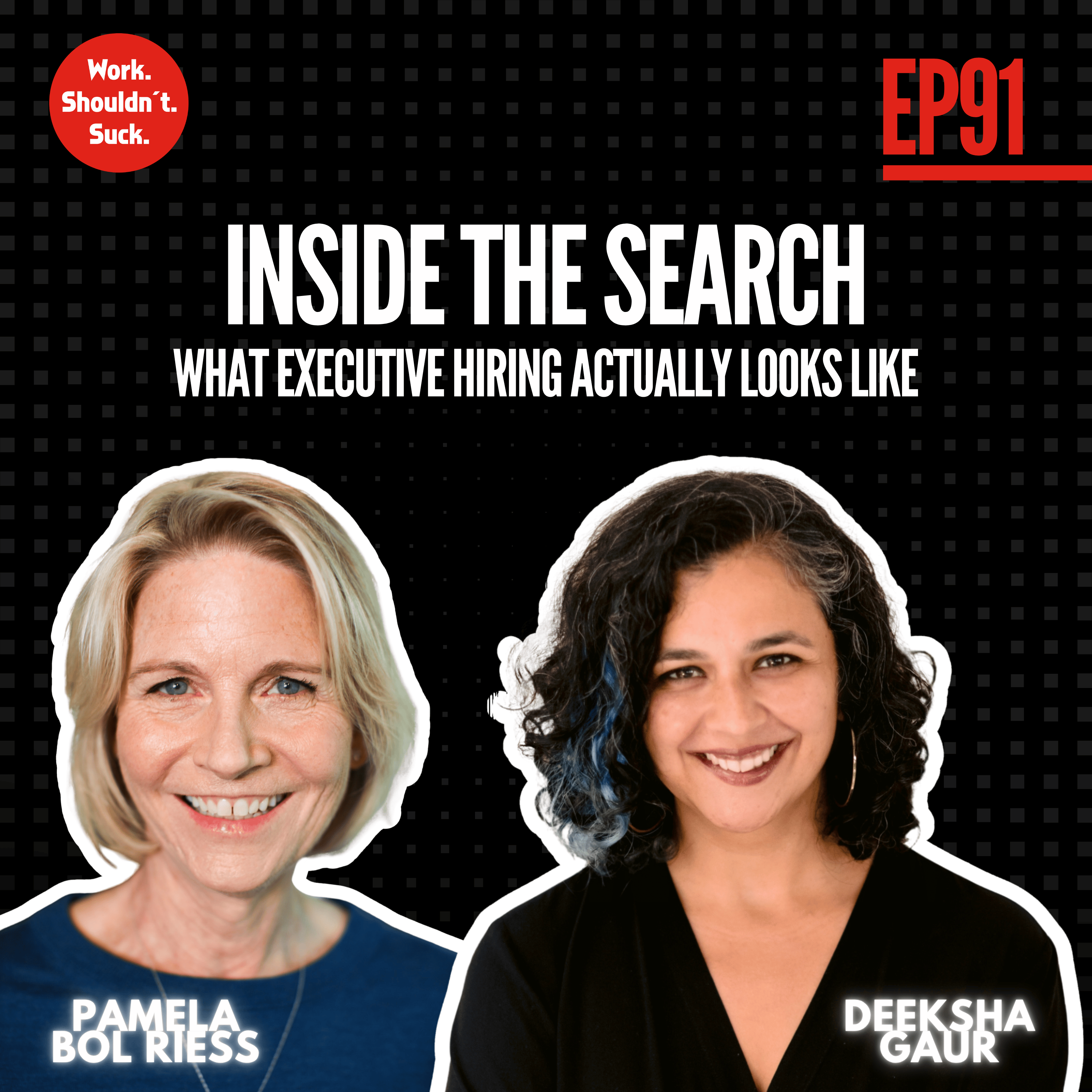 Inside the Search (EP.91)✨ | executive searchhiring process+4 | Pamela Bol RiessDeeksha Gaur | PBR Executive SearchTheater Development Fund | — | executive hiringsearch committees+5 | — | 45m 32s | |
| 10/28/25 |  Hiring in the Age of A.I. (EP.90)✨ | AI in hiringhiring practices+4 | Chad Geepet | A.I. | — | artificial intelligencehiring+5 | — | 1h 04m 39s | |
| 10/15/25 |  Building Justice: Rethinking Construction, Climate, and Care (EP.89)✨ | constructionclimate change+4 | Mel BaiserKate Stephenson | HELM Construction Solutions | — | construction industryclimate action+4 | — | 58m 46s | |
| 9/17/25 |  Deep Democracy at Work (EP.88)✨ | conflict resolutionDeep Democracy+3 | Navida NuraneyCamille Dumond | Lewis Method of Deep Democracy | — | conflictDeep Democracy+3 | — | 47m 29s | |
| 9/9/25 |  Nonprofit Governance in Uncertain Times (EP.87)✨ | nonprofit governanceboard leadership+4 | E. Andrew Taylor | OpenAIKennedy Center for the Performing Arts | — | nonprofit boardsgovernance+5 | — | 43m 04s | |
| 8/28/25 |  Thera-Coaching Through Uncertainty (EP.86)✨ | mental wellnessleadership+4 | Chantel Cohen | CWC Coaching and Therapy | — | career supportmental health+5 | — | 28m 30s | |
| 8/21/25 | 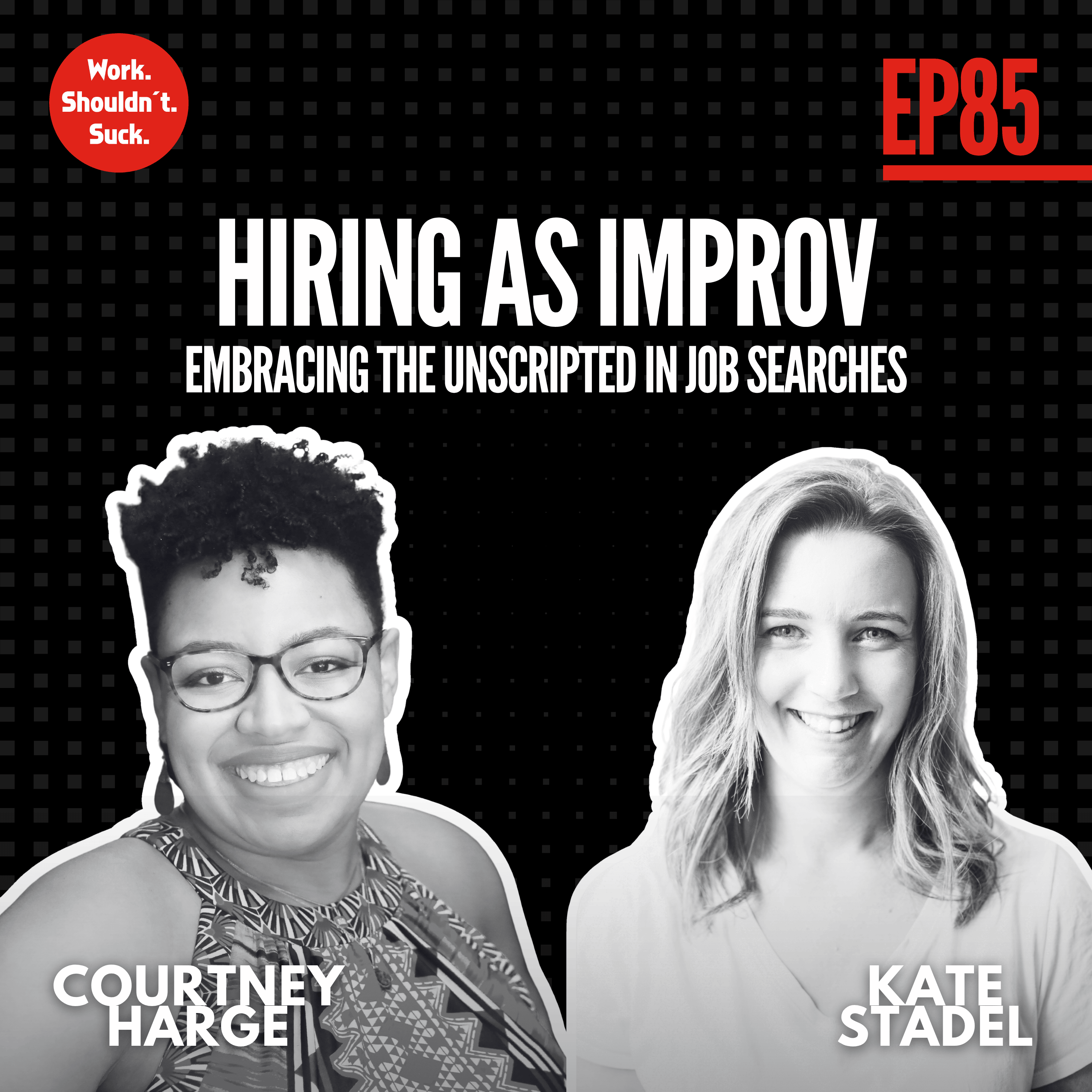 Hiring as Improv: Embracing the Unscripted in Job Searches (EP.85)✨ | hiringimprovisation+4 | Courtney HargeKate Stadel | CHarge Advisory HubYMCA Calgary | — | improvjob seekers+6 | — | 44m 29s | |
| 8/18/25 | 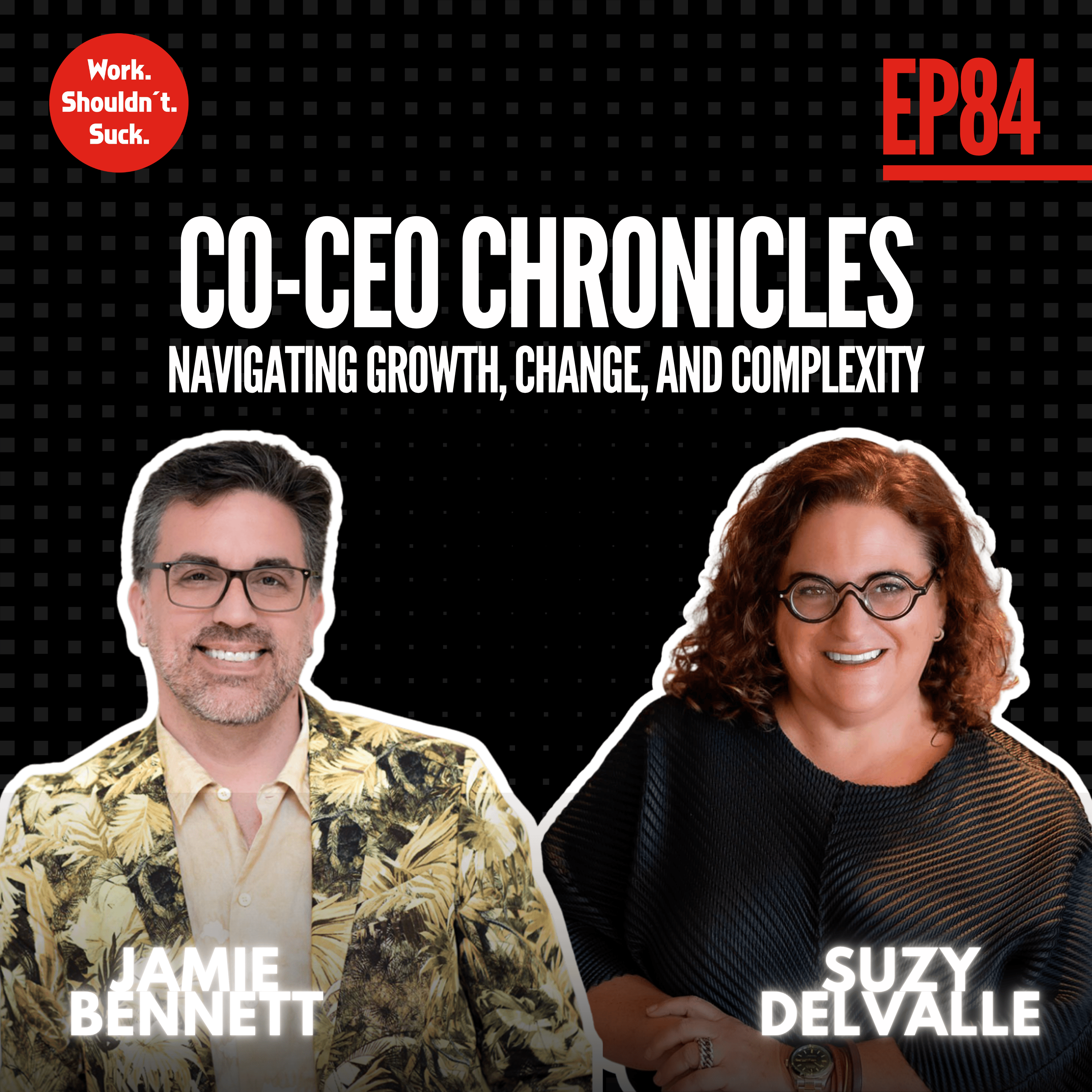 Co-CEO Chronicles: Navigating Growth, Change, and Complexity (EP.84)✨ | co-leadershipshared leadership+4 | Suzy DelvalleJamie Bennett | Americans for the Arts | — | co-CEOsleadership+6 | — | 1h 10m 48s | |
Want analysis for the episodes below?Free for Pro Submit a request, we'll have your selected episodes analyzed within an hour. Free, at no cost to you, for Pro users. | |||||||||
| 6/10/25 | 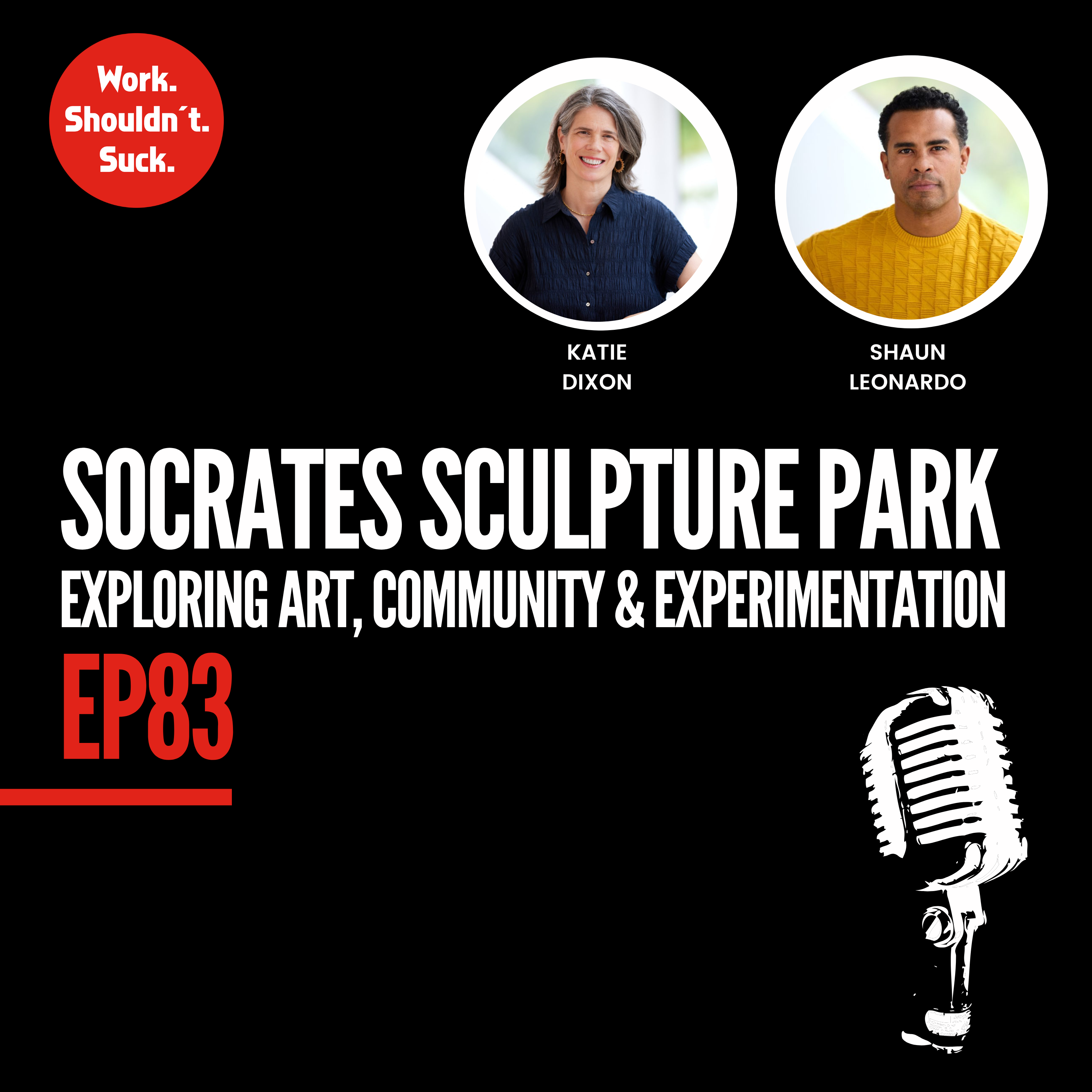 Socrates Sculpture Park: Exploring Art, Community, and Experimentation (EP.83) | In this on-location episode, host Tim Cynova visits Socrates Sculpture Park, a creative haven on along New York City’s East River. Once a landfill, Socrates is now a vibrant public space where artists and community members come together to imagine what’s possible. Co-Directors Katie Dixon and Shaun Leonardo join Tim to reflect on the park’s origins, its role in a rapidly changing neighborhood, and the creative and civic experiments it cultivates every day.Together, they explore what it means to lead an arts organization in uncertain times, how their version of co-leadership works in practice, and why places like Socrates are essential. From the artist-led programming to the practicalities of funding, from personal memories to the future vision for the park, this wide-ranging conversation is a thoughtful reminder of the value of places that are not just made for community, but by and with community.Quotables“[Places like Socrates] are not an extra, or an added-good, or a nice-but-not-necessary. They are absolutely critical to a well-functioning society and to the ability of our neighbors, our fellow New Yorkers, our fellow citizens, to have the space to interact, to practice being human together… and to be able to fail at that sometimes. That requires space, and it requires care, and it requires a kind of attention that is important and necessary, and not to be taken for granted.” —Katie Dixon“Socrates—as an arts institution and a public park—is the most democratic experiment that I've ever come to know because of our responsibility to community. Therefore, all the creative and public programming offerings that we make to our constituencies offers such a myriad of entry points to being here. I want to emphasize this idea of being the experiment is in not only the experience of art, but what art catalyzes in regards to a sense of belonging. Whether you're coming here for kayaking, the gardens, to walk your dog, to be part of some of the sculpture workshops, performances, etc., the art is unfolding whether you're conscious of it or not.” —Shaun LeonardoHighlights:Personal Histories and Inspirations (02:34)The Evolution of Socrates Sculpture Park (05:12)Community Engagement and Programming (08:01)The Importance of Cultural Nonprofits (10:06)Navigating Uncertainty and Sustaining Community Spaces (14:23)The Co-Directorship Model (27:27)Conclusion and Reflections (35:24)Related Resources:“Cultural nonprofits are the unsung stewards of NYC: Why these organizations deserve our support.” by Katie Dixon & Shaun LeonardoSocrates Sculpture ParkMark di SuveroChâteau le WoofBiosKatie Dixon, Co-Director, Socrates Sculpture ParkWith over two decades of experience working at the intersection of the arts, architecture, and urban planning, Katie Dixon has created cross-sector partnerships and new artist-led programming for a broad range of arts, culture and civic organizations. Her work is based in collaborative research and centers consensus-building and cooperation among many different publics, institutions, government agencies and funders.From 2014 to 2021, as the CEO of Powerhouse Arts, Dixon established the vision for a new artist-led institution and led the redevelopment and transformation of the former BRT Power Station in Brooklyn, which was named a New York City Landmark in 2019. Dixon and her team conducted intensive workshops and consultations with artists to develop the institution’s programming, organizational structure and physical planning. Powerhouse was a response to the needs for production space, fabrication expertise and support for artists working in traditional materials that is rapidly disappearing in New York City. In addition to the institutional development, Dixon led all aspects of programming and rehabilitating the 170,000 square-foot facility designed by architecture firm Herzog & de Meuron.Dixon served as the Director of Special Projects at Brooklyn Academy of Music (BAM) from 2011 to 2014 where she established public art programming initiatives in the neighborhood, including works by KAWS and David Byrne. With BAM’s executive team, she also led capital and program planning efforts to grow and expand the institution. Prior to BAM, she was the Chief of Staff at the NYC Department of Cultural Affairs leading special initiatives for the Commissioner, as well as, overseeing the agency’s $700 million capital funding portfolio. From 2007 to 2010 as the Director of Planning and Development at the Downtown Brooklyn Partnership, she led the site development, arts program planning and administration of the Downtown Brooklyn Cultural District.Dixon holds B.A. in Architecture from Yale University and a Master of International Affairs from Columbia University. She lives with her husband and daughter in Red Hook, Brooklyn.Shaun Leonardo, Co-Director, Socrates Sculpture Parkhaun Leonardo has dedicated over 15 year of his professional career to arts administration at the intersection of community engagement, public programming, and experimental pedagogies. Deeply invested in processes of reciprocal exchange, Leonardo’s work flows from a belief in collaborative leadership and artistic visioning.Leonardo’s professional life began at Socrates (2005-2015) as its special events manager before expanding into the role of Socrates’ Director of Public Programs. Over 11 seasons, he envisioned and created new program initiatives and educational curriculum, including the development of the Park’s first workshop series dedicated to adults and teens and the implementation of Socrates’ first onsite and in-school high school-level, sculpture classes. His tenure was marked by collaboration with over 40 cultural and community organizations, leading to the establishment of the Park’s Healthy Living and Performance initiatives, as well as the tripling of the park’s educational offerings.From 2015-2017, Leonardo served at the New Museum’s first Manager of School, Youth & Community Programs, developing programs and accommodations for specific audience groups, both those under the umbrella of school partnerships, designed for high school teachers and students, and new initiatives in the area of community engagement.From 2018-2020, Leonardo acted as Pratt Institute’s inaugural School of Art Visiting Fellow, instigating dialogues amongst students, faculty, and staff, as well as others outside the Institute, to challenge ideas on community and belonging, while shaping possibilities of ethical community engagement.And most recently, Leonardo served as Co-Director of the Brooklyn-based Recess, helping guide the organization’s continuous evolution as an engine of social change. Shaun joined Recess in 2016, initiating the art-based diversion program Assembly as its project and curricular lead, while also acting as the project’s first facilitator. Over the course of nearly 9 years, Shaun continued to expand his role, ultimately being invited to fill the organization’s first co-directorship with founder Allison Freedman Weisberg in 2021. And during the last almost four years, Shaun took on the effort of guiding Recess through the pandemic onto thriving both programmatically and fiscally. His time was dedicated to internally operationalizing care and accountability, while pushing experimentation within the org’s external-facing programming.He is a Brooklyn-based artist from Queens. He received his MFA from the San Francisco Art Institute and is a recipient of support from Creative Capital, Guggenheim Social Practice, Art for Justice and A Blade of Grass. His work has been featured at The Guggenheim Museum, the High Line, New Museum, MASS MoCA and The Bronx Museum, and profiled in the New York Times and CNN. His first major public art commission, Between Four Freedoms, premiered at Four Freedoms Park Conservancy, in the fall of 2021. Shaun lives in Brooklyn with his wife and two daughters.Tim Cynova, SPHR (he/him) is the COO/CHRO of WSS HR LABS, an HR and org design consultancy helping to reimagine workplaces where everyone can thrive. He is a certified Senior Professional in Human Resources (SPHR) and a trained mediator, and has served on the faculty of Minneapolis College of Art & Design, the Banff Centre for Arts & Creativity (Banff, Canada) and The New School (New York City) teaching courses in People-Centric Organizational Design, and Strategic HR. In 2021, he concluded a 12-year tenure leading Fractured Atlas, a $30M, entirely virtual non-profit technology company and the largest association of independent artists in the U.S., where he served in both the Chief Operating Officer and Co-CEO roles (part of a four-person, shared, non-hierarchical leadership team), and was deeply involved in its work to become an anti-racist, anti-oppressive organization since they made that commitment in 2013. Earlier in his career, Tim was the Executive Director of The Parsons Dance Company and of High 5 Tickets to the Arts in New York City, had a memorable stint with the Cincinnati Symphony Orchestra, was a one-time classical... | — | ||||||
| 2/25/25 | 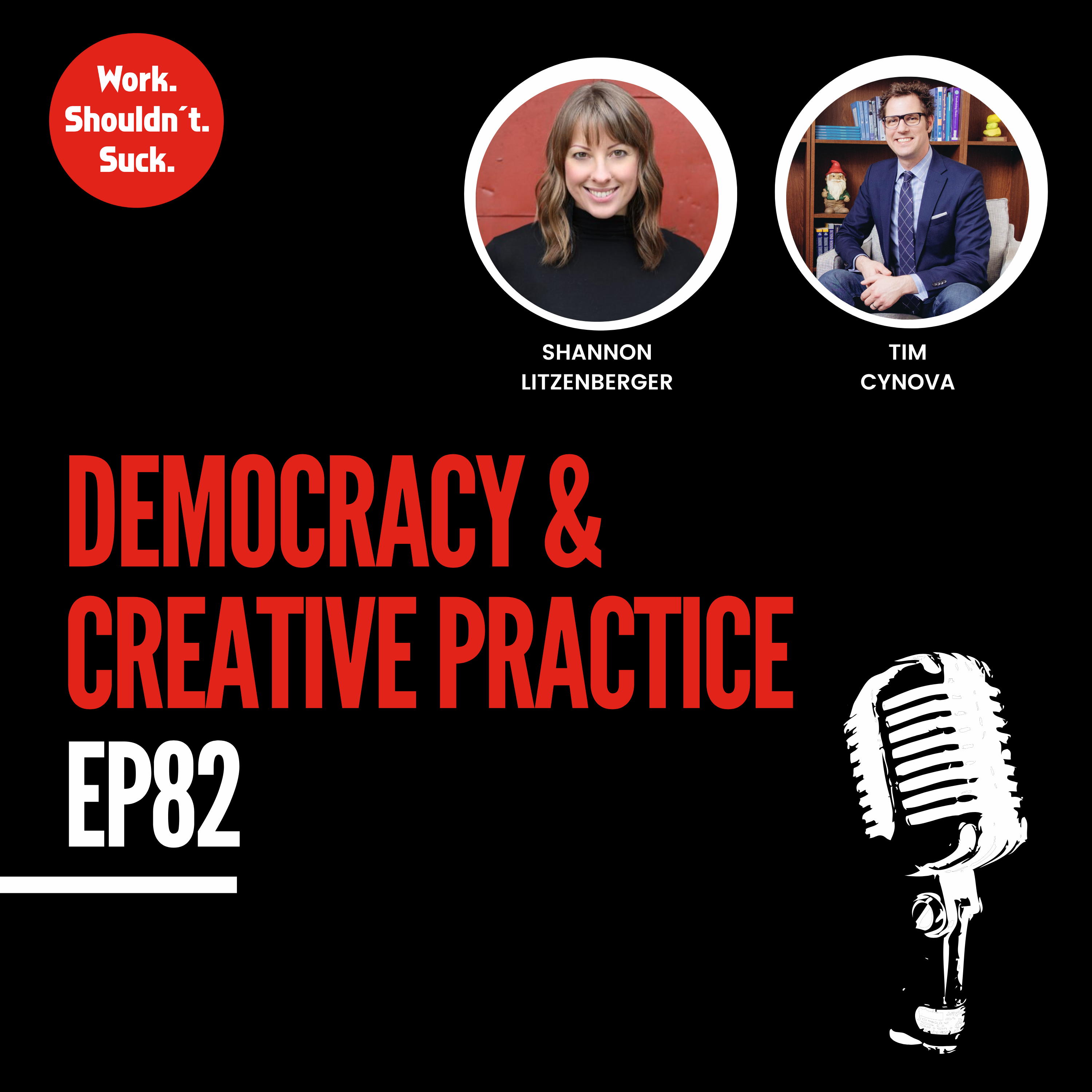 Democracy and Creative Practice (EP.82) | In this episode of Work Shouldn’t Suck, host Tim Cynova connects with the ever-awesome Shannon Litzenberger to explore the intersections of democracy, creative practice, and collective thriving. Together, they dive into how artistic methodologies can expand leadership frameworks and help shape more caring, equitable communities.In this episode:How creative practice informs leadership and systems changeThe importance of mutual care and collective thrivingSensory attunement, attentional awareness, and improvisational leadershipDisrupting default systems and embracing world-making as a practiceFresh from the national tour of her production World After Dark and moments away from presenting at a social theory, politics, and the arts conference in Spain, Shannon shares insights on how creative practice can serve as a catalyst for personal and societal transformation. They discuss the power of mutual care, the significance of sensory attunement, and the need to reimagine default patterns in both the workplace and society.This episode also touches on the enduring influence of Shannon’s friendship and collaboration with the late Diane Ragsdale, their shared exploration of aesthetics and embodiment, and their co-authored chapter in Democracy as Creative Practice. Plus, hear how Shannon is bringing her artistic ethos into unexpected spaces—like reimagining an academic panel as an improvisational score.Tune in for a conversation packed with practical wisdom, unexpected insights, and a reminder that thriving workplaces and thriving communities are built on mutual care, relational leadership, and a willingness to embrace the unfamiliar.Quotables“This is where I find a lot of fertile ground for transformation, and why I feel it's so important for creative practice methodologies to gain purchase in this conversation around change, because they're practice-based, and practice is how we change habits. We can have lots of fruitful conversations that evoke ways of knowing that we understand, but to actually become something different than what we've already been conditioned to be requires practice, not just a kind of conceptual knowing.” – Shannon Litzenberger“ Practice is the pathway to change. If you want to be able to expand your repertoire of being and doing, you have to practice things that are unfamiliar.” – Shannon Litzenberger“Identity is a very powerful organizing construct in society. The pandemic especially I think really highlighted identity significantly as an organizing structure, as a way of revealing structural harms and inequities. It also started to deepen the way that we are relating in these identity-based affinity groups, and in a sense, this is a challenge when it comes to developing practices that are supportive of a pluralistic democracy. Because, in a pluralistic democracy, we need to develop an ability to be together in ways that are not so strictly codified that we are all twisting ourselves in a knot to try to belong, that actually we need to be able to embrace differences within a dynamic whole in order to work well and co-create well together.” – Shannon LitzenbergerHighlights:Values in Creative Practice (02:14)Exploring “World After Dark” (04:08)Leadership and Collective Action (09:32)Navigating Post-Pandemic Challenges (11:10)Creative Practice in Organizations (17:43)Improvisational Leadership (27:09)Collaboration with Diane Ragsdale (35:33)Improvisational Score as Panel Discussion (42:29)Final Thoughts and Reflections (45:52)Related Resources:Shannon's SubstackDemocracy as Creative Practice: Weaving a Culture of Civic Life Edited By Tom Borrup and Andrew Zitcer“The Snapback: Why Workplaces Are Reverting and What We Can Do About It” by Tim Cynova“Beyond the Snapback: Designing Change That Lasts” A Facilitator’s GuideBiosShannon Litzenberger (she/her, Tkaronto) is an award-winning choreographer, director, researcher and embodiment facilitator. She creates sensory-rich multi-disciplinary performance experiences that animate our relationship to land, community and the forgotten wisdom of the body. Her imaginative collaborations connect art forms and communities, centering participatory experiences in artistic processes. Throughout her 25+ year career, her work has been presented across Canada and the U.S., in collaboration with many of Canada’s leading artists across disciplines.The creative principles and embodied practices she works with regularly in the studio are also central to her work in relational leadership, organizational development, and systems change. Her approach to personal and collective transformation focuses on recovering our capacity to sense and make shared meaning of our complex, rapidly changing world. The collective experiences she designs focus on strengthening our ability to respond generatively to what a moment is asking of us, in service of mutual thriving. They invite a conscious recovery of embodied capacities like sensory attunement, expanded attentional awareness, reciprocity, imagination, collaborative play and worldmaking.She works frequently across corporate, academic and non-profit spaces in support of creating a healthier, more interconnected, caring and resilient society. She is currently a Public Imagination Network Fellow and Artist Researcher in Residence at Creative Community Commons, within University of Toronto’s School of Cities. www.shannonlitzenberger.comTim Cynova, SPHR (he/him) is the Principal of WSS HR LABS, an HR and org design consultancy helping to reimagine workplaces where everyone can thrive. He is a certified Senior Professional in Human Resources (SPHR) and a trained mediator, and has served on the faculty of Minneapolis College of Art & Design, the Banff Centre for Arts & Creativity (Banff, Canada) and The New School (New York City) teaching courses in People-Centric Organizational Design, and Strategic HR. In 2021, he concluded a 12-year tenure leading Fractured Atlas, a $30M, entirely virtual non-profit technology company and the largest association of independent artists in the U.S., where he served in both the Chief Operating Officer and Co-CEO roles (part of a four-person, shared, non-hierarchical leadership team), and was deeply involved in its work to become an anti-racist, anti-oppressive organization since they made that commitment in 2013. Earlier in his career, Tim was the Executive Director of The Parsons Dance Company and of High 5 Tickets to the Arts in New York City, had a memorable stint with the Cincinnati Symphony Orchestra, was a one-time classical trombonist, musicologist, and for five years in his youth he delivered newspapers for the Evansville, Indiana Courier-Press. Learn more on LinkedIn. | — | ||||||
| 1/17/25 |  Climate Justice HR | Part 1 (EP.81) | In this episode of the Work Shouldn’t Suck podcast, host Tim Cynova begins an exploration into the crucial intersection of Human Resources (HR) and climate emergencies. Recorded amidst recent natural disasters, the discussion explores how workplaces can prepare for and respond to climate-related challenges, underscoring the importance of planning for the unexpected, building resilient systems, and supporting employee well-being in the midst of these emergencies.Joining the conversation are Jenna Ringelheim and Jillian Wright, bringing their insights on meaningful HR and organizational design practices rooted in equity, anti-racism, and compassion. They emphasize the importance of proactive planning, values-based workplace design, and the integration of equity, empathy, and integrity in HR practices. This spirited discussion highlights the evolving nature of workplace challenges posed by climate change and the need for resilient, people-centered organizational frameworks.Highlights:Introduction to Climate Emergency and HR (00:00)Unplanned vs. Unexpected Events (01:06)Climate Justice HR: A New Approach (02:31)Guest Introductions and Their Work (03:04)Values-Centered Work in HR (04:08)Climate Justice HR in Practice (10:39)Real-World Examples and Challenges (12:43)Developing Compassionate Leave Policies (18:18)Building Resilient and Supportive Workplaces (22:16)The Importance of Flexibility and Empathy (34:28)Final Thoughts and Takeaways (44:22)Related Resources:The Resilient Organization: A Guide to Nonprofit Disaster Preparedness by the Center for Disaster PhilanthropyScarcity and the Non-Profit People Paradox Example 2 delves into the St. John’s case study and how they approached the unplanned versus the unexpectedClimate Emotions Wheel including a Guide to Climate EmotionsPhases of Disaster Response from the Institute for Collective Trauma and GrowthUniversity of California’s Center for Climate Justice “What is Climate Justice“ and the Six Pillars of Climate Justice.Tulane University’s “What Is a Disaster Management Cycle?”Crisis Relief & Recovery on “What is Disaster Leadership?”“How to Lead Through a Crisis” by the Center for Creative Leadership“The connection between the climate crisis and outdated leadership models” by the Academy for Sustainable Innovation“Five Critical Questions Every Nonprofit Must Address for Disaster Preparedness” by OneStarBIOSJENNA RINGELHEIM (she/her) is a skilled facilitator, coach, and HR practitioner that is passionate about igniting liberatory leadership practices within workplaces. She has a keen interest in program and curriculum design, supporting equity-centered people and culture efforts, network weaving and building communities of practice. Jenna is happiest when she is co-creating systems and structures that allow for greater agency, transparency, and shared learning. In her previous work as nonprofit executive, Jenna catalyzed a network of over 2,000 environmental and social change leaders as the Deputy Director of the Environmental Leadership Program. She also served as the Executive Director of Wild Gift, a wilderness-based leadership development program and international network of social impact entrepreneurs. Jenna has a BA in Environmental Studies and Anthropology from Skidmore College, an MA in Urban and Environmental Policy and Planning from Tufts University, an MBA in Sustainable Systems from Pinchot University, and a Certificate in Human Resource Management from Portland State University. Most importantly, she is a proud parent, partner, pet matchmaker, foodie, and e-bike enthusiast living in Portland, Oregon. Learn more on LinkedIn.JILLIAN WRIGHT, PHR (she/her) spends her days as an HR consultant, but she’s also a dancer, mother, gardener, and puzzle finisher who enjoys helping small businesses succeed. For over 18 years, she’s had the privilege of working with and learning from some amazing folx who have taught her so much about how to facilitate people support BETTER – and she wants to share what she’s learned with other value-driven companies who are ready to do things differently. Her passion for people-support and behavioral psychology in the workplace along with her deep personal commitment to social justice as a member of the queer community has fueled her desire to help leaders create inclusive places to work. Jillian’s background in small non-profit and mission-driven workplaces has gained her valuable skills in the art of prioritization, efficient use of time, and understanding how to make things happen on a shoestring budget, and she’s worked hard to apply those principles to creating affordable, time-conscious, impact-centered consulting projects tailored to a variety companies specific goals, opportunities, and challenges. Learn more on LinkedIn.Tim Cynova, SPHR (he/him) is the Principal of WSS HR LABS, an HR and org design consultancy helping to reimagine workplaces where everyone can thrive. He is a certified Senior Professional in Human Resources (SPHR) and a trained mediator, and has served on the faculty of Minneapolis College of Art & Design, the Banff Centre for Arts & Creativity (Banff, Canada) and The New School (New York City) teaching courses in People-Centric Organizational Design, and Strategic HR. In 2021, he concluded a 12-year tenure leading Fractured Atlas, a $30M, entirely virtual non-profit technology company and the largest association of independent artists in the U.S., where he served in both the Chief Operating Officer and Co-CEO roles (part of a four-person, shared, non-hierarchical leadership team), and was deeply involved in its work to become an anti-racist, anti-oppressive organization since they made that commitment in 2013. Earlier in his career, Tim was the Executive Director of The Parsons Dance Company and of High 5 Tickets to the Arts in New York City, had a memorable stint with the Cincinnati Symphony Orchestra, was a one-time classical trombonist, musicologist, and for five years in his youth he delivered newspapers for the Evansville, Indiana Courier-Press. Learn more on LinkedIn. | — | ||||||
| 11/14/24 |  Startups & Scaling (EP.80) | In this episode of Work Shouldn’t Suck, host Tim Cynova is rejoined by co-host Lauren Ruffin and special guest Adam Huttler, the founder of Fractured Atlas and current head of product and technology at MonkeyPod, another company he founded. Together, they dive into the nuances of starting and scaling organizations, drawing from their shared experiences at Fractured Atlas and beyond.The conversation explores the intricacies of startups and scaling, including the critical transition points, calibrating risk between staff and boards, the importance of intellectual honesty, and the role slack plays in supporting a culture of learning.Key Highlights:Product-Market Fit [02:09]Startup Phase Challenges [02:56]Transitioning to Scaling Mode [03:22]Experimentation & Intellectual Honesty [04:45]Evaluating Team & Leadership [08:35]Nonprofit Sector Dynamics [13:51]Risk Calibration in Nonprofits [20:08]Strategic Planning & Strategic Thinking in Organizations [26:11]Hybrid Workplace & Organizational Culture [32:27]Building High-Performing Teams [36:30]Creating Space for Learning & Growth [44:55]BIOSADAM HUTTLER is the founder and head of product of MonkeyPod, an all-in-one software platform for nonprofit organizations that supports accounting, donor management, fundraising, collaboration, and more. A serial entrepreneur at the intersection of technology, culture, and social justice, his career emphasizes developing innovative business models and revenue strategies for mission-driven companies, in both the for-profit and non-profit sectors.In 1997, Adam founded Fractured Atlas, a non-profit technology company that helps artists with the business aspects of their work. During Adam's twenty years as CEO, the organization grew from a one-man-band housed in an East Harlem studio apartment to a broad-based service organization with an annual budget of $25 million. When he left in 2017, Fractured Atlas's services had grown to reach over 1.5 million artists across North America and distributed over $250 million to support their work.From 2003-2013, Adam also ran Gemini SBS, a software development firm serving the nonprofit and public sectors. Before being acquired by Fractured Atlas in 2013, Gemini worked with clients such as the US Department of Education, New York University, and the University of North Carolina, among many others.In 2017, Adam left Fractured Atlas to launch Exponential Creativity Ventures, a boutique venture capital fund backing early-stage technology companies that support human creative capacity. ECV was fully deployed as of late 2019, but Adam continues to support and advise ECV's 18 portfolio companies.In 2019, a personal side project became a bona fide startup when Adam publicly launched MonkeyPod.Adam has a B.A. in theater from Sarah Lawrence College, an M.B.A. from New York University, and is a self-taught software developer. In 2011, he was recruited for the inaugural class of National Arts Strategies' Chief Executive Program. He is also an alumnus of Singularity University's Executive Program and the University of California at Berkeley's Venture Capital Executive Program.Adam was named to Crain's New York Business's 2016 "40 Under Forty" class and was listed by Barry's Blog as one of the "Top 50 Most Powerful and Influential Leaders in Nonprofit Arts" for five consecutive years.LAUREN RUFFIN (she/her) is the Director and Lead Strategist of Art & Culture at Michigan Central. An expert in responsible innovation, her work centers on defining and implementing best practices for organizations reshaping the world through technology to ensure their platforms are safe, equitable and beneficial for all users. From 2016-2021 she served as Chief External Relations Officer and co-CEO of Fractured Atlas, the largest association of independent artists in the United States, where she oversaw marketing, communications, community engagement and fundraising for the nonprofit. In 2017 Ruffin co-founded CRUX, an immersive storytelling cooperative that collaborated with Black artists creating content in virtual and augmented reality (XR). In addition to her work as co-director at Michigan Centra, Ruffin is an Associate Professor of Worldbuilding and Visualizing Futures at Arizona State University where she explores the unprecedented and rapid political and social changes taking place in every facet of modern life due to advances in technology. Ruffin has held various positions at the NAACP Legal Defense Fund, Children’s Defense Fund, New Leaders and AAUW and has served on the governing and advisory boards of Black Innovation Alliance, Black Girls Code, ArtUp, Black Girl Ventures and Main Street Phoenix Cooperative. She graduated from Mount Holyoke College with a degree in Political Science and obtained her J.D. from the Howard University School of Law. | — | ||||||
| 10/31/24 |  Embodying Shared Leadership (EP.79) | In this episode, host Tim Cynova dives back into the world of shared and distributed leadership with three leaders of Bridge Live Arts, a Bay Area-based nonprofit dedicated to equity-driven live art. He's joined by Cherie Hill, Hope Mohr, and Rebecca Fitton as they unpack the unique journey of implementing a distributed leadership model at BLA as it transitioned from Hope Mohr Dance.The team shares the origins of the distributed leadership model, how their particular model works, how engaging with community informs and evolves the model, some of their “ahas” and lessons learned along the way, and where to from here.Episode Highlights03:50 Understanding Bridge Live Arts05:27 The Journey to Shared Leadership08:20 Implementing Distributed Leadership14:45 Challenges and Assumptions in Shared Leadership19:47 Exploring Dancing Distributed Leadership20:35 Initial Phases and Learnings22:47 Improvisation in Shared Leadership24:26 Future Directions26:47 Challenges and Reflections30:36 Advice for Implementing Shared LeadershipRelated Resources The Dancing Distributed Leadership programShifting Cultural Power: Case Studies and Questions in Performance by Hope MohrCheck out the new book Artists On Creative Administration: A Workbook from the National Center for Choreography featuring an in-depth case study of Bridge Live Arts.GUEST BIOSCherie Hill (she/her) is a curator, co-director, and the Director of Arts Leadership at Bridge Live Arts (B.L.A.). She has co-curated Power Shift: Improvisation, Activism, & Community; Anti-Racism in Dance; Money in the Arts; and Transforming the Arts: Shared Leadership in Action series. In 2023, she curated Liberating Bodies: dialogue and movement workshops with Black Diaspora dance artists. She co-presents on distributed leadership, advocates for equity and inclusion, and is a choreographer, dance educator, and Assistant Professor in Dance Studies at CSU San Marcos. Cherie collaborated with B.L.A. former co-directors Hope Mohr and Karla Quintero to lead HMD/the Bridge Project, an organization with a hierarchical model to Bridge Live Arts, a model based on Distributed Leadership. Cherie is a researcher and has published articles in Gender Forum, the Sacred Dance Guild Journal, Dance Education in Practice, Stance On Dance, In Dance, and most recently co-authored "Embodying Equity-Driven Change: A Journey from Hierarchy to Shared Leadership" for Artists on Creative Administration: A Workbook from the National Center for Choreography. Cherie presents at national and international conferences and has held multiple residencies, including choreographic residencies with Footloose Productions, Milk Bar Richmond, the David Brower Center, and CounterPulse’s Performing Diaspora. She holds a BA degree in Dance and Performance Studies and African American Studies and an MFA in Dance, Performance, and Choreography with graduate certificates in Women and Gender Studies and Somatics. Cherie is a mother of two incredible sons and lives in Luiseño-speaking Payomkawichum homeland/Temecula Valley, CA, with her life-long partner.Hope Mohr (she/her) is a multidisciplinary artist and arts advocate. She has woven art and activism for decades as a choreographer, curator, and writer. After a professional dance career with Trisha Brown and Lucinda Childs, she founded the nonprofit Hope Mohr Dance and its signature presenting program, The Bridge Project, which for over 15 years supported over 100 artists through commissions, residencies, workshops, and collaborative performance projects. In 2020, Mohr co-stewarded the organization’s transition to an equity-driven model of distributed leadership and a new name: Bridge Live Arts. Mohr’s book about cultural work as activism, "Shifting Cultural Power: Case Studies and Questions in Performance," was published in 2020 by the National Center for Choreography, the inaugural book in their publication series. She is a contributor to the anthology "Artists on Creative Administration" (2024), edited by Tonya Lockyer and also published by the National Center for Choreography. A licensed California attorney and a working artist, Mohr works at the intersection of art and social change as a Fellow with the Sustainable Economies Law Center. Movement Law, Mohr's solo law practice, is dedicated to supporting artists and changemakers. movementlaw.net and www.hopemohr.orgRebecca Fitton (she/they) is a queer, mixed race asian american, disabled, and immigrant person. Their work as an artist, administrator, and advocate focuses on arts infrastructure, asian american identity, and disability justice. They currently serve as a Co-Director at Bridge Live Arts (CA) and as Director of Studio Rawls for choreographer Will Rawls (NY/CA). From 2017-2021, she coordinated community gatherings about local abolition and justice movements with DELIRIOUS Dances/Edisa Weeks (NY). She was a Dance/NYC’s Junior Committee member from 2018-2020 and participated in Dance/USA’s Institute for Leadership Training in 2021. She has been an artist-in-residence at the Maggie Allesee National Center for Choreography, the National Center for Choreography – Akron, SPACE 124 @ Project Artaud, Center, LEIMAY/CAVE, EMERGENYC, and The Croft. Their writing has been published by Triskelion Arts, Emergency Index, In Dance, The Dancer-Citizen, Etudes, Critical Correspondence, and Dance Research Journal. As an access practitioner, she narrates audio description for experimental dance and performance artists. They hold a BFA in Dance from Florida State University and an MA in Performance as Public Practice from the University of Texas at Austin. | — | ||||||
| 10/25/24 |  On Creative Administration (EP.78) | Season 6 of the WSS podcast here!In our inaugural episode of the season, host Tim Cynova is joined by Katy Dammers, Indira Goodwine-Josias, and Christy Bolingbroke as they explore reimagining of value-centered workplaces through Creative Administration. In organizations dedicated to creative expression and innovation, why is it that so many have workplace practices and policies that are dusty?The spirited discussion dives into the challenges and opportunities within the creative sector to rethink “traditional” approaches, asking when it might be better to reinvent the wheel or even asking if a wheel is what’s needed. The conversation underscores the critical balance between stability and creative experimentation, reflecting on how new approaches can support long-term change and longevity in the arts.Episode Highlights02:15 Meet the Guests05:44 Diving into Creative Administration09:20 Balancing Structure and Improvisation17:26 Challenging Conventional Wisdom20:46 Navigating Institutional Change24:26 Reevaluating Policy: Balancing Ethics and Values25:09 Navigating Crisis with Established Policies25:51 Incremental Change in Nonprofit Organizations26:37 Creativity and Experimentation During COVID26:58 The Snapback to Pre-COVID Norms27:38 Fear of Change and Embracing New Solutions28:44 Creative Administration and Sustainability29:49 The Role of Artists in Institutional Change34:11 Balancing Administrative and Artistic GrowthResources Mentioned in the Podcast:Check out the new book Artists On Creative Administration: A Workbook from the National Center for Choreography.Christy Bolingbroke’s Masters Thesis, Designing a 21st Century Dance Ecology: Questioning Current Practices and Embracing Curatorial InterventionsGUEST BIOSChristy Bolingbroke is the Founding Executive/Artistic Director for the National Center for Choreography at The University of Akron (NCCAkron). She is responsible for setting the curatorial vision and sustainable business model to foster research and development in dance. Previously, she served as the Deputy Director for Advancement at ODC in San Francisco, overseeing curation and performance programming as well as marketing and development organization-wide. A key aspect of her position included managing a unique three-year artist-in-residence program for dance artists, guiding and advising them in all aspects of creative development and administration. Prior to ODC, she was the Director of Marketing at the Mark Morris Dance Group in Brooklyn, NY. She earned a B.A. in Dance from the University of California, Los Angeles; an M.A. in Performance Curation from Wesleyan University; and is a graduate of the Arts Management Fellowship program at the Kennedy Center for the Performing Arts. She currently serves on the Akron Civic Commons Core Team; as a consulting advisor for the Bloomberg Philanthropies Arts Innovation Management initiative; and on the New England Foundation for the Arts National Dance Project Advisory Panel. In 2017, DANCE Magazine named Bolingbroke among the national list of most influential people in dance today.Indira Goodwine-Josias was born and raised in Queens, NY, and believes in the power of art to educate, inspire, and advance change. With a dual background in dance and arts administration, she is currently the Senior Program Director for Dance at the New England Foundation for the Arts (NEFA) where she directs NEFA’s National Dance Project and major dance initiatives in New England. Previously, she served as the Managing Director of Camille A. Brown & Dancers (CABD) where she shepherded the organization through the attainment of 501(c)(3) nonprofit status, established the organization’s founding Board of Directors, increased the institutional and individual fundraising efforts, and provided oversight of the development, implementation, and continued growth of CABD’s dance engagement program, “EVERY BODY MOVE.” Prior to her leadership role with CABD, Indira held various positions at Harlem Stage that deepened community partnerships and enhanced the organization’s annual dance program, “E-Moves.” A 2016 New York Community Trust Fellow, American Express Leadership Academy Alumna, and Dance/USA DILT Program Alumna, Indira is widely recognized for her entrepreneurial and artist-centered spirit. She currently serves on the Board of Trustees for Dance/USA, the Advisory Committee for The Black Genius Foundation, Grantmakers in the Arts’ Individual Artist Committee, and is a member of Women of Color in the Arts (WOCA). Her contributions to the dance field also include serving as a programmatic thought partner, grant panelist, and conference speaker. Indira holds a BFA in Dance Performance from Florida State University and an MA in Performing Arts Administration from New York University.Katy Dammers (she/her) is the Deputy Director and Chief Curator, Performing Arts at REDCAT, CalArts’ center for the visual and performing arts in Los Angeles. Her curatorial practice presents, organizes, and contextualizes contemporary practice in performance commissions, exhibitions, festivals, site-specific installations, and publications. She has held past leadership positions at The Kitchen, FringeArts, and Jacob’s Pillow. Dammers has also worked as a creative administrator, and worked with choreographers Rashaun Mitchell + Silas Riener as General Manager from 2014-2022, in addition to organizing projects with Jennifer Monson, Donna Uchizono, and Tere O’Connor. A writing fellow at the National Center for Choreography Akron, her essays have been published in The Brooklyn Rail, Motor Dance Journal, and MOLD as well as edited volumes by University of Akron Press and Princeton University Press. Dammers was a member of the Inland Academy and holds degrees from Goldsmiths College and Princeton University.Tim Cynova, SPHR (he/him) is the Principal of WSS HR LABS, an HR and org design consultancy helping to reimagine workplaces where everyone can thrive. He is a certified Senior Professional in Human Resources (SPHR) and a trained mediator, and has served on the faculty of Minneapolis College of Art & Design, the Banff Centre for Arts & Creativity (Banff, Canada) and The New School (New York City) teaching courses in People-Centric Organizational Design, and Strategic HR. In 2021, he concluded a 12-year tenure leading Fractured Atlas, a $30M, entirely virtual non-profit technology company and the largest association of independent artists in the U.S., where he served in both the Chief Operating Officer and Co-CEO roles (part of a four-person, shared, non-hierarchical leadership team), and was deeply involved in its work to become an anti-racist, anti-oppressive organization since they made that commitment in 2013. Earlier in his career, Tim was the Executive Director of The Parsons Dance Company and of High 5 Tickets to the Arts in New York City, had a memorable stint with the Cincinnati Symphony Orchestra, was a one-time classical trombonist, musicologist, and for five years in his youth he delivered newspapers for the Evansville, Indiana Courier-Press. Learn more on LinkedIn. | — | ||||||
| 4/23/24 |  Values-Based Coaching (EP.77) | If you’ve ever wondered about the ins-and-outs of executive coaches – how does it work, how do you find one; I’m not an “executive,” is it still for me? – this is an episode for you!Host Tim Cynova is in conversation with Farah Bala, a certified executive coach and founder of Farsight, an agency dedicated to leadership and organizational development with a focus on equity, diversity, inclusion, and anti-oppression practices. Their conversation covers a lot of ground, from the philosophical to the practice, with some highlights from the discussion below.Episode Highlights04:15 The Essence and Impact of Coaching08:10 Coaching for Everyone: Breaking Down the Myths12:09 The Intersection of Coaching and Equity, Diversity, and Inclusion18:28 Navigating Privilege and Responsibility in Coaching and Beyond24:00 The Power of Perspective in Coaching and Creating Change25:10 Choosing the Right Coach: A Personal Journey26:16 The Impact of Identity on Coaching Choices27:26 The Art of Asking the Right Questions29:55 The Evolution of Coaching in Virtual Workplaces33:32 Self-Care: The Coach's Perspective41:02 Leveraging Improv for Coaching Skills42:36 Understanding Coaching Costs and Arrangements46:36 Expanding Access to CoachingMentioned on the podcast: Farsight Friday EP26: Coaching for InclusionFARAH BALA is a Leadership EDIA (Equity, Diversity, Inclusion, Anti-Oppression) Executive Coach, Consultant and Speaker. As Founder & CEO of FARSIGHT, Farah's mission is to support organizations and leaders redefine the concept of leadership by making Equity, Diversity, Inclusion, Anti-Oppression a core leadership competency. Her clients include executives in the C-suite, creatives and entrepreneurs, and organizations across wide-ranging sectors and industries. She is also a faculty coach at multiple learning and development institutions. Farah believes equity and inclusion are the foundational pillars for effective leadership and communication.Farah’s speaking engagements include Yale University, Ford Foundation, Voice America, NY Travel Festival, Travel Unity, Adirondack Diversity Initiative, Asian American Arts Alliance, among others. She is a sought after speaker at national conferences, most recently at SHPE and SASE. Farah is also the creator and host of FARSIGHT FRIDAY, a video podcast started in 2020 in response to the heightened racism and divisiveness of marginalized communities. communities. She is a recipient of the Diversity Award by the World Zoroastrian Organization, recognized for her work in raising awareness towards gender, culture, racial equity and inclusion globally.Farah holds an MFA in Theater from Sarah Lawrence College, and is a graduate of the Institute of Professional Excellence in Coaching (iPEC) Program. She is a Professional Certified Executive Coach (PCC) with the International Coach Federation, and is certified in the Energy Leadership Index (ELI), EQ-i 2.0 and EQ 360 assessments, and Character Strengths Intervention. She is featured in Umbrage Edition’s national award-winning book Green Card Stories as one of 50 profiles of recent immigrants from around the world.Having worked as a performing artist and producer for over two decades, Farah has used the tools of the theater in arts education developing social-emotional learning in NYC public schools and international volunteering initiatives, and as of the last decade, in professional environments across multiple industries. If you would like to learn more about Farah’s artistic work, please visit her website. | — | ||||||
| 4/9/24 |  Navigating The In-Between (EP.76) | In this episode, host Tim Cynova interviews Ann Le and Meg Buzzi, authors of the book "The In-Between: A Companion for Uncertain Times." The discussion brings in many of the challenges of work in the current chaotic and uncertain landscape, and offers insights on how individuals, teams, and organizations can stay engaged and motivated. At the heart of the discussion, Ann and Meg invite listeners to rethink their relationship with work and explore new possibilities.Episode Highlights:03:18 The Genesis of The In-Between: A Book for Uncertain Times05:06 Unpacking Work Culture: Insights from The In-Between08:00 Navigating Work and Life in a Post-Pandemic World08:43 Redefining Work: From Transactional to Transformational15:52 The Future of Work: Adapting to Change and Embracing Uncertainty16:29 Bridging Old Systems and New Realities19:09 Practical Advice for Organizations in Transition24:32 Evolving Ideas and Unexplored ThemesExplore the authors’ website. Buy their book.Ann Le is thinker, leader, and finance/operations pro, working on building strong, sustainable, anti-racist systems and organizations. She's leaning into how we can leverage new technologies, finance and community to combat racial and economic injustice. Ann spent a decade as a VP in investment banking, then spent 5 years at a major film studio. After her MBA, Ann has worked and held leadership roles with over 50+ organizations from large corporations to start-ups, non-profit, government, and has served on numerous boards. She's also written a great, but not best-selling cookbook, and produced an award-winning Sundance independent film. She graduated from UC Berkeley with a degree in Economics, with a focus on history and labor, and has an MBA from the UCLA Anderson School of Business. Ann will ask you if any of this matters as we move out of the In-Between, and we enter a new paradigm of work and community: there's a new way to see and value ourselves. Ann has been described as a great teammate, a caring, intuitive human with a strong Slack game who also writes the "opposite of boring" emails. Meg Buzzi is a change artist helping to build imaginative solutions to systemic challenges, especially at work. She is a PCC-certified coach, writer, and co-founder of the Present of Work (presentofwork.com) consulting group and the Starter Cultures (startercultures.us) change community. She helps teams and leaders level-up and reconnect to what truly matters to them. A former Chief Information Officer, Meg has led multi-million-dollar change efforts in K-12, higher education, government, and tech. But her most valuable learning is about building community and practicing trust when we are faced with complexity and challenge. Meg is a graduate of the Iowa Writers' Workshop, an Art of Hosting facilitator and a contributor to the books Fieldworking (Bedford St. Martin's), The Rhetoric of Inquiry (Macmillan), and Narrative Generation. Send her a note at meg@presentofwork.com. | — | ||||||
| 3/26/24 |  Gen Z in the Workplace (EP.75) | In this episode, Tim Cynova is in conversation with Tammy Dowley-Blackman, an entrepreneur with 20+ years of experience in leadership and organizational development. A differentiator for Tammy in this work comes in that she’s sat in many of the proverbial seats at the table: serving as a CEO and key decision-maker, a board member, a sought-after consultant, a leadership development content creator, and a key partner to corporations, government entities, nonprofits, and philanthropic institutions.Episode Highlights:The needs and expectations of Gen Z in the workplace,The impact of the pandemic on work and how organizations can adapt to the changing landscape,The importance of rethinking and reimagining performance evaluations and strategic planning, Developing futurist mindsets,And, the need for organizations to invest in professional development and create equitable and inclusive work environments.Stay tuned for upcoming episodes on executive coaches who center equity and inclusion in their practice, and the authors of "The In-Between: A Companion Book For Uncertain Times.” Plus, catch season two of "White Men and the Journey Towards Anti-Racism" as well as an episode on values-based collective bargaining processes.TAMMY DOWLEY-BLACKMAN (she/her) collaborates with the corporate, government, nonprofit, and philanthropic sectors to build an intergenerational pipeline of leaders equipped to deliver solutions for today’s complex global workplace. She is a graduate of Oberlin College and Harvard University is an author, entrepreneur, leadership expert, nonprofit executive, philanthropic leader and professor.She is the CEO of Tammy Dowley-Blackman Group, LLC, a certified National Supplier Development Council Minority Business Enterprise (MBE), Small Business Administration (SBA) Woman Owned Small Business (WOSB), and Women’s Business Enterprise Network Council (WBENC) woman-owned company, as well as a graduate of the C200 Champion Program and Goldman Sachs 10,000 Small Businesses Program. The company is comprised of a suite of brands, including TDB Group Strategic Advisory, a management consulting firm specializing in organizational and leadership development for the corporate, government, nonprofit, and philanthropic sectors; Looking Forward Lab, a media content company focused on Gen Z, which partners with corporations and higher education systems to offer a full-service learning engagement model that delivers workforce development solutions; and Cooper + Lowe, a company that serves as an incubator offering full back-office management support for women interested in transitioning to entrepreneurship and thought leadership. Each of the companies has a long legacy of embedding diversity, equity, inclusion, accessibility, and belonging (DEIAB) in its values, collaborations, and outcomes.In addition, Tammy recently completed her six-year term as the president of the TSNE Board of Directors, where she helped lead the $64 million-dollar organization through unprecedented leadership and business model strategic alignment and planning. She also provides leadership as a Board Director for the Proteus Fund and as an Advisory Board member for the Isabella Stewart Gardner Museum and the University of North Carolina School of Law Director Diversity Initiative. Find Tammy online at tammydb.com.TIM CYNOVA, SPHR (he/him) is the Principal of Work. Shouldn’t. Suck., an HR and org design consultancy helping to reimagine workplaces where everyone can thrive. He is a certified Senior Professional in Human Resources (SPHR) and a trained mediator, and has served on the faculty of Minneapolis College of Art & Design, the Banff Centre for Arts & Creativity (Banff, Canada) and The New School (New York City) teaching courses in People-Centric Organizational Design, and Strategic HR. In 2021, he concluded a 12-year tenure leading Fractured Atlas, a $30M, entirely virtual non-profit technology company and the largest association of independent artists in the U.S., where he served in both the Chief Operating Officer and Co-CEO roles (part of a four-person, shared, non-hierarchical leadership team), and was deeply involved in its work to become an anti-racist, anti-oppressive organization since they made that commitment in 2013. Earlier in his career, Tim was the Executive Director of The Parsons Dance Company and of High 5 Tickets to the Arts in New York City, had a memorable stint with the Cincinnati Symphony Orchestra, was a one-time classical trombonist, musicologist, and for five years in his youth he delivered newspapers for the Evansville, Indiana Courier-Press. Learn more on LinkedIn. | — | ||||||
| 2/2/24 |  Wage Transparency & Equity, Part 2 (EP.74) | In this episode, Tim Cynova and Katrina Donald delve into the complex world of wage transparency and equitable compensation, and explore how organizations can navigate these challenges to create fair and inclusive workplaces.They explore the need for organizations to list salaries for roles, both internally and externally, as well as the implications wage transparency laws are having across the U.S. The conversation delves into the challenges faced by organizations in creating consistency and fairness in their compensation approaches, particularly when considering factors like internal versus external experience and equity. Tim and Katrina also emphasize the significance of engaging in open and honest conversations about compensation within organizations and the benefits of adopting a holistic approach to compensation.Episode Highlights:The growing urgency for organizations to have transparent salary informationThe impact of new and expanding wage transparency lawsThe challenges organizations face in creating consistency and equity in compensationThe importance of having open and honest conversations about compensationHow to consider compensation in a more holistic way, beyond just base compensationThe benefits of adopting a strict, fixed tier compensation modelStay tuned for upcoming episodes on executive coaches who center equity and inclusion in their practice, the authors of "The In-Between: A Companion Book For Uncertain Times," and Gen Z in the workplace. Plus, catch season two of "White Men and the Journey Towards Anti-Racism" as well as an episode on values-based collective bargaining processes. | — | ||||||
| 1/15/24 |  One More Conversation with Diane Ragsdale (EP.73) | This week, the world lost an amazing light of a human: Diane Ragsdale. This episode is a previously lost and unreleased conversation that host Tim Cynova recorded with Diane at the Banff Centre in February 2020, a few weeks before the world shut down for the global pandemic... and they promptly forgot they even recorded this conversation together.Originally intended to be titled, "Investing in Personal and Professional Growth," the conversation explores Diane's thoughts on the role of the arts and artists in society, the role arts management and leadership programs can and should play, and how we can craft our own learning and development plan. It also includes a few clips they thought would eventually be left on the cutting room floor.Sending love and strength to Diane's family and friends, students and colleagues who are located all over the world.GUEST BIO:DIANE RAGSDALE is Director of the MA in Creative Leadership, an online master’s program that welcomed its first cohort in summer 2022 and for which she additionally has an appointment as Faculty and Scholar. After 15 years working years working within and leading cultural institutions and another several years working in philanthropy at The Andrew W. Mellon Foundation in NYC, she made the shift to academia and along the way became a widely read blogger, frequent speaker and panelist, published author, lecturer, scholar, and advisor to a range of nonprofit institutions, government agencies, and foundations on a wide range of arts and culture topics.Diane joins MCAD from both Banff Centre for Arts & Creativity, where she served as Faculty and Director of the Cultural Leadership Program, and Yale University where she is adjunct faculty and leads an annual four-week workshop on Aesthetic Values in a Changed Cultural Context. She was previously an assistant professor and program director at The New School in New York, where she successfully built an MA in Arts Management and Entrepreneurship in the School of Performing Arts and launched a new graduate minor in Creative Community Development in collaboration with Parsons School of Design and the Milano School of Policy, Management and Environment. Diane is a doctoral candidate at Erasmus University Rotterdam where she was a lecturer in the Cultural Economics MA program from 2011–15. She continues to work on her dissertation as time permits. Her essay “Post-Show” was recently published in the Routledge Companion to Audiences and the Performing Arts (2022); and a teaching case that she developed from her doctoral research on the relationship between the commercial and nonprofit theater in America–currently titled “Margo Jones: bridging divides to craft a new hybrid logic for theater in the US”–will be published in the forthcoming Edward Elgar handbook, Case Studies in Arts Entrepreneurship. Diane holds an MFA in Acting & Directing from University of Missouri-Kansas City and a BS in Psychology and BFA in Theater from Tulane University. She was part of Stanford University’s inaugural Executive Program for Nonprofit Arts Leaders, produced in partnership with National Arts Strategies. She holds a certificate in Mediation and Creative Conflict Resolution from the Center for Understanding in Conflict.HOST:TIM CYNOVA (he/him) is the CEO of Work Shouldn’t Suck, an HR and org design firm helping organizations dust off their People policies, practices, and offerings to co-create workplaces where everyone can thrive. He is a certified Senior Professional in Human Resources (SPHR) and a trained mediator, and serves on the faculty of Minneapolis College of Art & Design, the Hollyhock Leadership Institute (Cortes Island, Canada), and The New School (New York City) teaching courses in Strategic HR, Co-Creating Inclusive Workplaces, and Values-Centered Organizational Design. He recently concluded a 12-year tenure leading Fractured Atlas, a $30M, entirely virtual non-profit FinTech company and the largest association of independent artists in the U.S., where he served in both the Chief Operating Officer and Co-CEO roles (part of a four-person, shared, non-hierarchical leadership team), and was deeply involved in its work to become an anti-racist, anti-oppressive organization since they made that commitment in 2013. Earlier in his career, Tim was the Executive Director of The Parsons Dance Company and of High 5 Tickets to the Arts in New York City, had a memorable stint with the Cincinnati Symphony Orchestra, was a one-time classical trombonist, musicologist, and for five years in his youth he delivered newspapers for the Evansville, Indiana Courier-Press. Learn more on LinkedIn. | — | ||||||
| 10/26/23 |  Decolonizing the Bylaws (EP.72) | Why and how do you decolonize an organization's bylaws?In this episode, host Tim Cynova connects with three leaders from the U.S.-based nonprofit Dance/USA about their recent and ongoing work to decolonize their organization. Joining the discussion are Kellee Edusei, Executive Director of Dance/USA, and Holly Bass and Jim Leija, two members of the Board of Directors who co-lead the process to decolonize their organizational bylaws.We discussed the what, why, and how of the process Dance/USA engaged in over the past couple of years.Visit Dance/USA online.EPISODE HIGHLIGHTS:The importance of decolonizing organizational structures: The conversation highlights the need to critically examine and reimagine organizational structures that are often rooted in racism and oppression. Decolonizing these structures is essential for fostering inclusivity and equity in the workplace.The significance of continuous reflection and learning: The leaders of Dance/USA emphasize the importance of an ongoing process of reflection and learning in the journey of decolonization. This includes acknowledging challenges, celebrating successes, and adapting strategies as necessary.Core values as guiding principles: Dance/USA operates based on core values – creativity, connectivity, equity, and integrity – that serve as guiding principles for their work in decolonizing their bylaws and developing inclusive practices.Collective responsibility in creating change: The conversation underscores the collective responsibility of individuals and organizations in creating an anti-racist, inclusive, and equitable dance field. This necessitates collaboration, sharing of resources, and actively challenging systemic barriers.GUEST BIOS:HOLLY BASS is a multidisciplinary performance and visual artist, writer, and director. Her work explores the unspoken and invisible social codes surrounding gender, class, and race. She was a 2020–2022 Live Feed Resident Artist at New York Live Arts and a 2021–22 Smithsonian Artist Research Fellow. She is the recipient of Dance/USA's Engaging Dance Audiences grant and part of their inaugural class of Dance/USA Fellowships for Artists. She studied modern dance (under Viola Farber) and creative writing at Sarah Lawrence College before earning her Master’s degree from Columbia University’s Graduate School of Journalism. Her work has been presented at spaces such as the National Portrait Gallery, the Seattle Art Museum, Art Basel Miami Beach (Project Miami Fair), and the 2022 Venice Biennale as part of Simone Leigh's Loophole of Retreat. Her visual artwork includes photography, installation, video, and performance. A Cave Canem Fellow, she has published poems in numerous journals and anthologies. She is currently the National Director for Turnaround Arts at the Kennedy Center, a program which uses the arts strategically to transform public schools facing severe inequities. KELLEE EDUSEI (she/her) is the first BIPOC Executive Director of Dance/USA, a forty-one year old, historically and predominately white led organization. After over a decade of serving in multiple capacities (first as the Office Manager and soon after as the Board Liaison and Director of Member Services), Edusei currently has the privilege of sitting at the helm of Dance/USA during this moment of change. Edusei embodies an ethos of “being in humble service to the dance ecosystem.” Through her leadership, she is committed to cultivating a practice of bringing to life the organization’s stated core values of Creativity, Connectivity, Equity and Integrity. Under her leadership, Edusei is leading Dance/USA in building an environment that embodies equity, centers inclusionary practices, and cultivates a profound sense of belonging for all parts of the dance ecosystem.In the two and half years that she has served as the Executive Director, Edusei has incorporated a shared leadership structure for Dance/USA’s eighteen peer networks (Councils and Affinity Groups) thereby dismantling a singular leadership structure; embedded the organization’s core value of equity in its most foundational document – its Bylaws – ensuring a singular, equitable pathway to Trusteeship; transitioned its Conference to a biennial cycle with a commitment to offering virtual programming throughout the year; and introduced Impact Groups, a more inclusive framework for collaboration and input from members and leaders from the broader dance ecosystem. These initiatives have flourished all the while ensuring the financial stability of the organization during one of the most economically uncertain times in the last decade. As a commitment to bolster the organization’s financial health, Edusei rolled out a 12 month individual giving campaign, 40 x 40, that celebrated the organization’s 40 years of service. The culmination of the 40 x 40 ended with Dance/USA’s inaugural Day of Giving.With curiosity and intentionality, Edusei will launch a Strategic Reframing process to examine the connections between being a member based association, operational sustainability, and increased influence within the performing arts sector. In her prior role as Director of Member Services and Board Liaison, Edusei designed the Membership Fellowship, for early career arts administrators to deepen their administrative skills and expand their leadership acumen. She implemented the “Special Membership Package,” recruitment campaign that surpassed set goals and engaged the entire Dance/USA Board and team. Edusei created a new revenue stream by maximizing Dance/USA’s monthly Bulletin. Additionally, she was part of the initial design of Dance/USA’s Dance Business Bootcamp, a program for dance artists working with budgets of less than $200,000. Edusei leveraged her Board experience to develop a website portal for Dance/USA’s Board of Trustees giving them access to one another and Board materials on-demand. In addition, she standardized the on-boarding process for new Trustees.Edusei is an experienced grants panelist, having served on panels for the Arts and Humanities Council of Montgomery County (MD), Alternate Roots (GA), and the Department of Cultural Affairs and Special Events (IL). She currently serves on the Advisory Council for Women of Color in the Arts (WOCA) and on the Board of Directors for the Performing Arts Alliance (both national in scope). She is a former Board member of See Chicago Dance (IL) and Dance Exchange (MD), where she served as the Chair of their Governance Committees. Edusei has connections to Jacob’s Pillow (MA), Bates Dance Festival (ME), and Movement Research’s (NY) dance communities. Born and raised in Washington, D.C., Edusei was first introduced to dance when her grandmother took her to The Washington Ballet (TWB) where she auditioned for Mary Day. Being accepted into TWB’s School is where Edusei’s love for dance took root and blossomed. After several years of ballet training, Edusei transitioned to contemporary dance, training at Maryland Youth Ballet, Dance Place, and the Liz Lerman Dance Exchange.As a double-major graduate from The College of Wooster (OH) with degrees in Dance and Black Studies, Edusei studied in New York City and Yaoundé, Cameroon. Though worlds apart, she immersed herself in each city’s eclectic dance and arts communities. As a reflection of these experiences, she devised an evening length performance exclusively of her work – the first of any Dance major at Wooster – as part of her Independent Study thesis, titled Singularly Women/Collectively Woman. The piece focused on the mask dances of the Yoruba, Voltaic, and Mende (three distinct West African ethnic groups).Edusei considers herself a lifelong learner, and is always seeking opportunities to stretch, grow, learn, reflect and refine. To that end, she is an alumna of Acumen’s 2022 Leadership Accelerator cohort; a 2021 participant of the New Strategies Forum at Georgetown’s McDonough School of Business, supported by American Express; artEquity’s 2020 BIPOC Leadership Circle; and an alumna of American Express’ 2014 Leadership Academy. Edusei relocated to Chicago, IL in 2014 with her husband and their children.JIM LEIJA has served as Deputy Director for Public Experience and Learning at the University of Michigan Museum of Art (UMMA) since September 2019. He leads the team that builds UMMA's partnerships across the university and community and that designs and implements educational and public programming. During his tenure at UMMA, Jim has launched innovative public programming, like the Vote2020/22/24 Project with the Ann Arbor City Clerk’s Office and the campus-wide "Arts and Resistance" theme semester, in addition to initiating new partnerships with the Inuit Futures in Arts Leadership Program (Canada) and Monument Lab. Before UMMA, Leija served on the senior executive leadership team of the University Musical Society (UMS) as Vice President, Education & Community Engagement for 8 years (former title Director of Education & Community Engagement). He was instrumental in designing and implementing two major educational and performance residencies with the New York Philharmonic; served as project director for UMS’s two “Engaging Dance Audience” grants (through Dance/USA and the Doris Duke Charitable Foundation); launched an arts-academic integration program with the U-M College of Literature, Science, and the Arts (supported by the Andrew W. Mellon Foundation); co-curated UMS’s theater series "No Safety Net" focused on contemporary social issues; and produced a "Day of Action" with Yo-Yo Ma in Flint, Michigan,... | — | ||||||
| 9/6/23 |  Inclusivity & Innovation in Leadership Initiatives (EP.71) | How do we support leaders in the cultural sector?In this episode, host Tim Cynova has a fun and fascinating conversation with Gail Crider (President & CEO) and Kristina Newman-Scott (Board Chair) of National Arts Strategies (NAS), an organization dedicated to building and supporting a community of arts and culture leaders who drive inspiring change for the future. We dive into the transformative work they've been doing to create more inclusive and innovative spaces and approaches within the sector through their programs and offerings.Episode Highlights:Introduction to our guests from National Arts Strategies and their roles within and outside of NAS.The history and mission of NAS, and how they are working to strengthen the arts and culture sector.The importance of embracing change and adapting to the ever-evolving landscape of the arts industry.The role of technology in creating new opportunities and challenges for arts organizations.NAS's commitment to its values, and how they're working to create more inclusive spaces within the arts sector.The impact of the COVID-19 pandemic on the arts industry and how NAS has adapted its programs to support leaders during these challenging times.The future of NAS and their vision for the arts and culture sector and what exciting things are in store.GAIL CRIDER is the granddaughter of Bob and Carrie, farmers who figured things out as they went and nurtured both plants and neighbors; she is the daughter of Carolyn, an educator who built spaces for people of all ages to understand and learn tools to turn learning disabilities into different abilities; she is the sister of Catherine, a psychiatrist who is as dedicated to truth finding as she is to planet nurturing; she is mother to Alex, a recent graduate who plans to run for public office, dismantle harmful and oppressive systems, and link arms with others to heal the world.Gail is part of a collaborative management team of creative and resourceful individuals at NAS who sit inside a larger and greatly gifted staff and board of agitators and change agents. She facilitates strategy, program design and partnerships, and values alignment. Gail was instrumental in the organization’s transition from the National Arts Stabilization Fund to National Arts Strategies and providing the range of services offered today that support a diverse community of leaders driving inspiring change for the future.Over the course of her career, Gail has been an entrepreneur, worked with a variety of nonprofit organizations and spent a decade in public and private philanthropy. Prior to NAS, she was as a program officer for a foundation where she worked on inner-city redevelopment and community building in Washington, D.C. Gail has also worked for the Arizona Commission on the Arts, Arena Stage, Shakespeare Theatre, the National Endowment for the Arts, and Key Bank. She co-chaired the Community Development Support Collaborative in Washington, D.C., and has served as a senior fellow for the Center for High Impact Philanthropy at the University of Pennsylvania, on the audit committee for the National Assembly of State Arts Agencies and on grant panels for the Corporation for National Service (AmeriCorps), the National Endowment for the Arts and the Department of Treasury, CDFI Fund. She holds a B.S. in theater from Lewis and Clark College and continues to learn formally and informally through her work at NAS, including continuing education at Stanford University, Harvard Business School, and University of Michigan – Ross School of Business. She is an ICF trained leadership coach.KRISTINA NEWMAN-SCOTT is an award-winning, purpose-driven leader with over 20 years of experience in contemporary visual and performing arts, entertainment, and media. She is the inaugural Executive Director for The Jerome L. Greene Performance Space at New York Public Radio/WNYC, the company’s multi-platform and live studio space.Newman-Scott's awards and recognitions include being named one of the City and State New York’s, Telecommunications Power 50 individuals shaping New York’s digital future, an Observer’s NYC Arts Power 50, and a Next City Urban Vanguard. She is a recipient of the Selina Roberts Ottum award from Americans for the Arts and was conferred an Honorary Doctor of Fine Arts by the University of New Haven, Lyme Academy of Fine Arts in 2018.Her past leadership positions include serving as President of BRIC, an art, and media organization in Brooklyn; the Director of Culture for the State of Connecticut; Director of Programs at the Boston Center for the Arts; and Director of Visual Arts at Real Art Ways. Kristina was appointed to the NYC Department of Cultural Affairs Advisory Commission in 2020 and currently serves on the Boards of Americans for the Arts, the Brooklyn Arts Council, National Arts Strategies, New Yorkers for Culture and Arts and the New York Arts Education Roundtable.Kristina was born and raised in Kingston, Jamaica and worked as a practicing artist and TV/radio host and producer in her home country before moving to the US in 2005. She currently lives in Brooklyn with her husband and two children. | — | ||||||
| 5/16/23 |  Unlimited Paid Time Off (EP.70) | In this episode, we explore unlimited paid time off policies: what they are, what they aren't, and items to consider when implementing this type of approach to PTO. | — | ||||||
| 4/20/23 | 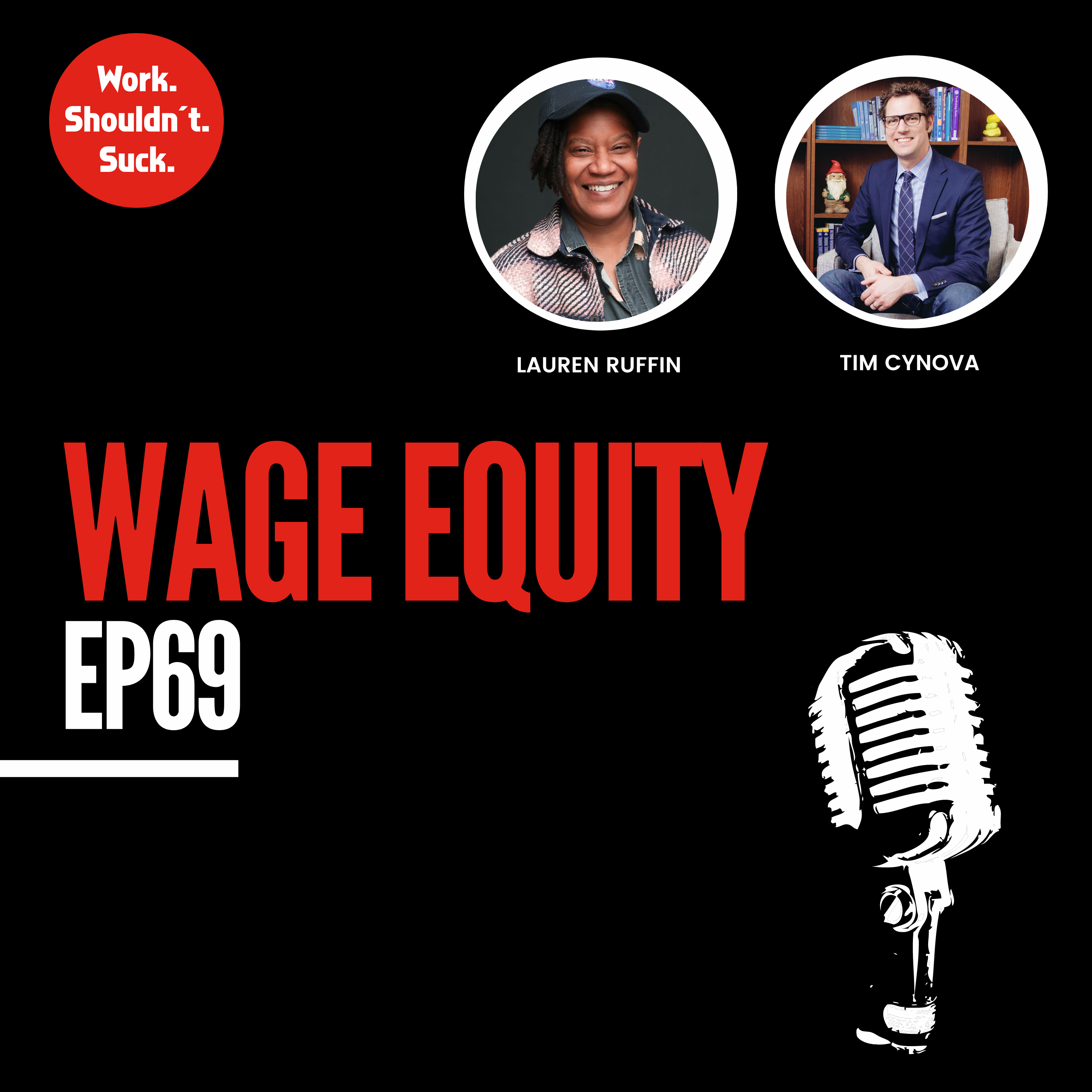 Wage Transparency & Equity (EP.69) | Tim Cynova and Lauren Ruffin dive into recent pay transparency laws and their potential to shift power and information sharing in workplaces. | — | ||||||
Showing 25 of 93
Pitch Fit is a Pro feature
See how bookable this show is for guests, which brands already advertise, the per-episode ad value, and the best-fit guest and sponsor profile. The numbers are blurred on the free plan.
How readily this show books outside guests like you.
How proven this show is for host-read sponsorships.
For Guests
ProFor Advertisers
ProUpgrade to Pro to unlock guest cadence, sponsor categories, fit scores, and per-episode ad value for this show.
Similar Audience Demographics
Podcasts that attract a similar listener profile




Chart Positions
1 placement across 1 market.
Chart Positions
1 placement across 1 market.