Insights from recent episode analysis
Audience Interest
Podcast Focus
Publishing Consistency
Platform Reach
Insights are generated by CastFox AI using publicly available data, episode content, and proprietary models.
Most discussed topics
Brands & references
Est. Listeners
Based on iTunes & Spotify (publisher stats).
- Per-Episode Audience
Est. listeners per new episode within ~30 days
10,001 - 25,000 - Monthly Reach
Unique listeners across all episodes (30 days)
25,001 - 75,000 - Active Followers
Loyal subscribers who consistently listen
15,001 - 40,000
Market Insights
Platform Distribution
Reach across major podcast platforms, updated hourly
Total Followers
—
Total Plays
—
Total Reviews
—
* Data sourced directly from platform APIs and aggregated hourly across all major podcast directories.
On the show
From 1 epsHosts
Recent guests
Recent episodes
Transforming Performance Management in the Public Sector: John Barrand
Apr 29, 2026
49m 49s
Designing Future Narratives in a Changing Workplace: Lisa Kay Solomon and Jeffrey Rogers
Apr 15, 2026
52m 44s
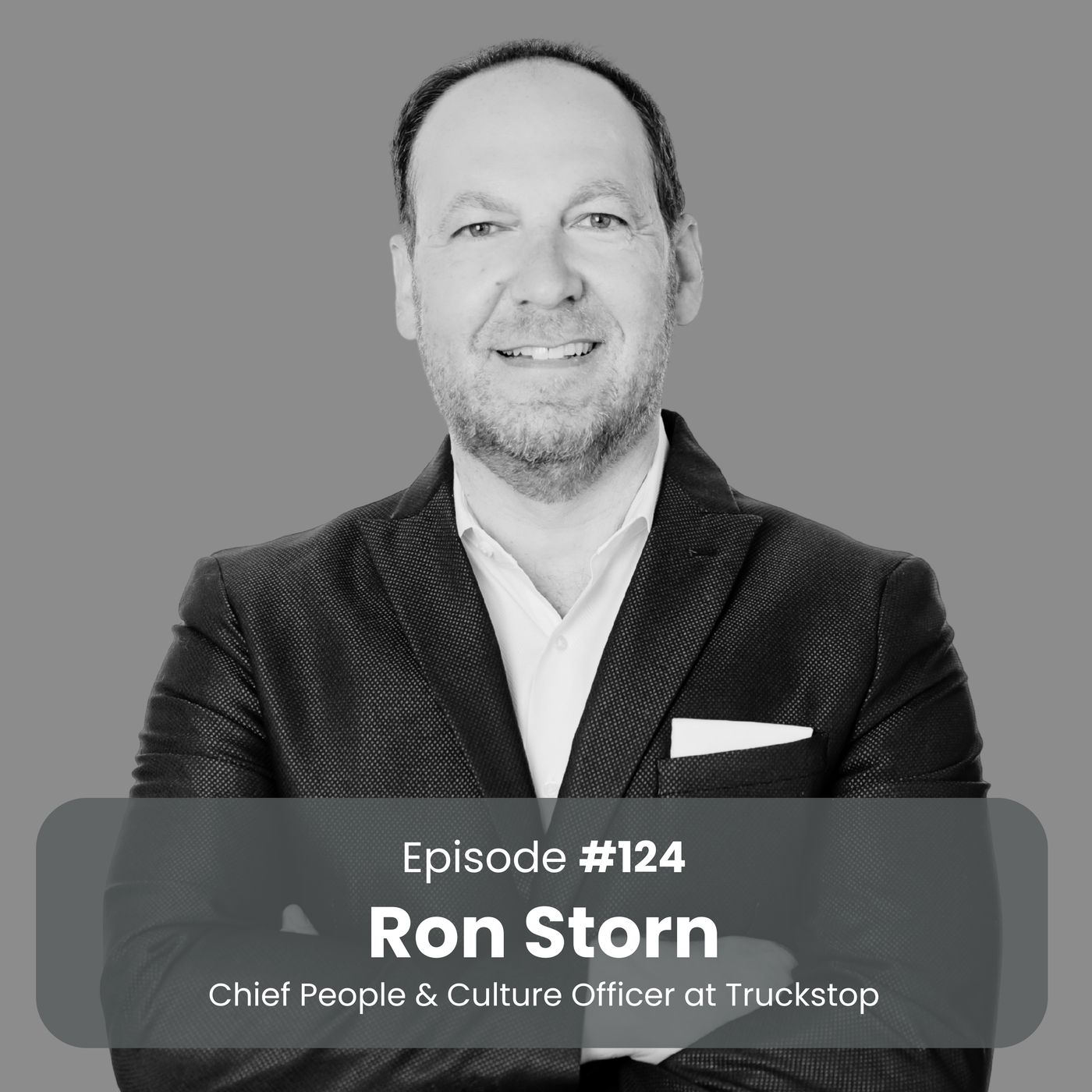
How Workplace Culture Shapes Business Success: Ron Storn
Apr 1, 2026
56m 12s
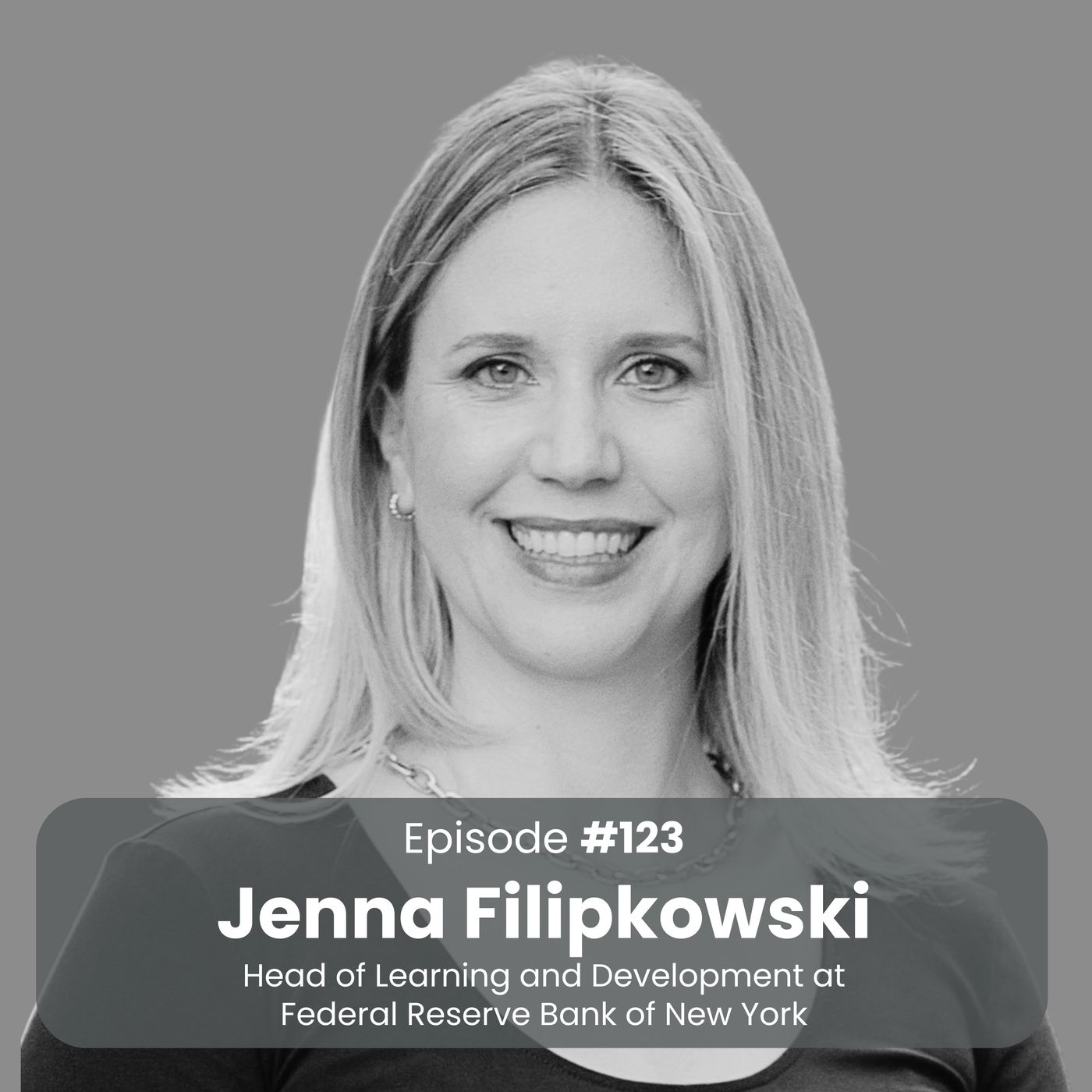
A Culture of Development at the Federal Reserve Bank of New York: Jenna Filipkowski
Mar 18, 2026
47m 17s
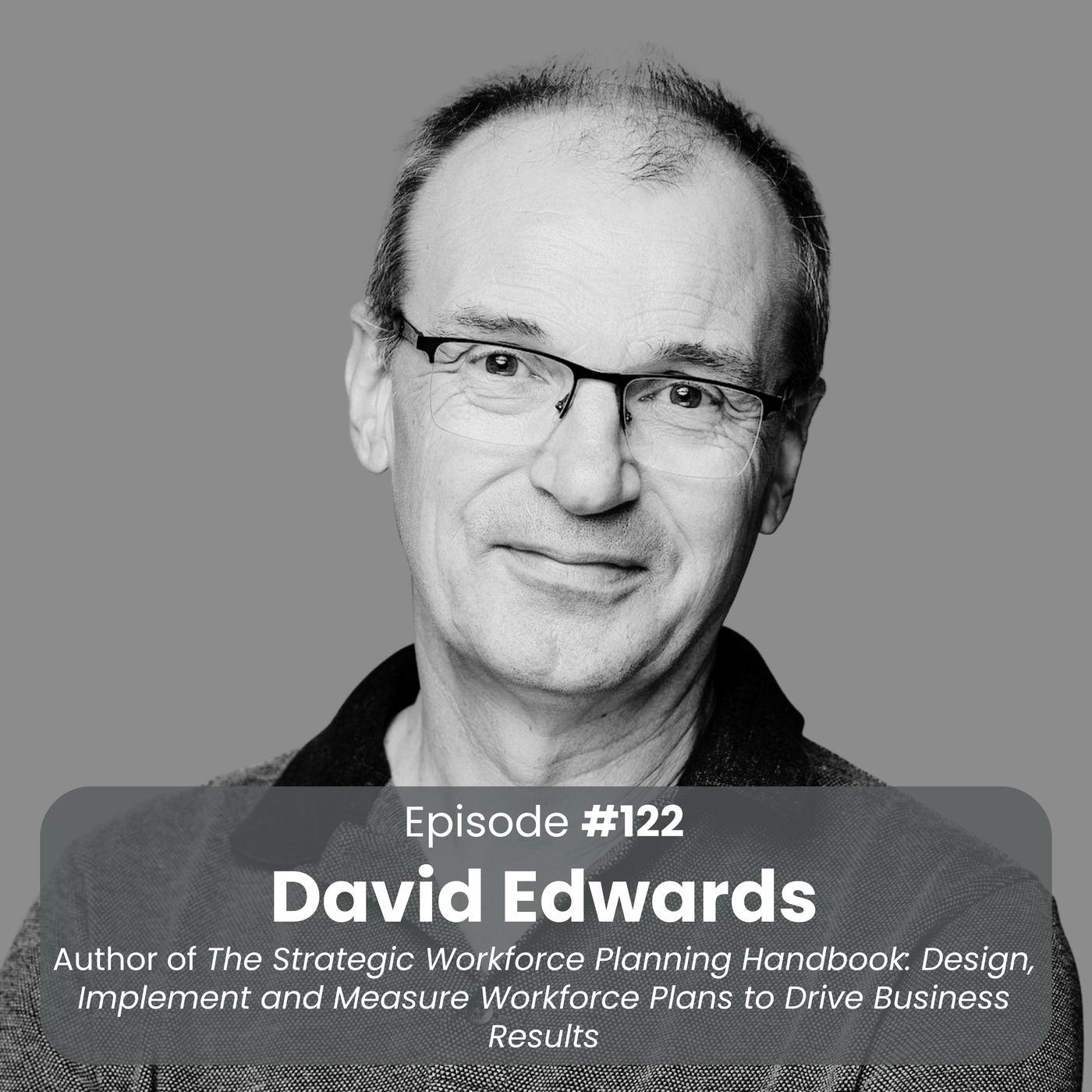
Strategic Workforce Planning: David Edwards
Mar 4, 2026
49m 38s
Social Links & Contact
Official channels & resources
Official Website
Login
RSS Feed
Login
| Date | Episode | Topics | Guests | Brands | Places | Keywords | Sponsor | Length | |
|---|---|---|---|---|---|---|---|---|---|
| 4/29/26 | ![]() Transforming Performance Management in the Public Sector: John Barrand✨ | performance managementpublic sector+4 | John Barrand | State of Utah | — | performance managementpublic sector+5 | — | 49m 49s | |
| 4/15/26 | ![]() Designing Future Narratives in a Changing Workplace: Lisa Kay Solomon and Jeffrey Rogers | In this episode, we welcome Lisa Kay Solomon, designer-in-residence at Stanford's d.school and host of the "How We Future" podcast, and Jeffrey Rogers, principal of Learning and Facilitation at Radical and co-founder of Projectory. We discuss why foresight—the ability to anticipate and design the futures we want—is everybody's job, not just the domain of senior leaders or specialized futurists. They challenge the idea that organizations operate on an "official future" built from unexamined assumptions, and explore how narrative shapes both our approach to work and our readiness for rapid change, especially in the face of AI disruption. You will want to hear this episode if you are interested in...[00:00] Rethinking future-focused leadership[03:39] HR's evolving role in shaping the future[07:18] Understanding contested narratives and the potential to challenge them [21:50] The importance of adopting futures thinking through broad learning across multiple perspectives[25:47] Strategic foresight and future practices[35:13] Rethinking knowledge and learning priorities[39:21] Reflecting on AI adoption barriers[47:08] Helping leaders develop future-oriented skills[51:14] Looking ahead to the futureThe Leadership Muscle We Forget to UseOne of the most powerful ideas to emerge from the conversation is that of foresight as a "leadership muscle." Most leaders are trained and incentivized to focus on quarterly results and annual plans. The urgent often squeezes out the important, leaving little room for the kind of long-term, strategic thinking that anticipates disruption rather than simply reacts to it.Foresight isn't someone else’s job—it's every leader's job. Yet, most organizations have let this muscle atrophy. Through scenario planning and immersive exercises like those facilitated at last year’s Summit, the hosts argue that HR and organizational leaders can rediscover the collective ability to inquire, imagine, and influence the future, rather than endure it.Challenging the "Official Future" and the Power of NarrativeEvery organization operates on an "official future," a set of unspoken assumptions about what tomorrow holds. In stable times, these guiding narratives are rarely questioned. But when the world is in flux, from technological disruptions like AI to geopolitical shocks, such narratives become vulnerabilities.Leaders, especially in HR, have a responsibility to both recognize and challenge prevailing stories about the future. Wherever there’s a narrative, there’s also the possibility for a counter-narrative, and organizations need to cultivate the skill of holding multiple possible futures in mind, letting diverse perspectives inform strategic choices rather than defaulting to inherited assumptions.Building Organizational Foresight: Tools, Skills, and CommunityThe value of events like the Red Thread Summit lies in three core takeaways: the experience of stepping back to envision the future, a toolkit of practices that can be applied immediately, and the creation of a community dedicated to learning and experimentation.There are three critical skills:Recognizing the narrative: Are you taking assumptions as fact, or seeing them as just one possible story?Crafting your own narratives: Are you able to articulate clear, alternative futures?Communicating vision: Can you equip others to see and believe in those visions?Perhaps nowhere is the need for foresight and narrative-shaping more acute than in the realm of AI and automation. Today’s leaders are under immense pressure to adopt and justify new technologies, to navigate uncertainty, and to avoid being blindsided by change.A key theme is the emerging digital (and AI) divide: those who are experimenting, learning, and shaping technology are pulling ahead, while those waiting for certainty risk being left behind. Learning, experimentation, and cross-pollination are essential. Creating the Conditions for Resilient FuturesRather than chasing after blueprints or one "correct" answer, try to cultivate a design mindset: creating organizational conditions in which new ideas and approaches can flourish. This means expanding our definition of leadership to include not just the preservation of knowledge, but the nurturing of curiosity, experimentation, collaboration, and adaptability. Resources & People MentionedPeter DruckerArticles by Lisa Kay Solomon Pascal Finette on LinkedIn Implications WheelView from the Future at Stanford d.school Hazel HendersonConnect with Lisa Kay Solomon and Jeffrey RogersLisa Kay Solomon on LinkedIn Jeffrey Rogers on LinkedIn Connect With Red Thread ResearchWebsite: Red Thread ResearchOn LinkedInOn FacebookOn TwitterSubscribe to WORKPLACE STORIES | 52m 44s | ||||||
| 4/1/26 | ![]() How Workplace Culture Shapes Business Success: Ron Storn | This week, we’re sitting down with Ron Storn, Chief People and Culture Officer at Truckstop, to discuss culture—how it forms, who owns it, and how it scales in growing organizations. We explore the relationships between systems, processes, and cultural values, and discuss signs of cultural breakdown and the keys to recovery. We also discuss how AI is reshaping workplace dynamics, hiring practices, and performance management, and Ron offers practical, research-based insights and strategies for understanding and supporting positive workplace culture. You will want to hear this episode if you are interested in...00:00 How company culture is formed09:19 Building strong HR and leadership systems11:54 Creating a positive culture for business success18:59 Scaling and preserving company culture22:53 Defining team behaviors and principles29:26 Aligning culture with decision-making32:13 Signs of a broken workplace36:50 Challenges with management and team culture41:45 Advantages of remote vs in-person work44:56 AI's impact on workplace cultureDefining CultureSome companies treat culture as little more than a list of values on the wall, disconnected from the day-to-day decisions and actions that define what it’s really like to work there. Ron believes culture is best understood as a set of shared behaviors, decision rights, and expectations to determine how a company actually executes its strategy when no one is watching. It’s how decisions are made, how people are hired or rewarded, and how work gets done when leadership isn’t in the room.In smaller organizations, culture often starts with a clear vision or set of norms, and systems are built around it. As organizations scale, systems and practices increasingly shape (and sometimes reshape) the prevailing culture, the challenge is finding ways to make culture systemic, woven into processes, rewards, and leadership behaviors, so that the company’s values endure as it grows.Who Owns Culture? Leadership, HR, and SystemsWhile HR is often perceived as the “owner” of culture, Ron believes it should be a shared responsibility, with ultimate ownership being at the very top. CEOs and founders define and embody desired cultural norms, while executive leaders model and cascade those norms through decisions and behaviors. HR’s role is to craft the mechanisms for how people are hired, evaluated, and developed to reinforce the company culture at scale. If only HR champions culture while leadership pays lip service or models different behaviors, culture will break down. Everyone, especially managers, must reinforce and live the culture for it to endure.Signs of Cultural Erosion and How to RecoverWhen culture unravels, it’s usually a gradual process, increasing decision friction, high performers becoming disengaged, and inconsistent behaviors creeping in across teams. If left unchecked, the result is a loss of trust, bureaucracy, and top talent walking out the door.Recovery is possible, but it needs radical transparency and recommitment.Ron recommends that organizations in crisis go back to their roots and principles, engaging teams in candid conversations about what must change. Leaders should model vulnerability, drive clarity on decision-making and expectations, and ensure every manager is accountable for rebuilding the cultural fabric. Resources & People MentionedTruckstop.com Connect with Ron StornRon Storn on LinkedIn Connect With Red Thread ResearchWebsite: Red Thread ResearchOn LinkedInOn FacebookOn TwitterSubscribe to WORKPLACE STORIES | 56m 12s | ||||||
| 3/18/26 | ![]() A Culture of Development at the Federal Reserve Bank of New York: Jenna Filipkowski | On this episode, we’re with Jenna Filipkowski, the Head of Learning and Development at the Federal Reserve Bank of New York. With a background in organizational psychology and research, Jenna brings a fresh, outsider perspective to the world of L&D, challenging traditional approaches and driving innovation within the unique environment of the Fed.We discuss the importance of team development over individual learning, the shift from self-directed "Netflix of learning" approaches to more guided, in-person experiences, and the crucial role of branding and communication in building credibility for L&D organizations. You will want to hear this episode if you are interested in...00:00 Team-based learning evolution05:06 Improving the workforce experience07:59 Embracing opportunity in HR leadership15:46 Team coaching as facilitation19:56 Aligning learning with business goals25:40 In-person vs. virtual leadership training33:12 Improving organizational learning through data37:46 Cohesive branding and storytelling40:20 Leadership accountability and developmentFrom Individual Focus to Team DevelopmentHistorically, L&D programs have targeted individual upskilling and career navigation. At the Federal Reserve Bank of New York, Jenna Filipkowski is pioneering an approach grounded in 6 Team Conditions, a research-backed model that moves beyond one-off workshops.Her Energize program uses diagnostics, assessments like Hogan and Insights Discovery, and customized workshops to identify and strengthen the underlying conditions for team success. Rather than a one-size-fits-all or quick-fix model, teams undergo a tailored process, allowing for deeper systemic improvement. It’s about giving teams the tools and support to accelerate their performance because they’re set up for success, not just treating every challenge as an off-the-shelf problem.The Death of Netflix of LearningFor years, L&D has been swept up by the promise of Netflix learning, providing endless on-demand content and empowering employees to self-direct their learning journeys. But this laissez-faire model has started to unravel, because organizations and individuals are craving more structure and intentionality. At the New York Fed, the move to in-person, cohort-based programs is intentional. In-person learning provides social connection, time to focus, and shared experience, resulting in deeper reflection and lasting impact. While technical upskilling may still leverage digital and asynchronous methods. Blending modalities based on program intent, not defaulting to digital just because it’s easier.Branding L&DStanding out in a large, multifaceted organization is a challenge for any L&D team, and Jenna’s approach is to treat L&D as a brand. Programs at the Fed share unified branding with cohesive names and visual identity, making offerings memorable and fostering a sense of exclusivity and aspiration.Branding goes hand-in-hand with effective communication. Frequent roadshows, town halls, engaging graduation ceremonies, and leadership conferences help communicate value not only to employees but also to senior leadership. Measurement and AccountabilityAt the Fed, Jenna and her team use a mix of reach, participant demand, stakeholder feedback, and practical business cases solved to demonstrate L&D’s value. They push to correlate L&D participation with metrics like engagement and retention—demonstrating impact beyond traditional learning outcomes. The vision for the future includes more robust, passive data collection and real-time intelligence—but for now, using multiple data sources creatively is key.As workplaces shift once again, the future of L&D will center on three things: helping people grow in their roles, building strong leaders, and fostering connection through learning alongside others. The journey away from content chaos and toward strategic, human-centered, and measurement-driven L&D is just beginning. Resources & People MentionedHogan Development Survey Insights Discovery® 6 Team ConditionsConnect with Jenna FilipkowskiJenna Filipkowski on LinkedIn Connect With Red Thread ResearchWebsite: Red Thread ResearchOn LinkedInOn FacebookOn TwitterSubscribe to WORKPLACE STORIES | 47m 17s | ||||||
| 3/4/26 | ![]() Strategic Workforce Planning: David Edwards | Strategic workforce planning is back, and not in a nostalgic “this trend is back around” kind of way. It is back because the old staffing model, react late, hire fast, hope the market delivers, is failing more often than it works. The biggest misunderstanding is still the same one: strategic workforce planning is not long-term headcount forecasting. It is not a spreadsheet exercise dressed up with better visuals. It is a business discipline that exists for one reason, to stop leaders from committing to strategies the workforce cannot deliver.In this episode of Workplace Stories, David Edwards, author of The Strategic Workforce Planning Handbook, lays out a definition of SWP that is refreshingly usable. Strategic workforce planning is workforce planning for the strategic things in the organization, not an attempt to plan the entire workforce. That single shift makes SWP more approachable, more realistic, and far more effective.If you have not listened yet, this is one of those episodes worth hearing end-to-end. The conversation is practical, occasionally blunt, and full of the kind of “this is what actually happens inside companies” detail that most workforce planning content avoids.You will want to hear this episode if you are interested in...[00:00] A clearer, more usable definition of strategic workforce planning.[00:43] Why SWP is back right now.[03:20] How SWP supports scenario thinking without false precision.[09:50] The questions SWP must answer to be useful.[11:40] Uncertainty, talent scarcity, and skills half-life as drivers.[14:30] Why SWP is an exercise in ambiguity, not certainty.[17:20] Why SWP works best as a business process, not an HR project.[20:05] What HR should do if it is not included in strategy conversations.[22:00] How to define “strategic” beyond leadership roles.[25:10] Why tasks matter more than skills for future work.[28:00] The contextual data missing from most workforce planning.[31:15] How AI forces better workforce planning questions.[41:20] What happens when SWP forces leaders to narrow priorities.[45:30] What to do when the business will not listen.[46:45] Why this work matters at the human level.Strategic Workforce Planning Starts With One Uncomfortable QuestionStrategic workforce planning becomes useful the moment it stops pretending it can predict the future. The real starting point is simple: Is the workforce fit for the organization’s future business purpose? That framing does two things immediately. First, it moves SWP out of the “HR process” bucket and into the “business execution” bucket. Second, it forces the conversation away from false certainty and toward risk, trade-offs, and feasibility.One of the most helpful parts of this episode is how clearly the conversation draws a line between strategic and long-term. Strategic does not automatically mean five years out. In some organizations, planning 15 months ahead is strategic compared to how they have historically operated. If you want the cleanest definition of SWP in the most human language possible, it is worth listening to the early part of the conversation where this is unpacked in real time.Why Workforce Planning Has ReturnedWorkforce planning always comes and goes. It resurfaces when the world feels unstable, and it fades when leaders believe they can hire their way out of problems.Right now, hiring your way out of problems is not working.There is too much uncertainty, and it is coming from too many directions at once. Geopolitical instability affects where work can happen. Talent shortages continue to constrain hiring. Skills decay faster than most organizations can reskill. Generational shifts are changing expectations around mobility and development. And technology is changing the shape of work itself.The point is not that leaders suddenly became more disciplined. The point is that the environment is forcing discipline.Strategic workforce planning is the response to that reality. Not because it gives certainty, but because it gives options. It gives a way to talk about what might happen without having to pretend anyone knows exactly what will happen.Strategic Workforce Planning Works When It Stops Being “HR’s Thing”A lot of SWP efforts fail for a predictable reason. They are treated like an HR deliverable. A report. A deck. A spreadsheet. A set of numbers handed over to leadership. Strategic workforce planning is not a deliverable. It is a business process. It is a feasibility process. It is a risk conversation. One of the strongest through-lines in this episode is the idea that HR must initiate this conversation, not because HR owns strategy, but because HR holds the missing information. HR knows things about recruiting realities, workforce behavior, retention patterns, internal mobility, and capability development that business leaders often overlook.But knowledge is not enough. The shift HR has to make is from reporting to synthesis. People analytics without business context is just numbers. When workforce data is layered onto business strategy, a story emerges. A small function may be revenue-critical. A demographic cliff may be coming. The external market may not supply replacements. The timeline may be unrealistic.This is where SWP becomes sharp.Strategic Does Not Mean Leadership OnlyMany organizations quietly turn strategic workforce planning into succession planning. They define strategic as director and above, focus on leadership roles, and build plans around titles. That is leadership continuity planning. It is not strategic workforce planning. Strategic workforce planning is about what is material. Sometimes the most strategic workforce segment is a small team of individual contributors with rare expertise and direct revenue impact. They may never appear in succession planning decks. They may not have high-profile titles. But losing them becomes a board-level issue the moment revenue drops or delivery fails. Skills Are Not the Answer, Tasks Are the Missing MiddleSkills still matter, but the skills conversation has gotten out ahead of itself. The problem is not that skills are irrelevant. The problem is that skills are being treated as the answer to a question they cannot solve. Skills describe people. Work is made of tasks. People use skills to perform tasks. That middle layer is what connects workforce planning to reality. This becomes especially obvious when AI enters the picture. AI does not simply change which skills people need. It changes which tasks exist, how tasks are performed, and which tasks no longer require a human at all. If an organization cannot describe how work is changing at the task level, the skills conversation stays abstract. It becomes a taxonomy exercise instead of a planning exercise .This is one of the most useful reframes in the conversation, and if you are wrestling with the skills-versus-tasks debate inside your organization, it is worth hearing how this is discussed in context.Workforce Planning Has to Include the Person, Not Just the SkillA skill taxonomy can tell an organization that someone has a skill. It cannot tell the organization whether that person wants to use it. Whether they have demonstrated it in real execution. Whether they are willing to take on leadership. Whether they just moved into a role and are still ramping. Strategic workforce planning becomes more realistic when it includes contextual data, not just skill labels. This is where SWP becomes less about classification and more about decision-making. It stops treating people like skill containers and starts treating them like human beings with preferences, histories, and constraints.HR Influence Requires Persistence, Risk Language, and Political SkillEven when HR gets the analysis right, many organizations still do not listen. That is not paranoia. It is often true. In environments where HR has historically been transactional, leaders do not expect HR to challenge strategy feasibility. They do not expect HR to raise uncomfortable risks. They do not expect HR to show up with options. Strategic workforce planning forces HR into a different posture. It requires HR to speak in the language of risk, to persist, and to get political when necessary. If one group will not listen, find another that will. Engage operational risk. Borrow credibility. Use the channels that the organization already respects. This is one of those episodes where the advice is not theoretical. It is practical, and it is the kind of thing HR leaders often need to hear said out loud.Connect With David EdwardsDavid Edwards on LinkedinConnect With RedThread ResearchWebsite: Red Thread ResearchOn LinkedInOn FacebookOn Twitter | 49m 38s | ||||||
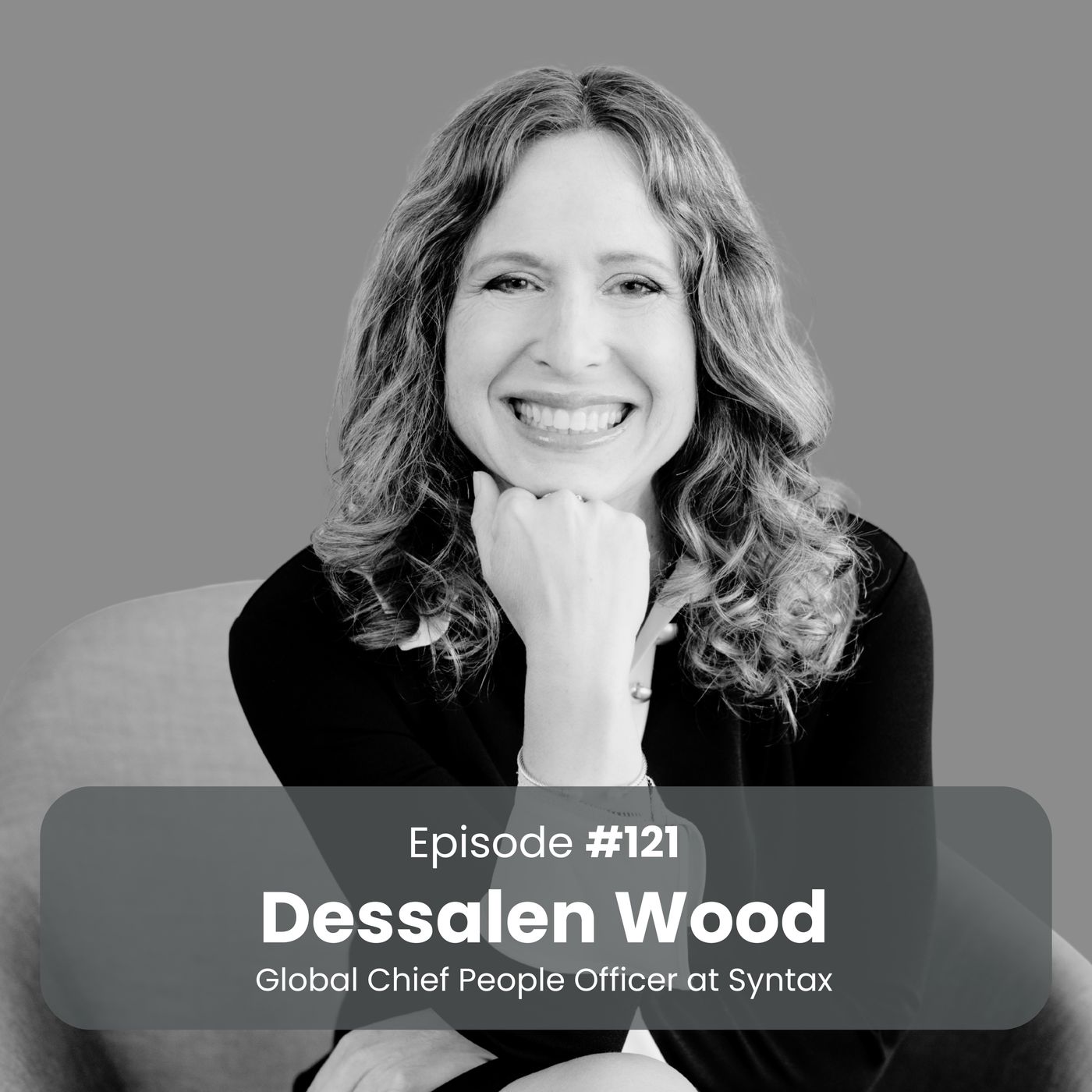
| 2/17/26 | ![]() Authentic AI Adoption and Cultural Impact: Dessalen Wood | From overcoming initial anxieties through hackathons and playful experiments, to setting an ambitious organizational roadmap for AI, Dessalen Wood shares how Syntax is embedding artificial intelligence across departments, focusing on pragmatic progress rather than hype.You’ll hear stories about driving excitement, learning by doing, and the all-important challenge of measuring real impact. More than just technology, this episode dives into the culture shifts, collaboration with IT, and leadership mindsets that are pushing companies out of their comfort zones and into the future, while keeping authenticity and humanity front and center.You will want to hear this episode if you are interested in...00:00 Overcoming AI fear through collaboration03:30 Defining AI readiness today09:55 AI's role in business transformation15:46 AI anxiety in the workplace22:05 Making AI adoption fun28:11 AI expertise requires human touch36:42 AI strategy: Three layers explained41:31 True transformation vs. improvement53:21 Rethinking work, technology, and AIOvercoming AI AnxietyEarly stages of AI adoption in organizations are often marked by fear. Employees worry about being displaced, making mistakes, or failing to keep up. At Syntax, Dessalen Wood and her fellow leaders tackled these concerns by creating safe, engaging, and transparent opportunities to experiment.One of the most effective strategies was an organization-wide AI hackathon. Everyone, regardless of their role, was invited to submit ideas for automation and improvement—ideas that the tech team then built. Not only did this demystify AI, but it also provided a healthy dose of competition and excitement. Dessalen describes that, “Instead of people fearing automation, it became a competition... People were saying, please, automate my tasks!” This shift from apprehension to enthusiasm helped break through adoption barriers and foster a culture of creative problem-solving.Structuring Success: A Multi-Layered AI RoadmapSyntax’s approach moves AI from a buzzword to a set of actionable strategies. The leadership distinguished between three core areas:Department Initiatives: Leveraging AI for productivity and process improvement within teamsCustomer Value: Enhancing solutions and services delivered to external clientsBusiness Transformation: Reimagining core business models and operations for strategic advantageMany organizations mistakenly assume one AI initiative will magically improve all three—but real impact comes from tailored strategies for each. In practice, this means differentiating between continuous improvement (making existing tasks more efficient) and true reinvention (fundamentally transforming how and why work gets done).The creation of AI champions, employees trained as internal advocates and solution designers, helped ensure that innovative ideas didn’t just sit in a backlog. Instead, those not ready for large-scale investment could be adapted, piloted, and iterated by these champions, keeping the spirit of experimentation alive while prioritizing resources for the highest-value initiatives.The Human Element: Authenticity, Experimentation, and MeasurementAs AI tools become more prevalent, a new challenge emerges: maintaining authenticity in communication, development, and leadership. The team discussed the “hollowed-out leader” phenomenon—where over-reliance on AI could dilute critical thinking and personal investment. Dessalen explains why expertise, context, and human customization are more important than ever: If it doesn’t demonstrate expertise and isn’t highly curated, it just turns people off.Measurement is also evolving. Early wins in AI productivity are being tracked, not just in terms of completion rates or tool adoption, but in demonstrable business outcomes and stretch goals. Syntax uses tools that help employees articulate their productivity gains and set new impact targets, ensuring that activity translates into organizational value.Resources & People MentionedExperience Qualtrics Management Resources Connect with Dessalen WoodDessalen Wood on LinkedIn Connect With Red Thread ResearchWebsite: Red Thread ResearchOn LinkedInOn FacebookOn TwitterSubscribe to WORKPLACE STORIES | 58m 29s | ||||||
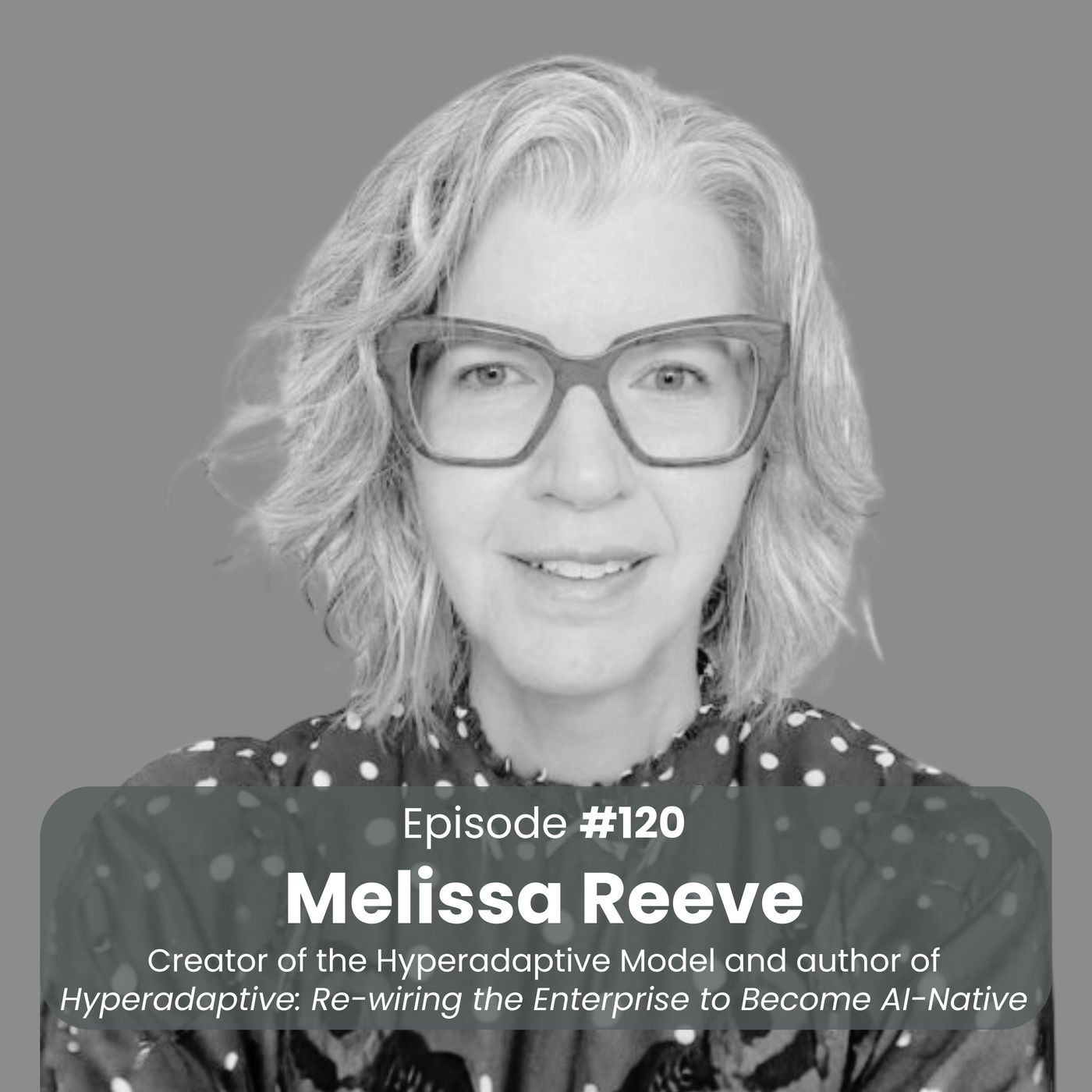
| 2/4/26 | ![]() Five Levels of Becoming AI Native: Melissa Reeve | The way organizations think about artificial intelligence (AI) in the workplace has shifted dramatically over the past few years. While early conversations centered on isolated experiments and technological hype, organizations now face the much harder task of integrating AI into the fabric of how work gets done. We welcome Melissa Reeve, author of “Hyper Adaptive: Rewiring the Enterprise to Become AI Native,” to discuss what AI adoption really means for people, processes, and culture.Melissa tackles some tough questions about organizational complexity, shifting operating models, and the critical role of culture and systems thinking in successful AI integration. Listeners will get candid advice on starting small, experimenting with purpose, and preparing for the rewiring ahead. You will want to hear this episode if you are interested in...03:38 Integrating AI into organizations12:47 AI Native enterprise structure15:51 Dynamic AI governance framework18:58 AI implementation foundations23:56 Process mapping for AI integration29:44 Balancing efficiency and leadership focus37:02 Start small with value streams40:59 Innovative organizational funding models42:14 Starting a skills-focused organization47:03 Digital Twins in Product TestingNavigating the AI Revolution at WorkMelissa Reeve’s journey began on the factory floors of Toyota, learning firsthand how small process shifts can drive system-wide change. Building on years of research and influence from Lean, Agile, and DevOps practitioners, Reeve authored a five-stage maturity model she calls hyperadaptive, designed to guide organizations through the incremental steps needed to become truly AI-native.The five stages of Melissa's model:Foundation – Build organizational understanding of AI; create dynamic governance structures and clarify guardrails. Optimization – Identify and optimize business processes for AI interactions; move beyond basic experimentation. Agents & Automation – Develop and manage AI agents that execute tasks and processes autonomously. Rewiring – Shift organizational architecture from rigid hierarchies to flexible, value-stream teams funded and incentivized differently. Hyperadaptive – Fully sense-and-respond organizations capable of real-time adaptation.Melissa splits these into two main categories: Basecamp (the first three stages, where most companies currently operate) and the Emerging Frontier (rewiring and hyper adaptivity).Why Organizations Struggle with AI IntegrationAccording to Melissa, most organizations are stuck because they underestimate the support structures required for successful AI adoption. It’s not just about updating technology, in fact, 70-80% of AI success depends on people, culture, and processes, not algorithms. Companies often rush to deploy AI agents or experiment without a clear North Star, leading to pilot fatigue and an 80% failure rate. Many organizations haven’t even finished laying the foundational groundwork, such as establishing unified governance or mapping work processes.Another common pitfall is the tendency to try everything at once. Pressure for fast results drives teams to bite off too much, resulting in burnout and costly errors.Moving from Experimentation to Purposeful TransformationPlaying with AI is not a strategy. While experimentation is necessary, organizations must put bounds on these efforts, know why they're experimenting, what hypothesis they're testing, and what success will look like.One necessary precursor is getting to grips with how your organization actually works. Many leaders lack visibility into workflows, decisions, and skillsets, making process optimization difficult. Reeve suggests collaborative process mapping—sometimes supported by AI tools—to unlock tacit knowledge and identify where AI can augment or reinvent workflows.Organizing Around Value StreamsOne of the most transformative elements is the shift from function-based silos to cross-functional value stream teams. Melissa draws on examples from Toyota, Zappos, and Unilever—organizations that reimagine workflows, funding mechanisms, and team incentives to deliver value rather than preserve hierarchy. Dynamic budgeting, focused experimentation, and flexible team structures help organizations scale AI success without tearing up everything at once.Culture, Upskilling, and Durable SuccessAI’s impact will be decided by how well organizations invest in people. Unilever’s Future Fit program exemplifies this approach, aligning reskilling efforts to individual purpose and business needs. It’s not algorithms that set successful organizations apart, but their ability to create cultures and support systems that empower people to adapt, reinvent themselves, and thrive amidst change.Start small, experiment with purpose, invest in support structures, and prepare to rewire not just technology, but how your organization thinks about work itself. AI may be the catalyst, but people, empowered and organized around value, are the key to lasting transformation. Resources & People MentionedHyperadaptive: Rewiring the Enterprise to Become AI-Native Connect with Melissa ReeveMelissa M. Reeve on LinkedIn Connect With Red Thread ResearchWebsite: Red Thread ResearchOn LinkedInOn FacebookOn TwitterSubscribe to WORKPLACE STORIES | 50m 19s | ||||||
| 1/21/26 | ![]() Reimagining Work at Scale: Manuel Smukalla on Skills, Dynamic Shared Ownership, and the Future of Bayer | Manuel Smukalla, Global Talent Impact, Skills Intelligence, and Systems Lead at Bayer, joins Workplace Stories to unpack one of the most ambitious organizational transformations underway today. As Bayer confronts significant market, legal, and profitability pressures, the company has taken a radically different approach to how work, leadership, and talent are structured, rethinking everything from management layers to career progression.In this episode, Manuel walks through Bayer’s shift to Dynamic Shared Ownership (DSO), a decentralized operating model built around networks of teams, 90-day work cycles, and leaders who coach rather than control. He explains why skills visibility became a foundational requirement for this model to work and how Bayer is using skills data to democratize opportunities, improve talent flow, and fundamentally rethink careers inside a global enterprise.You’ll hear how Bayer reduced management layers by more than half, redesigned leadership expectations through its VAC (Visionary, Architect, Catalyst, Coach) model, and moved toward a culture where employees are empowered, and expected, to own their work, development, and impact.You will want to hear this episode if you are interested in...[01:01] Why Bayer embarked on a radical organizational transformation.[04:30] What Dynamic Shared Ownership really means in practice.[06:55] Moving from hierarchical structures to networks of teams.[10:40] Why skills visibility became a critical business problem.[14:05] How 90-day work cycles change accountability and outcomes.[18:10] Building organizations around customer problems, not functions.[21:15] Launching skills profiles as a starting point, not an endpoint.[23:00] How Bayer’s talent marketplace democratizes opportunity at scale.[27:00] The three pillars of a skills-based organization.[33:00] Rethinking careers, performance management, and feedback.[43:10] The VAC leadership model explained.[52:30] Measuring success in a decentralized organization.[53:45] Advice for organizations considering similar transformations.Dynamic Shared Ownership: Redesigning How Work Gets DoneAt the core of Bayer’s transformation is Dynamic Shared Ownership, an operating model that replaces traditional hierarchies with flexible networks of teams. Manuel explains how Bayer reduced its management layers from thirteen to six and reorganized work into 90-day cycles focused on clear outcomes. After each cycle, teams reflect on what worked, what didn’t, and whether the work should continue at all.This approach decentralizes decision-making and forces a shift away from command-and-control leadership. Leaders are no longer expected to direct every task; instead, they create the conditions for teams to succeed, setting direction while trusting teams to determine how outcomes are achieved.Skills as the Engine of Talent FlowFor Dynamic Shared Ownership to function, Bayer needed a new way to understand and deploy talent. Manuel shares a pivotal realization: managers were turning to LinkedIn to understand employee skills because the organization lacked internal visibility. That insight sparked Bayer’s skills journey.Rather than starting with complex taxonomies, Bayer focused first on skill visibility. Employees created and maintained skills profiles, supported by workshops on how to describe capabilities effectively. Over time, this evolved into a talent marketplace that matches people to work based on skills, not job titles, career level, or location, helping democratize access to opportunities across the enterprise.Moving Talent to Work, Not Work to TalentManuel outlines three defining pillars of a skills-based organization. First, talent must move to work rather than work being constrained by static roles. Second, organizations must commit to permanent upskilling, recognizing that development is continuous, not episodic. Third, opportunities must be democratized at scale, reducing reliance on manager sponsorship or informal networks.Bayer’s marketplace supports fixed roles, flex roles, and fully agile project-based work, encouraging employees to actively shape their careers while remaining accountable for outcomes. This model challenges long-held assumptions about promotions, ladders, and linear advancement.Leadership and Performance in a Decentralized WorldLeadership at Bayer has been redefined through the VAC model: Visionary, Architect, Catalyst, and Coach. Leaders set direction, help teams design how value is created, remove barriers, and support rapid cycles of learning. This requires significant unlearning for leaders shaped by traditional hierarchies.Performance management has also shifted. Goals are set in 90-day cycles at the team level, with feedback coming from peers and work leads rather than solely from a direct manager. Over time, this creates richer data on contribution and impact, but also demands a cultural shift toward transparency, shared accountability, and continuous feedback.Connect with Manuel SmukallaManuel Smukalla on LinkedInConnect With Red Thread ResearchWebsite: Red Thread ResearchOn LinkedInOn FacebookOn TwitterSubscribe to WORKPLACE STORIES | 58m 46s | ||||||
| 12/17/25 | ![]() Centralizing for Strategy: Christine Crouch on L&D Transformation at General Mills | Christine Crouch, Senior Director of Learning at General Mills, joins Workplace Stories to discuss a massive shift in how one of the world's legacy food companies approaches talent development. General Mills has recently transitioned to a centralized and integrated learning model.In this episode, Christine lays out one of the clearest cases for centralization we have heard. While efficiency is a benefit, she argues that the true drivers are decision-making power and better data. By unifying the function, General Mills gains a stronger view of learning activity and business needs, creating the strategic infrastructure necessary for the future of work.You’ll hear how Christine’s team manages to be centralized without losing the "local feel" through a robust Learning Business Partner model. She also details how centralization unlocks the ability to correlate learning metrics with talent outcomes like retention and performance. Finally, Christine shares her philosophy on AI, not as a replacement for human connection, but as a tool to elevate the human side of learning.You will want to hear this episode if you are interested in...[06:07] Background on General Mills and its culture.[07:00] The shift from decentralized to centralized L&D.[11:11] How to make centralization feel local to business stakeholders.[18:30] The Learning Business Partner model explained.[21:07] Correlating learning metrics with talent outcomes.[27:58] Managing "rogue purchases" in a centralized model.[34:20] Why AI will elevate, not replace, the human side of learning.[47:35] Piloting AI coaching tools like "Nadia".The Strategic Case for CentralizationFor many organizations, the move to centralize L&D is purely a cost-cutting exercise. However, Christine frames the shift at General Mills as a play for better data and strategic decision-making. A centralized function provides a unified view of the organization's needs, allowing L&D to prioritize investments that drive enterprise-wide capabilities rather than just solving isolated functional problems. As AI accelerates, this strong data infrastructure is what will allow the organization to distinguish between what people actually need to know versus what can be offloaded to technology.The Learning Business Partner ModelCentralization often brings the fear of losing touch with the business. General Mills solves this through the "Learning Business Partner" role, individuals who sit on the leadership teams of specific functions or segments but report back to the central L&D organization. These partners act as a bridge; they understand the HR strategy and business plans of their specific function while ensuring continuity with the broader enterprise goals. They are expected to be performance consultants first, identifying the root problems to solve rather than just taking orders for training.AI: Elevating the Human ElementChristine’s approach to AI is grounded in optimism and human-centricity. She believes AI will not replace the human side of learning but elevate it. General Mills is actively piloting AI for tasks like personalization, automation, and coaching via a tool called "Nadia," which acts as an "always-on" coach. However, Christine emphasizes that deep skill building, like change leadership, still requires human connection, peer discussion, and the ability to "read the room," skills that AI cannot fully replicate. Connect with Christine CrouchChristine Crouch on LinkedIn Connect With Red Thread ResearchWebsite: Red Thread ResearchOn LinkedInOn FacebookOn TwitterSubscribe to WORKPLACE STORIES | 52m 56s | ||||||
| 12/3/25 | ![]() Building a Skills-Based Organization with Koreen Pagano | On the latest episode of Workplace Stories, we sit down with Koreen Pagano, author of "Building a Skills-Based Organization," to talk about one of the hottest and most complex topics in the world of work: how organizations can become truly skills-based, and what that really means in today’s rapidly changing, AI-driven landscape. The conversation was loaded with practical insights, candid stories, and wisdom from the front lines of workforce transformation.Koreen shares her journey from ed-tech and product leadership to guiding hundreds of organizations through the maze of skills transformation. We discuss the crucial front-of-house and back-of-house elements, from clear communication and partnership models to building the right data and technology infrastructure. You’ll hear fresh perspectives on using skills data as an early signal for retention, the shifting role of tasks versus skills, and what it means to future-proof your workforce for ongoing change. You will want to hear this episode if you are interested in...[05:17] Skills vs job architecture approaches.[10:04] Navigating skills-based organizations.[14:33] Workforce data challenges with AI.[23:04] Skills over jobs for strategy.[27:04] Building resilient data systems.[34:33] Building trust in skill data.[39:32] Predicting employee retention through data.[45:59] Helping organizations align AI transformation with business goals.Why Skills Still Matter in a “Task-Talk” WorldThere’s a persistent misconception that the age of “skills” has passed and that “tasks” offer a more practical lens, especially with AI in play. Koreen shares how, at a recent industry event, she heard professionals say, “We don’t need to worry about skills, we have to focus on tasks.” But she thinks that it’s misguided to abandon skills just when organizations are barely starting to understand and leverage them.While tasks describe the work to be done, skills reflect the underlying human (and sometimes machine) capabilities that make that work possible. Both are crucial, but without a foundational understanding of your organization's skills, mapping tasks is like building on sand.Front of House, Back of House, and Getting Skills RightWe need to balance “front of house” and “back of house” considerations when building a skills-based organization. Organizations often focus either on external communications, partnerships, and culture (front of house), or purely on technology, data, and infrastructure (back of house), but rarely both. Koreen is unique in straddling the two, and it’s this holistic approach, blending people and process with tech and data, that sets successful organizations apart.The Evolution of Data and the Rise of Skills VerificationOrganizations are beginning to realize that their skills data isn’t just about upskilling or reskilling; it’s tightly connected to business-critical outcomes like retention, performance, and the ability to adapt to market shifts. Koreen shares compelling examples of using skills data to provide early warning on issues like employee retention, demonstrating data-driven HR in action.She also shared her pragmatic “3Vs” model for validating skills data: Validity (how well the data measures what it claims to), Variety (different types of data from varied sources), and Volume (quantity and frequency of data collected). You can make solid business decisions with basic self-reported skills data, but for higher-stakes calls, like hiring, you need much more rigorous, validated information.Jobs, Skills, and the Trap of Static StructuresOften, organizations anchor their skills strategy to their job architecture. Consultants and technology vendors frequently push companies to start by mapping skills to static jobs. We discuss why this is a dangerous place to “end”, because jobs, roles, and the tasks that define them are changing faster than ever, especially with AI in the mix. Koreen advocates for designing skills data that is flexible, lives independently, and can be mapped to jobs and tasks as they evolve, never becoming held hostage by legacy structures.Goals Over TasksPerhaps the most powerful call to action was the need to focus less on micromanaging the “how” (a long list of tasks) and more on the “what and why”, the goals, outcomes, and genuine business objectives. In a future where work is constantly shifting, organizations that empower people around purpose, supported by dynamic skills data, will outperform those stuck mapping today’s tasks to yesterday’s job charts.Building a skills-based organization isn't a project with a tidy endpoint, it’s a transformation. As Koreen reminds us, it’s hard, messy, and as much about culture as it is about data. But for the organizations (and the people) willing to experiment, adapt, and keep skills at the center of strategy, the payoff is a workforce that’s ready for whatever comes next. Resources & People MentionedBuilding the Skills-Based Organization: A Blueprint for Transformation by Koreen Pagano Connect with Koreen PaganoKoreen Pagano on LinkedIn Connect With Red Thread ResearchWebsite: Red Thread ResearchOn LinkedInOn FacebookOn TwitterSubscribe to WORKPLACE STORIES | 56m 52s | ||||||
Want analysis for the episodes below?Free for Pro Submit a request, we'll have your selected episodes analyzed within an hour. Free, at no cost to you, for Pro users. | |||||||||
| 11/19/25 | ![]() HR in the Age of AI: Cole Napper on People Analytics, Generative AI, and Redefining Value | In this episode, Stacia and Dani sit down once again with Cole Napper, author of “People Analytics: Using Data-Driven HR and Gen AI as a Business Asset.” A year after his first appearance, Cole returns with bold insights about the seismic changes facing HR and people analytics, and why now is the time to rethink how we define value in the workplace.Cole argues that the future of HR depends on shedding its transactional skin and embracing a new, data-driven paradigm. He discusses why traditional models like Dave Ulrich’s COE framework won’t survive the decade, how organizations can “discorrelate” from market forces by proving business value, and why fear, not technology, is the biggest obstacle to transformation. With sharp humor and evidence from his own research, Cole makes the case for a redefined HR: one that blends human strategy with AI-powered intelligence to drive growth, not just efficiency.You will want to hear this episode if you are interested in...[00:00] Building a new HR paradigm in the Gen AI era.[06:00] Why people analytics hit its “identity crisis” after 2022.[12:00] How to prove HR’s business value beyond metrics.[19:00] The decline of the Ulrich HR model and what replaces it.[24:00] The future of AI-driven workforce transformation.[33:00] The tension between the HR and finance worldviews.[46:00] Why data infrastructure is suddenly “sexy” again.[52:00] Three possible futures for HR in the next decade.Building a New Paradigm for People AnalyticsCole’s new book calls for a reset in how organizations use data, not as an isolated reporting function but as a business accelerator. He reveals how people analytics can move from being “scorekeepers” to strategic partners by tackling the questions behind the questions: Why is it happening? What should we do about it? His message is clear, analytics must tie directly to revenue, cost, or risk reduction, or it’s just a hobby.The End of HR as We Know ItCole predicts that the Ulrich model, the long-standing HR framework of COEs, service centers, and HRBPs, won’t survive the coming decade. As generative AI automates much of HR’s transactional work, only the strategic and human elements will remain. He and the hosts debate what should stay human and what can be delegated to machines, exploring the fine line between technological efficiency and organizational soul.AI, Accountability, and the Future of WorkCole cautions that while AI’s potential is vast, it cannot replace human accountability. Drawing a parallel with the evolution of chess, he argues that AI will transform HR’s “game,” not erase it. The goal isn’t to align around AI as a tool, but to use it to unlock entirely new possibilities in how we work, learn, and grow.Infrastructure, Not IllusionFor all the hype, Cole reminds leaders that the foundation of AI success lies in data infrastructure, “the least sexy but most essential lever.” Without it, organizations risk failure in the next wave of transformation. Investing in data quality, architecture, and scalability today determines who thrives, or disappears, tomorrow.Resources & People MentionedPeople Analytics: Using Data-Driven HR and Gen AI as a Business Asset by Cole NapperConnect with Cole NapperCole on LinkedInConnect With Red Thread ResearchWebsite: Red Thread ResearchOn LinkedInOn FacebookOn Twitter | 1h 00m 21s | ||||||
| 11/5/25 | ![]() Eight Levers for the Future: Lori Niles-Hoffman on Reimagining EdTech Transformation | In this episode of Workplace Stories, we sit down with Lori Niles-Hoffman, global learning strategist, EdTech advisor, and author of The Eight Levers of EdTech Transformation. With over 25 years of experience implementing large-scale learning systems, Lori brings a no-nonsense, deeply human perspective to how organizations can thrive at the intersection of technology, data, and talent.Lori reveals why EdTech success isn’t about shiny tools, it’s about mastering eight foundational levers that determine whether your learning strategy creates value or chaos. From ecosystem thinking to stakeholder management, she explains how leaders can future-proof learning strategies through data, design, and disciplined experimentation.You’ll hear candid insights on how AI is reshaping L&D, not by changing the rules, but by exposing where we’ve been weak all along. Lori also shares why the “backend just got sexy,” and how the next competitive edge won’t come from beautiful interfaces, but from the quality of data and insights driving them.You will want to hear this episode if you are interested in...[00:00] The eight levers shaping EdTech transformation.[06:00] Lessons from 25 years in enterprise learning systems.[09:00] Why most L&D tech investments fail before they start.[14:00] The rise of data literacy and “sexy backends” in learning design.[17:00] Why clean data matters more than new tool.[24:00] A breakdown of the eight levers and how they work together.[29:00] Stakeholder management and ecosystem thinking in practice.[35:00] The new role of AI in exposing weak learning strategies.[39:00] Why skills, not titles, will define the future of learning.[41:00] The human side of transformation: keeping people at the center.The Future of Learning Isn’t About Tech, It’s About LeverageLori’s framework flips the script on how organizations approach learning transformation. Rather than starting with technology, she urges leaders to first clarify their target operating model, data readiness, and stakeholder relationships. The result? Smarter decisions, stronger credibility, and sustainable change.Her book’s eight levers, ranging from content strategy to ecosystem alignment, help leaders navigate the “medium term” (through 2028) of rapid evolution in learning technology. As Lori puts it, the goal isn’t to adopt AI or automation for their own sake, it’s to make learning adaptive, outcomes-focused, and undeniably relevant.Data, Ecosystems, and the “Sexy Backend”Forget fancy dashboards, Lori believes the true revolution is happening behind the scenes. As user interfaces disappear and voice or text prompts replace them, differentiation will come from data governance, interoperability, and predictive insights. The backend, she says, is now where strategy lives.She emphasizes that AI doesn’t change the levers, it exposes their weaknesses. The organizations winning in this new era will be those that invest in clean data, aligned systems, and smart stakeholder engagement.Skills as the Spine of the Future WorkforceAmong the eight levers, Lori highlights skills as the “spine” connecting every other element of learning strategy.She challenges L&D professionals to stop chasing shiny taxonomies and instead treat skills like a supply chain, measured, managed, and constantly replenished. The goal isn’t just mobility or efficiency; it’s resilience.Resources & People MentionedL&D Tech Ecosystem 2020Skills OddysseyLearning Strategy paperLori's bookConnect with Lori Niles-HoffmanLori on LinkedInConnect With Red Thread ResearchWebsite: Red Thread ResearchOn LinkedInOn FacebookOn TwitterSubscribe to WORKPLACE STORIES | 42m 33s | ||||||
| 10/22/25 | ![]() Three Futures for Learning: How AI Is Rewriting L&D with Donald H. Taylor and Eglė Vinauskaitė | Just two years ago, AI was a shiny new object in L&D, with most professionals dabbling in small pilots and content creation experiments. The latest findings reveal an inflection point: the majority of L&D teams are now actively using AI, not merely testing it.This week, on the podcast are Donald H. Taylor and Eglė Vinauskaitė, the minds behind a groundbreaking new report, "AI & Learning 2025: Race for Impact." We’re exploring the rapid changes AI is bringing to Learning and Development (L&D), from early experimentation to widespread implementation, and what it means for the future of work.In this conversation, you’ll hear about the three distinct futures for L&D departments, how AI is moving beyond simple content creation into qualitative analytics and adaptive learning, and why team culture and leadership are crucial for success. We also dig into some big philosophical questions: How do we keep humans at the center of tech-driven workplaces? And how will AI reshape the very definition of value in L&D?This episode is packed with insights, data, and stories from organizations at the forefront of change. So, get ready to rethink how learning happens and how impactful workplace transformation can be.You will want to hear this episode if you are interested in...[00:00] How AI is transforming Learning and Development.[05:40] Transition from experimentation to mainstream implementation of AI in L&D.[13:31] Debunking the maturity model.[16:03] AI integration culture in organizations.[25:07] AI's impact on L&D values.[38:54] Necessity for L&D to demonstrate clear impact and unique value beyond content.[47:36] Leadership Beyond the L&D silo.[52:25] Introduction of the “transformation triangle”: three potential strategic futures.The Rapid Evolution of AI in L&DAI usage still predominantly supports content creation and design, but there’s an intriguing rise in more sophisticated applications, especially data analysis, dynamic feedback, and even AI-driven coaching. For L&D leaders, the big question is no longer “should we use AI?” but “how can we use it to unlock deeper value for our organizations?”What Sets Successful L&D Teams Apart?A critical insight from the report is the role of mindset and organizational culture in successful AI adoption. Teams thriving with AI aren’t necessarily bigger or better-resourced; they are “open” teams, led by individuals who embrace risk, imperfect information, and proactive change. These leaders are comfortable experimenting without knowing all the answers, an essential trait for the current landscape.True transformation requires more than tech skills; it demands business acumen, a robust understanding of performance, and an ability to integrate learning with business strategy. L&D teams must move from being passive order-takers to strategic partners, actively shaping how people develop and perform.AI: Threat or Opportunity for Traditional L&D Roles?For some, the rise of AI in learning is unnerving. Tasks once considered core, like instructional design or content creation, can increasingly be automated, often cheaper and faster than before. Taylor cautions that unless L&D professionals shift their value proposition from content production to driving true impact, their roles risk being diminished or redefined.But there is an opportunity for L&D to expand its influence. Rather than being relegated to the background, teams can now focus on performance support, skills stewardship, and facilitating human growth, areas where strategic thinking and deep expertise are critical and cannot be automated away.Three Futures for L&D: Skills Authority, Enablement Partner, Adaptation EnginePerhaps the most provocative segment of the episode introduced three possible “futures” for L&D roles in the AI era:Skills Authority: L&D becomes the custodian of skills, owning skill taxonomies, plumbing, and strategic workforce development. This future demands advanced expertise in identifying, building, and tracking capabilities crucial to business success.Enablement Partner: Here, L&D empowers employees across the organization to create their own learning solutions. The team shifts from direct content delivery to building infrastructure, processes, and trust, letting expertise flourish where it’s needed most.Adaptation Engine: The most radical scenario, where L&D is absorbed into cross-functional teams focused on rapid business adaptation. Learning professionals blend with design, tech, and operations to solve holistic problems, making learning indistinguishable from broader performance improvement.While AI will eventually become as invisible as electricity, the human element in learning, facilitation, creativity, and stewardship remains paramount. The priority for leaders now is to harness AI thoughtfully, ensuring it serves genuine learning and performance goals rather than just delivering faster horses. Resources & People MentionedAI in L&D: The Race For ImpactAI in L&D (4 Reports) Connect with Donald H. Taylor and Eglė VinauskaitėEgle Vinauskaite on LinkedIn Donald H Taylor on LinkedIn Connect With Red Thread ResearchWebsite: Red Thread ResearchOn LinkedInOn FacebookOn TwitterSubscribe to WORKPLACE STORIES | 1h 06m 16s | ||||||
| 10/15/25 | ![]() Believability: The Secret to AI Adoption in Learning | Artificial Intelligence is transforming corporate learning, but not every organization is doing it in ways that employees actually trust. In this episode of Workplace Stories, we talk with Peter Manniche Riber, Digital Learning & AI Leader, about how his team built AI-powered learning tools that employees truly believe in.From creating the “Dilemma Coach” and “IDP Coach” to redefining personalization and data privacy, Peter demonstrates what happens when innovation is combined with practicality, and why sometimes the smartest move is to build, rather than buy.You will want to hear this episode if you are interested in...[00:00] Why “believability” is the key to AI adoption.[04:50] How Novo Nordisk’s “Dilemma Coach” and “IDP Coach” came to life.[09:00] Why less data, and the right data, creates better personalization.[17:00] Balancing privacy, ethics, and personalization in AI learning.[25:30] Working with works councils and data regulators early.[33:00] Scaling learning equity and access across global teams.[39:40] What AI means for strategic workforce planning.[41:30] Peter’s advice for L&D leaders ready to experiment with AI.The Power of “Believability” in AI LearningAt Novo Nordisk, Peter’s team coined a simple but powerful concept, believability. It means people will only engage with AI tools if they recognize themselves and their context in the experience. Through hundreds of user tests, they found that when an AI response feels personal and relevant, adoption skyrockets.Rather than hoarding corporate data, they ask employees directly about their goals, challenges, and career aspirations. This approach not only keeps data secure but also ensures every interaction feels real, human, and trustworthy.Why Novo Nordisk Built Its Own AI ToolsWhen it came to designing learning applications, Peter’s team decided to build rather than buy. The reason? Control, context, and compliance. Off-the-shelf tools couldn’t meet Novo Nordisk’s strict privacy standards or reflect its unique leadership culture. By developing internally, the team could train AI on company-specific frameworks, design intuitive UX guardrails, and maintain full ownership of their data, while spending less than a handful of traditional e-learning modules would cost.Redefining Data and TrustInstead of scraping internal systems, Peter’s philosophy is simple: ask people. Employees willingly provide fresh, accurate context when they understand how it’s used. Transparency and consent are baked into the process, with large-font screens explaining how data is handled and why it matters.The result? Nearly 90% of employees feel completely safe using these tools, a remarkable trust level for AI-driven systems inside a regulated, global company.The Future of L&D and AI ExperimentationPeter’s message to learning leaders: stop waiting for perfection and start experimenting. You don’t need a massive budget or a team of data scientists to create meaningful AI applications. What you need is curiosity, clear hypotheses, and the courage to learn by doing.AI won’t replace thoughtful design or human judgment, but it can unlock a new era of personalized, scalable, and believable learning.Resources & People MentionedNovo NordiskConnect with Peter Manniche RiberLinkedIn: Peter Manniche RiberConnect With Red Thread ResearchWebsite: Red Thread ResearchOn LinkedInOn FacebookOn TwitterSubscribe to WORKPLACE STORIES | 43m 34s | ||||||
| 9/24/25 | ![]() Moving HR from Support to Strategic Driver with Nadia Uberoi | On the show this week, Nadia Uberoi, Head of People at Garner Health, joins us to explore how HR can move beyond compliance to become a solution-centric and outcome-driven function, aligning closely with the business’s mission and deliverables.Nadia shares practical details on how Garner Health has developed agile people systems and cultivated a high-candor culture rooted in real-time feedback and organizational transparency. We discuss how conscious alignment between HR and business strategy depends on both robust systems and hiring people with the right agile mindset.You’ll hear more about Nadia’s unique approach to performance management, Garner’s decision to publicly share 360 feedback, and how a culture of candor empowers everyone, not just HR, to take ownership of change. Nadia also offers an inside look at the mechanics of building and scaling an intentional organizational culture, and the lessons she’s learned from fast-growing companies.You will want to hear this episode if you are interested in...[05:16] Aligning HR with business strategy and high candor cultures.[07:28] Seeking CEO buy-in for strategic alignment.[10:37] Balance short-term solutions and long-term infrastructure planning.[13:48] Focus on continuous improvement and clarity of responsibilities.[21:23] Quarterly planning with smaller, manageable initiatives enables better adaptability and faster impact.[29:04] Real-time feedback improved HR-business alignment by enabling quick adjustments.[33:31] Real-time feedback and collaboration enable immediate improvements.[48:22] Intentionally build and systematize culture for business impact.Resources & People MentionedPrinciples by Ray DalioLatticeGarner Health Connect with Nadia Uberoi Nadia Uberoi on LinkedIn Connect With Red Thread ResearchWebsite: Red Thread ResearchOn LinkedInOn FacebookOn TwitterSubscribe to WORKPLACE STORIES | 50m 06s | ||||||
| 8/27/25 | ![]() Making Skills the Currency of Opportunity with Haley Glover | Haley Glover, Senior Director of UpSkill America at the Aspen Institute, is on a mission to build a world where skills—not degrees or pedigrees—are the primary currency of career opportunity.In this expansive conversation, she challenges organizations to think bigger, arguing that investing in frontline workers isn't just a corporate responsibility but a societal imperative that strengthens communities and economies alike.Glover shares her vision for a future where "all learning counts," and individuals own their skills data, freeing it from the silos of employers and academic institutions.Listen in for a dose of realistic optimism on one of the most complex—and human—challenges in the world of work today.You will want to hear this episode if you are interested in...[00:00] Intro.[03:34] Why skills are a societal issue, not just a corporate one.[13:31] Building a realistic ROI case for skills investments.[19:32] The "All Learning Counts" vision for skills recognition.[24:01] Why the next decade of skills innovation will be "messy."[27:56] The cultural blockades preventing a skills-first hiring revolution.[36:11] The evolving role and responsibility of the employer.[42:25] A real-world example of a company getting it right.Resources & People MentionedUpSkill America at the Aspen InstituteJames By Percival EverettThe Brothers K by David James DuncanConnect with Haley GloverHaley Glover on LinkedIn Connect With Red Thread ResearchWebsite: Red Thread ResearchOn LinkedInOn FacebookOn TwitterSubscribe to WORKPLACE STORIES | 47m 14s | ||||||
| 8/13/25 | ![]() Doing More With Less: Serena Gonsalves-Fersch on Lean Talent Teams and Big Impact | Dr. Serena Gonsalves-Fersch, Global Head of Talent and Academy, shares her refreshingly candid perspective on the evolving role of Learning and Development (L&D) in today’s organizations.You’ll hear her challenge traditional approaches to employee learning, advocate for seamless integration between learning, talent, DEIB, and performance, and call out industry complacency.Serena also shares how her small but mighty team serves 14,000 employees across the globe by staying closely attuned to actual business needs and leveraging the power of data and AI—not just for content creation, but for true predictive insights.Listen in for a fascinating discussion that covers everything from the purpose of L&D, how technology is reshaping talent strategies, to the importance of connecting learning directly to organizational impact. You will want to hear this episode if you are interested in...[00:00] Integrated learning & talent strategy.[09:10] Rethinking organizational learning approaches.[21:47] Defining HR's role in automation.[29:04] Streamlining your learning and development team.[31:23] Creating GCP learning journeys.[34:49] Diversity, equity, and inclusion (DEI) in workplace policy.[40:34] AI's Role in boosting efficiency and elevating humanity.[47:08] Organizations as continuous learners.Resources & People MentionedCurious Advantage by Paul Ashcroft, Simon Brown and Garrick JonesThe 70:20:10 InstituteLori Niles-Hofmann on LinkedInJay Wetterau on LinkedIn Nigel Paine Learning Technologies Awards Connect with Dr. Serena Gonsalves-FerschDr. Serena Gonsalves-Fersch, FLPI on LinkedIn Connect With Red Thread ResearchWebsite: Red Thread ResearchOn LinkedInOn FacebookOn TwitterSubscribe to WORKPLACE STORIES | 49m 03s | ||||||
| 7/23/25 | ![]() Building Trust Through Vulnerability: How Zane Zumbahlen Leads Transformational Change | In this episode of Workplace Stories, we sit down with Zane Zumbahlen, Chief People Officer at Wedgwood Veterinary Pharmacy, to explore how vulnerability in leadership can catalyze organizational change.With a 30-year career spanning IBM, CTCA, and global roles in Sweden and Japan, Zane shares candid stories that reveal the power of low-ego, high-confidence leadership. From active listening sessions that rebuilt trust among skeptical managers to structural programs that flipped the risk equation for women leaders, Zane's journey is a masterclass in how HR leaders can move from intention to impactful systems.His approach blends authenticity, experimentation, and a relentless drive to make things better, one conversation at a time.You will want to hear this episode if you are interested in...(00:00) Intro(04:21) How vulnerability accelerates trust and change.(12:45) The real-life risks of emotional leadership.(18:50) Driving systemic transformation from the HR seat.(22:33) A roadmap for active listening that leads to measurable action.(35:10) Building female leadership pipelines in risk-averse cultures.(47:52) Examples of HR-led innovation across global contexts.(56:15) Rethinking how credibility and compassion coexist in leadership.Resources & People Mentioned:Wedgwood Veterinary PharmacyAdam Grant on Personal Branding and TrustConnect with Zane Zumbahlen:LinkedIn: Zane ZumbahlenConnect With Red Thread ResearchWebsite: Red Thread ResearchOn LinkedInOn FacebookOn TwitterSubscribe to WORKPLACE STORIES | 43m 03s | ||||||
| 7/2/25 | ![]() Beyond Training: How to Prove L&D Isn’t Just Overhead: Dr. Keith Keating | Many organizations see learning and development (L&D) as a cost center rather than a strategic driver of value, but what if that mindset is costing them far more than they realize?In this episode, Dr. Keith Keating explains why we’re moving from a “knowledge economy” to a “value economy,” where it’s not what we know but what we do with it that matters.He shares practical ways for L&D teams to make their impact visible, bridging the disconnect with CFOs and earning a seat at the strategy table. Through his own journey from high-school dropout to Chief Learning Officer, Keith challenges learning leaders to see themselves as problem-solvers and value creators. He offers frameworks like the Value Creation Compass to help map L&D’s role in business growth, resilience, and customer value, showing that when L&D stays hidden, organizations lose far more than training budgets: they lose adaptability and talent. You will want to hear this episode if you are interested in...(00:00) Intro.(00:22) Keith’s background and why his book matters.(04:58) The shift to a value economy for L&D.(08:50) Keith’s personal journey from dropout to leader.(15:10) Economic, personal, and societal value explained.(19:30) Four key disconnects between L&D and CFOs.(25:40) The Value Creation Compass model.(39:20) Risks if L&D’s value stays hidden.Resources & People Mentionedhttps://www.bdo.ca/en-ca/Hidden Value by Dr. Keith KeatingConnect with Dr. Keith KeatingConnect with Dr. Keith Keating on LinkedInConnect With Red Thread ResearchWebsite: Red Thread ResearchOn LinkedInOn FacebookOn TwitterSubscribe to WORKPLACE STORIES | 53m 40s | ||||||
| 6/11/25 | ![]() Stop Guessing: How J&J Gets Precise About Skills w/ Bas Debbink | Most organizations claim to care about employee development, but upon closer examination, their approach to skills is often vague, subjective, or downright confusing. They might assume people will simply "figure it out" on the job or resort to one-size-fits-all training. If you've ever wondered why your learning investments don’t seem to translate into impact, it might be because you’re still guessing when it comes to skills.Today, you’ll hear how Johnson & Johnson’s tech organization stopped playing the guessing game. With clear processes to identify, assess, and verify skills, both digital and power skills, they’re not just hoping development happens; they’re engineering it. You'll learn how they use both talent leader insight and AI-driven inference to build a skills-based ecosystem that actually works, without overwhelming employees or managers.By the end of the conversation, it’s clear this isn’t about chasing trends. It’s about building a practical, scalable system that aligns employee growth with business needs and helps people know, with confidence, exactly what’s next in their development journey. You will want to hear this episode if you are interested in...(00:00) Intro.(02:32) Bas’s career path and transition into L&D.(05:08) Structure and priorities of J&J’s tech learning organization.(09:00) How J&J defines, identifies, and verifies critical skills.(17:34) Messaging, buy-in, and the cultural side of skill building.(23:47) How AI and tech are reshaping development and learning systems.Resources & People Mentionedhttps://fortune.comhttps://degreed.comConnect with Bas DebbinkConnect with Bas Debbink on LinkedInConnect With Red Thread ResearchWebsite: Red Thread ResearchOn LinkedInOn FacebookOn TwitterSubscribe to WORKPLACE STORIES | 36m 51s | ||||||
| 6/4/25 | ![]() Leadership as a System, Not a Trait, with Cher Murphy | In this episode of Workplace Stories, Dani Johnson talks with Cher Murphy, Partner, Head of People+Talent Practice at ON Partner, founder of The Murphy Advisory, and faculty member at Pepperdine and the University of Michigan. Drawing from her deep experience in executive coaching and leadership development, Cher shares how leadership is evolving in response to rapid technological, political, and organizational change. She emphasizes that while AI and data can enhance decision-making, human traits like discernment, empathy, and the ability to communicate clearly remain irreplaceable. Leaders today must move from a mindset of control to one of clarity, especially as strategic planning windows shorten and collaboration across functions becomes essential.Cher also reflects on the erosion of trust in organizations and how leaders can rebuild it through transparency, consistency, and shared logic. She introduces the concept of leadership as a system—not just a set of traits—which, when embedded across all levels of an organization, can outlast any one individual. The conversation touches on the future of leadership development, the convergence of people functions, and how leaders can balance data and intuition to make better decisions. Ultimately, Cher makes a compelling case that strong leadership is still—at its core—a deeply human endeavor.You will want to hear this episode if you are interested in...(00:00) — Intro & Cher’s background(04:00) — Leadership mindsets, speed, and trust(12:00) — Rebuilding trust & communication challenges(20:00) — Structural shifts and cross-functional collaboration(26:00) — AI’s role, human skills, and decision-making(32:00) — Universal leadership traits & leadership as a system(39:00) — Succession, culture fit, and final reflections on meaningResources & People Mentionedhttps://www.onpartners.comhttps://www.jeffwetzler.comConnect with Cher MurphyConnect with Cher Murphy on LinkedInConnect With Red Thread ResearchWebsite: Red Thread ResearchOn LinkedInOn FacebookOn TwitterSubscribe to WORKPLACE STORIES | 44m 45s | ||||||
| 5/20/25 | ![]() Why Your Strategic Plan Might Be Trapping You, with Lisa Kay Solomon and Jeffrey Rogers | Most leadership development still clings to certainty, quarterly goals, strategic plans, official futures etched in stone. But what if that mindset isn’t just outdated, it’s dangerous? In this episode, Dani Johnson and Stacia Garr sit down with futurists and experience designers Lisa Kay Solomon and Jeff Rogers, two minds helping rewire how leaders think about the future, not as a distant unknown, but as a daily design challenge. What unfolds is a conversation that’s as practical as it is provocative, revealing how our obsession with predictability might be blinding us to the signals we most need to see.For learning leaders, especially those in HR and people analytics, this episode offers a wake-up call. Future thinking isn’t a luxury or a moonshot exercise. It’s a leadership muscle, and the longer it goes untrained, the more fragile our organizations become. Lisa and Jeff unpack what it really means to design for the future, not just in abstract vision decks, but in how we design meetings, questions, experiences, and even relationships. Their approach is grounded in curiosity, humility, and a radical shift from answers to inquiry.By the end, listeners don’t just understand why futures thinking matters, they feel invited to do something about it. The conversation offers not just hope, but tools: from rethinking design as a vehicle for emergence, to spotting and disrupting “official futures” inside their own organizations. Whether you’re planning your next L&D initiative or shaping strategy for a shifting workforce, this episode shows you how to lead with intention, not from the past, but toward what’s possible. You will want to hear this episode if you are interested in...(00:00) The overlooked leadership skill hiding in plain sight.(03:30) Meet the minds behind Elevate: Futurists with a purpose.(09:00) From theory to traction: Making futures thinking useful now.(15:00) Design that disrupts: How to spark new thinking in any room.(22:00) The silent trap: How a single “official future” keeps orgs stuck.(30:40) Elevate’s true mission: Courage, connection, and change for learning leaders.Resources & People Mentionedhttps://lisakaysolomon.comhttps://rdcl.is/Connect with Lisa & JeffConnect with Jeffrey Rogers on LinkedInConnect with Lisa Kay Solomon on LinkedInConnect With Red Thread ResearchWebsite: Red Thread ResearchOn LinkedInOn FacebookOn TwitterSubscribe to WORKPLACE STORIES | 48m 29s | ||||||
| 5/14/25 | ![]() "Wait, You Still Make People Fill Out HR Forms?" with Josh Novelle | Many teams don’t realize how much time their people are losing to repetitive tasks and clunky systems. From filling out HR forms to bouncing between platforms, what’s called “employee experience” often adds up to unnecessary friction. The real problem? No one’s questioning whether those steps need to exist at all. There’s an unspoken assumption that better design means more interface, more features, more engagement. But what if the most valuable tech quietly solved problems in the background, no logins, no dropdowns, no disruption?Josh Novelle, Global Head of People Solutions at Convatec, argues that it’s time to rethink how we define value in HR tech. In his world, the best tools don’t ask people to step out of their workday to interact with them, they fit invisibly into the flow. He points out how incentives from vendors often run counter to what organizations need, and how this misalignment quietly drains productivity. From nudging employees to use their leave before burnout hits, to questioning why booking time off isn’t already embedded in your calendar, he challenges long-held assumptions with clear, practical alternatives.This conversation goes beyond tool choices. It raises a bigger question: what if your systems could work together behind the scenes to deliver support without demanding attention? As the boundaries between work, systems, and experience blur, the teams that win won't be the ones with the flashiest platforms. They'll be the ones who make their tech nearly disappear. You will want to hear this episode if you are interested in...(00:00) Redefining employee experience beyond HR systems.(08:50) Choosing tech partners and surfacing vendor misalignment.(18:00) The rise of headless tech and middleware's quiet power.(27:10) Subtle interventions that reduce burnout.(35:00) Where AI fits into employee experience.(44:30) Why leadership development fails without operational alignment.Resources & People Mentionedhttps://www.convatecgroup.comhttps://www.learningtechnologies.co.ukConnect with Josh NovelleConnect with Josh Novelle on LinkedInConnect With Red Thread ResearchWebsite: Red Thread ResearchOn LinkedInOn FacebookOn TwitterSubscribe to WORKPLACE STORIES | 52m 57s | ||||||
| 4/30/25 | ![]() AI’s Not the Problem - It’s How You Use It, with Jeremy Broome of VISA | Most conversations about AI in the workplace get stuck on the surface - job loss fears, tech hype, and hand-wringing about what’s next. But in this episode, we flip the script. What if AI itself isn’t the problem? What if the real story is how organizations introduce, structure, and integrate it into the human fabric of work?Jeremy Broome, Global Head of Talent at Visa, shares how his team navigates AI with a surprisingly optimistic and deeply human approach. From scenario-based workforce planning to AI-powered feedback loops in sales training, Jeremy outlines how Visa empowers employees to experiment safely, learn organically, and ask better questions rather than just seek faster answers. Along the way, he introduces a simple but powerful framework, “one-way doors vs. two-way doors”, for evaluating risk, making bolder moves, and learning without losing trust.This conversation isn't just about tech adoption. It's about how thoughtful design, cultural muscle, and a focus on community can transform fear into fluency and uncertainty into innovation. Whether you're starting your AI journey or stuck in the middle of one, this episode shows you what people-first AI looks like. You will want to hear this episode if you are interested in...(0:00) Optimism, people-first AI, and two-way doors.(4:36) Jeremy’s background and Visa’s AI legacy.(9:06) GenAI as an opportunity and top-down momentum.(13:38) Real-world use cases: recruiting, learning, chatbots.(17:40) Future-back workforce planning and scenario design.(24:01) Learning shifts: community, context, and curiosity.Resources & People MentionedHighspot - AI coaching in sales trainingVisa University - Visa’s internal learning hubConnect with Jeremy BroomeConnect with Jeremy Broome on LinkedInConnect With Red Thread ResearchWebsite: Red Thread ResearchOn LinkedInOn FacebookOn TwitterSubscribe to WORKPLACE STORIES | 50m 09s | ||||||
| 4/17/25 | ![]() “Wait, We’re Still Guessing?” Why HR Needs Better Data - NOW | HR teams have more data than ever, but many still rely on guesswork when it comes to people decisions. In this episode, we unpack the rapid growth of the people analytics tech market, which ballooned from $1.7B in 2019 to $8.1B by last summer.Hosts Dani Johnson, Stacia Garr, and Priyanka Mehrotra walk through how this market has evolved, what’s driving investment, and why the demand for better-connected, more useful insights keeps rising.We also dig into what’s not working, like customer frustration, disappointing ROI, and the reality that AI in these tools often overpromises and underdelivers. Whether you’re brand new to people analytics or looking to uplevel your HR tech strategy, this episode will help you move from “hoping for the best” to truly leading with insight. You will want to hear this episode if you are interested in...(0:00) Setting the stage: Why people analytics tech is worth revisiting.(4:31) The market’s growth from $1.7B to $8.1B, and what’s fueling it.(8:31) Three big shifts: use cases, democratization, and ethics.(13:40) Pandemic-driven surge: Why execs finally cared about people data.(14:57) What vendors are getting right: Partnerships and practical AI.(23:25) Where vendors are falling short: UX, ROI, and unmet promises.(29:30) The near-term future: Middleware, consolidation, and embedded insights.(36:00) AI expectations vs. reality: Trust, risk, and what vendors still miss.Resources & People MentionedVisier – https://www.visier.comCulture Amp – https://www.cultureamp.comOne Model – https://www.onemodel.coConnect with Dani, Stacia, and PriyankaDani JohnsonStacia GarrPriyanka Mehrotra on LinkedInConnect With Red Thread ResearchWebsite: Red Thread ResearchOn LinkedInOn FacebookOn TwitterSubscribe to WORKPLACE STORIES | 42m 58s | ||||||
Showing 25 of 127
Sponsor Intelligence
Sign in to see which brands sponsor this podcast, their ad offers, and promo codes.
Chart Positions
1 placement across 1 market.
Chart Positions
1 placement across 1 market.