
Insights from recent episode analysis
Audience Interest
Podcast Focus
Publishing Consistency
Platform Reach
Insights are generated by CastFox AI using publicly available data, episode content, and proprietary models.
Total monthly reach
Estimated from 2 chart positions in 2 markets.
By chart position
- 🇦🇺AU · Management#2005K to 30K
- 🇳🇴NO · Management#603K to 10K
- Per-Episode Audience
Est. listeners per new episode within ~30 days
2.4K to 12K🎙 Daily cadence·8 episodes·Last published 2w ago - Monthly Reach
Unique listeners across all episodes (30 days)
8K to 40K🇦🇺75%🇳🇴25% - Active Followers
Loyal subscribers who consistently listen
3.2K to 16K
Market Insights
Platform Distribution
Reach across major podcast platforms, updated hourly
Total Followers
—
Total Plays
—
Total Reviews
—
* Data sourced directly from platform APIs and aggregated hourly across all major podcast directories.
On the show
Recent episodes
FIFA’s $13B World Cup Windfall
May 5, 2026
6m 43s
FIFA Warns Against Transit Profits
Apr 21, 2026
7m 01s
Referee Cams Debut, Concacaf Surge
Apr 14, 2026
5m 52s
Costs Spike, Free Viewing Spreads
Apr 13, 2026
7m 08s
Final Spots Filled, Openers Set
Apr 6, 2026
6m 22s
Social Links & Contact
Official channels & resources
Official Website
Login
RSS Feed
Login
| Date | Episode | Description | Length | ||||||
|---|---|---|---|---|---|---|---|---|---|
| 5/5/26 | 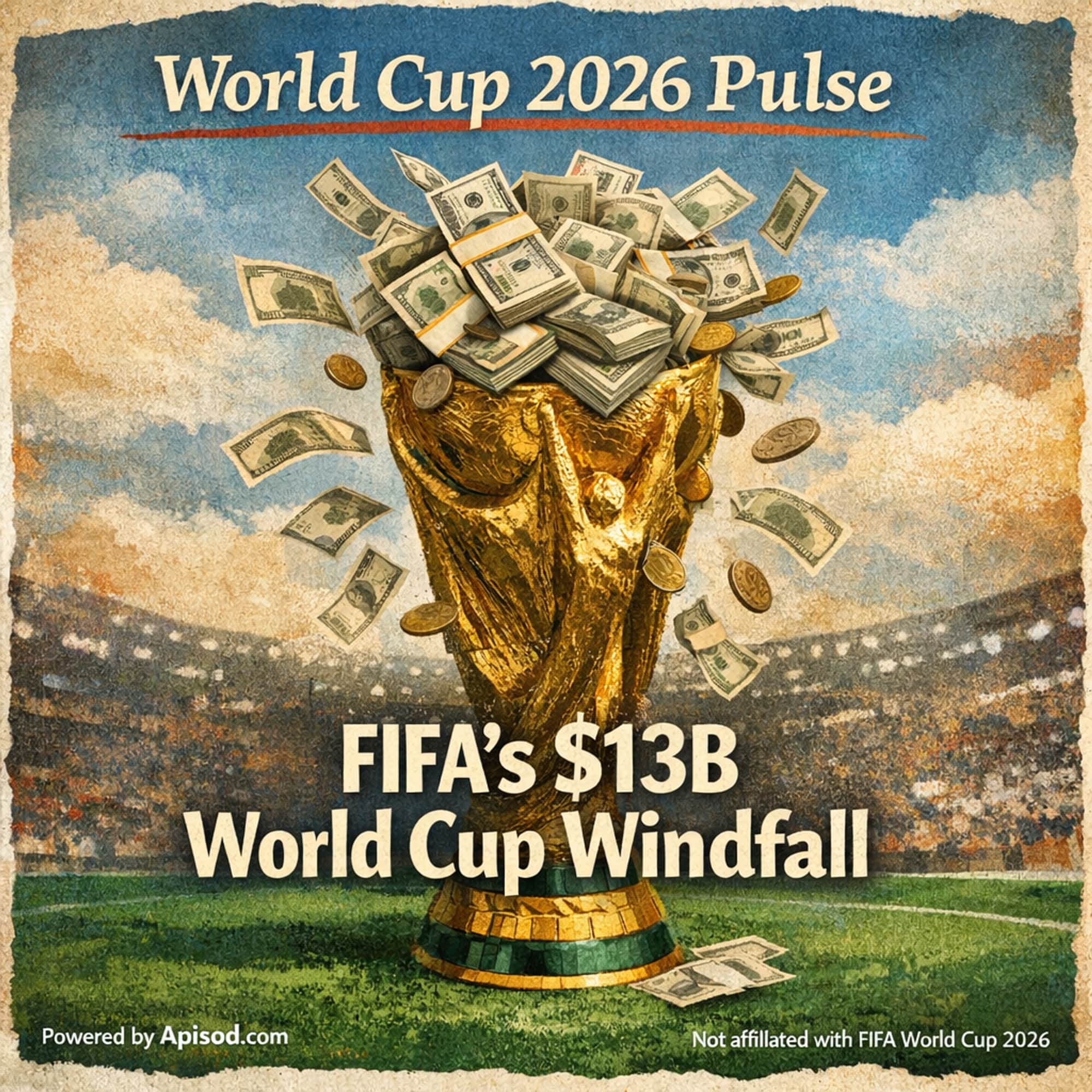 FIFA’s $13B World Cup Windfall | FIFA’s money machine is in overdrive, with a staggering $13 billion projected for the 2022–26 cycle and a record-breaking $9 billion coming in this year alone, thanks to bigger tournaments and a ticketing surge that’s nearly tripled since Qatar. The expansion to 48 teams and 104 matches means more fans than ever want in—but with dynamic ticket pricing pushing top seats for the final at New York New Jersey Stadium to $10,990, many are wondering if accessibility is taking a backseat to profits. Even though over 1,000 final tickets landed at $60, that’s just a sliver of the total, so fans and lawmakers alike are sounding the alarm about affordability. But here’s the catch: while FIFA banks on big revenue, host cities like New York are stepping up with free fan zones and watch parties to keep the spirit alive for those priced out. Meanwhile, off-field policy changes add new tension. FIFA has okayed straight red cards for covering your mouth during confrontations and for leaving the field in protest—meant to clamp down on abuse and drama, but critics argue these moves could backfire, especially if players are responding to real threats. Enforcement will be a major test, and the early-tournament red card count could reveal just how strict refs will be. Featuring reporting from The Guardian, EU Reporter, and YouGov, with behind-the-scenes insights on sponsorship, stadium tech, and the high-stakes logistics of a continent-spanning World Cup. Powered by Apisod.com | 6m 43s | ||||||
| 4/21/26 | 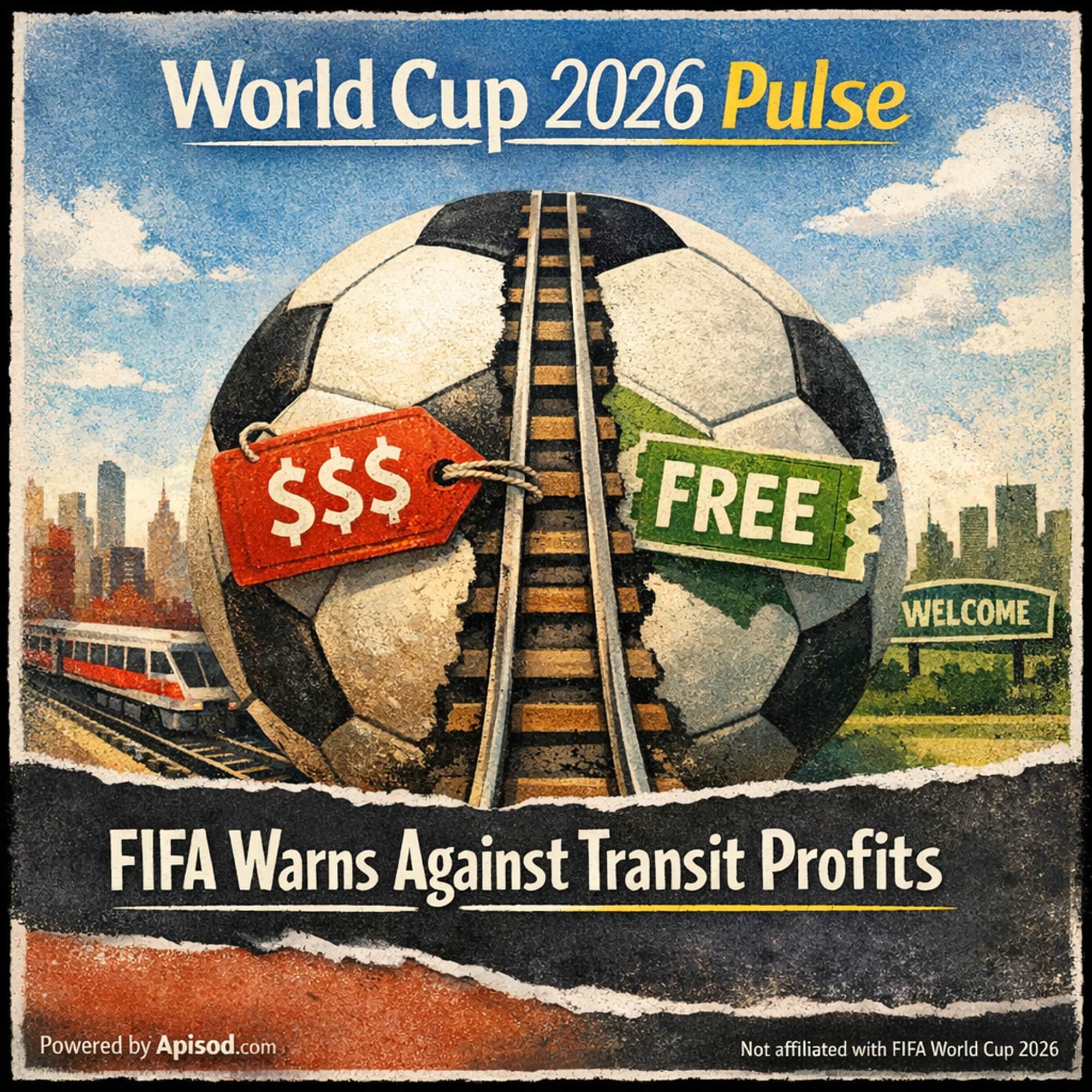 FIFA Warns Against Transit Profits | World Cup 2026 is set to be a wild ride—not just on the pitch, but at the ticket window and train station. New York–New Jersey and Boston are hitting fans with sky-high transit and parking fees (think $150 for a round-trip train, $225 to park), while Philly and Kansas City go the opposite route, rolling out free or cheap rides that put the fan experience first. Why does it matter? When moving tens of thousands of people, affordable transit keeps things running smoothly, while pricey options risk clogged roads and late arrivals—nobody wants their World Cup memory to be a traffic jam. But here’s the catch: even with massive global demand (over 500 million ticket requests), fans are frustrated. LA Times reporting shows people who paid top dollar for good seats got shuffled off to worse ones after FIFA introduced even higher-priced “front-row” categories, and accessibility advocates are calling out real gaps for disabled fans—no separate ticketing, pricey companion seats, and inconsistent parking. And in Houston, excitement is high but so is anxiety: funding for security and transit is still up in the air, and shifting political winds could spook visitors if clarity on enforcement and safety doesn’t come soon. Featuring scenes and scoops from the LA Times, DW.com, and on-the-ground details from the Houston Host Committee. For fans, the message is clear: plan early, watch for last-minute deals, and keep an eye on which cities actually put fans first. Powered by Apisod.com | 7m 01s | ||||||
| 4/14/26 | 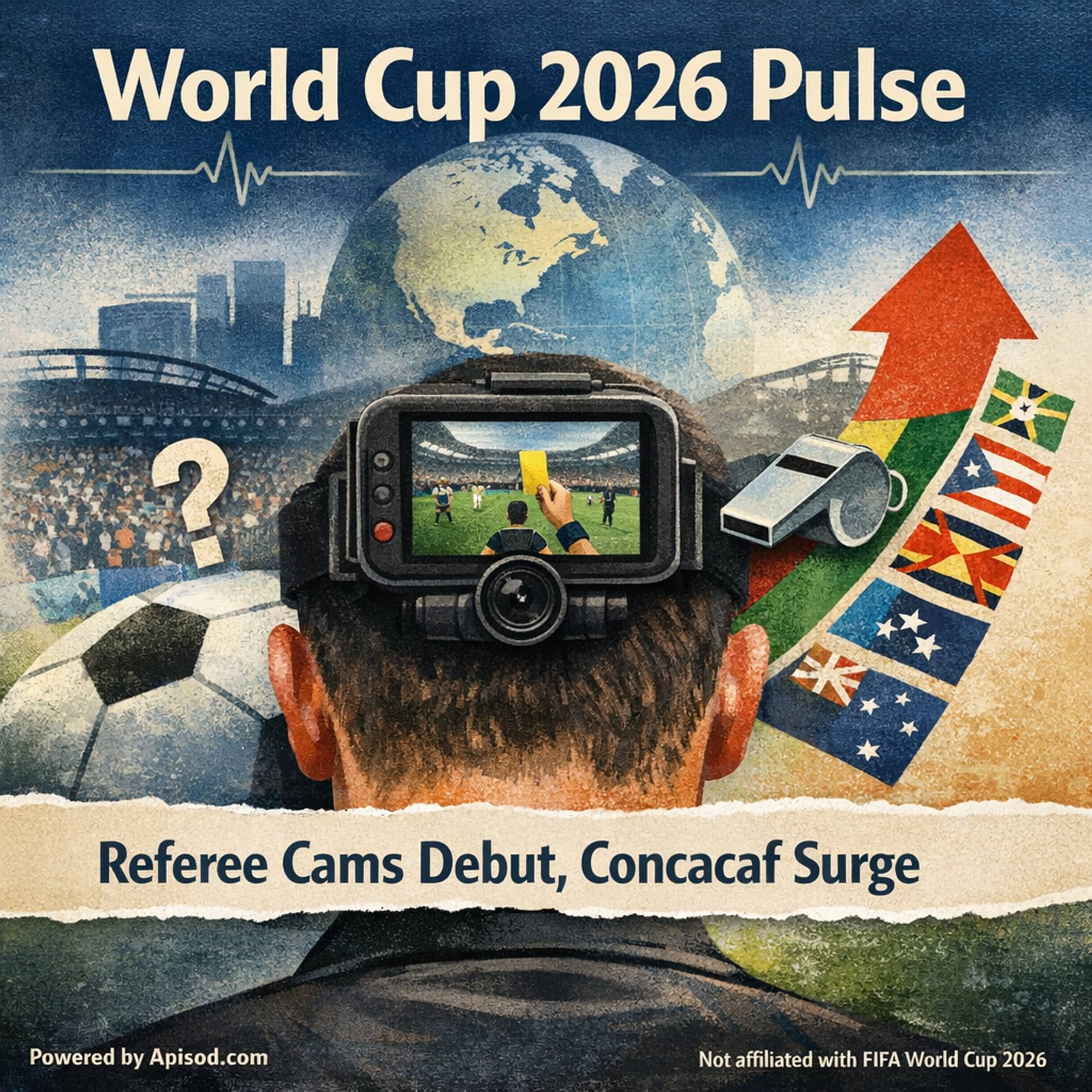 Referee Cams Debut, Concacaf Surge | World Cup 2026 is shaping up to be the most ambitious tournament yet, but the scale means huge changes for fans and cities. Referee-worn cameras debut for the first time, promising a front-row seat to critical decisions—but with new transparency comes the risk of more second-guessing if broadcasts aren’t handled carefully. Behind the whistle, there’s a record-breaking contingent of officials from North America and the Caribbean, including the first Caribbean ref at a men’s World Cup in over 20 years. Their assertive style could mean faster VAR calls and stricter control on the pitch, possibly leading to more early yellow cards as teams adjust. But here’s the catch: while FIFA and host cities are working overtime to make everything run smoother, fans are feeling the squeeze. Security is ramping up—Seattle, New York, and Kansas City all have multi-agency plans in place, with measures like timed entries, rolling road closures, and even the National Guard on standby. East Coast travelers, especially those using Penn Station, can expect earlier cutoffs and longer walks, while Boston’s train and parking prices are set to skyrocket. Looking for relief? Airbnb is offering $750 to new hosts and highlighting stays under $500 a night, while local fan hubs and rewards programs in Canada and New York are trying to keep the party accessible for everyone. Featuring insights from NJ Transit CEO Kris Kolluri and real-time reporting from Airbnb Newsroom, Canada Soccer, and local officials. Powered by Apisod.com | 5m 52s | ||||||
| 4/13/26 |  Costs Spike, Free Viewing Spreads | World Cup 2026 is turning into a battle between sky-high costs and massive public access. On one hand, global spending is set to reach $80.1 billion, with ticket prices soaring—$700 just for a group-stage seat and some finals tickets crossing $10,000. Cities like Seattle and Houston are predicting Super Bowl–level local booms, but that comes with hotel rates nearly doubling and downtown businesses scrambling to handle road closures and security perimeters. For locals and fans, it’s a question of whether the economic windfall will outweigh the gridlock and price pressure. But here’s the catch: cities and organizers are racing to keep the World Cup open to everyone, not just those who can pay top dollar. In the Bay Area, more than 30 free fan zones and watch parties will stretch from San Francisco to San Jose, including Pride House SF events and turnkey toolkits for local bars to join in. Canada is rolling out “Canada Celebrates the FIFA World Cup 2026” to dozens of smaller communities, putting public events within a few hours’ drive for most Canadians. These distributed viewing experiences offer a lifeline for fans squeezed by costs, turning the tournament into a countrywide festival. The episode features insights from ERR, the Bay Area Host Committee, and FIFA, plus updates on game-changing tech and officiating—think referee body cams and faster offside calls. Powered by Apisod.com | 7m 08s | ||||||
| 4/6/26 |  Final Spots Filled, Openers Set | With the World Cup field finally set, the real race begins—48 teams, 16 host cities, and a TV blitz designed to capture every moment. Mexico, the U.S., and Canada have their openers locked in, but with last-minute qualifiers like Turkey, DR Congo, and Iraq shaking up the groups, every match could tip tournament destiny. There’s more on the line than just points—104 games, eight best third-place teams advancing, and the pressure to rack up “safe points” to survive the early rounds could change how everyone plays. But here’s the catch: The off-field action is just as fierce. Host cities are hustling to transform matchdays into legacy investments, from Houston’s trade missions in Europe to the FAA’s new World Cup safety protocols. Tech upgrades, fan zones, and streamlined transport are all in play, but only the cities that nail these details will deliver truly memorable experiences for fans trekking across North America. And all eyes are on the Iran situation in Group G—a late change could ripple through ticket holders, broadcasters, and the competitive balance. Featuring insights and reporting from FOX Sports, the FAA, and the Greater Houston Partnership—stay tuned for all the angles you need to follow the world’s biggest tournament. Powered by Apisod.com | 6m 22s | ||||||
| 3/23/26 |  Geopolitics Challenge World Cup Plans | In this episode of "World Cup 2026 Pulse," hosts Alex and Jordan delve into the complex interplay of geopolitics and soccer as Iran requests FIFA to move their World Cup matches from the US to Mexico, citing safety concerns amidst US-Iran tensions. Despite these concerns, FIFA insists the matches remain in the US, underscoring its commitment to the original tournament plans. Former Germany coach Joachim Low also expresses safety worries. To counter safety concerns, FEMA allocates $625 million for security across host cities. The episode also highlights innovative fan engagements, like YouTube's extensive World Cup content access and Coca-Cola’s collectible stickers. The advertising landscape is shifting, with $10.5 billion expected to flow into the market, emphasizing multi-platform engagement. This episode underscores the challenges and opportunities the FIFA World Cup 2026 faces in navigating geopolitical tensions, ensuring safety, and enhancing the fan experience through digital platforms. News sources referenced include Al Jazeera, Broadband TV News, East Coast Radio Powered by Apisod.com | 3m 37s | ||||||
| 3/16/26 |  Balancing Act: Accessibility vs. Exclusivity | The FIFA World Cup 2026 faces the challenge of expanding globally while ensuring the event remains accessible to fans amid rising ticket prices. With the tournament growing to 48 teams, FIFA is implementing various sales phases, including lotteries and secondary markets like StubHub, to keep tickets attainable. However, concerns persist about affordability in the resale market. Host cities, like Los Angeles and Seattle, are preparing not only their stadiums but also investing in fan zones and urban renewal, aiming to leverage the World Cup for long-term cultural and infrastructure legacies. The episode examines the balance FIFA must find between maximizing revenue and maintaining inclusivity, the transformative potential of the World Cup for host cities, and the broader implications for global unity and local prosperity. News sources referenced include the African Hockey Federation, FIBA, and sportingnews.com, highlighting the global interest and pressures faced by FIFA as it plans for an inclusive and impactful 2026 World Cup. Powered by Apisod.com | 3m 03s | ||||||
| 3/9/26 | 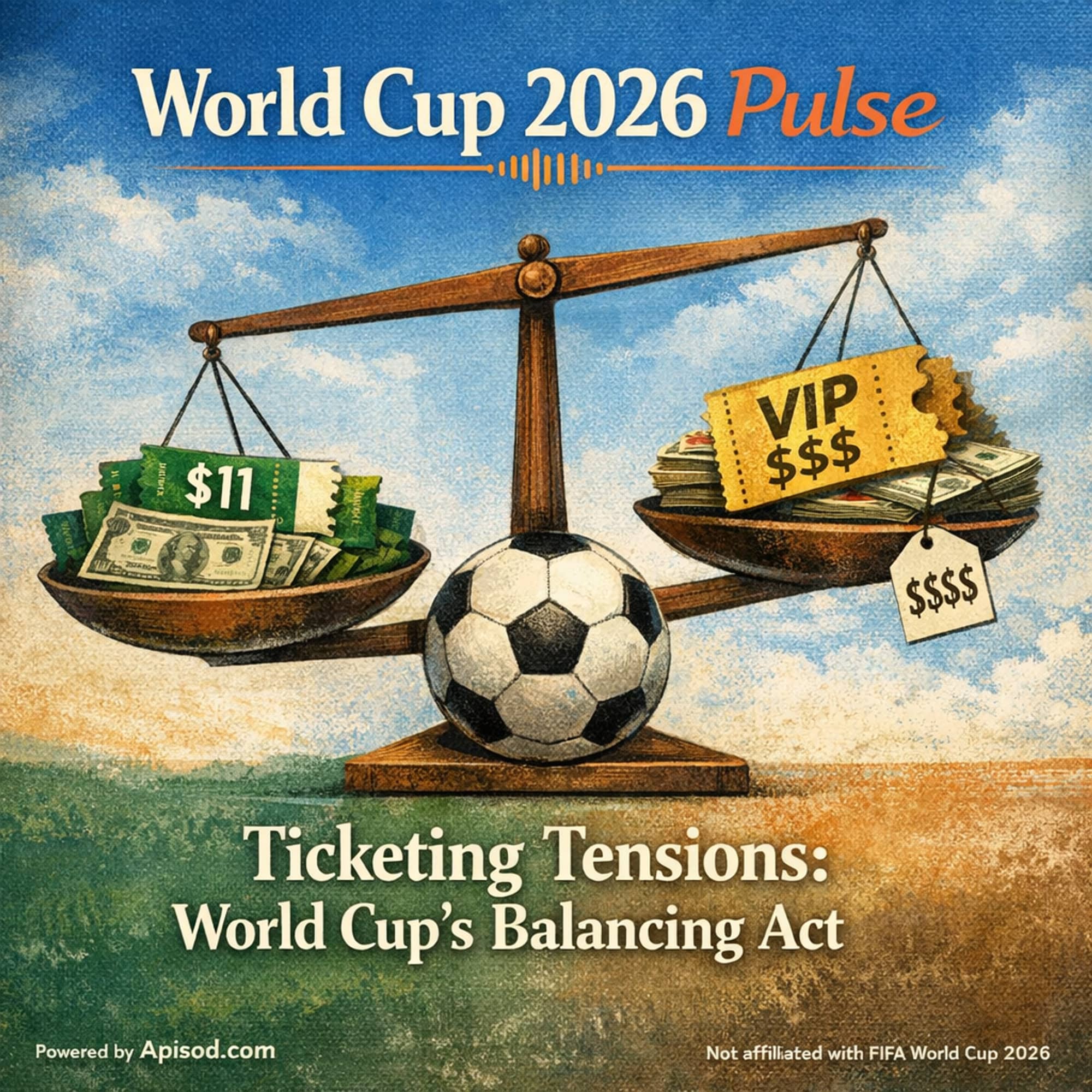 Ticketing Tensions: World Cup's Balancing Act | The FIFA World Cup 2026 faces challenges in ensuring ticket affordability and accessibility as it expands to 48 teams and hosts across the US, Canada, and Mexico. While initial ticket sales are high, with nearly 2 million sold, varying pricing strategies have raised concerns. Playoff matches in Mexico offer tickets as low as $11, but finals in the US see prices skyrocketing, sometimes over 41 times the face value on resale sites. The introduction of dynamic pricing, a first for the World Cup, could further affect ticket availability, potentially excluding average fans due to high costs for popular matches. This episode explores how FIFA's ticketing strategies might balance expanding access to the game while maximizing revenue, a critical issue for maintaining the event's global inclusivity. News sources referenced include Al Jazeera, Daily Sundial, Fédération Internationale de Hockey, Inside World Football, Malay Mail, Mashable India, OneFootball, The Economic Times, The Hockey Paper, The New York Times, The Times of Powered by Apisod.com | 2m 24s | ||||||
| 2/28/26 | 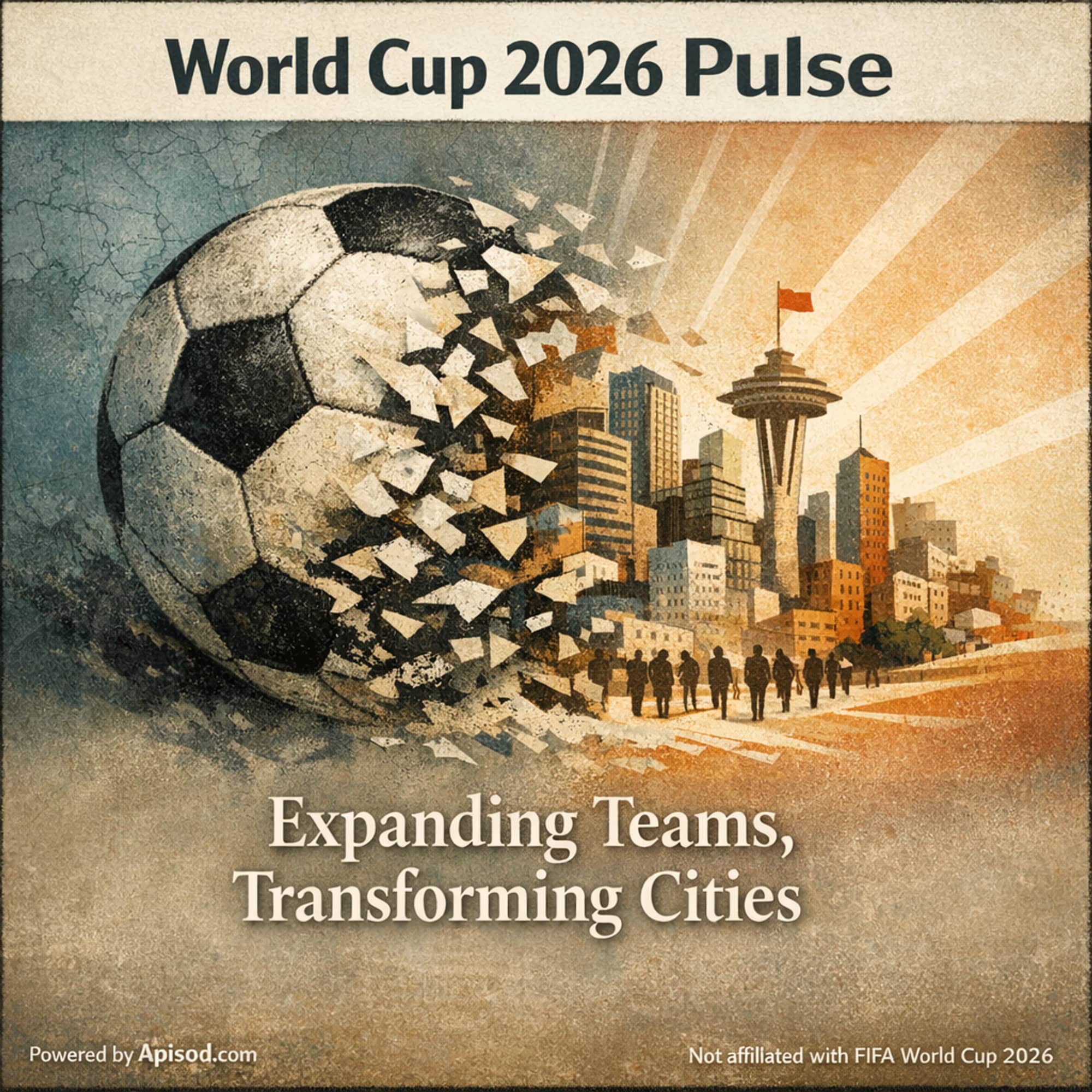 Expanding Teams, Transforming Cities | The FIFA World Cup 2026 is set to become a global spectacle with its expansion to 48 teams, bringing significant changes to host cities and fan experiences. Seattle exemplifies innovation by introducing free fan celebration venues to manage the influx of an anticipated 23,000 visitors and distribute economic and cultural benefits across the city. Similarly, the selection of team bases such as Greensboro, North Carolina, by Norway, emphasizes the importance of peaceful environments and top-notch training facilities, putting smaller communities on the world soccer map. This approach not only aims to make the World Cup accessible to all but also showcases global talent in new locations. The adjustments in formats and venues echo FIFA's vision for a more inclusive tournament. However, balancing the global excitement with local community benefits remains a challenge. The episode discusses how cities like Seattle are leading in fan engagement and strategic planning, potentially setting a precedent for other host cities. With record-breaking ticket requests and a boost in prize money, the economic implications are significant. Key to Powered by Apisod.com | 2m 41s | ||||||
| 2/21/26 |  World Cup 2026: Economic Boom | In this episode of "World Cup 2026 Pulse," hosts Alex and Jordan delve into the burgeoning excitement surrounding FIFA World Cup 2026, highlighting the record-breaking ticket demand, economic benefits for host cities, and the transformative effect on fan experiences. FIFA President Gianni Infantino reports an unprecedented 75% of matches receiving over 1 million ticket requests, indicating a possible early sell-out. Cities like Kansas City and Charlotte are becoming soccer hubs, with significant economic impacts including job creation in Miami and incentives for new Airbnb hosts in Atlanta to manage the surge in accommodation searches. Small communities, like Lawrence, Kansas, are also benefiting from global exposure by hosting national teams. The episode underscores the World Cup's role as a catalyst for urban development, global engagement, and the setting of new standards for future sports events. News sources referenced include Atlanta News First, CBS News, Charlotte FC, and Reuters among others, emphasizing the widespread impact and excitement the World Cup is generating across various sectors and communities. Powered by Apisod.com | 3m 12s | ||||||
Want analysis for the episodes below?Free for Pro Submit a request, we'll have your selected episodes analyzed within an hour. Free, at no cost to you, for Pro users. | |||||||||
| 2/21/26 | 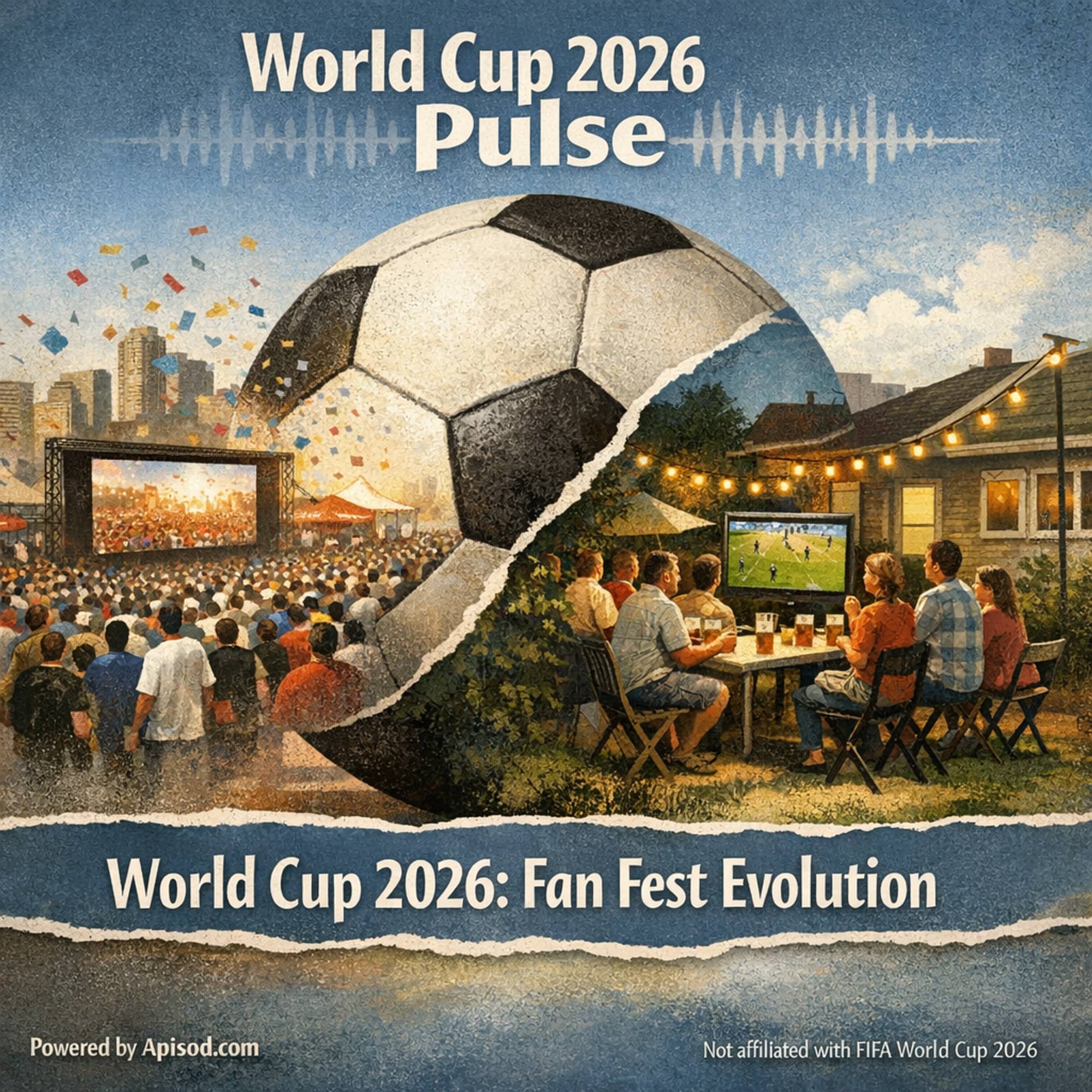 World Cup 2026: Localizing Festivities | The FIFA World Cup 2026 faces a unique challenge in maintaining fan engagement and effectively utilizing infrastructure as the traditional fan fest model undergoes significant changes. Notably, the planned official FIFA Fan Fest in Liberty State Park has been canceled, prompting New Jersey's Governor Sherrill to pivot towards smaller, localized watch parties and street fairs, backed by a $5 million initiative. This move aims to preserve the tournament's spirit across the state. Meanwhile, Kansas City emerges as a significant locale, chosen by four national teams, including three from FIFA's top tier, as their base camp, highlighting the city's robust soccer infrastructure and community enthusiasm. These shifts reflect a broader trend towards maximizing community engagement and leveraging infrastructure in novel ways, suggesting a redefinition of how mega-events like the FIFA World Cup interact with host communities. This strategy promises not only a more inclusive celebration but also a lasting impact on the host cities and communities. News sources referenced include Billy Penn at WHYY, CBS Sports, Charlotte FC Powered by Apisod.com | 2m 49s | ||||||
Showing 11 of 11
Sponsor Intelligence
Sign in to see which brands sponsor this podcast, their ad offers, and promo codes.
Chart Positions
2 placements across 2 markets.
Chart Positions
2 placements across 2 markets.