Insights from recent episode analysis
Audience Interest
Podcast Focus
Publishing Consistency
Platform Reach
Insights are generated by CastFox AI using publicly available data, episode content, and proprietary models.
Most discussed topics
Brands & references
Est. Listeners
Insufficient chart data. Estimates will improve as the show charts.
- Per-Episode Audience
Est. listeners per new episode within ~30 days
N/A🎙 Weekly cadence·72 episodes·Last published 2w ago - Monthly Reach
Unique listeners across all episodes (30 days)
N/A - Active Followers
Loyal subscribers who consistently listen
N/A
Market Insights
Platform Distribution
Reach across major podcast platforms, updated hourly
Total Followers
—
Total Plays
—
Total Reviews
—
* Data sourced directly from platform APIs and aggregated hourly across all major podcast directories.
On the show
From 12 epsHost
Recent guests
Recent episodes
Why Do I Keep Quitting?
Jun 7, 2026
8m 45s
Know Yourself, or You Become the Problem
May 24, 2026
3m 26s
Clarity Is a Practice, Not a Feeling
Apr 29, 2026
5m 18s
Maybe Your Potential Did Not Disappear
Apr 26, 2026
4m 21s
Monday Is Coming – Why Tech Professionals Dread Mondays
Feb 23, 2026
8m 26s
Social Links & Contact
Official channels & resources
Official Website
Login
RSS Feed
Login
| Date | Episode | Topics | Guests | Brands | Places | Keywords | Sponsor | Length | |
|---|---|---|---|---|---|---|---|---|---|
| 6/7/26 | ![]() Why Do I Keep Quitting?✨ | self-reflectionsuccess+3 | — | — | — | quittingjourney+3 | — | 8m 45s | |
| 5/24/26 | ![]() Know Yourself, or You Become the Problem✨ | self-awarenesspersonal development+3 | — | — | — | self-awarenesscommitment+3 | — | 3m 26s | |
| 4/29/26 | ![]() Clarity Is a Practice, Not a Feeling✨ | clarityaction+3 | — | — | — | clarityStoicism+5 | — | 5m 18s | |
| 4/26/26 | ![]() Maybe Your Potential Did Not Disappear✨ | potentialresistance+3 | — | — | — | potentialconfidence+4 | — | 4m 21s | |
| 2/23/26 | ![]() Monday Is Coming – Why Tech Professionals Dread Mondays✨ | journalingself-reflection+4 | — | — | — | journalingself-reflection+5 | — | 8m 26s | |
| 2/16/26 | ![]() Stop Letting Deadlines Hijack Your Nervous System✨ | stoicismdiscipline+4 | — | Stop Letting Deadlines Hijack Your Nervous System | — | stoicismburnout+5 | — | 12m 55s | |
| 1/26/26 | ![]() Dilemmas Are a Leadership Smell✨ | decision-makingstoicism+3 | — | Dilemmas Are a Leadership SmellThe Power of Decision Making: A Stoic Approach | — | decision-makingstoicism+5 | — | 7m 04s | |
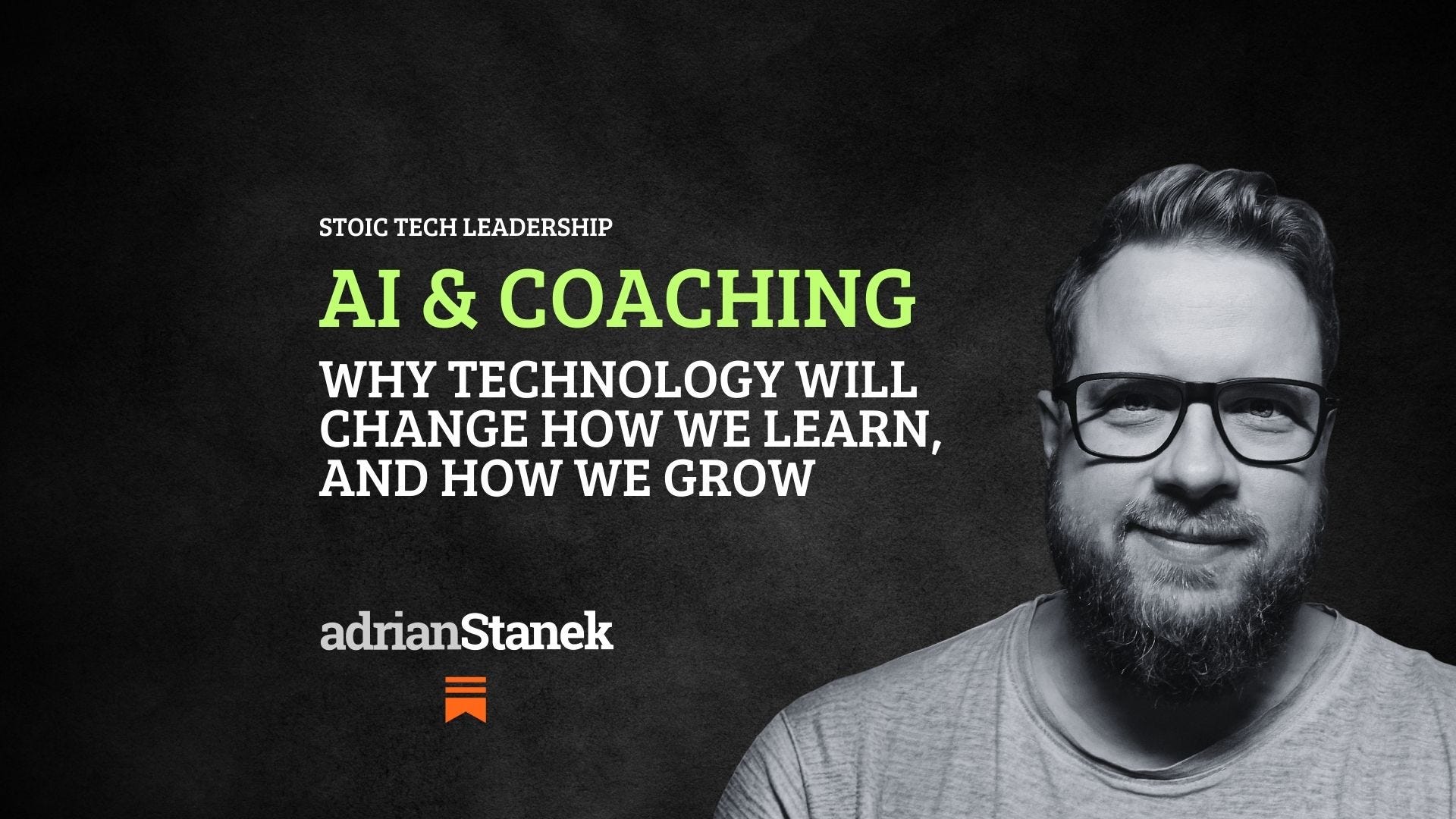
| 1/19/26 | ![]() AI & Coaching, Why technology will change how we learn, and how we grow✨ | AI in coachingtechnology and learning+3 | — | AIcoaching and mentorship | — | AIcoaching+5 | — | 1h 00m 51s | |
| 1/3/26 | ![]() Focus + Feedback Loops✨ | focusfeedback loops+4 | — | — | — | focusfeedback loops+5 | — | 6m 22s | |
| 12/31/25 | ![]() Do you have Clarity in your Life?✨ | claritycommunication+4 | — | — | — | claritycommunication+3 | — | 6m 33s | |
Want analysis for the episodes below?Free for Pro Submit a request, we'll have your selected episodes analyzed within an hour. Free, at no cost to you, for Pro users. | |||||||||
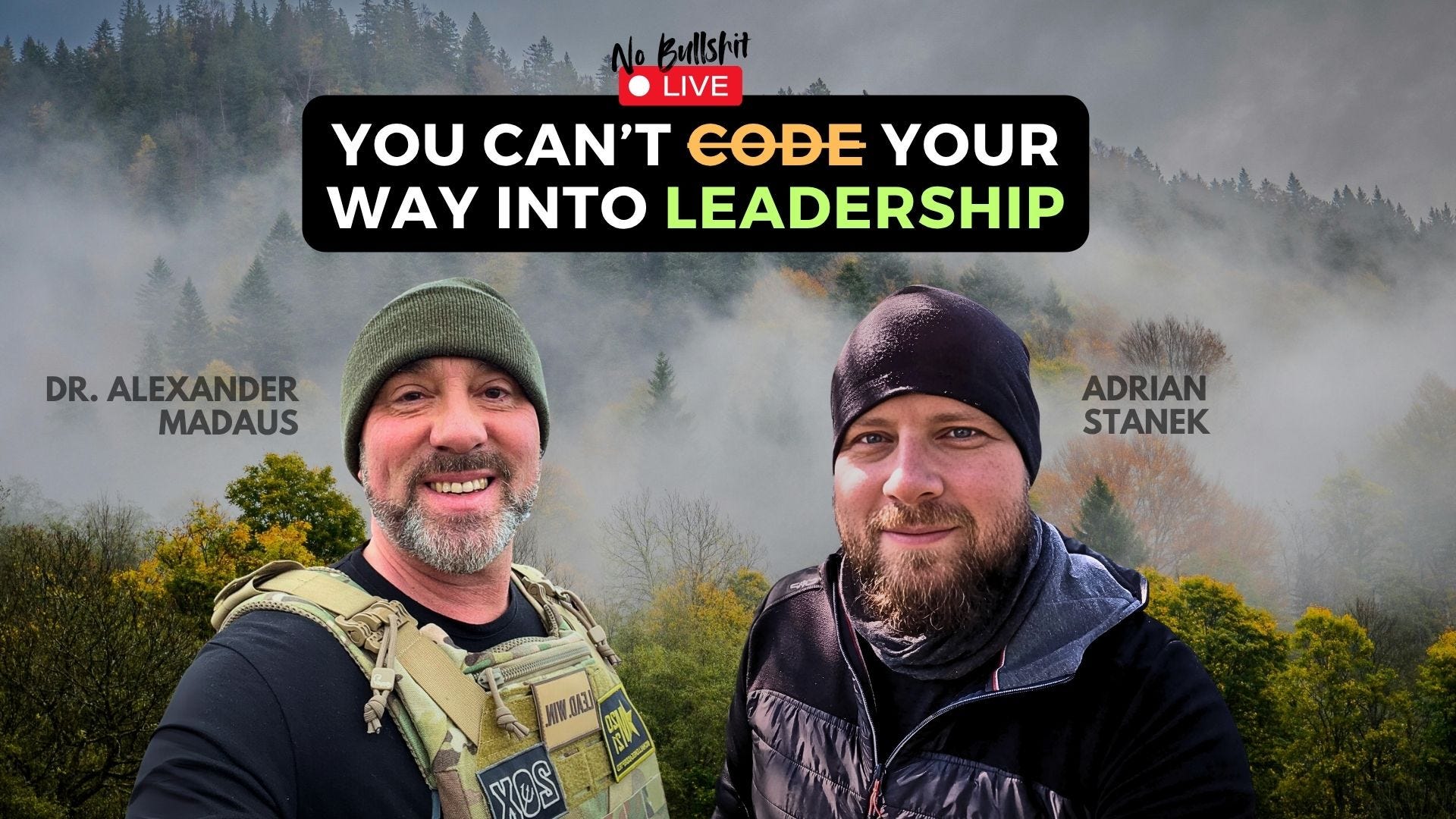
| 11/12/25 | ![]() Discipline Is Not Optional – It’s the Foundation of Real Leadership✨ | leadershipdiscipline+4 | Dr. Alexander Madaus | Rising King AcademyU.S. Navy SEALs | GermanyMunich | leadershipdiscipline+5 | — | 2h 42m 31s | |
| 10/30/25 | ![]() Self-Control is Leadership✨ | self-controlleadership+4 | — | — | — | leadershipself-control+4 | — | 4m 58s | |

| 10/27/25 | ![]() Somewhere along the way, we lost the ability to dream | Somewhere along the way, something changed. We stopped dreaming the way we once did. When we were children, the world felt open and full of possibilities. We could see our potential so clearly. Becoming a firefighter, a doctor, or an astronaut felt within reach. Not because those paths were easy, but because they felt possible. We believed in our future selves without hesitation. Failure didn’t scare us. When we fell off the bike, we got back up. We were frustrated, yes, but we tried again. We didn’t question whether we were worthy of learning how to ride. We simply believed it was a matter of time.As adults, something shifted. We became smarter, more practical, and more careful. We learned to navigate opinions, expectations, and social pressure. Slowly, almost invisibly, our dreams began to shrink. They started to fit neatly inside the boxes that other people drew for us. Potential didn’t disappear. It simply faded into the background. It became quieter. It turned into a gentle pull toward something bigger, something we could become if resistance didn’t hold us back.Resistance is real.It shows up as doubt. It shows up as fear of judgment. It shows up as subtle pressure to play small. And for many people, this resistance becomes stronger than their vision. It is what keeps us from starting, from risking, from stepping forward. We tell ourselves stories about why now is not the right time, why others are more capable, or why the dream is unrealistic. But none of that is about our actual potential. It is the voice of resistance doing its job.Vision & LeadershipThis is exactly where leadership comes in. Vision and mission are not just fancy words used in corporate meetings. They are the foundation of real leadership. They are about projecting a future version of yourself or your team that does not exist yet and believing in it deeply enough to make it real. That is what children do naturally when they dream. Leaders need to relearn that skill. Because leadership, at its core, is not about control. It is about seeing something that others cannot see yet and choosing to walk toward it anyway.Great leaders do not lose their ability to dream. They protect it. They nurture it. They hold a vision even when nobody else believes in it. They give shape to potential, first within themselves, then for the people around them. They turn something invisible into something tangible. And that is why reconnecting with your potential is not a nice-to-have. It is a leadership discipline. You cannot lead anyone toward a future you cannot imagine yourself.If you want to lead, you need to dream again, not with the naive certainty of a child, but with the clarity and courage of someone who understands resistance and chooses to act anyway. Vision is the spark. Mission is the path. Leadership begins when you dare to reclaim the part of yourself that still believes something bigger is possible. Because if you cannot imagine it, no one will follow you there.— Adrian This is a public episode. If you'd like to discuss this with other subscribers or get access to bonus episodes, visit blog.adrianstanek.dev/subscribe | 4m 24s | ||||||
| 10/14/25 | ![]() Leadership: How to find your real purpose? | There’s a point in life where things click. You stop chasing titles or trying to prove something, and you know what you’re meant to do.That’s your PURPOSE.The journey takes time.It’s built on small steps, discipline, and showing up even when it’s hard.Your inner voice says stop.People around you doubt.But you show up. ALWAYS.I started when I was eight, and I never stopped pursuing it.The path wasn’t clear.Stormy seas, heavy weather.I am alone. I doubted myself. I felt insecure.Every storm runs out of rain.After rain comes sun.Moving on.Don’t stop. FIGHT RESISTANCE.Months become years; everything adds up.The moment will come when you realize you have changed.You spot resistance when it tries to sneak in.You point at it, and it stays put.Now you are in charge.Driven by purpose, not by someone else’s agenda.Rebirth.From then on, life feels simple.You wake up, face the resistance, and do it anyway.Not because you have to, but because it feels right.You decide to. And you will do so tomorrow.You are who you were always meant to be.No doubt. Clarity.Never stop. Never go back. Never give up.You became invincible.Where are you on your journey? Never stop. Remember, you have many fellows.—Adrian This is a public episode. If you'd like to discuss this with other subscribers or get access to bonus episodes, visit blog.adrianstanek.dev/subscribe | 6m 15s | ||||||
| 10/13/25 | ![]() What Videos & Streaming did to my tech business | The Power of Authentic Video Content for Remote Coaching SuccessIn this episode, we explore the importance of utilizing video content to build authenticity and credibility as a remote coach. We discuss how being genuine yet professional in videos helps engage and retain clients, even if vanity metrics like likes and comments don't reflect it. Highlighting personal experiences, the script emphasizes that people remember the emotional connection from videos and that this medium is crucial for creating trust and long-lasting impressions on platforms like LinkedIn. Practical tips include the use of proper equipment for video quality and the impact of network effects in securing high-level clients and opportunities. The session wraps up with a teaser for a stream discussing the significance of soft skills in tech leadership.00:00 Introduction: Authenticity in Professionalism00:27 The Power of Video in Remote Coaching01:20 Why I Focus on Video Content01:43 Impact of Video Content on Business03:31 Understanding Audience Engagement04:49 Building Credibility Through Video07:08 Challenges and Misconceptions of Video Content09:19 Effective Video Practices13:46 Conclusion and Upcoming Stream This is a public episode. If you'd like to discuss this with other subscribers or get access to bonus episodes, visit blog.adrianstanek.dev/subscribe | 14m 22s | ||||||
| 10/10/25 | ![]() The Real Senior Skill Is Communication. | Leadership doesn’t start when you get promoted.It starts the moment you take responsibility for yourself.Self-leadership means learning to communicate clearly, manage your emotions, and move things forward even without authority.If you can’t lead yourself, you won’t be able to lead others.Communication is not a soft skill. It’s how credibility, trust, and progress are built.It’s how you foster a culture on purpose.Learn it early, when the stakes are small, so you’re ready when the real challenges come.PRACTICE DAILYSPEAK • REFLECT • ACCEPT • IMPROVE • REPEATRecord yourself or meetings you speak in. You don’t need to publish, but you do need to look it over. Watch again a day later. With distance, you will judge it more like others do.ASK YOURSELF:* Were you in control?* Did you overtalk others?* Were you confident and convincing?* Did you stay calm when challenged?* Were you too pushy or too dominant?* Were you fluent and secure in your message?Accept everything; improve next time.You don’t need to be a leader to practice that, but you need to have that quality as a leader.So, what are you waiting for?—AdrianIf you like this podcast, please repost & subscribe. This is a public episode. If you'd like to discuss this with other subscribers or get access to bonus episodes, visit blog.adrianstanek.dev/subscribe | 7m 29s | ||||||
| 10/9/25 | ![]() Why I Journal as a Tech Entrepreneur | The Power of Journaling: Enhance Focus and ClarityIn this episode, we delve into the impact of daily journaling on fostering habits, enhancing focus, and providing clarity. The speaker shares personal experiences, emphasizing the importance of writing down thoughts and tasks to manifest them into actionable plans. Learn how a simple morning routine involving a pen and paper can help manage daily chaos, prioritize important tasks, and aid self-reflection. Discover practical tips for incorporating journaling into your life for improved discipline and leadership.00:00 Introduction to Journaling00:02 The Benefits of Journaling01:01 Daily Journaling Routine01:11 The Importance of Setting To-Dos01:27 Reflecting on Achievements01:48 Handling Daily Distractions03:22 Practical Tips for Effective Journaling04:35 Self-Reflection and Improvement05:37 Building Discipline Through Journaling06:49 Final Thoughts on Journaling This is a public episode. If you'd like to discuss this with other subscribers or get access to bonus episodes, visit blog.adrianstanek.dev/subscribe | 7m 33s | ||||||
| 10/7/25 | ![]() Control the controllables. Drop the rest. | Harnessing Stoicism for Personal and Professional GrowthIn this episode, explore the fundamentals of stoicism and its practical application in personal and professional life. Learn how focusing on what you can control, while letting go of what you can't, fosters inner balance and discipline. Understand the importance of acting on immediate tasks, avoiding distractions like politics or a toxic work environment, and maintaining discipline over motivation. Discover the 'three circles' method to reduce procrastination and enhance productivity, and see how this practice is effectively integrated into daily routines for better focus and effectiveness.00:00 Introduction to Stoicism00:45 Understanding Control and Influence01:20 Avoiding Unproductive Activities02:01 Focusing on Professional Roles03:15 The Importance of Discipline04:02 Developing Productive Habits04:14 Preview of the Next Stream05:11 Personal Insights and Conclusion This is a public episode. If you'd like to discuss this with other subscribers or get access to bonus episodes, visit blog.adrianstanek.dev/subscribe | 5m 18s | ||||||
| 9/9/25 | ![]() Sustain as a Tech Founder | The last six months have been some of the hardest I’ve gone through in years.Days that start at 7 am and stretch until midnight. Weekends are disappearing into work. The constant tension of trying to keep businesses alive and moving forward while still being present for my family and two kids.I’m not new to this; I’ve been building and running businesses for 16 years, but every time I go through an intense launch phase, it reminds me how much it costs. Bootstrapping means we don’t have a boss, but it also means there’s no safety net. The pressure doesn’t go away.And here’s what I’ve learned: it’s not ideas, or markets, or strategies that keep you going when the grind is real. It’s something much more basic.Fitness and nutrition.A year ago, I wasn’t fit at all. I was heavily overweight, constantly exhausted, and often drifting into procrastination just because my body couldn’t keep up with what my mind demanded.Since then, I’ve lost 20kg. I started running almost every day — nothing crazy fast, but consistent, five to eight kilometers at a time, six days a week. I improved my diet, focused on protein, supplements that work for me, and avoided the endless sugar spikes and “Fressattacken” (binge eating) that stress used to trigger.The effect has been transformative.Not just physically, but mentally. Running resets my brain. It cuts through the noise of meetings, messages, and stress, and brings me back to focus on the signal, the things that actually matter. Good nutrition helps me recover, stay sharp, and not burn out halfway through the day.Founders love to talk about discipline and consistency. But discipline isn’t about posting every day or working late every night. It’s about sustaining your purpose over years, not weeks. It’s about keeping yourself alive, strong, and clear-headed enough to make the journey possible.That’s why I believe sustaining as a founder is less about output and more about building the baseline habits that allow you to keep going — through exhaustion, through pressure, through the unknown length of the road ahead.In today’s Builder’s Diary vlog, I share more of my personal journey — the struggles, the fitness routine, the lessons that help me keep moving even when the days feel impossible.And one small note: I’ve recently started using Bearly Fit by @James Mahy. It’s a simple, thoughtful app built with love, and it helps me stay on track with the habits that matter most.If you’re building something of your own, whether it’s a company, a project, or a personal mission, I hope this reminds you:You don’t need more hacks. You need to sustain yourself.—Adrian This is a public episode. If you'd like to discuss this with other subscribers or get access to bonus episodes, visit blog.adrianstanek.dev/subscribe | 11m 05s | ||||||
| 8/19/25 | ![]() Stop Using AI in Secret — Make It a Team Strategy | Many developers are already using AI. But here’s the thing: most of them do it in secret. They test it in side projects, use it quietly to get through tickets, and then draw conclusions—without ever bringing it into the open with their team.That’s a mistake.When I’ve been disciplined in my own work, I noticed something: I was faster, could work longer, and felt less drained, because I stayed focused on high-level thinking instead of every small detail. That’s precisely the kind of shift AI can support.But here’s the danger: if you let AI turn into a lazy habit, if you’re just vibing with it instead of working with intention, the outcomes get worse. You’ll ship sloppy code, misunderstand problems, and create more cleanup work later. At scale, that kills quality and trust.And if AI use stays a private habit, it doesn’t scale anyway. Worse, it creates hidden workflows, uneven quality, and mistrust inside the team.The solution is simple: treat AI as a team strategy. Not a secret shortcut. Not a personal experiment. A shared challenge. Align on how to use it, where it makes sense, and what it should not do. Explore it together.That’s when AI becomes valuable: when it creates space for humans to do what we’re best at—thinking, designing, and solving problems—without burning out on the repetitive parts.—Adrian This is a public episode. If you'd like to discuss this with other subscribers or get access to bonus episodes, visit blog.adrianstanek.dev/subscribe | 8m 31s | ||||||
| 7/28/25 | ![]() Why AI Doesn't Build Viable Businesses | Why Building an App Isn't Enough: Solving Real Problems for Business SuccessIn this episode, we tackle the common misconception that an app alone can create a successful business. We discuss the importance of identifying true pain points and solving real problems as the foundation of any sustainable business. Using examples like Canva and lessons from the SaaS market, this video emphasizes that domain knowledge, not just tools, is critical for success. We also explain how AI can accelerate the process but cannot replace the need for a solid business idea and expertise. Finally, we address the challenges and realities of building a viable product and securing reliable revenue.00:00 Introduction: The Misconception About Building Apps00:46 Identifying the Real Problem: Business Idea vs. App01:54 Understanding the Market and Solving Pain Points03:13 The Role of AI in Business04:47 Sustainable Business Practices07:22 The Reality of Building a Functional App09:48 Conclusion: The True Challenge in Business This is a public episode. If you'd like to discuss this with other subscribers or get access to bonus episodes, visit blog.adrianstanek.dev/subscribe | 10m 14s | ||||||
| 7/20/25 | ![]() They Don’t Follow You. They Follow the Mission. | Overcoming Resistance: Motivating Your Dev Team for Change In today’s episode, we tackle the challenge of motivating a development team to embrace change. You'll hear about common resistance scenarios, the psychological forces at play, and practical strategies to highlight the value of change. Learn how to foster a culture of trust and motivation, making your team more adaptable over time. 00:00 Introduction: The Challenge of Motivating Developers 00:42 Facing Resistance: Common Developer Reactions 02:25 Understanding the Forces of Resistance and Assistance 03:17 The Importance of Value and Trust in Leadership 04:30 Building a Culture of Trust and Change 05:00 The Basics of Motivation and Resistance 05:58 Conclusion: The Mission and Persistent Motivation This is a public episode. If you'd like to discuss this with other subscribers or get access to bonus episodes, visit blog.adrianstanek.dev/subscribe | 6m 43s | ||||||
| 6/3/25 | ![]() Why Discipline is Your First Leadership Tool | The Role of Habits in Leadership DevelopmentIn this episode, we delve into the importance of developing habits for personal and leadership growth. The discussion outlines four pillars essential to becoming a credible and effective leader: credibility, role modeling, vision-sharing, and the ability to challenge others. By consistently practicing these habits, individuals can cultivate virtues that enhance their leadership skills. The episode emphasizes the necessity of maintaining discipline and a mindset conducive to habitual development to achieve credibility, become a role model, and effectively lead others.00:00 Introduction to Habits00:02 The Importance of Habits00:10 Becoming a Leader00:15 The Four Pillars of Leadership00:49 Developing Discipline and Baseline02:30 Leadership and Training03:11 Credibility and Role Modeling05:12 Conclusion and Final Thoughts This is a public episode. If you'd like to discuss this with other subscribers or get access to bonus episodes, visit blog.adrianstanek.dev/subscribe | 5m 17s | ||||||
| 5/26/25 | ![]() The Dos and Don’ts of Growing Junior Developers | How to Keep Junior Developers Motivated and LoyalIn this video, a vocational trainer with extensive experience shares insights on how to keep junior developers motivated and loyal to your company. The discussion covers the importance of clear career plans, realistic expectations, and long-term learning for junior developers. The narrator also warns against frequent job-hopping and emphasizes the value of stability and domain expertise for career growth. By nurturing junior developers and providing a clear path to grow, companies can ensure a committed and skilled workforce.00:00 Introduction: Keeping Juniors Motivated00:36 Understanding the Junior Developer Role01:09 The Importance of Career Development01:52 Avoiding the Job-Hopping Trap03:12 Becoming a Domain Expert05:04 Guidance for Trainers and Companies05:58 Long-Term Career Planning06:37 Marker07:52 Conclusion and Final Thoughts This is a public episode. If you'd like to discuss this with other subscribers or get access to bonus episodes, visit blog.adrianstanek.dev/subscribe | 8m 10s | ||||||
| 5/23/25 | ![]() When Is the Right Time to Step Into Leadership? | When is the Right Time to Become a Leader? Insights for Software EngineersIn this video, we explore the right moment to step into a leadership role, particularly in software engineering. We discuss the importance of building personal credibility, being a role model, and motivating others before taking on responsibility. The speaker advises against prematurely assuming leadership roles without sufficient experience, emphasizing the need for step-by-step growth and the guidance of a mentor or coach. Key points include mastering your craft, the risks of early leadership burnout, and the delicate balance of technical and human skills necessary for effective leadership. Watch for vital insights and practical advice on how to prepare for and succeed in leadership roles.00:00 Introduction: When is the Right Moment to Become a Leader?00:02 The Basics of Leadership: Credibility and Motivation00:52 The Role of a Manager in Software Engineering01:03 Challenges of Early Leadership01:46 The Importance of Mastering Your Craft02:17 Real Talk: Facing Opposition as a Leader03:30 Step-by-Step Approach to Leadership04:28 Avoiding Burnout: The Reality of Leadership Roles05:07 Starting Small: Building Leadership Skills06:55 The Human and Technical Aspects of Leadership07:52 Conclusion and Final Thoughts This is a public episode. If you'd like to discuss this with other subscribers or get access to bonus episodes, visit blog.adrianstanek.dev/subscribe | 8m 11s | ||||||
Showing 25 of 76
Pitch Fit is a Pro feature
See how bookable this show is for guests, which brands already advertise, the per-episode ad value, and the best-fit guest and sponsor profile. The numbers are blurred on the free plan.
How readily this show books outside guests like you.
How proven this show is for host-read sponsorships.
For Guests
ProFor Advertisers
ProUpgrade to Pro to unlock guest cadence, sponsor categories, fit scores, and per-episode ad value for this show.