

Insights from recent episode analysis
Audience Interest
Podcast Focus
Publishing Consistency
Platform Reach
Insights are generated by CastFox AI using publicly available data, episode content, and proprietary models.
Total monthly reach
Estimated from 6 chart positions in 6 markets.
By chart position
- 🇯🇵JP · Performing Arts#7610K to 30K
- 🇳🇱NL · Performing Arts#9310K to 30K
- 🇷🇴RO · Performing Arts#4810K to 30K
- 🇫🇮FI · Performing Arts#5010K to 30K
- 🇹🇼TW · Performing Arts#893K to 10K
- Per-Episode Audience
Est. listeners per new episode within ~30 days
13K to 40K🎙 Daily cadence·96 episodes·Last published today - Monthly Reach
Unique listeners across all episodes (30 days)
44K to 133K🇯🇵23%🇳🇱23%🇷🇴23%+3 more - Active Followers
Loyal subscribers who consistently listen
17K to 53K
Market Insights
Platform Distribution
Reach across major podcast platforms, updated hourly
Total Followers
—
Total Plays
—
Total Reviews
—
* Data sourced directly from platform APIs and aggregated hourly across all major podcast directories.
On the show
Recent episodes
Brazilian Zouk Musicality: Beyond the Beat (S06 Ep09)
Jun 24, 2026
Unknown duration
Where Are the Brazilians in Brazilian Zouk? (S06 Ep08)
Jun 17, 2026
Unknown duration
Why Do You Pick Who to Dance With? (S06 Ep07)
Jun 10, 2026
Unknown duration
What Brazilian Zouk Actually Costs You (S06 Ep06)
Jun 3, 2026
Unknown duration
Why Brazilian Zouk Has a Leader Shortage Problem (S06 Ep05)
May 27, 2026
Unknown duration
Social Links & Contact
Official channels & resources
Official Website
Login
RSS Feed
Login
| Date | Episode | Description | Length | ||||||
|---|---|---|---|---|---|---|---|---|---|
| 6/24/26 |  Brazilian Zouk Musicality: Beyond the Beat (S06 Ep09) | I'll put my hands up here. A lot of the time, dancing Brazilian Zouk, I'm just listening to the tum, ta, chick and going for it. "Oh, good BPM, I can dance to this." That's autopilot, dancing to the sound of the machine, and it's most of what we call musicality: hitting the structure, the ones, the fives. There are whole layers under that we're not touching.Gui was trained the other way. At Jaime Arôxa's school, you learned to be affected by the music: follow the cadence of the voice, sing along, move until the song gets into your body. His goal: "I want the music to get to me." So what does musicality in Brazilian Zouk actually mean, past the beat?Why we get stuck on the beat:→ The classes: we teach footwork, timing, frame, and connection. Music connection comes years later, in workshops built for teachers and Jack and Jill.→ The history: Brazilians connect to the percussion, and most Zouk songs are not in Portuguese. We couldn't reach the lyrics, so we grabbed everything else.→ The reward: we call the dancer who hits all the numbers "musical." The dancer feeling the layers is dancing within the music.In DC, Gui watched 40 dancers. One face was really feeling the music: the Kizomba dancer, new to Zouk. "Oh, I know this song. It makes me feel a certain way, and I go this way." He couldn't dance Zouk yet, and he was the most musical dancer in the room.The big takeaway: timing is communication, and rhythm is the first layer of connection. Once you have the rhythm down, listen beyond it: melody, instruments, and eventually the vibe. And train it on your own, from day one, no apologies.Chapters:00:00 Opening highlights01:32 Intro04:32 Teachers want the timing down, then can't get you out of it08:32 How Jaime Arôxa taught musicality10:27 Autopilot: dancing to the sound of the machine11:55 Why musicality workshops skip the basics16:05 Heavy, airy, viscous: words for what you feel17:57 Hitting the structure isn't musicality18:54 One guy in 40: the Kizomba dancer's face20:14 Why Brazilian Zouk got taught rhythm-first24:29 Timing is communication29:51 Most dancers don't dance enough on their own35:19 The challenge: Lateral to all the songsCo-host: Gui PradaZoukNerds: https://www.zouknerds.com/Alisson Sandi: https://www.alissonsandi.comInstagram: https://www.instagram.com/zouk.nerds/Episode: S06 Ep09 | ZoukNerds Podcast | — | ||||||
| 6/17/26 | 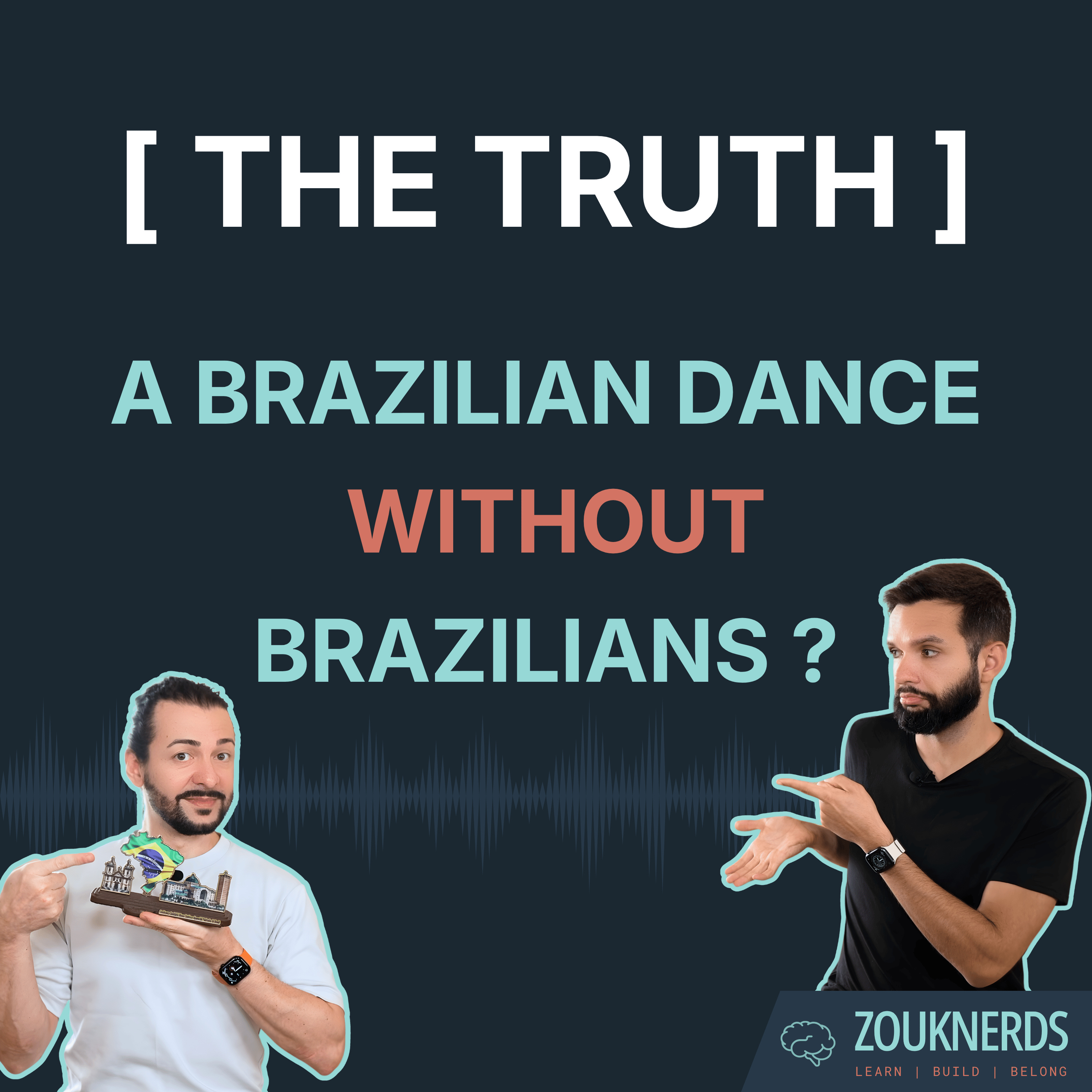 Where Are the Brazilians in Brazilian Zouk? (S06 Ep08) | Where are the Brazilians in Brazilian Zouk?Gui Prada went looking in Sydney and found them at the Forró social, not at our Zouk Social.Gui was three weeks in Sydney, dancing Zouk every Friday, missing what he calls the squeeze, not a hug, a squeeze. Then somebody took him to the Forró social, and in the waiting area all he could hear was Portuguese, Portuguese, Portuguese. A small branch of Brazil inside of Sydney. At the Friday Zouk social? One other Brazilian, besides him.I lived the other side of this. In Perth, my Samba de Gafieira, Bolero, and Forró students wanted to know the country, the music. Some started learning Portuguese. My Zouk students didn't, because the dance stopped carrying that part of Brazil.Why Brazilians abroad skip their own dance:→ The music: Forró has its deities: Dominguinhos, Gonzagão, Gonzaguinha. You know what you're gonna get, regardless of the DJ. A Zouk social? You only hope for the best.→ The money: I went to Australia as a student immigrant. Some weeks I couldn't afford the bus, so I walked. A Forró party is the whole night for 10-20 bucks. Zouk asks for a months-long course.→ The tenderness: The Brazilian followers we had in DC left the scene saying, "The guys are too serious. They don't look at me." In Zouk you earn the hugs, the cuddles, the squeezes. At a Brazilian party you get them whether you would like it or not.So I asked Gui: did we, as community leaders, sell out the dance?The big takeaway: Brazilian Zouk became so international that a Brazilian walks into our social and doesn't find Brazil in it. They find it at the Forró. That explains why they are missing from the Brazilian Zouk communities.Chapters:00:00 Intro00:43 Gui in Sydney: missing the squeeze03:20 The epiphany: the Brazilians are at the Forró06:31 Reason 1: the music stopped being ours09:56 Reason 2: one class vs months of courses10:29 Reason 3: you know what you're gonna get13:24 Did we sell out the dance?20:00 Rice and beans: two kinds of Brazilians abroad22:09 Reason 4: money, visas, and commitment29:12 Reason 5: missing the tenderness32:18 The double-edged sword of going internationalCo-host: Gui PradaZoukNerds: https://www.zouknerds.com/Alisson Sandi: https://www.alissonsandi.comInstagram: https://www.instagram.com/zouk.nerds/Episode: S06 Ep08 | ZoukNerds Podcast | — | ||||||
| 6/10/26 |  Why Do You Pick Who to Dance With? (S06 Ep07) | I'll be honest. I walk into a social and I pick who to dance with in about three seconds, and most of the time I don't even decide it. My body decides for me.In this episode of Brazilian Zouk podcast ZoukNerds, Gui Prada and I pull apart that decision nobody talks about: the hidden social hierarchy I see in every dance community, including the ones I run.Why does everyone sit in the same spot every party:→ Find the DJ. The teachers are right there. We call it the red carpet, and the dancers who most want to be seen sit around it.→ The opposite corner stays dark on purpose. Gui put his hands up here: without his current position, that's exactly where he'd be.→ Back at Jaime Arôxa in Rio, they trained the older ladies to stand and move a little, to show they were ready. We went straight to them. No mistake.But the harder question is who I actually invite, and why. We landed on five reasons, and the first one is the one I least want to admit:→ Attraction. Not hitting on anyone. A subconscious pull I don't even notice.→ Respect and age. I'm 38. A 22-year-old is too young for me to feel comfortable asking.→ Ability. Some of us leaders are like a dog that wants to free run in the park.→ Closeness to power. Are you friends with the organizer? That's the big one.→ My comfort zone.The big takeaway: I've stopped trying to dismantle the hierarchy. The friendliest scenes don't either. They transcend it while staying in it. I leave my group for one dance, then come back.Chapters:00:00 Intro: back in the same room, one year later01:30 The hidden hierarchy nobody talks about02:00 How you scan a room the second you walk in03:50 The red carpet: where the DJ and teachers sit06:00 The dark corner vs the main floor at Taiwan Zouk Festival08:06 Alisson's three modes: unknown, invited teacher, local dancer13:31 Jaime Arôxa: training the ladies to show they're ready17:00 The five things that decide who you invite to dance20:18 Comfort zone and the age gap25:41 Closeness to power: the politics of the floor34:21 The takeaway: transcend the hierarchy without dismantling itCo-host: Gui PradaZoukNerds: https://www.zouknerds.com/Alisson Sandi: https://www.alissonsandi.comInstagram: https://www.instagram.com/zouk.nerds/Episode: S06 Ep07 | ZoukNerds Podcast | — | ||||||
| 6/3/26 |  What Brazilian Zouk Actually Costs You (S06 Ep06) | Brazilian Zouk costs me sleep. I'm in Taiwan right now and I've finally built a schedule that lets me rest. The rest of the year? Time zones, late socials, weekends that bleed into the next week. 23 years in and I still pay for it every Monday.In this Q&A episode, Gui Prada and I read Veronique Dupont's question from our ZoukNerds Facebook Group: what is the ONE biggest benefit of dancing Brazilian Zouk, and the ONE biggest disadvantage?Both of us landed on the same disadvantage. The benefits we picked are different. And the deeper answer doesn't show up until minute 12.The first cost is the easy one: your sleep.→ Touring life means no schedule. Time zones, different weather, different bed every weekend.→ Teaching ends at 10:30 p.m. By the time you close, eat, wind down, it's 1 a.m. The festival weekend pushes that to 4.→ My current answer is the Chunked Travel Schedule. Three or four weeks on. Two months of recovery off. We are not the crazy 20-year-olds that started this.For me, the benefit is mental and emotional exploration. Teaching is not lecturing. It's workshopping with whoever shows up that night.For Gui, the benefit is the people. His 15-year-old self in Rio didn't know people from São Paulo. Now he records with me in Taiwan for listeners in Sydney, Japan, Vietnam, Indonesia.The closing reframe: the deeper disadvantage is what the dance exposes in you. For Gui, shyness. For me, perfectionism and the 10-15 extra iterations I need as a non-natural dancer. This dance is not therapy. It is highly therapeutical.Chapters:00:00 Intro: Veronique's "one thing only" question01:05 Alisson's benefit: mental and emotional exploration02:14 Alisson's disadvantage: sleep schedule and touring life03:10 Gui's benefit: the people you'd never have met03:30 Gui's 15-year-old-self gratitude anchor04:57 Gui's disadvantage: the resting part06:40 The Chunked Travel Schedule08:24 Gui's Rio-shyness disadvantage10:18 Alisson on perfectionism11:16 The 10-15x learning iterations confession12:53 Closing reframe: the dance is a mirror to your fragilityCo-host: Gui PradaListener question from: Veronique Dupont — ZoukNerds Facebook GroupZoukNerds: https://www.zouknerds.com/Alisson Sandi: https://www.alissonsandi.comInstagram: https://www.instagram.com/zouk.nerds/Episode: S06 Ep06 | ZoukNerds Podcast | — | ||||||
| 5/27/26 | 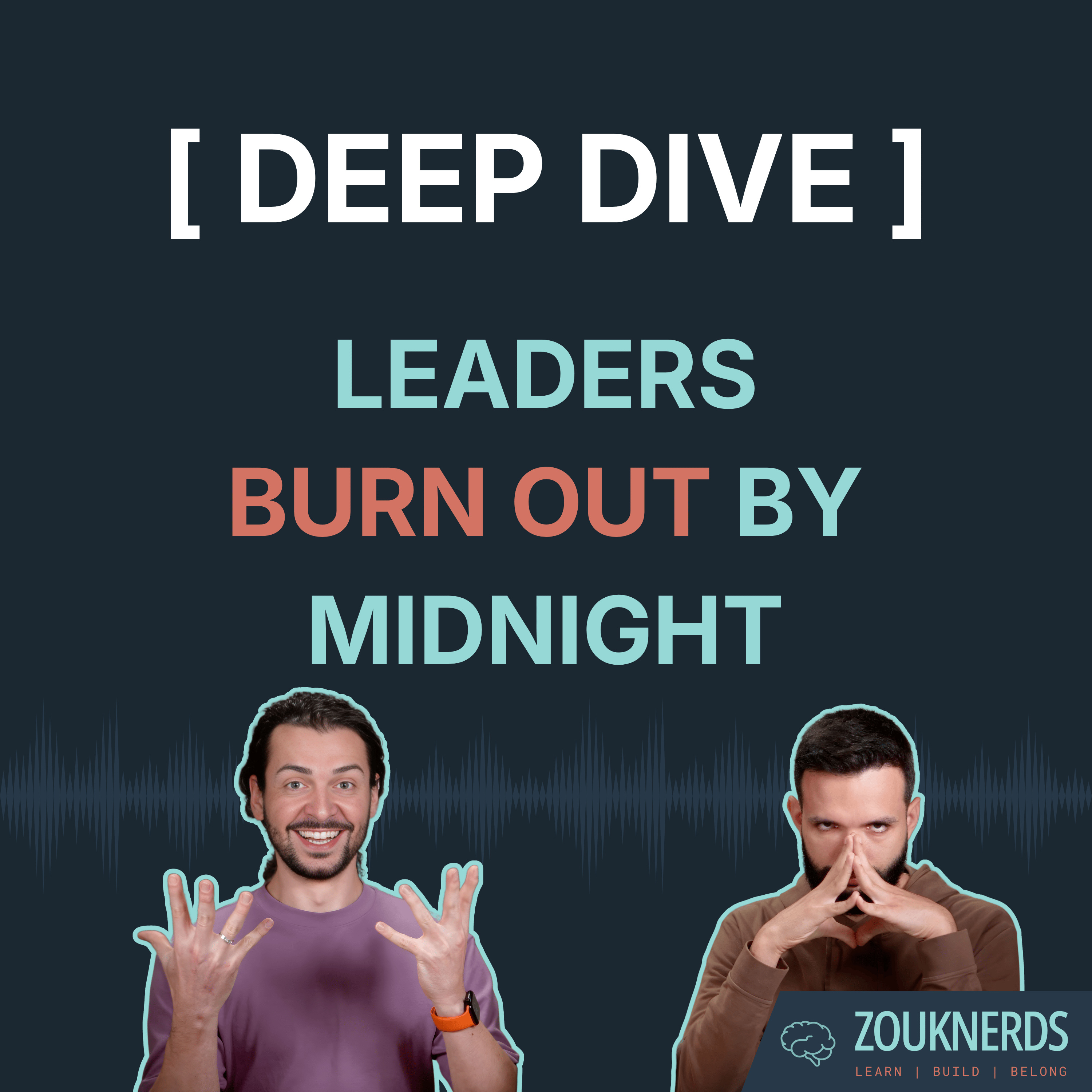 Why Brazilian Zouk Has a Leader Shortage Problem (S06 Ep05) | Brazilian Zouk has a leader shortage problem at every social — and no organizer has solved it, including me. I've run BraZouky with strict ratio control for years. Some years we hit 1.1 to 1 at sign-up. The social still tilts the same way every night.In this Q&A episode, Gui Prada and I read Billy Lou's question from our ZoukNerds Facebook Group. He's in a leadership course and asked us: what are the "wicked problems" in the Brazilian Zouk scene right now? This one was easy. I think about it every day.Here's the pattern I see at almost every social. Leaders arrive at 9 p.m. to warm up. Same leaders already taught or took four classes that day. By 1 a.m. they are gone — body, mind, feet. The followers who came late see fewer leaders and tell me the ratio was terrible. I controlled the door. I cannot control who walks through it at what time.The leader shortage is not a numbers problem. It is a load problem:→ The early-leader trap: leaders show up first, dance non-stop, then crash. Same body that taught at 11 a.m.→ The late-follower complaint: followers arrive in the second half, blame the ratio, study harder for next time.→ The silent mental load: a leader is running music, floor craft, space, and the lead at the same time. Gui calls it making 30 dishes from the same ingredients. You either repeat yourself or you cook yourself.The leader shortage is mirrored upside down on the follower side. We call this the Reverse Learning Curve: leaders find it hard early and easier over time, followers find it easy early and harder over time. The follower who tells me she's "still not getting many dances" — she is not under-training. She is over-training. Gui's line is, "what if you try a little less hard?"The big takeaway: Maybe the wicked problem is not the ratio. It is what we think is "enough" to walk into a social. Leaders feel they need to master everything. Followers feel they need to be flawless. Both stay home and we count chairs.Chapters:00:00 Intro: Billy Lou's question about "wicked problems"00:43 What is a wicked problem? Why it applies to Brazilian Zouk01:32 BraZouky's ratio experiment and why it still fails02:33 Why leaders arrive early and burn out by midnight04:18 The follower-arrives-late problem05:54 How taxi dancers and volunteers help06:35 The marathon case study: even with even tickets07:21 Why leaders disappear to the lounge09:02 Why most dance scenes are run by followers11:11 Why beginner leaders rarely buy festival passes12:31 Mental exhaustion: the silent load leaders carry14:00 Leaders as cooks making 30 plates15:00 The classroom paradox16:40 The cultural layer: Asia, Japan, Brazil17:45 The Bolsista system at Jaime Arôxa19:30 The reverse learning curve22:14 Why followers fall into the "try harder" trap22:31 Wrap: what we think is "enough"Co-host: Gui PradaListener question from: Billy Lou — ZoukNerds Facebook GroupZoukNerds: https://www.zouknerds.com/Alisson Sandi: https://www.alissonsandi.comInstagram: https://www.instagram.com/zouk.nerds/Episode: S06 Ep05 | ZoukNerds Podcast | — | ||||||
| 5/20/26 | 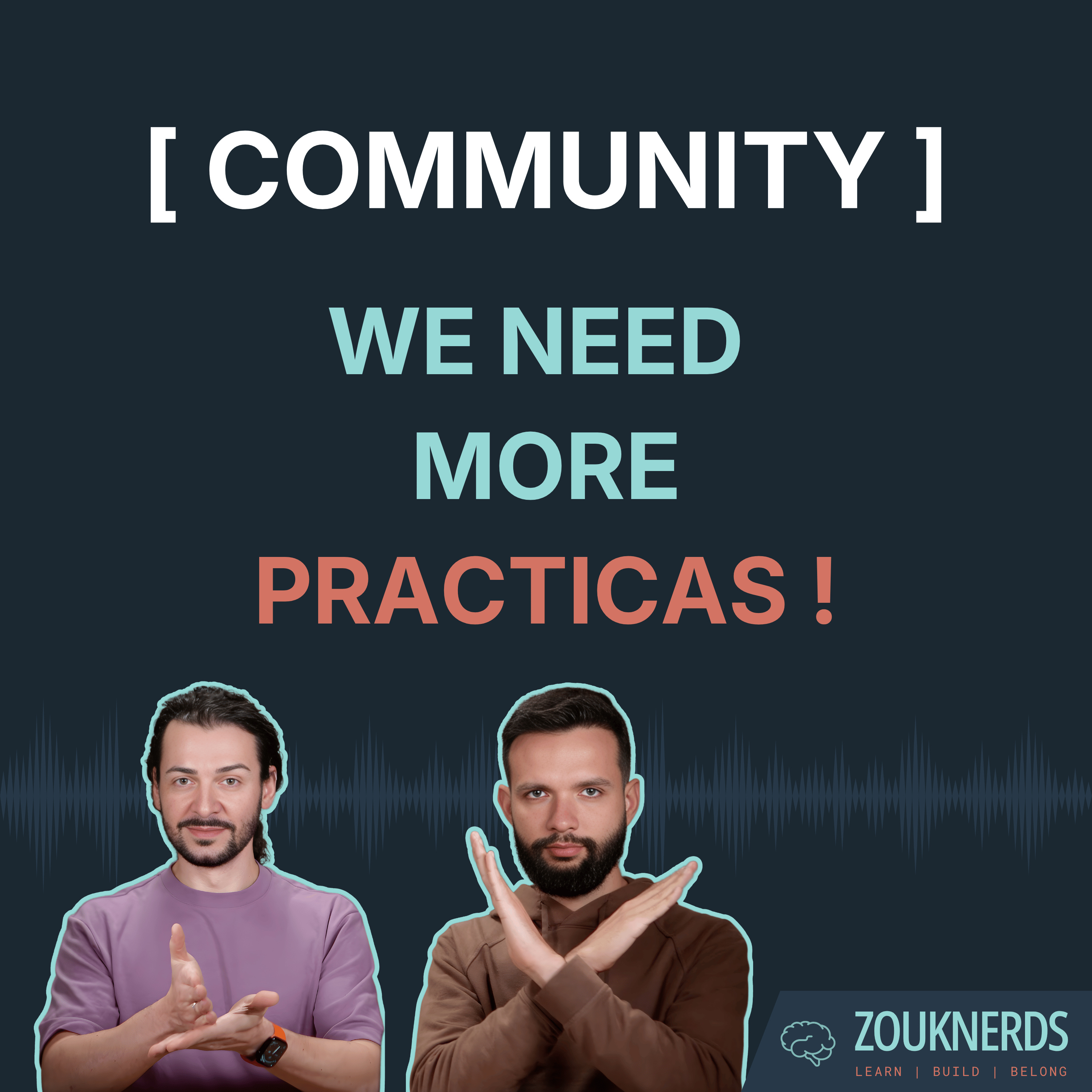 Most Zouk Scenes Don't Need More Socials! (S06 Ep04) | Most Brazilian Zouk scenes don't need more socials. They need more Practicas. And the reason most Practicas fail comes down to the DJ: songs that don't end.In this Q&A episode, Gui Prada and I read a question from Star Bolton in our ZoukNerds Facebook Group. Her school changed their practice time from a Spotify playlist to a DJ set list. Followers started going home without dancing.I learned this the hard way running Practicas at District Zouk. The fix is simple. Most teachers get it wrong because they try to make practice feel like a party.Why beginner Practicas need songs that clearly end:→ The cue problem: Brazilian Zouk is the only major social dance whose DJs blend songs together. Beginners can't tell when to thank their partner and change.→ The marathon trap: when songs never end, followers get stuck with one leader for 15 minutes. Other beginners don't dance at all.→ The boring-leader fear: leaders already think they're "not interesting enough" for a long dance. Clear endings give them a moment to change partners without feeling rejected.If you've ever sat at a Practica wondering "is this song still going?", that's a setup problem, not a you problem. Beginners don't need more awareness. They need clearer music.The big takeaway: A Practica is not a mini-social. It's a different format with different rules. The music has to do half the work of teaching beginners how to change partners, rest, and try the same move with three different people.Chapters:00:00 Intro: Star Bolton's question from Hawaii00:42 What's the Practica problem with blended DJ sets?01:18 Why long marathons hurt beginner followers02:20 What's a Practica vs a social dance?03:08 Why clear song endings help students change partners04:55 The "I'm a boring leader" anxiety, explained05:31 Why Brazilian Zouk DJs blend more than other dances06:44 The District Zouk class experiment with set songs07:08 How experienced dancers still get caught by good transitions09:25 Why we ask DJs to phrase clearly early in the night11:15 Practicing with at least 3 different partners12:16 Most scenes don't need more socials. They need more Practicas.13:00 Treating beginner students fear-free for retention13:47 How Practicas drive community growth14:15 Wrap and listener thank youCo-host: Gui PradaListener question from: Star Bolton, Hawaii — ZoukNerds Facebook GroupZoukNerds: https://www.zouknerds.com/Alisson Sandi: https://www.alissonsandi.comInstagram: https://www.instagram.com/zouk.nerds/Episode: S06 Ep04 | ZoukNerds Podcast | — | ||||||
| 5/13/26 | 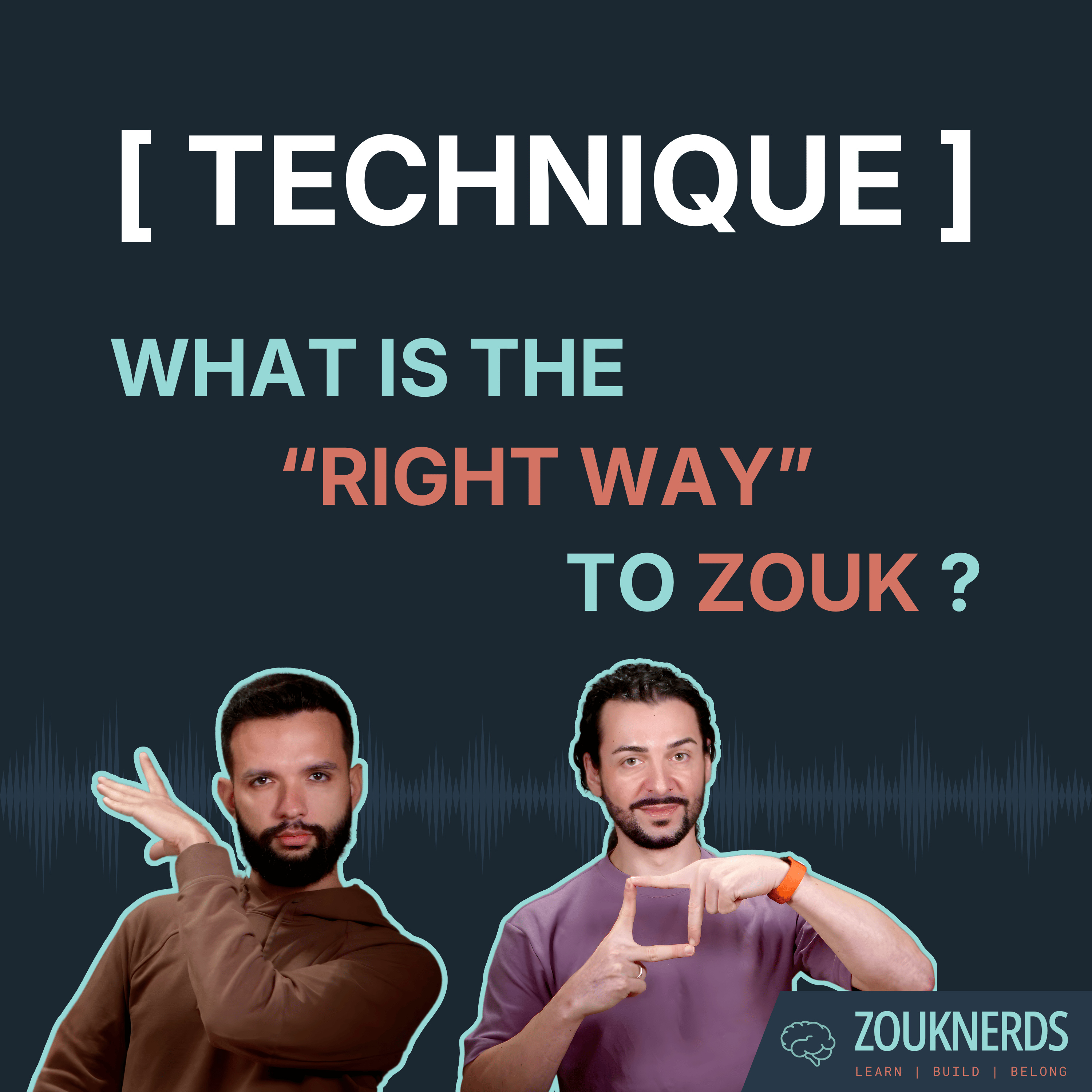 Style vs Technique: Finding What Fits Your Body (S06 Ep03) | What If Your Teacher’s Style Isn't For You?Ever taken a class and thought, "Man, this technique just doesn't feel right for my body"?Gui and I are hanging out in Taiwan to tackle an awesome question from Emily in our Facebook group!Emily asks: "How would you feel if a student said, 'I know you teach it this way, but I'm sticking with my own way'?"The Short Answer? Go For It!Honestly guys, as teachers, we are totally fine with this.You Know Your Body: If you found a way that keeps you safe and balanced, keep doing it!The "Why" Matters: It's a huge turnoff when teachers just say, "That's wrong," without explaining the mechanics.Safety First: The only time we'll step in and correct you is if your technique might actually hurt your knees or neck.Style vs. Proper TechniqueGui brought up a fascinating chat he had with Alex de Carvalho. Alex says there are really only three base styles from the ground up: Traditional Zouk, Neo Zouk, and Lambada. Everything else? That's just personal expression. My "style" or Gui's "style" is just how we choose to express the dance.Put On Their GlassesEven if a teacher’s vibe isn't your favorite, learn from them! Are they teaching a visual shape for the stage, or a sensation for a crowded social floor? Put on their glasses and try to understand their background.The Big Takeaway: Don't follow one teacher blindly. Grab the tools that feel good to you, and build your own unique dance.Ever tweaked a teacher's move to fit your own body?Let us know in the group! | — | ||||||
| 5/6/26 | 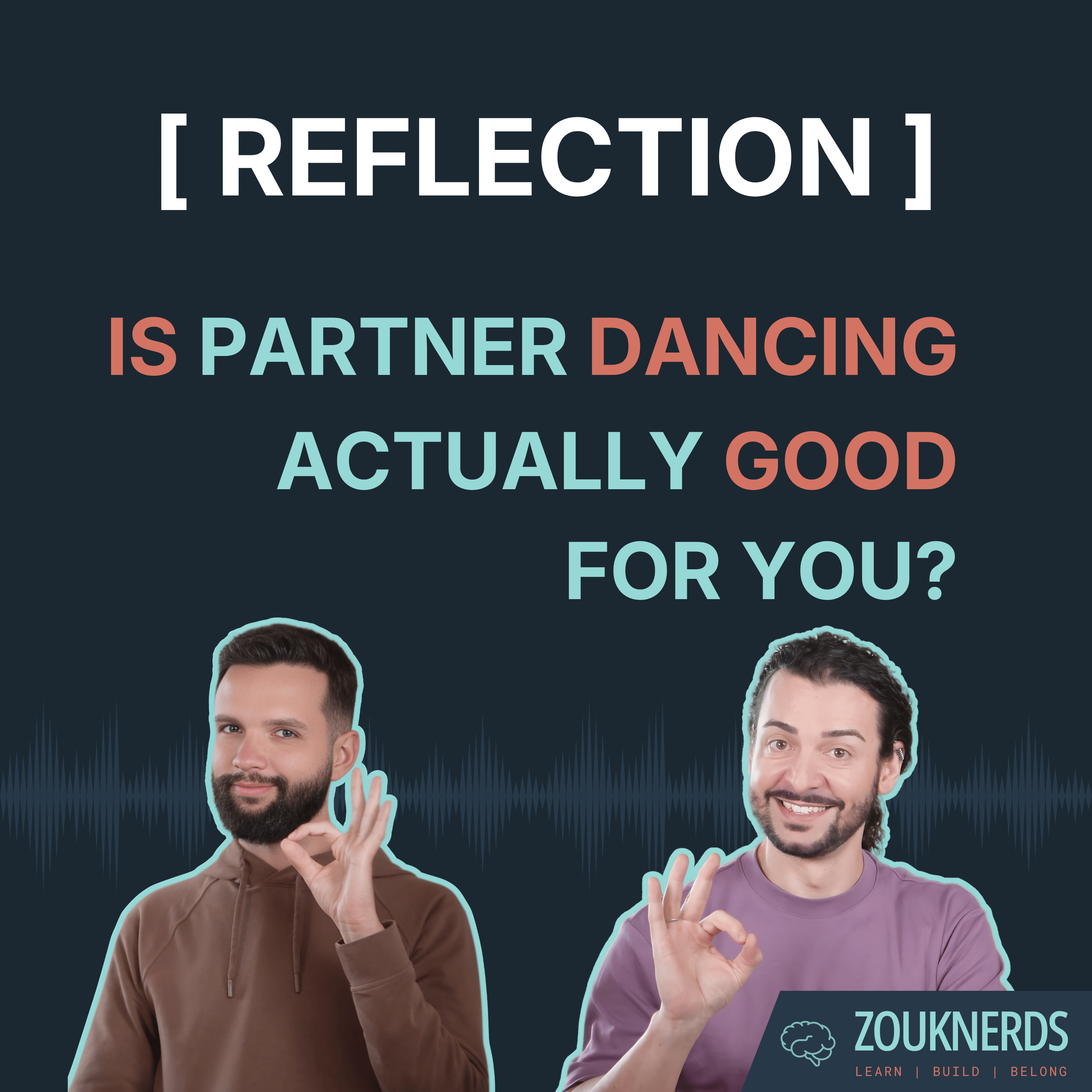 Why Dance Reveals Your Deepest Insecurities (S06 Ep02) | Does Dance Reveal Your Inner World?Do you feel like the way you interact with your dance partner reflects your inner world? In this episode, Gui Prada and I are together in Taiwan to tackle a deep question from our Facebook Group!Our listener, Victor, asks if Zouk reveals what you need to work on in your personal life. Spoiler alert: 1000% yes.The Mirror on the Dance FloorThe Good & The Bad: Dance is a massive mirror. It highlights our empathy and joy, but it also shines a harsh spotlight on our insecurities, perfectionism, and need for validation.From Chairs to Zen: Gui shares a hilarious (and slightly scary) story from his teenage years to show how social dancing actually taught him patience and presence.The "Belonging" Trap: We discuss how easy it is to use Zouk to fill an emotional gap. It’s natural to want to belong, but when dance becomes your only source of validation (or your only strategy for human connection), it can become a disguised addiction.Navigating the Phases of DanceVictor shared his own journey: moving from a strict "technique" phase to a "fake spiritual" phase (where he judged others for not having the "right" intention), and finally stepping away when he realized he was just seeking acceptance.Dance is the Messenger: Dance is highly therapeutic, but it is not therapy. If Zouk triggers anxiety, jealousy, or insecurity (like after a stressful Jack & Jill!), take that message and do the internal work off the floor.The Big Takeaway:Don’t let the things dance reveals push you away from the community. Acknowledge the message, do the personal work, and return to the floor from a place of joy, not need.Has dance ever revealed something surprising about yourself? Share your story with us in the comments! | — | ||||||
| 4/29/26 |  Is Social Dancing Storytelling? (S06 Ep01) | A leader once told my co-host Gui, "I'm not off time, I'm just being musical." I've been that guy. So when Amit asked if Brazilian Zouk social dancing is really storytelling, I knew where it goes wrong.Amit's from India, came up through Bollywood, and connects to the instruments more than the lyrics. He wants to build a whole story when he dances, and it keeps "breaking" by the end of the song.What we mean when a dance "tells a story":→ Where you come from shapes what you hear. Percussion-heavy cultures (Brazil, India, the Middle East) lock onto the beat; voice-led cultures lock onto the lyrics. Worth knowing about yourself.→ I don't think I'm the storyteller. I'm interpreting a story the music and my partner and I are building right then. A three-way collaboration: me, my partner, and the music.→ Gui's word, from his Jaime Arôxa training in Rio, is "lúdico" — ludic. Spontaneous, indirect playfulness, dancing from a picture in your mind.The trap: a leader can't get his musicality across, so from the first beat he goes in and out, every adjective at once. Gui's friend, a master of engagement, moves a little and tells him, "You did your whole thing, but you didn't do it with me." The step he skipped was attunement.The big takeaway: expectation is the thief of joy. If the story you planned doesn't come alive, stop blaming the partner, the music, the connection, and ask what else is here to enjoy.Chapters:00:00 Opening highlights01:08 Intro: a new Q&A experiment, and Amit's question01:30 Storytelling, or just a beginning, middle, and end?03:32 Instruments vs lyrics: where you're from shapes what you hear07:41 The three-way collaboration: me, my partner, and the music08:19 The storyteller-without-consent trap10:38 "Lúdico": Jaime Arôxa's beach-visualization training12:08 "You did your whole thing, but not with me"14:20 When the story breaks: expectation is the thief of joyCo-host: Gui PradaZoukNerds: https://www.zouknerds.com/Alisson Sandi: https://www.alissonsandi.comInstagram: https://www.instagram.com/zouk.nerds/Episode: S06 Ep01 | ZoukNerds Podcast | — | ||||||
| 4/22/26 | 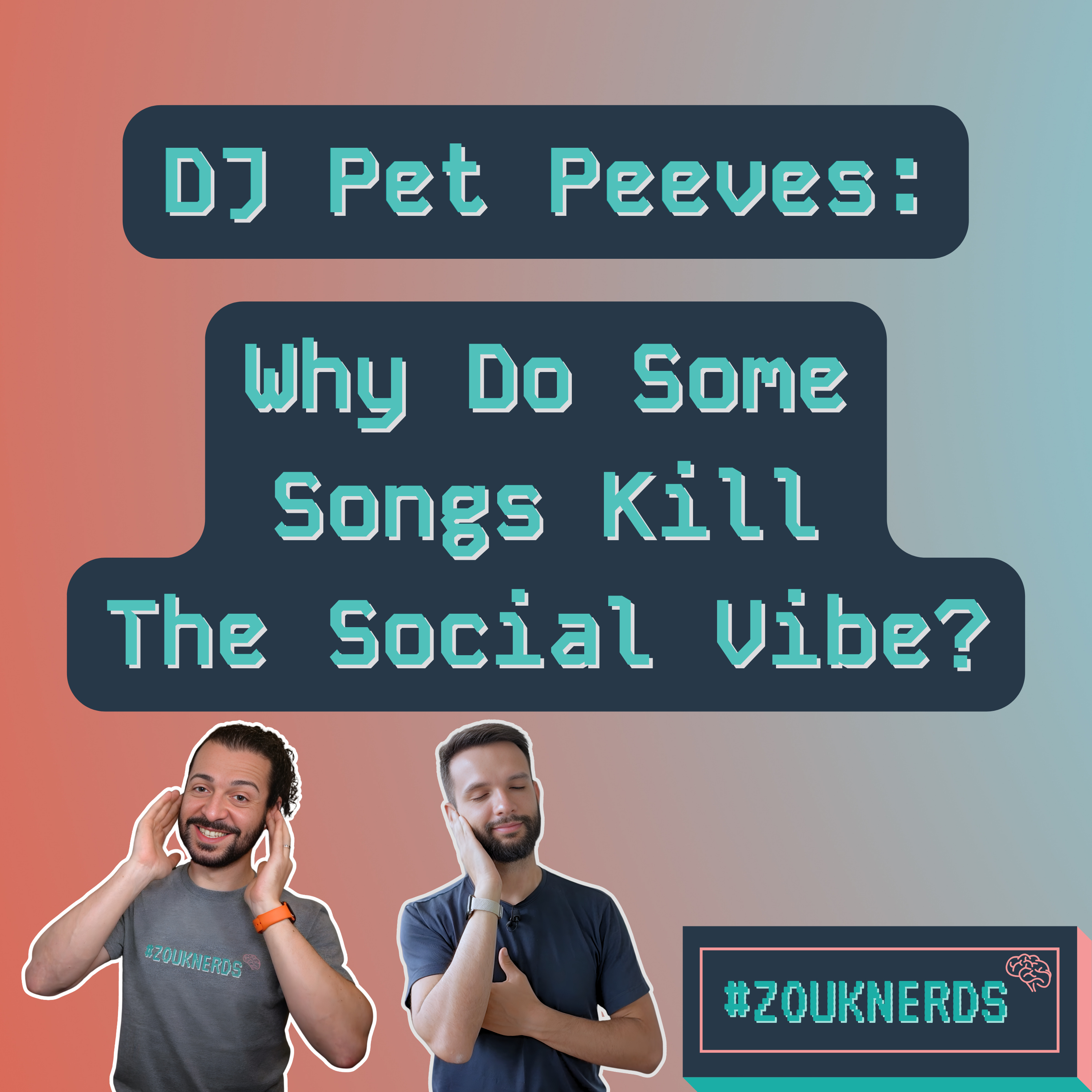 How DJs Can Make or Break a Party (S05 Ep84) | ‘The Music That Moves Us’What music makes you sprint to the dance floor? In this episode, Gui Prada and I geek out over our favorite styles—from high-energy Moombahton to nostalgia-filled Ghetto Zouk. We also get real about our biggest DJ pet peeves and why a single song can change the entire energy of a room.Finding the Right VibeHigh Energy & Warmups: I love music that moves my body. For warmups, I use upbeat tracks (shoutout to DJ Kakah) to grab everyone's attention. Think Afrobeats or Moombahton, but slowed down just enough for Zouk.The "Defibrillator" Track: Some DJs have a secret "Alisson Folder." When they see me getting bored, they drop a nostalgic Neo Zouk track that acts like a defibrillator—I’m instantly back to life!Traditional Gems: Gui shares his love for Ghetto Zouk and Caribbean beats from the early 2000s. There’s something so cozy and identifying about those Portuguese lyrics that makes you feel right at home.DJ Pet PeevesWe love our DJs, but we have some thoughts:The Energy Killers: Nothing is worse than a DJ going "too low for too long" right in the middle of a prime party.Bad Transitions: A sudden jump from a high-energy Lambada beat to a Disney princess song? That’s a "cold shower" that freezes the whole room.Button-Pushers vs. Readers: The best DJs are in the room early, watching the crowd. Don't just press play on a pre-made set—connect with the people!The Big Takeaway: A perfect set has peaks and valleys. We love variety—a little bit of everything is what keeps the floor full.What song is a "defibrillator" for your dance? Tell us in the comments! | — | ||||||
Want analysis for the episodes below?Free for Pro Submit a request, we'll have your selected episodes analyzed within an hour. Free, at no cost to you, for Pro users. | |||||||||
| 4/15/26 | 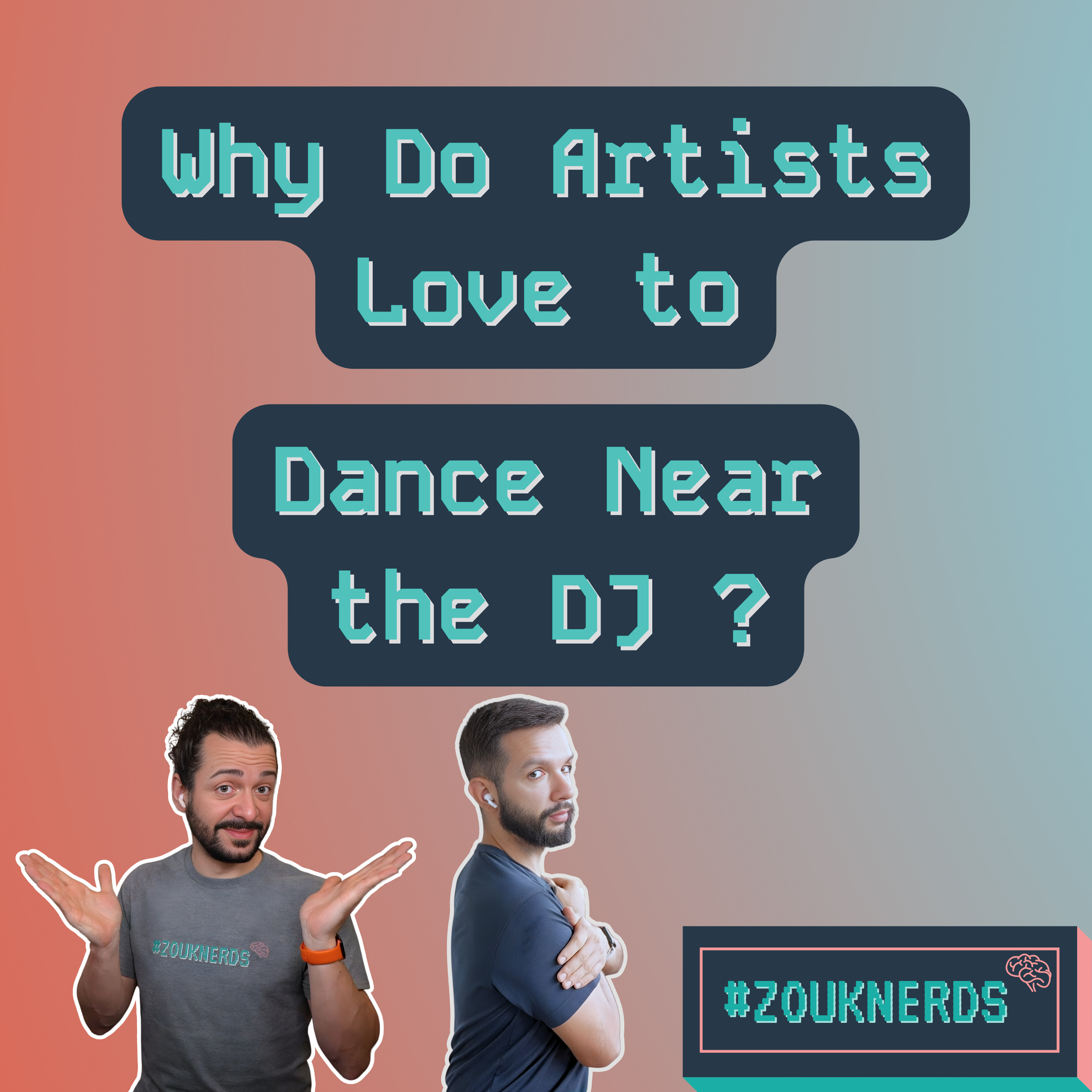 Zouk Social Etiquette: The DJ Booth Dilemma (S05 Ep83) | 'The DJ Booth Dilemma—Why Artists Stick Together'Ever wonder why the pros and "cool kids" always huddle right by the DJ booth? Is it an exclusive secret club, or is there more to the story? In this episode, Gui Prada and I pull back the curtain on why artists gravitate to that specific corner of the dance floor.The "Force Field" EffectFor many pros, being near the DJ is actually a survival tactic:The Invisible Shield: When we're exhausted, sitting behind the DJ booth is a way to say, "I’m off the clock," without leaving the room. It’s hard to ask for a dance when there’s a literal barrier!The Pit Stop: It’s simply convenient. We leave our water, shoes, and bags there because it feels like a safe, central base.Shyness & SafetyBelieve it or not, pros get socially anxious too:Introvert Problems: I get real about being an introvert. In a room of 500 people, staying near friends by the booth makes me feel safe, not superior.The "Find Me" Zone: I once tried dancing in far corners to be inclusive, but people thought I’d skipped the party! Sometimes we stay there just so you can actually find us.The "Heat Map" of the FloorWe all have a natural "home" spot:Comfort Zones: Just like you pick the same spot in every dance class, we gravitate toward a specific "Feng Shui" that feels right.Breaking the Clique: Gui shares how he intentionally travels the floor to find shy dancers in the corners. We want to connect with you!The Big Takeaway: Most "cliques" aren't about excluding others—they're about humans seeking comfort. If you want to dance with someone in that zone, don't be shy—come say hi!Where is your "safe spot" on the dance floor? Do you love the front or hide in the back? Let’s talk below! | — | ||||||
| 4/8/26 |  Paloma Alves on How to Make Dances Unforgettable (S05 Ep82) | ‘What Followers Actually Want?’Leaders, are you stressing out trying to pull off the flashiest moves? In this episode, Gui Prada, Paloma Alves, and I talk about what really makes a dance feel "unforgettable." Spoiler alert: It’s almost never that crazy 20-step pattern you just learned.Ditch the "Boring" FearMany leaders use way too much force because they’re terrified of being boring. Paloma keeps it real:Safety over Everything: True safety means your partner doesn't feel like an object you're just "using" to do a move.Invite, Don't Force: You lead the transition, but the follower executes the movement. When you force it, the conversation dies.No Excuses: Paloma is super firm here—dancing with a beginner is never an excuse for force. Good leadership is about a light touch, not muscle.The Success TrapI get honest about my own "board meeting" brain. Sometimes I worry a dance isn't "complex enough," but that just kills the vibe.Focus on the Process: A great dance is like a slow-cooked meal. If you jump to the "wow" moments too fast, you miss the best part: the connection.The "Hi, How Are You?" Move: You don't need a PhD in Zouk to have a conversation. Even a simple basic step can be a beautiful way to say hello with your body.The Big Takeaway: Stop worrying about the result and start being present. Be curious about your partner, not certain about the move.Leaders, what’s one "simple" move that always makes you feel more connected? Let's chat below! | — | ||||||
| 4/1/26 |  Us vs Them: Bridging the Community Divide with Paloma Alves (S05 Ep81) | ‘Beyond the Divide’Why is there so much "us vs. them" in the dance world lately? In this episode, Gui Prada, Paloma Alves, and I dive into the growing gaps in our community. From "traditional vs. modern" to "retreats vs. congresses," we explore why we judge different paths and how to stay connected.The Conservative vs. Progressive ForceEvery community has a tug-of-war between keeping things the same and pushing for change:The Cycle of Change: Yesterday’s rebels are today’s traditionalists. We discuss how resistance to new ideas—like afternoon socials or somatic training—is often just a fear of the unknown.Nostalgia Trap: We often think the "old days" were better, but every era has its own balance of performance and connection.The "Wear Sunscreen" Wisdom: As we evolve, our needs change. What worked for you as a 20-year-old "summer" dancer might not be what you need in your "autumn" season.Somatic Tools: The Hidden BridgePaloma shares how practices like Kriya Yoga and Kali Breath transformed her dance after 18 years:Getting Out of Your Head: Techniques that focus on breathing and body awareness help quiet the "perfectionist" voice that causes blocks and anxiety.The Multidisciplinary Dancer: Zouk is a fusion dance. Just as we borrow from Ballet or Tango, we can borrow from somatic practices to improve our touch and presence.Holistic Integration: Your dance reflects your life. Working on your "soul" through meditation or body awareness naturally makes you a more sensitive, expressive partner.Breaking the Echo ChamberHow do we move past judgment?The 5-Second Rule: Before reacting negatively to a new style or idea, breathe for five seconds. Is it actually "bad," or is it just not your current preference?Observe Without Evaluating: Try to see a movement for what it is—a hand on a neck is just a hand on a neck—without attaching a story of "right" or "wrong" to it.Variety is Survival: Every entry point into Zouk—whether a high-energy festival or a quiet retreat—is a "pipeline" that keeps the community alive.TLDR: You don't have to like everything, but you don't have to attack what you don't like. Reclaim your curiosity.Have you ever tried a "weird" training method that actually helped your dance? Tell us about it below! | — | ||||||
| 3/25/26 |  Stop the Plateau: How to Know You’re Improving (S05 Ep80) | ‘Finding Happiness in Your Progress’Are you improving or just repeating the same mistakes? In this episode, Gui Prada and I dig into the "stuck" feeling every dancer faces. We explore how to measure progress, the trap of external validation, and the power of asking "Why."Tracking Your GrowthWe often don't realize we’re improving until we look back.Self-Records: Use videos and old notes to compare your current dance to six months ago.The Specific Challenge: Don’t just "get better." Target specific skills, like dancing to lyrical music or maintaining balance during head movements.Habit Tracking: Use a simple journal or app to record how you felt after a social. Was it easy to ask people to dance? Did you feel relaxed? Tracking these small wins shifts your mindset from frustration to accomplishment.The Power of "Whys" & AwarenessUse the "Five Levels of Why" to find the core of your goals. If you want better head movements, keep asking why until you hit the truth—maybe it’s actually about building confidence.Awareness as a Win: Sometimes "getting better" is just realizing that your "balance problem" is actually a timing problem. Awareness is the first step toward a fix.Deliberate PracticeTo break a plateau, you need focus:One Thing at a Time: Spend the first hour of a social focusing only on your touch or only on your balance. Let other things break so you can master one.Timing is Everything: Rhythm is the first element of human connection. If your timing is off, the connection fails.TLDR: Treat your dance as a series of drafts, not a final product. Focus on 0.1% improvement daily.What is one specific skill you're tracking this month? Let’s celebrate the small wins below! | — | ||||||
| 3/18/26 |  Do You Belong? Finding Your Place in Zouk (S05 Ep79) | Is Brazilian Zouk for You?Ever feel like you don’t quite fit into the Zouk world? In this episode, Gui Prada and I get real about the deep doubt so many of us feel: "Is this actually for me?" If you don’t dress, party, or dance like the "cool kids" on social media, don't worry—neither did we.Finding Your Own Little WorldThe Comparison Game: I talk about my early days teaching alongside natural-born "stars" and feeling like a total outsider because I didn't fit that mold.Polo Shirts & Polo Vibes: Gui shares his hilarious (and stressful) start moving from his "muggle" lawyer life into teaching, and how he found peace by focusing on his local community instead of the flashy mainstream.Building Your Niche: We discuss why it’s totally okay to create a "chill" version of Zouk. You can have earlier socials, focus on comfort over "wow" moves, and still be 100% a part of this dance.How to Beat the FOMODon't let the "Congress lifestyle" burn you out! Here’s our survival guide:The Early Bird Strategy: Go to the early classes and the first hour of the social. You get better instruction and more room to actually dance!Mindful Choices: Stop going to events on autopilot just because everyone else is. Ask yourself: "Am I here to socialize, to move my body, or just to hear the music?"Hidden Gems: Look for the non-mainstream teachers. Sometimes the best "pot of gold" is in the smaller rooms where the deep technique happens.TLDR: You belong here. Brazilian Zouk is a mix of so many styles—you have the freedom to pick the "flavor" that actually makes you happy.Ever felt like an outsider in Zouk? How did you find your place? Let’s chat in the comments! | — | ||||||
| 3/11/26 | 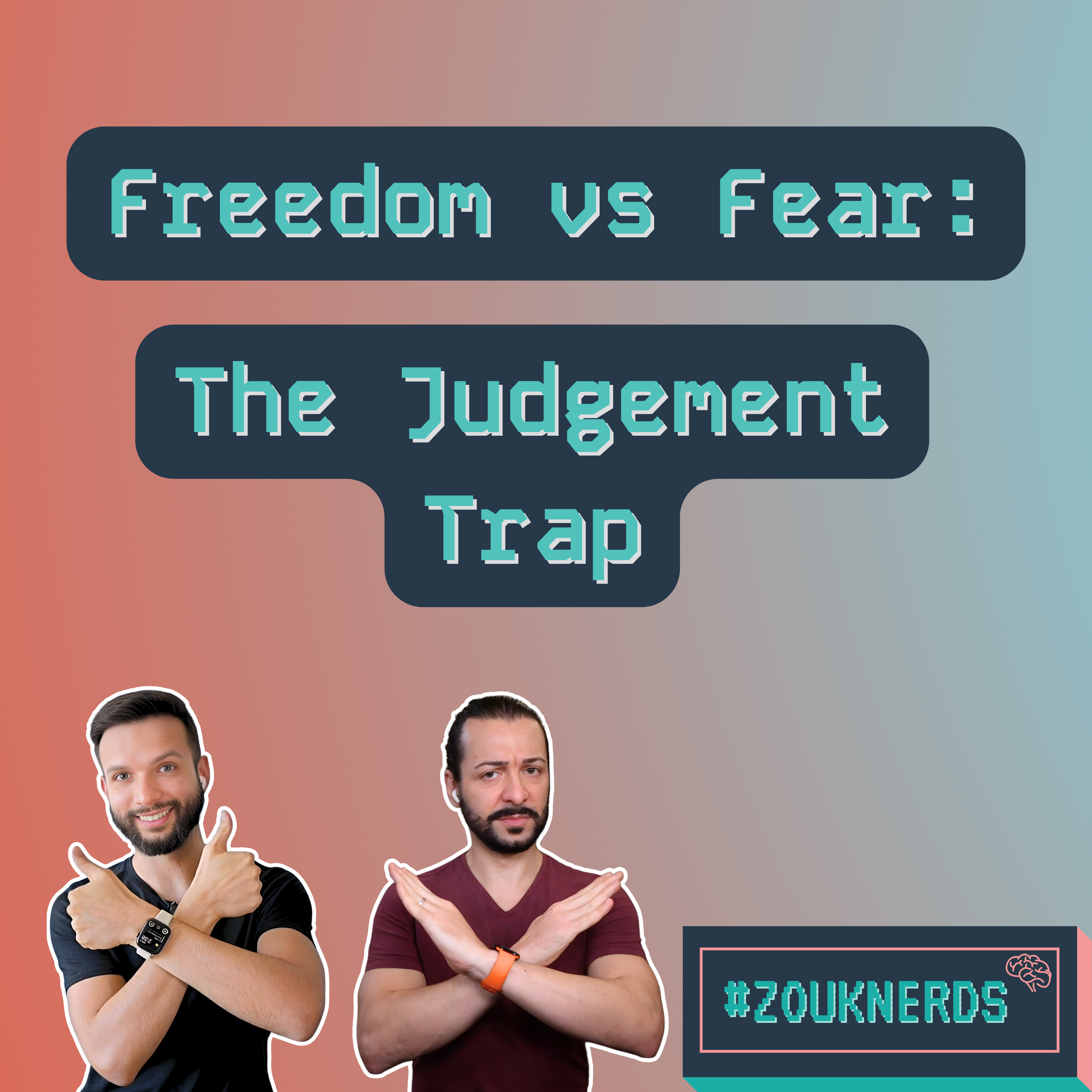 Stop Overthinking: Finding Freedom on the Floor (S05 Ep78) | 'Freedom in the Bubble—Respecting Boundaries'How do you express yourself freely on the dance floor without worrying about who is watching? In this episode, Gui Prada and I discuss finding a "deep bubble" with your partner while staying respectful to the community.Staying in the MomentObserve, Don't Judge: If a partner tenses up, don't create a story (e.g., "I did something wrong"). Simply observe the physical reality and adjust.Nurturing the Body: Dance provides a unique space for physical connection that many people lack in their daily lives.The Struggle with JudgmentThe "Professional Box": I share my struggle with feeling guilty during special or intimate dances, worrying about onlookers.Inspiration vs. Comparison: Gui suggests reframing deep connections as a source of inspiration for others rather than a cause for exclusion.Key Takeaway: Pay attention to involuntary body cues. If a partner creates distance, respect it immediately. Authenticity is about listening to the body, not a set of "shoulds."Do you overthink in the "bubble"? Share your thoughts! | — | ||||||
| 3/4/26 | 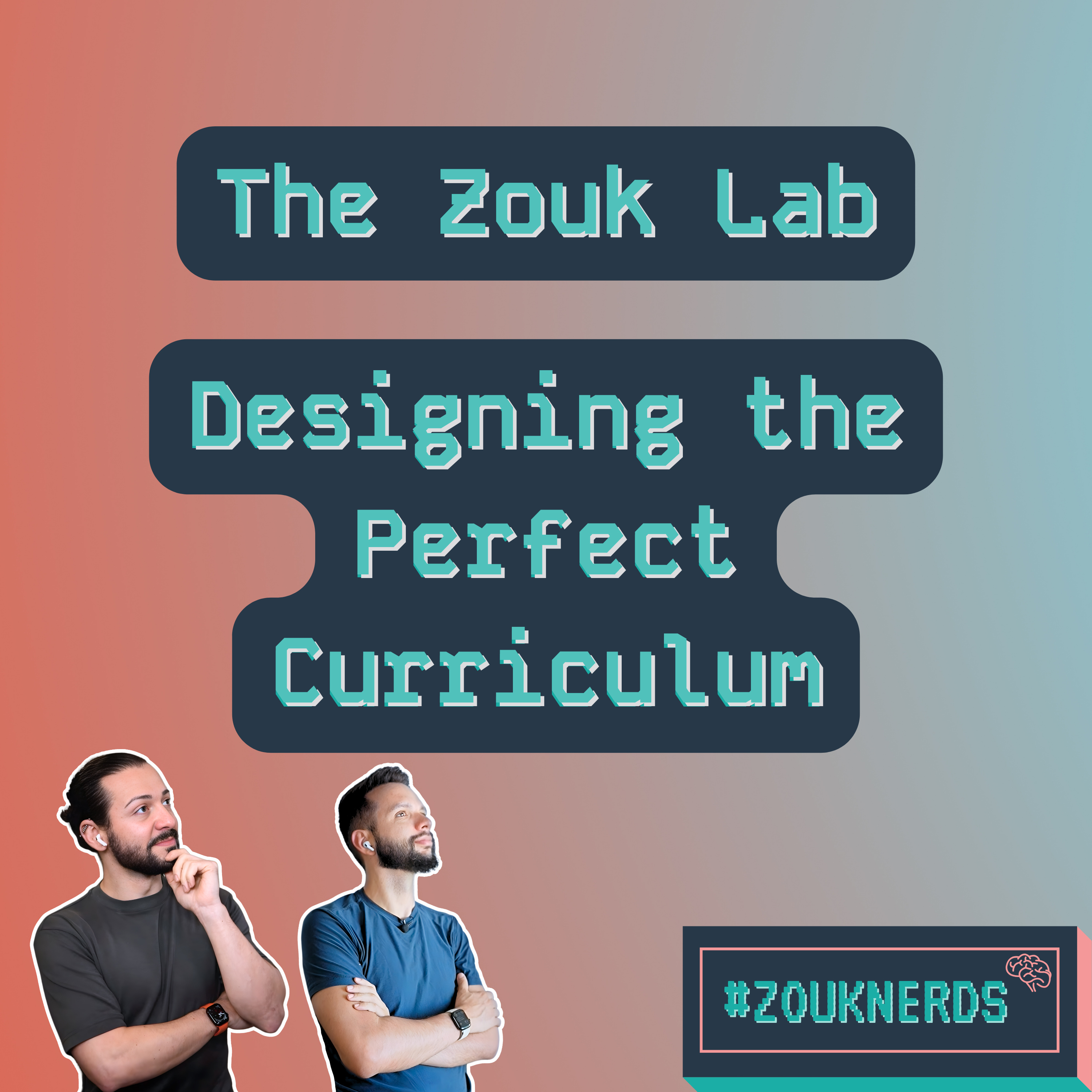 How We’d Teach if Time Didn’t Matter (S05 Ep77) | 'Zouk Nerds: The Dream World—Learning Without Pressure'What if you could learn to dance without the rush to the social floor? Gui Prada and I design our Zouk Dream Scenario: a world where students have unlimited time and zero fear of failure.Phase 1: Solo Before PartneringIn our lab, we wouldn't touch a partner for the first month.Body Mechanics: Focus on solo embodiment—understanding weight transfer and hip-shoulder isolation.Play-Based Learning: Using contact improv games to teach leverage and minimal effort before formal patterns.Phase 2: Mastering the TracksSafe Containers: Months of mastering linear vs. circular tracks so leaders can navigate without disrupting balance.Head Movements: These wouldn't be a "scary" new topic, but a natural continuation of spine undulations learned in month one.Phase 3: The "Jungle" PrepStress Tests: Purposefully jumping the music or crowding the floor to teach students how to adapt to real-world social chaos.What’s one thing you wish you spent more time on in your first month of dance? Let us know! | — | ||||||
| 2/25/26 | 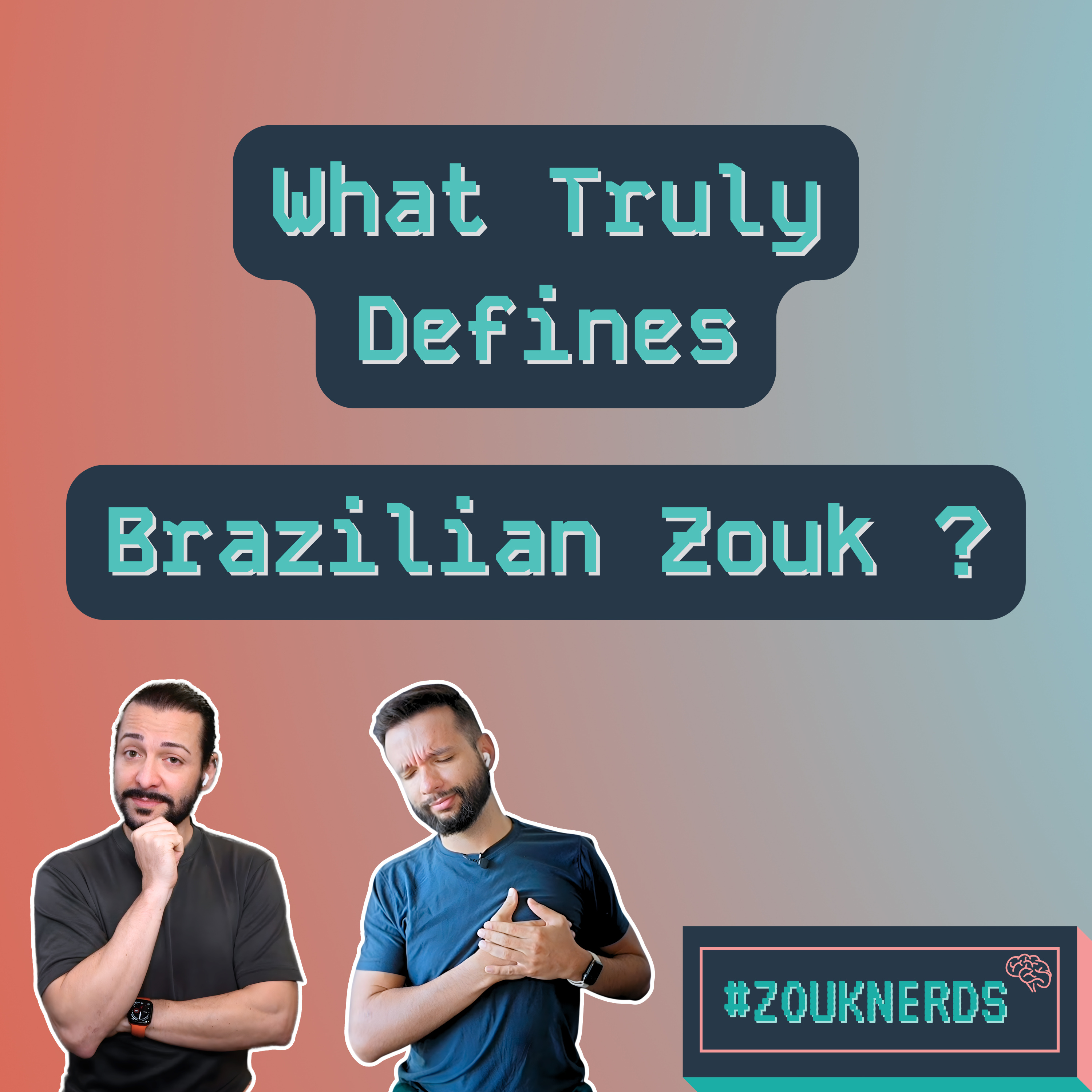 Traditional vs Modern: Preserving the Roots of the Dance (S05 Ep76) | What Are We Truly Preserving?Is Brazilian Zouk just a list of steps, or is it a culture of belonging? In this episode, Gui Prada and I dig into the soul of the dance. We move beyond history lessons to ask: What is the real spirit of Zouk?The Identity Crisis: What’s in a Name?Gui explains the "strange" origins of our dance. While other styles like Samba or Forró dance to their own music, we dance "Lambada" to Caribbean "Zouk" music. This cross-cultural mix is what makes the dance so unique, but it also creates tension:The "Brazilian" Essence: We discuss the core traits of Brazilian partner dance—the focus on the lower body, hip movements, and the "Embrace."The Social Factor: Traditionally, Brazilian dance is about gathering, regardless of age or skill level. It’s an environment where you can dance or just sit and chat.The Preservation DebateWhen people talk about "protecting" Zouk, what do they mean?Musical Evolution: We explore how shifting from rhythmic beats to lyrical, upper-body focused songs has changed the dance. Is it still Zouk if the hips stop moving?The Exclusivity Trap: We compare Zouk to the Forró or Capoeira scenes, where students often learn the language and culture. In Zouk, the "internationalization" has led to a scene that is high-energy but sometimes less welcoming to outsiders or families.Building an Inclusive FutureWe reflect on our current social environments—often dark, loud, and starting at 11:00 PM.Accessibility: If we want the community to grow, we need to ask: Would I bring my parents here? Beyond the "Zouk Addict": How can we make our socials as inviting as a Samba bar or a Forró party?If the it all stopped today, what part of the Brazilian Zouk culture would you miss the most? Let’s talk below! | — | ||||||
| 2/18/26 | 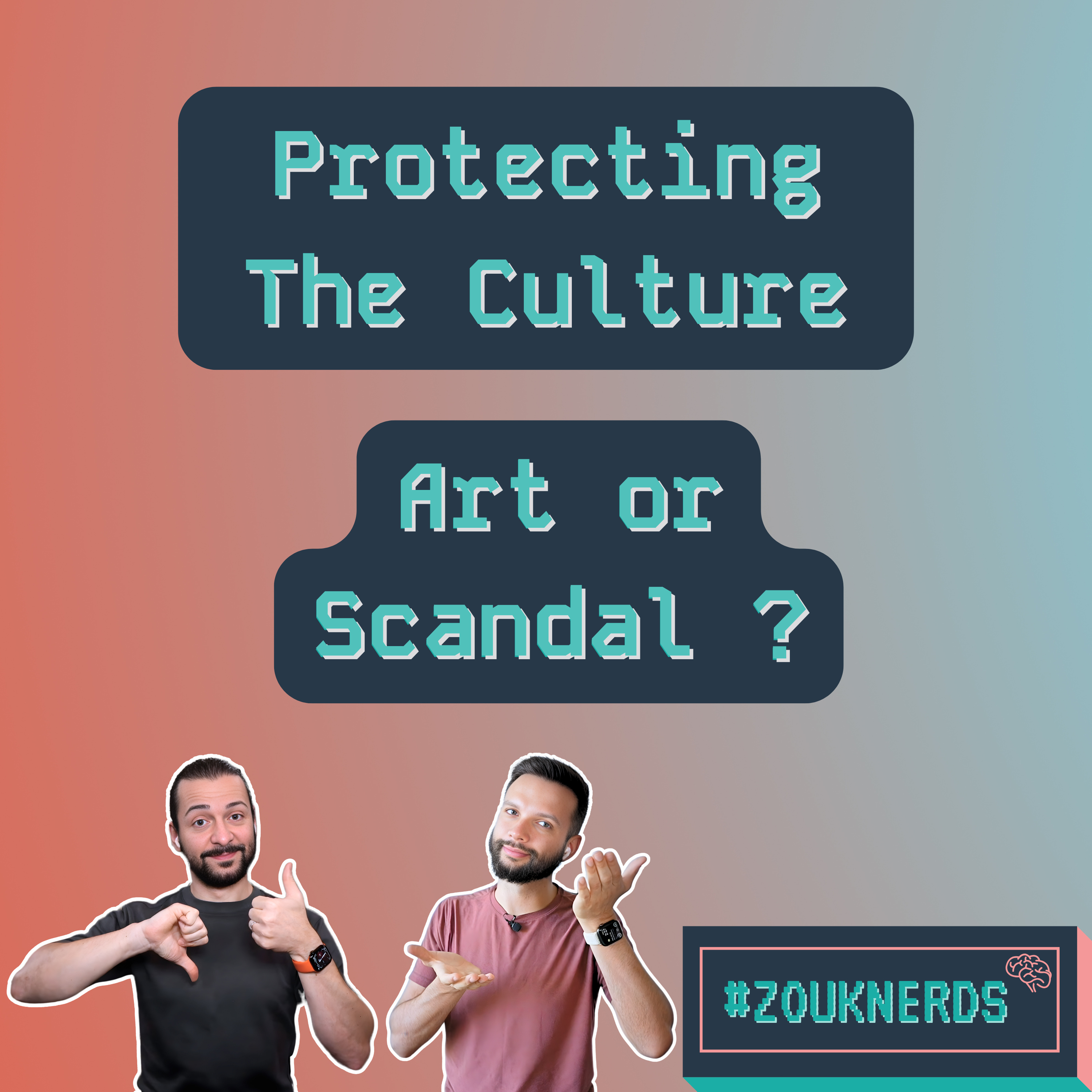 Double Standards: What Are We Actually Protecting? (S05 Ep75) | 'Double Standards—Art vs. Oversexualization'Ever wondered where the line is between an artistic dance and something that feels a bit over-the-top? In this episode, Gui Prada and I dig into the double standards we see in the Zouk world. Why is it that we cheer for "sexy" moves on a stage, but sometimes judge them when they show up in a social media video?What we’re chatting about:Online Drama: Gui gets real about a "steamy" video he posted that got a lot of heat and even requests to be taken down.The "Act" vs. Reality: We dive into the weird paradox where playing a "character" in a show is totally fine, but showing a deep, truthful connection between friends can be seen as scandalous.Newbie Perspectives: We address the fear that newcomers might get the "wrong idea" about Zouk, and whether that means we should start policing how experienced dancers express themselves.Stop & Observe: How to swap instant judgment for a bit of curiosity. Before hitting "dislike," ask yourself: "Is it actually the dance that bothers me, or am I just worried about how it looks to outsiders?"The Big Takeaway: Zouk is naturally a sensual, close-hold dance. Instead of trying to "fix" how people dance, maybe we should focus more on the vibe and context of where it’s happening.What do you think—do some Zouk videos go a bit too far, or is it all part of the art? Let’s talk in the comments! | — | ||||||
| 2/11/26 |  The Dancer’s Guide to Self Worth (S05 Ep74) | 'Reclaiming Your Self-Worth in Dance'How much of your happiness as a dancer depends on your partner’s approval? In this episode, Gui Prada and I tackle the psychological traps of seeking external validation and how to stay grounded when faced with criticism.The Power Imbalance TrapWe often unknowingly give away our power to partners we perceive as "better" or "more senior." This creates a damaging cycle:The Approval Loop: Constantly looking for smiles or nods to feel "worthy" leads to anxiety and mechanical dancing.The Silent Tear-Down: I share how a student lost sight of years of progress simply because a training partner was overly critical.Rewriting the Narrative: Gui discusses his own process of redefining success—realizing that a lack of "wow moments" in a video doesn't define his value as a teacher.Reclaiming Your PowerTrue mastery starts with your mindset outside the studio.Focus on Feeling, Not Blame: Instead of saying, "You did this wrong," try, "I want to feel more of this." Reframe criticism as an invitation to explore a shared direction.The 100/100 Rule: A partnership isn't 50/50. It’s two people bringing 100% of their unique selves to build a new, fused 100%.Internal Pillars: No one can "delete" the progress stored in your body. Build your self-worth on your own achievements, not on festival posters or social media likes.How do you stay confident when a dance doesn't go as planned? Share your tips below! | — | ||||||
| 2/4/26 |  The Chameleon Mindset: Connecting to Any Partner or Style (S05 Ep73) | 'Misaligned Stars—Handling Difficult Social Dances'What do you do when the connection with your partner or the music just isn't there? In this episode, Gui Prada and I explore the philosophy of "misaligned" dances. We discuss why faking joy is never the answer and how to use technical curiosity to save your night.Shifting from Blame to CuriosityWhen a dance feels "off," it’s easy to blame yourself, your partner, or the DJ. We suggest a different approach:The Investigation: Instead of thinking, "They are doing this wrong," shift to, "Interesting, why did that lead result in this movement?" This turns a frustrating dance into a technical puzzle to solve.Borrowing Joy: If the partner connection is weak, look at other elements. Borrow happiness from a great song or the vibe of the venue. Let the dance be one part of an overall joyful night.Redefining the "Good Dance"Success is often based on external factors we can't control. By shrinking your definition of a "good dance" to things you control—like your own presence—the stars align more often.Mental Prep: Even as pros, we face performance anxiety. We discuss the "mental prep" needed to shift from an introverted self to a grounded dancer.Authenticity over Politeness: Don't fake it. If the alignment isn't there, find a way to make the movement safe and comfortable, then move on.What is your "go-to" strategy when a dance isn't clicking? Share below! | — | ||||||
| 1/28/26 |  Trust the Process: Training Teams vs Study Groups (S05 Ep72) | 'The Study Group Transformation—Fast-Track Your Growth'Are you stuck in a loop of repetitive classes? In this episode, Gui Prada and I explore the Study Group and alternative training modes that bridge the gap between basic patterns and true dance mastery.What is a Study Group?We break down the three main ways these groups operate:Teacher-Managed Progression: At District Zouk, this is a conceptual space for students who have finished the core syllabus. It’s a "pedagogical relief" where teachers aren't bound by strict weekly goals and can spend a month on a single deep topic like torsion or contact improv.Invitational Teams: These are more exclusive, curated groups. While they offer high-level challenges, we discuss the risks of "team isolation"—where dancers stop social dancing with the wider community.Self-Managed "Jams": Groups of peers who rent a studio to exchange ideas, study online courses, or break down festival videos. This "horizontal learning" is powerful because you rely on your own senses and peer feedback rather than a figure of authority.The "Study Group Mindset"The most important takeaway isn't the label of the class, but your internal approach:The "Hooked" Mindset: Study groups work because the students are already committed. They don't need to be "convinced" by flashy moves; they are ready for the "veggies" (drills, weight transfer, and subtle connection).Openness Over Judgment: Even as a professional, I treat every workshop as a Study Group. I go in with a "blank canvas," ready to experience the teacher's methodology fully without judgment.Mastery takes Time: A Study Group isn't necessarily an "advanced" class. It’s a class for people with a high level of engagement who are willing to struggle together through complex concepts.Do you prefer teacher-led structure or jamming with friends?Share your best training tip below! | — | ||||||
| 1/21/26 |  The Missing Link: Turning Studio Time into Mastery (S05 Ep71) | 'Mastering the "Práctica"—The Bridge to True Integration'Why do so many dancers plateau despite taking classes? In this episode, Gui Prada and I explore the missing link to mastery: the Práctica. We share our formula for turning studio time into a transformative integration session.The Práctica vs. The SocialA Práctica is a dedicated space to stop, start, and ask for feedback. The problem? Most Prácticas turn into "mini-socials" where dancers switch to autopilot. To prevent this, you must change the environment.3 Shifts for a Successful PrácticaPlay Individual Songs: Continuous sets encourage mindless flow. Songs that end provide a natural cue to reset, switch partners, or discuss a move.Keep the Lights Up: Dim lights signal "party mode." Bright lighting keeps the brain in "learning mode" and makes recording video easier.Manage Music Volume: Keep it at a level where partners can speak comfortably without screaming.The Art of PracticingMost students don't know how to practice. They need prompts:Focused Challenges: Spend 20 minutes on one skill (e.g., "only focus on timing" or "practice floor craft").Integration Time: Instead of ending a class, flow directly into a 30-minute "Feedback & Q&A" session included in the class price. | — | ||||||
| 1/14/26 |  The Topics We Were Excited or Afraid to Publish (S05 Ep70) | '2025 Review—What You Loved & What's Next'In this retrospective, Gui Prada and I dive into our 2025 data to reveal what the Zouk community truly craves. We explore why our "vulnerable" episodes went viral and how we’re evolving for 2026.The Top 5 Hits of 2025Intimacy & Sensuality: Our episode with Nelly proved that dancers are hungry for safe spaces to discuss boundaries and connection.Sexual Energy: A deep dive into the "blurry lines" of partner dance.The Beginner’s Guide to Brazilian Zouk: A top resource for students and local teachers alike.From Basics to Mastery: Your roadmap for long-term growth.The Truth About Flow: Demystifying the "feeling" of Zouk.Behind the ScenesThe Scary Stuff: Episodes on sexual energy and anxiety make us the most nervous, but your support keeps us sharing.The Logistics Grind: Gui shares the stress of organizing global tours and the variables that keep him up at night.Raising the Bar: In 2026, we want to continue to talk about the comfortable and scary topics. Learning never ends! | — | ||||||
| 1/7/26 |  Beard to Beard: Breaking the Taboo of Male Intimacy (S05 Ep69) | 'Redefining Masculinity through Movement and Vulnerability'In this deeply personal episode, Gui Prada and I explore the male experience in the dance community. We discuss how surrendering control on the dance floor can redefine masculinity, healing "touch starvation," and the transformative power of switching roles.In this episode, we explore:The Vulnerability of Following: Why for many men, the hardest part isn't leading—it’s allowing themselves to be held by another man and letting go of the need for control.Sensitivity Gains: How switching roles unlocks a level of body awareness and sensitivity that actually makes you a better, more present leader.Healing "Touch Starvation": Addressing the loneliness epidemic and how dance provides a safe container for physical affection without the pressure of sexualization.Role Models & Upbringing: Contradicting military backgrounds with affectionate ones, and the massive impact of strong female leaders in our community.Key Takeaway: Switching roles isn't just about learning steps; it’s about remodeling your understanding of care, intimacy, and trust.Chapters:0:00 Defining Masculinity in Dance5:10 Military vs. Affectionate Upbringings12:30 The Fear of Being Held (The Cheek-to-Beard Barrier)19:15 How Following Makes You a Better Leader26:40 Healing Touch Starvation in Modern Society | — | ||||||
Showing 25 of 106
Pitch Fit is a Pro feature
See how bookable this show is for guests, which brands already advertise, the per-episode ad value, and the best-fit guest and sponsor profile. The numbers are blurred on the free plan.
How readily this show books outside guests like you.
How proven this show is for host-read sponsorships.
For Guests
ProFor Advertisers
ProUpgrade to Pro to unlock guest cadence, sponsor categories, fit scores, and per-episode ad value for this show.
Chart Positions
6 placements across 6 markets.
Chart Positions
6 placements across 6 markets.