

Insights from recent episode analysis
Audience Interest
Podcast Focus
Publishing Consistency
Platform Reach
Insights are generated by CastFox AI using publicly available data, episode content, and proprietary models.
Total monthly reach
Estimated from 4 chart positions in 4 markets.
By chart position
- 🇩🇪DE · Music History#1925K to 30K
- 🇰🇷KR · Music History#5310K to 30K
- 🇮🇱IL · Music History#112500 to 3K
- 🇿🇦ZA · Music History#155500 to 3K
- Per-Episode Audience
Est. listeners per new episode within ~30 days
4.8K to 20K🎙 Daily cadence·95 episodes·Last published yesterday - Monthly Reach
Unique listeners across all episodes (30 days)
16K to 66K🇩🇪45%🇰🇷45%🇮🇱5%+1 more - Active Followers
Loyal subscribers who consistently listen
6.4K to 26K
Market Insights
Platform Distribution
Reach across major podcast platforms, updated hourly
Total Followers
—
Total Plays
—
Total Reviews
—
* Data sourced directly from platform APIs and aggregated hourly across all major podcast directories.
On the show
Recent episodes
Oteil Burbridge and Lamar Williams Jr, Interview (The Offering)
May 11, 2026
Unknown duration
Big Brother and the Holding Company (Janis Joplin) -Cheap Thrills
May 7, 2026
Unknown duration
Cream- Wheels Of Fire
Apr 29, 2026
Unknown duration
Miles Davis- Miles In The Sky
Apr 21, 2026
Unknown duration
Herbie Hancock-Speak Like A Child
Apr 13, 2026
Unknown duration
Social Links & Contact
Official channels & resources
Official Website
Login
RSS Feed
Login
| Date | Episode | Description | Length | ||||||
|---|---|---|---|---|---|---|---|---|---|
| 5/11/26 | 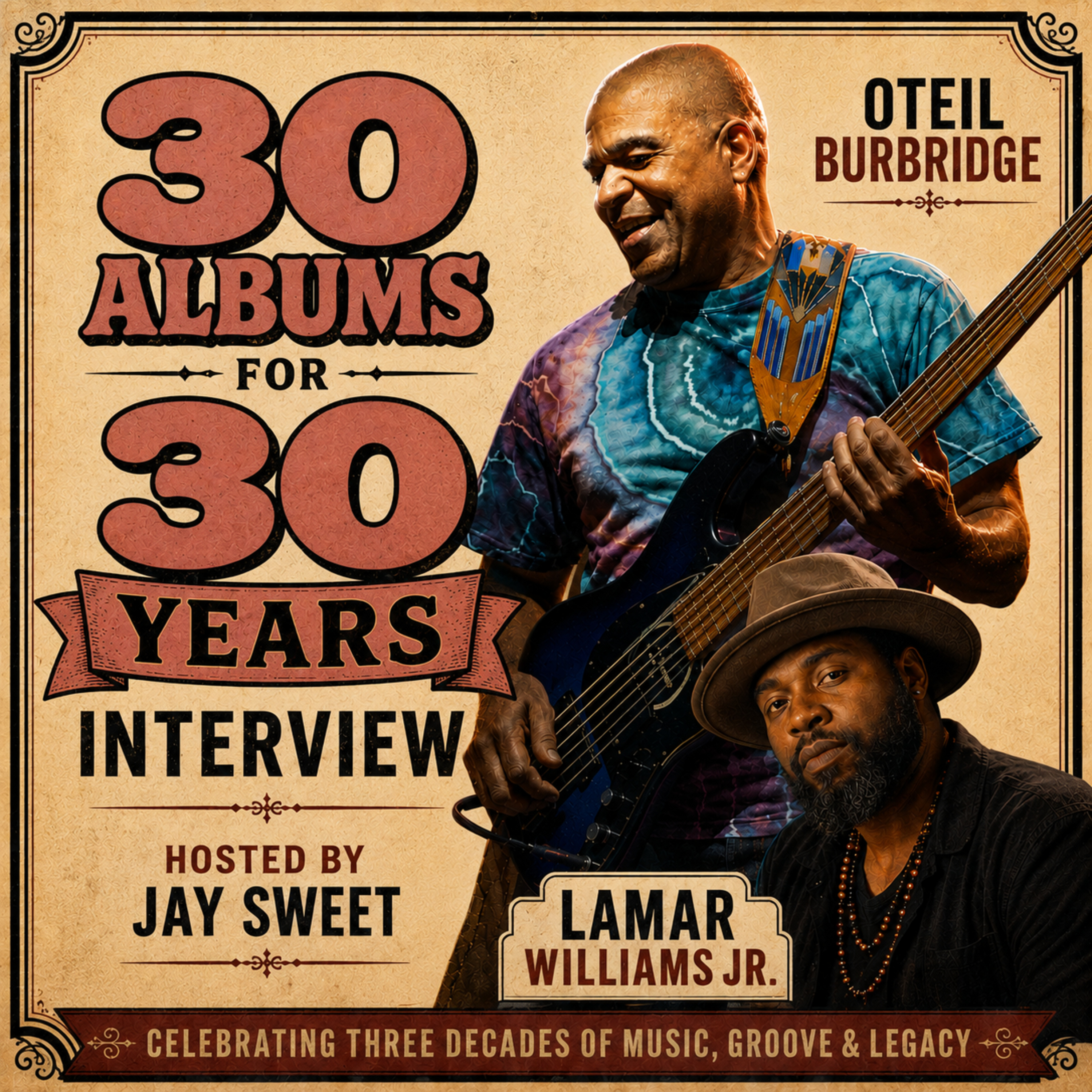 Oteil Burbridge and Lamar Williams Jr, Interview (The Offering) | Oteil Burbridge and Lamar Williams Jr. represent two generations of Southern-rooted improvisational music coming together through groove, soul, and message-driven songwriting. Burbridge is widely known for his work with the Dead & Company, the Allman Brothers Band, Aquarium Rescue Unit, and Tedeschi Trucks Band, where his fluid bass playing and deep jazz-funk vocabulary made him one of the most respected improvisers in modern jam and fusion music. Williams Jr., son of former Allman Brothers bassist Lamar Williams, has emerged as a powerful vocalist carrying forward the emotional intensity and Southern soul tradition connected to the Allman legacy.Their 2026 collaborative album, The Offering, blends gospel harmonies, roots music, improvisational rock, and reflective songwriting into a warm and spiritually minded recording. Recorded in Iceland’s Flóki Studios, the album favors feel and atmosphere over flashy virtuosity, though the musicianship throughout is excellent. Songs like “The Way We Rise” and “Love & War” balance uplifting lyrical themes with earthy grooves and melodic depth. The project feels less like a commercial crossover effort and more like two musicians searching for sincerity, community, and healing through music.Oteil Burbridge and Lamar Williams Jr.- The Offering | — | ||||||
| 5/7/26 |  Big Brother and the Holding Company (Janis Joplin) -Cheap Thrills | Cheap Thrills -Big Brother and the Holding Company (Columbia) Released August 12, 1968Cheap Thrills by Big Brother and the Holding Company stands as one of the defining albums of the late 1960s, capturing the raw spirit of the San Francisco psychedelic scene at its peak. The record transformed Janis Joplin into a major cultural force through emotionally explosive performances on tracks like “Piece of My Heart” and “Ball and Chain.” Unlike many polished studio productions of the era, the album intentionally embraced a loose, gritty sound designed to recreate the energy of a live concert experience. The interplay between blues, psychedelic rock, and improvisational jamming gave the album its distinctive identity. While the band itself could sound chaotic at times, Joplin’s intensity and phrasing elevated the material into something unforgettable. Commercially, the album became a massive success, reaching #1 on the Billboard charts and helping define the countercultural sound and attitude of 1968. (S5-EP 18) | — | ||||||
| 4/29/26 | 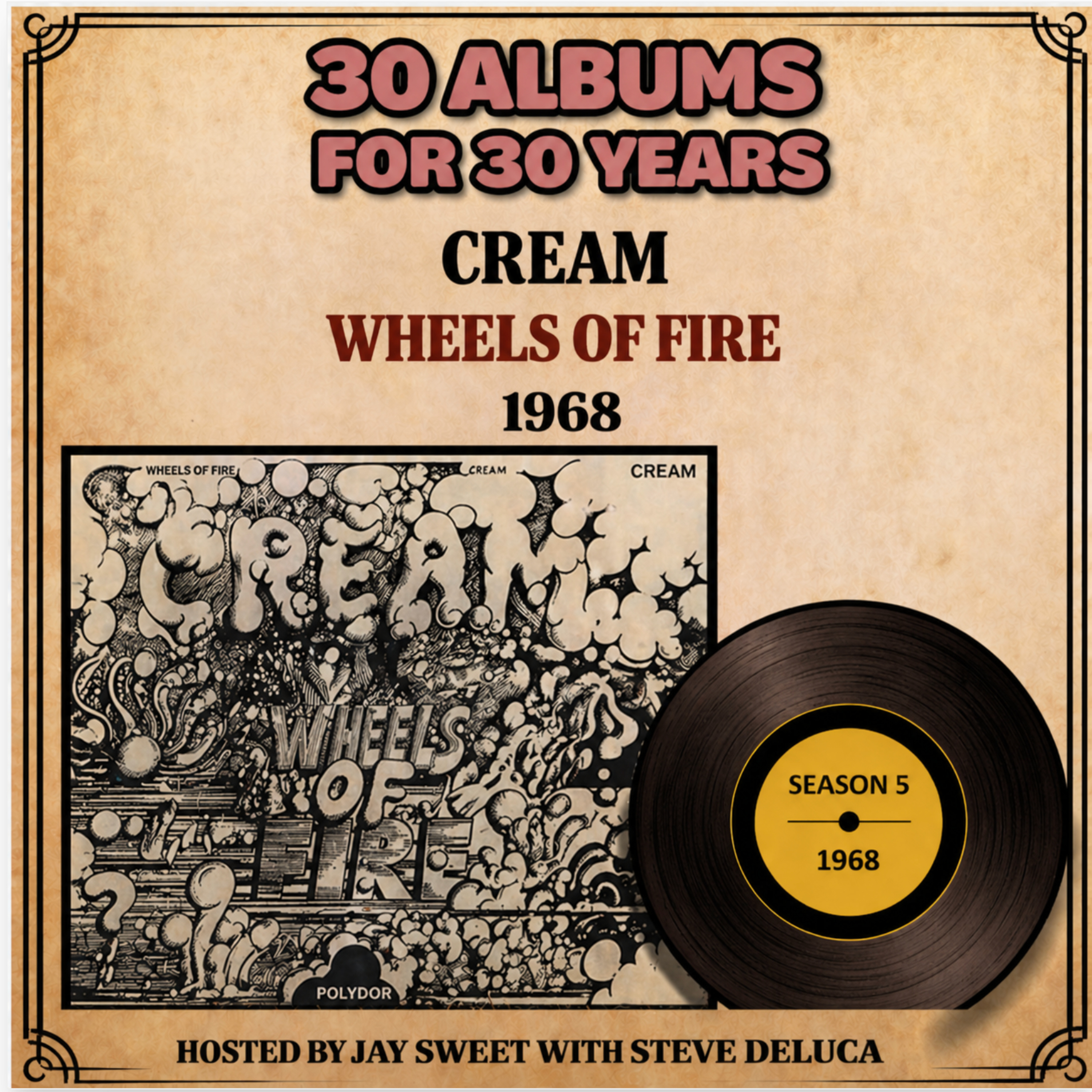 Cream- Wheels Of Fire | Cream - Wheels of Fire (Atco/Atlantic) Released June 14,1968 (In US) Wheels of Fire captures Cream at the peak of their creative and commercial power, presenting an ambitious double album that blends studio precision with the raw energy of their live performances. The studio disc showcases a refined mix of blues, psychedelia, and inventive arrangements, while the live recordings highlight the trio’s remarkable improvisational chemistry and extended, jazz-influenced approach to form. Tracks like “White Room” and “Crossroads” became defining statements of late-1960s rock, illustrating the band’s ability to merge technical mastery with emotional intensity. As one of the first double albums to achieve massive commercial success, it expanded expectations for what a rock record could be in both scope and artistic vision. The album’s influence can be heard in the evolution of hard rock, blues-rock, and jam-based music, solidifying Cream’s legacy as one of the most innovative and powerful trios of the era. (S5-EP17) | — | ||||||
| 4/21/26 | 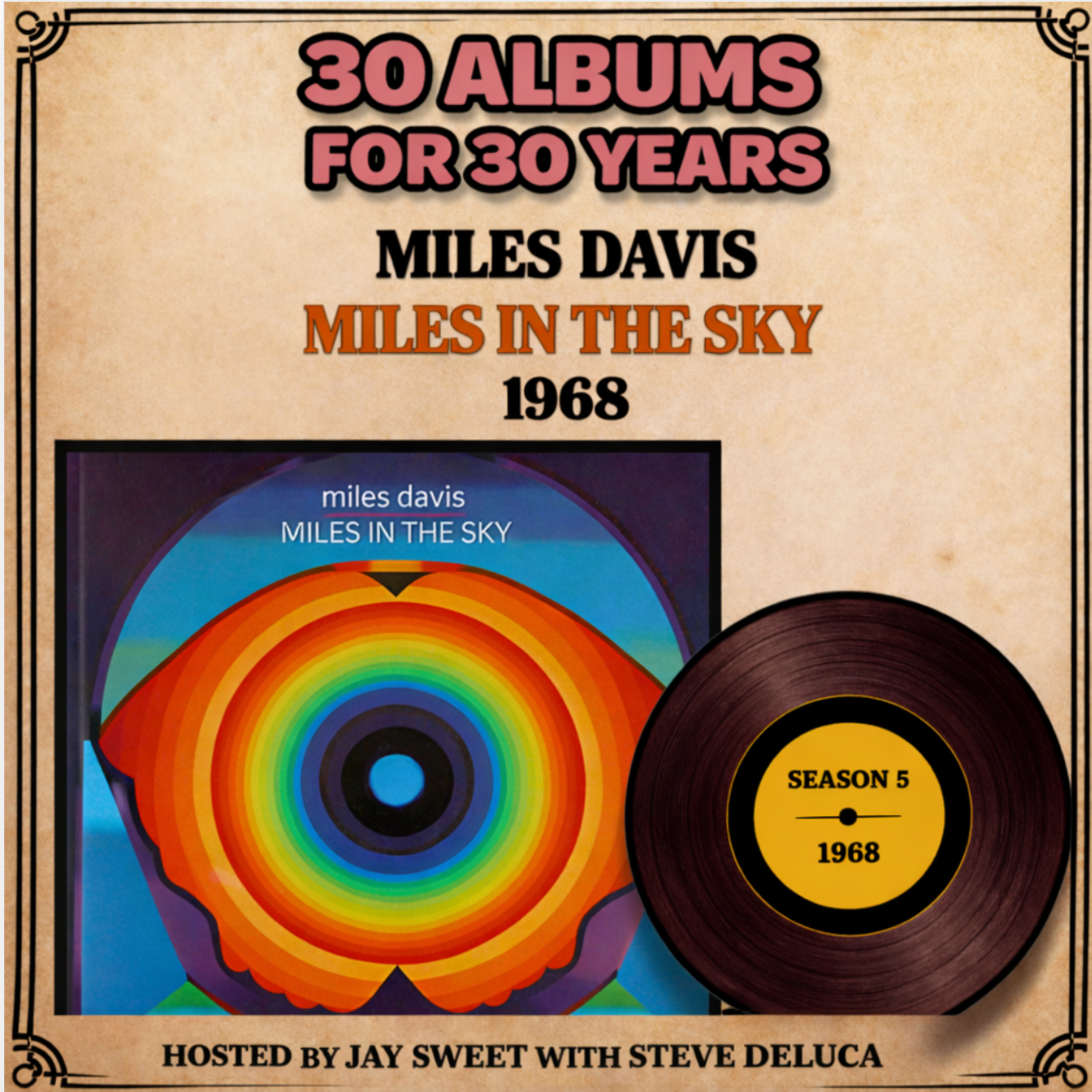 Miles Davis- Miles In The Sky | Miles Davis- Miles In The Sky (Columbia Records)(Released January 16, 1968 and May 15–17, 1968)Miles in the Sky (1968) captures Miles Davis at a pivotal moment of transition. Recorded with his celebrated Second Great Quintet—Wayne Shorter, Herbie Hancock, Ron Carter, and Tony Williams—the album marks the first clear step toward Davis’s electric period. Released by Columbia Records, the record introduces electric piano and electric bass into Miles’s studio sound while retaining the sophisticated interplay the quintet had developed through earlier post-bop recordings. The four extended tracks blend groove-based structures with the band’s advanced rhythmic freedom and conversational improvisation. Pieces such as “Stuff” and “Paraphernalia” hint at the influence of late-1960s rock and funk, while still grounded in the group’s exploratory jazz language. The album stands as the final full studio statement by the Second Great Quintet and foreshadows Davis’s radical electric experiments that would soon emerge on his 1969 releases In a Silent Way and Bitches Brew. (S5-EP16) | — | ||||||
| 4/13/26 | 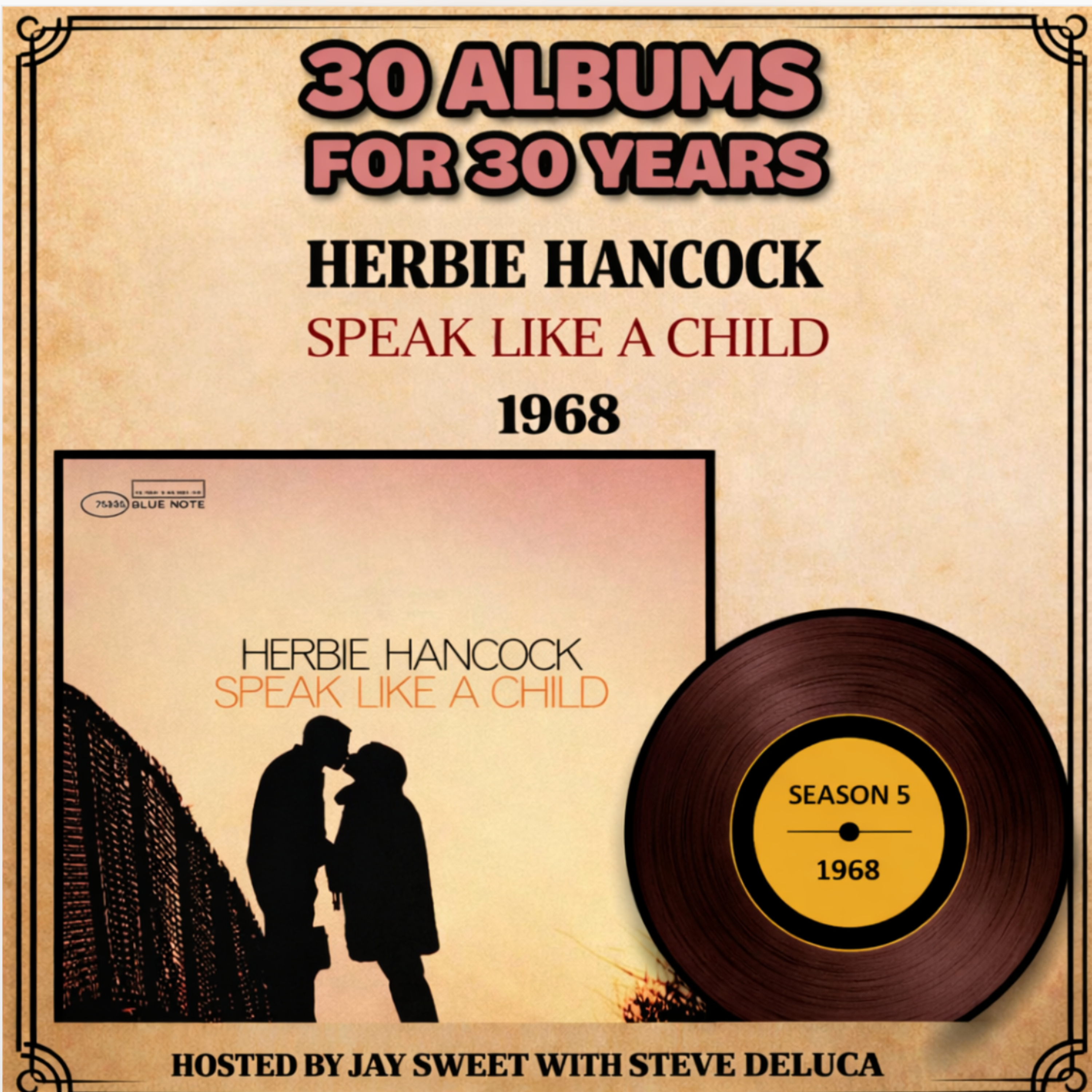 Herbie Hancock-Speak Like A Child | Herbie Hancock-Speak Like A Child (Blue Note Records) Released Summer of 1968 Speak Like a Child is one of the more lyrical and introspective recordings in the catalog of Herbie Hancock. Released on Blue Note Records in 1968, the album reflects Hancock’s growing interest in subtle orchestration and melodic simplicity following the more harmonically dense work of his earlier recordings. Rather than a traditional trumpet-sax frontline, Hancock chose the unusual combination of flugelhorn, bass trombone, and alto flute, creating a warm, floating ensemble sound. The music emphasizes spacious melodies, gentle rhythms, and impressionistic harmonies. Pieces like the title track and “Riot” highlight Hancock’s gift for understated composition and ensemble color. Featuring musicians such as Thad Jones, Micky Roker and Ron Carter, the album stands as one of Hancock’s most delicate and emotionally resonant Blue Note recordings. (S5-EP15) | — | ||||||
| 4/4/26 | 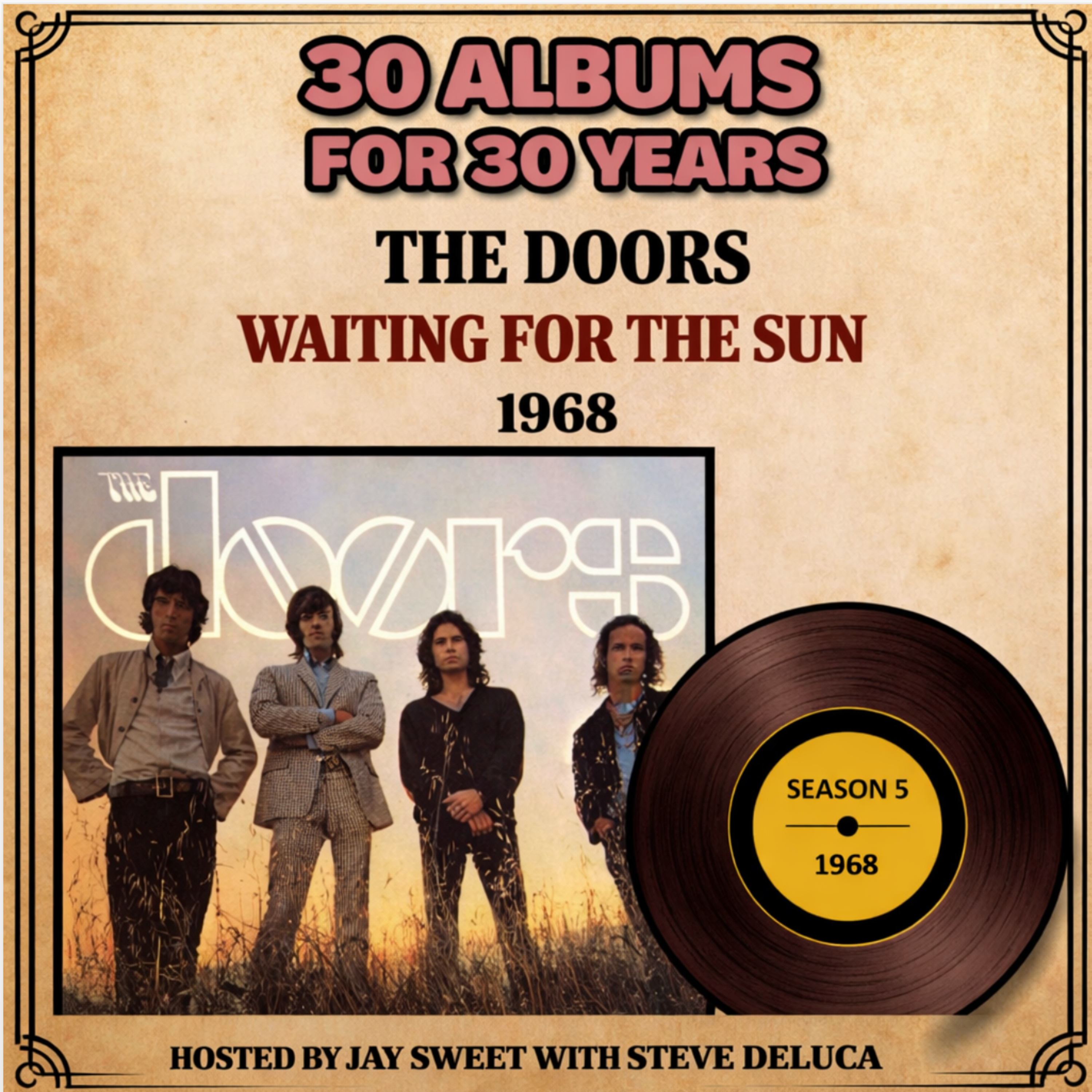 The Doors -Waiting For The Sun | The Doors- Waiting For The Sun (Elektra Records) Released -July 3, 1968 Waiting for the Sun (1968), the third album by The Doors, arrived at a moment when the band was already one of the most prominent rock groups in America. Recorded between late 1967 and early 1968 and released on Elektra Records, the album reflects both creative ambition and growing internal strain, particularly as Jim Morrison struggled with heavy drinking and the pressure to produce new material.Musically, the record shows the group’s wide stylistic range. Songs like “Hello, I Love You” delivered commercial radio success, while tracks such as “The Unknown Soldier” and “Five to One” explored darker, more experimental and political themes. Robby Krieger’s inventive guitar work, Ray Manzarek’s distinctive organ textures, and John Densmore’s jazz-influenced drumming help maintain the band’s unmistakable sound. Despite mixed critical reactions at the time, the album became the band’s only U.S. number-one LP and remains an important entry in their catalog. (S5-Ep14) | — | ||||||
| 3/30/26 | 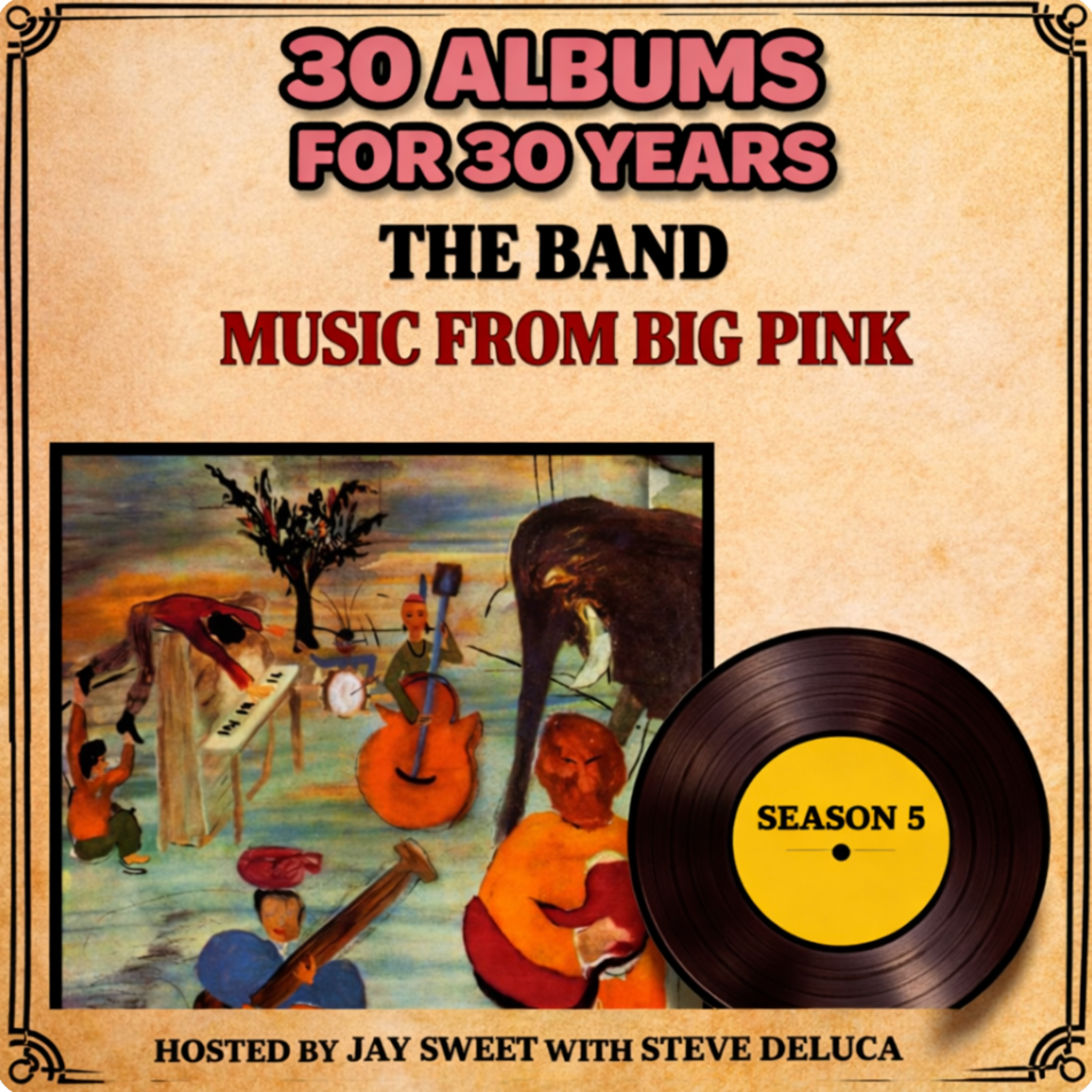 The Band -Music From Big Pink | The Band -Music From Big Pink (Capitol Records)Released- July 1-1968 Music from Big Pink by The Band is widely considered one of the most influential American albums of the late 1960s. Produced by John Simon, the record introduced a sound rooted in country, gospel, blues, and folk rather than the psychedelic style dominating the era. The group’s classic lineup—Robbie Robertson, Levon Helm, Rick Danko, Richard Manuel, and Garth Hudson—created a uniquely collaborative identity built around shared vocals, understated musicianship, and rich keyboard textures.Songs such as “The Weight,” “Tears of Rage,” and “I Shall Be Released” blended spiritual imagery, storytelling, and roots traditions into a deeply human musical statement. Drawing inspiration from their time working with Bob Dylan and living together near Woodstock, the album helped establish the foundations of what would later be called Americana. Its earthy authenticity and ensemble approach influenced artists from Eric Clapton to George Harrison and remains a landmark in rock history. | — | ||||||
| 3/20/26 | 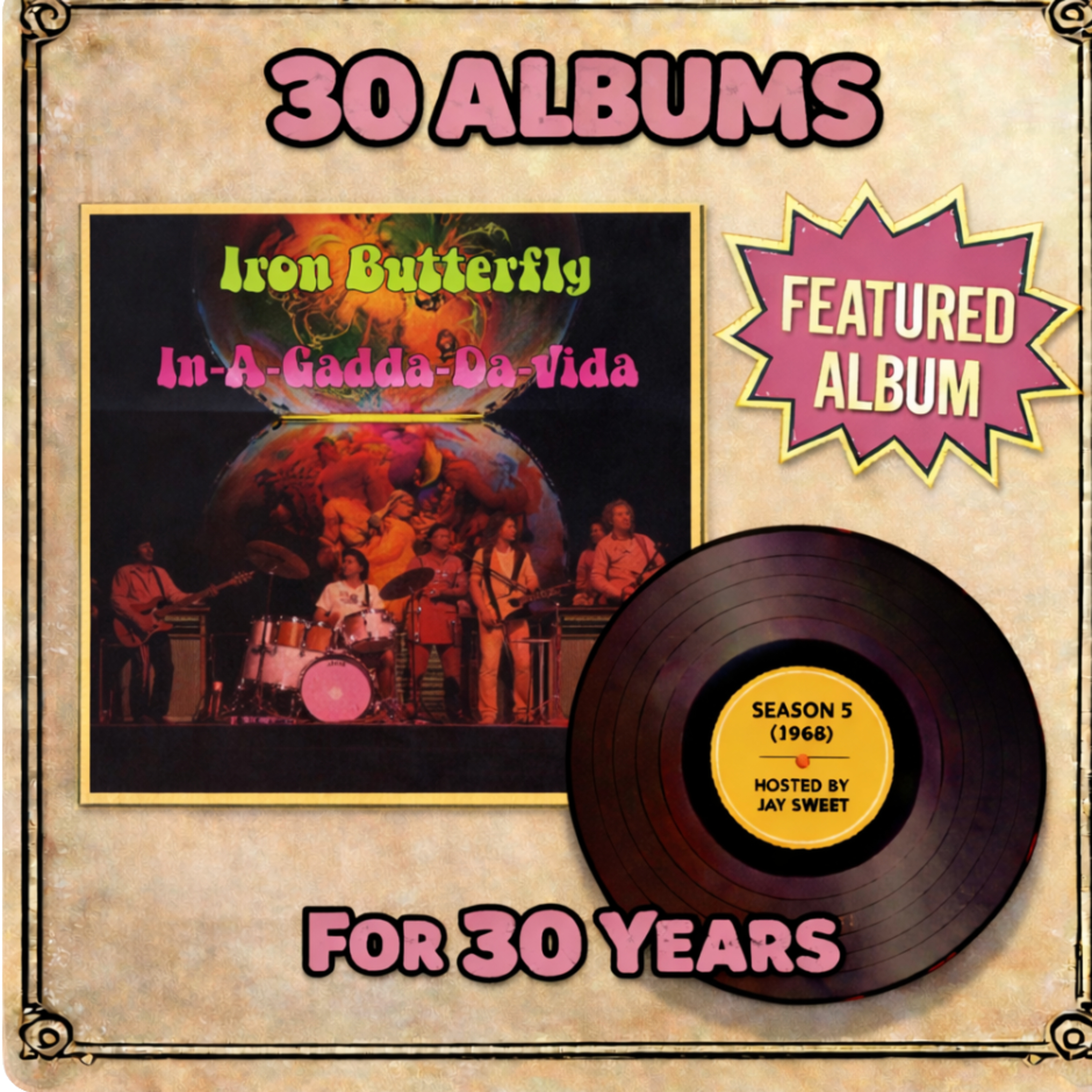 Iron Butterfly- In-A-Gadda-Da-Vida | Iron Butterfly- In-A-Gadda-Da-Vida (Atco) Released Date-June 14, 1968Released on June 14, 1968, In-A-Gadda-Da-Vida marked Iron Butterfly’s breakthrough and remains one of the defining albums of late-1960s psychedelic rock. Recorded at Gold Star Studios in Hollywood and Ultrasonic Studios in New York, the record captured a band rapidly evolving from their debut Heavy into a heavier, more expansive sound. Anchored by Doug Ingle’s thick, distorted organ tone and a rhythm section that emphasized repetition and groove, the album bridged psychedelic rock and early heavy metal.Its centerpiece, the 17-minute title track, became a landmark in rock history, showcasing extended improvisation, a prominent drum solo, and a hypnotic riff that influenced countless bands to follow. Commercially, the album was a massive success, peaking at #4 on the Billboard 200 and selling over four million copies. More than just a hit record, it helped legitimize long-form rock compositions and became a staple of FM radio, signaling a shift toward heavier, more experimental music. (S5-EP12) | — | ||||||
| 3/13/26 | 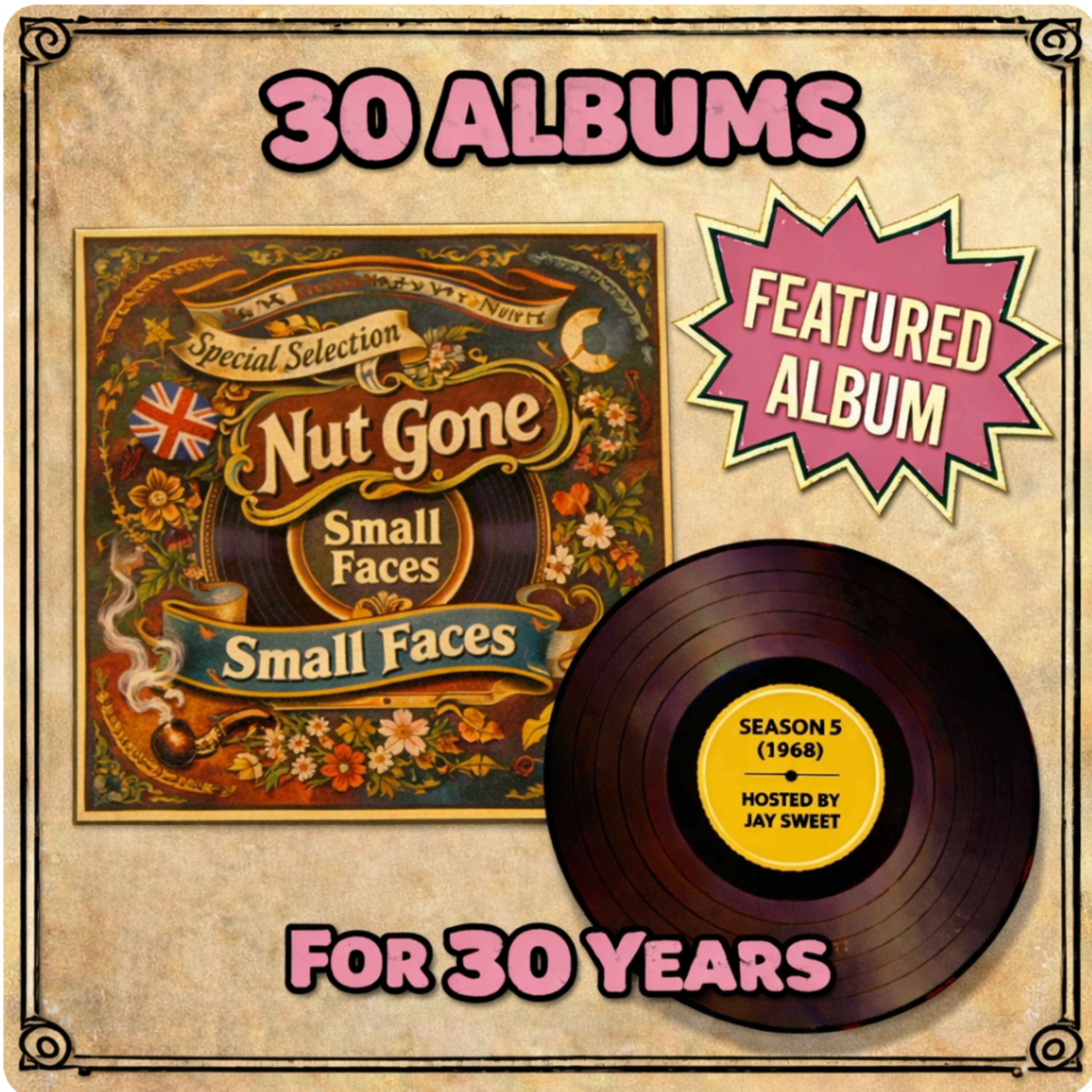 Small Faces-Ogdens’ Nut Gone Flake | Small Faces-Ogdens’ Nut Gone Flake (Immediate Records) Release Date- May 24, 1968 Ogdens’ Nut Gone Flake (1968) stands as the creative peak of the Small Faces and one of the most distinctive albums of the psychedelic era. Recorded in London at Olympic and Trident Studios and produced by Steve Marriott and Ronnie Lane, the album blends R&B roots, British music-hall humor, hard rock energy, and imaginative studio experimentation. The first side features a set of diverse songs—from the soulful power of “Afterglow (Of Your Love)” to the playful Cockney pop of the hit single “Lazy Sunday,” which reached No. 2 in the UK. The second side presents the whimsical “Happiness Stan” suite, a surreal narrative narrated by Stanley Unwin that follows a character searching for the missing half of the moon. With its innovative circular sleeve inspired by tobacco tins and its adventurous concept structure, the album reached No. 1 in the UK and remained there for six weeks. Though the original lineup soon dissolved, Ogdens’ Nut Gone Flake remains Small Faces’ most imaginative and enduring achievement. (S5-EP11) | — | ||||||
| 3/6/26 | 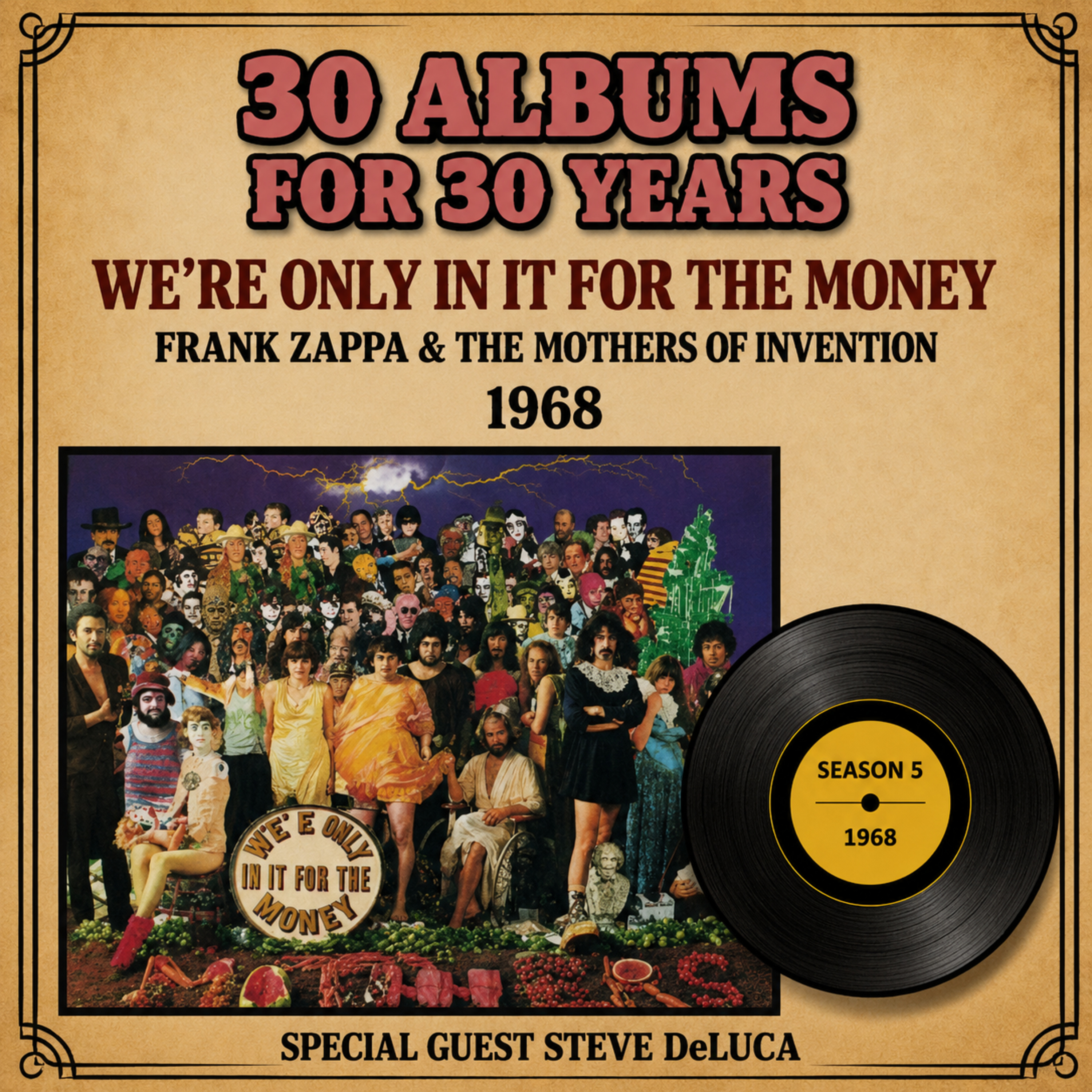 Frank Zappa and The Mothers of Invention-We're Only in It For The Money (with guest Steve DeLuca) | We're Only in It for the Money- Frank Zappa and The Mothers of Invention (with guest Steve DeLuca) Release Date- March 4, 1969 We're Only in It for the Money by Frank Zappa and The Mothers of Invention stands as one of the most daring and influential records of the late 1960s. Arriving at the height of the psychedelic era, the album sharply critiqued both the commercial music industry and the idealism of the hippie counterculture. Through satire, rapid-fire editing, and studio experimentation, Zappa created a collage-like listening experience that blended rock, doo-wop, avant-garde composition, and musique concrète. The record’s famous parody of Sgt. Pepper's Lonely Hearts Club Band signaled its irreverent tone, but beneath the humor was pointed social commentary about conformity, politics, and youth culture. Though controversial at the time, the album became a landmark in experimental rock and helped expand the possibilities of what a rock record could be. Its influence can be heard in progressive rock, alternative music, and later avant-pop artists who embraced genre-blending and conceptual ambition. (S5-Ep10) | — | ||||||
Want analysis for the episodes below?Free for Pro Submit a request, we'll have your selected episodes analyzed within an hour. Free, at no cost to you, for Pro users. | |||||||||
| 2/27/26 | 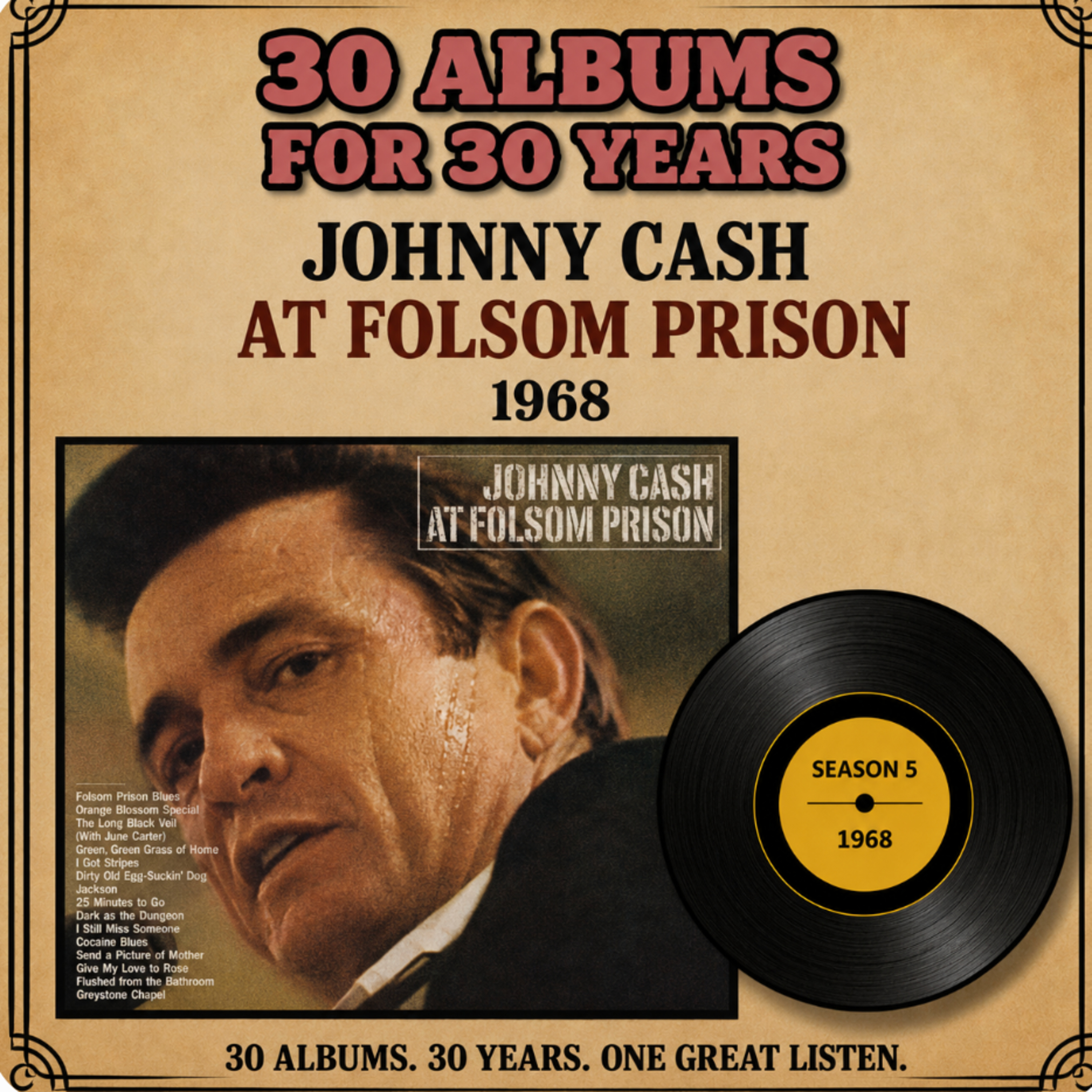 Johnny Cash at Folsom Prison | Johnny Cash- At Folsom Prison (Columbia)Release Date: May 6, 1968Recorded live inside California’s Folsom State Prison, At Folsom Prison marked a dramatic resurgence in the career of Johnny Cash. Performing before an audience of inmates, Cash delivered a raw, electric set filled with dark ballads, prison songs, humor, and empathy. The album opens with his iconic introduction—“Hello, I’m Johnny Cash”—launching into a thunderous version of “Folsom Prison Blues.” Throughout the performance, Cash balances rebellion and compassion, addressing themes of guilt, regret, labor, faith, and redemption. The recording captures an unfiltered atmosphere rarely heard on live albums at the time. The project revitalized Cash’s career, reached #1 on the country charts, and redefined the live album format. Decades later, it remains one of the most culturally significant recordings in American music history. (S5-Ep9) | — | ||||||
| 2/20/26 | 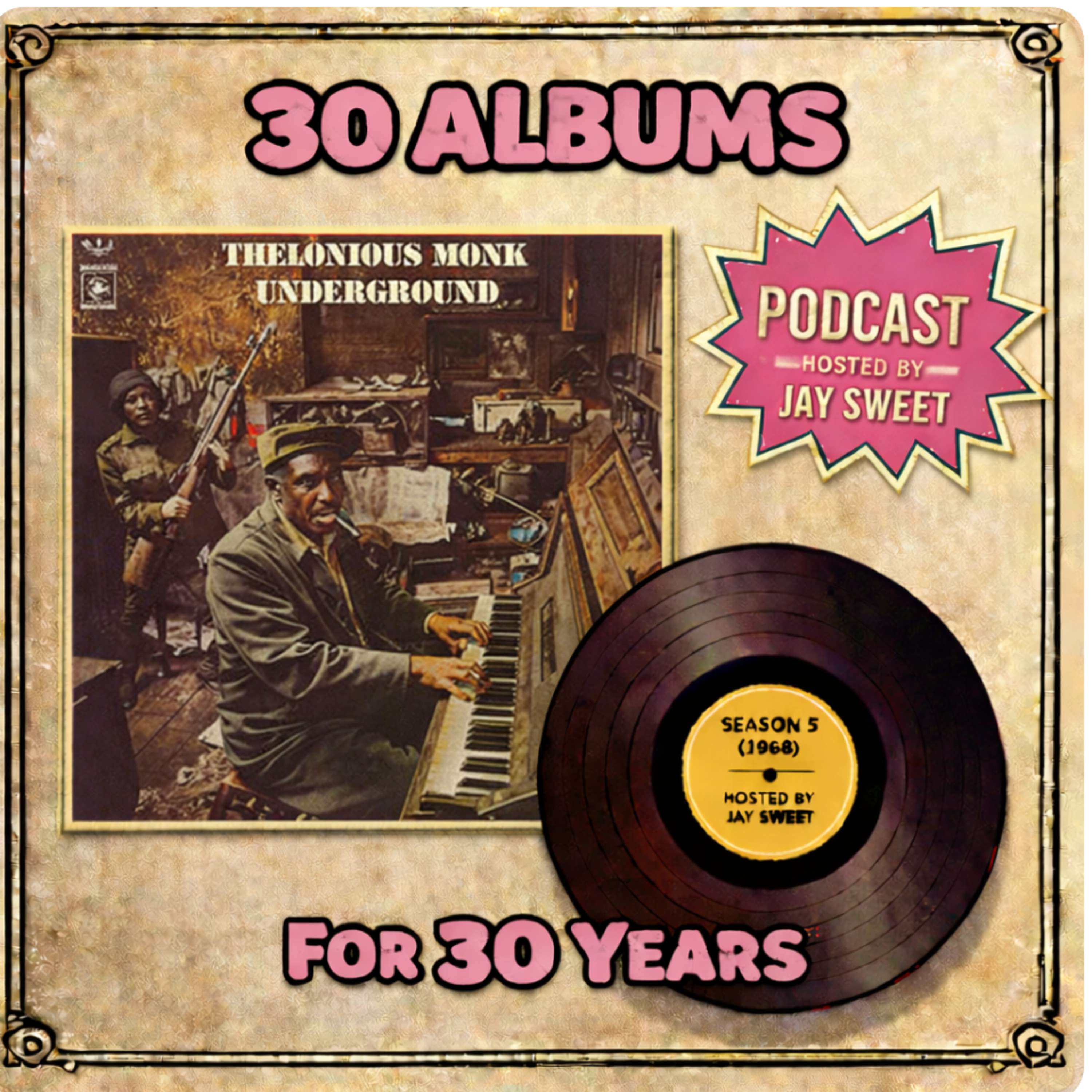 Thelonious Monk-Underground | Thelonious Monk- Underground (Columbia) Released May 1968 Produced by Teo Macero, Underground captures Monk with his longtime quartet: Charlie Rouse (tenor saxophone), Larry Gales (bass), and Ben Riley (drums), plus a vocal cameo from Jon Hendricks on “In Walked Bud.” The record balances new compositions like “Green Chimneys” and “Boo Boo’s Birthday” with revisited Monk staples, all delivered with the group’s seasoned interplay and elastic swing.Though jazz was competing with rock’s cultural dominance, Monk remained uncompromising—angular melodies, dissonant harmonies, abrupt silences, and percussive attack intact. The Grammy-winning cover, depicting Monk as a member of the French Resistance, symbolized both defiance and individuality. Artistically rather than commercially driven, Underground closes a defining chapter in Monk’s Columbia era and reaffirms his singular place in modern jazz. (S5-Ep8) | — | ||||||
| 2/13/26 | 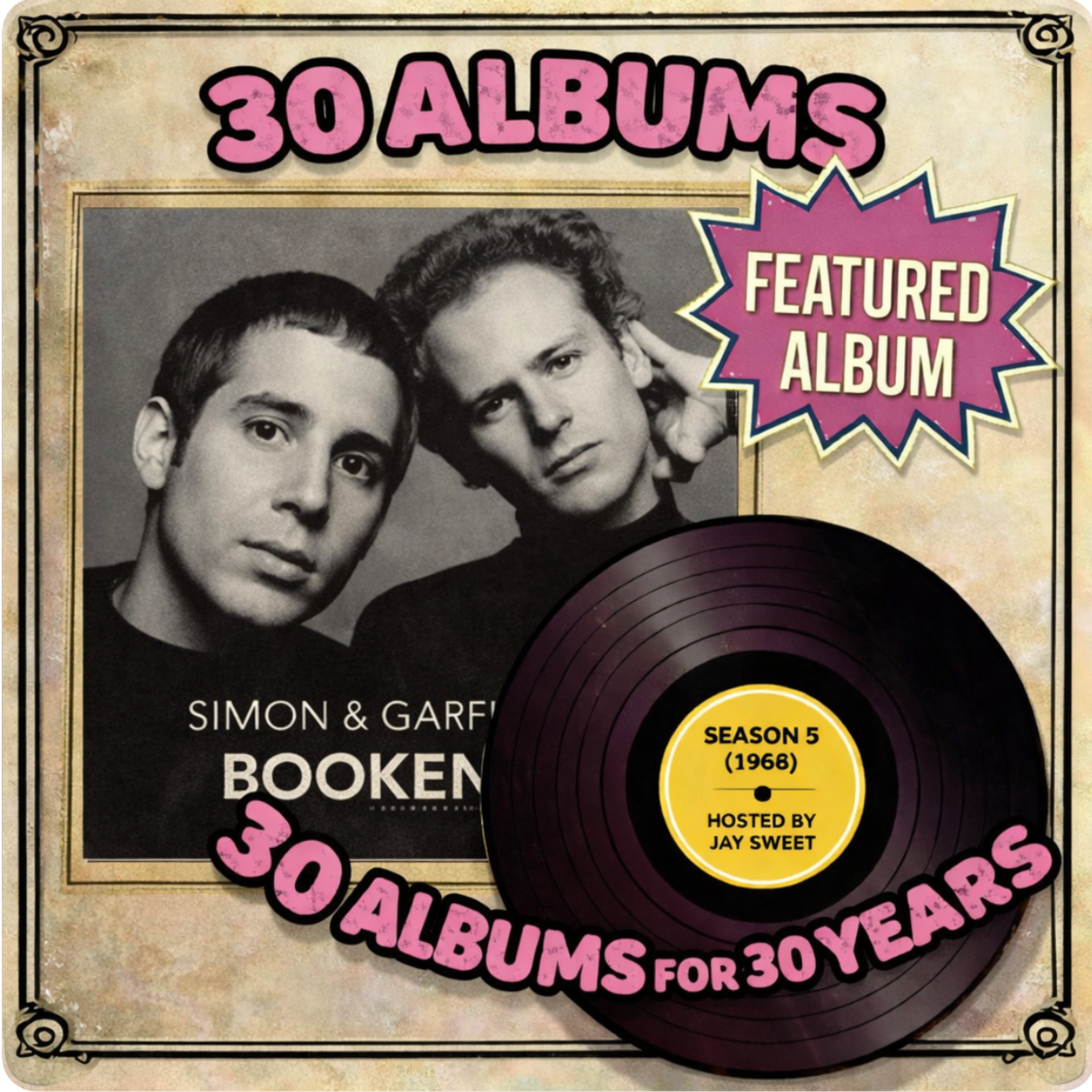 Simon and Garfunkel - Bookends | Simon and Garfunkel - Bookends (Columbia) Released on April 3, 1968,Bookends stands as one of the most concise yet thematically ambitious albums of the 1960s. The album blends folk, pop, and studio experimentation into a unified meditation on aging, memory, and identity. Conceived partly as a song cycle, Side One traces the arc of life—from youthful searching in “America” to mortality in “Old Friends”—framed by the delicate “Bookends Theme.” Inspired by the album-as-art statement approach of Sgt. Pepper's Lonely Hearts Club Band, the record features layered production shaped by engineer Roy Halee. Side Two balances introspection with radio-ready immediacy, including the cultural landmark “Mrs. Robinson,” written for the film The Graduate. Though running under 30 minutes, the album feels expansive in scope, thanks to its orchestration, field recordings, and emotional pacing. Bookends became the duo’s first No. 1 album and helped secure their full artistic control for the even more ambitious Bridge Over Troubled Water. More than a collection of hits, it remains a poignant reflection on time’s passage and the fragile beauty of human connection.(S5-Ep7) | — | ||||||
| 2/5/26 | 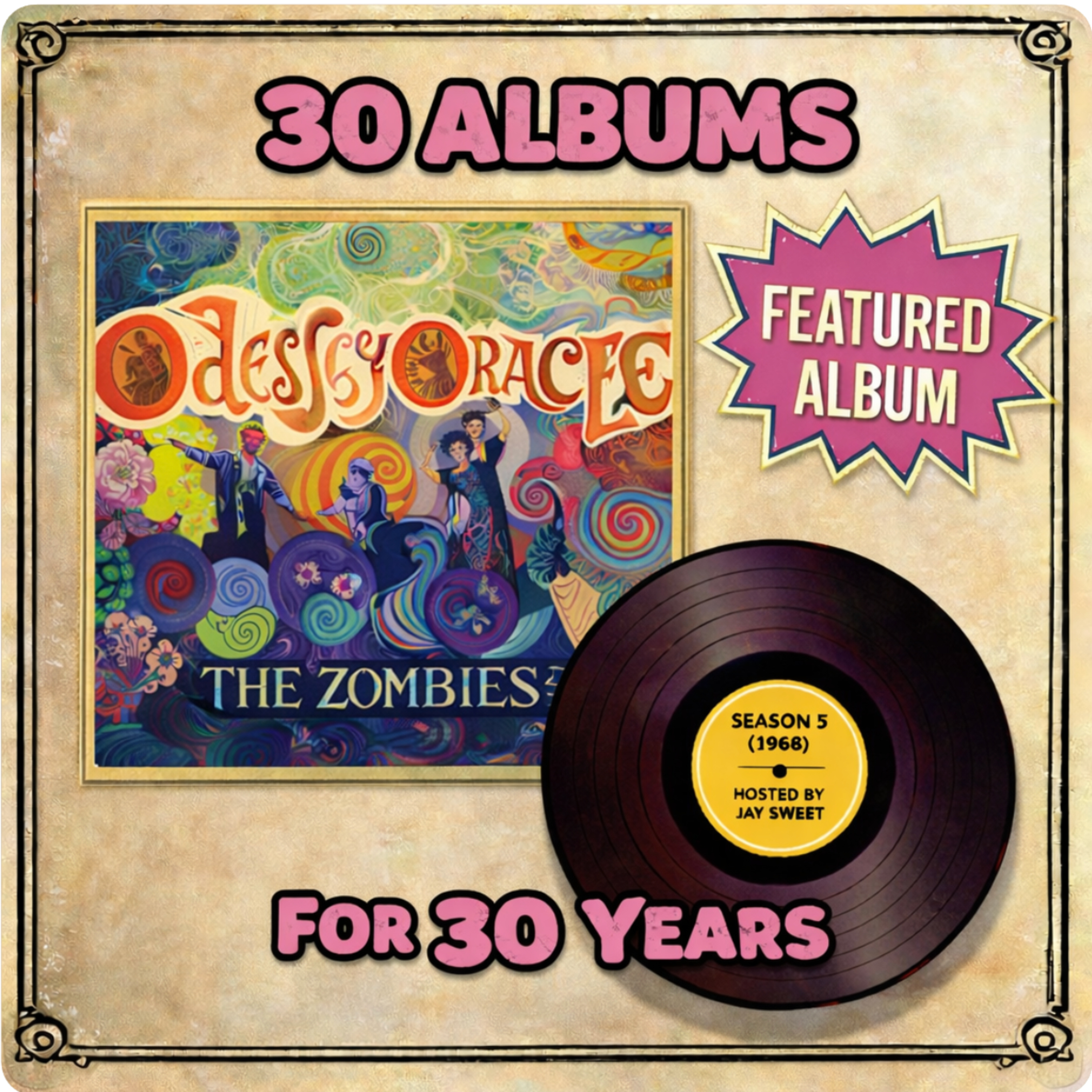 The Zombies -Odyessey and Oracle | The Zombies Odyessey and Oracle (CBS/ Date Records) Released April 19, 1968 (UK, CBS Records); July 15, 1968 (US, Date Records, a CBS subsidiary).Odessey and Oracle is one of those rare albums that feels delicate and meticulously crafted, yet emotionally direct. Recorded in 1967 as The Zombies were quietly falling apart, it captures a band at peak creative focus. Rod Argent and Chris White’s songwriting leans into baroque pop textures, jazz-tinged harmonies, and gentle psychedelia, while Colin Blunstone’s breathy, vulnerable voice gives the songs an almost dreamlike intimacy. Mellotron, harpsichord, and layered vocals create a chamber-pop atmosphere that feels closer to Pet Sounds than British Invasion rock. Lyrically, the album balances nostalgia (“Beechwood Park”), romantic optimism (“This Will Be Our Year”), and eerie storytelling (“Butcher’s Tale”), all wrapped in elegant arrangements. Its closer, “Time of the Season,” adds a sly, groove-driven edge that became their belated hit. Though overlooked at release, the album’s lush melodies and emotional subtlety have helped it age beautifully, earning its place as one of the most beloved and quietly influential records of the psychedelic era. (The Zombies Odyessey and Oracle (CBS/ Date Records) Released April 19, 1968 (UK, CBS Records); July 15, 1968 (US, Date Records, a CBS subsidiary).Odessey and Oracle is one of those rare albums that feels delicate and meticulously crafted, yet emotionally direct. Recorded in 1967 as The Zombies were quietly falling apart, it captures a band at peak creative focus. Rod Argent and Chris White’s songwriting leans into baroque pop textures, jazz-tinged harmonies, and gentle psychedelia, while Colin Blunstone’s breathy, vulnerable voice gives the songs an almost dreamlike intimacy. Mellotron, harpsichord, and layered vocals create a chamber-pop atmosphere that feels closer to Pet Sounds than British Invasion rock. Lyrically, the album balances nostalgia (“Beechwood Park”), romantic optimism (“This Will Be Our Year”), and eerie storytelling (“Butcher’s Tale”), all wrapped in elegant arrangements. Its closer, “Time of the Season,” adds a sly, groove-driven edge that became their belated hit. Though overlooked at release, the album’s lush melodies and emotional subtlety have helped it age beautifully, earning its place as one of the most beloved and quietly influential records of the psychedelic era. (S6 -Ep 6) | — | ||||||
| 1/30/26 | 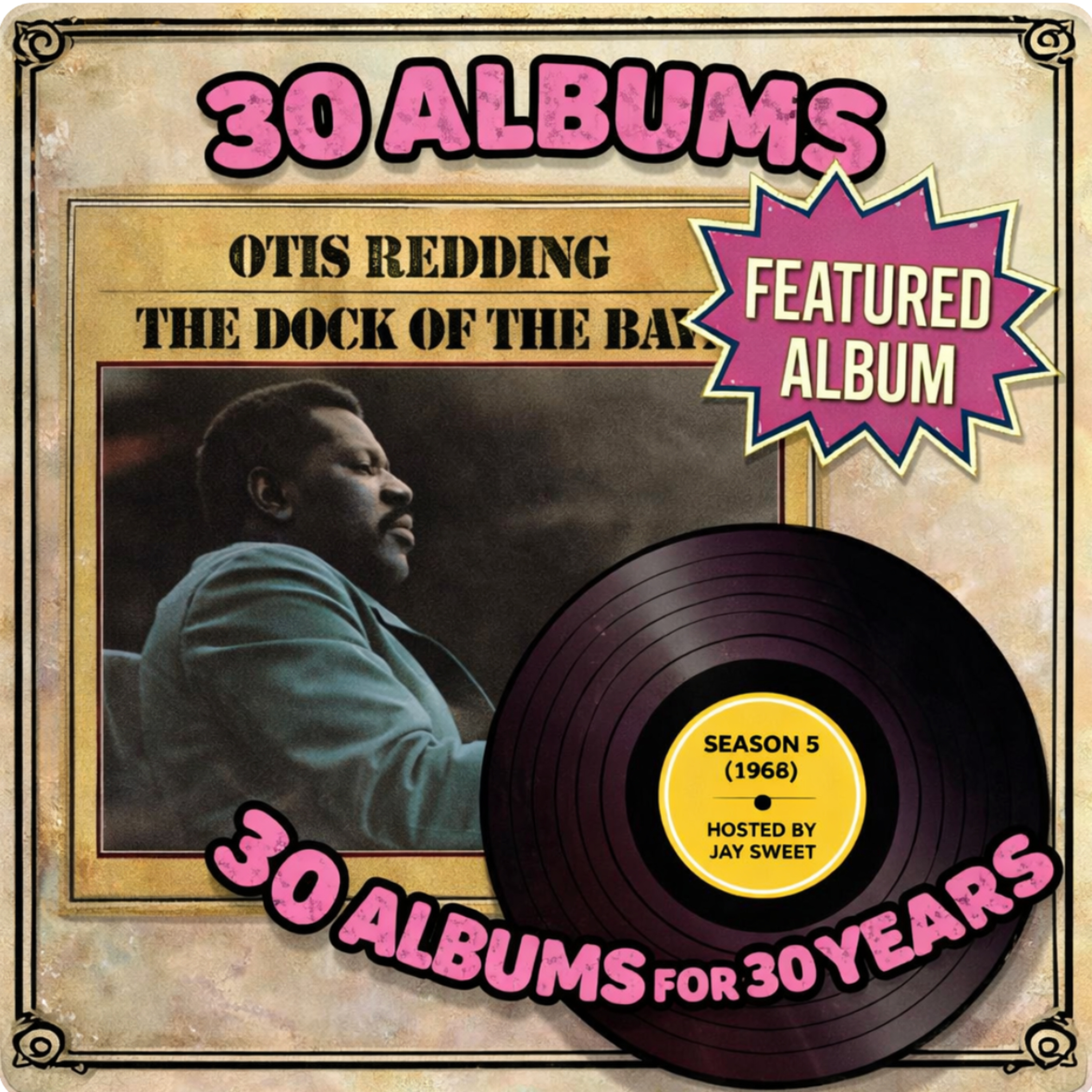 Otis Redding- The Dock Of The Bay | Otis Redding- The Dock of The Bay (Volt/Atco Records) Release Date (Released February 23, 1968)The Dock of the Bay (1968) is a powerful and poignant posthumous release that captures Otis Redding at both his artistic peak and the edge of a new musical direction. Blending classic Memphis soul with a softer, more reflective sound, the album reveals a deeper introspective side, especially on the landmark title track. “(Sittin’ On) The Dock of the Bay” became the first posthumous No. 1 single in U.S. history, reshaping soul music by proving it could be gentle, spacious, and emotionally inward. The record balances tender ballads, gritty grooves, playful duets, and blues standards, showcasing Redding’s remarkable range. Backed by the Stax house band, the album preserves the rich Southern soul sound while hinting at creative paths he never got to explore. Its success cemented his legacy as a global icon and made the album one of the most important and influential posthumous releases in popular music history. (S5-EP 5) | — | ||||||
| 1/26/26 | 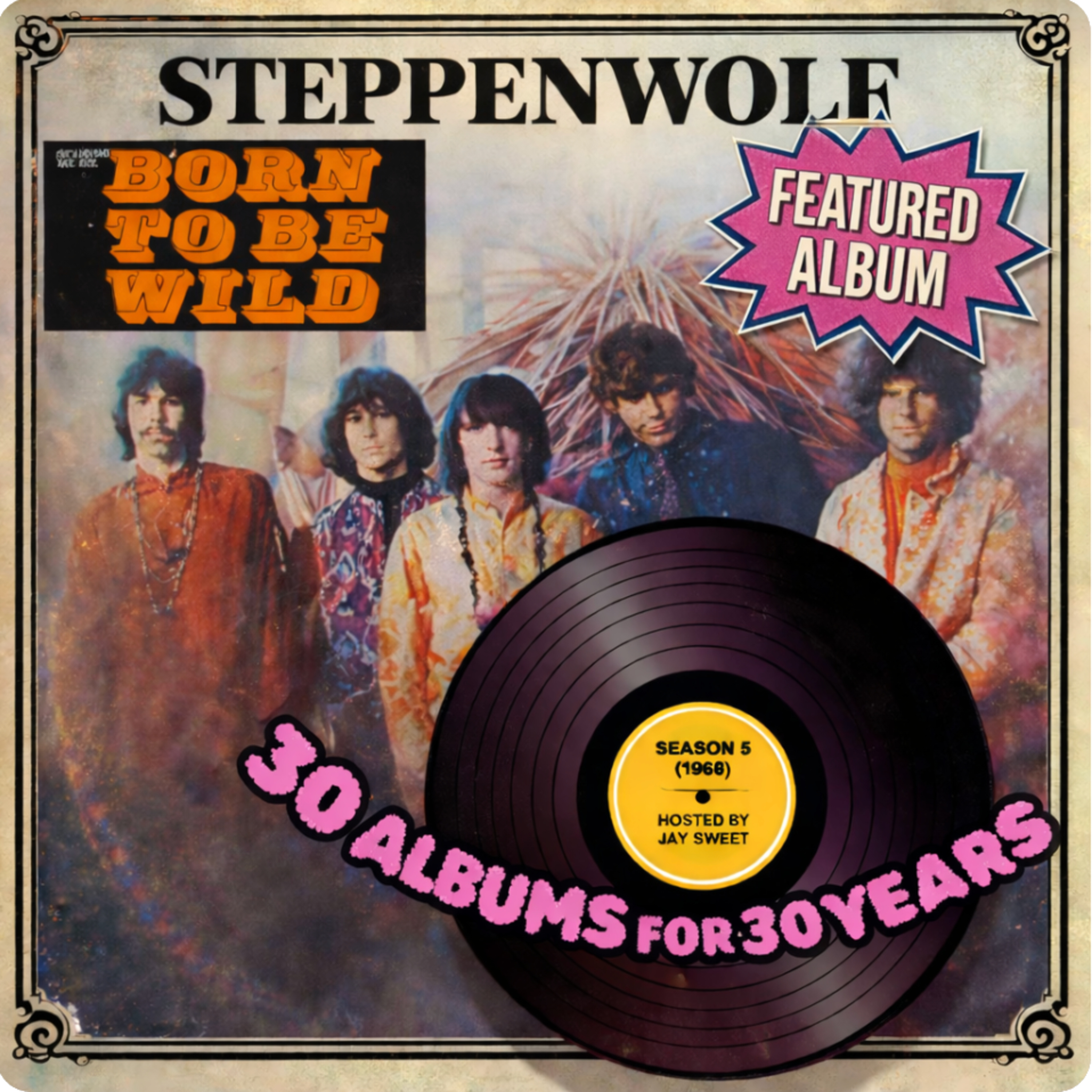 Steppenwolf- Self-Titled | Steppenwolf- Self-Titled Album (Dunhill Recordings) Release Date: January 22, 1968 Steppenwolf’s 1968 self-titled debut is a cornerstone of hard rock’s early evolution, blending blues roots with the heavier, riff-driven attack that would help shape proto–heavy metal. Powered by John Kay’s gritty, commanding vocals and Goldy McJohn’s roaring Hammond organ, the album balances raw aggression with social awareness. Signature tracks include the thunderous “Born to Be Wild,” forever linked to biker culture and countercultural freedom, and the dark, cautionary “The Pusher.” Blues covers like “Hootchie Kootchie Man” sit comfortably beside originals that range from boogie workouts to psychedelic-tinged jams. Though occasionally rough around the edges, the record’s energy, attitude, and iconic songs made it a massive success and established Steppenwolf as one of the defining hard rock bands of the late ’60s. (S5-Ep4) | — | ||||||
| 1/16/26 | 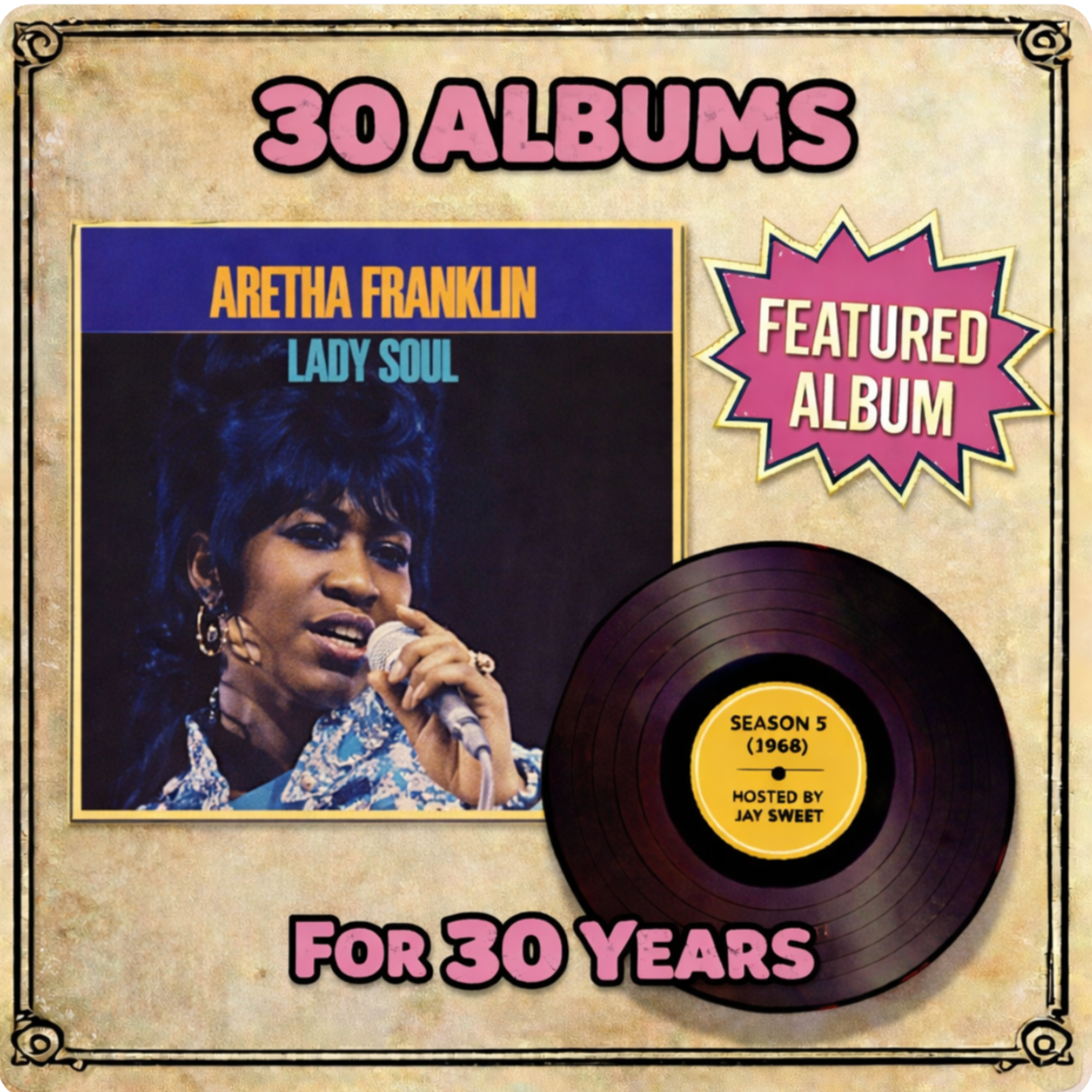 Aretha Franklin - Lady Soul | Aretha Franklin - Lady Soul (Atlantic Records)Release Date: Jan 15-1968Aretha Franklin’s Lady Soul (1968) cemented her status as the Queen of Soul, blending gospel, blues, R&B, and Southern funk into a timeless masterpiece. Recorded with the Muscle Shoals Rhythm Section, Memphis Horns, and backing vocals from The Sweet Inspirations and family, the album features classics like “Chain of Fools,” “(You Make Me Feel Like) A Natural Woman,” and “Ain’t No Way,” showcasing Aretha’s unmatched vocal power, emotional nuance, and interpretive genius. Its tight arrangements, soulful grooves, and concise sequencing created an unbroken emotional arc, dominating R&B charts and crossing over to pop. Beyond commercial success, Lady Soul became a cultural touchstone, symbolizing female empowerment, Black artistry, and social consciousness, setting the blueprint for modern soul and securing Aretha’s lasting influence on American music. (S5-Ep3) | — | ||||||
| 1/8/26 | 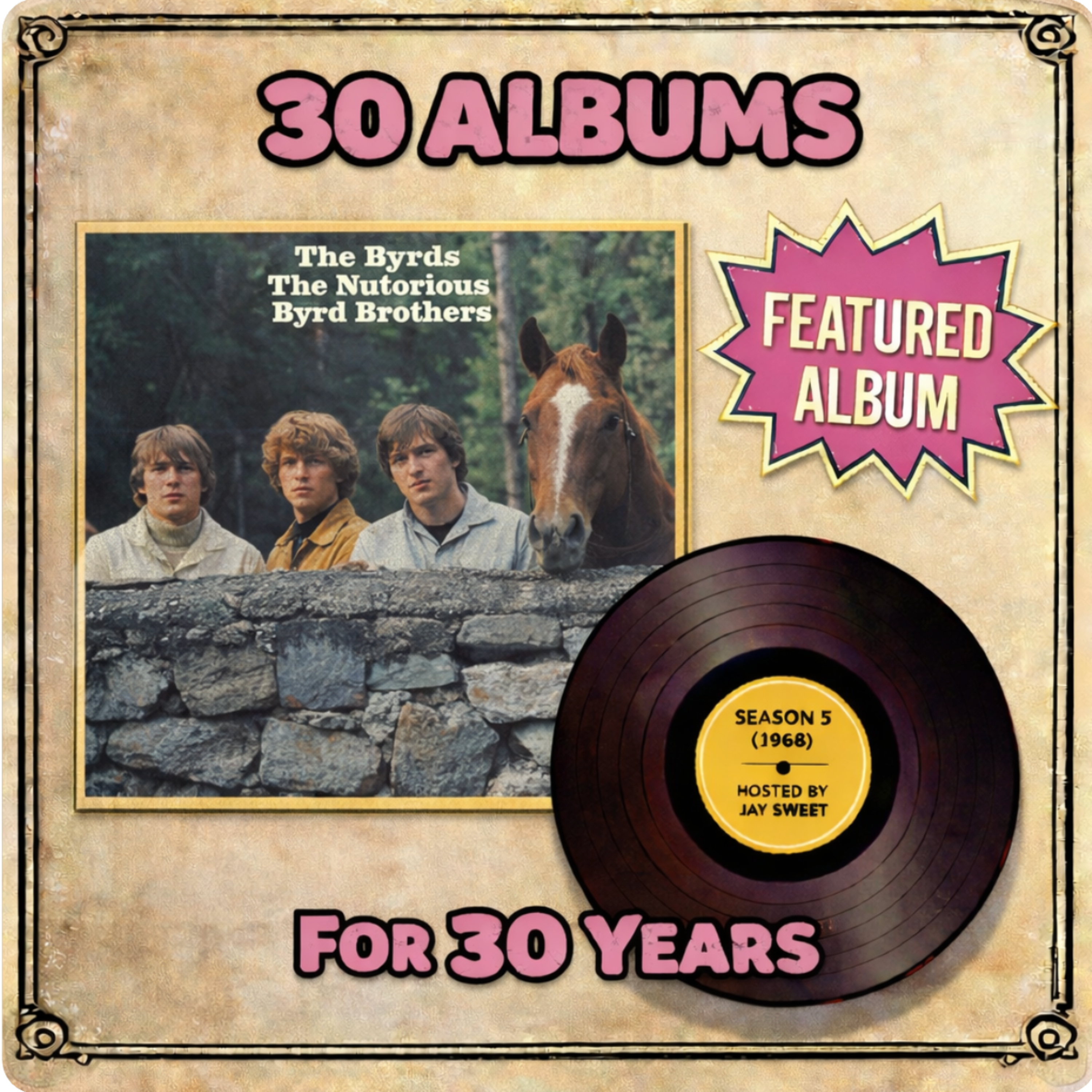 The Byrds-The Notorious Byrd Brothers | The Byrds-The Notorious Byrd Brothers (Columbia Records) Release Date: January 15, 1968 (U.S.)Released in January 1968, The Notorious Byrd Brothers captures the Byrds at a moment of collapse and creative peak. Recorded amid firings, walkouts, and heavy reliance on session musicians, the album paradoxically emerges as one of their most unified statements. It fuses folk-rock roots with psychedelia, country textures, baroque pop, and early electronic experimentation, including one of rock’s first Moog synthesizer appearances. Despite its brief runtime, the record feels dense and adventurous, featuring complex time signatures, inventive studio effects, and luminous harmonies. Songs like “Draft Morning,” “Wasn’t Born to Follow,” and “Space Odyssey” balance introspection, social unease, and cosmic curiosity. Initially modest in commercial impact, the album’s reputation has grown steadily, now widely regarded as a defining work that documents a band transforming instability into lasting artistic innovation. (S5-Ep2) | — | ||||||
| 1/1/26 | 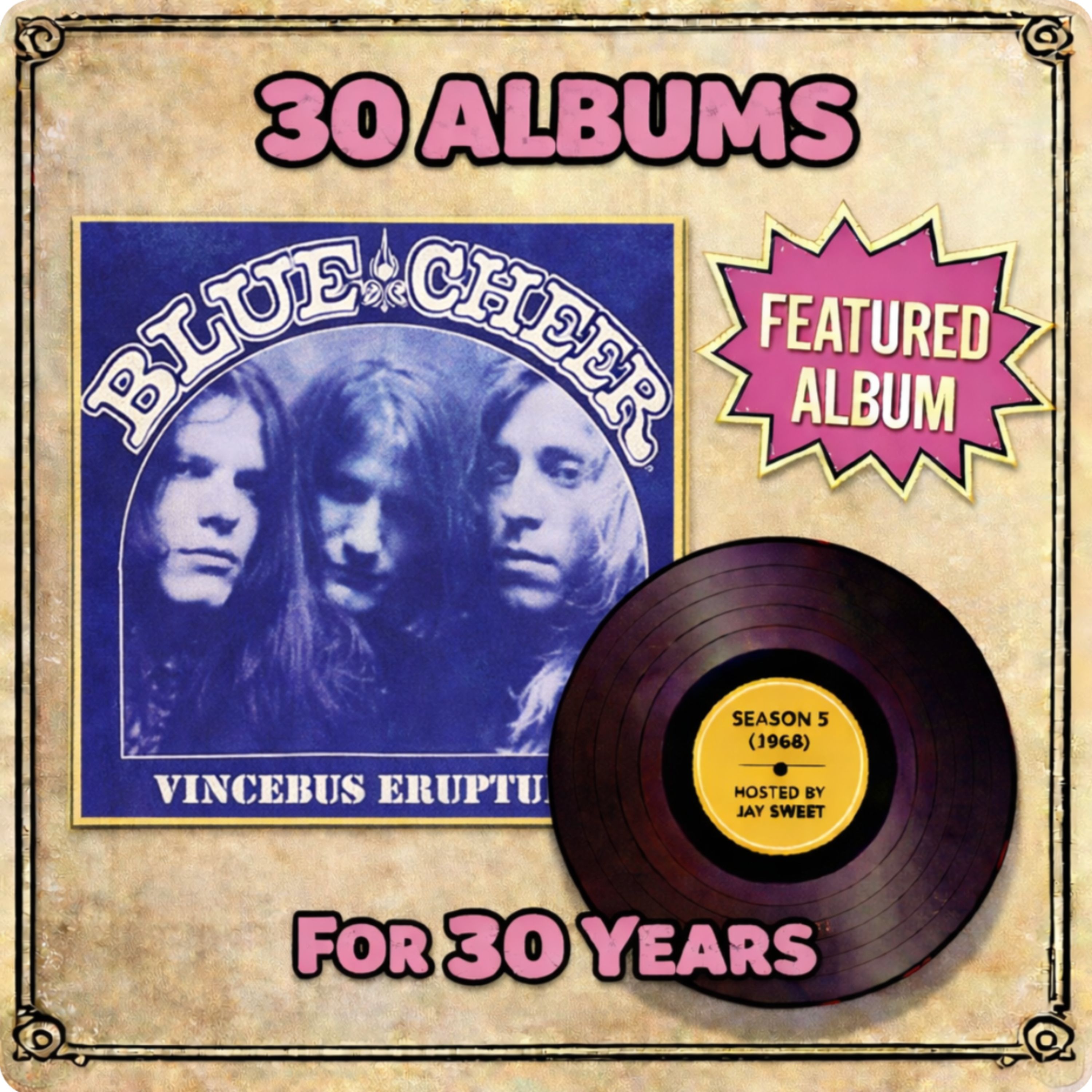 Blue Cheer-Vincebus Eruptum | Blue Cheer -Vicebus Eruptum (Phillips Records) Released: January 16, 1968, Recorded: Late 1967.Vincebus Eruptum is Blue Cheer’s ferocious debut and one of rock’s earliest heavy-metal landmarks. Formed in San Francisco by Dickie Peterson, Leigh Stephens, and Paul Whaley, the trio rejected psychedelic delicacy for raw volume, distortion, and blues-based power. Recorded mostly live, the album captured their brutal sound in real time, anchored by the hit “Summertime Blues,” which improbably stormed the charts. Originals like “Doctor Please” and “Second Time Around” pushed rock toward a darker, heavier future with fuzz-soaked riffs and pounding drums. Critics were split, but audiences embraced its unfiltered energy, sending it to No. 11 on the Billboard 200. Though later lineup changes softened the band’s edge, Vincebus Eruptum remains a foundational blueprint for metal, punk, grunge, and stoner rock. (S5, Ep1) | — | ||||||
| 4/23/25 | Buffalo Springfield -Again | Buffalo Springfield -Again (Atco) Released October 30, 1967, and Recorded January 9-September 18 Buffalo Springfield Again is a landmark album that captures both the brilliance and dysfunction of one of rock’s most influential short-lived bands. Recorded during a turbulent period marked by Neil Young’s departures, Bruce Palmer’s deportation, and rising tensions within the group, the album still delivers remarkable artistry. Each member shines: Stephen Stills’ dynamic guitar work and songwriting drive tracks like “Bluebird,” Neil Young brings depth and experimentation with “Mr. Soul” and the ambitious “Broken Arrow.” At the same time, Richie Furay adds warmth and a country-rock flavor with “A Child’s Claim to Fame” and “Sad Memory.” Despite its fragmented nature, the album’s eclectic sound helped define the era. Though it only reached #44 on the charts, its critical reputation has grown over time. Following the release of the album, internal struggles led to the band’s breakup, but its members went on to shape the folk and country rock genres through groups like CSNY and Poco. This record remains a vital, underrated piece of 1960s rock history.Signature Songs: "Mr Soul," "Bluebird" "Broken Arrow"Full Album YouTube, Spotify Playlist YouTube Spotify | — | ||||||
| 4/9/25 | McCoy Tyner - The Real McCoy with guest Steve Myerson | (S4 Ep18) The Real McCoy (Blue Note) with guest Steve Myerson October 1967, Recorded April 21, 1967 The Real McCoy (1967) is a landmark album by jazz pianist McCoy Tyner, marking his first solo release after leaving John Coltrane’s legendary quartet. With a stellar lineup featuring tenor saxophonist Joe Henderson, bassist Ron Carter, and drummer Elvin Jones, the album showcases Tyner's unique modal jazz style, blending African rhythmic influences and his signature wide interval voicings. The album’s compositions, all written by Tyner wrote, demonstrate his incredible range as a pianist and composer, with tracks like "Passion Dance" and "Contemplation" now regarded as jazz standards. The interplay between the musicians is dynamic, with Henderson's fluid solos, Carter's solid bass work, and Jones's explosive drumming providing a perfect backdrop for Tyner's improvisations. The album balances uptempo tracks, like "Four by Five," with slower, more meditative pieces, such as "Search for Peace," highlighting Tyner’s ability to navigate diverse moods and textures. The Real McCoy is widely praised for its deep emotional resonance and technical brilliance, solidifying McCoy Tyner as one of his generation's most influential jazz pianists.Signature Tracks: "Passion Dance", "Contemplation", "Four By Five" Full Album YouTube Spotify Playlist YouTube Spotify | — | ||||||
| 4/4/25 |  Endea Owens Interview | Endea Owens is a jazz talent known for her unique bass playing, compositions, and dynamic performances. She has gained widespread recognition as a member of The Late Show with Stephen Colbert band, where her versatile bass playing has captivated a broad television audience. Her 2023 debut album, Feel Good Music, blends intricate arrangements with an accessible, feel-good vibe, appealing to casual listeners and jazz critics.Owens' roots in Detroit and her diverse musical background inform her distinct style, which blends jazz with other genres like house music and soul. She has collaborated with major artists such as Jon Batiste and Juicy J, and her work with Batiste’s band earned her Grammy recognition.Beyond her musical success, Owens is also committed to philanthropy. In 2020, she founded the Community Cookout project, which provides meals and connects with underprivileged communities. Looking ahead, Owens will perform new material at venues like the South Orange Performing Arts Center, continuing to push the boundaries of jazz while deepening her community impact. | — | ||||||
| 4/2/25 | Nina Simone-Sings The Blues | (S4 Ep 17) Nina Simone- Sings the Blues (RCA)Released 1967, Recorded December 19-January 5, 1967Nina Simone Sings the Blues is a powerful, emotionally raw album that marked a significant shift in Nina Simone's career. Her first release with RCA Victor showcases her deep connection to the blues tradition, drawing influence from legends like Bessie Smith and Billie Holiday. With tracks like "Do I Move You?" and "Backlash Blues," inspired by Langston Hughes, Simone’s music captures the racial tensions and personal struggles of the 1960s. Although it didn’t chart highly, the album’s authenticity and emotional depth solidified her place as one of America’s greatest musical voices. The album blends jazz, blues, gospel, and soul, with Simone’s poignant piano work and powerful vocals leading the way. Tracks like "I Want a Little Sugar in My Bowl" and "Real Real” showcase her mastery of the genre and her unapologetic, bold musical style, influencing future artists like Amy Winehouse and Lauryn Hill.Signature Tracks: "My Man's Gone Now," "Backlash Blue," "I Want A Little Sugar In My Bowl." Full Albums YouTube Spotify Playlists YouTube Spotify | — | ||||||
| 3/26/25 | Big Brother and Holding Company | (S4-Ep16) Big Brother and Holding Company (Mainstream) Release August 23, 1967, and Recorded December 12-14, 1967 Big Brother and the Holding Company’s debut album is a fascinating glimpse into the early rise of Janis Joplin as a powerhouse vocalist. Although the album initially received mixed reviews due to its cleaner, more restrained production than the band’s psychedelic live performances, it remains an essential piece of the 1960s San Francisco music scene albums. Joplin’s unique voice stands out, adding depth and emotion to tracks like “Down on Me” and “Women Is Losers,” though the album doesn’t fully capture the wild energy of their live shows. Standout moments include “Intruder” and the experimental “All Is Loneliness,” showcasing the band’s bluesy, psychedelic influences. Despite its lackluster commercial reception, the album helped establish Big Brother as a key figure in the psychedelic movement and introduced Joplin’s legendary vocal talent. While it’s not as polished as their next release, Cheap Thrills (1968), The album holds significant historical value, paving the way for their future success and marking the beginning of Joplin’s short but remarkable career.Signature Tracks “Bye, Bye Baby," "Call on Me," "All Is Loneliness"Full Albums: YouTube, Spotify Playlist: YouTube, Spotify | — | ||||||
| 3/24/25 |  Dan Pugach Interview | Dan Pugach, an Israeli-born composer, drummer, and bandleader, is pushing the boundaries of big band jazz with his Grammy-winning album Bianca Reimagined: Music for Paws and Persistence. The album, inspired by Pugach and his wife Nicole Zuraitis' love for rescue animals, combines personal stories with a tribute to their late dog Bianca. Pugach's unique journey from rock drummer to big band leader has shaped his innovative style, which blends influences from jazz greats and rock music. His Grammy Award for Best Large Jazz Ensemble places him alongside legendary jazz figures, and his compositions reflect both personal and cultural narratives. Pugach's drumming and leadership in big band music reflect his deep understanding of rhythm and tradition. As he continues to write and perform, Pugach is dedicated to pushing the genre forward and staying connected with his audience, performing regularly in New York and worldwide with his big band and nonet.Website - https://www.danpugach.com/Dan Pugach Big Band: Bianca Reimagined: Music For Paws and Persistence - https://youtu.be/hGX65TdtkGQ?si=FHQKEO6s2tcQc4iB | — | ||||||
Showing 25 of 56
Sponsor Intelligence
Sign in to see which brands sponsor this podcast, their ad offers, and promo codes.
Chart Positions
4 placements across 4 markets.
Chart Positions
4 placements across 4 markets.