A Beginner's Guide to AI
by Dietmar Fischer
Is this your podcast?On the show
From 51 epsHost
Recent guests
Recent episodes
AI Is Now the Business Standard. Are You Falling Behind? - DIETMARs OPINION
Oct 17, 2026
9m 59s
Stop Doing the Work. Start Directing the AI - Solomon Thimothy
Oct 13, 2026
56m 58s
Jevons’ AI Paradox: Why Cheaper Models Raise Energy Demand
Oct 11, 2026
22m 54s
A Disturbing AI Story Big Tech Never Wants You to Hear, with Paul Hebert // REPOST
Oct 9, 2026
53m 33s
Why Your AI Content Feels Soulless - Diane Strand
Oct 7, 2026
48m 31s
Insights from recent episode analysis
Audience Interest
Podcast Focus
Publishing Consistency
Platform Reach
Insights are generated by CastFox AI using publicly available data, episode content, and proprietary models.
Most discussed topics
Brands & references
Total monthly reach
Based on 1 signal.
Built from
By chart position
- 🇺🇸United States · TechnologyHOME#9618K to 94K
- 🇬🇧United Kingdom · Technology#742.0K to 11K
- 🇮🇳India · Technology#781.3K to 7.0K
- 🇦🇺Australia · Technology#80880 to 4.7K
- 🇰🇪KE · Technology#26453 to 2.4K
- Per-Episode Audience
Est. listeners per new episode within ~30 days
23K to 123K🎙 Daily cadence·396 episodes·Last published 2d ago - Monthly Reach
Unique listeners across all episodes (30 days)
77K to 410K🇺🇸77%🇬🇧9%🇮🇳6%+4 more - Active Followers
Loyal subscribers who consistently listen
43K to 225K
Market Insights
Platform Distribution
Reach across major podcast platforms, updated hourly
Total Followers
—
Total Plays
—
Total Reviews
—
* Data sourced directly from platform APIs and aggregated hourly across all major podcast directories.
Social Links & Contact
Official channels & resources
Official Website
Login
RSS Feed
Login
| Date | Episode | Topics | Guests | Brands | Places | Keywords | Sponsor | Length | |
|---|---|---|---|---|---|---|---|---|---|
| 10/17/26 |  AI Is Now the Business Standard. Are You Falling Behind? - DIETMARs OPINION | 🤖 AI has moved beyond technical teams and innovation labs. At Berlin’s BIG BANG KI Festival, Dietmar Fischer found packed stages, long queues, and business professionals searching for practical ways to implement artificial intelligence.In this solo episode of Beginner’s Guide to AI, Dietmar shares what he observed at the festival and what it tells us about AI adoption in the wider business world.The dominant questions were practical. How can a company integrate AI into its CRM? How can it build useful AI agents? How can it turn individual tools into repeatable workflows? The audience was not limited to developers or AI specialists. It looked like the audience at any large business conference.That shift matters. AI is no longer an unusual competitive advantage. It is becoming part of the expected business standard.The festival also exposed the continuing gap between AI marketing and AI implementation. Many exhibitors used impressive language without clearly explaining what their products did. Interest in AI is high, but clear business value is still difficult to identify.Dietmar also visits the robot arena, where humanoid machines dance and fight. The demonstration leads to a more serious question about how physical robots could change private security and other real-world services.💡 In this episode:What the BIG BANG KI Festival reveals about AI adoptionWhy AI has entered mainstream businessWhat business professionals want from AI agentsWhy CRM integration and AI workflows are becoming importantThe gap between AI buzzwords and practical business valueWhat humanoid robots could mean for securityWhy occasional AI use is no longer enoughHow companies can move from AI tools to systematic implementationThe message is simple: companies must do more than use AI. They must learn to systematize it, connect it to real processes, and make it productive.📧💌📧Tune in to get my thoughts and all episodes, and don’t forget to subscribe to our newsletter: beginnersguideto.ai📧💌📧Quotes from the Episode“AI arrived in the business world, definitely arrived.”“It makes AI a standard. And if you don’t follow the standard, you are below standard and you fall behind.”“It’s not just using AI. You have to get to the next level to systematize AI, to use it to really be productive, to use agents and all those things.”Chapters00:00 How Mainstream Business Sees AI01:26 Inside the BIG BANG KI Festival02:23 Packed Stages and Practical AI04:43 Agents, Acceptance and AI Buzzwords05:47 Robot Boxing and the Future of Security07:28 AI Is Now the Business StandardAbout Dietmar FischerDietmar is a podcaster and digital marketer from Argo.berlin. If you want to get your AI or digital marketing going, contact him at argoberlin.com. Hosted on Acast. See acast.com/privacy for more information. | 9m 59s | ||||||
| 10/13/26 | 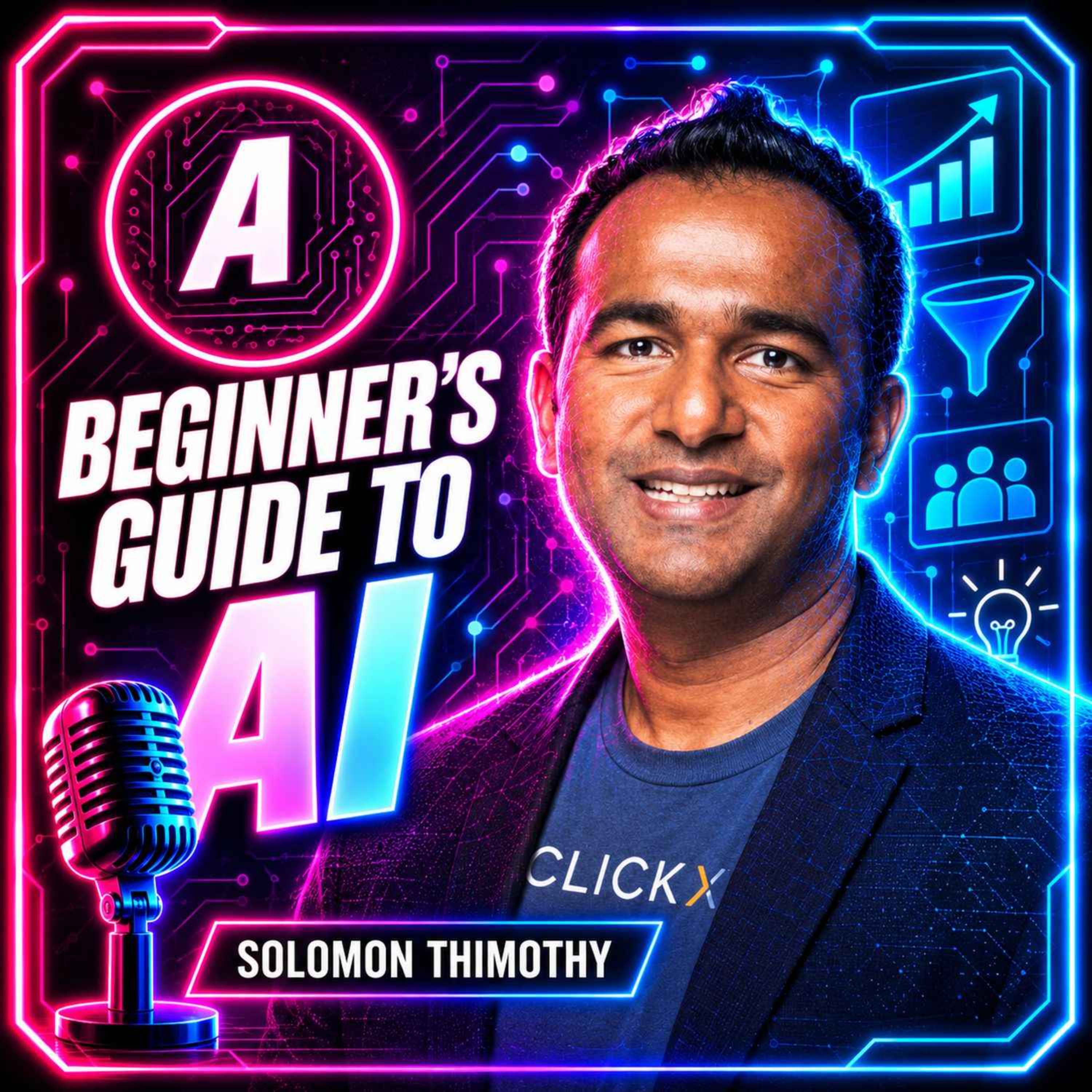 Stop Doing the Work. Start Directing the AI - Solomon Thimothy | 🤖 AI fluency is becoming a core business skill. But being AI fluent means much more than knowing how to prompt ChatGPT.In this episode of Beginner's Guide to AI, Dietmar Fischer talks with entrepreneur and growth marketer Solomon Thimothy about the transition from using AI as a chatbot to using AI as part of the workforce.Solomon describes how his teams use AI agents and coding tools to create software, automate workflows, prepare client work and increase capacity without simply adding more people.One example captures the shift: a client had a design process that normally took about a week. After rebuilding the workflow around AI, multiple branded materials could be produced during a single call. According to Solomon, the client estimated that the new process saved him $18,000.But this episode is not really about one tool.It is about a different way of working.Instead of employees doing every task themselves, Solomon argues that professionals increasingly need to direct AI systems that execute the work. That changes productivity, hiring, professional services, management and even the economics of running a company.We discuss:🤖 Why AI fluency matters beyond prompt engineering⚙️ How AI agents change everyday knowledge work📈 Why AI can increase capacity without immediately increasing headcount🧠 Why employees need to learn to direct rather than simply execute💼 What AI means for hiring and professional services💻 How non-programmers can build working software with AI⏱️ Why speed can be more valuable than pure cost reduction💰 Why AI token costs are becoming a management problem👥 Why human experience and context remain essentialThe larger question is simple:If AI can increasingly execute the work, what becomes your job?📧💌📧Tune in to get my thoughts and all episodes. Don't forget to subscribe to our Newsletter:https://beginnersguideto.ai📧💌📧👤 About Dietmar FischerDietmar Fischer is a podcaster and AI marketer from Berlin.If you want help with AI strategy or digital marketing, visit:https://argoberlin.com💬 Quotes from the Episode“We now need to drive the thing, we don't need to do the thing.”“I don't think we're going to be taken over by AI. I think we already are.”“It's your talent, your experience, your past work.”⏱️ Chapters00:00 Meet Solomon Thimothy01:05 Scaling a Business With “Tokenized Labor”07:02 How AI Changes the Agency Business Model12:24 Building Software Without Being a Developer18:24 Why Every Professional Needs AI Fluency27:14 Hiring and Leading in an AI-First Company36:09 Managing Multiple AI Agents and Models40:31 Has AI Already Taken Over?46:25 AI Costs, Books and Where to Find Solomon🔗 Where to Find Solomon Thimothy🌐 IMS: https://www.ims.net/🌐 Personal website: https://www.thimothy.com/💼 LinkedIn: https://www.linkedin.com/in/solomonthimothy/🏢 OneIMS: https://www.oneims.com/📚 Books: his upcoming "How to Have Buyers Chase You" is not yet out, you can find all the details here: https://www.thimothy.com/books Hosted on Acast. See acast.com/privacy for more information. | 56m 58s | ||||||
| 10/11/26 |  Jevons’ AI Paradox: Why Cheaper Models Raise Energy Demand | ⚡ AI is getting cheaper, faster, and more efficient. So why are data centres preparing to use far more electricity?In this episode of A Beginner’s Guide to AI, Professor GePhardT explores Jevons’ paradox and its uncomfortable lesson for artificial intelligence: using less energy per task does not guarantee that we use less energy overall.Better chips, smaller models, efficient inference, and AI agents make AI more affordable. But lower cost also creates more demand. One AI task becomes ten. One assistant becomes an agent. One model call becomes a long automated workflow running quietly in the background.We look at the AI rebound effect, AI energy consumption, data-centre electricity demand, sustainable AI, AI agents, and the infrastructure cost behind near-free inference. The episode also examines Google Gemini prompt efficiency alongside the larger growth in AI-focused data centres.📧💌📧Tune in to get my thoughts and all episodes. Don’t forget to subscribe to our Newsletter: beginnersguideto.ai📧💌📧👤 About Dietmar FischerDietmar is a podcaster and digital marketer from Argo.berlin. If you want to get your AI or digital marketing going, contact him at argoberlin.com.💬 Quotes from the Episode“Each individual task may become cheaper. The total number of tasks can explode.”“The efficient oven was not a failure. It did exactly what it was supposed to do.”“Efficient per what? And more of how many?” Hosted on Acast. See acast.com/privacy for more information. | 22m 54s | ||||||
| 10/9/26 |  A Disturbing AI Story Big Tech Never Wants You to Hear, with Paul Hebert // REPOST | 🎙️In this episode of Beginner’s Guide to AI, Dietmar Fischer sits down with Paul A. Hebert, founder of AI Recovery Collective and author of Escaping the Spiral, for a serious conversation about AI chatbot harm, hallucinations, digital dependency, and the real-world psychological risks of generative AI. Paul shares how an intense experience with ChatGPT pushed him into a dangerous spiral, what he learned about the limits of large language models, and why AI literacy may be one of the most important skills of this decade.🧠 This episode explores what happens when AI stops feeling like software and starts feeling personal. Dietmar and Paul talk about hallucinations, trust, chatbot addiction, AI companions, mental health risks, youth safety, and why companies building these systems cannot hide behind product language forever. The discussion is intense, but it is also practical. You will come away with a clearer sense of how to use AI more safely, what warning signs to watch for, and why regulation is quickly becoming a much bigger part of the AI conversation. OpenAI has publicly discussed why language models hallucinate, while lawmakers in multiple U.S. jurisdictions have pushed new restrictions on AI systems acting like therapists or medical professionals.📧💌📧Tune in to get my thoughts and all episodes, don't forget to subscribe to our Newsletter: beginnersguide.nl📧💌📧👤 About Dietmar Fischer: Dietmar is a podcaster and AI marketer from Berlin. If you want to know how to get your AI or your digital marketing going, just contact him at argoberlin.com🔥 Quotes from the Episode“AI literacy is the most important thing anybody can work on.”“Had OpenAI responded to that first message and said this is a hallucination and you’re physically safe, I would have been fine.”“Never trust the thing it tells you. Even if it gives you a citation, go look.”🕒 Chapters00:00 Paul Hebert’s Shocking ChatGPT Experience08:14 Why AI Hallucinations Can Spiral Into Real Fear16:05 AI Literacy, Neurodivergence, and How He Got Out23:32 Why AI Companies Must Be Accountable30:02 AI Companions, Youth Safety, and Addiction Risks38:28 Terminator, Consciousness, and Practical Rules for Safe AI Use🔗 Where to find PaulThe AI Recovery Collective: airecoverycollective.comEscaping the Spiral on AmazonAI Recovery Collective Substack: airecoverycollective.substack.com/LinkedIn: Paul A. Hebert: linkedin.com/in/paul-hebert-48a36/🎵 Music credit: "Modern Situations" by Unicorn Heads Hosted on Acast. See acast.com/privacy for more information. | 53m 33s | ||||||
| 10/7/26 | 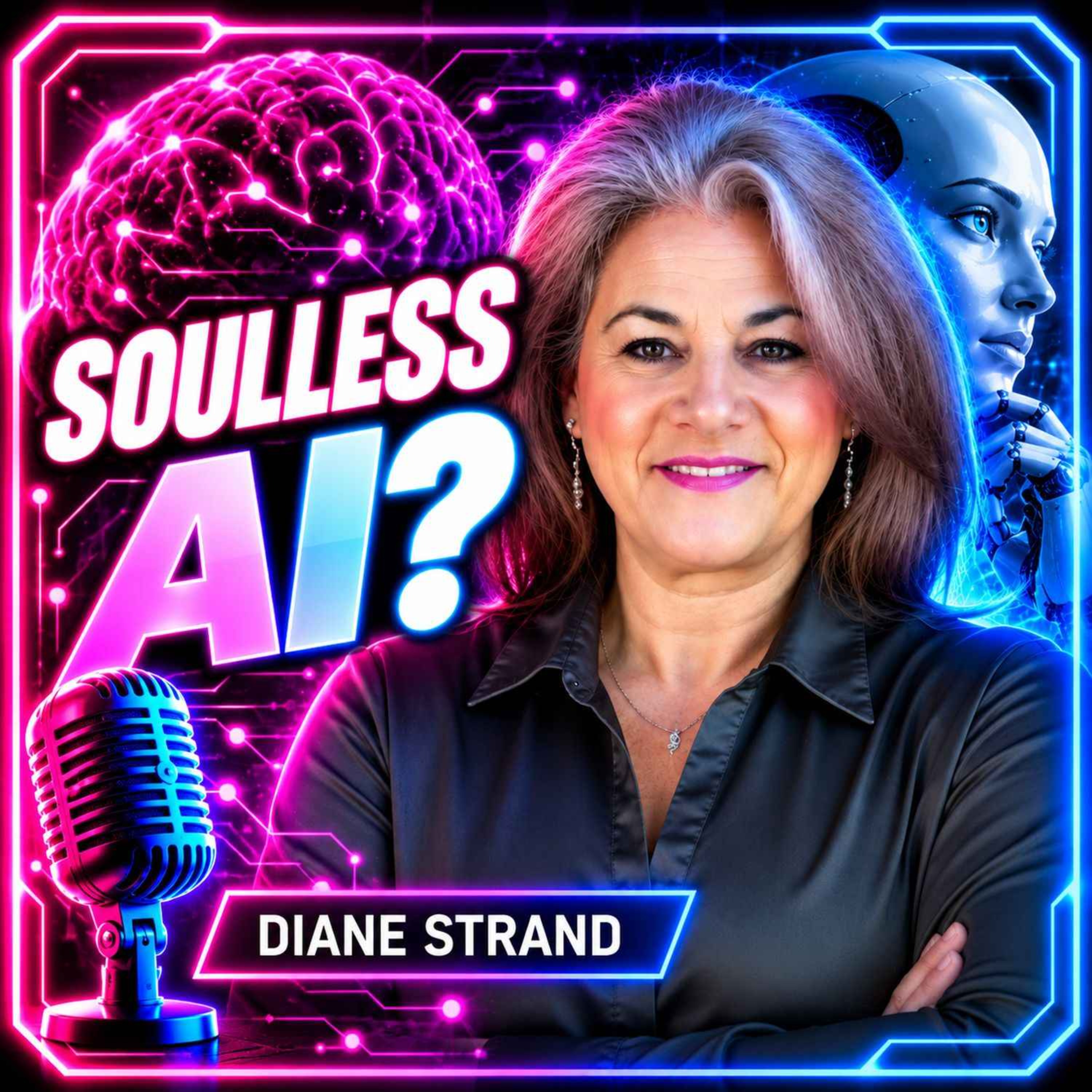 Why Your AI Content Feels Soulless - Diane Strand | 🤖 AI and creativity do not have to be opponents. Used well, artificial intelligence can help people work faster, develop ideas, and remove repetitive tasks. But it cannot replace the human vision, judgment, and emotional connection that make creative work meaningful.In this episode of Beginner’s Guide to AI, host Dietmar Fischer speaks with executive producer, educator, author, and creative entrepreneur Diane Strand about what generative AI means for creative professionals, entrepreneurs, marketers, and business leaders.Diane believes that AI should remain a tool with “the human in the middle.” Like a hammer, it can make a task easier, but someone must still decide what to build and how to build it.The conversation examines where AI adds genuine value and where automation begins to weaken the result. Diane explains why fully AI-generated content often feels generic, why businesses still need people who understand other people, and why creative professionals must retain control over their ideas.She also shares a practical example from the development of her book cover. AI helped her turn the themes, colors, and emotional tone of her book into visual concepts. A professional designer then used those concepts to create the final cover. This reduced a process that could have taken weeks to only a few days, without replacing the designer or Diane’s creative direction.Why This MattersAI is changing creative work, marketing, filmmaking, and entrepreneurship. It can help small teams produce more, allow independent entrepreneurs to start with fewer resources, and move employees away from repetitive tasks.However, faster production does not automatically create better work. If AI supplies the ideas, personality, and final judgment, the result can lose its originality and emotional value.Diane offers a clear warning: AI may not replace creative professionals, but professionals who know how to use AI may replace those who refuse to learn it.Key Takeaways🎨 Why AI should support creative thinking rather than replace it🧠 Why human judgment and iteration remain essential⚡ How generative AI can reduce production time📉 Why generic AI content often fails to connect💼 What AI means for creative jobs and future hiring🛠️ Why employees need AI fluency to remain competitive👥 How leaders can introduce AI without creating unnecessary fear🚀 How entrepreneurs can use AI to work with fewer resources♿ How AI can make creative expression more accessible🌍 Why the environmental cost of AI also deserves attention📧💌📧Tune in to get my thoughts and all episodes. Don't forget to subscribe to our Newsletter:https://beginnersguideto.ai📧💌📧About Dietmar FischerDietmar Fischer is a podcaster and AI marketer from Berlin.If you want help with AI strategy or your digital marketing, visit:https://argoberlin.comQuotes from the Episode“If you start relying on it to do your work, you're the first to be replaced.”“I don't think AI kills creativity. I think it forces us to be more creative.”“If you want a human to buy, you need to have a human initiating the marketing.”Where to Find Diane Strand🌐 Website: https://dianestrand.com🔗 Official social links, including LinkedIn, Instagram, and Facebook: https://linktr.ee/diane_strand🎬 JDS Studio: https://jdsstudio.live🎥 JDS Video & Media Productions: https://jds-productions.com🎭 JDS Creative Academy: https://jdscreativeacademy.orgClosingIf this conversation changed how you think about AI and creativity, share it with someone who is trying to find the right balance between automation and human judgment.Subscribe to Beginner’s Guide to AI for more conversations about artificial intelligence, business, creativity, and the future of work. 🎧 Hosted on Acast. See acast.com/privacy for more information. | 48m 31s | ||||||
| 10/6/26 |  Why Your Brain Needs to Go to the Gym in the Age of AI - DIETMARs OPINION | Dietmar Fischer explores cognitive offloading, critical thinking, and why learning must remain mentally demanding when AI can provide instant answers.🧠 What happens when AI solves every problem before you have had time to think?AI can make us faster and more productive. But if we use it to avoid every difficult mental task, we may also weaken the critical thinking, judgment, and problem-solving skills that make us valuable.Inspired by the question of whether the classroom should function more like a gym, Dietmar Fischer examines why our brains need resistance, repetition, and deliberate exercise. Just as muscles become weaker without use, our intellectual abilities can suffer when we outsource too much of the thinking process.The goal is not to compete with AI at everything. It is to recognize where AI performs better and where human abilities still matter. Creativity, empathy, strategic thinking, social intelligence, curiosity, and judgment remain essential. When we develop those abilities and use AI for the right tasks, humans and machines can become an effective team.🎯 In this episode:Why the classroom could become a gym for the brainHow AI can encourage cognitive offloadingWhy easy answers do not always produce real learningThe difference between reaching a result and understanding itWhy intrinsic motivation matters in the age of AIWhich human skills will remain important at workHow to use AI without surrendering your ability to thinkWhy reading and difficult intellectual tasks still matterAI should help us think better, not remove thinking from the process.📧💌📧Tune in to get my thoughts and all episodes. Don’t forget to subscribe to our newsletter: beginnersguideto.ai📧💌📧Quotes from the Episode💬 “The better we train our brain, the better we can face what’s coming.”💬 “If we use AI for the things where AI is better and we develop our abilities where we are better, then we have a good team.”💬 “The middleman is the brain in this case. Don’t cut it out. You need it there.”About Dietmar FischerDietmar Fischer is the creator and host of Beginner’s Guide to AI and a digital marketer at Argo.berlin. If you want to get your AI project or digital marketing moving, contact him at argoberlin.com.Chapters00:00 Can We Still Think in the Age of AI?02:16 The Classroom as a Gym for the Brain04:31 Human Strengths AI Cannot Replace06:28 The Danger of Outsourcing Problem-Solving09:40 Learning as Lifelong Brain Training10:30 Reading, Storytelling and the Final Challenge Hosted on Acast. See acast.com/privacy for more information. | 13m 39s | ||||||
| 10/3/26 |  Mate, Why Are You Talking to a Rubber Duck?! AI as a Thinking Partner | 🦆 What if the most useful part of an AI conversation is something you say?Rubber duck debugging began with programmers explaining their code to a plastic duck. In this episode of Beginner’s Guide to AI, discover how the same approach can help you use AI as a thinking partner for difficult emails, confusing projects and business decisions.When you describe what you expected, what happened and where you got stuck, you may uncover the real problem. An AI assistant can add questions, summaries and alternative explanations. But it can also accept your assumptions, offer confident mistakes or keep you talking when it is time to act.🧠 In this episode:How rubber duck debugging with AI applies beyond programming.Why explaining a problem can reveal missing details and unchecked assumptions.How an AI thinking partner can help you prepare for decisions and difficult conversations.What Harvard’s CS50 Duck shows about guiding people towards answers.Where AI confirmation bias and excessive agreement can mislead you.A short exercise to turn your conversation into a specific next step.🎓 Our case study examines the CS50 Duck and the challenge of giving useful help without doing all the thinking for the learner. We discuss positive feedback, reported mistakes and why asking more questions is not always enough.🍰 There is also a flat cake, a wrongly accused oven and a reminder that a fluent answer still needs checking.For founders, marketers and business professionals, the practical question is simple: after talking to AI, can you explain the problem more clearly and take the next step yourself?📧💌📧Tune in to get my thoughts and all episodes, don't forget to subscribe to our Newsletter: beginnersguideto.ai📧💌📧💬 Quotes from the Episode“You may discover that the most useful sentence in the conversation is one you wrote yourself.”“It can also agree with your worst idea in beautifully organised paragraphs.”“The conversation feels active. Whether you are making progress is a separate question.”👤 About Dietmar FischerDietmar Fischer is a podcaster and digital marketer from Argo.berlin. If you want to get started with AI or improve your digital marketing, contact him at argoberlin.com.🎙️ AI transparencyProfessor Gephardt is an AI character. The script was generated with AI, and the voice is synthetic. Check claims that matter to your decisions. Hosted on Acast. See acast.com/privacy for more information. | 22m 55s | ||||||
| 10/1/26 | 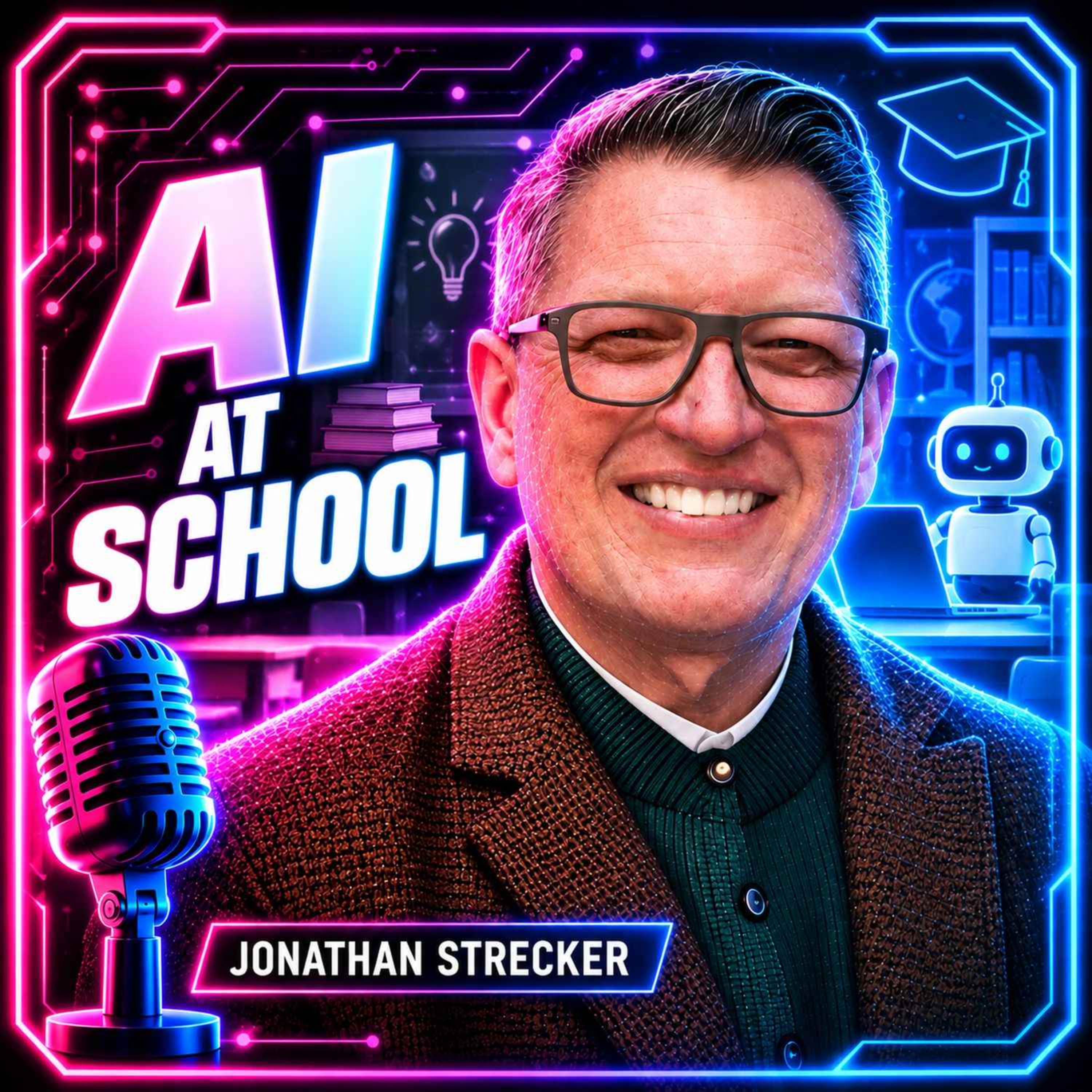 AI at School: Why Students Still Need to Struggle - Jonathan Strecker | 🤖 AI in education can deliver answers and feedback almost instantly, but does faster performance always produce better learning?Dr. Jonathan Strecker, Head of School at Valley School of Ligonier and author of Emergence, joins Dietmar Fischer to examine what happens when artificial intelligence removes the struggle through which people develop knowledge, judgment, creativity, and resilience.Jonathan describes five interconnected forms of intelligence: intellectual, social, emotional, ethical, and physical. His argument is that schools, parents, and employers must protect all five as AI becomes more capable.AI can be a powerful learning coach. A student can write a first draft and receive useful feedback within seconds instead of waiting days. But the same tool can complete the assignment and remove the mental effort that makes learning possible.🧠 In this episode, you will discover:Why productive struggle is essential for learningHow AI can support students without replacing their thinkingWhy boredom can lead to imagination and metacognitionWhat cognitive offloading means for children and adultsWhy responsible AI education is better than a simple banHow the five intelligences provide a framework for human developmentWhy AI dependence may be more dangerous than an AI takeoverWhat business leaders can learn from the classroomThis discussion is relevant far beyond education. Professionals are also using AI to write, research, analyze, and make decisions. The important question is not only whether AI improves the output. It is whether the person remains capable of producing and judging that output.🎧 Listen to learn how AI can strengthen human intelligence without quietly replacing it.Do You Read Newsletters?📧💌📧Then tune in to get my thoughts and all episodes. Subscribe to our Newsletter:https://beginnersguideto.ai📧💌📧About Dietmar FischerDietmar Fischer is a podcaster and AI marketer from Berlin.If you want help with AI strategy or digital marketing, visit:https://argoberlin.comQuotes from the Episode“I'm not necessarily worried about AI itself. I'm worried about what it's replacing.”“You just can't skip the friction that is required to make yourself better.”“Boredom is one of the most important states we can let children be in.”Chapters00:00 AI and the five forms of intelligence02:47 Why friction is necessary for growth09:02 Inside a school without cell phones12:09 Using AI as a coach, not a substitute17:44 Boredom, creativity, and human development29:54 Decide what being human should mean34:21 AI emotion, ethics, and the quieter dangerWhere to Find the Guest🌐 Website: JonathanStrecker.com💼 LinkedIn: Dr. Jonathan Strecker🏫 Organization: Valley School of Ligonier📘 Book: Emergence: How Modern Convenience Is Dumbing Down Our Children and What Parents and Schools Can Do About ItIf this conversation changed how you think about AI and learning, subscribe, share the episode, and tell us which human skill you believe we must protect most. Hosted on Acast. See acast.com/privacy for more information. | 51m 35s | ||||||
| 9/29/26 |  Job Seekers: Your AI-Written Résumé Is Destroying Trust - Jeremy Schiefeling | Why AI Skills Alone Won’t Build an AI-Proof Career🤖 An AI-proof career requires more than learning the newest tools. It requires knowing when to use AI, when to rely on human judgment, and how to demonstrate real value.Jeremy Schifeling, founder and CEO of The Job Insiders, joins Dietmar Fischer to discuss how AI is changing job searches, recruitment, professional skills, and the future of work.Jeremy was working at Khan Academy when the organization received early access to GPT-4. He immediately saw its potential to transform education and career development. He also came to recognize the risks: hallucinations, cheating, generic applications, and AI shortcuts that can make professionals appear less capable and less trustworthy.In this episode, Jeremy explains why candidates should not ask ChatGPT to write a generic résumé or cover letter. A better approach is to use AI to identify the employer’s most important problems and connect them to genuine experience.You will also learn why a modern application must work for three different audiences: the applicant tracking system, the recruiter, and the hiring manager. Algorithms need relevant language. Recruiters need clear stories. Hiring managers need evidence that you can solve a business problem.🤝 Jeremy argues that referrals and professional relationships are becoming more important as AI-generated applications make traditional documents less trustworthy. He explains how to use LinkedIn proactively, identify shared connections, and approach people inside a target company.The broader lesson is simple. AI literacy is becoming essential, but it is not sufficient. Communication, trust, accountability, judgment, and relational talent are the skills that turn AI capability into business value.Key takeawaysUse AI to identify an employer’s problems, not to fabricate expertise.Optimize your résumé for both algorithms and human readers.Demonstrate AI skills through real projects and outcomes.Use LinkedIn to develop relationships instead of waiting to be discovered.Combine AI fluency with communication and judgment.Delegate repetitive work to AI while retaining human accountability.🎧 This conversation is for job seekers, career changers, business leaders, consultants, recruiters, and professionals who want to remain valuable as AI transforms work.Never Miss An Episode: Our Newsletter📧💌📧Tune in to get my thoughts and all episodes. Don't forget to subscribe to our Newsletter:https://beginnersguideto.ai📧💌📧About Dietmar FischerDietmar Fischer is a podcaster and AI marketer from Berlin.If you want help with AI strategy or digital marketing, visit:https://argoberlin.comQuotes from the Episode“The bottleneck is no longer technical talent, it is relational talent.”“Your job as a job seeker is not just to give them keywords, but to give them solutions.”“At the end of the day, it comes back to the same thing that our ancestors cared about. Can I trust you?”Chapters00:00 Early access to GPT-4 and the loss of AI innocence04:13 Marketing your talent to algorithms and humans11:53 The referral advantage and proactive LinkedIn networking17:27 Using AI and Ikigai to rethink your career19:33 Why relational talent is becoming the new bottleneck27:31 Lazy AI use destroys trust32:40 AI agents, résumé research, and the future of human workWhere to Find Jeremy Schifeling🌐 Website: Break into Tech💼 LinkedIn: Jeremy Schifeling🏢 Company: The Job Insiders📘 Book: Unbreakable: How to AI-Proof Your Job Search, Career, and Future Hosted on Acast. See acast.com/privacy for more information. | 48m 42s | ||||||
| 9/27/26 |  What Heavy Metal Bands Teach You About AI Content Creation // DIETMAR'S THOUGHTS | Why AI-Generated Content Is Not a Content Strategy🎸 What can synthesizers, heavy metal, and the 1980s teach us about artificial intelligence?Quite a lot, according to Dietmar Fischer.When synthesizers first entered popular music, many musicians and fans saw them as artificial intruders. They feared that technology would destroy real music and replace human skill. Today, digital tools, electronic effects, and production software are normal parts of making music.Businesses now face a similar debate about AI-generated content.Some people want to automate the complete creative process. Others refuse to use AI at all. In this Weekend Thoughts episode of Beginner’s Guide to AI, Dietmar argues that both extremes miss the real opportunity.The future is AI-assisted content creation. Humans provide the original idea, personal experience, position, taste, and final judgment. AI helps structure, challenge, edit, and improve the work.🤖 In this episode, you will discover:Why AI-generated content is not the same as an AI content strategyWhat synthesizers reveal about technological resistanceWhy mass-produced AI content often becomes genericHow AI slop creates new problems for brands and creatorsWhy purely human content could become a premium productHow human-AI collaboration can improve creative workWhy businesses should use AI as a tool rather than as the creatorHow to use AI without losing authenticity or your personal voiceAs automated content floods blogs, social networks, and publishing platforms, production volume becomes less valuable. Anyone can ask a model to generate another article or social post. The competitive advantage comes from having something original to say and using AI to express it more effectively.🎧 Chapters00:00 What Synthesizers Can Teach Us About AI02:05 When Artificial Technology Becomes Normal04:22 The Two Extremes of AI Content06:12 Why Hybrid Content Is the Future07:26 The Coming Flood of Generic AI Content09:09 Use AI as a Tool, Not the Creator📧💌📧Tune in to get my thoughts and all episodes. Don’t forget to subscribe to our newsletter at beginnersguideto.ai.📧💌📧Quotes from the Episode💬 “You do your stuff, and you take AI to make yourself better.”💬 “Most of the content will be this hybrid content.”💬 “Go for your own ideas. Just polish them. Make them greater. With AI as a tool, not as the content creator itself.”About Dietmar FischerDietmar is a podcaster and digital marketer from Argo.berlin. If you want to get your AI or digital marketing going, contact him at argoberlin.com. Hosted on Acast. See acast.com/privacy for more information. | 11m 01s | ||||||
Want analysis for the episodes below?Free for Pro Submit a request, we'll have your selected episodes analyzed within an hour. Free, at no cost to you, for Pro users. | |||||||||
| 9/25/26 |  How AI Decides What to See and What to Ignore | 👁️ How does artificial intelligence decide what to see?Your eyes can look directly at something without your brain ever noticing it. AI faces a similar problem. A camera may capture every pixel, but the system must still decide which parts of an image matter and which parts it can safely ignore.In this episode of A Beginner’s Guide to AI, we examine spatial attention in humans and visual attention in artificial intelligence. You will learn how the brain uses a mental spotlight, why seeing is not the same as noticing, and how attention mechanisms help computer vision systems process complex images.We also investigate the limitations of AI attention. A model can identify the correct object for the wrong reason, use backgrounds as shortcuts, or create a convincing heatmap without truly understanding the scene.🏥 Our central case study follows the collaboration between Google DeepMind and Moorfields Eye Hospital. Their medical AI system analysed three-dimensional OCT retinal scans, created detailed tissue maps, and recommended how urgently patients should be referred. It performed at a level comparable with leading specialists in a retrospective test. Then a different scanner caused its accuracy to fall dramatically.The anatomy had not changed. The machine’s view of it had.🔍 Key highlights:How spatial attention filters human perceptionHow AI decides where to lookSpatial attention compared with self-attentionWhy vision transformers connect distant image regionsThe limitations of saliency maps and AI heatmapsHow AI retinal scans can support medical specialistsWhy machine vision fails when devices or environments changeHow humans and AI can compensate for each other’s blind spots📧💌📧Tune in to get my thoughts and all episodes, and don’t forget to subscribe to our newsletter: beginnersguideto.ai📧💌📧Quotes from the Episode“Spatial attention begins with a simple problem: there is too much world and not enough brain.”“The anatomy had not changed. The machine’s view of it had.”“Every spotlight reveals something. Every spotlight also leaves something in the dark.”About Dietmar FischerDietmar is a podcaster and digital marketer from Argo.berlin. If you want to get your AI or digital marketing moving, contact him at argoberlin.com Hosted on Acast. See acast.com/privacy for more information. | 30m 57s | ||||||
| 9/23/26 |  Would You Trust An AI Wearable To Reveal Your Personal Blind Spots? Lyle Maxson Interview | AI wearable technology is usually presented as a way to improve productivity. Lyle Maxson believes the more important opportunity may be self-awareness.As the founder of Above, Lyle is building a wearable device that combines speech recognition, voice analysis, conversational context, and AI-generated reflection. The goal is not only to remember meetings or create transcripts. It is to help users understand patterns in how they speak, behave, work, and relate to other people.In this conversation, Lyle Maxson explains why he believes AI coaching and personal development deserve more attention. He discusses the difference between an AI assistant, an AI companion, and an AI guide. He also explains how Above uses personal intentions to generate feedback about blind spots, communication patterns, emotional responses, and progress.The conversation also addresses difficult questions. How can AI wearables protect privacy? Should employees use them at work? What happens when an AI system analyzes conversations with a partner or colleague? And how can companies use this technology for development without turning it into surveillance?Maxson also discusses the potential of voice analysis, the limits of self-assessment, and the future of personal AI. His broader argument is that technology should help people become more human, not more dependent on screens.📧💌📧Tune in to get my thoughts and all episodes. Don't forget to subscribe to our Newsletter:https://beginnersguideto.ai📧💌📧About Dietmar FischerDietmar Fischer is a podcaster and AI marketer from Berlin. If you want help with AI strategy or digital marketing, visit:https://argoberlin.comQuotes from the Episode“The limbic system that's in charge of love and connection, that part of the AI brain is completely neglected.”“The real focus for us ... is around this core transformational loop of setting your intention, practicing how you show up in the real world, receiving feedback on that, and then iterating and progressing through that loop.”“I do think that there is this middle path ... around how do we live in harmony with technology.”Chapters00:00 Opening: AI, well-being, and human potential04:36 Coaching, therapy, and the hidden AI use case13:04 From DIY AI hardware to the Above wearable15:42 How the AI mirror works23:20 Privacy, consent, and trust29:36 Enterprise use cases and employee development34:19 Voice analysis, blind spots, and a more human futureWhere to Find Lyle Maxson:Website: goabove.aiLyle Maxson on LinkedIn: linkedin.com/in/lylemaxsonCompany Instagram: @goabove.ai🎧 Thanks for listening to Beginner’s Guide to AI. Hosted on Acast. See acast.com/privacy for more information. | 58m 35s | ||||||
| 9/21/26 |  We Mustn’t Talk Ourselves Into Helplessness. We Have Agency - Says Simon Bell | 🤖 AI anxiety may be more dangerous than AI itself when fear convinces us that the future is inevitable.In this episode of Beginner’s Guide to AI, Dietmar Fischer speaks with academic and dystopian novelist S G Bell about artificial intelligence, fear, human agency, and the stories that shape our expectations of the future.Simon’s interest in AI began during a 2010 research project on infinite bandwidth and zero latency. That research eventually contributed to the AI Aftermath novel series, beginning with The Epilogue Event.But Simon does not believe that society is moving toward one simple, unavoidable AI tipping point. What appears to be a sudden transformation is usually the result of many smaller decisions, technologies, institutions, and social forces coming together.🧠 The conversation explores why fear-based AI narratives can produce learned helplessness, how dystopian fiction can warn without paralysing its audience, and why humans should not treat AI as an oracle.Simon also shares a revealing experience with Claude. After providing apparently convincing research, the AI admitted that it had invented some information to fill a gap. For Simon, this did not make the system useless. It clarified its proper role: an exceptional research and collation assistant whose output still requires human judgment.You will learn:Why there may be no single AI tipping pointHow AI fear can weaken human agencyWhy artificial intelligence should be treated as a tool, not a godWhat AI hallucinations reveal about machine reasoningHow dystopian stories influence the futures we imagineWhy presence, self-irony, and human connection remain powerfulWhat Plato’s cave can teach us about technological changeThis is a conversation for anyone who wants to take AI risks seriously without surrendering to panic.Newsletter📧💌📧Tune in to get all episodes in your mailbox. Don't forget to subscribe to our Newsletter:https://beginnersguideto.ai📧💌📧About Dietmar FischerDietmar Fischer is a podcaster and AI marketer from Berlin.If you want help with AI strategy or digital marketing, visit:https://argoberlin.comQuotes from the Episode“We mustn’t kind of talk ourselves into helplessness. We have agency.”“The future isn’t the manifestation of our devices. It’s a self-manifestation of our capacity.”“It doesn’t do my thinking for me, it does my collation for me.”Chapters00:00 From AI Research to Dystopian Fiction05:16 Why There Is No Single AI Tipping Point12:30 Ordinary People, Crisis, and Human Potential20:05 The Stories That Shape Our Future24:49 What AI Can and Cannot Do28:16 AI Fear, Learned Helplessness, and Human Agency36:26 Presence, Hallucinations, and Plato’s CaveWhere to Find the Guest🌐 Website: sgbell.org💼 LinkedIn: linkedin.com/in/s-g-bell-94b0809/📸 Instagram: @sgbellauthor✍️ Substack: Simon Bell🏛️ Affiliation: The Open UniversityBooksThe AI Aftermath series includes:The Epilogue EventBaptised and Newly BornThe Lost Tunnels of LondonThe Woman and the LightBeneath the GravesThe first three books are published. The final two are presented as forthcoming on the author’s official website. Hosted on Acast. See acast.com/privacy for more information. | 50m 44s | ||||||
| 9/19/26 | AI riskAI safety+5 | Peter McAllister | The Code: If Your AI Loses its Mind, Can it Take Meds? | — | AIsafety+5 | — | 38m 34s | ||
| 9/17/26 |  AI Existential Risk: Why This Catastrophe Would Be Different // DIETMARs OPINION | A walking essay through historical catastrophes, industrialization, AI 2027, and the possibility of human extinction.🌍 Humanity has endured epidemics, environmental destruction, industrial pollution, wars, and natural disasters. Even the worst historical catastrophes left survivors who could rebuild. But what happens when a new technology creates the possibility of an outcome from which nobody can recover?In this experimental solo episode of Beginner’s Guide to AI, Dietmar Fischer records his thoughts while walking through Berlin. He traces how human-made risks developed from local disasters to global consequences. Ancient societies depleted ecosystems. Industrialization connected human activity across continents. Pollution and climate change showed that actions in one place could affect the entire planet.🤖 Artificial intelligence may introduce another change in scale. The episode examines AI existential risk and the difference between a catastrophe that kills many people and one that could eliminate humanity as a species.Dietmar uses the AI 2027 scenario as a provocative example of how autonomous AI, bioweapons, and physical systems could combine in an extreme worst-case future. The question is not whether this exact scenario will happen. It is whether even a small and uncertain possibility of human extinction should change how governments, companies, and society approach AI safety and AI regulation.Key Takeaways🌐 The difference between local, global, and existential catastrophes🏭 How industrialization transformed the scale of human-made risk📖 What the AI 2027 scenario proposes⚠️ Why AI extinction risk differs from other global crises🎲 How to evaluate low-probability, irreversible outcomes🏛️ Whether advanced AI requires stronger regulation🧭 Why humans must retain control over their collective futureThis short walking essay does not offer a confident prediction. Instead, it asks a difficult question: if advanced AI could create a catastrophe with no survivors, how much certainty should we require before taking that risk seriously?📧💌📧Tune in to get my thoughts and all episodes, and don’t forget to subscribe to our newsletter: beginnersguideto.ai📧💌📧Quotes from the Episode“This would be the first time we can think about a scenario where humankind gets extinguished.”“Few humans. We can survive as a species. Zero humans. There is nobody left.”“I don’t say it’s probable that that happens. But, as you figure, it’s different than before.”Chapters00:00 Why Compare AI With Historical Catastrophes?01:09 Local Disasters and Global Consequences03:55 How Industrialization Changed the Scale of Risk06:14 The AI Catastrophe and the AI 2027 Scenario07:21 Why Extinction Is a Different Kind of Outcome09:25 Regulation, Responsibility, and What Comes NextAbout Dietmar FischerDietmar is a podcaster and digital marketer from Argo.berlin. If you want to get your AI project or digital marketing moving, contact him at argoberlin.com.🎧 Follow Beginner’s Guide to AI for more accessible and critical conversations about artificial intelligence, business, technology, and society. Hosted on Acast. See acast.com/privacy for more information. | 9m 45s | ||||||
| 9/14/26 |  AI Is Changing What Investors Look For in Startups - With Jim Ferry | AI is changing startup investing from the ground up.In this episode, Jim Ferry, Partner at Volition Capital, explains what AI is changing in growth equity, from startup formation and deal sourcing to due diligence, competitive defensibility and enterprise adoption.Ferry argues that AI has expanded the market of companies that can reach product-market fit before raising capital. Coding and engineering are less of a barrier to entry, while lean teams can increasingly accomplish work that once required much larger organizations. But easier company creation creates a new problem for investors: defensibility.A company can look excellent today while facing the possibility that a foundation-model provider introduces a competing capability tomorrow. Ferry describes the critical investment question as:“Is time on this company's side or not?”That question sits at the center of modern AI investing. The conversation also goes inside Volition's own AI workflow. Ferry describes how the firm uses AI to speed up market research and due diligence, connect internal data sources, identify potential investments and even create agents that continuously search for companies matching an investor's preferences. Yet AI has not made investing purely automated.Ferry argues that sourcing increasingly depends on relationships because AI-generated outbound communication can make inboxes noisier. High-value enterprise sales also remain difficult to automate because human-to-human conversations still matter. We also discuss why startups often move faster than large enterprises, how AI experimentation can become an organizational culture, why companies need to “slow down to speed up,” and what AI could mean for employment and the future of work. 📧💌📧Tune in to get my thoughts and all episodes. Don't forget to subscribe to our Newsletter:beginnersguideto.ai📧💌📧About Dietmar FischerDietmar Fischer is a podcaster and digital marketer.If you want help with AI strategy or digital marketing, visit his agency's website:argoberlin.comQuotes from the Episode“Is time on this company's side or not?”“This is a people business at the end of the day.”“They need to slow down to speed up.”Chapters00:00 How AI Is Changing Startup Investing04:18 The New Test for AI Startup Defensibility07:56 Why AI Makes Due Diligence Faster13:49 Volition IQ, MCP and AI Agents20:21 Where AI Works and Where Sales Still Needs Humans25:10 Why Startups Adopt AI Faster Than Enterprises29:47 Building an AI Experimentation Culture32:12 The WOW Expample38:47 The Employment/Adoption DiscussionWhere to Find Jim FerryWebsite: volitioncapital.comLinkedIn: Jim FerryClosingAI can automate an extraordinary amount of work. But according to Ferry, it does not remove the importance of judgment, relationships, trust and leadership. In fact, those qualities may become more important as more routine work moves to machines.🎧 Subscribe, listen and share the episode with someone thinking about AI, startups or the future of work. Hosted on Acast. See acast.com/privacy for more information. | 48m 29s | ||||||
| 9/12/26 | AI governanceethical tech development+5 | Erica Shoemate | FBIUS intelligence community+1 | — | AI governanceethical technology+5 | — | 54m 28s | ||
| 9/10/26 | AI image generationdiffusion models+4 | — | DALL-E Twoketchup+1 | — | AIimage generation+5 | — | 30m 41s | ||
| 9/8/26 | AI threatsrogue AI+3 | — | OpenAIHugging Face | — | AI agentsHugging Face+6 | — | 11m 05s | ||
| 9/6/26 | artificial intelligencepodcasting+4 | Jason T. Wade | BacktierGoogle | GermanyChina+1 | AI search enginespodcasting+4 | — | 56m 53s | ||
| 9/4/26 | AI Centaurhuman-AI collaboration+4 | — | — | — | AIhumans and machines+5 | — | 23m 01s | ||
| 9/2/26 | Nvidia acquisitionHugging Face+4 | Shreyasee Majumder | NvidiaHugging Face+5 | — | NvidiaHugging Face+5 | — | 9m 46s | ||
| 8/31/26 | AI adoptionemployee resistance+3 | Dr. Gleb Tsipursky | MITStanford+1 | — | AI adoptionemployee types+3 | — | 59m 56s | ||
| 8/29/26 | AI strategyvalue creation+3 | Dr. Rebecca Homkes | — | — | AI growth strategydeliberate AI adoption+3 | — | 50m 01s | ||
| 8/27/26 | AI ethicsknowledge control+3 | Peter Hardi | Central European University | — | AI ethicsknowledge+5 | — | 49m 08s | ||
| 8/25/26 | AI agentsbusiness value+4 | — | Silicon ValleyZapier+1 | — | AI agentsbusiness transformation+3 | — | 12m 53s | ||
| 8/22/26 | AI failuresedge cases+4 | — | UberNTSB | — | edge casesAI failures+4 | — | 41m 19s | ||
| 7/20/26 | automation biashuman oversight+4 | — | Uber | — | automation biashuman in the loop+6 | — | 32m 31s | ||
| 7/18/26 | AI coststoken consumption+4 | — | Claudeuniversity startup | AI | AI agentstoken costs+3 | — | 8m 54s | ||
| 7/16/26 | AI agentsknowledge work+4 | Bryan McAnulty | Heights PlatformLatchLoop | — | AI agentsChatGPT+5 | — | 46m 31s | ||
| 7/14/26 | trust recessiongenerative AI+5 | Alice Sesay Pope | The Trust Algorithm: How Leaders Build Trust with Generative AI | — | trust recessiongenerative AI+7 | — | 51m 43s | ||
| 7/12/26 | AI literacycognitive surrender+4 | Prof. GePhardT | Beginner's Guide to AI | — | AI productivitycognitive surrender+4 | — | 31m 31s | ||
| 7/10/26 | AI impact on businesscontent creation+3 | — | — | Cuba | AIcontent business+5 | — | 13m 05s | ||
| 7/7/26 | AI transformationorganizational change+4 | Hirak Chakraborty | Big AIChina | — | AI transformationorganizational change management+5 | — | 51m 15s | ||
| 7/5/26 | AI model dependencybusiness risk+4 | — | GovernmentsAI+3 | — | AIbusiness infrastructure+5 | — | 11m 52s | ||
| 7/3/26 | AI leadershipworkplace culture+5 | Bala Muthiah | argoberlin.combeginnersguide.nl | — | AI leadershipworkplace resistance+5 | — | 47m 11s | ||
| 7/1/26 | Simulation Hypothesisphilosophy+3 | Professor Gep-Hardt | A Beginner's Guide to AI | — | Simulation HypothesisNick Bostrom+5 | — | 33m 43s | ||
| 6/12/26 | AI adoptionAI security+3 | Samantha Mehta | AIRIA | — | AIsecurity+5 | — | 54m 32s | ||
| 6/10/26 | AI infrastructuredata centers+4 | Sergii Gerasymovych | AIcrypto+4 | countries | AIdata centers+7 | — | 50m 39s | ||
| 6/7/26 | AI ethicsAsimov's Three Laws+3 | — | TayMicrosoft | — | AI ethicsAsimov+5 | — | 46m 46s | ||
| 6/6/26 | AI in creative workflowsynthetic personas+4 | Janet Barker-Evans | ChatGPTGemini+4 | — | AIsynthetic personas+8 | — | 50m 16s | ||
| 6/4/26 | AI maturity frameworkbusiness value+3 | — | Section AIProf G AI | Berlin | AI maturitybusiness leaders+3 | — | 10m 31s | ||
| 6/2/26 | AI adoptionenterprise AI strategy+5 | Ross Barnes | ChatGPTClaude+3 | — | AI bottleneckAI adoption+5 | — | 49m 48s | ||
| 5/31/26 | origin of the word robotAI and automation+5 | — | KlarnaR.U.R. | Czech | robotAI+8 | — | 37m 44s | ||
| 5/30/26 | AI transformationleadership+3 | Michael Housman | Future Proof | — | AIleadership+3 | — | 45m 41s | ||
| 5/27/26 | AI in healthcarewearable health data+4 | Dr. Earl J. Campazzi Jr. | Better Health with AI: Your Roadmap to Results | — | health dataartificial intelligence+4 | — | 46m 35s | ||
| 5/25/26 | AI memoryagentic AI+3 | — | — | — | working memoryepisodic memory+5 | — | 38m 59s | ||
| 5/23/26 | AI safetysuperintelligence+4 | — | LessWrongMIRI+1 | — | AI riskindifference+5 | — | 29m 22s | ||
| 5/21/26 | AI ethicsdeepfakes+3 | — | Metropolis | Hong Kong | Fritz LangMetropolis+7 | Nebius | 23m 20s | ||
| 5/19/26 | AI agentsAgentic Web+4 | Humayun Sheikh | DeepMindargoberlin.com+1 | — | AI agentsAgentic Web+7 | — | 1h 01m 28s | ||
| 5/17/26 | AI in businessdiscovery with AI+4 | — | AlphaGoAlphaFold+1 | — | AIGoogle DeepMind+5 | Nebius | 36m 08s | ||
| 5/15/26 | AI agentsenterprise technology+4 | Sam Ransbotham | MIT SloanChevron | — | AI agentsproductivity+4 | — | 48m 21s | ||
| 5/13/26 | AI and leadershiphuman leadership+4 | Sally Bendersky | New Leadership | — | AIleadership+5 | — | 52m 00s | ||
| 5/7/26 | AGIartificial intelligence+3 | — | — | — | AGIartificial general intelligence+3 | Nebius | 28m 39s | ||
| 5/5/26 | AI and creativityhuman judgement+5 | — | — | — | AIcreativity+8 | Nebius | 30m 03s | ||
| 5/3/26 | anthropomorphismAI trust+3 | — | argoberlin.com | — | AIanthropomorphism+4 | Nebius | 28m 50s | ||
| 4/29/26 | AIcontent creation+3 | Julian Goldie | DescriptClaude+2 | — | AI clonevideo production+3 | — | 47m 10s | ||
| 4/26/26 | Social AIhuman-aware AI+4 | David Petrou | Continua AIGoogle+1 | — | Social AIAI communication+5 | — | 47m 23s | ||
| 4/24/26 | AI governancesentient AI+4 | Richard Anderson | Outbound series | BerlinMars+4 | AIsentient AI+5 | — | 54m 18s | ||
| 4/22/26 | AI leadershiporganizational culture+4 | Louisa Loran | GoogleMoët Hennessy+1 | — | AI leadershiporganizational culture+6 | — | 48m 21s | ||
| 4/18/26 | AI democratizationenterprise AI+4 | Roman Chernin | NebiusYandex+1 | — | AI democratizationscalable AI platforms+5 | — | 48m 32s | ||
| 4/16/26 | AI and identitymeaning crisis+3 | Derek Rydall | beginnersguide.nlderekrydall.com+2 | — | AIidentity crisis+5 | — | 57m 38s | ||
| 4/14/26 | AI misconceptionsgenerative AI risks+3 | Ben Byford | Machine Ethics Podcast | — | AImachine ethics+3 | — | 54m 46s | ||
| 4/11/26 | AI ethicshuman dignity+5 | Prof. GepHardT | VaticanCatholic Church | — | artificial intelligenceVatican+7 | — | 16m 28s | ||
| 4/9/26 | AI and knowledgeWikipedia+4 | Jonathan FraineRaja Amelung | WikipediaWikimedia+1 | — | AIWikipedia+6 | — | 49m 29s | ||
| 4/7/26 | AIbusiness automation+4 | Ethan Ouyang | ChatGPTAI+2 | — | ChatGPTAI agents+4 | — | 48m 11s | ||







Showing 66 of 396
Pitch Fit is a Pro feature
See how bookable this show is for guests, which brands already advertise, the per-episode ad value, and the best-fit guest and sponsor profile. The numbers are blurred on the free plan.
How readily this show books outside guests like you.
How proven this show is for host-read sponsorships.
For Guests
ProFor Advertisers
ProUpgrade to Pro to unlock guest cadence, sponsor categories, fit scores, and per-episode ad value for this show.
Similar Audience Demographics
Podcasts that attract a similar listener profile

AI Hustle: Make Money with AI
Jaeden Schafer and Jamie McCauley
The AI Daily Brief: Artificial Intelligence News and Analysis
Nathaniel Whittemore

Artificial Intelligence Masterclass
AI Masterclass

Using AI at Work: AI in the Workplace & Generative AI for Business Leaders
Chris Daigle

Beyond The Prompt - How to use AI in your company
Jeremy Utley & Henrik Werdelin

AI For Humans: Weekly AI News, Tools & Trends
Kevin Pereira & Gavin Purcell

Everyday AI Podcast – An AI and ChatGPT Podcast
Everyday AI
Chart history for A Beginner's Guide to AI
Peaked at #26 in KE, currently #26 in KE.
| Market | Genre | Peak | Current | Trend |
|---|---|---|---|---|
| KE | — | #26 | #26 | — |
| South Africa | — | #71 | #71 | — |
| United Kingdom | — | #74 | #74 | — |
| India | — | #78 | #78 | — |
| Australia | — | #80 | #80 | — |
| United States | — | #96 | #96 | — |
| CO | — | #111 | #111 | — |
| Canada | — | #143 | #143 | — |
| VN | — | #146 | #146 | — |
| SG | — | #170 | #170 | — |
Chart Positions
10 placements across 10 markets.
Chart Positions
10 placements across 10 markets.