Insights from recent episode analysis
Audience Interest
Podcast Focus
Publishing Consistency
Platform Reach
Insights are generated by CastFox AI using publicly available data, episode content, and proprietary models.
Most discussed topics
Brands & references
Total monthly reach
Estimated from 1 chart position in 1 market.
By chart position
- 🇵🇱PL · Careers#167500 to 3K
- Per-Episode Audience
Est. listeners per new episode within ~30 days
150 to 900🎙 Daily cadence·48 episodes·Last published today - Monthly Reach
Unique listeners across all episodes (30 days)
500 to 3K🇵🇱100% - Active Followers
Loyal subscribers who consistently listen
200 to 1.2K
Market Insights
Platform Distribution
Reach across major podcast platforms, updated hourly
Total Followers
—
Total Plays
—
Total Reviews
—
* Data sourced directly from platform APIs and aggregated hourly across all major podcast directories.
On the show
From 17 epsHost
Recent guests
Recent episodes
What Promotion Committees Actually Evaluate: The Faculty Misalignment Problem
Jun 24, 2026
10m 24s
The Mentor Gap: Why Good Mentors Don't Automatically Create Promotion-Ready Faculty
Jun 17, 2026
9m 01s
Navigating Divisional Leadership Transitions: Building Stability Through Change
Jun 10, 2026
16m 40s
Promotion Criteria vs. Promotion Strategy: The Gap Nobody Names
Jun 3, 2026
9m 35s
The First 90 Days in Academic Medicine: What Actually Matters
May 27, 2026
15m 26s
Social Links & Contact
Official channels & resources
Official Website
Login
RSS Feed
Login
| Date | Episode | Topics | Guests | Brands | Places | Keywords | Sponsor | Length | |
|---|---|---|---|---|---|---|---|---|---|
| 6/24/26 | ![]() What Promotion Committees Actually Evaluate: The Faculty Misalignment Problem | Many early-career faculty assume promotion committees evaluate activity, productivity, and accomplishments at face value. In this episode, Dr. Stacey Ishman explains why promotion decisions are often based on something far more important: whether your work tells a coherent story that demonstrates academic impact, visibility, and growing reputation. No need to take notes—visit the blog for a full summary of key insights. If you're interested in working with Academic Medicine Strategy Group, visit www.amedsg.com to learn more about our programs designed to help you build a clear, strategic path to promotion, research, and career advancement. Key Points [00:00] Promotion Committees Evaluate More Than Your CVPromotion committees are not simply counting publications, committees, or teaching evaluations. They are assessing whether your work demonstrates readiness for advancement and contributes to the institution's reputation. [00:01] Why Promotion Criteria Leave Room for InterpretationMany promotion policies include terms like "regional reputation," "national reputation," or "sustained impact," but these concepts are often interpreted differently across institutions and committees. [00:02] Coherence Matters More Than VolumeA focused body of work in a well-defined niche is often more compelling than a larger number of disconnected projects, publications, or activities. [00:03] What Research Shows About Successful PromotionFactors associated with promotion include identifying a career mentor, dedicating meaningful effort to scholarship, and having regular conversations with leaders about promotion goals. [00:04] The Narrative Problem in Academic PromotionFaculty often assume their accomplishments will speak for themselves. In reality, committees are looking for a clear academic identity and a convincing story about your contributions and impact. [00:05] Building a Reputation Through Intentional ChoicesCommittee service, presentations, publications, and professional involvement should reinforce your area of expertise and strengthen your visibility within a specific domain. [00:06] Why Institutional Guidance MattersPromotion success depends heavily on understanding how your local promotion committee interprets criteria. Informal expectations often matter as much as written policies. [00:07] Three Actions to Take This WeekTalk with recently promoted faculty, review your institution's promotion criteria, and evaluate your CV as a narrative rather than a list of accomplishments. Summary Promotion committees are not evaluating how busy you are—they are evaluating whether your work demonstrates a coherent academic identity and a trajectory of growing impact. Early-career physicians who intentionally align their scholarship, service, leadership activities, and professional visibility around a clear niche are more likely to build the reputation and narrative that promotion committees recognize and reward. Please RATE, REVIEW, and FOLLOW the Academic Medicine Strategy Group Podcast on your favorite platform. If you are interested in getting in touch with us or providing topic suggestions, please: ● DM me on Instagram at @sishmancoach● Email me at stacey@amedsg.com● Contact me at the website at www.amedsg.com | 10m 24s | ||||||
| 6/17/26 | ![]() The Mentor Gap: Why Good Mentors Don't Automatically Create Promotion-Ready Faculty | Mentorship is one of the most commonly recommended strategies for success in academic medicine, yet many early-career physicians still struggle to achieve promotion despite having excellent mentors. In this episode, Dr. Stacey Ishman explores the limitations of mentorship alone and explains why intentional career infrastructure is often the missing piece. She discusses how mentorship, sponsorship, and structured career development work together to create a clear path toward long-term academic success. No need to take notes—visit the blog for a full summary of key insights. If you’re interested in working with Academic Medicine Strategy Group, visit www.amedsg.com to learn more about our programs designed to help you build a clear, strategic path to promotion, research, and career advancement. Key Points: [00:00] Mentorship Matters—But It Isn't the Whole SolutionResearch consistently shows that mentorship supports career development and satisfaction, but the evidence linking mentorship alone to promotion outcomes is less clear. [01:30] What Mentors Can—and Cannot—ProvideMentors offer guidance, perspective, advocacy, and sponsorship. However, they cannot replace the systems and structures needed to execute a long-term career strategy. [02:15] The Questions Many Faculty Never AskDr. Ishman shares a personal example of withholding important career questions despite having an outstanding mentor, illustrating why some developmental needs go beyond the mentor relationship. [03:20] Why Career Development Requires More Than AdvicePromotion readiness depends on ongoing support, implementation, and revisiting career plans as faculty gain experience and understand their institutional environment. [04:00] The Structural Limitations of MentorshipEven excellent mentors face constraints including limited time, competing responsibilities, different career experiences, and evolving promotion criteria that may not match today's academic landscape. [05:00] How Career Infrastructure Strengthens MentorshipStructured career development provides promotion frameworks, accountability, organization systems, and consistency that make mentorship more effective and actionable. [05:45] Evidence That Structure Improves OutcomesStudies of formal faculty development and mentorship programs demonstrate significantly improved promotion and funding outcomes when mentorship is supported by intentional career development infrastructure. [06:30] Three Actions to Take Right NowIdentify your most important promotion questions, actively seek answers from institutional leaders and mentors, and honestly assess whether you need additional career development support beyond mentorship. Summary: Great mentors are invaluable, but mentorship alone is rarely enough to create promotion-ready faculty. The most successful early-career physicians combine strong mentorship and sponsorship with intentional career infrastructure that provides clarity, accountability, and a roadmap for advancement. Building that structure early can help accelerate promotion, reduce uncertainty, and create a more strategic academic career. Please RATE, REVIEW, and FOLLOW the Academic Medicine Strategy Group Podcast on your favorite platform. If you are interested in getting in touch with us or providing topic suggestions, please: ● DM me on Instagram at @sishmancoach● Email me at stacey@amedsg.com● Contact me at the website at www.amedsg.com | 9m 01s | ||||||
| 6/10/26 | ![]() Navigating Divisional Leadership Transitions: Building Stability Through Change✨ | leadership transitionsacademic medicine+3 | — | Academic Medicine Strategy Group | — | leadership changetransition frameworks+3 | — | 16m 40s | |
| 6/3/26 | ![]() Promotion Criteria vs. Promotion Strategy: The Gap Nobody Names✨ | promotion criteriacareer strategy+3 | — | Academic Medicine Strategy GroupAcademic Medicine Strategy Podcast | — | promotion strategyacademic physicians+3 | — | 9m 35s | |
| 5/27/26 | ![]() The First 90 Days in Academic Medicine: What Actually Matters✨ | academic medicinecareer development+3 | — | — | — | academic medicinefirst 90 days+3 | — | 15m 26s | |
| 5/20/26 | ![]() How Coaching Prevents Physician Burnout and Improves Faculty Retention in Academic Medicine with Jenny Lee✨ | physician burnoutcareer coaching+3 | Dr. Jenny Lee | Johns Hopkins | — | burnoutcareer coaching+3 | — | 25m 14s | |
| 5/13/26 | ![]() How to Survive an EMR Go-Live Without Burning Out✨ | EMR implementationphysician productivity+3 | — | EMREpic+1 | — | EMREpic+5 | — | 9m 43s | |
| 5/6/26 | ![]() Why Women Physicians Don’t Negotiate — And How to Change It✨ | negotiationwomen physicians+4 | — | Academic Medicine Strategy Group | — | negotiationwomen physicians+5 | — | 53m 12s | |
| 4/29/26 | ![]() Stop Trying to Write Manuscripts at 7pm After a Full Clinic Day✨ | time managementcognitive performance+4 | — | Academic Medicine Strategy GroupAcademic Medicine Strategy Podcast | — | manuscriptsclinic day+4 | — | 10m 39s | |
| 4/22/26 | If Deep Work Only Happens After Everything Else, It Will Never Happen✨ | deep workacademic medicine+3 | — | Academic Medicine Strategy Group | www.amedsg.com | deep workacademic physicians+3 | — | 18m 44s | |
Want analysis for the episodes below?Free for Pro Submit a request, we'll have your selected episodes analyzed within an hour. Free, at no cost to you, for Pro users. | |||||||||
| 4/14/26 | Why Your Best Cognitive Hours Are Wasted on Email (And What to Do About It)✨ | cognitive energyacademic medicine+4 | — | Academic Medicine Strategy GroupAcademic Medicine Strategy Podcast | — | cognitive hoursemail management+5 | — | 17m 36s | |
| 4/8/26 | You Don't Have a Time Problem. You Have a Decision Problem.✨ | career advancementdecision making+3 | — | Academic Medicine Strategy Group | — | early-career physiciansdecision fatigue+3 | — | 20m 32s | |
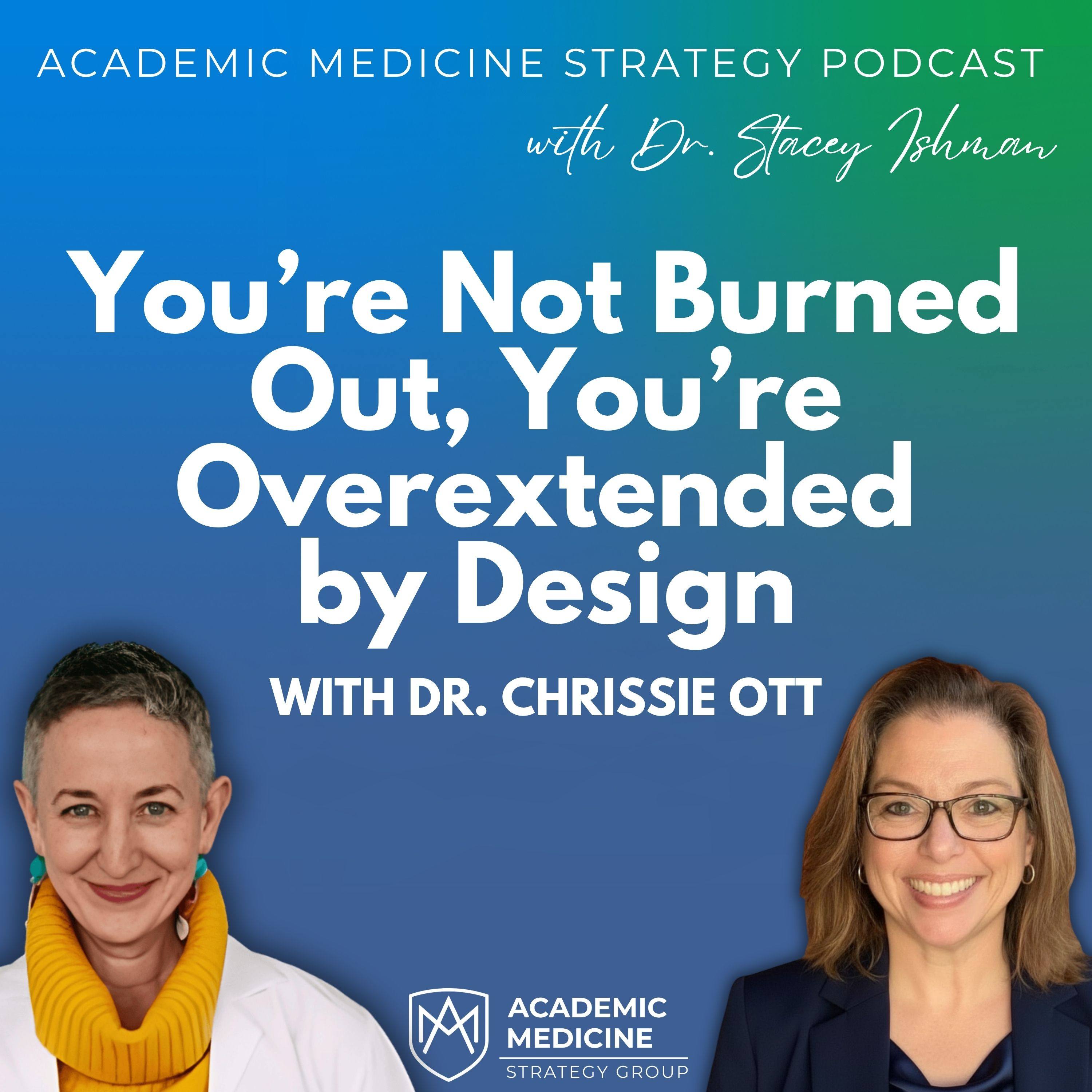
| 4/2/26 | You’re Not Burned Out — You’re Overextended by Design with Dr. Chrissie Ott✨ | burnoutcoaching+4 | Dr. Chrissie Ott | — | — | burnoutcoaching+5 | — | 23m 11s | |
| 3/25/26 | Medical Mentor Coaching Is Now the Academic Medicine Strategy Group✨ | career developmentacademic medicine+4 | Kirsten | Academic Medicine Strategy GroupMedical Mentor Coaching+2 | — | academic medicinecareer alignment+4 | — | 24m 54s | |
| 3/18/26 | Turning Busyness Into Promotion Series (5 of 5): Protect Deep Work Like It Is Clinic✨ | academic advancementdeep work+3 | — | Academic Accelerator Course | — | deep workacademic promotion+3 | — | 12m 35s | |
| 3/11/26 | Turning Busyness Into Promotion Series (4 of 5): Define Your Niche Before It Defines You✨ | career developmentacademic medicine+3 | — | Medical Mentor Coaching PodcastAcademic Accelerator Course | — | nichepromotion+5 | — | 11m 08s | |
| 3/4/26 | Turning Busyness Into Promotion Series (3 of 5): Stop Being a Good Citizen and Start Being Strategic✨ | career advancementstrategic service+3 | — | Medical Mentor Coaching PodcastAcademic Accelerator Course | — | career promotionservice work+3 | — | 10m 27s | |
| 2/25/26 | Turning Busyness Into Promotion Series (2 of 5): Audit Your Calendar for Visibility, Not Volume✨ | career advancementtime management+3 | — | Medical Mentor CoachingAcademic Accelerator Course | — | promotion goalscalendar visibility+3 | — | 10m 53s | |
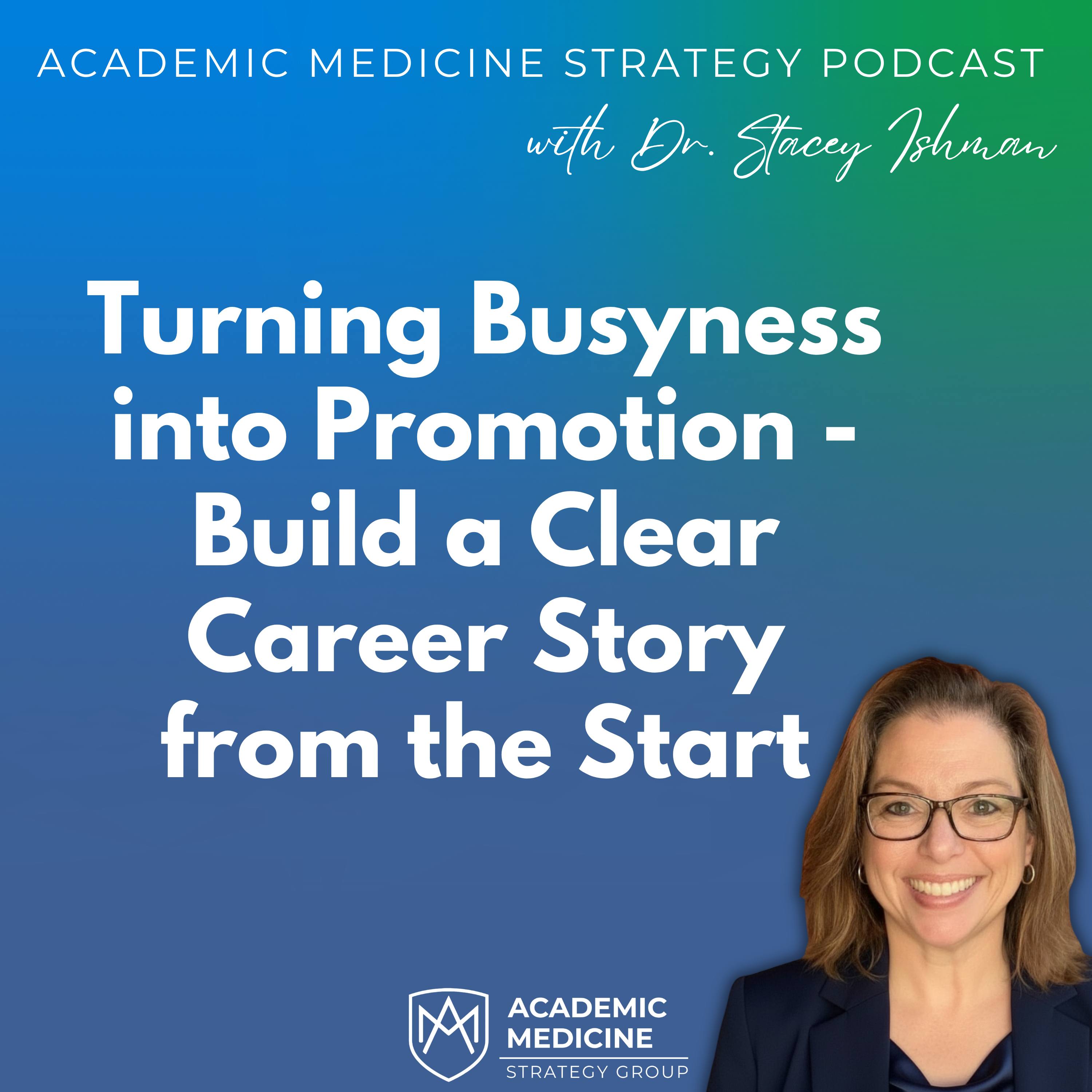
| 2/18/26 | Turning Busyness into Promotion - Build a Clear Career Story from the Start✨ | career developmentphysician challenges+3 | — | — | — | career storybusy physicians+3 | — | 15m 18s | |
| 2/11/26 | The Inside View: A Coaching Conversation with Client Dr. Reema Padia | The Inside View: A Coaching Conversation with Client Dr. Reema Padia In this episode of Medical Mentor Coaching, Dr. Stacey Ishman welcomes her first guest, Dr. Reema Padia, a pediatric otolaryngologist at the University of Utah and Associate Professor in her seventh year of practice. Dr. Padia shares her experience transitioning to a new institution, stepping into leadership, and navigating promotion while balancing family life and personal goals. Together, they explore how coaching can support early- and mid-career physicians in building national presence, strengthening leadership skills, and creating a career that feels both meaningful and sustainable. No need to take notes—check out the Blog for a summary of these insights. If you are interested in coaching for physicians in the first 10 years of practice—whether individually or at the department level—DM me on Instagram @sishmancoach or email me at staceyishmancoach@gmail.com . My mission is to help you build clarity, momentum, and a personalized path to your version of success in academic medicine. Join us to intentionally shape your career. Key Points: 1. Introduction & Career Background (0:00 – 1:00) Introduction of Dr. Reema Padia Pediatric otolaryngologist at University of Utah Seventh year of practice, Associate Professor Transitioned institutions and stepped into leadership 2. Transitioning Institutions & Taking on Leadership (1:00 – 3:00) Moving across the country with two children New department, new leadership role Leading an established team as the “new person” Recognizing the need for support during major transitions 3. Building Trust as a New Leader (3:00 – 4:30) Balancing vision with humility Avoiding the urge to “change everything” immediately Focusing on relationship-building and trust Positioning herself as the “glue” rather than the disruptor 4. From Broad Emails to Targeted Conversations (4:30 – 6:30) Why “Let me know if you’re interested” often fails The power of one-on-one conversations Asking concrete, directed questions Creating buy-in through personal connection 5. Creating Structure: Retreats & Program Growth (5:00 – 6:30) Launching a vascular anomalies program retreat Scaling ideas realistically (lunch-hour retreat vs. grand event) Generating feedback with focused questions Supporting interdisciplinary collaboration 6. Surgical Coaching & Interdepartmental Coaching (6:30 – 9:30) Partnering with University of Colorado for resident coaching Benefits of cross-institutional coaching Psychological safety for residents What surgical coaching is and how it works Coaching focused on efficiency, communication, and teaching 7. Bringing Coaching to the Department Level (9:30 – 12:30) Why coaching isn’t just about promotion Accountability and implementation Faculty across career stages benefiting from coaching Strengthening academic alignment and shared goals 8. Expanding National Presence (11:30 – 13:00) Strategies for increasing visibility Committee involvement and academic networking Connecting with colleagues across subspecialties Coaching across the lifespan of academic medicine 9. Coaching Beyond Promotion (13:30 – 16:00) Coaching is not therapy—it’s forward-focused Individualized goal-setting Consistency and cadence (monthly vs. twice monthly sessions) The importance of accountability 10. Boundaries, Priorities & Work-Life Integration (16:00 – 18:30) Moving away from arbitrary promotion timelines Choosing activities aligned with genuine interest Letting go of “CV padding” Fully engaging in family time without guilt 11. Identity Outside of Medicine (18:30 – 19:30) Joining an adult recreational soccer league Building friendships outside of work Reclaiming personal identity beyond physician and parent 12. Setting Ambitious Personal Goals (19:00 – 19:45) Training for a Half Ironman Bringing colleagues along for the journey Modeling enjoyment and shared growth 13. Final Advice: Enjoy the Process (20:00 – 21:00) Avoiding arbitrary timelines Focusing on meaningful goals Enjoying leadership rather than rushing through it Buy-in grows when people see authentic investment 14. Closing Thoughts (21:00 – End) Growth in leadership communication Building momentum through small shifts Invitation to connect and explore coaching Please RATE, REVIEW, and FOLLOW the Medical Mentor Coaching Podcast on Apple or Spotify. If you are interested in getting in touch with us or providing topic suggestions, please: ● DM me on Instagram at @sishmancoach ● Message me on LinkedIn at https://www.linkedin.com/company/medical-mentor-coaching ● Email me at staceyishmancoach@gmail.com ● Contact me at www.medicalmentorcoaching.com/welcome | 22m 57s | ||||||
| 2/4/26 | Why Busy CVs Don't Always Advance Careers | Why Busy CVs Don’t Always Advance Careers In this episode, Dr. Stacey Ishman unpacks one of the most common and frustrating experiences in academic medicine: working hard, staying busy, and still feeling stalled when it comes to promotion. She explains why promotion criteria alone are not enough, how interpretation—not effort—drives advancement decisions, and why many early-career physicians unknowingly drift off track. This episode is especially for physicians in their first 10 years of practice who feel productive, valued, and praised—but unclear on whether their work is actually moving them toward promotion. Dr. Ishman walks through how promotion committees really evaluate candidates and how to shift from being busy to building a coherent academic narrative. No need to take notes—check out the blog for a written summary of these insights. If you want support translating promotion criteria into a strategy that reflects how decisions are actually made, join the Medical Mentor Coaching community. Key Points 1. Why Promotion Criteria Create False Security (0:00 – 1:00) Why written promotion documents feel reassuring—but often fail to explain how decisions are actually made The difference between published criteria and real-world interpretation 2. The Hidden Problem: Interpretation, Not Access (1:00 – 3:00) Why most institutions make promotion criteria easy to find How ambiguity around “reputation” (regional, national, international) creates confusion Why following the rules doesn’t guarantee advancement 3. Promotion Readiness Is Rarely Explicit (3:00 – 5:00) Why many faculty never have formal promotion readiness conversations How changing tracks and criteria over time increase misalignment The cost of outdated or incomplete advice 4. Track Matters More Than Volume (5:00 – 8:00) How clinician, educator, researcher, and administrative tracks differ Why excellent work can look weak if it doesn’t tell a clear story Examples of work that may or may not count depending on track 5. Adequate vs. Strong Evidence of Impact (8:00 – 9:30) What promotion committees mean by “strong” reputation Why expectations vary by institution and rank Why asking for examples of successful CVs matters 6. Busy Is Not the Same as Aligned (9:30 – 11:30) Why committees don’t see effort—they see patterns How scattered excellence stalls promotion The difference between productivity and trajectory 7. A Real Case of Promotion Drift (11:30 – 13:00) How a packed CV still failed to support promotion Why the issue was misalignment, not underperformance What changed once expectations were clarified 8. The Emotional Cost of Unclear Promotion Systems (13:00 – 14:30) How stalled promotion erodes confidence and engagement Why unclear systems—not personal failure—drive frustration and attrition 9. The Truth That Changes the Outcome (14:30 – End) Why promotion stalls are rarely about not working hard enough How criteria without interpretation create drift Action steps to regain clarity and momentum Summary Promotion committees do not confirm checklists. They interpret patterns. Advancement depends on a coherent academic narrative, evidence of impact at the appropriate level, and visible trajectory over time. When criteria change or interpretation is unclear, even highly productive physicians can drift off course. If your CV is full but your path feels uncertain, the issue is often structural—not personal. Clarity, alignment, and intentional strategy are what turn busy work into forward momentum. Please RATE, REVIEW, and FOLLOW the Medical Mentor Coaching Podcast on your favorite app (Apple Podcasts and Spotify). If you’d like to connect, ask a question, or suggest a topic: ● DM on Instagram: @sishmancoach ● Message on LinkedIn: Medical Mentor Coaching ● Email: staceyishmancoach@gmail.com ● Visit: www.medicalmentorcoaching.com/welcome | 14m 34s | ||||||
| 1/29/26 | Stop Saying Yes The Opportunity Selection Framework That Saves Academic Careers | In this episode of Medical Mentor Coaching, Dr. Stacey Ishman unpacks why being the most reliable faculty member can quietly stall your academic career. She introduces opportunity selection as a critical (and teachable) career skill, explaining how saying yes to the wrong work—even when it’s valued and appreciated—can slow promotion, visibility, and leadership advancement for physicians in their first 10 years of practice. No need to take notes—check out the blog for a written summary of these insights. If you are interested in learning how to build a promotion-ready career strategy instead of defaulting into overcommitment, this episode will help you rethink how and when to say yes. Key Points: 1. Why the Most Reliable Faculty Get Stuck (0:00 – 2:10) How dependable, high-performing physicians often feel invisible despite being indispensable Why this stagnation is often misdiagnosed as burnout The hidden cost of doing essential but non-advancing work 2. The Real Problem Isn’t Effort—It’s Selection (2:10 – 4:00) Why productivity, resilience, and motivation aren’t the issue How academic medicine trains execution but not decision-making The long-term consequences of default yeses 3. Promotion Is About Narrative, Not Effort (4:00 – 5:45) How promotion committees evaluate coherence, trajectory, and impact Why scattered service roles dilute your story The difference between being busy and being promotable 4. The Trade-Off Between Being Helpful and Being Strategic (5:45 – 7:10) Why saying yes feels professional—and why that can be misleading How loyalty and guilt influence opportunity decisions When service helps your career and when it quietly hurts it 5. Opportunity Selection as a Career Skill (7:10 – 8:50) Why saying no is disciplined, not selfish How intentional yeses build depth, visibility, and authority How to redirect opportunities toward roles that fit your goals 6. A Real Coaching Case: Invisible Work, Missed Advancement (8:50 – 10:20) A mid-career faculty example of being passed over for leadership Why invisible institutional work doesn’t translate externally How redesigning roles and focus changes outcomes 7. What Leaders Miss—and Why Retention Suffers (10:20 – 11:40) How departments unintentionally overload their most reliable faculty Why departures often feel sudden but are actually predictable How strategic opportunity alignment can prevent attrition 8. Practical Questions Before You Say Yes (11:40 – 12:50) What this opportunity replaces How it maps to promotion criteria and skill-building Whether it advances your next step—or is time to let it go 9. From Silent Overcommitment to Strategic Careers (12:50 – 14:10) Why goodwill sustains departments but strategy drives promotion How opportunity selection benefits both faculty and institutions Making intentional career design part of academic culture Summary Academic medicine runs on reliable faculty—but careers advance through intentional strategy. In this episode, Dr. Ishman reframes saying yes as a choice that shapes your professional narrative, not a measure of commitment. By learning how to select opportunities that align with promotion criteria, leadership goals, and long-term impact, physicians can stop overcommitting by default and start building careers that move forward with clarity and purpose. Please RATE, REVIEW, and FOLLOW the Medical Mentor Coaching Podcast on your favorite app (Apple Podcasts and Spotify). If you’d like to connect with us or suggest future topics: ● DM on Instagram at @sishmancoach ● Message us on LinkedIn at Medical Mentor Coaching ● Email staceyishmancoach@gmail.com ● Visit www.medicalmentorcoaching.com/welcome | 15m 37s | ||||||
| 1/21/26 | The Leadership Gap No One Talks About in Academic Medicine | In this episode of the Medical Mentor Coaching Podcast, Dr. Stacey Ishman unpacks a critical but rarely named challenge facing early-career physicians: the leadership gap that emerges after training ends. While medicine prepares physicians to execute, it does not prepare them to choose. The result is ambiguity, misalignment, and career drift that often gets mislabeled as burnout. This conversation reframes leadership development as a clarity problem—not a resilience problem—and offers a strategic lens for physicians navigating promotion, leadership roles, and long-term career direction in their first decade of practice. No need to take notes—check out the blog for a full written summary of these insights. If you are interested, book a call HERE, designed to help physicians in their first 5 years of practice chart a personalized, strategic path to promotion, please DM me on Instagram @sishmancoach or email staceyishmancoach@gmail.com . This course is designed to help you intentionally set up your clinical practice, understand academic finances, build a research or education portfolio, establish a national reputation, and create a promotion-ready career narrative. My mission is to help you envision your ideal career and build a path to your version of success. Join us to start your career with clarity rather than drift. Key Points: 1. The Invisible Transition from Trainee to Faculty (0:00 – 2:00) Why early attending life feels harder than expected What medicine prepares you for—and what it does not The abrupt loss of structure after training ends 2. When Decision-Making Becomes the New Skill Gap (2:00 – 3:45) The challenge of moving from responder to decision-maker Why many physicians have never been asked what they want How vague success metrics create overwhelm 3. Values, Time, and Career Alignment (3:45 – 5:45) Why copying a mentor’s path often fails The importance of aligning values with how time is spent Understanding what promotion committees actually evaluate 4. Leadership Roles, Tracks, and Career Sequencing (5:45 – 7:45) Different leadership paths in academic medicine Why “watch and learn” no longer works How unexamined yeses lead to career drift 5. Burnout Reframed as Ambiguity (7:45 – 9:15) Why burnout is often a clarity problem The limits of self-care and resilience solutions The cost of not knowing what work actually counts 6. The Power of Strategic Clarity (9:15 – 11:15) Why clarity—not wellness programs—drives career progress Choosing leadership roles that advance rather than stall careers Regaining agency over your professional trajectory 7. Why This Is Not a Personal Failing (11:15 – 12:45) How academic medicine fails to teach career strategy Why hard work alone does not guarantee advancement The role of strategic mentorship and coaching 8. Designing Your Career by Intentional Choice (12:45 – End) Identifying decisions made by default rather than design Building a multi-year plan aligned with your track and values Why the leadership gap is real—and solvable Please RATE, REVIEW, and FOLLOW the Medical Mentor Coaching Podcast on your favorite app (Apple Podcasts and Spotify). If you are interested in getting in touch or suggesting future topics, you can: ● DM me on Instagram at @sishmancoach ● Message me on LinkedIn at Medical Mentor Coaching ● Email me at staceyishmancoach@gmail.com ● Visit www.medicalmentorcoaching.com/welcome | 14m 46s | ||||||
| 1/14/26 | Why Doing Great Work Is Not Enough to Get Promoted | Why Doing Great Work Is Not Enough to Get Promoted In this episode of the Medical Mentor Coaching Podcast, Dr. Stacey Ishman breaks down one of the most misunderstood truths in academic medicine: promotion is not a reward for effort. It is an evaluation of coherence, clarity, and impact. Using real examples from faculty CVs and promotion committees, Stacey explains why excellent work can still stall—and how to align your work so it actually advances your career. No need to take notes—check out the accompanying blog for a written summary of the framework and examples discussed in this episode. If you’re interested in strategic guidance on promotion planning, academic identity, and building a coherent career narrative, reach out to Medical Mentor Coaching using the links below. Key Points 1. Why “You’re Doing Great Work” Can Be Misleading (0:00 – 1:55) Why reassurance without direction can quietly derail promotion The difference between performance and progress 2. Promotion Committees Don’t Evaluate Effort (1:55 – 3:20) What committees are actually looking for: clarity, coherence, and narrative Why invisible labor and day-to-day excellence don’t translate on paper 3. The Missing Academic Narrative (3:20 – 5:10) Why strong CVs still fail when there’s no clear focus How over-delivering across too many areas dilutes impact 4. Knowing Your Track and Criteria (5:10 – 6:55) Why many faculty don’t know their promotion track or requirements The importance of reading—and understanding—your institution’s criteria 5. Promotion Is a System, Not a Judgment (6:55 – 8:30) Why promotion is an evaluation framework with rules and precedent How guessing your way through promotion is costly 6. The Three Signals Committees Look For (8:30 – 10:20) Clear academic identity Impact beyond your home institution Time structured for advancement 7. Turning Effort Into Signal (10:20 – 11:45) How talks, publications, and service should reinforce one another Why strategy—not more work—changes trajectories 8. How to Apply This Now (11:45 – End) Define what you want to be known for Audit your work against promotion criteria Choose alignment over accumulation Summary Promotion in academic medicine is not about working harder—it’s about working with intention. Committees need to clearly articulate what you are known for, why it matters, and how your work fits together. When effort is aligned with a coherent narrative, promotion becomes legible, defensible, and achievable. Please RATE, REVIEW, and FOLLOW the Medical Mentor Coaching Podcast on your favorite podcast app. If you’d like to connect or suggest future topics: DM on Instagram: @sishmancoach Message on LinkedIn: Medical Mentor Coaching Email: staceyishmancoach@gmail.com Visit: www.medicalmentorcoaching.com/welcome | 13m 18s | ||||||
| 1/7/26 | Fix Your Priorities, Not Your Time! | You Don’t Have a Time Management Problem — You Have a Priority System Failure In this episode of the Medical Mentor Coaching podcast, Dr. Stacey Ishman challenges one of the most common assumptions early-career physicians make: that feeling behind is a time problem. Drawing from real coaching examples and lived experience in academic medicine, she explains why the real issue is a missing or misaligned priority system—and how that quietly derails careers, promotions, and fulfillment. This conversation is especially relevant for physicians in their first 10 years of practice who look successful on paper but feel stalled, reactive, or frustrated underneath it all. No need to take notes—check out the blog for a written summary of these insights. If you are interested in structured support to build a focused, sustainable academic career, keep reading for ways to connect. Key Points: 1. It’s Not About Time (0:00 – 2:20) Most physicians do not have a time management problem—they have a priority and boundary problem Clinics are full, inboxes are overflowing, and goals keep getting deferred The assumption that “next year will be different” rarely holds true 2. What Your Calendar Reveals (2:20 – 3:15) “My days are full, but my priorities are not on there” A time audit shows what is actually being valued Building a national reputation requires visible, consistent focus—not scattered effort 3. Why Giving Up Discretionary Time Doesn’t Work (3:15 – 4:10) Seeing one more patient does not fix a broken system Sacrificing academic or protected time creates short-term relief without long-term progress 4. Urgency vs. Importance (4:10 – 6:00) Without a priority system, everything feels urgent Reactive work becomes all of your work Important but non-urgent work must come first or it never happens 5. Delay Is Not Neutral (6:00 – 7:15) Postponing strategic work compounds over time Promotion delays, unfocused CVs, and persistent frustration are common downstream effects 6. Looking Successful While Feeling Stuck (7:15 – 8:30) Leadership roles and committee work can mask internal dissatisfaction Burnout often appears here—but it’s a signal, not the root problem 7. The Three Types of Work You’re Juggling (8:30 – 10:30) Deep work: writing, research, thinking, creating Collaborative work: teaching, mentoring, teamwork Reactive work: email, EMR, administrative tasks A real priority system creates boundaries for all three 8. A Coaching Example: Permission, Not Clarity (10:30 – 12:30) A surgeon who knew exactly what he cared about—but hadn’t protected time for it The missing piece was permission to treat academic time as non-negotiable Alignment restored momentum and meaning 9. A 90-Day Reset (12:30 – 14:00) Stop asking how to fit more in Decide what actually needs time and space this quarter Protected time + a clear framework changes everything Summary This episode reframes productivity struggles in academic medicine and offers a more honest diagnosis: without a clear priority system, physicians inherit everyone else’s agenda. Dr. Ishman outlines why working harder isn’t the answer—and how intentional focus, protected time, and aligned priorities are what actually move careers forward. If you are interested in getting structured support around priorities, promotion strategy, and career direction, join us for the 90-Day Strategy Sprint or explore additional resources at Medical Mentor Coaching. Please RATE, REVIEW, and FOLLOW the Medical Mentor Coaching podcast on Apple Podcasts or Spotify. If you’d like to get in touch or suggest future topics: ● DM on Instagram at @sishmancoach ● Message on LinkedIn: Medical Mentor Coaching ● Email: staceyishmancoach@gmail.com ● Visit: www.medicalmentorcoaching.com/welcome | 14m 49s | ||||||
Showing 25 of 58
Pitch Fit is a Pro feature
See how bookable this show is for guests, which brands already advertise, the per-episode ad value, and the best-fit guest and sponsor profile. The numbers are blurred on the free plan.
How readily this show books outside guests like you.
How proven this show is for host-read sponsorships.
For Guests
ProFor Advertisers
ProUpgrade to Pro to unlock guest cadence, sponsor categories, fit scores, and per-episode ad value for this show.
Chart Positions
1 placement across 1 market.
Chart Positions
1 placement across 1 market.