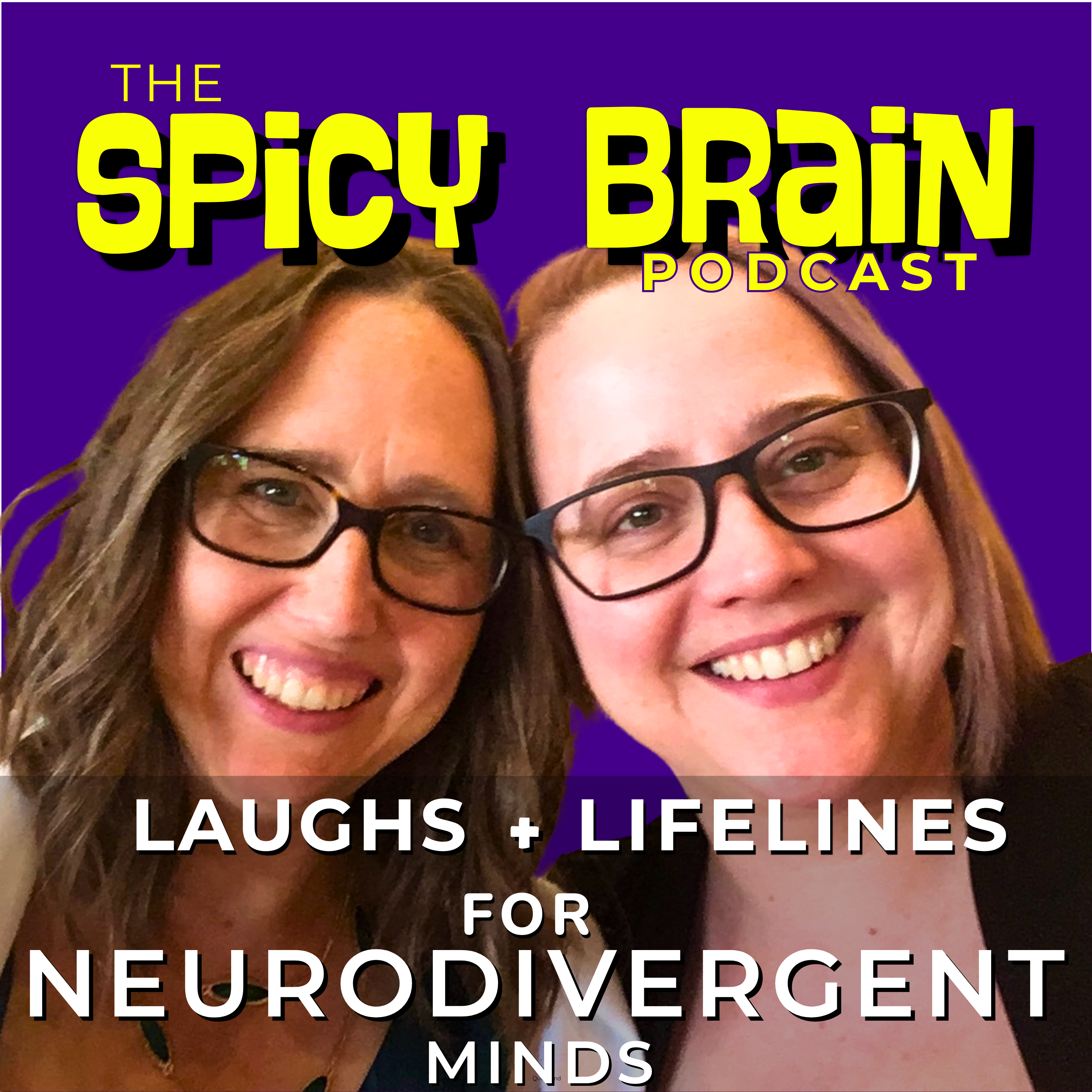
ADHD & Neurodiversity: The Spicy Brain Podcast
by Megan Mioduski & Michelle Woodward
Is this your podcast?Insights from recent episode analysis
Audience Interest
Podcast Focus
Publishing Consistency
Platform Reach
Insights are generated by CastFox AI using publicly available data, episode content, and proprietary models.
Most discussed topics
Brands & references
Total monthly reach
Estimated from 2 chart positions in 2 markets.
By chart position
- 🇦🇺AU · Mental Health#1935K to 30K
- 🇩🇰DK · Mental Health#192500 to 3K
- Per-Episode Audience
Est. listeners per new episode within ~30 days
1.6K to 9.9K🎙 Daily cadence·113 episodes·Last published 2d ago - Monthly Reach
Unique listeners across all episodes (30 days)
5.5K to 33K🇦🇺91%🇩🇰9% - Active Followers
Loyal subscribers who consistently listen
2.2K to 13K
Market Insights
Platform Distribution
Reach across major podcast platforms, updated hourly
Total Followers
—
Total Plays
—
Total Reviews
—
* Data sourced directly from platform APIs and aggregated hourly across all major podcast directories.
On the show
From 15 epsHosts
Recent guests
Recent episodes
Befriending the Chaos: A Raw, Honest Look at Parenting Neurodivergent Kids
Jul 9, 2026
Unknown duration
Small Wins, Big Shifts: Motivation, Self-Care, and Raising Complex Kids
Jul 2, 2026
Unknown duration
Exploring the Dynamics of Compassion in Personal Growth
Jun 25, 2026
Unknown duration
Strategies for Parenting: Embracing Neurodiversity with Acceptance
Jun 18, 2026
Unknown duration
Ep.116 – Behind the Scenes: The Unrecorded Gems of Our ADHD Podcast
May 28, 2026
16m 44s
Social Links & Contact
Official channels & resources
Official Website
Login
RSS Feed
Login
| Date | Episode | Topics | Guests | Brands | Places | Keywords | Sponsor | Length | |
|---|---|---|---|---|---|---|---|---|---|
| 7/9/26 | Befriending the Chaos: A Raw, Honest Look at Parenting Neurodivergent Kids | Michelle and Megan tackle the chapter nobody wants to read — the one that says the chaos in your house might have something to do with how you're showing up. Pulling from The Essential Guide to Raising Complex Kids, they get real about parenting guilt, emotional dysregulation, and why the way you phrase things matters more than you think. Megan brings her personal experience as the complex kid in the room. Michelle shares what actually worked with her 19-year-old son. Honest, funny, and zero Pinterest energy.Parenting a complex kid is beautiful, exhausting, and — if we're being honest — sometimes it's really, really hard. In this episode, Michelle and Megan dig into Chapter 8 of The Essential Guide to Raising Complex Kids and get into the messy, relatable truth: transitions are hard, emotions run loud, and sometimes you love your kid to pieces while also not liking them very much in the moment.They talk about why morning chaos hits different when your child has ADHD or complex needs, how the language you use (even your tone) shapes what your kid actually hears, and why befriending the chaos might be the most radical parenting move you can make.Plus: the "story I'm telling myself" technique that actually worked in real life with a 19-year-old about to leave on a cross-country road trip.Real talk. No Pinterest parenting here.00:00 Welcome to Spicy Brain01:42 Book and Parenting Focus04:19 Chaos and Transitions07:54 Routines and Expectations11:37 Schedules and Flexibility16:38 Parents Feelings and Tone23:39 Language That Lands25:49 Whose Chaos Is It29:56 Owning Resentment and Fear31:40 Reframing Beliefs34:40 Owning Hard Feelings35:31 Honesty Builds Growth36:16 Picking Your Battles38:10 Inner Child Shame Spiral40:14 Middle School Needs Comfort43:16 Befriend the Chaos45:40 Hate Versus Behavior49:25 Repair and Get Support56:03 Curiosity and Listening58:11 Story Im Telling Myself01:02:52 Dig Beneath the Hate01:05:22 Work Begins and WrapADHD parenting, neurodivergent kids, complex kids, parenting with ADHD, emotional regulation, family chaos, neurospicy, parenting tips ADHD, raising complex kids book, transitions ADHD, parenting guilt, ADHD family, radical acceptance parenting, ADHD podcast, Spicy Brain Podcast | — | ||||||
| 7/2/26 | Small Wins, Big Shifts: Motivation, Self-Care, and Raising Complex Kids | In this episode, Michelle and Megan dig into a chapter on motivation from The Essential Guide to Raising Complex Kids. They explore the PINCH method (Play, Interest, Novelty, Competition, Hurry Up), why catastrophizing robs parents of joy, and how celebrating small wins can be genuinely life-changing — for both kids and adults.Megan shares a deeply personal letter she wrote to her younger self about learning to love herself through small, compounding wins. They also talk about self-care not as a luxury but as a gift to your whole family, and why knowing what motivates each member of your household changes everything.Topics covered:The PINCH motivation method and how it applies to neurodiverse kids and adultsWhy catastrophizing paralyzes parents (and how to stop "fearing forward")The power of looking back 3 years instead of worrying about the futureCelebrating small wins — and why it matters more than you thinkMegan's letter to her younger selfSelf-care as a family gift, not a selfish actWhy interest-based motivation is non-negotiable for complex brainsJosh's epic road trip and what it taught Michelle about letting goThe ADHD brain, novelty, and "everything has a place"Book mentioned: The Essential Guide to Raising Complex Kids (currently being discussed chapter by chapter on the show)Children's book mentioned: The Magical YetEpisode Timeline / Chapter MarkersTimestamp Topic0:00 Intro & welcome2:00 Book recap: working through Essential Guide to Raising Complex Kids5:00 The PINCH motivation method explained12:00 Catastrophizing — the "what ifs" that paralyze parents18:00 Josh's journey: from worry to pride24:00 Looking back 3 years instead of fearing forward28:00 Megan's letter to her younger self35:00 Self-care and what it actually means42:00 Catching kids doing good — rewarding small wins50:00 Humor as a coping tool and connection strategy55:00 What motivates each person in Megan's household62:00 Interest-based motivation for complex brains & college advice66:00 Josh's road trip update / Outro68:00 Outro with next episode preview"Start small. Find one thing you can genuinely say you like about yourself, and keep reminding yourself of that one thing until you find another. Build on those small wins. Before you know it, they will compound." - Megan MioduskiADHD, neurodiversity, parenting, complex kids, motivation, PINCH method, self-care, radical acceptance, small wins, catastrophizing, spicy brain, executive functioning, interest-based learning | — | ||||||
| 6/25/26 | Exploring the Dynamics of Compassion in Personal Growth | This podcast episode delves into the nuanced distinction between compassion and empathy, focusing on how these concepts manifest in our interactions and emotional responses. I explore my personal journey of understanding the implications of allowing others' emotions to influence my own state of being, as I navigate through recent experiences with my family. The discussion highlights the potential pitfalls of excessive empathy, which can lead to a state of emotional overwhelm, thus detracting from our ability to provide meaningful support. We consider the importance of maintaining personal stability while extending compassion to others, illustrating this through reflections on my son's transition to college and the broader societal narratives surrounding public figures like Britney Spears. Ultimately, we aim to cultivate a balanced approach that prioritizes both self-awareness and genuine support for those in our lives. The podcast episode presents an insightful examination of the concepts of empathy and compassion, structured around the personal reflections of the hosts. Through a candid discussion, they clarify the distinction between empathizing with others’ emotions—where one may internalize the feelings of another—and the practice of compassion, which entails recognizing another’s suffering while maintaining a degree of emotional detachment. This differentiation is underscored by their personal narratives, notably involving the emotional aftermath of a friend's tragic accident, wherein both speakers confront their respective emotional responses and coping mechanisms. They each reflect on how empathy can lead to overwhelming emotions, a phenomenon they refer to as 'getting spinny', and contrast this with the steadiness that compassion can bring. The episode emphasizes the importance of self-awareness and emotional regulation, suggesting that in order to effectively support others, individuals must first stabilize their own emotional states. As the episode progresses, the hosts delve into the complexities of how these emotional responses manifest in real-life situations, particularly in the context of relationships with family members facing significant transitions, such as preparing for college. The episode highlights a pivotal moment when one host chooses to refrain from fully empathizing with their child's anxieties about the future, opting instead to adopt a compassionate perspective that focuses on empowering the child to navigate their own challenges. This decision is framed as an act of emotional responsibility, illustrating the necessity of balancing support with the recognition of another’s autonomy. The discussion culminates in a broader cultural critique regarding the media's portrayal of public figures, specifically Britney Spears, where they argue that societal narratives often conflate sympathy with compassion, undermining the agency of the individual involved. This poignant analysis serves as a reminder of the ethical considerations inherent in our emotional responses to the suffering of others, advocating for a more mindful and respectful approach that honors individual agency while fostering connection. The episode serves as both a personal reflection and a broader cultural commentary, deftly weaving together personal anecdotes and theoretical insights to elucidate the nuanced dynamics of empathy and compassion. By drawing upon their experiences and observations, the hosts encourage listeners to reflect on their own emotional practices, urging a re-evaluation of how we engage with the emotional lives of those around us. The episode stands as a testament to the ongoing journey of understanding and navigating the complexities of human emotions, offering practical wisdom on fostering healthier emotional interactions while maintaining personal well-being.Takeaways:The distinction between compassion and empathy is critical for emotional regulation in interpersonal relationships.Understanding one's own emotional state is essential to effectively support others in distressing situations.Maintaining a balance between empathy and self-care is crucial to prevent emotional burnout during challenging times.Recognizing when compassion becomes excessive can help in preserving one's own mental health and well-being.podcast episode, compassion vs empathy, emotional health, understanding emotions, mental health podcast, therapy discussions, self-awareness in relationships, dealing with anxiety, emotional regulation, ADHD and trauma, empathy in relationships, compassion fatigue, personal growth, the impact of energy on mental health, supporting loved ones, managing emotions, navigating difficult conversations, personal experiences in therapy, coping strategies for anxiety, the importance of staying present | — | ||||||
| 6/18/26 | Strategies for Parenting: Embracing Neurodiversity with Acceptance | The primary focus of this episode revolves around the complexities of parenting children with neurodiverse conditions, particularly as discussed in Elaine Taylor Clouse's "Essential Guide to Raising Complex Kids." We delve into the multifaceted challenges that arise from biological and brain-based differences, such as ADHD and anxiety, alongside metabolic issues like food allergies. Throughout our discourse, we examine the critical aspect of executive functioning and its implications on task management, attention, and emotional regulation. As we navigate these topics, we underscore the importance of understanding one's own motivations and the necessity for external stimulation in fostering engagement and productivity. Ultimately, we encourage listeners to embrace curiosity, joy, and radical acceptance as they traverse the intricate landscape of neurodiversity in their familial contexts. Navigating the complexities of neurodiversity requires a nuanced understanding of various challenges faced by individuals, particularly children. In this episode, the hosts delve into the multifaceted nature of raising children with complex neurological and metabolic differences, as articulated in Elaine Taylor Clouse's 'Essential Guide to Raising Complex Kids.' The discussion encompasses a range of conditions from ADHD and anxiety to metabolic disorders, emphasizing the hereditary aspects that often accompany these challenges. The hosts reflect on their own experiences, illustrating how these conditions can intersect within family dynamics, and the unique strategies employed to foster understanding and acceptance. One of the key takeaways is the importance of recognizing that motivation can stem from a variety of sources, be it play, interest, or novelty. This understanding is crucial not only for parents but also for anyone involved in the care and education of neurodivergent individuals, as it can significantly influence how support is administered. Throughout the episode, listeners are encouraged to adopt an attitude of curiosity and radical acceptance, essential components in navigating the complexities of neurodiversity.Takeaways:In this episode, we delve deeply into the complexities of parenting neurodivergent children, emphasizing the necessity of understanding their unique needs.The discussion highlights the importance of executive functioning in children, particularly regarding task management and emotional regulation.We explore various motivational techniques, such as play and urgency, that can effectively engage children facing challenges in motivation.The necessity of building a supportive community around neurodivergent children is emphasized, as it alleviates parental burdens and enhances children's growth.We reflect on personal experiences with motivation and executive functioning, illustrating the intricate relationships between emotional states and cognitive performance.Finally, we address the significance of recognizing and nurturing individual strengths in children, fostering a sense of accomplishment and joy in their learning processes.Links referenced in this episode:pbs.orgspicybrain.comneurodiversity, parenting complex kids, ADHD management, executive functioning, sensory processing, mental health awareness, emotional regulation, parenting strategies, raising neurodivergent children, support for anxious kids, motivation techniques for children, learning disabilities, managing impulsivity, parenting advice for anxiety, understanding autism, effective communication with kids, nurturing creativity in children, building community for parents, finding joy in parenting, radical acceptance in parenting | — | ||||||
| 5/28/26 | Ep.116 – Behind the Scenes: The Unrecorded Gems of Our ADHD Podcast✨ | reactivityparenting+5 | — | — | — | ADHDneurodiversity+5 | — | 16m 44s | |
| 5/21/26 | Ep. 115 – From Curiosity to Acceptance: Embracing Neurodiversity in Parenting✨ | neurodiversityexecutive functioning+4 | — | The Essential Guide to Raising Complex Kids | — | neurodiversityexecutive functioning+5 | — | 1h 19m 46s | |
| 5/14/26 | Ep. 114 – Creating Neuro-Friendly Spaces: Practical Approaches for Daily Life✨ | neurodiversityADHD+4 | — | ADHDneurodiversity | — | just get it done buttonneurodivergent+3 | — | 56m 42s | |
| 5/7/26 | Ep. 112 – Creating a Supportive Environment for Neurodiverse Families✨ | emotional triggersADHD emotional regulation+5 | — | — | — | neurodiversityADHD+5 | — | 57m 08s | |
| 4/30/26 | Ep. 112 – From Shame to Support: Parenting Neurodivergent Kids Differently✨ | parenting neurodivergent kidsshame and blame cycle+5 | — | — | — | neurodiversityparenting+7 | — | 1h 00m 42s | |
| 4/23/26 | Ep. 111 – A Solo Brain on Grief, Fear, and Coming Home | Learning to Trust Yourself✨ | griefADHD identity+4 | — | — | — | griefADHD+5 | — | 15m 57s | |
Want analysis for the episodes below?Free for Pro Submit a request, we'll have your selected episodes analyzed within an hour. Free, at no cost to you, for Pro users. | |||||||||
| 4/16/26 | Ep.110 – Why Healing Takes So Damn Long (And Why That’s Okay)✨ | healingneurodiversity+5 | Rosey | — | — | healingneurodivergent+5 | — | 56m 19s | |
| 4/9/26 | Ep. 109 – When Your ADHD Brain Just Says Nope: "I be raw!"✨ | executive dysfunctionchronic pain+4 | — | — | — | ADHDexecutive dysfunction+5 | — | 1h 03m 20s | |
| 4/2/26 | Ep. 108 — Sensory Overload, Food, and “The Perfect Bite”: “It has to be the right texture or I’m out.”✨ | sensory overloadfood textures+5 | — | — | — | sensory overloadfood textures+5 | — | 1h 12m 34s | |
| 3/26/26 | Ep. 107 — Sensory Processing Disorder and Neurodiversity: “My brain feels like it’s wearing a fuzzy sweater.”✨ | Sensory Processing DisorderNeurodiversity+4 | — | The Essential Guide to Raising Complex Kids | — | sensory processing disorderneurodiversity+5 | — | 57m 04s | |
| 3/19/26 | Ep. 106 — Sensory Processing Disorder and ADHD: “Maybe I’m not crazy.”✨ | Sensory Processing DisorderADHD+3 | — | Spicy Brain | — | Sensory Processing DisorderADHD+5 | — | 56m 39s | |
| 3/12/26 | Ep. 105 — ADHD Moving Chaos and Executive Function: “Tell us what to do, but don’t tell me what to do.”✨ | ADHDmoving+4 | — | — | — | ADHDmoving chaos+5 | — | 35m 53s | |
| 3/5/26 | Ep. 104 — ADHD Moves and Trusting Your Brain: “The number of times I’ve quit quit in this is zero.”✨ | ADHDexecutive function+3 | — | — | militaryboxes+3 | ADHDmoving+3 | — | 31m 47s | |
| 2/26/26 | Ep. 103 — Parenting Complex Kids Like a Coach: “Just tell me what to do.”✨ | parentingcoaching+3 | — | — | — | parentingcomplex kids+6 | — | 1h 03m 46s | |
| 2/19/26 | Ep. 102 — ADHD Confidence and Complex Kids: “Specialists Living in a Generalist World”✨ | ADHDparenting+4 | — | — | — | ADHDconfidence+5 | — | 1h 07m 25s | |
| 2/12/26 | Ep. 101 — ADHD Garages, Relationships, and Redefining Success: “It’s Not Just About the Tasks” | This week’s episode dives deep into what it really means to support neurodivergent minds. Whether you're parenting a complex kid, managing your own ADHD, or trying to break the cycle of “fixing it” for everyone else, this one is for you.Michelle and Megan reflect on Chapter 3 of The Essential Guide to Raising Complex Kids by Elaine Taylor-Klaus and tackle the emotional reality of the moment when you’ve “tried everything and nothing seems to work.”Megan shares the surprising emotional growth that came from finally cleaning out her garage. (Yes, the whole thing!) with the support of a neighbor. From “deferred decisions” to letting go of past selves, she walks us through the mindset shift that made it possible. Michelle brings the parenting perspective, offering insights from conversations with Josh and the complexity of offering support without over-controlling.Together, they explore what it means to parent ourselves, our children, and our relationships through big transitions with grace, curiosity, and a little spicy humor.Favorite line from the episode:“I had to build this muscle little piece by piece… which is why sometimes I get hard on Elaine Taylor-Klaus, because nothing she says is simple. But it is worth it.”00:00 welcome and the pressure to do “the right” kind of parenting05:00 defining success and dealing with feelings of failure10:30 Megan’s garage cleanup breakthrough (and how it really wasn’t about the garage)15:00 honoring relationships over tasks23:00 relationship fatigue and letting go of control35:00 your child is not your resume42:00 redefining “adulting” and giving yourself time49:00 trusting the long-term “stock market” of parenting56:00 the importance of curiosity and repair in relationship-buildingIf you’ve ever felt stuck in the chaos of parenting a complex kid, or parenting yourself through the mess, this is your sign to pause, breathe, and trust the process. We’re so glad you’re here with us. Make sure to follow or subscribe on your favorite podcast app, and if you’re enjoying the show, leave us a review or rating. Doing that really helps other neurospicy folks find their way here too. And hey, what’s your version of the garage you’ve been avoiding? Share it with us on Instagram or leave a comment. Until then, stay curious, joyful, and radically accepting. 🎧💖ADHD, complex kids, parenting, executive function, burnout, emotional regulation, relationships, radical acceptance, garage metaphor, sensory overload, letting go, adulting, redefining success, shoulds, transitions | — | ||||||
| 2/5/26 | Ep. 100 — Two Years, 100 Episodes, and a Whole Lot of Growth: “Radical Acceptance, High Kick!” | From a messy start in temporary lodging to a full-blown neurospicy podcast, Michelle and Megan are celebrating 100 episodes of The Spicy Brain Podcast. What began as a casual sisterly experiment has evolved into two years of laughter, learning, and radically honest conversations about ADHD, emotions, burnout, masking, relationships, parenting, and healing.In this milestone episode, they reflect on how far they’ve come both personally and professionally. Michelle talks about releasing the need to “have all the answers,” and Megan shares the unexpected confidence she's gained in learning how to embrace her ADHD identity. They revisit key concepts like executive functioning (aka "The Butler"), internal shame spirals ("The Drill Sergeant"), Pomodoro sessions ("Tomatoes"), and good old-fashioned sibling bickering over puzzles. It’s a heartfelt look back filled with listener shout-outs, behind-the-scenes memories, and a whole lot of gratitude.This episode is both a love letter and a permission slip—for you to be exactly who you are, wherever you are in your neurodivergent journey.Favorite line from the episode: “I am the adult I’m supposed to be.”00:00 – Kicking off episode 100: reflections and ramblings02:15 – Why we started this podcast and how it’s evolved06:10 – ADHD and the emotional layers we didn’t expect10:55 – The Great Puzzle Showdown (Michelle’s Nightmare Puzzle)16:40 – Megan on releasing shame and gaining confidence18:50 – Listener shout-outs and community gratitude22:20 – Defining our Spicy Brain glossary: Butler, Drill Sergeant, Flap, Tomatoes34:30 – Strategies we’ve loved: balance, breaks, and reframing38:50 – Radical Acceptance… High Kick!44:00 – What belief did we lose after 100 episodes?47:00 – Curiosity over perfection—what parenting and podcasting taught us54:15 – The joy of Twitch-mom-ing and finding community58:20 – Looking ahead to the next 100 episodesADHD, neurodivergent podcast, radical acceptance, executive function, masking, sibling podcast, emotional regulation, ADHD strategies, humor and ADHD, women with ADHD, self-acceptance, parenting neurodivergent kids, Twitch and ADHD, burnout recovery, shame, podcast reflections, ADHD support, mental health, puzzle metaphorThank you for being part of this wild, wonderful ride with us. If The Spicy Brain Podcast has helped you feel seen, laughed a little louder, or shed a should or two—please follow or subscribe on your favorite podcast platform, and leave us a review! It really helps more neurospicy folks find our little corner of the internet. And if you're new here, welcome! You've got 99 other episodes waiting to be discovered.Until next time, here’s to curiosity, joy, and a whole lot of radical acceptance… high kick! | — | ||||||
| 1/29/26 | Ep. 99 — ADHD Green Tasks, Friendship Anxiety, and the Come Down That Follows: “Lay It All In There” | What happens when your ADHD brain finally says yes to a big day of joy, and then crashes afterward? In this cozy episode of the Spicy Brain Podcast, Michelle and Megan unpack what it means to say yes to magic, connection, and green tasks, even when you know they’ll cost you some recovery time.Megan shares a personal win: pushing past the urge to cancel and going whale watching with a friend, even though her body and brain were tired. Together, the sisters talk about masking, energy depletion, and what it takes to show up as your full, unedited self in a friendship. Whether you’re navigating the aftermath of a big social event or wondering why doing something joyful can still leave you feeling drained, this one’s for you.favorite line from the episode: “I'm Not That Busy, I'm Just Super Distracted"00:00: midnight Megan and the deadline dopamine01:20: life is loud, transitions are hard03:00: the urge to cancel and the cost of energy06:40: fears about being “too much” when you’re tired08:20: dogs, belly rubs, and vulnerability10:40: fix-it Frank and childhood lessons12:00: the myth of “just change yourself”14:10: best friend culture, friendship envy, and Gen Z wisdom17:30: matching friends to emotional bandwidth19:00: loneliness, lost communities, and neighbor connections24:00: postcards, connection, and remembering to follow up26:10: the come-down after green tasks28:30: dolphins, core strength, and physical therapy winsIf you’ve ever found yourself depleted after a joyful day, you’re not alone. Share this episode with someone who needs a reminder that doing something magical doesn’t mean you won’t still need rest afterward. And don’t forget to follow the show so you don’t miss next week’s episode—our 100th!ADHD, green tasks, social burnout, masking, friendships, vulnerability, radical acceptance, self-care, emotional boundaries, introvert energy, community building, whale watching, neurodivergent joy | — | ||||||
| 1/22/26 | Ep. 98 — The REAL Episode 98: Radical Forgiveness, Melt-Downs & Marbles | Okay okay. If you tuned in last week and thought, “Wait… didn’t I already hear this?” You did. That was Episode 95 in disguise. But THIS is the real Episode 98, and it’s worth the wait.This week, we finally finish Chapter 2 of Elaine Taylor-Klaus’s book, The Essential Guide to Raising a Complex Kid, and we go deep. We talk about:What it means to parent yourself with the same love and care you offer your kids.Why meltdowns, big feelings, and broken dishes are all part of the work, and how to handle them with less shame and more curiosity.The four steps to help ourselves and our kids move through a trigger response (and why you can’t skip ahead to “fix it”).Why radical forgiveness is just as important as radical acceptance.Real-life strategies: from marble jars to mug catastrophes, to help build trust and repair when things go sideways.We also unpack what it really means to “stay calm” as a parent. Spoiler: it’s not as simple as the books make it sound. There’s a reason this chapter took us four episodes to process, and that’s because healing is messy, neurodiversity is layered, and parenting is Olympic-level emotional work.We’re so glad you’re on this journey with us.💬 Favorite quote: “If a dish gets washed and no one sees it, did it happen?”Next week, we’re diving into the chapter titled: “I’ve Tried Everything and Nothing Works”—and redefining what success really looks like for complex parents and complex kids.The Essential Guide to Raising a Complex Kid by Elaine Taylor-KlausBe sure to follow or subscribe on your favorite podcast app.And if you’ve been enjoying the show, leaving us a review helps other neurospicy humans find their way here too.Until next time: stay curious, joyful, and full of radical acceptance and forgiveness. High kick!ADHD podcast, parenting complex kids, ADHD parenting strategies, neurodivergent parenting, radical forgiveness, emotional regulation ADHD, parenting with ADHD, ADHD self-parenting tools, how to support ADHD kids, The Essential Guide to Raising a Complex Kid, teaching emotional regulation, marble jar trust, radical acceptance ADHD, parenting when you’re overwhelmed, I’ve tried everything and nothing works ADHD, staying calm during a meltdown, ADHD and shame spiral, real talk ADHD parenting, neurospicy podcast. | — | ||||||
| 12/18/25 | Ep. 97 — ADHD Parenting Archetypes (Part 3), Time Clocks, and the Long Game of Repair: “You’re Never Gonna Have a Butler” | UPDATED** - We had a technical glitch where about ten minutes of the audio cut out Megan's voice. While Michelle does enjoy talking, she wasn't having a one-sided conversation. lolWelcome back to the Spicy Brain Podcast! In this final part of our deep dive into parenting archetypes from The Essential Guide to Raising Complex Kids by Elaine Taylor-Klaus, Michelle and Megan explore the last three personality patterns — Demanding Dave, Defensive Drew, and Bootstrap Bessie — with their signature blend of heart, honesty, and humor.If you’ve ever heard phrases like “Life’s not fair” or “You just need to do what’s expected of you,” this episode will hit home. Through personal stories, uncomfortable truths, and the occasional pug pee metaphor, they examine how trauma, shame, and generational patterns can sneak into our parenting, and how we can shift toward curiosity and repair instead.Favorite line from the episode: “You’re never gonna have a butler.”00:00 intro and why the high kick has to be low01:15 welcome to new listeners and a recap of the book03:30 Demand #1: Demanding Dave and Darlene “Just get the socks on!”06:45 the San Francisco trip, light bulbs, and the Alcatraz mug11:00 time blindness, accommodations, and why being early is survival15:10 Megan’s rescue pug as a metaphor for ADHD parenting18:30 learning to parent without shame, and with sparkles22:45 “You’re never gonna have a butler”: when language shapes identity25:00 how expectations can fail when they ignore invisible disabilities29:00 Defensive Drew — when parenting becomes performance33:00 othering, vertical games, and looking for parents who get it36:00 trauma, defensiveness, and the spinny brain40:30 how therapy (and therapy avoidance) shows up in family patterns45:00 Bootstrap Bessie: suck-it-up culture and emotional dismissal48:30 lack of empathy for ourselves and how to break that cycle51:15 how “suck it up” becomes a stop sign in conversations53:00 revisiting all 15 archetypes as ways we shut down connection58:00 what happens after the awareness, the power of "up until now"01:00:00 the repair process in parenting and neurodiverse relationships01:03:00 preview: the four-step strategy for managing triggers01:04:30 final thoughts on values, time, and why parenting is an 18-year interviewADHD parenting, parenting archetypes, complex kids, Elaine Taylor-Klaus, neurodivergent families, time blindness, emotional triggers, radical acceptance, self-repair, parenting trauma, invisible disabilities, generational patterns, childhood shame, reparenting, expectations vs reality, neurospicy podcastIf you saw yourself in more than one parenting type, you are absolutely not alone, and awareness is the first step toward change. Next week, we’ll shift from insight to strategy with four powerful steps to manage your triggers and reset the stress cycle. Follow or subscribe to the Spicy Brain Podcast so you don’t miss it, and leave us a review to help other neurospicy folks find us too.Until then, stay curious, stay joyful, and bring a whole lot of radical acceptance. | — | ||||||
| 12/11/25 | Ep. 96 — ADHD Parenting Archetypes (Part 2) and Emotional Permanence: “Heroin in His Eyeballs” | In this heartfelt and funny continuation of last week’s episode, Michelle and Megan tackle the second half of the ADHD parenting personality types from The Essential Guide to Raising Complex Kids by Elaine Taylor-Klaus, and reflect on how those same patterns shape how we parent ourselves.From the anxiety-fueled planning of Anxious Ava to the quiet retreat of Distant Dana, the sisters explore how these archetypes show up in real life, in restaurants, in parenting, and even in podcast recording sessions. Megan shares candid stories about growing up with learned rules and what it means to finally break them, while Michelle gets real about what it's like to catch yourself reacting from a place of fear or habit.They also dive into the concept of emotional permanence, the idea that some of us need regular reminders that we are loved, even if we’ve just had a great day. This episode is a reminder that you’re not alone in your patterns, your fears, or your flailing Kermit moments, and that naming those patterns might be the first step to changing them.favorite line from the episode: “He's not gonna inject heroin into his eyeballs.”00:00 welcome back and defining parenting in all its forms04:00 parenting as a village — dogs, stepkids, and inner children05:50 Anxious Ava: planning, fear, and over-control11:15 pushing past the panic spiral12:00 Pushover Pat and setting boundaries16:30 mental health days and radical honesty20:00 Denying Dale and societal myths about ADHD25:30 Playful Peter and learned helplessness31:00 Distant Dana and parenting avoidance35:00 emotional permanence and unspoken rules42:15 shifting perspective with “up until now”45:10 how we parent different people differently47:30 radical acceptance — even when you’re tiredADHD, ADHD women, parenting archetypes, Elaine Taylor-Klaus, neurodivergent parenting, anxious parenting, emotional permanence, childhood rules, inner child, emotional regulation, mental health, radical acceptance, masking, executive function, sibling podcast, self-awareness, neurodivergent adultsIf any of these parenting patterns hit close to home, we see you. Share this episode with a friend who might relate, or revisit Episode 95 to hear the first half of the parenting archetypes. And don’t forget to follow or subscribe so you don’t miss next week’s dive into Defensive Drew, Demanding Randy, and more. Until then, stay curious, joyful, and full of radical acceptance. | — | ||||||
Showing 25 of 123
Pitch Fit is a Pro feature
See how bookable this show is for guests, which brands already advertise, the per-episode ad value, and the best-fit guest and sponsor profile. The numbers are blurred on the free plan.
How readily this show books outside guests like you.
How proven this show is for host-read sponsorships.
For Guests
ProFor Advertisers
ProUpgrade to Pro to unlock guest cadence, sponsor categories, fit scores, and per-episode ad value for this show.
Chart history for ADHD & Neurodiversity: The Spicy Brain Podcast
Peaked at #192 in Denmark, currently #192 in Denmark.
| Market | Genre | Peak | Current | Trend |
|---|---|---|---|---|
| Denmark | — | #192 | #192 | — |
| Australia | — | #193 | #193 | — |
Chart Positions
2 placements across 2 markets.
Chart Positions
2 placements across 2 markets.