Insights from recent episode analysis
Audience Interest
Podcast Focus
Publishing Consistency
Platform Reach
Insights are generated by CastFox AI using publicly available data, episode content, and proprietary models.
Most discussed topics
Brands & references
Est. Listeners
Based on iTunes & Spotify (publisher stats).
- Per-Episode Audience
Est. listeners per new episode within ~30 days
10,001 - 25,000 - Monthly Reach
Unique listeners across all episodes (30 days)
25,001 - 75,000 - Active Followers
Loyal subscribers who consistently listen
15,001 - 40,000
Market Insights
Platform Distribution
Reach across major podcast platforms, updated hourly
Total Followers
—
Total Plays
—
Total Reviews
—
* Data sourced directly from platform APIs and aggregated hourly across all major podcast directories.
On the show
From 1 epsHost
Recent guests
No guests detected in recent episodes.
Recent episodes
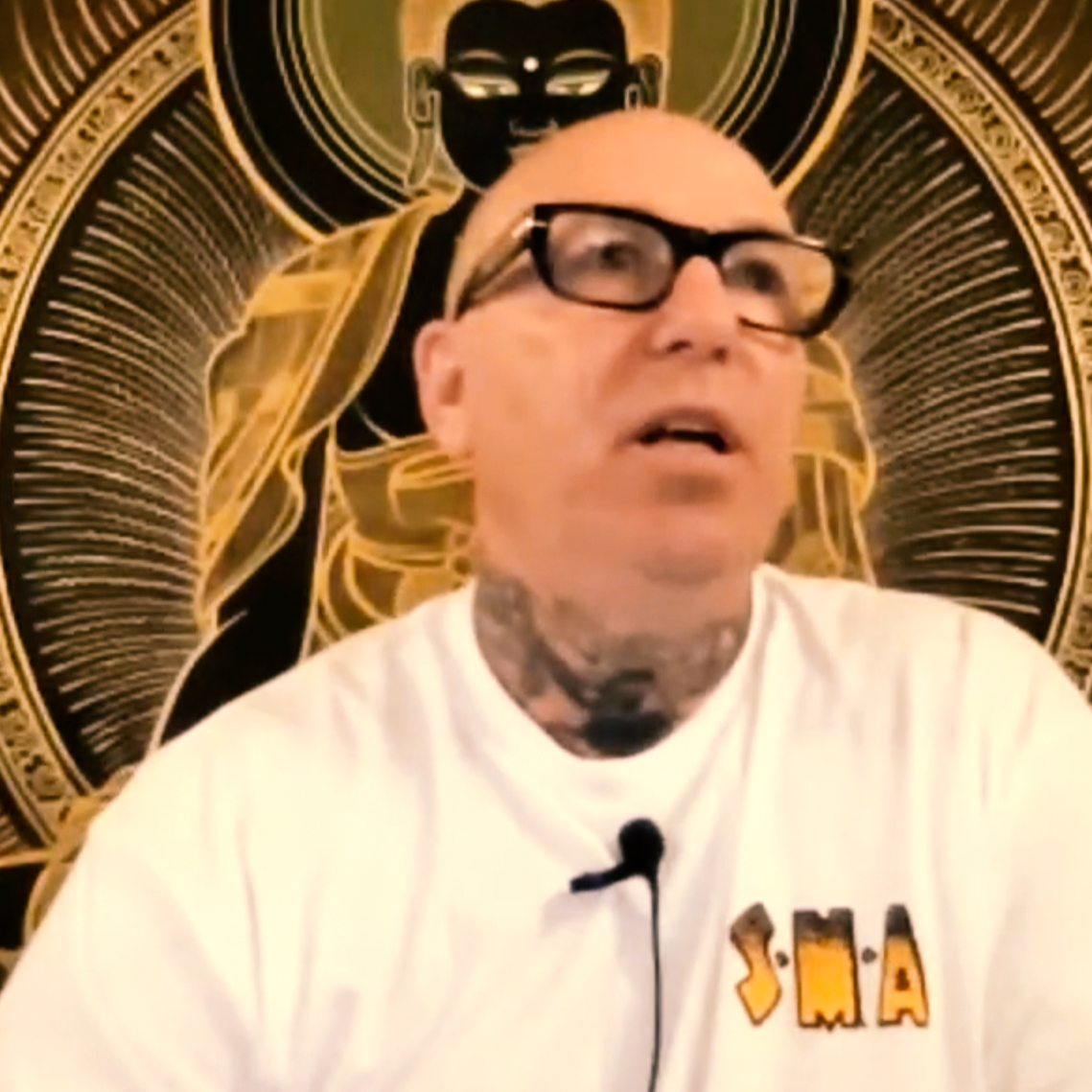
Mindfulness with Noah Levine
Apr 23, 2026
1h 26m 38s
Effort with Noah Levine
Apr 21, 2026
Unknown duration
Wise Livelihood with Noah Levine
Apr 16, 2026
Unknown duration
5 Precepts with Noah Levine
Apr 6, 2026
Unknown duration
Communication with Noah Levine
Apr 3, 2026
Unknown duration
Social Links & Contact
Official channels & resources
Official Website
Login
RSS Feed
Login
| Date | Episode | Topics | Guests | Brands | Places | Keywords | Sponsor | Length | |
|---|---|---|---|---|---|---|---|---|---|
| 4/23/26 | Mindfulness with Noah Levine✨ | mindfulnessBuddhism+3 | — | Four Foundations of Mindfulness | — | mindfulnessBuddha+5 | — | 1h 26m 38s | |
| 4/21/26 | Effort with Noah Levine | If you want to be free, it’s going to take effort—not once, but over and over again. Mindfulness, concentration, and wisdom don’t happen by decision alone, they come from consistent training. The path isn’t linear, and there’s no divine intervention—it’s the work you put in that changes the mind. How much faith do you have? How much do you believe in transformation? | — | ||||||
| 4/16/26 | Wise Livelihood with Noah Levine | How much of your suffering is tied to money—craving, fear, trying to secure the future? A wise livelihood isn’t just about what you do for work, but your relationship to money itself. Somewhere between clinging and avoidance, there’s a middle path that leads to freedom. What do you do for a living? How are you paying the bills? How do you earn money? Why did you choose this livelihood? | — | ||||||
| 4/6/26 | 5 Precepts with Noah Levine | The Five Precepts point to a simple but powerful truth: our actions have consequences. Not killing, not lying, not stealing, not misusing sexuality, and staying clear-minded—each one protecting us from creating unnecessary suffering. This is the baseline of the path, where ethical action becomes the ground for freedom. Which precept do you feel you’ve learned the most from? How do you relate to the precepts? | — | ||||||
| 4/3/26 | Communication with Noah Levine | Speech has consequences—every word shaping karma in ways we don’t always see. When we look closely, there’s a tendency to exaggerate, to minimize, or to leave things out altogether. The practice is learning to bring honesty and awareness into how we communicate. Are you an exaggerator or a minimizer? Or are you an omitter? | — | ||||||
| 4/1/26 | Intention with Noah Levine | The path continues with intention—what’s behind our actions, not just the actions themselves. In the Buddhist teachings, karma is shaped by the motivation fueling what we do, whether it leads to suffering or to freedom. Learning to recognize and cultivate wise intention becomes central to the path. What is your intention? For your meditation? For your life aspiration? How do you think about the world? | — | ||||||
| 3/31/26 | Dependent Origination with Noah Levine | Understanding isn’t about information—it’s about direct experience, insight into how things actually work. Dependent origination points to this: everything is connected, each moment arising out of causes and conditions, shaping the next. When we see this clearly, we begin to understand how suffering is created—and how it can be interrupted. What do you like seeing? What do you like hearing? What do you like touching? What do you like smelling? What do you like touching? What do you like to think about? What sense door gives you the most pleasure? | — | ||||||
| 3/27/26 | 6 Views with Noah Levine | When you start paying attention, you begin to see that what we call the self isn’t as solid as it feels. There are thoughts, sensations, reactions arising and passing, but no fixed identity behind them. Understanding this directly starts to loosen the grip of clinging and opens the possibility of freedom. What do you believe about your self? Do you believe in a soul or that there’s no soul? Is it all meaningless? Is it liberating? | — | ||||||
| 2/20/26 | Understanding Reality with Noah Levine | We’ve explored the cause of suffering and the end of suffering, and now the path itself begins with understanding. The first factor of the Eightfold Path points directly to karma—cause and effect—and the consequences of our actions. Every intention, every act of generosity or anger, kindness or judgment, is shaping the conditions of our lives. What do you think about karma? What do you believe about the consequences of your actions? Good or bad… Is karma on your radar? | — | ||||||
| 2/16/26 | 3rd Noble Truth with Noah Levine | Tonight’s topic is the Third Noble Truth—the possibility of liberation, awakening, freedom from suffering. The Buddha said he only taught two things: the truth of suffering and the end of suffering. This path isn’t about cosmology or belief; it’s a practical discipline of understanding the mind, transforming craving and aversion, and realizing the end of suffering. What’s your definition of enlightenment? What would it feel like for you to experience Nirvana? How would you know you’re there? | — | ||||||
Want analysis for the episodes below?Free for Pro Submit a request, we'll have your selected episodes analyzed within an hour. Free, at no cost to you, for Pro users. | |||||||||
| 2/13/26 | 2nd Nobel Truth with Noah Levine | Tonight’s topic is the Second Noble Truth—the cause of suffering. The Buddhist word is tanha, often translated as craving, but more directly as an unquenchable thirst. That restless hunger shows up as desire, obsession, wanting, insatiable pleasure—the mind chasing satisfaction and never quite landing. When you think of desire, craving, wanting, what other words come to mind? What is causing your dissatisfaction? | — | ||||||
| 1/29/26 | Spiritual Friendship with Noah Levine | Tonight’s talk is a conversation on spiritual friendship and the role of community in awakening, recovery, and practice. The Buddha emphasized taking refuge in the sangha—relationships and friendships that support wisdom, compassion, and meditation. This dialogue explores how spiritual friendship sustains us and why practice was never meant to be done alone. Do you have friendships that support your practice? | — | ||||||
| 1/26/26 | Compassion & Forgiveness with Noah Levine | Even after years of forgiveness and compassion practice, there can still be things that push our buttons. The human mind holds resentment all by itself—it’s a natural, instinctual response to being hurt, a survival mechanism, not a personal failure. In this talk, we explore how resentment creates unnecessary suffering, and how it’s possible to meet pain with compassion and even those who have harmed us with forgiveness rather than anger. What’s the most difficult scenario for you to bring in compassion? What about forgiveness? | — | ||||||
| 1/12/26 | Q&A with Noah Levine | Tonight, we'll briefly reflect on your progress this year—specifically in areas like compassion, kindness, generosity, and reducing self-identification. I usually advise against checking your growth too often; spiritual development is better measured over decades than months or years. However, after a year of diligent practice, you might notice increased mindfulness, self-acceptance, and kindness compared to last year. Keep in mind that current moods can distort your perception of progress. The key is to reflect honestly: Did you consistently practice, attend retreats, and take actions supporting your growth? What was your progress with wisdom, generosity, spirituality, etc? | — | ||||||
| 1/7/26 | Reactive Nature with Noah Levine | This evening, I want to discuss a fundamental lesson from Buddhist meditation: learning to respond thoughtfully rather than simply reacting. I’ll explore this topic with you and aim to offer some practical tools for developing this skill. I believe that understanding how to respond instead of react is an essential aspect of meditation practice and something we continually strive to master. What’s your first reaction when you stub your toe? What’s the first thing you do? What’s the first thing you say? | — | ||||||
| 12/30/25 | Book Study with Noah Levine | Welcome, everyone. I don’t have a major topic planned for tonight. Instead, as I’ve mentioned before, I’d like to talk about a book that I’ve had for years but recently picked up additional copies of while visiting Sri Lanka last month. This book was originally written in 1901, making it one of the earliest translations of the Pali Canon—the foundational Buddhist texts—first translated from the Sri Lankan language into German in 1901, then later into English around 1907 or 1914. The book itself is quite simple and small, but it’s been an important companion throughout my decades of Buddhist study and practice. My plan is to go through it with you and offer some commentary. I believe we looked at it together last week. Here’s my new copy; last week I showed you my old orange duct-taped version, which I think I left in my office. So, tonight, we’ll start exploring this book together. How long have you been interested in Buddhism? How did you find Buddhism? What got you interested? | — | ||||||
| 12/29/25 | Conflict with Noah Levine | Tonight, I'd like to discuss the challenges and suffering that come from being attached to being right, as well as the role of Buddhism and meditation in reducing this ego-driven tendency. Even when our views are correct, attachment causes distress. The Buddha notes that those who haven't meditated—“untrained worldlings”—lack the insight into the impermanent nature of things. How’s it feel to be right? How do you feel when you’re right? What does if feel like when you’re certain your right but someone else thinks you’re wrong? | — | ||||||
| 12/23/25 | Effort & Perseverance with Noah Levine | The Buddha’s teachings on the afterlife are unique compared to other traditions. Rather than promising eternal heaven or hell, the Buddha described existence as a process where even suffering in hell is temporary, not everlasting. This perspective rejects both eternalism and nihilism, suggesting an ongoing process—something continues, but not forever. Rebirth and reincarnation are central ideas in Buddhism, though belief in them isn’t required. My role is to share what the Buddha taught, inviting discussion and contemplation without demanding belief. Do you think that when you die, it the end of existence? Is there something that continues? Do you think you’d be happy if you had enough money? | — | ||||||
| 12/17/25 | The Middle Path with Noah Levine | The Buddha’s teachings on the afterlife are unique compared to other traditions. Rather than promising eternal heaven or hell, the Buddha described existence as a process where even suffering in hell is temporary, not everlasting. This perspective rejects both eternalism and nihilism, suggesting an ongoing process—something continues, but not forever. Rebirth and reincarnation are central ideas in Buddhism, though belief in them isn’t required. My role is to share what the Buddha taught, inviting discussion and contemplation without demanding belief. Do you think that when you die, it the end of existence? Is there something that continues? Do you think you’d be happy if you had enough money? | — | ||||||
| 11/3/25 | Compassion with Noah Levine | Tonight I'll be discussing compassion, the challenges that come with it, and the concept of the "near enemy"—feelings that seem like compassion but actually lead to suffering. True compassion alleviates suffering, not causes it. There's a phenomenon called compassion fatigue, often mentioned in service, psychological, or medical fields. If compassion is exhausting you, it's not genuine compassion; it's something pretending to be compassion. Real compassion is soothing and never leaves you tired. Where is it that you’re finding it difficult to be compassionate? Does being compassionate overwhelm you? | — | ||||||
| 10/27/25 | Advice For Householders with Noah Levine | Tonight, I'll screen share the sutta so we can go through it together, with some commentary from me. We'll focus on the Buddha's words and discuss them as a group, but first, let's meditate. | — | ||||||
| 10/27/25 | Mindfulness/Kindness/Let Go with Noah Levine | Tonight, I’ll be discussing mindfulness, kindness, and non-attachment—three separate but connected topics. Let’s take a moment to reflect on kindness. Consider how it feels when you treat yourself with kindness, meeting your own thoughts, emotions, and sensations warmly. Also, think about what it’s like to genuinely offer kindness to others—not just being polite, but truly feeling warmth and care. This sense of kindness is a central principle in Buddhism, known as loving-kindness, and is important for how we support each other. What does it feel like to be kind? When is it easy to be kind? When is it most difficult to be kind? | — | ||||||
| 10/26/25 | Love with Noah Levine | Tonight, I'll discuss different kinds of love before we meditate together—starting with loving kindness, a universal form, and also exploring romantic and family love. In small groups, connect with people you haven't met and share thoughts about love. After our meditation, I'll elaborate further. Healthy love centers on giving, goodwill, friendliness, acceptance, and generosity. It’s an outward offering, but love often gets mixed with wanting it in return, attachment, and clinging. What is love? What does love mean to you? Where do you feel it? What is your relationship to it? | — | ||||||
| 10/19/25 | 3 Poisons with Noah Levine | The Buddha taught that each person has a primary personality tendency, which is not clearly explained but could be shaped by childhood conditioning or karmic reincarnation. This tendency aligns with one of three main causes of suffering: greed, hatred, or delusion. To identify your own tendency, notice your initial reaction when entering a room—whether you focus on things you desire (greed), things you dislike (hatred), or if your perception is clouded (delusion). For example, if your attention immediately goes to items you want, like a Buddha painting or a Motorhead t-shirt, your core tendency may be greed. Do you have judging eyes? Are you present or spaced out? Do you have wanting eyes? What’s strongest for you: Greed, Hatred or Delusion? | — | ||||||
| 10/16/25 | Addiction To Our Minds with Noah Levine | Tonight, I'm talking about addiction to our minds. The term "addiction" is often used casually—people say they're addicted to things like exercise or meditation. But for those who've experienced substance or process addiction, it's a much deeper issue. My definition of addiction is: it's the repeated habit of satisfying cravings to avoid, change, or control the uncomfortable reality of the present moment. Are you addicted to your mind? How addicted to your mind are you? | — | ||||||
Showing 25 of 100
Sponsor Intelligence
Sign in to see which brands sponsor this podcast, their ad offers, and promo codes.
Chart Positions
9 placements across 9 markets.
Chart Positions
9 placements across 9 markets.