
Insights from recent episode analysis
Audience Interest
Podcast Focus
Publishing Consistency
Platform Reach
Insights are generated by CastFox AI using publicly available data, episode content, and proprietary models.
Most discussed topics
Brands & references
Total monthly reach
Estimated from 4 chart positions in 4 markets.
By chart position
- 🇰🇷KR · Medicine#5610K to 30K
- 🇪🇸ES · Medicine#1641K to 10K
- 🇳🇿NZ · Medicine#883K to 10K
- 🇮🇪IE · Medicine#116500 to 3K
- Per-Episode Audience
Est. listeners per new episode within ~30 days
7.3K to 27K🎙 Weekly cadence·163 episodes·Last published 4d ago - Monthly Reach
Unique listeners across all episodes (30 days)
15K to 53K🇰🇷57%🇪🇸19%🇳🇿19%+1 more - Active Followers
Loyal subscribers who consistently listen
5.8K to 21K
Market Insights
Platform Distribution
Reach across major podcast platforms, updated hourly
Total Followers
—
Total Plays
—
Total Reviews
—
* Data sourced directly from platform APIs and aggregated hourly across all major podcast directories.
On the show
From 10 epsHosts
Not detected.
Recent guests
Recent episodes
153: Can nature and mindfulness help pain?
Jun 2, 2026
36m 42s
152: How is pain management changing?
Apr 7, 2026
39m 45s
S2 Ep1: How neurodivergent people experience pain
Mar 3, 2026
12m 32s
151: How do social factors impact pain?
Feb 3, 2026
31m 01s
150: How pain education is changing lives
Sep 16, 2025
43m 29s
Social Links & Contact
Official channels & resources
Official Website
Login
RSS Feed
Login
| Date | Episode | Topics | Guests | Brands | Places | Keywords | Sponsor | Length | |
|---|---|---|---|---|---|---|---|---|---|
| 6/2/26 |  153: Can nature and mindfulness help pain? | This episode is produced in partnership with the British Pain Society. The interview with Sam Hughes was recorded at their 2025 Annual Scientific Meeting.Can nature and mindfulness help pain?This episode of Airing Pain looks at the interplay between nature and mindfulness, and how they can become part of the pain management toolkit. Nature and neuroscience. Understand the science with Dr Sam Hughes. Learn how nature interacts with pain, and how this interaction works in virtual reality. Greater connections. We join the Edinburgh and Lothians Greenspace Trust on one of their group wellbeing walks. We look at the benefits of building connections with nature, each other and ourselves. Focusing on the here and now. We hear from trained and accredited mindfulness teacher Cath Ashby. Cath explains how the practice of mindfulness can be applied to nature, and what this can do for pain.Contributors:Dr Sam Hughes, a Senior Lecturer in Pain Neuroscience at the University of ExeterElly Kinross, a Woodlands and Greenspace Officer with the Edinburgh and Lothians Greenspace TrustCath Ashby, a trained and accredited mindfulness teacher Pain Concern’s free, online mindfulness sessions | 36m 42s | ||||||
| 4/7/26 |  152: How is pain management changing?✨ | pain managementacute period pain+2 | Phoebe WilliamsTim Atkinson+3 | the British Pain Societythe University of Oxford+5 | — | British Pain Society2025 Annual Scientific Meeting+1 | — | 39m 45s | |
| 3/3/26 |  S2 Ep1: How neurodivergent people experience pain✨ | neurodivergent painpain psychology+3 | Dr David Moore | Pain Matters 91Liverpool John Moores University+1 | — | pain thresholdspain anxiety+2 | — | 12m 32s | |
| 2/3/26 |  151: How do social factors impact pain?✨ | social factorspain+4 | Cormac RyanRebecca Pearson+1 | Teesside UniversityManchester Metropolitan University+4 | — | thoughtsfears+8 | — | 31m 01s | |
| 9/16/25 |  150: How pain education is changing lives✨ | pain educationchronic pain management+1 | Joan MelvilleGeorgina McDonald+4 | pain education classesPain Concern+9 | GlasgowClyde | NHSPain Concern+2 | — | 43m 29s | |
| 9/9/25 |  150: Trail - Airing Pain 150: Pain Education Classes - Learn to live well with pain✨ | pain educationliving well with pain | — | — | — | pain managementhealth education | — | 1m 41s | |
| 5/21/25 |  149: Why pain persists: from childhood trauma to faulty immunity✨ | chronic painchildhood trauma+3 | Kathleen SlukaShafiq Skikander+1 | the British Pain Society’sthe William Harvey Research Institute+6 | Londonthe United States | pain managementstress+1 | — | 34m 54s | |
| 5/16/25 |  Trail - Airing Pain 149: Why pain persists: from childhood trauma to faulty immunity✨ | chronic painneuroimmune mechanisms+4 | — | Airing Pain | — | acute painpersistent pain+1 | — | 1m 18s | |
| 5/2/25 |  148: Trail - Airing Pain - Exploring the links between hypermobility and neurodivergence✨ | neurodivergencehypermobility+5 | Ren MartinCeri Reid+3 | Parents Voices in Walesthe Autistic Girls Network+8 | Wales | DyscalculiaDyslexia+2 | — | 2m 05s | |
| 5/2/25 |  Airing Pain Short - Interview with Jason Wilsher-Mills✨ | chronic painart+1 | Jason Wilsher-Mills | the Wellcome CollectionAiring Pain Short+1 | London | chronic polyneuropathyWellcome Collection+1 | — | 5m 02s | |
Want analysis for the episodes below?Free for Pro Submit a request, we'll have your selected episodes analyzed within an hour. Free, at no cost to you, for Pro users. | |||||||||
| 4/30/25 | Airing Pain - Interview with Susan Birth✨ | Ehlers-Danlos syndromeshypermobility spectrum disorders+3 | Susan Birth | NHSAiring Pain | — | Ehlers-Danlos Support UKhealthcare+1 | — | 1m 38s | |
| 4/30/25 | Airing Pain - Interview with Simon Harvey | "Simon Harvey, General Manager of Able in South Wales, discusses supporting adults with learning disabilities, autism, and neurodivergent conditions. He reflects on the podcast's relevance for families and individuals, sharing personal insights about pain management and raising autistic children with ADHD." | 1m 30s | ||||||
| 3/5/25 | 148: Exploring the links between hypermobility and neurodivergence | Airing Pain 148: Links between hypermobility and neurodivergenceReleased on: 5/3/2025This Airing Pain episode explores how neurodivergent individuals experience pain, potential links to hypermobility, and the need for better education to support conditions like autism and ADHD. Neurodiversity refers to the different ways a person’s brain processes information. It is an umbrella term used to describe a number of conditions including Autism or Autism Spectrum Conditions; ADHD; Dyscalculia; Dyslexia; Dyspraxia, or Developmental Coordination Disorder (DCD), and more.In this episode: Dr. Clive Kelly discusses research on co-occurring conditions in neurodivergence, highlighting varied symptoms and how pain perception differs among individuals. Dr Jessica Eccles talks about her research into the relationship between joint hypermobility and neurodevelopmental conditions like ADHD and autism. We hear from Ren Martin, an autistic learning disability nurse and mother of three neurodivergent children, and Ceri Reid of Parents Voices in Wales, advocating for better neurodiversity and mental health services. Throughout the episode, we hear from Imogen Warner, whose writings are featured in the Autistic Girls Network, and who highlights the reality of being a young autistic person. Contributors: Dr. Clive Kelly, Consultant Physician and Rheumatologist, James Cook University Hospital and University of Newcastle-upon-Tyne. Dr Jessica Eccles, Reader in Brain-Body Medicine at Brighton and Sussex Medical School. Ren Martin, neurodevelopmental specialist. Ceri Reid, neurodivergent mother and founder of Parents Voices in Wales. Imogen Warner, student with lived experience of autism and chronic pain. Jane Green MBE, founder of SEDSConnective We are immensely grateful to The British Humane Association and The Heather Hoy Charitable Trust whose generous grants made this podcast possible.Time Stamps: 00:43 Understanding Neurodivergence and Pain04:46 The Relationship between Hypermobility and Neurodivergence12:06 Gender Differences in Diagnosis and Pain13:49 Ren Martin’s Personal Experience32:27 Diagnosis for Neurodivergent Individuals35:18 Challenges in Education for Neurodivergent Children42:40 Training for Educators and Healthcare WorkersLinks Referred to in this Episode: School toolkit for JHS and EDS - School Toolkit for EDS and JHS Parents Voices in Wales: Resources & Key Documents – Parents Voices in Wales CIC Autistic Girls Network: https://autisticgirlsnetwork.org/ Ehlers-Danloss Society: https://www.ehlers-danlos.com Hypermobility Syndrome Association. - The HMSA | The Hypermobility Syndromes Association Healios: https://healios.org.uk/ SEDSConnective: https://www.sedsconnective.org/ If you have any feedback about Airing Pain, you can leave us a review via our Airing Pain survey | 51m 29s | ||||||
| 12/4/24 |  147: Person-Centred Care | This episode of Airing Pain focuses on person-centred care. Person-centred care is based on the individual rather than on a generic group of patients. In this episode: Vicky Sandy-Davis, Lead Nurse of Independent Health and Social Care, talks about the importance of recognizing the value of person-centred care, specifically for people with intellectual or learning disabilities Ian Taverner and Sarah Harrisson discuss the importance of involving people living with chronic pain in research studies so that researchers can be guided by those with experience of chronic pain Professor Nicole Tang and Jenna Gillett share findings from their research on mental defeat. For people living with chronic pain, mental defeat can be a way of characterizing how the pain impacts a person's perceived loss of autonomy which can lead to a loss of identity when experiencing repeated episodes of pain. The interviews were recorded at the British Pain Society’s Annual Scientific Meeting, 2024. Contributors: Vicky Sandy-Davis, Lead Nurse for Independent Health and Social Care, West Midlands Ian Taverner, Chair of the Public Advisory Group of CRIISP (Consortium to Research Individual, Interpersonal and Social Influences in Pain) Sarah Harrisson Research Associate in Applied Health Research at Keele University, Specialist Pain Physiotherapist with the IMPACT Community Pain Service (Midlands Partnership NHS Foundation Trust) in Stoke-on-Trent Professor Nicole Tang, Director of the Warwick Sleep and Pain Laboratory, Academic Co-Lead for the Warwick Health Global Research Priority Mental Health Theme Jenna Gillett, PhD student at Warwick University and Lecturer in Psychology at the University of Buckingham. If you have any feedback about Airing Pain, you can leave us a review via our Airing Pain survey | 36m 05s | ||||||
| 10/9/24 |  146: Irritable Bowel Syndrome & Inflammatory Bowel Disease | Airing Pain 146: Irritable Bowel Syndrome & Inflammatory Bowel Disease This edition of Airing Pain focuses on two conditions affecting the gut: Irritable Bowel Syndrome (IBS) and Inflammatory Bowel Disease (IBD). Both affect the digestive system, and both cause pain. In this episode we learn about what separates these outwardly similar sounding conditions, how they are diagnosed, and what treatments might be available. Dr David Bulmer discusses the key differences and distinguishing features of IBS and IBD, the latest research into these conditions, and potential medicinal treatments for managing the pain they cause. Professor Rona Moss-Morris sheds light on remission, pain, and symptom management for IBS and IBD, and the challenges these conditions present. We hear about research into the use of Cognitive Behavioural Therapies designed specifically to help manage IBS and IBD symptoms.The interviews were recorded at the British Pain Society’s Annual Scientific Meeting, 2024. Contributors: Dr David Bulmer, Associate Professor at Cambridge University, specialising in visceral pain and gastrointestinal disease, with a special interest in IBS, IBD, and pain. Prof. Rona Moss-Morris, Professor of Psychology as Applied to Medicine and Head of the Department of Psychology at the Institute of Psychology, Psychiatry and Neuroscience, King’s College London. Lead for Digital Therapies at the NIHR Maudsley Biomedical Research Centre. She has a special interest in factors that affect symptom experience and adjusting to chronic medical conditions. Time Stamps: 01:29 Paul Evans introduces Dr David Bulmer, Associate Professor at the Department of Pharmacology at Cambridge University. 01:46 Dr David Bulmer explains the difference between Irritable Bowel Syndrome and Inflammatory Bowel Disease and how they are diagnosed. 02:50 Bulmer discusses research into the potential causes of IBS and IBD, including localised allergic response and potential genetic markers. 06:18 Bulmer describes a study into the use of antidepressants for the treatment of IBS. 07:29 Bulmer discusses new treatments for Inflammatory Bowel Disease, and how far these impact the actual pain experienced. 12:17 Bulmer explains the ‘Low FODMAP’ diet treatment. 14:17 Evans introduces Professor Rona Moss-Morris, Professor of Psychology as Applied to Medicine and Head of the Department of Psychology at King’s College London. 14:22 Moss-Morris explains the term ‘remission’ and how it is applied to IBS and IBD. 16:33 Moss-Morris discusses clinical trials using Cognitive Behavioural Therapy (CBT) for those with IBS and IBD symptoms. 18:53 Moss-Morris explains what CBT is and how it is used. 23:16 Moss-Morris discusses the use of apps and digital approaches to treatment. 27:55 Moss-Morris gives a final message on pain. If you have any feedback about Airing Pain, you can leave us a review via our Airing Pain survey | 28m 54s | ||||||
| 10/2/24 |  Trail - Airing Pain 146: Irritable Bowel Syndrome & Inflammatory Bowel Disease | Coming 9th October: This edition of Airing Pain focuses on Irritable Bowel Syndrome (IBS) and Inflammatory Bowel Disease (IBD) – two outwardly similar sounding conditions, but the devil is in the details. Our contributors are experts on visceral pain, gastrointestinal disease, and psychological factors affecting chronic conditions; find out what they have to say in the latest edition of Airing Pain, coming soon. The interviews were recorded at the British Pain Society’s Annual Scientific Meeting, 2024. Contributors: Dr David Bulmer, Associate Professor at Cambridge University, specialising in visceral pain and gastrointestinal disease, with a special interest in IBS, IBD, and pain. Prof. Rona Moss-Morris, Professor of Psychology as Applied to Medicine and Head of the Department of Psychology at the Institute of Psychology, Psychiatry and Neuroscience, King’s College London. Lead for Digital Therapies at the NIHR Maudsley Biomedical Research Centre. She has a special in interest factors that affect symptom experience and adjusting to chronic medical conditions. If you have any feedback about Airing Pain, you can leave us a review via our Airing Pain survey | 1m 16s | ||||||
| 8/14/24 |  145: Rethinking Pain: Pain Management in the Community | Airing Pain 145 Rethinking Pain: Pain Management in the Community This edition of Airing Pain centres on rethinking the traditional clinician-patient relationship in pain management and exploring alternative approaches to bringing pain management back into the community. Dr Barbara Phipps, GP and Lifestyle Medicine expert, discusses the development and benefits of group consultations for pain management. Dr Jackie Walumbe sheds light on the pervasive inequalities in chronic pain services, highlighting the value of communities and member-led collaboratives in building and shaping self-management. Prof. Mark Johnson, Dr Kate Thompson, and Kerry Page talk through the benefits of de-medicalising pain management, shifting the focus to a community setting. We hear about the fantastic work of Rethinking Pain, a community-based pain support service in Bradford and Craven, and the inspiration this can serve for future chronic pain services and self-management initiatives. The interviews were recorded at the British Pain Society’s Annual Scientific Meeting, 2024. Contributors: Dr Barbara Phipps, Practising NHS GP and Teaching Fellow at the University of Edinburgh, currently running a community based Chronic Pain management service within the NHS. Barbara has a special interest in Lifestyle Medicine, and is a trustee of the British Society of Lifestyle Medicine. Dr Jackie Walumbe, Clinical Academic Advance Practice Physiotherapist in the Complex Pain Team at University College London Hospitals NHS Foundation Trust and Honorary Research Fellow at University of Oxford. Professor Mark Johnson, Professor of Pain and Analgesia and Director of the Leeds Beckett Pain Team (Centre for Pain Research) at Leeds Beckett University. Dr Kate Thompson, Senior Lecturer and Researcher at Leeds Beckett University, with a background in physiotherapy and special interest in pain research. Kerry Page, Programme Lead for Rethinking Pain, the chronic pain community service based in Bradford District and Craven. Time Stamps: 01:58 Paul introduces Dr Barbara Phipps, Practising NHS GP and Teaching Fellow at the University of Edinburgh, currently running a community based Chronic Pain management service within the NHS. Barbara has a special interest in Lifestyle Medicine, is and is a trustee of the British Society of Lifestyle Medicine. 02:27 Dr Barbara Phipps discusses the development of group consultations for people with long-term primary pain. 07:28 Paul and Barbara discuss the importance of people being believed about their pain, perception of pain experiences, and detection on functional MRI scans. 10:41 Paul draws upon issues the funding in pain management services and who decides whether a treatment programme is value for money or not. 10:53 Paul introduces Dr Jackie Walumbe, Clinical Academic Advance Practice Physiotherapist in the Complex Pain Team at University College London Hospitals NHS Foundation Trust and Honorary Research Fellow at University of Oxford. 11:04 Dr Jackie Walumbe discusses her research on understanding how the term and practice of Self-Management is understood and acted on by people living with chronic pain, particularly those who don’t have ongoing contact or access with specialist pain services, and the relationship between this and policy makers’ decisions. 14:42 Paul and Jackie discuss key findings regarding issues of inequality, and a report by Versus Arthritis (Unseen, Unequal and Unfair: Chronic Pain in England), reflecting issues of policy and politics and the importance of other communities in filling the gaps. 18:09 Paul introduces Rethinking Pain, a community-based service for adults living with long-term pain, in Bradford District and Craven. 18:28 Paul introduces Dr Mark Johnson, Professor of Pain and Analgesia and Director of the Leeds Beckett Pain Team (Centre for Pain Research) at Leeds Beckett University. 18:37 Paul introduces Dr Kate Thompson, Senior Lecturer and Researcher at Leeds Beckett University, with a background in physiotherapy and special interest in pain research. 18:40 Paul introduces Kerry Page, Programme Lead for Rethinking Pain, the chronic pain community service based in Bradford District and Craven. 18:47 Kerry Page discusses the Rethinking Pain service, its background, services, and success. 19:57 Dr Kate Thompson explains how Rethinking Pain’s approach differs from other community pain management programmes 20:58 Dr Mark Johnson talks about how pain is a context driven experience, and the importance of understanding how the narrative matters when it comes to managing pain. 25:49 Kerry Page recalls the importance of giving time to listen to the pain community and those living with chronic pain, and the way that Rethinking Pain’s initiative provides this through Health Coaches. 35:53 Kerry page discusses how pain management services can help to reach more people and connect people and organisations from across the pain community. Additional Resources: Rethinking Pain Inequalities in Chronic Pain Report - Versus Arthritis If you have any feedback about Airing Pain, you can leave us a review via our Airing Pain survey _______________________________________________________________________________________________ | 38m 03s | ||||||
| 8/7/24 |  Trail - Airing Pain 145: Rethinking Pain: Pain in the Community | Coming 14th August: This edition of Airing Pain centres on rethinking the traditional clinician-patient relationship in pain management and exploring alternative approaches to bringing pain management back into the community. Is the 1-to-1 doctor-patient consultation the best we can do? How can we help people to feel more empowered in managing their own pain? Our contributors are experts in pain management, research, and community engagement; find out what they have to say in the latest edition of Airing Pain, coming soon. The interviews were recorded at the British Pain Society’s Annual Scientific Meeting, 2024. Contributors: Dr Barbara Phipps, Practising NHS GP and Teaching Fellow at the University of Edinburgh, currently running a community based Chronic Pain management service within the NHS. Barbara has a special interest in Lifestyle Medicine, and is a trustee of the British Society of Lifestyle Medicine. Dr Jackie Walumbe, Clinical Academic Advance Practice Physiotherapist in the Complex Pain Team at University College London Hospitals NHS Foundation Trust and Honorary Research Fellow at University of Oxford. Professor Mark Johnson, Professor of Pain and Analgesia and Director of the Leeds Beckett Pain Team (Centre for Pain Research) at Leeds Beckett University. Dr Kate Thompson, Senior Lecturer and Researcher at Leeds Beckett University, with a background in physiotherapy and special interest in pain research. Kerry Page, Programme Lead for Rethinking Pain, the chronic pain community service based in Bradford District and Craven. If you have any feedback about Airing Pain, you can leave us a review via our Airing Pain survey | 0m 57s | ||||||
| 6/12/24 |  144: Dilemmas in Pain Research | Airing Pain 144: Dilemmas in Pain Research This episode of Airing Pain focuses on the challenges that researchers must overcome when researching pain and developing new treatment approaches. Many questions remain unanswered in the field of pain research. For example, we might know that a treatment works for some people living with pain, but we might not know how it works or why some people benefit and some do not. So, there is a lot of research being done to try to better understand pain. This leads to another problem: how to cope with the amount of new information emerging from research and trials? It is important that new research data is made more accessible for clinicians, healthcare workers, patients, and researchers. Data is no use unless it can be assessed and summarized so that doctors can understand how to use it to benefit their patients. Our contributors for this edition are leaders in this field and they discuss some of the issues they have encountered whilst conducting their research into pain and how to treat it. The interviews were recorded at the British Pain Society’s Annual Scientific Meeting, 2023. Contributors: Professor Robert Brownstone, Brain Research UK Chair of Neurosurgery, Department of Neuromuscular Diseases, UCL Queen Square Institute of Neurology. Dr Neil O'Connell, Reader in Physiotherapy, Brunel University, Chair of the International Association for the Study of Pain (IASP) Methods, Evidence Synthesis and Implementation Special Interest Group. He is an advisor to Pain Concern. Dr Kirsty Bannister, Neuroscientist and Associate Professor at King’s College London. Time Stamps: 1:22 Paul introduces Professor Robert Brownstone, Brain Research UK Chair of Neurosurgery at University College London. 1:32 Prof. Brownstone explains what a spinal cord stimulator is, the lack of progress made with this form of treatment, the varied results the treatment gets, and why some people experience long-term pain following back surgery. 7:40 Paul talks about Cochrane, a global independent network of health practitioners, researchers, and patient advocates who review research findings to provide a more precise estimate of the effects of a treatment. 7:54 Paul introduces Dr Neil O’Connell, a Reader at Brunel University who was the Co-ordinating editor of the Cochrane Pain, Palliative and Supportive Care (PaPaS) group. 8:35 Dr O’Connell discusses how Cochrane reviews research and clinical trials, and the complexities involved in gathering and interpreting evidence when developing interventions. 17:04 Paul introduces Dr Kirsty Bannister, a neuroscientist and Associate Professor at King’s College London who specialises in neuropharmacology and runs a research group that uses animals to examine the mechanisms of pain processing. 17:22 Dr Bannister talks about why animal models are useful for researching the responses people may have to different pain processes and researching chronic pain by measuring neuronal responses to pain. 21:44 Paul and Dr Bannister discuss the limitations of using animals to research chronic pain. 23:48 Paul and Dr Bannister explore why looking at a patient's experience of pain first can better inform lab research on animal models for understanding and researching pain. 30:03 Prof. Brownstone gives some advice for those considering a spinal cord stimulator as an intervention they want to try. Additional Resources: Cochrane Pain Matters 73: Neuropathic pain issue Pain Matters 79: Navigating pathways to live well with pain Pain Matters 80: What treatment really works Neuropathic Pain If you have any feedback about Airing Pain, you can leave us a review via our Airing Pain survey ______________________________________________________________________________________________ | 31m 02s | ||||||
| 5/28/24 |  Trail - Airing Pain 144: Dilemmas in Pain Research | Coming 12 June: This edition of Airing Pain focuses on the dilemmas and roadblocks that researchers encounter when researching pain and developing interventions, how they may overcome them, and why systematic reviews of research are so important.Our contributors for this edition are leaders in this field and they discuss some of the issues they have encountered whilst conducting their research into pain and how to treat it. Interviews in this edition were recorded at the British Pain Society Annual Scientific Meeting.Contributors:Professor Robert Brownstone is a Professor and Head of Neurosurgery at University College London.Dr Neil O’Connell is a Reader in the Physiotherapy Division of the Department of Health Sciences at Brunel University London. He is also a member of Cochrane's central editorial board. Dr Kirsty Bannister is an Associate Professor of Neuroscience/Neuropharmacology at King’s College London. | 0m 56s | ||||||
| 4/10/24 |  143: Personalised Medicine and Empowered Pain Relief | This edition of Airing Pain focuses on the treatment of pain, the importance of catering treatment to a person’s individual genetic makeup, and why addressing the psychological dimensions of pain is crucial in treating it effectively. The process of finding a medication or treatment that works for a person often involves a lot of trial and error, which can be a frustrating process for someone to go through. This process can be side-stepped through the use of personalised medicine, where information about a person’s genetic makeup is used to tailor and optimise their treatment so it is as effective as possible. Although medication is oftentimes a vital part of treating pain, incorporating psychological treatment alongside medication can be hugely beneficial when it comes to making pain management better for those living with acute or chronic pain. Changing how someone thinks about pain can enhance their response to the physical components of the treatment they receive. Our contributors for this edition discuss the ways in which the treatment of pain can be made more effective for people by incorporating personalised medicine or psychological treatments into a person’s care plan. Please leave us a review on this platform or give feedback via our Airing Pain survey. Contributors: Professor Tony Dickenson, Professor of Neuropharmacology at University College London. Dr. Beth Darnall, PhD, Professor of Anesthesiology, Perioperative and Pain Medicine at Stanford University School of Medicine. Director, Stanford Pain Relief Innovations Lab. Professor Irene Tracey, Vice Chancellor of the University of Oxford and a Professor of Anaesthetic Neuroscience in the Nuffield Department of Clinical Neurosciences. Read transcriptThanks: This edition of was made possible thanks to funding from the Guy Fawkes Charitable Trust and support from the British Pain Society. Time Stamps: 1:11 Paul introduces Professor Tony Dickenson,who he spoke to at the British Pain Society Annual Scientific Meeting 2022. 3:21 Professor Tony Dickenson discusses ‘precision medicine’, ‘personalised medicine’, and how looking at peoples' genetic makeup can help medical professionals treat pain more effectively. 14:21 Paul introduces Dr Beth Darnall, who he spoke to at the British Pain Society Annual Scientific Meeting 2023. 14:54 Dr Beth Darnall explains the psychological components of how people experience pain. 20:24 Paul introduces Professor Irene Tracy, who he spoke to at the British Pain Society Annual Scientific Meeting 2023. 20:57 Dr Irene Tracy discusses the work she's done on neuroimaging and how the human brain constructs the experience of pain. 23:22 Paul and Dr Tracy talk about what neuroimaging tells us about the multidimensional way the human brain reacts to pain. 26:06 Beginning of discussion about Empowered Relief, a psychology-based intervention that provides people with skills and tools to help manage their acute or chronic pain. 26:31 Dr Beth Darnall discusses the psychological side of treating pain and how empowered relief is used to help people manage their pain. 29:10 Dr Beth Darnall talks about the psychological tools people learn through Empowered Relief and how they help with pain management. Additional Resources: Airing Pain 100: Glasgow Pain Education SessionsEmpowered Relief Pain Matters 80: What treatment really works | 37m 29s | ||||||
| 3/27/24 |  Trail - Airing Pain 143: Personalised Medicine and Empowered Pain Relief | Coming 10 April: This edition of Airing Pain focuses on the treatment of pain, the importance of catering treatment to a person’s individual genetic makeup, and why addressing the psychological dimensions of pain is crucial in treating it effectively. Our contributors for this edition discuss the ways in which the treatment of pain can be made more effective for people by incorporating personalised medicine or psychological treatments into a person’s care plan. This edition will be funded by the Guy Fawkes Charitable Trust and was created with support from the British Pain Society.Contributors: Professor Tony Dickenson, Professor of Neuropharmacology at University College London Dr. Beth Darnall, PhD, Professor of Anesthesiology, Perioperative and Pain Medicine at Stanford University School of Medicine. Director, Stanford Pain Relief Innovations Lab.Professor Irene Tracey, Vice Chancellor of the University of Oxford and a Professor of Anaesthetic Neuroscience in the Nuffield Department of Clinical Neurosciences. | 1m 19s | ||||||
| 2/21/24 | 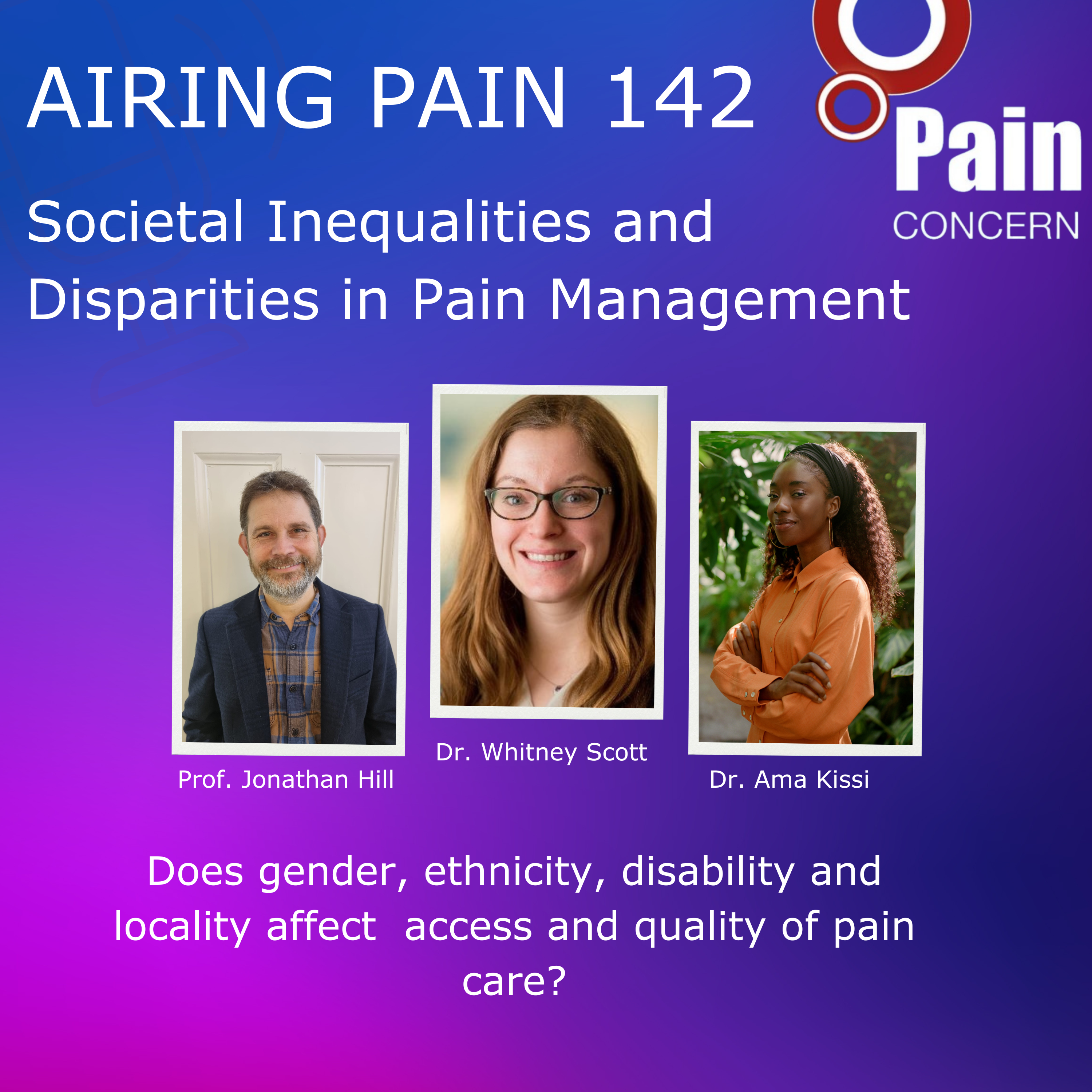 142: Societal Inequalities and Disparities in Pain Management | Pain Concern would like to remind listeners that the topic of chronic pain can be uncomfortable for those with lived experience of chronic pain. Please read the description for information about this edition's content. In a 2020 US study, it was found that ‘Implicit bias remains a contributor to healthcare disparities.’ This can be based on gender, ethnicity, disability or locality, and has the potential to affect somebody no matter their background. In Airing Pain 142, we begin with specific references to disparities in Musculoskeletal (MSK) treatment, and how we can learn from other healthcare fields to increase patient satisfaction; we then focus on how both internal and external stigma can lead to discrimination in treatment; before ending with a discussion about why ethnic minorities are being inadvertently discriminated against in the pain management setting. If you enjoyed this episode of Airing Pain, why not subscribe? You can also leave us a review via our Airing Pain survey Read TranscriptContributors: Professor Jonathan Hill is the Director of Research for the School of Allied Health Professionals, and a Professor of Physiotherapy, in the Keele School of Medicine. Dr Ama Kissi is a post-doctoral fellow at the University of Ghent and a Clinical Psychologist. Dr Whitney Scott is a clinical psychologist who lectures at Kings College London and is the research lead at the INPUT Pain Management Unit at Guy’s & St Thomas’ Hospital. Time Stamps: 1:30: Professor Jonathan Hill speaks about the disparities in musculoskeletal pain treatment in primary care. 6:04: Sharing their experiences and research, Paul and Jonathan discuss the differences between Pain Management and Diabetes care. 9:59: Jonathan Hill highlights the importance of differentiating between people accessing pain management care frequently and infrequently. 15:26: Jonathan Hill alludes to the ‘Restore’ trial in Australia, and the success of integrating physiotherapists into the pain management care system. 18:44: Dr Whitney Scott talks about the stigma and discrimination of people living with pain. 24:44: Whitney Scott discusses the way that health care professionals can work with people in pain who feel stigmatised. 26:01: Paul and Dr Ama Kissi discuss the disparities in pain management for different ethnicities and hypothesise why this might be the case. 31:17: Ama Kissi shares her own experiences as a black woman in the healthcare environment - this segment discussed childbirth. Thanks: This edition of Airing Pain was possible thanks to support from the British Pain Society If you’re looking for more information and support on managing pain visit painconcern.org.uk. Additional Resources: Pain Matters 84 - This magazine issue focuses on inequalities in public health. Stigma and Pain Management - US Department of Health and Human Services. ‘Stigma and Chronic Pain’ - A research article published in ‘Pain and Therapy’.Further information on the Restore Trial | 39m 19s | ||||||
| 12/20/23 |  141: Living with Childhood and Young Adult Cancer | This edition of Airing Pain sheds light on the unique challenges of living with cancer as a child or young adult, and the later impacts of the cancer treatment they underwent during the critical formative years. Airing Pain speaks to experts on the longitudinal impacts of cancer for these age groups; across medical, physical, and psychosocial. Pain and fatigue are commonly reported as the most significant negative impact on quality of life when living with cancer. Until quite recently there has been little research in the area of living with cancer and experiencing medical treatments for cancer as a child or young adult during the critical formative years, and even less so on the long-term impacts these treatments can have throughout later adulthood. Our contributors discuss a variety of determinants that impact long-term effects such as type of treatment, type of cancer, their personal resilience, and their family and social support networks. We also hear of the opportunities in improving cancer care for these age groups, particularly with the difficult transition from child to adult care units. Contributors: - Emeritus Professor Sam Ahmedzai, NIHR National Specialty Lead for Cancer - Professor Diana Greenfield, Senior Consultant Nurse at Sheffield Teaching Hospitals Trust - Ceinwen Giles, Co-CEO, Shine Cancer Support Time Stamps: 0:50 Paul introducing Emeritus Professor Sam Ahmedzai, an internationally recognised pioneer in setting up palliative medicine. 2022 British Pain Society interview.2:53 Discussion around later hormonal effects of some successful treatments used to eradicate and manage cancer in children and teenagers.5:54 Professor Diana Greenfield, Senior Consultant Nurse at Sheffield Teaching Hospitals Trust, NHS, on the transition between paediatric to adult cancer care.13:18 The importance of family-centred care. Defined as a house or unit of care that can be traditional or non-traditional but represents a holistic support network.18:00 Ceinwen Giles, Co-CEO, Shine Cancer Support, working to provide support for people in their 20s 30s and 40s who have lived with cancer and chronic cancer.19:00 Ceinwin Giles talking on her personal experience of receiving treatment for non-Hodgkin lymphoma and challenges in finding peers her own age who share her experiences.21:54 Managing early-life considerations alongside cancer. Career uncertainty, mental health in jobs, as well as fertility, relationships, and dating.23:00 The difficult transition from child to adult care, in terms of having fewer people and services supporting as an adult. There are opportunities to improve the easing of this transition, especially following the pandemic where services are stretched.25:20 Invitation to respond to the Airing Pain survey.26:02 Summary of the key take home messages for children and young adults, and those caring for them.Additional Resources: Airing Pain 140: Childhood Pain - Adverse Experiences and Parental Relationships Shine Cancer Support Families and Children Resource Page Airing Pain 118: Pain Management in Young People | 28m 47s | ||||||
| 11/15/23 |  140: Childhood Pain - Adverse Experiences and Parental Relationships | This edition of Airing Pain is on the topic of early childhood experiences. (Content warning: includes abuse, neglect, and household dysfunction) The World Health Organisation states that ‘adverse childhood experiences (ACE) can have lifelong consequences on a person’s health, and well-being, and can lead to a person developing persistent pain in later life’. A lot of this research is conducted in adults, and of course with changes in attitudes and beliefs surrounding raising children over the years, would they consider events in their childhood to be adverse? Listen to learn more about this complex discussion. Find out how this kind of trauma in formative years impacts neurobiologically on the stress response, and causes changes on a structural and functional level in the brain that can predispose young people not only to pain but depression, cardiovascular disease, behaviours with increased health risks, and can have impact on mortality. Contributors: Dr Katie Birnie, Clinical Psychologist at the University of Calgary, on the importance of validating pain in young people. Professor Lesley Colvin, Project Lead at Consortium Against Pain InEquality (CAPE) and Professor of Pain Medicine at the University of Dundee, and consultant in pain services. Jen Ford, DRAP Pain Physio & Therapy Lead at Bath Centre for Pain Services & Bristol Paediatric Pain Professor Lesley Colvin, Project Lead at Consortium Against Pain InEquality (CAPE) and Professor of Pain Medicine at the University of Dundee, and consultant in pain services. Professor Tim Hales, Project Lead at CAPE and a non-clinical Professor of anaethesia at the University of Dundee. Dr Lauren Heathcote, Senior Lecturer in health psychology at Kings College London Timestamps 2:06 Prof Tim Hales discusses the impact on ACE on chronic pain and how people respond to treatment. 7:02 Prof Lesley Colvin Professor on how ACE causes persistent pain. 16:05 Dr Lauren Heathcote discusses the psychology of pain and symptom perception in young people. 23:26 Jen Ford on the different approach required when working with children. 26:05 Dr. Katie Bernie explore the importance of children and family partnerships. Related links CAPE Consortium Against Pain InEquality Health Scotland – Adverse Childhood Experiences TED talk: Carol Dwerk – The Power of Believing you can improve Bath Centre for Pain Services Airing Pain survey Pain Concern Children and Families resources | 35m 19s | ||||||
Showing 25 of 164
Sponsor Intelligence
Sign in to see which brands sponsor this podcast, their ad offers, and promo codes.
Chart Positions
4 placements across 4 markets.
Chart Positions
4 placements across 4 markets.