
Animal Training Academy
High Quality Animal Training Content. Information on techniques that apply to all animals in all situations. Positive un-intrusive training techniques only.
Insights from recent episode analysis
On the show
- Ryan Talbot2 eps
- Karen Deeds1 ep
- Steve Goodall1 ep
Also: Natalie Light, Jason Light, Veronica Boutelle, Michael Shikashio, Dr. Susan Friedman, Rick Hester, Shelly Wood, Belinda Young, Dot Baisly, Kim Palermo, Danielle Beck, Shane Gorbett, Kapil Patwardhan
Audience Interest
Podcast Focus
Publishing Consistency
Insights are generated by CastFox AI using publicly available data, episode content, and proprietary models.
Most discussed topics
Brands & references
Total monthly reach
Based on 1 signal.
Built from
By chart position
- 🇬🇧United Kingdom · Self-Improvement#127695 to 3.7K
- 🇫🇮FI · Self-Improvement#90101 to 533
- Per-Episode Audience
Est. listeners per new episode within ~30 days
796 to 4.2K🎙 Weekly cadence·287 episodes·Last published 5d ago - Monthly Reach
Unique listeners across all episodes (30 days)
1.6K to 8.4K🇺🇸71%🇬🇧25%🇫🇮4% - Active Followers
Loyal subscribers who consistently listen
875 to 4.6K
Market Insights
Platform Distribution
Reach across major podcast platforms, updated hourly
Total Followers
—
Total Plays
—
Total Reviews
—
* Data sourced directly from platform APIs and aggregated hourly across all major podcast directories.
| Date | Episode | Topics | Guests | Brands | Places | Keywords | Sponsor | Length | |
|---|---|---|---|---|---|---|---|---|---|
| 10/19/26 |  Building Resilience for a Career with Animals with Julie Smith [Episode 291] | In this episode of the Animal Training Academy podcast, Ryan Cartlidge is joined by Julie Smith — Associate Professor in the Zoo Animal Technology Program at the Santa Fe College Teaching Zoo, where she teaches courses focused on animal husbandry, coordinates the animal training program, and mentors new trainers preparing for professional animal care careers. With more than 20 years of experience in animal care and a special interest in positive reinforcement training, Julie has worked with a wide variety of species across three AZA accredited facilities. Together, Ryan and Julie explore the changing landscape of animal care careers and the importance of developing resilience alongside technical skills. Julie shares her own career journey, from an internship at the Minnesota Zoo and her first animal training experiences at Zoo Miami, to her current role at Santa Fe College. She also discusses how the teaching zoo gives students extensive hands-on experience, while helping them develop communication, teamwork, feedback, and other skills that are essential when entering the animal care profession. The conversation then turns to resilience and the challenges that can come with caring deeply about animals and their welfare. Julie explains why she sees resilience as a practice and a set of skills that can be developed over time, rather than something that some people simply have and others don't. Together, Ryan and Julie explore practical ways to build those skills, including understanding what the job involves, creating safe environments where people can make mistakes, understanding your personal and organisational "why", knowing and using available resources, and making time for days off and activities outside of work. Julie also shares practical examples of how these ideas can be incorporated into everyday life and workplace culture, from encouraging open conversations and useful feedback to practising adaptability through small challenges and having Plan A, B, and C. The conversation highlights the importance of recognising your own progress, making space for difficult feelings, and treating yourself with the same kindness you would offer a colleague or teammate. Throughout this episode, we discuss: ✅ Julie's career journey from her internship at the Minnesota Zoo to her current role at the Santa Fe College Teaching Zoo ✅ How the Santa Fe College Zoo Animal Technology Program prepares students for hands-on animal care careers ✅ The changing role of animal training within professional animal care ✅ Why communication, teamwork, feedback, and foundational workplace skills matter alongside animal-care knowledge ✅ What resilience means for people working with animals ✅ Why resilience can be viewed as a practice and a set of skills that can be developed ✅ The importance of understanding what you're getting into when working in animal care ✅ Creating safe environments where people can ask questions, make mistakes, and learn from them ✅ Understanding your personal "why" and the reasons behind organisational decisions ✅ Knowing and using the resources available to you, including support from colleagues, employers, mentors, and other professionals ✅ Practising adaptability through everyday challenges and preparing Plan A, B, and C ✅ Stepping outside your comfort zone and "doing it scared" ✅ Making space to experience difficult feelings and developing skills to sit with them Whether you're preparing for a career in animal care, already working in the field, training animals in a professional setting, or simply caring deeply about the animals in your life, this episode offers practical ideas for developing the skills and practices that can help you navigate the challenges of this work. Julie's experiences provide a valuable reminder that resilience can be built over time, and that taking care of ourselves is an important part of being able to care for others. Links Santa Fe College Teaching Zoo : https://www.sfcollege.edu/zoo/ AZA: https://www.aza.org/ Julie Squires: https://www.juliesquires.net/ Julie's Instagram for the cats: @loki_the_wondercat Santa Fe College Teaching Zoo Instagram: @sfteachingzoo | 53m 28s | ||||||
| 10/5/26 |  What Animal Training Can Teach Us About Ourselves with Dr. Chris Pachel [Episode 290] | In this episode, Ryan Cartlidge welcomes back Dr. Chris Pachel — veterinarian, veterinary behaviorist, educator, speaker, business owner, and lifelong problem solver with a passion for understanding the complex relationship between animals, people, and their environments. Chris runs the Animal Behavior Clinic in Portland and serves as Vice President of Veterinary Behavior at Instinct Dog Behavior and Training, and he speaks internationally to veterinarians, trainers, and pet owners about behavior, relationships, and well-being. Grounded in curiosity, collaboration, and a desire to move beyond simply fixing behavior towards truly understanding it, Chris brings a fascinating perspective to a conversation about how we can apply the principles of animal training to ourselves. Together, Ryan and Chris explore the idea that many of the skills we admire in experienced trainers, clinicians, presenters, and communicators aren't innate talents — they're behaviors that can be observed, broken down into approximations, practiced, and strengthened over time. Chris shares how skills he developed through music, performance, drama, and working as part of an ensemble have shaped the way he communicates with clients, audiences, colleagues, and animals. He explains how recording and listening back to his own veterinary consultations became a powerful way to identify patterns, experiment with different choices, and build greater fluency, while Ryan explores how these same principles can be applied to developing our own skills through deliberate practice. The conversation also dives into the role of community, belonging, safety, and the challenges of navigating emotionally charged interactions. Chris shares the story behind Lima Beings, a community created during the uncertainty of 2020 to explore what it means to show up in the world in ways that are least intrusive and minimally aversive, while remaining curious and invitational even when people disagree. Together, Ryan and Chris consider the parallels between animals going over threshold and humans experiencing overwhelm, burnout, and emotional fatigue — and how identifying an appropriate "stimulus gradient" can help us find opportunities to practise skills without becoming overwhelmed. Chris also shares practical strategies for working with our own behaviour, including the "ask why five times" exercise, recognising patterns before they take over, using small approximations to build new skills, allowing ourselves "10,000 new beginnings," and creating three alternative stories when we notice ourselves moving into judgement. Throughout the conversation, he returns to the importance of effort, grace, curiosity, agency, and recognising that failure isn't the enemy — it's an opportunity to learn. Throughout this episode, we discuss: ✅ Why communication and interpersonal skills should be viewed as hard-earned, observable skills rather than innate talents ✅ How Chris's experiences with music, performance, ensembles, and drama have influenced his work as a veterinary behaviorist and presenter ✅ The story behind Lima Beings and the importance of community, belonging, safety, and being heard ✅ How to use approximations, repetition, and reinforcement history to build skills in ourselves ✅ Why recording and listening back to your own consultations can be such a powerful learning tool ✅ Recognising the difference between being under threshold, over threshold, and finding the "feathered edge" where meaningful skill-building can happen ✅ The parallels between managing reactive dogs and navigating human overwhelm, burnout, and emotional fatigue ✅ How asking "why?" five times can help uncover what is really important enough to generate effort ✅ Working with the inner critic, letting go of perfectionism, and finding more grace for ourselves and others ✅ Chris's practical strategy of creating three alternative stories when we notice ourselves becoming judgemental ✅ Why choice and agency matter for ourselves just as much as they do for the non-human learners we work with Whether you're looking to become a better communicator, build greater fluency in your professional skills, navigate challenging conversations, or simply find a more compassionate way to work with your own behaviour, this episode offers a powerful reminder that the principles we use to help our animal and human learners can also be turned inward. As Chris puts it, these skills are learnable — but building them takes effort, practice, curiosity, and time. Links https://thelimabeings.thinkific.com/ | 1h 17m 19s | ||||||
| 9/21/26 |  Using Technology to Expand Behavioral Husbandry with Joey Golden [Episode 289] | In this forward-thinking conversation, Ryan Cartlidge is joined by Joey Golden — curator of animal behavior programs at the Maryland Zoo in Baltimore, where he oversees behavioral husbandry programs with a focus on extending behavioral husbandry across the full 24-hour cycle. Joey's work centres on building scalable systems for behavioral and environmental data collection, and using data-driven reports to connect that information to welfare decisions. Inspired by Hal Markowitz, he also leads an engineering program developing automated habitat features that allow animals to earn outcomes on their own schedule around the clock. Together, Ryan and Joey explore how data, technology, engineering and animal behavior can come together to create new opportunities for animal care. Joey shares the evolution of his "observe, interpret, improve" approach at the Maryland Zoo, including the development of camera infrastructure, animal behavior volunteer programs, data collection systems and an engineering lab that has brought around 30 engineers into the zoo to develop automated habitat features. The conversation highlights how these systems can help teams understand what animals are doing when keepers aren't present, identify meaningful patterns in behavior, and use that information to guide environmental changes. The conversation also dives into some of the practical realities of building these systems, including limited resources, developing new skills, working across departments, learning through failure, and starting small. Joey shares stories from the Maryland Zoo's grizzly bear and lion programs, including how years of data helped identify changes to a grizzly bear habitat that resulted in the bears using a previously neglected pool far more frequently. He also describes the development and testing of the "carcass claw", an automated system designed to allow lions to engage with carcass feeding in a more dynamic way. Looking towards the future, Ryan and Joey discuss artificial intelligence and its potential to reduce one of the biggest bottlenecks in behavioral data collection: the enormous amount of time required to review footage and turn observations into usable data. Joey explains how the Maryland Zoo is already building the infrastructure and resources that could support this kind of technology in the future, while emphasising the importance of thinking in longer timeframes and developing systems that can grow over time. Throughout this episode, we discuss: ✅ Joey's journey from the Disney College Program and zookeeping into his current role at the Maryland Zoo ✅ Hal Markowitz's influence on Joey's thinking about technology and dynamic environments ✅ The "observe, interpret, improve" cycle and how it guides decision-making at the Maryland Zoo ✅ Using cameras and behavioral data to understand what animals do across the full 24-hour cycle ✅ How teams can start collecting useful data without needing to tackle an entire organisation at once ✅ Building an engineering volunteer program and developing an engineering lab within the zoo ✅ The development of automated habitat features, including the polar bear device and "carcass claw" ✅ What the Maryland Zoo has learned from both successful projects and failures ✅ Using behavioral data to evaluate habitat configurations, enrichment and husbandry practices ✅ Thinking about technology as a way of applying existing tools in new ways for animal care ✅ The potential role of artificial intelligence in analysing animal behavior and reducing data-collection bottlenecks ✅ Why developing a broader understanding of disciplines such as engineering and technology is more accessible than it might initially seem Whether you're working in a zoo, shelter, kennel, companion animal setting, or another environment where understanding behavior and welfare matters, this episode offers plenty to think about when it comes to using data, systems and technology to better understand the animals in our care. Joey's experiences also provide a practical reminder that you don't need to know everything before you begin — you can start with the resources available, build your skills as you go, and take the next approximation towards the bigger vision. Links [email protected] | 1h 16m 07s | ||||||
| 9/7/26 |  Applying Behavioral Science to Ourselves and Our Animals with Tim Sullivan [Episode 288] | In this episode of the Animal Training Academy Podcast, Ryan Cartlidge is joined by Tim Sullivan — a pioneer in applied animal behavior analysis who recently transitioned into retirement after a 46-year tenure at the Brookfield Zoo in Chicago, including over four decades as the Curator of Behavioral Husbandry. Bringing a lifetime of zoological experience to the animal training profession, Tim challenges us to look in the mirror, embrace challenges as opportunities for growth, and recognize how our internal mindset directly dictates our external success. Together, Ryan and Tim explore the power of self-fulfilling prophecies, self-awareness, and the vital importance of dropping our egos to better serve our animal learners. Tim shares lessons from his career—ranging from developing protected-contact elephant training programs and pioneering voluntary blood draws in marine mammals to mentoring staff and co-founding the Animal Behavior Management Alliance (ABMA). The conversation delves into how mindset shapes our default reactions, why challenging situations are growth opportunities, and how we can apply the very same behavioral principles we use with animals to improve our own health, relationships, and self-awareness. The conversation also highlights the human side of training, addressing common pitfalls like compassion fatigue, the fear of failure, and the danger of operating on "default settings" without realizing it. Tim offers practical reflections on how self-compassion, small approximations, and a willingness to look at ourselves first can transform us into better teachers, trainers, and partners for our animals. Throughout this episode, we discuss: ✅ How self-fulfilling prophecies and our internal mindset influence our success in training and life ✅ Tim Sullivan's remarkable 46-year legacy and pioneering work at Brookfield Zoo ✅ Why every challenge in training is an opportunity to learn, problem-solve, and build resilience ✅ The vital importance of looking in the mirror and setting ego aside for the benefit of the animal ✅ How to apply the science of applied behavior analysis (ABA) and operant conditioning to ourselves ✅ The power of small approximations and shifting our default reactions when faced with adversity ✅ Building resilience in both human and non-human learners by transforming our perception of novelty and challenge Whether you're a professional animal trainer, a zoo keeper, or simply looking for ways to master your mindset and improve your training skills, this episode offers a roadmap for creating a career and life built on self-awareness, continuous growth, and deep empathy. | 1h 32m 58s | ||||||
| 8/24/26 |  Bridging the Gap Between Training and Vet Care with Tabitha Kucera [Episode 287] | In this engaging conversation, Ryan Cartlidge is joined by Tabitha Kucera — a registered veterinary technician, veterinary technician specialist in behavior, Karen Pryor Academy certified training partner, certified cat behavior consultant, and one of only around 30 veterinary technician specialists in behavior worldwide. Tabitha shares her inspiring journey from volunteering with rescue organizations as a teenager to building a career dedicated to helping people better understand the companion animals they share their lives with. Together, Ryan and Kucera explore the vital importance of effective, compassionate, and evidence-based communication between behavior professionals, veterinary teams, and pet caregivers. Tabitha discusses her passion for improving animal welfare through education, low-stress handling, and fear-free care for both dogs and cats. They also delve into Tabitha's new mentorship program, "Better Together: Advocating for Dogs and Cats at the Vet," which officially opened for early access on July 21st to help behavior consultants, trainers, groomers, and veterinary professionals bridge communication gaps and collaborate more successfully as part of a unified care team. The conversation highlights common emotional challenges in the profession, such as navigating professional disagreements, managing ego, overcoming imposter syndrome, and moving away from harmful "us versus them" mentalities. Tabitha shares practical reflections on how treating caregivers and allied professionals with empathy and framing observations into actionable, supportive insights can transform animal care outcomes. Throughout this episode, we discuss: ✅ Tabitha's background as a registered veterinary technician and specialist in behavior ✅ The inspiration behind Tabitha's new mentorship program, "Better Together: Advocating for Dogs and Cats at the Vet" ✅ How to bridge communication gaps between trainers, behavior consultants, groomers, and veterinary teams ✅ Why a collaborative, multi-disciplinary care team approach is essential for animal welfare ✅ Overcoming professional friction, ego, and the harmful "us versus them" mindset in the animal care industry ✅ Navigating compassion fatigue, imposter syndrome, and the emotional weight of behavior work ✅ Practical strategies for turning clinical observations into clear, supportive, and actionable guidance for caregivers Whether you are a trainer, veterinary professional, groomer, or behavior consultant looking to enhance your collaboration skills and build stronger care networks, this episode offers an empowering roadmap for putting the animal's best interest first through teamwork and empathy. Links Small Paws Website: https://small-paws.ca Better Together Mentorship: https://small-paws.thinkific.com/products/courses/kucerabettertogether Tabitha's Website: http://chirrupsachatter.com Chirrups and Chatter Socials: @chirrupsandchatter (Facebook, Instagram, YouTube) Small Paws Socials: @smallpawsedu (Facebook, Instagram) | 56m 07s | ||||||
| 8/10/26 |  The Science of Stress, Agency, and Human Coaching with Irith Bloom and Dr. Kristina Spaulding [Episode 286] | In this episode of the Animal Training Academy podcast, host Ryan Cartlidge is joined by special guests Irith Bloom and Dr. Kristina Spaulding to discuss their mentorship and certification program, Carefree Companion. Together, Ryan, Irith, and Dr. Spaulding explore how the program bridges the gap between technical training plans and a human owner's ability to successfully implement them. Dr. Spaulding brings her expertise as a scientist and behaviorist with a PhD in biopsychology, specializing in the neurobiology of stress, while Irith brings over 40 years of animal training experience and a deep focus on agency and the science of learning. The guests share the origins of their professional partnership, which blossomed from working together on education committees and through shared interests in science, stress, and behavioral choice. The conversation dives deep into the concept of dialectics—embracing "andness" instead of an "either/or" mentality—and how both contradictory emotions and complex problem-solving are a normal part of the human experience when living with companion animals. They also unpack the power of motivational interviewing, explaining how trainers can move away from imposing rigid expectations and instead use open-ended questions and curiosity to understand human resistance, build better collaboration, and help clients find their own path forward. Finally, they break down the structure of the 28-week Carefree Companion program, highlighting its blend of synchronous live calls, structured asynchronous discussion forums, and individualized monthly mentorship. Throughout this episode, we discuss: ✅ The origin of the partnership between Irith Bloom and Dr. Kristina Spaulding ✅ What dialectics are and why embracing "andness" helps both pet owners and trainers navigate conflicting feelings ✅ How the Carefree Companion program evolved to focus heavily on coaching skills and human pedagogy ✅ The application of scaffolding in human learning—providing temporary support and gradually pulling back to foster client independence ✅ How motivational interviewing helps professionals uncover client motivations and navigate resistance without judgment ✅ The 28-week structure of the Carefree Companion certification, featuring live group discussions, forums, and one-on-one mentorship ✅ Creating a safe, collaborative space where respectful disagreement and diverse viewpoints lead to transformative learning Whether you are an experienced trainer or a behavior consultant looking to deepen your coaching toolkit, this episode offers a refreshing and practical roadmap for bridging the gap between animal behavior science and effective human collaboration. Links Website: https://carefreecompanion.com/ Mailing List: https://tinyurl.com/CarefreeCompanionMailingList Facebook: https://www.facebook.com/CarefreeCompanion/ Instagram: https://www.instagram.com/carefreecompanion/ | 1h 05m 38s | ||||||
| 7/27/26 |  Why Language Matters in Animal Training with Irith Bloom [Episode 285] | In this episode of the Animal Training Academy podcast, host Ryan Cartlidge is joined by special guest Irith Bloom — a certified professional dog trainer, behaviour consultant, and co-founder of Carefree Companion. Together, Ryan and Irith explore the profound role that language, word choice, and communication play in animal training and human coaching. Irith shares her fascinating behavioral odyssey, starting from her childhood obsession with animals and training large Rottweilers using verbal cues and minimal force, to discovering positive reinforcement in the early 2000s. Drawing on her background as a polyglot who speaks multiple languages fluently, Irith discusses how experiencing life as a linguistic and cultural outsider has shaped her deep empathy and intentionality around communication. The conversation dives into the nuances of how trainers talk to human clients, examining why shifting phrasing—such as describing a dog as exhibiting "fearful behavior" rather than labeling the animal as "fearful"—can completely change a client's mindset, prevent limiting assumptions, and open the door to positive change. Irith and Ryan also discuss the importance of approaching human clients with the same curiosity, grace, and understanding that trainers naturally offer to non-human animals. They unpack the psychological biases that lead us to view human behavior as strictly intentional while giving animals more leeway, and how cultivating self-awareness and practice helps professionals become more effective coaches. The episode closes with a look ahead at what Irith hopes to see in the industry over the next five to 10 years: a future where routinely looking for both assent and consent from non-human animals becomes completely normal. Throughout this episode, we discuss: ✅ Irith's behavioral odyssey from childhood dog training to becoming a multi-certified professional behavior consultant ✅ How speaking multiple languages influences Irith's perspective on communication across species ✅ The strategic power of language and why avoiding rigid labels like "fearful" helps keep client minds open ✅ Re-examining the use of force and language when describing traditional training methods ✅ Why trainers should approach human clients with the same curiosity and grace extended to animals ✅ The role of continuous practice, self-awareness, and embracing mistakes in professional growth ✅ Irith's 5-to-10-year industry vision: making the routine seeking of assent and consent second nature Whether you are a professional trainer, behaviour consultant, or passionate pet owner, this conversation offers empowering insights into how better communication with both humans and animals can create a more harmonious, choice-rich world. | 58m 32s | ||||||
| 7/13/26 | Joint Standards of Practiceanimal behavior+3 | Dot Baisly | International Association of Animal Behaviour ConsultantsNorth East Animal Shelter+2 | — | animal behaviorJoint Standards of Practice+3 | — | 59m 02s | ||
| 6/29/26 | animal trainingpositive reinforcement+4 | Kim Palermo | Blue DogControl Unleashed+1 | — | animal trainingpositive reinforcement+6 | — | 1h 04m 45s | ||
| 6/15/26 | animal behaviormental health+4 | Danielle Beck | Control The Meerkat | UK | animal trainingdissociative identity disorder+5 | — | 1h 00m 56s | ||
Want analysis for the episodes below?Free for Pro Submit a request, we'll have your selected episodes analyzed within an hour. Free, at no cost to you, for Pro users. | |||||||||
| 6/1/26 | animal trainingbehavior management+4 | Shane Gorbett | Philadelphia ZooAnimal Behavior Management Alliance+1 | — | animal trainingbehavior management+3 | — | 1h 20m 24s | ||
| 5/18/26 | street dogscommunity coexistence+4 | Kapil Patwardhan | The Dog I Could Not Save | Pune, India | street dogsdog listener+5 | — | 1h 12m 45s | ||
| 5/4/26 | animal behaviordog training+4 | Karen Deeds | IAABCCanine Connection+2 | Memphis | dog behaviortraining techniques+6 | — | 1h 15m 38s | ||
| 4/20/26 | dog traininganimal welfare+4 | Steve Goodall | Packed Dogs Limited | Wales | dog trainingclicker training+5 | — | 1h 11m 23s | ||
| 4/6/26 | dog trainingprofessional standards+4 | Natalie Light | PACT Dogs LtdAnimal Behaviour and Training Council | — | canine behaviouristdog training ethics+3 | — | 1h 05m 06s | ||
| 3/23/26 | sustainability in animal trainingvalues-driven business design+4 | Jason Light | PACT Dogs LimitedGreen Robin Consulting+3 | — | sustainabilityanimal training+5 | — | 1h 11m 42s | ||
| 3/9/26 | confidencemarketing+4 | Veronica Boutelle | DogbizHow to Run a Dog Business | — | dog trainingconfidence+3 | — | 56m 31s | ||
| 2/23/26 | professionalismdog training+5 | Michael Shikashio | AggressiveDog.comIAABC+2 | — | dog trainingprofessionalism+5 | — | 1h 17m 26s | ||
| 2/9/26 | animal trainingeducation+3 | Dr. Susan FriedmanRick Hester | Zoo Schoolzoological institutions+1 | — | Zoo Schoolanimal training+5 | — | 1h 14m 45s | ||
| 1/26/26 | gratitudelearning+4 | Shelly WoodBelinda Young | Animal Training Academy | — | gratitudecore values+5 | — | 58m 31s | ||
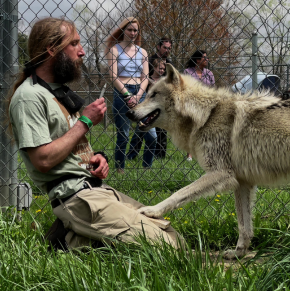
| 1/12/26 | behavior scienceengineering+5 | Ryan Talbot | Wolf Park | — | behavior sciencehusbandry+8 | — | 1h 04m 58s | ||
| 12/29/25 | behavior analysiscooperative care+4 | Ryan Talbot | Wolf Parkapplied behavior analysis+1 | — | Wolf Parkbehavior analysis+6 | — | 1h 04m 34s | ||
| 12/15/25 |  The Business Side of Dog Training with Sara Brueske [Episode 269] | In this candid and practical conclusion to their two-part conversation, Ryan Cartlidge and Sara Brueske shift from the training field to the front office to discuss the business of animal training. Sara shares an "in the trenches" look at her journey into facility ownership and the evolution of her business, Happy Dog Lodge. The conversation centers on a service model often debated within the positive reinforcement community: Board and Train. Sara offers a transparent look at the ethics, logistics, and communication strategies required to offer this service in a way that prioritises client education, successful skill transfer, and the wellbeing of the dog. Beyond the specific service, Ryan and Sara discuss the broader challenges of entrepreneurship, from the weight of managing a team to the art of marketing to both clients and professional peers. Sara's insights provide a valuable roadmap for any trainer navigating the complexities of making their passion a sustainable profession. Throughout this episode, we explore: ✅ The shift from solo sport trainer to facility owner and team leader ✅ A deep dive into the Board and Train model from a positive reinforcement perspective ✅ Strategies for ensuring successful training transfer from trainer to client ✅ The vital difference between marketing to your clients and marketing to your peers ✅ The real-world challenges and ethical considerations of running a training business ✅ How to build a service that meets market demand while upholding your training philosophy Part two is a must-listen for any training professional, offering an honest look at the sometimes uncomfortable but crucial business side of what we do and how to do it with integrity and foresight. Links Happy Dog Lodge - Boarding, Training, Grooming in Cambridge, MN www.happydoglodge.com Fenzi Dog Sports Academy www.fenzidogsportsacademy.com Facebook page: www.facebook.com/brueskesara | 1h 01m 41s | ||||||
| 12/1/25 |  From Play to Performance with Sara Brueske [Episode 268] | In the first part of this energising two-part conversation, Ryan Cartlidge sits down with Sara Brueske, professional trainer, sport competitor, and owner of On the Run Canine Center. Known for her joyful approach to training and her skill across an impressive range of dog sports, Sara offers a refreshing and practical look at what motivates dogs to engage, play, and grow with us as partners. Drawing from her decades of experience, Sara shares why play sits at the heart of her training philosophy and how intrinsic motivation can shape confident, resilient, and enthusiastic learners. She explores the art of keeping sessions light and fun, how to build engagement with dogs who are shy or easily overwhelmed, and why honouring the individual dog is central to sustainable sport training and family-dog work. Ryan and Sara also unpack how games can support reactive and sensitive dogs, how choice contributes to emotional safety, and why optimism is a skill that can be developed through thoughtful reinforcement strategies. Beyond the mechanics of training, Sara offers generous insight into communication, relationship building, and supporting guardians to feel successful and empowered. Throughout this episode, we explore: ✅ How play and intrinsic motivation strengthen engagement and partnership ✅ Strategies for helping shy, hesitant, or easily discouraged dogs build confidence ✅ Why variety, flexible criteria, and well-timed reinforcement keep dogs in an optimistic learning state ✅ The role of games and choice-based activities in supporting reactive or sensitive dogs ✅ How to balance performance goals with emotional wellbeing in dogs and handlers ✅ Sara's approach to guiding guardians through clear communication and achievable success Whether you are a dog sport enthusiast, a family-dog trainer, or someone looking to bring more joy into your daily training sessions, this conversation with Sara offers practical tools and thoughtful reminders that learning works best when everyone is having fun. Links Happy Dog Lodge - Boarding, Training, Grooming in Cambridge, MN www.happydoglodge.com Fenzi Dog Sports Academy www.fenzidogsportsacademy.com Facebook page: www.facebook.com/brueskesara | 51m 16s | ||||||
| 11/17/25 |  Movement, Mindfulness, and Mastery with Lori Stevens [Episode 267] | In this reflective and wisdom-filled conversation, Ryan Cartlidge welcomes back Lori Stevens, canine fitness, movement, and behavior specialist, creator of the Balance Harness, and long-time leader in the world of positive reinforcement training. As Lori marks her retirement from the professional speaking circuit, she takes us through the lessons that have defined her teaching philosophy and the perspectives that continue to guide her today. Drawing from decades of experience, Lori shares how her background in dance and movement shaped her keen eye for posture, balance, and subtle physical cues, and how these factors profoundly influence both behavior and wellbeing. Together, Ryan and Lori explore what it really means to be concise and precise as teachers, not just with our animal learners, but with the human ones too. From refining observation skills to simplifying feedback and setting learners up for success, Lori's insights reveal the quiet power of doing less to achieve more. Throughout this episode, we discuss: ✅ Why movement, posture, and physical comfort are critical variables in behavior and learning ✅ The art of teaching with clarity, and the difference between being concise and being precise ✅ How giving "one to three things" to focus on can transform learning outcomes ✅ The importance of slowing down, observing deeply, and trusting the process ✅ Lori's reflections on mentorship, gratitude, and the evolving landscape of positive reinforcement training Whether you are a new trainer just finding your feet or a seasoned professional reflecting on your journey, this conversation is an inspiring reminder that every small, thoughtful step forward can be life-changing for both our learners and ourselves. | 1h 05m 03s | ||||||


Showing 25 of 287
Pitch Fit is a Pro feature
See how bookable this show is for guests, which brands already advertise, the per-episode ad value, and the best-fit guest and sponsor profile. The numbers are blurred on the free plan.
How readily this show books outside guests like you.
How proven this show is for host-read sponsorships.
For Guests
ProFor Advertisers
ProUpgrade to Pro to unlock guest cadence, sponsor categories, fit scores, and per-episode ad value for this show.
Chart history for Animal Training Academy
Peaked at #90 in Finland, currently #90 in Finland.
| Market | Genre | Peak | Current | Trend |
|---|---|---|---|---|
| Finland | — | #90 | #90 | — |
| United Kingdom | — | #127 | #127 | — |
Chart Positions
2 placements across 2 markets.
Chart Positions
2 placements across 2 markets.