
Aviation News Talk – Pilot Stories, Safety Tips & General Aviation News
General Aviation news, pilot tips for beginners & experts, interviews, listener questions answered, technical details on G1000 & Perspective glass cockpits & flying GPS approaches. 40 yrs experience flying general aviati...
Insights from recent episode analysis
On the show
- Keith Froude1 ep
- Troy Duck1 ep
- John Von Fange1 ep
Also: Russell Ladbrook, Mike VanStaagen, Jason Blair, Josh Harnagel, Matt Bergwall
Audience Interest
Podcast Focus
Publishing Consistency
Insights are generated by CastFox AI using publicly available data, episode content, and proprietary models.
Most discussed topics
Brands & references
Total monthly reach
Based on 1 signal.
Built from
By chart position
- 🇺🇸United States · AviationHOME#19233K to 1.2M
- 🇲🇽Mexico · Aviation#825K to 134K
- 🇨🇦Canada · Aviation#1122K to 118K
- 🇦🇷AR · Aviation#512K to 64K
- 🇬🇧United Kingdom · Aviation#2710K to 53K
- Per-Episode Audience
Est. listeners per new episode within ~30 days
379K to 2.0M🎙 Weekly cadence·430 episodes·Last published 1mo ago - Monthly Reach
Unique listeners across all episodes (30 days)
759K to 4.0M🇺🇸61%🇲🇽7%🇨🇦6%+12 more - Active Followers
Loyal subscribers who consistently listen
304K to 1.6M
Market Insights
Platform Distribution
Reach across major podcast platforms, updated hourly
Total Followers
—
Total Plays
—
Total Reviews
—
* Data sourced directly from platform APIs and aggregated hourly across all major podcast directories.
| Date | Episode | Topics | Guests | Brands | Places | Keywords | Sponsor | Length | |
|---|---|---|---|---|---|---|---|---|---|
| 8/27/26 |  426 Gear-Up Landings & Gear Collapses: How to Prevent Them with Tom Turner + GA News | Gear-up landings are often dismissed as embarrassing pilot mistakes, but landing gear mishaps are far more common, complicated, and expensive than many pilots realize. In this episode, Max talks with Tom Turner of the American Bonanza Society Air Safety Foundation about why gear-up landings and landing gear collapses continue to happen—and the operating habits and maintenance practices that can prevent them. Turner says the Beechcraft Bonanza, Baron, Debonair, and Travel Air fleet averages about one reported landing gear mishap every week. Those events represent roughly 40 percent of the mishaps reported to the American Bonanza Society. And because many landing gear events do not meet NTSB reporting thresholds, Turner says contacts in the insurance, aircraft rebuilding, and salvage industries believe the actual number may be two to three times higher. The problem is not unique to Beechcraft. Turner previously tracked landing gear events across piston retractable-gear aircraft and found comparable or even higher rates in some other types. Landing gear mishaps also have an outsized impact on aircraft insurance because a seemingly survivable gear-up landing can result in propeller damage, an engine teardown, belly damage, and repair costs high enough for an insurer to total the airplane. Much of the conversation focuses on developing habits that make forgetting the landing gear less likely. Turner teaches the concept "gear down to go down." Rather than beginning the final descent simply by reducing power, landing gear extension becomes the event that initiates the descent from traffic pattern altitude or onto the final portion of an instrument approach. He also teaches Gear Extension Altitude, or GEA. On a straight-in or other nonstandard arrival, the pilot selects an altitude below which the airplane will not descend until the landing gear has been extended and confirmed. Max relates two occasions during his flying career when normal landing gear cues broke down. In one, while training in a Diamond DA42, he reached the flare before his instructor revealed that the gear was still up. In another, while flying a Vision Jet instrument approach, the normal glidepath cue used for gear extension never appeared. The airplane's warning system ultimately caught the omission. That leads to one of Turner's strongest recommendations: regardless of when you normally extend the landing gear, establish a deliberate final gear confirmation on short final, around 400 to 500 feet AGL. If distraction, a changed traffic pattern, a go-around, or some other interruption causes you to miss your normal extension cue, that final check provides one more opportunity to catch the error. Warning systems alone are not enough. Turner describes pilots who continued toward landing while gear warning horns sounded and bright warning lights flashed. During high workload, pilots may simply stop processing repetitive warnings. In multi-engine training, the problem can become particularly insidious because pilots may listen to a landing gear warning horn throughout a simulated engine-out exercise and effectively tune it out before landing. Turner recommends using more than cockpit lights to verify the gear. Listen to the gear motor and notice whether it sounds normal. Feel and observe the expected change in drag and pitch. Compare airspeed, power, descent rate, and aircraft performance with what you normally expect. Then verify the cockpit indications. ABS even recommends holding the gear handle until this entire confirmation process is complete. Go-arounds introduce another human-factors trap. Pilots may vividly remember extending the gear—but the memory may be from the previous trip around the pattern. Turner favors making a go-around resemble a normal takeoff, then using the same normal extension cue on the next approach. Whatever technique a pilot chooses, the key is consistency and making sure the cue will still occur following a go-around. The discussion then turns to touch-and-go landings, which both Max and Tom strongly discourage in retractable-gear airplanes. A pilot reaching to retract the flaps can inadvertently select the landing gear instead. They similarly recommend not reconfiguring the airplane during the landing roll. Wait until the airplane is clear of the runway and preferably stopped on the taxiway before moving flap or similar controls. And pilots should not assume squat switches will save them. Turner describes observations showing that systems tied to weight-on-wheels switches may not recognize the airplane as firmly on the ground until surprisingly late in the landing roll—and may switch to flight mode early during takeoff. Bumps and unloading of the landing gear can further reduce their effectiveness. Gear collapses also have a significant maintenance component. At American Bonanza Society maintenance evaluation events, aircraft are placed on jacks and their landing gear rigging and downlock tensions are carefully inspected. Turner says it is not unusual for roughly two airplanes out of a 24-aircraft event to have gear tensions so far out of tolerance that the owners are advised not to fly until adjustments are made. ABS considers improper rigging serious enough that it developed a 38-step landing gear inspection checklist to supplement normal Beechcraft inspection procedures. Finally, Turner discusses what to do when the gear itself malfunctions. If the gear begins to extend and then jams, perhaps popping the motor circuit breaker, repeatedly cycling it may turn a damaged push rod or rod end into a complete failure. Instead, Turner recommends following the airplane's approved manual landing gear extension procedure, which can place less stress on a compromised system and may give the pilot the best chance of getting all the gear down. The episode highlights the American Bonanza Society's Put Your Gear Down campaign, which makes decades of landing gear operating and maintenance information available to pilots of all retractable-gear airplanes. Its goal is simple: replace the familiar saying that there are "those who have and those who will" have a gear mishap with a third category—pilots who use disciplined operating and maintenance practices to make sure it never happens to them. If you're getting value from this show, please support the show via PayPal, Venmo, Zelle or Patreon. Support the Show by buying a Lightspeed ANR Headsets Max has been using only Lightspeed headsets for nearly 25 years! I love their tradeup program that let's you trade in an older Lightspeed headset for a newer model. Start with one of the links below, and Lightspeed will pay a referral fee to support Aviation News Talk. Lightspeed Delta Zulu Headset $1299NEW – Lightspeed Zulu 4 Headset $1099 Lightspeed Zulu 3 Headset $949Lightspeed Sierra Headset $749 My Review on the Lightspeed Delta Zulu Send us your feedback or comments via email If you have a question you'd like answered on the show, let listeners hear you ask the question, by recording your listener question using your phone. News Stories FAA Flags 3D Printed Cockpit Accessories As Unapproved Parts Satellite Device Guides Cessna Accident Rescue FAA's ATC modernization is moving faster FAA Accepts HIMS Reform Petition For Review 8 killed in plane crash at remote Alaska radar site Cirrus Burns During Parachute Deployment Aging GA Fleet Faces Growing Aircraft Parts Challenge Teton Civil Air Patrol Squadron Deactivated, Cessna 206 Reassigned EAA Chapter 1240 Funds Stolen Mentioned on the ShowBuy Max Trescott's G3000 Book Call 800-247-6553 UAV News Talk - Archer Aviation episode NTSB News Talk - episode #37 EAA HeartLand Chapter 1240 Put Your Gear Down Website Free Index to the first 282 episodes of Aviation New Talk So You Want To Learn to Fly or Buy a Cirrus seminars Online Version of the Seminar Coming Soon – Register for Notification Check out our recommended ADS-B receivers, and order one for yourself. Yes, we'll make a couple of dollars if you do. Get the Free Aviation News Talk app for iOS or Android. Check out Max's Online Courses: G1000 VFR, G1000 IFR, and Flying WAAS & GPS Approaches. Find them all at: https://www.pilotlearning.com/ Social Media Like Aviation News Talk podcast on Facebook Follow Max on Instagram Follow Max on Twitter Listen to all Aviation News Talk podcasts on YouTube or YouTube Premium "Go Around" song used by permission of Ken Dravis; you can buy his music at kendravis.com If you purchase a product through a link on our site, we may receive compensation. | 1h 15m 44s | ||||||
| 8/20/26 |  425 STEM Flights: How Volunteer Pilots Inspire Future Aviation Careers + GA News | In Episode 425 of Aviation News Talk, Max talks with retired Air Force General David Brubaker about STEM Flights, a nonprofit organization that pairs middle- and high-school students with volunteer pilot mentors for free, one-on-one aviation experiences designed to introduce them to careers in aviation, aerospace, engineering, and other STEM fields. STEM Flights grew out of Brubaker's own experience after retiring from the Air Force in 2005. During his military career, he flew aircraft including the F-4 and F-16 and finished his career with an assignment at the Pentagon. After retiring, he became active in general aviation and began taking young people flying. But Brubaker didn't simply give them airplane rides. He expected them to participate. They helped with navigation, looked at the instrumentation, worked with the radios, and often took the controls themselves. Years later, he began hearing back from some of those young people. Several had gone on to study aviation, aerospace, engineering, and other technical subjects. One young woman eventually earned her ratings, joined the West Virginia Air National Guard, and became a C-130 pilot. Those experiences helped Brubaker recognize that pilots could have an enormous influence on the career choices of young people simply by sharing aviation with them in a meaningful way. His children encouraged him to turn what he was doing informally into a nonprofit, and STEM Flights was launched in 2018. Today, STEM Flights connects students with volunteer pilot mentors around the country. Students don't simply show up at an airport for a free ride. They apply to the program, receive a recommendation, select a mission based on their interests, and complete homework before being paired with a pilot. That preparation is part of what makes STEM Flights different. Brubaker describes the program as a more intensive, personal experience than a typical introductory airplane ride. A student is paired one-on-one with a pilot mentor, and the pilot learns about the student's interests before the flight. On the day of the mission, they discuss safety and learning objectives, preflight the airplane, and then head into the air. Once they reach a safe altitude, the student usually gets the controls. They may learn about navigation, aircraft instrumentation and communications, and Brubaker says he likes to have each student make at least one radio call. But the most powerful moment often comes when the student realizes that he or she is actually flying the airplane. Brubaker tells the story of one reluctant young man whose mother encouraged him to participate. On the ground, the student appeared completely uninterested, and Brubaker wondered whether the flight would accomplish anything. Then they took off. Within minutes of taking the controls, the boy came alive. He started participating, asking questions, and enthusiastically flying the airplane. A couple of weeks later, Brubaker received a letter from the boy's mother. She explained that her son had approached life believing it was better not to try than to try and fail. Flying an airplane—something he never imagined he could possibly do—changed his perception of what he might be capable of accomplishing. That experience illustrates why STEM Flights is about more than simply recruiting future pilots. Students have gone on to pursue aircraft maintenance, avionics, aerospace engineering, military aviation, and other technical fields. Brubaker says dozens have attended universities with aviation or engineering programs, and STEM Flights continues supporting students after their flights through a program called Flight Following. Flight Following connects participants with information about scholarships, flight schools, grants, Civil Air Patrol, and other organizations and programs that can help them continue toward aviation and STEM careers. For pilots listening to Aviation News Talk, one of the most important parts of the conversation is how they can participate. STEM Flights calls its volunteers "pilot mentors," and you don't need to be a flight instructor. Brubaker says pilots generally need a private pilot certificate, at least 250 hours of flight time, appropriate medical and aircraft qualifications, and a background check. You don't necessarily need to own an airplane either. Some pilot mentors rent aircraft or belong to flying clubs, and in some areas STEM Flights has arrangements with local flight schools. The organization has pilot mentors in 49 states, but matching students with available pilots remains a constant challenge. At the time of the interview, Brubaker said roughly 115 young people were waiting to be paired with pilots. After a career that included fighter jets, simulated air combat and pulling nine Gs, Brubaker says mentoring young people offers a different kind of satisfaction. Military flying was intensely focused on accomplishing a mission. STEM Flights provides an opportunity to give something back. And for a general aviation pilot wondering how to help strengthen the future of aviation, the concept is remarkably simple. Share your airplane. Share your experience. Put a young person at the controls. And you may help launch an aviation career that otherwise never would have begun. If you're getting value from this show, please support the show via PayPal, Venmo, Zelle or Patreon. Support the Show by buying a Lightspeed ANR Headsets Max has been using only Lightspeed headsets for nearly 25 years! I love their tradeup program that let's you trade in an older Lightspeed headset for a newer model. Start with one of the links below, and Lightspeed will pay a referral fee to support Aviation News Talk. Lightspeed Delta Zulu Headset $1299NEW – Lightspeed Zulu 4 Headset $1099 Lightspeed Zulu 3 Headset $949Lightspeed Sierra Headset $749 My Review on the Lightspeed Delta Zulu Send us your feedback or comments via email If you have a question you'd like answered on the show, let listeners hear you ask the question, by recording your listener question using your phone. News Stories Pilots, Flight Attendants Have Greater Risk of Radiation-Related Cancer Death Than Other Professions Louisiana Blocks ADS-B Landing Fees FAA Orders Rotax Gearbox Inspections FAA Invites Comments on Flightdeck Controls Draft AC Laredo Youth Pilot Program Draws More Than 1,000 Applicants Pentastar Aviation FBO Introduces Wingwalking Robots Mentioned on the ShowBuy Max Trescott's G3000 Book Call 800-247-6553 UAV News Talk - Archer Aviation episode NTSB News Talk - episode #36 Go-Arounds Are Awesome website STEM Flights Free Index to the first 282 episodes of Aviation New Talk So You Want To Learn to Fly or Buy a Cirrus seminars Online Version of the Seminar Coming Soon – Register for Notification Check out our recommended ADS-B receivers, and order one for yourself. Yes, we'll make a couple of dollars if you do. Get the Free Aviation News Talk app for iOS or Android. Check out Max's Online Courses: G1000 VFR, G1000 IFR, and Flying WAAS & GPS Approaches. Find them all at: https://www.pilotlearning.com/ Social Media Like Aviation News Talk podcast on Facebook Follow Max on Instagram Follow Max on Twitter Listen to all Aviation News Talk podcasts on YouTube or YouTube Premium "Go Around" song used by permission of Ken Dravis; you can buy his music at kendravis.com If you purchase a product through a link on our site, we may receive compensation. | 1h 00m 33s | ||||||
| 8/15/26 |  424 The Savvy Flight Instructor: Greg Brown on CFI Jobs, Getting Hired, and Finding Students + GA News | Max talks with Greg Brown about one of the most important—and often underestimated—roles in aviation: the flight instructor. Greg is one of aviation's most respected CFIs, writers, and pilot mentors. A pilot since 1972 and a flight instructor since 1979, he was named the 2000 Industry/FAA National Flight Instructor of the Year, became the first-ever Master Flight Instructor, and was inducted into the Flight Instructor Hall of Fame in 2021. Many pilots know Greg from his aviation books, including The Savvy Flight Instructor, The Turbine Pilot's Flight Manual, Flying Carpet, You Can Fly!, and Job Hunting for Pilots, as well as from his long-running "Flying Carpet" column in AOPA Flight Training magazine and his Cockpit Adventures from the Flying Carpet podcast. In this episode, Greg and Max focus on practical advice for people who are becoming CFIs, looking for CFI jobs, or trying to build a better flight instruction business. Greg explains that he did not become a flight instructor immediately after earning his private pilot certificate. By the time he earned his CFI, he had already accumulated a great deal of flying experience and had discovered that he loved teaching. He instructed about 800 hours in his first year while still holding another full-time job, and soon discovered that instruction could lead to unexpected aviation opportunities. One of Greg's key messages is that becoming a CFI should not be viewed as a dead end or merely a required stepping stone to an airline job. He tells the story of teaching an instrument student who owned a scientific instrument company. That student eventually invited Greg to become the company's chief pilot and help select and fly a cabin-class twin. Greg's point is that CFIs meet people, build trust, and create opportunities in ways that are impossible to predict. Greg also offers detailed advice on how new instructors can get hired. He explains that many applicants simply send resumes and end up in a large pile with everyone else. A smaller number know someone at the flight school. But the strongest applicants are those who have built a personal relationship with the owner, chief instructor, or people already working there. Greg urges aspiring CFIs to visit flight schools, ask for advice, stay in touch, and create a simple system to maintain relationships over time. In a tight CFI job market, he says, networking and reputation can be more important than raw hours. Max and Greg also discuss different paths into flight instruction, including academies, Part 61 flight schools, flying clubs, universities, and independent instruction. Greg says flying clubs can be a terrific environment because instructors often know their students, have access to aircraft, and may face less bureaucracy. They also discuss the idea of buying an airplane to teach in. While that can work for some instructors, Greg and Max point out the financial and insurance challenges, along with the practical limitation that when a student solos your airplane, you no longer have that airplane available for dual instruction. A major theme of the episode is that flight instructors must also learn marketing and sales. Greg recommends that CFIs create photo business cards with an airplane or cockpit image, a QR code, and contact information. He says the card does the work of explaining who you are and often starts conversations with people who may be interested in aviation. Greg also recommends having at least a simple web page, so potential students searching online for flight training or a local flight instructor can find you. Greg also strongly recommends earning a ground instructor certificate. He explains that the advanced ground instructor written test overlaps substantially with the commercial and flight instructor written tests, making it a practical step for many aspiring CFIs. Teaching ground school can help a future instructor get connected with a flight school, develop teaching skill, and attract future flight students. Max adds that teaching ground school before his CFI checkride made it far easier to stand at a board, explain concepts clearly, and teach an examiner during the practical test. The discussion then turns to how CFIs can earn more and build long-term credibility. Greg compares flight instruction to golf or tennis instruction: the best instructors are not necessarily the cheapest, but the ones who provide the most value. He recommends building references, earning additional instructor ratings, pursuing credentials such as Master Flight Instructor, and developing expertise. Max adds that specialization can move an instructor up the value chain. A CFI might become known for tailwheel training, glass cockpit instruction, instrument training, mountain flying, aircraft ownership, Cirrus training, Mooney training, or another niche. Greg and Max also explore the deeper human side of flight instruction. Greg tells two stories about challenging students. One student showed poor judgment and returned from a long solo cross-country with nearly empty tanks and a damaged wing after failing to refuel. Another student, a CFI applicant, performed terribly on a checkride because of severe test anxiety, even though he had been well prepared in training. Rather than dismiss him, Greg helped connect him with support. That student eventually became an airline captain. The lesson: some problems reflect character and judgment, while others are barriers a good instructor can help a pilot overcome. Near the end of the episode, Greg asks listeners to think of the flight instructor who most influenced their lives. Max names his primary instructor, Dick Johnston, and recalls how his advice still echoes decades later. Greg remembers his own primary instructor, Bob Vetter, who let him recover from an inadvertent spin under careful supervision and taught him lessons that shaped his own approach to instruction. Max closes by describing flight instructing as a sacred responsibility. CFIs are not merely preparing students for checkrides; they are helping pilots build the judgment and habits that may keep them alive for decades. Greg agrees and shares how meaningful it is to hear from former students, now airline captains, who still remember the role he played in their lives. This episode is both a practical guide to CFI jobs and a reminder that flight instructors can profoundly shape the future of the pilots they teach. If you're getting value from this show, please support the show via PayPal, Venmo, Zelle or Patreon. Support the Show by buying a Lightspeed ANR Headsets Max has been using only Lightspeed headsets for nearly 25 years! I love their tradeup program that let's you trade in an older Lightspeed headset for a newer model. Start with one of the links below, and Lightspeed will pay a referral fee to support Aviation News Talk. Lightspeed Delta Zulu Headset $1299NEW – Lightspeed Zulu 4 Headset $1099 Lightspeed Zulu 3 Headset $949Lightspeed Sierra Headset $749 My Review on the Lightspeed Delta Zulu Send us your feedback or comments via email If you have a question you'd like answered on the show, let listeners hear you ask the question, by recording your listener question using your phone. News Stories AOPA Releases Proposed Bylaw Changes FAA Debuts New mobile tool for IFR Clearances California Pilots Challenge Use of ADS-B Data for Aircraft Taxes Departing FAA Leader Says Agency Is Being 'Nudged' to Embrace Risk FAA Reminds Pilots To Land at the Right Airport Archer To Acquire Wisk and other Companies From Boeing First Emergency Medical Response Deployed by eVTOL Aircraft Farmer Charged With Attempted Murder After Shooting at Crop Duster Mentioned on the ShowBuy Max Trescott's G3000 Book Call 800-247-6553 UAV News Talk - Archer Aviation episode NTSB News Talk - episode #36 Greg Brown's Website Free Index to the first 282 episodes of Aviation New Talk So You Want To Learn to Fly or Buy a Cirrus seminars Online Version of the Seminar Coming Soon – Register for Notification Check out our recommended ADS-B receivers, and order one for yourself. Yes, we'll make a couple of dollars if you do. Get the Free Aviation News Talk app for iOS or Android. Check out Max's Online Courses: G1000 VFR, G1000 IFR, and Flying WAAS & GPS Approaches. Find them all at: https://www.pilotlearning.com/ Social Media Like Aviation News Talk podcast on Facebook Follow Max on Instagram Follow Max on Twitter Listen to all Aviation News Talk podcasts on YouTube or YouTube Premium "Go Around" song used by permission of Ken Dravis; you can buy his music at kendravis.com If you purchase a product through a link on our site, we may receive compensation. | 1h 21m 52s | ||||||
| 8/3/26 |  423 How Pilots Can Avoid Turbulence and Find Smoother Air with SkyPath | Max talks with Maya Shpak, CEO of SkyPath, about how pilots can avoid turbulence and find smoother air by combining crowdsourced observations, aircraft data, and machine-learning predictions. The idea for SkyPath came from an airline captain and check airman who encountered turbulence and realized that the iPad already carried in the cockpit contained accelerometers capable of measuring aircraft movement. Much like a traffic app gathers information from phones on the road, SkyPath could collect ride-quality observations from participating aircraft, send them to the cloud, and return an updated turbulence picture to other pilots. Maya says the system now receives data from about 40,000 users each day. An iPad observation is only one of five sources used by SkyPath. The system filters accelerometer readings, removes noise, and normalizes each report for aircraft type. That adjustment is important because light turbulence in a large business jet may feel moderate in a smaller general aviation airplane. When two pilots have iPads aboard the same aircraft, SkyPath can compare the two devices and identify a questionable reading. SkyPath also derives turbulence information from ADS-B vertical-rate data. Many aircraft provide both ADS-B reports and iPad observations, allowing the company to compare the two and refine its conversion algorithm. This expands coverage into areas where no participating iPad-equipped aircraft has recently passed. The platform also incorporates PIREPs and eddy dissipation rate, or EDR, reports. EDR is an aircraft-independent measure of atmospheric turbulence widely used in commercial aviation. SkyPath can convert its sensor information into EDR-compatible reports while using existing EDR data to supplement its own observations. The fifth source is SkyPath's predictive model. More than 200 meteorological parameters from NOAA and other government sources are fed into a machine-learning system trained with SkyPath's observational data. This produces estimated ride conditions where direct reports are limited. Maya says this is particularly useful to general aviation pilots flying below normal airline cruise altitudes, although the company generally sees better accuracy above about 5,000 feet. Pilots can use SkyPath before takeoff or during a flight. They may enter a call sign or flight number, paste a route from another electronic flight bag, or operate without a filed IFR flight plan. In its bearing mode, the app monitors an area approximately 100 miles ahead and 15 degrees to either side of the aircraft's direction of flight. It can run in the background and generate an alert about ten minutes before the airplane reaches significant turbulence. For larger operators, the same information can also be delivered through SkyPath's own flight-following tools or integrated EFB systems. Pilots can set the alert threshold, place the app in the background, and continue using their primary navigation display. Dispatchers may receive warnings when an aircraft is approaching rough air and then contact the crew through the operator's normal communications system. Maya says SkyPath was not yet integrated with ForeFlight at the time of the interview, although routes can be copied from ForeFlight into the app. The altitude slider helps pilots compare ride conditions above and below their planned or current altitude. This can support a decision to climb, descend, or choose a different cruising altitude before departure. SkyPath also displays validated smooth-air observations as white hexagons. Knowing where the air is smooth can be more actionable than simply seeing where rough air has been reported. The display uses familiar aviation colors to represent smooth, light, light-to-moderate, moderate, and occasional severe turbulence. Observed and predicted areas appear differently, allowing pilots to distinguish between actual aircraft encounters and conditions generated by the forecast model. Users can filter the display to emphasize the severity levels most relevant to their aircraft and operation. Maya says access to better turbulence information can change pilot behavior. One business aviation operator using SkyPath reported nearly a 50 percent reduction in moderate-turbulence encounters. SkyPath also reviewed 180 published turbulence incidents and found that matching information had been available beforehand in 79 percent of them. The app may also improve communication with passengers. Maya describes pilots showing charter passengers where rough air is expected and when it should end. That visual explanation can help nervous flyers understand why they need to remain seated and keep their seatbelts fastened. Unexpected turbulence can produce injuries, diversions, medical expenses, airport fees, passenger accommodations, replacement-aircraft costs, and schedule disruptions. Even an unsecured passenger, flight attendant, or hot drink can create a serious event. Better information gives pilots more opportunity to avoid the roughest areas or prepare everyone aboard before reaching them. Finally, SkyPath allows pilots to submit a digital PIREP from the app directly into the FAA reporting system. Individual pilots can begin with a free trial and choose between subscription levels. Maya explains how SkyPath is designed to supplement the navigation and weather tools pilots already use while providing a more detailed picture of where they may find rough or smooth air. If you're getting value from this show, please support the show via PayPal, Venmo, Zelle or Patreon. Support the Show by buying a Lightspeed ANR Headsets Max has been using only Lightspeed headsets for nearly 25 years! I love their tradeup program that let's you trade in an older Lightspeed headset for a newer model. Start with one of the links below, and Lightspeed will pay a referral fee to support Aviation News Talk. Lightspeed Delta Zulu Headset $1299NEW – Lightspeed Zulu 4 Headset $1099 Lightspeed Zulu 3 Headset $949Lightspeed Sierra Headset $749 My Review on the Lightspeed Delta Zulu Send us your feedback or comments via email If you have a question you'd like answered on the show, let listeners hear you ask the question, by recording your listener question using your phone. News Stories FAA Expands Approval List For Swift Fuels' 100R Unleaded Avgas FAA Accepts New MOSAIC Light-Sport Standards ForeFlight's Newest Feature ClearNOTAMs Industry urges Congress to provide $20 billion for air traffic control upgrades New Sentry SkyPlay Brings ForeFlight to the Instrument Panel Redbird Unveils G1000 NXi Emulator, Enhanced Simulator Panel Lightspeed Headset Customized For Rotax Power Bad Boy's File: Florida Speeder May Miss His Checkride Mentioned on the ShowBuy Max Trescott's G3000 Book Call 800-247-6553 SkyPath Turbulence App Free Index to the first 282 episodes of Aviation New Talk So You Want To Learn to Fly or Buy a Cirrus seminars Online Version of the Seminar Coming Soon – Register for Notification Check out our recommended ADS-B receivers, and order one for yourself. Yes, we'll make a couple of dollars if you do. Get the Free Aviation News Talk app for iOS or Android. Check out Max's Online Courses: G1000 VFR, G1000 IFR, and Flying WAAS & GPS Approaches. Find them all at: https://www.pilotlearning.com/ Social Media Like Aviation News Talk podcast on Facebook Follow Max on Instagram Follow Max on Twitter Listen to all Aviation News Talk podcasts on YouTube or YouTube Premium "Go Around" song used by permission of Ken Dravis; you can buy his music at kendravis.com If you purchase a product through a link on our site, we may receive compensation. | 57m 23s | ||||||
| 7/4/26 | aviation safetyaeromedical flights+4 | — | Beech C90 King AirGeneration Jets+1 | Roswell Air CenterSierra Blanca Regional Airport+2 | King Air crashaeromedical flight+3 | — | 46m 04s | ||
| 6/21/26 | mountain flyingaviation safety+4 | Keith Froude | Lightspeed ANR Headsets | New ZealandFiordland+3 | CTLSmountain flying+6 | Lightspeed | 1h 09m 43s | ||
| 5/26/26 | emergency decision-makingpower-loss scenarios+4 | Troy DuckJohn Von Fange | Spyderco Manix 2Cirrus SR22T+1 | Chanute, Kansas | Cirrus SR22TCAPS deployment+5 | — | 1h 04m 23s | ||
| 5/5/26 | runway collisionaviation safety+4 | — | NTSBJazz Flight 646+1 | LaGuardia AirportTerminal B | LaGuardiarunway lights+6 | — | 53m 36s | ||
| 4/7/26 | Aero ClubsGeneral Aviation+3 | Russell Ladbrook | — | New ZealandMilford Sound+2 | Aero ClubsNew Zealand flying+3 | — | 1h 12m 30s | ||
| 3/11/26 | aircraft designCirrus aircraft+3 | Mike VanStaagen | Cirrus SR20Cirrus SR22+3 | — | Cirrus SR20Cirrus SR22+5 | Lightspeed ANR Headsets | 1h 05m 46s | ||
Want analysis for the episodes below?Free for Pro Submit a request, we'll have your selected episodes analyzed within an hour. Free, at no cost to you, for Pro users. | |||||||||
| 3/5/26 | airline pilot career pathPart 61 vs Part 141+5 | Jason Blair | FAAPart 61+3 | — | airline pilotcareer path+7 | — | 58m 04s | ||
| 2/27/26 | IFR instrument currencyFAA-approved simulator+5 | Josh Harnagel | Redbird's FAA-approved tabletop devicesRedbird GIFT+1 | — | IFR currencyFAA simulator+5 | — | 55m 54s | ||
| 2/17/26 | aviation safetyRNAV approach+4 | — | Lightspeed ANR HeadsetsLightspeed Delta Zulu Headset | Steamboat SpringsColorado+1 | Epic E1000LNAV+V+6 | LightspeedCODE | 39m 55s | ||
| 2/10/26 | Cirrus Vision JetAOPA President+4 | Matt Bergwall | Cirrus SF50 G3 Vision JetAOPA | — | CirrusVision Jet+5 | — | 52m 55s | ||
| 2/1/26 | 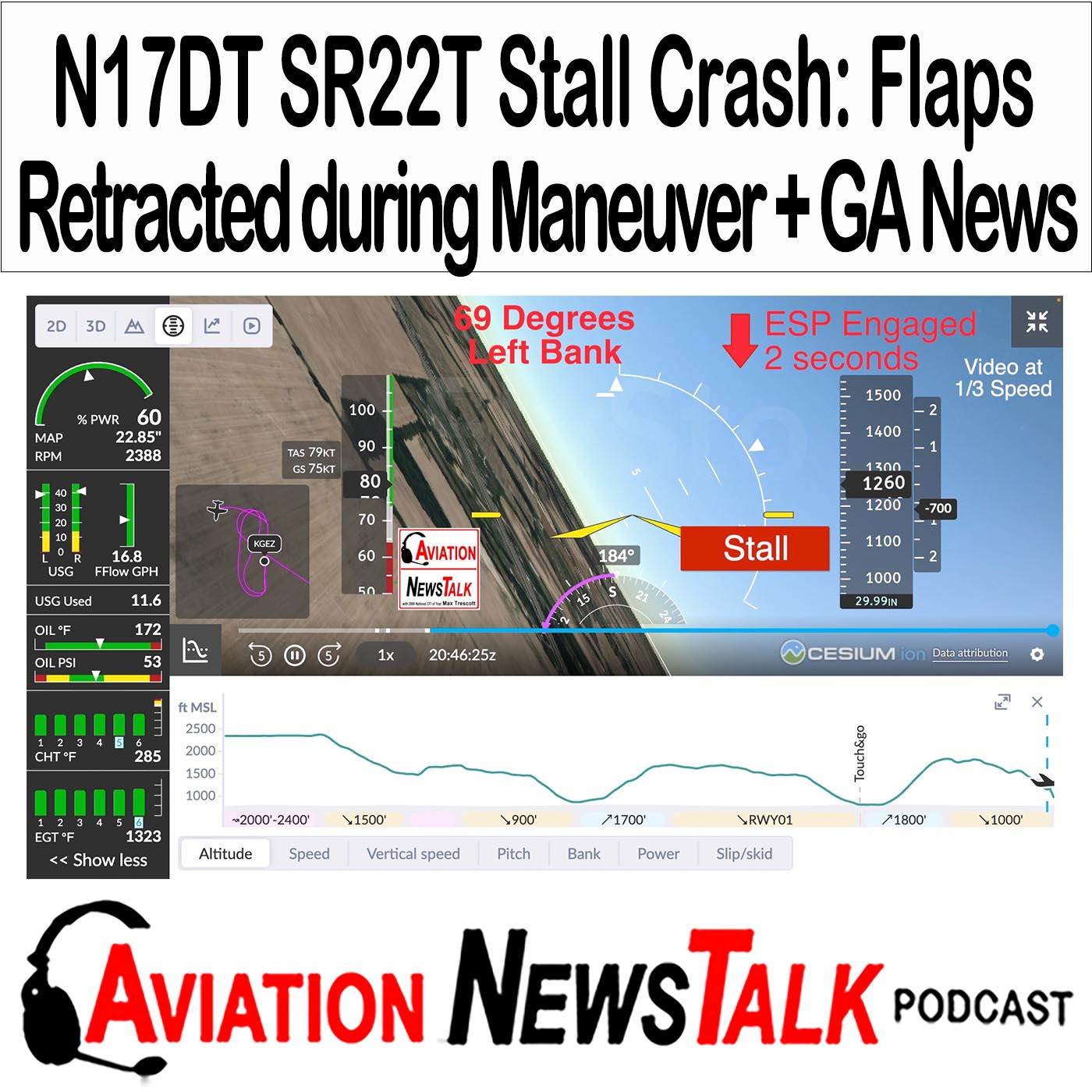 412 Cirrus SR22T N17DT Stall Crash: Flaps Retracted on Low-Power Approach + GA News | Max talks with Rob Mark about the fatal crash of Cirrus SR22T N17DT near Shelbyville, Indiana, and why this accident is so instructive for any pilot who flies approaches at low altitude with high workload. The NTSB's probable cause centers on inadequate airspeed and an aerodynamic stall, but the real value is in the flight data that shows how the airplane got there: low power held for an extended period, repeated stall warnings, multiple ESP interventions, and flaps that ultimately remained retracted until impact. This episode matters because it's rare to have this level of detail. The NTSB recovered onboard data that captures dozens of parameters multiple times per second—far more than you usually get from ADS-B alone. Max describes how the NTSB published extensive graphs and also released a spreadsheet of recorded parameters. The spreadsheet didn't include position data, so Max combined it with ADS-B track points and interpolated the missing locations to create a second-by-second reconstruction. The result is a cockpit-style view that shows airspeed, pitch attitude, power, flap position, stall warning activations, and ESP engagement together—so you can see the chain of events, not just the endpoint. The key factual finding: the engine was operating normally. The "partial engine failure" theories that circulated right after the crash don't hold up against the final report and recorded parameters. Instead, power was pulled back to a very low setting—about 15%, roughly 10–11 inches of manifold pressure—and held there. That's close to a landing-power setting, which means airspeed and energy must be managed carefully to avoid drifting toward stall, especially if configuration changes. The second key finding is configuration. The flap record shows the flaps briefly at about 50% and then transitioning to 0%. Later, the data shows the flaps again toggling, but ultimately the airplane ends up with flaps retracted and stays that way until the crash. That detail is not cosmetic—stall speed is strongly affected by flap setting. In a low-power approach, retracting flaps increases stall speed and requires a different pitch picture and energy plan. If the airplane is flown as if it has more lift available than it actually does, airspeed can silently bleed away. As the airplane slowed, the recorded data shows repeated stall warning activations in the final minute, and ESP (Envelope Stability Protection) engaging multiple times. ESP is designed to help discourage pilots from exceeding the envelope by nudging pitch and roll back toward safer values, but it can't create airspeed or altitude. It's a guardrail, not an autopilot that can save a low-altitude slow-speed situation once the margin is gone. In the reconstruction, stall warnings and ESP engagement cluster around the periods when the airplane is slow, pitched up, and operating near the edge of the envelope. Witness observations align with a low-altitude stall sequence. A driver on a nearby interstate described the airplane as very low, appearing to "hang," then making a sharp turn. The witness observed a wing drop and rapid rocking from one wing vertical to the other before the aircraft disappeared behind trees and a fireball was seen seconds later. The NTSB's recorded data similarly shows the airplane slowing near stall speed followed by a loss of control consistent with a stall at low altitude. The practical lessons are direct and transferable to any airplane, not just a Cirrus. First, treat any stall warning on approach as a command—not a suggestion. You don't troubleshoot while the airplane is approaching the critical angle of attack. Your first move is to reduce angle of attack (unload) and regain airspeed. Second, make configuration errors harder to commit and easier to catch. Flap position is not a "set it and forget it" item when workload is high. Use callouts, verify indications, and confirm the pitch picture matches the configuration you think you have. Third, recognize that "low-power" plus "slow" plus "turning" is the classic trap. Bank increases stall speed, and when you're low, you don't have the altitude budget to recover from a stall break and wing drop. Finally, this episode reinforces a mindset: the accident wasn't one bad second; it was a sequence of small choices and small drifts that added up to zero margin. The data shows multiple warning opportunities—stall horn and ESP events—before the final loss of control. The goal for listeners is not to judge the pilots. It's to build habits that make this chain harder to start, easier to detect, and easy to abandon early. When the airplane is telling you it's running out of margin, believe it—then reset the approach while you still have altitude to spare. If you're getting value from this show, please support the show via PayPal, Venmo, Zelle or Patreon. Support the Show by buying a Lightspeed ANR Headsets Max has been using only Lightspeed headsets for nearly 25 years! I love their tradeup program that let's you trade in an older Lightspeed headset for a newer model. Start with one of the links below, and Lightspeed will pay a referral fee to support Aviation News Talk. Lightspeed Delta Zulu Headset $1299NEW – Lightspeed Zulu 4 Headset $1099 Lightspeed Zulu 3 Headset $949Lightspeed Sierra Headset $749 My Review on the Lightspeed Delta Zulu Send us your feedback or comments via email If you have a question you'd like answered on the show, let listeners hear you ask the question, by recording your listener question using your phone. News Stories NTSB: Greg Biffle Crash Followed Instrument Failure Reagan National Midair Collision Probable Cause AOPA Air Safety Institute suggests icing as factor in Challenger crash Burbank Airport at risk of a midair collision, according to NTSB Pomona Man Arrested in Connection with Aircraft Thefts Mentioned on the ShowBuy Max Trescott's G3000 Book Call 800-247-6553 Video of the Week: Max's FLYING Magazine article: Pattern Problems Free Index to the first 282 episodes of Aviation New Talk So You Want To Learn to Fly or Buy a Cirrus seminars Online Version of the Seminar Coming Soon – Register for Notification Check out our recommended ADS-B receivers, and order one for yourself. Yes, we'll make a couple of dollars if you do. Get the Free Aviation News Talk app for iOS or Android. Check out Max's Online Courses: G1000 VFR, G1000 IFR, and Flying WAAS & GPS Approaches. Find them all at: https://www.pilotlearning.com/ Social Media Like Aviation News Talk podcast on Facebook Follow Max on Instagram Follow Max on Twitter Listen to all Aviation News Talk podcasts on YouTube or YouTube Premium "Go Around" song used by permission of Ken Dravis; you can buy his music at kendravis.com If you purchase a product through a link on our site, we may receive compensation. | 1h 12m 50s | ||||||
| 1/24/26 | 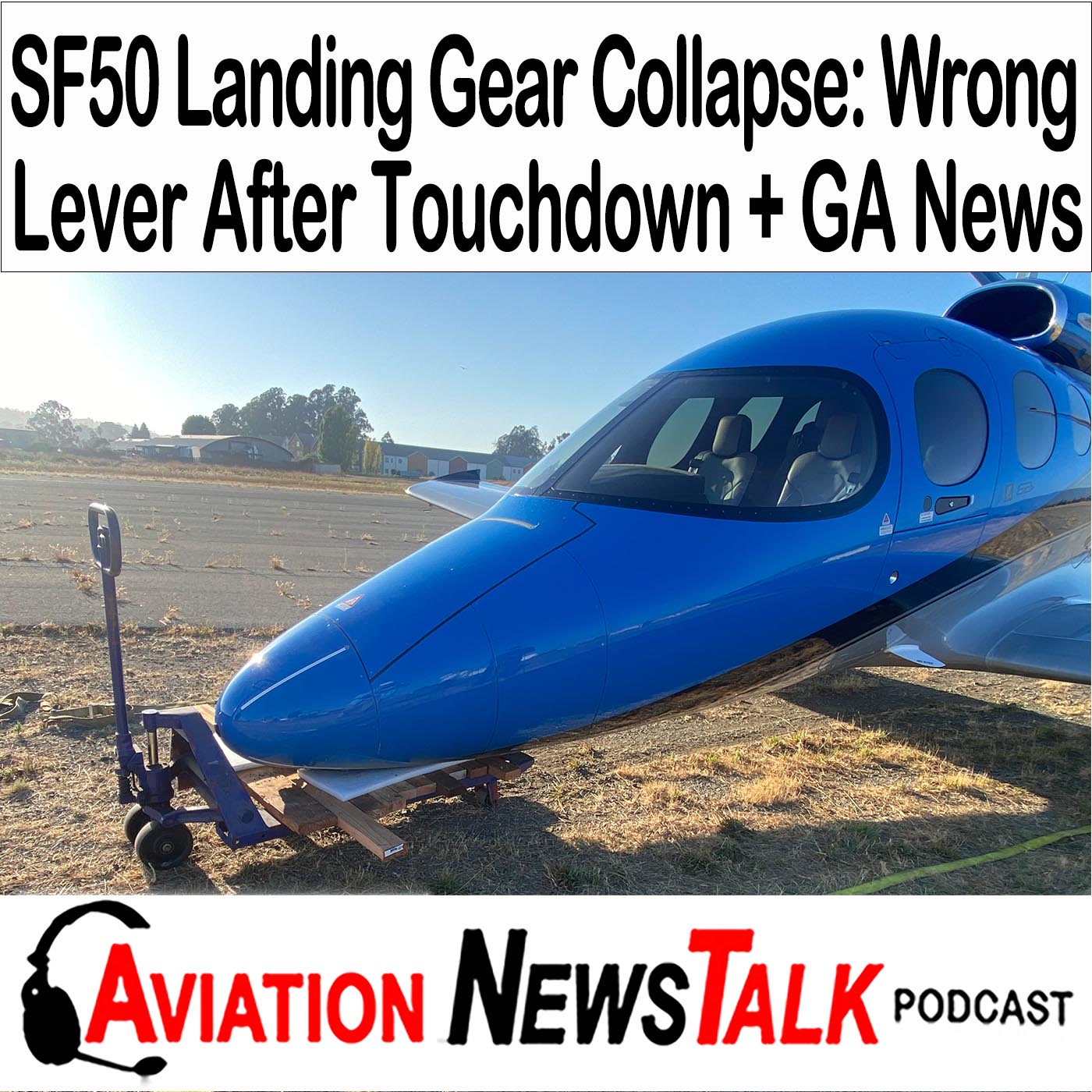 411 Vision Jet SF50 Landing Gear Collapse: Wrong Lever After Touchdown +GA News | Max talks with Rob Mark about a classic "simple mistake with big consequences" scenario: a pilot who possibly raised the landing gear handle instead of selecting flaps up during the landing roll in a Cirrus Vision Jet. The event looks minor on the surface—no injuries and the airplane stayed on the runway—but it exposes a human-factors trap that can bite any retractable-gear pilot, especially when you're trying to be quick and efficient right after touchdown. The discussion centers on the NTSB's final report for a Cirrus SF50 Vision Jet that landed at Watsonville Municipal Airport (Watsonville, California) on August 9, 2024. The pilot reported a normal approach and landing. Before touchdown, he had the flaps set to 100% and saw three green landing gear indications. Touchdown itself was uneventful. But during the landing roll—right about when braking began—the nose landing gear collapsed. Max and Rob walk through what the data showed. On short final, the airplane was properly configured: flaps at 100% and the landing gear down and locked. During rollout, both weight-on-wheels switches were briefly "unloaded," and the landing gear handle was raised and then lowered. That sequence unlocked the nose gear and allowed it to collapse. The main gear also unlocked, but it re-locked before collapsing. The probable cause boiled down to an inadvertent control selection: the pilot likely moved the gear handle instead of selecting the flap switch to 0%. From there, they unpack why this kind of error is so believable. The flap selector switch sits below the landing gear handle, and many pilots develop a post-touchdown habit of "cleaning up" quickly. Some of that comes from short-field technique: retracting flaps can put more weight on the wheels, increase braking effectiveness, and reduce stopping distance. But the exact moment you're tempted to do it is also the moment you have the least spare attention. You're still fast, directional control still matters, braking is being modulated, and you're managing the transition from flight to rollout. Add fatigue, distraction, or a slightly different cockpit flow than usual, and a wrong-control grab becomes completely plausible. A big takeaway is that landing isn't over at touchdown. Many pilots subconsciously relax as soon as the mains touch, as if the hard part is done. In reality, the landing roll is when you still have a lot of kinetic energy and limited margin for distraction. Looking down, changing configuration, or reaching for cockpit controls before you're stabilized is how small errors turn into big repair bills. Max and Rob emphasize that "post-landing tasks" are optional until the airplane is clearly under control and slowing. So what should pilots do differently? Their answer is intentionally boring: slow the flow down. On most runways there is no operational need to rush flap retraction during rollout. Keep your eyes outside, keep the airplane tracking straight, and let speed decay. If you choose to retract flaps on rollout, treat it like a checklist item, not a reflex. Touch the correct control deliberately, verify what you're touching, and use a short verbal callout ("flaps zero") before you move it. Better yet, tie configuration changes to safer triggers—below taxi speed, after exiting the runway, or after stopping and running the after-landing checklist—so you're not doing "extra tasks" while still managing high speed and directional control. They also discuss building habits that are resistant to error. If your technique is "as soon as I touch down, I do X," you're training your hands to move before your brain has finished verifying the right target. Replace that with a pause that forces confirmation, or a flow that keeps critical controls physically and mentally separated in time. The goal isn't to be fast; it's to be consistent and correct. If you're getting value from this show, please support the show via PayPal, Venmo, Zelle or Patreon. Support the Show by buying a Lightspeed ANR Headsets Max has been using only Lightspeed headsets for nearly 25 years! I love their tradeup program that let's you trade in an older Lightspeed headset for a newer model. Start with one of the links below, and Lightspeed will pay a referral fee to support Aviation News Talk. Lightspeed Delta Zulu Headset $1299NEW – Lightspeed Zulu 4 Headset $1099 Lightspeed Zulu 3 Headset $949Lightspeed Sierra Headset $749 My Review on the Lightspeed Delta Zulu Send us your feedback or comments via email If you have a question you'd like answered on the show, let listeners hear you ask the question, by recording your listener question using your phone. News Stories ForeFlight and Jeppesen announce Layoffs AOPA asks pilots to contact Congress to Support PAPA FAA makes permanent restrictions for helicopters near DCA House passes bill that would block ATC privatization Report Shows Rise in DPE Supply Super Bowl LX: What General Aviation Pilots Need to Know New glider distance record - Instagram video Stolen Plane Crashes Into Hangar FBI investigates stolen planes, one found at Auburn airport Authorities looking for couple in connection with thefts Pilot in crash near Boise charged with operating under the influence Mentioned on the ShowBuy Max Trescott's G3000 Book Call 800-247-6553 Video of the Week: Max's video showing ADS-B data for NASCAR driver crash Free Index to the first 282 episodes of Aviation New Talk So You Want To Learn to Fly or Buy a Cirrus seminars Online Version of the Seminar Coming Soon – Register for Notification Check out our recommended ADS-B receivers, and order one for yourself. Yes, we'll make a couple of dollars if you do. Get the Free Aviation News Talk app for iOS or Android. Check out Max's Online Courses: G1000 VFR, G1000 IFR, and Flying WAAS & GPS Approaches. Find them all at: https://www.pilotlearning.com/ Social Media Like Aviation News Talk podcast on Facebook Follow Max on Instagram Follow Max on Twitter Listen to all Aviation News Talk podcasts on YouTube or YouTube Premium "Go Around" song used by permission of Ken Dravis; you can buy his music at kendravis.com If you purchase a product through a link on our site, we may receive compensation. | 52m 44s | ||||||
| 1/11/26 | 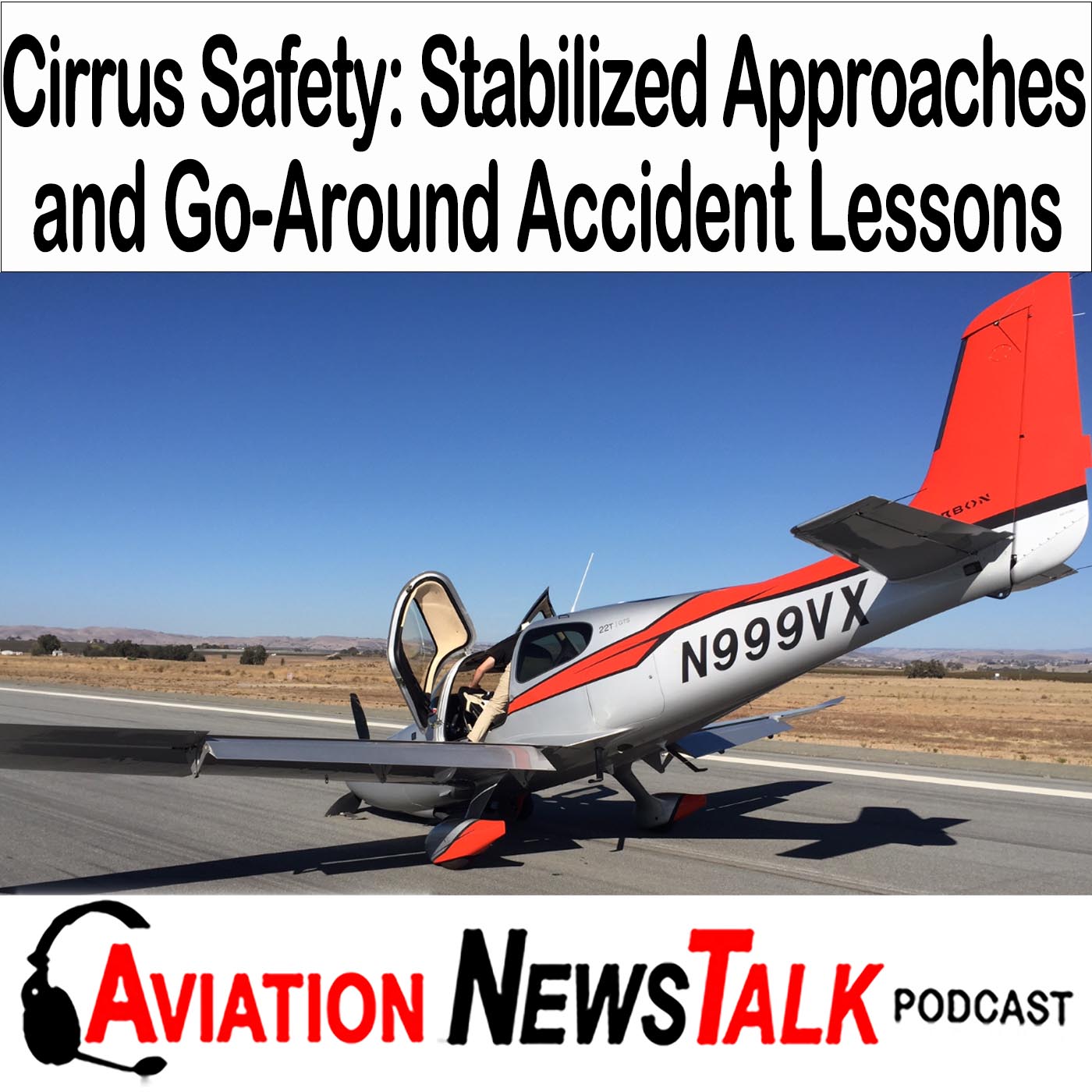 410 Cirrus SR22 Safety: Stabilized Approaches and Go-Around Accident Lessons | Max talks with Mark Waddell of the Cirrus Owner and Pilots Association (COPA) about how Cirrus pilots can reduce accidents by focusing on the places where the accident chain most often begins: unstable approaches, indecisive go-arounds, and delayed choices during power-loss events. They discuss what pilots are doing in the cockpit that turns routine flights into incidents, and what specific habits and training standards reduce that risk. Mark explains that 2025 included eight fatal Cirrus accidents and twelve CAPS saves. Mark argues that the big safety wins come from addressing repeatable patterns: how pilots manage energy on final, how quickly they reject a bad approach, and how early they commit to the safest outcome when the engine isn't reliable. A major theme is decisiveness in abnormal situations, especially anything involving power. Mark walks through how power-loss or engine-roughness events can seduce pilots into flying a normal pattern and hoping things stabilize. That often burns altitude and distance in exchange for false comfort. The operational hazard is simple: the moment a pilot realizes the runway is no longer assured, they're already low, already out of options, and now forced into rushed decisions. Mark emphasizes that when the engine is uncertain, "normal" is the enemy. The airplane doesn't care that the pattern looked tidy; it only cares whether you end up with a survivable outcome. This ties directly into CAPS decision-making. Mark's message is not "CAPS solves everything," but rather that pilots need an explicit decision framework that prevents them from negotiating with themselves while altitude evaporates. He discusses the idea of a CAPS hard deck—an altitude by which, if a pilot is not certain of a safe landing outcome, they commit to pulling the handle. The point of a hard deck isn't to remove judgment; it's to remove hesitation. If you wait until you're low, you've converted a controlled, survivable deployment into a desperate last-second attempt. In that sense, the hard deck is less about the parachute and more about training the pilot's brain to act early enough for any option to work. From emergency decisions, the discussion moves to the most universal risk zone: landing and go-around. Mark notes that a large share of reportable events occur during landing or during an attempted go-around. That makes this phase-of-flight a high-leverage target for training, standards, and self-discipline. The trap is that approaches feel "fixable" until they suddenly aren't. Pilots often rationalize small deviations—slightly fast, slightly high, slightly untrimmed—because they believe they can correct it in the last few hundred feet. But each late correction is an energy trade, and those trades frequently end with excessive speed over the threshold, a flat touchdown, a bounce, or a rushed go-around. They get specific about the "flat landing" pattern. Mark challenges a common cultural habit: equating "smooth" with "good." In many airplanes—and especially in a fast, slick airplane—chasing smoothness can encourage a flatter attitude and higher speed, which increases the chances of touching down on the nose gear or loading it too early. That can lead to nose-gear abuse, shimmy events, prop strikes, and expensive engine tear-downs. Max reinforces the technique side: trimming matters. If pilots are muscling the airplane through configuration changes and final approach, they're behind the airplane before the flare even begins. A well-trimmed airplane is easier to slow, easier to pitch correctly, and easier to land in the right attitude without forcing it onto the runway. Go-arounds get treated as a primary skill, not a backup plan. Mark describes why late go-arounds are especially dangerous: if a pilot waits until a bounce or a deep, unstable touchdown attempt, the airplane is close to the ground, slow, and in a configuration that can punish abrupt changes. The go-around itself is not complicated, but it requires coordinated execution: power comes in, right rudder counters yaw, pitch is managed to prevent an excessive nose-up attitude, and configuration changes are timed rather than rushed. A common failure mode is trying to do everything at once—adding power, retracting flaps too aggressively, and pitching up—creating a stall-prone situation at the worst possible altitude. Mark's guidance pushes pilots toward objective gates: if the approach isn't stable by a defined point, you go around—period. The pilots who get into trouble tend to have elastic standards. They keep moving the goalposts because they want the landing to work. Mark argues that consistency is the cure: standardized stabilized-approach criteria, practiced go-arounds that feel routine, and an acceptance that a go-around is not a failure, it's good judgment. They also address proficiency and recency, emphasizing that safe performance is less about total hours and more about how frequently a pilot is flying and practicing the right skills. Mark points out that annual hours correlate strongly with landing outcomes; low annual utilization can create a false sense of competence because the pilot has experience, but not recent repetition. The solution isn't heroic flying—it's structured practice: recurring instruction, intentional go-around reps, and consistent standards that prevent "drift" back into sloppy technique. To make those standards stick, Mark advocates data-driven debriefing. Instead of relying on subjective feel—"that was fine"—pilots can use post-flight tools, such as FlySto and ForeFlight's Cloud Ahoy, to evaluate approach stability, speed control, glidepath consistency, and touchdown energy. The goal isn't chasing a score; it's finding patterns that predict future mistakes. If your data repeatedly shows fast thresholds, unstable vertical paths, or late corrections, you now have something specific to train. Mark's point is blunt: most pilots don't need more aviation wisdom; they need feedback that's objective enough to change behavior. The episode's bottom line is that Cirrus safety is not about secret techniques. It's about earlier decisions, tighter standards, and repeated practice in the phases of flight where accidents are born. Nail stabilized approaches, normalize early go-arounds, commit sooner in power-loss scenarios, and use honest debriefing to identify risk trends before they turn into an NTSB report. If you're getting value from this show, please support the show via PayPal, Venmo, Zelle or Patreon. Support the Show by buying a Lightspeed ANR Headsets Max has been using only Lightspeed headsets for nearly 25 years! I love their tradeup program that let's you trade in an older Lightspeed headset for a newer model. Start with one of the links below, and Lightspeed will pay a referral fee to support Aviation News Talk. Lightspeed Delta Zulu Headset $1199 HOLIDAY SPECIALNEW – Lightspeed Zulu 4 Headset $1099 Lightspeed Zulu 3 Headset $849 HOLIDAY SPECIALLightspeed Sierra Headset $749 My Review on the Lightspeed Delta Zulu Send us your feedback or comments via email If you have a question you'd like answered on the show, let listeners hear you ask the question, by recording your listener question using your phone. Mentioned on the ShowCirrus Owner Pilots Association (COPA) COPA YouTube Channel Video: Garmin Green Donut Explained Buy Max Trescott's G3000 Book Call 800-247-6553 a Aviation News Talk Network podcasts NTSB News Talk podcast UAV News Talk podcast Rotary Wing Show podcast Free Index to the first 282 episodes of Aviation New Talk So You Want To Learn to Fly or Buy a Cirrus seminars Online Version of the Seminar Coming Soon – Register for Notification Check out our recommended ADS-B receivers, and order one for yourself. Yes, we'll make a couple of dollars if you do. Get the Free Aviation News Talk app for iOS or Android. Check out Max's Online Courses: G1000 VFR, G1000 IFR, and Flying WAAS & GPS Approaches. Find them all at: https://www.pilotlearning.com/ Social Media Like Aviation News Talk podcast on Facebook Follow Max on Instagram Follow Max on Twitter Listen to all Aviation News Talk podcasts on YouTube or YouTube Premium "Go Around" song used by permission of Ken Dravis; you can buy his music at kendravis.com If you purchase a product through a link on our site, we may receive compensation. | 1h 09m 37s | ||||||
| 12/30/25 | 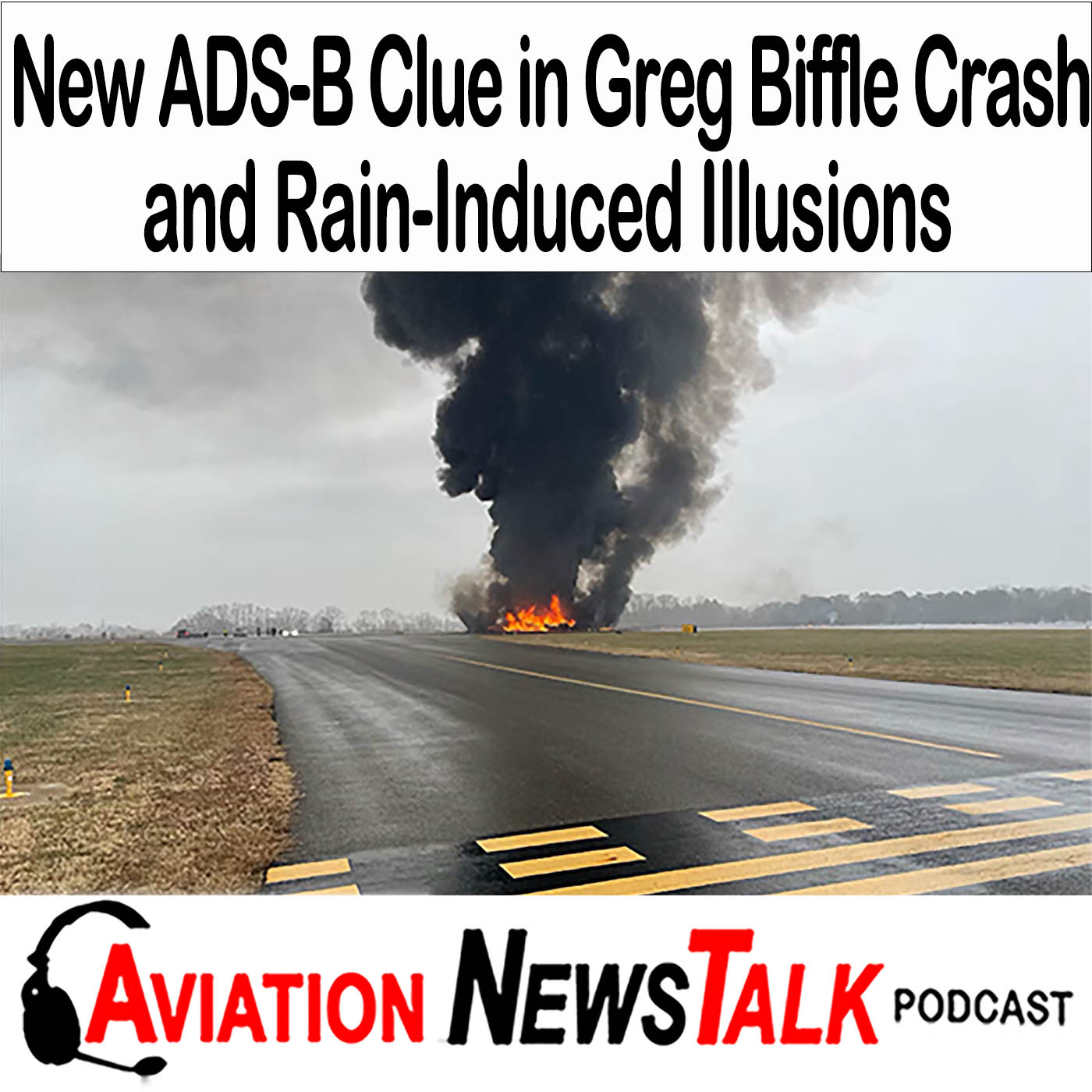 409 Statesville Citation 550 Crash (Greg Biffle): New ADS-B Clue & Rain-Induced Illusions | Max talks with host Scott Hamilton of WBT, Charlotte's News Talk radio, about the Statesville, North Carolina Citation 550 crash that killed NASCAR driver Greg Biffle and six others, then expands the conversation with a fresh technical finding and a practical training takeaway for pilots. While preparing for the short radio interview, Max revisited the ADS-B track and noticed something he hadn't seen anyone else write about: the altitude anomaly isn't merely a "jump," it's an impossible spike. The key number is stark. The ADS-B data shows a reported climb of 1,374 feet in 1.64 seconds, which implies a climb rate of almost 50,000 feet per minute—a rate that doesn't make sense for a Citation. Max's point is that this isn't a real aircraft maneuver; it's a data or sensor-path artifact. What makes it more compelling is what happens immediately beforehand: for 34 seconds, there were 14 ADS-B transmissions in a row with the exact same reported altitude. That kind of perfectly flat series is abnormal even if an aircraft is "steady," because pressure altitude reporting typically wiggles at least a little from sample to sample. Max lays out a simple, pilot-intuitive interpretation: the aircraft was likely climbing normally, but the altitude value feeding ADS-B froze for about 34 seconds and then unfroze, "catching up" in one big correction. If you treat that 1,374-foot change as occurring across the 34-second freeze rather than across 1.64 seconds, you get a climb rate around 2,200 fpm—entirely plausible for a departing Citation. About 20 seconds after the correction, the aircraft turned back toward the airport. Max also notes there is audio where a pilot announces on CTAF they are returning because they were "having issues," and he believes those "issues" were likely altimeter/altitude-related rather than a direct cause of the crash. From there, he turns the discussion into something useful for any pilot: how altitude gets measured, encoded, and transmitted—and what kinds of failures can create misleading outputs. In the Citation 550, there are multiple static ports feeding pilot-side and copilot-side instruments, plus potentially additional static sources feeding backups. Depending on the configuration, ADS-B altitude can be sourced through a blind encoder tied to the static system, an air data computer, or an encoding ("coding") altimeter common in older round-gauge aircraft. The operational point: pilots might see one thing on their instruments while the transmitted pressure altitude shows something else—or the opposite—depending on where the fault lives. Max then shifts to the accident sequence on return. Regardless of what prompted the turnback, he argues the crash itself likely occurred on short final for a different reason: visual illusions in rain and degraded visibility. The aircraft struck the approach lighting system short of the runway threshold, which is exactly the kind of outcome that can happen when pilots subtly, unknowingly fly a shallow or low path while "going visual." He emphasizes that we don't yet know the cause with certainty, but absent evidence of an engine failure on short final, illusions are a credible explanatory bucket—and one pilots can learn from immediately. The primary illusion he highlights is water refraction. Rain on the windshield can make the horizon appear lower than it is, which creates the sensation of being higher than you really are—leading to an unconscious nose-down correction and a lower-than-intended glidepath. He also cites guidance that rain, mist, and limited slant visibility reduce and distort visual cues during the instrument-to-visual transition, exactly when pilots are most vulnerable to subtle errors. These effects are also documented in Flight Safety Foundation's ALAR "Visual Illusions" briefing note, which specifically calls out rain-on-windshield refraction and the way rain can change the apparent intensity/brilliance of approach lighting. Max closes with a concrete "do this next time" list. First, if you accept a visual in marginal conditions, load the ILS and use it to back up the visual—it would have shown a low path before contact with approach lights. Second, he discusses a tech-forward defense: using Garmin visual approaches (the NTSB recovered a Garmin GTN 750 from the wreckage) and tools like Pathways in synthetic vision to help maintain a stable vertical picture. But he adds a blunt warning that pilots routinely get wrong: Garmin visual approaches do not guarantee terrain clearance, and in hilly terrain or limited visibility they can route you into terrain unless you've validated them in good conditions. The takeaway is simple: when your eyes can lie, disciplined cross-checking—and knowing the limitations of your tools—is what keeps you off the lights and on a safe path to the runway. If you're getting value from this show, please support the show via PayPal, Venmo, Zelle or Patreon. Support the Show by buying a Lightspeed ANR Headsets Max has been using only Lightspeed headsets for nearly 25 years! I love their tradeup program that let's you trade in an older Lightspeed headset for a newer model. Start with one of the links below, and Lightspeed will pay a referral fee to support Aviation News Talk. Lightspeed Delta Zulu Headset $1199 HOLIDAY SPECIALNEW – Lightspeed Zulu 4 Headset $1099 Lightspeed Zulu 3 Headset $849 HOLIDAY SPECIALLightspeed Sierra Headset $749 My Review on the Lightspeed Delta Zulu Send us your feedback or comments via email If you have a question you'd like answered on the show, let listeners hear you ask the question, by recording your listener question using your phone. Mentioned on the ShowFlight Safety Visual Illusions Briefing Note 5.3 Buy Max Trescott's G3000 Book Call 800-247-6553 Aviation News Talk Network podcasts NTSB News Talk podcast UAV News Talk podcast Rotary Wing Show podcast Free Index to the first 282 episodes of Aviation New Talk So You Want To Learn to Fly or Buy a Cirrus seminars Online Version of the Seminar Coming Soon – Register for Notification Check out our recommended ADS-B receivers, and order one for yourself. Yes, we'll make a couple of dollars if you do. | 40m 46s | ||||||
| 12/20/25 |  408 Aerobatic Training for Pilots: How Upset Recovery Prevents Loss of Control — Dr. Catherine Cavagnaro | Max talks with Dr. Catherine Cavagnaro about how aerobatic training builds safer, more confident pilots by reducing loss of control, improving stall and spin awareness, and shortening the startle response. Although many pilots associate aerobatics with airshows or extreme flying, this conversation reframes aerobatic training as a practical safety tool that directly applies to everyday general aviation operations. Catherine explains that the core value of aerobatic training lies in learning where "the edge" of aircraft control really is. Many pilots are taught to avoid stalls and spins at all costs, which can unintentionally create fear rather than understanding. Aerobatic training deliberately takes pilots past that edge in a controlled environment so they can see, feel, and understand what happens beyond it. Once pilots truly understand where that boundary lies, they are far better equipped to avoid unintentionally crossing it during normal flight. A major theme of the discussion is loss of control, which remains one of the leading causes of fatal aviation accidents. Catherine describes how many loss-of-control events are not caused by a lack of knowledge, but by startle response and improper control inputs under stress. When something unexpected happens—such as an uncommanded roll, a botched go-around, or a developing stall—pilots often freeze for several seconds or react instinctively in exactly the wrong way. Aerobatic and upset-recovery training helps shorten those "extended dumb moments" by making unusual attitudes familiar rather than frightening. Catherine shares real-world examples from her experience as a Designated Pilot Examiner. In one case, a commercial pilot applicant mishandled a power-off stall by applying aileron instead of reducing angle of attack, which aggressively drove the aircraft into a spin. The pilot then added power while still stalled, compounding the problem. Catherine explains that this reaction mirrors what has been seen in fatal airline accidents, where pilots pulled back and applied aileron during stall events instead of pushing forward. These moments highlight why understanding stalls, spins, and proper recovery techniques is essential well beyond the private pilot level. A key technical takeaway from the episode is the importance of angle of attack. Catherine emphasizes that losing directional control is a clear sign of an impending stall, and that rudder alone is often insufficient to stop a departure once it begins. Simply pushing forward on the controls—reducing angle of attack—can immediately end the event. Aerobatic training reinforces this lesson repeatedly, helping pilots build instinctive, correct responses rather than relying on rote memorization. The conversation also explores how control authority changes with airspeed. Catherine explains that pilots tend to be overly gentle on the controls when flying slowly, particularly near the ground during takeoff and landing. Ironically, that is precisely when larger, more deliberate control inputs are required. Aerobatic maneuvers such as loops, rolls, and Immelmann turns vividly demonstrate how sluggish controls become at low airspeeds and high angles of attack, making these lessons stick in a way that textbooks cannot. Max and Catherine discuss how aerobatic training is structured at her school. Rather than offering single "thrill ride" flights, Catherine teaches aerobatics as a multi-day course that includes extensive ground instruction before every flight. This ensures pilots understand exactly what will happen before experiencing it in the air. The goal is not to impress or intimidate, but to build confidence, predictability, and mastery. Students perform most of the flying themselves, which further reinforces learning and reduces anxiety. Another practical aspect of the episode focuses on managing motion sickness. Catherine shares wisdom passed down from aerobatic legend Bill Kershner, including the stages of nausea—Normal, Not So Much Fun Anymore, Sweat on Upper Lip, and the point of no return. Recognizing these stages early allows instructors to intervene before discomfort escalates. Simple strategies such as eating light meals beforehand, keeping airflow on the face, tensing abdominal muscles during high-G maneuvers, and ensuring students have their hands on the controls can make a significant difference. The discussion also touches on upset-recovery checklists used in airline training, such as "Push, Roll, Power, Stabilize." Catherine notes that while these checklists are effective, pilots must practice the full sequence under stress. Knowing only the first step—pushing forward—without following through can leave an aircraft in an equally dangerous situation. Aerobatic training provides the repetition needed to execute these steps smoothly and correctly when it matters most. Ultimately, the episode makes a compelling case that aerobatic training is not about becoming an aerobatic pilot. It is about becoming a better, safer pilot in any airplane. By replacing fear of stalls and spins with understanding and respect, aerobatic training equips pilots with a deeper mental and physical toolkit. Whether flying a simple trainer or a high-performance aircraft, pilots who understand the edge—and have practiced operating near it—are better prepared to keep themselves and their passengers safe. If you're getting value from this show, please support the show via PayPal, Venmo, Zelle or Patreon. Support the Show by buying a Lightspeed ANR Headsets Max has been using only Lightspeed headsets for nearly 25 years! I love their tradeup program that let's you trade in an older Lightspeed headset for a newer model. Start with one of the links below, and Lightspeed will pay a referral fee to support Aviation News Talk. Lightspeed Delta Zulu Headset $1199 HOLIDAY SPECIALNEW – Lightspeed Zulu 4 Headset $1099 Lightspeed Zulu 3 Headset $849 HOLIDAY SPECIALLightspeed Sierra Headset $749 My Review on the Lightspeed Delta Zulu Send us your feedback or comments via email If you have a question you'd like answered on the show, let listeners hear you ask the question, by recording your listener question using your phone. Mentioned on the ShowCatherine Cavagnaro YouTube Channel Ace Aerobatic School Buy Max Trescott's G3000 Book Call 800-247-6553 Free Index to the first 282 episodes of Aviation New Talk So You Want To Learn to Fly or Buy a Cirrus seminars Online Version of the Seminar Coming Soon – Register for Notification Check out our recommended ADS-B receivers, and order one for yourself. Yes, we'll make a couple of dollars if you do. Get the Free Aviation News Talk app for iOS or Android. Check out Max's Online Courses: G1000 VFR, G1000 IFR, and Flying WAAS & GPS Approaches. Find them all at: https://www.pilotlearning.com/ Social Media Like Aviation News Talk podcast on Facebook Follow Max on Instagram Follow Max on Twitter Listen to all Aviation News Talk podcasts on YouTube or YouTube Premium "Go Around" song used by permission of Ken Dravis; you can buy his music at kendravis.com If you purchase a product through a link on our site, we may receive compensation. | 57m 07s | ||||||
| 12/12/25 |  407 Starting a Flight School with The Flight Academy | Max talks with John Fiscus, co-founder of The Flight Academy, and Director of Operations Jordan Ming to break down how one of the country's most respected Cirrus-focused training organizations was created, expanded, and refined over more than two decades. Whether you're an instructor considering the entrepreneurial leap, a pilot curious about how flight training businesses operate, or someone fascinated by the evolution of modern GA training, this conversation delivers clear, practical insights rooted in real experience. John opens with the origin story behind The Flight Academy—one shaped unexpectedly by the aftermath of 9/11. Before starting the company, John was an instructor and corporate pilot for Cirrus Aircraft, preparing for an airline career. When airline hiring collapsed overnight, he and colleague Luke realized they could not compete with furloughed, highly experienced pilots suddenly entering the market. But they also saw a growing demand: Cirrus owners nationwide needed instructors who truly understood their aircraft. Many local CFIs didn't yet have the expertise or avionics familiarity that early-generation Cirrus owners required. That gap created an opportunity. Instead of opening a traditional flight school with airplanes and an office, John and Luke launched The Flight Academy in 2002 with a completely different model. They owned no airplanes, no local training fleet, and no physical facility. Instead, they traveled around the country teaching owners in their own Cirrus aircraft. This approach dramatically reduced overhead while giving customers access to specialized training. What seemed unconventional at the time turned out to be the ideal way to enter the market, and demand steadily grew. As the business matured, the founders recognized the need for a home base and added a small office at Boeing Field. Eventually, they purchased their first aircraft—not a leaseback, but a nearly new Cirrus that offered strong depreciation benefits and made financial sense for the business. Today the school operates 13 aircraft across two locations—Seattle and the Portland area—supported by eight to ten instructors, depending on season and demand. About 70–80% of all hours flown at The Flight Academy are dual instruction, a reflection of their focus on high-quality training rather than simple aircraft rental volume. Jordan explains that this training-centric model shapes everything about how the business operates. The Flight Academy books training in full-day or half-day blocks, giving instructors and clients the freedom to adapt to weather, focus on deep learning, and avoid the churn of hourly scheduling. Their instructors also spend significant time traveling to clients, giving them a unique range of experience compared to CFIs who fly the same local routes every day. Many instructors make multiple coast-to-coast flights before reaching the airlines, which sets them apart in both skill and confidence. Beyond daily training, the school has diversified its business through multiple complementary revenue streams. John describes their history of Atlantic ferry flights, delivering both new and pre-owned Cirrus aircraft to Europe. He also recounts the dramatic ferry incident—captured on video—in which a malfunctioning transfer tank forced a ferry pilot to deploy the Cirrus parachute into the Pacific. That experience eventually led the team to discontinue Pacific ferrying, though they continue to complete many Atlantic deliveries. Another major offering is their Vision Jet program, which includes discovery flights, pre-type-rating preparation, and training support. Luke also works with Arista to support the Vision Jet pre-owned market, creating a powerful ecosystem that blends aircraft sales, owner transitions, and specialized instruction. Jordan emphasizes that this interlocking structure allows the team to provide a seamless experience for owners, from first flight through long-term advanced training. Perhaps the most distinctive part of The Flight Academy's identity is their adventure trips—all-inclusive guided flying experiences to destinations such as Alaska, Morocco, the Caribbean, Europe, and New England during fall foliage season. These trips sell out consistently and create long-lasting friendships among participating owners. Jordan notes that many pilots appreciate having experts plan the hotels, customs logistics, activities, and daily flight legs—allowing them to simply enjoy the journey and the aircraft. When it comes to hiring CFIs, John is clear: "We don't hire pilots. We hire teachers." A strong instructor mindset matters more than flight time or ratings. He looks for individuals who demonstrate genuine interest in the business, a thoughtful approach to training, and the professionalism needed to work with sophisticated clients. He also shares hard-earned lessons about policies, cancellations, contracts, and pricing—key areas where many new flight school owners struggle. The episode closes with candid advice for CFIs considering launching their own school. Jordan stresses the importance of accepting that owners will fly less and manage more, while John encourages thoughtful planning and learning from others who have successfully done it. Their message is hopeful but realistic: starting a flight school is absolutely possible if you approach it with a solid plan, a clear mission, and a commitment to delivering exceptional training. If you're getting value from this show, please support the show via PayPal, Venmo, Zelle or Patreon. Support the Show by buying a Lightspeed ANR Headsets Max has been using only Lightspeed headsets for nearly 25 years! I love their tradeup program that let's you trade in an older Lightspeed headset for a newer model. Start with one of the links below, and Lightspeed will pay a referral fee to support Aviation News Talk. Lightspeed Delta Zulu Headset $1199 HOLIDAY SPECIALNEW – Lightspeed Zulu 4 Headset $1099 Lightspeed Zulu 3 Headset $849 HOLIDAY SPECIALLightspeed Sierra Headset $749 My Review on the Lightspeed Delta Zulu Send us your feedback or comments via email If you have a question you'd like answered on the show, let listeners hear you ask the question, by recording your listener question using your phone. Mentioned on the ShowBuy Max Trescott's G3000 Book Call 800-247-6553 The Flight Academy flight school Cirrus SR22 Parachute Pull near Hawaii Check out our recommended ADS-B receivers, and order one for yourself. Yes, we'll make a couple of dollars if you do. So You Want To Learn to Fly or Buy a Cirrus seminars Online Version of the Seminar Coming Soon – Register for Notification Check out Max's Online Courses: G1000 VFR, G1000 IFR, and Flying WAAS & GPS Approaches. Find them all at: https://www.pilotlearning.com/ Social Media Like Aviation News Talk podcast on Facebook Follow Max on Instagram Follow Max on Twitter Listen to all Aviation News Talk podcasts on YouTube or YouTube Premium "Go Around" song used by permission of Ken Dravis; you can buy his music at kendravis.com If you purchase a product through a link on our site, we may receive compensation. | 53m 57s | ||||||
| 12/2/25 |  406 Flying Tails: Ken Wayne's Amazing Animal Rescue Flights with Bears, Eagles & Wildlife | Max talks with former KTVU 2 and KRON 4 anchor Ken Wayne, founder of Flying Tails, about his extraordinary animal rescue flights involving bear cubs, bald eagles, coyotes, and dozens of shelter animals across California. Drawing on his past experience as a Navy journalist, Ken describes the path that led him from military broadcasting to a major-market news career—and ultimately to a mission that blends aviation with wildlife rescue. Ken's journey began at the Navy's Defense Information School, where he learned print reporting, photography, radio, and TV production. His service assignments took him from the Aleutian Islands to the Mediterranean aboard the USS Biddle, and finally to Subic Bay in the Philippines, where he hosted a radio show and shot television stories for the Far East Network. He also frequently traveled by helicopter and even completed a carrier landing in a COD aboard USS Midway, building a deep appreciation for aviation. Years later, after buying a Cessna 182 and flying with friends, Ken discovered animal rescue missions through Pilots N Paws. His breakthrough came when he responded to a call seeking transport for two bear cubs from South Lake Tahoe to Ramona. That flight—completed the day before a long-planned trip to Paris—set the tone for what Flying Tails would become. The TV story went viral, helped earn him an award from the U.S. Humane Society, and brought new awareness to the potential of using GA aircraft for wildlife operations. Since then, Flying Tails has become California Fish & Wildlife's go-to aviation nonprofit. Ken describes rescuing seven bear cubs in one summer, including a tiny Ventura County cub that had to be bottle-fed by caregivers wearing bear suits to prevent human imprinting. That cub later lived in a world-class bear enclosure in Sonoma County before returning to the wild near Ojai. Another cub, found hairless in the El Dorado National Forest, was flown to the Sequoia Park Zoo after it was deemed unfit for winter survival. Flying Tails also rescues countless cats and dogs from overwhelmed Central Valley shelters. Ken recounts missions involving 21 animals at once—14 puppies found in a garbage bag, kittens injured in a tent fire, and dozens of animals who were mere hours away from being euthanized due to lack of space. He explains why animals move northward in California, where adoption demand is higher and shelter capacity more manageable. The organization's wildlife work includes transporting owls, hawks, raptors, and a bald eagle Ken released at Lake Almanor—a moment he describes as one of the most exhilarating of his life. Wildlife crates are lined with burlap to prevent feather damage, and after each flight, aircraft are disinfected to prevent disease transmission. Gloves, tie-downs, and careful weight-and-balance planning are essential parts of every mission. Emotionally, Ken says what keeps him going is watching animals shed their fear during flight. Many board the airplane scared, panting, or stressed from heat, only to fall asleep within 20–30 minutes at altitude. When the airplane lands in cooler Bay Area air, the animals appear visibly relieved. That shift—from fear to calm—is what Ken believes makes these missions so rewarding for pilots. Flying Tails is expanding rapidly. Ken recently premiered the first episode of his new PBS series Flying Tales, available on the PBS app, showcasing these missions and the beauty of California from the air. His long-term vision is to establish Flying Tails bases nationwide, enabling wildlife flights for sea turtles, alligators, wolves, and more. Pilots interested in joining the mission can sign up at FlyingTails.org or reach Ken directly. If you're getting value from this show, please support the show via PayPal, Venmo, Zelle or Patreon. Support the Show by buying a Lightspeed ANR Headsets Max has been using only Lightspeed headsets for nearly 25 years! I love their tradeup program that let's you trade in an older Lightspeed headset for a newer model. Start with one of the links below, and Lightspeed will pay a referral fee to support Aviation News Talk. Lightspeed Delta Zulu Headset $1199 HOLIDAY SPECIALNEW – Lightspeed Zulu 4 Headset $1099 Lightspeed Zulu 3 Headset $949Lightspeed Sierra Headset $749 My Review on the Lightspeed Delta Zulu Send us your feedback or comments via email If you have a question you'd like answered on the show, let listeners hear you ask the question, by recording your listener question using your phone. Mentioned on the ShowBuy Max Trescott's G3000 Book Call 800-247-6553 Video of the Week: Episode #1 of Flying Tails television show Flying Tails website Flying Tails Facebook page Check out our recommended ADS-B receivers, and order one for yourself. Yes, we'll make a couple of dollars if you do. So You Want To Learn to Fly or Buy a Cirrus seminars Online Version of the Seminar Coming Soon – Register for Notification Check out Max's Online Courses: G1000 VFR, G1000 IFR, and Flying WAAS & GPS Approaches. Find them all at: https://www.pilotlearning.com/ Social Media Like Aviation News Talk podcast on Facebook Follow Max on Instagram Follow Max on Twitter Listen to all Aviation News Talk podcasts on YouTube or YouTube Premium "Go Around" song used by permission of Ken Dravis; you can buy his music at kendravis.com If you purchase a product through a link on our site, we may receive compensation. | 53m 26s | ||||||
| 11/23/25 |  405 Aviation Safety Lessons from Todd Conklin: Human Factors, Margin & Mistakes | In this episode of Aviation News Talk, we begin with the developing details In this episode of Aviation News Talk, Max sits down with renowned safety expert Dr. Todd Conklin to explore some of the most important aviation safety lessons pilots can learn from Human & Organizational Performance (HOP)—a framework rooted in human factors, systems thinking, and the realities of how people actually perform in complex environments. Todd's work has shaped safety programs across multiple high-risk industries, and in this episode he explains how these ideas translate directly to aviation, both for professional pilots and general aviation flyers. Todd begins by reframing how pilots should think about safety. Safety is not a static condition or something you "have" because you passed a checkride; instead, safety is a capacity, similar to fuel, that must be built, protected, and constantly replenished. This capacity includes time to think, margin for error, resilience, and the ability to recover when something goes wrong. When pilots allow that capacity to shrink—through rushed planning, complacency, or pressure—they lose the very buffer that keeps small mistakes from becoming accidents. Max and Todd dive into the first HOP principle: people make mistakes. This simple truth is foundational in human factors but often overlooked in aviation culture. Many pilots implicitly believe that if they just try hard enough, they can deliver perfect performance, yet every flight includes small deviations and errors. The key isn't eliminating mistakes—it's ensuring the system has enough margin so those mistakes don't cascade into failures. This leads to the second principle: blame fixes nothing. Todd explains that blaming pilots for errors obscures the real question: What conditions made that mistake possible? Max shares an example from a flight club where an accident prompted a search for someone to blame. Todd counters that meaningful safety improvement comes from understanding system interactions rather than assigning fault. They then discuss the third HOP principle, learning is vital. High-reliability organizations routinely debrief their successes—not just failures—because the same system dynamics that allow a successful flight may also allow a failure under slightly different conditions. Todd notes that curiosity is one of a pilot's most important safety tools; pilots who continuously seek to understand their environment develop stronger mental models and better decision-making under pressure. The conversation then moves into one of the most powerful HOP principles: context drives behavior. Todd explains that people behave differently depending on the setting, expectations, and formality of the environment. Airline pilots operate within a highly formalized culture—uniforms, checklists, cockpit procedures, and CRM—that creates predictable behavior and reduces variability. GA pilots, by contrast, have to formalize their own environment, since they don't benefit from the same structure. Simple habits, like always dressing appropriately, using a structured briefing, or maintaining personal minimums, help create a context that supports safer flying. Finally, Todd discusses the last major HOP principle: how leaders respond matters. For pilots, this includes how they respond to their own errors, near-misses, and close calls. Near-misses, Todd says, are "gifts"—accidents without consequences—that provide an ideal opportunity to identify weak controls or missing margin. He distinguishes between near-miss good, where robust controls allowed recovery, and near-miss lucky, where the pilot simply avoided disaster by chance. Both are important signals, and both must be studied with honesty and without blame. Todd brings these concepts to life with vivid examples, including his well-known "Kenny the Alligator Wrestler" story and his experience working with Admiral John Meyer and the U.S. Navy's aircraft carrier operations. Through cross-training, structured practice, and better system understanding, the Navy dramatically reduced ground-handling incidents on carrier decks—reinforcing how resilience and margin must be intentionally built into high-risk operations. Max and Todd close by emphasizing that aviation safety advances through learning, innovation, curiosity, and margin, not perfection. For pilots, this means consistently planning ahead, making conservative decisions, building buffer into every phase of flight, and embracing the idea that mistakes are inevitable—but accidents don't have to be. This episode equips pilots with a deeper understanding of human factors, risk management, and the practical application of HOP principles, offering a richer, more realistic framework for staying safe in today's increasingly complex flying environment. If you're getting value from this show, please support the show via PayPal, Venmo, Zelle or Patreon. Support the Show by buying a Lightspeed ANR Headsets Max has been using only Lightspeed headsets for nearly 25 years! I love their tradeup program that let's you trade in an older Lightspeed headset for a newer model. Start with one of the links below, and Lightspeed will pay a referral fee to support Aviation News Talk. Lightspeed Delta Zulu Headset $1199 HOLIDAY SPECIALNEW – Lightspeed Zulu 4 Headset $1099 Lightspeed Zulu 3 Headset $949Lightspeed Sierra Headset $749 My Review on the Lightspeed Delta Zulu Send us your feedback or comments via email If you have a question you'd like answered on the show, let listeners hear you ask the question, by recording your listener question using your phone. Mentioned on the ShowBuy Max Trescott's G3000 Book Call 800-247-6553 Video of the Week: Kenny the Alligator Wrestler Dr. Todd Conklin's website Dr. Conklin's book: Pre-Accident Investigations Dr. Todd Conklin's podcast: Pre-Accident Investigations Check out our recommended ADS-B receivers, and order one for yourself. Yes, we'll make a couple of dollars if you do. So You Want To Learn to Fly or Buy a Cirrus seminars Online Version of the Seminar Coming Soon – Register for Notification Get the Free Aviation News Talk app for iOS or Android. Check out Max's Online Courses: G1000 VFR, G1000 IFR, and Flying WAAS & GPS Approaches. Find them all at: https://www.pilotlearning.com/ Social Media Like Aviation News Talk podcast on Facebook Follow Max on Instagram Follow Max on Twitter Listen to all Aviation News Talk podcasts on YouTube or YouTube Premium "Go Around" song used by permission of Ken Dravis; you can buy his music at kendravis.com If you purchase a product through a link on our site, we may receive compensation. | 59m 08s | ||||||
| 11/15/25 | 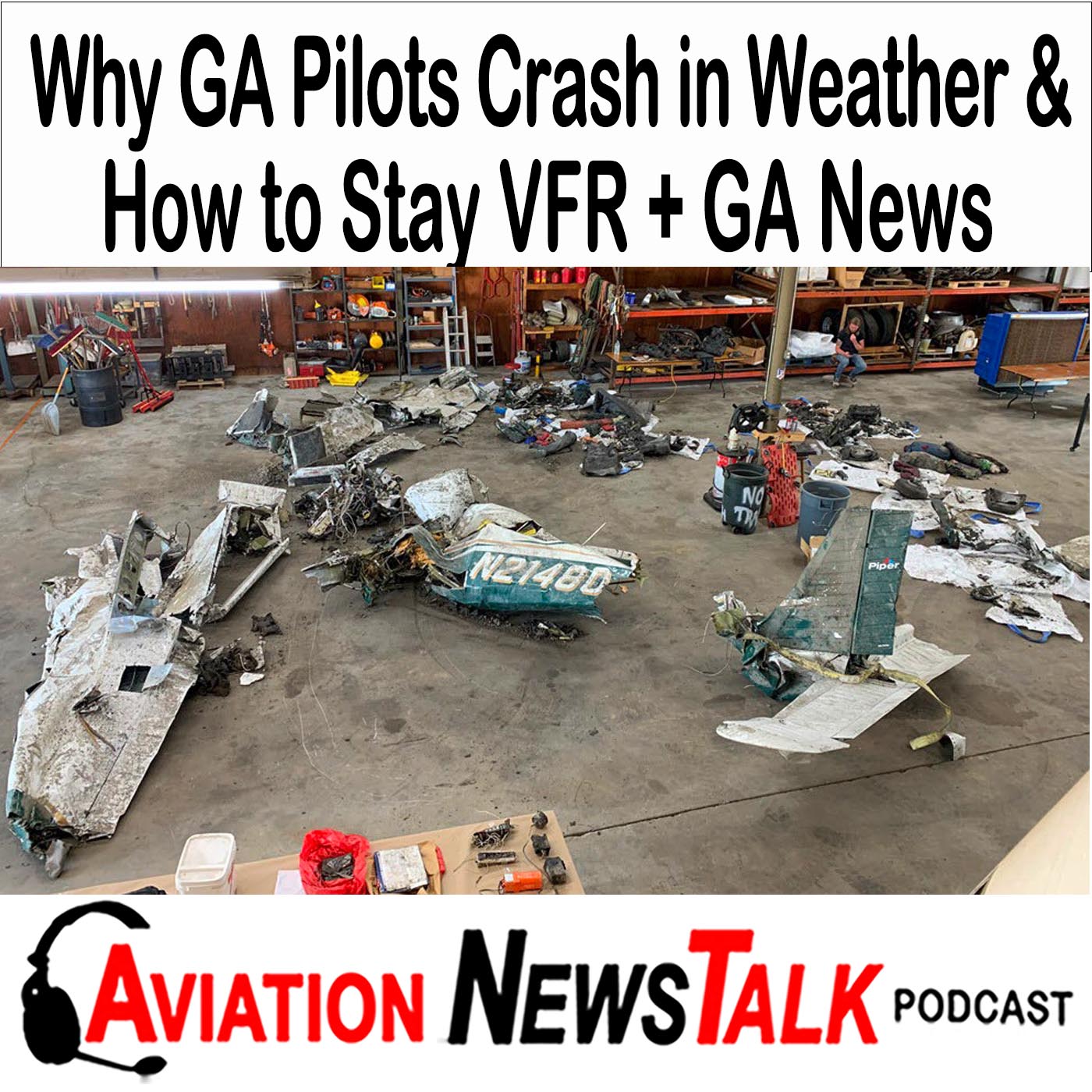 404 VFR into IMC: Why GA Pilots Crash in Weather and How to Stay VFR + GA News | In this episode of Aviation News Talk, we begin with the developing details Weather accidents in general aviation often happen to pilots who genuinely believe they're cautious about flying in marginal conditions. But when you look closely at the chain of decisions that lead up to VFR-into-IMC crashes, a consistent pattern emerges—fatigue, long flights, pressure to complete a trip, weakening visibility, and the belief that "I can stay just under this." In Episode 404 of Aviation News Talk, Max Trescott unpacks a tragic example of this pattern and shows how NTSB data helps explain why GA pilots continue to stumble into weather accidents. Max begins with a detailed look at a 2023 crash involving a Piper Archer, N21480, flown by a 66-year-old private pilot who was en route from Maine to Sun 'n Fun. The pilot had made this long trip multiple times before and was familiar with the route. He departed Maine, stopped twice for fuel, and ended the day by sleeping on a couch in a pilot lounge—after ordering Uber Eats at around 8 p.m. According to his wife, the pilot routinely camped at airports, carried sleeping gear and guitars, and prided himself on being cautious about weather. The next morning, however, the signs of fatigue were visible. An airport employee who spoke with the pilot noted he looked tired and "could see the fatigue in his eyes." Despite checking weather and considering waiting out an approaching system, the pilot ultimately chose to depart. He told ATC he wanted to remain low—around 1,600 feet—to stay VFR under the cloud layer. Unfortunately, this strategy is one of the most dangerous choices a VFR pilot can make. Staying low reduces options, shrinks reaction time, and increases the likelihood of inadvertently entering IMC. Eight minutes after informing ATC he wanted to stay low to maintain VFR, the pilot's track shows the airplane turning right and descending. When the controller asked if he was maneuvering to stay below the clouds, the pilot replied: "Mayday, mayday, in the clouds, I'm going down." Witnesses described the airplane descending nearly straight down. The NTSB report revealed worsening weather, nearby convective activity, cloud bases around 1,300 feet AGL, and an overcast layer with tops near 3,500 feet. The pilot had passed an airport less than two miles before the crash—an airport he may have been trying to return to during his final 360-degree turn. But like many non-instrument-rated pilots who enter IMC unintentionally, he lost control within about a minute, consistent with studies showing that VFR pilots often lose control within three minutes of entering clouds. Max then connects this accident to a broader NTSB study, Risk Factors Associated with Weather-Related General Aviation Accidents (SS-05/01). This landmark analysis compared 72 weather-related accidents with 135 non-accident flights occurring nearby at the same time. The goal was to uncover what differentiates pilots who get into trouble from those who do not. The results were eye-opening. The most significant predictor was the age at which a pilot earned their first certificate, not their age at the time of the accident. Pilots who learned to fly at age 25 or younger had the lowest risk. Those who trained between 25 and 35 had a 4.5-times higher risk, between 35 and 45 had a 4.8-times higher risk, and pilots who started at 45 or older had a 3.4-times higher risk. The South Carolina pilot earned his certificate at around age 49. Another major factor was lack of an instrument rating. Non-instrument-rated pilots had a 4.8-times greater likelihood of a weather accident. Long flights were also a major contributor: legs of 300 miles or more sharply increased risk. Pilots involved in accidents were less likely to have obtained thorough weather briefings and more likely to have had previous incidents or accidents. One of the most striking findings concerned written and checkride performance. Accident pilots had cumulative pass rates averaging 84–86%, while non-accident pilots averaged around 95%. Some accident pilots had multiple failed checkrides, including one commuter pilot who had failed nine practical tests. The study concluded that stronger written and checkride performance was statistically linked to lower accident involvement. From there, Max shifts to what pilots can do differently, starting with awareness. Humans are poor at detecting gradual reductions in visibility—the "frog in warm water" problem. Max describes an early flight to Massachusetts where visibility slowly degraded from 25 miles to around 10 miles, yet he didn't notice until the change became obvious. To counter this, he recommends periodically estimating visibility in flight using runway lengths, moving-map distances, landmarks, and horizon clarity. Max also teaches a simple method for estimating cloud clearance using a 45-degree reference point on the cloud base. By timing how long it takes to reach the point beneath the cloud and using your groundspeed, you can determine if you're maintaining the required 500-foot clearance. The same geometry works for estimating horizontal cloud distance. Finally, Max emphasizes fatigue and decision-making. After nearly 10 hours of flying the day before, poor sleep on a couch, and an early morning departure, the pilot in the accident was not at peak performance. Nutrition also matters—low glucose levels degrade decision-making. Max stresses the need to set clear weather trigger points before departure, brief passengers on them, and stick to the plan. For any pilot who flies VFR, especially on long cross-country trips, this episode highlights why VFR-into-IMC accidents still happen—and how to stay VFR by using better judgment, better tools, and objective visibility cues. If you're getting value from this show, please support the show via PayPal, Venmo, Zelle or Patreon. Support the Show by buying a Lightspeed ANR Headsets Max has been using only Lightspeed headsets for nearly 25 years! I love their tradeup program that let's you trade in an older Lightspeed headset for a newer model. Start with one of the links below, and Lightspeed will pay a referral fee to support Aviation News Talk. Lightspeed Delta Zulu Headset $1199 HOLIDAY SPECIALNEW – Lightspeed Zulu 4 Headset $1099 Lightspeed Zulu 3 Headset $949Lightspeed Sierra Headset $749 My Review on the Lightspeed Delta Zulu Send us your feedback or comments via email If you have a question you'd like answered on the show, let listeners hear you ask the question, by recording your listener question using your phone. News Stories Successful Parachute Pulls Hurricane Relief Flight Crashes in Florida General Aviation Adapts as FAA Adjusts Restrictions Fire Destroys Three Aircraft at Avon Park, Florida Hawker accident pilots chose not to wait for a test pilot Pilot presses wrong lever in unfamiliar plane N59BR, Challenger 1 experimental aircraft rudder pedals crash Joby Tests Military Hybrid VTOL Helicopter pilot pleads guilty in 2021 TN crash that killed passenger New Details on Alaska Airlines Pilot Who Tried To Kill Engines Mid-Flight Mentioned on the ShowBuy Max Trescott's G3000 Book Call 800-247-6553 Max's FLYING Column on use of the Autopilot APR key Free Index to the first 282 episodes of Aviation New Talk So You Want To Learn to Fly or Buy a Cirrus seminars Online Version of the Seminar Coming Soon – Register for Notification Check out our recommended ADS-B receivers, and order one for yourself. Yes, we'll make a couple of dollars if you do. Get the Free Aviation News Talk app for iOS or Android. Check out Max's Online Courses: G1000 VFR, G1000 IFR, and Flying WAAS & GPS Approaches. Find them all at: https://www.pilotlearning.com/ Social Media Like Aviation News Talk podcast on Facebook Follow Max on Instagram Follow Max on Twitter Listen to all Aviation News Talk podcasts on YouTube or YouTube Premium "Go Around" song used by permission of Ken Dravis; you can buy his music at kendravis.com If you purchase a product through a link on our site, we may receive compensation. | 55m 01s | ||||||
| 11/7/25 | 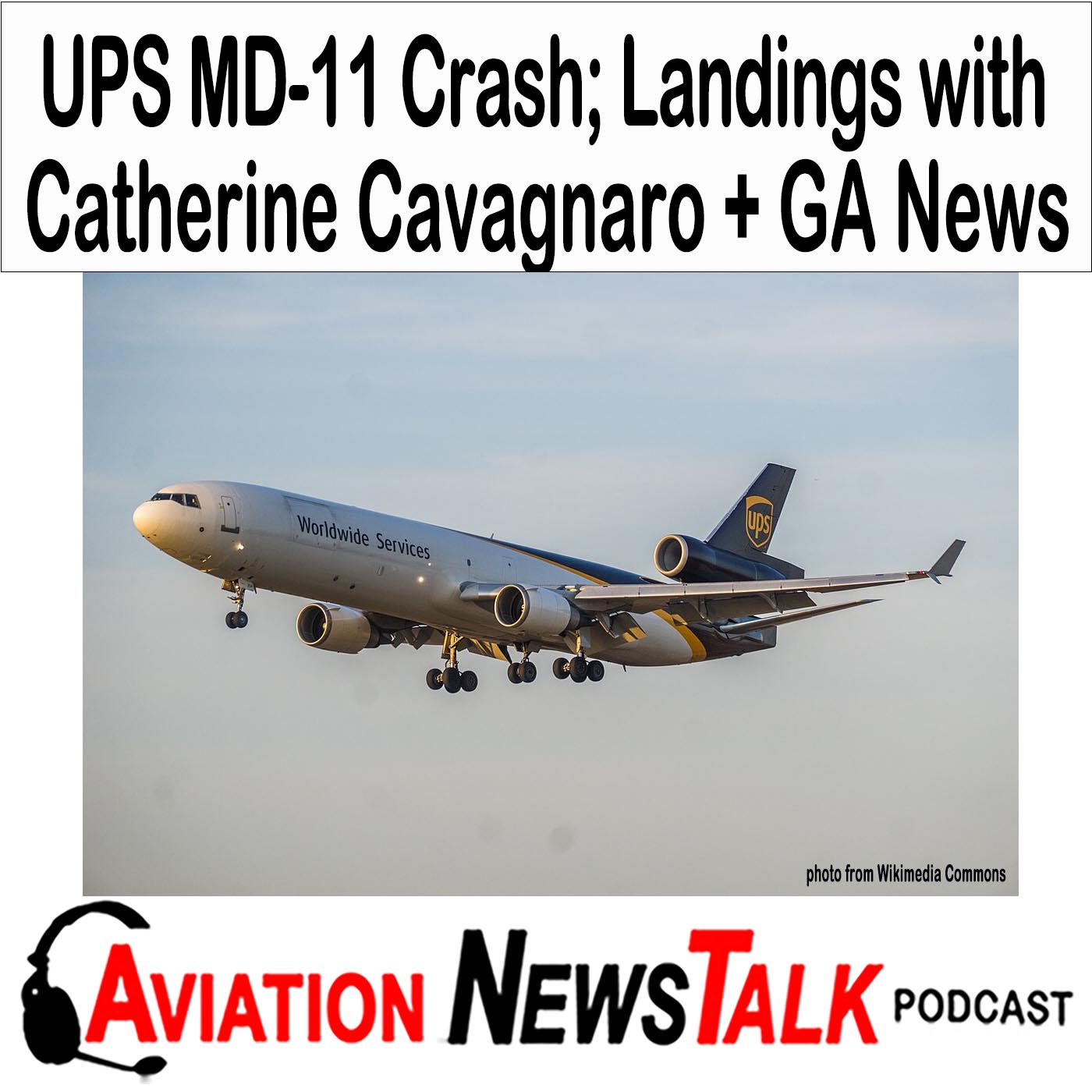 403 UPS MD-11 Crash Analysis + Dr. Catherine Cavagnaro on How to Make Better Landings | In this episode of Aviation News Talk, we begin with the developing details surrounding the crash of UPS Airlines Flight 2976, a McDonnell Douglas MD-11F cargo aircraft that crashed shortly after takeoff from Louisville, Kentucky. The aircraft, tail number N259UP, was a 34-year-old MD-11F powered by three General Electric CF6-80 engines. Bystander video shows the left engine separated from the wing, with the wing engulfed in flames as the aircraft lifted off. ADS-B data indicates the aircraft climbed less than 100 feet before beginning a descending, left-turning roll from which it did not recover. The crew had already passed V1, meaning they were committed to takeoff and did not have adequate runway remaining to stop. In situations like this, flight crews may have no survivable option, and this accident may represent one of those rare but tragic scenarios. We also compare aspects of this event to American Airlines Flight 191, the 1979 DC-10 crash at Chicago O'Hare. While both accidents involved the loss of the left engine on takeoff, the failure chain in AA191 involved slat retraction due to damaged hydraulic and control lines—failure modes later addressed in the MD-11 design. The MD-11's slats are hydraulically locked to prevent unintended retraction, meaning the probable cause of this accident must differ in critical ways. After the accident analysis, we shift to a practical, pilot-focused conversation about landings with returning guest Dr. Catherine Cavagnaro, columnist for AOPA and highly respected flight instructor and DPE. Drawing on more than a thousand check rides, Catherine explains that the most consistent problem she sees is pilots flying final approach too fast. While pilots often worry about being too slow, the data shows that excessive approach speed is far more common and contributes to long landing rolls, excessive float, bounced landings, and pilot-induced oscillations. Catherine and Max discuss how a correct approach speed provides the right amount of energy to land smoothly and in control. More power and speed make it harder to manage the flare and to touch down where intended. Pilots also frequently fail to align the aircraft longitudinal axis with the runway before touchdown, particularly in crosswinds, due to hesitation in applying sufficient rudder and aileron. Catherine explains that as the aircraft slows, flight controls become less effective, so pilots should expect to use more control input in the final seconds before touchdown—not less. The conversation also explores landing accuracy, noting that pilots should strive to touch down within 200–400 feet of a target point—not "somewhere down the runway." Even on long runways, building accuracy pays dividends when landing at shorter fields or during check rides. A useful data tool Catherine recommends is FlySto (flysto.net), which allows pilots with modern avionics to upload flight data and analyze approach speed, pitch attitude, touchdown point, crab angle, rollout direction, and braking forces. By reviewing objective data, pilots can identify habits and improve their consistency over time. Whether you're teaching new pilots, returning to flying after a break, or simply want your landings to be more stable and predictable, Catherine's techniques offer actionable steps: choose the correct approach speed, use proper crosswind controls, flare to a nose-high attitude, and maintain precision with touchdown point selection. Together, the accident analysis and the landing discussion reinforce a core theme of this show: aviation skills improve with deliberate practice, continuous learning, and a deep respect for the realities of risk, energy management, and aircraft control. If you're getting value from this show, please support the show via PayPal, Venmo, Zelle or Patreon. Support the Show by buying a Lightspeed ANR Headsets Max has been using only Lightspeed headsets for nearly 25 years! I love their tradeup program that let's you trade in an older Lightspeed headset for a newer model. Start with one of the links below, and Lightspeed will pay a referral fee to support Aviation News Talk. Lightspeed Delta Zulu Headset $1199 HOLIDAY SPECIAL NEW – Lightspeed Zulu 4 Headset $1099 Lightspeed Zulu 3 Headset $949Lightspeed Sierra Headset $749 My Review on the Lightspeed Delta Zulu Send us your feedback or comments via email If you have a question you'd like answered on the show, let listeners hear you ask the question, by recording your listener question using your phone. News Stories UPS MD-11 crashed almost after takeoff from Louisville airport FAA is set to start cutting flights to contend with delays and staffing shortages Archer Buys LA-Area Airport Jeppesen ForeFlight Unified Under Private Equity Ownership FAA acknowledges BasicMed form error Pilot injured when Piper hits fence Extreme turbulence bends Cessna 152 Blade to Launch Weekday Commuter Flights Between Manhattan and Westchester Mentioned on the ShowAmerican Airlines Flight 191 Analysis by Jeff Guzzetti Fly California Passport Program Catherine Cavagnaro YouTube Channel Ace Aerobatic School Buy Max Trescott's G3000 Book Call 800-247-6553 Free Index to the first 282 episodes of Aviation New Talk So You Want To Learn to Fly or Buy a Cirrus seminars Online Version of the Seminar Coming Soon – Register for Notification Check out our recommended ADS-B receivers, and order one for yourself. Yes, we'll make a couple of dollars if you do. Get the Free Aviation News Talk app for iOS or Android. Check out Max's Online Courses: G1000 VFR, G1000 IFR, and Flying WAAS & GPS Approaches. Find them all at: https://www.pilotlearning.com/ Social Media Like Aviation News Talk podcast on Facebook Follow Max on Instagram Follow Max on Twitter Listen to all Aviation News Talk podcasts on YouTube or YouTube Premium "Go Around" song used by permission of Ken Dravis; you can buy his music at kendravis.com If you purchase a product through a link on our site, we may receive compensation. | 1h 04m 32s | ||||||
| 11/1/25 | 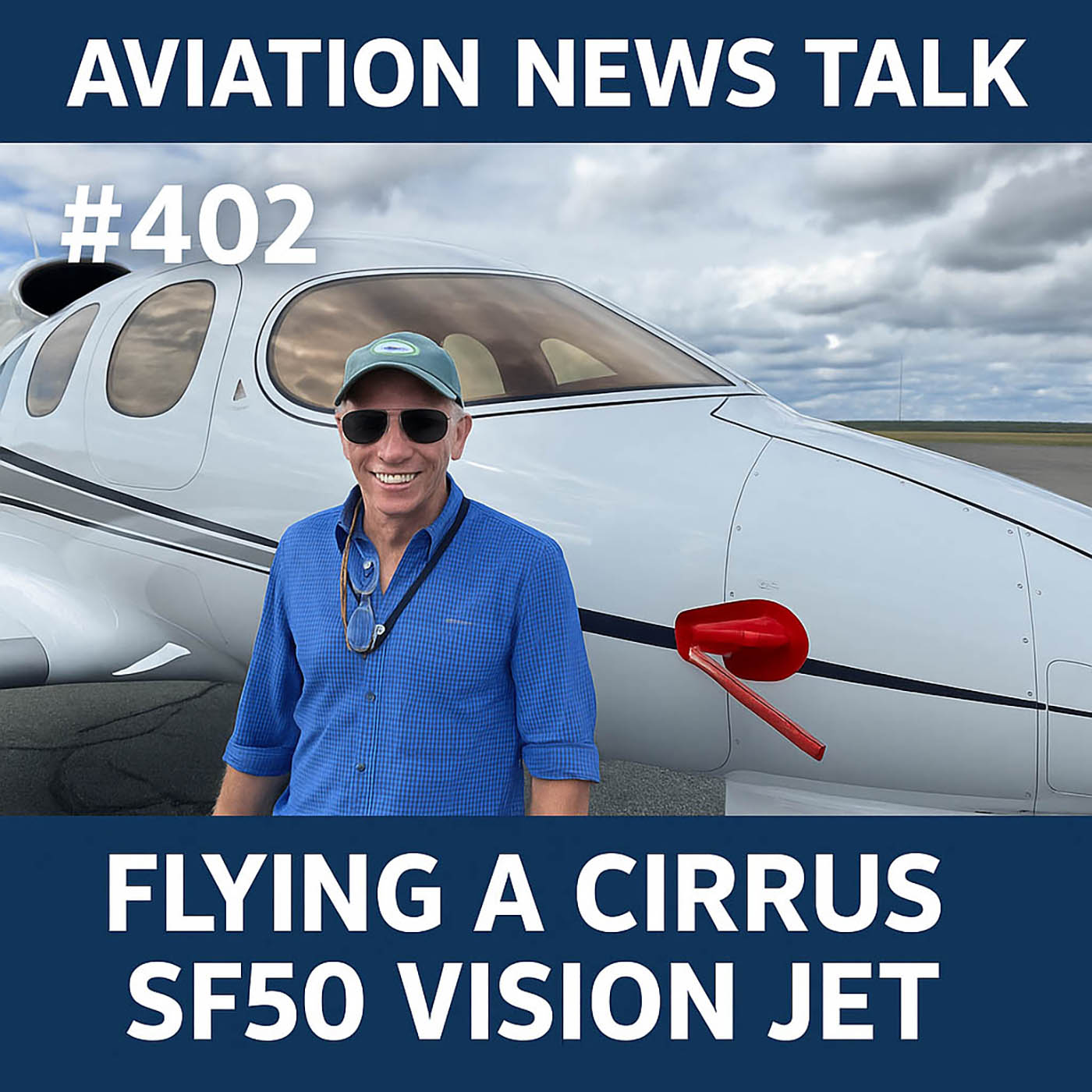 402 Flying the Cirrus SF50 Vision Jet Before the Type Rating: 5 Days with Ken Ansin | Vision Jet owner Ken joins Max Trescott to recount an unforgettable five-day training adventure that bridged the gap between piston flying and turbine jet proficiency. As a longtime Cirrus SR22 pilot from the Boston area, Ken had spent nearly a decade flying for both business and family trips, rarely exceeding 300 nautical miles from home. When he decided to upgrade to a 2019 G2 Vision Jet, he wanted more than a checkout—he wanted a head start on mastering the airplane before tackling the Cirrus type rating course in Knoxville. In this episode, Ken explains how his "pre-SOE" plan came together. After reaching out to Max, the two pilots scheduled nearly a week of flying to experience diverse weather, airports, and procedures. The goal: to learn the G3000 avionics, improve cockpit workflow, and build real-world familiarity before entering formal training. Their first day took them from Bedford, Massachusetts, to Burlington, Vermont, and then to Lancaster, Pennsylvania, where Max demonstrated how to safely cancel IFR and load a visual approach when haze and sun glare limited visibility. That night, while returning to Bedford, they learned the importance of aiming for runway aiming points—not the numbers—especially during night landings in jets. Day two brought a new challenge: deciding whether to fly west toward the Rockies or south toward better weather. A massive cold front made the decision easy, and the pair headed south instead. After a scenic leg along Long Island to Atlantic City, Ken received what Max called "the longest IFR clearance ever." Rather than manually entering the clearance into the G3000, Max showed how to import the flight plan directly from ForeFlight—a huge time-saver for managing long routes. That evening's destination was Greene County, Georgia (3J7), near Ken's in-laws' home at Lake Oconee. The stop held sentimental value: it was the same airport where Ken had first landed years earlier with his brand-new SR22. The next morning brought low fog and another teachable moment. When poor cell coverage prevented them from obtaining an IFR release, Max used the Vision Jet's SAT phone to call clearance delivery—a practical use for a feature many pilots overlook. Later that day, while practicing a VX climb—a maximum-performance takeoff used for steep departure gradients—Ken forgot to raise the landing gear, a common mistake during the high-workload maneuver. The oversight led to a discussion about better cues, timing, and division of tasks between pilots to avoid forgetting critical steps. They also discovered that one set of keys had been left in the cabin door—a harmless but memorable moment that required returning to the airport to retrieve them. From Georgia, they flew to Asheville, North Carolina, for real-world mountain experience, and then to John C. Tune Airport in Nashville. When ATC issued a last-minute vector, Max demonstrated how to safely "do nothing"—allowing the autopilot to intercept as planned instead of overcomplicating things. On day four, they returned to Boston. At night, controllers twice ignored their request for an ILS approach into Bedford, forcing a visual approach at higher altitude and steeper descent rates. Max explained why instrument approaches at night are always safer, and how overworked controllers sometimes inadvertently increase pilot workload. The final day offered a lighter tone: a short hop to Nantucket, one of Ken's favorite destinations. There, Max illustrated how adjusting throttle settings and altitude can drastically change fuel burn—saving nearly 18 gallons on a short leg by reducing power. Ken wrapped up by reflecting on what he gained from the experience: confidence, familiarity with the Vision Jet's systems, and a deeper appreciation for proactive learning. "I encourage other pilots to build their own syllabus," he said, "because flying with an instructor like Max before formal training was both incredibly valuable and a lot of fun." Whether you fly a Cirrus SR22 or aspire to own a Vision Jet, this episode is packed with insights about transition training, pre-type preparation, and real-world decision-making that can make any pilot safer and more capable. If you're getting value from this show, please support the show via PayPal, Venmo, Zelle or Patreon. Support the Show by buying a Lightspeed ANR Headsets Max has been using only Lightspeed headsets for nearly 25 years! I love their tradeup program that let's you trade in an older Lightspeed headset for a newer model. Start with one of the links below, and Lightspeed will pay a referral fee to support Aviation News Talk. Lightspeed Delta Zulu Headset $1299 NEW – Lightspeed Zulu 4 Headset $1099 Lightspeed Zulu 3 Headset $949Lightspeed Sierra Headset $749 My Review on the Lightspeed Delta Zulu Send us your feedback or comments via email If you have a question you'd like answered on the show, let listeners hear you ask the question, by recording your listener question using your phone. News Stories Hurricane Melissa relief by GA groups has begun Shutdown Driving Controllers Away From the Profession Garmin unveils two new pilot watches Pocket carbon monoxide detector for pilots introduced Missionary Pilot Kidnapped in Niger's Capital Fuel exhaustion leads to crash Dehavilland Beaver Crashes in Alaska after spotting Wolves After an emergency landing in Minnesota, plane seized by Indians Mentioned on the Show Buy Max Trescott's G3000 Book Call 800-247-6553 Lightspeed Delta Zulu Headset Giveaway NTSB News Talk Podcast UAV News Talk Podcast Rotary Wing Show Podcast Buy ForeFlight Sentry ADS-B Receiver Montana small aircraft crash rate among highest in the nation Free Index to the first 282 episodes of Aviation New Talk So You Want To Learn to Fly or Buy a Cirrus seminars Online Version of the Seminar Coming Soon – Register for Notification Check out our recommended ADS-B receivers, and order one for yourself. Yes, we'll make a couple of dollars if you do. Get the Free Aviation News Talk app for iOS or Android. Check out Max's Online Courses: G1000 VFR, G1000 IFR, and Flying WAAS & GPS Approaches. Find them all at: https://www.pilotlearning.com/ Social Media Like Aviation News Talk podcast on Facebook Follow Max on Instagram Follow Max on Twitter Listen to all Aviation News Talk podcasts on YouTube or YouTube Premium "Go Around" song used by permission of Ken Dravis; you can buy his music at kendravis.com If you purchase a product through a link on our site, we may receive compensation. | 1h 01m 23s | ||||||


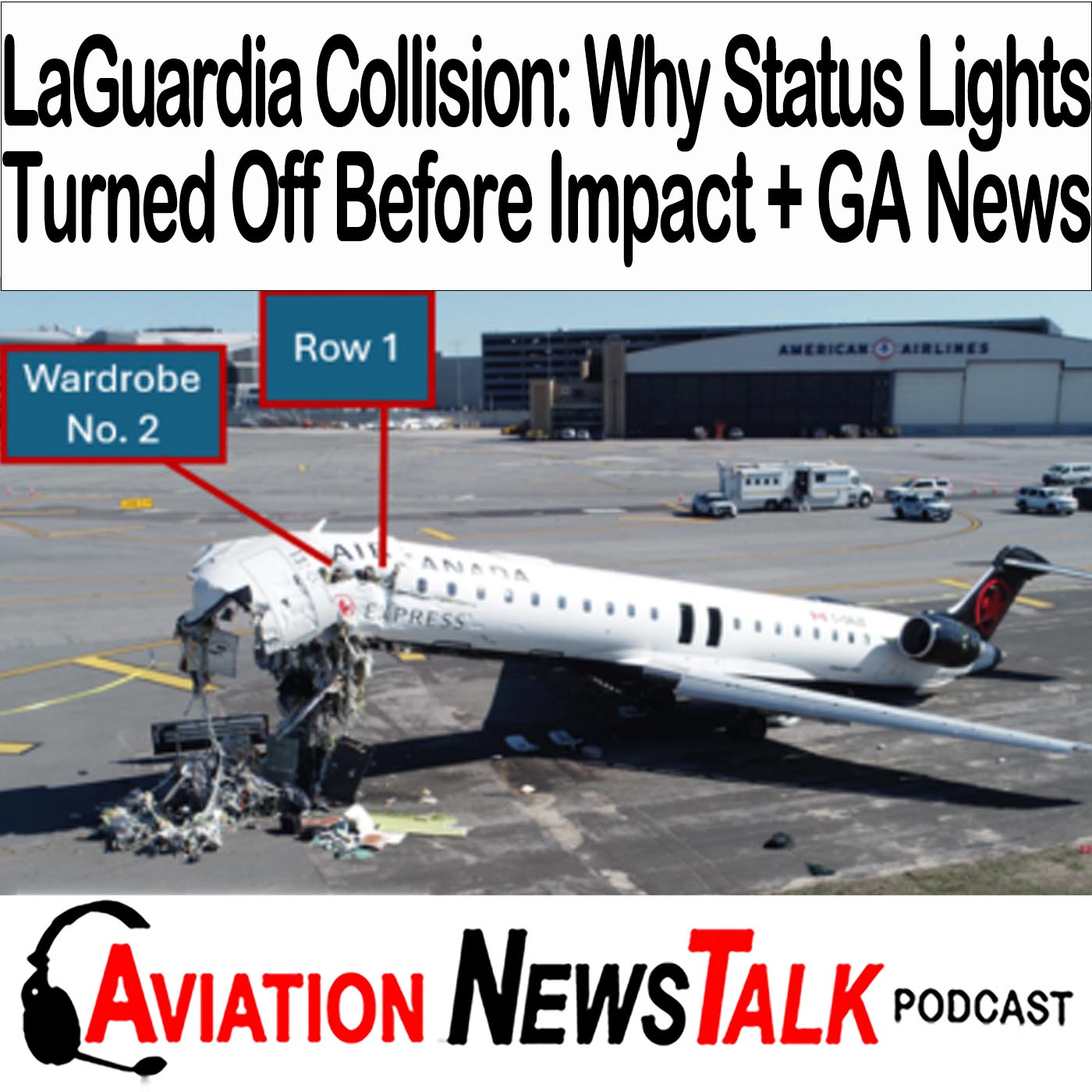


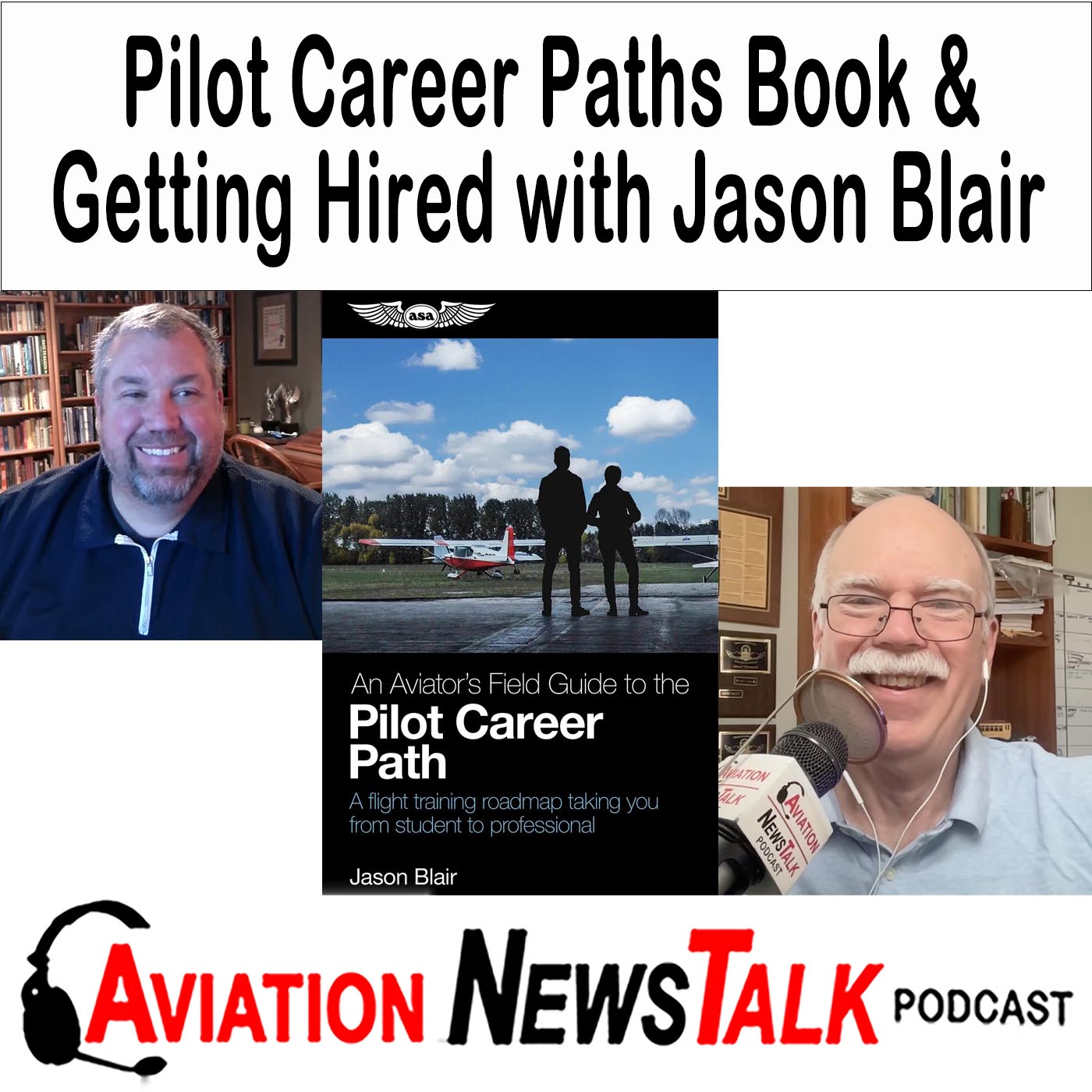


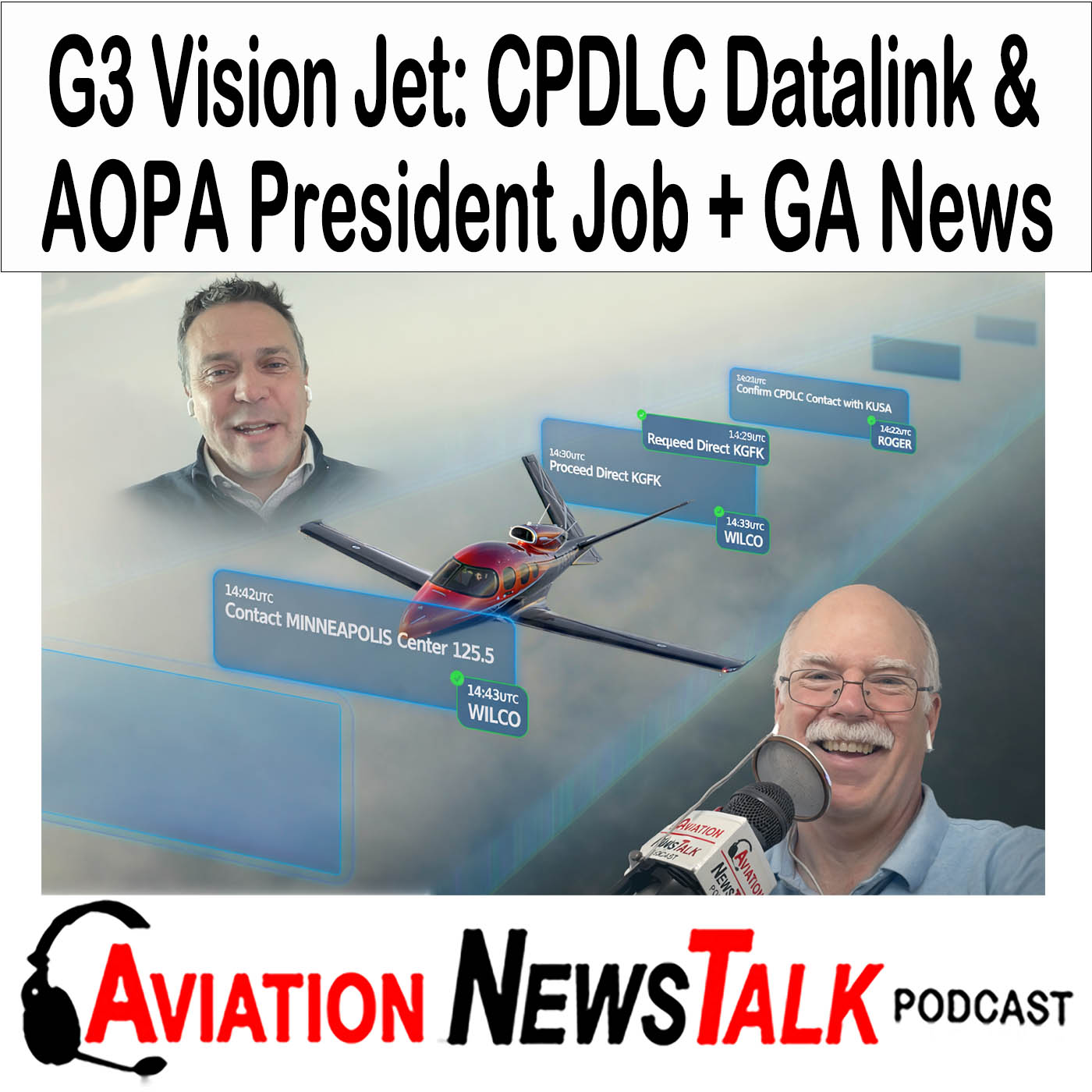
Showing 25 of 430
Pitch Fit is a Pro feature
See how bookable this show is for guests, which brands already advertise, the per-episode ad value, and the best-fit guest and sponsor profile. The numbers are blurred on the free plan.
How readily this show books outside guests like you.
How proven this show is for host-read sponsorships.
For Guests
ProFor Advertisers
ProUpgrade to Pro to unlock guest cadence, sponsor categories, fit scores, and per-episode ad value for this show.
Similar Audience Demographics
Podcasts that attract a similar listener profile

NTSB News Talk – Aviation Accidents, Safety Investigations & Pilot Lessons
Max Trescott | Aviation News Talk Network

Pilot's Discretion from Sporty's
Sporty's Pilot Shop

I Learned About Flying From That
Flying Magazine
"There I was..." An Aviation Podcast
AOPA Air Safety Institute

Opposing Bases: Air Traffic Talk
Air Traffic Talk

Hangar Talk - An Aviation News Podcast
AOPA

AOPA Never Again
AOPA
Chart history for Aviation News Talk – Pilot Stories, Safety Tips & General Aviation News
Peaked at #5 in AR, top 10 in 3 of 46 tracked markets, currently #5 in AR.
| Market | Genre | Peak | Current | Trend |
|---|---|---|---|---|
| AR | — | #5 | #5 | — |
| PH | — | #7 | #7 | — |
| Mexico | — | #8 | #8 | — |
| Canada | — | #11 | #11 | — |
| CO | — | #11 | #11 | — |
| South Korea | — | #12 | #12 | — |
| VN | — | #14 | #14 | — |
| HK | — | #15 | #15 | — |
| PE | — | #15 | #15 | — |
| CZ | — | #16 | #16 | — |
| United States | — | #19 | #19 | — |
| France | — | #19 | #19 | — |
| Denmark | — | #20 | #20 | — |
| NG | — | #21 | #21 | — |
| Norway | — | #22 | #22 | — |
| RO | — | #22 | #22 | — |
| AE | — | #22 | #22 | — |
| SA | — | #22 | #22 | — |
| Japan | — | #24 | #24 | — |
| TH | — | #25 | #25 | — |
Chart Positions
46 placements across 44 markets.
Chart Positions
46 placements across 44 markets.