
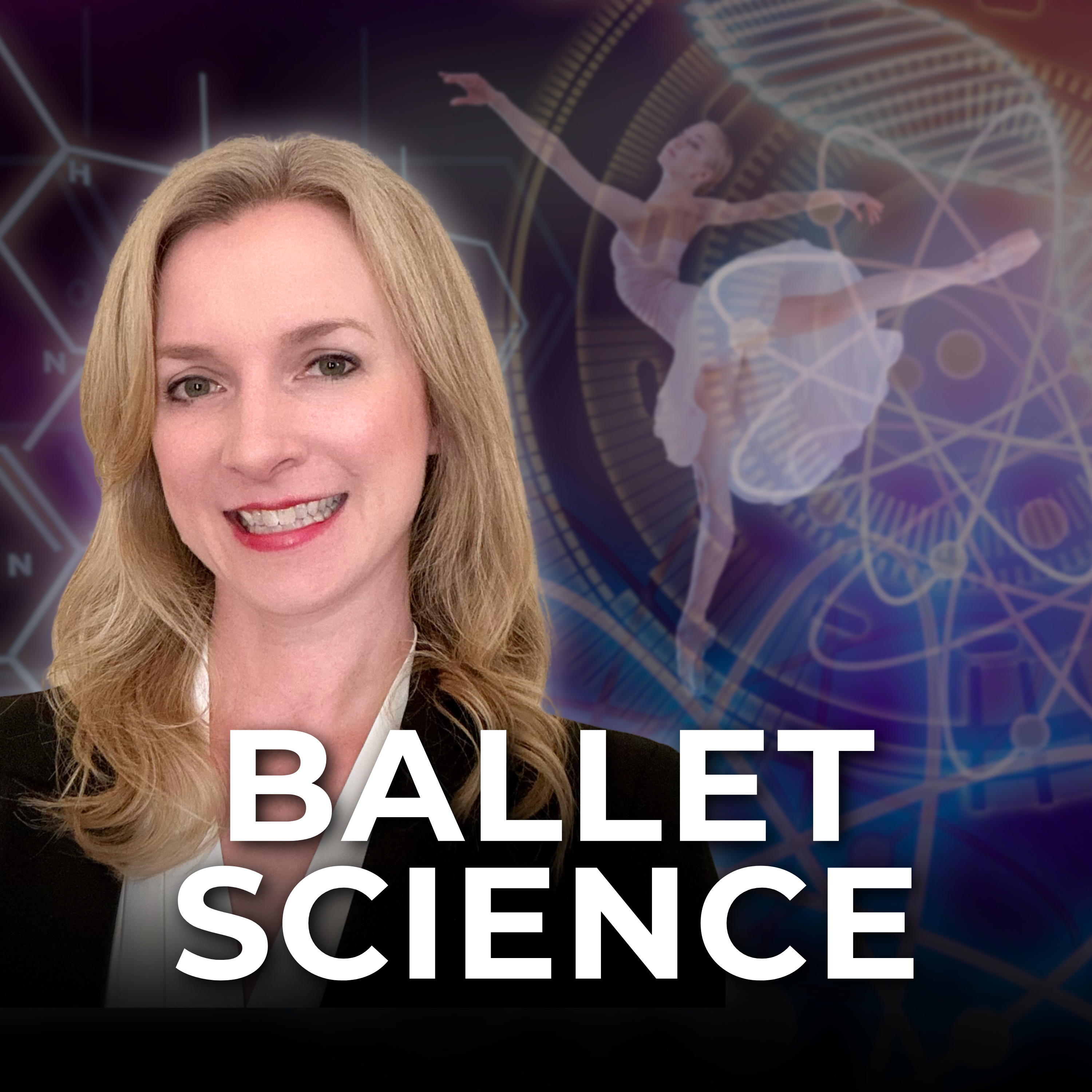
Insights from recent episode analysis
Audience Interest
Podcast Focus
Publishing Consistency
Platform Reach
Insights are generated by CastFox AI using publicly available data, episode content, and proprietary models.
Total monthly reach
Estimated from 1 chart position in 1 market.
By chart position
- 🇳🇿NZ · Health & Fitness#165500 to 3K
- Per-Episode Audience
Est. listeners per new episode within ~30 days
250 to 1.5K🎙 ~2x weekly·53 episodes·Last published yesterday - Monthly Reach
Unique listeners across all episodes (30 days)
500 to 3K🇳🇿100% - Active Followers
Loyal subscribers who consistently listen
200 to 1.2K
Market Insights
Platform Distribution
Reach across major podcast platforms, updated hourly
Total Followers
—
Total Plays
—
Total Reviews
—
* Data sourced directly from platform APIs and aggregated hourly across all major podcast directories.
On the show
Recent episodes
Joy Womack on Elite Ballet | Pressure, Performance, & Training
May 25, 2026
Unknown duration
How Ballet Dancers Pirouette | Science Says This
May 18, 2026
Unknown duration
How Ballet Dancers Get So Flexible | What Science Says
May 11, 2026
Unknown duration
Mental Fatigue In Ballet Dancers | Science Says This
May 5, 2026
Unknown duration
Why Ballet Is Harder Than It Looks | Science Says This
Apr 28, 2026
Unknown duration
Social Links & Contact
Official channels & resources
Official Website
Login
RSS Feed
Login
| Date | Episode | Description | Length | ||||||
|---|---|---|---|---|---|---|---|---|---|
| 5/25/26 | Joy Womack on Elite Ballet | Pressure, Performance, & Training | What is it really like to train at one of the most prestigious ballet schools in the world? In this video, I sit down with Joy Womack (the first American woman to graduate from the Bolshoi Ballet Academy) to discuss the realities of elite ballet training, injury, mental health, body image, performance pressure, and the physical demands of professional dance. Joy shares her incredible journey from early training in the United States to studying in Russia at just 15 years old, dancing professionally across multiple countries and ballet systems, and eventually building a freelance career and nonprofit organization in France.We also discuss:The differences between Russian, French, and American ballet trainingThe mental health challenges dancers face transitioning into company lifeStress fractures, overtraining, and recoveryStrength training and conditioning in balletBallet identity and life beyond the stageWhat today’s young dancers need mostWhether you are a dancer, teacher, parent, healthcare professional, or simply fascinated by human performance, this is an incredibly insightful and honest conversation about the realities of ballet at the highest level.Join the Ballet Science E-mail ListWatch This Video On YouTubeWant to go deeper into the science of ballet? Subscribe to Ballet Science Backstage for bonus Ballet Science content including exclusive episodes, early access, and more. Your support helps keep evidence-based dance education accessible for dancers, teachers, and movement lovers everywhere.Subscribe on SpotifyConnect With Ballet Science:WebsiteInstagramFacebook XAmazon StorefrontE-mail: caroline@ballet.scienceConnect with Joy Womack:WebsiteYouTubeInstagramHosted by Caroline Simpkins, Ph.D., the Ballet Science podcast brings science into the studio to help dancers of all ages and abilities give their best performances both onstage and off, and reveals how the science of ballet can benefit anyone who moves. Each week, we explore the intersection of science and ballet... from injury prevention and biomechanics to nutrition, mindset, and everything in between. If you enjoyed this episode, please hit the subscribe button, leave a review, and share it with your friends and dance community. You can also follow Ballet Science on social media and visit our website for additional information.Filming Equipment Affiliate Links:MicrophonePop FilterMic StandPrompterLarge Key LightSmall Key LightEve Flare LightLogo photo: Richard Calmes | — | ||||||
| 5/18/26 | How Ballet Dancers Pirouette | Science Says This | Have you ever watched a ballerina perform a flawless pirouette and wondered how it’s even possible? In this episode, we break down the fascinating physics behind ballet turns... from angular momentum and torque to spotting, balance, friction, and fouettés.You’ll learn how dancers use the same physical principles that govern figure skaters, tornadoes, and spinning planets to create speed, control, and stability during turns. From the initial push-off to the iconic passé position, every pirouette is a masterclass in biomechanics and physics.Topics Covered:Angular MomentumMoment of InertiaTorque & Push-Off MechanicsSpotting & BalanceFriction & FouettésWhy Dancers Pull Their Arms In During TurnsThe Biomechanics of PirouettesJoin the Ballet Science E-mail ListWatch This Video On YouTubeWant to go deeper into the science of ballet? Subscribe to Ballet Science Backstage for bonus Ballet Science content including exclusive episodes, early access, and more. Your support helps keep evidence-based dance education accessible for dancers, teachers, and movement lovers everywhere.Subscribe on SpotifyConnect With Ballet Science:WebsiteInstagramFacebook XAmazon StorefrontE-mail: caroline@ballet.scienceHosted by Caroline Simpkins, Ph.D., the Ballet Science podcast brings science into the studio to help dancers of all ages and abilities give their best performances both onstage and off, and reveals how the science of ballet can benefit anyone who moves. Each week, we explore the intersection of science and ballet... from injury prevention and biomechanics to nutrition, mindset, and everything in between. If you enjoyed this episode, please hit the subscribe button, leave a review, and share it with your friends and dance community. You can also follow Ballet Science on social media and visit our website for additional information.Filming Equipment Affiliate Links:MicrophonePop FilterMic StandPrompterLarge Key LightSmall Key LightEve Flare LightLogo photo: Richard Calmes | — | ||||||
| 5/11/26 | How Ballet Dancers Get So Flexible | What Science Says | Why are ballet dancers so flexible? Is it genetics… or training? In this video, we break down the real science behind flexibility. Learn how dancers develop incredible range of motion, why the nervous system plays such a major role in stretching, and how strength and flexibility work together in ballet training. This episode covers:The science of flexibilityStatic vs. dynamic flexibilityWhy dancers need strength for flexibilityHow the nervous system controls stretchingWhy warming up matters before stretchingHow long stretches should actually be heldWhy oversplits are NOT the goalSafe flexibility training for adults and beginnersWhether you’re a ballet dancer, adult beginner, teacher, athlete, or simply curious about how the body works, this episode explains flexibility in a way that is practical, evidence-based, and accessible.Join the Ballet Science E-mail ListWatch This Video On YouTubeWant to go deeper into the science of ballet? Subscribe to Ballet Science Backstage for bonus Ballet Science content including exclusive episodes, early access, and more. Your support helps keep evidence-based dance education accessible for dancers, teachers, and movement lovers everywhere.Subscribe on SpotifyConnect With Ballet Science:WebsiteInstagramFacebook XAmazon StorefrontE-mail: caroline@ballet.scienceHosted by Caroline Simpkins, Ph.D., the Ballet Science podcast brings science into the studio to help dancers of all ages and abilities give their best performances both onstage and off, and reveals how the science of ballet can benefit anyone who moves. Each week, we explore the intersection of science and ballet... from injury prevention and biomechanics to nutrition, mindset, and everything in between. If you enjoyed this episode, please hit the subscribe button, leave a review, and share it with your friends and dance community. You can also follow Ballet Science on social media and visit our website for additional information.Filming Equipment Affiliate Links:MicrophonePop FilterMic StandPrompterLarge Key LightSmall Key LightEve Flare Light | — | ||||||
| 5/5/26 | Mental Fatigue In Ballet Dancers | Science Says This | What if one of the biggest predictors of injury in ballet isn’t weak ankles or poor technique... but your brain?In this episode, we dive into the science of mental fatigue in ballet dancers and how it impacts performance, learning, and injury risk. Based on recent research on professional ballet dancers, this episode explores how cognitive overload, choreography demands, and sustained focus contribute to fatigue, and why that may lead to injuries like sprained ankles.Key topics covered:What mental fatigue actually is (and why it’s not just “being tired”)Why ballet is as cognitively demanding as it is physicalThe link between mental fatigue and injury riskHow dancers experience mental fatigue in rehearsal and performancePractical strategies dancers use to manage fatigueWhy this research matters for dancers, teachers, and training environmentsThis episode is especially important for anyone interested in dance science, injury prevention, and performance optimization.Research publication:Wirdnam, M., Ferrar, K., Mayes, S., MacMahon, C., Cook, J., & Rio, E. (2024). “A sprained ankle is the biggest sign of mental fatigue”: A qualitative study of the perceptions and experiences of mental fatigue in professional ballet. Physical therapy in sport, 65, 154-161. Join the Ballet Science E-mail ListWatch This Video On YouTubeWant to go deeper into the science of ballet? Subscribe to Ballet Science Backstage for bonus Ballet Science content including exclusive episodes, early access, and more. Your support helps keep evidence-based dance education accessible for dancers, teachers, and movement lovers everywhere.Subscribe on SpotifyConnect With Ballet Science:WebsiteInstagramFacebook XAmazon StorefrontE-mail: caroline@ballet.scienceHosted by Caroline Simpkins, Ph.D., the Ballet Science podcast brings science into the studio to help dancers of all ages and abilities give their best performances both onstage and off, and reveals how the science of ballet can benefit anyone who moves. Each week, we explore the intersection of science and ballet... from injury prevention and biomechanics to nutrition, mindset, and everything in between. If you enjoyed this episode, please hit the subscribe button, leave a review, and share it with your friends and dance community. You can also follow Ballet Science on social media and visit our website for additional information.Filming Equipment Affiliate Links:MicrophonePop FilterMic StandPrompterLarge Key LightSmall Key LightEve Flare Light | — | ||||||
| 4/28/26 | Why Ballet Is Harder Than It Looks | Science Says This | Ballet looks effortless... but if you’ve ever tried it, you know that’s far from the truth. So why is ballet so hard… and why is it harder than it looks? In this video, we break down the science behind ballet technique, including biomechanics, balance, motor control, and strength. From controlling your center of mass to managing a high cognitive load, ballet challenges both your body and your brain in ways most people don’t realize.You’ll learn:Why ballet is designed to look easy (even when it’s not)The biomechanics of balance and dynamic stabilityWhy your brain feels overwhelmed in ballet classHow turnout challenges your natural alignmentWhy ballet requires strength in the hardest positionsThe real difference between beginner and professional dancersJoin the Ballet Science E-mail ListWatch This Video On YouTubeConnect With Ballet Science:WebsiteInstagramFacebook XAmazon StorefrontE-mail: caroline@ballet.scienceHosted by Caroline Simpkins, Ph.D., the Ballet Science podcast brings science into the studio to help dancers of all ages and abilities give their best performances both onstage and off, and reveals how the science of ballet can benefit anyone who moves. Each week, we explore the intersection of science and ballet... from injury prevention and biomechanics to nutrition, mindset, and everything in between. If you enjoyed this episode, please hit the subscribe button, leave a review, and share it with your friends and dance community. You can also follow Ballet Science on social media and visit our website for additional information.Filming Equipment Affiliate Links:MicrophonePop FilterMic StandPrompterLarge Key LightSmall Key LightEve Flare Light | — | ||||||
| 4/21/26 | How Ballet Dancers Stand On Their Toes | Physics Explained | How do ballet dancers balance on their toes in pointe shoes? Learn the science and anatomy of pointe work, including ballet biomechanics, pointe shoe mechanics, and how dancers safely balance their center of mass on their toes in ballet technique.If you’ve ever tried standing on your toes, you know it feels impossible. But the truth is, it’s not just strong feet or natural talent... it’s physics, biomechanics, and years of neuromuscular training that allow ballerinas to control extreme forces on such a small surface area.In this episode, we break down:Why pointe work creates extremely high pressureHow alignment reduces injury riskWhat pointe shoes actually do (and don’t do)The full-body muscle coordination required for balanceWhy pointe training takes years... not monthsJoin the Ballet Science E-mail ListWatch This Video On YouTubeConnect With Ballet Science:WebsiteInstagramFacebook XAmazon StorefrontE-mail: caroline@ballet.scienceHosted by Caroline Simpkins, Ph.D., the Ballet Science podcast brings science into the studio to help dancers of all ages and abilities give their best performances both onstage and off, and reveals how the science of ballet can benefit anyone who moves. Each week, we explore the intersection of science and ballet... from injury prevention and biomechanics to nutrition, mindset, and everything in between. If you enjoyed this episode, please hit the subscribe button, leave a review, and share it with your friends and dance community. You can also follow Ballet Science on social media and visit our website for additional information.Filming Equipment Affiliate Links:MicrophonePop FilterMic StandPrompterLarge Key LightSmall Key LightEve Flare Light | — | ||||||
| 4/14/26 | Does Dance Help Autism? Here's What Studies Show | What if dance could do more than build technique… what if it could change how we connect with others? In this video, we break down scientific research examining how dance impacts individuals with autism spectrum disorder (ASD). We explore:👉 Whether dance improves overall ASD symptoms👉 The powerful effects on social interaction and communication👉 Why empathy did not significantly change👉 The neuroscience behind movement, connection, and learning👉 What this means for dancers, teachers, clinicians, and familiesResearch Publication:Chen, T., Wen, R., Liu, H., Zhong, X., & Jiang, C. (2022). Dance intervention for negative symptoms in individuals with autism spectrum disorder: A systematic review and meta-analysis. Complementary therapies in clinical practice, 47, 101565. Join the Ballet Science E-mail ListWatch This Video On YouTubeConnect With Ballet Science:WebsiteInstagramFacebook XAmazon StorefrontE-mail: caroline@ballet.scienceHosted by Caroline Simpkins, Ph.D., the Ballet Science podcast brings science into the studio to help dancers of all ages and abilities give their best performances both onstage and off, and reveals how the science of ballet can benefit anyone who moves. Each week, we explore the intersection of science and ballet... from injury prevention and biomechanics to nutrition, mindset, and everything in between. If you enjoyed this episode, please hit the subscribe button, leave a review, and share it with your friends and dance community. You can also follow Ballet Science on social media and visit our website for additional information.Filming Equipment Affiliate Links:MicrophonePop FilterMic StandPrompterLarge Key LightSmall Key LightEve Flare Light | — | ||||||
| 4/7/26 | Can Dance Reduce Falls in Parkinson’s? (My Research Explained) | What if dance could actually help people with Parkinson’s disease improve their balance... and potentially reduce their risk of falling?In this episode, I break down one of my own research studies: a systematic review and meta-analysis of 14 randomized controlled trials (612 participants) examining how dance impacts balance in Parkinson’s disease... and the results might surprise you.We’ll cover:Whether dance actually improves balanceWhat an effect size means (in simple terms)Whether certain dance styles work better than othersWhy duration matters more than styleThe science behind why dance works (neurology + biomechanics)What this means for real-world fall risk and independenceThis isn’t just theory... this is high-level clinical evidence translated into real, practical insights. If you're a dancer, teacher, clinician, or just curious about how movement impacts the body and brain, this episode is for you.Publication Discussed:Simpkins, C., & Yang, F. (2023). Do dance style and intervention duration matter in improving balance among people with Parkinson’s disease? A systematic review with meta-analysis. Parkinsonism & related disorders, 106, 105231. Join the Ballet Science E-mail ListWatch This Video On YouTubeConnect With Ballet Science:WebsiteInstagramFacebook XAmazon StorefrontE-mail: caroline@ballet.scienceHosted by Caroline Simpkins, Ph.D., the Ballet Science podcast brings science into the studio to help dancers of all ages and abilities give their best performances both onstage and off, and reveals how the science of ballet can benefit anyone who moves. Each week, we explore the intersection of science and ballet... from injury prevention and biomechanics to nutrition, mindset, and everything in between. If you enjoyed this episode, please hit the subscribe button, leave a review, and share it with your friends and dance community. You can also follow Ballet Science on social media and visit our website for additional information.Filming Equipment Affiliate Links:MicrophonePop FilterMic StandPrompterLarge Key LightSmall Key LightEve Flare Light | — | ||||||
| 3/31/26 | Can Dance Slow Brain Aging? Here's What Research Found | What if dance could actually change your brain? Not just how you feel... but how your brain functions over time. In this video we break down a systematic review and meta-analysis (one of the highest levels of scientific evidence) to answer a powerful question: Can dance improve cognitive function and help protect against decline as we age?We’ll cover:What the research says about memory, attention, and executive functionWhy dance may stimulate neuroplasticityWhether dance is actually better than other forms of exerciseWhat this means for dancers, adults, and aging populationsThis isn’t just “exercise is good for you.” This is measurable, clinical data on how movement impacts the brain.Publication Discussed:Hewston P, Kennedy CC, Borhan S, Merom D, Santaguida P, Ioannidis G, Marr S, Santesso N, Thabane L, Bray S, Papaioannou A. Effects of dance on cognitive function in older adults: a systematic review and meta-analysis. Age Ageing. 2021 Jun 28;50(4):1084-1092. doi: 10.1093/ageing/afaa270. PMID: 33338209. Join the Ballet Science E-mail ListWatch This Video On YouTubeConnect With Ballet Science:WebsiteInstagramFacebook XAmazon StorefrontE-mail: caroline@ballet.scienceHosted by Caroline Simpkins, Ph.D., the Ballet Science podcast brings science into the studio to help dancers of all ages and abilities give their best performances both onstage and off, and reveals how the science of ballet can benefit anyone who moves. Each week, we explore the intersection of science and ballet... from injury prevention and biomechanics to nutrition, mindset, and everything in between. If you enjoyed this episode, please hit the subscribe button, leave a review, and share it with your friends and dance community. You can also follow Ballet Science on social media and visit our website for additional information.Filming Equipment Affiliate Links:MicrophonePop FilterMic StandPrompterLarge Key LightSmall Key LightEve Flare Light | — | ||||||
| 3/24/26 | What Happens to Your Feet After Ballet… and How to Fix It | Ance Recovery Sneakers | What actually happens to your feet after a long day of ballet… and can recovery shoes really help? I sit down with Kunal Moudgil, co-founder of Ance Recovery Sneakers, to break down the science behind recovery footwear, and what it means for dancers.We talk about:What “recovery” actually means for the bodyWhy your feet feel so sore after class or rehearsalThe role of compression, acupressure, and alignmentWide toe boxes, plantar fasciitis, and foot healthWhether recovery shoes are backed by science (yet 👀)The future of footwear for dancers and athletesIf you’ve ever come home from ballet with aching feet… or wondered how to support your body for longevity, this video is for you!Join the Ballet Science E-mail ListWatch This Video On YouTubeConnect With Ballet Science:WebsiteInstagramFacebook XAmazon StorefrontE-mail: caroline@ballet.scienceConnect with Ance: WebsiteInstagramWant to try Ance recovery sneakers?Use this code for a special discount: ballet.science15Hosted by Caroline Simpkins, Ph.D., the Ballet Science podcast brings science into the studio to help dancers of all ages and abilities give their best performances both onstage and off, and reveals how the science of ballet can benefit anyone who moves. Each week, we explore the intersection of science and ballet... from injury prevention and biomechanics to nutrition, mindset, and everything in between. If you enjoyed this episode, please hit the subscribe button, leave a review, and share it with your friends and dance community. You can also follow Ballet Science on social media and visit our website for additional information.Filming Equipment Affiliate Links:MicrophonePop FilterMic StandPrompterLarge Key LightSmall Key LightEve Flare Light | — | ||||||
Want analysis for the episodes below?Free for Pro Submit a request, we'll have your selected episodes analyzed within an hour. Free, at no cost to you, for Pro users. | |||||||||
| 3/17/26 | Why People Should Care About Ballet | Recently, a comment circulated online from actor Timothée Chalamet claiming that “no one cares about ballet.”Whether the remark was serious or joking, it sparked a lot of conversation in the dance world. Instead of debating the comment itself, this video asks a deeper question: Why should people care about ballet?When you look at ballet through the lenses of art, science, culture, and human movement, it becomes clear that ballet is much more than a niche performance genre. Ballet sits at a fascinating intersection of storytelling, music, athleticism, neuroscience, and human expression.In this episode of the Ballet Science Podcast, we explore why ballet matters not just to dancers... but to society as a whole.Topics include:Ballet as a universal storytelling languageThe power of live performance and orchestral musicBallet as elite human athletic performanceWhat biomechanics and neuroscience reveal about danceHow ballet training influences balance, coordination, and motor controlWhy supporting the arts matters for culture and societyBallet has endured for centuries because it connects art, movement, music, and emotion in a uniquely human way. And when societies support the arts... whether it's dance, film, theater, or music... they invest in creativity, imagination, and shared cultural experiences.Join the Ballet Science E-mail ListWatch This Video On YouTubeConnect With Ballet Science:WebsiteInstagramFacebook XAmazon StorefrontE-mail: caroline@ballet.scienceHosted by Caroline Simpkins, Ph.D., the Ballet Science podcast brings science into the studio to help dancers of all ages and abilities give their best performances both onstage and off, and reveals how the science of ballet can benefit anyone who moves. Each week, we explore the intersection of science and ballet... from injury prevention and biomechanics to nutrition, mindset, and everything in between. If you enjoyed this episode, please hit the subscribe button, leave a review, and share it with your friends and dance community. You can also follow Ballet Science on social media and visit our website for additional information.Filming Equipment Affiliate Links:MicrophonePop FilterMic StandPrompterLarge Key LightSmall Key LightEve Flare Light | — | ||||||
| 3/10/26 | Why Your Brain Loves Ballet | The Neuroscience Of Dance | Have you ever left ballet class feeling mentally exhausted... even if it wasn’t the most physically intense class? That’s not random!In this episode, we discuss the neuroscience behind ballet training and why your brain thrives on it.We explore:How the motor cortex initiates every movementThe cerebellum’s role in balance and precisionHow the basal ganglia automate choreographyNeuroplasticity and motor learning in actionWhy ballet is high-level cognitive multitaskingThe connection between dance, executive function, and healthy agingBallet isn’t just muscle training. It’s neural pathway training.From coordination and rhythm to memory and spatial awareness, ballet challenges multiple brain systems simultaneously, which is exactly why it can feel so mentally demanding.And across the lifespan? That complexity matters!Join the Ballet Science E-mail ListWatch This Video On YouTubeConnect With Ballet Science:WebsiteInstagramFacebook XAmazon StorefrontE-mail: caroline@ballet.scienceHosted by Caroline Simpkins, Ph.D., the Ballet Science podcast brings science into the studio to help dancers of all ages and abilities give their best performances both onstage and off, and reveals how the science of ballet can benefit anyone who moves. Each week, we explore the intersection of science and ballet... from injury prevention and biomechanics to nutrition, mindset, and everything in between. If you enjoyed this episode, please hit the subscribe button, leave a review, and share it with your friends and dance community. You can also follow Ballet Science on social media and visit our website for additional information.Filming Equipment Affiliate Links:MicrophonePop FilterMic StandPrompterLarge Key LightSmall Key LightEve Flare Light | — | ||||||
| 3/3/26 | Why Your Heart Loves Ballet | The Cardiovascular Science | What if ballet class is training more than your turnout?In this episode, Dr. Caroline Simpkins (former professional ballerina and PhD in biomechanics) breaks down the cardiovascular physiology of ballet.We explore:What happens to your heart during barre, center, adagio, and allegroWhy ballet counts as intermittent cardiovascular trainingHow stroke volume and cardiac output adapt over timeWhy even slow combinations increase heart demandThe connection between ballet, fall prevention, and healthy agingHow breath, posture, and emotion influence your cardiovascular systemBallet isn’t just aesthetic training. It challenges the musculoskeletal, neuromuscular, and cardiovascular systems simultaneously. Whether you're 16 or 60, your heart is adapting every time you step into class.Join the Ballet Science E-mail ListWatch This Video On YouTubeConnect With Ballet Science:WebsiteInstagramFacebook XAmazon StorefrontE-mail: caroline@ballet.scienceHosted by Caroline Simpkins, Ph.D., the Ballet Science podcast brings science into the studio to help dancers of all ages and abilities give their best performances both onstage and off, and reveals how the science of ballet can benefit anyone who moves. Each week, we explore the intersection of science and ballet... from injury prevention and biomechanics to nutrition, mindset, and everything in between. If you enjoyed this episode, please hit the subscribe button, leave a review, and share it with your friends and dance community. You can also follow Ballet Science on social media and visit our website for additional information.Filming Equipment Affiliate Links:MicrophonePop FilterMic StandPrompterLarge Key LightSmall Key LightEve Flare Light | — | ||||||
| 2/24/26 | Airline Pilot Learns Ballet as an Adult | Christopher Marici | A commercial airline pilot… and an adult ballet student!In today’s episode, I’m joined by Captain Christopher Marici to talk about his life in aviation, how he discovered adult ballet, and why he believes ballet is one of the most powerful long-term investments you can make for your body and brain.We discuss:What a pilot’s day-to-day is really likeThe mental load of the jobWhat it’s like to be a true beginner as an adultWhy adult ballet can be a “reset” after high-stress workIf you enjoyed this episode, please like, subscribe, and share with an adult dancer (or someone who’s been thinking about trying ballet)!Join the Ballet Science E-mail ListWatch This Video On YouTubeConnect With Ballet Science:WebsiteInstagramFacebook XAmazon StorefrontE-mail: caroline@ballet.scienceConnect with Christopher Marici:InstagramHosted by Caroline Simpkins, Ph.D., the Ballet Science podcast brings science into the studio to help dancers of all ages and abilities give their best performances both onstage and off, and reveals how the science of ballet can benefit anyone who moves. Each week, we explore the intersection of science and ballet... from injury prevention and biomechanics to nutrition, mindset, and everything in between. If you enjoyed this episode, please hit the subscribe button, leave a review, and share it with your friends and dance community. You can also follow Ballet Science on social media and visit our website for additional information.Filming Equipment Affiliate Links:MicrophonePop FilterMic StandPrompterLarge Key LightSmall Key LightEve Flare Light | — | ||||||
| 2/17/26 | How Ballet Changes the Way You Walk | New Biomechanics Research | What if the way you walk down the street could reveal whether you trained in ballet?In this episode, I break down my published research from the journal Gait & Posture, examining how ballet training influences walking biomechanics across the lifespan.Read the full publication here:https://doi.org/10.1016/j.gaitpost.2026.110097We compared:Young professional ballet dancersOlder recreational ballet dancersYoung non-dancersOlder non-dancersUsing 3D motion capture and force plates, we analyzed: Walking speedStep length & cadenceStep widthGround reaction forcesPropulsive powerDynamic gait stabilitySo what does that mean for aging, fall risk, and long-term mobility?As a former professional ballerina and PhD in biomechanics, my goal is to bridge the gap between art and science, showing how ballet training influences movement far beyond the studio.Join the Ballet Science E-mail ListWatch This Video On YouTubeConnect With Ballet Science:WebsiteInstagramFacebook XAmazon StorefrontE-mail: caroline@ballet.scienceHosted by Caroline Simpkins, Ph.D., the Ballet Science podcast brings science into the studio to help dancers of all ages and abilities give their best performances both onstage and off, and reveals how the science of ballet can benefit anyone who moves. Each week, we explore the intersection of science and ballet... from injury prevention and biomechanics to nutrition, mindset, and everything in between. If you enjoyed this episode, please hit the subscribe button, leave a review, and share it with your friends and dance community. You can also follow Ballet Science on social media and visit our website for additional information.Filming Equipment Affiliate Links:MicrophonePop FilterMic StandPrompterLarge Key LightSmall Key LightEve Flare Light | — | ||||||
| 2/10/26 | Reinventing Ballet Slippers | Seth & Sarah Orza | What makes Orza ballet shoes different from a traditional ballet slipper?In this episode of the Ballet Science Podcast, I’m joined by Seth and Sarah Orza (Pacific Northwest Ballet, New York City Ballet, School of American Ballet). After suffering an injury while dancing with New York City Ballet (NYCB), Seth Orza began adding padding to his ballet shoes to stay onstage. Noticing many dancers doing the same, he asked a simple question: Why hasn’t the ballet slipper evolved?That question led to the creation of ORZA Pro, a ballet shoe designed with integrated shock absorption and support, built to meet the demands of today’s dancers. What started as a personal solution is now helping dancers move more comfortably from class to rehearsal to performance.We discuss:How the Orza brand was born from real injury + performance needsHow their shoe integrates shock-absorbing tech without changing the ballet aestheticWhat testing they’ve done so far (including biomechanics + survey data)Why ballet footwear has stayed so traditional for so longShop Orza: Use code BALLETSCIENCE10 at checkout for 10% off your order!Connect with Orza:InstagramJoin the Ballet Science E-mail ListWatch This Video On YouTubeConnect With Ballet Science:WebsiteInstagramFacebook XAmazon StorefrontE-mail: caroline@ballet.scienceHosted by Caroline Simpkins, Ph.D., the Ballet Science podcast brings science into the studio to help dancers of all ages and abilities give their best performances both onstage and off, and reveals how the science of ballet can benefit anyone who moves. Each week, we explore the intersection of science and ballet... from injury prevention and biomechanics to nutrition, mindset, and everything in between. If you enjoyed this episode, please hit the subscribe button, leave a review, and share it with your friends and dance community. You can also follow Ballet Science on social media and visit our website for additional information.Filming Equipment Affiliate Links:MicrophonePop FilterMic StandPrompterLarge Key LightSmall Key LightEve Flare Light | — | ||||||
| 2/3/26 | Pilates For Ballet Dancers | Kerry Shea, School of American Ballet | Pilates is everywhere in the dance world… but what actually makes it so effective for ballet dancers?In this episode, I’m joined by Kerry Shea, Pilates instructor at the School of American Ballet (NYC), to break down how Pilates supports alignment, core control, coordination, injury prevention, and performance... from young pre-professionals to seasoned pros.We cover:What is Pilates?What “the core” means for dancersWhy Pilates is especially helpful for hypermobilityHow SAB integrates Pilates into a holistic health + wellness modelCommon dancer patterns Pilates helps fixWhy “just doing more ballet” can reinforce dysfunctional patternsHow to start Pilates safely + what certifications to look for in an instructor🎧 Subscribe to the Ballet Science Podcast (YouTube, Apple, Spotify) for weekly episodes on biomechanics, injury prevention, adult ballet, anatomy, mindset, and the science behind dance.💬 Have more questions about Pilates? Leave them in the comments!Affiliate Links:Magic CircleJoin the Ballet Science E-mail ListWatch This Video On YouTubeConnect With Ballet Science:WebsiteInstagramFacebook XAmazon StorefrontE-mail: caroline@ballet.scienceHosted by Caroline Simpkins, Ph.D., the Ballet Science podcast brings science into the studio to help dancers of all ages and abilities give their best performances both onstage and off, and reveals how the science of ballet can benefit anyone who moves. Each week, we explore the intersection of science and ballet... from injury prevention and biomechanics to nutrition, mindset, and everything in between. If you enjoyed this episode, please hit the subscribe button, leave a review, and share it with your friends and dance community. You can also follow Ballet Science on social media and visit our website for additional information.Filming Equipment Affiliate Links:MicrophonePop FilterMic StandPrompterLarge Key LightSmall Key LightEve Flare LightLogo Photo: Richard Calmes | — | ||||||
| 1/27/26 | Bunions in Ballet Dancers | Causes & How To Manage Them | If you are a dancer, chances are you’ve been told you have a bunion, you’re going to get a bunion, or you’ve spent way too much time staring at your big toe, wondering if that bump is “normal.”In this episode of the Ballet Science Podcast, we take a biomechanics-based look at bunions in ballet dancers.You will learn:What is a bunion?Why are bunions so common in ballet dancers?The difference between having a bunion and having bunion painHow ballet shoe and pointe shoe fit influences symptomsWhat dancers can realistically do to manage bunions and reduce irritationWe also talk about turnout mechanics, loading through the big toe, toe spacers, and why no single product or exercise can “fix” a bunion... but many strategies can help dancers stay comfortable and dancing longer.🎧 Subscribe to the Ballet Science Podcast (YouTube, Apple, Spotify) for weekly episodes on biomechanics, injury prevention, adult ballet, anatomy, mindset, and the science behind dance.💬 Have more questions about bunions? Leave them in the comments... your questions may shape future episodes.Toe Spacer Affiliate Links:https://amzn.to/49CHt73https://amzn.to/4qDqHe3https://amzn.to/3YZ7AyTJoin the Ballet Science E-mail ListWatch This Video On YouTubeConnect With Ballet Science:WebsiteInstagramFacebook XAmazon StorefrontE-mail: caroline@ballet.scienceHosted by Caroline Simpkins, Ph.D., the Ballet Science podcast brings science into the studio to help dancers of all ages and abilities give their best performances both onstage and off, and reveals how the science of ballet can benefit anyone who moves. Each week, we explore the intersection of science and ballet... from injury prevention and biomechanics to nutrition, mindset, and everything in between. If you enjoyed this episode, please hit the subscribe button, leave a review, and share it with your friends and dance community. You can also follow Ballet Science on social media and visit our website for additional information.Filming Equipment Affiliate Links:MicrophonePop FilterMic StandPrompterLarge Key LightSmall Key LightEve Flare LightLogo Photo: Richard Calmes | — | ||||||
| 1/20/26 | Starting Ballet As An Adult | Beginner Tips Backed by Science | Have you ever thought, “I’ve always wanted to try ballet, but I’m too old” ... or “I didn’t start as a kid, so what’s the point now?” This episode is for you.In this Ballet Science Podcast episode, former professional ballerina and biomechanics PhD Caroline Simpkins breaks down how to start ballet as an adult from a science-based, body-respectful perspective.We cover:📌 Why ballet is absolutely accessible for adults📌 The neurological, balance, and strength benefits of ballet📌 How ballet supports health across the lifespan📌 How to choose the right adult beginner ballet class📌 What to wear (and what you don’t need)📌 What to expect in your very first ballet class📌 Why ballet is for all bodies (including men)📌 How often should adult beginners take classWhether you’re starting ballet for the very first time, returning after childhood training, or just ballet-curious, this episode will help you approach ballet in a way that supports your body instead of fighting it.🎧 Subscribe to the Ballet Science Podcast for weekly episodes on biomechanics, injury prevention, adult ballet, anatomy, mindset, and the science behind dance.💬 Have questions about adult ballet? Leave them in the comments... your questions may shape future episodes.Thinking of starting ballet as an adult, but too nervous or intimidated? Check out my NEW online course:Adult Ballet FundamentalsAffiliate Links:🩰 Adult Ballet Clothing IdeasWatch This Video On YouTubeConnect With Ballet Science:WebsiteInstagramFacebook XAmazon StorefrontE-mail: caroline@ballet.scienceHosted by Caroline Simpkins, Ph.D., the Ballet Science podcast brings science into the studio to help dancers of all ages and abilities give their best performances both onstage and off, and reveals how the science of ballet can benefit anyone who moves. Each week, we will explore the intersection of science and ballet... from injury prevention and biomechanics to nutrition, mindset, and everything in between. If you enjoyed this episode, please hit the subscribe button, leave a review, and share it with your friends and dance community. You can also follow Ballet Science on social media and visit our website for additional information.Filming Equipment Affiliate Links:MicrophonePop FilterMic StandPrompterLarge Key LightSmall Key LightEve Flare LightLogo Photo: Richard Calmes | — | ||||||
| 1/13/26 | Blisters in Ballet | Why They Happen & How to Prevent Them | Blisters are often treated like a rite of passage in ballet... but from a biomechanics perspective, they’re actually important feedback about how your foot is interacting with your shoe.If you’ve ever tried to dance with a painful blister, you know how much it can affect balance, confidence, and technique. Instead of just “toughing it out,” this episode helps dancers understand blisters as a modifiable mechanical issue, not a weakness.In this episode of the Ballet Science Podcast, you will learn:What blisters actually are (biologically and mechanically)Why ballet dancers get blisters so frequentlyKey differences between toe blisters and heel blistersHow friction, moisture, repetition, and shoe design contributeSafe blister treatment strategies for dancersWhy pointe shoe fit is one of the biggest predictors of blister formationPractical prevention techniques, including toe taping, corn pads, and moisture managementBlister-Related Affiliate Links:Blister padsMasking tape Blister prevention tapeCorn padsWaterproof bandagesMoleskinThis discussion connects directly to previous Ballet Science episodes and interviews on pointe shoe biomechanics, shoe fitting, and foot mechanics, which are linked below:Josephine Lee (Pointe Shoe Fitting)Jessica Aquino (Pointe Shoe Biomechanics)🎧 Whether you’re a ballet student, professional dancer, teacher, or clinician, this episode will change how you think about foot pain and help you dance more comfortably and sustainably.Watch this episode video on YouTube👉 Follow for weekly episodes on ballet biomechanics, injury prevention, performance science, and movement across the lifespan.Follow Ballet Science:WebsiteYouTubeInstagramFacebookXHosted by Caroline Simpkins, Ph.D., the Ballet Science podcast brings science into the studio to help dancers of all ages and abilities give their best performances both onstage and off, and reveals how the science of ballet can benefit anyone who moves. Each week, we will explore the intersection of science and ballet... from injury prevention and biomechanics to nutrition, mindset, and everything in between. If you enjoyed this episode, please hit the subscribe button, leave a review, and share it with your friends and dance community. You can also follow Ballet Science on social media and visit our website for additional information.Filming Equipment Affiliate Links:MicrophonePop FilterMic StandPrompterLarge Key LightSmall Key LightEve Flare LightLogo Photo: Richard Calmes | — | ||||||
| 1/6/26 | 2025 Year in Review | In 2025, I released 31 episodes of the Ballet Science Podcast covering anatomy, biomechanics, injury prevention, performance psychology, strength training, and research on ballet across the lifespan.In this year-in-review episode, I connect the dots among interviews, anatomy deep dives, and research discussions to show how they fit together. Think of this episode as a guided tour of Ballet Science... perfect if you’re new here and helpful if you’ve been listening all year.We revisit conversations with experts in dance medicine (Miko Fogarty), strength & conditioning (Shane Wuerthner & Kendall Baab), sports psychology (Lauren Ostrander McArdle), pointe shoe biomechanics (Jessica Aquino), and pointe shoe fitting (Josephine Lee), along with an anatomy series on the foot & ankle, knee, hip, and spine, and research on ballet and fall prevention, neurological health, gait, and nutrition. This episode is also a moment of gratitude. Ballet Science launched in June 2025, and the response from dancers, teachers, clinicians, researchers, and movement lovers has been incredibly meaningful.Whether you’re a dancer, teacher, student, clinician, or simply curious about how ballet works, this episode will help you navigate the podcast and decide what to explore next.Subscribe for weekly episodes on dance science, biomechanics, injury prevention, performance, and longevityLeave a comment with topics you’d love to hear in 2026Watch Full Video on YouTubeFollow Ballet Science:WebsiteInstagramFacebookXLogo Photo: Richard Calmes | — | ||||||
| 12/28/25 | Spine Anatomy For Dancers | Herniated Discs | A herniated disc can sound terrifying for dancers, but it is not a career-ender.In this final episode of the Ballet Science spine series, Dr. Caroline Simpkins (former professional ballerina, PhD in biomechanics) breaks down what a herniated disc actually is, why it often develops gradually rather than from one dramatic movement, and (most importantly) why dancers can and do recover successfully.Using a physical spine model and her own personal recovery story, Caroline explains:What happens anatomically during a disc herniationWhy imaging findings don’t always equal painHow repetitive loading and movement patterns matter more than one “bad move”Why movement (done correctly) is essential for healingHow dancers can return to training with confidence and resilienceThis episode is designed to be visual, human, and hopeful... especially for dancers navigating fear, uncertainty, or a recent diagnosis.🎧 Listen to the Ballet Science Podcast on YouTube, Apple Podcasts, and Spotify🩰 Follow for weekly science-based insights for dancers, teachers, and movers of all ages⚠️ Educational content only. Not medical advice. Please consult a qualified healthcare professional for individual care.Watch the Full Video on YouTubeBack Mechanic Book by Stuart McGill, PhD: https://amzn.to/4qtFsQbMy Favorite Lumbar Support Pillow: https://amzn.to/4jmxTsiHerniated Disc Model: https://amzn.to/49ak7EoFollow Ballet Science:Website: https://ballet.scienceInstagram: https://instagram.com/ballet.scienceFacebook: https://facebook.com/ballet.scienceX: https://x.com/ballet_science | — | ||||||
| 12/21/25 | Spine Anatomy For Dancers | Muscles, Tendons, Ligaments | Your spine doesn’t move on its own. An entire team of muscles, tendons, and ligaments makes ballet possible, and most dancers are only using half of them.In Part 2 of the Ballet Science spine series, Dr. Caroline Simpkins (former professional ballerina, PhD in biomechanics) breaks down how the spinal support system actually works in ballet. We explore the difference between deep stabilizing muscles and global movers, why dancers tend to overgrip their backs and abs, and how this imbalance can limit technique and increase injury risk.You’ll learn:The role of deep stabilizers like the multifidus and transverse abdominisWhy gripping your erector spinae won’t give you a higher arabesqueHow ligaments and tendons protect (and sometimes fail) in extreme ballet rangesWhat really supports movements like arabesque, cambré, penché, and turnsWhy strength training is transformative for spinal health in dancersThis episode connects anatomy directly to real ballet technique, helping dancers move with more control, expressiveness, and longevity, without unnecessary strain.👉 Next episode: Herniated discs in dancers... what they are, why they happen, and how to return to dance safely.Watch the Video on YouTube🎧 Listen & Subscribe to the Ballet Science PodcastFollow Ballet Science:Website: https://ballet.scienceInstagram: https://instagram.com/ballet.scienceFacebook: https://facebook.com/ballet.scienceX: https://x.com/ballet_science | — | ||||||
| 12/14/25 | Spine Anatomy For Dancers | Bones | Your spine isn’t meant to be stiff, straight, or locked in place. It’s designed to move, absorb load, and adapt, and understanding its natural curves can instantly change your ballet technique.In this episode of the Ballet Science Podcast, former professional ballerina and biomechanics Ph.D. Caroline Simpkins breaks down the bones of the spine and explains how each region... the cervical, thoracic, and lumbar spine... supports the technical demands of ballet.We’ll explore:• Why the spine’s natural curves improve posture• How vertebrae shape balance, turnout, arabesque height, and port de bras• Common movement compensations dancers make (and how to fix them)• What dancers need to know about thoracic mobility and lumbar control• Why a “straight spine” cue can actually harm your techniqueWhether you’re a dancer, teacher, or movement professional, this episode will help you understand how spinal structure influences alignment, artistry, and injury prevention.If you enjoy learning how science connects to dance, be sure to like, subscribe, and follow for weekly episodes. It helps Ballet Science reach more dancers and educators who want evidence-based insights to support technique, longevity, and performance.Watch the Video on YouTubeFollow Ballet Science:Website: https://ballet.scienceInstagram: https://instagram.com/ballet.science Facebook: https://facebook.com/ballet.science X: https://x.com/ballet_science | — | ||||||
| 12/7/25 | Does Ballet Help Older Adults Reduce Fall Risk? | Falls are the #1 cause of injury in older adults worldwide, but can ballet help?In this episode of the Ballet Science Podcast, Caroline Simpkins, PhD, breaks down her published research in the Journal of Dance Medicine & Science, examining whether recreational ballet dancers aged 55+ show advantages in key fall-risk factors compared to non-dancers.Using functional mobility tests, leg strength assessments, cognitive screening, and physical activity measures, this study explored how ballet may support strength, balance, power, coordination, and healthy aging.In this episode, you’ll learn:Why falls are such a major public-health issueHow ballet uniquely trains strength, balance, and neuromuscular controlHow older ballet dancers performed on sit-to-stand, timed-up-and-go, strength tests, and moreWhy dancers showed significantly better physical function than non-dancersWhy fall history alone doesn’t tell the full storyWhat this means for fall prevention programs and healthy agingThe next steps for ballet-based research and structured interventionsThis episode is perfect for dancers, teachers, older adults, clinicians, and anyone interested in how movement practices support long-term health.📄 Read the full publication: Simpkins C, Ahn J, Yang F. Recreational Ballet Practice Is Associated with Improved Fall Risk Factors in Older Adults. Journal of Dance Medicine & Science. 2025. https://doi.org/10.1177/1089313X251380085Subscribe for weekly episodes connecting biomechanics, injury prevention, and dance science.Watch the Video on YouTubeFollow Ballet Science:Website: https://ballet.scienceInstagram: https://instagram.com/ballet.science Facebook: https://facebook.com/ballet.science X: https://x.com/ballet_science | — | ||||||
Showing 25 of 53
Sponsor Intelligence
Sign in to see which brands sponsor this podcast, their ad offers, and promo codes.
Chart Positions
1 placement across 1 market.
Chart Positions
1 placement across 1 market.