
Barbell Medicine Podcast
by Barbell Medicine
Is this your podcast?On the show
From 28 epsHosts
Recent guests
Recent episodes
How Much Lifting is Enough? How Much is Too Much?
Oct 8, 2026
1h 06m 48s
Where did the advice to not lift heavy weights come from?
Oct 2, 2026
57m 15s
Is It Safe to Train When the Air Is Full of Wildfire Smoke?
Sep 24, 2026
37m 23s
Do You Need a Calorie Surplus to Build Muscle? | Dr. Eric Helms
Sep 17, 2026
2h 01m 42s
Is Obesity A Muscle Problem?
Sep 4, 2026
1h 17m 06s
Insights from recent episode analysis
Audience Interest
Podcast Focus
Publishing Consistency
Platform Reach
Insights are generated by CastFox AI using publicly available data, episode content, and proprietary models.
Most discussed topics
Brands & references
Total monthly reach
No chart positions, follower counts or reviews yet. We will not guess.
Built from
By chart position
- 🇮🇪Ireland · Health & Fitness#74N/A
- 🇸🇬SG · Health & Fitness#59N/A
- 🇿🇦ZA · Health & Fitness#87N/A
- 🇳🇿New Zealand · Health & Fitness#159N/A
- Per-Episode Audience
Est. listeners per new episode within ~30 days
N/A🎙 Daily cadence·446 episodes·Last published 1w ago - Monthly Reach
Unique listeners across all episodes (30 days)
N/A - Active Followers
Loyal subscribers who consistently listen
N/A
Market Insights
Platform Distribution
Reach across major podcast platforms, updated hourly
Total Followers
—
Total Plays
—
Total Reviews
—
* Data sourced directly from platform APIs and aggregated hourly across all major podcast directories.
Social Links & Contact
Official channels & resources
Official Website
Login
RSS Feed
Login
| Date | Episode | Topics | Guests | Brands | Places | Keywords | Sponsor | Length | |
|---|---|---|---|---|---|---|---|---|---|
| 10/8/26 |  How Much Lifting is Enough? How Much is Too Much? | How much resistance training do you actually need, and is there a point where more stops helping? We trace the "lift weights twice a week" recommendation back to the 1989 study it came from, which found that three days beat two, and to the citation loop that turned it into a guideline anyway. Then we go through the evidence on whether lifting is dangerous, including the heart, injury rates, and the J-shaped mortality curve, and work out where the dose-response actually saturates for strength, muscle mass, bone mineral density, and how your body handles fuel.The short answer is that almost every number in this literature marks where a benefit starts, and very little of it goes far enough to show where a benefit stops. We finish by writing the resistance training guideline the way we think it should be written, with target outcomes, a training dose, and testable targets.Timestamps 00:00 Where the "lift weights twice a week" rule came from 04:18 What actually counts as resistance training 06:56 Does lifting make your heart wall thicker 15:34 Anabolic steroids and the heart 19:16 Injury rates and cardiac arrest at the gym 22:03 How the lifting J-curve got made 28:05 ACSM audits its own recommendation 31:11 Strength: where the plateau actually sits 35:49 Why grip strength can't answer this 41:43 Muscle mass versus muscle function 44:50 Bone, and the turkey wing that settled the dose 49:50 Fuel handling, insulin sensitivity, and the clock 1:00:46 The 2018 guidelines, and how I would write themResourcesBuy the book, Signal: https://www.barbellmedicine.com/shop/learning/signal/New Barbell Medicine Hybrid 5K and 10K Run + Lift ProgramsBarbell Medicine coaching and templates: https://www.barbellmedicine.comGet early access, ad-free listening, and exclusive content here: https://barbellmedicine.supercast.com/Braith RW, Graves JE, Pollock ML, Leggett SL, Carpenter DM, Colvin AB. Comparison of 2 vs 3 days/week of variable resistance training during 10- and 18-week programs. Int J Sports Med. 1989;10(6):450-454. doi:10.1055/s-2007-1024942. PMID 2628366.American College of Sports Medicine. Position stand: the recommended quantity and quality of exercise for developing and maintaining cardiorespiratory and muscular fitness in healthy adults. Med Sci Sports Exerc. 1990;22(2):265-274. PMID 2355825.Sandercock GRH, Moran J, Cohen DD. Who is meeting the strengthening physical activity guidelines by definition: a cross-sectional study of 253,423 English adults? PLoS One. 2022;17(5):e0267277. doi:10.1371/journal.pone.0267277. PMID 35507575.Shakespear-Druery J, De Cocker K, Biddle SJH, Gasevic D, Bennie JA. Assessment of muscle-strengthening exercise in public health surveillance for adults: a systematic review. Prev Med. 2021;148:106566. doi:10.1016/j.ypmed.2021.106566. PMID 33878352.Zhang Y, Lee DH, Rezende LFM, et al. Long-term resistance training with all-cause and cause-specific mortality: assessing dose-response and joint associations with aerobic physical activity. Br J Sports Med. 2026;60(12):874-883. doi:10.1136/bjsports-2025-110503. PMID 42230125.Morganroth J, Maron BJ, Henry WL, Epstein SE. Comparative left ventricular dimensions in trained athletes. Ann Intern Med. 1975;82(4):521-524. doi:10.7326/0003-4819-82-4-521. PMID 1119766.Naylor LH, George K, O'Driscoll G, Green DJ. The athlete's heart: a contemporary appraisal of the Morganroth hypothesis. Sports Med. 2008;38(1):69-90. doi:10.2165/00007256-200838010-00006. PMID 18081368.Myerson SG, Montgomery HE, World MJ, Pennell DJ. Left ventricular mass: reliability of M-mode and 2-dimensional echocardiographic formulas. Hypertension. 2002;40(5):673-678. doi:10.1161/01.hyp.0000036401.99908.db. PMID 12411461.Pelliccia A, Maron BJ, Spataro A, Proschan MA, Spirito P. The upper limit of physiologic cardiac hypertrophy in highly trained elite athletes. N Engl J Med. 1991;324(5):295-301. doi:10.1056/NEJM199101313240504. PMID 1824720.Spirito P, Pelliccia A, Proschan MA, et al. Morphology of the "athlete's heart" assessed by echocardiography in 947 elite athletes representing 27 sports. Am J Cardiol. 1994;74(8):802-806. doi:10.1016/0002-9149(94)90439-1. PMID 7942554.Pelliccia A, Spataro A, Caselli G, Maron BJ. Absence of left ventricular wall thickening in athletes engaged in intense power training. Am J Cardiol. 1993;72(14):1048-1054. doi:10.1016/0002-9149(93)90861-6. PMID 8213586.Spence AL, Naylor LH, Carter HH, et al. A prospective randomised longitudinal MRI study of left ventricular adaptation to endurance and resistance exercise training in humans. J Physiol. 2011;589(Pt 22):5443-5452. doi:10.1113/jphysiol.2011.217125. PMID 21969450.Utomi V, Oxborough D, Whyte GP, et al. Systematic review and meta-analysis of training mode, imaging modality and body size influences on the morphology and function of the male athlete's heart. Heart. 2013;99(23):1727-1733. doi:10.1136/heartjnl-2012-303465. PMID 23474689.Smit DL, Voogel AJ, den Heijer M, de Ronde W. Anabolic androgenic steroids induce reversible left ventricular hypertrophy and cardiac dysfunction: echocardiography results of the HAARLEM study. Front Reprod Health. 2021;3:732318. doi:10.3389/frph.2021.732318. PMID 36304014.Abdullah R, Bjørnebekk A, Hauger LE, Hullstein IR, Edvardsen T, Haugaa KH, Almaas VM. Severe biventricular cardiomyopathy in both current and former long-term users of anabolic-androgenic steroids. Eur J Prev Cardiol. 2024;31(5):599-608. doi:10.1093/eurjpc/zwad362. PMID 37992194.Keogh JWL, Winwood PW. The epidemiology of injuries across the weight-training sports. Sports Med. 2017;47(3):479-501. doi:10.1007/s40279-016-0575-0. PMID 27328853.Aasa U, Svartholm I, Andersson F, Berglund L. Injuries among weightlifters and powerlifters: a systematic review. Br J Sports Med. 2017;51(4):211-219. doi:10.1136/bjsports-2016-096037. PMID 27707741.Page RL, Husain S, White LY, et al. Cardiac arrest at exercise facilities: implications for placement of automated external defibrillators. J Am Coll Cardiol. 2013;62(22):2102-2109. doi:10.1016/j.jacc.2013.06.048. PMID 23933539.Hollings M, Mavros Y, Freeston J, Fiatarone Singh M. The effect of progressive resistance training on aerobic fitness and strength in adults with coronary heart disease: a systematic review and meta-analysis of randomised controlled trials. Eur J Prev Cardiol. 2017;24(12):1242-1259. doi:10.1177/2047487317713329.Momma H, Kawakami R, Honda T, Sawada SS. Muscle-strengthening activities are associated with lower risk and mortality in major non-communicable diseases: a systematic review and meta-analysis of cohort studies. Br J Sports Med. 2022;56(13):755-763. doi:10.1136/bjsports-2021-105061. PMID 35228201.O'Keefe JH, O'Keefe EL, Eckert R, Lavie CJ. Training strategies to optimize cardiovascular durability and life expectancy. Mo Med. 2023;120(2):155-162. PMID 37091937. PMCID PMC10121111.Currier BS, McLeod JC, Banfield L, et al. American College of Sports Medicine position stand: resistance training prescription for muscle function, hypertrophy, and physical performance in healthy adults: an overview of reviews. Med Sci Sports Exerc. 2026;58(4):851-872. PMID 41843416.Ralston GW, Kilgore L, Wyatt FB, Buchan D, Baker JS. Weekly training frequency effects on strength gain: a meta-analysis. Sports Med Open. 2018;4(1):36. doi:10.1186/s40798-018-0149-9. PMID 30076500.Pelland JC, Remmert JF, Robinson ZP, Hinson SR, Zourdos MC. The resistance training dose response: meta-regressions exploring the effects of weekly volume and frequency on muscle hypertrophy and strength gains. Sports Med. 2026;56(2):481-505. doi:10.1007/s40279-025-02344-w. PMID 41343037.Ortega FB, Silventoinen K, Tynelius P, Rasmussen F. Muscular strength in male adolescents and premature death: cohort study of one million participants. BMJ. 2012;345:e7279. doi:10.1136/bmj.e7279. PMID 23144234.Ruiz JR, Sui X, Lobelo F, et al. Association between muscular strength and mortality in men: prospective cohort study. BMJ. 2008;337:a439. doi:10.1136/bmj.a439. PMID 18595904.Timpka S, Petersson IF, Zhou C, Englund M. Muscle strength in adolescent men and risk of cardiovascular disease events and mortality in middle age. BMC Med. 2014;12:62. doi:10.1186/1741-7015-12-62. PMID 24731728.Leong DP, Teo KK, Rangarajan S, et al. Prognostic value of grip strength: findings from the Prospective Urban Rural Epidemiology (PURE) study. Lancet. 2015;386(9990):266-273. doi:10.1016/S0140-6736(14)62000-6. PMID 25982160.Tieland M, Verdijk LB, de Groot LCPGM, van Loon LJC. Handgrip strength does not represent an appropriate measure to evaluate changes in muscle strength during an exercise intervention program in frail older people. Int J Sport Nutr Exerc Metab. 2015;25(1):27-36. doi:10.1123/ijsnem.2013-0123. PMID 24903908.Grgic J, Garofolini A, Orazem J, Sabol F, Schoenfeld BJ, Pedisic Z. Effects of resistance training on muscle size and strength in very elderly adults: a systematic review and meta-analysis of randomized controlled trials. Sports Med. 2020;50(11):1983-1999. doi:10.1007/s40279-020-01331-7. PMID 32740889.Huebner M, Riemann B, Hatchett A. Grip strength and sports performance in competitive master weightlifters. Int J Environ Res Public Health. 2023;20(3):2033. doi:10.3390/ijerph20032033. PMID 36767396.López-Bueno R, Andersen LL, Koyanagi A, et al. Thresholds of handgrip strength for all-cause, cancer, and cardiovascular mortality: a systematic review with dose-response meta-analysis. Ageing Res Rev. 2022;82:101778. doi:10.1016/j.arr.2022.101778.MacDonald HV, Johnson BT, Huedo-Medina TB, et al. Dynamic resistance training as stand-alone antihypertensive lifestyle therapy: a meta-analysis. J Am Heart Assoc. 2016;5(10):e003231. doi:10.1161/JAHA.116.003231. PMID 27680663.Bhasin S, Travison TG, Manini TM, et al. Sarcopenia definition: the position statements of the Sarcopenia Definition and Outcomes Consortium. J Am Geriatr Soc. 2020;68(7):1410-1418. doi:10.1111/jgs.16372. PMID 32150289.Cawthon PM, Manini T, Patel SM, et al. Putative cut-points in sarcopenia components and incident adverse health outcomes: an SDOC analysis. J Am Geriatr Soc. 2020;68(7):1429-1437. doi:10.1111/jgs.16517. PMID 32633824.Rubin CT, Lanyon LE. Regulation of bone formation by applied dynamic loads. J Bone Joint Surg Am. 1984;66(3):397-402. PMID 6699056.Rubin CT, Lanyon LE. Regulation of bone mass by mechanical strain magnitude. Calcif Tissue Int. 1985;37(4):411-417. doi:10.1007/BF02553711. PMID 3930039.Zhao R, Zhang M, Zhang Q. The effects of differing resistance training modes on the preservation of bone mineral density in postmenopausal women: a meta-analysis. Osteoporos Int. 2015;26(5):1605-1618. PMID 25603795.Watson SL, Weeks BK, Weis LJ, Harding AT, Horan SA, Beck BR. High-intensity resistance and impact training improves bone mineral density and physical function in postmenopausal women with osteopenia and osteoporosis: the LIFTMOR randomized controlled trial. J Bone Miner Res. 2018;33(2):211-220. doi:10.1002/jbmr.3284.Reid IR, Horne AM, Mihov B, et al. Fracture prevention with zoledronate in older women with osteopenia. N Engl J Med. 2018;379(25):2407-2416. doi:10.1056/NEJMoa1808082. PMID 30575489.Muniyappa R, Lee S, Chen H, Quon MJ. Current approaches for assessing insulin sensitivity and resistance in vivo: advantages, limitations, and appropriate usage. Am J Physiol Endocrinol Metab. 2008;294(1):E15-E26. PMID 17957034.Koopman R, Manders RJF, Jonkers RAM, Hul GBJ, Kuipers H, van Loon LJC. Intramyocellular lipid and glycogen content are reduced following resistance exercise in untrained healthy males. Eur J Appl Physiol. 2006;96(5):525-534. doi:10.1007/s00421-006-0139-3. PMID 16369816.Goodpaster BH, He J, Watkins S, Kelley DE. Skeletal muscle lipid content and insulin resistance: evidence for a paradox in endurance-trained athletes. J Clin Endocrinol Metab. 2001;86(12):5755-5761. doi:10.1210/jcem.86.12.8075. PMID 11739435.van Loon LJC, Goodpaster BH. Increased intramuscular lipid storage in the insulin-resistant and endurance-trained state. Pflugers Arch. 2005;451(5):606-616. doi:10.1007/s00424-005-1509-0. PMID 16155759.Richter EA, Mikines KJ, Galbo H, Kiens B. Effect of exercise on insulin action in human skeletal muscle. J Appl Physiol. 1989;66(2):876-885. PMID 2496078.Holten MK, Zacho M, Gaster M, Juel C, Wojtaszewski JFP, Dela F. Strength training increases insulin-mediated glucose uptake, GLUT4 content, and insulin signaling in skeletal muscle in patients with type 2 diabetes. Diabetes. 2004;53(2):294-305. PMID 14747278.Mikines KJ, Sonne B, Tronier B, Galbo H. Effects of acute exercise and detraining on insulin action in trained men. J Appl Physiol. 1989;66(2):704-711. PMID 2496077.Kjøbsted R, Wojtaszewski JFP, Treebak JT. Role of AMP-activated protein kinase for regulating post-exercise insulin sensitivity. Experientia Suppl. 2016;107:81-126. doi:10.1007/978-3-319-43589-3_4. PMID 27812978.Bird SR, Hawley JA. Update on the effects of physical activity on insulin sensitivity in humans. BMJ Open Sport Exerc Med. 2017;2(1):e000143. doi:10.1136/bmjsem-2016-000143. PMID 28879026.Iaccarino G, Franco D, Sorriento D, Strisciuglio T, Barbato E, Morisco C. Modulation of insulin sensitivity by exercise training: implications for cardiovascular prevention. J Cardiovasc Transl Res. 2021;14(2):256-270. doi:10.1007/s12265-020-10057-w. PMID 32737757.Hingst, Janne R et al. “Insulin Sensitization Following a Single Exercise Bout Is Uncoupled to Glycogen in Human Skeletal Muscle: A Meta-analysis of 13 Single-Center Human Studies.” Diabetes vol. 71,11 (2022): 2237-2250. doi:10.2337/db22-0015Gillen JB, Estafanos S, Williamson E, et al. Interrupting prolonged sitting with repeated chair stands or short walks reduces postprandial insulinemia in healthy adults. J Appl Physiol. 2020;130(1):104-113. doi:10.1152/japplphysiol.00796.2020. PMID 33180640.Francois ME, Baldi JC, Manning PJ, et al. "Exercise snacks" before meals: a novel strategy to improve glycaemic control in individuals with insulin resistance. Diabetologia. 2014;57(7):1437-1445. doi:10.1007/s00125-014-3244-6. PMID 24817675.US Department of Health and Human Services. Physical Activity Guidelines for Americans. 2nd ed. USDHHS; 2018.Our Sponsors:* Check out FIGS and use my code FIGSRX for a great deal: https://wearfigs.com* Check out Factor and use my code factormeals.com/bbm50off for a great deal: https://www.factor75.com* Check out Quince and use my code BBM for a great deal: https://www.quince.com* Check out Ten Thousand and use my code PODCAST15 for a great deal: https://www.tenthousand.ccAdvertising Inquiries: https://redcircle.com/brands | 1h 06m 48s | ||||||
| 10/2/26 | 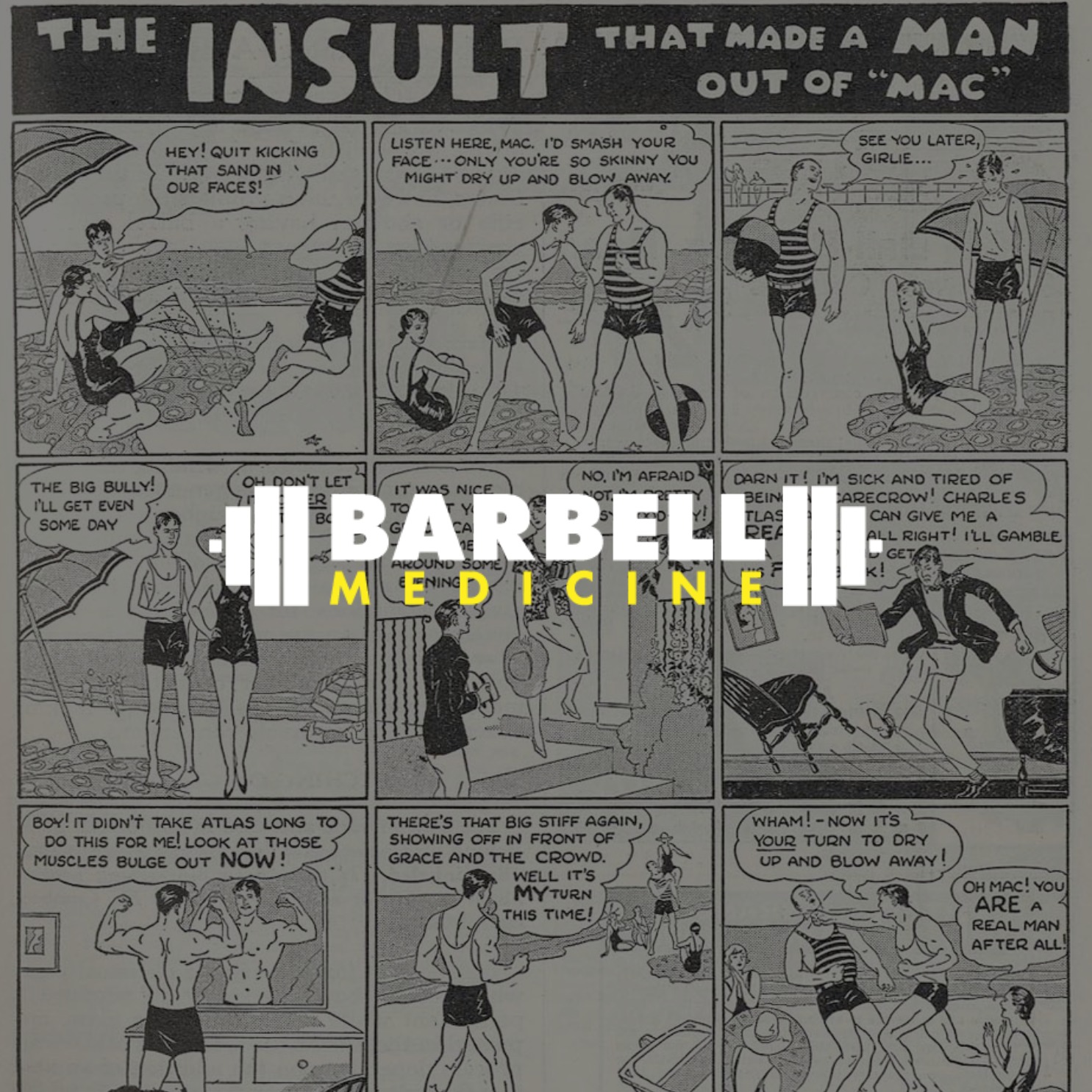 Where did the advice to not lift heavy weights come from? | Nearly every warning you've heard about lifting weights was written down before anybody checked it. We trace where those warnings came from, starting with a Harvard student in 1854 and ending with a curve on a graph that's being used today to argue you can lift too much.Along the way: the men who built themselves with barbells and then sold the public five-pound dumbbells, because iron was expensive to mail and a booklet cost pennies. The muscle-bound myth, which nobody could define when a graduate student surveyed 45 physiologists about it. The 1961 report that took the deep squat out of every branch of the American military, measured with a device its author built himself and never validated. The claim that lifting stunts a child's growth, which no professional body ever actually made. And the argument women got, which was never about injury at all.Timestamps:0:00 Intro2:33 2,500 years of people picking up heavy things7:24 George Windship and the Health Lift10:56 Blaikie's truck horse and the muscle-bound myth14:59 Bernarr Macfadden19:39 Charles Atlas and Dynamic Tension27:01 Carl Klein, a homemade device, and the parallel squat30:57 Thomas Delorme and three sets of ten35:20 Kids, growth plates, and where the stunting idea came from41:43 Women, "you'll get bulky," and Dudley Sargent in 191250:05 Pregnancy, from 1949 to a 2025 barbell study53:40 The pattern, and the curve on next week's graphResources:Buy the book, Signal: https://www.barbellmedicine.com/shop/learning/signal/New Barbell Medicine Hybrid 5K and 10K Run + Lift ProgramsBarbell Medicine coaching and templates: https://www.barbellmedicine.com1. Downs DS, Chasan-Taber L, Evenson KR, Leiferman J, Yeo S. Physical activity and pregnancy: past and present evidence and future recommendations. Res Q Exerc Sport. 2012;83(4):485-502. doi:10.1080/02701367.2012.10599138. PMID 23367811.2. McMurray RG, Mottola MF, Wolfe LA, Artal R, Millar L, Pivarnik JM. Recent advances in understanding maternal and fetal responses to exercise. Med Sci Sports Exerc. 1993;25(12):1305-1321. PMID 8107536.3. Smith KM, Campbell CG. Physical activity during pregnancy: impact of applying different physical activity guidelines. J Pregnancy. 2013;2013:165617. doi:10.1155/2013/165617. PMID 23476778.4. American College of Obstetricians and Gynecologists. Physical activity and exercise during pregnancy and the postpartum period. ACOG Committee Opinion No. 804. Obstet Gynecol. 2020;135(4):e178-e188. doi:10.1097/AOG.0000000000003772. PMID 32217980.5. American Academy of Pediatrics Committee on Sports Medicine and Fitness. Strength training by children and adolescents. Pediatrics. 2001;107(6):1470-1472. doi:10.1542/peds.107.6.1470. PMID 11389279.6. Stricker PR, Faigenbaum AD, McCambridge TM; Council on Sports Medicine and Fitness. Resistance training for children and adolescents. Pediatrics. 2020;145(6):e20201011. doi:10.1542/peds.2020-1011. PMID 32457216.7. Gardiner EN. Athletics of the Ancient World. Clarendon Press; 1930:54. See also Gardiner EN. Olympia: Its History and Remains. Clarendon Press; 1925.8. Heffernan C. The Bybon stone and ancient strength. Physical Culture Study. 2021. Accessed September 2026. https://physicalculturestudy.com.9. Pausanias. Description of Greece. 6.14.5. Jones WHS, trans. Loeb Classical Library. Harvard University Press.10. Quintilian. Institutio Oratoria. 1.9.5. Butler HE, trans. Loeb Classical Library. Harvard University Press.11. Heffernan C. Milo of Croton and the invention of progressive overload. Physical Culture Study. 2026. Accessed September 2026. https://physicalculturestudy.com. See also H.J. Lutcher Stark Center for Physical Culture and Sports, University of Texas at Austin, Milo Bar-Bell Company holdings.12. Liddell HG, Scott R. A Greek-English Lexicon. 9th ed. Clarendon Press; entry γυμνάσιον. Thucydides. History of the Peloponnesian War. 1.6. Crawley R, trans.13. Tomlinson RA. Gymnasium. In: Oxford Classical Dictionary. Oxford University Press; 2015. doi:10.1093/acrefore/9780199381135.013.2963. See also Stavrou D. The Greek Gymnasium [thesis]. University of Leicester; 2016:38.14. Xenophon. Constitution of the Lacedaimonians. 1.4. Marchant EC, trans. Loeb Classical Library. Harvard University Press.15. Plutarch. Life of Lycurgus. 14. Perrin B, trans. Loeb Classical Library. Harvard University Press.16. Ollier F. Le Mirage Spartiate. Vols 1-2. Boccard; 1933-1943. Discussed in Rahe PA. The Grand Strategy of Classical Sparta. Yale University Press; 2016. See also Christesen P. Utopia on the Eurotas: Economic Aspects of the Spartan Mirage. In: Powell A, Hodkinson S, eds. Sparta: The Body Politic. Classical Press of Wales; 2010.17. Pausanias. Description of Greece. 5.16. Jones WHS, trans. Loeb Classical Library. Harvard University Press.18. Scarborough J. Galen and the gladiators. Episteme. 1971;5:98-111.19. Tipton CM. The history of "Exercise Is Medicine" in ancient civilizations. Adv Physiol Educ. 2014;38(2):109-117. doi:10.1152/advan.00136.2013. PMCID PMC4056176.20. Vegetius FR. De Re Militari (The Military Institutions of the Romans). Book I. Clarke J, trans. 1767.21. Surviving halteres: a catalogue. EXARC Journal. 2017;(3). Accessed September 2026. https://exarc.net.22. Talaga M. Physical culture in the Middle Ages: revisiting the disappearance thesis. Cogent Arts Humanit. 2025. doi:10.1080/23311983.2025.2482388.23. Rawcliffe C. Health and the environment in the medieval hospital. History. 2022. doi:10.1111/1468-229X.13238.24. Elyot T. The Boke Named the Governour. 1531. Croft HHS, ed. Kegan Paul; 1883:171.25. Campillo P, Caballero D. Girolamo Mercuriale and the art of gymnastics. Hektoen International. 2020. Accessed September 2026. https://hekint.org.26. Todd T. The myth of the muscle-bound lifter. NSCA J. 1985;7(3):37-41. Citing Van Doren C. Benjamin Franklin. Viking Press; 1938.27. Galen. Exhortation to the Study of the Arts (Protrepticus). Chapters 9-14. Walsh J, trans. Medical Life. 1930;37:507-529. See also Xenophontos S. Galen's Exhortation to the Study of Medicine. In: Bouras-Vallianatos P, Xenophontos S, eds. Greek Medical Literature and Its Readers. Routledge; 2018:67-93.28. Todd J. "Strength is Health": George Barker Windship and the first American weight training boom. Iron Game History. 1993;3(1):3-14. https://starkcenter.org/igh/igh-v3/igh-v3-n1/igh0301c.pdf.29. Windship GB. Autobiographical sketches of a strength-seeker. Atlantic Monthly. 1862;9(51):102-115.30. US Patent 46,413. Improvement in graduated dumb-bells. GB Windship, Boston. Granted 14 February 1865.31. Savage DF. US Patent 28,505. 1860.32. The Health-Lift Reduced to a Science: Cumulative Exercise, A Thorough Gymnastic System in Ten Minutes Once a Day. New York: Health-Lift Company; 1875.33. Blaikie W. How to Get Strong and How to Stay So. New York: Harper & Brothers; 1879:99-100.34. Bryant D. William Blaikie and physical fitness in late nineteenth century America. Iron Game History. 1992;2(3):3.35. Sandow E. Sandow on Physical Training. Adam GM, ed. 1894:12, 23, 207.36. Sandow E. Strength and How to Obtain It. London: Gale & Polden; 1897:34, Table 7.37. Sandow E. Strength and How to Obtain It. Revised ed. London: Gale & Polden; [c1899]. Project Gutenberg ebook 65987.38. Todd J, Todd T. Requiem for a strongman: reassessing the career of Professor Louis Attila. Iron Game History. 2002;7(2-3):42-55.39. Pall Mall Gazette. December 1889. Clipping in Attila's scrapbook, Todd-McLean Collection, H.J. Lutcher Stark Center, University of Texas at Austin.40. Chapman D. Sandow's first triumph. Iron Game History. 1994;3(3):3-8.41. Robert Hoffman Business Papers finding aid. H.J. Lutcher Stark Center for Physical Culture and Sports, University of Texas at Austin.42. Hall DT, Fair JD. The pioneers of protein. Iron Game History. 2004;8(3):26-28.43. Shurley J, Todd J. Joe Weider, All American Athlete, and the promotion of strength training for sport: 1940-1969. Iron Game History. 2012;12(1):9-12.44. Todd J. Bernarr Macfadden: reformer of feminine form. Iron Game History. 1991;1(4-5):3-8.45. Yagoda B. The true story of Bernarr Macfadden. American Heritage. 1981;33(1):22-28.46. Murtha R, Heffernan C, Hunt T. Building American supermen? Bernarr MacFadden, Benito Mussolini and American fascism in the 1930s. Sport in Society. 2020. doi:10.1080/17430437.2020.1865313.47. New York Times. 6 October 1905:10; 10 October 1905:9.48. Macfadden B. Macfadden's Encyclopedia of Physical Culture. New York: Physical Culture Publishing; 1912:847. Quoted in Todd T, NSCA J. 1985;7(3):37-41.49. Danna S. Charles Atlas: muscle man. Iron Game History. 1996;4(4):3-6, 12-14. https://starkcenter.org/igh/igh-v4/igh-v4-n4/igh0404c.pdf.50. Guide to the Charles Atlas Records, NMAH.AC.0654. Archives Center, National Museum of American History, Smithsonian Institution.51. Charles Atlas course text, undated later edition.52. Charles P. Roman: a gloriously healthy life. Chief Marketer.53. Kannenberg G Jr. The ad that made an icon out of Mac. Hogan's Alley. 1999;2(3).54. Michigan State University Libraries comic art index, Charles Atlas advertisements. https://comics.lib.msu.edu/rri/arri/atlas.htm.55. Charles Atlas. Encyclopedia.com.56. Todd J, Todd T. The conversion of Dr. Peter Karpovich. Iron Game History. 2005;8(4):4-12. https://starkcenter.org/igh/igh-v8/igh-v8-n4/igh0804c.pdf.57. Murray J, Karpovich P. Weight Training in Athletics. Englewood Cliffs, NJ: Prentice-Hall; 1956.58. Murray J. John Carrol Grimek: the nonpareil. Iron Game History. 1994;3(3):10-12.59. Zorbas WS, Karpovich PV. The effect of weight lifting upon the speed of muscular contractions. Res Q. 1951;22(2):145-148.60. Klein KK. The deep squat exercise as utilized in weight training for athletes and its effect on the ligaments of the knee. J Assoc Phys Ment Rehabil. 1961;15(1):6-11, 23.61. Sports Illustrated. Coverage of Klein's knee-ligament findings. 1962.62. Todd T. Karl Klein and the squat. NSCA J. 1984;6(3):26-31.63. Chandler TJ, Wilson GD, Stone MH. The effect of the squat exercise on knee stability. Med Sci Sports Exerc. 1989;21(3):299-303. PMID 2733579.64. Panariello RA, Backus SI, Parker JW. The effect of the squat exercise on anterior-posterior knee translation in professional football players. Am J Sports Med. 1994;22(6):768-773. doi:10.1177/036354659402200607. PMID 7856800.65. Berryman JW. Exercise is medicine: a historical perspective. Curr Sports Med Rep. 2010;9(4):195-201. doi:10.1249/JSR.0b013e3181e7d86d.66. Todd JS, Shurley JP, Todd TC. Thomas L. DeLorme and the science of progressive resistance exercise. J Strength Cond Res. 2012;26(11):2913-2923. doi:10.1519/JSC.0b013e31825adcb4.67. Kraus H, Hirschland RP. Minimum muscular fitness tests in school children. Res Q. 1954;25(2):178-188. doi:10.1080/10671188.1954.10624957.68. The President's Council on Youth Fitness. Exhibit. H.J. Lutcher Stark Center for Physical Culture and Sports, University of Texas at Austin. Accessed September 2026.69. Bonnie Prudden: biography. Bonnie Prudden Foundation. Accessed September 2026. https://bonnieprudden.com.70. Executive Order 10673: Fitness of American Youth. 21 Fed Reg 5341. July 16, 1956.71. Heady JA, Morris JN, Kagan A, Raffle PAB. Coronary heart disease in London busmen: a progress report with particular reference to physique. Br J Prev Soc Med. 1961;15(4):143-153.72. US Department of Health and Human Services. Physical Activity and Health: A Report of the Surgeon General. Chapter 2. Centers for Disease Control and Prevention; 1996.73. American College of Sports Medicine. Position stand: the recommended quantity and quality of exercise for developing and maintaining cardiorespiratory and muscular fitness in healthy adults. Med Sci Sports Exerc. 1990;22(2):265-274. PMID 2355825.74. Brady TA, Cahill BR, Bodnar LM. Weight training-related injuries in the high school athlete. Am J Sports Med. 1982;10(1):1-5. doi:10.1177/036354658201000101. PMID 6459035.75. Dahab KS, McCambridge TM. Strength training in children and adolescents: raising the bar for young athletes? Sports Health. 2009;1(3):223-226. doi:10.1177/1941738109334215. PMID 23015875.76. American Academy of Pediatrics Committee on Sports Medicine. Weight training and weight lifting: information for the pediatrician. Physician Sportsmed. 1983;11(3):157-161.77. American Academy of Pediatrics Committee on Sports Medicine. Strength training, weight and power lifting, and body building by children and adolescents. Pediatrics. 1990;86(5):801-803.78. Smith NJ, Stanitski CL. Sports Medicine: A Practical Guide. Philadelphia, PA: WB Saunders; 1987:33.79. Stricker PR, Faigenbaum AD, McCambridge TM; American Academy of Pediatrics Council on Sports Medicine and Fitness. Resistance training for children and adolescents. Pediatrics. 2020;145(6):e20201011. doi:10.1542/peds.2020-1011.80. Faigenbaum AD. Youth resistance training. President's Council on Physical Fitness and Sports Research Digest. 2003;4(3):1-8.81. Kato S, Ishiko T. Obstructed growth of children's bones due to excessive labor in remote corners. In: Kato K, ed. Proceedings of the International Congress of Sport Sciences. Tokyo, Japan: Japanese Union of Sport Sciences; 1964:476.82. Rowe PH. Colles fracture due to weightlifting. Br J Sports Med. 1979;13(3):130-131. doi:10.1136/bjsm.13.3.130. PMID 486885.83. Ryan JR, Salciccioli GG. Fractures of the distal radial epiphysis in adolescent weight lifters. Am J Sports Med. 1976;4(1):26-27. doi:10.1177/036354657600400105.84. Benton JW. Epiphyseal fracture in sports. Physician Sportsmed. 1982;10(11):63-71.85. Gumbs VL, Segal D, Halligan JB, Lower G. Bilateral distal radius and ulnar fractures in adolescent weight lifters. Am J Sports Med. 1982;10(6):375-379. doi:10.1177/036354658201000612.86. Jenkins NH, Mintowt-Czyz WJ. Bilateral fracture separations of the distal radial epiphyses during weight-lifting. Br J Sports Med. 1986;20(2):72-73. doi:10.1136/bjsm.20.2.72.87. Weiss AC, Sponseller PD. Salter-Harris type I fracture of the distal radius due to weightlifting. Orthop Rev. 1989;18(3):233-235.88. Browne TD. Bilateral wrist fractures in an adolescent weightlifter. Orthopedics. 1990.89. Faigenbaum AD, Myer GD. Resistance training among young athletes: safety, efficacy and injury prevention effects. Br J Sports Med. 2010;44(1):56-63. doi:10.1136/bjsm.2009.068098.90. Sadres E, Eliakim A, Constantini N, Lidor R, Falk B. The effect of long-term resistance training on anthropometric measures, muscle strength, and self concept in pre-pubertal boys. Pediatr Exerc Sci. 2001;13(4):357-372. doi:10.1123/pes.13.4.357.91. Malina RM. Weight training in youth: growth, maturation, and safety: an evidence-based review. Clin J Sport Med. 2006;16(6):478-487. doi:10.1097/01.jsm.0000248843.31874.be.92. Lloyd RS, Faigenbaum AD, Stone MH, et al. Position statement on youth resistance training: the 2014 international consensus. Br J Sports Med. 2014;48(7):498-505. doi:10.1136/bjsports-2013-092952.93. American Academy of Pediatrics Council on Sports Medicine and Fitness. Strength training by children and adolescents. Pediatrics. 2008;121(4):835-840. doi:10.1542/peds.2007-3790. PMID 18381549.94. Faigenbaum AD, Kraemer WJ, Blimkie CJR, et al. Youth resistance training: updated position statement paper from the National Strength and Conditioning Association. J Strength Cond Res. 2009;23(5 Suppl):S60-S79. doi:10.1519/JSC.0b013e31819df407. PMID 19620931.95. Milone MT, Bernstein J, Freedman KB, Tjoumakaris F. There is no need to avoid resistance training (weight lifting) until physeal closure. Phys Sportsmed. 2013;41(4):101-105. doi:10.3810/psm.2013.11.2040. PMID 24393806.96. Fiatarone MA, Marks EC, Ryan ND, Meredith CN, Lipsitz LA, Evans WJ. High-intensity strength training in nonagenarians: effects on skeletal muscle. JAMA. 1990;263(22):3029-3034. PMID 2342214.97. Fiatarone MA, O'Neill EF, Ryan ND, et al. Exercise training and nutritional supplementation for physical frailty in very elderly people. N Engl J Med. 1994;330(25):1769-1775. doi:10.1056/NEJM199406233302501. PMID 8190152.98. Sargent DA. Are athletics making girls masculine? A practical answer to a question every girl asks. 1912.99. Jones A. Weight-training for women. In: Nautilus Bulletin No. 2. Ch. 15. DeLand, FL: Nautilus Sports/Medical Industries; [c1971]. http://www.arthurjonesexercise.com/Bulletin2/15.PDF.100. Cureton KJ, Collins MA, Hill DW, McElhannon FM. Muscle hypertrophy in men and women. Med Sci Sports Exerc. 1988;20(4):338-344. PMID 3173042.101. Hubal MJ, Gordish-Dressman H, Thompson PD, et al. Variability in muscle size and strength gain after unilateral resistance training. Med Sci Sports Exerc. 2005;37(6):964-972. PMID 15947721.102. Roberts BM, Nuckols G, Krieger JW. Sex differences in resistance training: a systematic review and meta-analysis. J Strength Cond Res. 2020;34(5):1448-1460. doi:10.1519/JSC.0000000000003521. PMID 32218059.103. Refalo MC, Nuckols G, Galpin AJ, Gallagher IJ, Hamilton DL, Fyfe JJ. Sex differences in absolute and relative changes in muscle size following resistance training in healthy adults: a systematic review with Bayesian meta-analysis. PeerJ. 2025;13:e19042. doi:10.7717/peerj.19042. PMID 40028215.104. Handelsman DJ, Hirschberg AL, Bermon S. Circulating testosterone as the hormonal basis of sex differences in athletic performance. Endocr Rev. 2018;39(5):803-829. doi:10.1210/er.2018-00020. PMID 30010735.105. Bhasin S, Storer TW, Berman N, et al. The effects of supraphysiologic doses of testosterone on muscle size and strength in normal men. N Engl J Med. 1996;335(1):1-7. doi:10.1056/NEJM199607043350101. PMID 8637535.106. Huang G, Basaria S, Travison TG, et al. Testosterone dose-response relationships in hysterectomized women with or without oophorectomy. Menopause. 2014;21(6):612-623. doi:10.1097/GME.0000000000000093. PMID 24281237.107. Franke WW, Berendonk B. Hormonal doping and androgenization of athletes: a secret program of the German Democratic Republic government. Clin Chem. 1997;43(7):1262-1279. PMID 9216474.108. OpenPowerlifting database analysis of tested versus untested totals.109. Average player heights, National Basketball Association and Women's National Basketball Association, against US adult means from the National Health and Nutrition Examination Survey anthropometric reference data.110. History of women's weightlifting. International Weightlifting Federation. Accessed September 2026. https://iwf.sport.111. Adamfi A, IWF Director General, on the pre-1983 IWF constitution. Inside the Games. Accessed September 2026. https://www.insidethegames.biz.112. History of women's powerlifting. International Powerlifting Federation. Accessed September 2026. https://www.powerlifting.sport.113. Holloway JB, Gater D, Ritchie M, et al. Strength training for female athletes: a position paper. Part I. NSCA J. 1989;11(4):43-51. Part II. NSCA J. 1989;11(5):29-36.114. Kehler AK, Heinrich KM. A selective review of prenatal exercise guidelines since the 1950s until present: written for women, health care professionals, and female athletes. Women Birth. 2015;28(4):e93-e98. doi:10.1016/j.wombi.2015.07.004. PMID 26210535.115. Berghella V, Saccone G. Exercise in pregnancy! Am J Obstet Gynecol. 2017;216(4):335-337. doi:10.1016/j.ajog.2017.01.023.116. Davenport MH, Ruchat SM, Poitras VJ, et al. Prenatal exercise for the prevention of gestational diabetes mellitus and hypertensive disorders of pregnancy: a systematic review and meta-analysis. Br J Sports Med. 2018;52(21):1367-1375. doi:10.1136/bjsports-2018-099355. PMID 30337463.117. Prevett C, Gingerich J, Sivak A, Davenport MH. Impact of resistance training on maternal and fetal outcomes: a systematic review and meta-analysis. Br J Sports Med. 2025;59(17):1173-1183. doi:10.1136/bjsports-2025-109626. PMID 40610191.118. Moolyk AN, Wowdzia JB, Matenchuk BA, et al. Acute fetal response to high-intensity resistance training in pregnancy. Br J Sports Med. 2025;59(3):159-167. doi:10.1136/bjsports-2024-108569. PMID 39694629.119. Momma H, Kawakami R, Honda T, Sawada SS. Muscle-strengthening activities are associated with lower risk and mortality in major non-communicable diseases: a systematic review and meta-analysis of cohort studies. Br J Sports Med. 2022;56(13):755-763. doi:10.1136/bjsports-2021-105061.120. Bennie JA, Lee DC, Khan A, et al. Muscle-strengthening exercise among 397,423 U.S. adults: prevalence, correlates, and associations with health conditions. Am J Prev Med. 2018;55(6):864-874. doi:10.1016/j.amepre.2018.07.022. PMID 30458949.Our Sponsors:* Check out FIGS and use my code FIGSRX for a great deal: https://wearfigs.com* Check out Factor and use my code factormeals.com/bbm50off for a great deal: https://www.factor75.com* Check out Quince and use my code BBM for a great deal: https://www.quince.com* Check out Ten Thousand and use my code PODCAST15 for a great deal: https://www.tenthousand.ccAdvertising Inquiries: https://redcircle.com/brands | 57m 15s | ||||||
| 9/24/26 |  Is It Safe to Train When the Air Is Full of Wildfire Smoke? | Parts of the country now get a few weeks of wildfire smoke every year, and the obvious question is whether there is a point where the air is bad enough that the workout costs you more than it gives you. We went and looked. There is a real number, it comes from about 1.5 million people, and it is not the number that gets quoted.This is a free preview of Direct Line, our monthly ask-us-anything for Barbell Medicine Plus subscribers. Two of this month's twelve questions are here in full.First: training in wildfire smoke. What PM2.5 is, why the AQI on your phone and the number in the paper are not the same quantity, where the 90-minutes-at-100-micrograms figure comes from and why it is softer than it sounds, what happened when six cities modeled telling people to stay inside, and why your breathing rate during a set of squats matters more than you would think.Second: the effective reps model. A subscriber noticed that if a set only counts when you are within five reps of failure, the triceps in a heavy bench press should not count, and if you are going to count that as a fractional set for the triceps, then a warm-up set counts for the chest. Both cannot be true. We go through the meta-regression on proximity to failure, the 67-study analysis that tested whether an indirect set should count as one, as half, or as zero, and where we actually put our sets.Join Barbell Medicine Plus today: https://barbellmedicine.supercast.com/Buy the book, Signal: https://www.barbellmedicine.com/shop/learning/signal/New Barbell Medicine Hybrid 5K and 10K Run + Lift ProgramsBarbell Medicine coaching and templates: https://www.barbellmedicine.comTimestamps1:47 The question: is there a point where the air is too bad to train?2:37 What PM2.5 actually is3:05 AQI vs micrograms, and why your phone disagrees with the paper3:50 Where the "90 minutes" number comes from4:54 Austin: what breathing this air does to your lungs9:14 1.5 million adults: does dirty air cancel the benefit of exercise?10:44 Six cities modeled staying indoors. Mortality did not improve.11:22 Lifting vs cycling: breathing rate is the whole mechanism12:33 Indoor air during a wildfire, and what filtration does not fix13:24 Is wildfire smoke worse than city pollution?14:38 What we would actually tell a patient18:35 The question: hard sets, fractional sets, and the five-rep rule19:18 Reps in reserve, hard sets, and fractional sets defined20:19 The meta-regression: no threshold, just a line21:13 Do indirect sets count as half a set?23:08 Would you rather: every set at 5 RIR, or every set to failure?25:22 Why you get worse at judging RIR the further you are from failure28:42 The numbers we use: RPE 7 to 9 for hypertrophy, 4 to 6 for strength29:20 Austin: individual variation dwarfs all of this33:28 Why nobody can measure training load in the weight roomResourcesTainio M, de Nazelle AJ, Götschi T, et al. Can air pollution negate the health benefits of cycling and walking? Prev Med. 2016;87:233-236. doi:10.1016/j.ypmed.2016.02.002. PMID 27156248Ku PW, Steptoe A, Hamer M, et al. Does ambient PM2.5 reduce the protective association of leisure-time physical activity with mortality? A systematic review, meta-analysis, and individual-level pooled analysis of cohort studies involving 1.5 million adults. BMC Med. 2025;23(1):647. doi:10.1186/s12916-025-04496-y. PMID 41310726Giallouros G, Kouis P, Papatheodorou SI, Woodcock J, Tainio M. The long-term impact of restricting cycling and walking during high air pollution days on all-cause mortality: health impact assessment study. Environ Int. 2020;140:105679. doi:10.1016/j.envint.2020.105679. PMID 32353667Sun S, Cao W, Qiu H, et al. Benefits of physical activity not affected by air pollution: a prospective cohort study. Int J Epidemiol. 2020;49(1):142-152. doi:10.1093/ije/dyz184. PMID 31504557Robles P, Araujo T, Brooks D, et al. Cardiorespiratory responses to short bouts of resistance training exercises in individuals with chronic obstructive pulmonary disease: a comparison of exercise intensities. J Cardiopulm Rehabil Prev. 2017;37(5):356-362. doi:10.1097/HCR.0000000000000282. PMID 28858033Liang Y, Sengupta D, Campmier MJ, Lunderberg DM, Apte JS, Goldstein AH. Wildfire smoke impacts on indoor air quality assessed using crowdsourced data in California. Proc Natl Acad Sci U S A. 2021;118(36):e2106478118. doi:10.1073/pnas.2106478118. PMID 34465624Aguilera R, Corringham T, Gershunov A, Benmarhnia T. Wildfire smoke impacts respiratory health more than fine particles from other sources: observational evidence from Southern California. Nat Commun. 2021;12(1):1493. doi:10.1038/s41467-021-21708-0. PMID 33674571US Environmental Protection Agency. Air Quality Index (AQI) breakpoints. Air Quality System code tables. Accessed August 10, 2026. https://aqs.epa.gov/aqsweb/documents/codetables/aqi_breakpoints.htmlRobinson ZP, Pelland JC, Remmert JF, Refalo MC, Jukic I, Steele J, et al. Exploring the dose-response relationship between estimated resistance training proximity to failure, strength gain, and muscle hypertrophy: a series of meta-regressions. Sports Med. 2024;54(9):2209-2231. doi:10.1007/s40279-024-02069-2. PMID 38970765Pelland JC, Remmert JF, Robinson ZP, Hinson SR, Zourdos MC. The resistance training dose response: meta-regressions exploring the effects of weekly volume and frequency on muscle hypertrophy and strength gains. Sports Med. 2026;56(2):481-505. doi:10.1007/s40279-025-02344-wOur Sponsors:* Check out FIGS and use my code FIGSRX for a great deal: https://wearfigs.com* Check out Factor and use my code factormeals.com/bbm50off for a great deal: https://www.factor75.com* Check out Quince and use my code BBM for a great deal: https://www.quince.com* Check out Ten Thousand and use my code PODCAST15 for a great deal: https://www.tenthousand.ccAdvertising Inquiries: https://redcircle.com/brands | 37m 23s | ||||||
| 9/17/26 |  Do You Need a Calorie Surplus to Build Muscle? | Dr. Eric Helms | Most lifters have been told they need to eat in a Calorie surplus to build muscle. That rule has always come with a list of exceptions: unless you're new, unless you're carrying extra body fat, unless you're coming back from time off. Dr. Eric Helms joins Dr. Jordan Feigenbaum to work out what the rule is actually tracking, starting from a question with a real number attached: what does a pound of muscle cost to build? And then, do you need to be in a surplus to build muscle? Timestamps:0:00 The rule, and its exceptions2:08 Where "you need a surplus" came from7:12 Heuristics versus theories11:40 Hypertrophy, maintenance, deficit and surplus defined14:58 Body fat as a savings account18:24 How fast anyone can actually build muscle23:39 What sets the ceiling: stimulus, not genetics26:37 Microgravity, astronauts, and a 20 kg barbell31:49 What constrains growth if steroids don't break the ceiling36:44 If training sets the ceiling, what does energy do38:45 What 1 kg of muscle costs to build44:05 Why 3,500 Calories doesn't tell you what to eat44:55 REDs and the dual intervention model47:51 The 2000s bulking studies51:34 Garthe 2013: elite athletes and a 500 Calorie surplus58:30 Protein: 1.6 versus 2.5 g/kg1:03:31 What starvation research shows the body protects1:10:29 Vargas-Molina: maintenance versus deficit1:19:17 What to do if you're lean1:39:34 What would prove this wrong1:57:57 Three bucketsResources:Buy the book, Signal: https://www.barbellmedicine.com/shop/learning/signal/New Barbell Medicine Hybrid 5K and 10K Run + Lift ProgramsBarbell Medicine coaching and templates: https://www.barbellmedicine.comNikolaidis MG, Paschalis V, Margaritelis NV. The energetic cost of building human skeletal muscle. bioRxiv. Preprint posted online August 17, 2026. doi:10.64898/2026.08.17.745156Rozenek R, Ward P, Long S, Garhammer J. Effects of high-calorie supplements on body composition and muscular strength following resistance training. J Sports Med Phys Fitness. 2002;42(3):340-347.Garthe I, Raastad T, Refsnes PE, Koivisto A, Sundgot-Borgen J. Effect of two different weight-loss rates on body composition and strength and power-related performance in elite athletes. Int J Sport Nutr Exerc Metab. 2011;21(2):97-104.Garthe I, Raastad T, Refsnes PE, Sundgot-Borgen J. Effect of nutritional intervention on body composition and performance in elite athletes. Eur J Sport Sci. 2013;13(3):295-303. doi:10.1080/17461391.2011.643923Helms ER, Zinn C, Rowlands DS, Brown SR. A systematic review of dietary protein during caloric restriction in resistance trained lean athletes: a case for higher intakes. Int J Sport Nutr Exerc Metab. 2014;24(2):127-138. doi:10.1123/ijsnem.2013-0054Slater GJ, Dieter BP, Marsh DJ, Helms ER, Shaw G, Iraki J. Is an energy surplus required to maximize skeletal muscle hypertrophy associated with resistance training. Front Nutr. 2019;6:131. doi:10.3389/fnut.2019.00131Murphy C, Koehler K. Energy deficiency impairs resistance training gains in lean mass but not strength: a meta-analysis and meta-regression. Scand J Med Sci Sports. 2022;32(1):125-137. doi:10.1111/sms.14075Helms ER, Spence A, Sousa C, et al. Effect of small and large energy surpluses on strength, muscle, and skinfold thickness in resistance-trained individuals: a parallel groups design. Sports Med Open. 2023;9(1):102. doi:10.1186/s40798-023-00651-yMountjoy M, Ackerman KE, Bailey DM, et al. 2023 International Olympic Committee's (IOC) consensus statement on Relative Energy Deficiency in Sport (REDs). Br J Sports Med. 2023;57(17):1073-1097. doi:10.1136/bjsports-2023-106994Speakman JR, Hall KD. Models of body weight and fatness regulation. Philos Trans R Soc Lond B Biol Sci. 2023;378(1888):20220231. doi:10.1098/rstb.2022.0231Vargas-Molina S, García-Palumbo A, García-Sillero M, et al. Comparison of two nutritional protocols in body re-composition of resistance-trained participants. Eur J Appl Physiol. 2026;126(7):4019-4030. doi:10.1007/s00421-026-06209-6Our Sponsors:* Check out FIGS and use my code FIGSRX for a great deal: https://wearfigs.com* Check out Factor and use my code factormeals.com/bbm50off for a great deal: https://www.factor75.com* Check out Quince and use my code BBM for a great deal: https://www.quince.com* Check out Ten Thousand and use my code PODCAST15 for a great deal: https://www.tenthousand.ccAdvertising Inquiries: https://redcircle.com/brands | 2h 01m 42s | ||||||
| 9/4/26 | obesitymuscle function+5 | — | Barbell Medicine | — | obesitymuscle+7 | — | 1h 17m 06s | ||
| 8/27/26 | testosterone replacementtestosterone deficiency+4 | Dr. Austin Baraki | — | — | testosteronereplacement therapy+5 | — | 1h 26m 41s | ||
| 8/20/26 | body fatvisceral fat+5 | — | Lancet Commission | — | fat storageinsulin+5 | — | 49m 19s | ||
| 8/12/26 | lifting and longevityGLP-1s and mood+3 | Dr. Baraki | GLP-1sBarbell Medicine+3 | — | liftinglongevity+6 | — | 46m 09s | ||
| 8/7/26 | FDA votepeptides+4 | — | BPC-157TB-500+5 | — | FDApeptides+5 | — | 1h 06m 20s | ||
| 7/31/26 | medical mysteryweight gain+4 | Dr. Austin Baraki | Barbell Medicine | — | weight gainheadaches+5 | — | 1h 10m 08s | ||
| 7/24/26 | protein consumptionkidney health+5 | Dr. Jordan Feigenbaum | Barbell Medicine2014 IGF-1 and cancer paper+1 | — | proteinkidneys+8 | — | 32m 41s | ||
| 7/17/26 | calories in calories outmetabolism+4 | Jordan Feigenbaum | Barbell Medicine | — | weight losscalories+6 | — | 31m 14s | ||
| 7/10/26 | obesityweight management+4 | — | The Biggest Loser | — | obesityweight+7 | — | 1h 42m 34s | ||
| 7/3/26 | GLP-1 and muscle losscreatine supplementation+3 | — | GLP-1DEXA+2 | — | muscle lossGLP-1+6 | — | 49m 33s | ||
| 6/26/26 | menopausetraining+5 | Jordan FeigenbaumAustin Baraki | Isenmann 20232026 meta-analysis+1 | — | menopausetraining+6 | — | 1h 43m 37s | ||
| 6/12/26 | menopausebody composition+4 | Dr. Loraine Baraki | Barbell MedicineSWAN study | — | menopausebody composition+6 | — | 1h 43m 32s | ||
| 6/5/26 | women and exercisehistorical perspectives on fitness+5 | — | LIFTMOR | — | menopauseexercise+8 | — | 31m 51s | ||
| 5/29/26 | menopausehormonal changes+4 | Dr. Loraine Baraki | Women's Health InitiativeThe Lancet | — | menopausehormone therapy+4 | — | 1h 26m 49s | ||
| 5/19/26 | creatine and shin painresistance training frequency+1 | — | Barbell MedicineESHRE | — | creatineshin pain+5 | — | 33m 59s | ||
| 5/12/26 | testosteronebody composition+4 | — | OzempicBarbell Medicine | — | testosteronebody fat+7 | — | 59m 29s | ||
| 5/5/26 | progressive loadingstrength training+4 | Dr. Austin Baraki | Progressive LoadingDamas 2016 deuterium study | — | strength trainingnovice lifters+6 | — | 1h 51m 28s | ||
| 4/28/26 | testosteronehealth evaluation+4 | Dr. Austin Baraki | — | — | testosteronelow testosterone+5 | — | 1h 01m 45s | ||
| 4/21/26 | GLP-1 cessationweight regain+3 | — | Barbell MedicineSURMOUNT-4+10 | — | GLP-1weight loss+5 | — | 38m 39s | ||
| 4/14/26 | testosteronehealth+4 | — | Barbell Medicine | — | testosterone crisislab tests+3 | Factorbbm50off | 40m 36s | ||
| 4/7/26 | medical mysteryexercise and health+4 | — | STOMP trialSAMSON trial+4 | — | rhabdomyolysismuscle strength+5 | — | 1h 15m 46s | ||
| 3/31/26 | overtraining syndromediagnosis+3 | Jordan FeigenbaumAustin Baraki | Barbell Medicine | — | overtraining syndromesystematic review+3 | — | 1h 36m 05s | ||
| 3/24/26 | VO2 MaxCardiorespiratory Fitness+4 | Dr. Baraki | GLP-1 medicationsBarbell Medicine+2 | — | VO2 MaxCardiorespiratory Fitness+6 | — | 30m 34s | ||
| 3/17/26 | visceral fatmetabolic risk+4 | Dr. Jordan Feigenbaum | Barbell Medicine | — | visceral fatBMI+5 | — | 44m 34s | ||
| 3/9/26 | liver enzymesexercise impact+3 | Dr. Austin Baraki | Barbell Medicine | — | liver biopsyblood draw+7 | — | 1h 01m 32s | ||
| 2/26/26 | muscle imbalancesred meat risk+3 | Dr. Austin Baraki | Barbell Medicine | — | muscle imbalancesred meat+5 | — | 34m 04s | ||
| 2/20/26 | Valsalva maneuverblood pressure+3 | — | Barbell Medicine | — | Valsalva maneuverblood pressure spikes+3 | — | 1h 12m 09s | ||
| 2/13/26 | longevitybiological clocks+5 | Dr. Austin Baraki | Barbell Medicine | — | longevity industryDNA methylation+5 | — | 2h 00m 17s | ||


Showing 32 of 446
Pitch Fit is a Pro feature
See how bookable this show is for guests, which brands already advertise, the per-episode ad value, and the best-fit guest and sponsor profile. The numbers are blurred on the free plan.
How readily this show books outside guests like you.
How proven this show is for host-read sponsorships.
For Guests
ProFor Advertisers
ProUpgrade to Pro to unlock guest cadence, sponsor categories, fit scores, and per-episode ad value for this show.
Similar Audience Demographics
Podcasts that attract a similar listener profile





Chart history for Barbell Medicine Podcast
Peaked at #59 in SG, currently #59 in SG.
| Market | Genre | Peak | Current | Trend |
|---|---|---|---|---|
| SG | — | #59 | #59 | — |
| Ireland | — | #74 | #74 | — |
| South Africa | — | #87 | #87 | — |
| New Zealand | — | #159 | #159 | — |
Chart Positions
4 placements across 4 markets.
Chart Positions
4 placements across 4 markets.