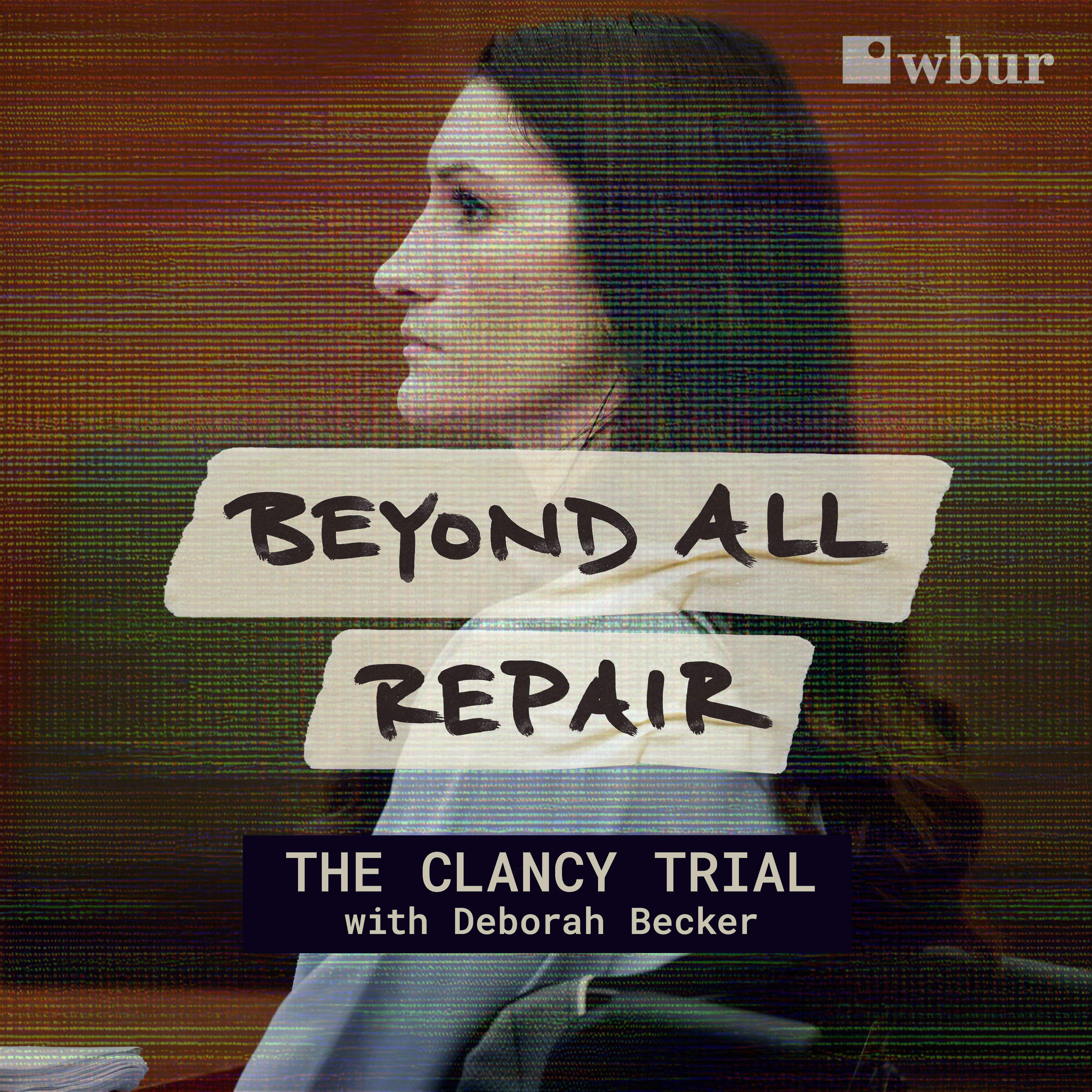
Beyond All Repair: The Clancy Trial
Lindsay Clancy killed her three young children. At the heart of her murder trial was a question about her sanity. Many women rallied around her, calling for moms to get better mental healthcare. WBUR reporter Deborah Bec...
Insights from recent episode analysis
On the show
- Sofie Kodner1 ep
- Shane1 ep
- Sean1 ep
Also: Sophia, Lyn Page, Linda Dillard, Sophia Johnson, Shane Correia
Audience Interest
Podcast Focus
Publishing Consistency
Insights are generated by CastFox AI using publicly available data, episode content, and proprietary models.
Most discussed topics
Brands & references
Total monthly reach
Based on 1 signal.
Built from
By chart position
- 🇺🇸United States · True CrimeHOME#10216K to 84K
- 🇯🇵Japan · True Crime#402.1K to 11K
- 🇬🇧United Kingdom · True Crime#881.5K to 7.8K
- 🇹🇷TR · True Crime#55509 to 2.7K
- 🇨🇦Canada · True Crime#125462 to 2.4K
- Per-Episode Audience
Est. listeners per new episode within ~30 days
22K to 115K🎙 Sporadic cadence·26 episodes·Last published 1mo ago - Monthly Reach
Unique listeners across all episodes (30 days)
22K to 115K🇺🇸73%🇯🇵10%🇬🇧7%+6 more - Active Followers
Loyal subscribers who consistently listen
8.7K to 46K
Market Insights
Platform Distribution
Reach across major podcast platforms, updated hourly
Total Followers
—
Total Plays
—
Total Reviews
—
* Data sourced directly from platform APIs and aggregated hourly across all major podcast directories.
| Date | Episode | Topics | Guests | Brands | Places | Keywords | Sponsor | Length | |
|---|---|---|---|---|---|---|---|---|---|
| 9/18/26 | 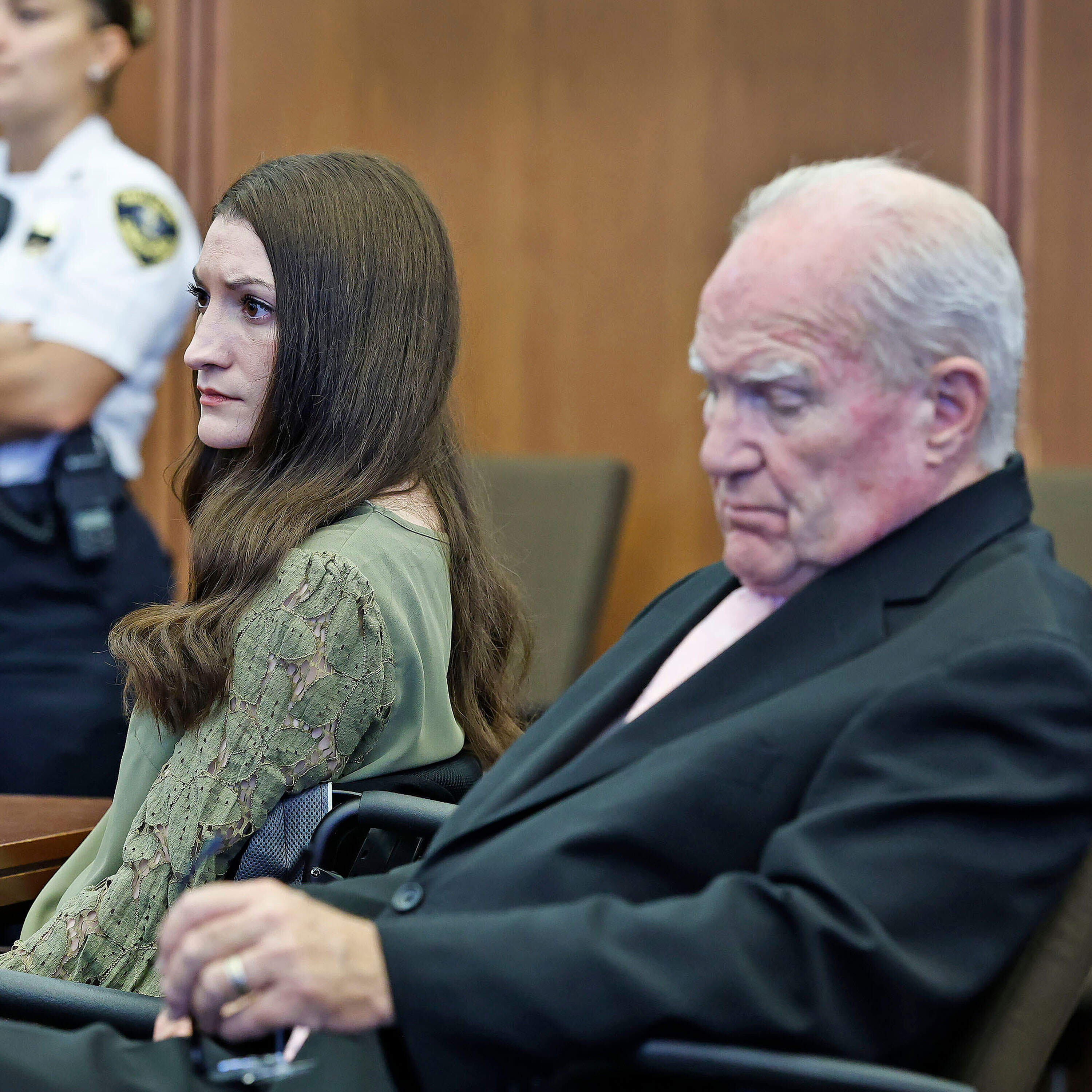 The Clancy Trial | Ep. 3: What happens next? | After the mistrial in the Lindsay Clancy case, one big question remains: Will District Attorney Tim Cruz retry the case — and if so, on what charges? As we wait for a status hearing on Sept. 29, new details have emerged about the holdout juror. Three jurors recently told the media he refused to go along with the other 11 jurors. Reports suggest he may have failed to disclose a criminal history. Meanwhile, a case in Massachusetts with similarities to Clancy's case is being reconsidered. Latarsha Sanders was convicted of murder for killing her two children in 2022. The charges were brought by Cruz, and her trial was presided over by the same judge who handled Clancy's trial. For Sanders's trial, Judge William Sullivan ruled her medical records inadmissible. But this summer, in the middle of Clancy's trial, the state's high court said that was a mistake and vacated the earlier conviction. Now, Sanders is getting a new trial. WBUR’s Deborah Becker explores what a retrial might look like for both women and what Clancy's future holds. She also examines what this case reveals about gaps in America's mental health system and unpacks what this case tells us about how we handle family tragedies. | 25m 12s | ||||||
| 9/11/26 | 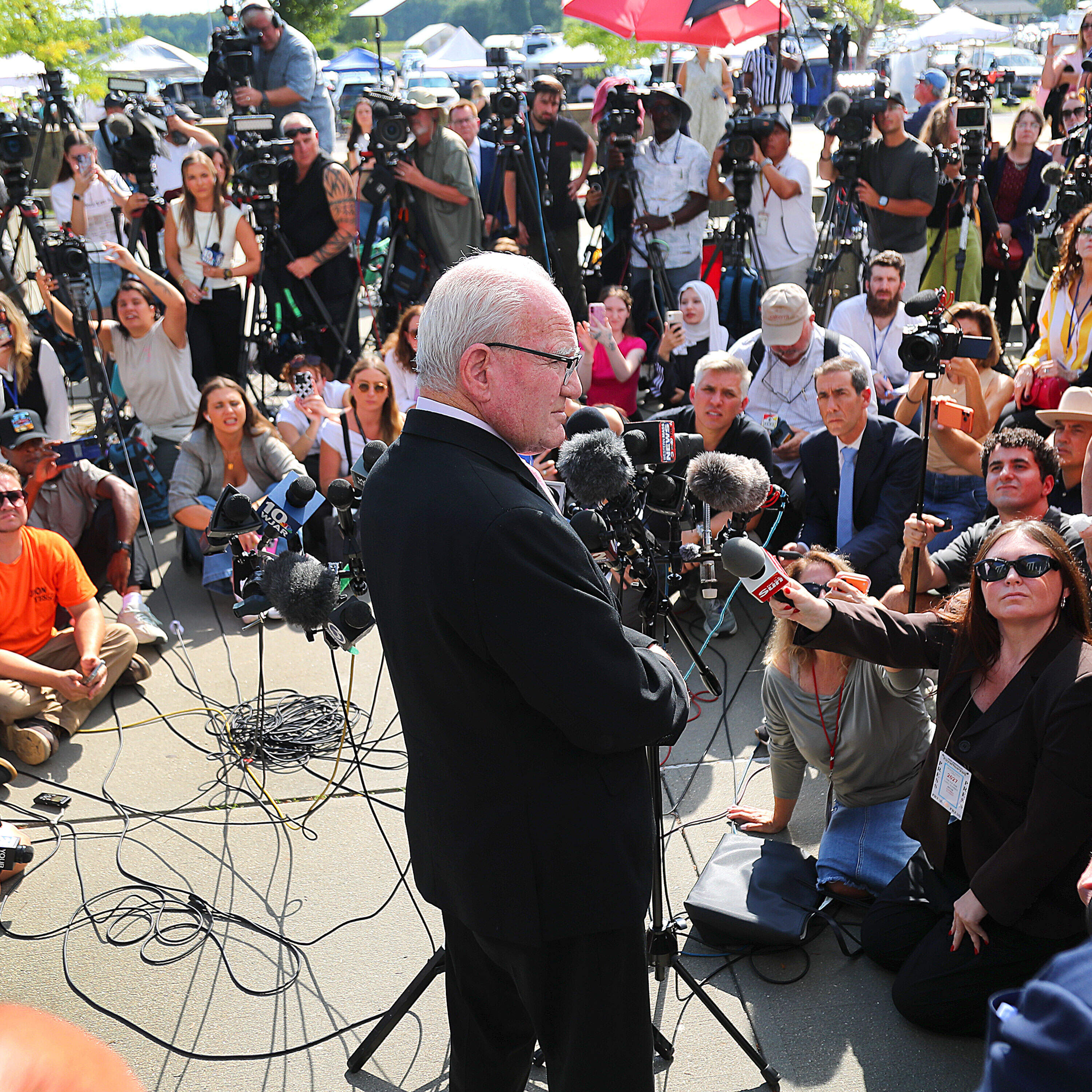 The Clancy Trial | Ep. 2: The Reaction | A week after Judge William Sullivan declared a mistrial in the Lindsay Clancy murder trial, WBUR's Deborah Becker reflects on the reaction online and in real life — inside as well as outside the courtroom. From TikTok influencers to international media outlets, the trial drew unprecedented crowds to the Plymouth courthouse. The attention on the Clancy trial is drawing attention to new mothers' mental health. But it has also sparked a national debate on gender, accountability, and women's mental health. Throughout the trial, we saw the darker side of social media virality and algorithmic bias, giving rise to multiple conspiracy theories online, especially about Lindsay Clancy's ex-husband, Patrick Clancy. Without a conviction, there's little closure for the Clancy family or the hordes of court watchers. Plymouth County District Attorney Tim Cruz will need to decide what charges to bring for a retrial. | 26m 13s | ||||||
| 9/4/26 | true crimetrial+4 | — | — | MassachusettsPlymouth County courthouse | Lindsay Clancymurder trial+5 | — | 31m 50s | ||
| 6/13/24 | true crimeMarlyne Johnson+3 | Sofie Kodner | WBURWBUR CitySpace | — | Clancy trialMarlyne Johnson+3 | — | 1h 14m 54s | ||
| 5/2/24 | homicide caseinvestigation+4 | Shane | WBUR | Boston | homicidedetective+6 | — | 59m 02s | ||
| 4/25/24 | family dynamicsmemory+3 | — | WBUR | — | murderfamily+3 | — | 45m 46s | ||
| 4/18/24 | disappearancetestimony+4 | Sean | WBUR | Guyana | Anthony SnowGuyana+5 | — | 36m 48s | ||
| 4/11/24 | trialdefense testimony+3 | Sophia | WBUR | — | Sophiatrial+5 | — | 32m 35s | ||
| 4/4/24 | murder trialverdict+3 | — | — | first-degree murderguilty verdict+3 | WBURBEYOND | 34m 37s | |||
| 3/28/24 | motivegreed+4 | — | WBUR | — | SophiaMarlyne+6 | — | 35m 51s | ||
Want analysis for the episodes below?Free for Pro Submit a request, we'll have your selected episodes analyzed within an hour. Free, at no cost to you, for Pro users. | |||||||||
| 3/21/24 | alcohol abusegambling+4 | Lyn PageLinda Dillard | — | — | Marlyne JohnsonRichard Johnson+5 | — | 35m 14s | ||
| 3/14/24 | family dynamicsmurder investigation+4 | Sophia JohnsonShane Correia | WBUR | Washington stateNew York | murderfamily+3 | — | 44m 25s | ||
| 3/7/24 |  Beyond All Repair Ch. 2: The Case | Amory learns more about Marlyne Johnson, Sophia Johnson’s late mother-in-law, and her murder is explored through footage of Sophia’s 2003 trial. Clark County Detective Rick Buckner and his team narrowed the field of suspects to siblings Sophia and Sean Correia (Shane Correia's older brother and sister). Sean testified during Sophia’s 2003 murder trial that he saw his sister standing over Marlyne’s body, holding fireplace tongs. If you have questions about the case, the real people at the center of this story, or anything else about this series, we want to hear them. Email [email protected] with a voice message or written message. Listener note: This show has descriptions of violence and strong language. *** Consider becoming a "BEYOND" member today: This show is made at WBUR, a public radio station, which means we cannot make shows like this without public support. Join our membership program, "BEYOND" here: wbur.org/beyond | 31m 39s | ||||||
| 3/7/24 |  Beyond All Repair Ch. 1: Boxes | Reporter Amory Sivertson has reopened a box that some members of the Correia family were hoping would stay shut forever. Amory first met the youngest Correia, Shane, in 2017 while interviewing him about his experience with homelessness. But there is another dark chapter of Shane's life: his older sister being accused of murdering her mother-in-law in 2002, when he was 13 years old. Now Shane wants to know, did his sister commit this brutal the crime? If you have questions about the case, the real people at the center of this story, or anything else about this series, we want to hear them. Email [email protected] with a voice message or written message. Listener note: This show has descriptions of violence and strong language. *** Consider becoming a "BEYOND" member today: This show is made at WBUR, a public radio station, which means we cannot make shows like this without public support. Join our membership program, "BEYOND" here: wbur.org/beyond | 23m 52s | ||||||
| 2/22/24 |  Trailer: Beyond All Repair | Imagine if, one day, you are accused of something. Something horrible, violent, heinous. Something you swear you did not do, and nothing you say can convince anyone otherwise — even the people closest to you. That’s Sophia Johnson’s story. Sophia was starting fresh: A new life, a new husband, a baby on the way. But it all unraveled on January 10, 2002, when her mother-in-law Marlyne Johnson was found bludgeoned to death in her home. Days later, Sophia was charged with the murder. To this day, Sophia swears she didn’t do it. But someone says they witnessed it — her own brother. When family betrays family, who do you believe? In this story of a sibling rivalry beyond compare, WBUR’s Amory Sivertson turns the clock back. She reexamines an unsolved case, a family torn apart, and a woman who wasn’t believed. From WBUR and ZSP Media, Beyond All Repair is a 10-part true crime investigation into a cold case. The series ends with an answer. The first two episodes of Beyond All Repair will drop on March 7, 2024. Listen and follow Beyond All Repair on Apple, Spotify, Amazon Music and wherever you get your podcasts. Listener note: This show has descriptions of violence and strong language. | 3m 20s | ||||||
| 2/15/24 | What's next after Violation? Introducing a new murder mystery, "Beyond All Repair" | If you loved Violation, host Beth Schwartzapfel has a new recommendation for you. Hosted by Beth's esteemed colleague, Amory Sivertson, Beyond All Repair is a new murder mystery podcast from WBUR & ZSP Media — launching March 7, right here in this feed. | 9m 39s | ||||||
| 2/6/24 |  Violation Ep 8: ‘The Fullness of Time’: Jacob Wideman’s Uncertain Future | Part eight of Violation explores what time means behind bars. And listeners respond to the question: Did Jake get what he deserves? | 39m 14s | ||||||
| 12/11/23 |  Violation Bonus: The Court Ruling Jacob Wideman Was Waiting For (Update) | This “Violation” update brings listeners the latest news in Jacob Wideman’s case, including his reaction to a ruling that leaves him few paths to freedom. | 13m 39s | ||||||
| 9/26/23 |  Violation Bonus: Jacob Wideman Says 'Vindictive' Arizona Officials Violated His Rights (Update) | In August, lawyers representing Jacob Wideman argued before a judge in Arizona that state officials treated him in a “constitutionally impermissible” way when they revoked his parole more than six years ago. Lawyers for the parole board and the state corrections department said Wideman was trying to avoid following directions and therefore could not be trusted to be free. In this update, we fill you in on the hearing and how it could set the stage for further legal action in Wideman’s case. | 14m 04s | ||||||
| 5/3/23 |  Violation Ep 7: No Safe Place | Two months after Jacob Wideman was arrested at work and brought back to prison — for failing to make an appointment with a psychologist on a particular day, as directed by his parole officer — he faced the Arizona parole board again. The board had to make a formal finding: Did Jake violate the conditions of his parole by not making that appointment? And, if so, should he stay in prison or be returned to the community? Parole revocation hearings tend to be routine affairs. But, as this episode shows, Jake’s hearing was far from routine. Ultimately, the parole board voted to keep Jake in prison, where he remains, possibly for life. In the final episode of Violation, we discuss what happens now and what Jake’s legal options are. And we return to thorny dilemmas about the criminal justice system: When someone commits a terrible crime, as Jake did, is there anything they can do to prove they deserve to be free again? How does the parole system help us determine what justice should be in any given case — and does it make us more safe? We also return to the question of why Jake killed Eric Kane in 1986. There’s one last piece of the puzzle that might bring a little more clarity, and Jake tries to explain it in his own words. | 59m 27s | ||||||
| 4/26/23 |  Violation Ep 6: 'Your Life Is About To Change' | Six months after Jacob Wideman was released from prison on home arrest, he appeared before the parole board for a routine check-in hearing. His parole officer told the board that Jake was doing well: Jake’s employers and therapists gave him positive reviews, as did the director at his halfway house and the landlord at his apartment complex. But other people were coming to a different conclusion. About a week before the hearing, Jake’s parole officer had told him that he had received complaints that Jake had committed numerous violations of the terms of his parole — violations that, if he had committed them, could cost him his freedom. The officer also told him something that startled him: A private investigator could be watching him. “It brought home to me the people who didn't want me to be out were keeping an exceptionally close eye on me, and that, you know, they were willing to go to some pretty drastic lengths to try to find ways to get me put back in prison,” Jake said later in an interview from prison. Soon after that routine check-in hearing before the parole board, Jake was re-arrested. In Part 6 of "Violation," we hear interviews and testimony from Jake, his attorneys, parole officials and others as we piece together the events leading up to the parole violation that sent Jake behind bars again — possibly for life. | 46m 57s | ||||||
| 4/19/23 | Violation Ep 5: Mass Supervision | In 2016, after 30 years behind bars and seven hearings in front of the Arizona parole board, Jacob Wideman was released from prison. Being on parole is a strange hybrid between prison and freedom. You’re still technically serving your sentence, but in the community. When Jake first got out, he was on home arrest, a strict version of parole. He had to wear an ankle monitor so the state could track his whereabouts, and he couldn’t leave his house without permission. Jake also had to follow more than two dozen separate parole conditions, among them: no driving; no contact with minors, no drinking alcohol. Not following any one of the rules could land him back in prison on a moment’s notice. And the vague catchall condition, “I will follow all directives I am given, either verbal or written.” This last one would come back to haunt him. On any given day, a quarter of incarcerated people nationwide are there for breaking the rules of their parole or probation. These behaviors are called technical violations and can include things like moving to a new apartment without permission or failing to attend a drug treatment program. You may have heard the term “mass incarceration” — this idea that the U.S. locks up more people than any country in the world. But lately, scholars and activists have also been talking about “mass supervision.” There are almost two million people in U.S. prisons, but there are almost four million people on probation or parole. In Part 5 of "Violation," we examine what life is like for the millions of people on parole in the U.S., and describe what happened when Jacob Wideman was on parole. Jake didn’t know it when he was first released, but his freedom would only last nine months — and there were people on the outside working to put him back inside. | 38m 02s | ||||||
| 4/12/23 |  Violation Ep 4: Heart Tests | How do you build a meaningful life in prison, knowing you might never be free? What if whether you might one day be free hinges on your ability to build a meaningful life in prison? In Part 4 of “Violation," we follow Jacob Wideman’s decades-long journey through the Arizona prison system and hear how he prepared to tell his life story to the parole board. Two years after he murdered Eric Kane, Jake was transferred from county jail to the Arizona Department of Corrections to begin serving a life sentence. At 18 years old, he was thrust into a world where the only way to feel safe was through physical aggression and bravado. He had many years of practice pretending he wasn’t suffering from mental health struggles in his youth, but now, Jake had to push those struggles even further out of sight as he faced a series of challenges in prison, each more difficult than the last. “Heart test” is prison shorthand for proving yourself when you first arrive in the facility — standing up for yourself and not snitching to guards after you’ve been assaulted, for example. But the physical heart tests of Jake’s early years would give way to heart tests of a different kind: a slow and painful journey to identify and manage his mental health problems, and a search for love, even through prison bars. Eventually he would have to stitch all these experiences together to tell the parole board a compelling life story, in the hopes that they would one day find him worthy of release. | 47m 42s | ||||||
| 4/5/23 |  Violation Ep 3: Life Without Parole | Imagine the worst day of your life, when you did the one thing you are most ashamed of. Now imagine having to convince a panel of strangers — who suspect you might be lying — how sorry you are. After years of preparing for this moment, you get only minutes to make your case. And the stakes couldn’t be higher: The rest of your life depends on whether or not the strangers believe you. This is how people seeking parole often describe the experience. Daniel Medwed, a law professor at Northeastern University, describes parole hearings as “a trap for the unwary,” where those who are mentally unprepared for the emotional complexities of the process can find themselves at a grave disadvantage. Every year in the United States, tens of thousands of people appear before parole boards asking to be released from prison. These boards play an outsized role in the criminal justice system — how much time someone actually spends in prison, or in some cases, whether they get out at all, is often decided not by a judge or jury, but by a parole board. And yet, few people understand how they work. Part 3 of Violation examines parole boards, largely secretive institutions that operate in many states with few rules and little oversight. These panels are supposed to be independent, but often do their work under pressure from the politicians who appoint them. In the best of circumstances, parole board members are assigned a virtually impossible task: to predict what human beings they barely know are going to do in the future. And they have people’s lives and the public’s safety in their hands. What happens at parole boards is a huge part of Jacob Wideman’s story, and his story tells us a lot about the parole system in America. After serving 25 years behind bars for killing his summer camp roommate, Eric Kane, Wideman went before a parole board in Arizona for the first time. Starting with his first hearing in 2011, he was denied parole over and over. Except for one time. | 35m 15s | ||||||
| 3/29/23 |  Violation Ep 2: 'Bad Seed' | Not long after Jacob Wideman murdered his summer camp roommate, Eric Kane, in 1986 — seemingly with no motive — a question emerged in the breathless news coverage of the tragedy: Was Jake a “bad seed”? It was no accident that some reporters latched onto the phrase. After all, it was plucked straight from perhaps the most famous book written by Jake’s own father, acclaimed author John Edgar Wideman, about his family’s experience with violence, trauma and incarceration. But John Wideman wasn’t writing about his son Jake when he used the phrase “bad seed” in his seminal memoir, “Brothers and Keepers.” The book was published in 1984, two years before Jake murdered Eric. Instead, John was writing about his own younger brother Robby, Jake’s uncle, who years earlier had participated in a robbery that went very wrong. A man died, and although Robby didn’t pull the trigger, he was sentenced to life in prison. “The bad seed. The good seed. Mommy’s been saying for as long as I can remember: ‘That Robby, he wakes up in the morning looking for the party,’” John Edgar Wideman writes in “Brothers and Keepers” — and reads aloud in this latest episode of “Violation,” a podcast series from The Marshall Project and WBUR. This idea from John’s book, of going “bad,” would be applied to Jake, too, although John was disdainful of the concept. “Bad Seed,” Part Two of “Violation,” tells the story of Jake’s Uncle Robby through interviews with John as well as with Jake, who remembers having epiphanies as a boy that he would somehow follow his uncle’s path. The episode also brings listeners through the harrowing weeks and months after the murder of Eric Kane, when Jake Wideman turned himself into authorities and began his long journey through the criminal justice system. Ultimately, this episode asks: What should happen to kids like Jake? | 41m 11s | ||||||


Showing 25 of 26
Pitch Fit is a Pro feature
See how bookable this show is for guests, which brands already advertise, the per-episode ad value, and the best-fit guest and sponsor profile. The numbers are blurred on the free plan.
How readily this show books outside guests like you.
How proven this show is for host-read sponsorships.
For Guests
ProFor Advertisers
ProUpgrade to Pro to unlock guest cadence, sponsor categories, fit scores, and per-episode ad value for this show.
Similar Audience Demographics
Podcasts that attract a similar listener profile


Chart history for Beyond All Repair: The Clancy Trial
Peaked at #40 in Japan, currently #40 in Japan.
| Market | Genre | Peak | Current | Trend |
|---|---|---|---|---|
| Japan | — | #40 | #40 | — |
| TR | — | #55 | #55 | — |
| CO | — | #57 | #57 | — |
| MY | — | #70 | #70 | — |
| HK | — | #81 | #81 | — |
| United Kingdom | — | #88 | #88 | — |
| United States | — | #102 | #102 | — |
| Canada | — | #125 | #125 | — |
| Ireland | — | #141 | #141 | — |
| AR | — | #143 | #143 | — |
| New Zealand | — | #146 | #146 | — |
| India | — | #149 | #149 | — |
| Denmark | — | #165 | #165 | — |
| Australia | — | #173 | #173 | — |
| Norway | — | #197 | #197 | — |
Chart Positions
15 placements across 15 markets.
Chart Positions
15 placements across 15 markets.