
The MacRumors Show
Join MacRumors' Dan Barbera and Hartley Charlton for discussion about all of the latest news and rumors from the world of Apple. Whether you’re wondering what’s next for the iPhone, looking for insights into the rumor mi...
Insights from recent episode analysis
On the show
- Michael Fisher1 ep
Audience Interest
Podcast Focus
Publishing Consistency
Insights are generated by CastFox AI using publicly available data, episode content, and proprietary models.
Most discussed topics
Brands & references
Total monthly reach
Based on 1 signal.
Built from
By chart position
- 🇺🇸United States · TechnologyHOME#3696K to 508K
- 🇬🇧United Kingdom · Technology#2015K to 81K
- 🇦🇺Australia · Technology#275.0K to 27K
- 🇨🇦Canada · Technology#374.2K to 22K
- 🇮🇩ID · Technology#252.4K to 13K
- Per-Episode Audience
Est. listeners per new episode within ~30 days
128K to 676K🎙 ~2x weekly·196 episodes·Last published 3d ago - Monthly Reach
Unique listeners across all episodes (30 days)
256K to 1.4M🇺🇸75%🇬🇧12%🇦🇺4%+5 more - Active Followers
Loyal subscribers who consistently listen
141K to 744K
Market Insights
Platform Distribution
Reach across major podcast platforms, updated hourly
Total Followers
—
Total Plays
—
Total Reviews
—
* Data sourced directly from platform APIs and aggregated hourly across all major podcast directories.
| Date | Episode | Topics | Guests | Brands | Places | Keywords | Sponsor | Length | |
|---|---|---|---|---|---|---|---|---|---|
| 11/20/26 |  219: What’s Next for iPhone Duo? | On this week's episode of The MacRumors Show, we discuss the iPhone Duo's new Face Unlock feature and all the latest rumors about Apple's next-generation foldable iPhones.00:00 Intro00:30 iPhone Duo Gets Face Unlock11:45 Sponsor: Claude12:44 Is iPhone Duo Ready for the Mainstream?21:37 Will iPhone Duo 2 Get Face ID?26:50 Does iPhone Duo Need Bigger Screens?31:27 Sponsor: Blueprint32:43 How Widespread Are iPhone Duo Screen Failures?37:09 Combining the Action Button and Camera Control41:49 Will Apple Make a Flip iPhone?44:57 Would You Actually Use the Inner Display?48:17 Is Unfolding Your iPhone in Public Uncool?Apple this week added “Unlock with Front Camera" to the existing iPhone Duo in iOS 27.3 beta 2. The optional feature allows users to unlock the phone with facial recognition when it is closed, providing an alternative to the side-mounted Touch ID sensor. It does not offer Face ID's depth-sensing authentication, and Touch ID remains necessary for Apple Payand accessing saved passwords.The addition makes unlocking more convenient when fingerprint recognition is impractical, such as with wet hands, but introduces a distinction between unlocking the phone and authenticating sensitive actions. The same beta adds “Close to Lock," allowing users to lock the device when folding it shut instead of transferring their app to the outer display.Face ID remains one of the biggest questions surrounding the next iPhone Duo. Bloomberg's Mark Gurman says Apple has developed second-generation prototypes with Face ID beneath the outer display, but subsequently warned that the company is running out of time to finalize the feature. It could instead arrive with the third generation.Meanwhile, the leaker known as "Digital Chat Station" claims current engineering units retain Touch ID, a 7.6-inch inner display, and a 5.4-inch outer display. Face ID limited to the outside would also leave a practical question about authentication when the phone is unfolded, potentially giving Apple a reason to retain fingerprint recognition alongside facial authentication.The second-generation iPhone Duo is expected to launch in the fall of 2027. Its development reportedly received formal approval earlier this year, and Apple was already said to be testing itwith iOS 28 in June.Apple's longer-term goals reportedly include a thinner and lighter design, a dedicated telephoto camera, and Action button functionality. Gurman previously predicted that smaller components and computational processing could enable Face ID and a telephoto camera by the third generation.Gurman says a third-generation model could arrive as early as 2028 with slightly larger inner and outer displays. He = separately discussed a potential inner screen of around 7.9 to 8.1 inches for a future model, rather than a separate larger "Max" version. A bigger chassis could provide more room for additional hardware, but would also raise questions about added weight.Hin The leaker known as "Fixed Focus Digital" has linked improvements in the touchscreen MacBook Pro's hinge to work on the second- and third-generation iPhone Duo. Reliability remains part of the discussion following reports of cracked displays on the current model. For the controls, Apple could restore the missing Action button's functionality without adding another physical button. According to the leaker known as "Instant Digital," iPhones launching from the second half of 2027 could combine the controls, using a single press to open the camera and a long press for a customizable action.For a limited time only, new customers get 20% off + free shipping at blueprint.bryanjohnson.com by using code MAC at checkout. #Blueprint #adThis episode is sponsored by Claude, the AI for problem solvers. Hand off the tedious work to Claude. Try it on any paid plan at claude.ai/mac. #ad | 54m 25s | ||||||
| 11/13/26 |  218: HomeView and Apple TV 4K First Impressions | On this week's episode of The MacRumors Show, we share first impressions of Apple's new HomeView and Apple TV 4K, including their hardware, everyday usefulness, and experiences with Siri AI.00:00 Intro02:43 HomeView First Impressions04:29 Is the Wall-Mounted HomeView Worth It?08:25 Sponsor: Shopify09:44 HomeView Sound Quality and Display11:54 Face Recognition and Personalization13:46 Apps and Everyday Use17:56 Watching Video on HomeView21:35 Would an iPad Dock Make More Sense?24:42 Does HomeView Need Better Software?27:29 Siri AI’s Speed and Reliability Problems33:19 Apple TV 4K First Impressions35:02 HomePod Surround Sound and Find My Remote36:39 Should You Buy a HomeView?39:26 Wrap-UpFollowing a week with the HomeView, Apple's new smart home device makes a strong impression with its build quality and sound, but leaves questions about how much it adds to a household already filled with Apple products. Its overlap with existing devices has already prompted some skepticism.The 7-inch display may feel smaller in person, with its square aspect ratio and thick bezels contributing to an appearance reminiscent of a large Apple Watch. Sound quality from the tabletop model is a highlight, falling between the HomePod mini and full-sized HomePod. That also raises questions about the value of the wall-mounted version, which costs the same $299 before mounting accessories but lacks the larger speaker base.In the kitchen, setting timers, playing music, answering questions, and controlling smart home accessories provide straightforward reasons to use the HomeView. Turning web recipes into clean, step-by-step instructions with ingredient checklists is a particularly useful example of where the software is designed around its setting. Elsewhere in the home, its purpose can be less obvious, especially at a desk already surrounded by screens.Personalization is another promising part of the experience. The HomeView's face recognition can switch quickly between household members, bringing up the correct person's apps and information even when two people are standing beside one another.The interface combines familiar elements from Apple's other platforms, but that familiarity also invites questions about whether it feels sufficiently tailored to the home. Messaging and browsing are available, yet typing on a stationary display may be something users do only occasionally. The HomeView has no App Store, instead supporting compatible third-party audio and video apps through a connected iPhone or iPad, just like CarPlay.Video playback offers some flexibility for watching something at a kitchen counter, bedside, or desk, although widescreen content occupies a small portion of the square display.The fourth-generation Apple TV 4K provides noticeably faster navigation and animations thanks to the A19 chip. Its built-in microphones make hands-free Siri convenient when the remote is missing, including while TV audio is playing. The updated Siri Remote's speaker also makes finding it around the room easier.Support for four-speaker HomePod surround sound provides another reason to consider the new Apple TV, particularly for users who already own compatible speakers. We weigh up the appeal of expanding an existing HomePod setup against buying a dedicated home theater system, and consider whether these additions justify the Apple TV's new, higher starting price of $299.Siri AI is a major part of both new products, and its expanded capabilities come with familiar frustrations. More complex questions and requests involving personal context can work, but long waits and inconsistent results can interrupt the experience. Our discussion also touches on occasions when simple tasks, such as adding reminders, prove less reliable than expected, despite the assistant's broader abilities.Ready to launch your business before Black Friday? Start your free trial at https://shopify.com/mac | 40m 17s | ||||||
| 11/6/26 |  217: iOS 27.3 Beta's HUGE Features: Siri AI, Health, Fitness+ and More | Apple's first 27.3 betas bring expanded Siri AI actions, a redesigned Health app, and new fitness tools, alongside conversation summaries on the Apple Watch. This week's episode of The MacRumors Show takes a closer look at the updates.00:00 Intro03:32 Siri AI’s New App Actions11:24 Sponsor: Quince12:42 Safari’s Vertical Tabs13:27 Would We Switch Back From iPhone Duo?19:01 iPhone Duo and Safari Improvements21:18 Fitness+ Gets Gym Strength Plans26:21 The Redesigned Health App Returns27:43 Fixing Third-Party Step Tracking29:55 Apple Music Updates30:31 StandBy Gets a Major Upgrade33:14 Apple Watch Live Rewind and Siri Recap41:43 Wrap-UpSiri AI gains additional actions across Apple's apps, including unsubscribing from mailing lists, organizing files, and managing Safari tabs. In Weather, Siri can add saved locations and toggle severe weather or next-hour precipitation notifications. The additions extend the assistant's usefulness for everyday tasks, although the full range of supported requests can still be difficult to discover.A new developer preview also enables more flexible third-party integrations. Developers can supply custom actions and app skills that help Siri coordinate multiple steps, potentially improving its handling of more complicated requests. App Store submissions for these integrations are scheduled to open in the spring.Safari adds vertical tabs and Adaptive Dark Mode, allowing websites without their own dark appearance to adopt one automatically. The iPhone Duo also gains horizontal Reachability and a revised keyboard, making its wider outer display easier to operate with one hand.Apple Fitness+ gains Gym Strength, which creates personalized four-week plans based on available equipment and workout preferences. Short videos from Fitness+ trainers demonstrate proper form, extending the service beyond workouts that require following an entire video session. The initial beta's equipment selection and scheduling options nevertheless leave room for improvement, particularly for users whose routines vary from week to week.The redesigned Health app returns with Insights and Longevity sections, turning collected measurements into more accessible guidance and longer-term health assessments. Updated StandBy displays bring more customizable clocks, Calendar views, and Weather information to additional iPhones. Apple Music also gains enhanced transitions, concert recommendations, and Selfie Sing karaoke videos.On the Apple Watch, Live Rewind and Siri Recap introduce new ways to recover and summarize spoken information. Live Rewind provides a transcription of the preceding 15 seconds, while Siri Recap creates detailed conversation summaries that can be useful for meeting notes.The features also raise questions about privacy in everyday conversations. Leaving summarization enabled throughout the day is a different proposition from deliberately starting a recording for a particular meeting, especially for other people nearby. Time- and location-based scheduling provides more control over when Siri Recap operates. | 42m 40s | ||||||
| 10/30/26 |  216: Apple Announces Touchscreen OLED MacBook Pro, iPad Mini 8, and More! | On this week's episode of The MacRumors Show, we discuss Apple's newly announced OLED MacBook Pro, iPad mini with A20 Pro, and M6 versions of the iMac and entry-level 14-inch MacBook Pro.00:00 Intro01:30 iPhone Duo Durability Concerns03:48 OLED iPad mini—Still No ProMotion?11:13 Sponsor: Rula13:05 TechWoven Comes to iPad17:13 Who Is the M6 iMac For?22:06 Does the M6 MacBook Pro Make Sense?27:44 Does the MacBook Pro Need a Touchscreen?35:06 Dynamic Island and the Glowing Apple Logo Return41:40 Should You Wait for M7?43:25 Where Are Face ID and Cellular?46:25 OutroThe MacBook Pro gains a tandem OLED display with touch support for the first time. Available in 14- and 16-inch sizes, the "PROLED XDR display" offers up to 2,000 nits of peak HDR and SDR brightness, a 10,000,000:1 contrast ratio, and Adobe RGB support alongside P3. Touch input enables gestures such as scrolling, pinching to zoom, and dragging content, with a reinforced hinge and camera stabilization designed to accommodate interaction with the screen.A Dynamic Island replaces the notch, providing access to Live Activities, Siri AI, and more. The enclosure is thinner and lighter, with the 14-inch model weighing 3 pounds and the 16-inch model weighing 4 pounds. The larger model's display grows to 16.3 inches, and the iconic illuminated Apple logo returns.The new models retain the M5 Pro and M5 Max chips introduced earlier this year, but add a redesigned thermal architecture and upgraded speakers with 50% deeper bass and dedicated tuning for closed-lid playback. Maximum storage doubles to 16TB. Pricing starts at $2,899 for the 14-inch model and $3,399 for the 16-inch model, a $400 premium over comparable mini-LED configurations.The new iPad mini moves from an 8.3-inch LCD to an 8.5-inch OLED display, with thinner borders, up to 1,200 nits of peak HDR brightness, and a nano-texture option on the 256GB and 512GB configurations. It is thinner and lighter at 5.4mm thick, and becomes the first iPad with an official IP67 water and dust resistance rating. The display remains limited to 60Hz, with no ProMotion support.The A20 Pro chip brings GPU Neural Accelerators and increased memory bandwidth to the device, with Apple claiming up to 60% faster CPU performance, 2.7 times faster graphics, and 4.5 times faster AI performance than the previous generation. The 512GB configuration has an additional CPU core and a second 16-core Neural Engine compared with the 128GB and 256GB models.An all-new Acoustic Display speaker system eliminates external speaker holes, while the front camera moves to the landscape edge and the rear camera gains an Adaptive True Tone flash. Other additions include fast charging, Wi-Fi 7, Bluetooth 6, Thread, Apple's C2 modem on cellular models, and extended external display support with iPadOS 27.2. The iPad mini starts at $699 in Midnight or Starlight, with a new $79 TechWoven Smart Folio available separately.The M6 iMac replaces the M4 model, adding two CPU and GPU cores to both the two-port and four-port configurations. It also gains GPU Neural Accelerators, dual 16-core Neural Engines, up to twice as fast SSD storage, Wi-Fi 7, Bluetooth 6, Thread, and 2.5 Gigabit Ethernet. Pricing starts at $1,499, with the four-port model starting at $1,699.The entry-level 14-inch MacBook Pro moves from M5 to M6, with a 12-core CPU and 12-core GPU, dual 16-core Neural Engines, and upgraded wireless connectivity. Memory bandwidth increases to 170GB/s on 24GB and 32GB configurations, while the 16GB model remains at 153GB/s. Its $1,999 starting price and battery life of up to 24 hours carry over from the outgoing model. All four products are available to preorder and launch on November 6.Rula patients typically pay $15 per session when using insurance. Connect with quality therapists and mental health experts who specialize in you at https://www.rula.com/mac #rulapod” | 47m 21s | ||||||
| 10/23/26 |  215: iPhone Duo Arrives, Touchscreen MacBooks Next Up | On this week's episode of The MacRumors Show, we talk through the reception to the iPhone Duo as it goes on sale today, what to expect from next week's "Pro and tell" experience, and the iPod's 25th anniversary.00:00 Intro00:51 iPod Turns 2504:43 iPhone Duo Launch and Demand10:41 iPhone Duo App Optimization22:31 Living With the iPhone Duo25:00 Touch ID and the Lack of Face ID33:00 Battery Life and Thermals37:09 Touchscreen OLED MacBook Pro46:55 OLED iPad Mini and M6 MacsThe iPhone Duo launches today, starting at $1,999, with a 5.4-inch outer display that unfolds into a 7.6-inch inner display. Early reviews present a mixed picture of a device that brings fresh ideas to the iPhone, but asks users to accept some significant compromises.The matte inner display has emerged as a particular highlight, reducing reflections and making the crease less noticeable while providing more space for reading, watching videos, editing photos, and multitasking. Premium construction and performance also make a positive impression, but the software experience is less consistent. Unoptimized apps, wasted screen space, and unfamiliar controls can make the larger display feel underused.Reviewers are also divided over how comfortably iPhone Duo handles quick, everyday tasks. Some find the outer screen perfectly adequate for messaging and quick interactions, while others consider it to be restrictive. Its weight and width complicate one-handed use, returning to Touch ID takes adjustment, and the cameras fall short of Apple's Pro models. Our own first 24 hourswith the device highlight many of these same trade-offs, alongside the appeal of side-by-side multitasking. We consider whether carrying a larger screen outweighs those compromises, or whether better app support and future hardware will make a more convincing case.Apple's next product announcement is already approaching, with the "Pro and tell" experiencescheduled for October 28 in Los Angeles. Redesigned 14-inch and 16-inch MacBook Pro models are expected to headline the announcements, combining OLED displays with the first touchscreens on a Mac.The redesigned machines are rumored to feature lighter, potentially thinner designs, a reinforced hinge for touch input, and a Dynamic Island replacing the "notch." They are expected to retain M5 Pro and M5 Max chips, making the display and design the main new features. A redesigned iPad mini is also expected, featuring an OLED display, the A20 Pro chip, a landscape front-facing camera, and a redesigned speaker system. Water resistance could also be present for the first time on an iPad. Apple is also expected to bring the M6 chip to the iMac and entry-level 14-inch MacBook Pro.Finally, we mark 25 years since Apple introduced the original iPod on October 23, 2001. | 51m 07s | ||||||
| 10/16/26 |  214: Was Apple's HomeView Worth the Wait? | Apple this week finally announced the HomePod mini 2, a new Apple TV 4K, and its "HomeView" smart home hub. On this week's episode of The MacRumors Show, we talk through our reactions to the announcements.00:00 Intro01:51 HomeView First Impressions11:53 HomeView Apps and Ecosystem21:22 HomeView Pricing and Wall Mounting24:55 Apple TV and HomePod Price Hikes30:21 Apple Home Collection39:11 HomeView vs. iPhone Duo43:05 Siri AI and HomePod mini 248:22 Apple TV 4K Upgrade Debate52:06 Apple’s Smart Home Roadmap54:05 OLED MacBook Ultra RumorsApple's HomeView costs $299 and combines a 7-inch square display with Siri AI, FaceTime, music playback, and smart home controls. It has had something of a mixed reception from YouTubers and the wider Apple community, with some of the criticism centering on what it adds for someone who already owns an iPhone, iPad, Apple Watch, or HomePod.A screen for timers, photos, music, and home controls will be useful for many, but it is harder to explain why someone wearing an Apple Watch would reach across a kitchen counter to set a timer, or why they would type a message on HomeView instead of taking out their iPhone. Apple's promotional video puts some of those less convincing uses front and center.There are many details to like about the design. The display can show photos and customizable faces, dim to just 0.3 nitsin the dark, and adjust its interface as someone approaches. In the kitchen, guided recipes turn webpages into step-by-step instructions, with voice-controlled timers available while cooking.HomeView makes more sense as a replacement for an Echo Show or Nest Hub, particularly for anyone tired poor ecosystem integration and ads on their smart display. For people who have never wanted one, it may be less obvious what Apple has added to change their minds.HomeView recognizes up to six people and switches to their apps and personal information. Its privacy protections mean personal content normally appears only when the user is recognized and their paired device is nearby and recently unlocked. Siri AI can answer general questions without an Apple Intelligence-compatible device, but personal requestsstill require one.There is no App Store, either. Compatible third-party audio and video apps appear through a connected iPhone or iPad, using a CarPlay-like system. For services such as Spotify and Audible, that means relying on another device rather than installing an app directly on HomeView.The wall-mounted version costs the same $299 despite losing the tabletop model's speaker base, woofer, and passive radiators. Mounts start at $59.95, and the box includes no power adapter or cable. It could be a welcome replacement for an iPad mounted on a wall, but putting several around a home quickly becomes expensive.Six years after the original HomePod mini, the HomePod mini 2 adds an S10 chip, Sound Glowlighting, and support for Siri AI while retaining the same basic speaker hardware. Its $149 price is roughly 50% higher than the original's $99 launch price, following a June increase to $129.The new model can serve as a default Mac speaker on models with Wi-Fi 6E or later. Siri AI is likely to make a bigger difference to everyday use, but it will arrive later, after the speaker launches on October 30.The new Apple TV 4K also asks buyers to pay more for a familiar product. At $299, it adds the A19 chip, built-in microphones, and an updated Siri Remote. Siri AI is also coming to older models, while the new remote can be bought separately for $59.The starting price is now more than twice the $129 entry point available before June's increases. The new model includes 128GB of storage, Ethernet, and Thread, and the equivalent outgoing model had already reached $249. Even so, $299 is a substantial outlay for a streaming box when many existing owners have little reason to replace theirs.Support for four HomePods is one reason to upgrade. The new Apple TV can use matching front and rear pairs of HomePod mini 2 or second-generation full-sized HomePods for surround sound. Buying the box, two full-sized HomePods, and two HomePod mini 2 speakers at Apple's U.S. prices totals $1,295. These are products people can keep for years, but that also makes keeping an existing setup an attractive option.The Apple Home Collection, developed with LG and Schneider Electric, adds another set of expensive purchases. One-tap setup and a lock that uses Ultra Wideband to unlock as someone approaches are useful features. Whether they justify paying more than for other HomeKitaccessories is another matter, especially when buying equipment for an entire home.Apple is reportedly still working on a robotic home display and its own camera, separate from the LG and Schneider products. The camera is said to detect activity and presence without recording video.We also look ahead to the rumored OLED MacBook, where a lighter design and a new display could matter more than the touchscreen. It is expected to be announced later this month. We also briefly return to the iPhone Duo, including whether its folding display and software changes make a more convincing case for trying a new kind of Apple device.Rula patients typically pay $15 per session when using insurance. Connect with quality therapists and mental health experts who specialize in you at https://www.rula.com/mac #rulapodReady to launch your business before Black Friday? Start your free trial at https://shopify.com/mac | 56m 02s | ||||||
| 10/9/26 | 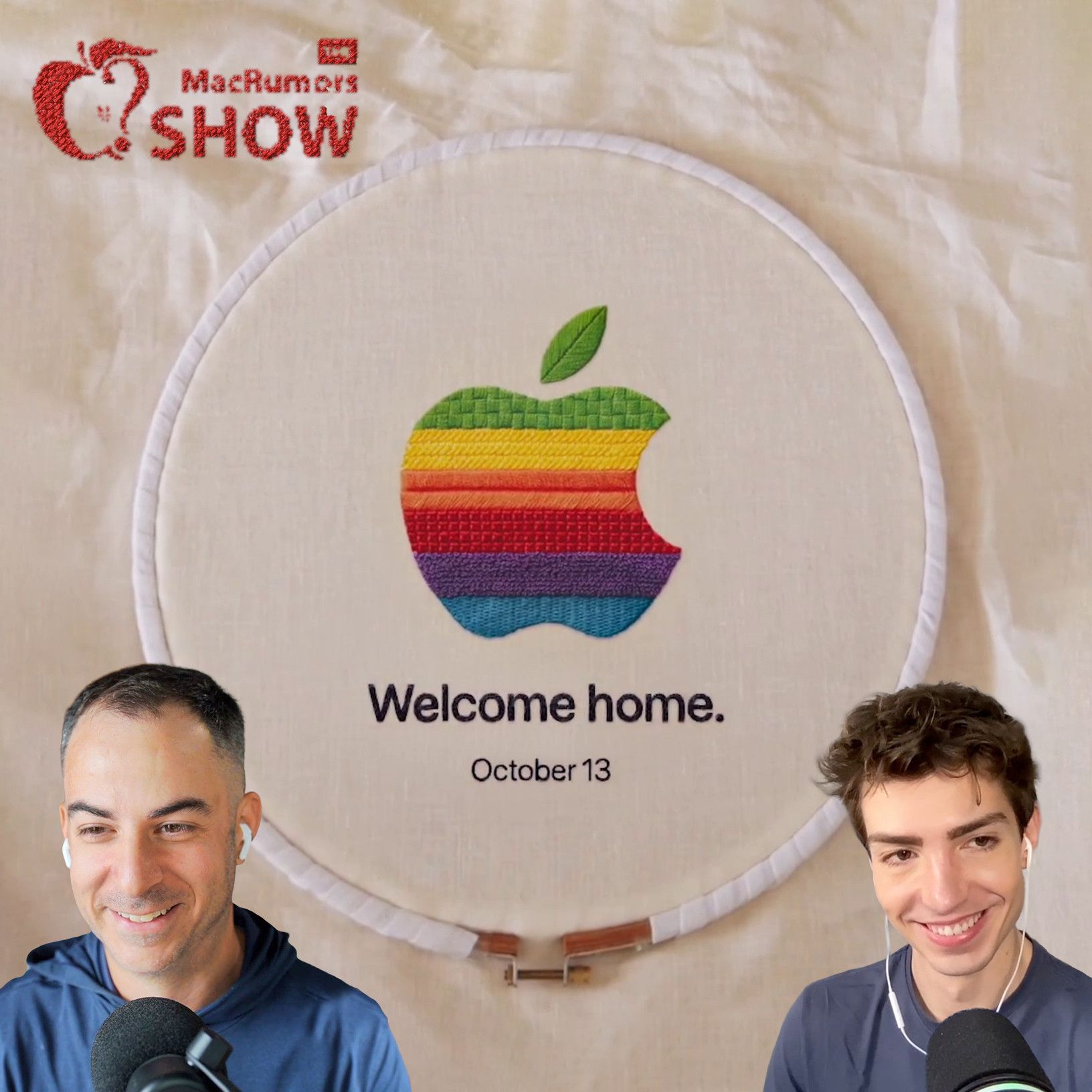 213: Apple’s All-New Smart Home Products Are Coming | On this week's episode of The MacRumors Show, we look ahead to Apple's recently announced October 13 event and its expected push into the smart home market, including a dedicated home hub, the HomePod mini 2, and a new Apple TV.00:00 Intro00:57 Apple’s Upcoming Smart Home Event03:28 John Ternus’s Vision for Apple12:05 Apple’s Smart Home Hub27:02 Apple’s Partnership With LG30:25 HomeKit Reliability and Home App Redesign36:46 Apple TV 4K Upgrades39:44 HomePod mini 244:40 iPhone Duo Pre-Orders and Colors45:29 Hartley’s iPhone 18 Pro and Apple Watch UpgradesApple is expected to introduce its first smart home hub, a new HomePod mini, and an updated Apple TV 4K, according to Bloomberg's Mark Gurman. Siri AI is expected to be central to all three devices, following years of delays.The impending launch also comes amid Apple's reported efforts under CEO John Ternus to introduce products more frequently and accelerate development. Moving beyond predictable spring and fall release cycles could give Apple more opportunities to experiment, particularly in categories where existing products have gone years without substantial hardware changes.The home hub is expected to feature a square 6-inch display, with a tabletop version resembling the iMac G4 and a separate wall-mounted model. Its new operating system reportedly combines customizable clock and photo displays, Apple Watch-style app icons, and iPad-like layouts. A range of apps including FaceTime, Music, Calendar, Notes, and more should make it useful for quick interactions throughout the day. Facial and voice recognition will bring up individual profiles, while a guest mode will hide personal information from visitors. The device is rumored to start at around $350.The Apple TV 4K is rumored to tout an A19 or A19 Pro chip, additional memory, Apple's N1 networking chip, and an updated Siri Remote, while retaining its existing design. The hardware should improve gaming performance and enable Apple Intelligence and Siri AI. The HomePod mini 2 is also expected to retain its current design, with leaked images revealing green, pink, and lighter blue finishes alongside white and black. A faster S-series chip would support Siri AI. A new full-sized HomePod is reportedly planned for a later date. Separately, software findings point to four-HomePod surround sound mode.Apple's reported collaboration with LG could help expand the ecosystem around the home hub. The planned lineup includes a video doorbell, deadbolt lock, thermostat, and temperature sensor, along with indoor, outdoor, and floodlight cameras. These would carry LG branding, with Apple reportedly contributing to their development.Apple's longer-term plans also include its own privacy-focused camera and sensor, reportedly designed to analyze the home without recording video. A higher-end home hub with a 9-inch display mounted on a robotic arm also reportedly remains in development.Apple has now announced a product event for Tuesday, October 13, sharing a "Welcome home" teaser. Selected members of the media have been invited to an "Apple Experience" in Tribeca, New York, beginning at 9:00 a.m. Eastern Time.Ready to tackle bigger problems? Get started with Claude today at — https://www.Claude.ai/mac | 47m 43s | ||||||
| 9/25/26 |  212: Are the iPhone 18 Pro Cameras Actually Worth It? ft. Tyler Stalman | Photographer and videographer Tyler Stalman joins us on this week's episode of The MacRumors Show to examine whether the iPhone 18 Pro's camera is a compelling reason to upgrade, how its new features affect everyday shooting, and what photographers gain or give up with the iPhone Duo.The iPhone 18 Pro's Main camera combines a new 48-megapixel sensor, a faster variable-aperture lens, and updated image processing. The variable aperture offers settings of ƒ/1.48, ƒ/1.8, ƒ/2.8, and ƒ/4.0. The iPhone 17 Pro has a fixed ƒ/1.78 aperture, so the new lens's widest setting admits about 45% more light on aperture values alone, or just over half an exposure stop. Apple claims around 50% better low-light performance for the complete Main camera system.At ƒ/2.8 or ƒ/4.0, people standing at different distances in a group shot can remain sharper, provided there is enough light to compensate for the smaller opening. A narrower aperture can also let video use a slower shutter speed in bright conditions, producing more natural motion blur. At ƒ/1.48, the camera has more light for indoor photos and potentially shorter Night mode exposures. The wider opening should also reduce the need for Night mode at all in some situations. The camera defaults to ƒ/1.8, close to the 17 Pro's fixed aperture, but the new sensor and processing still affect photos taken at that setting.The Pro Controls add manual aperture, shutter speed, and white balance adjustments, plus a live histogram directly in the native Camera app. Users can pin their most-used settings to the top of the viewfinder, which is a major practical improvement for professionals. For example, shutter speed offers control over frozen action or intentional motion blur, while white balance can help stop greenery being made too blue by automatic settings or maintain a consistent look between video clips.Photographic Styles 3 goes further with the ability to adjust tone and color while preserving skin tones, and new controls add Soft Skin, Glow, and Film textures, with grain that can be paired with any of them. The Film setting aims to reproduce more of an analog photograph's character, including its grain and the glow around bright highlights. The strength of the effects can be adjusted, and the style can be changed after capture. Tyler has tested the iPhone 18 Pro's film look against a film SLR loaded with Kodak Portra 400. Apple Reference Image signs data from the iPhone 18 Pro's new Main camera sensor at capture, creating a secure digital negative that can be compared with an editable photo. Meanwhile, iOS 27's Photos tools can change perspective with Reframe, generate scenery beyond a picture's original edges with Extend, or remove larger objects with Clean Up. Reference Image leaves room for creative editing while giving photographers a way to show what the sensor captured, provided they enabled the mode before taking the shot.Meanwhile, the iPhone Duo's camera system has a 48-megapixel Main camera with a fixed ƒ/1.6 aperture and the same 48-megapixel Ultra Wide camera as the iPhone 18 Pro. Its Main camera shares a 26mm focal length, ƒ/1.6 aperture, and Hybrid Focus Pixels with the iPhone 17e, leading some to question why Apple's most expensive iPhone appears to have camera hardware similar to an entry-level model. That being said, the Duo has sensor-shift optical image stabilization, which the 17e lacks, and Apple has not disclosed enough sensor details to establish that the two phones use identical hardware.Compared with the iPhone 18 Pro, the iPhone Duo also lacks a dedicated Telephoto lens, variable aperture, manual Pro Controls, Reference Image, and professional formats including ProRAW and ProRes. The iPhone Duo's folding design makes a different case for its camera. Smart Take can capture a group photo when everyone is posing, Kid Cue plays animations on the outer display to draw a child's attention, and Duo Preview lets subjects see a live view of a photo being taken of them with the rear camera. The phone can also stand partly open for hands-free shots.Looking to the future, Apple is rumored to be working on a custom image sensor that could arrive as soon as next yearwith the 20th-anniversary iPhone.Ready to tackle bigger problems? Get started with Claude today at — https://www.Claude.ai/macRula patients typically pay $15 per session when using insurance. Connect with quality therapists and mental health experts who specialize in you at https://www.rula.com/mac #rulapodCheck out Tyler's podcast here - http://www.fullstackcreatorshow.com/00:00 Intro01:02 iPhone 18 Pro Camera Upgrades and Variable Aperture08:42 Is the iPhone 18 Pro Worth Upgrading To?16:22 New Pro Camera Controls and White Balance20:20 Photographic Styles and Film Grain28:35 AI Photo Editing and Reference Images31:53 Will the iPhone Duo Camera Be Good Enough?40:40 Can the iPhone Duo Replace an iPad?43:19 What’s Next for iPhone Cameras? | 47m 11s | ||||||
| 9/18/26 | 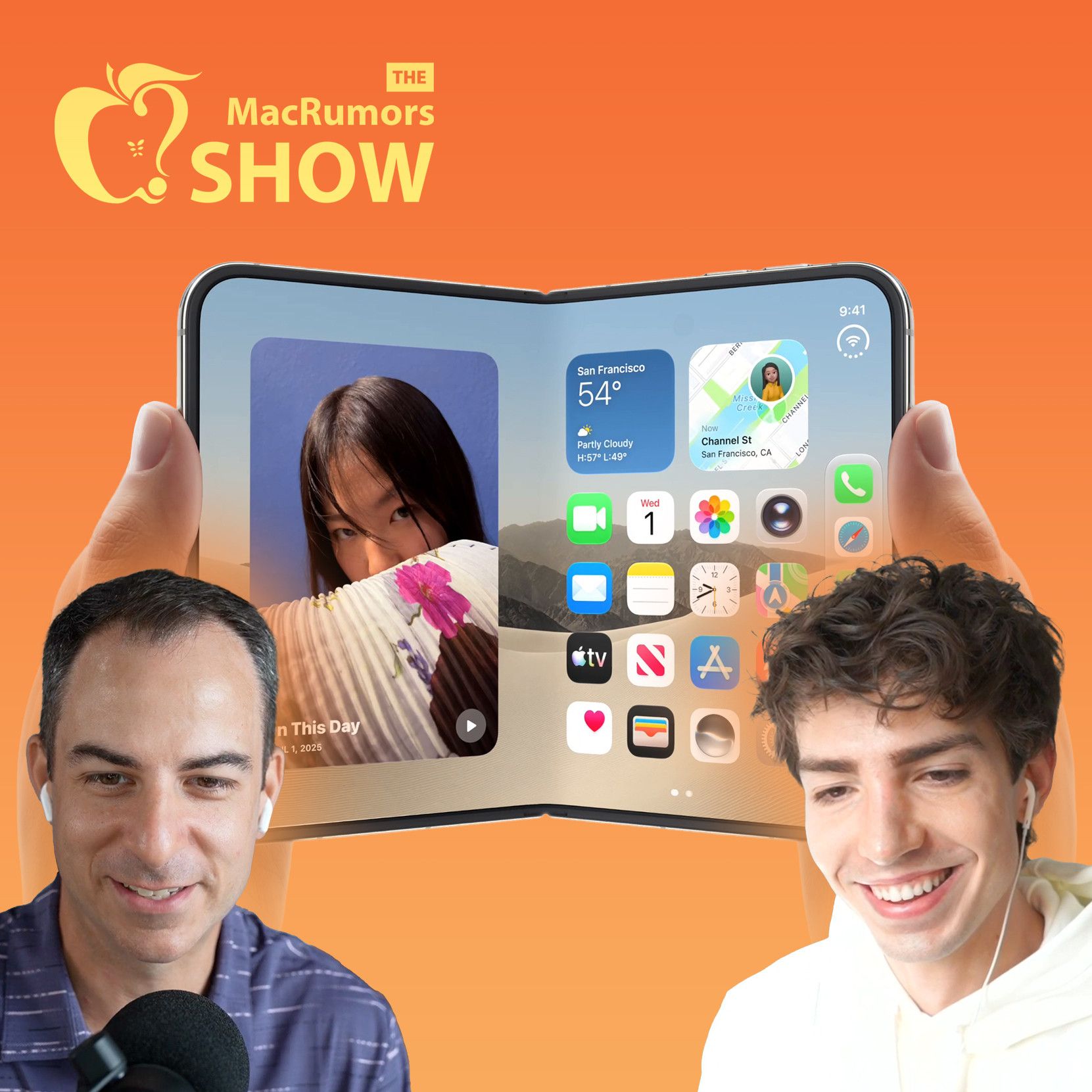 211: The iPhone Duo Debate Continues | On this week's episode of The MacRumors Show, we revisit the iPhone Duo debate, early impressions of AirPods 5, and the merits of Apple's latest iPhone and Apple Watch upgrades.00:00 Intro 03:41 iPhone Duo Hype and Compromises 15:26 Will the iPhone Duo Sell Out?17:45 The iPhone Duo Display Debate 22:34 Who Is the iPhone Duo Actually For 28:09 Can the iPhone Duo Replace an iPad?32:54 AirPods 5 First Impressions 36:43 Apple Watch Series 12 and the New Health App 42:25 Is the iPhone 18 Pro Worth Upgrading To?55:44 OutroApple's first foldable iPhone continues to divide opinion, with much of the discussion centering on whether its larger inner display justifies the compromises elsewhere. Combining an iPhone and an iPad-like device has obvious appeal, but its value depends on how often that extra screen space would actually be used.Watching videos, reading, referencing documents, and working across multiple apps could all make the foldable display worthwhile, particularly when traveling. For users who primarily take photos, send messages, and browse social media, the benefits may be harder to justify against the device's price, weight, thickness, and camera trade-offs. The excitement surrounding a new form factor also raises the question of whether buyers will embrace it for the long term or return to a conventional iPhone.Our discussion also addresses criticism of the iPhone Duo's inner display, including concerns about sharpness, color saturation, and crease visibility. Its nano-texture finish introduces a balance between reducing glare and retaining the appearance of a glossy screen, with hands-on impressions offering a different perspective from photos and videos online. Other considerations include using the wider form factor one-handed, switching from Face ID to Touch ID, and potentially replacing an iPad on some trips.AirPods 5 emerge as a potential standout following a week of use, including on a flight. Their fit and improved active noise cancellation could make them particularly appealing to users who struggle with AirPods Pro's silicone tips. We also consider the value of the higher-end model and how iOS 27's equalizer can help adjust a sound profile that may initially seem too bass-heavy.The Apple Watch Series 12 and redesigned Health app receive a closer look, with this year's health features forming a more substantial upgrade after several relatively modest generations. Clearer presentation of health data and new longevity information promise to make collected metrics more useful. Whether those additions justify replacing an older watch remains a separate question for owners whose basic fitness and sleep-tracking needs are already met.Finally, we return to the iPhone 18 Pro's variable-aperture camera, smaller Dynamic Island, and new Photographic Styles. The discussion weighs how noticeable these changes will be in everyday use, with the new film-inspired styles potentially offering as much appeal as the camera hardware improvements. We also look at whether owners of recent Pro models have sufficient reason to switch, and when a discounted iPhone 17 Pro could offer better value.Start your business with Shopify and get everything you need to sell online and in person. Start today at https://www.shopify.com/mac | 57m 09s | ||||||
| 9/11/26 | 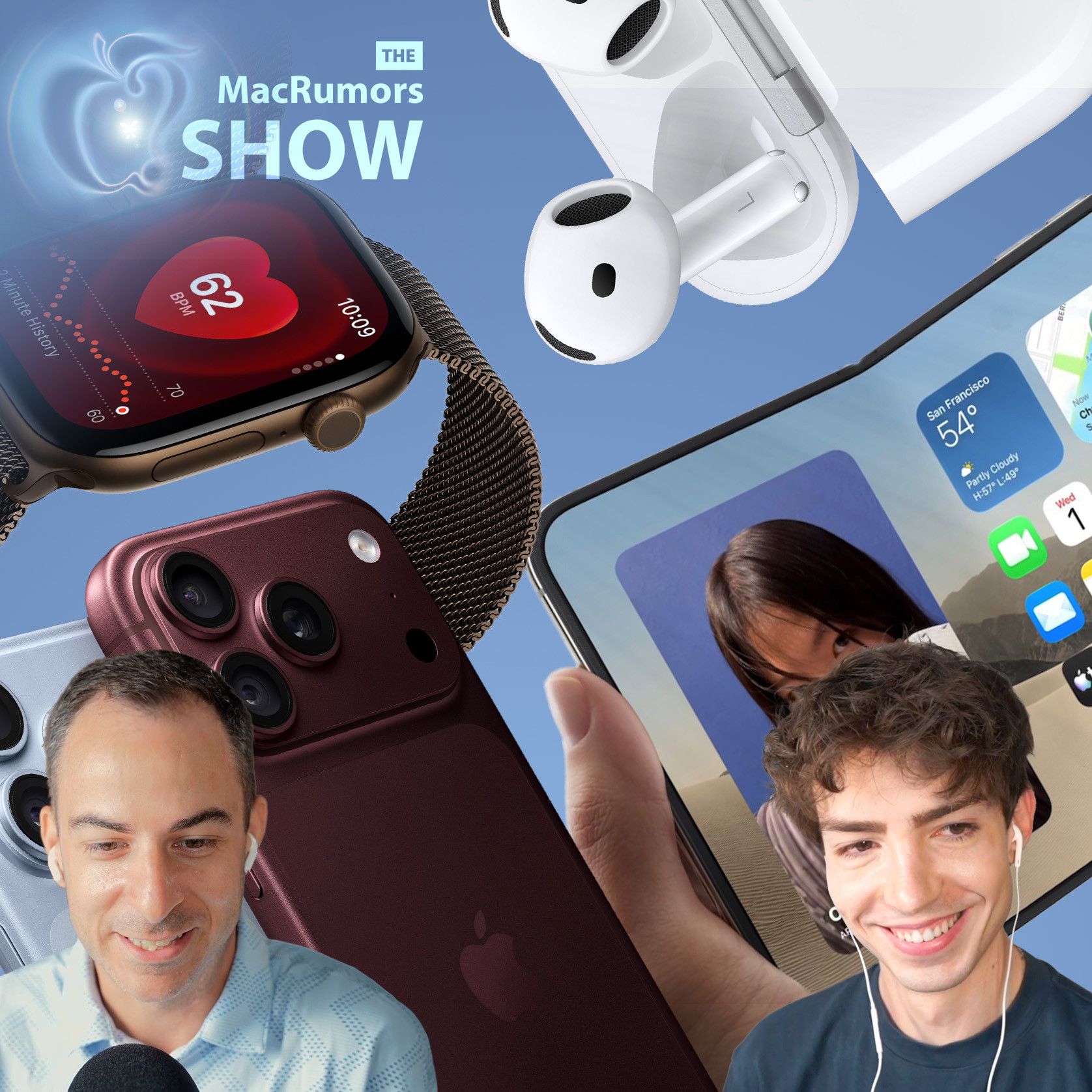 210: Apple Surprise and Shine Recap: iPhone Duo, iPhone 18 Pro & More! | Apple just had one of its biggest product launches in years. On this week’s episode of The MacRumors Show, we share our first reactions to the iPhone 18 Pro and iPhone 18 Pro Max, Apple Watch Series 12, AirPods 5, and Apple’s long-awaited first foldable iPhone, the iPhone Duo. 00:00 Introduction01:52 iPhone 18 Pro and Pro Max13:28 Sponsor: DraftKings14:51 iPhone 18 Pro cameras22:30 AppleCare One Family24:39 AirPods 528:28 Sponsor: Quince29:59 Apple Watch Series 12 and Ultra 439:43 iPhone Duo: design, display, and software52:52 iPhone Duo: price, compromises, cameras, and verdictWe discuss the biggest upgrades, including the iPhone 18 Pro’s new camera system and A20 Pro chip, the Apple Watch’s new health and Audio Intelligence features, AirPods 5 getting ANC as standard, and what it’s actually like to see Apple enter the foldable market. We also talk pricing, some surprising omissions from the iPhone Duo, and whether Apple’s latest products are worth getting excited about.Football is back! New DraftKings customers can sign up with code MAC, spend $5, and get $200 in rewards within 21 days. Get started at https://www.draftkings.com/ with code MAC. Terms and eligibility apply.Find your next fall favorites at Quince. Download the Quince app for app-exclusive offers, or visit https://www.quince.com/MAC. Get free shipping on your order and 365-day returns. | 1h 15m 52s | ||||||
| 9/4/26 | Apple eventiPhone expectations+3 | — | AirPods 5Apple Watch+7 | Cupertino, California | iPhone 18 ProApple Watch+3 | — | 49m 47s | ||
| 8/28/26 | Apple announcementsMac mini+5 | — | Mac miniMac Studio+15 | Apple Park | AppleMac mini+5 | Claude | 46m 47s | ||
| 8/21/26 | foldable phonesiPhone Ultra+4 | Michael Fisher | iPhone UltraGalaxy Fold+5 | — | foldable iPhoneiPhone 18 Pro+6 | Storyblocks15% off | 59m 21s | ||
| 8/14/26 | Apple Watch rumorsdesign changes+3 | — | Apple WatchApple Watch Series 12+3 | — | Apple Watchredesign+5 | ShopifyCODE | 44m 46s | ||
| 8/7/26 | iPhone AirApple+4 | — | iPhone AiriPhone 17+6 | — | iPhone AirApple+5 | — | 44m 27s | ||
| 7/31/26 | iOS 27 featuresSiri AI improvements+4 | — | iOS 27iPhone 18 Pro+4 | iPhone 11 | iOS 27Siri AI+5 | — | 32m 32s | ||
| 7/24/26 | OpenAIApple+4 | — | OpenAIApple | — | OpenAIApple+7 | — | 37m 14s | ||
| 7/17/26 | iPhone redesignApple technology+4 | — | iPhone XXiPhone 20+5 | — | iPhone XXApple+5 | Shopify | 47m 28s | ||
| 7/10/26 | Apple MacBook lineupMacBook Ultra+4 | — | MacBook ProMacBook Ultra+11 | — | MacBook ProMacBook Ultra+8 | Claude | 45m 19s | ||
| 7/3/26 | iPhone 18 Pro leaksTata Electronics data leak+4 | — | iPhone 18 ProC2 modem+10 | — | iPhone 18 ProTata Electronics+6 | — | 52m 08s | ||
| 6/26/26 | Apple price hikesiPhone 18 expectations+3 | — | iPhone 18Apple Watch Ultra 4+8 | 2027 | AppleiPhone 18+6 | — | 47m 12s | ||
| 6/19/26 | iOS updatesmacOS updates+4 | — | iOS 27macOS Golden Gate+5 | WWDC 2026 | iOS 27macOS Golden Gate+5 | Claude | 54m 16s | ||
| 6/10/26 | Apple announcementsSiri AI+5 | — | AirPodsApple Watch+10 | — | WWDC 2026Siri AI+8 | Shopify | 45m 58s | ||
| 6/5/26 | Apple announcementsWWDC 2026+4 | — | SiriChatGPT+4 | — | SiriWWDC 2026+8 | — | 52m 01s | ||
| 5/22/26 | WWDC 2026Siri redesign+4 | — | iOS 27iPadOS 27+7 | — | AppleWWDC 2026+6 | Claude | 44m 15s | ||
| 5/15/26 | AI technologycross-app automation+4 | — | Gemini IntelligenceFitbit Air+12 | — | Gemini IntelligenceApple Watch Series 12+7 | — | 42m 41s | ||
| 5/8/26 | memory shortageApple products+5 | — | iPhoneMac mini+9 | — | AppleiPhone 18+8 | — | 43m 19s | ||
| 5/1/26 | Apple product lineupiPhone Air+5 | — | iPhone Airsilicon-carbon battery+10 | — | AppleiPhone Air+7 | — | 44m 05s | ||
| 4/24/26 | Apple leadership transitionTim Cook+4 | — | iPhone 18 Profoldable iPhone+1 | — | Tim CookJohn Ternus+5 | — | 36m 41s | ||
| 4/17/26 | iPad mini redesigniPad Air updates+4 | — | iPad miniiPad Air+5 | — | iPad miniiPad Air+7 | — | 43m 48s | ||
| 4/10/26 | iPhone rumorsfoldable technology+3 | — | iPhone UltraiPhone 18 Pro+4 | — | foldable iPhoneiPhone Ultra+3 | — | 38m 27s | ||
| 4/3/26 | iPhone rumorstechnology+3 | — | iPhone 18 ProiPhone 17 Pro+4 | — | iPhone 18 ProDynamic Island+3 | — | 43m 29s | ||
| 3/27/26 | Apple announcementsWWDC 2026+4 | — | SiriiOS 27+3 | — | AppleWWDC 2026+5 | — | 41m 47s | ||
| 3/20/26 | AirPods Max 2Apple announcements+3 | — | AirPods Max 2H2 chip+10 | — | AirPods Max 2H2 chip+3 | — | 44m 34s | ||
| 3/13/26 | MacBook NeoApple products+3 | — | MacBook NeoStudio Display XDR+7 | — | MacBook NeoA18 Pro chip+5 | — | 48m 50s | ||
| 3/6/26 | Apple announcementsMacBook Neo+3 | — | MacBook NeoiPhone 16 Pro+11 | — | MacBook NeoApple+5 | — | 1h 03m 20s | ||
| 2/20/26 | Apple productsMarch 4 event+4 | — | iPhone 17eiPhone 16e+17 | New YorkLondon+1 | Apple ExperienceiPhone 17e+5 | — | 40m 43s | ||
| 2/13/26 | iPhoneiPad+3 | — | iPhone 17eiPad+9 | — | iPhone 17eiPad+5 | — | 40m 23s | ||
















Showing 38 of 196
Pitch Fit is a Pro feature
See how bookable this show is for guests, which brands already advertise, the per-episode ad value, and the best-fit guest and sponsor profile. The numbers are blurred on the free plan.
How readily this show books outside guests like you.
How proven this show is for host-read sponsorships.
For Guests
ProFor Advertisers
ProUpgrade to Pro to unlock guest cadence, sponsor categories, fit scores, and per-episode ad value for this show.
Similar Audience Demographics
Podcasts that attract a similar listener profile




Chart history for The MacRumors Show
Peaked at #20 in United Kingdom, currently #20 in United Kingdom.
| Market | Genre | Peak | Current | Trend |
|---|---|---|---|---|
| United Kingdom | — | #20 | #20 | — |
| SG | — | #24 | #24 | — |
| ID | — | #25 | #25 | — |
| Australia | — | #27 | #27 | — |
| MY | — | #27 | #27 | — |
| United States | — | #36 | #36 | — |
| Canada | — | #37 | #37 | — |
| HK | — | #40 | #40 | — |
| South Korea | — | #47 | #47 | — |
| TR | — | #56 | #56 | — |
| CH | — | #57 | #57 | — |
| India | — | #114 | #114 | — |
| New Zealand | — | #116 | #116 | — |
| Japan | — | #120 | #120 | — |
| TW | — | #139 | #139 | — |
Chart Positions
15 placements across 15 markets.
Chart Positions
15 placements across 15 markets.