Insights from recent episode analysis
Audience Interest
Podcast Focus
Publishing Consistency
Platform Reach
Insights are generated by CastFox AI using publicly available data, episode content, and proprietary models.
Most discussed topics
Brands & references
Total monthly reach
Estimated from 36 chart positions in 36 markets.
By chart position
- 🇺🇸US · Investing#33100K to 300K
- 🇬🇧GB · Investing#6030K to 100K
- 🇨🇦CA · Investing#6630K to 100K
- 🇦🇺AU · Investing#1125K to 30K
- 🇳🇱NL · Investing#3230K to 100K
- Per-Episode Audience
Est. listeners per new episode within ~30 days
95K to 320K🎙 Daily cadence·753 episodes·Last published 4d ago - Monthly Reach
Unique listeners across all episodes (30 days)
317K to 1.1M🇺🇸28%🇬🇧9%🇨🇦9%+33 more - Active Followers
Loyal subscribers who consistently listen
127K to 426K
Market Insights
Platform Distribution
Reach across major podcast platforms, updated hourly
Total Followers
—
Total Plays
—
Total Reviews
—
* Data sourced directly from platform APIs and aggregated hourly across all major podcast directories.
On the show
From 11 epsHosts
Recent guests
Recent episodes
FI 201 Beyond FI Basics: Asset Allocation & Market Psychology Mastery
Jun 8, 2026
Unknown duration
Travel Rewards 101 | Devon Gimbel from Point Me to First Class
Jun 1, 2026
Unknown duration
FI 101: Teaching Financial Independence to Your Community
May 25, 2026
Unknown duration
ABLE Accounts: Major Update | Brynne Conroy
May 18, 2026
Unknown duration
Deep Dive Hot Seat with Brad and Ginger
May 11, 2026
Unknown duration
Social Links & Contact
Official channels & resources
Official Website
Login
RSS Feed
Login
| Date | Episode | Topics | Guests | Brands | Places | Keywords | Sponsor | Length | |
|---|---|---|---|---|---|---|---|---|---|
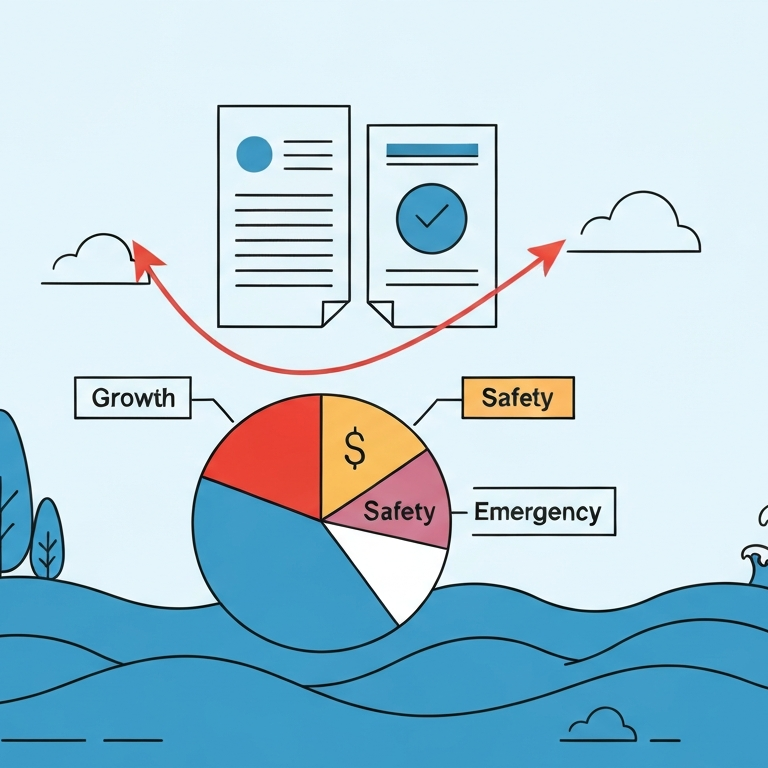
| 6/8/26 | ![]() FI 201 Beyond FI Basics: Asset Allocation & Market Psychology Mastery | Most investors lose to the market because they're trying to pick winners in a game where only 4% of stocks have created 100% of market wealth over the past century. The math isn't in your favor—but there's a simpler path that is. Key Topics Discussed Introduction to FI 201 (00:00:00) Jonathan introduces the concept of Financial Independence 201, explaining how it builds on FI 101 to help individuals progress from control to optimization and independence on their FI journey. The Genesis of FI 201 (00:05:30) Allen and Kristen explain how they identified the need for a 201-level presentation based on questions emerging from their St. Louis FI 101 sessions, particularly around investing concepts. Asset Allocation Fundamentals (00:15:00) Allen breaks down asset allocation as 'your money pie,' discussing how to balance growth, safety, and emergency funds while considering time horizons and diversification strategies. Risk Tolerance vs Risk Capacity (00:22:00) The team explores the critical difference between emotional risk tolerance and actual risk capacity, using examples from 2008 and 2020 market crashes to illustrate real-world application. Tax-Advantaged Account Strategies (00:35:00) Allen and Brad discuss the various tax treatments of investment accounts including 401(k)s, 457(b)s, Roth IRAs, HSAs, and taxable brokerage accounts, emphasizing lifetime tax optimization. Individual Stocks vs Index Funds (00:48:00) The hosts examine the data on individual stock picking, revealing that only 4% of stocks have contributed to 100% of market wealth over the past century, making a strong case for index investing. Dividends and Tax Control (00:55:00) Brad and Allen discuss why the FI community often prefers capital gains over dividend income, focusing on the importance of maintaining control over when and how you realize taxable events. Notable Quotes "You can't save your way to FI, you have to invest." — Allen Hansen "When there's a dip, you essentially get to buy the market on sale. If you love a bargain, this is it." — Brad Barrett "Why in the world do we not think that way when it comes to the market? Our brain completely flips. We're like, ah, we're scared." — Kristen Knapp "It's not what's my tax this year. It is what is going to be my tax burden over my lifetime." — Brad Barrett "The best investing lesson: stand there and do nothing. If you're invested, just don't do anything and you're going to be rewarded." — Allen Hansen Key Takeaways Assess your own risk tolerance and risk capacity honestly by considering how you would react to a 30% portfolio drop Review your current asset allocation across all accounts and determine if it aligns with your time horizon and financial goals Calculate the difference between your marginal and effective tax rates to understand your true tax burden Identify which tax-advantaged accounts you have access to (401k, 457b, 403b, HSA, IRA) and ensure you're maximizing employer matches Track every dollar of taxable income if you're on ACA subsidies or approaching any subsidy cliffs to avoid losing benefits Consider whether you have the right balance between taxable, tax-deferred, and tax-free accounts for maximum flexibility in retirement Join or start a local FI group to benefit from community wisdom and learn from others at different stages of the journey Review your portfolio for dividend-heavy investments and consider whether you'd prefer more control over when you realize taxable events Resources & Links FI Friends Travel The Simple Path to Wealth by J.L. Collins Tax Planning to and Through Early Retirement by Sean Mullaney and Cody Garrett ChooseFI Community App St. Louis FI Group BlackBerry Documentary (Netflix) Arizona State University Stock Market Wealth Study Brian Feroldi (individual stock investing advocate) Investopedia | — | ||||||
| 6/1/26 | ![]() Travel Rewards 101 | Devon Gimbel from Point Me to First Class | Devon Gimbel just booked over $250,000 in travel last year using credit card points—but she's the first to tell you award travel isn't "free." It's a strategy for 10x-ing your existing travel budget by strategically matching your routine spending to the right credit cards. Since ChooseFI's original Travel Rewards 101 in 2017, the landscape has matured: annual fees are higher, issuer rules are stricter, and new players like Bilt have revolutionized the game by letting you earn points on rent and mortgage payments. Yet the fundamentals remain: with deliberate card selection and an understanding of transferable points currencies, it's still entirely possible to unlock one to two meaningful trips per year—whether that's economy flights to national parks or first-class seats to Tokyo. Key Topics Discussed 00:00:00 - Introduction and State of Travel Rewards in 2026 Brad introduces Devon Gimbel and discusses how travel rewards have evolved since ChooseFI's first Travel Rewards 101 episode in 2017. They address whether earning significant travel value is still possible despite higher annual fees and stricter rules. 00:05:30 - The Evolution of Award Travel Community Devon reflects on how the travel rewards community has matured since 2013-2014, moving from a monotone focus on premium cabin travel to showcasing diverse travel styles including domestic trips, family travel, and national park adventures. 00:11:45 - Getting Started: First Steps for Beginners Devon outlines how beginners should approach travel rewards by analyzing their top spending categories and selecting one or two intentionally chosen credit cards with strong bonus categories rather than immediately pursuing dozens of sign-up bonuses. 00:16:20 - Sign-Up Bonuses vs. Everyday Spend Strategy Discussion of the balance between chasing new card welcome bonuses and building a sustainable credit card portfolio with strong category bonuses. Devon explains why a hybrid approach works better for most people than constantly opening new cards. 00:22:15 - Understanding Bonus Categories Deep dive into how credit card bonus categories work, why they matter, and how strategic matching of spending patterns to bonus categories can dramatically increase points earning without changing spending behavior. 00:30:00 - The Power of Flexibility Brad and Devon discuss various dimensions of flexibility in travel rewards including travel dates, destinations, airports, cabin class, and types of points currencies. They share contrasting examples from their recent Japan trips. 00:38:45 - Transferable vs. Fixed Points Currencies Devon explains the critical difference between transferable points programs (Chase, Amex, Capital One, Bilt, Citi) and fixed airline/hotel programs, comparing them to Visa gift cards versus single-merchant gift cards. 00:47:30 - The Rise of Bilt Rewards Discussion of how Bilt has emerged as a major transferable points currency, offering the ability to earn points on rent and mortgage payments while providing strong transfer partners that directly compete with Chase Ultimate Rewards. 00:55:00 - Credit Card Issuer Restrictions in 2026 Devon outlines how credit card eligibility rules have tightened, including Chase's evolving restrictions and once-per-lifetime language similar to American Express, emphasizing the importance of deliberate card selection. 01:02:15 - Calculating Travel Value and Points Redemption Devon shares her methodology for calculating the value of points redemptions using her family's Lufthansa first class trip as an example, discussing the difference between 'free travel' and maximizing travel budget value. 01:12:30 - How Devon Earns 6 Million Points Annually Transparent discussion of Devon's points earning including business expenses, mortgage payments through Bilt, quarterly taxes, shopping portals, and strategic use of bonus categories, with acknowledgment that her situation differs from average users. 01:22:00 - Partnership Strategy for Couples Devon expla… | — | ||||||
| 5/25/26 | ![]() FI 101: Teaching Financial Independence to Your Community | A dead local meetup group attracted just 5 people to its first gathering at a brewery. Two years later, that same group draws 70+ attendees to structured educational sessions, with newcomers driving across multiple states to participate. The transformation reveals something most personal finance education gets fundamentally wrong. Introduction and St. Louis Group Overview [00:00:00] Jonathan and Brad welcome Kristen Knapp and Allen Hansen to discuss how the St. Louis ChooseFI group became one of the most thriving communities in the country. Rebooting a Dormant Community [00:08:30] Kristen shares how she transformed a dormant St. Louis group after attending Camp FI, starting with brewery meetups and evolving to structured case studies that dramatically increased engagement. The Genesis of FI 101 [00:15:45] The hosts discuss how new members needed basic FI education, leading to the creation of a structured FI 101 program that attracted 70+ attendees and continues to grow. Kristen's Journey to Part-Time Work [00:22:10] Kristen shares her 30-year broadcast meteorology career and how the FI community gave her the confidence to negotiate a part-time arrangement, creating space for her FI Friends Travel venture. Allen's Perspective on Giving Back [00:31:20] Allen discusses his motivation to help others after reaching FI himself, emphasizing that anyone can make mistakes and still succeed on the path to financial independence. Structuring FI 101 Content [00:38:00] The group breaks down the essential components of FI 101: defining financial independence, the shockingly simple math of early retirement, and the financial order of operations. The Importance of Your Why [00:45:30] Jonathan proposes that understanding your personal why for FI should be the foundation of any FI 101 program, making it more compelling than traditional personal finance education. Investment Fees and Opportunity Cost [00:52:15] Brad delivers a detailed breakdown of how investment fees can cost millions over a lifetime, using concrete examples to illustrate the importance of low-cost index funds like VTI. Action Items and Next Steps [01:05:40] Allen outlines the two critical action items for FI 101 attendees: tracking net worth and monitoring spending, while the group discusses cadence for ongoing educational sessions. Preview of FI 201 and Future Plans [01:12:00] The hosts wrap up by discussing plans for a second episode covering FI 201 content and how local groups can iterate and improve their educational programming. Notable Quotes "I created what I wished existed. Nobody else is going to do it. Why not me?" — Kristen Knapp "After fifteen years of marriage, we finally hit broke. I think that resonates with people. We did it all wrong with credit card debt, you name it." — Allen Hansen "You can't save your way to FI. It's just almost impossible. You have to invest those dollars." — Allen Hansen "FI is not this passive endeavor and FI is not just about the nuts and bolts of money. This is about a constantly evolving mental framework." — Brad Barrett "Being around other people on the same path is one hundred percent the reason I've been able to create this life, because I would have never even had the idea or the courage to do any of this." — Kristen Knapp Key Takeaways Your savings rate matters more than your income. Someone earning $50,000 and saving 50% will reach FI faster than someone earning $150,000 but saving only 10%. Investment fees compound negatively. A 1% advisor fee plus 1% fund fees can reduce a potential $7.2 million portfolio to just $3.9 million over 40 years. Your FI number is calculated by multiplying annual expenses by 25, based on the 4% safe withdrawal rule. Understanding your personal "why" for pursuing FI is more compelling than traditional budgeting advice and provides the motivation needed for long-term success. Community makes the difference. Local FI groups provide accountability, education, and the courage to make life-changing decis… | — | ||||||
| 5/18/26 | ![]() ABLE Accounts: Major Update | Brynne Conroy | Brynne Conroy joins to discuss 529A ABLE accounts and massive new changes that nearly double eligibility for these accounts for those with disabilities. | — | ||||||
| 5/11/26 | ![]() Deep Dive Hot Seat with Brad and Ginger | Ginger asks Brad a series of hard hitting questions on life and FI. | — | ||||||
| 5/4/26 | ![]() What if Your FI Life Started Tomorrow? | Adam Coelho | Ep 597✨ | financial independencemindfulness+4 | Adam Coelho | Google | — | financial independencecareer change+5 | — | 1h 07m 35s | |
| 4/27/26 | ![]() Mistakes Were Made✨ | financial mistakesinvesting pitfalls+4 | Alan DoneganKatie Donegan | WorldComdot-com+1 | — | financial independenceinvestment mistakes+4 | — | 1h 08m 14s | |
| 4/20/26 | ![]() 595 | Value Matrix Case Study Series: Part 2 — Required Bloat✨ | budgetingfinancial independence+3 | — | ChooseFI | — | budgetfinancial independence+3 | — | 56m 34s | |
| 4/13/26 | ![]() 594 | Travel Rewards Deep Dive with Noah✨ | travel rewardsfinancial independence+3 | Noah G. | ChooseFIawardtool.com+4 | — | travel rewardsfinancial independence+3 | — | 1h 15m 36s | |
| 4/6/26 | ![]() Book Club: 'Goodbye, Things' with Liz Gets Loaded | Ep 593✨ | minimalismemotional well-being+3 | GingerLiz | Say Goodbye to Things | — | minimalismdownsizing+3 | — | 1h 11m 32s | |
Want analysis for the episodes below?Free for Pro Submit a request, we'll have your selected episodes analyzed within an hour. Free, at no cost to you, for Pro users. | |||||||||
| 3/30/26 | ![]() 592 | Value Matrix Case Study Series: Part 1 — Leaky Budget✨ | Value Matrixspending profiles+3 | — | Choose FI | — | Value Matrixfinancial independence+3 | — | 51m 05s | |
| 3/23/26 | ![]() 591 | Parent Like a Millionaire Without Being One✨ | financial strategies for parentingfinancial independence+4 | Kristy ShenBryce Leung | Parent Like a Millionaire Without Being One | — | financial independenceparenting+5 | — | 50m 51s | |
| 3/15/26 | ![]() Building An Extraordinary Life Through FI✨ | financial independencefear+5 | — | — | — | financial independencefear+4 | — | 1h 13m 58s | |
| 3/8/26 | ![]() 589 | How to Gain Insights from Your Expense Audit Using a Value Matrix✨ | expense auditvalue matrix+3 | — | YNAB (You Need A Budget)ChooseFI | — | expense auditvalue matrix+3 | — | 50m 39s | |
| 3/1/26 | ![]() 588 | Navigating the Evolving Health Insurance Landscape✨ | health insuranceAffordable Care Act+4 | Cody Garrett | Affordable Care ActCOBRA+2 | U.S. | health insuranceAffordable Care Act+5 | — | 59m 57s | |
| 2/22/26 | ![]() We’re Going to Be Millionaires — Now How Do I Tell My Spouse? | Andy Hill✨ | financial independenceCoast FI+3 | Andy Hill | ChooseFI | — | Coast FIbudget parties+3 | — | 49m 03s | |
| 2/15/26 | ![]() 586 | How to Do an Expense Audit | Most people chase financial independence through side hustles and raises. Brad and Jonathan flip that equation: audit your expenses first, then watch your FI date accelerate without earning another dollar. They walk through a structured four-step framework for conducting annual expense audits that help you identify money leaks and understand your true living costs. The discussion covers practical strategies for tracking subscriptions, variable expenses, and distinguishing between required and discretionary spending. By adopting a calculated approach to expenses, you can effectively mitigate lifestyle creep while ensuring every dollar serves a purpose in your budget. The overarching message encourages focusing on building a life of value, emphasizing joy and fulfillment in financial management, rather than mere restriction. Key Tactical Takeaways Conduct an Annual Expense Audit: Establish a routine to review expenses at least once a year to stay on top of spending habits and identify areas for improvement. Categorize Every Expense: Break down expenditures into necessary (fixed costs) and discretionary (variable costs) categories for clearer insights. Use a Value Matrix: Assess expenses based on their joy and necessity to inform which should be retained, reduced, or eliminated. Track Subscriptions and Variable Costs: Pay attention to recurring payments, particularly those related to entertainment and services like streaming or software. Calculate the Long-Term Impact of Small Savings: Cutting small monthly expenses can significantly affect your financial independence number over time. Core Rules & Formulas Rule Explanation Annual Expense Audit Review all expenses once a year to prevent overspending and identify leaks. Categorization of Expenses Differentiate between Required (fixed) and Discretionary (variable) expenses. Value Matrix Implementation Organize spending into High Joy/ Low Joy and Essential/ Eliminate quadrants. Prioritize Necessary Expenses Always account for essential bills, including utilities, groceries, and housing costs. Evaluate Impact of Expenses Each $100 cut from monthly expenses reduces your FI number by $30,000 over time (20-year horizon). Tools, Accounts, or Strategies Mentioned Tool/Strategy Link/Description Expense Audit Spreadsheet Download here Chase Ultimate Rewards Utilize for travel rewards and points transfer to hotel partners. Value Matrix Framework Framework for analyzing the necessity and joy of expenses. Key Quotes "Every dollar must earn its place in your budget." (00:05:23) "Even the most intentional spenders can lose track of their expenses." (00:06:19) "Small expenses can add up to significant savings." (00:13:08) "Have you assessed the true cost of your life?" (00:13:17) Chapters Introduction to Expense Audit (00:00:00) Importance of Regular Expense Audits (00:05:23) Identifying Money Leaks (00:13:04) Key Strategies for Expense Auditing (00:22:34) Value Matrix for Expenses (01:03:05) Closing Thoughts and Action Steps (01:09:13) Terminology Expense Audit: A detailed review of all expenditures to identify unnecessary spending and money leaks. (00:05:23) Lifestyle Creep: The tendency for expenses to increase as income rises, often leading to a strain on finances. (00:08:11) Value Matrix: A categorization tool to assess the joy and necessity of expenses, helping prioritize what's essential in your budget. (01:03:05) Resources & References ChooseFI Episode 009: Travel Rewards Framework Expense Audit Spreadsheet: Download Action Items Download your bank and credit card statements for the last few months to start your audit. (00:55:06) Categorize your expenses into necessary and discretionary for better insights. (01:03:05) Join the community challenge to share findings and get support during your expense audit process. (01:09:13) ▶ Listen Next: Ep. 588 — Navigating the Evolving Health Insurance Landscape | Essential Listening | — | ||||||
| 2/8/26 | ![]() 585 | Getting to the Boring Middle: What You Need in Place First | Most people think financial independence is a straight line from broke to retired—it isn't. Progress compounds daily in ways you won't notice if you're only looking at your net worth spreadsheet. Brad and Jonathan break down why the "boring middle" is actually a spectrum of expanding options, not a slog to endure. They walk through the early phases of FI—discovery, awareness, and control—and why understanding your cash flow is the first tangible step toward building financial freedom. A 30-day expense audit sounds basic, but it's the foundation that unlocks everything else: smarter spending cuts, automated savings, and the confidence to optimize investments. The episode also highlights the role of local FI communities in keeping momentum alive when the journey feels slow. Key Tactical Takeaways Conduct a 30-Day Expense Audit: Assess and record all expenses over a month to identify spending habits. Automate Your Savings: Set up automatic transfers to savings or investment accounts to ensure consistent saving with minimal effort. Engage with Local FI Groups: Join or establish local financial independence groups to exchange knowledge, resources, and support within your community. Understand Your Financial Health: Create an income statement to analyze all incoming and outgoing funds regularly. Core Rules & Formulas Rule/Formula Description 30-Day Audit Record all income and expenses for 30 days to gauge spending habits. Autopilot Savings System Automate savings and bill payments to reduce active management. Expense Prioritization Focus on reducing debt first, especially high-interest credit card debt. Investment Strategy Choose low-cost index funds or ETFs with low expense ratios for long-term growth. Tools, Accounts, or Strategies Mentioned Tool/Strategy Description FI Friends Travel Community-based travel planning for FI enthusiasts. Autopay Systems Automatic bill payment setup for consistent financial management. Low-Cost Index Funds Investing in funds that track market indices to minimize fees. Expense Tracking Apps Tools to keep track of spending habits effectively. Resources & References FI Friends Travel Episode 472: "The Cure for the Boring Middle" Episode 262: "Thinking in Bets with Annie Duke" Chapters Introduction — 00:00:00 Local FI Group Highlight — 00:01:40 Discussion on Financial Control — 00:14:00 Understanding Expenses and Income — 00:30:00 Audience Feedback — 00:57:49 Frugal Wins of the Week — 01:00:00 Notable Quotes "Recognize that progress is happening even in the boring middle." — 00:10:38 "Your financial journey is uniquely yours." — 00:45:02 "Take tangible action steps to gain control over your finances." — 00:18:04 "Automating your savings streamlines your financial future." — 00:16:30 Terminology FI — Financial Independence, the state of having sufficient personal wealth to live without having to work actively for basic necessities. (00:09:10) Gamification — The process of applying game principles to motivate engagement in non-game contexts, such as finance. (00:10:48) Autopilot — A system where savings and payments are automatically executed, minimizing the need for active personal management. (00:16:30) Clear Calls to Action Plan Your Next Local FI Meetup: Invite five friends or family members and discuss financial independence topics. (00:03:29) Conduct Your 30-Day Expense Audit: Begin tracking your expenses today to identify areas for improvement. Submit Your Frugal Win: Share your win with the community to inspire others. (01:00:02) ▶ Listen Next: Ep. 586 — How to Do an Expense Audit | Essential Listening | — | ||||||
| 2/1/26 | ![]() Goal Setting for 2026 | A 70% savings rate while buying a house? One listener proves it's possible — and their story is just one of many that'll make you rethink your 2026 financial plans. Brad and Jonathan turn over the mic to the community in this mashup episode, featuring listeners who called in with their goals, pivots, and breakthroughs for the year ahead. From creating local FI meetups to engineering a career transition into Barista FI, these real-world voices reveal what's working, what's changing, and where the rubber meets the road on the path to financial independence. Key Tactical Takeaways Engage Locally: Create or join local FI community events to foster connections and support. Utilize TrueCar: Leverage the TrueCar platform to compare prices and negotiate car purchases effectively, potentially saving thousands. Practice Intentional Saving: Adopt strategies such as meal planning to reduce grocery costs and enhance savings rates. Set Clear Goals: Identify specific savings rates and actionable steps to strategically reach financial independence by 2026. Core Rules & Formulas Rule/Formula Description 70% Savings Rate Aim for a 70% savings rate while planning for major expenses (e.g., home purchase). 30-Day Savings Challenge Undertake a 30-day challenge to identify and cut 10% of discretionary spending. Rule of 72 To estimate how long it will take for money to double, divide 72 by your expected annual return (e.g., 72 / 8% = 9 years). Lean FI Budgeting Calculate what your essential annual spending would be to identify your lean FI number (expenses × 25). Tools, Accounts, or Strategies Mentioned Tool/Strategy Purpose TrueCar Price comparison tool for car purchases ChooseEvent Platform for creating and joining local FI community events Sinking Funds Allocate specific savings for future purchases (e.g., cars) Resources & References TrueCar ChooseFI Community Clear Calls to Action Join Your Local FI Group: Create an account at chooseevent.com and get involved in local meetups. Start a 30-Day Spending Challenge: Commit to tracking and reducing your spending by 10% for 30 days to boost your savings. Chapters 00:00:00 Podcast Introduction 00:00:46 Cohost Experiences at Camp FI 00:12:29 Voicemail Discussion Begins 00:13:13 Sam's Goals for 2026 00:22:17 Jenny's Goals for 2026 00:25:37 Dan's Transition to Barista FI 00:47:14 Wilson's Career Pivot 00:59:09 Closing Thoughts and Calls to Action Terminology Term Definition Timestamp FI Financial Independence. A state of having sufficient personal wealth to live without having to work actively for basic necessities. 00:00:00 Barista FI A financial independence strategy where individuals work in part-time jobs that may provide fulfillment rather than financial necessity. 00:31:02 Coast FI A concept where individuals have saved enough to let their investment grow without contributing again until retirement. 00:32:07 Lean FI A stage where individuals minimize expenses and live on a stripped-down budget, aiming to reach financial independence. 00:39:41 Notable Quotes "Saving money isn't deprivation, right? They are saving money very intentionally to buy their freedom." — Jonathan (00:19:06) "Create your local FI group and connect with like-minded individuals to achieve goals." — Brad (00:14:36) "Pursuing personal dreams like traveling to Japan enriches the FI journey." — Jonathan (00:52:56) | — | ||||||
| 1/25/26 | ![]() 583 | A Table of Contents for FI: Part 2 — The Detour is the Journey | Most people think they'll be "done" learning about financial independence in a few months—then wonder why they're still obsessed years later. Brad and Jonathan confront this paradox head-on: if you can absorb 80% of FI fundamentals in weeks, why does the conversation stay wildly entertaining? Because the real value isn't the destination—it's the detours. Financial independence isn't just about hitting a number. It's about the unexpected insights, the community member who becomes a published author after skeptically tuning in, the calculated risks that reshape careers. Brad and Jonathan reveal how embracing detours—those "off-script" moments—leads to personal development, self-discovery, and opportunities that spreadsheets can't predict. They explore why retirement is a state of mind, not an age, and how reducing core expenses unlocks flexibility rather than deprivation. Through stories and incremental gains, they argue that reclaiming time and cultivating a growth mindset matter more than wealth alone. The journey is the point, and the detours are where life happens. Chapters Introduction [00:00:00] Detours in Life [00:00:53] The Importance of Growth Mindset [00:20:06] Crowdsourcing Personal Finance [00:22:01] Discussion on Incremental Gains [00:25:40] Wrap Up and Action Items [01:00:02] Key Points You can absorb 80% of FI fundamentals in months, yet the conversation stays compelling because detours teach what no spreadsheet can [00:00:53] Retirement is a state of mind and lifestyle, not an arbitrary age or end goal [00:05:05] Life offers infinite learning opportunities—exploration and growth matter more than reaching a finish line [00:14:25] A growth mindset encourages learning through experiences, including failure [00:20:06] Understanding your choices gives you power to shape your financial future [00:29:10] Reducing core expenses creates flexibility and opens doors to more opportunities [00:59:27] Action Items Reevaluate your priorities: regularly assess your goals and values [00:14:25] Conduct a personal expense audit at least once a year to identify unnecessary spending [00:30:29] Quotes "Sometimes, the detour is more valuable than the destination." [00:01:02] "We redefine retirement as a state of mind and lifestyle." [00:05:05] "Life is an endless opportunity for learning and exploration." [00:14:25] "The power of choice is at your fingertips." [00:29:10] "Reducing your expenses opens doors to more opportunities." [00:59:27] Resources ChooseFI [00:24:01] Camp FI [00:21:15] Related Episodes Episode 12: "Frugality and Financial Independence" [00:37:12] Episode 13: "Understanding the 401k and 457 Accounts" [00:46:01] ▶ Listen Next: Ep. 585 — Getting to the Boring Middle: What You Need in Place First | Essential Listening | — | ||||||
| 1/18/26 | ![]() 582 | A Table of Contents for FI: Part 1 | Most people treat financial independence like a destination—a magic number to hit before life gets good. But what if the pursuit itself is where the real value lies? Jonathan and Brad challenge the "mythical number" mindset by exploring incremental gains—small, compounding changes that reshape your financial life long before you reach full independence. They dig into the concept of a "red X month," a dedicated period to step back from obligations and recalibrate your priorities. The conversation spans practical strategies, from opening Roth IRAs for kids with earned income to the long-term wealth erosion caused by investment fees. Throughout, they argue that financial independence isn't about arriving—it's about building a better life along the way. Key Topics Introduction to Incremental Gains (00:00:00) An overview of innovative ideas within the financial independence community. What is a Red X Month? (00:02:05) A designated period for relaxation and reflection, stepping back from regular commitments. Mindset and Incremental Gains (00:05:05) Having the right mindset in achieving financial independence. Importance of Time and Journey (00:07:21) Appreciating the journey, not just the destination. Roth IRA for Kids (00:29:46) How children with earned income can benefit from a Roth IRA, building wealth early. The Impact of Fees on Investing (00:44:01) The significance of minimizing fees and its long-term effects on wealth accumulation. Action Items Red X Month: Consider taking a dedicated month to reset and recharge your priorities. (00:05:05) Roth IRA for Children: Open a Roth IRA for your child if they have earned income. (00:29:46) Minimize Investment Fees: Invest in low-fee index funds to optimize long-term wealth. (00:43:27) Key Quotes "Reclaim your most precious non-renewable resource: your time." (00:16:51) "It's not about reaching a mythical number; it's about living a better life." (00:08:55) "Time in the market surpasses timing the market." (00:48:22) Timestamps 00:00:00 - Introduction to Incremental Gains 00:02:05 - What is a Red X Month? 00:05:05 - Mindset and Incremental Gains 00:07:21 - Importance of Time and Journey 00:29:46 - Roth IRA for Kids 00:44:01 - The Impact of Fees on Investing Related Resources ChooseFI Episode 516: Masterclass on Building Muscle (00:18:34) ▶ Listen Next: Ep. 583 — A Table of Contents for FI: Part 2 — The Detour is the Journey | Essential Listening | — | ||||||
| 1/11/26 | ![]() 581 | Are Roth Conversions Necessary? | Most people rushing to convert their traditional IRAs to Roth accounts have never stopped to ask whether they actually need to. Brad sits down with tax experts Sean Mullaney and Cody Garrett to cut through the Roth conversion hype and explain when these moves make sense—and when they're just expensive mistakes. Understanding the distinction between taxable Roth conversions and backdoor or mega backdoor Roths is essential, as these conversions create taxable income intentionally, rather than skirting IRS rules. The conversation explores how conversions can be advantageous during retirement but are often unnecessary during working years when tax rates are typically higher. It emphasizes strategic planning and understanding one's financial situation rather than following popular trends. Sean and Cody offer practical advice on managing taxes in retirement, common misconceptions, and the importance of prioritizing personal financial success over societal pressure regarding Roth conversions. Timestamps & Key Topics: 00:00:56 - Introduction to Sean Mullaney and Cody Garrett, authors of Tax Planning To and Through Early Retirement. 00:02:11 - Understanding Taxable Roth Conversions Definitions and purpose of taxable Roth conversions vs. backdoor Roths. 00:12:07 - Taxable Roth Conversions During Working Years Why taxable conversions are generally discouraged for those with a job. Discussion on 'income disruption years' as an exception. 00:15:13 - Strategies for Retirement Income Exploring income sources and tax brackets in retirement. 00:19:10 - Roth Conversion Decisions in Retirement Discussion on RMDs and managing taxable income effectively in retirement. 01:04:17 - Conclusion and Resources Recap of key insights and suggestions for further financial planning. Key Insights: Taxable Roth Conversions vs. Backdoor Roths Taxable conversions create taxable income and can be beneficial, while backdoor Roths are a mechanism to contribute when income limits apply. Ideal Times for Conversions Typically not advisable during high-income years; consider during low-income years or life events causing income disruption. Tax Burdens in Retirement Many retirees experience lower tax burdens than expected; RMDs are manageable for most. Roth Conversions and Future Planning Primary beneficiaries are often oneself and heirs; focus on financial success rather than tax liabilities for future generations. Avoiding Procrastination through Optimization Optimization can become procrastination; focus on higher impact decisions for financial health rather than getting lost in tax details. Action Items: Review your current and future income sources to better understand your tax situation before making Roth conversion decisions. (00:12:07) Consider consulting a financial planner to explore personalized strategies that align with your retirement goals. (01:04:01) Stay updated on tax changes that could impact your retirement strategy. (00:39:01) Assess whether it might be beneficial to make modest Roth conversions during low-income years. (00:12:50) Evaluate the potential benefits of using Roth conversions for your heirs or loved ones. (00:22:28) Notable Quotes: "Retirement accounts exist to ensure financial success in retirement." - Sean Mullaney (01:04:01) "Roth conversions can enhance tax efficiency but are not required." - Cody Garrett (00:42:34) "Avoid letting fear dictate your financial choices." - Brad (01:05:17) "Many retirees enjoy lower tax burdens than expected." (00:16:07) "Focusing too much on optimization may delay important decisions." (00:32:59) "Tax cuts for retirees continue despite predictions of hikes." (00:35:06) "Prioritize managing current taxes over future uncertainties." (00:39:01) "Taxable events offer opportunities rather than restrictions." (00:06:39) "Roth conversions primarily benefit heirs and future self in retirement." (00:22:28) "Your financial success remains the priority in tax planning." (01:04:01) Related Resources: Sean's Case St… | — | ||||||
| 1/4/26 | ![]() 580 | 2026 Goals: Why This Year Everything Changes | Slashing $100 from your monthly budget shrinks your FI target by $30,000. Brad and Jonathan explore how small financial wins compound into life-changing freedom, and why 2026 marks a shift toward deeper community connection. The hosts kick off the year by introducing a new community app designed to help listeners share goals, celebrate frugal victories, and learn from each other's financial experiments. They walk through the math behind financial independence numbers, the power of incremental gains, and why frugality isn't about sacrifice—it's about clarity on what you truly value. Key Topics & Timestamps: Introduction (00:00:00) Welcome to 2026 and the new community focus. 2026 Goals (00:00:51) Brad and Jonathan reflect on changes in their lives and the FI community. Frugal Wins of The Week (00:20:31) Tips for celebrating small financial victories. Understanding Your Financial Independence Number (00:25:38) How to calculate your FI number based on annual expenses. Community Engagement and Tools (00:30:12) Introduction of the new community app and its features. Closing Remarks (00:58:17) A call to action for listeners to get involved and share their journeys. Actionable Takeaways: Conduct a net worth statement for 2025 (00:36:54). Join the community app to connect with fellow FI enthusiasts (00:49:35). Participate in an expense audit to gain insights into your spending habits (00:56:20). Key Insights: Community Development: A supportive network is essential for financial growth (00:08:06). Frugality Defined: Frugality is about valuing what truly matters, not deprivation (00:40:47). Impact of Budgeting: Cutting just $100 from your budget can reduce your FI target by $30,000 (00:42:10). Quotes: "While everything changes, some truths remain constant." (00:12:16) "Building a thriving ecosystem for financial independence together." (00:14:13) "True frugality means valuing what truly matters to you." (00:40:47) Related Resources: How to make LMNT's electrolyte drink mix at home (00:21:26) ▶ Listen Next: Ep. 581 — Are Roth Conversions Necessary? | Essential Listening | — | ||||||
| 12/28/25 | ![]() 2025 Biggest Takeaways with Ginger | One conversation stopped host Ginger in her tracks: Frank Vasquez's simple rule about only traveling when there's someone meaningful at the destination. It wasn't revolutionary advice—just an offhand comment—but weeks later, she's still thinking about it, questioning her own choices. That's the hallmark of a truly sticky idea. As the year winds down, Brad and Ginger reflect on which guest insights lodged themselves in memory and refused to leave. This mashup revisits standout moments from multiple episodes—covering budgeting philosophy, the seasons-of-life approach to spending, generosity in the FI community, and the limiting beliefs that keep people stuck—all filtered through the lens of what actually changed how the hosts think and act. Timestamps & Key Topics 00:00:00 - Introduction Ginger introduces the reflection concept: what podcast moments sparked lasting personal change? 00:01:47 - Reflecting on Memorable Interviews Highlights from past guests like Ron Babcock on thoughtful budgeting and aligning expenses with life stages. 00:03:41 - The Importance of Budgeting Practical budgeting frameworks that prioritize values over rigid rules. 00:05:20 - Seasons of Life and Spending Understanding that spending should shift with your current life stage and priorities. 00:07:18 - Spending on Values "Spending is okay, too. A life devoid of spending is not a happy and successful life." 00:09:16 - Community Impact Ryan Brennan's FI community service initiatives demonstrate generosity in action. 00:10:52 - Generosity and Giving Practice immediate acts of generosity when inspired—don't wait. 00:12:31 - Mindset Shifts Challenging limiting beliefs by asking "Could this be true?" about goals that seem impossible. 00:26:23 - Assess limiting beliefs that hinder your potential and explore new possibilities. 00:29:19 - "This could be true." Open yourself to achieving what seems impossible. 00:34:35 - Getting Personal with Personal Finance (Episode 533 reference) 00:37:16 - "People only remember you're weird." Your uniqueness is what people will truly remember. 00:41:32 - "Don't let anybody tell you that little things don't matter on the path to FI." Small changes compound into significant results. 00:50:36 - Concluding Thoughts on Generosity "Every act of love is a sacrifice. There are no exceptions." Making small sacrifices nurtures meaningful relationships. 00:52:05 - Closing Reflections Quotes "Spending is okay, too. A life devoid of spending is not a happy and successful life." (00:07:18) "This could be true." (00:29:19) "People only remember you're weird." (00:37:16) "Don't let anybody tell you that little things don't matter on the path to FI." (00:41:32) "Every act of love is a sacrifice. There are no exceptions." (00:50:36) Resources Episode 548: Ryan Brennan on FI Community Involvement (00:09:28) Episode 483: Effective Giving Strategies for FI (00:10:48) Episode 533: Getting Personal with Personal Finance with Brad (00:34:35) | — | ||||||
| 12/21/25 | ![]() Year End Wins 2025 | Watching someone hit Coast FI mid-career changes everything about how they view work. Brad and Ginger read listener wins from the past year, celebrating community members who maxed out retirement accounts, switched careers, helped family through financial crises, and redefined what success means to them. Many share breakthroughs in simplifying their lives, using travel rewards to create memory dividends, and discovering that financial independence isn't just about the numbers—it's about designing a life they don't need to escape from. Timestamps & Key Topics: [00:00:00] Introduction Welcome to the ninth annual ChooseFI year-end wins episode. [00:01:00] Community Wins Inspiring wins shared by community members. [00:18:00] Individual Stories and Wins Members share personal financial achievements, including reading financial literacy books and maxing out retirement contributions. [00:29:00] The Importance of Action Taking action in the journey toward financial independence. [00:55:00] Closing Thoughts and Holiday Wishes Episode recap and reflection on financial journeys. Key Topics: Personal Victories: Listeners share stories of taking control of their financial futures. Embracing Minimalism: Members reflect on simplifying their lives to achieve financial independence. Community Support: Having a supportive network that encourages accountability and shared successes. Taking Action: Acting on financial knowledge to see tangible benefits. Actionable Steps: Maximize Retirement Contributions: Focus on contributing fully to accounts like 401(k) and IRA to leverage tax benefits and compound growth. [00:19:03] Embrace Simplicity: Cut out unnecessary complexities in life to allow more focus on what's important. [00:11:54] Experiment and Learn: The journey to financial independence is a time to try new things and see what works best for you. [00:26:03] Notable Quotes: "With the knowledge I now have, I'm planning on switching to part-time work by the end of 2026 so I can make spending time with my kids and my family my top priority going forward." [00:36:27] "The boring middle can include some extraordinary detours." [00:25:05] "This is the time to experiment." [00:26:03] "I feel like I'm finally in control of my life, my health, and my happiness." [00:47:16] "The freedom to be there for someone I love. This is as close to heaven as I've ever seen." [00:34:03] Key Terminology: Financial Independence (FI): A state where an individual has enough savings and investments to live comfortably without needing to work. [00:23:12] Coast FI: A financial state where one has enough invested that they can stop contributing to their retirement accounts and still reach their financial goals due to compound growth. [00:36:01] Travel Rewards: Points or benefits earned through spending on travel-related purchases, often used to offset travel costs. [00:38:05] Related Episodes: Health and Fitness Transformation [00:53:55] Coast with Confidence [00:36:27] | — | ||||||
Showing 25 of 593
Sponsor Intelligence
Sign in to see which brands sponsor this podcast, their ad offers, and promo codes.
Similar Audience Demographics
Podcasts that attract a similar listener profile
Chart Positions
42 placements across 36 markets.
Chart Positions
42 placements across 36 markets.