
Insights from recent episode analysis
Audience Interest
Podcast Focus
Publishing Consistency
Platform Reach
Insights are generated by CastFox AI using publicly available data, episode content, and proprietary models.
Most discussed topics
Brands & references
Total monthly reach
Estimated from 1 chart position in 1 market.
By chart position
- 🇭🇰HK · Relationships#147500 to 3K
- Per-Episode Audience
Est. listeners per new episode within ~30 days
150 to 900🎙 Daily cadence·53 episodes·Last published 2mo ago - Monthly Reach
Unique listeners across all episodes (30 days)
500 to 3K🇭🇰100% - Active Followers
Loyal subscribers who consistently listen
200 to 1.2K
Market Insights
Platform Distribution
Reach across major podcast platforms, updated hourly
Total Followers
—
Total Plays
—
Total Reviews
—
* Data sourced directly from platform APIs and aggregated hourly across all major podcast directories.
On the show
From 10 epsHosts
Recent guests
Recent episodes
Highlights and Reflections: Our Favourite Bits of Series 4 with Tessa and Julia
Apr 26, 2026
16m 12s
Neurodiversity and the Power of the Collective with Jewels Wingfield
Apr 19, 2026
56m 36s
Our Circle Stories
Apr 12, 2026
19m 05s
Creating Safety Through Presence and Honesty with Natalie Keany
Apr 5, 2026
39m 20s
Why Write A Book About Circle Holding with Julia and Tessa
Mar 29, 2026
23m 02s
Social Links & Contact
Official channels & resources
Official Website
Login
RSS Feed
Login
| Date | Episode | Topics | Guests | Brands | Places | Keywords | Sponsor | Length | |
|---|---|---|---|---|---|---|---|---|---|
| 4/26/26 |  Highlights and Reflections: Our Favourite Bits of Series 4 with Tessa and Julia✨ | highlightsinterviews+3 | — | — | — | highlightsinterviews+3 | — | 16m 12s | |
| 4/19/26 | 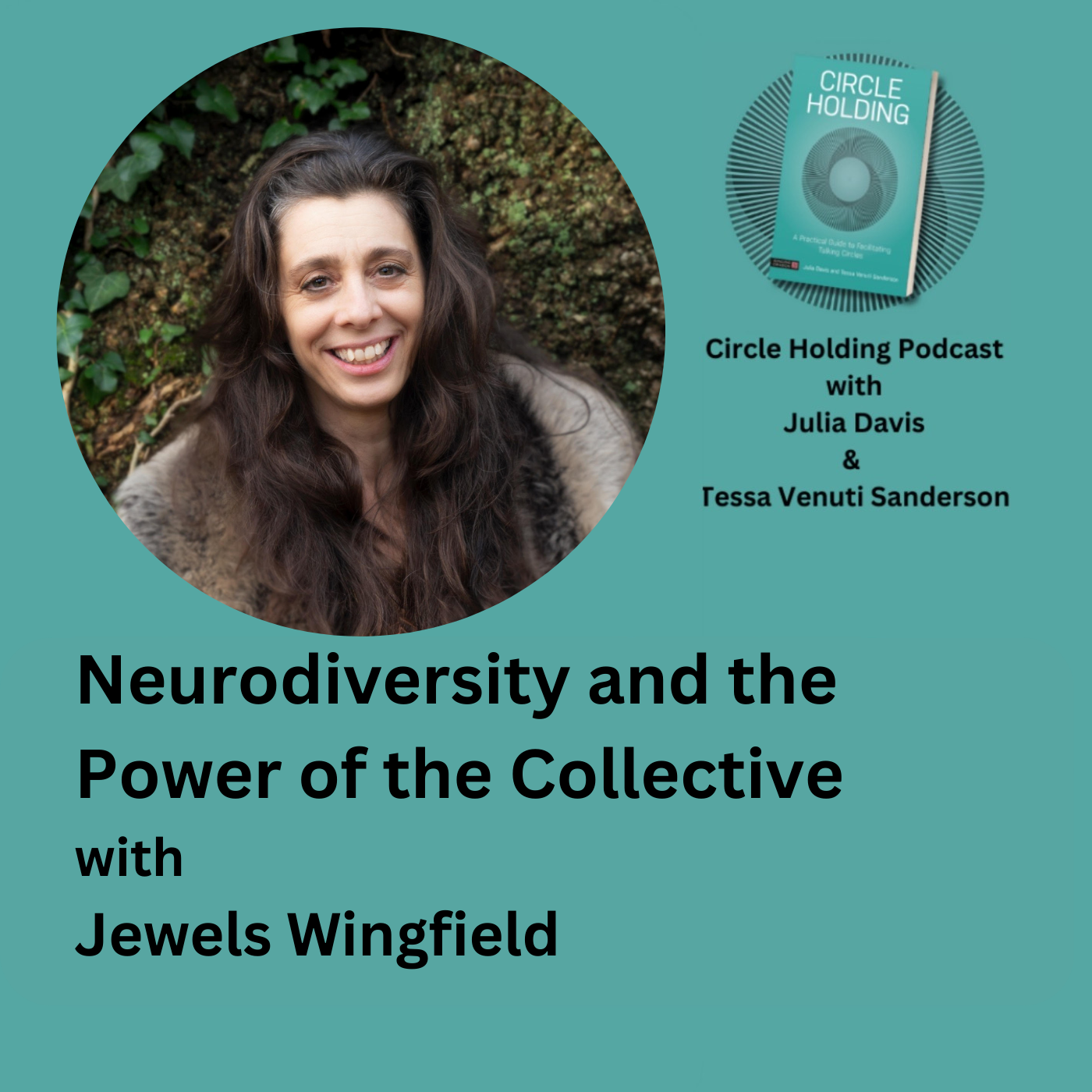 Neurodiversity and the Power of the Collective with Jewels Wingfield✨ | neurodiversitycircle facilitation+4 | Jewels Wingfield | Jewels Wingfield | — | neurodiversitycircle+6 | — | 56m 36s | |
| 4/12/26 |  Our Circle Stories✨ | storytellingfacilitation+3 | — | circle stories | — | circle storiesfacilitation+3 | — | 19m 05s | |
| 4/5/26 | 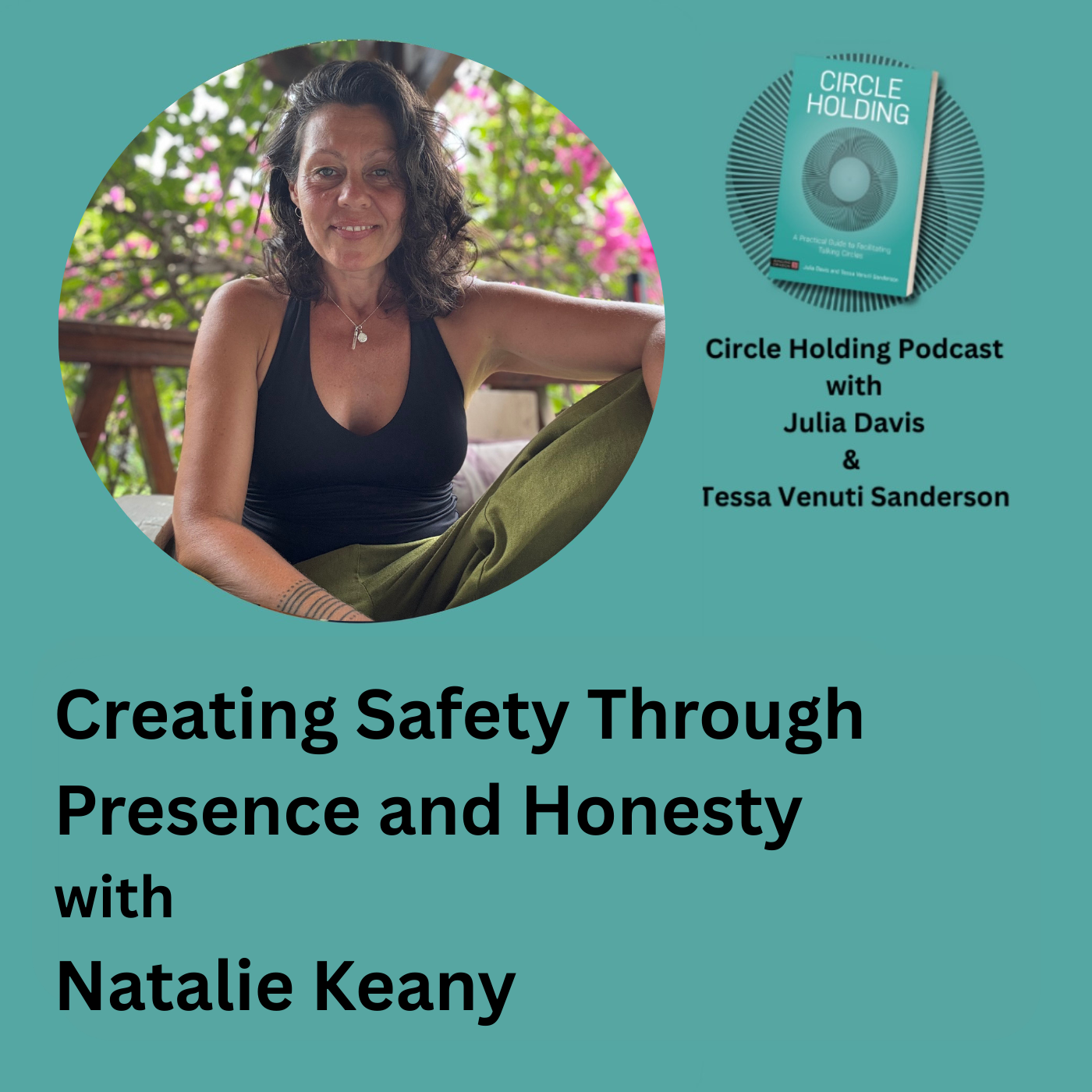 Creating Safety Through Presence and Honesty with Natalie Keany✨ | boundariesconsent+4 | Natalie Keany | Evolve Breath Body | — | boundariesconsent+5 | — | 39m 20s | |
| 3/29/26 | 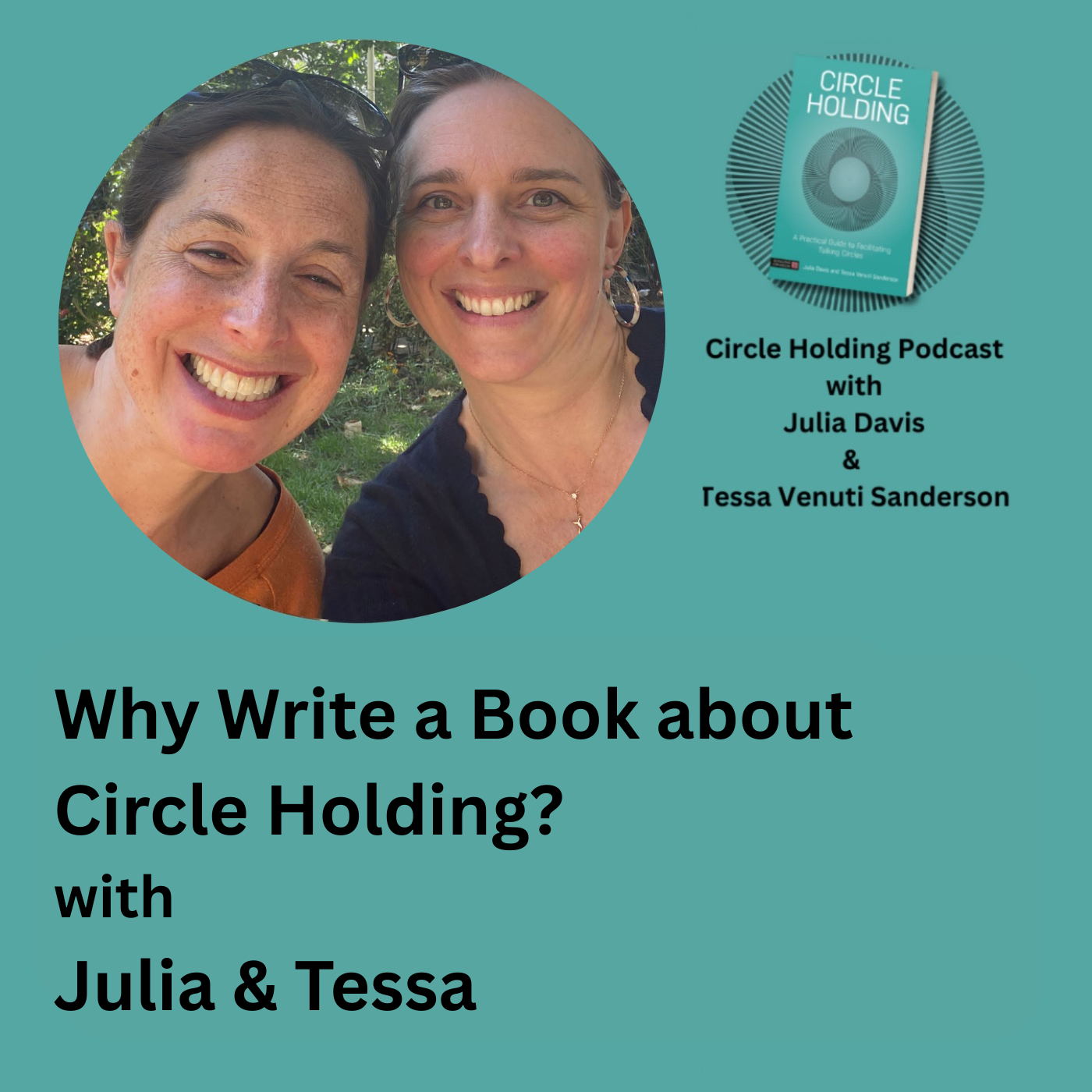 Why Write A Book About Circle Holding with Julia and Tessa✨ | book writingfacilitation+3 | — | Circle Holding | — | Circle Holdingbook+3 | — | 23m 02s | |
| 3/15/26 | 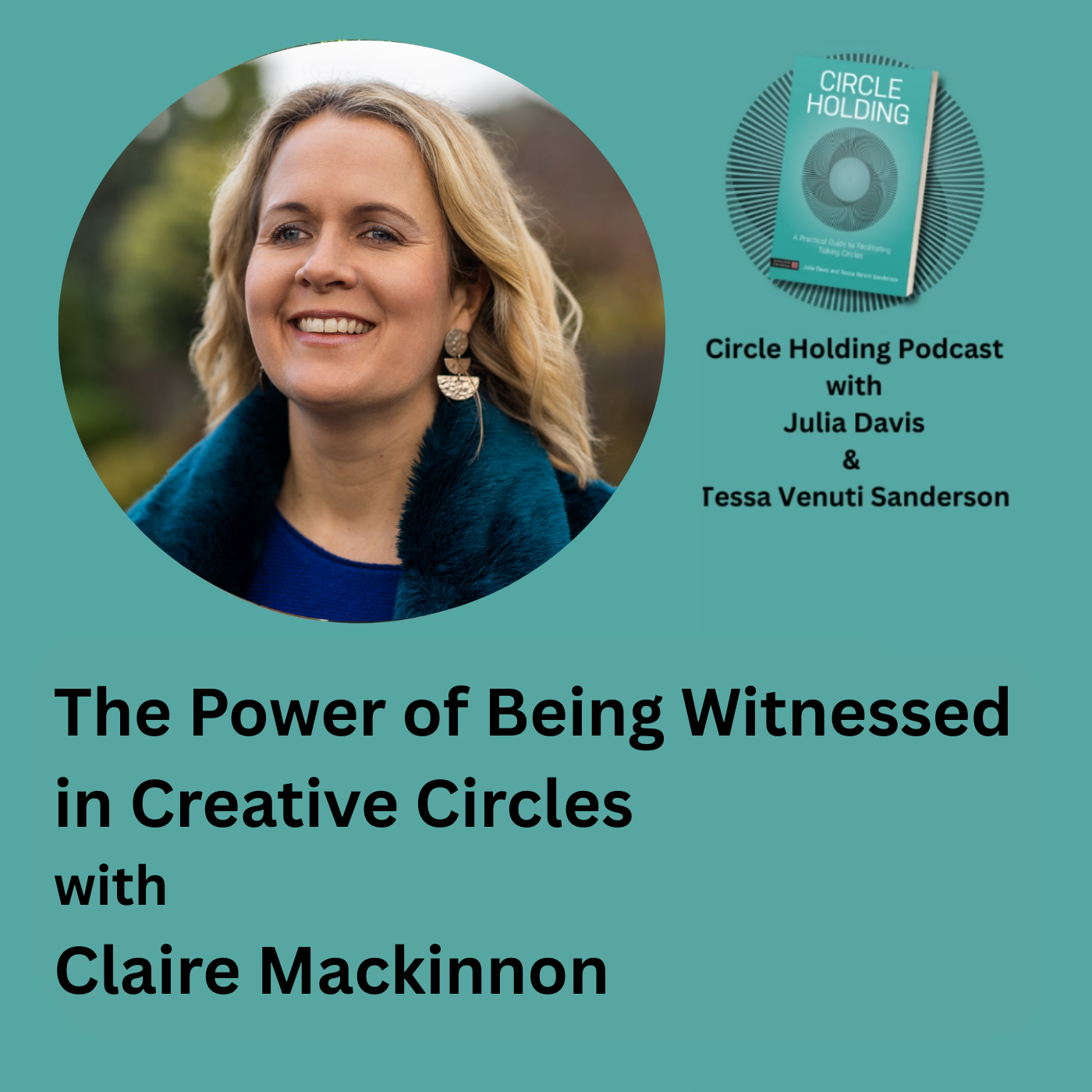 The Power of Being Witnessed in Creative Circles with Claire MacKinnon✨ | creative circlesleadership+4 | Claire MacKinnon | — | — | creative circlesleadership+5 | — | 46m 29s | |
| 3/8/26 | 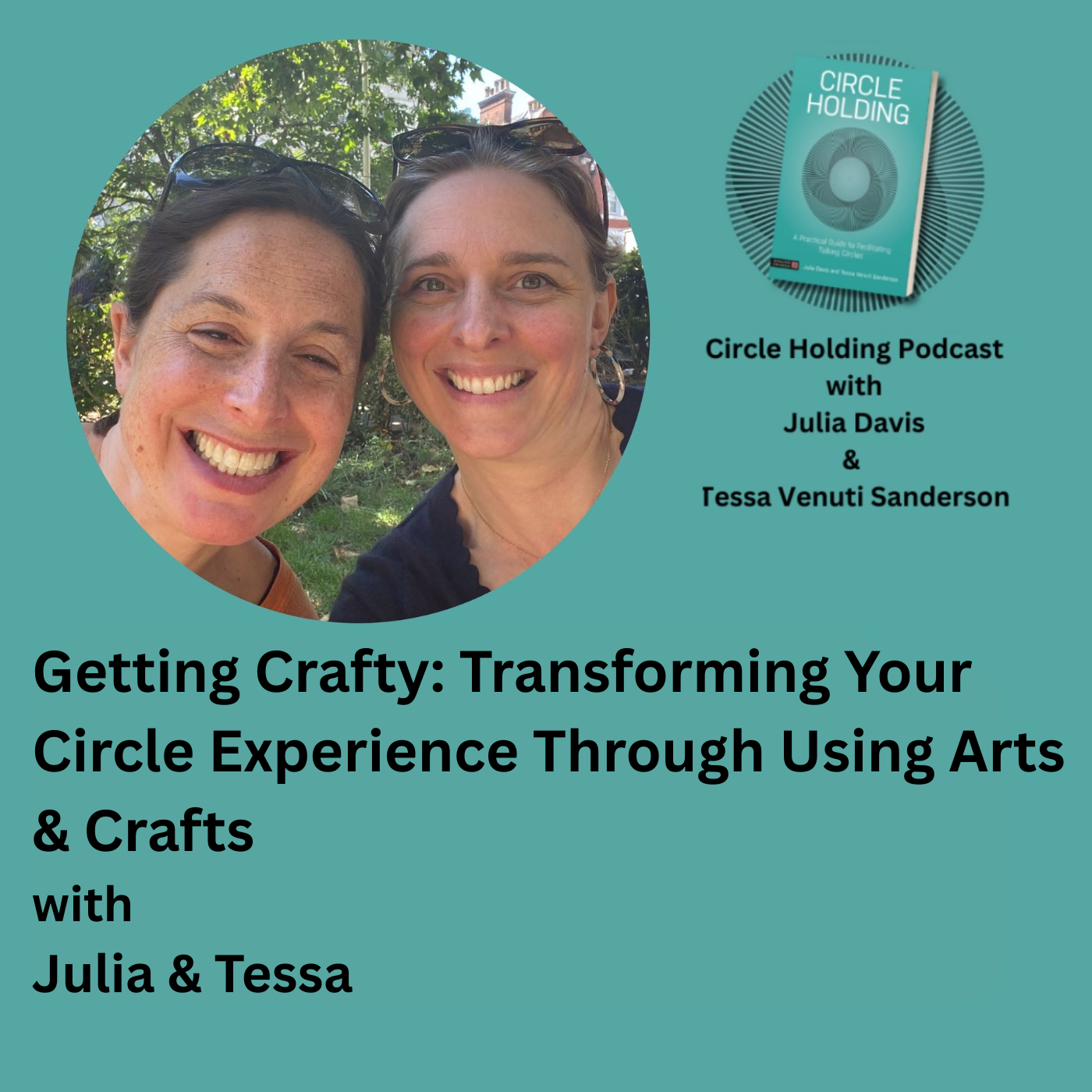 Getting Crafty with Tessa and Julia✨ | arts and craftscircle facilitation+3 | Tessa Venuti Sanderson | Circle HoldingFinchley Yoga+3 | — | craftscircle experience+3 | — | 19m 06s | |
| 3/1/26 | 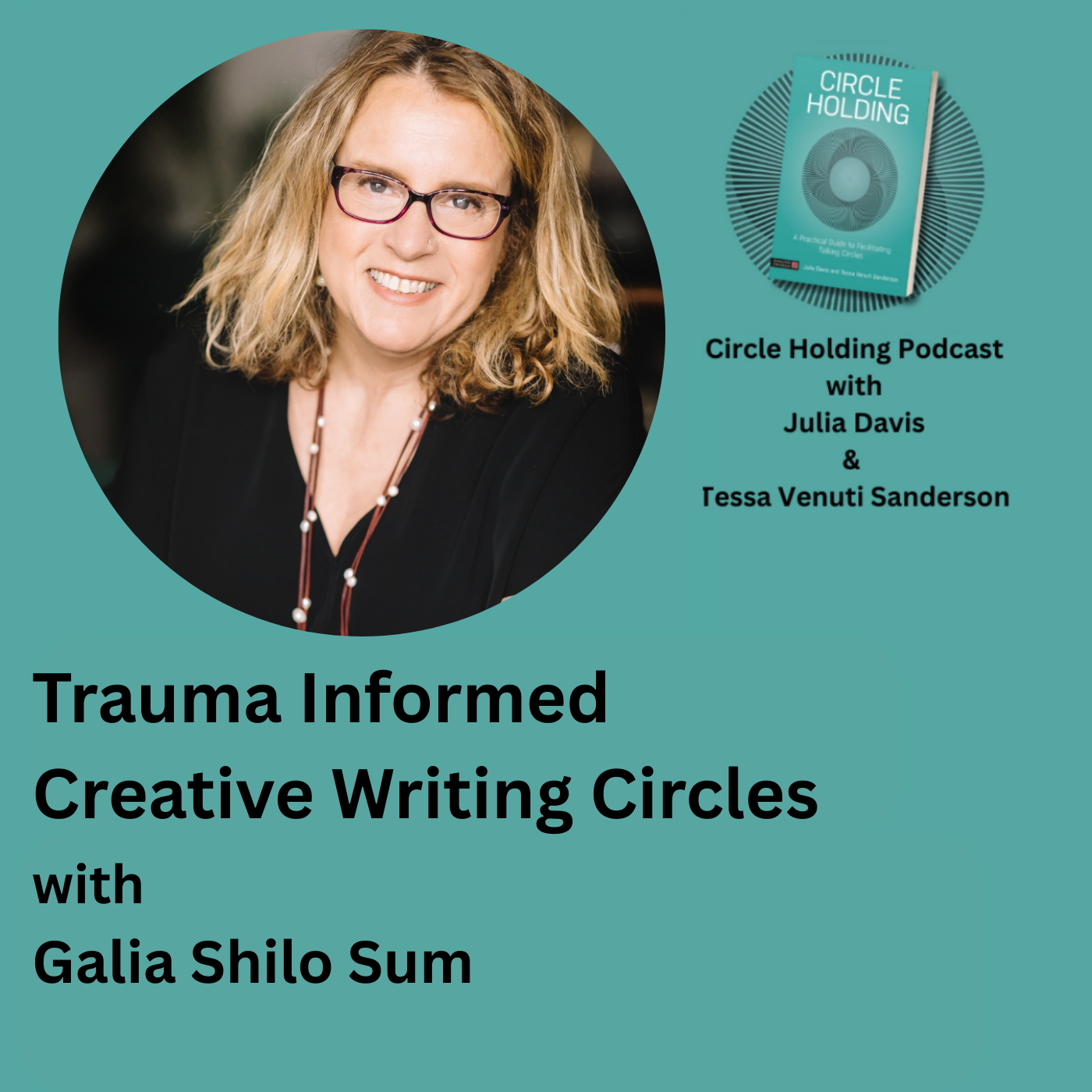 Trauma Informed Creative Writing Circles with Galia Shilo Sum✨ | creative writingtrauma informed care+4 | Galia Shilo Sum | — | — | trauma informedcreative writing+5 | — | 55m 12s | |
| 2/22/26 | 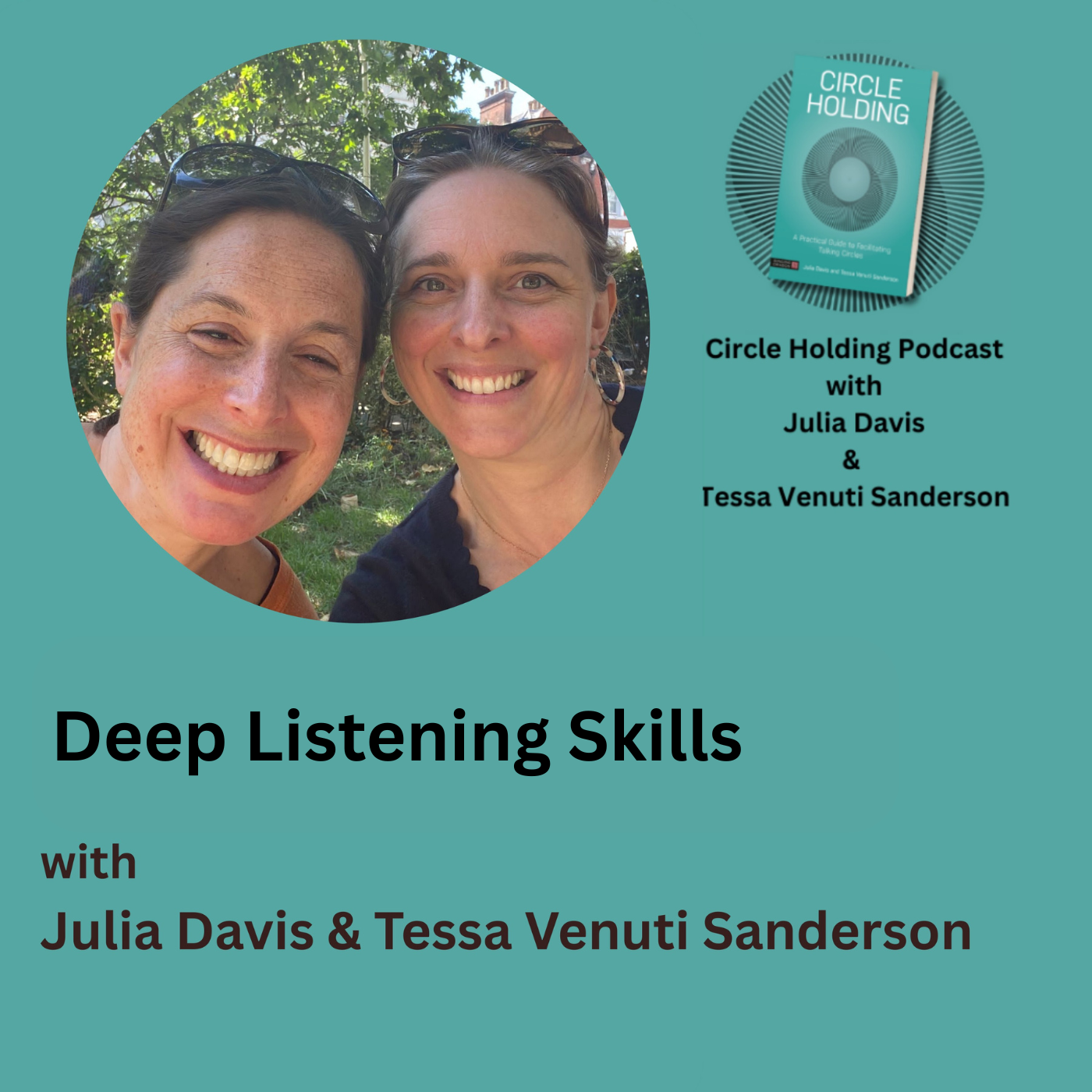 Deep Listening Skills with Tessa and Julia✨ | deep listeningvulnerability+3 | — | — | — | listening skillssettling practices+3 | — | 28m 20s | |
| 12/18/25 |  Endings and Ceremony with Julia and Tessa✨ | endingsceremony+3 | — | — | — | end of yearceremony+3 | — | 19m 47s | |
Want analysis for the episodes below?Free for Pro Submit a request, we'll have your selected episodes analyzed within an hour. Free, at no cost to you, for Pro users. | |||||||||
| 8/13/25 | Highlights of Series 3 with Julia and Tessa | If you're new to the Circle Holding podcast, this episode will give you a glimpse into the interviews with diverse circle facilitators in Series 3. | 10m 45s | ||||||
| 8/10/25 | 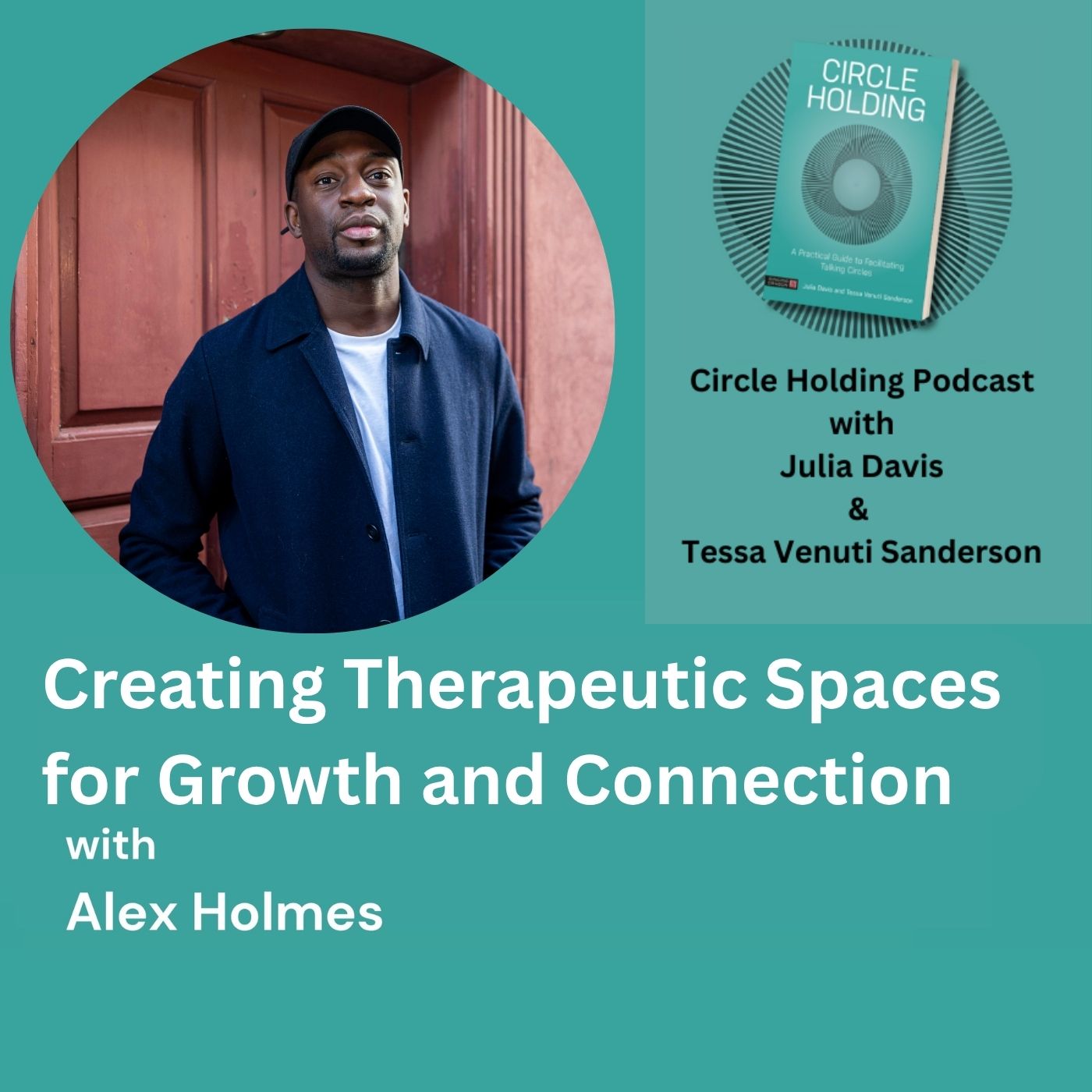 Creating Therapeutic Spaces for Growth and Connection with Alex Holmes | Alex and Julia talked about: • First encountered circles at Church with age group and older facilitator • Came back to circle in his thirties with a lot more life experience • Was a journalist in lifestyle and wellbeing who attended a circle out of curiosity and to write an article, to being asked to host one • Started with a one hour circle for 6-8 weeks • Is inspired by Men’s Speak, men’s circles in London • Did a Mental Health First Aid Course, then coaching, then as a therapist, which opened doors into schools • Did group work in schools with those who found the structure of school difficult- it gave space to relax and let their guard down • One of guidelines was to be responsible for the group rather than being disruptive and stopping others from benefiting from the group • Delivered ‘Becoming a man’ programme, part of Youth Guidance (US initiated) until funding withdrawn by government • Shared programme through assembly and boys consented to participating through signed agreement • There has to be buy-in from teachers and parents | 44m 19s | ||||||
| 8/6/25 | 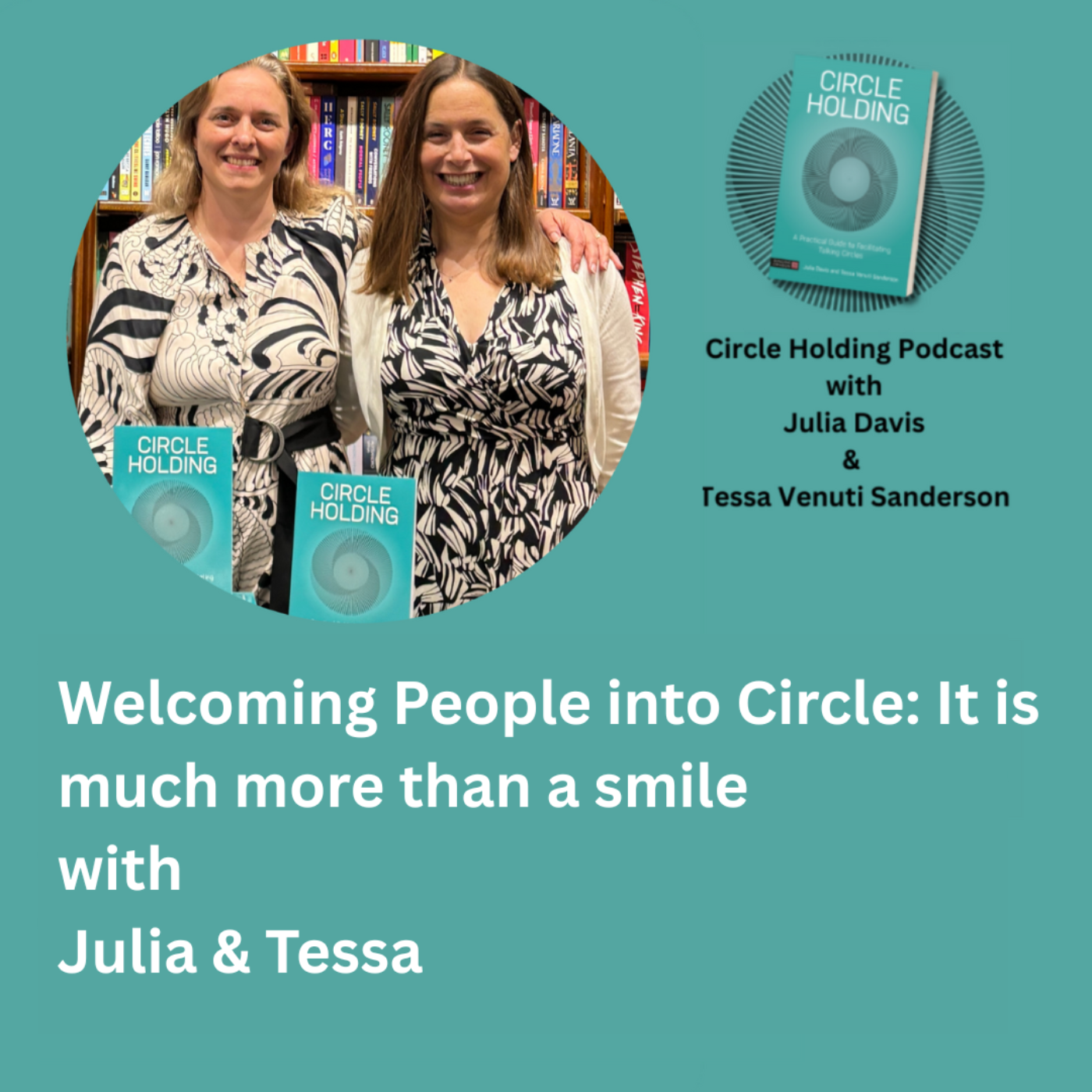 Welcoming People into Circle: It is much more than a smile | Julia and Tessa talk about the importance of the welcome to circle, including the pre-circle preparation and how welcomes might differ according to your demographic. | 17m 55s | ||||||
| 8/3/25 | 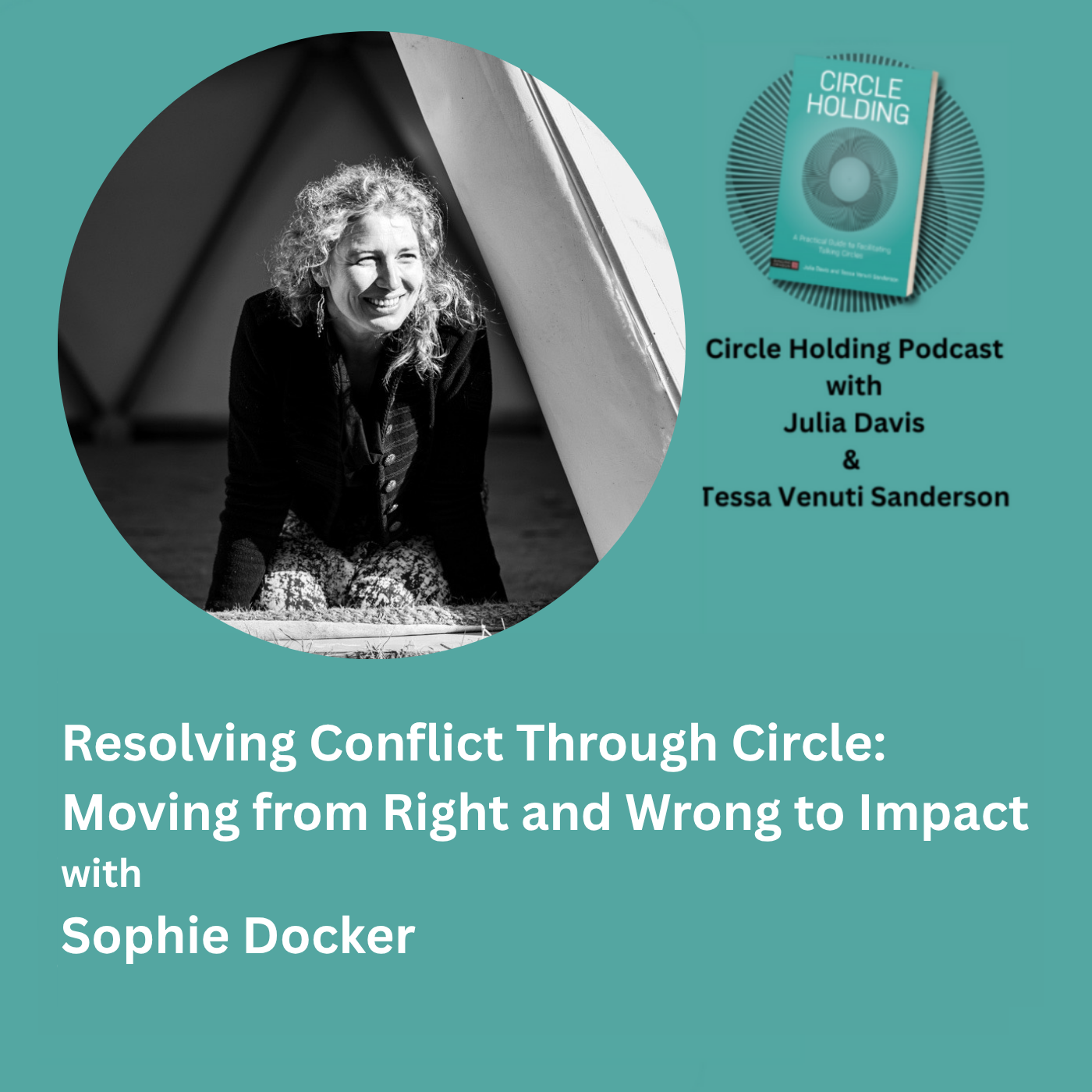 Resolving Conflict Through Circle with Sophie Docker | Sophie and Tessa talked about: • Moving away from right and wrong dynamics to a different way of engaging • Restorative justice addresses harm after it has happened e.g. working with local police • Restorative practice is about every interaction, shifting out of who’s right and wrong and to what really matters and how can we move forwards • I-messaging means talking from my personal experience rather than you language or how it is (as if factual) – what’s true for me is indisputable and allows space for difference • Speaking from multiple social truths • Move away from divisive, binary debating to what matters • Important to create a container for this different style of communicating, which involves getting consent to work WITH people rather than do a process to people • Where there is conflict, a risk assessment needs to be done to determine if there is a willingness to shift – can ask, “What needs are being met by not moving and what needs are not being met by moving your views?” • Having enough support is critical for facilitators – lack of support can show up as physical symptoms • Debriefing helps to process the facilitation and move from reactivity to memory • Constantly trying to prove rightness and wrongness is costly in terms of your nervous system • Circle spaces can create a more equal space than other set ups – important to become ‘power literate’ • ‘Flat’ organisations usually hide power dynamics • Ways of dealing with power differentials could be to decide the order in which people speak or not having everyone speak • Want to avoid ‘group think’ where focus on sameness rather than making space for difference, although it’s understandable to focus on sameness to ensure belonging where there’s less power • Bringing authenticity into communication is countercultural! E.g. Not to slip into saying “I’m fine” when you’re not. • I-messaging is a way to be authentic and belong | 39m 31s | ||||||
| 7/30/25 | 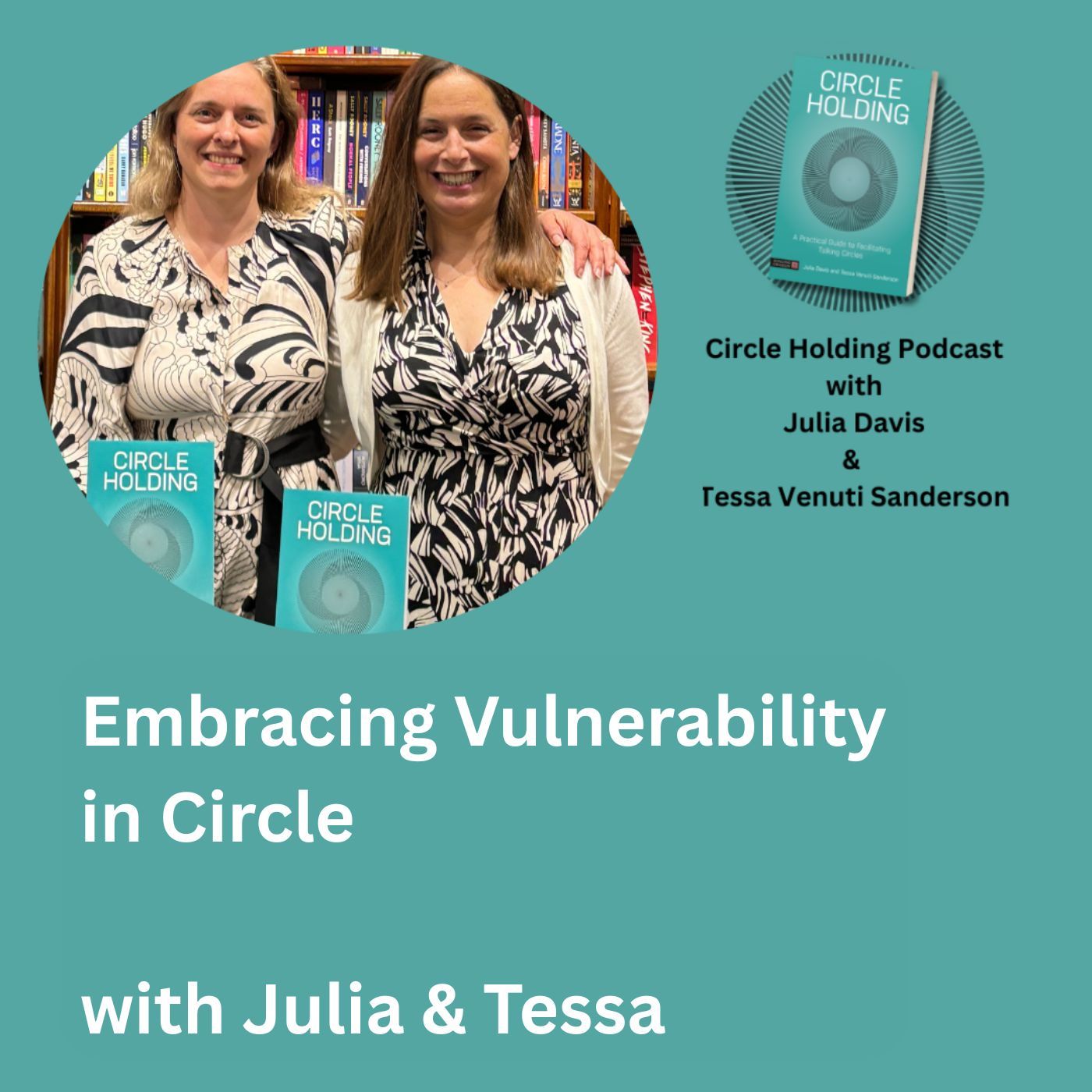 Embracing Vulnerability in Circle with Julia and Tessa | In this episode, Tessa and Julia talked about facilitating appropriate vulnerability, considering how the fear of vulnerability can be a real barrier to attending a talking circle, but when being vulnerable in a safe space can be incredibly empowering. | 19m 24s | ||||||
| 7/27/25 | 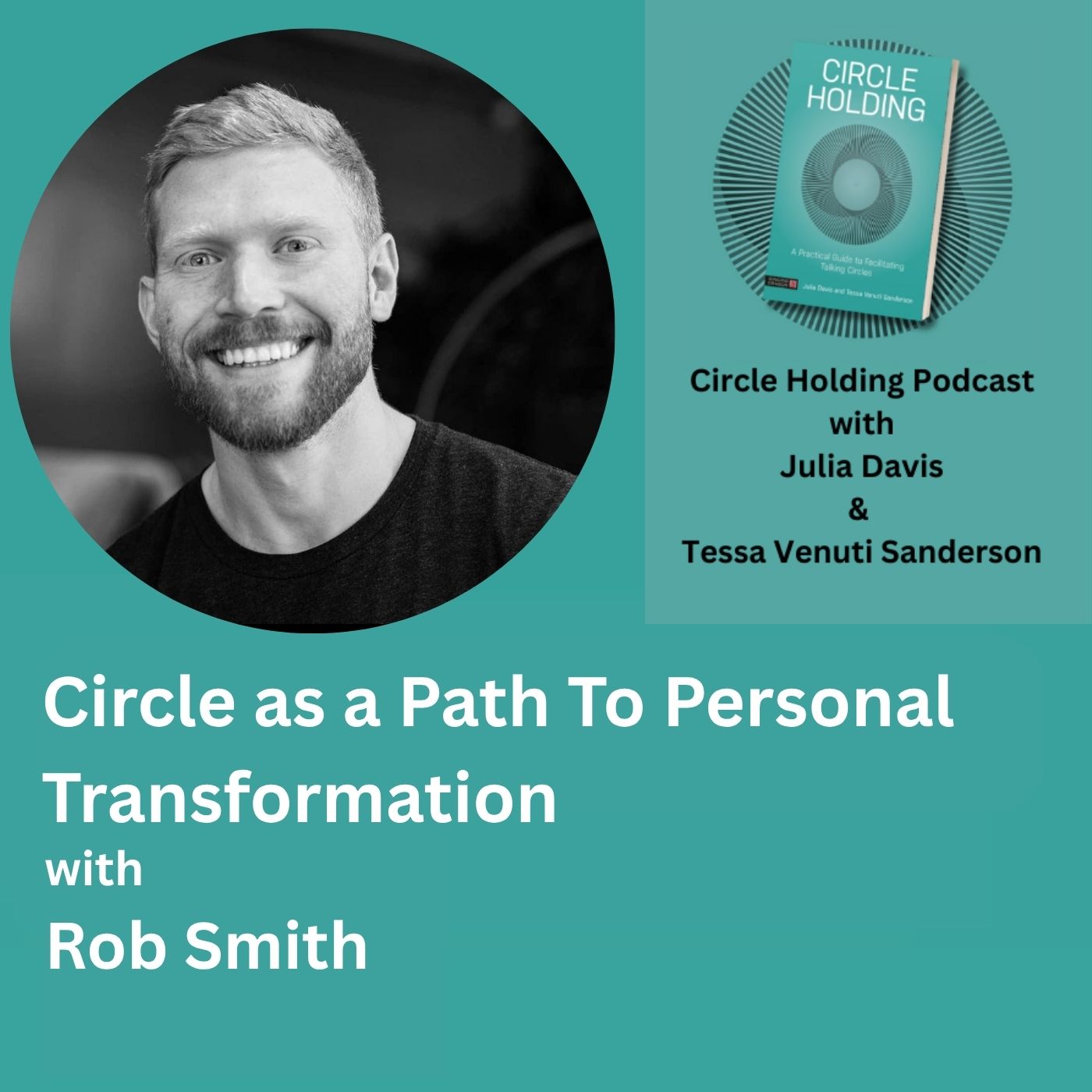 Circles as a Path to Personal Transformation with Rob Smith | In this interview Rob and Julia discussed: • How Rob came to attend his first circle • Had transferable skills from being a personal trainer, knew how to give person space to speak • Co-facilitates the circle at Uncommon Man – bring different skills and give each other support e.g. debriefing and planning • Also has support through Whatsapp group with other men’s circle facilitators • Charges for men’s monthly circle and a lot of this goes back into promoting sessions, including having a videographer there for marketing e.g. clips of breathwork to demystify what happens at the circle • For venues, think of spaces like offices that aren’t used in the evenings or co-working environments that may wish to support mental health • Tips on how to get started with a men’s group • Important to include moments of comedic relief in circles ie humour • Relaxed start with non-alcoholic beers and music playing (also a guideline not to bring alcohol or arrive inebriated) • With 20-25 men, will get agreement to guidelines with a hand raise • After initial circle, go to triads because less intimidating than 121 because can move eye contact between the two others • After group share with 5-10 people sharing, do breathwork session and final group share (time for everyone to speak) • Do breathwork because it’s a powerful way to help release emotion • Advice to new facilitator would be to have someone there to support you e.g. in setting space up, doesn’t have to be a co-facilitator and to give it a go with three friends. | 52m 03s | ||||||
| 7/23/25 | 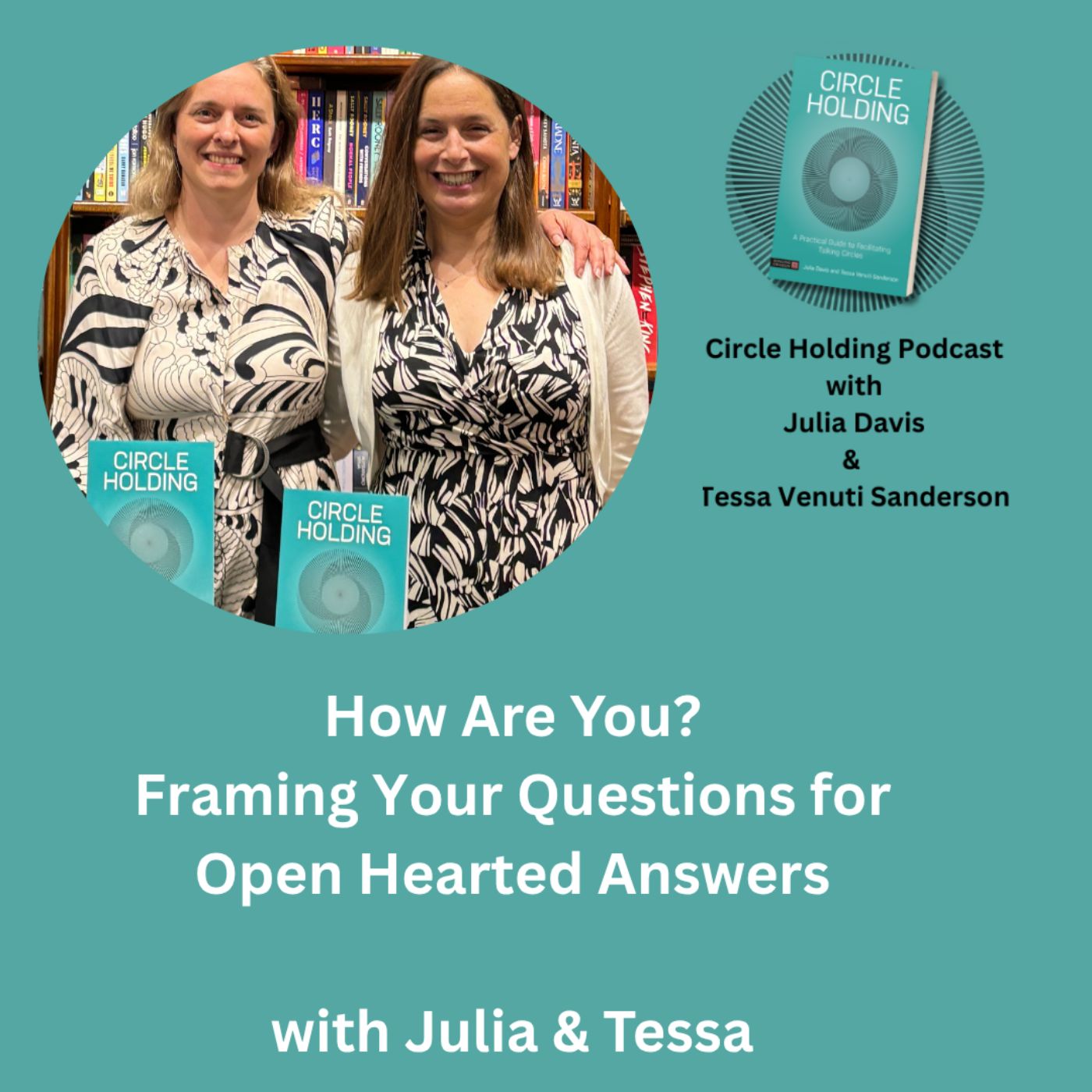 How are you? Framing Your Questions for Open Hearted Answers with Julia and Tessa | In this episode Julia & Tessa talk about how to create space for examining feelings: * Alternatives to "how are you" to create space for heart led conversation * Creating questions that lead to sharing stories * The value of lightness and humour * Starting shallow, going deep | 14m 50s | ||||||
| 7/20/25 | 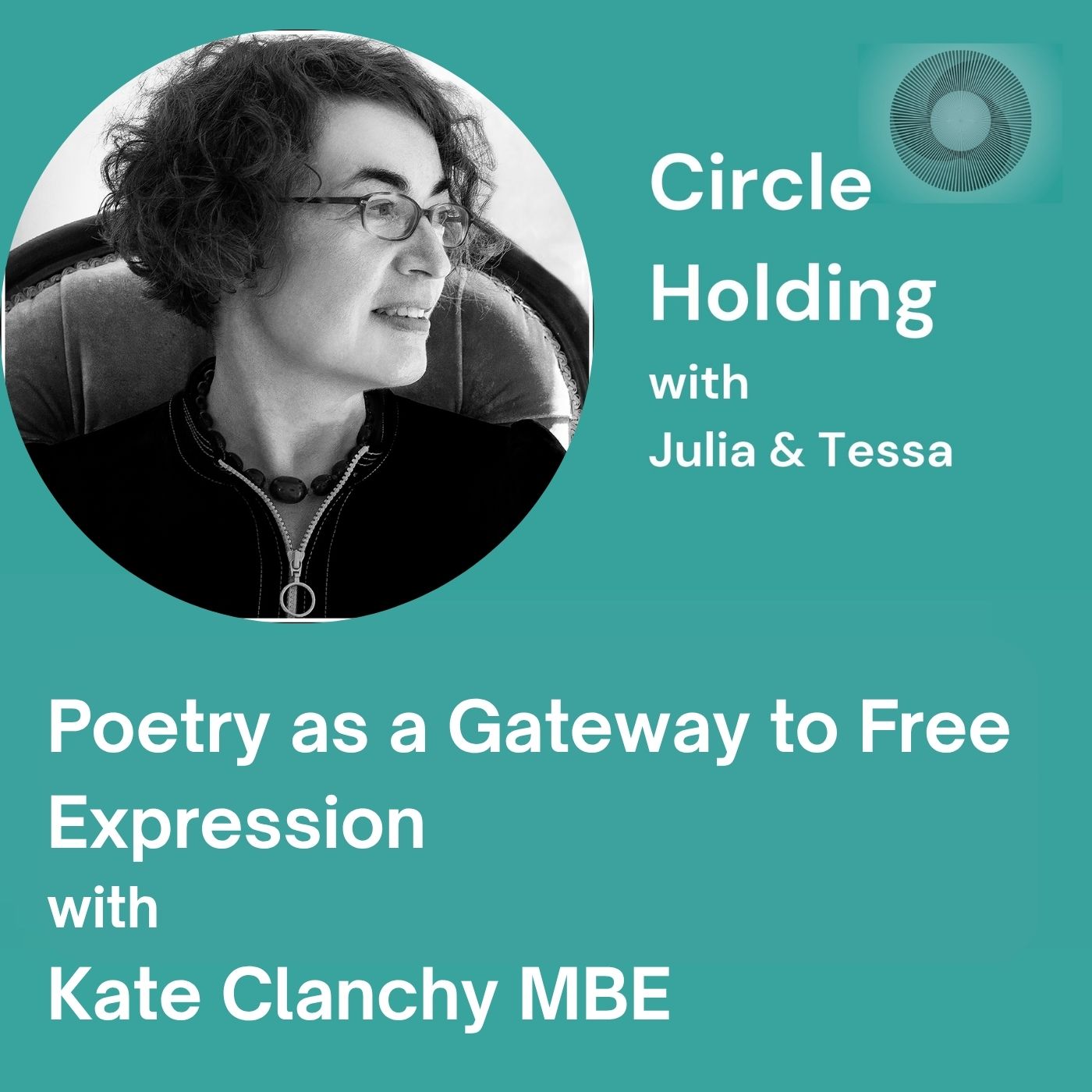 Poetry as a Gateway to Free Expression with Kate Clanchy MBE | Tessa and Kate talked about • Poems can create the shared space; poems that are appropriate for and speak to who is there • Poetry as a joining-in activity to be shared aloud as in the tradition of oral history, not like a pressed flower in a book • The poem creates a structure for people and children to organise their thoughts and even learn a language • As a facilitator, she narrates the experience to support the momentum of writing: a series of cues of what they could try, reading parts of the poem again • Poetry circles can work for very small groups and large ones, in person and online • Create an encouraging environment by giving praise as they work, need to affirm their poetry because will tend towards being critical • 90 minutes is a good amount of time to introduce the poem, have time for writing, then sharing • Guidelines such as encouraging clapping are to help it be a positive experience – in groups not about an analytical approach but to ‘react to it like it’s a song. • Kate will chose a line she thinks is really great from the poem as an introduction and if someone is shy and doesn’t want to read their poem, she will ask if it’s okay to read it for them • She welcomes feelings to arise because they come when the person is ready to express them • Important to give options for people to write about – she gives prompts that aren’t directly emotive, but often they will write something emotional from a light / general prompt e.g. food, something you remember • A poem can feel like a safe space because it’s expressing something beautifully • These poetry circles enable people to create their own safe spaces and get into a habit of expressing themselves • Good sources of poems, other than Kate’s books of course, are ‘Being Alive’ and ‘Poetry Foundation’ and Tessa uses John O’Donohue’s ‘Benedictus’ | 36m 23s | ||||||
| 7/16/25 | 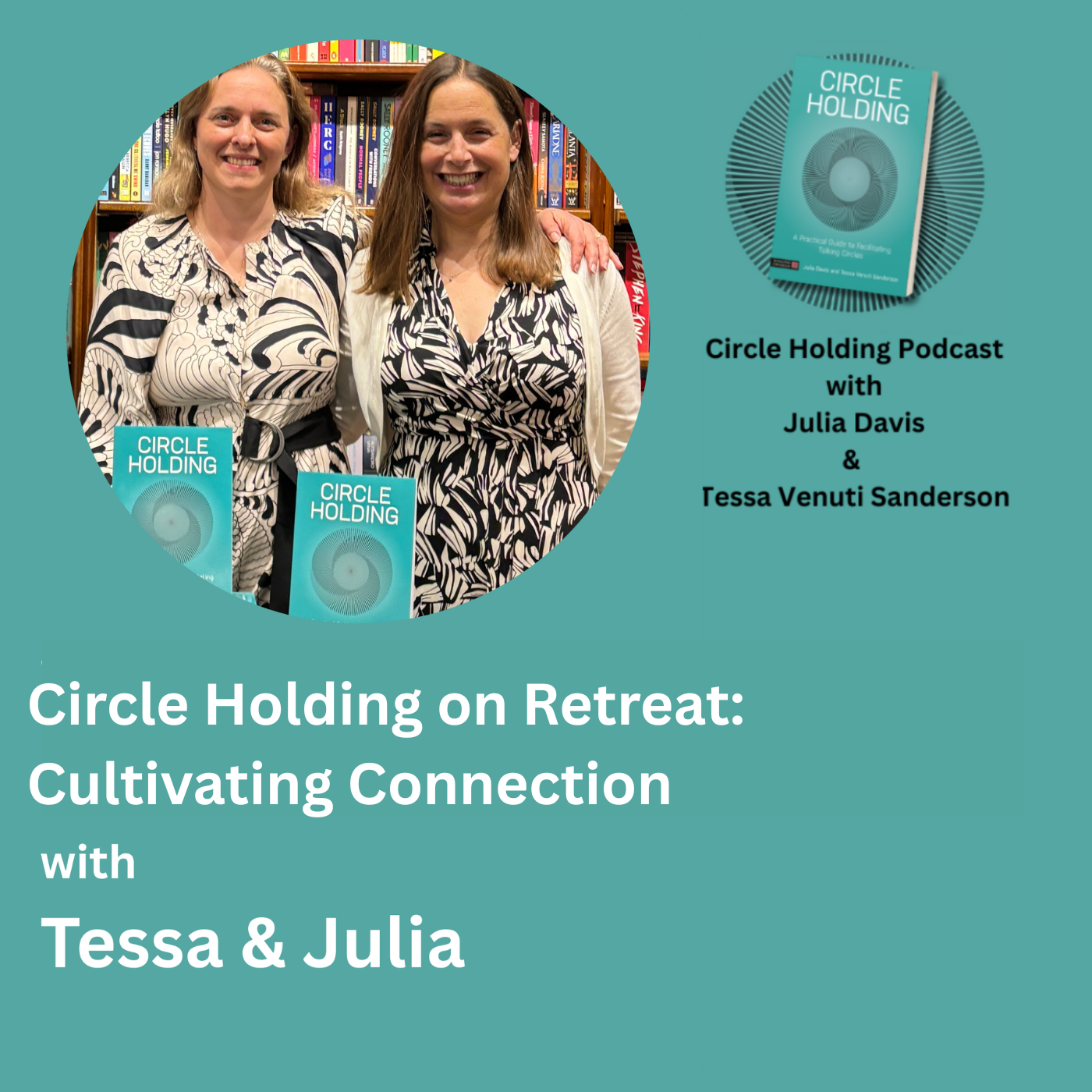 Taking Circle on Retreat: Cultivating Connection | In this episode, Tessa and Julia talked about how circle time can utilise the special environment of a retreat to deepen practices and sharing. They give some examples of where circle was used well and where it wasn't used at all. | 23m 37s | ||||||
| 7/13/25 | 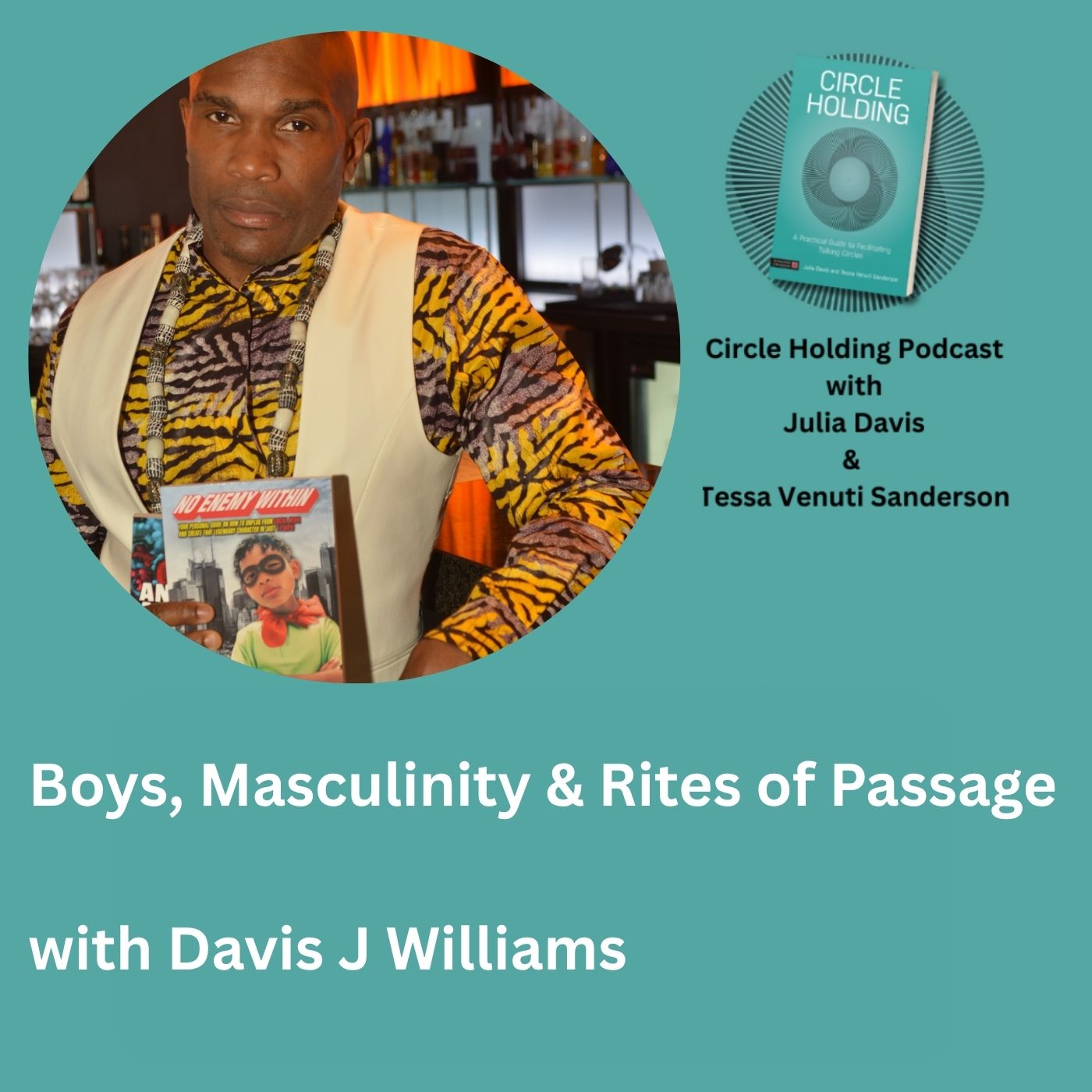 Boys, Masculinity & Rites of Passage with Davis J Williams | In this interview with Davis J Williams and Julia Davis, they talked about: • Moving from the competitive field of football coaching where some young people struggled to participate to supporting youth in the community • In Gambia, found that young boys went through a rite of passage at 13 years old and saw the difference that made to their self-respect, discipline, self-control and ambition • The journey to manhood builds throughout the boys’ lives, involving the whole community • Wanted to bring this rite of passage experience to the boys becoming involved in violence in London whose parents are struggling alone to guide them • Is important to involve parents to support their skills – developed the Parenthood Academy e.g. to create more intimacy at home like parents holding hands to model caring environment, eating meal together at a table • Bring in cartoons and animations to talk about manhood to combat narratives on social media e.g. through talking about Batman story and trauma of losing his parents • Programmes are run by volunteers from the community who want to support positive masculinity, rather than getting funding from local authorities or referrals from schools • Too important to wait for public funding to be provided, parents pay subscriptions for the kids to attend because they value the programme • Focus on building accountability to each other and the practitioners – a brotherhood – and once built rapport take them away for a deeper emotional experience of overcoming a challenge • Sit in circle without distraction – no mask wearing, no bravado - finding connections with safe people rather than with gangs • Alongside, Parent Lead is working with the parents to go on their own emotional journey and remembering their own goals, encouraging ongoing conversations between parents and youths • Length of time youths are involved varies – longest is 4 years of holding space for transformation • Peer leaders who volunteer come from different professions – all have in common that they have capacity to care • Strict screening process in place • Not easy because have to overcome the boys’ resistance to authority figures • Have to allow conversation to go where the boys want to take it, even when uncomfortable or controversial, for someone to have the courage to give different opinions | 47m 13s | ||||||
| 7/10/25 | 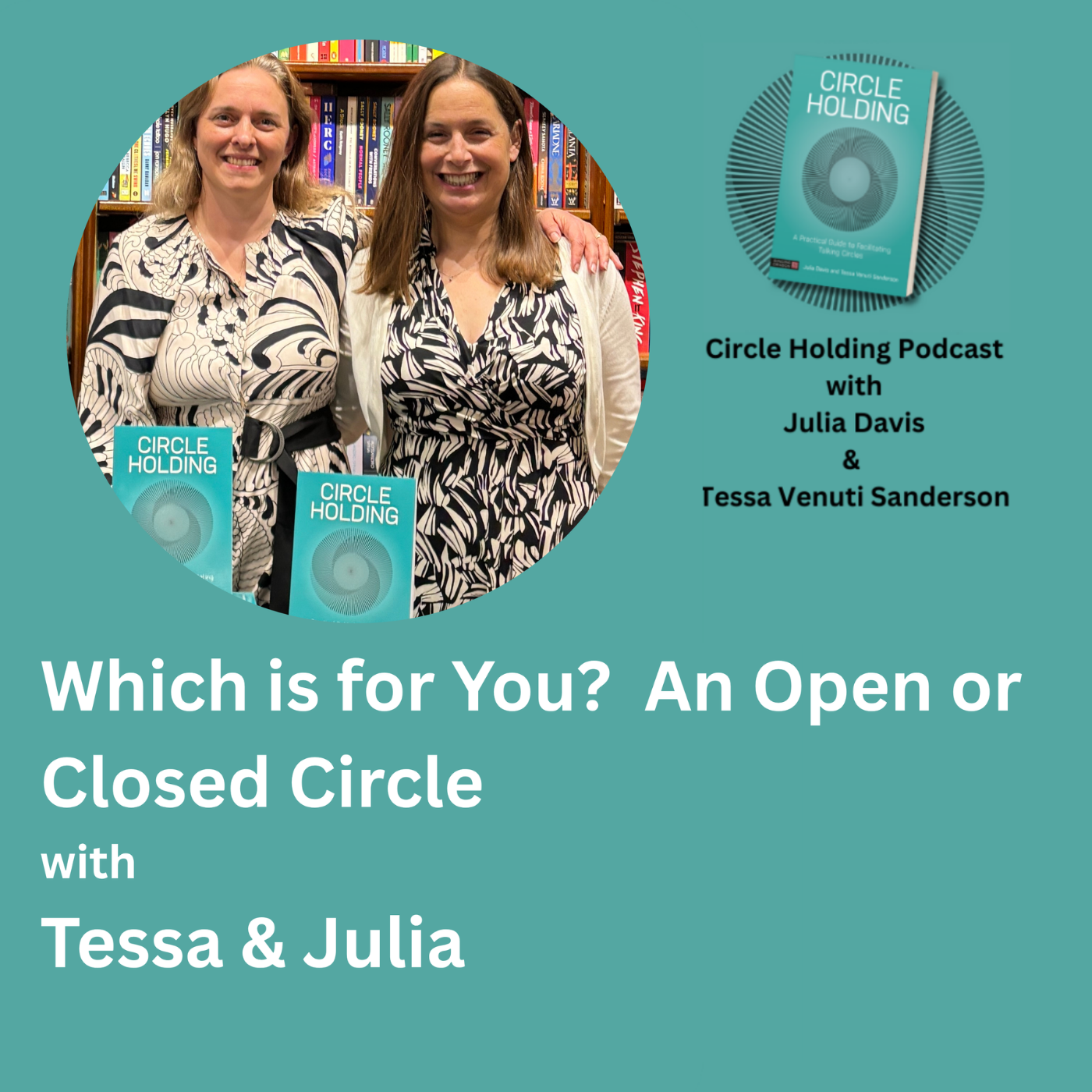 Which Is For You? An Open or Closed Talking Circle with Julia and Tessa | In this conversation, Tessa and Julia talked about what open and closed circles are, what the benefits are and what you might consider when setting them up. Enjoy! | 18m 51s | ||||||
| 7/6/25 | 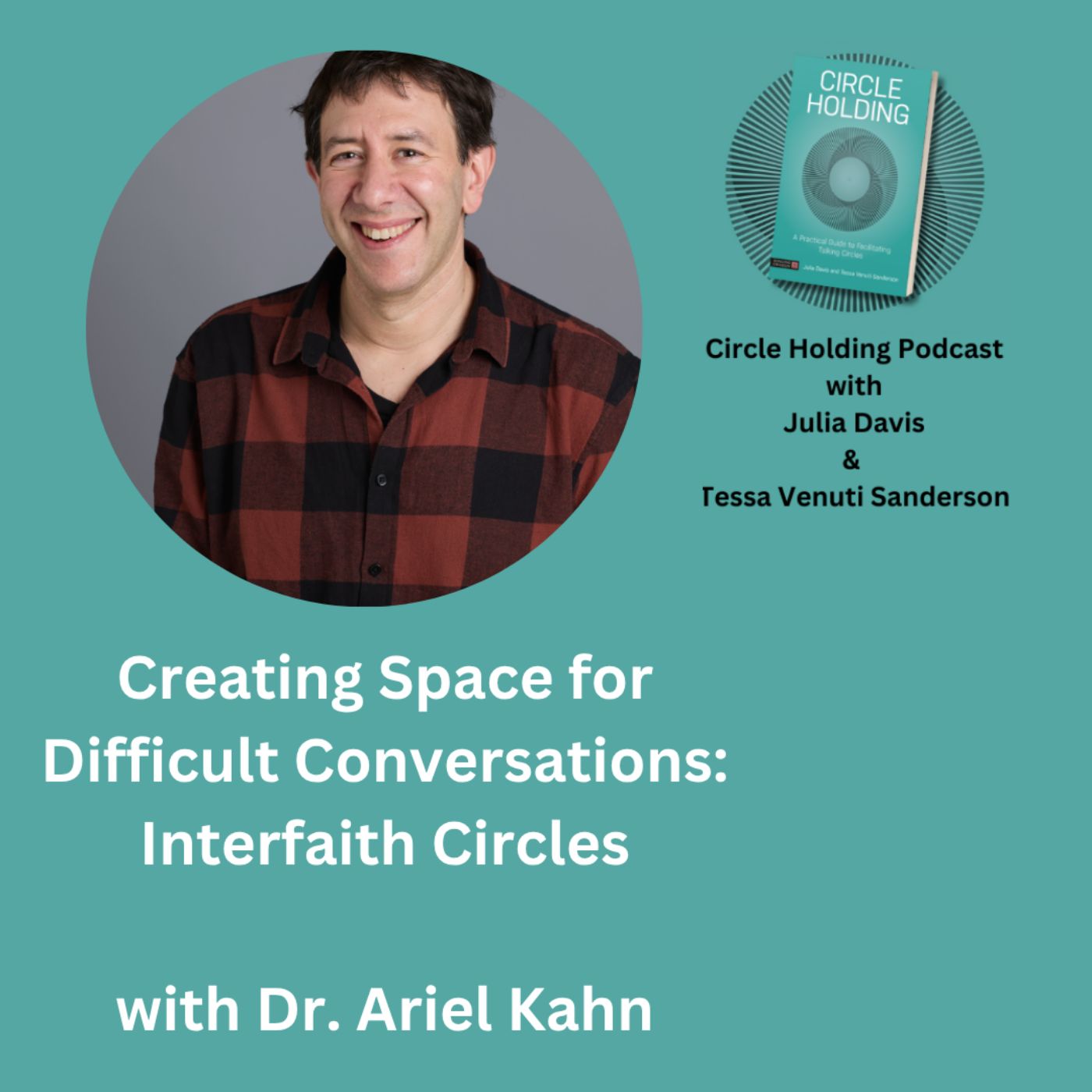 Making Space for Difficult Conversations with Ariel Kahn | In this interview with Ariel Kahn and Julia Davis, they discussed: Building relationships through a shared passion for literature The importance of creating spaces where everyone feels comfortable Changing the location of your circle The use of food and drink to build community How creative writing can be used as a bridge between communities The power of curiosity Literature as an olive branch for constructive conversations around difference The use of literature as a tool for crossing cultural boundaries Using circle in an education setting and the use of educational tools Enabling listening amongst cultural conflicts: modelling disagreement Circle as a space for digesting and formulating new ideas Vulnerability as strength in LGBT+ circles Stories as a vehicle for transformation The use of props in circle Workshops with an element of circle Creating firm guidelines around anonymity - the Chatham House rules | 50m 31s | ||||||
| 3/19/25 | 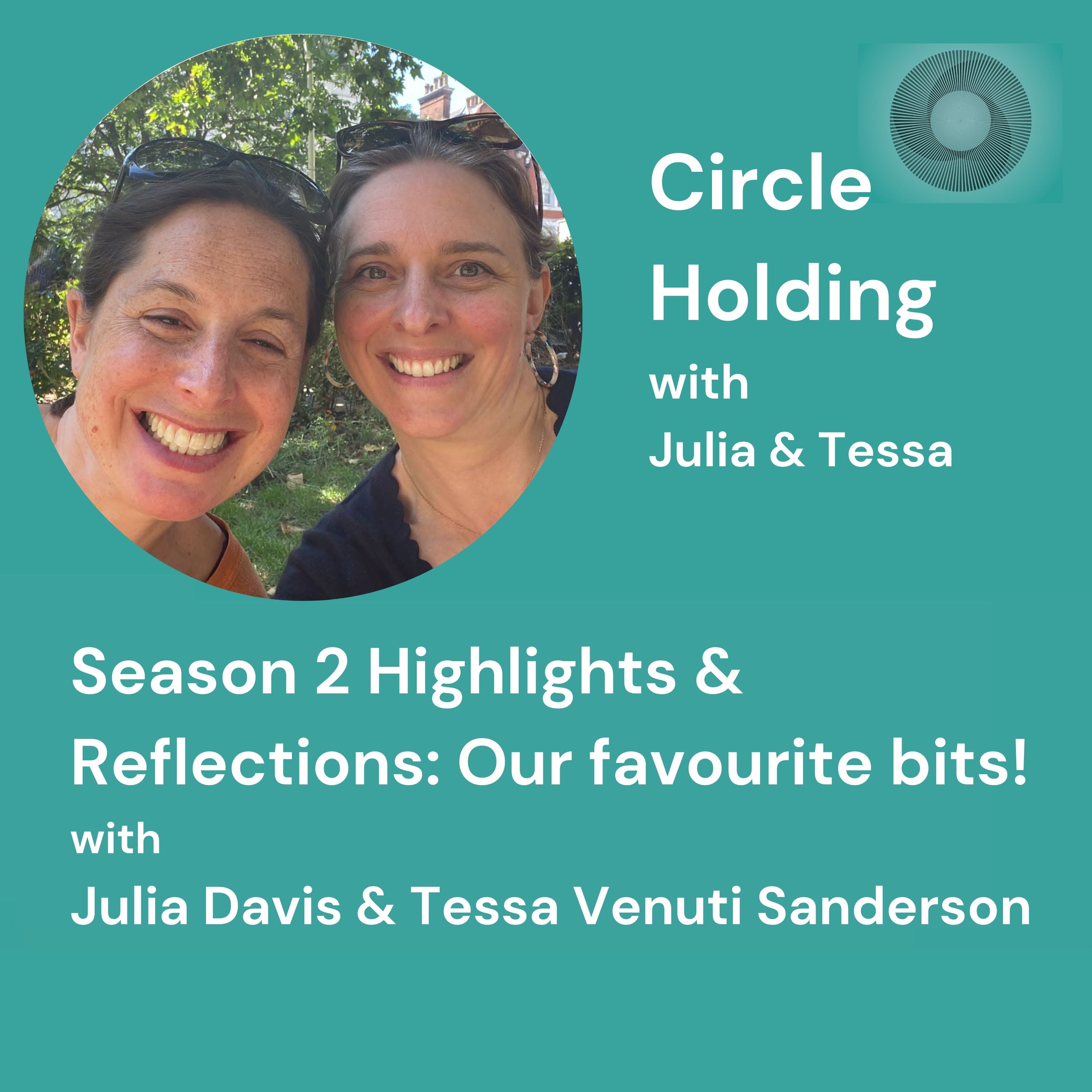 Highlights and Reflections on Series 2: Our Favourite Bits! with Julia and Tessa | In this episode, Tessa and Julia shared their highlights of the past 14 episodes including: - the power of circles with children and young people (Roy Leighton, Sophie King-Hill and Nellie Harden) - the importance of embodiment in talking circles for the participants and as a circle facilitator (Henika Patel and Marta Fabregat) - the spectrum of circles from in your living room to an international, decades-old organisation (Nicky Yazbeck and Mike Irwin) - the gift of being authentic as a group facilitator rather than being 100% perfect or professional! | 12m 36s | ||||||
| 3/7/25 |  Working with Families: Meeting Children's Needs So They Can Thrive with Nellie Harden | In this episode, Tessa and Nellie talk about: • Circles show up in all sorts of places like music groups and choirs • Growth happens in relationship, not isolation, which makes circles perfect for change • Modern life with devices and social media makes it hard for families to do active listening with each other • Get clarity about your child’s learning language so your message gets through e.g. pictures, words, movement • Playing loud music really helped to prepare the 12-18 year olds for listening later – think of your attendees’ needs • A clarity board enables you to write or draw what you hear the other person is saying and check you’ve got it right (up to 5 things you hear) • A facilitator can provide third-party validation where a change in relationship / communication is the goal • Aim is to create a space to develop truth and trust with the circle so that the amygdala doesn’t shut down processing too much flight and fight • Rules for Nellie’s session is ROCKS: Respect, Obedience, Compassion, Kindness, Self-discipline • Can take a break if things get heated to re-establish calm or use ‘square breathing’ (also known as even breathing) with tracing the square on the leg • Make the participants aware of defence mechanisms such as sarcasm, mocking, dismissing, interrupting, ignoring and distraction – these are destructive forms of communication and you need to take a break if it happens • In terms of time keeping, you can put a leeway / buffer for latecomers but also at the end in case you are in something deep and don’t want to interrupt the process • A firm boundary is having phones away • Acknowledging the role of hormones in relationships is important in this age group. | 43m 34s | ||||||
| 3/5/25 | 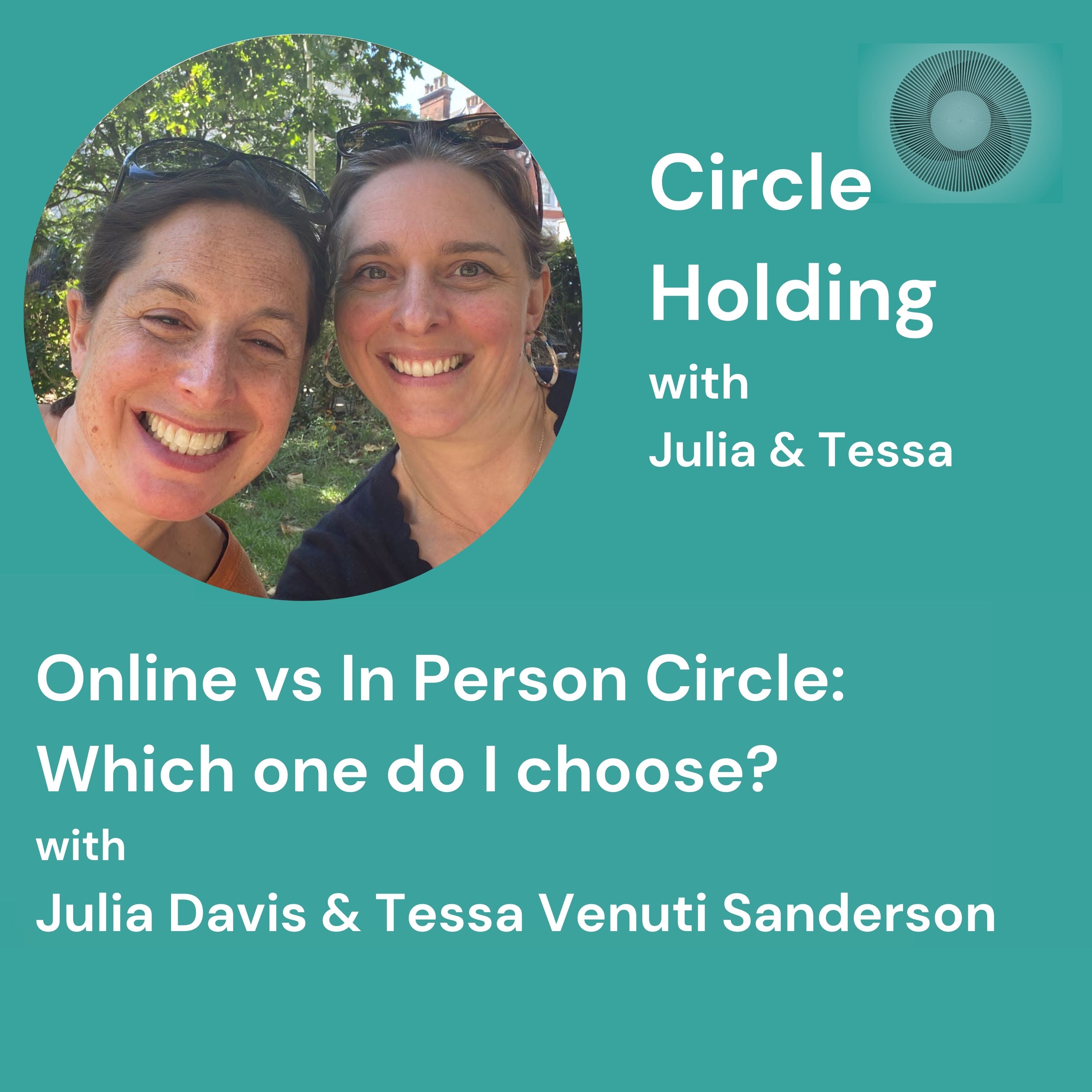 Online vs In Person Circle: Which One Do I Choose? | In this episode, Julia and Tessa covered: - The benefits of both online and in person circles - The challenges of online and additional guidelines you might put into place - The additional work that an in person circle might involve in setting up the physical space - Examples of how both online and in person circles have worked with different demographics. | 24m 29s | ||||||
Showing 25 of 54
Pitch Fit is a Pro feature
See how bookable this show is for guests, which brands already advertise, the per-episode ad value, and the best-fit guest and sponsor profile. The numbers are blurred on the free plan.
How readily this show books outside guests like you.
How proven this show is for host-read sponsorships.
For Guests
ProFor Advertisers
ProUpgrade to Pro to unlock guest cadence, sponsor categories, fit scores, and per-episode ad value for this show.
Chart Positions
1 placement across 1 market.
Chart Positions
1 placement across 1 market.