

Insights from recent episode analysis
Audience Interest
Podcast Focus
Publishing Consistency
Platform Reach
Insights are generated by CastFox AI using publicly available data, episode content, and proprietary models.
Total monthly reach
Estimated from 13 chart positions in 13 markets.
By chart position
- 🇦🇺AU · Music History#7300K to 1M
- 🇰🇷KR · Music History#3300K to 800K
- 🇯🇵JP · Music History#1371K to 10K
- 🇫🇷FR · Music History#1491K to 10K
- 🇳🇿NZ · Music History#3100K to 300K
- Per-Episode Audience
Est. listeners per new episode within ~30 days
236K to 720K🎙 Daily cadence·79 episodes·Last published 3d ago - Monthly Reach
Unique listeners across all episodes (30 days)
787K to 2.4M🇦🇺42%🇰🇷33%🇳🇿13%+10 more - Active Followers
Loyal subscribers who consistently listen
315K to 960K
Market Insights
Platform Distribution
Reach across major podcast platforms, updated hourly
Total Followers
—
Total Plays
—
Total Reviews
—
* Data sourced directly from platform APIs and aggregated hourly across all major podcast directories.
On the show
Recent episodes
Sunday Night Special … Ralph Vaughan Williams' Symphony No. 6
Jun 21, 2026
Unknown duration
Franz Schubert 1
Jun 12, 2026
Unknown duration
Pieter Wispelwey - Cellist
Jun 6, 2026
Unknown duration
Seville… Love and Dreams
May 28, 2026
Unknown duration
Muses... Worth Repeating*
May 21, 2026
Unknown duration
Social Links & Contact
Official channels & resources
Official Website
Login
RSS Feed
Login
| Date | Episode | Description | Length | ||||||
|---|---|---|---|---|---|---|---|---|---|
| 6/21/26 |  Sunday Night Special … Ralph Vaughan Williams' Symphony No. 6 | The name comes from the night of the week when for some of us, the frustrations of insomnia hit the hardest… and because my preferred antidote is getting lost in some music. Of course this series is for everyone… but it is perhaps intended a little more for those of you whose sleep has been troubled. The idea of the special is to play just one piece, uninterrupted and in its entirety… with a few minutes of background explained at the end of the episode. This month… Ralph Vaughan Williams' Sixth Symphony. The BBC Symphony Orchestra is conducted by Andrew Davis. | — | ||||||
| 6/12/26 |  Franz Schubert 1 | He was taught by Antonio Salieri and his music was admired by Ludwig van Beethoven… but he enjoyed very little success in his short lifetime. It would take decades after his death for his music to make its way onto concert stages… and for him to become one of the best loved composers who ever lived. If you are new to his music I hope that over the next hour and a bit I'll give you a sense of why that is the case. I'm going to concentrate on music Schubert wrote between 1814 and 1822, that is between the ages of 17 and 25, including sections from two symphonies, two piano sonatas and a piano quintet; and three songs. [The image for this episode is a watercolour of Schubert by his friend Wilhelm August Rieder from 1825.] | — | ||||||
| 6/6/26 |  Pieter Wispelwey - Cellist | This episode features a living musician, still very much in his prime… the Dutch cellist, Pieter Wispelwey. So, what prompted me to choose him? Well, a few things. I've been a fan for a long while and have been lucky enough to hear him play a number of times over the last three decades. And about 18 months ago the record company Channel Classics released a big box of CDs of recordings he made for the company… and they're terrific. And Wispelwey is equally at home with music from any of the last several centuries. Plus he is still touring… so for many of you listening to this podcast… he will be on a stage near you at some point and I recommend you grab the opportunity to hear him play. And perhaps most importantly I can get to play you some of the best music written for the cello… from Johann Sebastian Bach, Josef Haydn, Pyotr Illich Tchaikovsky, Benjamin Britten, Antonin Dvorak, Antonio Vivaldi, Dmitri Shostakovich and Peter Sculthorpe. [The episode photograph is by Michel Garnier.] | — | ||||||
| 5/28/26 |  Seville… Love and Dreams | Music from and about Seville, the city of Carmen's tobacco factory and Figaro's barber shop; the city of flamenco and fiestas; the city where more operas are set than any other; and the city where almost eight centuries of Spanish dominance does not seem to have been able to erase the sense of the proximity of North Africa and the cultural heritage of the Moorish world. Music by Isaac Albeniz, Joaquin Rodrigo, Georges Bizet, Joaquin Turina, Wolfgang Amadeus Mozart, Francisco Guerrero and Giochhino Rossini. All of whom revel in the shifting mirage and extravagant reality that is Seville. [The episode image is of La Giralda… the belltower of Seville Cathedral… once the minaret of the Grand Mosque of Islamic Seville.] | — | ||||||
| 5/21/26 |  Muses... Worth Repeating* | Much music has been inspired by love, passion or obsession… but only in a handful of cases has the person who was the inspiration… the muse… become publicly linked to a work. Here are the stories of six of them… Alma Schindler, Josephine Brunsvik, Kamila Stösslová, Peter Pears, Clara Wieck and Mathilde Wesendonck. And the music they inspired… by Gustav Mahler, Ludwig van Beethoven, Leos Janacek, Benjamin Britten, Johannes Brahms and Richard Wagner. [The episode image is a photographic portrait of Alma Schindler taken about eighteen months before she met Mahler. It is likely the image was made by Moriz Nähr but the attribution is difficult to confirm.] *This episode is from back in April 2025. Whilst I am away from the microphone and the CD library for another week, I'm repeating one of my very favourite episodes. Enjoy. | — | ||||||
| 5/14/26 |  The Sea… Worth Repeating* | Composers have drawn inspiration from the sea for centuries but only with the rise of the larger orchestras of the 1800s did they get the palate needed to create fully persuasive depictions of it. So, apart from one piece for solo piano, major orchestral works are what you will hear in this episode... 'The Sea and Sinbad's Ship' from Nicolai Rimsky-Korsakov's 'Sheherazade', an unfairly short interlude from Benjamin Britten's opera 'Peter Grimes', the overture to Richard Wagner's 'The Flying Dutchman', Claude Debussy's 'The Sunken Cathedral', New Zealander Gareth Farr's massive 'From the Depths Sound the Great Sea Gongs' and more Debussy… 'Games of the Waves' from 'La Mer' or 'The Sea'. *This episode is from the group that launched the podcast back in February 2025. Whilst I am away from the microphone and the CD library for a couple of weeks, I'm repeating some of my favourite episodes. Enjoy. | — | ||||||
| 5/8/26 |  Maurice Ravel... Worth Repeating* | Maurice Ravel (1875 – 1937) is arguably the most beloved composer France has given the world… able to take classical and pre-classical forms, absorb the harmonic colours of Impressionism, draw on the dance traditions of his Basque mother's heritage, and infuse his later work with the energy of early jazz. All of it synthesised into a language that is quite distinctly his own. In this episode… a section of his first Piano Concerto, the Pavane for a Dead Princess, a little taste of his String Quartet, the amazing orchestral work La Valse, or The Waltz, the 'Blues' section of his second Violin Sonata… and the irresistible 'Bolero'. Plus a little biography thrown in. *This episode is from the group that launched the podcast back in February 2025. Whilst I am away from the microphone and the CD library for a couple of weeks, I'm repeating some of my favourite episodes. Enjoy. | — | ||||||
| 5/2/26 |  Recent Discoveries Two | Recent Discoveries Two This episode is the second one called 'recent discoveries'. And that should only be taken in the very personal sense of 'recent discoveries' for me. Some of it is indeed recent but in addition to music written in the last few years, there are a couple of pieces that date back to the early and mid-20th century so they were well and truly discovered before I encountered them. I want to apply a little bit of gentle pressure on behalf of the unfamiliar. I am going to hope that you will be pleasantly surprised by how good music by people whose names might not know can be… Music from Maria Grenfell, Gabriela Ortiz, Daniel Asia, Ethel Smyth, Herbert Howells, and the perhaps more recognisably… Dmitri Shostakovich. | — | ||||||
| 4/25/26 |  Before Dawn | Music for the hour before dawn. Which is in no way intended to be too prescriptive… the episode can be listened to any time… but I hope it is music that has a calmness and perhaps a contemplative tone that suits the hour when there is a glow in the sky, things are at their most quiet… and you have the world to yourself. The music is by Felix Mendelssohn, Wolfgang Amadeus Mozart, Luys Milan, Josef Haydn, Georg Friedrich Handel, Rachel Portman, Nicholas Gombert, Ludwig van Beethoven and Johann Sebastian Bach. Regular listeners to the podcast might recognise a couple of pieces from earlier episodes. Forgive me for playing favourites. Now, for this show I am going to be pretty sparing in talk; but I'll add a few paragraphs on each piece to the episode's page at classicalforeveryone.net. | — | ||||||
| 4/18/26 |  The Oboe | Time for some music from one of the oldest instruments in the orchestra. True to the Old French word its English name came from… 'hautbois' with 'haut' meaning both high and loud and 'bois' meaning wood… the oboe found its place as the earliest woodwind instrument through its high range and penetrating volume. And whilst it can be piercing when required, it can also be playful, can manage a soaring lyricism and can epitomise grace and beauty. Music from Jennifer Higdon, Josef Haydn, Wolfgang Amadeus Mozart, Camille Saint-Säens, Richard Strauss, Samuel Barber, Ross Edwards and Antonio Vivaldi. Plus… musicians with knives. | — | ||||||
Want analysis for the episodes below?Free for Pro Submit a request, we'll have your selected episodes analyzed within an hour. Free, at no cost to you, for Pro users. | |||||||||
| 4/11/26 |  An Exaltation of Bachs | Music written by people related to the composer Johann Sebastian Bach. That may seem an odd way put a show together. If you were to make a playlist of the greatest hits of people related to Taylor Swift, it would be a very short list. But if you ever wanted to get into a complicated debate about nature versus nurture, the Bach clan of what is now northern Germany would be an interesting place to start. Somewhere between twenty and thirty relatives of Johann Sebastian Bach wrote music still recorded and performed two and three centuries later. And these were not merchants who wrote a few choral works for fun — these were people who made their living from music. As an aside… Of the six Bach relatives you'll hear in this episode, there is only one whose first name is not Johann. This is not going to be confusing at all. | — | ||||||
| 4/5/26 | 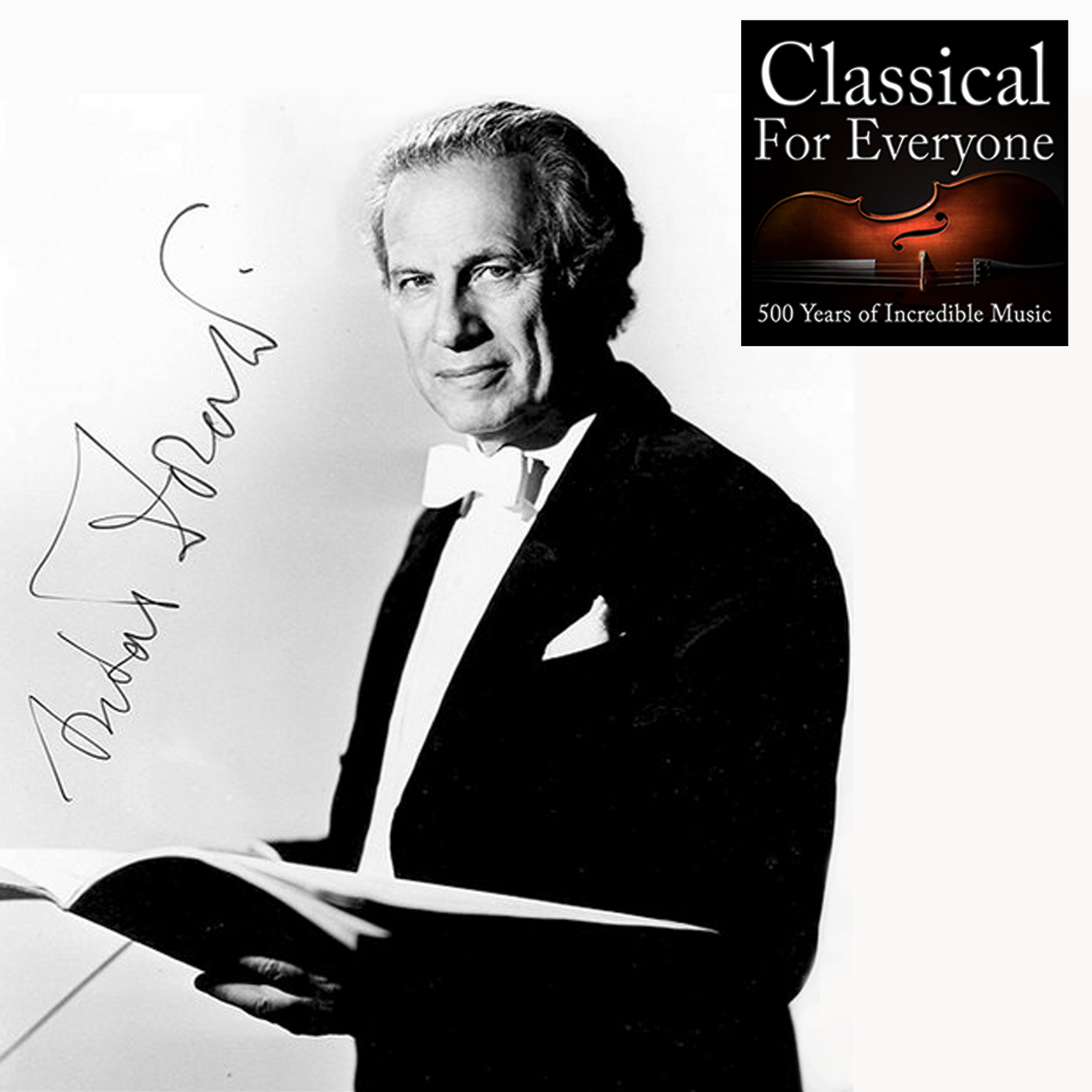 Conductors 1 – Antal Dorati | Why a conductor? The outcomes of the complicated relationships conductors have with orchestras and ensembles, with record companies and the public; and with composers living and dead, are in themselves interesting… but for the purposes of this show it is the recorded legacy that matters and Antal Dorati's ranks amongst the finest of his generation. Dorati (1906 - 1988) was a Hungarian Jew who was able to escape Europe as World War Two commenced and he made the USA his home for much of the rest of his life. Choosing Dorati is also an excellent way to play some of the music that has been missing from the last few episodes of the podcast… what you might call 'classic' classical music… music written for the colours, range and expressive opportunities of a full modern orchestra. Music by Stravinsky, Haydn, Copland, Bartok, Szymanowski, Strauss and Ravel. | — | ||||||
| 3/29/26 | 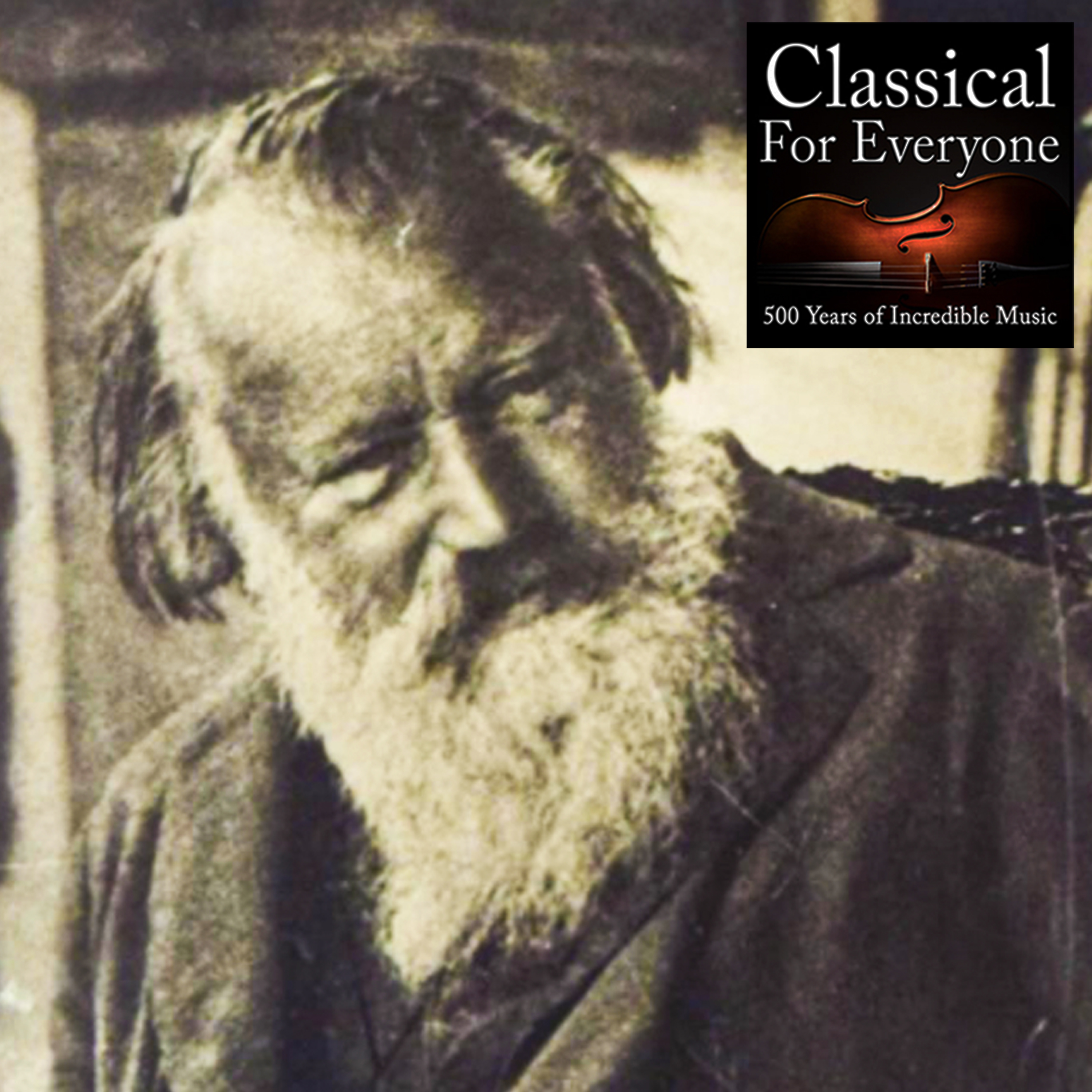 Sunday Night Special … Johannes Brahms' Symphony No. 4 | The name comes from the night of the week when for some of us, the frustrations of insomnia hit the hardest… and because my preferred antidote is getting lost in some music. Of course this series is for everyone… but it is perhaps intended a little more for those of you whose sleep has been troubled. The idea of the special is to play just one piece, uninterrupted and in its entirety… with a few minutes of background explained at the end of the episode. This month… Johannes Brahms Fourth Symphony. The Pittsburgh Symphony Orchestra is conducted by Manfred Honeck. | — | ||||||
| 3/27/26 | 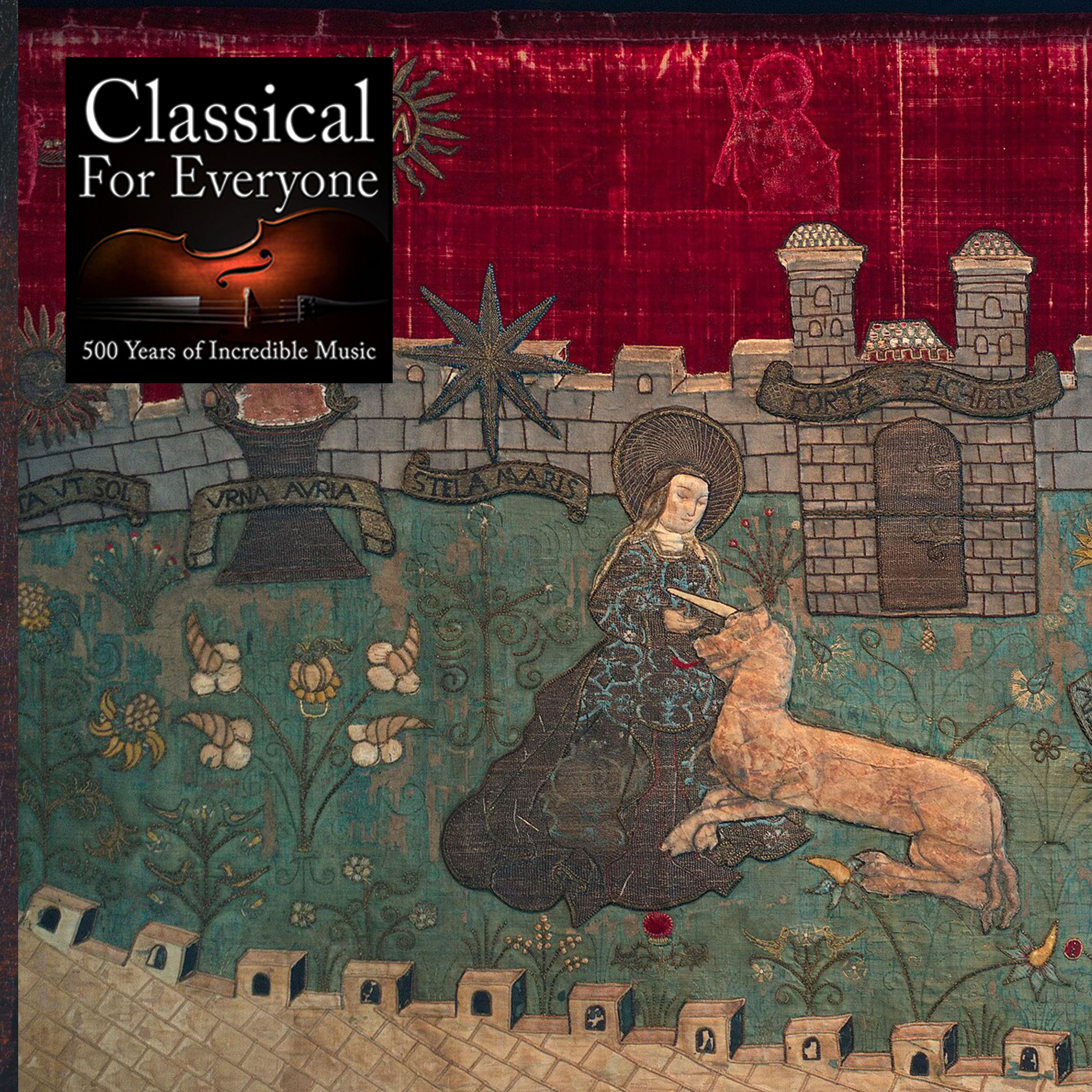 Solace… Music To Hold You | I was listening to the conductor Joshua Weilerstein's podcast 'Sticky Notes' the other day. It was an episode on Ludwig van Beethoven's 8th string quartet. He was playing the second section and he described the music as having a sense of 'consolation'… and there was something about that which really struck me. So I started looking into music connected to the idea of consolation but the more I delved the more I realised that wasn't quite what I was hearing in the Beethoven. For me it was not about the small gift or healing gesture to balance a loss… it was more about the small supportive joys that hold us up… keep us going… replenish optimism… and regardless of circumstances makes each day worthwhile. And I think 'Solace' is a better word for what the music said to me. And that led to a slightly different search for music for this show and I think the 'solace' theme delivers some really wonderful music… that does… as the subtitle says… 'hold you'. | — | ||||||
| 3/19/26 |  Music for Shakespeare… Dreams, Lovers and Ghosts | The relationship between classical music and William Shakespeare's writing is one of the longest and most productive partnerships in the history of either art form. Composers have been drawn to Shakespeare's plays for four centuries and there is a vast amount of music to choose from. For this episode I have nine pieces, but only from four plays which suggests that some of the plays are perhaps more beloved by composers than others… Music from composers responding to 'A Midsummer Night's Dream', 'Romeo and Juliet', 'Hamlet' and 'Othello'. And those composers… ranging from the 19th century to the 21st are… Felix Mendelssohn, Sergei Prokofiev, Benjamin Britten, Hector Berlioz, Giuseppe Verdi, Dmitri Shostakovich, Frederick Delius and Thomas Adès. | — | ||||||
| 3/15/26 |  Joseph Haydn: The Early Years. | Haydn's music is in no way neglected or forgotten but I wonder if, because he lived a long life, during which he achieved significant success and seemed free of personality disorders, he is a little taken for granted. The creative artist dying at the height of his or her powers, or never recognised in their lifetime, or plagued by psychosis all seem to have an extra attraction for us. And Haydn was born a couple of generations before the 'artist as hero' cult began to emerge. For most of his working life he was 'artist as employee' or 'artist as courtier'. This episode includes sections from his early efforts with the string quartet, the symphony, opera and sacred music. Early but in no way juvenile. In fact surprisingly developed, mature and confident. | — | ||||||
| 3/7/26 | More Brilliant Women. | I did an episode of music by women composers back in November based around a CD Box release by the record label 'Brilliant Classics' and called it 'Brilliant Women'. No prizes for imagination but it was clear and accurate. So, I am going to keep things simple and call this show 'More Brilliant Women'. I could also call it 'music I am genuinely extremely excited to play for you that just happens to be written by women'. But that would be a little cumbersome. What I can say is this is just fabulous music which I think there is a very good chance you will enjoy. In the next hour and a bit I am going to play music by Ethel Smyth, Augusta Read Thomas, Rachel Portman, Anna Clyne, Liza Lim, Katia Beaugeais, Jenny McLeod, Maria Grenfell, Elena Kats-Chernin and Florence Price. | — | ||||||
| 2/27/26 | 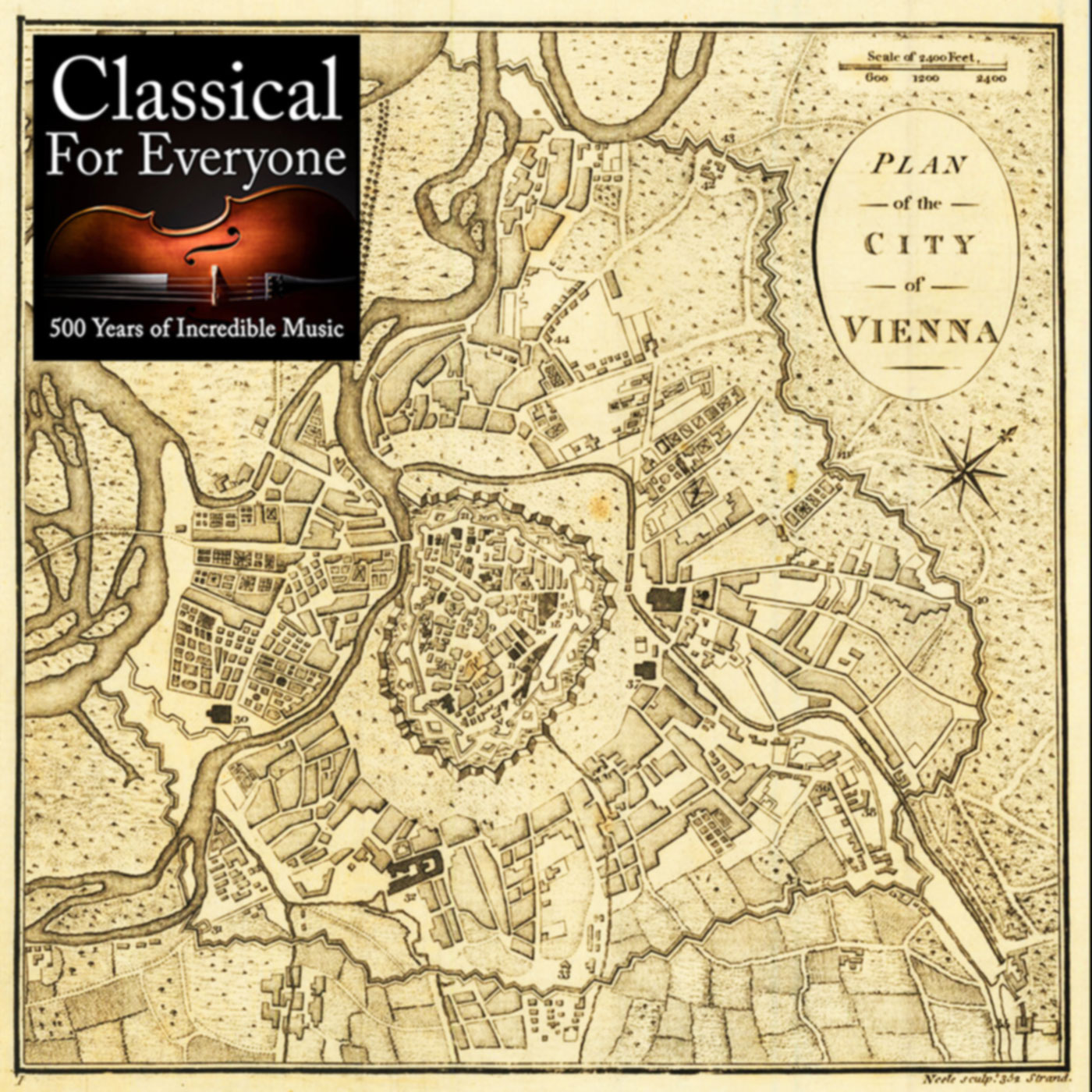 Mozart… Farewell Salzburg, Hello Vienna | Here is the third Classical For Everyone podcast featuring the music of Wolfgang Amadeus Mozart. I've done an episode on the music Mozart wrote in the last year of his life, 1791, back in June and one focused on 1786 last October. This one is still going to use the 'year in the musical life' theme but it will be a little looser… covering the year or so on each side of the pivotal moment in Mozart's life and career where he left Salzburg and moved to Vienna in 1781. It gives me a chance to play you music from a variety of genres, orchestral, opera, string quartet, choral and keyboard. The afterlife of Mozart's music is probably the most successful, or perhaps most fortunate, of all classical composers. So much of his music is still played, broadcast and recorded. But there is a pretty massive amount of amazing music that is not often heard and I think some of it will come up in this episode. | — | ||||||
| 2/23/26 |  Sunday Night Special 7… Henryk Górecki's Symphony No. 3 – 'Symphony of Sorrowful Songs' | The name comes from the night of the week when for some of us, the frustrations of insomnia hit the hardest… and because my preferred antidote is getting lost in some music. Of course this series is for everyone… but it is perhaps intended a little more for those of you whose sleep has been troubled. The idea of the special is to play just one piece, uninterrupted and in its entirety… with a few minutes of background explained at the end of the episode. This month… Henryk Górecki's Symphony No. 3 – 'Symphony of Sorrowful Songs' from 1976. Performed by the London Sinfonietta conducted by David Zinman featuring the soprano, Dawn Upshaw. | — | ||||||
| 2/19/26 |  The Ballets Russes… Firebirds, Fauns and Fighting | Much of the 20th century orchestral music that today dominates concert halls and recording studios started as music for ballets. And the best of it started with the Ballets Russes company; which was largely the creation of one man… the Russian impresario Sergei Diaghilev. It is hard to think of another instance where one man, who was not a composer, has had such an outsize influence on what has come down to us as great and lasting music. And I'm going to play you a selection of that music… from Nicolai Rimsky-Korsakov, Igor Stravinsky, Claude Debussy, Maurice Ravel, Erik Satie, Manuel de Falla and Sergei Prokofiev… as well as giving you a little of the Diaghilev and Ballets Russes story. | — | ||||||
| 2/9/26 |  Beethoven's 9th Symphony | It's Classical For Everyone's 1st Birthday, so here's a personal favourite. This was the first time a choir and soloists had been added to a 'symphony'. Choral and orchestral music had been combined before but at the time there were quite rigid expectations of what a 'symphony' should be. That said there was a fascination amongst some parts of the Viennese audience with the way Ludwig van Beethoven seemed to be frequently tearing down traditions and replacing them with what somehow very often seemed to have been an innovation that was music's next natural step. And with the final movement of this symphony, Beethoven took that step. Suddenly there was singing. [Episode Image: Alfred Eiesnstaedt; Beethoven's Birth Room Bonn (1934)] | — | ||||||
| 2/5/26 | Very Old (Incredible) Music | If from time to time you happen to listen to a podcast with the subtitle 'Five Hundred Years Of incredible Music' then it would be a reasonable expectation to hear some five hundred year old music. I've played a few pieces from the 1500s and 1600s but as you might expect the focus of the show has been sort of the music of Johann Sebastian Bach and Antonio Vivaldi onwards… call it from the early 1700s until today. That means I've left out a good 175 years of music. This episode is going to be a step toward redressing that neglect. | — | ||||||
| 1/31/26 | The Music of Philip Glass | On the day this episode is released, the American composer Philip Glass celebrates his 89th birthday. In a career now lasting well over five decades he has somehow achieved two extraordinarily rare things for a contemporary composer of classical music... a prolific amount of creative output and a degree of broad popularity. For the next hour and a quarter please enjoy a quick survey of five decades of great music… films, operas, concertos, quartets… and an unfairly small section of solo piano music. Happy Birthday! | — | ||||||
| 1/25/26 | Recent Discoveries | Only be taken in the very personal sense of… recent discoveries by me. Not that I actually discovered anything. In my ongoing mission to keep the production of CDs alive, I came across music I didn't know and thought that you, my fine listeners, might enjoy. Incidentally, I was chatting with my friend Claude about the episode and his comment was that my title sounded much more dignified than "Music from Last Month's Credit Card Statement." And I urge you not to be discouraged by the idea of unfamiliar music. I promise there is some very lovely listening in the next 75 minutes from… Karl Goldmark, Joaquin Rodrigo, Frederick Delius, Ferdinand Hérold, Carl Nielsen, Andreas Hammerschmidt and Anne Cawrse. | — | ||||||
| 1/19/26 | Stormy Weather | Representing the weather with music is probably an ancient practice. In our earliest superstitions the percussive blasts of thunder would probably have been mimicked to either flatter or placate the spirit world. And perhaps whoever was organising the noisy tributes to the sky gods got something of the same thrill as composers might when they decide to use the weather for inspiration. In the next hour I'm going to give you a sort of chronological meander through what a handful of composers have done with the idea of storms over the last three hundred years with music from Georg Phillip Telemann, Ludwig van Beethoven, Ethel Smythe, Gustav Mahler, Claude Debussy, Jean Sibelius, Dmitri Shostakovich, Benjamin Britten and John Adams. | — | ||||||
Showing 25 of 89
Sponsor Intelligence
Sign in to see which brands sponsor this podcast, their ad offers, and promo codes.
Chart Positions
17 placements across 13 markets.
Chart Positions
17 placements across 13 markets.