College & Career Readiness Radio
College & Career Readiness Radio with T.J. VariA podcast about all things career and college readiness. Brought to you by MaiaLearning.
Insights from recent episode analysis
On the show
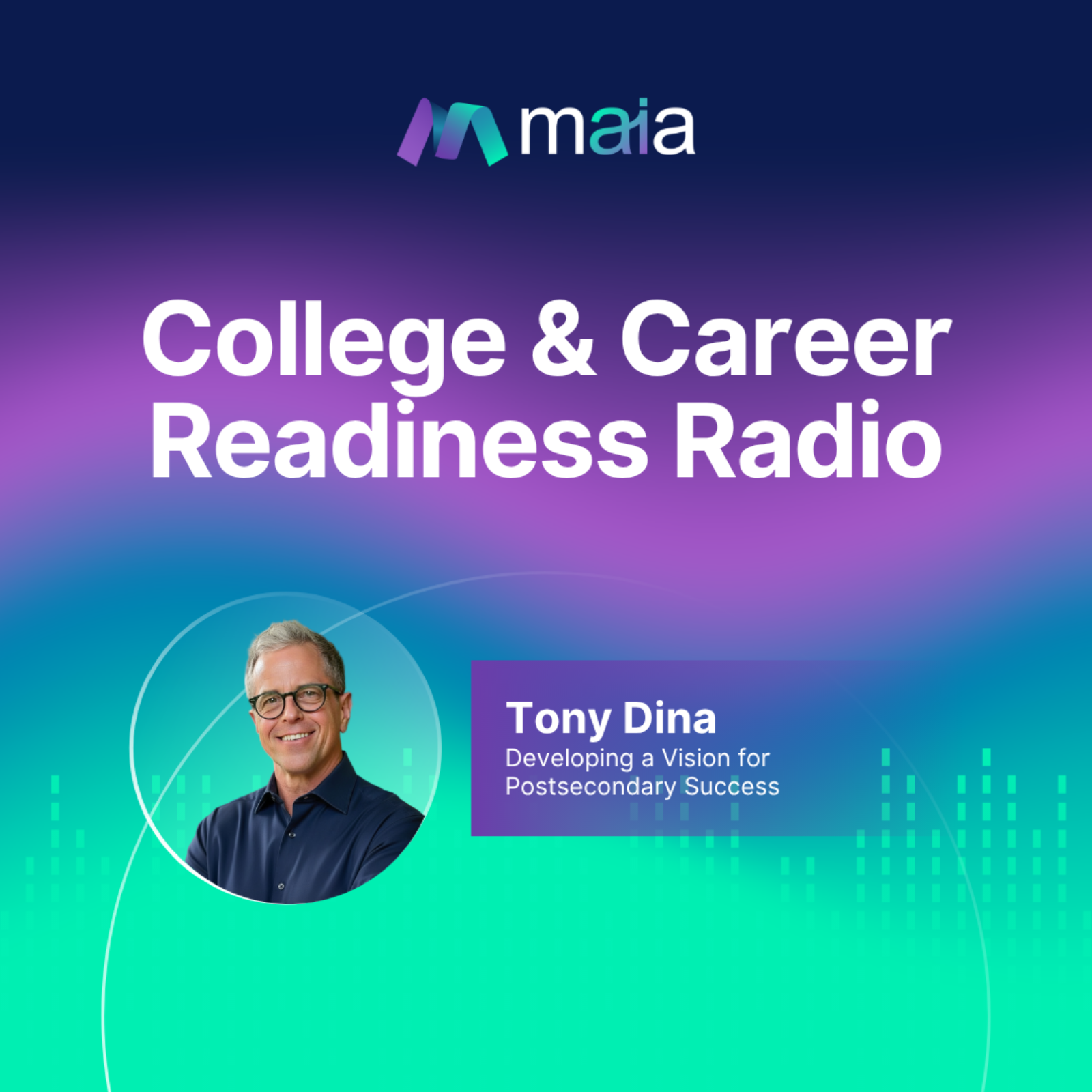
- Tony Dina1 ep
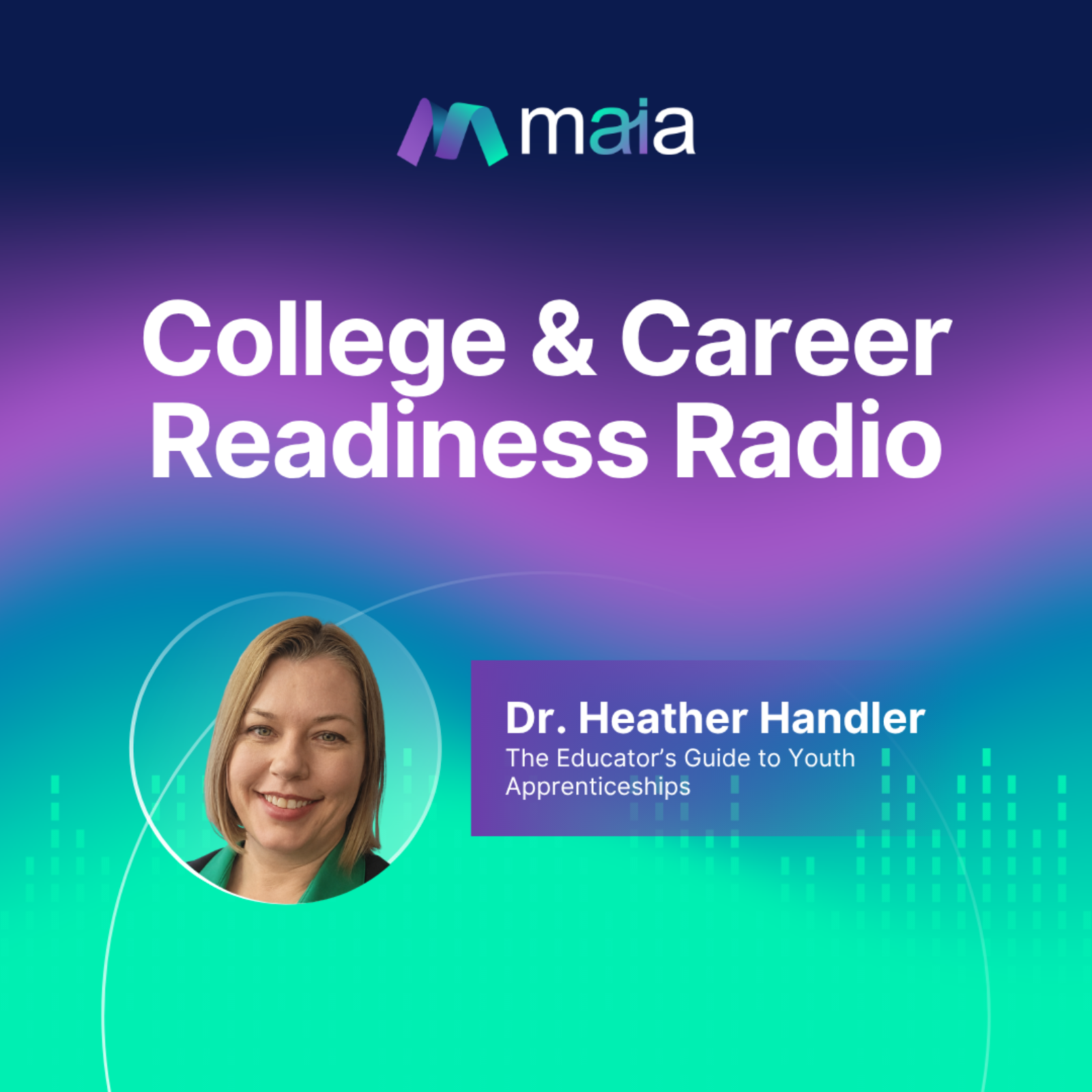
- Dr. Heather Handler1 ep
- Thomas O’Brien1 ep
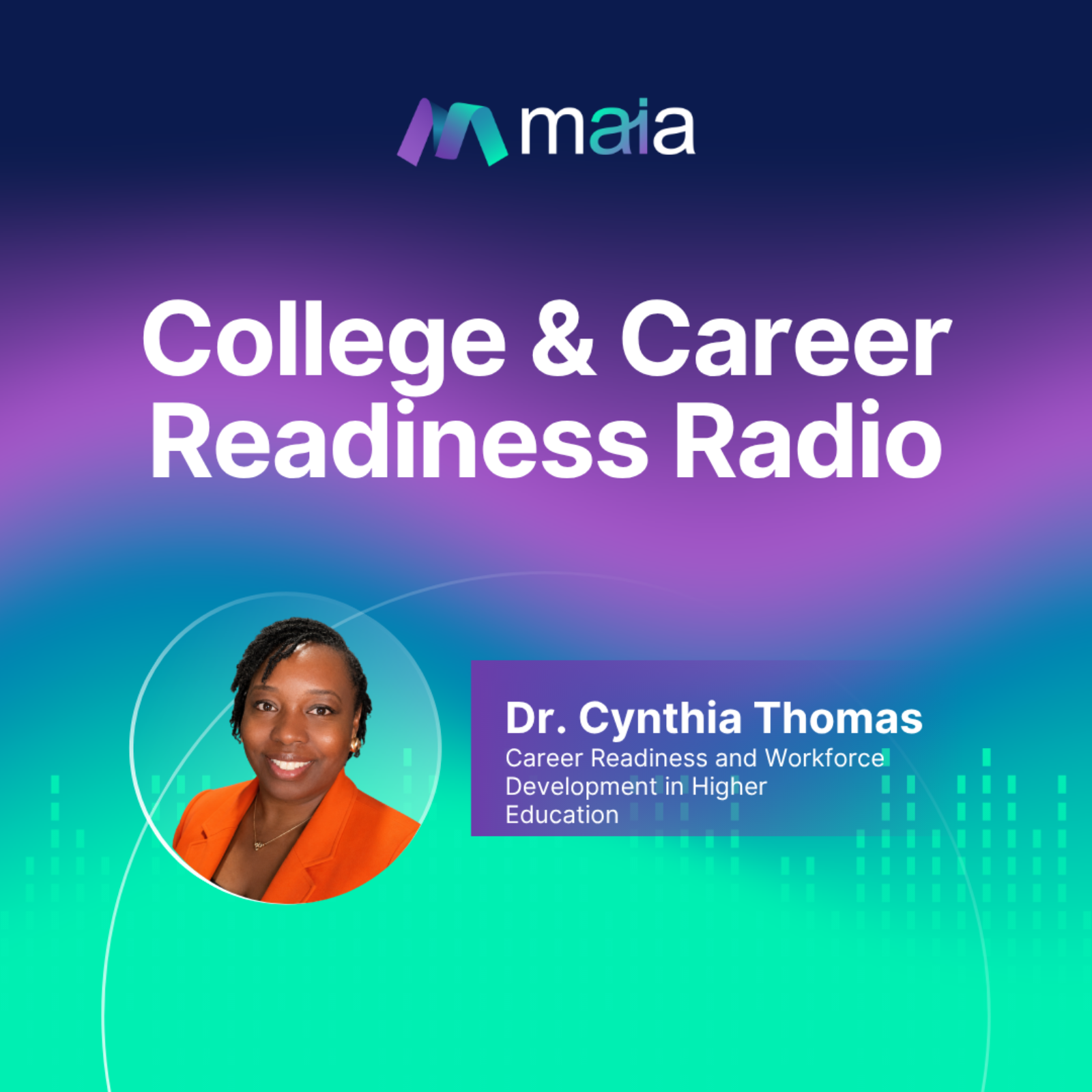
Also: Dr. Cynthia Thomas, Jeremy Smith, Dr. Sandra Adams, Joshua Stamper, Frank Polen, Marlon Styles, Dr. Andy Osheroff
Audience Interest
Podcast Focus
Publishing Consistency
Insights are generated by CastFox AI using publicly available data, episode content, and proprietary models.
Most discussed topics
Brands & references
Total monthly reach
Based on the show's feed history.
Built from
- Per-Episode Audience
Est. listeners per new episode within ~30 days
11K to 140K🎙 Weekly cadence·46 episodes·Last published 1w ago - Monthly Reach
Unique listeners across all episodes (30 days)
23K to 280K🇺🇸100% - Active Followers
Loyal subscribers who consistently listen
13K to 154K
Market Insights
Platform Distribution
Reach across major podcast platforms, updated hourly
Total Followers
—
Total Plays
—
Total Reviews
—
* Data sourced directly from platform APIs and aggregated hourly across all major podcast directories.
| Date | Episode | Topics | Guests | Brands | Places | Keywords | Sponsor | Length | |
|---|---|---|---|---|---|---|---|---|---|
| 10/13/26 |  Breaking Down Barriers to College Access with Joanna de Peña | Our guest for this episode of College & Career Readiness Radio is Joanna de Peña, founder and CEO of Top Notch Scholars.Joanna says one of the biggest misconceptions about college is that attending a prestigious four-year university guarantees success. Students need to understand that their character, work ethic, and commitment matter more than the name of the institution.She says that fear of missing out (FOMO) creates tremendous pressure for students. Social media celebrations and college acceptance announcements can make students feel that community college or other pathways are somehow less valuable.Joanna challenges educators and families to reconsider the language they use when discussing college options. Negative messages about community colleges and trade schools can influence students to make financially risky decisions.The financial consequences can be significant. She shares examples of families using savings intended for homeownership to cover college tuition gaps, even when more affordable pathways are available.Joanna believes schools should present students with the full range of postsecondary options, including community colleges, four-year universities, trade schools, and other programs, before encouraging them to make a decision.College enrollment shouldn't be the only measure of success. Joanna argues that schools should pay greater attention to whether students complete their programs, graduate, and achieve their goals.Joanna encourages families to compare financial aid packages carefully. Students can apply to their dream schools while remaining realistic about affordability, tuition gaps, and long-term debt.Starting at a community college can be a smart financial strategy. Students may complete their first two years at little or no cost before transferring to a four-year institution to finish a bachelor's degree.Joanna introduces another way to think about college savings. Families that avoid unnecessary tuition expenses may be able to redirect those funds toward savings, investments, or even a future home purchase.Financial literacy should be part of the college planning process. Our guest wants students to understand how manageable debt, savings, credit, and financial decisions can influence their opportunities long after graduation.Joanna encourages schools to celebrate every postsecondary pathway. Students pursuing community college, four-year degrees, technical training, or military service should all feel confident and supported in their decisions.Beyond college applications, she reminds educators that students need opportunities to enjoy high school, participate in extracurricular activities, explore careers, complete internships, and develop relationships.Joanna's final message is a reminder that students have multiple routes to a fulfilling future: "Success is yours, no matter what educational pathway you choose."College & Career Readiness Radio is brought to you by MaiaLearning, your fully comprehensive college and career planning tool. Schedule a demo today. | 36m 00s | ||||||
| 9/29/26 |  Removing the Red Tape from Paid Internships with Corey Koopmans | Our guest for this episode of College & Career Readiness Radio is Corey Koopmans, founder of InternCrew. Corey says workers' compensation, liability, age restrictions, payroll requirements, and administrative responsibilities can all become barriers for employers interested in hiring high school interns.According to Koopmans, large companies present an additional challenge. A local office may want to partner with a school, only to encounter corporate policies that make hiring high school students difficult.Corey describes an employer-of-record model as one way to remove much of that friction by managing screening, onboarding, payroll, insurance, compliance, time tracking, and feedback.Paid work-based learning is an important part of the equation for Koopmans. Removing administrative barriers can bring more employers into the process and ultimately create more paid opportunities for students.Corey also sees an opportunity to extend internships beyond the traditional school calendar. Year-round management can allow students to continue working during the summer when some industries have even greater demand.Authentic work experience requires authentic accountability, according to Koopmans. Students need to understand workplace expectations, receive meaningful feedback, and experience real consequences when those expectations aren't met.He views even losing an internship as a potential learning experience. Students can learn about attendance, performance, professionalism, and workplace norms before entering their first full-time job.When it comes to internship quality, he argues that students need to actually engage in meaningful work. A welding student, for example, shouldn't spend the experience simply sweeping the floor instead of developing relevant skills.Corey suggests that scaling internships may also require employers to rethink how the work itself is structured. Shorter shifts, project-based teams, and “gig-style” arrangements could create paid opportunities for more students while still providing value to employers.From an employer perspective, Koopmans sees internships as part of a larger talent strategy. Early exposure can introduce students to careers while helping organizations develop a pipeline of potential future employees.Ultimately, Corey believes students shouldn't simply be around the work. High-quality internships should allow them to do the work, build relevant skills, receive feedback, and understand what success looks like.His final message captures the value of these experiences: “There's no such thing as success and failure. There's only success and learning, and learning can only occur through experience.”College & Career Readiness Radio is brought to you by MaiaLearning, your fully comprehensive college and career planning tool, including the ability to plan and track internship experiences for students. Schedule a demo today. | 27m 06s | ||||||
| 9/15/26 |  Strengthening CTE Through Size, Scope, and Quality with Nathan McNeely | Our guest for this episode of College & Career Readiness Radio is Nathan McNeely, CTE Director at Grant Regional Career Center in Marion, Indiana. Nate defines size as being about access—whether enough students and schools have access to CTE programs that align with student interest and labor-market demand.He explains that scope is about opportunity. Programs should reflect local needs while also preparing students for opportunities regionally, nationally, and even internationally.Nate says that quality is about outcomes. Dual credit, credentials of value, work-based learning, and other experiences should produce career-ready graduates, not simply students who completed a CTE program.He reports on a problem regarding demand, which can exceed available seats, making partnerships between comprehensive high schools and career centers critical. High schools can provide introductory experiences while career centers offer more advanced, equipment-intensive programming.He says that having a pathway isn't enough. Students also need meaningful internships and work-based learning experiences connected directly to that pathway.Nate emphasizes that employers often need support understanding how to create high-quality experiences for high school students. Schools and community partners have to educate employers about what meaningful internships should look like.He tells listeners that a welding student shouldn't spend an internship sweeping floors. Schools and employers should agree upfront on what the student, school, and employer will each contribute to the experience.McNeely recommends using advisory boards as more than a compliance requirement. Employers should actively influence programs, particularly when determining which credentials actually have value in the local workforce.Nate says schools may need a both/and approach to credentials—earning credentials required for accountability while also providing additional certifications that employers actually want.He clarifies that strong CTE programs prepare students for whatever comes next, not one path or another. Some students may enter the workforce immediately, while others use CTE, dual credit, and credentials to gain an advantage as they continue into postsecondary education.Nate emphasizes that a true pathway shouldn't be a dead end. It should connect coursework, credentials, dual enrollment, work-based learning, postsecondary opportunities, and ultimately employment.His final message is collaborate! Bring schools, career centers, employers, chambers, higher education, and other stakeholders together because collaboration creates better opportunities for students.College & Career Readiness Radio is brought to you by MaiaLearning, your fully comprehensive college and career planning tool, including the ability to plan and track CTE courses and work-based learning, award credentials, and build student portfolios for post-secondary use, and more. Schedule a demo today. | 26m 36s | ||||||
| 9/1/26 | postsecondary successstudent strengths+4 | Tony Dina | Crucial Canvas | — | postsecondary successsuperpowers+4 | — | 30m 14s | ||
| 8/18/26 | youth apprenticeshipscareer exploration+3 | Dr. Heather Handler | chambers of commerceworkforce networks+3 | — | youth apprenticeshipscareer testing+3 | — | 29m 54s | ||
| 8/4/26 | mathematics educationleadership in education+3 | Thomas O’Brien | Empowering All Leaders to be Math Leaders | — | math leadersstudent learning gaps+3 | — | 27m 28s | ||
| 7/21/26 | career readinessworkforce development+4 | Dr. Cynthia Thomas | — | — | career readinessworkforce development+5 | — | 31m 02s | ||
| 7/7/26 | education supply chainworkforce development+4 | Jeremy Smith | — | — | educationworkforce+5 | — | 46m 47s | ||
| 6/23/26 | possibility thinkingcareer and technical education+4 | Dr. Sandra Adams | CTE | — | possibility thinkingcareer education+4 | — | 31m 52s | ||
| 6/9/26 | student mental healthbehavior communication+3 | Joshua Stamper | The Language of Behavior | — | student behaviormental health+3 | — | 27m 57s | ||
Want analysis for the episodes below?Free for Pro Submit a request, we'll have your selected episodes analyzed within an hour. Free, at no cost to you, for Pro users. | |||||||||
| 5/26/26 | career technical educationworkforce development+3 | Frank Polen | Buckeye Career Center | Ohio | career educationvocational training+3 | — | 26m 32s | ||
| 5/12/26 | career explorationstudent agency+3 | Marlon Styles | Ready Now 100Passport to Tomorrow | — | career explorationstudent agency+5 | — | 38m 02s | ||
| 4/28/26 | career developmentinternships+3 | Dr. Andy Osheroff | University of Southern Maine | — | career advisinginternships+3 | — | 38m 54s | ||
| 4/14/26 |  Authentic Learning Experiences for Every Student with Dr. Mark Covelle | Our guest for this episode of College & Career Readiness Radio is Dr. Mark Covelle, Administrative Director of Middle Bucks Institute of Technology and a Founding Member of the CTE Collective. Mark says that interest in CTE has surged post-COVID because hands-on, authentic learning could not be replicated online. The skilled trades gap has added further momentum nationally.He notes that in CTE, students practice — they work on real brakes, deploy real safety equipment, and build real things. Traditional classrooms more often ask students to pretend. Kids know the difference, and it affects their engagement.His school serves 1,000 students across 21 career programs and issued over 1,500 industry-recognized credentials last year — roughly 1.5 per student. These credentials are portable, tangible evidence of skill beyond a transcript.Business and industry partners tell Mark the biggest gaps in young workers are persistence (stalling when stuck), communication, and general professionalism. MBIT grades students on employability weekly — resumes, interviewing, professional conduct, and workplace interaction are all part of the curriculum.Mark believes that every K-12 school should have an internship program. Students need professional feedback at 18, not 24. Even virtual or industry-problem-based experiences count. Getting that feedback earlier — with educator support — changes outcomes.Mark and TJ discuss how authentic problems can live in any classroom. An English problem-solution paper can be drawn from a real local business challenge. A student who needs math to complete an engineering project will learn that math. Purpose drives motivation.Mark tells a story about involving students in school branding. MBIT's "ambition" identity came from a student who noticed MBIT sits inside the word ambition. It became a neon lobby sign, a podcast, and a school-wide hashtag — and it stuck because students created it.Mark's closing message: authenticity matters. Authentic learning builds trust, persistence, and a positive relationship with school — the skills employers say are missing most.College & Career Readiness Radio is brought to you by MaiaLearning, a fully comprehensive college and career readiness platform serving students worldwide. | 35m 14s | ||||||
| 3/24/26 |  Guiding Students Toward Postsecondary Success with Chip Baker | Our guest for this episode of College & Career Readiness Radio is fourth-generation educator, coach, and multiple-time best-selling author Chip Baker. Chip is the creator of The Success Chronicles, a YouTube channel and podcast where he interviews people from all walks of life about what it truly takes to be successful in life. Drawing from thousands of these conversations, Chip and host Dr. TJ Vari connect the dots between post-secondary success and the skills, mindsets, and experiences students need for college and career readiness worldwide.After years of interviewing high performers, Chip identifies a core throughline: the ability to overcome adversity and “grow through, not go through” tough times. He argues that on the other side of our hardest challenges is our maximum growth, and that educators play a pivotal role in helping students develop resilience and perseverance. For Chip, relevance is key—students engage and persist when learning is tied to real-world applications, pathways, projects, internships, and work-based learning that clearly connect to their futures.Chip highlights the quiet but powerful impact of educators, counselors, and support staff who consistently show up with care, presence, and high expectations. These adults build quality relationships, provide relevance, and communicate, “I really care about your success,” which Chip sees as the foundation for student growth and long-term achievement. He notes that many successful people attribute their progress to someone who poured into them when they doubted themselves, or to their own decision to “be the one” who changes the trajectory of their family through education, learning, and new environments.From The Success Chronicles, Chip distills recurring traits of successful people: resilience, self-belief (“you are enough”), strong support systems, core principles, lifelong learning, time management, self-awareness, reflection, and intentional goal setting. He emphasizes that learning is not optional, and that managing time—saying no to what doesn’t matter so you can say yes to what does—is essential for sustained success. These traits align directly with many districts’ portraits of a graduate and provide research-informed guidance for the skills schools can intentionally teach and assess.Chip shares powerful quotes and themes from his guests such as “failures are fuel for success,” “consistency is the truest measure of performance,” and “don’t let your life be driven by your to-do list—let it be driven by your to-be list.” He uses these ideas with students, helping them “conquer themselves” by understanding their triggers, interests, and values so they can eliminate distractions and build a life aligned with who they are. Explaining why he started The Success Chronicles, Chip says he simply wanted to serve, give, and stop “keeping to himself” the powerful conversations that had expedited his own growth. He loves highlighting unsung heroes who do the work without seeking recognition and believes “success leaves clues” that students and educators can use in their own journeys. His closing message to educators is his personal tagline: “Live, learn, serve, inspire—go get it."Listeners can find on YouTube and on all major podcast platforms, and explore his more than 30 books, merch, and resources through links in his social media bios or by searching his name on Amazon. | 24m 33s | ||||||
| 3/10/26 |  Candid Career Advice with Mike Wysocki | Our guest for this episode of College & Career Readiness Radio is best-selling author of Careers By the People, Mike Wysocki.Mike Wysocki discusses how his own career path shaped his focus on career readiness. As a first-generation, low-income student, his early goal was simply to go to college and get a job in business. After graduating, he found the experience underwhelming and unfulfilling. Even when he later moved into well-paid tech sales in Los Angeles, the work felt unchallenging and disconnected from his interests. That realization led him to ask others about their careers, which ultimately inspired his book Careers by the People, featuring candid advice from more than 100 professionals.Through his research and speaking with students, Wysocki has found that many young people remain confused about career paths, particularly outside elite universities. He believes the connection between education and the workforce is often weak, with students lacking awareness of industries, networking strategies, and professional tools like LinkedIn.Wysocki pushes back on the idea that students should simply follow passion or talent alone. Instead, he encourages students to identify industries that genuinely interest them and then apply their strengths within those fields. Building a network within an industry makes it easier to move between roles such as sales, operations, or marketing while maintaining connections and credibility.A key piece of his advice is for students to speak directly with experienced professionals. Conversations with people who have spent years in a field—and especially those who have left it—provide more realistic insight than relying on peers or family members alone. Hearing multiple perspectives helps students better understand the pros and cons of different careers.Wysocki also emphasizes that many students only know careers within their family networks, which can limit awareness of other opportunities. Expanding exposure to different industries earlier in life can help students discover options that better match their interests.Reflecting on his own experience, Wysocki says college was valuable because it helped him build writing skills, confidence, and broader knowledge. He believes higher education can be transformative, particularly for students from working-class backgrounds, but students must also use that time to actively explore careers and build professional connections.His upcoming book examines how current college students prepare for the workforce, using detailed questionnaires with students from state universities across the United States. The goal is to better understand their career thinking, preparation strategies, and the gaps that still exist between college and the workplace.Wysocki encourages educators to leverage alumni networks and retired professionals when helping students explore careers. Alumni can share practical experience, while retirees often feel freer to speak candidly about the realities of their industries. | 31m 52s | ||||||
| 2/23/26 |  Designing School Systems That Support Work Experiences for Students with Patrick Jones | This episode of College & Career Readiness Radio features our guest Patrick Jones, an experienced educator, business leader, and expert in career readiness. Patrick argues that the “internship shortage” is really a systems problem rooted in how higher education and K-12 interface with employers, not a lack of student interest or talent. He explains the friction employers face—especially smaller organizations—when trying to work with colleges, and calls for more employer-friendly structures, incentives, and even intermediaries that can broker relationships at scale.Patrick emphasizes that today’s students often arrive at college with less work experience and limited exposure to the full range of roles in industries they care about. He shares examples of helping students see beyond the obvious job titles (like “athlete”) to the many supporting careers in areas such as sports marketing, finance, operations, and analytics, and stresses the importance of discovery experiences that broaden their sense of what’s possible.He also makes a compelling case that any internship is better than no internship, because the biggest barrier is access, not perfection. Even imperfect or loosely structured internships can teach punctuality, communication, hierarchy, feedback, and “managing up,” especially when paired with reflection and guidance from an advisor or faculty member.Patrick introduces his Discover–Ready–Find framework, the focus of his forthcoming book. Discover helps students understand how the labor market really works and why relying only on degrees and GPAs is risky. Ready reframes college as a platform for building emotional maturity, durable skills, and early work experience, starting as early as the first year. Find helps students develop a career “taste palette,” so they can intentionally seek environments and roles that fit who they are, rather than taking the first offer by default.Throughout the conversation, Patrick returns to one central theme: students don’t just need more programs—they need caring adults and well-designed systems of support that prepare them for the realities of work. His message to educators is clear: build real relationships, create more on-ramps to authentic work experiences, and help young people connect their education to opportunity with purpose. | 37m 09s | ||||||
| 2/10/26 |  Teach the Skills Students Need, Don’t Expect Them with Kim Gameroz | This episode of College and Career Readiness Radio features Kim Gameroz, founder of Teaching Inside Out and SELbrate Good Times.Kim defines SEL as intentionally teaching students how the social world works so they can function successfully in life and work, rather than assuming they already possess these skills. She emphasizes cognitive flexibility (shifting when things do not go a student’s way), emotional intelligence (accurately identifying emotions and using strategies like mood meters and zones of regulation), perspective taking (jumping into the mind of another person, character, or historical figure), and executive functioning (goal setting, planning, and adapting plans) as core elements educators must actively teach.For classroom practice, Kim urges educators to embed SEL into daily systems and routines instead of treating it as an add-on program. She describes an intentional feelings check-in that always pairs “How are you feeling?” with “What tool will you use to support yourself right now?” so students build a toolbox of self-regulation strategies and then reflect later on whether those tools actually helped.Kim stresses that the real “solution” begins with the adult: SEL is not about fixing kids, but about educators making a mindset shift toward teaching lagging skills rather than punishing behavior. She challenges teachers, counselors, and leaders to be intentional in their responses, avoid explosive reactions, and recognize that they are not meant to do this work alone; instead, they should “find their herd” of like-minded colleagues who believe SEL must be taught, not assumed.Drawing from her upcoming book, Becoming the BISON, Kim uses the bison metaphor to describe educators who “run into the storm” together rather than avoiding hard situations like challenging behaviors, difficult parent emails, and classroom chaos. Bison represent being intentional so others notice—choosing actions that create a sense of calm, unity, and growth mindset for students, and modeling cognitive flexibility and emotional regulation during inevitable storms.Kim offers concrete modeling moves for elementary classrooms, such as “mental dress rehearsals” of transitions where students act out expectations with their hands before moving their bodies. She frontloads potential problems (e.g., what to do if someone takes your spot) and explicitly teaches flexible responses, then uses calm prompts like “Was that part of your path?” to coach outliers toward expectations rather than relying on punishment.For secondary students, Kim adapts the same rehearsal idea to executive functioning and future planning. She suggests guiding students through visualizations of going home, managing after-school schedules, and deciding when and how they will study or complete assignments, helping them mentally sequence steps and adjust plans when life “storms” disrupt the day.Kim explicitly connects these SEL competencies—emotional intelligence, planning, organization, cognitive flexibility, and co-regulation—to college and career readiness as durable, transferable skills. She notes that adult life requires constantly shifting plans, regulating emotions under stress (from broken pipes to workplace conflicts), and working productively with people who may be difficult, all of which mirror the SEL work students must practice in school.Her closing message to educators is clear: “Teach social and emotional skills, don’t expect them.” When a student’s behavior is frustrating, she encourages adults to ask, “What skill is lagging?” and remember that “kids do well if they can,” shifting from blame to instruction and from expectation to intentional teaching. | 25m 16s | ||||||
| 1/20/26 |  Placing Students at the Center of Work-Based Learning with Brian Johnson | Our guest for this episode of College & Career Readiness Radio is Brian Johnson. Brian explains why simply “placing kids” isn’t enough and why districts must define clear quality criteria so work-based learning experiences are aligned, mentored, and meaningful.He shares the six basic characteristics he uses to vet opportunities: minimum hours, alignment to a student’s pathway of study, a professional mentor/supervisor, a real-world environment, student interest, and space for students to discover what they don’t want.Brian describes his student intake process, where he learns about each student’s pathway, interests, dislikes, and dream organizations and uses that to co‑design potential placements.He has students spend two weeks actively using their own networks—family, neighbors, community—to try to find a placement, teaching them that finding a job is a skill and giving them “skin in the game.”Brian notes that 50–60% of students typically find their own placements, and then he steps in to formalize details with partners and ensure the experience meets district criteria.He talks about preparing and coaching industry partners, including helping them understand the developmental realities of working with teenagers and why their feedback is so powerful.Brian outlines a clear termination process: partners coach first, but if performance doesn’t improve, they are encouraged to end the placement just as they would in real life.He emphasizes that termination should be a learning experience, not the end of the road, and he builds in a redemption process so students can reflect, get coaching, and try again.In the redemption phase, students must fully own the search for their next experience, while Brian commits to supporting them (including making calls alongside them if they struggle to find something).He explains how he creates “competitive opportunities” where students must apply and interview, even if there are enough slots, so they feel pressure, practice competing, and learn to handle rejection.Brian shares how he uses “rejection therapy” and real examples (like a student losing an opportunity after signaling wrestling was a higher priority) to help students understand professional expectations.He contrasts asking for unpaid favors from industry with offering a “menu” of ways to partner—career fairs, speaking in classes, mentoring, hosting interns, hybrid options—to make participation realistic.Brian cautions that relying on philanthropy alone is not sustainable and urges coordinators to approach this work more like relationship‑based sales that respect a business’s needs and constraints.He calls for advisory boards and partners who truly bring value and ideas to the table instead of just “checking the box” of attendance.Brian explains why work-based learning must be part of a district’s DNA, not a last‑minute add‑on in 11th or 12th grade, and why culture and expectations have to be built over time.He describes “curiosity fairs” for pre‑K–4, where students dress as what they want to be and meet real professionals from those fields, alongside more traditional career fairs in grades 5 and 7.He emphasizes using parents and families as the first and strongest partner network in elementary schools, inviting them in as speakers and role models from all kinds of jobs.He encourages schools to think less about hitting home runs and more about consistent exposure so students don’t reach senior year with no idea what they want to do.Brian’s closing message is that educators should stop trying to control everything: they should own the systems and supports, but students must own their journeys, their effort, and their outcomes. | 34m 45s | ||||||
| 1/6/26 |  Work-Based Learning, Reflections on Past and Future ACTE Conferences, and More with Jan Jardine | Our guest for this episode of College & Career Readiness Radio is Jan Jardine. Jan Jardine explains how work-based learning helps students connect classroom learning with real-world careers through internships, apprenticeships, and CAPS-style industry projects, often revealing both what students love and what is not a good fit before they invest in postsecondary education.She describes how CAPS programs “bring industry to students” by embedding them in professional environments where they work in teams on authentic client projects, practicing skills like communication, project management, and handling iterative feedback instead of just observing adults at work.She emphasizes the importance of starting career-connected learning earlier, moving beyond a 9–12 or “just CTE” model by integrating projects and industry connections into middle school courses like College and Career Awareness and even elementary-level career exploration, so students do not “meander” through pathways without direction.Jan also pushes for breaking down silos between core academics and CTE, sharing examples of engineering students who independently applied calculus to design a moving staircase prototype, illustrating how interdisciplinary, project-based work makes academic content meaningful.For rural and under-resourced communities, Jan urges educators to treat the school system itself as an industry partner—leveraging child nutrition, IT, transportation, HR, and other internal departments, as well as nearby community colleges, to create rich work-based learning experiences even where external employers are scarce.She reflects on the 2025 ACTE CareerTech Vision conference (in New Orleans this year), noting growing national momentum: more conference sessions on rural innovation, younger grades, and postsecondary collaboration.Jan highlights the upcoming National Work-Based Learning Conference in Rhode Island (April 29–May 1), where sessions will range from foundations for new coordinators to advanced topics for experienced leaders looking to “level up” their programs, with special attention to business partner engagement and rural models.She also shares details about the ACTE-sponsored Leadership Alliance for Work-Based Learning, a new cohort for 10 practitioners that includes in-person learning at the conference, five virtual sessions, and a capstone project to be presented at the 2027 conference, designed to help leaders tackle real challenges in their own contexts.Her call to action for educators is simple but powerful: share your story—do not assume your work is “no big deal,” because when you consistently tell students’ success stories, communities, industry partners, and policymakers better understand the impact and begin to advocate for and invest in this work. | 29m 46s | ||||||
| 12/9/25 |  Intentional Leadership for College and Career Readiness with Thomas Murray | Our guest for this episode of College & Career Readiness Radio is Thomas Murray. Tom Murray says that strong leadership is the foundation of any innovative, student‑centered district and that every major initiative will rise and fall with the quality of its leaders.Tom explains that the best leaders are learners who empower others, adapt, delegate to build capacity, engage their communities, reflect on their work, and ultimately lead as servants.He emphasizes that leadership is not about titles and that some of the most influential leaders in schools are classroom teachers, support staff, or bus drivers who care deeply, solve problems, and earn others’ trust.Murray points out that a healthy culture cannot coexist with toxic leadership and that every interaction in a school system is either building the culture up or tearing it down.Tom says that districts must be intentional about leadership development through coaching, mentoring, and clear pipelines for aspiring leaders, instead of expecting people to figure it out alone.He argues that “college and career readiness” must truly mean college and career, treating four‑year college as one important option among many pathways.Tom Murray notes that giving students access is not enough and that real success depends on creating a sense of belonging where students feel the space was designed with them in mind.He believes the ultimate purpose of pathways work is to ensure every student has enough exposure and support to graduate ready to live life on their own terms.Tom says that pathways work should start in elementary school so students can learn who they are as learners and see a wide range of careers beyond what they encounter at home.Murray shares that Future Ready Pathways offers free, research‑informed resources to help districts design pathways that expand access, opportunity, and belonging for all students.Tom Murray says that strong leadership is the foundation of any innovative, student‑centered district and that every major initiative will rise and fall with the quality of its leaders.Learn more at FutureReadyPathways.org. | 40m 50s | ||||||
| 11/25/25 |  Scaling Internships for Every Student with Brandon Busteed | Our guest for this episode of College & Career Readiness Radio is Brandon Busteed. Brandon says that work-integrated learning connects traditional academic study with learning that happens on the job and includes not only internships, but also co-ops, apprenticeships, job shadowing, and long-term classroom projects designed with industry input.Brandon points out that internships are a game changer: students who have an internship in college are about twice as likely to secure a good job at graduation and remain engaged in their careers, but under a third of graduates actually have such internships with real classroom applicability.He emphasizes that the biggest problems are scale and equity, noting that while 8.2 million college students want internships, only 3.6 million receive one; access skews toward students with more resources and social connections.Brandon argues that the internship supply-demand gap could be closed if every employer devoted 5% of their jobs to interns, and that even paying all interns fairly would be comparable in cost to other large-scale federal investments.According to Brandon, the quality of internships matters as much as their availability: longer internships yield better results, but any length is valuable if there’s a meaningful project, feedback, and structured reflection alongside clear learning goals.He believes that high-quality, work-integrated learning can and should be embedded into classrooms through real-world, project-based work that exposes students to a variety of industry roles.Brandon’s work at Edconic includes “industry immersive” programs, which partner with well-known organizations so students can experience hands-on projects, receive direct feedback, and learn about multiple types of jobs even if traditional internships aren’t an option.He insists that co-designing and co-teaching these experiences with educators and industry leaders is critical, as educators bring assessment and pedagogical skill while industry partners provide real-world context and mentorship.Brandon says that parents and educators often focus too much on grades and test scores, undervaluing work experience even though it’s vital for career success.Lastly, Brandon calls for a culture shift: he believes that policymakers, schools, parents, and employers need to treat paid, quality work experiences as a fundamental part of education, not just an option for a privileged few. | 30m 42s | ||||||
| 11/11/25 |  Profession-Based Learning with Alisa Morse | Our guest for this episode of College & Career Readiness Radio is Alisa Morse, K12 Director for the CAPS Network.Alisa Morse explains the concept of “profession-based learning” as an umbrella term for connecting students with real-world industry experiences, including internships, co-ops, client-connected projects, and career discovery.She highlights that high-impact client-connected projects involve students working directly with industry partners to solve open-ended problems that aren't mission critical but offer authentic challenges, mentorship, and opportunities for innovation and self-discovery.The CAPS Network brings industry experts into classrooms, enabling all students—not just those in internships—to participate in practical, relevant projects and develop durable professional skills like teamwork and project management.Profession-based learning can be adapted for every age group, with new initiatives starting in middle and even elementary school to foster career awareness early and address gaps in work-based learning equity.Alisa details how projects can fit into core classes (e.g., connecting biology with local Parks and Rec projects), elective/academy pathways, short challenge events, or through mentorship and internal partnerships within the school community.She emphasizes the importance of self-reflection and metacognition during and after these projects to deepen learning and help students make informed decisions about their future.The episode includes practical advice for rural schools and underserved communities: start with internal resources like school staff, local Chamber of Commerce, and county economic development offices to connect students with real work experiences.Alisa shares free resources (experience.work and CAPS Network website) that help educators launch and operate profession-based learning, including customizable templates and guides for partnering with industry.Her call to action for educators is to “go where students lead”—following their interests and energy to create transformative learning opportunities, and embracing humility to allow students’ passions to guide school improvement.You can reach Alisa at [email protected], if you want to discuss college and career readiness with the host of the show, including MaiaLearning as a solution to bridge the gap between industry partners and the school system, book time here. | 29m 09s | ||||||
| 10/28/25 |  From Compliance to Connection–Transforming Classrooms for Real-World Readiness with Scott Carr | Our guest for this episode of College & Career Readiness Radio is Scott Carr from CESA2 in Wisconsin. Scott specializes in connecting academic learning with real-world applications through career and community readiness frameworks.He emphasizes that lasting change in education starts with shifting mindsets and moving away from compliance-based systems to a re-culturing process focused on purpose and relevance.The transformation involves multiple phases: re-culturing and visioning (year one), engaging a readiness team of educators, piloting innovative classroom practices (year two), and full universal implementation led by teacher champions (year three).Scott highlights the impact on teachers, notably increased self-efficacy, rejuvenation, and desire for meaningful change, as well as improved student engagement, purpose, and attendance.Real-world application is achieved by having students work in collaborative teams with assigned roles and responsibilities, centering classroom activities on profession-based themes, and shifting grading from compliance to content defense and discovery.He shares real-life examples, demonstrating that classes using profession-based learning see higher engagement, accountability, and proficiency rates—even in controlled, A/B test settings compared to traditional methods.Community and business partners are actively involved in work-based learning, benefiting both students and local organizations.Scott advocates for measuring impact through journey maps, testimonials, and portfolio-based assessments, rather than relying only on test scores—though test scores and other academic benchmarks still matter.The key takeaway for educators: meaningful change is “not doing more, it’s doing differently”—restructuring practice to energize teachers and students, not simply adding to their workload.If you’re interested in hearing more about tools that can facilitate what Scott discussed, including a student portfolio, book a time here to talk to the host of the show. | 32m 10s | ||||||
| 10/14/25 |  Career-Connected Learning in Every Classroom with Steve Regur and Ed Hidalgo | Our guests for this episode of College & Career Readiness Radio are Dr. Steve Regur and Ed Hidalgo from connectthework.com.Ed Hidalgo emphasizes the importance of giving students agency in their academic and career planning, focusing on self-discovery and personal strengths.Steve Regur discusses strategies for fostering student empowerment, including the use of personalized learning plans and reflective activities.Both guests highlight ways that schools can use career frameworks and tools to help students connect learning to future opportunities.Ed notes the value of career exploration starting in elementary and middle school, not just high school, to build awareness and readiness early.Steve shares how engaging families and community partners increases student motivation and ensures relevance in career readiness programs.They underscore the need for teaching students practical skills for navigating career pathways, such as networking, informational interviewing, and tracking progress.Ed and Steve both advise educators to provide students with multiple pathways, including technical, community college, and four-year university options.They stress that continuous feedback, goal-setting, and self-reflection are key elements for students to remain engaged and confident about their future plans.The guests share real-life examples of students discovering strengths and interests through structured curriculum, assessment tools, and mentorship.Closing advice centers on cultivating student curiosity, encouraging student voice, and building strong school-to-career connections to prepare learners for purposeful futures.If you want to see a tool that can help teachers facilitate all of what Ed and Steve talk about on the show, book a demo now. If you want to discuss college and career readiness with the host, book time here. | 33m 26s | ||||||



Showing 25 of 46
Pitch Fit is a Pro feature
See how bookable this show is for guests, which brands already advertise, the per-episode ad value, and the best-fit guest and sponsor profile. The numbers are blurred on the free plan.
How readily this show books outside guests like you.
How proven this show is for host-read sponsorships.
For Guests
ProFor Advertisers
ProUpgrade to Pro to unlock guest cadence, sponsor categories, fit scores, and per-episode ad value for this show.