
Insights from recent episode analysis
Audience Interest
Podcast Focus
Publishing Consistency
Platform Reach
Insights are generated by CastFox AI using publicly available data, episode content, and proprietary models.
Total monthly reach
Estimated from 2 chart positions in 2 markets.
By chart position
- 🇺🇸US · Medicine#39100K to 300K
- 🇫🇷FR · Medicine#8910K to 30K
- Per-Episode Audience
Est. listeners per new episode within ~30 days
33K to 99K🎙 Daily cadence·100 episodes·Last published today - Monthly Reach
Unique listeners across all episodes (30 days)
110K to 330K🇺🇸91%🇫🇷9% - Active Followers
Loyal subscribers who consistently listen
44K to 132K
Market Insights
Platform Distribution
Reach across major podcast platforms, updated hourly
Total Followers
—
Total Plays
—
Total Reviews
—
* Data sourced directly from platform APIs and aggregated hourly across all major podcast directories.
On the show
Recent episodes
Wound Healing Awareness Month: Celebrating the Body’s Repair Crew
Jun 1, 2026
25m 54s
Daptomycin: The Heavyweight Weapon Against Diabetic Foot MRSA
May 31, 2026
16m 07s
A Single Drop Of Blood: Rouleaux Formation, Glycation, and the Hidden Causes of Diabetic Foot Ulcers
May 30, 2026
23m 43s
Forgotten Infection Friday : Chromoblastomycosis and the Diabetic Foot
May 29, 2026
19m 39s
LIMBWatch Series: Dr. Gary Rothenberg DPM, CDCES, CWS on Limb Salvage
May 27, 2026
43m 20s
Social Links & Contact
Official channels & resources
Official Website
Login
RSS Feed
Login
| Date | Episode | Description | Length | ||||||
|---|---|---|---|---|---|---|---|---|---|
| 6/1/26 | Wound Healing Awareness Month: Celebrating the Body’s Repair Crew | Welcome to Wound Healing Awareness Month — a celebration of the body’s ability to repair itself and the people who make healing possible.Diabetic foot ulcers are complex and often reflect deeper issues like neuropathy, poor circulation, and immune dysfunction. Early care, proper offloading, and teamwork among podiatrists, vascular surgeons, nurses, and caregivers improve outcomes.Sharp debridement and personalized wound treatments can unlock rapid healing when applied correctly.Nutrition, blood sugar control, and smoking cessation are essential ingredients for successful wound repair. Prevention matters — daily foot checks, proper footwear, and early attention to calluses or blisters save limbs.Emerging innovations like cellular therapy, skin substitutes, negative pressure, and AI are transforming wound care.Healing is both medical and personal — patience, trust, and caregiver support make a real difference. Every healed limb represents a team that refused to quit and a patient who kept showing up for care. If you have a wound, seek help early — every day counts toward saving a limb and restoring life. | 25m 54s | ||||||
| 5/31/26 | Daptomycin: The Heavyweight Weapon Against Diabetic Foot MRSA | In this episode Dr. G explains daptomycin — a powerful cyclic lipopeptide antibiotic used for serious gram-positive infections like MRSA and VRE in diabetic foot disease. Learn how it works by depolarizing bacterial membranes, why it’s ineffective for pneumonia, and when it’s chosen over vancomycin.We cover clinical uses in osteomyelitis and limb salvage, the challenges of biofilms and resistance, key safety considerations (CPK monitoring, statin interactions, rare eosinophilic pneumonia), and why antibiotics must be paired with surgery, vascular care, and glycemic control for successful outcomes. | 16m 07s | ||||||
| 5/30/26 | A Single Drop Of Blood: Rouleaux Formation, Glycation, and the Hidden Causes of Diabetic Foot Ulcers | In this episode we follow a single drop of blood from a diabetic patient under the microscope to reveal how chronic high blood sugar alters red blood cells, white cells, platelets, plasma proteins, and the endothelium. These microscopic changes—stiffer cells, rouleaux formation, dysfunctional immune cells, increased viscosity, and inflammation—contribute to poor oxygen delivery, slow healing, infection, and complications like foot ulcers and amputations.The episode also traces the history of blood microscopy, explains mechanisms such as glycation and elevated fibrinogen, and emphasizes that improved glycemic control, infection management, vascular care, and nutrition can help restore blood function and speed healing. | 23m 43s | ||||||
| 5/29/26 | Forgotten Infection Friday : Chromoblastomycosis and the Diabetic Foot | This episode of Diabetic Foot Files covers chromoblastomycosis, a chronic pigmented fungal skin infection often seen in tropical, agricultural settings and commonly affecting the lower limbs.We discuss why patients with diabetes are at higher risk, the classic "copper penny" cells on pathology, common clinical features (verrucous, slow-growing lesions with black dots), diagnostic steps like biopsy and fungal stains, and treatment challenges including long-term antifungals, surgery, and wound optimization. | 19m 39s | ||||||
| 5/27/26 | 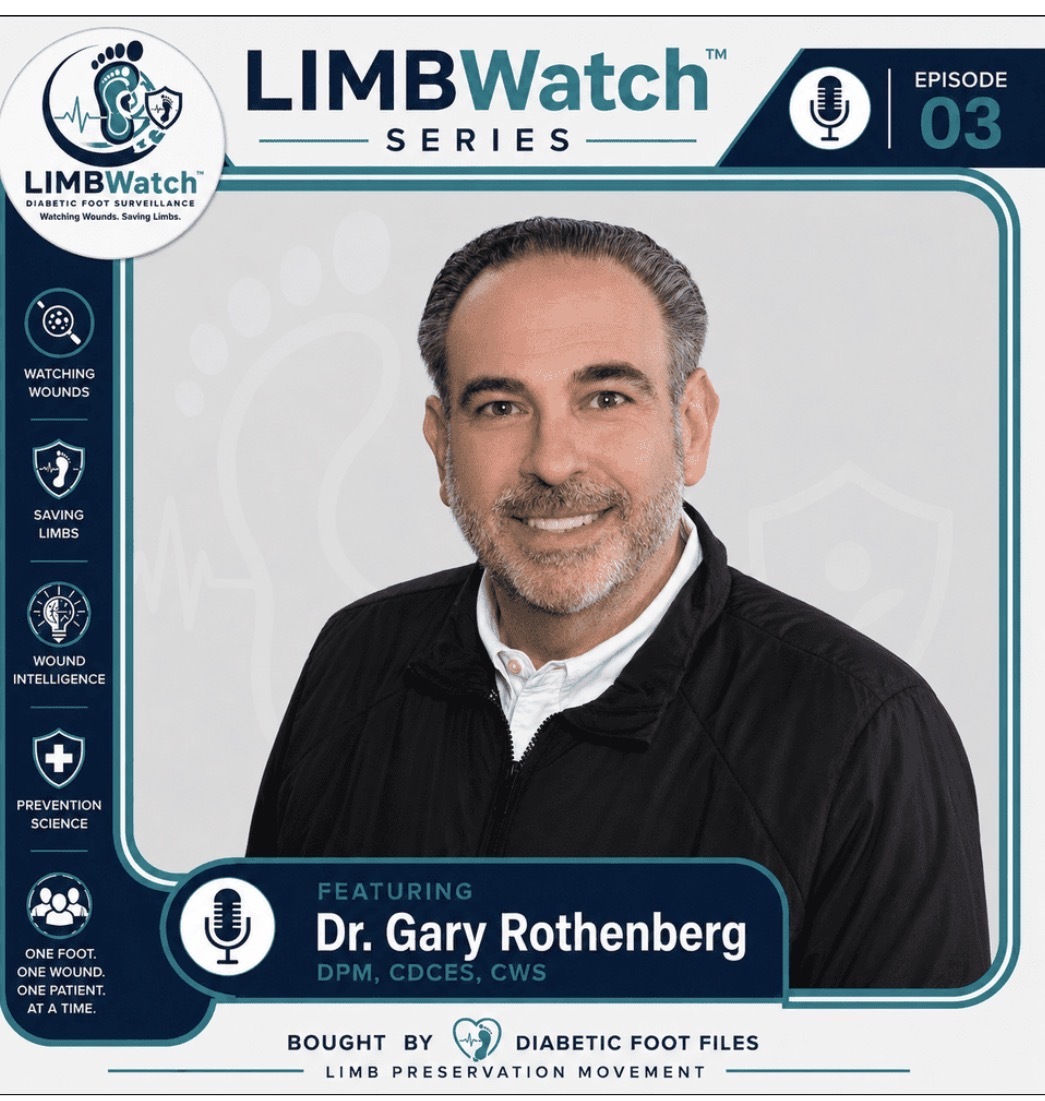 LIMBWatch Series: Dr. Gary Rothenberg DPM, CDCES, CWS on Limb Salvage | On this episode of Limb Watch, Dr. G speaks with Dr. Gary Rothenberg DPM, CDCES, CWS about limb preservation, diabetic foot care, wound healing, and vascular health. Dr. Rothenberg discuss the root role of neuropathy, the importance of prevention, and the power of caregivers and multidisciplinary teams. Dr. Rothenberg explains remote temperature monitoring with the Podometrics SmartMat, shares lessons from the VA and clinical practice, and highlights practical steps to detect problems earlier and reduce amputations through education, access, and coordinated care. To learn more about Podimetrics and how its SmartMat™ technology helps prevent diabetic foot complications through early detection and remote monitoring, please visit http://www.podimetrics.com/ | 43m 20s | ||||||
| 5/26/26 | Nitroglycerin Paste: The Tiny Rescue That Reopens Blood Flow | In this episode of Diabetic Fit Files, Dr. G explains how topical nitroglycerin paste works as a vasodilator to improve microcirculation and rescue threatened skin flaps, ischemic digits, and compromised grafts. The episode covers its mechanism (nitric oxide release), clinical indications, historical background, and why it can help in diabetic wound care.Key clinical pearls and cautions are summarized, including when it may help, common side effects (headache, hypotension), major contraindications (concurrent PDE-5 inhibitors, severe hypotension, anemia), and why it should never replace urgent surgical intervention when needed. | 16m 17s | ||||||
| 5/24/26 | System Sundays: NO GUTS, NO GLORY: Microbiome, Diabetes, and Wound Healing | This episode explains how the gut microbiome — an internal ecosystem of bacteria, fungi, and viruses — regulates inflammation, immunity, metabolism, and wound healing, and how diabetes disrupts that balance.High blood sugar, altered gut conditions, and repeated antibiotics can cause dysbiosis and leaky gut, driving chronic systemic inflammation, immune dysfunction, biofilm formation, impaired angiogenesis and collagen synthesis, and stalled diabetic wound healing.Practical approaches discussed include glycemic control, nutrition (fiber and fermented foods), targeted probiotics/prebiotics, exercise, sleep and stress management, antibiotic stewardship, and multidisciplinary care to support both the gut and the wound for better limb salvage outcomes. | 26m 09s | ||||||
| 5/23/26 | Salvage Saturdays; Sound Waves That Heal: Shockwave Therapy for Diabetic Foot Ulcers | On this episode of Salvage Saturdays, Dr. G explores extracorporeal shockwave therapy — the use of focused sound waves to stimulate healing in diabetic foot ulcers. We review its history from lithotripsy to orthopedics, how mechanical energy triggers angiogenesis, collagen remodeling, stem cell activation, and reduces chronic inflammation.The episode explains treatment types, energy settings, typical protocols, contraindications, and the patient experience, and emphasizes that shockwave therapy is an adjunct to standard wound care (debridement, offloading, infection control, vascular optimization).Research is promising but varied; combined regenerative approaches and larger trials are likely next steps. A case study demonstrates meaningful wound improvement with focused low-energy shockwave therapy as part of comprehensive limb salvage care. | 23m 26s | ||||||
| 5/22/26 | Forgotten Infection Friday: Mucormycosis in a Diabetic Patient | Case study of a 58-year-old man with uncontrolled type 2 diabetes (A1C 12.4) who developed a rapidly progressive left foot ulcer after stepping on a nail. Despite antibiotics, the wound became black, necrotic, and septic; labs showed DKA and elevated inflammatory markers.MRI and tissue biopsy revealed deep angioinvasive fungal infection with broad, ribbon-like non-septate hyphae consistent with mucormycosis. Management required urgent surgical debridement, antifungal therapy (liposomal amphotericin B), metabolic stabilization, and often limb-sparing or amputation procedures; early recognition is critical due to rapid vascular invasion and high mortality. | 21m 21s | ||||||
| 5/20/26 | When a Skin Flap Fails: Spot the Early Signs Before It’s Too Late | This episode explains how and why skin flaps die, focusing on the early warning signs, differences between arterial insufficiency and venous congestion, and the underlying microvascular physiology.It covers common causes of flap failure—tension, hematoma, infection, diabetes-related microangiopathy, and poor offloading—how to assess a threatened flap (color, capillary refill, temperature, Doppler), and the step-by-step rescue measures clinicians use to improve perfusion.Listen for practical timelines for salvage, prevention strategies before surgery (vascular testing, optimization, smoking cessation, nutrition), and the importance of rapid action and frequent monitoring to maximize flap survival and protect the limb. | 22m 09s | ||||||
Want analysis for the episodes below?Free for Pro Submit a request, we'll have your selected episodes analyzed within an hour. Free, at no cost to you, for Pro users. | |||||||||
| 5/17/26 |  S.A.V.E T.H.E. F.A.S.C.I.A: Rapid Recognition Protocol for Necrotizing Fasciitis | In this episode we introduce "Save the Fascia," a clear, stepwise mnemonic to help clinicians recognize necrotizing fasciitis early and act urgently. It outlines warning signs, diagnostic steps, and the rapid escalation needed for a time-sensitive surgical emergency.The episode emphasizes tracking progression, immediate wound management, broad-spectrum antibiotics, and early surgical consultation to improve limb salvage and survival. | 40m 08s | ||||||
| 5/16/26 | Medically Stable? The Dangerous Misuse in Diabetic Foot Discharges | Dr. G examines how the phrase "medically stable for discharge" is often misapplied to diabetic foot patients, sometimes with dangerous consequences. He explains why diabetic foot infections can be deceptively quiet, reviews warning signs like gas in tissue and abscesses, and outlines when discharge is and isn’t appropriate. The episode stresses the need for specialist input, proper imaging, source control, clear outpatient plans, and patient advocacy to prevent missed limb‑threatening emergencies and improve outcomes. | 23m 22s | ||||||
| 5/15/26 | Breath Is Healing: Preventing Post-Op Complications with Incentive Spirometry | Dr. G explains why the simple incentive spirometer is more than a bedside toy: it forces deep breaths, prevents atelectasis, improves oxygenation, and reduces post-operative pulmonary complications. The episode outlines the typical post-op timeline (0–24 hrs, 24–72 hrs, 3–5 days), how poor lung expansion harms wound healing—especially in diabetic foot patients—and how spirometry links breathing to overall recovery. | 12m 53s | ||||||
| 5/13/26 | Wound Intelligence Wednesday:Gustilo Classification & Contamination: Don’t Close a Dirty Wound | In this episode of Diabetic Foot Files, Dr. G explores why seemingly small or clean-looking wounds—especially in diabetic patients—can hide severe underlying damage from retained plant matter and contamination. Learn how organic debris promotes infection, why imaging may miss wooden or thorn fragments, and the importance of exploration, serial debridement, and appropriate antibiotics. The episode reviews the Gustilo wound classification, practical management steps for different contamination levels, and imaging tips to avoid missing retained foreign bodies or necrotizing infections. Key takeaways: never primarily close contaminated wounds, antibiotics don’t replace debridement, and maintain high suspicion for gas-forming and rapidly progressive infections. | 25m 48s | ||||||
| 5/12/26 |  Limb Watch Ep. 2 — Dr. Matthew G. Garoufalis, DPM, FASPS, DABPM, CWS, FFPM RCPS (Glasg) FRSM- Topical Oxygen- Game Changer in Limb Salvage | In this episode of Diabetic Flip Files’ Limb Watch, host Dr. G interviews Dr. Matthew Garoufalis , a leader in podiatric medicine, wound care and limb salvage, about the evolution of wound care into limb salvage and the science behind topical (intermittent) oxygen therapy. He is the Chief Medical Officer at Advanced Oxygen Therapy Inc. They discuss how oxygen affects infection control, angiogenesis, collagen synthesis and cellular metabolism; clinical evidence supporting topical oxygen for diabetic foot and other wounds; practical use as an adjunctive therapy; and how optimization of oxygen can preserve tissue and reduce amputations. | 52m 40s | ||||||
| 5/10/26 |  Limb Watch Launch: Diabetic Limb Salvage with Dr. Haywan Chiu DPM, FACFAS | In this episode Dr. G launches the Limb Watch movement and interviews Dr. Haywan Chiu, DPM, FACFAS. Board- certified in foot surgery and reconstructive rearfoot/ankle surgery. As a leading expert in diabetic limb salvage, Dr. Chiu is dedicated to preventing lower extremity amputations through innovative surgical techniques and advanced wound care management. They discuss the philosophy of limb preservation, clinical signs that predict limb loss, and when to operate or involve vascular surgery. Dr. Chiu shares advanced techniques (flaps, tendon balancing, reconstructive options), the importance of source control, pitfalls of delayed referral, practical outpatient decisions, and prevention strategies to preserve mobility and quality of life. | 51m 20s | ||||||
| 5/9/26 | Zombie Cells in the Wound: How Senescent Fibroblasts Sabotage Diabetic Ulcers | Dr. G examines how normal fibroblasts drive tissue repair and how, in diabetic foot ulcers, they can become senescent “zombie” cells that stop dividing, secrete inflammatory SASP factors, and degrade the wound environment.The episode covers triggers (hyperglycemia, oxidative stress, ischemia, infection), clinical signs and biomarkers of senescence, the vicious cycle with biofilm, and emerging approaches—including senolytics, targeted dressings, and debridement—to reduce senescent burden and improve healing. | 22m 26s | ||||||
| 5/8/26 | 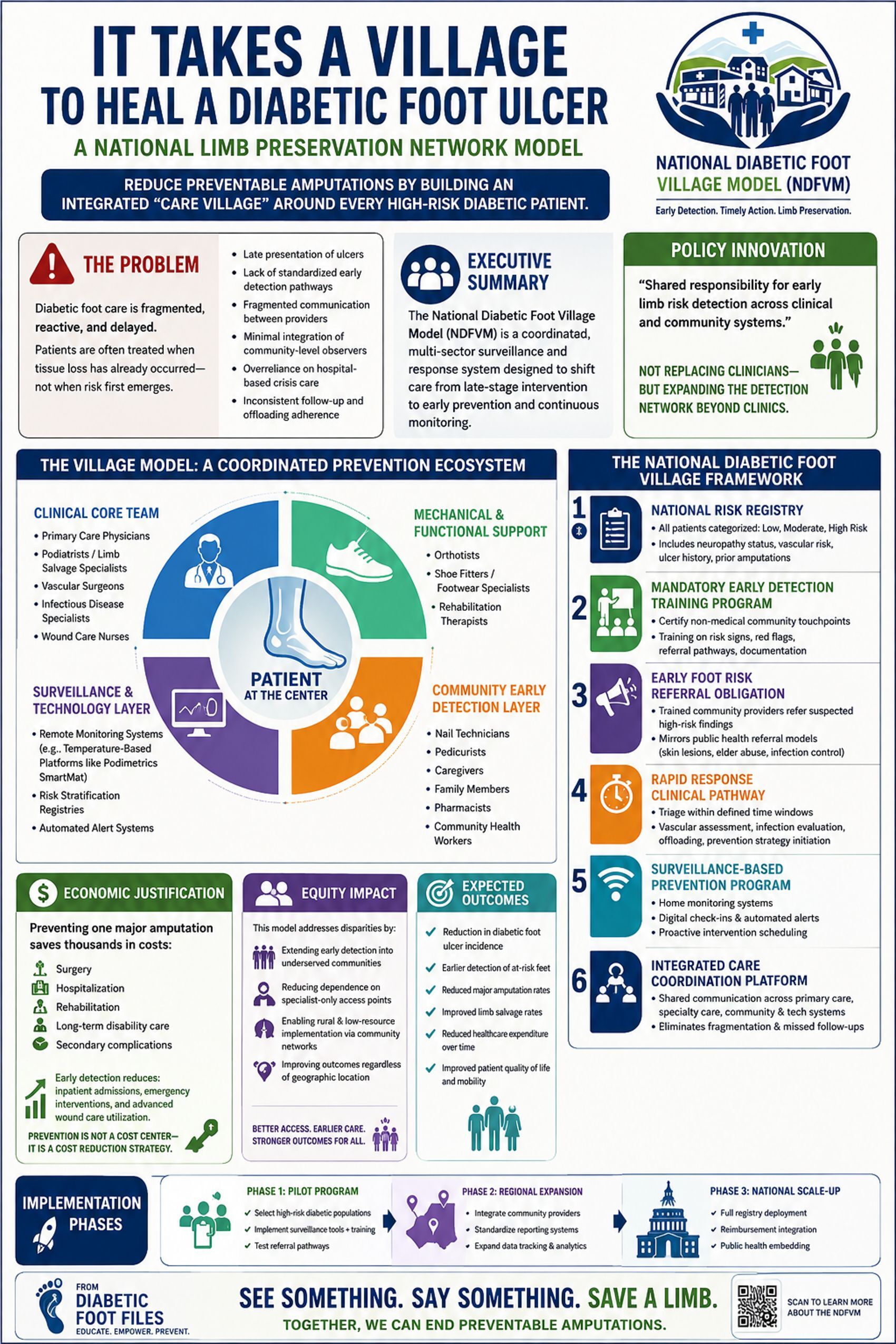 Diabetic Foot Village: A Plan to Prevent Amputations | This episode proposes the "Diabetic Foot Village" — a coordinated multi-sector surveillance and response model that shifts care from late-stage hospital interventions to early prevention and continuous monitoring.The framework connects a clinical core team, footwear and rehab supports, surveillance technology, and trained community touchpoints (nail techs, pharmacists, caregivers) with a national risk registry, rapid referral pathways, and home monitoring to catch problems earlier.Goals include reducing preventable amputations, lowering costs, improving limb salvage and equity in underserved areas — inspired by a patient story that highlights why shared, community-driven detection matters. | 16m 38s | ||||||
| 5/8/26 |  Limb Watch: Every Wound Has A Clock | In this episode Dr. G introduces Limb Watch, a simple framework to recognize early warning signs of diabetic foot disease before they become emergencies. She explains why small changes—warmth, redness, odor, swelling, drainage, pain changes or glucose instability—matter, and how a universal alert system (green, yellow, orange, red) can prompt faster intervention and prevent amputations.Limb Watch is designed for everyone—patients, caregivers, nurses, podiatrists, nail technicians and communities—and calls for better education, surveillance, and shared accountability to preserve limbs through earlier recognition and timely action. | 10m 49s | ||||||
| 5/7/26 | From Tuberculosis to Toes: Building a System That Stops Amputations | This episode compares tuberculosis control strategies to diabetic foot ulcer care, showing how a public-health system transformed TB from a deadly epidemic into a controllable disease and how similar systems can prevent avoidable amputations in people with diabetes.Dr. G explains key parallels—latent progression, unequal burden, and the need for engineered compliance—and proposes practical lessons: standardized screening, mandatory referral pathways, remote monitoring, multidisciplinary teams, and a national diabetic foot surveillance system to catch problems early and reduce preventable limb loss. | 17m 09s | ||||||
| 5/7/26 | The Magic Words in Woundcare- Words That Save Limbs: The Hidden Language of Diabetic Wound Care | This episode examines how medical language shapes urgency, triage, and outcomes in diabetic wound care. It explains key terms—like limb-threatening infection, critical limb ischemia, osteomyelitis, necrotizing soft tissue infection, deep space abscess, and systemic signs—that trigger faster interventions and can be the difference between healing and amputation.Dr. G explores the psychology of terminology, the dangers of minimizing wounds, and the balance between creating appropriate urgency and avoiding alarmism. The episode emphasizes precise documentation and the phrase "time-sensitive limb salvage" as a tool to mobilize teams and save limbs. | 14m 29s | ||||||
| 5/7/26 | THE GEOGRAPHY OF AMPUTATION” Why Your Chances of Keeping a Leg Depend on Where You’re Born | In this episode Dr. G explores how where a person lives can determine whether a diabetic foot ulcer heals or leads to amputation. Using real-world examples, he explains how limited access to podiatry, vascular care, wound supplies, and prevention programs in low-income regions turns preventable wounds into life-threatening problems.The episode outlines the economics and history behind these disparities, the human cost of amputation, and practical solutions—screening, community care, affordable offloading, and multidisciplinary teams—that can save limbs and lives. | 29m 41s | ||||||
| 5/6/26 | H2 Therapy: Could Hydrogen Help Save Diabetic Feet? | In this episode Dr. G explores molecular hydrogen (H2) — the smallest molecule with surprising biological effects — and how its selective antioxidant and anti-inflammatory actions might improve wound healing in diabetic foot ulcers. We review the mechanisms, delivery methods, preclinical and emerging clinical evidence, and practical limits: H2 shows promise as an adjunctive redox modulator but is not a replacement for standard care like debridement, offloading, infection control, and vascular assessment. | 19m 59s | ||||||
| 4/26/26 | Hidden in the Waves: Vibrio, Pseudomonas and the Dangers of Water to Diabetic Ulcers | This episode explains how common water sources — oceans, lakes, rivers, pools, hot tubs and aquariums — can introduce dangerous microbes into diabetic foot wounds, including Vibrio, Aeromonas, Pseudomonas, Mycobacterium, Candida and molds.Dr. G describes why diabetic wounds are especially vulnerable (poor circulation, neuropathy, impaired immunity), the warning signs of severe infection, and how some organisms can cause rapidly progressive necrosis or chronic non‑healing ulcers.Practical takeaways: avoid water exposure with open wounds, tell your clinician about any water contact, seek prompt evaluation for concerning symptoms, and tailor cultures and antibiotics to possible waterborne pathogens. | 20m 45s | ||||||
| 4/25/26 | Amputated Spirit: The Hidden Loss of Integrity in Diabetic Limb Care | Dr. G explores how diabetic limb salvage is not only about preventing physical amputation but also about protecting the clinician’s and patient’s integrity and will to fight. He warns that system delays, corner-cutting, burnout, and patient despair can cause an invisible — and often irreversible — "amputated spirit."The episode urges early action, relentless advocacy, clear patient education, and documentation to preserve outcomes and the human spirit behind care. It’s a call to choose what’s right over what’s easy in diabetic foot medicine. | 18m 33s | ||||||
Showing 25 of 308
Sponsor Intelligence
Sign in to see which brands sponsor this podcast, their ad offers, and promo codes.
Chart Positions
2 placements across 2 markets.
Chart Positions
2 placements across 2 markets.