Emergency Medicine Cases
by Dr. Anton Helman
Is this your podcast?On the show
From 19 epsHosts
Recent guests
Recent episodes
Ep 223 Epistaxis Management: A Step-Wise Approach
Sep 29, 2026
1h 39m 57s
EM Quick Hits 73 MedMal Case Peds Headache, Phenobarb in Alcohol Withdrawal, Peer Support Programs, Asymptomatic Bacteriuria, Mechanical Ventilation, Coaching the EM Mind Part 3
Sep 8, 2026
2h 14m 00s
Ep 222 Imaging Decisions in Emergency Medicine
Aug 25, 2026
48m 36s
Ep 221 EM-Primary Care Health Systems Strategies, Myths, Misperceptions and Solutions
Aug 11, 2026
1h 43m 08s
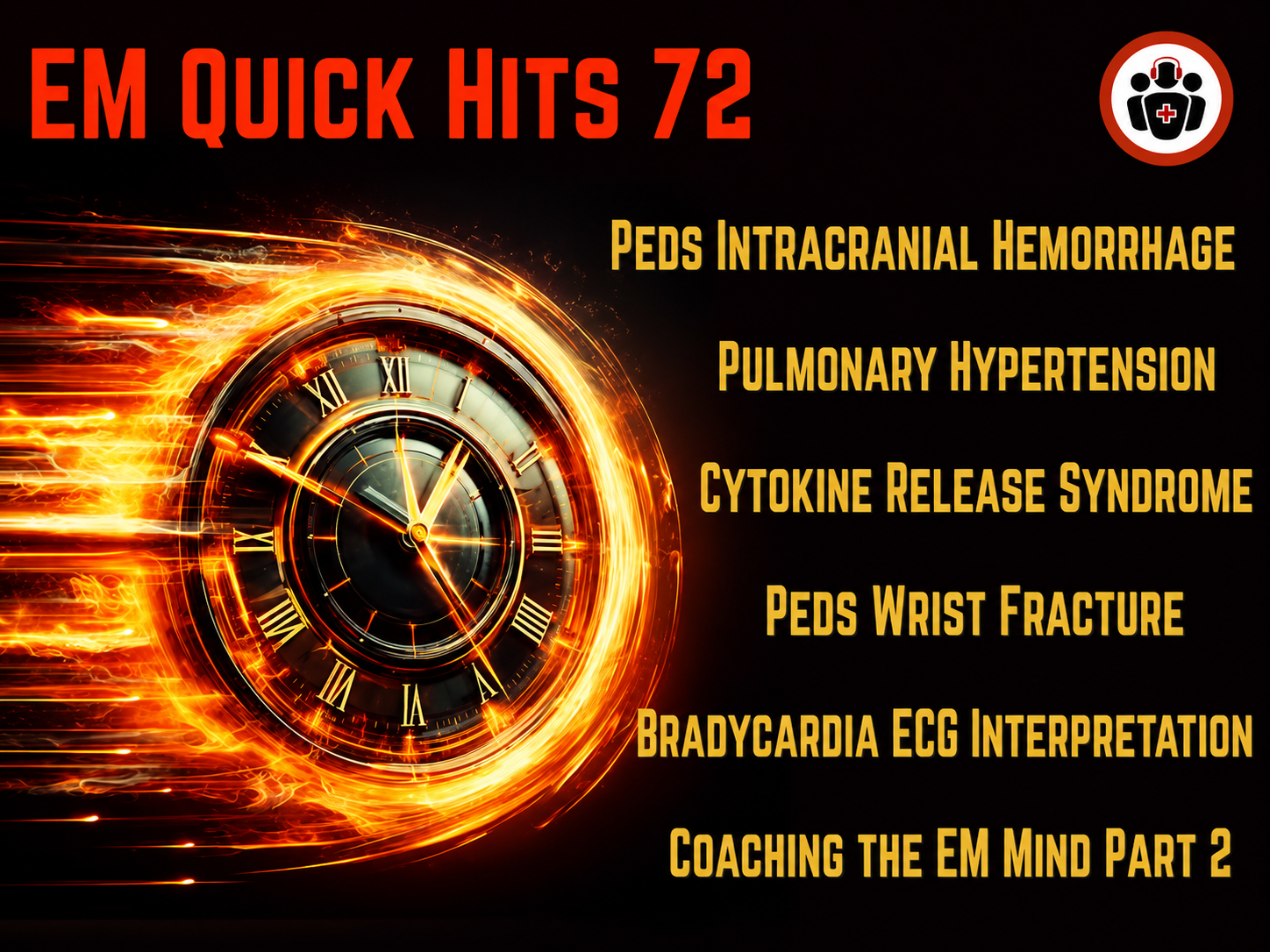
EM Quick Hits 72 EMC²: Peds Neurocritical Care, Pulmonary Hypertension, Cytokine Release Syndrome, Peds Wrist Fracture, Bradycardia ECG Interpretation, Coaching the EM Mind Part 2
Jul 21, 2026
1h 39m 00s
Insights from recent episode analysis
Audience Interest
Podcast Focus
Publishing Consistency
Platform Reach
Insights are generated by CastFox AI using publicly available data, episode content, and proprietary models.
Most discussed topics
Brands & references
Total monthly reach
Blended from 1 signal.
Built from
By chart position
- 🇺🇸United States · MedicineHOME#4730K to 187K
- 🇨🇦Canada · Medicine#115.8K to 36K
- 🇮🇩ID · Medicine#44.3K to 27K
- 🇮🇳India · Medicine#203.6K to 23K
- 🇧🇷Brazil · Medicine#263.3K to 21K
- Per-Episode Audience
Est. listeners per new episode within ~30 days
64K to 399K🎙 ~2x weekly·400 episodes·Last published 2w ago - Monthly Reach
Unique listeners across all episodes (30 days)
128K to 797K🇺🇸47%🇨🇦9%🇮🇩7%+14 more - Active Followers
Loyal subscribers who consistently listen
51K to 319K
Market Insights
Platform Distribution
Reach across major podcast platforms, updated hourly
Total Followers
—
Total Plays
—
Total Reviews
—
* Data sourced directly from platform APIs and aggregated hourly across all major podcast directories.
Social Links & Contact
Official channels & resources
Official Website
Login
RSS Feed
Login
| Date | Episode | Topics | Guests | Brands | Places | Keywords | Sponsor | Length | |
|---|---|---|---|---|---|---|---|---|---|
| 9/29/26 | 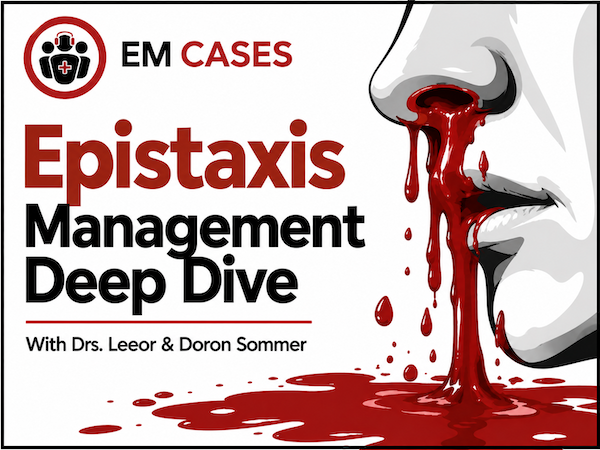 Ep 223 Epistaxis Management: A Step-Wise Approach | Epistaxis is usually straightforward—until it isn’t. How can you distinguish an anterior bleed from a dangerous posterior bleed? What’s the best sequence for compression, vasoconstrictors, TXA, cautery and packing? When should you reach for an anterior balloon tampon or posterior dual balloon? And how do you manage the airway when torrential bleeding fills the oropharynx? In this Epistaxis Management Deep Dive, Anton is joined by emergency physician Dr. Leeor Sommer and otolaryngologist Dr. Doron Sommer for a practical step-wise approach to everything from the routine nosebleed to life-threatening hemorrhage... If you find EM Cases useful in your practice, please consider making a donation to help us keep producing free, open-access emergency medicine education here: https://emergencymedicinecases.com/donation/ | 1h 39m 57s | ||||||
| 9/8/26 | pediatric headachealcohol withdrawal+4 | Mike WeinstockZoe Polsky+6 | EM Cases | — | medical malpracticephenobarbital+5 | — | 2h 14m 00s | ||
| 8/25/26 | imaging decisionsemergency medicine+5 | Dr. Amit Shah | EM Cases | — | imagingemergency medicine+6 | — | 48m 36s | ||
| 8/11/26 | Emergency MedicinePrimary Care+4 | Dr. Tara KiranDr. Danielle Martin | Primary FocusEM Cases | — | Emergency PhysicianHealth Care System+5 | — | 1h 43m 08s | ||
| 7/21/26 | pediatric neurocritical carepulmonary hypertension+4 | Amna KarabegovicAnand Swaminathan+5 | EM Cases | — | pediatric emergency medicineneurocritical care+5 | — | 1h 39m 00s | ||
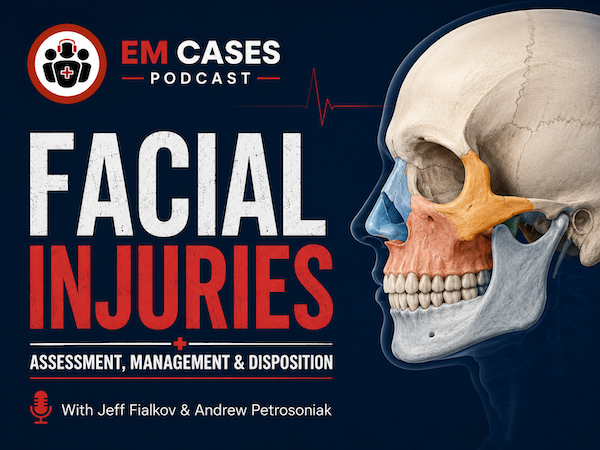
| 6/30/26 | facial traumaemergency medicine+5 | Dr. Jeff FialkovDr. Andrew Petrosoniak | — | — | facial injuriesemergency medicine+5 | — | 1h 43m 20s | ||
| 6/16/26 | hip emergencieship fractures+4 | Dr. Arun SayalDr. Matt DiStefano | — | — | hip emergencieship fractures+7 | — | 1h 25m 19s | ||
| 6/2/26 | antibioticsstrep throat+4 | Dr. Casey ParkerDr. Justin Morgenstern | EM Cases | — | strep throatantibiotics+6 | — | 1h 19m 21s | ||
| 5/19/26 | substance use disorderemergency medicine+4 | Dr. Bjug BorgundvaagTish Mizon+1 | Emergency Medicine Cases | Canada | substance use disorderopioid crisis+6 | — | 1h 01m 07s | ||
| 4/28/26 | pediatric agitationemergency department+4 | Dr. Susan DuffyDr. Thomas Chun | — | — | pediatric agitationemergency medicine+4 | — | 1h 22m 18s | ||
Want analysis for the episodes below?Free for Pro Submit a request, we'll have your selected episodes analyzed within an hour. Free, at no cost to you, for Pro users. | |||||||||
| 4/7/26 | cardiac arrestACLS guidelines+4 | Dr. Sheldon CheskesDr. Rob Simard | EM Cases | — | cardiac arrestACLS+6 | — | 1h 41m 55s | ||
| 3/25/26 | cardiac arrest managementCPR quality+4 | Dr. Sheldon CheskesDr. Rob Simard | 2025 ACLS Guidelines | — | cardiac arrestCPR+7 | — | 1h 52m 48s | ||
| 3/10/26 | Fever Without a SourceCoaching the EM Mind+3 | KatieDr. Sara Gray | medetomidineEM Cases+1 | — | emergency medicinefever+4 | — | 1h 38m 53s | ||
| 2/25/26 | endometriosis careemergency medicine+4 | — | EM CasesPelvic Inflammatory Disease+3 | — | endometriosisemergency medicine+5 | — | 55m 44s | ||
| 2/10/26 | status epilepticusemergency medicine+3 | Dr. Sara Gray | Emergency Medicine Cases | — | status epilepticusemergency department+3 | — | 59m 25s | ||
| 1/27/26 | febrile young infantrisk stratification+4 | Dr. Nathan KuppermannDr. Brett Burstein | PECARN | — | febrile infantPECARN rules+4 | — | 47m 36s | ||
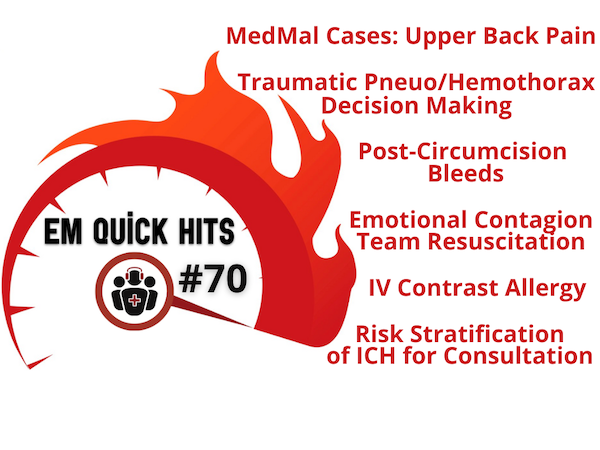
| 1/13/26 | medical malpracticetraumatic pneumothorax+4 | Mike WeinstockAndrew Petrosoniak+5 | — | — | upper back paintraumatic pneumothorax+6 | — | 1h 06m 09s | ||
| 12/30/25 | thyrotoxicosisthyroid storm+4 | Dr. George WillisDr. Alyssa Louis | PoCUSβ-blocker+8 | — | thyrotoxicosisthyroid storm+6 | — | 1h 13m 18s | ||
| 12/16/25 | decompensated hypothyroidismemergency medicine+4 | Dr George WillisDr Alyssa Louis | EM Cases | — | myxedema comaTSH+6 | — | 1h 12m 13s | ||
| 12/2/25 | pediatric urinary retentionacute transverse myelitis+5 | Deborah SchonfeldJesse McLaren+5 | EM Cases | — | emergency medicinepediatric+7 | — | 1h 32m 19s | ||
| 11/11/25 |  Ep 209 Nondisabling Stroke Recognition and Management | In this Part 2 or our 2-part podcast update on ED stroke management with Dr. Katie Lin and Dr. Walter Himmel we explore non-disabling strokes, where symptoms are mild enough that patients can continue daily activities if deficits persist. Yet, non-disabling does not mean benign. Non-disabling strokes occupy the same ischemic continuum as TIAs and carry a substantial risk of early recurrence with disabling stroke. In this EM Cases podcast we answer questions such as: Which patients with non-disabling stroke can safely go home with prompt follow-up and which require urgent investigation or admission? Which stroke mimics do we need to be on the look out for and how do we identify them at the bedside? How dangerous is thrombolysis in a patient with presumed stroke who turns out to be a stroke mimic? What are the key distinguishing features between a stroke and functional neurologic disorder? What are the most common causes of stroke in young people that we commonly miss? How does stroke etiology dictate the management pathway? What are the indications for carotid endarterectomy in patients with non-disabling stroke and what is the ideal timing of the endarderectomy? When is dual antiplatelet therapy vs single antiplatelet thereapy vs anticoagulant therapy indicated? What is the best medication strategy for the patient on a DOAC for atrial fibrillation who presents to the ED with a non-disabling stroke? For patients not on a DOAC for atrial fibrillation who come in with a stroke, when is it safe to start anticoagulation? and many more... Make A Donation: https://emergencymedicinecases.com/donation/.com | 1h 19m 30s | ||||||
| 10/28/25 | 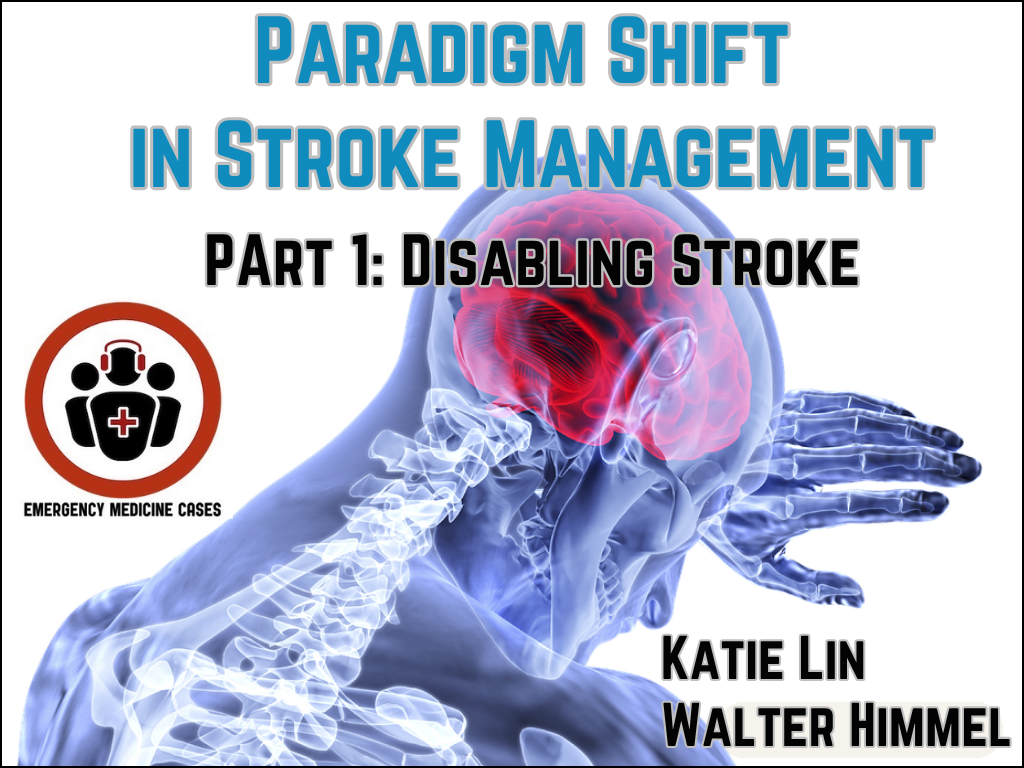 Ep 208 Paradigm Shift in Ischemic Stroke Management Part 1: Disabling Strokes | We are amidst a paradigm shift in the emergency management of acute ischemic stroke. The traditional way of categorizing ischemic strokes as 'minor' vs 'major' is no longer relevant to what we do in the ED. It's now about 'disabling' vs 'non-disabling' strokes. And this is no small change. This categorization dictates urgency of ED work-up and treatments, imaging choices, treatment decisions and goals of care. In this Part 1 or our 2-part main episodes EM Cases podcast series on management of ischemic stroke with Dr. Walter Himmel and Dr. Katie Lin, we answer questions like: How can we best rapidly determine if an ischemic stroke is disabling or non-disabling at the bedside? In what ways are 'wake up strokes' managed uniquely and what's the latest thinking on their pathophysiology? How should we best prioritize imaging depending on timing, geography and resources? How do we best predict large vessel occlusion amenable to endovascular therapy (EVT) at the bedside? How can we efficiently establish goals of care at the bedside to inform our emergency decision making around strokes? Which is better for thrombolysis in ischemic stroke - Tenecteplase or Alteplase? How have contraindications to IV thrombolysis changed over the last decade? When should we consider bridge therapy with EVT after IV thrombolysis? What are 4 key items the ED physician should have ready for the stroke neurologist on the first call? and many more... If you enjoy EM Cases content please consider a donation to help support ongoing FOAMed here: https://emergencymedicinecases.com/donation/ | 1h 36m 12s | ||||||
| 10/7/25 | 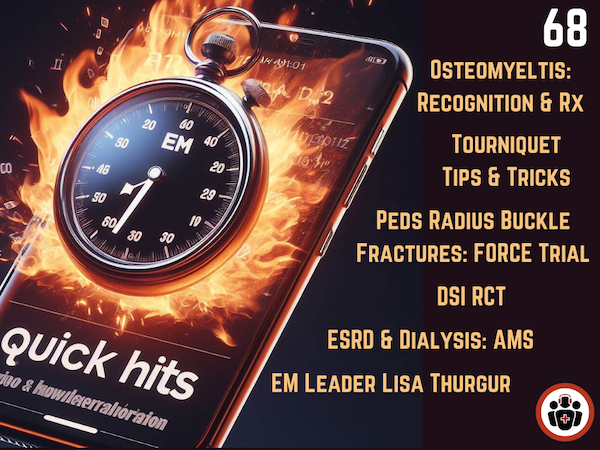 EM Quick Hits 68 Osteomyelitis, Tourniquet Technique, Pediatric Distal Radius Buckle Fractures, DSI RCT, AMS in ESRD & Dialysis, EM Leadership Spotlight #3 | On this month's EM Quick Hits podcast: Dr. Isaac Bogoch on recognition and management of osteomyelitis in the ED, Dr. Anand Swaminathan on tourniquet tips and tricks. Dr. Andrew Tagg on managing pediatric distal radius buckle fractures & the FORCE trial. Dr. Justin Morgenstern on Delayed Sequence Intubation (DSI): RCT Takeaways. Dr. Brit Long on ESRD & Dialysis in the ED: altered mental status. Dr. Lisa Thurgur & Victoria Myers on leadership and medical education. Please consider a donation to EM Cases to ensure ongoing high quality free open access medical education here: https://emergencymedicinecases.com/donation/ | 1h 25m 12s | ||||||
| 9/16/25 | 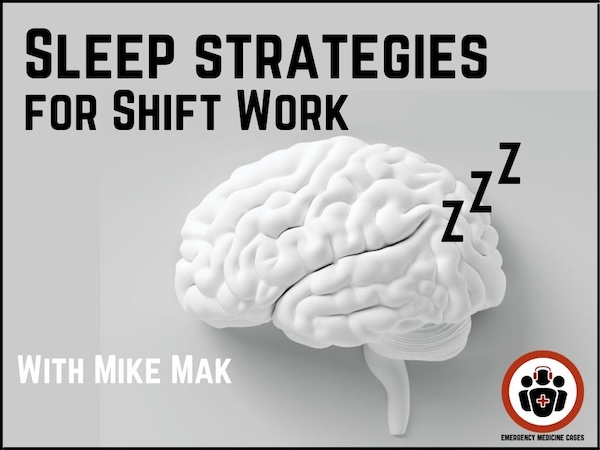 Ep 207 Sleep Strategies for Shift Work | Discover evidence-based sleep strategies for shift workers. Optimize performance, recovery, and health with tips from sleep expert Dr. Michael Mak... If you find this beneficial please consider a donation to support EM Cases: https://emergencymedicinecases.com/donation/ | 1h 21m 04s | ||||||
| 8/26/25 | 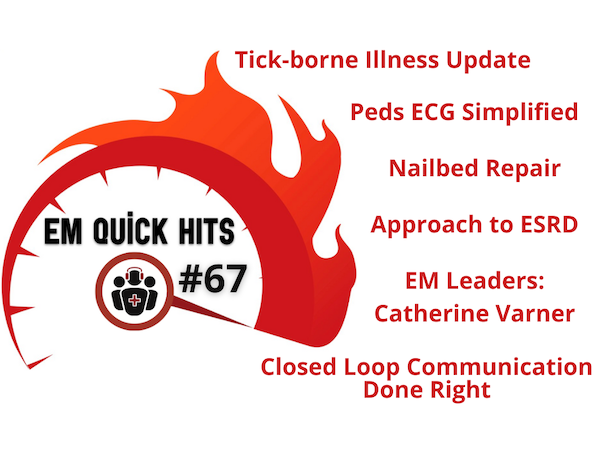 EM Quick Hits 67 Tick Borne Illness Update, Pediatric ECG Interpretation, Nailbed Repair, Closed Loop Communication, ESRD, Leaders in EM Dr. Catherine Varner | On this EM Quick Hits podcast: Tick Borne Illness Update with Dr. Issac Bogoch, Pediatric ECG Interpretation with Dr. Kathleen Stephanos, Nailbed Repair with Dr. Matthew McArther, Closed Loop Communication with Dr. Shawn Segeren, ESRD with Dr. Brit Long, Leaders in EM Dr. Catherine Varner... Please consider donating to EM Cases here: https://emergencymedicinecases.com/donation/ | 1h 00m 21s | ||||||





Showing 25 of 400
Pitch Fit is a Pro feature
See how bookable this show is for guests, which brands already advertise, the per-episode ad value, and the best-fit guest and sponsor profile. The numbers are blurred on the free plan.
How readily this show books outside guests like you.
How proven this show is for host-read sponsorships.
For Guests
ProFor Advertisers
ProUpgrade to Pro to unlock guest cadence, sponsor categories, fit scores, and per-episode ad value for this show.
Similar Audience Demographics
Podcasts that attract a similar listener profile

Core EM - Emergency Medicine Podcast
Core EM
EMCrit FOAM Feed
Scott D. Weingart, MD FCCM
Emergency Medical Minute
Emergency Medical Minute

EM Clerkship
Zack Olson, MD ; Mike Estephan, MD ; Maddie Watts, MD
FOAMcast - An Emergency Medicine Podcast
FOAMcast

Critical Care Scenarios
Brandon Oto, PA-C, FCCM and Bryan Boling, DNP, ACNP, FCCM

Critical Care Time
Critical Care Time Podcast
Chart history for Emergency Medicine Cases
Peaked at #3 in SA, top 10 in 5 of 50 tracked markets, currently #3 in SA.
| Market | Genre | Peak | Current | Trend |
|---|---|---|---|---|
| SA | — | #3 | #3 | — |
| ID | — | #4 | #4 | — |
| Denmark | — | #5 | #5 | — |
| BE | — | #10 | #10 | — |
| IL | — | #10 | #10 | — |
| Canada | — | #11 | #11 | — |
| PL | — | #11 | #11 | — |
| HU | — | #15 | #15 | — |
| South Africa | — | #18 | #18 | — |
| AR | — | #19 | #19 | — |
| India | — | #20 | #20 | — |
| Sweden | — | #24 | #24 | — |
| KE | — | #24 | #24 | — |
| Australia | — | #26 | #26 | — |
| Brazil | — | #26 | #26 | — |
| SA | — | #27 | #27 | — |
| MY | — | #33 | #33 | — |
| TR | — | #34 | #34 | — |
| CZ | — | #35 | #35 | — |
| Finland | — | #37 | #37 | — |
Chart Positions
50 placements across 37 markets.
Chart Positions
50 placements across 37 markets.