
Insights from recent episode analysis
Audience Interest
Podcast Focus
Publishing Consistency
Platform Reach
Insights are generated by CastFox AI using publicly available data, episode content, and proprietary models.
Est. Listeners
Based on iTunes & Spotify (publisher stats).
- Per-Episode Audience
Est. listeners per new episode within ~30 days
10,001 - 25,000 - Monthly Reach
Unique listeners across all episodes (30 days)
25,001 - 75,000 - Active Followers
Loyal subscribers who consistently listen
5,001 - 15,000
Market Insights
Platform Distribution
Reach across major podcast platforms, updated hourly
Total Followers
—
Total Plays
—
Total Reviews
—
* Data sourced directly from platform APIs and aggregated hourly across all major podcast directories.
On the show
Recent episodes
How To Talk To Kids About War
May 3, 2026
Unknown duration
You Hate Routine. Now What?
Apr 26, 2026
Unknown duration
Your Relationship Isn't Broken. Your Pattern Is
Apr 19, 2026
Unknown duration
You’re Playing Small. You Know It
Apr 12, 2026
Unknown duration
Your Hyper-Independence Is Costing You
Apr 5, 2026
Unknown duration
Social Links & Contact
Official channels & resources
Official Website
Login
RSS Feed
Login
| Date | Episode | Description | Length | ||||||
|---|---|---|---|---|---|---|---|---|---|
| 5/3/26 | 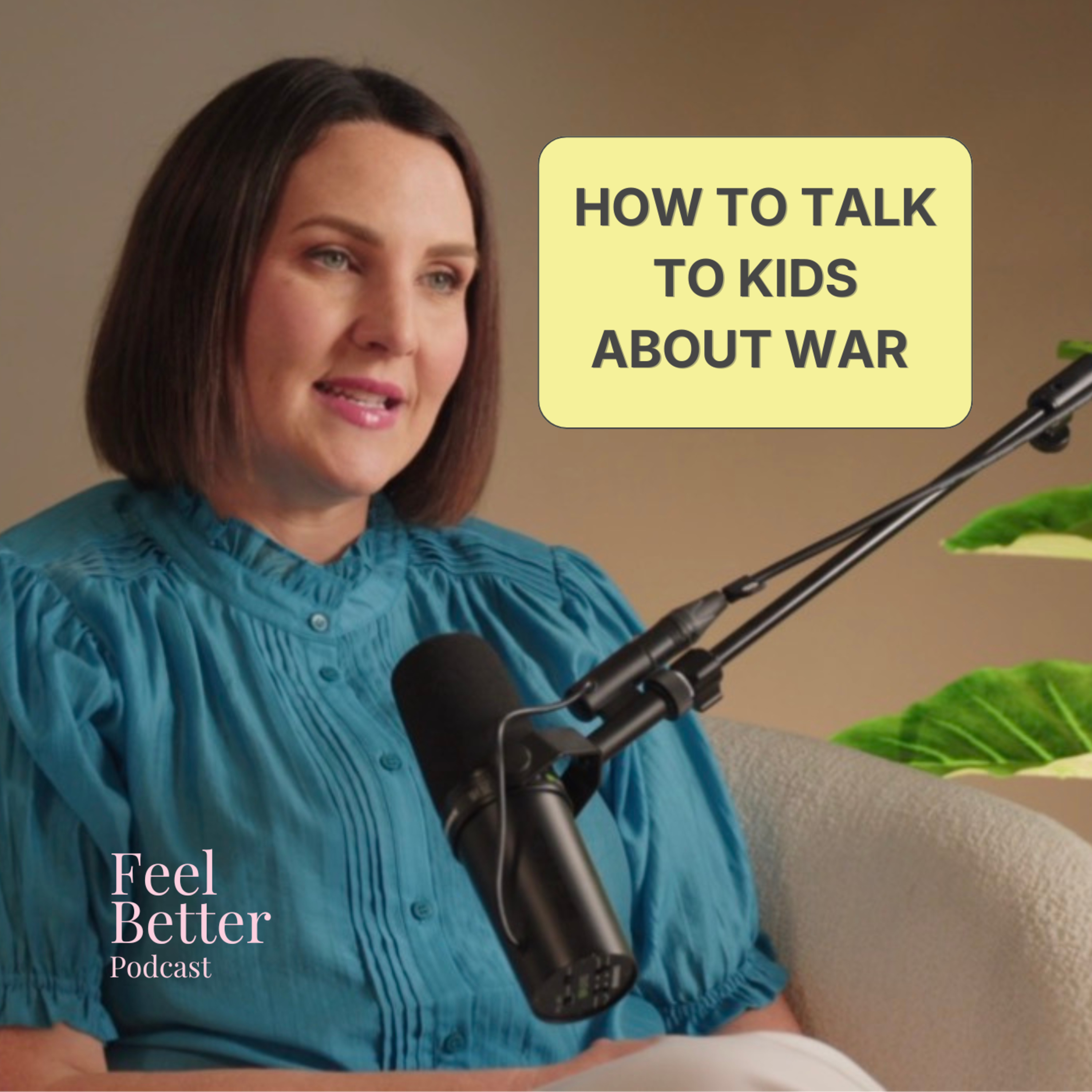 How To Talk To Kids About War How To Talk To Kids About War | If you’ve been wondering how to talk to your kids about war… you’re not alone.With global conflict dominating headlines, many parents are finding themselves having conversations they never expected to have. Conversations about safety, fear, and what’s happening in the world.In this episode, I walk you through how to talk to children about war in a way that keeps them feeling safe, informed, and emotionally steady. You’ll learn:What to say (and what not to say) to kids about warHow to manage your child’s fear and anxietyWhy “safety first” is the most important starting pointHow to explain complex global conflict in age-appropriate waysHow to handle conversations differently for younger kids vs tweens and teensWhat to do if your child has already heard things at school or onlineHow to set boundaries around news, social media, and exposureHow to use this moment to build resilience, emotional literacy, and critical thinking. This isn’t about having the “perfect” conversation.It’s about being the calm, steady place your child comes back to when the world feels uncertain.If you’re a parent trying to support your child through scary or confusing world events, this episode will give you practical tools, language, and confidence to do that well.🎧 Listen now and feel more equipped to have one of the hardest parenting conversations of our time. | — | ||||||
| 4/26/26 |  You Hate Routine. Now What? You Hate Routine. Now What? | You want to look after yourself better…but you hate routine.So every time you try to “get your life together,” it lasts about five days. Then you’re back to square one, telling yourself you’re the problem.You’re not.In this Ask Charlotte episode, I’m breaking down why the way we talk about consistency is actually setting a lot of people up to fail and what to do instead.We cover:Why you don’t need strict routines to take care of yourselfThe difference between consistency and repetitionHow to use “bursts,” themes, and menus instead of rigid habitsThe real reason you’re struggling to start (and how to fix it)How to stop comparing yourself to the 5am routine crowdThe identity shift that changes everything: “I’m someone who shows up for myself”If you’ve ever thought“I’m just not disciplined enough”this episode will rewire that completely.You don’t need to become a routine person.You need a way of showing up that actually works for you.Subscribe so you don’t miss what’s next. | — | ||||||
| 4/19/26 | Your Relationship Isn't Broken. Your Pattern Is | You don’t have a relationship problem.You have a pattern problem.And until you see it, nothing changes.In this Ask Charlotte episode, we’re unpacking the uncomfortable truth most couples avoid:it’s not just them… and it’s not just you either.It’s the dynamic you’re both creating.If you’ve been:Stuck in the same argument on repeatNoticing everything your partner does wrongWondering how to take responsibility without blaming yourselfTrying to “fix” the relationship by analysing themThis episode will shift how you see everything.We cover:Why blame keeps you stuck (and shame isn’t the answer either)The “relationship dance” that’s quietly running your interactionsHow your past relationships reveal your current patternsThe hidden emotional triggers driving conflictThe one question that changes everything:Is my behaviour moving us closer… or further away?Because here’s the truth:You don’t fix a relationship by diagnosing your partner.You fix it by understanding what you’re co-creating together.This is about clarity, not self-blame.Ownership, not over-functioning.And finally getting out of the loop you’ve been stuck in.If you’ve ever thought:“I know I’m part of this… but I don’t know how to change it”this episode is for you.🎧 Listen now and start breaking the pattern.And if your relationship needs a reset but therapy feels like too much, my Give Me 10 Minutes programme walks you through exactly what to do, week by week. | — | ||||||
| 4/12/26 | You’re Playing Small. You Know It | You’re playing small. And if you’re honest… you already know it.In this episode of The Feel Better Podcast, I sit down with Georgia from George Design to talk about what it really takes to stop holding yourself back and start backing yourself.Georgia is the founder of George Design, working with businesses to clarify their brand, grow their visibility, and make smarter, braver decisions. You can find her at georgedesign.co.nz.This is a conversation for the woman who:knows she’s capable of morehas ideas she’s not acting onkeeps waiting until she feels “ready”We get into:why women underestimate themselves by yearshow to make bold decisions without certaintythe mental load of trying to do everything “right”building a business alongside motherhoodhandling judgment, criticism, and other people’s opinionswhat actually moves the needle when growing somethingAnd the shift that changes everything:👉 stop asking what if it fails?👉 start asking what if it works?Because staying where you are? That’s a decision too.If you’ve been hesitating, overthinking, or quietly playing smaller than you know you could… this episode will call you forward. | — | ||||||
| 4/5/26 |  Your Hyper-Independence Is Costing You Your Hyper-Independence Is Costing You | You’re the one who gets it done. The capable one. The reliable one. The strong one.But what if that version of youis quietly costing you more than you realise?In this episode, we’re unpacking hyper-independencethe pattern that looks like strength… but is often driven by fear, control, and past experiences.If you:find it hard to ask for helpfeel like it’s easier to just do it yourselfget frustrated when others don’t step upstruggle to switch off or truly restfeel secretly overwhelmed, disconnected, or resentfulthis episode will hit close to home.We explore:what hyper-independence actually is (and why it’s not just your personality) how trauma and life experiences shape this patternthe hidden cost most people don’t see until laterwhy it blocks connection, support, and easesimple, practical ways to start letting people in Because the goal isn’t to become dependent. It’s to become someone who can be capable and supported.You don’t have to hold everything on your own.If this resonates, share it with someone who needs to hear itand hit follow so you don’t miss future episodes. | — | ||||||
| 3/29/26 |  Lost Yourself in Motherhood? Start Here Lost Yourself in Motherhood? Start Here | You can love your kids deeply… and still feel like you’ve lost yourself.HannaH Findlay is a Mum who has inspired many others with the beauty she has found in pulling herself through some of the toughest parts of becoming a parent. We talk about what happens to your identity in motherhood. The version where your body changes.Your mental health takes a hit.Your interests disappear.And one day you realise… you don’t actually know what you like anymore.We talk about:why so many women feel lost after having kidsthe mental load and “holding your breath all day” feelinghow anxiety and overwhelm shrink your capacity to even know what you enjoythe pressure to live entirely for your children (and why that doesn’t work)what it actually takes to start finding yourself againThis isn’t about reinventing your life overnight.It’s about starting small.Planting something (literally, for her!) Trying something.Letting it be messy and unfinished.Because no one is coming to save you.But you can build your way back to yourself.If you’ve ever thought,“I don’t know who I am anymore”this episode will meet you there.And gently show you a way forward.HannaH and her husband Brent have a fantastic business called Mortgage Mates - mortgage advisors who feel like friends. If you need some great people on your side, check them out at mortgagemates.co.nz | — | ||||||
| 3/22/26 |  You Want More. They Don't You Want More. They Don't | You want more connection. They don’t.And now you’re stuck in that quiet, painful in-between…where you’re in a relationship, but still feeling alone.In this Ask Charlotte episode, I’m unpacking one of the most common (and confronting) dynamics I see in counselling:when one partner wants emotional connection, depth, and intimacy… and the other just doesn’t meet them there.We’re talking about:why this happens (and what’s actually underneath it)the difference between a skill gap vs a willingness gaphow to communicate your need for connection without pushing them further awaywhat might be blocking your partner from showing up emotionallyhow love languages can both help and confuse thingsand the hard truth… when this becomes a dealbreakerBecause here’s the thing most people won’t say out loud:you don’t have to stay in a relationship that consistently feels disconnected.But before you make big decisions, there are things you can try.This episode will help you get clearer on what’s really going on in your relationship,what’s possible to change,and what you actually need moving forward.If you’ve ever thought:“Why do I feel so alone when I’m not single?”this one is for you.🎧 And if you’re looking for a practical next step, my course Give Me 10 Minutes is designed for exactly this.Short, guided audio sessions to help you both rebuild connection without having to fit in traditional therapy. | — | ||||||
| 3/15/26 |  You Can't Hate Yourself Into Change You Can't Hate Yourself Into Change | Many of us believe that being tough on ourselves is the way to change.We think that if we criticise ourselves enough, push harder, or feel bad enough about our behaviour, we’ll finally become the person we want to be.But in my experience as a counsellor, the opposite is true.In this episode of the Feel Better Podcast, I’m talking about self-criticism and why it actually makes lasting change harder, not easier. I explain what happens in your brain when you shame or blame yourself and why that activates your threat response rather than the parts of your brain responsible for reflection, emotional regulation and problem solving.Over the years I’ve worked with many people who try to beat themselves into change. They set goals, fall off track, and then pile on the self-criticism. But this pattern rarely leads to the kind of sustainable change people are hoping for.Instead, I talk about a different approach. One that is grounded in self-acceptance, values and kinder self-talk, which research shows is far more effective for long-term behaviour change.In this episode I’ll share:• Why self-criticism activates your brain’s threat system• Why shame and blame undermine lasting change• The neuroscience behind self-compassion and motivation• Three practical tools to interrupt self-critical thinking• How to move toward change through your values• How to tell yourself the kind but accurate storyIf you’re stuck in the cycle of setting goals, falling off track and beating yourself up, this episode will help you understand why that happens and what to do differently.Because real change doesn’t come from attacking yourself.It comes from learning to work with yourself instead.If you’d like support making meaningful changes in your life, you can find out more about Change Therapy, my new coaching-based approach to working with clients, at:www.charlottecummings.nzYou can also connect with me on Instagram:@charlottethecounsellor | — | ||||||
| 3/8/26 | The Women's Health Chat You Need | I'm kind of sick of the doom and gloom chat's about perimenopause, so I decided I'd find someone I could ask this question of: "What is good about perimenopause?" Enter Amelia Stafford - an amazing women's health expert who knows her stuff when it comes to hormones and nutrition and the realities of making our health a priority in our busy lives. This is such a refreshing chat! We talk about: - What she eats (the question I just so often wish people cut to with health gurus!) - What she's enjoying about her 40s - Perimenopause - Vaginal health - Periods - Kids - Busy life Amelia is an absolute treat - I hope you love this episode. It's the right mix of realistic and inspiring! | — | ||||||
| 3/1/26 | How to Stop Overthinking | If you struggle with overthinking, this episode is for you.Maybe your brain replays conversations on a loop.Maybe you catastrophise about the future.Maybe decision-making feels exhausting because you’ve already run 47 scenarios in your head.Overthinking is incredibly common. Research suggests up to 80% of our thoughts are negative and 95% are repetitive. That means most of us are swimming in the same mental loops on repeat.In this episode, I break down:• What overthinking actually is (and how it’s different from healthy reflection)• The two main types: rumination and worry• Why overthinking feels productive but actually reduces control• The cognitive distortions driving it, including catastrophising, mind-reading, black and white thinking, and perfectionism• Why overthinking is often about avoiding an “unbearable” feeling• The nervous system patterns behind itAnd most importantly, I give you practical strategies you can use immediately:• The powerful question: “What now?”• How to give your brain a container• Why getting back into your body is essential• How to use cognitive defusion from Acceptance and Commitment Therapy• Making good enough decisions instead of perfect ones• Treating life like an experiment• Building tolerance for uncertainty• Replacing self-criticism with compassionate self-talkIf you’re tired of living in your head, if your thoughts feel loud and relentless, or if overthinking is impacting your sleep, relationships, or confidence, this episode will give you tools to interrupt the cycle.You are bigger than your thoughts.They don’t get to run the show.For more resources, visit charlottecummings.nzCome and connect with me on Instagram @charlottethecounsellorIf this episode helped you, please follow the podcast and share it with someone who needs it. | — | ||||||
Want analysis for the episodes below?Free for Pro Submit a request, we'll have your selected episodes analyzed within an hour. Free, at no cost to you, for Pro users. | |||||||||
| 2/22/26 |  How to Set Better Work Boundaries How to Set Better Work Boundaries | If you’re someone who keeps saying“I’m just bad at boundaries” or“I’m the kind of person who overworks”this episode is for you.In this Ask Charlotte episode, I’m answering a listener question about how to maintain work boundaries differently, especially when you’re high-functioning, committed, and genuinely care about doing a good job.We unpack why willpower isn’t the answer, and why the stories you tell yourself about who you are might actually be keeping you stuck.In this episode, I cover:• Why fixed identity stories like “I’m just bad at boundaries” block change• How to pre-decide work limits so you’re not relying on motivation at the end of a long day• Practical ways to contain work overflow without letting it take over your life• How to prepare pushbacks so boundaries don’t feel awkward or personal• When overwork is actually a resourcing problem, not a you problem• Why holding boundaries often feels uncomfortable and why that doesn’t mean you’re doing it wrong• The confronting question of whether your personal life is inviting enough to pull you away from work• How workaholism can be a trauma response and what to do if this pattern keeps repeatingIf you’re burnt out, exhausted, or quietly worried that your work life is crowding out everything else, this episode will help you think differently and start doing things differently.This is about building boundaries that are sustainable, realistic, and protective of the life you actually want to live.Listen now on the Feel Better Podcast. | — | ||||||
| 2/15/26 | How to Have Hard Conversations Faster (Without Damaging Your Relationship) | Ep 114 | Hard conversations don’t ruin relationships.Avoiding them does.If you keep putting things off because you don’t want to rock the boat, this episode is for you.In How to Have Hard Conversations Faster (Without Damaging Your Relationship), I unpack why even capable, high-functioning people struggle to raise difficult topics at home and how to do it in a way that actually builds connection.Inside the episode:• Why your brain treats hard conversations like a threat• How avoidance quietly turns into resentment• What to stop doing when you finally speak up• How to raise one issue at a time without blowing things up• The skills that make hard conversations safer, faster, and more productiveBeing able to have difficult conversations is not a sign your relationship is failing.It’s a sign it’s healthy.🎧 Listen to Feel Better Ep 114 now.And if this is something you want to work on together, share the episode with your partner and listen at the same time. | — | ||||||
| 2/8/26 | Self-Care That Actually Holds Up When Life Gets Busy | Ask Charlotte Ep 113 | Self-care is one of your goals this year.But when life gets busy, it’s the first thing you drop.In this episode, I answer a listener question about how to plan self-care in a way that actually holds up in a full, demanding year.If you already know this year is going to be busy with work pressure, family demands, deadlines or big goals, this episode will help you build self-care that supports you rather than disappearing when you need it most.In this episode, I talk about:• How to plan self-care for a busy schedule• Why increased pressure requires increased self-care• How to map high-pressure seasons across the year• What to add when stress rises and what to take off your plate• Why consistent, “boring” self-care works better than dramatic efforts• How routines, rituals and pre-booking protect your wellbeing• How accountability makes self-care more sustainableThis episode is about practical self-care for real life. The kind that supports emotional regulation, clearer thinking and burnout prevention when life is full.If you don’t want self-care to be the thing you sacrifice in a busy year, this episode will help you create a plan that actually lasts.🎙️ Ask Charlotte is part of the Feel Better Podcast, where I share practical tools for emotional wellbeing, resilience and living well under pressure. | — | ||||||
| 2/1/26 | Why Identity Shifts Are the Key to Real Change | Cara Calvin | High-performing people don’t need more motivation. They need safety.In this episode, I’m joined by coach Cara Calvin to talk identity shifts, nervous system patterns, and why so many capable people freeze in the gap between where they are and where they want to be.We cover:Why rest can feel unsafe (and what to do about it)Micro-actions that build momentum when you feel stuckLack mindset and the “I want to… but I can’t” trapLeadership, burnout, and the cost of living in hustle modeSystems that reduce chaos (shared calendars, weekly planning, morning routines)How personal growth can pressure relationships, and how to bring your partner with youIf you’re a high-functioning person who looks fine on the outside but feels wired, tired, or numb on the inside, this episode will land.Subscribe for more conversations on relationships, mental health, and living well. | — | ||||||
| 1/25/26 | How to Build Your Child’s Resilience as School Goes Back | Ask Charlotte | School goes back soon across New Zealand.And for many parents, that brings a mix of relief and worry.Will this year be easier socially?Will old struggles show up again?Will my child cope when I’m not there?In this Ask Charlotte episode, I respond to a parent asking how to set their child up for a resilient start to the school year and unpack what resilience actually looks like for children.Not toughening up.Not pushing through.Not coping quietly.Real resilience is built when children:Can name what they are feelingKnow what behaviour is and is not okayFeel safe to talk about their dayLearn how to ask for help earlyUnderstand which problems are adult problems, not theirs to solve aloneIn this episode, I cover:How to support your child’s mental health as school starts backWhy emotional literacy matters How bullying can come from friends and why that mattersHow to help your child talk without forcing conversationsTeaching help-seeking as a life skillSmall parenting shifts that make a big difference across the yearIf your child struggled last year, feels anxious about going back to school, or you want to set this year up differently, this episode offers clear, practical ways to support them.This is not about perfect parenting.It is about helping your child feel safe, supported, and not alone when school life gets hard. | — | ||||||
| 11/30/25 | How to Share More Deeply With Your Partner: Simple Ways to Build Emotional Intimacy - Ep 110 | So many couples tell me there’s nothing wrong in their relationship… but it feels flat, distant, or like they’re just co-managing life. The love is there — but the deep conversations aren’t. And, many people have just never been taught how to share on that deeper level - so it feels uncomfortable, awkward and even impossible. In this episode of the Feel Better Podcast, I’m talking about how to share more deeply with your partner so you can move beyond “yeah, my day was fine/busy” and back into real intimacy and connection.We’ll talk about:- Why good relationships still drift into shallow, surface-level check-ins- How to set up your time and body language so deeper sharing actually feels possible- My “make like a therapist” approach to asking better questions (without feeling like a weirdo)- Exactly what to ask instead of “How was your day?”- How to have a regular “let me in” chat about the bigger picture of life, goals and stress- Why timing matters (spoiler: 5.40pm over the chopping board is not it)- The difference between listening to fix and listening to understand- A simple gratitude practice that helps you feel more like a teamIf you’ve been feeling like housemates, co-parents, or logistics managers, this episode will give you really practical ways to rebuild emotional closeness — in small, doable moments.And, if you want to take a further step to build better connection in your relationship, I'm ready for ya! Come and join me for Give Me 10 Minutes — a weekly 10-minute audio + discussion guide designed to help you reset communication, understand each other’s triggers, and feel more like you’re on the same team again.✨ Listen in if:You miss the deeper chats you used to have, you’re tired of superficial “we’re fine” conversations, or you want your relationship to feel closer, warmer and more understood again. | — | ||||||
| 11/23/25 | Separation Anxiety, Kid's Grief, and Helping Kids Relax - Ep 109: Ask Charlotte | As parents, we’re only ever as settled as our least settled child – and kids’ mental health can feel like a minefield to navigate. In this Ask Charlotte episode of the Feel Better Podcast, I answer three listener questions about children’s wellbeing: separation anxiety, supporting kids through the illness or death of a loved one, and how to help kids actually relax (without everything turning into screen time). You’ll hear gentle, practical strategies for:Separation anxiety – how to be a “detective” about what your child is really scared of, using play, stories and concrete goodbye rituals to help them feel safe at kindy or school.Illness, ICU and grief – age-appropriate ways to explain serious illness and death, what to say, and creative ideas to include kids when someone they love is very unwell or has died.Helping kids relax – creating realistic screen limits, setting up cosy “down-time” spaces, using meditations and audio stories, and modelling rest yourself so kids see what healthy relaxation looks like.If you’ve ever Googled “how to support my child’s mental health”, “child separation anxiety at school”, “how to talk to kids about death and illness”, or “how to get my kids to relax without screens”, this episode is for you.🔗 Mentioned in this episode:My e-book What To Do When Your Child Is Experiencing Anxiety, contains the very best of my advice around children and anxiety, and it's available at charlottecummings.nz✨ Connect with CharlotteWebsite & resources: charlottecummings.nzInstagram: @charlottecummings.nzEmail your question: hello@charlottecummings.nzAsk Charlotte is part of the Feel Better Podcast, created to make everyday mental health support more accessible for real families. | — | ||||||
| 11/16/25 | How to Decide What to Let Go Of When Your Plate Is Too Full (Ep: 108) | In this episode of the Feel Better Podcast, I’m talking about one of the trickiest parts of modern life: how to decide what to let go of when your plate is just too full. If you’re overwhelmed, overcommitted, or stuck in that endless “should I give this up?” loop, this episode will really help.I’m sharing the exact questions and frameworks I use with my clients – and the ones I’ve had to painfully learn myself. (Let’s be honest: this is one of the live issues in my own life too.)In this episode, I walk you through:How to figure out whether you actually need to give something upHow to decide what to even put on the table when everything feels importantA gentle, practical discernment process if there’s a specific role, commitment or project you’re thinking about letting go ofI also talk about:Whether the people you love are paying the price for your scheduleWhat your health, wellbeing and relationships are revealing about your loadHow our unbearable feelings (fear of failure, disappointing others, being seen as less capable) keep us stuckSeasons of life, evolving identity, and aligning your commitments with your longer-term goalsWhat you might gain emotionally—peace, capacity, time—by stepping away from somethingYou’ll come away with a whole list of reflection questions to help you make clearer, kinder decisions about your time and energy.✨ Resource: I’ve created detailed show notes and journalling questions for this episode, which you can download at charlottecummings.nz. | — | ||||||
| 11/9/25 | How to Protect Your Relationship from Affairs (Ep 107: Ask Charlotte) | Affairs don’t always start with attraction — they often begin with emotional closeness that slowly crosses a boundary. In this Ask Charlotte episode, I'm answering listener questions about how to protect your relationship from emotional affairs, why betrayal can still hurt even when there hasn’t been physical intimacy, and what healthy friendship boundaries look like in marriage.You’ll hear:💬 The early signs of emotional over-connection💬 Why emotional betrayal cuts so deeply💬 How to rebuild trust and keep closeness safe💬 What to consider when friendships with the opposite sex start to feel complicatedThis episode will help you reflect on where you're at and how you can minimise the chances of betrayal impacting your relationship. | — | ||||||
| 11/2/25 | Ep 106: How to Rest When You Absolutely Suck at It | If you struggle to slow down, switch off, or stop feeling guilty when you rest — this episode is for you. So many of us are caught up in productivity culture, running on empty and living in a constant state of burnout and overwhelm. I want to help you change that.In this conversation, I’m breaking down why true rest can feel so hard — from the way our nervous system reacts to stillness, to the hidden “unbearable feelings” that keep us stuck in go-mode — and how we can start to heal our relationship with rest.I’ll walk you through:Why rest is a vital part of mental health, self-care, and work-life balance — not a luxury.How to reframe your self-talk (“I’m learning to rest” instead of “I’m bad at resting”) so change actually sticks.Practical rest strategies you can use right now — including micro-rests, building restful spaces, setting rest goals, and scheduling downtime into busy days.How modelling rest for your kids teaches them healthier coping skills — and how rest can boost creativity, problem-solving, and emotional resilience.I also share some honest personal stories (including the one my husband and many podcast listeners still tease me about!) to show you that rest doesn’t have to look perfect — it just has to work for you.If you’re tired of rushing, overworking, or always needing to “earn” your downtime, this episode will help you embrace rest as a daily practice — and build a calmer, more sustainable life that truly supports your wellbeing.🎧 Press play, take a deep breath, and let’s start rewriting your story with rest — one pause at a time. | — | ||||||
| 10/26/25 | Ep 105: Ask Charlotte - When Faith Gets Messy | In this Ask Charlotte episode, I’m answering three listener questions that so many people wrestle with when it comes to faith, spirituality and church — and each one opens up an honest, compassionate conversation about what it means to believe (or not) in a changing world.I recognise this episode won't be for everyone, but for the people whose story it fits, I hope it's helpful. 🌱 Question 1: “What do I do if I feel like I’m losing my faith — but I don’t want to?”We unpack why faith shifts and deconstruction are a normal part of spiritual growth, how to navigate the grief that often comes with change, and how to nurture your spirituality when old beliefs no longer fit.👶 Question 2: “How can I share faith with my kids when I don’t trust church — and my partner doesn’t believe?”We explore practical, non-dogmatic ways to talk about God, Jesus and values, how to give children freedom of choice, and how to build a sense of meaning and ethics outside of traditional religion.🏡 Question 3: “How do I know if a church is safe?”From leadership power dynamics to financial transparency and red flags for spiritual abuse, I share key signs to look for — plus how to protect your autonomy and belong to a faith community without losing yourself.Whether you’re questioning long-held beliefs, healing from church trauma, raising children in a mixed-belief household, or searching for a safer, more authentic spiritual home, this episode will meet you where you are — with honesty, nuance and hope.🎧 Tune in for grounded guidance, real-life strategies, and a reminder that it’s OK for your faith story to evolve. | — | ||||||
| 10/19/25 | Ep 104: How to Forgive Someone Who Hurt You — Without Losing Yourself | We’re told to “just forgive” — by our families, by religion, by self-help books — but almost nobody tells us how. In this episode, I share a different way to think about forgiveness: not as a moment of sainthood or a spiritual badge of honour, but as a deeply human, mental and emotional process.We’ll talk about why forgiveness is always optional, how to name and understand the barriers that keep you stuck, and how to plan practical steps that move you towards freedom — if that’s what you choose.You’ll also hear how you can move forward while recognising that forgiveness doesn’t mean forgetting, excusing, reconciling, or pretending it didn’t happen — and how approaching it as a process for your own healing can help you reclaim power, choice, and lightness in your life. | — | ||||||
| 10/12/25 | Ep 103: Ask Charlotte - Is a Sexless Relationship Doomed? | So many couples find themselves in a sexless relationship — often without ever talking about it. It's estimated that this is reality for as many as 20-30% of couples. And, mismatched libido is the top physical intimacy issue that couples report. I've had lots of listener questions on this topic, so in today's episode I'm answering your questions. - Does a sexless relationship mean our relationship is doomed? - Am I right to feel like leaving my relationship over this? - Is there something wrong with us? - Can things ever change? I talk about why mismatched desire is so common, what really sits underneath it, and how you can start to rebuild connection and closeness without shame, pressure, or blame. Spoiler: this is never a one person issue! | — | ||||||
| 10/5/25 | Ep 102: Comparison - How to do it Differently | Comparison is something we all do — often without even realising it. Whether it’s about looks, parenting, achievements, or lifestyle, we constantly measure ourselves against others. But comparison doesn’t just steal our joy; it can fuel shame, perfectionism, and even take us off track from living in alignment with our own values.In this episode, I unpack:Why comparison is such a natural human instinct (hello, social comparison theory and evolutionary survival).The link between comparison and our unbearable feelings — those emotions we most want to avoid.How meaning-making turns innocent observations into painful self-criticism.Practical ways to rewire your brain so comparison becomes a tool for growth, kindness, and clarity.Real-life stories of learning from others rather than spiralling into “not enough.”The hidden costs of comparison — to your identity, relationships, mental health, and spiritual life.Why imperfection and authenticity are actually your biggest strengths.If you’ve ever resonated with the phrase “comparison is the thief of joy” but wondered how to actually stop do it differently, this conversation is for you.🎧 Listen in, and discover how to turn comparison around for good — into an opportunity to learn, clarify your values, and treat yourself with gentleness.💬 Want to go deeper? After this episode, check out:Overcoming Perfectionism (one of the most downloaded episodes)The Self-Esteem EpisodeUnbearable FeelingsLet’s make comparison kinder — and find more joy in being who you really are.Follow me on Instagram @charlottethecounsellor or visit charlottecummings.nz for free resources. | — | ||||||
| 9/28/25 | Ep 101: Ask Charlotte - Parenting Neurodivergent Kids | In this Ask Charlotte episode of the Feel Better Podcast, we’re diving into some questions I've been asked by listeners about parenting neurodivergent kids. ✨ I explore:1) What to do when you’ve tried everything and are still facing epic meltdowns. 2) How to support siblings who live in the shadow of their neurodivergent brother or sister. 3) Ways to protect your own mental health while parenting through the challenges. If you’re in the trenches with exhaustion, meltdowns, and overwhelm—or if you’re looking for ways to keep the whole family thriving—this episode is for you. Parenting neurodivergent kids is tough, but you’re not alone, and there are practical strategies, mindsets, and supports that can help lighten the load.💬 Want to submit a question for a future Ask Charlotte episode?You can:Drop it in the weekly Instagram Stories question box (@charlottethecounsellor)Use the anonymous link in my bio or the show notesOr visit charlottecummings.nzThanks for trusting me with your questions—I hope this conversation helps you feel seen, supported, and a little more resourced for the road ahead. | — | ||||||
Showing 25 of 125
Sponsor Intelligence
Sign in to see which brands sponsor this podcast, their ad offers, and promo codes.
Chart Positions
2 placements across 1 market.
Chart Positions
2 placements across 1 market.