
Insights from recent episode analysis
Audience Interest
Podcast Focus
Publishing Consistency
Platform Reach
Insights are generated by CastFox AI using publicly available data, episode content, and proprietary models.
Total monthly reach
Estimated from 2 chart positions in 2 markets.
By chart position
- 🇳🇿NZ · Mental Health#135500 to 3K
- 🇸🇬SG · Mental Health#135500 to 3K
- Per-Episode Audience
Est. listeners per new episode within ~30 days
500 to 3K🎙 ~2x weekly·154 episodes·Last published 1w ago - Monthly Reach
Unique listeners across all episodes (30 days)
1K to 6K🇳🇿50%🇸🇬50% - Active Followers
Loyal subscribers who consistently listen
400 to 2.4K
Market Insights
Platform Distribution
Reach across major podcast platforms, updated hourly
Total Followers
—
Total Plays
—
Total Reviews
—
* Data sourced directly from platform APIs and aggregated hourly across all major podcast directories.
On the show
Recent episodes
Eating Disorder Recovery Q&A: Body Image, Exercise Addiction, Night Hunger, Shame, and Control
May 12, 2026
Unknown duration
155 - Successful on the Outside, Struggling Within. How Dr Laura Found the Life Waiting Beyond the Eating Disorder
Apr 27, 2026
Unknown duration
Why Recovery Still Feels Hard: A Compassionate Q&A on Fear, Hunger, Control and Hope
Apr 13, 2026
Unknown duration
Recovery Isn’t One-Size-Fits-All: Navigating Eating Disorders in Complex Bodies – With Rachael Stern
Mar 31, 2026
Unknown duration
Why You Feel Like You're Doing Recovery Wrong
Mar 17, 2026
Unknown duration
Social Links & Contact
Official channels & resources
Official Website
Login
RSS Feed
Login
| Date | Episode | Description | Length | ||||||
|---|---|---|---|---|---|---|---|---|---|
| 5/12/26 | Eating Disorder Recovery Q&A: Body Image, Exercise Addiction, Night Hunger, Shame, and Control | Eating Disorder Recovery Q&A: Body Image, Exercise Addiction, Night Hunger, Shame, and ControlIn this episode of Fly to Freedom, I’m answering real, unfiltered questions from people navigating eating disorder recovery.These aren’t polished situations or neatly packaged problems. They are the honest, often overwhelming experiences that come up when you are in the middle of recovery—when thoughts feel loud, your body feels unfamiliar, and control still feels necessary.In this episode, I talk through what it actually looks like to keep moving forward when things feel chaotic, and why recovery doesn’t require you to feel ready, calm, or certain before you take action.If you’ve ever felt stuck between wanting recovery and feeling pulled back by fear, this episode will meet you exactly where you are.How to respond when thoughts like “I don’t deserve” and “there’s something wrong with me” feel overwhelmingWhy eating disorder thoughts can intensify during recovery—and what to do when they doHow I approached compulsive exercise and why stepping away from it mattersWhat’s really happening when body image feels unbearable, even looking at your own faceWhy restriction can start showing up in other areas of life beyond foodUnderstanding night hunger in anorexia recovery and why it often continuesHow to navigate shame around taking time off work for an eating disorderWhy the need for control increases when you feel uncertain—and how to begin responding differentlyHow being undernourished affects your ability to process therapy and hold onto insightsHow to approach food choices when everything feels confusing and overwhelmingRecovery is not about waiting for the thoughts to quieten or the fear to disappear.It’s about learning to take the next step while the thoughts are still there.It’s about choosing nourishment, rest, and support even when your mind is telling you not to.That is how change happens.If you’re listening to this and recognising your own thoughts, your own patterns, your own struggles—you are not alone in this.So much of what feels deeply personal in an eating disorder is actually shared.And when those thoughts are spoken out loud, something begins to shift.If you’re finding that the hardest moments are the ones in between—when thoughts feel loud, decisions feel overwhelming, or you’re not sure what to do next—there is now a way to support yourself in those exact moments.Support When You Need It Most – The Recovery Companion AppRecovery doesn’t happen in neat, controlled environments.It happens in real life.It happens when you wake up and your thoughts begin to form.It happens before a meal, when everything in you wants to avoid it.It happens after eating, when your head gets loud and the pull to go backwards kicks in.It happens in those moments where you feel unsure or stuck.And that’s where the Recovery Companion comes in.This is a free app designed to support you in the moments that matter most, not just when you’re listening, but when you’re actually living your recovery.Inside the app, you’ll find:A Morning Journal to start your day with intentionSupport Now, giving you in-the-moment guidanceMeal Support to walk alongside you before, during, and after eatingAn Evening Reflection to help you process your dayRunning quietly in the background is something powerful:A clear view of where your actions are pointing.You’ll see the balance between Recovery Actions and Eating Disorder Actions, based on what you actually do, not how loud your thoughts feel.Because recovery isn’t about waiting for the thoughts to disappear.It’s about gently shifting your actions, again and again.The Recovery Companion is currently free to download, and it’s there to support you through the everyday work of recovery.👉 Explore the app here:https://www.edrecoverycircle.com/app-landing | — | ||||||
| 4/27/26 | 155 - Successful on the Outside, Struggling Within. How Dr Laura Found the Life Waiting Beyond the Eating Disorder | In this episode of Fly To Freedom, I’m joined by Laura—one of my former clients and a member of The Eating Disorder Recovery Circle. She’s also a doctor working in emergency medicine, and her story highlights something I see time and time again:Eating disorders do not discriminate.You can be intelligent, successful, capable, and still feel completely trapped in the patterns of an eating disorder.From the outside, Laura’s life looked like it was working. She had a career, she was showing up, she was getting on with things. But inside, it was a completely different story—constant mental noise, exhaustion, and the relentless feeling of not being good enough.If you’ve ever thought, “I’m still managing my life, so maybe it’s not that bad,” this episode will speak to you.We talk openly about what was really going on beneath the surface, why focusing on food alone isn’t enough for full eating disorder recovery, and what actually needs to shift for real freedom to happen.Laura shares her experience of going through traditional treatment, weight restoration, and still feeling lost—and how everything changed when she began doing the deeper inner work.This conversation is honest, grounded, and full of hope.In this episode, I talk about:Why eating disorders can affect anyone, regardless of how life looks on the outsideThe common myths about anorexia and eating disorder recoveryWhy eating is not the full solution to recoveryHow perfectionism, people pleasing, and self-worth are often at the rootWhat happens when treatment focuses on weight but misses the deeper workWhy body changes feel so difficult—and how acceptance grows over timeThe role of self-compassion and inner work in lasting recoveryWhat actually helped Laura move forward when she felt stuckWhy full recovery from an eating disorder is possibleAs a specialist anorexia recovery coach within the eating disorder recovery space, this episode reflects something I feel very strongly about:Recovery is not just about changing behaviours—it’s about changing your relationship with yourself.Join The Eating Disorder Recovery Circle:If you’re ready to stop doing this on your own and want support from people who truly understand eating disorder recovery, you are very welcome inside The Eating Disorder Recovery Circle:https://www.edrecoverycircle.com/joinInside, you’ll find real support, coaching, and a community who understand both the behaviours and the deeper emotional work that recovery asks of you.If this episode of Fly To Freedom resonated with you, share it with someone who needs to hear that full recovery is possible. | — | ||||||
| 4/13/26 | Why Recovery Still Feels Hard: A Compassionate Q&A on Fear, Hunger, Control and Hope | What This Episode CoversIn this episode of Fly to Freedom, I’m answering real questions from members inside the Eating Disorder Recovery Circle.These are the questions people are living with right now in eating disorder recovery — the ones that don’t always get said out loud, but are felt deeply by so many.We talk about guilt after eating, fear of weight gain, extreme hunger, habits that feel impossible to break, and the question so many people carry quietly:Is full recovery actually possible?If you’ve ever felt stuck between wanting recovery and fearing what it means…If your thoughts feel repetitive, exhausting, or confusing…If part of you longs for freedom but another part still clings to control…This episode is for you.One of the most powerful things about these Q&A episodes is the reminder that you are not alone in what you’re experiencing.The thoughts.The doubts.The fear.The moments of progress followed by wobbles.These are not signs that recovery isn’t working. They are part of the process of healing from an eating disorder.And when one person asks a question, there are so many others quietly thinking:“That’s exactly how I feel.”In this episode, I walk through some of the most common and challenging experiences in eating disorder recovery, including:Why guilt and discomfort can hit after a “good” weekend of eating and how to keep moving forwardThe fear that letting go of control will lead to uncontrollable weight gainHow emotional stress and family dynamics can trigger eating disorder behavioursWhy previously “safe” foods can suddenly become frighteningHow to navigate extreme hunger without feeling overwhelmedBreaking the habit of weighing yourself every dayMoving beyond long-term quasi-recovery into full recoveryManaging constipation in recovery without slipping into old patternsWhether full recovery from an eating disorder is truly possibleYou don’t need to feel calm, confident, or certain to keep moving forward.Recovery is built in the moments where you choose to act in alignment with healing, even when it feels uncomfortable.Thoughts can feel true simply because they’ve been repeated for years.Recovery begins when you gently question those patterns, rather than automatically believing them.Whether it’s extreme hunger, weight changes, or digestive issues — your body is responding, repairing, and trying to find balance.The belief that control is protecting you is incredibly common.In reality, it often keeps the body and mind stuck in a state of threat.Not managing. Not coping. Not constantly watching yourself.Full freedom.You don’t have to have everything figured out.You don’t have to feel 100% ready.You don’t have to silence every thought before you move forward.You just need to keep taking the next step.If you’re listening to this and thinking,“I wish I had somewhere to ask my own questions…”That’s exactly why I created the Eating Disorder Recovery Circle.Inside, you’ll find:Live Q&A sessions like thisGroup coaching and supportThe Feelings Navigator (to help you understand and move through emotions like guilt, fear, and overwhelm)Courses and workshops on every stage of recoveryA community of people who truly understand what recovery feels likeThis is a space where you don’t have to do this alone.You can explore everything here:https://www.edrecoverycircle.com/joinRecovery can feel messy, confusing, and uncertain at times.And it can also lead to something far greater than you might currently believe is possible.Keep going.Keep choosing yourself.Keep taking the next step.Freedom is possible. | — | ||||||
| 3/31/26 | Recovery Isn’t One-Size-Fits-All: Navigating Eating Disorders in Complex Bodies – With Rachael Stern | What happens when recovery advice sounds beautiful… but doesn’t actually work for your body?In this episode of Fly To Freedom, I’m joined by Rachael Stern — a clinician with both professional expertise and lived experience of an eating disorder — to explore something that so many people quietly struggle with:Recovery is not the same for every body.Sometimes the body doesn’t feel neutral.Sometimes there is chronic pain, diabetes, food intolerances, gut issues, hormonal shifts, migraines, or autoimmune conditions.And when that’s the case, phrases like “just trust your body” or “let go of control” can feel confusing… and even unsafe.Together, we talk about what eating disorder recovery really looks like when your body has genuine physical needs — and how to navigate recovery in a way that is compassionate, realistic, and deeply personal.This is a conversation for anyone who has ever felt like they are failing recovery because their body doesn’t fit the expected model.Why “just trust your body” can feel unsafe in eating disorder recoveryThe overlap between eating disorders, chronic illness, neurodivergence, and traumaHow food intolerances, autoimmune conditions, and medical needs can shape recoveryThe difference between self-care and eating disorder behaviours when food choices are limitedWhy intuitive eating doesn’t work for everyone — and what recovery can look like insteadThe grief involved when your body has limitationsWhy eating disorders can feel like they “work” — and how to move beyond thatHow to approach recovery when you don’t fully want it yetWhat it means to build trust with your body, even when it feels unpredictableYour body having real needs does not mean you are doing recovery wrong.Recovery is not a single path.It is not a checklist.And it does not need to look like anyone else’s.You are allowed to find a way of recovering that works for your body.Rachael Stern is a clinician in private practice with both lived and professional experience of eating disorders.Her work focuses on the intersection of eating disorder recovery with chronic illness, chronic pain, neurodivergence, and medical complexity. She brings a deeply compassionate and realistic perspective to recovery — one that honours the grey areas, the nuance, and the individuality of each person’s experience.🌐 Website: www.breaktheframetherapy.com📧 Email: info@breaktheframetherapy.com📱 Phone: 310-383-1090📸 Instagram: https://www.instagram.com/breaktheframetherapyIf this episode resonated with you, I want you to take this with you:Recovery is still possible, even in a complex body.It may look different.It may feel different.But it is still available to you.And you don’t have to figure it all out alone.Inside The Eating Disorder Recovery Circle, you’ll find support, tools, and understanding from people who truly get what this process feels like — especially in the messy, in-between moments.You are very welcome inside:https://www.edrecoverycircle.com/joinIf this conversation spoke to you, there are many more episodes of Fly To Freedom exploring eating disorder recovery, healing, and finding your way back to yourself. | — | ||||||
| 3/17/26 | Why You Feel Like You're Doing Recovery Wrong | This Is Why Recovery Feels So HardRecovery can feel exhausting.You’re eating more.You’re trying.You’re pushing through fear.And still your heart races at the table.Still your body feels flooded.Still your mind questions whether you’re doing it “right”.In this episode of Fly to Freedom, I talk openly about why eating disorder recovery and anorexia recovery can feel overwhelming — even when you are deeply committed.Because recovery is not just behavioural change.It is nervous system change.When my body had lived in chronic stress and restriction for years, it adapted. Control felt stabilising. Smaller felt safer. Needing less felt predictable. Those patterns wired themselves in beneath conscious thought.So when I began to nourish consistently…When I allowed rest…When I loosened control…My system reacted.The panic.The adrenaline.The wired exhaustion.It felt like I was under attack.I now understand that what I was experiencing was recalibration.In this episode, I explore:• What early recovery actually felt like in my body• Why hunger cues can disappear in anorexia recovery• How survival chemistry fuels anxiety and racing thoughts• Why comparison keeps the nervous system braced• The difference between forcing recovery and creating safety• What truly shifts when healing becomes relational rather than performativeRecovery can look steady on the outside and still feel chaotic internally. The turning point for me came when I stopped measuring myself and started asking a different question:Am I building safety?That question changed everything.For me, eating disorder recovery became less about conquering fear and more about staying with myself.Each time I ate consistently, even when hunger felt unclear, I was teaching my body that nourishment was safe.Each time I rested, even when it felt undeserved, I was teaching my nervous system that stillness would not undo me.Each time fear rose and I stayed present, I was building capacity.Anorexia recovery is physical, yes.It is also neurological.It is relational.It is a return to safety in your own body.That return happens through repetition.Through steadiness.Through compassion that is strong enough to hold discomfort.There were moments in my recovery where fear was louder than motivation.That is why your WHY matters.When you are clear on why you want recovery more than the eating disorder, you move differently. Your actions become intentional rather than reactive.If you want help clarifying that anchor for yourself, I created a free worksheet to guide you through it:👉 Find Your WHYhttps://www.edrecoverycircle.com/find-your-whyClarity strengthens commitment. And commitment builds sustainable eating disorder recovery.I created The Eating Disorder Recovery Circle as a structured, grounded space for full recovery — rooted in nervous system safety rather than comparison or performance.Inside, I support eating disorder recovery and anorexia recovery through:• Structured recovery courses, including Fear of Weight Gain• The Feelings Navigator for emotional regulation• Expert workshops from people with lived experience• Dedicated community spaces• Ongoing support between therapy sessionsIt exists to complement clinical care and provide consistent, recovery-focused support in the in-between moments.You can explore The Eating Disorder Recovery Circle here:👉 https://www.edrecoverycircle.com/joinFor daily insights into eating disorder recovery, anorexia recovery, nervous system healing, and identity work, you can connect with me on Instagram:👉 https://www.instagram.com/juliatrehaneWhat I Share in This EpisodeRecovery Is a Return to SelfFind Your WHY: The Anchor in RecoveryThe Eating Disorder Recovery CircleConnect With Me | — | ||||||
| 3/3/26 | Eating Disorder Recovery Q&A: Fullness, Weight & Trust | Welcome to this month’s Q&A episode of Fly To Freedom.These questions come directly from members inside the Eating Disorder Recovery Circle. They are real, honest reflections from people in the middle of recovery — people who are brave enough to say the quiet things out loud.In this episode, we explore:• Fear of fullness and the panic that can follow eating• The “I feel fat” sensation and what’s really happening underneath• When it’s appropriate to ease pressure in recovery• Dog walking vs compulsive exercise — how to tell the difference• Fear foods, preference, and the evolution from structure to integration• Guilt and grief for the years lost to an eating disorder• Weight gain fear and comparison in recovery• Feeling trapped between thinness hope and body exhaustion• What “all in” actually means (and what it doesn’t)• Why restriction changes personality, irritability, and memory• Recovery feeling easier than expected — and why that can be normal• Trauma, EMDR, and the fear of relapse• Living on chocolate and fearing meals — how to move forward• The overnight “reset” effect after sleep• Delayed fullness and loud digestion in recoveryThis episode weaves together nervous system science, lived experience, and compassionate guidance for the messy middle of recovery.If you have ever thought:“Why does fullness feel so threatening?”“Why do I wake up feeling like a different person?”“Will my weight ever stabilise?”“Am I doing recovery properly?”“Is it safe to go deeper into trauma work?”You will likely hear yourself in these questions.Recovery is not linear. It is not one-size-fits-all. And it is not meant to feel like another rigid rule book.It is a process of teaching your nervous system that food is safe, rest is allowed, and your body does not need to be at war with you.If listening to this felt like someone finally put words to what you’ve been carrying quietly… that is not an accident.The Eating Disorder Recovery Circle exists for exactly this kind of work.Inside the Circle, you can:• Submit questions for monthly Q&As• Join live group coaching calls• Access recovery courses and workshops• Use tools like the Feelings Navigator to work with emotions instead of fighting them• Connect with others who understand this experience from the insideIt is a space that complements therapy beautifully, or stands alone if that’s where you are.If you are ready for recovery that feels supported, steady, and grounded in both science and lived experience, you are very welcome inside.You can join us here:👉 https://www.edrecoverycircle.com/joinYou do not have to navigate fear of fullness, weight anxiety, trauma, or the “reset” mornings alone.You are learning.Your body is adapting.And you deserve support while you do.I’m sending you so much love.I’ll see you next time. | — | ||||||
| 2/17/26 | Learning to Stop Performing for Love in Eating Disorder Recovery | In this episode of Fly to Freedom, I’m joined by writer, speaker, and podcast host Brianne Roberge for a deeply honest conversation about self-worth, trauma, and the belief that love has to be earned.We talk about what happens when you grow up learning to perform for approval, to change yourself to be acceptable, and to control your body in the hope that it will finally make you feel worthy. Brianne shares her personal journey through pageant culture, extreme physical control, cosmetic surgery, serious health consequences, and the moment everything began to shift when she stopped trying to fix herself and started listening instead.This conversation will resonate deeply if eating disorder recovery or anorexia recovery has felt less about food — and more about learning how to stay with yourself, even when it’s uncomfortable.This episode includes discussion of childhood trauma and sexual abuse. Please listen gently and take pauses if you need to.In this episode, we explore:How early experiences can teach us to earn love through performance and self-erasureWhy changing the body can feel like the solution when the wound underneath is emotionalThe link between trauma, people-pleasing, and body control in eating disorder recoveryWhat happens when the body starts signalling that something isn’t rightThe difference between self-care and true self-loveLearning to stay with uncomfortable feelings instead of abandoning yourselfWhy self-worth is not something you can earn by becoming someone elseHow finding your voice can change relationships — and sometimes end themWhat freedom begins to feel like when you stop hustling for loveSo many people in eating disorder recovery and anorexia recovery recognise the pattern Brianne describes — trying to be smaller, better, quieter, more disciplined, or more acceptable in order to feel safe and loved.This episode gently unpacks why those strategies never bring lasting peace, and why healing begins when worth stops being conditional.Brianne Roberge is a writer, speaker, and podcast host who shares openly about trauma healing, self-worth, embodiment, and learning how to come home to yourself after a lifetime of performing for love.You can connect with Brianne here:Instagram: @itsbriannerobergeFacebook: https://www.facebook.com/itsbriannerobergeWebsite: https://www.brianneroberge.comPodcast: https://open.spotify.com/show/5zTzthDnf5Bt5hM08FSDAkYouTube: linked via her websiteIf this episode stirred something in you, that makes sense.These beliefs often form early, and unlearning them takes time, patience, and compassion.You don’t have to become someone else to be worthy.You are allowed to stop performing.You are allowed to stay with yourself. | — | ||||||
| 2/3/26 | Q&A: Nervous System Regulation, Identity, Extreme Hunger & Going All In During Eating Disorder Recovery | Welcome to the January Q&A episode of Fly to Freedom.This monthly Q&A comes directly from inside The Eating Disorder Recovery Circle and features real questions from real people navigating the complex, emotional, and deeply human process of eating disorder recovery.In this episode, Julia answers questions around nervous system regulation, identity, extreme hunger, perfectionism, control, and the exhausting cycle of food and exercise. These are conversations for anyone who wants recovery, but feels overwhelmed, unsure, or afraid of letting go of the strategies that once felt safe.Throughout the episode, Julia explores how healing is not about fixing yourself, but about learning how to stay with yourself — even when fear is loud, even when the body feels dysregulated, and even when recovery feels slow.How to regulate the nervous system during eating disorder recovery without forcing calmWhy recovery can feel threatening to the body, even when it’s what you wantWhat nervous system regulation really looks like when fear and panic are presentExtreme hunger in recovery: why some people experience it strongly and others don’tWhy feeling full quickly or disconnected from hunger cues is common and meaningfulHow anxiety, stress, and past restriction affect digestion and hunger signalsIdentity confusion in long-term eating disorder recoveryHow to tell where the eating disorder ends and where you beginPerfectionism, control, sensitivity, and self-imposed rules — coping strategies, not character flawsPerimenopause, ageing, and emotional sensitivity in recoveryLetting go of control while learning to feel safe in your bodyGoing “all in” with food and exercise without overwhelming your nervous systemWhy recovery is about presence, not perfection or speedHow compassion and safety create sustainable healingThis episode is for you if you:Feel dysregulated or panicked during recoveryWorry that your hunger signals are “wrong”Feel unsure who you are without the eating disorderFeel stuck in cycles of food challenges and compensatory behavioursWant recovery, but need it to honour your nervous system and capacityJulia gently reminds you that your responses make sense, your body is protecting you, and recovery is about coming home to yourself — not becoming someone else.If you want ongoing support alongside therapy or clinical care, this is exactly the kind of conversation that happens every month inside The Eating Disorder Recovery Circle.Inside the circle, members receive:Monthly live Q&A sessionsGroup coaching callsExpert-led workshops and coursesThe Feelings Navigator to help you work with emotions in the moment24/7 peer support from people who truly understand eating disorder recoveryYou are welcome exactly as you are, and you do not have to do recovery alone.🧭 Explore the Feelings Navigator:https://www.edrecoverycircle.com/how-are-you-feeling🌐 Website:https://www.edrecoverycircle.comhttps://juliatrehane.com📸 Instagram:https://www.instagram.com/juliatrehane | — | ||||||
| 1/27/26 | Bulimia Recovery: What’s Really Driving the Binge–Purge Cycle, Laxatives Myths, and Compulsive Exercise | Bulimia can feel confusing, shame-filled, and deeply misunderstood — especially when the binge–purge cycle starts to feel automatic, secretive, or bigger than willpower.In this episode of Fly To Freedom, I’m joined by Dr Rachel Evans (psychologist, hypnotherapist, and host of the Just Eat Normally podcast). Rachel brings both lived experience and specialist knowledge of bulimia, and she helps me unpack what bulimia actually is, why the behaviours happen, and how recovery can become possible — even when things have felt stuck for a long time.We talk about the psychology and biology behind bingeing and purging, the role of fear and compulsion, and the myths that keep people trapped — including myths around calories, laxatives, and exercise. I also share openly that my lived experience is with anorexia, not bulimia, and I invite Rachel to guide the conversation with accuracy and compassion.How Rachel describes bulimia (and why diagnosis labels can feel vague or limiting)What makes a binge feel like a binge (including secrecy, speed, dissociation, and “I can’t stop” urgency)The different types of compensatory behaviours, including vomiting, laxatives, fasting, and compulsive exerciseWhy it’s often the intention and fear underneath a behaviour that shows whether it’s becoming a problemThe myths people get taught about laxatives and purging, and why they’re never the “solution” the eating disorder promisesHow exercise can become a form of purging — even when it looks “healthy” from the outsideWhy bingeing and purging can create a “high” or sense of relief (and how that reinforces the cycle)Why understanding what the behaviour is doing for you matters more than shameWhy eating disorders often morph and change over time, especially around big life eventsWhy punishment never creates healing — and why compassion and understanding actually change thingsA practical next step: gently noticing patterns (feelings, triggers, restriction, urges) without judgementRecovery is possible. You can live without the constant shadow of food thoughts, urges, shame, and compensation. You deserve support that helps you understand what’s driving the cycle — and what to do instead.Rachel is a psychologist and hypnotherapist, and the host of the Just Eat Normally podcast. She has lived experience of bulimia recovery and supports people who want to step out of the binge–purge cycle for good.Website: eatingdisordertherapist.co.ukInstagram: rachel.evans.phdPodcast: Just Eat NormallyI also share where you can find ongoing support inside The Eating Disorder Recovery Circle: https://www.edrecoverycircle.com/You can find more recovery tips and 1:1 coaching at Juliatrehane.com And you can always find me over on Instagram @juliatrehane | — | ||||||
| 1/20/26 | Appetite Suppression Isn’t Care: A Hard Conversation About Weight Loss Injections | This was a tough episode to record, but I've felt that it needed to be recorded for some time. I'd like your comments! Please tell me if you agree with what I'm saying, if you disagree, how are you affected...... anything! This needs to be talked about.Why? Because weight loss injections are everywhere at the moment.It's not the medication itself that matters most to me — it’s the message travelling with it.In this episode of Fly to Freedom, I speak openly about why the current cultural obsession with appetite suppression feels so unsettling, especially through the lens of eating disorder recovery, nervous system health, and body trust.I must say that this is not a medical episode.It is not advice.It is not a judgement of anyone’s choices.It is a deeply human conversation about what happens when hunger is framed as a flaw, appetite is treated as something to eliminate, and smaller bodies are quietly sold as safer, better, and more worthy.Together, we explore how weight loss injections are being positioned not just as a treatment, but as an idea — the idea that the body is a problem to solve, that discomfort should be bypassed, and that control equals responsibility. She unpacks why this message can feel like relief in a world that already teaches body hatred, and why that relief can still come at a cost.This episode looks at:How appetite suppression reshapes our relationship with hunger, sensation, and trustWhy this cultural moment is particularly dangerous for people in eating disorder recoveryThe nervous system impact of living in a world that celebrates silencing hungerThe difference between short-term relief and long-term healingHow control around food and weight has become moralisedWhy body dissatisfaction is not vanity, but survival in a judgement-heavy cultureThe familiar patterns that fuel eating disorder cycles — even when they appear calm or “responsible”Who benefits when bodies are treated as problems, and who quietly pays the priceI speak honestly about the grief, fear, anger, and confusion this movement can stir — especially for those learning that eating is safe, that hunger can be trusted, and that bodies are not enemies.If you are using weight loss injections, or considering them, you are welcome here. This episode does not pull the ground from beneath you. It gently asks where worth has been taught to live, and whether shrinking has become the price of belonging.At the core, I want to ask you a quieter, deeper question:What kind of relationship do you want to have with your body over a lifetime — one built on control, or one built on trust?Choosing body trust in a culture that profits from doubt is countercultural. It can feel lonely. It can feel scary. And it is deeply powerful.This is why The Eating Disorder Recovery Circle exists — to talk about hunger, fear, worth, and bodies out loud, together. Not to fix bodies, but to support real people navigating a very loud world.If this sort of life is what you're searching for, I encourage you to reach out. Steps to take now:Subscribe to this podcastFollow me on InstagramJoin my Email FamilyTake the best step and join us in the Circle.Whatever you do, just keep taking recovery actions. Every day. | — | ||||||
Want analysis for the episodes below?Free for Pro Submit a request, we'll have your selected episodes analyzed within an hour. Free, at no cost to you, for Pro users. | |||||||||
| 1/13/26 | Eating Disorder Recovery: Why Action Beats “Feeling Ready” (Chris Sandel) | After nearly 150 episodes of Fly to Freedom, I’ve been reflecting on the conversations that have genuinely shifted people forward in eating disorder recovery — and this one comes up again and again. This is a re-release of my December 2024 chat with Chris Sandel (Real Health Radio), and it’s one of the most listened-to episodes for a reason.Chris and I talk about full recovery from an eating disorder (yes, full), why “consuming information” can become a way to stall, and why action is what changes the brain — even when anxiety is loud. We also explore how eating disorders function like anxiety disorders (avoidance, fear, and the nervous system), why tiny “safe” changes often keep the eating disorder in charge, and what it actually looks like to rebuild a life with identity, freedom, and joy.If eating disorder recovery has felt like Groundhog Day — the same rules, the same prison, the same fear — this conversation will help you see a clearer path out.Why full recovery is possible (and why “settling for less” keeps people stuck) Buzzsprout+1The most common recovery trap: learning everything… and changing nothing beefound.agency+1Why meaningful recovery changes must be big enough to shift physiology (not negotiated down)Eating disorders as anxiety disorders: avoidance, fear of consequences, and exposure Cue Podcasts+1How to work with thoughts without getting trapped in analysing them (ACT-style approach)Identity after an eating disorder: filling the “void” with life, connection, and purposeA practical “start today” framework: support, one clear goal, one coping tool, then actionChris Sandel is a nutritionist and coach, founder of Seven Health, and host of Real Health Radio. He specialises in helping people move beyond harm reduction and into lasting, full eating disorder recovery.If this episode helps, a five-star rating genuinely helps Fly to Freedom reach more people who need recovery supportChris Sandel / Seven Health: https://seven-health.comChris’s podcast (Real Health Radio): https://seven-health.com/podcast/ | — | ||||||
| 1/6/26 |  Perfectionism: The Constant Pressure to Be Doing Things Right | Welcome to Fly to Freedom, and a gentle Happy New Year.This first episode of 2026 explores perfectionism in eating disorder recovery through a nervous system lens, focusing on the constant pressure to be doing things right.This episode may resonate if recovery feels structured, controlled, or driven by self-pressure, even when motivation and care are present.This episode speaks to the quiet, ongoing pressure many people feel to stay on track, stay capable, and keep doing things properly. A sense that effort needs to continue. That vigilance needs to remain. That doing things right somehow keeps everything steady.Many notice this pressure not as a thought, but as a bodily state. A leaning forward. A readiness. An internal monitoring that rarely switches off. The feeling that effort is required to remain safe, acceptable, or okay.These patterns develop because they once created structure and predictability. When being organised, prepared, or impressive reduced risk or increased belonging, the nervous system learned to stay alert. Over time, doing things right began to feel essential rather than optional.In this episode, I explore how this pressure shows up across everyday life and recovery. In productivity that feels regulating. In difficulty resting. In managing time carefully. In control around food that appears disciplined or generous. In recovery itself becoming something to perform well. These responses emerge because the nervous system is adapting to uncertainty.Perfectionism and eating disorders often reinforce one another because both offer clarity and structure. Rules reduce ambiguity. Control brings temporary relief. As recovery unfolds and old frameworks soften, the pressure to do things right often relocates rather than disappearing.Change unfolds through experience rather than insight alone. Each moment of resting while things remain unfinished allows the nervous system to register safety. Each experience of being accepted while imperfect reshapes threat responses. Gradually, the body learns that safety exists without constant effort.Growth rarely follows a straight line. Calm and fear frequently coexist. Softening unfolds alongside vigilance. Movement forward arrives at a pace the nervous system can absorb.Inside The Eating Disorder Recovery Circle, these experiences are held with shared language, nervous system awareness, and support from people who recognise the realities of recovery. The perfectionism workshop connected to this episode is available within the circle and offers space to practise safety, embodiment, and gentler ways of being.This episode offers an orientation rather than a task.When the pressure to do things right appears, curiosity can soften the moment.A quiet question may arise: What feels at risk if effort eases?Thank you for being here, and for beginning this new year with yourself.That workshop: Visit this web pageMy website: https://www.juliatrehane.com/The Eating Disorder Recovery Circle | — | ||||||
| 12/30/25 |  Episode 144: Q&A - When Recovery Feels Terrifying — Extreme Hunger, Food Obsession, “All In”, Set Point, and Rebuilding Trust in Eating Disorder Recovery | Welcome to this episode of Fly To Freedom — a Q and A session filled with real, honest questions from inside The Eating Disorder Recovery Circle. If recovery has felt confusing, scary, messy, or strangely “too much”… this episode will help you feel understood, and steady again.We talk about the moment recovery starts to feel terrifying rather than freeing — when the eating disorder has been a familiar “safety structure” for so long that choosing freedom can feel disorienting. You’ll hear why that wobble often means the brain is rewiring, why belief grows through action, and how to keep moving forwards even when certainty feels far away.This episode also covers some of the most searched (and most misunderstood) parts of eating disorder recovery and anorexia recovery: extreme hunger, constant thoughts about food, panic when hunger hits, fears about “healthy eating” turning into new rules, worries about set point and balance, and the wave of physical symptoms that can arrive during weight restoration.Why recovery can feel unreal and frightening even when you’re doing the “right” thingsWhat to do with old photos from the lowest point of the eating disorder (and what it means when sadness shows up)Recovery with a busy life: kids, work, studying, dogs, and chaos — and still choosing freedomGuilt about wanting recovery: why it appears, and how to meet it with courage“All in” as a mindset (not a rigid protocol) — and how to stay committed without turning it into another set of rulesPerfectionism, cleaning, hypervigilance, and anxiety: how these patterns link to the same root system as an eating disorderEating disorder behaviours that start in adulthood: why inner child work still matters, and what it’s really aboutThe moment restriction starts feeling “impossible”: why biology can begin protecting you (and why that’s a win)“Healthy” rules like five a day or “clean eating”: how to spot restriction dressed up as wellnessConstant food thoughts even at a stable weight: why weight is not a measure of mental recovery, and what food preoccupation often signalsHunger panic and urgency: why it can feel extreme, and how proactive nourishment rebuilds trustExtreme hunger in the evenings: why it happens, how long it can last, and what consistency teaches the bodyItchy, sensitive skin and hair changes during weight restoration (including telogen effluvium) and gentle ways to support your bodyThe longing for “balance” and the fear of being too much: rebuilding an inner compass based on values, not shameRecovery belief grows through repetition and action. Each recovered choice teaches the brain what safety really is.Food obsession often eases through permission and consistency. The brain quiets when it truly trusts that food is allowed and available.Freedom includes flexibility. Nourishment supports health, and a rigid rulebook keeps the eating disorder alive in disguise.A busy life can still hold real recovery. Freedom gets built in real-time moments, right in the middle of everything.Finding Your WHY (inside The Eating Disorder Recovery Circle) — a powerful anchor for staying committed when fear gets loudFeelings Navigator — support for processing emotions and building safety from the inside outIf this episode resonated, daily support like this exists inside The Eating Disorder Recovery Circle — with community chat, Q and A sessions, group coaching calls, workshops, on-demand courses, and the Feelings Navigator.Join here: https://www.edrecoverycircle.com/join | — | ||||||
| 12/23/25 | A Christmas Meditation for Overwhelm, Rest, and Self-Permission | Christmas can be a beautiful time of year — and it can also feel incredibly overwhelming.There’s often pressure to keep going, keep smiling, keep showing up, even when your body and mind are quietly asking for rest. For anyone navigating eating disorder recovery, this season can amplify anxiety, exhaustion, and emotional overload.This Christmas meditation is an invitation to pause.In this episode of Fly To Freedom, I gently guide you into a short, supportive meditation designed to help you slow down, soften the nervous system, and reconnect with yourself when everything feels like too much. There is no fixing, no pushing, and nothing you need to achieve — just space to breathe and be.This meditation is especially for you if:You’re feeling overwhelmed by Christmas expectations or social demandsYou’re carrying emotional or physical exhaustionYou’re in eating disorder recovery and finding this time of year particularly challengingYou need permission to take time out without guiltWe focus on self-care that is simple and human, reminding you that rest is not something you have to earn. Taking time for yourself is part of recovery, not a distraction from it.You are allowed to step back. You are allowed to slow down. You are allowed to choose yourself — even at Christmas.You can return to this meditation whenever you need grounding, reassurance, or a few quiet moments just for you.💛 And if you're looking for real support from people who’ve been there and truly get it, The Eating Disorder Recovery Circle is here for you. It’s a unique community of people at all stages of recovery, supporting each other through the mess, the milestones, and everything in between.Inside, you’ll also find the Feelings Navigator to guide you through hard emotions, monthly coaching calls, live workshops, on-demand recovery courses, and of course — me, Julia, here with you every step of the way.Come be part of something that actually helps. You don’t have to do this alone. | — | ||||||
| 12/16/25 |  Episode 142: Breaking Free: A Family's Journey Through Eating Disorder Recovery with Di Archer | In this heartfelt episode of Fly to Freedom, I have the privilege of speaking with Di Archer, the CEO and co-founder of tastelife UK. Di shares her personal journey into the world of eating disorders, detailing how her family's experience led to the creation of tastelife UK—a charity dedicated to providing support, education, and recovery tools for those affected by eating disorders. We delve into the challenges faced by families, the importance of understanding eating disorders beyond the surface, and the transformative power of community support in the recovery process.Key Takeaways:Personal Journey: Di discusses her family's initial lack of understanding about eating disorders and how a personal crisis led to the founding of tastelife UK.Founding of tastelife UK: Established in 2014, tastelife UK offers an 8-session Community Recovery Course designed for individuals and families affected by eating disorders. Community Support: The charity emphasizes the importance of community in recovery, providing a safe space for individuals and families to share experiences and support each other.Prevention and Education: Tastelife UK focuses on prevention by offering resources for young people in schools and youth groups, aiming to equip them with the knowledge to avoid developing eating disorders. Recovery Tools: The Community Recovery Course is non-threatening, educational, and encourages a self-help approach, helping individuals and families break free from eating disorders.Accreditation and Training: Tastelife UK provides accredited training for leaders to run recovery courses, ensuring quality support for those affected. Listen to the full episode here:About Di Archer:Di is a trainer, writer, and speaker with a theological background. Family experience led to her co-founding and now heading up tastelife. She loves working with the gifted tastelife team and volunteers, and is delighted that together they offer such innovative and effective resources for those affected by eating disorders. Di and her husband Graham have three grown-up children, an assortment of gorgeous grandchildren... and a hot tub. The latter for medicinal purposes, of course! (tastelifeuk.org)Connect with Di Archer and tastelife UK:Website: (tastelifeuk.org)Email: di.archer@tastelifeuk.orgSocial Media:Facebook: tastelife UKTwitter: @tastelifeukInstagram: @tastelifeuk | — | ||||||
| 12/9/25 | 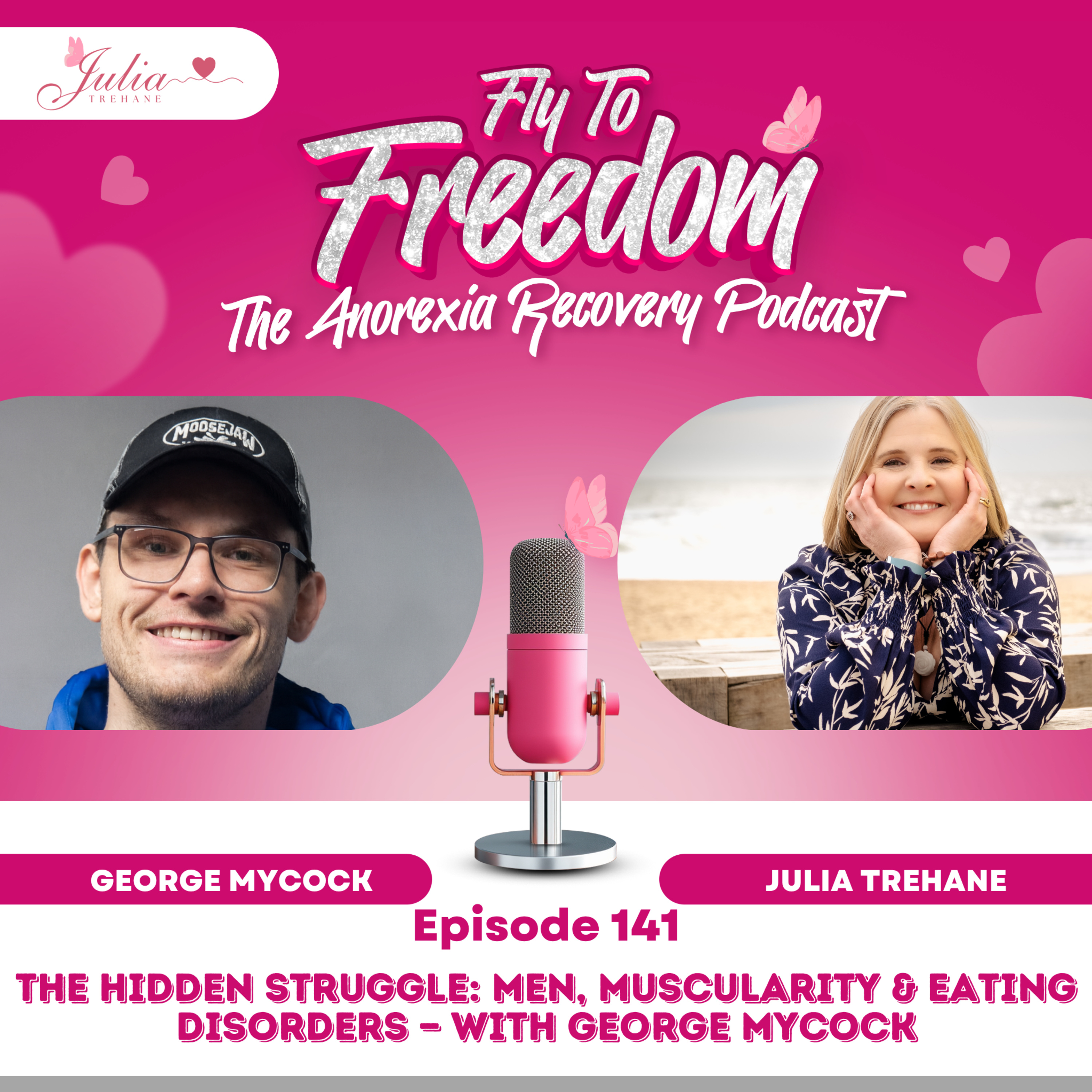 Episode 141: The Hidden Struggle: Men, Muscularity & Eating Disorders — with George Mycock | In this episode of Fly to Freedom, I sit down with the wonderful George Mycock, a lived experience PhD researcher at the University of Worcester whose work is reshaping how we understand eating disorders in men.George specialises in men’s access to healthcare for eating, exercise, and body image psychopathology, bringing both academic expertise and deeply personal experience to this conversation. He’s also the founder of MyoMinds and host of the MyoMinds Podcast — a mental health organisation dedicated to improving understanding of exerciser mental health through research, education, and powerful lived-experience storytelling.Through MyoMinds, George collaborates on a range of national projects, contributes to media across podcasts, radio and TV, and holds influential roles such as serving on the Mental Health and Movement Alliance at Mind and the steering board for the National Audit of Eating Disorders at the Royal College of Psychiatrists. His insight is both academically rich and profoundly human.In our conversation, we explore the hidden landscape of eating disorders in men — an area still surrounded by silence, shame and misunderstanding. Together we talk about:✨ George’s lived experience of muscularity-driven disordered eating and compulsive exercise✨ The intense cultural pressure on men to appear “strong” and emotionless✨ How emotional suppression, identity, and masculinity norms shape men’s mental health✨ Why so many men feel unwelcome or unseen within eating disorder treatment services✨ What George’s research reveals about gender bias in public-facing information✨ The critical need for more inclusive, diverse, and representative research✨ Alexithymia, emotional literacy, and why so many people with eating disorders struggle to name what they feel✨ How we can each help dismantle stigma and make space for men to access support✨ Why commenting on someone’s body — even positively — can reinforce shame✨ How recovery becomes possible when we stop being who we think the world expects us to beThis is an important, compassionate, and eye-opening conversation — especially if you’ve ever believed that eating disorders only affect certain types of people. They don’t. Eating disorders do not discriminate, and George’s work is a vital step toward making support truly accessible for all.💛 Connect with George:Website: https://myominds.co.uk/Instagram: https://www.instagram.com/myo_minds/💛 Join us inside The Eating Disorder Recovery Circle:https://www.edrecoverycircle.com/joinIt’s a supportive community grounded in lived experience, where you’ll find the Feelings Navigator, expert workshops, recovery courses, monthly coaching calls, and a place where you never have to face recovery alone.Thank you for listening, and for being here with me. I’ll be back next week. | — | ||||||
| 12/2/25 |  Episode 140: When Joy Feels Out of Reach This Festive Season | The festive season is meant to feel joyful, but what if instead it feels like you’re behind frosted glass? You can see the lights, hear the laughter, even play the part — but inside you feel numb, separate and alone.In this episode of Fly to Freedom, I talk about the hidden loneliness and emotional disconnection that can show up during Christmas and how eating disorder recovery can amplify these feelings. I’ll share why your nervous system creates this “glass box,” how numbness is a form of protection rather than failure, and why people-pleasing and perfectionism often feel louder at this time of year.You’ll also learn how to spot the unspoken “rules” you’ve absorbed about how to show up, how to begin gently rewriting them, and what real self-compassion looks like in the moments you feel most disconnected.This episode is a gentle reminder that you are not broken, you are not failing, and you are not alone.✨ Inside you’ll hear:Why numbness is a protective response, not a personal flaw.The role of perfectionism and performance in festive stress.How to dismantle the hidden “rules” that keep you stuck.Simple, honest ways to reconnect with yourself and others.A practice of self-compassion that helps you feel safe in your own body.💛 And if you're looking for real support from people who’ve been there and truly get it, The Eating Disorder Recovery Circle is here for you. It’s a unique community of people at all stages of recovery, supporting each other through the mess, the milestones, and everything in between.Inside, you’ll also find the Feelings Navigator to guide you through hard emotions, monthly coaching calls, live workshops, on-demand recovery courses, and of course—me, Julia, here with you every step of the way.Come be part of something that actually helps. You don’t have to do this alone: https://www.edrecoverycircle.com/join | — | ||||||
| 11/25/25 |  Episode 139: Q&A with Victoria: Toddler Walks, ‘Fat & Frumpy’ Thoughts & Feeling the Fear in Eating Disorder Recovery | n this episode of Fly to Freedom, I’m back with Victoria for another honest Q&A on the realities of eating disorder and anorexia recovery – from parenting a toddler in the city to grieving a soul dog, coping with extreme hunger, and facing fear foods.We explore:Walking vs compensation when you’re a mumCan you still walk everywhere with a toddler when you’ve quit compulsive running? We talk about honestly checking your motivation, using public transport where you can, and why “perfect recovery” (never moving) isn’t real life – especially with a small child.The ‘fat and frumpy’ phase & lost motivationHow calling yourself “fat and frumpy” keeps you stuck, the difference between preference and moral judgement about body size, and why motivation is unreliable. We look at choosing freedom over thinness, dressing the body you have now, and remembering that weight gain is a sign of healing, not failure.Triggers: avoid them or sit through them?We explain comfort, stretch and panic zones and how to push yourself without re-traumatising yourself. Diet talk, social events and other triggers become teachers, as you practise boundaries and still move forwards.Who am I without my eating disorder?When the ED has been your main coping mechanism, it’s normal to feel like you don’t know how to “be you.” We talk about inner child work, self-compassion, trusting that your authentic self emerges as you remove coping behaviours, and allowing curiosity instead of perfection.Extreme hunger, hypermetabolism & “eating crazy amounts”We normalise huge appetite early in recovery, talk about hypermetabolism, and why fast weight gain can actually shorten the most agonising part of the process. Your biology is trying to save your life – not sabotage you.“Is it okay to just eat snacks?”Is it genuine preference or avoidance of meals and fullness? We suggest experimenting with both meals and snacks, following the fear, and noticing whether your choices are driven by freedom or control.Fear you’ll never be happy in a weight-restored bodyBoth of us share how we once believed happiness depended on staying small, and how we’re now the happiest we’ve ever been in bodies we wouldn’t necessarily choose aesthetically. We reframe the goal from constant happiness to deep contentment and encourage collecting daily “glimmers” of joy.Grieving a soul dog & the ED pullWe discuss why big emotional pain wakes up old ED pathways, and how this is also your chance to rewire them: mechanical eating when appetite vanishes, huge compassion, and letting grief be proof of love.The moment you freeze before a scary recovery actionWe share practical tools for the exact second you want to back out: predicting and writing down what your ED will say, using humour and anger to separate from the ED voice, and adopting a “feel the fear and do it anyway” approach.This episode is for you if:You’re in eating disorder or anorexia recovery and trying to live real life (kids, work, city living) without falling back into compensation.You’re stuck in the “fat and frumpy” stage and wondering how on earth to keep going.You’re afraid of triggers, grief, or big emotions pulling you back into old behaviours.You’re terrified you’ll never be happy in a weight-restored body.You want lived-experience, straight-talking reassurance that you are not doing recovery “wrong.”Resources mentionedFeel the Fear and Do It Anyway by Susan JeffersThe Eating Disorder Recovery Circle – my online community with courses, workshops, Q&As, the Feelings Navigator and daily support for every stage of recovery: https://www.edrecoverycircle.com/join | — | ||||||
| 11/18/25 |  Episode 138 – Edema in Eating Disorder Recovery: Why Swelling Is a Sign of Healing | Hello lovely, and welcome back to Fly to Freedom.In this episode, I’m opening up about one of the hardest, most confusing, and least-talked-about parts of eating disorder recovery: oedema (fluid retention).For 18 months, I experienced painful swelling in my legs, belly, hands, and face – and not a single professional warned me it could happen. It was frightening, uncomfortable, and made me feel like I was somehow doing recovery “wrong.”If you’ve been there too, you’ll know the shame and panic that can come with not recognising your own body in the mirror. But I want you to know this: oedema is not failure. It’s healing.In this episode, I share:What edema actually is and why it happens in recoveryThe physical and emotional symptoms nobody tells you aboutWhy some people get it severely and others don’tHow rest, nourishment, and trust are essential to support your body through itWhy fighting swelling often makes it worseHow edema can help with the fear of weight gain by forcing you to face changeWhy fluid retention is a sign of your body’s deep intelligence and protectionEdema might feel overwhelming, but it’s your body repairing, rebuilding, and reclaiming its health. You are not broken – you are healing.💛 If you’re struggling with edema or the fear of weight gain right now, please know you don’t have to go through it alone. Inside The Eating Disorder Recovery Circle, we talk about the real, messy, confronting parts of recovery together. You’ll find support, understanding, and tools to help you through every stage.And if you want even deeper, personalised guidance, you can also explore 1:1 coaching with me, where we’ll walk step by step through recovery without shame, judgment, or pressure to rush.Your body is protecting you. Your healing is unfolding. And you are not alone. | — | ||||||
| 11/11/25 |  Episode 137: November Q&A. Your questions - answered! | Q&A from The Eating Disorder Recovery Circle: Exercise Compulsion, Setbacks, Safe Foods and Coping with Diet CultureThis episode of Fly To Freedom is something very special — a real glimpse into the kinds of questions asked inside The Eating Disorder Recovery Circle, my private membership community.These are raw, honest questions from women right in the heart of recovery — navigating fear, confusion, and moments of hope — and the answers come straight from my heart and experience. We cover everything from exercise compulsion and energy deficit, to those nights when you can’t stop eating cereal, to the sting of hearing “you look well” when recovery feels terrifying.If you’ve ever wondered whether full recovery is truly possible, how to cope when everyone around you is dieting, or whether your wobble means you’ve failed — this conversation will help you see that you are not alone, and that healing is absolutely possible.00:00 – Q1: Is exercise compulsion an addiction to energy deficit – and if so, how is recovery possible if we can’t avoid movement forever?Understanding the difference between addiction and compulsion, how the body becomes hooked on energy deficit, and why rest is essential to rewire the brain.08:25 – Q2: You’ve said recovery isn’t linear — does it ever fully settle down, or will I have to work on this forever?How recovery unfolds in layers, why it becomes easier over time, and what life feels like once freedom is your new normal.11:40 – Q3: How do I know if something is a small setback or a full relapse?How to stop catastrophising, understand what your response really means, and learn to meet slip-ups with compassion instead of shame.15:15 – Q4: Why do I latch onto specific safe foods like cereal, especially at night?Exploring why the brain fixates on predictable foods in recovery and how to gently widen food variety without triggering fear or restriction.20:00 – Q5: How do I cope when I’m gaining weight and everyone around me is dieting and being praised?Reframing internal language, stepping away from comparison, and learning to see recovery as an act of courage in a diet-obsessed world.24:20 – Q6: If I’ve stopped compulsive movement, do everyday activities like walking with my family ‘break’ recovery? And what if I feel full and stop eating — is that okay?Understanding intention behind movement, spontaneity versus compulsion, and rebuilding body trust without fear.27:40 – Q7: I restrict all day, then use alcohol in the evening to relax and eat more — but feel shame the next day. How can I break this cycle?Why alcohol can act as false permission to eat, how the restrict-drink-shame loop forms, and how to create safety without needing alcohol to silence the eating disorder voice.33:40 – Q8: People keep saying I ‘look well’ and I can see I’m gaining weight — do I still need to keep increasing my intake?Explaining metabolic healing, why early weight gain doesn’t mean you’re fully nourished, and how continuing to eat more helps you move from survival to freedom.💛 And if you're looking for real support from people who’ve been there and truly get it, The Eating Disorder Recovery Circle is here for you.It’s a unique community of people at all stages of recovery, supporting each other through the mess, the milestones, and everything in between. Inside, you’ll find the Feelings Navigator to guide you through hard emotions, monthly coaching calls, live workshops, on-demand recovery courses, and me — Julia — with you every step of the way.Come be part of something that actually helps. You don’t have to do this alone.👉 Join The Eating Disorder Recovery Circleeating disorder recovery, anorexia recovery, overcoming exercise compulsion, fear of weight gain, body image, recovery setbacks, food freedom, diet culture, metabolic healing, The Eating Disorder Recovery Circle, Fly To Freedom podcast | — | ||||||
| 11/4/25 |  Episode 136: How to Answer Back When the Brain Says “Don’t Gain Weight” | In this episode of Fly To Freedom, I unpack the fear of weight gain through a compassionate, practical lens. We explore how survival wiring, nervous-system activation and confirmation bias make fear feel indisputable—especially during anorexia recovery and eating disorder recovery. You’ll learn why the brain translates messy, vulnerable emotions (rejection, shame, grief, visibility, intimacy) into body-fixing plans—and how to respond differently. I share personal moments from my own recovery, scripts to answer the brain in real time, and a short guided reflection to help you feel safer with feelings so you can keep saying yes to nourishment, healing and freedom.I’m Julia Trehane, a specialist anorexia recovery coach supporting full and lasting recovery—no quasi-recovery, no staying stuck. I believe your worth never lived in your body size, and your brain can be retrained to choose safety in feeling over safety in shrinking.What you’ll learnThe Guard Dog Brain: Why the brain prioritises survival over happiness—and why fear is its fastest tool.Coping Strategy, Not Truth: How fear of weight gain arrives to avoid hard emotions and offer an illusion of control.Confirmation Bias: The brain’s proof-seeking loop that turns neutral events into “evidence” that shrinking is safer.Underneath the Fear: Rejection, shame, visibility, vulnerability, grief, and “not-enoughness.”Somatic Micro-Skills: A 30–60 second body check-in to increase tolerance for big feelings.Reality-Testing: Questions that disrupt the hijack and open other explanations.Redefining Control: Why real control is presence, nourishment and allowing the body to heal—including oedema.Word-for-Word Scripts: Gentle but firm responses you can use when the brain shouts “don’t gain weight.”Try these right away (practical steps)Name the pattern: “This is the coping strategy, not the truth.” Pause before acting.Journal prompt: “If this isn’t about weight, what might I be feeling?” Let answers arrive without fixing.Somatic minute: Hand on heart and tummy; locate the feeling (chest/throat/stomach) and breathe into it for 30–60 seconds.Reality check: “What else could be true here? What am I not noticing?”Script it:“Thank you, brain, for trying to protect me. What I’m really feeling is ____. I can feel this and stay safe.”“Buying a bigger size is proof my body is healing, not proof I’ve failed.”“Oedema is repair. My worth doesn’t live in a label.”Reframe control: Choose nourishment, rest and connection—even when fear is loud.Mentioned in this episodeFeelings Navigator — a quick way to find tools for the emotion you’re in: https://www.edrecoverycircle.com/how-are-you-feelingThe Eating Disorder Recovery Circle — our community space for support, coaching calls, workshops and on-demand courses (come join us or pop back into the forum to share your reflections): https://www.edrecoverycircle.com/joinKey timestamps (guide)00:00 Guard Dog Brain: survival vs happiness05:00 Fear of weight gain as a coping strategy12:00 How the hijack sounds in real life (relationship/work/friends)20:00 Confirmation bias & why fear feels like “proof”27:00 What’s underneath: rejection, shame, visibility, vulnerability, grief33:00 Somatic practice + reality-testing questions39:00 Scripts to answer the brain45:00 Closing reflection: “I can handle feelings; I am safe to feel.”If this episode resonated, come share what came up for you inside The Eating Disorder Recovery Circle—you’ll be met by people who truly understand, plus practical tools you can use the moment fear gets loud, all for less than the cost of a single therapy session: https://www.edrecoverycircle.com/join.If you’re ready for more personalised support, my 1:1 coaching will hold you through the hard emotions while we retrain the brain toward safety and freedom. | — | ||||||
| 10/28/25 |  Episode 135: How Anxiety Fuels Eating Disorders (and How to Heal the Alarm in Your Body) with Dr Russell Kennedy | How does anxiety fuel an eating disorder — and why do the usual fixes never seem to work?In this powerful episode of Fly to Freedom, I sit down with Dr Russell Kennedy — physician, neuroscientist, developmental psychology expert, and bestselling author of Anxiety Rx. Known worldwide as The Anxiety MD, Russell brings both deep science and lived experience, having spent decades overcoming his own battle with crippling anxiety.We explore:How anxiety lives in the body as an alarm state, not just in the mind.How childhood trauma and sensitivity shape the coping strategies we turn to.How eating disorders, worry, and other patterns seem to help at first, but only keep the alarm alive underneath.How inner child healing and compassion create lasting recovery, not just temporary relief.How to start finding the alarm in your body and soothing it safely.This is not a surface-level conversation. It’s about understanding how anxiety drives the cycle of restriction, control, and fear — and how reconnecting with the body and the younger self underneath the pain is the real key to healing.💛 Dr Russell Kennedy’s groundbreaking work blends medicine, neuroscience, yoga, and mindfulness into practical healing. His bestselling book Anxiety Rx, his Anxiety Rx Podcast, and his transformational MBRX programme are empowering people worldwide to permanently heal anxiety and embrace calm. You can connect with him at theanxietymd.com or on Instagram @theanxietymd.💛 And if you’re looking for real support from people who’ve been there and truly get it, The Eating Disorder Recovery Circle is here for you. It’s a unique community of people at all stages of recovery, supporting each other through the mess, the milestones, and everything in between. Inside, you’ll find the Feelings Navigator to guide you through hard emotions, monthly coaching calls, live workshops, on-demand recovery courses, and of course—me, Julia, here with you every step of the way. Join us here.💛 For those wanting to go further, my 1:1 coaching offers close support to work on the root causes of the eating disorder with personalised guidance. You’ll never feel so supported to recover. Learn more at juliatrehane.com.You are not broken. How anxiety has shaped you is not how your story has to end. There is a way to move through the alarm, find peace in your body, and reclaim your life. | — | ||||||
| 10/21/25 |  Episode 134: You Hold The Pen - Your New Story Starts Here | Hey lovely, today’s episode of Fly to Freedom is not just something to listen to while you multitask — this is one to experience. Together, we’ll explore the invisible stories that have been running in the background of your life — the ones that shape how you feel in recovery, how you show up in the world, and even how safe you feel in your own skin.So many of us carry old scripts written by parents, teachers, culture, or the eating disorder itself — stories of not being enough, of not being safe, of not being worthy. And when those stories are left unchallenged, life keeps bending to fit them. But you hold the pen, sweetheart. You always have.In this episode, I’ll share:✨ How your brain clings to familiar stories through confirmation bias✨ Why the stories you tell yourself shape your energy, your recovery, and your relationships✨ How to move from scarcity to abundance without faking positivity✨ The role of gratitude and manifestation (when grounded in action) in creating lasting change✨ A guided reflection to help you embody abundance and begin rewriting your story right nowWhether you’re early in recovery or navigating the long middle stretch, this conversation will help you start shifting the old narratives that keep you stuck. You’ll leave with practical tools, gentle wisdom, and the reminder that you are never alone in this.💛 And if you’re longing for deeper support, The Eating Disorder Recovery Circle is a place where you’ll be truly understood. Inside you’ll find group coaching, workshops, courses, and the comfort of being with people who get it. And if you’d like closer, personalised guidance, my 1:1 coaching is always here for you. You can explore both at juliatrehane.comBecause you deserve to write a new story — one of freedom, trust, and enoughness. | — | ||||||
| 10/12/25 |  Episode 133: Q&A with Vic: Fear, Fullness and Self-Acceptance in Eating Disorder Recovery | In this episode of Fly To Freedom, Vic and I are back answering your real questions from the community. We’re going deep into the messy, uncomfortable but transformative parts of eating disorder recovery — things like acting in line with your values when fear keeps getting in the way, making peace with fullness when it feels “dirty,” and breaking the hold of external validation.We also chat about how language shapes your recovery, why you’re not “helpless,” and some powerful ways to work with fear, anxiety and guilt after eating.Here’s what you’ll hear inside:How to move from “I can’t” to “I won’t” and reclaim your power.Why fullness feels so scary and how to practise being uncomfortable until it becomes safe.Why fruit and veg aren’t always your friend in early re-nourishment — and what to focus on instead.Tools for nervous-system safety when even tiny steps trigger panic.How to stop waiting for your mother’s (or anyone’s) approval and start validating yourself.Why guilt often hits after eating and how to pre-empt it so it loses its grip.This is an honest, compassionate episode with lots of practical ideas you can start using straight away.💛 And if you’re looking for real support from people who’ve been there and truly get it, The Eating Disorder Recovery Circle is here for you. It’s a unique community of people at all stages of recovery, supporting each other through the mess, the milestones, and everything in between. Inside you’ll also find my Feelings Navigator to guide you through hard emotions, monthly coaching calls, live workshops, on-demand recovery courses and of course — me, right there with you every step of the way.Come and be part of something that actually helps. You don’t have to do this alone.Join The Eating Disorder Recovery Circle here | — | ||||||
| 10/7/25 |  Episode 132: Set Point Weight Explained: Stop Fighting Your Body | Welcome back to Fly to Freedom.Set point weight is one of the most misunderstood and emotionally charged topics in eating disorder recovery. In this episode, I’m breaking down what it really means, why it matters so much, and how to stop fighting your body so you can finally feel safe in it.We’ll explore:What set point weight is (and what it isn’t)Why your body defends this natural range so fiercelyThe emotional and biological impact of trying to stay below itWhy overshoot happens and why it’s not failure but part of healingWhy some people live in larger bodies and what’s really going on thereHow to cope if your weight has stabilised but you still don’t feel at home in your bodyThis is about more than numbers or appearance. It’s about understanding your body as a partner, not a problem. When you stop resisting your set point weight, your body can move out of survival mode, your mind can quieten, and your life can finally expand beyond control.Whether you’re at the beginning of recovery, in the messy middle, or wondering if your body has settled, this conversation will help you make sense of the chaos, release shame, and begin to trust that your body has always been on your side.💛 You deserve peace. You deserve freedom. And your body is not the enemy—it’s your home.💛 If you’re looking for a safe place to explore what recovery really means for you, The Eating Disorder Recovery Circle is there to support you. Inside you’ll find live coaching calls, courses, workshops, and a community of people who understand.I'm also running a public workshop on 11th October on Healing The Fear Of Weight Gain. If this episode resonated with you, then this workshop will really help you. Book now: https://www.juliatrehane.com/workshopsAnd when you’re ready for deeper, personalised work on the root causes of the eating disorder, my 1:1 coaching offers close support and guidance to help you move towards full freedom.Wherever you are right now — remember, presence is enough, and you are always worth choosing. | — | ||||||
Showing 25 of 118
Sponsor Intelligence
Sign in to see which brands sponsor this podcast, their ad offers, and promo codes.
Chart Positions
2 placements across 2 markets.
Chart Positions
2 placements across 2 markets.