

Insights from recent episode analysis
Audience Interest
Podcast Focus
Publishing Consistency
Platform Reach
Insights are generated by CastFox AI using publicly available data, episode content, and proprietary models.
Most discussed topics
Brands & references
Total monthly reach
Estimated from 1 chart position in 1 market.
By chart position
- 🇭🇰HK · Mental Health#2030K to 100K
- Per-Episode Audience
Est. listeners per new episode within ~30 days
9K to 30K🎙 Daily cadence·356 episodes·Last published today - Monthly Reach
Unique listeners across all episodes (30 days)
30K to 100K🇭🇰100% - Active Followers
Loyal subscribers who consistently listen
12K to 40K
Market Insights
Platform Distribution
Reach across major podcast platforms, updated hourly
Total Followers
—
Total Plays
—
Total Reviews
—
* Data sourced directly from platform APIs and aggregated hourly across all major podcast directories.
On the show
From 10 epsHosts
Recent guests
Recent episodes
Brothers In Grief: Nora Gross On Cumulative Loss & Gun Violence
Jun 26, 2026
Unknown duration
It's All Hard - Sudden vs Anticipated Loss
Jun 18, 2026
Unknown duration
How to Talk With Children About Grief & Loss
Jun 12, 2026
Unknown duration
What Happens When You Stop Outrunning Grief? Camila Crews & Sorry For Your Loss (Cards)
Jun 4, 2026
Unknown duration
When "It's Not Your Fault" Falls Flat - Grief & Guilt
May 29, 2026
Unknown duration
Social Links & Contact
Official channels & resources
Official Website
Login
RSS Feed
Login
| Date | Episode | Topics | Guests | Brands | Places | Keywords | Sponsor | Length | |
|---|---|---|---|---|---|---|---|---|---|
| 6/26/26 |  Brothers In Grief: Nora Gross On Cumulative Loss & Gun Violence | What happens when grief isn't an exception, but a constant presence? In this episode, Jana talks with researcher and educator Nora Gross about her book, Brothers in Grief: The Hidden Toll of Gun Violence on Black Boys and Their Schools, which follows the two years she spent embedded in a Philadelphia boys' high school where students were grieving repeated losses from gun violence. Through interviews, observation, and simply showing up, Nora witnessed how grief shapes friendships, school life, ideas about the future, and the social constraints Black boys face when it comes to grief. Nora also shares how her own experiences of grief - including the death of her mother from cancer while Nora was finishing her Ph.D. program and the deaths of three students in her first year of teaching—influenced the questions she researched and continue to shape her understanding of grief today. We discuss: How cumulative loss changes young people's expectations for the future. Why grief often remains invisible in schools, even when nearly everyone has experienced loss. The unique pressures Black boys face around expressing - and not expressing - emotion. The difference between the "easy hard," the "hard hard," and the "hidden hard" phases of communal grief, particularly in a school setting. Why curiosity, rather than fixing, may be one of the most powerful ways we can support young people who are grieving. How listening deeply can become an act of care. Nora Gross is a sociologist of youth, race, and education and a documentary filmmaker. She is Assistant Professor of Education at Barnard College, Columbia University and received her PhD from the University of Pennsylvania in Sociology and Education. Nora uses qualitative, multimodal, and participatory methods to understand the ways youth develop and protect their inner lives in the face of external constraints. She has published on issues related to racialized masculinity for both Black and white boys, grief and loss, political polarization in schools, teens' social media use, youth resistance and emotional solidarity, and school supports for vulnerable youth. She has also produced several documentary films focusing on the lives of Black boys and men. Nora is the author of the award-winning ethnographic book, Brothers in Grief: The Hidden Toll of Gun Violence on Black Boys and Their Schools (University of Chicago Press, 2024), as well as co-editor of Care-Based Methodologies: Reimagining Qualitative Research with Youth in US Schools (Bloomsbury Academic, 2022). You can learn more at www.noragross.com & https://www.brothersingrief.com/ | — | ||||||
| 6/18/26 |  It's All Hard - Sudden vs Anticipated Loss | Is it harder when someone dies suddenly, or when you know their death is coming? It's a question that comes up often in grief spaces, and there's no easy answer. Both are hard - just in different ways. In this episode, Aimee Craig talks about grieving the deaths of both of her parents under very different circumstances. Aimee's dad died suddenly when she was 23, during a season of major life transitions. Nearly two decades later, her mom died after living with cancer for many years, including five years with a terminal diagnosis. Aimee reflects on how differently she experienced these losses - not just because of the circumstances of each death, but because of who she was at each point in her life. At 23, grief felt overwhelming and frightening. At 41, as a parent and longtime Dougy Center volunteer, she had more language and capacity for grief, even while navigating the difficult realities of caregiving and end-of-life decision making. We explore the emotional and physical impact of sudden loss versus anticipated death, the complicated realities of caregiving, and the grief that comes with milestone moments, holidays, and parenting without the support and celebration of your own parents. We also discuss what it means to actually witness grief and how having space to tell the truth without judgment or pressure to feel better - can help grief feel less isolating and a little easier to carry. We discuss: Sudden death and the shock it can have on the body and nervous system Grieving before someone dies and the realities of caregiving How grief changes as we change over time The pressure and complexity of end-of-life decisions Parenting while grieving your own parents Mother's Day, Father's Day, and other significant days Why witnessing grief matters How being grief aware doesn't make us immune to being caught off guard by grief If you're supporting someone who is grieving, or navigating grief yourself, this episode validates that there's no right or wrong way to feel in grief, no timeline for it, and that we can't measure grief by how someone died. Check out Aimee's podcast, Who Died? | — | ||||||
| 6/12/26 |  How to Talk With Children About Grief & Loss | How do you talk with children about death, dying, and grief - especially when the truth feels impossible to say? Most adults feel unprepared to tell a child that someone in their life has an advanced serious illness or has died. There's often a deep desire to protect kids from pain, avoid overwhelming them, or wanting to wait until there's a "better" time to talk. But children often already sense that something has changed. In this episode, Jana is joined by Dougy Center colleagues Rebecca Hobbs-Lawrence, M.A. and Sat Kaur Khalsa, M.S.W. to talk about how adults can approach these conversations with honesty, clarity, and compassion. Rebecca, Dougy Center's Pathways Program and Grief Services Coordinator, and Sat Kaur, Dougy Center's Family Services Coordinator, bring decades of professional experience supporting grieving children and families. They also share how their own childhood experiences of grief shaped the way they talk with kids about loss today. Together, they explore how to tell children someone has died using concrete, age-appropriate language, why grief conversations don't need to happen all at once, and how adults can respond when children ask difficult questions about blame, uncertainty, and why someone died. They also discuss how to talk with children about deaths that are often stigmatized, including suicide, homicide, and substance-related deaths, and why withholding information can sometimes create more fear and confusion. Whether you're a parent, caregiver, clinician, educator, or simply someone supporting a those who are grieving, this conversation offers practical guidance and reassurance for navigating some of the hardest conversations. We discuss: Why honesty and clear language matter when talking with kids about death How to explain death in concrete, age-appropriate ways Why grief conversations are never one-and-done Supporting children when someone has an advanced serious illness How to respond when kids blame themselves for a death Talking about suicide, homicide, and substance-related deaths without shame Why adults don't need perfect words - just presence and openness Resources: Dougy Center's full collection of Tip Sheets and Activities: https://www.dougy.org/grief-support-resources Grief education & training offerings: https://www.dougy.org/professionals-trainings | — | ||||||
| 6/4/26 |  What Happens When You Stop Outrunning Grief? Camila Crews & Sorry For Your Loss (Cards) | Have you ever found yourself trying to outrun grief? That's what Camila Crews did when she was 19 and her mother died. Twenty years later, following the heartbreaking disappearance and death of her father, Camila stopped running and started feeling. Unable to just keep pushing through, she had to face her grief and learn how to care for herself in the process. Facing her grief inspired Camila to start Sorry for Your Loss (Cards), an initiative to help people better understand grief and show up for those who are mourning. Centering the experiences of Black and Brown communities, Sorry for Your Loss (Cards) provides workshops, cards, resources, and community experiences designed to decrease the isolation that so often accompanies grief. We discuss: The fiery, creative energy Camila's parents shared Losing her mother twice: first as a child when her mother moved away, and then as a young adult when she died The instinct to just keep moving forward after her mother's death Having to slow down and finally face grief after her father was killed Living with the unanswered questions surrounding her father's disappearance and presumed death The vital importance of culturally specific grief resources Finding connection with other people who are grieving The origin of Sorry for Your Loss (Cards) and Camila's commitment to helping others understand grief Camila A. Crews builds tools, experiences, and cultural conversations that help people show up for grief in real, tangible ways. After losing both of her parents over the course of two decades, she experienced firsthand how lonely grief can feel and how often people want to support others but don't know how. The purpose of Sorry For Your Loss is to help people get familiar with grief before it overwhelms them or someone they love. Since founding Sorry For Your Loss, Camila has developed therapist endorsed grief support tools and facilitated workshops based on her frameworks at wellness and mental health summits. Before building her own platform, Camila held public relations leadership roles shaping multicultural campaigns for global brands including Apple TV+, Netflix, and Universal Pictures. She blends storytelling, empathy, and lived experience to create meaningful tools for grief, connection, and community. Follow on IG - @sorryforyourlosscards | — | ||||||
| 5/29/26 |  When "It's Not Your Fault" Falls Flat - Grief & Guilt | In December of 2021, Sawyer was halfway through their final year of college in a world that was still reeling from the pandemic. Home for the holidays, Sawyer got the heartbreaking news that their older brother, Jason, had died by suicide - a before-and-after moment that continues to reverberate today. Sawyer shares their nuanced perspective on grief, delving into how mental health, incarceration, and other systemic barriers impacted Jason's life and death. We also explore how the phrase, "It's not your fault," while well-intentioned, can leave little space for those who are grieving to truly reckon with both guilt and regret. We discuss: Jason's artistry, love of cars, and enduring pride in Sawyer's academic accomplishments Navigating grief while finishing college and graduating The intersection of grief and institutional failures, including incarceration, a lack of stable housing, and inadequate mental health support How peer support - both formal and informal - gave Sawyer space to reckon with both grief and guilt The power of logistical support to help those who are grieving If you or someone you know is struggling, please reach out. You can call 988, the National Crisis Line, or text HELLO to 741-741. Other resources include: The Trevor Project for LGBTQ+ youth (1-866-488-7386) and BlackLine (1-800-604-5841). Resources Mentioned: Wild Grief - Grieving Together in Nature Dougy Center - Resources for Young Adults If you want to learn more about supporting children and teens who are grieving, sign up for our online courses here: https://classes.dougy.org/ | — | ||||||
| 5/12/26 |  When Grief Gets Silenced: Supporting Black Youth & Families With Dr. Allen Lipscomb | Acknowledgment, validation, and curiosity – meeting grief with these three elements is crucial in creating supportive, culturally relevant grief support environments for children and adults. Dr. Allen Lipscomb has spent his career researching, designing, and implementing anti-racist interventions that directly support not just grief from death loss, but also the grief from racialized trauma experienced by those in the Black community. Dr. Lipscomb shares his personal experiences with grief, including the death of his grandmother when he was a child and being wrongly accused of a crime in his adolescence. He also discusses the roots of his work as a clinician, researcher, and Professor of Social Work, including the culturally specific ways he engages with clients that prioritize choice and naming racism and racialized trauma that play a role in how people grieve. We discuss: How childhood experiences of death, racism, and wrongful accusation shaped Dr. Allen Lipscomb's understanding of grief, trauma, and identity The impact of racialized trauma on how Black youth and men experience, express, and silence grief Why naming experiences like racism, PTSD, and loss can be profoundly important and validating What culturally responsive grief support looks like, including storytelling, oral histories, grief mapping, somatic awareness, and community-centered care How grief supporters can avoid rescuer dynamics and instead create invitational, choice-centered spaces to explore grief The importance of preparing mental health providers, schools, and communities to offer anti-racist, culturally relevant grief support for Black youth and families Allen E. Lipscomb, PsyD, LCSW, Professor of Social Work, Associate Chair, Director of MSW Online Program; and Director of Minority Male Mentoring (M3) and Student Success Allies (SSA) program at California State University Northridge in the Department of Social Work. Dr. Lipscomb is a clinical psychologist and a Licensed Clinical Social Worker in the State of California. Dr. Lipscomb specializes in providing anti-oppressive and inclusive mental health services to individuals, children, youth, couples, and families of color. His areas of research are centered on the psychiatric epidemiology among racialized and marginalized individuals who have experienced trauma (i.e., complex trauma, traumatic-grief, and race-based trauma). Dr. Lipscomb has conducted numerous qualitative research studies on racialized Black identified men across the Black/African Diaspora exploring their grief, loss, and complex-trauma experiences. His pedagogy is centered on cultural anti-oppressive and clinically responsive inclusive practices with communities of color. Dr. Lipscomb maintains a private practice; conducts local, national, and international trainings; is a consultant/coach, and keynote speaker. Dr. Lipscomb has numerous peer reviewed journal articles that centers Black male grief experiences and has a published five books all centered around Black men and boys grief, trauma, and healing journeys. Resources mentioned in our conversation: Reframing Grief for Black Students: A Qualitative Analysis of Grief Resilient Affirming Care through Empowerment (G.R.A.C.E) Training My Grandmother's Hands by Resmaa Menakem Connect with Dr. Lipscomb Website IG @dralipscomb | — | ||||||
| 5/1/26 |  A Mother's Legacy, A Daughter's Grief - N'keya Peters-Camille | In this episode of Grief Out Loud, Jana is joined by N'keya Peters-Camille, LCSW, RYT® 200, a social worker, certified Grief Yoga teacher, facilitator for e-motion grief meet ups, and creator of Hope: A One Line A Day Journal for the Bereaved. N'keya shares the story of her mother, Hope - a woman she describes as her soulmate - who died of pancreatic cancer in 2021 at the age of 46. N'keya reflects on growing up alongside her mother, witnessing her overcome immense challenges, and experiencing firsthand what it meant to be deeply seen, supported, and loved. After her mother's death, N'keya found herself navigating grief without strong cultural or community rituals to hold her. In response, she created her own network of support through grief counseling, retreats, movement practices, and eventually, offering those same resources to others - particularly within her Afro-Caribbean and African American communities. The conversation explores caregiving during the pandemic, the absence of end-of-life conversations, and what it means to grieve while parenting young children. N'keya shares how she spoke honestly with her three-year-old son about death, how grief continues to evolve five years later, and how she makes space for both sorrow and joy - especially on complex days like Mother's Day. N'keya also speaks candidly about pregnancy loss and infertility following her mother's death and how those grief experiences intersected. She describes how her mother's voice continues to guide her—in her work, her parenting, and her sense of self—and how she honors that connection by living fully, while also deeply grieving. Note: this episode mentions childhood sexual assault. Please take care while listening. In this episode, you'll hear about: Grieving the death of a parent while raising young children The impact of limited cultural grief rituals and creating your own Movement, community, and storytelling as grieving practices Navigating Mother's Day while holding multiple losses Pregnancy loss, infertility, and layered grief experiences Maintaining an ongoing bond with someone who has died N'keya Peters-Camille, LCSW, RYT® 200, is a Social Worker and Grief Educator who integrates clinical support with somatic healing. Her work is deeply rooted in her own grief history—from navigating the death of her beloved mother, Hope, to the profound challenges of miscarriage and the complexities of IVF and IUI. As an African American woman born and raised in Brooklyn with Caribbean roots, N'keya is dedicated to bringing meaningful grief support to her community. Certified in Grief Yoga, she believes that grief is often too heavy to carry alone and too deep to process through words alone. In addition to her private practice, she serves as a volunteer with E-Motion, facilitating 6–8 week grief movement groups. By blending clinical social work with somatic movement and meditation, N'keya provides a "soft landing" for those walking the path of loss—helping them bridge the gap between mind and body, find their breath again, and carry their loved ones' legacies forward. Want to learn more about supporting children and teens who are grieving? Sign up for our online courses here: https://classes.dougy.org/ | — | ||||||
| 4/23/26 |  Tips For Grieving Through Mother's Day✨ | griefMother's Day+3 | — | The Dougy Center | — | griefMother's Day+5 | — | 19m 33s | |
| 4/16/26 |  What If Grief Care Is Preventative Care? Dr. Kailey Bradley✨ | grief supportnon-death losses+4 | Dr. Kailey Bradley | The Dougy Center | — | griefmental health+7 | — | 41m 56s | |
| 4/9/26 |  Throughlines: Keeping A Connection With My Mom✨ | griefloss+4 | Jeremy | The Dougy Center | Filipino | griefloss+5 | — | 37m 10s | |
Want analysis for the episodes below?Free for Pro Submit a request, we'll have your selected episodes analyzed within an hour. Free, at no cost to you, for Pro users. | |||||||||
| 4/2/26 |  Waiting for Dawn: Marisa Renee Lee on Living with Grief, Illness, and Uncertainty✨ | griefchronic illness+4 | Marisa Renee Lee | Grief Is LoveWaiting for Dawn | — | grieflong COVID+6 | — | 46m 26s | |
| 3/13/26 |  Words Matter: What To Say When Someone Is Grieving - Shelby Forsythia✨ | grief supportcommunication+3 | Shelby Forsythia | The Dougy CenterOf Course, I'm Here, Right Now | — | griefsupport+5 | — | 51m 12s | |
| 3/5/26 |  The Million Stages Of Grief - Michael Reed On Finding His Way After Catastrophic Loss✨ | griefloss+4 | Michael Reed | The Dougy Center | — | griefloss+6 | — | 41m 14s | |
| 2/20/26 |  Tending To The Roots Of Ritual With Joél Simone, The Grave Woman✨ | griefritual+3 | Joél Simone | Multicultural Death & Grief Care Academy | Gullah Geechee communities | griefrituals+4 | — | 41m 54s | |
| 2/13/26 |  Restrung: Music, Grief, And Fatherhood With Matt Fogelson✨ | griefmusic+4 | Matt Fogelson | Dougy CenterRestrung | — | griefmusic+5 | — | 43m 51s | |
| 2/3/26 | 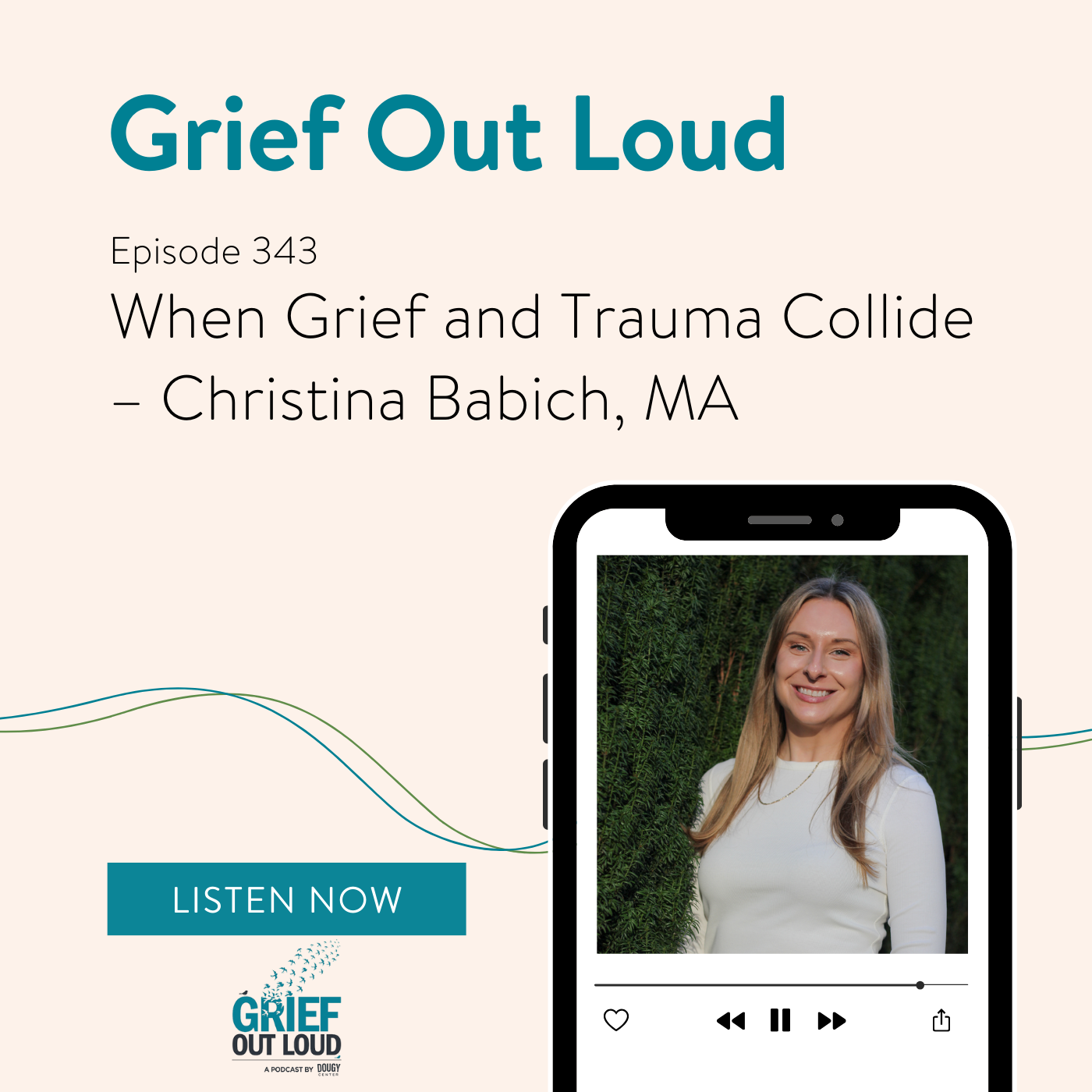 When Grief and Trauma Collide – Christina Babich, MA✨ | grieftrauma+4 | Christina Babich | The Dougy Center | — | grieftrauma+6 | — | 51m 17s | |
| 1/26/26 |  Echoes Of Her - Adell Coleman On Grieving Her Mother & Finding Community✨ | griefloss of a parent+4 | Adell Coleman | Grief Out LoudThe Dougy Center+1 | — | griefloss+7 | — | 41m 29s | |
| 1/8/26 |  Why Grief Isn't A Journey (And What It Is Instead) - John Onwuchekwa | What if grief isn't a journey for us to eventually finish, but more a language we become fluent in? In this first episode of 2026, we talk with writer, storyteller, and social entrepreneur, John Onwuchekwa, whose life was profoundly shaped by the death of his brother Sam in 2015. John shares how Sam's death altered not just his relationships and priorities, but his understanding of grief itself. Rather than framing grief as a journey with an endpoint, John offers a different metaphor: grief as a language that we learn over time, one with past, present, and future tenses. He explores how grief comes through not just in our words, but our bodies, our reflexes, and our relationships, showing up in ways we often don't consciously choose. We discuss: The limitations - and harm - of common grief metaphors The shifts in John's priorities and perspective that occurred after Sam died How loneliness often sits at the center of grief The ways grief can show up in our bodies, before our minds understand what's happening Holding grief and hope at the same time Connect with John Website: https://www.johno.co/ Instagram: https://www.instagram.com/jawn_o/?hl=en We Go On: https://www.andwegoon.com/ Blog: https://www.johno.blog/ Podcast: Four In The Morning https://podcasts.apple.com/us/podcast... Portrait Coffee: https://www.johno.co/ventures#portrait | — | ||||||
| 12/22/25 |  Time Keeps Moving, But She Doesn't: Mackenzie Galloway-Cole On Grief And New Year's | In the fall of 2023, Mackenzie Galloway-Cole was living out her rom-com-worthy love story with her wife Megan in New York City. Then, on an ordinary night in November, Megan collapsed and died a few hours later from a sudden cardiac event. In the aftermath, Mackenzie had to find her way in this newly shattered world without Megan, her anchor and biggest cheerleader. Mackenzie reflects on the shock of becoming a young widow, the added layers of grief that come with queer partner loss, and the painful realities of navigating death care systems that often default to heteronormative assumptions. Together, Jana and Mackenzie talk about the isolating nature of sudden and unexplained death, the importance of finding people who "get it," and the ways time itself becomes a particularly painful aspect of grief. Mackenzie also shares why New Year's can feel like a uniquely brutal grief milestone, how absence accumulates as life continues, and how Megan's love still shapes the way she takes care of herself today. This conversation holds space for heartbreak, dark humor, love stories, and the not-so-quiet ways grief rewires daily life - especially when the person you most want to turn to is the one who died. In this episode, we discuss: The story of how Megan and Mackenzie met and fell in love Sudden death and the trauma of an ordinary day turning catastrophic The intersection of being a young, gay widow Navigating hospitals, funeral homes, and death administration as a queer spouse Why the small, everyday moments can hurt more than the big ones How the second Christmas can feel even harder than the first New Year's as a "sneaky" grief holiday How the choices you make in life can reflect and honor your person who died Mackenzie Galloway-Cole writes about grief at Good Gay Grief on Substack and can also be found on Instagram at @deadwifeclub | — | ||||||
| 12/11/25 | 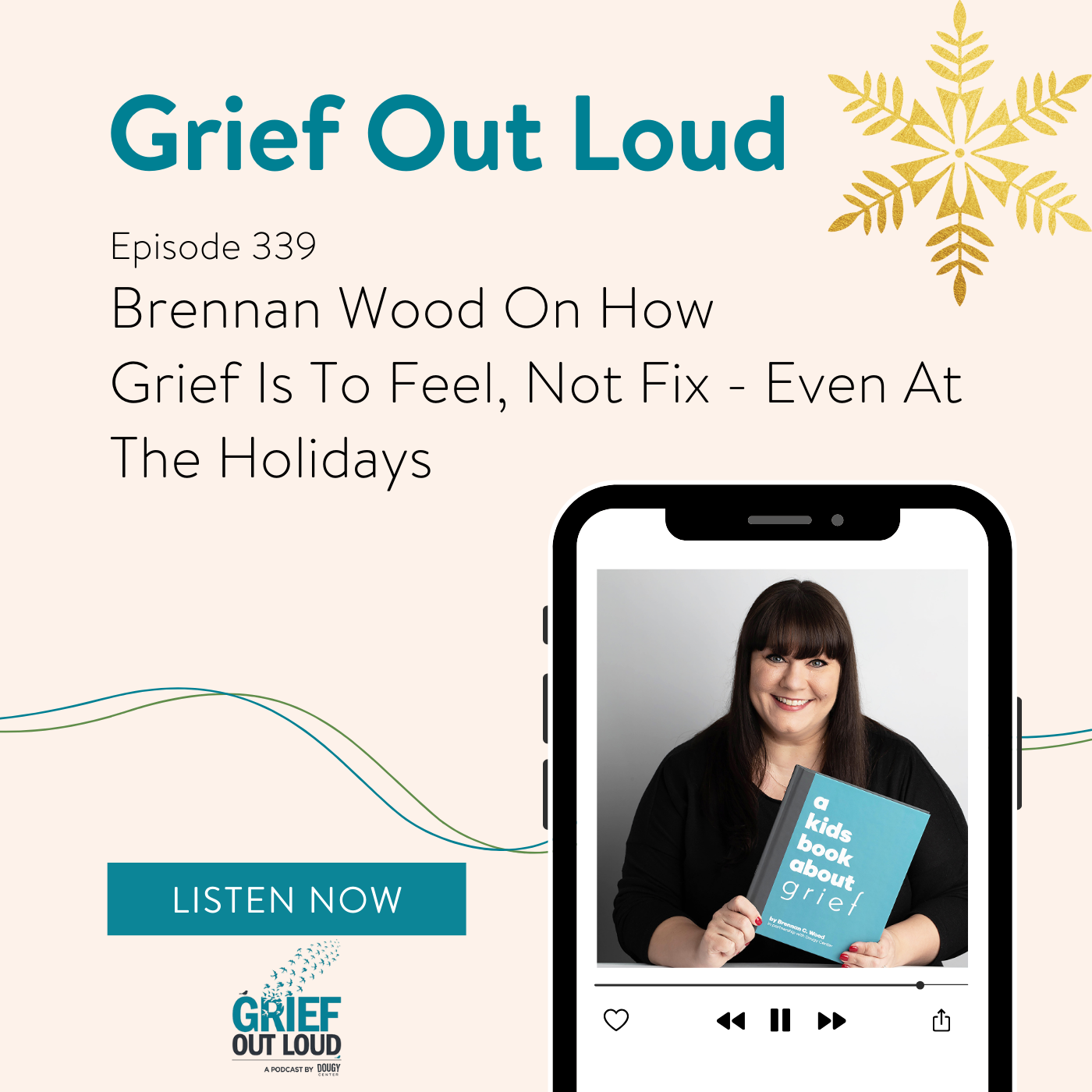 Brennan Wood On How Grief Is To Feel, Not Fix - Even At The Holidays | It's our annual holiday episode, this time with Dougy Center Executive Director and TEDx speaker Brennan Wood. Brennan first encountered Dougy Center after her mom, Doris, died of breast cancer three days after Brennan's 12th birthday. She has since navigated almost four decades of holiday seasons with grief along for the ride. She shares about the early years that were awful; the young-adult years she spent volunteering away from family; and how, as an adult, she's learned to hold both grief and joy while creating new traditions for her own family. Whether this is your first or 41st holiday season with grief, this conversation offers validation, tangible suggestions, and new ways to think about this time of year. We discuss: How attending a peer grief support group as a teen introduced Brennan to the idea that grief is to feel, not fix. Accepting that not everything has to be bright and shiny, especially during the holidays. Recalling the first Christmas after her mom died and why it felt awful. New traditions she's created as an adult with her own family. Grounding rituals Brennan uses, especially during the holidays. Why it's okay to be mad at holiday traditions you used to love. Need additional tips and suggestions for this time of year? Check out our past episodes and our Holiday Grief Tip Sheet & Worksheet It's Okay That It's Not the Same: Grief at the Holidays It Can Be So Awkward: Holidays & Grief The Not- Most Wonderful Time of the Year: Holidays & Grief Grief And The Holidays Under Pressure – Grief & December Holidays Watch Brennan's TEDxPortland Talk - https://www.youtube.com/watch?v=ZN4zP5baJrg Read her A Kid's Book About Grief - https://dougybookstore.org/products/a-kids-book-about-grief Learn more about Brennan - https://www.dougy.org/about/team-dougy/executive-director | — | ||||||
| 12/4/25 | 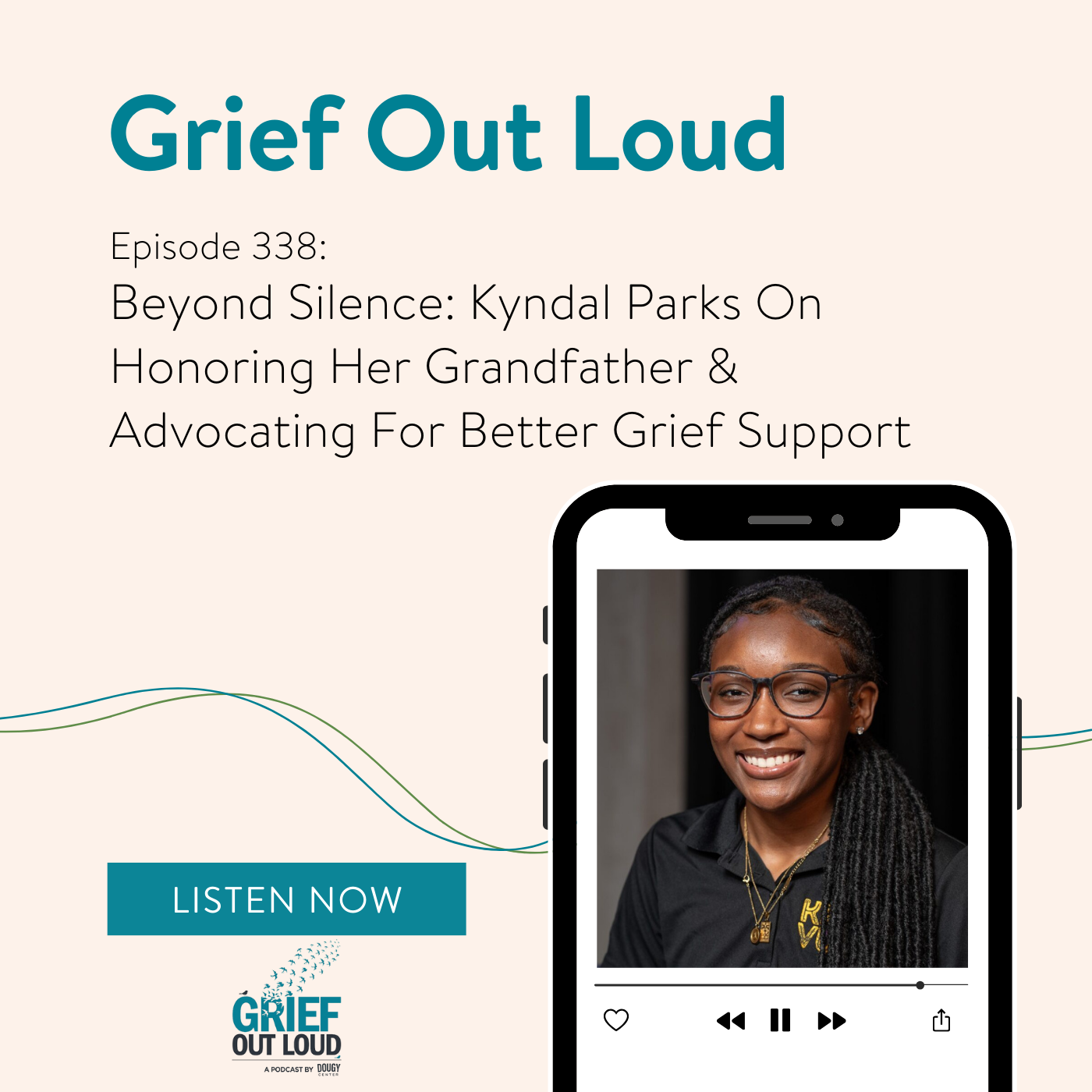 Beyond Silence: Kyndal Parks On Honoring Her Grandfather & Advocating For Better Grief Support | When Kyndal Parks' grandfather died on Black Friday - the day after Thanksgiving – she lost one of her biggest supporters and confidants. While navigating her grief, Kyndal was also navigating life as a college student where she often felt unseen in her grief by faculty and the wider institution. What began as a class assignment turned into a powerful audio piece about loss, legacy, and the urgent need for grief-informed spaces on college campuses, particularly at HBCUs where collective trauma, silence, and resilience intertwine. In this conversation, Kyndal shares about her grandfather's extraordinary life - from his childhood in the 1940s, to living with a disability, to his time as a Black Panther, a gardener, a traveler, and the steady source of love that shaped her into the person she is today. She talks about the traditions they built together, how her grief shows up even from 2,000 miles away, and why vulnerability and community care are essential if we want to build environments where students who are grieving feel supported. Kyndal also explores the cultural and historical patterns of grief in Black communities, the pressure to "push through," and her vision for a world where grief is met with connection, not silence. We discuss: What made Kyndal's grandfather such an influential figure How his death reshaped her understanding of family, holidays, and identity What grief looked like at her college, and within her family and community Why she created her audio piece and what she hopes listeners take from it The need for vulnerability, community support, and grief-informed care at HBCUs and beyond How her grandfather continues to guide her today Check out News Ambassadors, the program that helped connect us with Kyndal and her audio piece. | — | ||||||
| 11/25/25 |  Going To College With Grief - Loss In Young Adulthood | When Hilary was 18, her oldest sister, Kelly, died from a rare cancer called DSRCT (desmoplastic small round cell tumor). In the same year, Hilary left for college and her parents divorced - three life-altering events that reshaped her relationships, sense of stability, and the early years of adulthood. In this episode, we talk about: Growing up as the youngest of three sisters and the creative, nurturing bond she shared with Kelly Navigating Kelly's diagnosis, treatment, and death while still in high school Trying to appear "fine" in college while carrying immense grief The ways her family dynamics shifted after Kelly's death and her parents' divorce How grief continued to evolve across developmental stages, from early adulthood into her mid-30s The unexpected moments - like baking bread or bringing home a new pet – that bring new waves of grief How her experience shaped her work as a therapist supporting others in pain Hilary also shares what she wishes she had known about grief at 18, how exhausting it can be, and how she learned to make space for grief that shows up differently over time. | — | ||||||
| 11/14/25 | 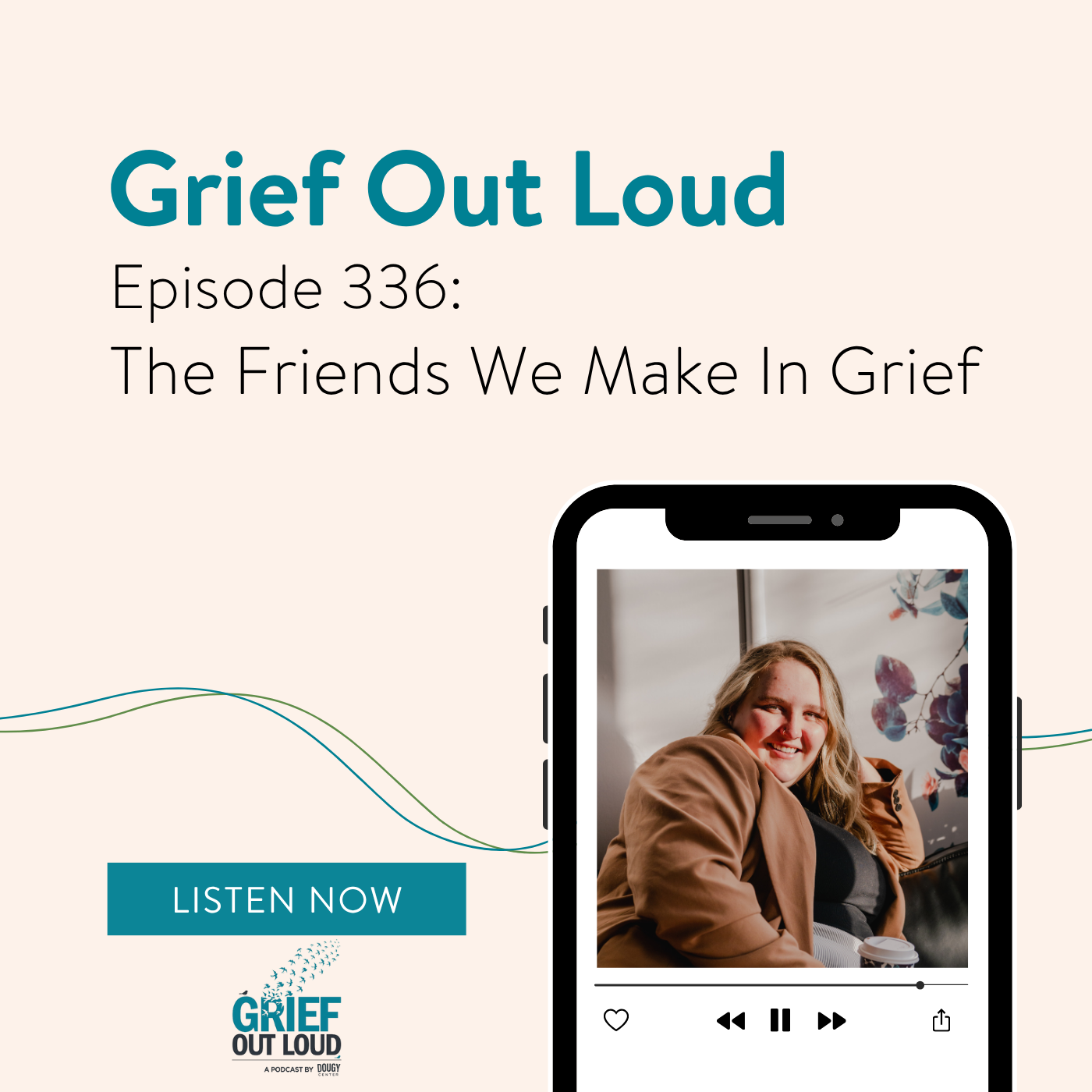 The Friends We Make In Grief | When Cassie arrived at Dougy Center for her first peer grief support group for young adults after her dad died, she sat in the parking lot wondering if she could even walk inside. When she did, she found people her age who understood what it meant to have a parent die - people who would end up shaping her life in ways she never imagined. In this episode, Cassie talks about how grief changed her, what it was like to find community in a peer support group, and how those friendships continue to support her years later. Now, as a volunteer facilitator in a peer grief support group for children, Cassie reflects on what it means to come full circle - turning the care she received into care she now offers others. We Discuss: The early days and weeks after her dad's death How grief can be physically painful Finding connection and laughter in a support group Building lifelong friendships with people who "get it" Learning to make space for grief on purpose The importance of rituals and traditions What it's like to return as a volunteer to support children who are grieving The unexpected gifts of friendship Cassie's discovered in grief Learn more about Dougy Center's peer grief support groups and resources for Young Adults ages 18-40. | — | ||||||
| 11/4/25 |  Caring For The Caregivers | When you're grieving, "Take care of yourself," might be the last thing you want to hear. So what does self-care actually look like for a parent or caregiver who is grieving? Rebecca Hobbs-Lawrence, MA, who coordinates the Pathways Program at Dougy Center for families facing an advanced serious illness, joins us to share practical tools for caregivers who are trying to balance taking care of others with tending to themselves, along with crucial advice for friends and family who want to provide truly meaningful support. We discuss: The many roles caregivers hold before and after a death Balancing others' needs while grieving yourself How adults and kids experience grief differently When the surviving parent had a complicated relationship with the person who died Simple, doable self-care for caregivers What real, helpful support looks like from friends and community Learning how to ask for and accept help Rebecca Hobbs-Lawrence, M.A., is the Pathways Program & Grief Services Coordinator at Dougy Center, The National Grief Center for Children & Families. | — | ||||||
| 10/23/25 | 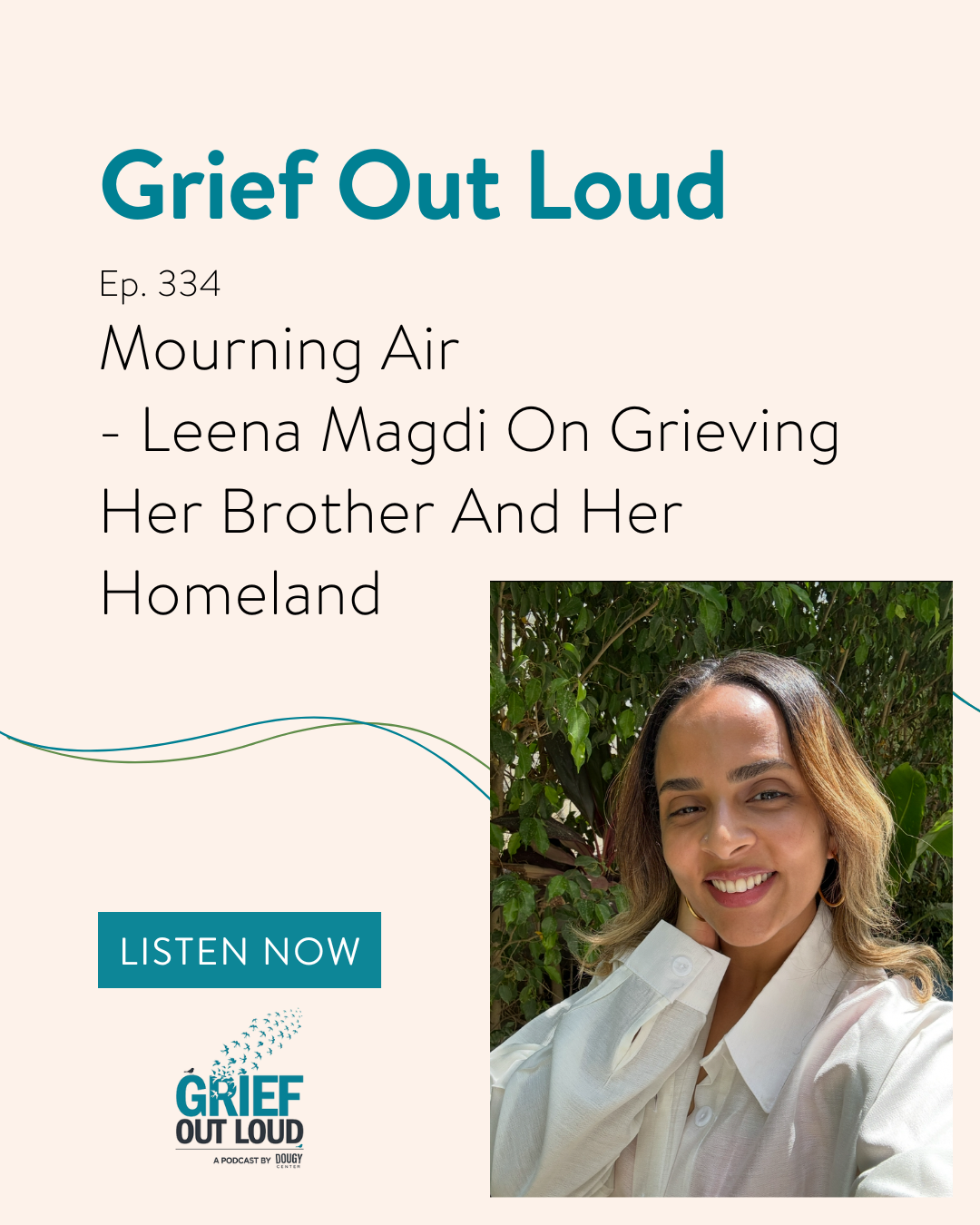 Mourning Air - Leena Magdi On Grieving Her Brother And Her Homeland | When Leena Magdi's younger brother, Hamoodi, was killed, her world shifted entirely. In her debut book Mourning Air, Leena explores how grief reshapes identity, faith, and love. In this conversation, Leena shares what it meant and means to be Hamoodi's sister, how sibling grief is often dismissed, and how writing helps her navigate the grief. Leena also shares about her family's forced displacement after war broke out in Sudan less than a year after Hamoodi's death - and how she's learning to grieve both her brother and her home. We discuss: What it means to be a sister after a sibling dies The invisibility of sibling grief Finding connection through spirituality and writing Grieving a home and a country - and the additional losses her family experienced in fleeing to Egypt from Sudan after war broke out How Leena stays connected to Hamoodi About Leena Magdi: Leena Magdi is a Sudanese-American writer and poet, author of Mourning Air, and mother of two. She was born in Sudan, raised in California, and currently lives in Egypt. You can find her on Instagram @xleenamagdix and TikTok @xleenamagdix. | — | ||||||
Showing 25 of 364
Pitch Fit is a Pro feature
See how bookable this show is for guests, which brands already advertise, the per-episode ad value, and the best-fit guest and sponsor profile. The numbers are blurred on the free plan.
How readily this show books outside guests like you.
How proven this show is for host-read sponsorships.
For Guests
ProFor Advertisers
ProUpgrade to Pro to unlock guest cadence, sponsor categories, fit scores, and per-episode ad value for this show.
Chart Positions
2 placements across 1 market.
Chart Positions
2 placements across 1 market.