

Insights from recent episode analysis
Audience Interest
Podcast Focus
Publishing Consistency
Platform Reach
Insights are generated by CastFox AI using publicly available data, episode content, and proprietary models.
Total monthly reach
Estimated from 6 chart positions in 6 markets.
By chart position
- 🇬🇧GB · Courses#5430K to 100K
- 🇨🇦CA · Courses#8330K to 100K
- 🇳🇬NG · Courses#2610K to 30K
- 🇫🇮FI · Courses#513K to 10K
- 🇵🇭PH · Courses#653K to 10K
- Per-Episode Audience
Est. listeners per new episode within ~30 days
24K to 78K🎙 Daily cadence·15 episodes·Last published yesterday - Monthly Reach
Unique listeners across all episodes (30 days)
79K to 260K🇬🇧38%🇨🇦38%🇳🇬12%+3 more - Active Followers
Loyal subscribers who consistently listen
24K to 78K
Market Insights
Platform Distribution
Reach across major podcast platforms, updated hourly
Total Followers
—
Total Plays
—
Total Reviews
—
* Data sourced directly from platform APIs and aggregated hourly across all major podcast directories.
On the show
Recent episodes
That “Whoosh” in the Chest: Aortic & Mitral Stenosis Explained for Nurses
Jun 23, 2026
Unknown duration
The Silent Killer: Hypertension Explained - 2025 Guidelines, Crisis Signs & Nursing Pharmacology
Jun 22, 2026
Unknown duration
Time Is Muscle: How Nurses Recognize and Respond to a Heart Attack
Jun 22, 2026
Unknown duration
How The Heart Actually Works: Heart Failure, MI & Hemodynamics Explained
Jun 21, 2026
Unknown duration
7 Heart Failure Clues Hidden in Plain Sight
Jun 20, 2026
Unknown duration
Social Links & Contact
Official channels & resources
Official Website
Login
RSS Feed
Login
| Date | Episode | Description | Length | ||||||
|---|---|---|---|---|---|---|---|---|---|
| 6/23/26 |  That “Whoosh” in the Chest: Aortic & Mitral Stenosis Explained for Nurses | Heart murmurs can be one of the most intimidating cardiac findings for nursing students and new nurses, but understanding them becomes much easier when you focus on the underlying blood flow patterns. In this episode of The Super Nurse Podcast, we break down what causes heart murmurs, how to distinguish common murmur types, and how they relate to real-world patient assessment. You'll learn how to connect anatomy, physiology, and auscultation findings to improve bedside clinical judgment and NCLEX success. Whether you're preparing for exams or caring for patients on the floor, this episode provides practical strategies for recognizing, interpreting, and responding to abnormal heart sounds with confidence. | — | ||||||
| 6/22/26 | 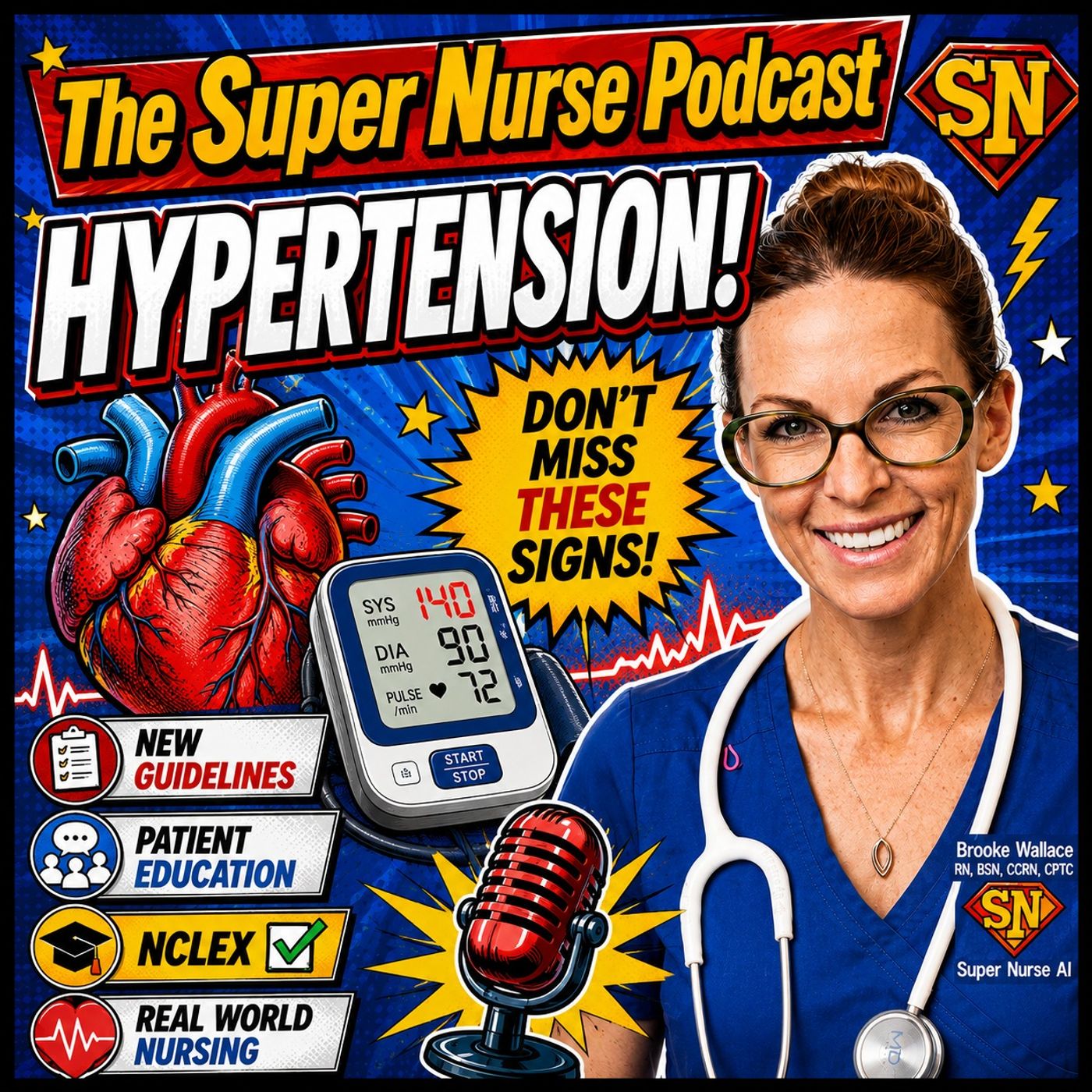 The Silent Killer: Hypertension Explained - 2025 Guidelines, Crisis Signs & Nursing Pharmacology | In this episode of The Super Nurse Podcast, we break down hypertension, one of the most deceptive and dangerous conditions nurses will encounter at the bedside. A patient may look comfortable, talk normally, and feel completely fine — while their blood vessels are under relentless pressure that can lead to stroke, heart failure, kidney damage, vascular dementia, and other life-threatening complications. | — | ||||||
| 6/22/26 | 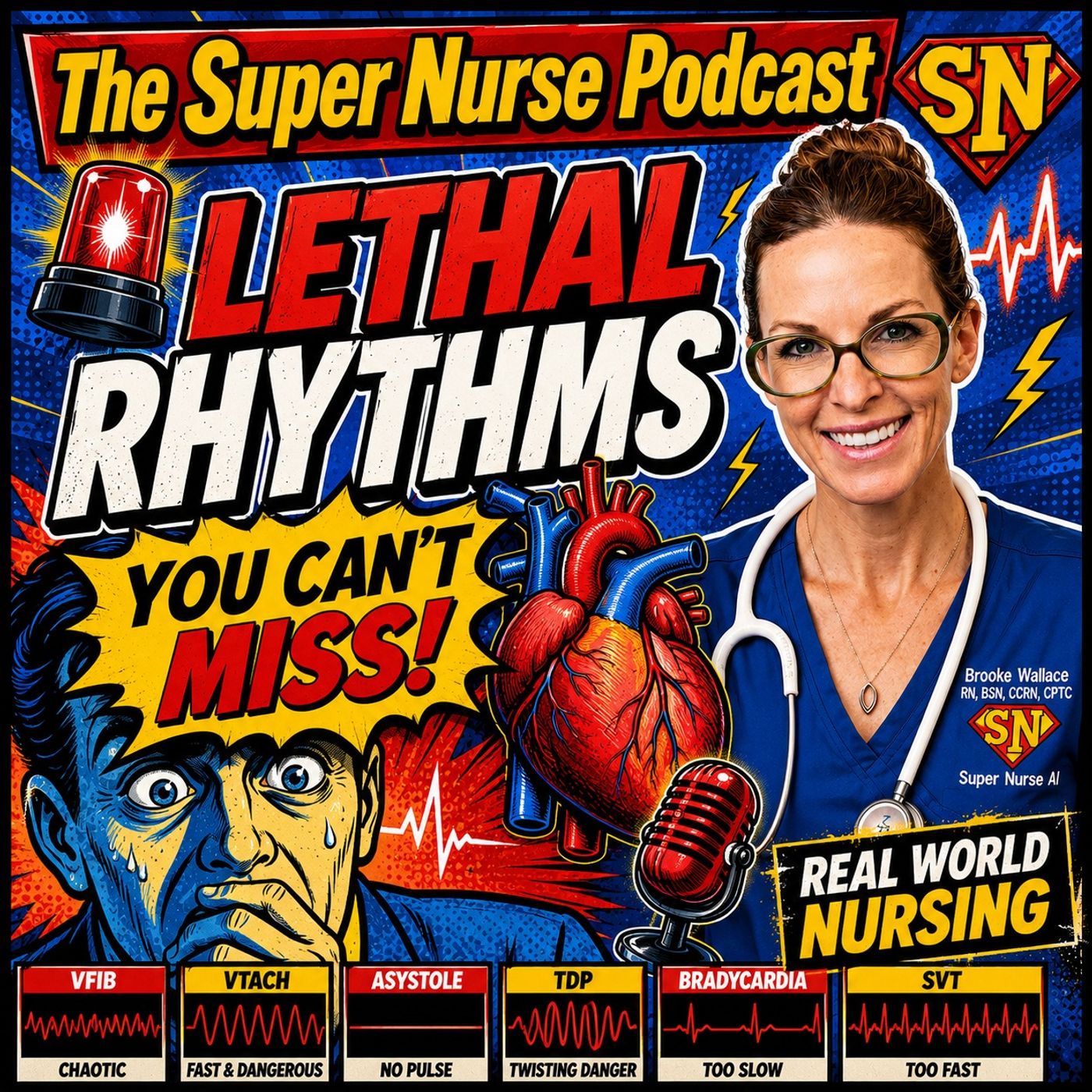 Time Is Muscle: How Nurses Recognize and Respond to a Heart Attack | This episode of The Super Nurse Podcast breaks down myocardial infarction nursing care in a clear, bedside-focused way for nursing students and new nurses. Listeners will learn how heart attacks happen, how to recognize classic and atypical MI symptoms, and why rapid EKGs, troponins, and early interventions matter. The episode also explains STEMI vs. NSTEMI, nitroglycerin safety, aspirin, oxygen use, morphine, PCI, and the critical concept that time is muscle. | — | ||||||
| 6/21/26 | 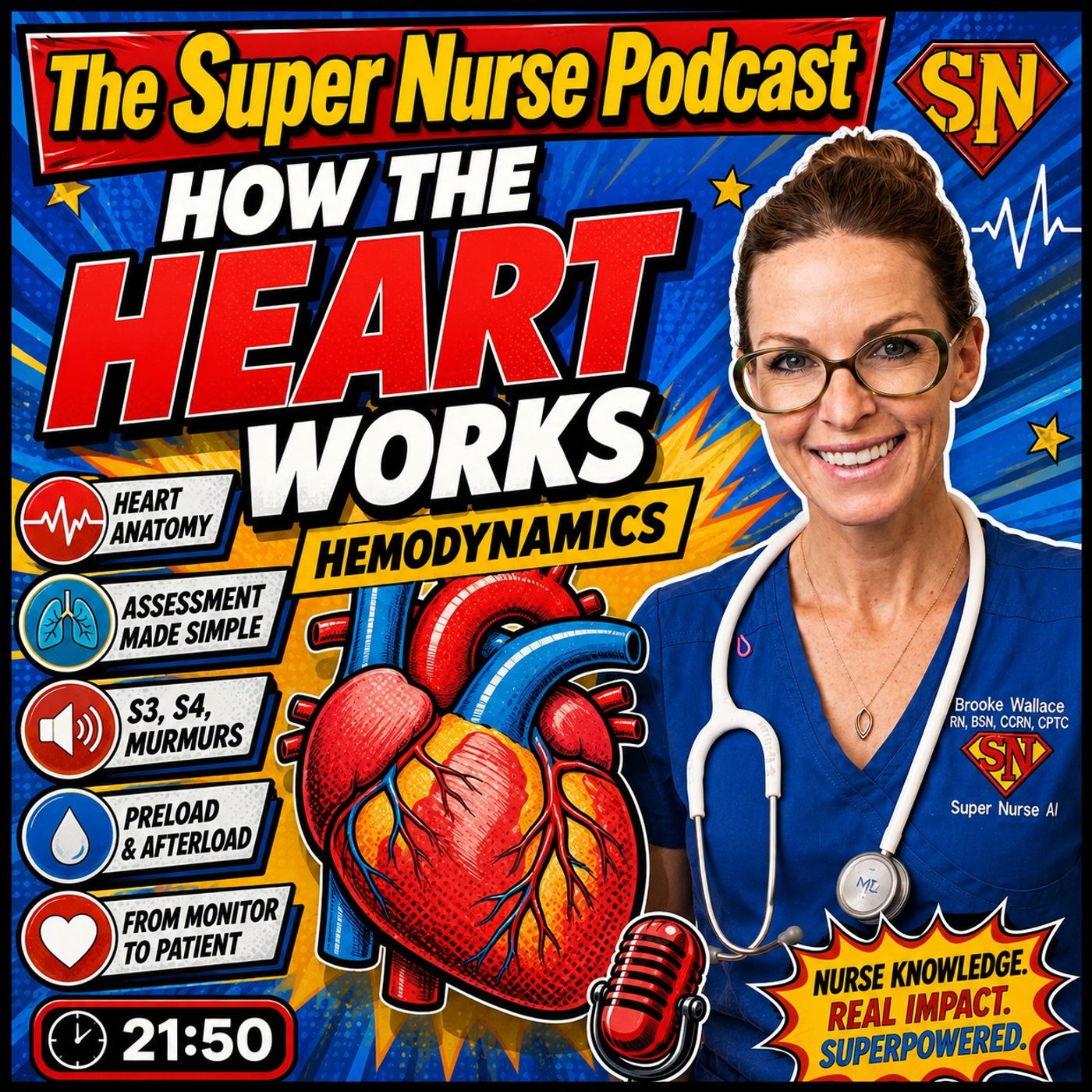 How The Heart Actually Works: Heart Failure, MI & Hemodynamics Explained | Understanding how the heart works is the foundation of safe bedside nursing. In this episode of The Super Nurse Podcast, Brooke Wallace breaks down cardiac anatomy, hemodynamics, preload, afterload, cardiac output, and heart sounds into practical concepts nurses can immediately apply in patient care. You'll learn how blood moves through the heart, how to recognize changes in cardiac performance, and how to connect monitor data to real patient assessments. Whether you're preparing for the NCLEX, working on a med-surg floor, or building critical care skills, this episode simplifies complex cardiovascular concepts and helps you think like a super nurse. | — | ||||||
| 6/20/26 | 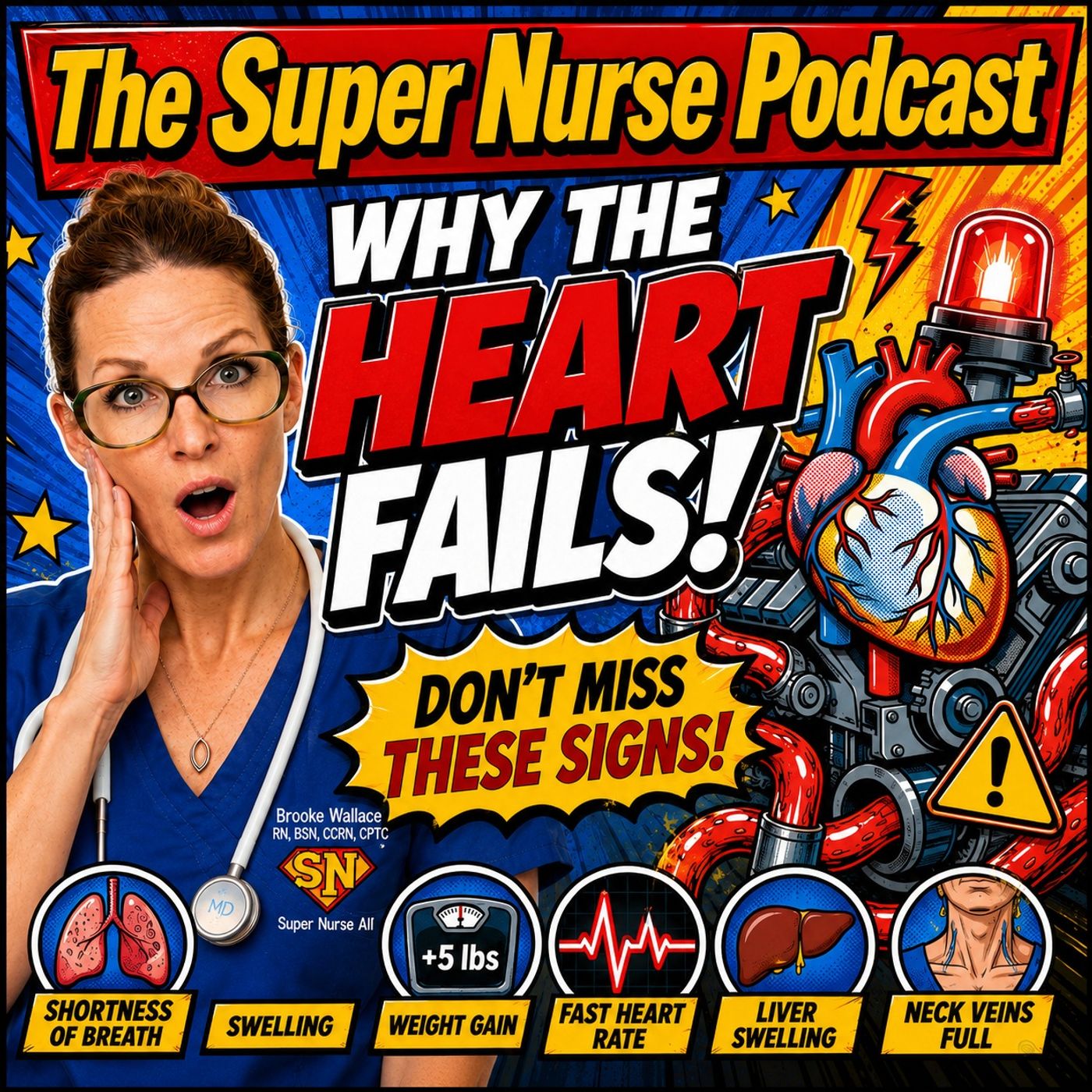 7 Heart Failure Clues Hidden in Plain Sight | In this episode of The Super Nurse Podcast, we break down the bedside management of acute heart failure and explain why patients often present with severe shortness of breath, tachycardia, and fluid overload. You'll learn the difference between systolic and diastolic heart failure, how decreased cardiac output drives compensatory mechanisms, and why fluid backs up into the lungs and peripheral tissues. We also explore BNP interpretation, the critical role of daily weights, activity pacing, medication management, and the nursing assessments that help prevent rapid patient deterioration. By the end of the episode, you'll understand not only what heart failure looks like at the bedside, but why it happens and how nurses intervene to stabilize patients. | — | ||||||
| 6/19/26 | 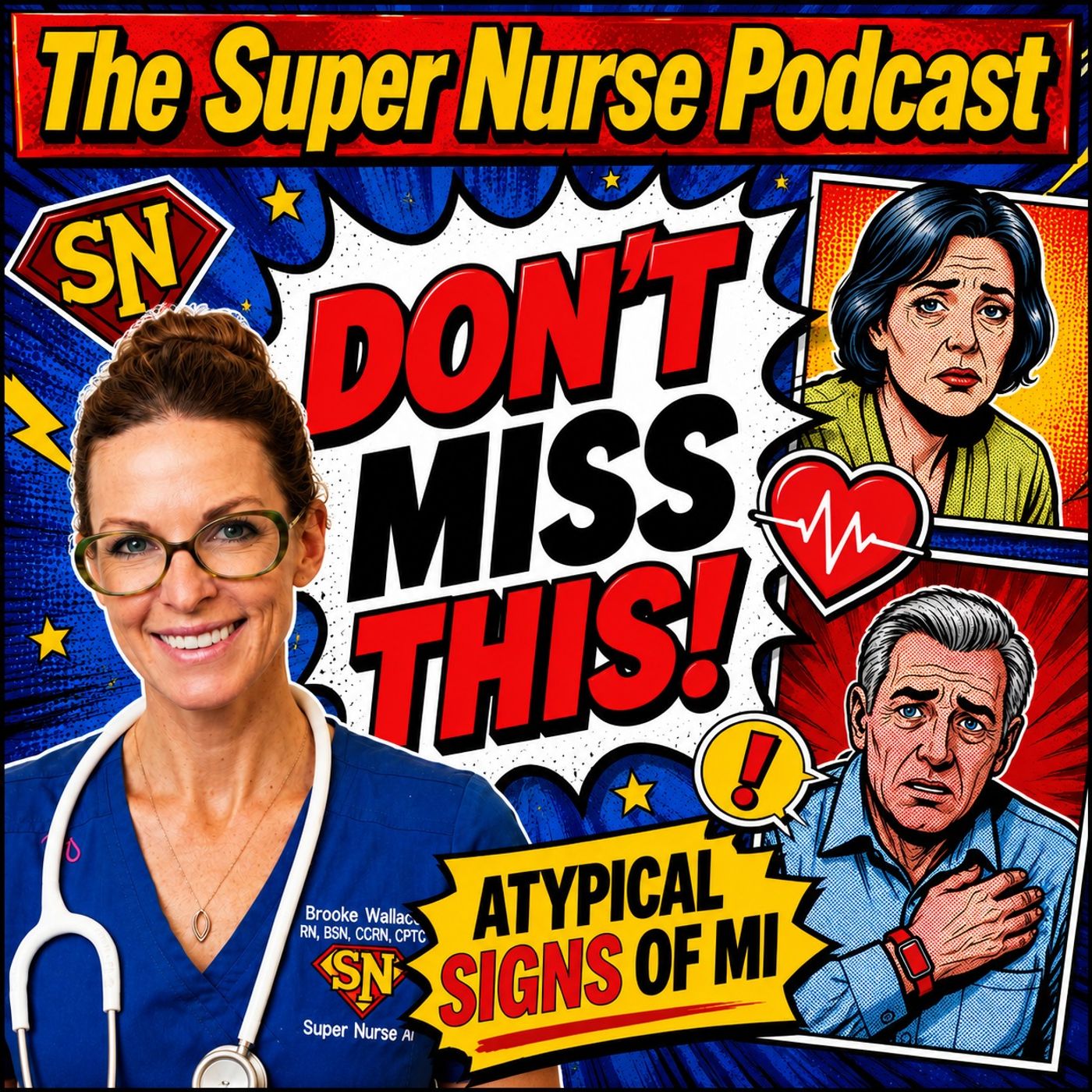 MI Symptoms Don’t Always Look Textbook | In this episode of The Super Nurse Podcast, we uncover the atypical signs of myocardial infarction (MI) that nurses and healthcare professionals can't afford to miss. While many people associate a heart attack with crushing chest pain, patients—especially women, older adults, and individuals with diabetes—often present with subtle symptoms such as fatigue, nausea, shortness of breath, dizziness, or unexplained discomfort. You'll learn how to recognize these red flags early, understand why atypical presentations occur, and improve your ability to identify a potentially life-threatening cardiac event before it's too late. This episode provides practical assessment strategies that can help nurses save lives through early recognition and intervention. | — | ||||||
| 6/19/26 | 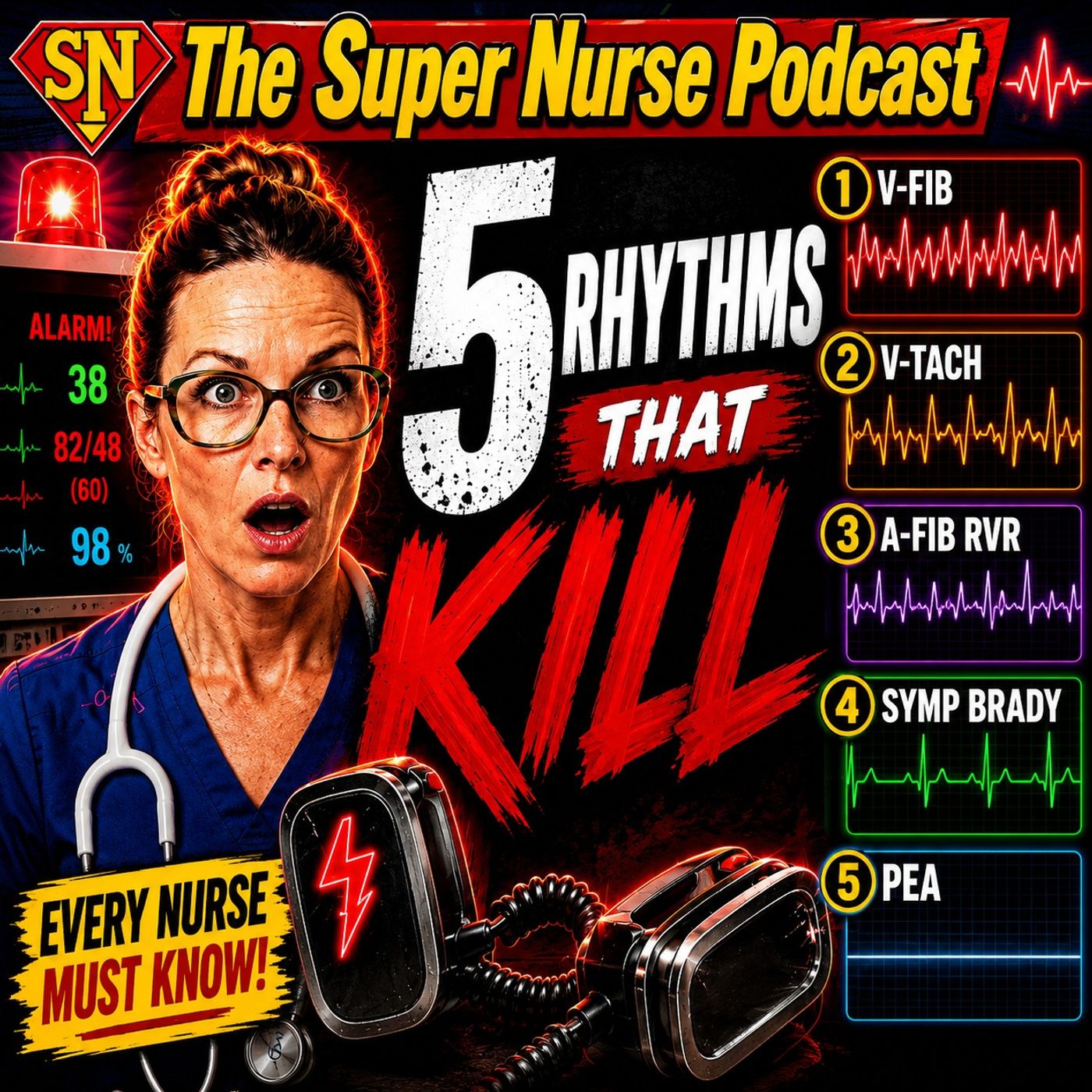 5 Life-Threatening Cardiac Rhythms Every Nurse Must Recognize and Treat | In this episode of The Super Nurse Podcast, Brooke Wallace's clinical frameworks are used to break down five life-threatening cardiac rhythms every nurse must recognize and treat. The discussion explores the physiology behind symptomatic bradycardia, atrial fibrillation with rapid ventricular response, PVCs, ventricular tachycardia, ventricular fibrillation, and the critical concept of pulseless electrical activity (PEA). Through memorable analogies and real-world bedside scenarios, listeners learn not only how to identify dangerous rhythms but also how to understand the underlying cardiac mechanics driving them. Most importantly, the episode reinforces a foundational nursing principle: treat the patient, not the monitor. | — | ||||||
| 6/18/26 | 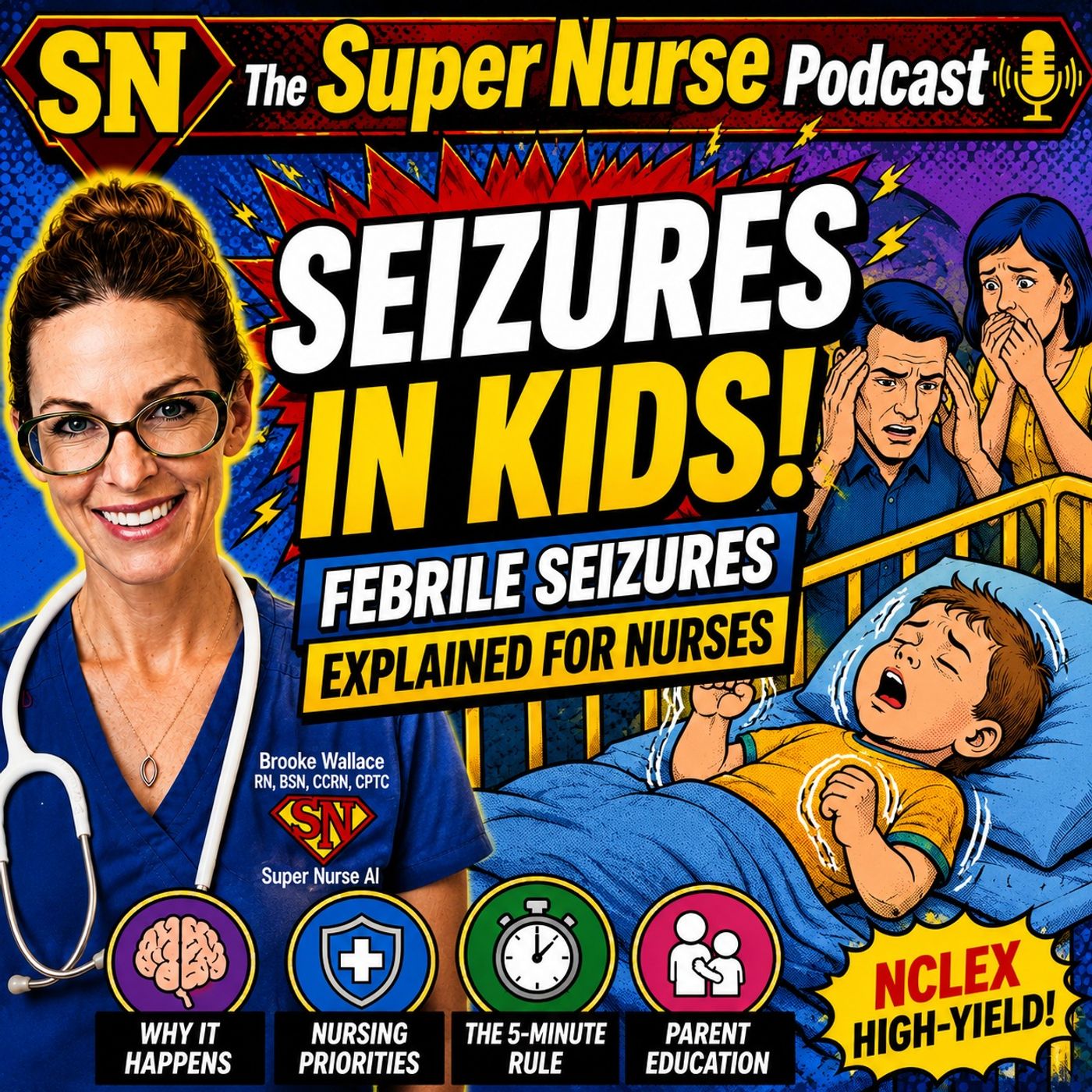 Why Kids Might Have Seizures From a Fever | Febrile Seizures For Nurses | Few events are more terrifying for parents than watching their child suddenly begin seizing during a fever. In this episode of The Super Nurse Podcast, we break down the science behind pediatric febrile seizures, explain why rapid temperature spikes trigger seizures in young children, and review the nursing priorities that keep patients safe during and after the event. You'll learn the critical differences between simple febrile seizures and medical emergencies, along with practical bedside interventions, parent education strategies, and high-yield NCLEX concepts. | — | ||||||
| 6/18/26 | 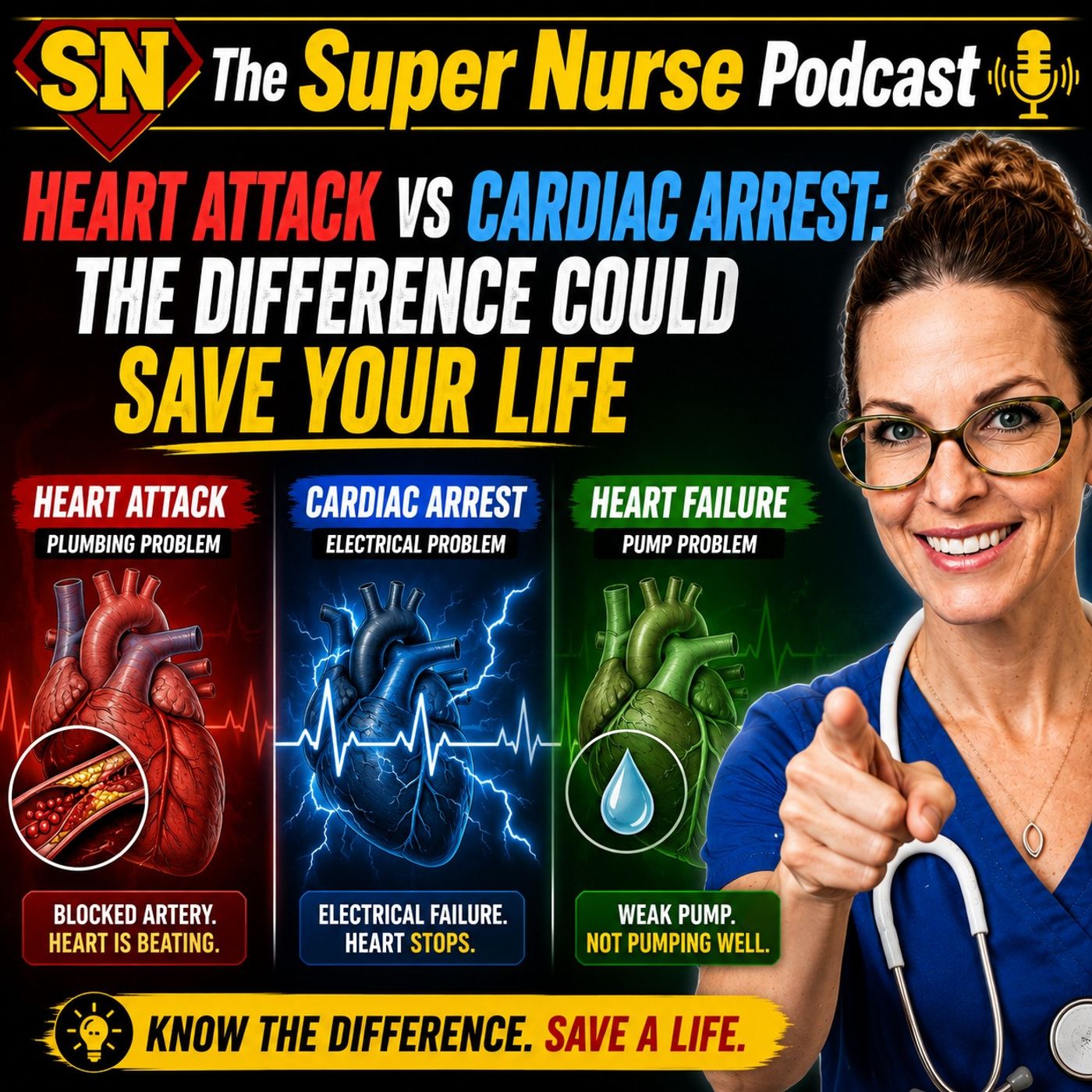 When the Heart Fails: Attack, Arrest, or Failure? | Heart attack, cardiac arrest, and heart failure are often used interchangeably, but they represent three fundamentally different medical emergencies. In this episode of The Super Nurse Podcast, Brooke breaks down these conditions using a simple framework: a plumbing problem, an electrical problem, and a pump problem. You'll learn how heart attacks can trigger cardiac arrest, what happens during a real resuscitation, and the critical interventions that save lives in the ER, cath lab, and ICU. The episode concludes with practical prevention strategies and a look at the future of cardiac care, including mechanical heart assist devices. | — | ||||||
| 6/17/26 | 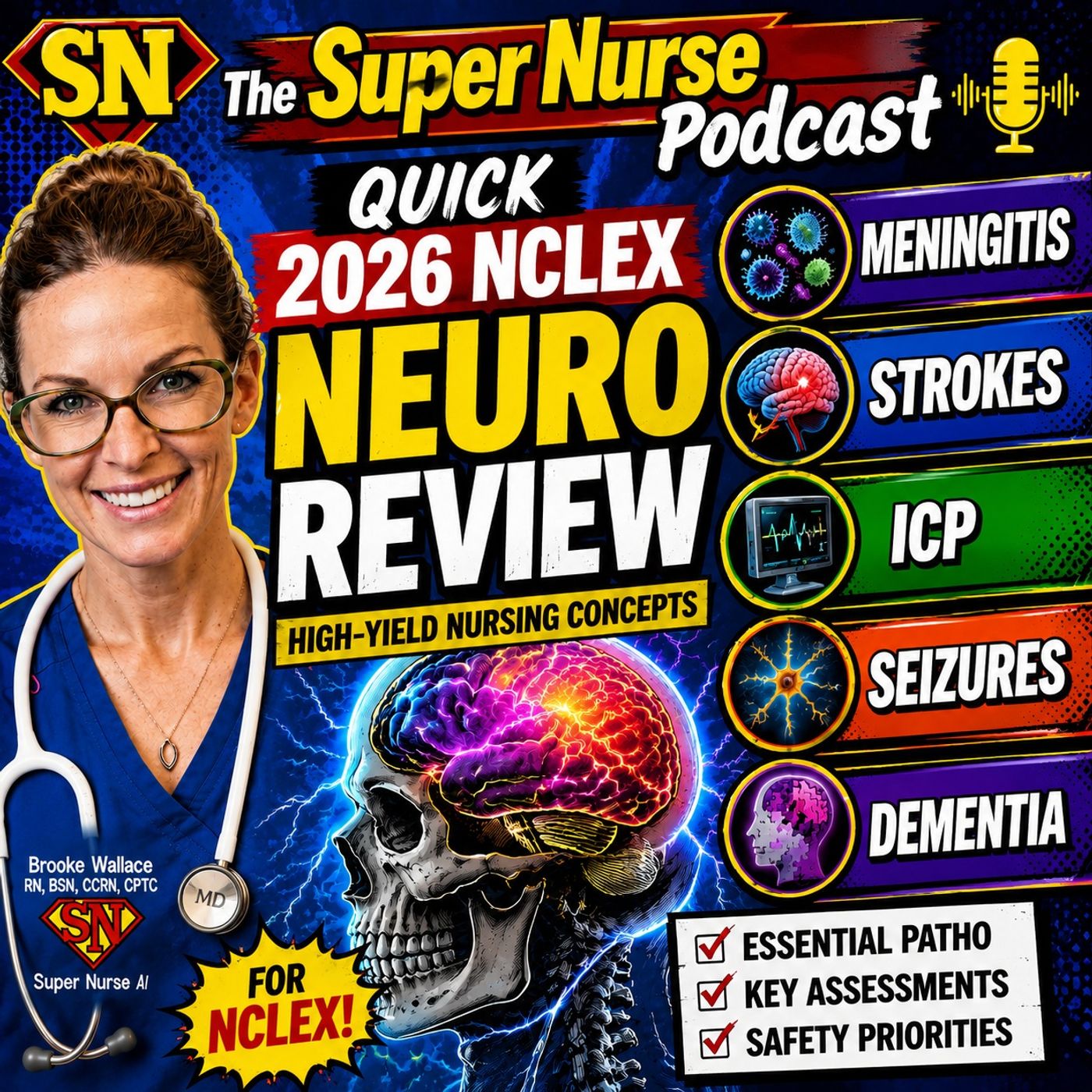 Quick 2026 NCLEX Neuro Review: High-Yield Nursing Concepts | Neurological emergencies can change a patient's condition in minutes, making rapid assessment and early intervention essential nursing skills. In this comprehensive NCLEX neuro review, we break down the Monroe-Kellie Doctrine, increased intracranial pressure (ICP), Cushing's Triad, meningitis, seizures, stroke assessment, Alzheimer's disease, and dementia care from a practical bedside perspective. You'll learn not only what to memorize for the NCLEX, but also the physiology behind these concepts and how they directly impact patient safety. Whether you're a nursing student preparing for boards or a new nurse building confidence at the bedside, this review covers the neurological concepts every nurse must know. | — | ||||||
Want analysis for the episodes below?Free for Pro Submit a request, we'll have your selected episodes analyzed within an hour. Free, at no cost to you, for Pro users. | |||||||||
| 6/16/26 |  The PTSD Brain: Why Safe Patients Feel Constantly Under Attack | PTSD is far more than an emotional response—it's a physical rewiring of the brain that changes how patients perceive safety, danger, and reality. In this episode, we explore how trauma alters the amygdala, hippocampus, and prefrontal cortex, creating powerful physiological reactions that can be mistaken for difficult behavior at the bedside. Learn why a harmless sound can trigger a full survival response, how nurses can recognize the signs of PTSD, and the practical interventions that help patients regain a sense of safety. Most importantly, discover how compassionate nursing care can literally help rebuild healthy neural pathways through the power of neuroplasticity. | — | ||||||
| 6/15/26 |  The Head Injury That Looks Fine: TBI, Increased ICP & Nursing Red Flags | In this episode of The Super Nurse Podcast, we break down traumatic brain injuries in plain English for nursing students, new nurses, and bedside nurses. You’ll learn why a patient can look completely fine after a head injury while bleeding, swelling, and increased intracranial pressure are quietly building inside the skull. We explain primary vs secondary brain injury, the Monroe-Kellie hypothesis, epidural vs subdural hematomas, early signs of increased ICP, Cushing’s triad, GCS, pupil checks, and priority nursing interventions. This episode helps nurses connect TBI pathophysiology to real-world bedside decisions, NCLEX-style clinical judgment, and family education after brain injury. | — | ||||||
| 6/13/26 | 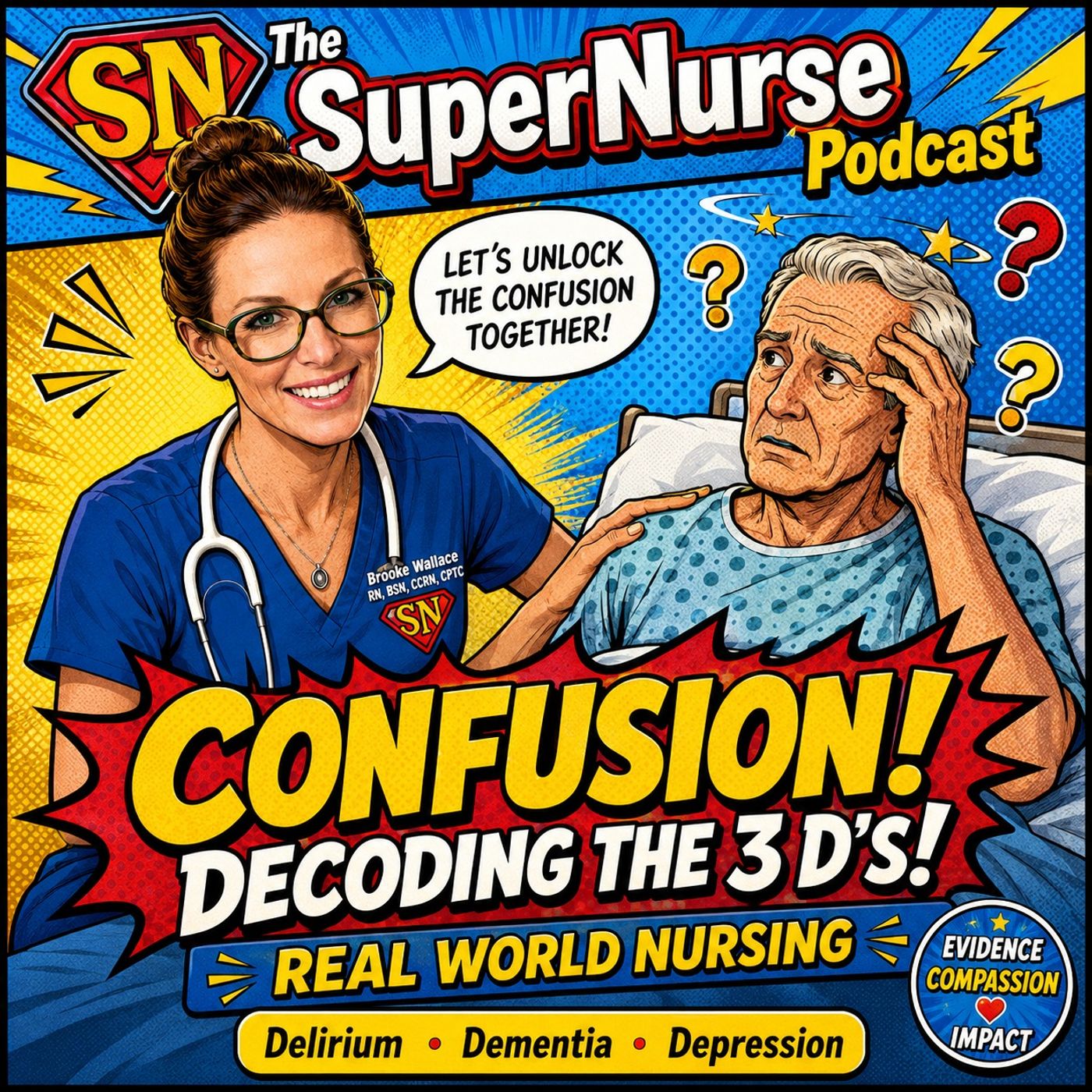 Confused Patient? How Nurses Decode the 3 Ds at the Bedside. | In this episode of The Super Nurse Podcast, we break down how nurses decode the 3 Ds: delirium, dementia, and depression when a patient suddenly becomes confused, combative, restless, or “not themselves.” You’ll learn why delirium is an acute medical emergency, how dementia differs from sudden changes in level of consciousness, and why depression can sometimes mimic cognitive decline in older adults. We also connect sudden confusion to postictal seizure clues, Alzheimer’s brain changes, validation therapy, safety interventions, nutrition support, and end-of-life dementia care. This episode helps nursing students, new grad nurses, and bedside nurses build real-world clinical judgment for neuro nursing, NCLEX, and confused patient care. | — | ||||||
| 6/11/26 | 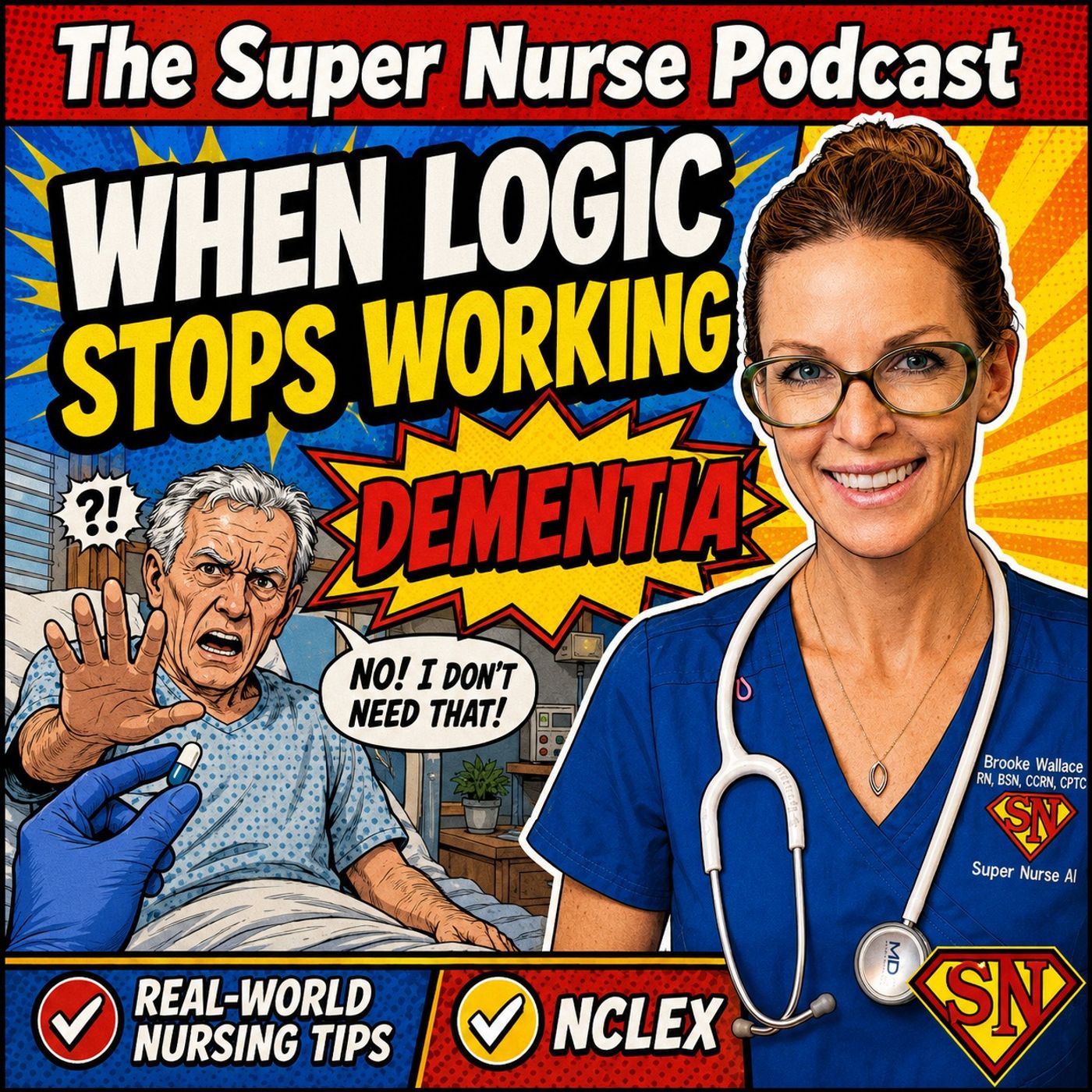 When Logic Stops Working: Dementia Communication for Real-World Nursing | In this episode of The Super Nurse Podcast, we break down why logic often stops working in dementia care and why arguing, correcting, or over-explaining can make agitation worse. You’ll learn how dementia affects reasoning, memory, emotional regulation, and the patient’s ability to process reality in the moment. We focus on real-world nursing communication strategies like validation, redirection, calm tone, simple choices, environmental control, and connection over correction. This episode is perfect for nursing students, new grad nurses, and bedside nurses preparing for NCLEX questions on dementia, Alzheimer’s, agitation, safety, and therapeutic communication. | — | ||||||
| 6/10/26 | 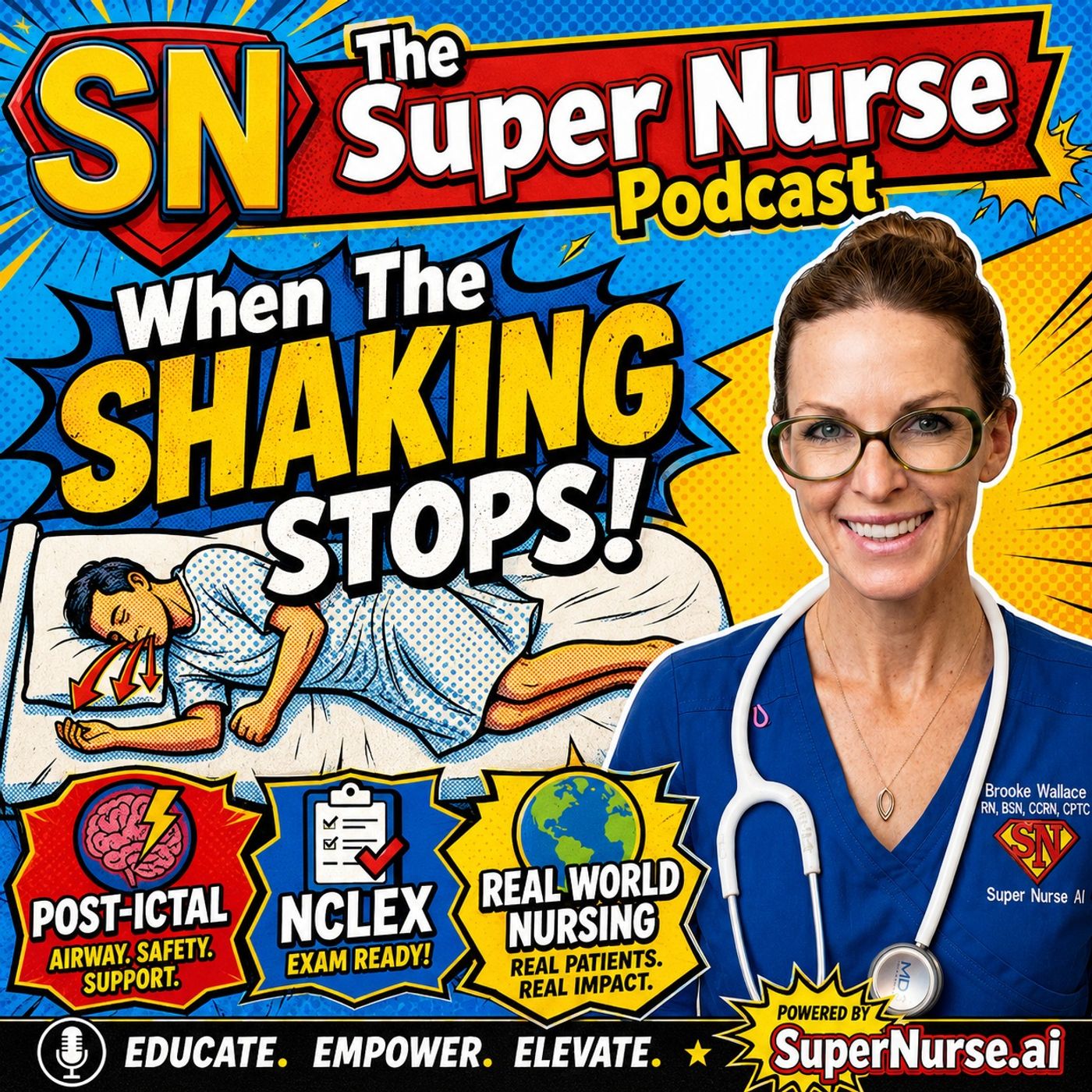 Seizure Aftercare for Nurses: What to Do When the Shaking Stops | In this episode of The Super Nurse Podcast, we break down what nurses do after a seizure stops — when the room gets quiet, but the patient is still extremely vulnerable. You’ll learn why the postictal phase is not “recovery time” in the casual sense, but a high-risk period where airway, breathing, aspiration prevention, respiratory depression, and safety become the nurse’s top priorities. This episode covers post-seizure assessment, side-lying positioning, suction and oxygen readiness, benzodiazepine effects, oral trauma, incontinence, dignity, documentation, and when to worry about status epilepticus. It’s a real-world nursing and NCLEX-focused guide to seizure aftercare, neuro nursing priorities, and what to do when the shaking stops | — | ||||||
| 6/9/26 | 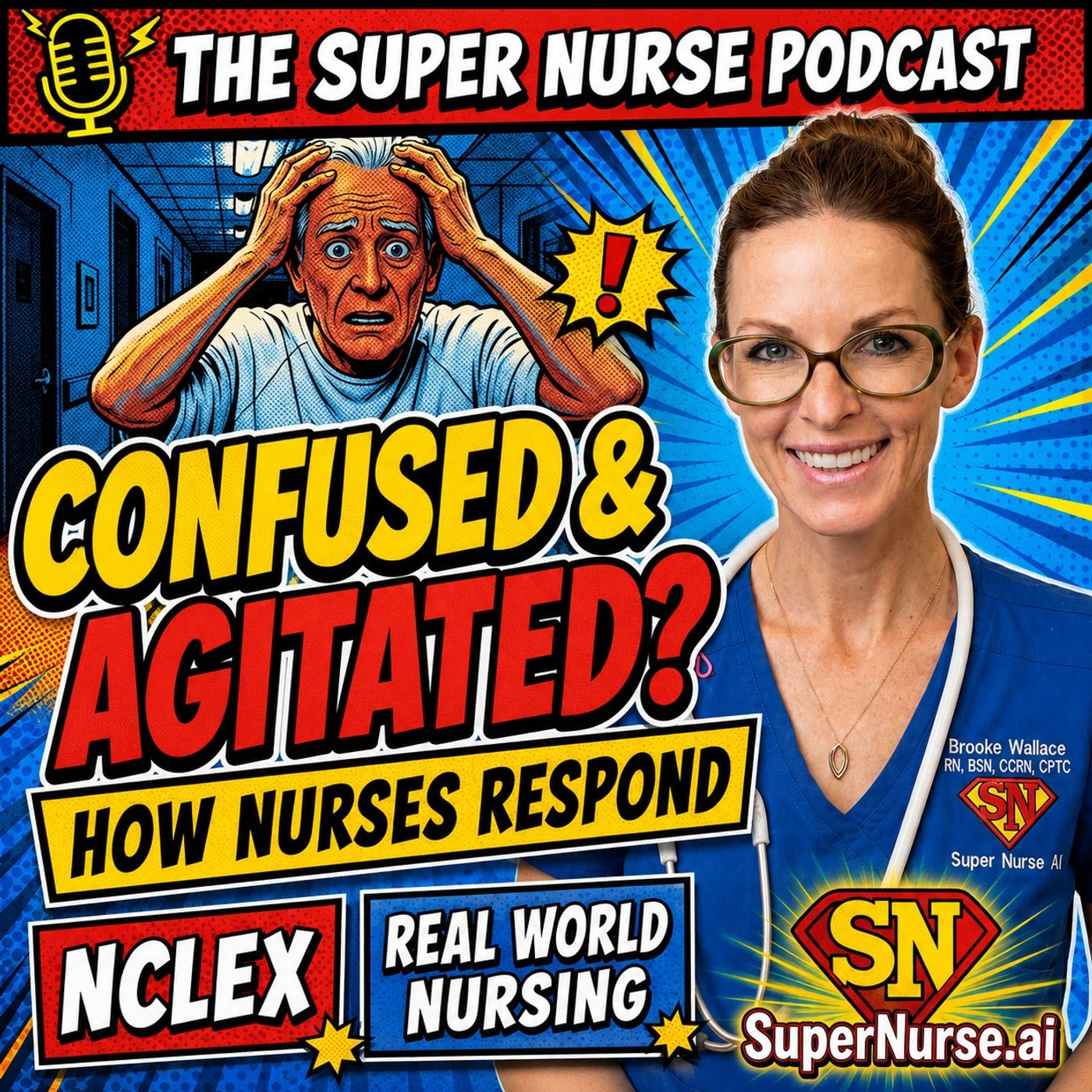 Alzheimer’s vs Dementia: Connection Over Correction in Real-World Nursing | In this episode of The Super Nurse Podcast, we break down Alzheimer’s vs dementia through the lens of real-world nursing care. You’ll learn why dementia is the umbrella term, how Alzheimer’s changes the brain over time, and why patients may become confused, agitated, fearful, restless, or unable to follow logic. This episode focuses on one of the most important bedside lessons for nurses: connection over correction. Instead of arguing with a patient whose brain can no longer process reality the same way, nurses can protect safety, reduce fear, simplify choices, support families, and preserve dignity. | — | ||||||
| 6/8/26 | 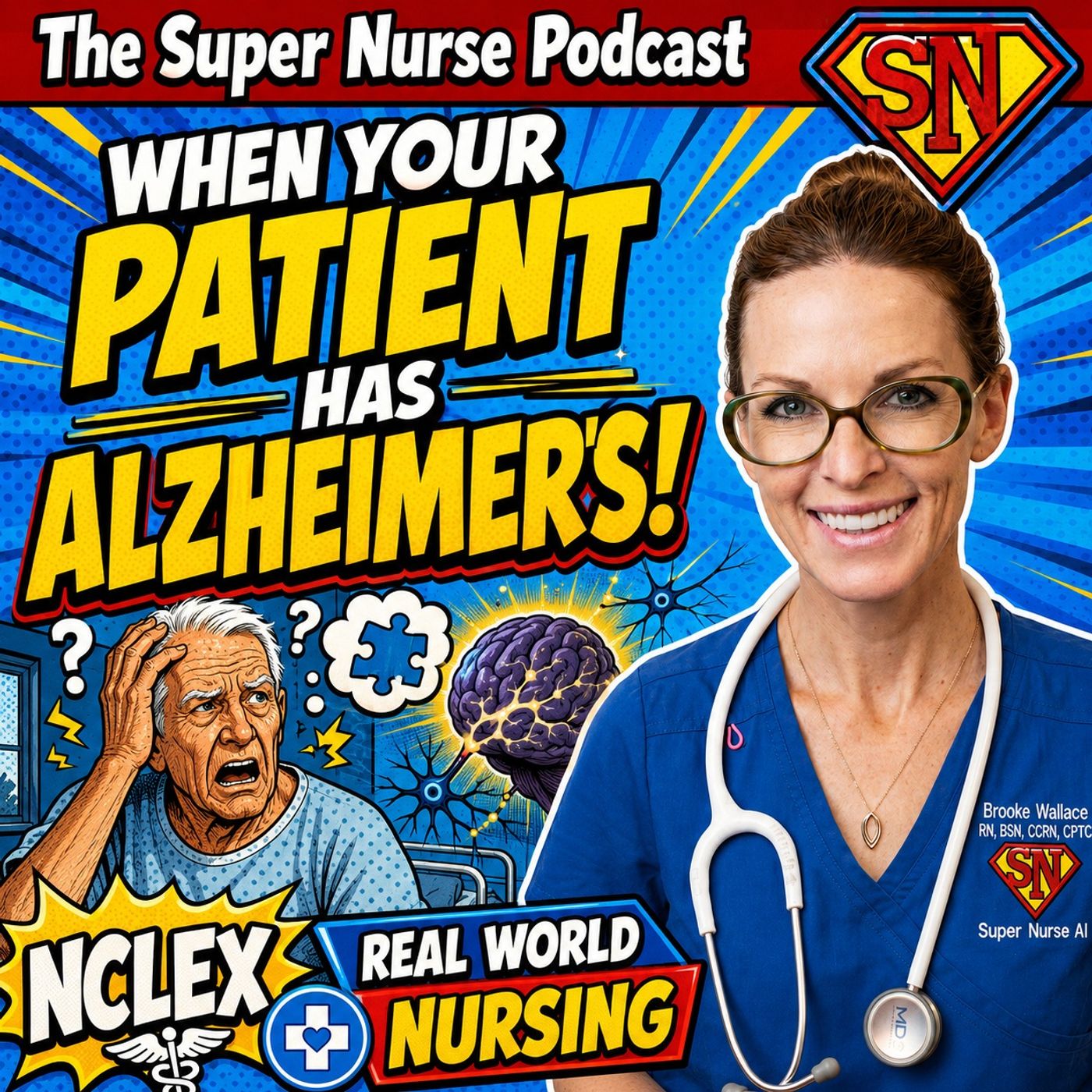 Nursing the Alzheimer’s Brain: Real-World Dementia Care for NCLEX | In this episode of The Super Nurse Podcast, we break down Alzheimer’s disease as real physical brain failure — not just “normal aging” or forgetfulness. You’ll learn how beta amyloid plaques, neurofibrillary tangles, acetylcholine loss, excess glutamate, and brain atrophy show up at the bedside as confusion, agitation, aphasia, apraxia, agnosia, wandering, poor intake, and caregiver distress. This episode connects Alzheimer’s pathophysiology to real-world nursing priorities for NCLEX, including validation over correction, binary choices, finger foods, environmental safety, fall prevention, caregiver education, advance directives, and end-of-life comfort care. Most importantly, it explains why your calm presence becomes a clinical intervention when the Alzheimer’s brain can no longer regulate itself. | — | ||||||
| 6/7/26 | 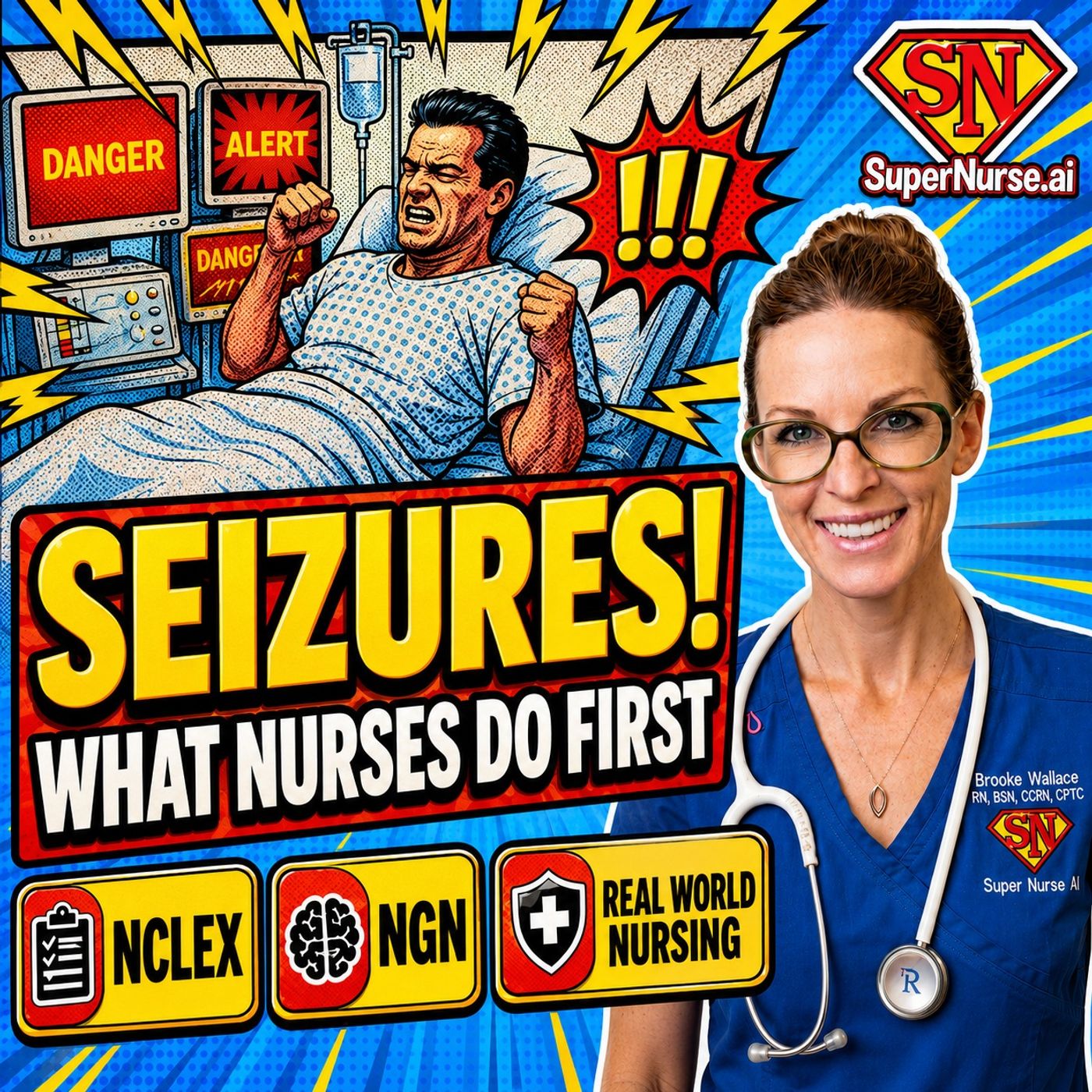 Seizure at the Bedside: What Nurses Do First When Seconds Matter | In this episode of The Super Nurse Podcast, we break down what nurses do first when a patient has an active seizure at the bedside. You’ll learn the real-world seizure nursing priorities NCLEX loves to test: stay with the patient, call for help, time the seizure, protect the patient from injury, turn them side-lying, prepare oxygen and suction, and never put anything in their mouth. We also cover when seizure care escalates into status epilepticus, including IV benzodiazepines like lorazepam or diazepam, airway support, glucose checks, labs, and EEG monitoring. This episode is designed for nursing students, new grad nurses, ICU nurses, ER nurses, and anyone studying neuro nursing, seizure precautions, and NGN NCLEX priority questions. | — | ||||||
| 6/6/26 | 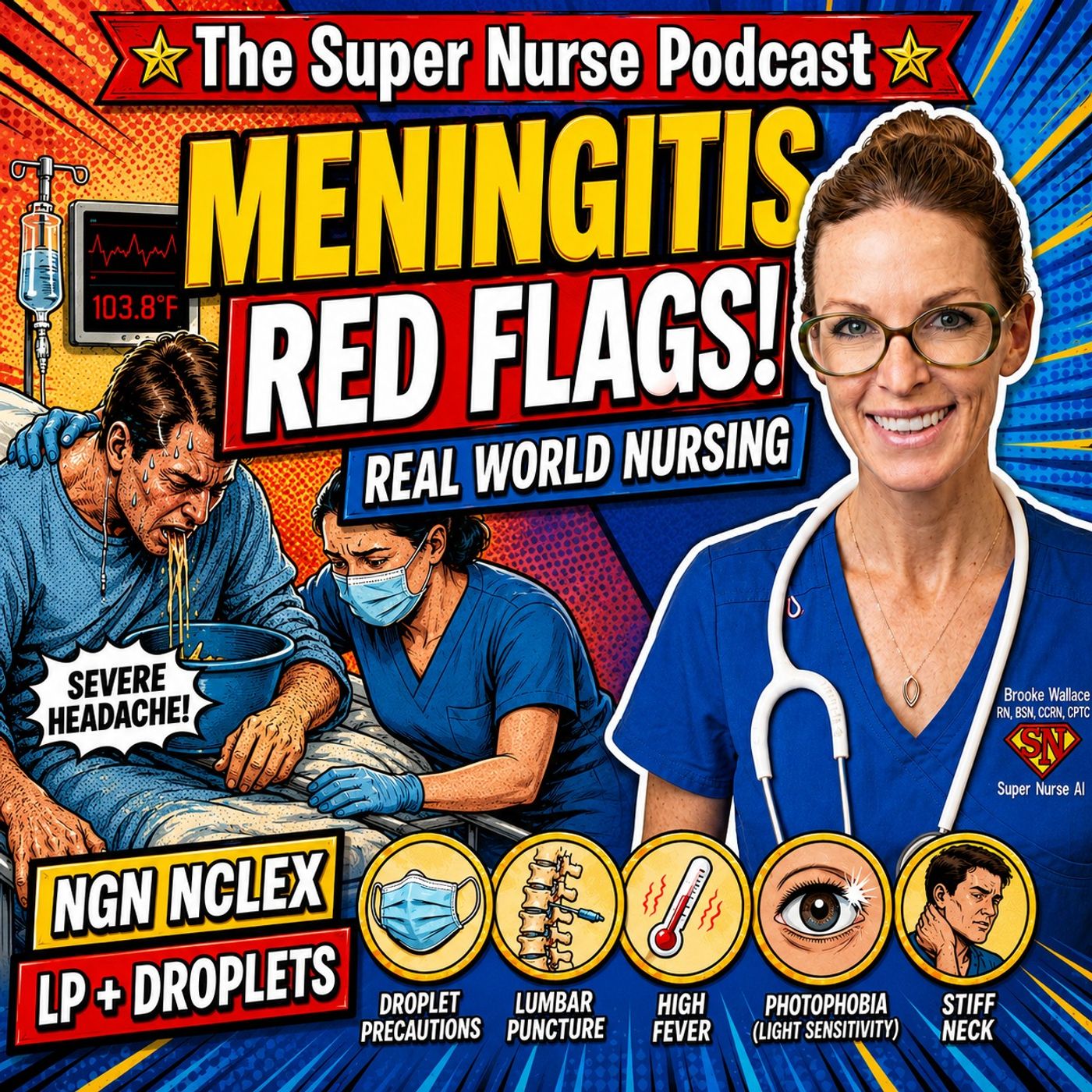 What Meningitis Looks Like in Real Life Plus Nursing Priorities for NGN NCLEX | In this episode of The Super Nurse Podcast, we break down what meningitis looks like in real life — not just in a textbook. You’ll learn how to recognize the classic bedside clues like worst headache, stiff neck, fever, photophobia, vomiting, irritability, and pediatric warning signs such as bulging fontanel and high-pitched cry. We also cover the nursing priorities that matter for NGN NCLEX, including droplet precautions, bacterial versus viral meningitis, lumbar puncture preparation, CT scan concerns with increased ICP, and CSF interpretation. This episode helps nursing students and new grads connect meningitis pathophysiology to real bedside action. | — | ||||||
| 6/3/26 |  Stroke or Stroke Mimic? TIA, Glucose Checks & NGN NCLEX Nursing Priorities | In this episode of The Super Nurse Podcast, we break down how nurses can quickly recognize a possible stroke while avoiding one of the biggest NGN NCLEX traps: missing a stroke mimic. You’ll learn the difference between a true stroke, a TIA, and hypoglycemia as a stroke mimic — including why checking a finger-stick blood glucose is one of the first bedside priorities. We also review FAST/BE-FAST, last known well time, left-brain versus right-brain stroke clues, CT scan priorities, tPA safety, permissive hypertension, NIHSS scoring, swallow screening, and airway protection. This episode helps nursing students and new grads understand stroke care as real-time clinical judgment, not just memorized NCLEX facts. | — | ||||||
| 6/2/26 |  Restlessness Is a Red Flag: Catching Sneaky Subdural Hematomas Early | In this episode of The Super Nurse Podcast, we break down why subdural hematomas can be so dangerous for nursing students, new grads, and neuro nurses to recognize early. Unlike fast arterial bleeds, subdural hematomas are often slow venous bleeds that can look stable at first while pressure quietly builds inside the rigid skull. You’ll learn why sudden restlessness, agitation, confusion, headache, and vomiting without nausea can be early red flags of rising intracranial pressure before late signs like Cushing’s triad, fixed pupils, or abnormal posturing appear. We also review neuro positioning, mannitol, suctioning precautions, and the bedside priorities that help nurses protect the brain before herniation occurs. | — | ||||||
| 6/1/26 |  What NCLEX Tests for the Neurological System: Stroke, Seizures, ICP & Meningitis | In this episode of The Super Nurse Podcast, we break down what the NCLEX really wants nursing students to understand about the neurological system — not just memorized facts, but how to recognize dangerous changes at the bedside. We cover cranial nerves, GCS, increased intracranial pressure, Cushing’s triad, meningitis, stroke assessment, autonomic dysreflexia, and seizure safety in plain English. You’ll learn why subtle neuro changes like a sluggish pupil, altered breathing pattern, or small drop in GCS can signal a major emergency. This episode helps nursing students and new grads connect NCLEX concepts to real-world nursing judgment. | — | ||||||
| 5/31/26 |  When Pneumonia Gets Deadly: Hypoxia, Antibiotics, Sputum Cultures, Lung Sounds & NCLEX | In this episode of The Super Nurse Podcast, we break down pneumonia as more than “just a cough” — it is an oxygenation problem that can turn into hypoxia, respiratory failure, sepsis, and a rapidly deteriorating patient. You’ll learn why restlessness, confusion, agitation, abnormal lung sounds, and dropping oxygen saturation can be early warning signs that pneumonia is getting dangerous. We also cover high-yield NCLEX nursing priorities, including getting a sputum culture before antibiotics, positioning the patient in high Fowler’s, encouraging fluids when appropriate, promoting pulmonary hygiene, and monitoring for worsening respiratory distress. This episode is perfect for nursing students, new grads, and bedside nurses who want to understand pneumonia through real-world clinical judgment. | — | ||||||
| 5/31/26 |  When Staffing Gets Unsafe: Should Nurses Unionize, Strike, or Put Their Heads Down? | In this debate-style episode of The Super Nurse Podcast, we take on one of the most emotionally charged issues in nursing: what should nurses do when staffing becomes unsafe? The conversation explores mandatory nurse-to-patient ratios, unionization, nurse strikes, burnout, retention, and the real bedside consequences of staffing decisions. One side argues that legally protected ratios and collective bargaining are necessary to protect patients and nurses, while the other challenges whether rigid contracts, reduced support staff, and strikes can create new risks for patient care. This episode helps nursing students, new grads, and bedside nurses think beyond slogans and understand the ethical, clinical, and structural complexity behind unsafe staffing. | — | ||||||
| 5/30/26 |  When the Trach Falls Out: Tracheostomy Care, Suctioning & NCLEX Airway Safety | In this episode of The Super Nurse Podcast, we break down tracheostomy care the way NCLEX and the bedside both test it: airway first, always. You’ll learn how nurses safely manage trach ties, cuffed versus cuffless tubes, suctioning, decannulation emergencies, pulmonary hygiene, speaking valves, and discharge teaching. We also cover the high-yield NCLEX trap that a cuffed trach does not prevent aspiration, plus the overlooked reason trach patients are at risk for constipation and fecal impaction. This episode is perfect for nursing students, new grad nurses, ICU nurses, respiratory-focused review, and anyone studying Physiological Adaptation for NCLEX. | — | ||||||
Showing 25 of 164
Pitch Fit is a Pro feature
See how bookable this show is for guests, which brands already advertise, the per-episode ad value, and the best-fit guest and sponsor profile. The numbers are blurred on the free plan.
How readily this show books outside guests like you.
How proven this show is for host-read sponsorships.
For Guests
ProFor Advertisers
ProUpgrade to Pro to unlock guest cadence, sponsor categories, fit scores, and per-episode ad value for this show.
Chart Positions
6 placements across 6 markets.
Chart Positions
6 placements across 6 markets.