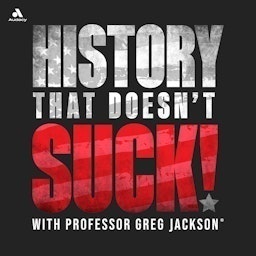
History That Doesn't Suck
by Prof. Greg Jackson
Is this your podcast?Insights from recent episode analysis
Audience Interest
Podcast Focus
Publishing Consistency
Platform Reach
Insights are generated by CastFox AI using publicly available data, episode content, and proprietary models.
Most discussed topics
Brands & references
Total monthly reach
Estimated from 25 chart positions in 25 markets.
By chart position
- 🇺🇸US · History#6300K to 1M
- 🇨🇦CA · History#37100K to 300K
- 🇦🇺AU · History#9530K to 100K
- 🇬🇧GB · History#1065K to 30K
- 🇰🇷KR · History#20100K to 300K
- Per-Episode Audience
Est. listeners per new episode within ~30 days
286K to 940K🎙 ~2x weekly·231 episodes·Last published 6d ago - Monthly Reach
Unique listeners across all episodes (30 days)
573K to 1.9M🇺🇸53%🇨🇦16%🇰🇷16%+22 more - Active Followers
Loyal subscribers who consistently listen
315K to 1.0M
Market Insights
Platform Distribution
Reach across major podcast platforms, updated hourly
Total Followers
—
Total Plays
—
Total Reviews
—
* Data sourced directly from platform APIs and aggregated hourly across all major podcast directories.
On the show
From 20 epsHosts
Recent guests
Recent episodes
15 (Second Edition): “We the People:” Constitution Making in Philly
Sep 7, 2026
1h 07m 31s
211: Pacific Theater Epilogue with Capt. Mac Caldwell
Aug 24, 2026
54m 43s
210: The Pacific War 1944: From the Cairo Conference to the Marianas Turkey Shoot
Aug 10, 2026
58m 34s
209: The Pacific War 1943: Operation Cartwheel, Tarawa, & Eleanor Roosevelt's Pacific Tour
Jul 27, 2026
57m 06s
208: The Pacific War, 1942–43: Guadalcanal, the Aleutians, and Operation Vengeance
Jul 13, 2026
59m 07s
Social Links & Contact
Official channels & resources
Official Website
Login
RSS Feed
Login
| Date | Episode | Topics | Guests | Brands | Places | Keywords | Sponsor | Length | |
|---|---|---|---|---|---|---|---|---|---|
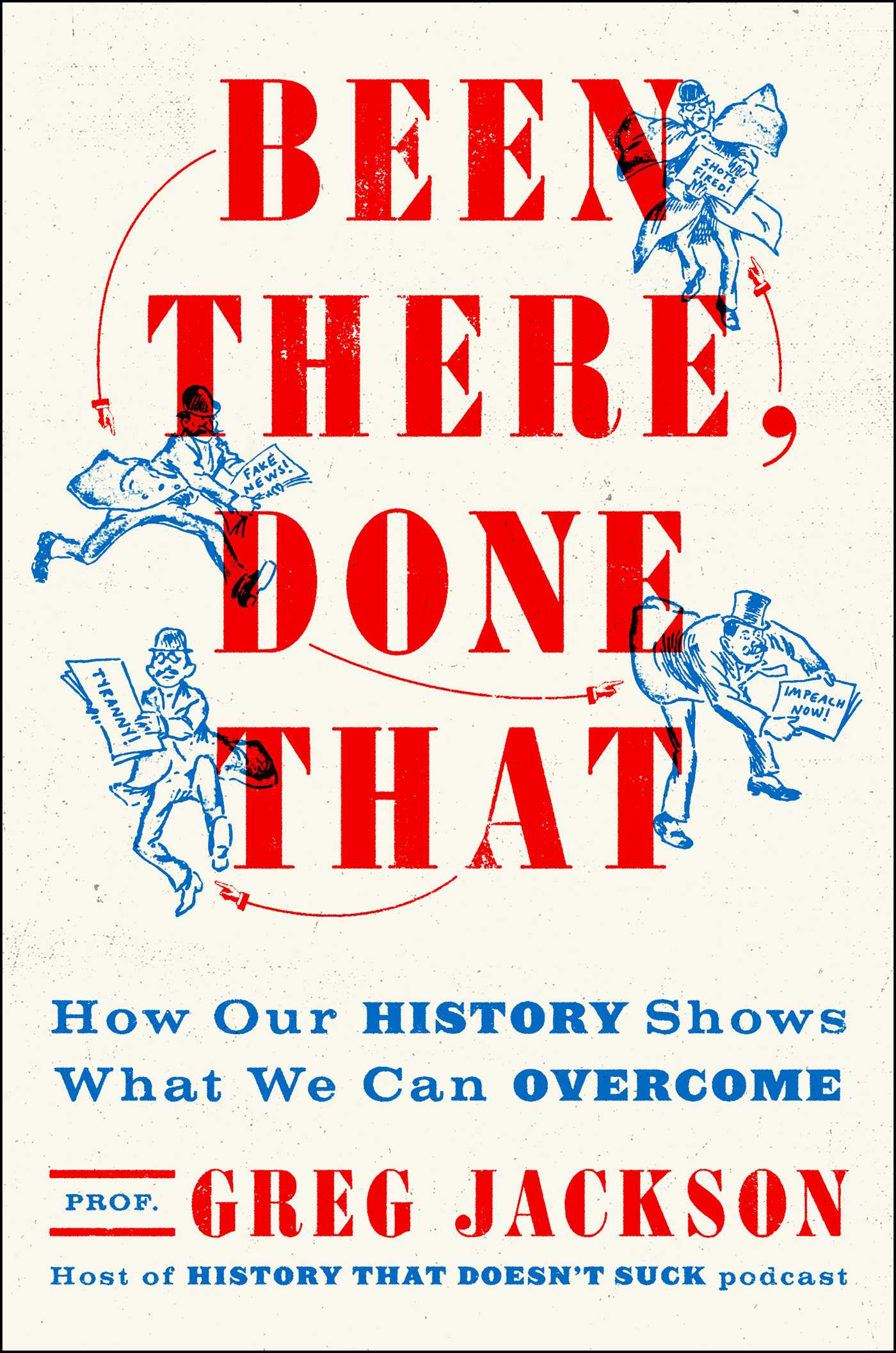
| 9/7/26 | 15 (Second Edition): “We the People:” Constitution Making in Philly | “What even is the Virginia Plan but democracy checked by democracy, or pork with a little change of the sauce?” This is the story of 55 men from 12 of the 13 sovereign states gathered at the Pennsylvania State House during the miserably hot Philadelphian summer of 1787. They are here to discuss the failing Articles of Confederation. Foreign debts are past due. Rebellions are rising. The states are fighting. Can they fix all of this? Or will the disagreeing, arguing, threatening, theorizing, brainstorming, (mostly) sober-speech making, and compromising all be for naught?Connect with us on HTDSpodcast.com andpreorder Prof. Jackson’s new bookgo deep into episode bibliographies and book recommendationsjoin discussions in our Facebook communityget news and discounts from The HTDS Gazette come see a live showget HTDS merchor become an HTDS premium member for bonus episodes and other perks.HTDS is part of Audacy media network.Interested in advertising on the History That Doesn't Suck? Contact Audacyinc.com | 1h 07m 31s | ||||||
| 8/24/26 | 211: Pacific Theater Epilogue with Capt. Mac Caldwell | Professor Greg Jackson and co-host Riley Neubauer are joined by returning guest Captain Mac Caldwell, a Marine veteran, to dive deeper into the Pacific Theater of early World War II. The conversation reaps key wartime conferences, unpacks the strategic tensions between MacArthur and Nimitz, analyzes the evolution of amphibious warfare, and extolls the legacy of Carlon’s Marine Raiders. The episode also highlights the unique unity and sacrifice of Americans during WWII and answers listener questions about the Pacific campaign.Mac Caldwell served as an Infantry Officer in the USMC from 2016-2023. Though he's no longer on Active Duty, once a Marine, always a Marine. He currently lives in Atlanta with his wife and their three children where he works for a management consulting firm. Prior to moving to Atlanta, he used the GI Bill to get an MBA from the Darden School at the University of Virginia, where he got to walk in Thomas Jefferson's footsteps. Of particular relevance to today's episode, though, during his time in service, he was second in command of an Amphibious Company, specializing in amphibious landings from Navy ships and actually deploying to the Pacific to conduct a number of peacetime amphibious exercises with partner nations throughout the region.Connect with us on HTDSpodcast.com andgo deep into episode bibliographies and book recommendationsjoin discussions in our Facebook communityget news and discounts from The HTDS Gazette come see a live showget HTDS merchor become an HTDS premium member for bonus episodes and other perks.HTDS is part of Audacy media network.Interested in advertising on the History That Doesn't Suck? Contact Audacyinc.com | 54m 43s | ||||||
| 8/10/26 | 210: The Pacific War 1944: From the Cairo Conference to the Marianas Turkey Shoot | “If we ever lose Saipan, repeated air attacks on Tokyo will follow. No matter what it takes, we have to hold there.”As Operation Cartwheel neutralizes Japanese forces on Rabaul, American and British leaders meet with “Forgotten Allies” in Cairo—namely China’s nationalist leader Chiang Kai Shek and his diplomat wife Soong Mei-ling. The relentless pressure on Japan continues as heroes like “Merrill’s Marauders" hack through Burma’s jungles, securing vital supply lines and isolating the Japanese. Desperation leads to more bonsai attacks and even civilian suicides. More islands fall. The conflict reaches a boiling point at the "Marianas Turkey Shoot," and the brutal battle for Saipan, both of which aim to place Tokyo within bombing range and clear the path for Doug to return to the Philippines.____Connect with us on HTDSpodcast.com andgo deep into episode bibliographies and book recommendationsjoin discussions in our Facebook communityget news and discounts from The HTDS Gazette come see a live showget HTDS merchor become an HTDS premium member for episodes and other perks.HTDS is part of Audacy media network. Interested in advertising on the History That Doesn't Suck? Contact Audacyinc.com. | 58m 34s | ||||||
| 7/27/26 | 209: The Pacific War 1943: Operation Cartwheel, Tarawa, & Eleanor Roosevelt's Pacific Tour | “The ultimate defeat of Japan [will] be accomplished by blockade, bombing, and assault.”This is the story of American island hopping—or should we say leapfrogging?—through Pacific waters. By 1943, the Japanese are settled in for the long haul, no matter what it may cost. America sees some successes like new skip bombing techniques at the Battle of the Bismarck sea, but a change of strategy is needed for real gains. American leaders General Douglas MacArthur and Admiral William "Bull" Halsey launch Operation Cartwheel, a strategic campaign of amphibious landings designed to neutralize Japanese strongholds like Rabaul, Papua New Guinea without attacking head-on. Meanwhile, even though the Solomon Islands are still an active war zone, First Lady Eleanor Roosevelt undertakes a morale-boosting tour, visiting every wounded soldier she possibly can. Just a few short months later, Americans win the brutal Battle of Tarawa at great cost, a decisive victory that exposes the devastating realities of island warfare to those back home. Is each tiny island in the Pacific worth this much death? Or can another path be found? ____Connect with us on HTDSpodcast.com andgo deep into episode bibliographies and book recommendationsjoin discussions in our Facebook communityget news and discounts from The HTDS Gazette come see a live showget HTDS merchor become an HTDS premium member for bonus episodes and other perks.HTDS is part of Audacy media network. IInterested in advertising on the History That Doesn't Suck? Contact Audacyinc.com. | 57m 06s | ||||||
| 7/13/26 | Pacific WarGuadalcanal+4 | — | — | GuadalcanalAleutian Islands+1 | GuadalcanalPacific War+5 | — | 59m 07s | ||
| 7/6/26 | US governmentConstitution+3 | Lindsey Cormack | History That Doesn't SuckHTDSpodcast.com+1 | — | ConstitutionUS government+3 | — | 48m 26s | ||
| 7/2/26 | Declaration of IndependenceAmerican history+3 | Lindsey CormackBen Sawyer+3 | Government That Doesn’t SuckThe Road to Now+4 | — | Declaration of IndependenceAmerican history+3 | — | 11m 06s | ||
| 6/22/26 | American RevolutionDeclaration of Independence+4 | — | — | New YorkBoston | Declaration of IndependenceAlexander Hamilton+5 | — | 1h 02m 13s | ||
| 6/15/26 | American historyresilience+3 | Professor Greg Jackson | Been There, Done That: What Our History Shows What We Can Overcome | United States | American experimentpolitical resilience+3 | — | 1h 00m 51s | ||
| 6/8/26 | Japanese American internmentWorld War II+4 | — | Supreme CourtExecutive Order 9066 | United StatesTanforan | Japanese internmentFDR+6 | — | 1h 06m 08s | ||
Want analysis for the episodes below?Free for Pro Submit a request, we'll have your selected episodes analyzed within an hour. Free, at no cost to you, for Pro users. | |||||||||
| 5/22/26 | American propagandawartime culture+4 | — | Casablanca | — | propagandawartime+6 | — | 1h 03m 02s | ||
| 5/18/26 | family legendsancestral mystique+1 | — | Family Lore | — | family loreancestry+3 | — | 41m 01s | ||
| 5/11/26 | home frontWorld War II+4 | — | Jim Crow | America | victory gardenshome front+5 | — | 58m 33s | ||
| 5/4/26 | historypolitical violence+4 | — | Been There, Done That | United States | historypolitical violence+5 | — | 34m 37s | ||
| 4/27/26 | HolocaustAuschwitz+4 | — | HTDSpodcast.comAudacy+1 | — | HolocaustAnne Frank+5 | — | 1h 02m 34s | ||
| 4/13/26 | HolocaustNazi Germany+4 | — | Nazi | EuropeAuschwitz | HolocaustNazi+5 | — | 1h 04m 22s | ||
| 3/30/26 | Holocaustantisemitism+4 | Sara J. Bloomfield | US Holocaust Memorial MuseumAudacy+4 | — | Holocaustantisemitism+5 | — | 44m 21s | ||
| 3/16/26 | Allied InvasionSicily+4 | — | AudacyHTDS | — | Allied forcesSicily+5 | — | 54m 53s | ||
| 3/2/26 | North African CampaignWorld War II+3 | — | Britain’s 7th Armoured Division | North AfricaEgypt+2 | North AfricaDesert Rats+5 | — | 1h 01m 00s | ||
| 2/16/26 | World War IIAnglo-American Alliance+3 | — | Audacy media network | United KingdomFrance+1 | Anglo-American AllianceEuropean Theater+3 | — | 1h 02m 49s | ||
| 2/2/26 | World War IInaval battles+5 | — | — | Pearl HarborPacific | Coral SeaMidway+7 | — | 1h 03m 08s | ||
| 1/19/26 | World War IIPacific Theater+4 | — | — | PhilippinesAustralia | BataanDoolittle Raid+7 | SquarespaceHTDS | 1h 04m 02s | ||
| 1/5/26 | Pearl HarborWorld War II+3 | Professor Lindsey CormackSteve Twomey | Been There Done That: How Our History Shows What We Can OvercomeStevens Institute of Technology+1 | Key WestThe Bahamas | Pearl HarborWorld War II+5 | — | 59m 50s | ||
| 12/22/25 | World War IIHanukkah+5 | — | Audacy | WarsawWashington, D.C. | HanukkahChristmas+5 | — | 37m 25s | ||
| 12/7/25 | 194: Pearl Harbor: December 7, 1941 | “Man your battle stations! This is no sh*t!” This is the story of the Japanese attack on Pearl Harbor. It’s 7:55 on Sunday morning, December 7, 1941. 183 Japanese aircraft descend on the United States Naval Base at Pearl Harbor, Hawaii. Sailors awaken to a nightmare as “Battleship Row” becomes a graveyard, hundreds of US planes are destroyed without ever leaving the ground, and the cries of thousands of dying, wounded, and terrified Americans rend the air. It is a day that will “live in infamy.” And it means war. ____ Connect with us on HTDSpodcast.com and go deep into episode bibliographies and book recommendations join discussions in our Facebook community get news and discounts from The HTDS Gazette come see a live show get HTDS merch or become an HTDS premium member for bonus episodes and other perks. | 59m 23s | ||||||


Showing 25 of 232
Pitch Fit is a Pro feature
See how bookable this show is for guests, which brands already advertise, the per-episode ad value, and the best-fit guest and sponsor profile. The numbers are blurred on the free plan.
How readily this show books outside guests like you.
How proven this show is for host-read sponsorships.
For Guests
ProFor Advertisers
ProUpgrade to Pro to unlock guest cadence, sponsor categories, fit scores, and per-episode ad value for this show.
Similar Audience Demographics
Podcasts that attract a similar listener profile

American History Tellers
Audible

Government That Doesn't Suck
Rewind Studios

World War II with Tom Hanks
The HISTORY Channel | Back Pocket Studios | Audacy

History Unplugged Podcast
History Unplugged
American History Hit
History Hit

HISTORY This Week
The HISTORY® Channel | Back Pocket Studios

History Daily
History Daily
Chart history for History That Doesn't Suck
Peaked at #6 in United States, top 10 in 1 of 25 tracked markets, currently #6 in United States.
| Market | Genre | Peak | Current | Trend |
|---|---|---|---|---|
| United States | — | #6 | #6 | — |
| South Korea | — | #20 | #20 | — |
| IL | — | #34 | #34 | — |
| Canada | — | #37 | #37 | — |
| AR | — | #44 | #44 | — |
| KE | — | #52 | #52 | — |
| IS | — | #63 | #63 | — |
| CZ | — | #83 | #83 | — |
| Australia | — | #95 | #95 | — |
| Ireland | — | #102 | #102 | — |
| Denmark | — | #103 | #103 | — |
| United Kingdom | — | #106 | #106 | — |
| PH | — | #108 | #108 | — |
| Finland | — | #115 | #115 | — |
| RO | — | #115 | #115 | — |
| Netherlands | — | #126 | #126 | — |
| New Zealand | — | #135 | #135 | — |
| TW | — | #142 | #142 | — |
| HK | — | #144 | #144 | — |
| PL | — | #145 | #145 | — |
Chart Positions
25 placements across 25 markets.
Chart Positions
25 placements across 25 markets.