Insights from recent episode analysis
Audience Interest
Podcast Focus
Publishing Consistency
Platform Reach
Insights are generated by CastFox AI using publicly available data, episode content, and proprietary models.
Most discussed topics
Brands & references
Est. Listeners
Insufficient chart data. Estimates will improve as the show charts.
- Per-Episode Audience
Est. listeners per new episode within ~30 days
N/A🎙 Daily cadence·78 episodes·Last published 1w ago - Monthly Reach
Unique listeners across all episodes (30 days)
N/A - Active Followers
Loyal subscribers who consistently listen
N/A
Market Insights
Platform Distribution
Reach across major podcast platforms, updated hourly
Total Followers
—
Total Plays
—
Total Reviews
—
* Data sourced directly from platform APIs and aggregated hourly across all major podcast directories.
On the show
From 11 epsHost
Recent guests
Recent episodes
The Leadership Mistake That Created Most of My Team Problems — Jeremy Meng
Jun 16, 2026
Unknown duration
Pulling Back the Curtain on Clear Path Home Care's Strategic Exit — JM Simmonds, Michelle Simmonds & Alex Veach
Jun 9, 2026
Unknown duration
Everyday AI. How Nick Bonitatibus Is Approaching AI in His Business (and Yours Too) — Nick Bonitatibus
Jun 2, 2026
Unknown duration
How I Stopped Being the On-Call Bottleneck and Let AI Handle the Chaos — Lisa Hall
May 26, 2026
Unknown duration
The 2026 Recruiting Playbook: Less No-Shows and More Conversations — Rachel Gartner
May 19, 2026
Unknown duration
Social Links & Contact
Official channels & resources
Official Website
Login
RSS Feed
Login
| Date | Episode | Topics | Guests | Brands | Places | Keywords | Sponsor | Length | |
|---|---|---|---|---|---|---|---|---|---|
| 6/16/26 | ![]() The Leadership Mistake That Created Most of My Team Problems — Jeremy Meng | Jeremy Meng, owner of Always Best Care, Jacksonville, tells host David Knack his biggest leadership mistake: assuming others think and operate like him. As an Air Force vet and federal agent, he brought unspoken expectations into home care, causing confusion with clients and caregivers. Fixing this changed how he onboards, trains, writes contracts, and leads. Jeremy also embraces AI (Claude, Zingage Operator) to strengthen operations, find compliance gaps, automate busywork, and free time for human connection, not to replace people, but to reduce admin burdens and protect meaningful moments. The discussion covers servant leadership, communication, expectation-setting, AI, and a simple lesson that solved problems he once blamed on others. Lesson Takeaways: 1. Unspoken expectations create most problems: What's obvious to you isn't to others. Complaints and breakdowns often stem from assumptions never clearly stated. Leaders must articulate expectations explicitly. 2. Under-promise and define success clearly: Clients are happier when they know exactly what to expect. Transparency and clear boundaries build trust better than vague promises. 3. Caregivers need clarity, not correction: Many performance issues come from unclear instructions, not bad workers. Specific dos/don'ts and consistent coaching reduce conflict and boost confidence. 4. AI should support human relationships: The goal is to remove repetitive work so staff can focus on serving clients and caregivers; tech should increase, not decrease, human connection. 5. Front-end work determines AI success: Investing time in workflows, guardrails, and escalation points before launch yields far better results than fixing problems post-implementation. Timestamps: 00:00 – Welcome to Home Care Hindsight podcast powered by Zingage 01:12 – Introducing Jeremy Meng and his background in the Air Force and law enforcement 02:49 – Why Jeremy resisted entering healthcare and home care 03:42 – Using AI to improve communication, compliance, and operations 06:26 – Building roles, responsibilities, and policies with AI 09:50 – Implementing AI agents inside a home care business 11:42 – How AI reduced after-hours scheduling burdens 13:43 – Using Ask Riley to improve operational workflows 14:20 – Maintaining the human touch while adopting AI 17:20 – Jeremy's advice for successfully implementing AI 18:44 – Transition to Home Care Hindsight's "big mistake" 19:10 – The danger of unspoken expectations 20:21 – Setting expectations with clients from day one 21:34 – Where caregiver expectations were breaking down 21:44 – "I thought everyone operated like me" Quotes: Jeremy Meng: "I thought everyone operated like I did because I was with a bunch of military folks. And they don't. They need specific guidelines of dos and don'ts." Jeremy Meng: "Most clients are good if you let them know the expectations. If you're going to promise them everything and then under-deliver, that's where the problems start." Jeremy Meng: "This wasn't a way of us getting away from that human touch. It was actually helping us provide more of that human touch." Jeremy Meng: "As the owner and leader, I need to do that. That was bad on me. That was not on them." David Knack: "This is taking on a lot of the mundane stuff that wears people out, but still maintaining the level of service that clients expect." Resources: 1. Connect with Jeremy Meng on LinkedIn: https://www.linkedin.com/in/jeremy-meng-meng78corp/ 2. Learn more about Always Best Care Senior Services: https://alwaysbestcare.com/shalimar/about-us/ 4. Connect with David Knack on LinkedIn: https://www.linkedin.com/in/david-knack/ 5. Powered by Zingage: https://zingage.com 6. Watch this episode on Zingage's YouTube: https://www.youtube.com/@Zingage | — | ||||||
| 6/9/26 | ![]() Pulling Back the Curtain on Clear Path Home Care's Strategic Exit — JM Simmonds, Michelle Simmonds & Alex Veach | JM and Michelle Simmonds join David Knack alongside Alex Veach of Agenda Health for a behind-the-scenes look at the journey from startup founders to successful sellers—and what came next after the deal closed. What began as a small home care agency eventually grew into Clear Path Home Care, a multi-location operation serving rural communities across Texas and Colorado. Rather than chasing large metropolitan markets, the Simmonds built their reputation by going where others wouldn't—bringing care to underserved communities, creating jobs in rural areas, and becoming a trusted provider for veterans through their VA partnerships. The conversation explores the realities of building a home care business without a roadmap, the challenges of scaling across multiple markets, and the operational decisions that ultimately made Clear Path an attractive acquisition target. JM and Michelle share how they transitioned from owner-operators into executive leaders, why they initially had no plans to sell, and how a routine valuation unexpectedly opened the door to a life-changing opportunity. Alex Veach provides the advisor's perspective on what buyers are looking for in today's market, why some agencies command premium valuations, and the common mistakes owners make when preparing for an eventual exit. Together, they unpack the importance of leadership development, operational independence, payer diversification, and long-term strategic thinking. Whether you're just starting your agency or already thinking about succession planning, this episode offers practical lessons on building a business that creates impact, generates value, and provides options for the future. Lesson Takeaways: 1. Build a Business Worth Owning Before Building One Worth Selling: Strong operations and culture create long-term value. 2. Underserved Markets Often Hold the Biggest Opportunities: Success doesn't always come from chasing the largest cities. 3. Community Relationships Drive Sustainable Growth: Local trust can become a powerful competitive advantage. 4. Owners Must Eventually Work On the Business, Not Just In It: Leadership teams create scalability and enterprise value. 5. Valuations Are Strategic Planning Tools: Understanding your agency's value can help guide future decisions and opportunities. 6. Revenue Concentration Creates Risk: Even successful payer relationships should be balanced with diversification. 7. Exit Readiness Starts Years Before a Sale: The best outcomes come from consistent preparation rather than last-minute planning. 8. Great Agencies Attract Great Buyers: Businesses built on strong fundamentals tend to create more opportunities when they go to market. Timestamps: 00:00 — Welcome to Home Care Hindsight Podcast powered by Zingage 01:32 — Meet JM Simmonds, Michelle Simmonds, and Alex Veach 04:06 — The founding story behind Clear Path Home Care 05:49 — Building a business before home care resources were widely available 06:15 — Moving operations from Austin to rural Texas 08:06 — Discovering unmet demand in underserved communities 09:14 — Reinvesting profits to fuel growth 09:36 — Expanding into new markets across Texas 10:32 — Michelle's transition from nursing to marketing leadership 11:52 — Growing as a private-pay agency 12:27 — The breakthrough opportunity with VA contracts 13:17 — Becoming the provider willing to serve overlooked markets 14:18 — How estate planning led to a professional valuation 15:17 — The conversation that sparked thoughts of an exit 16:00 — Evaluating opportunities beyond Clear Path 17:38 — Alex Veach's journey into healthcare M&A 19:31 — Why Agenda Health works with owners long before they sell 20:33 — What made Clear Path stand out in the market 21:42 — Building an agency that buyers wanted 22:03 — Lessons learned from creating a valuable business Quotes: Michelle Simmonds: "Do you want to make money or do you want to make a difference?" Michelle Simmonds: "I think we're going to have to make a difference before we make money." JM Simmonds: "You have to find someone in that market that has ties to that community." JM Simmonds: "A lot of business owners either don't have a plan beyond the sale, or they haven't built the business correctly to get there." Alex Veach: "Great agencies sell themselves." Resources: 1. Riverside Home Care — https://rivhc.com/ 2. Clear Path Home Care — https://clearpathhomecare.com/ 3. Connect with JM Simmonds on LinkedIn — https://www.linkedin.com/in/jm-simmonds-821430165/ 4. Connect with Michelle Simmonds on LinkedIn — https://www.linkedin.com/in/michele-simmonds-02a3811a7/ 5. Connect with Alex Veach on LinkedIn — https://www.linkedin.com/in/alex-veach/ 6. Agenda Health — https://agendahealth.com/ 7. (Mentioned) Brown & Fortunato 8. (Mentioned) Leading Home Care (Stephen Tweed) 9. Connect with David Knack on LinkedIn: https://www.linkedin.com/in/david-knack/ 10. Powered by Zingage: https://zingage.com 11. Watch this episode on Zingage's YouTube: https://www.youtube.com/@Zingage | — | ||||||
| 6/2/26 | ![]() Everyday AI. How Nick Bonitatibus Is Approaching AI in His Business (and Yours Too) — Nick Bonitatibus | Nick Bonitatibus, founder of Digital Champions, joins host David Knack for a wide-ranging conversation about how AI is transforming the way entrepreneurs think, work, and operate their businesses. Rather than focusing on flashy tools or futuristic predictions, Nick shares practical examples of how he uses AI every day to eliminate repetitive work, document processes, and create systems that scale. From AI-powered airport planning to generating video outlines and social media content from a single client conversation, Nick explains why the real opportunity isn't automation—it's building repeatable systems that AI can execute. He breaks down the difference between AI memory and AI skills, why SOPs are becoming more valuable than ever, and how business owners can start creating leverage without losing the human touch that makes their businesses unique. Throughout the episode, David and Nick explore the mindset shift required to benefit from AI, the importance of embracing the learning curve, and why the operators who invest time now may gain a significant advantage in the years ahead. Lesson Takeaways: 1. AI Doesn't Replace Systems—It Amplifies Them: Businesses that already have documented processes are best positioned to benefit from AI. 2. Skills Create Repeatable Results: Teaching AI how to think through a task once can eliminate hundreds of future repetitions. 3. Start With Everyday Friction: Some of the best AI use cases come from solving small, recurring annoyances. 4. SOPs Are Becoming Strategic Assets: The more clearly a process is documented, the easier it becomes to delegate to AI. 5. Human Connection Still Matters Most: AI can handle production work, but trust, coaching, and relationships remain human responsibilities. 6. The Learning Curve Is Part of the Process: Failed experiments aren't wasted effort—they're how effective systems are built. 7. Small Time Savings Compound: Removing dozens of tiny decisions creates more mental bandwidth for meaningful work. Timestamps: 00:00 — AI-generated client storytelling and content creation in seconds 01:24 — Introduction to Nick Bonitatibus and Digital Champions 02:17 — Helping home care agencies grow through video marketing 03:23 — Family, kids, and finding joy in everyday moments 07:27 — New AI design tools and the future of creative work 10:01 — Why AI is useless without systems and SOPs 11:13 — Nick's AI-powered airport travel assistant 12:45 — Eliminating decision fatigue through automation 13:52 — The difference between AI memory and AI skills 15:49 — Creating client story videos using AI workflows 17:24 — Keeping the human element while automating production 18:31 — Building AI outputs that actually sound authentic 19:17 — Why most people quit before reaching the payoff 20:39 — The learning process behind successful AI adoption 21:29 — How Nick uses AI and Notion to organize his day Quotes: Nick Bonitatibus: "Automation doesn't mean anything without systems." Nick Bonitatibus: "Everyone needs to get really good at building systems and SOPs." Nick Bonitatibus: "With AI, you put in the work one time, and then you never have to do it again." David Knack: "You're designing the assembly line, but you're not the one doing the exact work every time." Nick Bonitatibus: "The process of it not working is the learning process." Resources: 1. Connect with Nick Bonitatibus on LinkedIn: https://www.linkedin.com/in/lisa-hall-5507a728/ 2. Check out Nick's YouTube: https://www.youtube.com/@NickBonitatibus 3. Follow Nick on Instagram: https://www.instagram.com/nickjboni/ 4. Visit Nick's website: https://nickbonitatibus.com/ 5. Connect with David Knack on LinkedIn: https://www.linkedin.com/in/david-knack/ 6. Powered by Zingage: https://zingage.com 7. Watch this episode on Zingage's YouTube: https://www.youtube.com/@Zingage | — | ||||||
| 5/26/26 | ![]() How I Stopped Being the On-Call Bottleneck and Let AI Handle the Chaos — Lisa Hall | Lisa Hall, owner of Griswold Home Care, joins host David Knack to share how she scaled her home care agency from under 1,000 weekly hours to more than 2,000 hours while avoiding staff burnout. With a background in engineering and automotive quality systems, Lisa explains how operational discipline, SOPs, and AI-powered scheduling transformed her agency's growth trajectory. She shares the story of landing a major CCRC partnership after simply helping someone with a "pet project," and how that relationship ultimately doubled her business. Lisa also breaks down the operational chaos of traditional on-call systems and how implementing AI scheduling and call management allowed her team to reclaim evenings, weekends, and holidays without sacrificing quality of care. Lesson Takeaways: 1. Relationships Create Unexpected Growth: Helping others without expecting immediate returns can lead to major business opportunities later. 2. SOPs Make AI Powerful: AI only works effectively when clear procedures and escalation rules are already in place. 3. Operational Freedom Matters: Eliminating repetitive after-hours interruptions reduced burnout and allowed Lisa's team to scale without hiring additional schedulers. 4. AI Should Remove Friction, Not Humanity: AI handled repetitive coordination while human staff stayed focused on emotionally important situations. 5. Don't Buy Everything at Conferences: Early-stage operators often overbuy software and tools before fully understanding operational needs. 6. Vet Vendors Carefully: Talk to real operators already using a product before committing to new technology. 7. Scale Requires Systems, Not Heroics: Growth became manageable because processes, dashboards, and automation reduced "all hands on deck" emergencies. Timestamps: 00:00 — Lisa realizes AI handled the entire evening without a single phone call 01:31 — Introduction to Lisa Hall and Griswold Home Care 02:01 — Lisa's engineering and automotive background working with Tesla 03:19 — From struggling below 1,000 hours to explosive growth 04:39 — How a CCRC partnership unexpectedly transformed the business 05:46 — Employee appreciation and caregiver retention success stories 07:15 — Transitioning from traditional answering services to AI operations 09:06 — How the AI scheduling system works overnight and on weekends 10:17 — The two-day trial that convinced Lisa's entire team 12:43 — Managing hospitalizations and caregiver coordination with AI 15:49 — Handling complex hospital shift changes without human intervention 18:32 — Riley resolves caregiver call-offs before management even notices 20:22 — Lisa's biggest business mistake: buying everything at conferences 21:27 — How Lisa now evaluates vendors and adopts new technology Quotes: Lisa Hall: "By day two, we were like, 'How fast can we turn this on completely?'" Lisa Hall: "It was literally night and day because we were not getting all those repetitive questions anymore." Lisa Hall: "Riley handled everything. It was just fabulous." David Knack: "Riley filled that call-out before we knew it happened." Lisa Hall: "You can't implement everything at once." Resources: 1. Connect with Lisa Hall on LinkedIn: https://www.linkedin.com/in/lisa-hall-5507a728/ 2. Learn more about Griswold Home Care: https://www.griswoldhomecare.com/ 3. Connect with David Knack on LinkedIn: https://www.linkedin.com/in/david-knack/ 4. Powered by Zingage: https://zingage.com 5. Watch this episode on Zingage's YouTube: https://www.youtube.com/@Zingage | — | ||||||
| 5/19/26 | ![]() The 2026 Recruiting Playbook: Less No-Shows and More Conversations — Rachel Gartner | Rachel Gartner, CEO of Carework, joins host David Knack to discuss the state of recruiting in 2026. Rachel shares her big mistake of running the old 2025 playbook where relying on free Indeed job postings and scheduling interviews caused massive inefficiencies. She explains how using AI to automatically schedule interviews actually caused her recruiters' live phone time to plummet. Instead of playing phone tag, Carework now uses AI to filter out unqualified applicants and immediately transfer ready caregivers to a live human. Lesson Takeaways: 1. Texting is Out, Calling is In: Texting engages caregivers but lacks commitment. Using AI to call candidates scales efficiently and connects you with applicants who are actually ready to work. 2. Stop Scheduling Interviews: Automated scheduling leads to massive no show rates and lowers recruiter efficiency. Instead, use AI to qualify candidates and transfer them live to a human. 3. Treat Scheduled Interviews as Missed Calls: If a candidate schedules a time, do not wait for the appointment. Call them right away because the first agency to offer a job usually wins. 4. Free Indeed Ads No Longer Work: You can no longer dump free job posts and hope for results. Agencies must sponsor their ads and stay in contact with their Indeed reps. 5. Let AI Handle Unqualified Calls: Recruiters burn out answering unqualified applicants or people ordering fast food. AI filters these out so your team only talks to qualified caregivers. Timestamps: 00:00 — Introduction to the 2026 recruiting playbook 02:29 — Rachel introduces Carework and staff recruiting 06:41 — The big mistake of relying on free Indeed ads 09:57 — Why caregivers are completely comfortable with AI 11:40 — The hot take that texting is out and calling is in 15:55 — Why scheduling interviews ruins recruiter efficiency 18:54 — Tracking live conversations instead of booked appointments 22:20 — The frustration of no shows for high volume agencies 26:22 — High leverage emergencies versus silly caller requests 30:47 — How AI filters out applicants calling from the drive through 33:48 — Preventing burnout for the recruiters who actually care 37:22 — How the new hiring process feels like a recruiter dream Quotes: Rachel Gartner: "We're not trying to use AI here to replace humans, it actually is really helping us have more good conversations with caregivers." Rachel Gartner: "Your mindset should be, 'They tried to get in touch with us. I need to call them right now.'" David Knack: "Because AI's here, because caregivers are adopting AI, actually this provides as good or better an experience than a person did." David Knack: "A successful recruiter was a recruiter who had a calendar full of scheduled interviews, the new metric to measure is conversations." Resources: 1. Connect with Rachel Gartner on LinkedIn: https://www.linkedin.com/in/rachelgartner/ 2. Learn more about Carework: https://www.careworkus.com/ 3. Email Rachel: rachel@careworkus.com 4. Connect with David Knack on LinkedIn: https://www.linkedin.com/in/david-knack/ 5. Powered by Zingage: https://zingage.com 6. Watch this episode on Zingage's YouTube: https://www.youtube.com/@Zingage | — | ||||||
| 5/12/26 | ![]() How I Stopped Leading Without Understanding Myself and Started Building Teams That Actually Worked — Tiffany Dutcher | Tiffany Dutcher joins host David Knack to unpack the leadership blind spots that quietly drive burnout in home care. After spending 15 years in the industry as an agency owner, franchise business coach, and now author, Tiffany shares the core lesson behind her new book, The Unfiltered Truth About Home Care: most owners are trying to scale businesses without first understanding themselves. The conversation explores Tiffany's framework of four home care owner types — Drivers, Methodicals, Humanitarians, and Connectors — and how each personality type experiences burnout differently. Tiffany explains why some owners unintentionally burn through teams, why others freeze growth through perfectionism, and why many agencies struggle because leaders keep hiring people exactly like themselves. Tiffany also discusses the dangers of "one-size-fits-all" coaching in home care, why copying another owner's playbook often backfires, and how intentionally building teams that complement your weaknesses can create healthier, more sustainable businesses. Lesson Takeaways: 1. Self-Awareness Is a Leadership Skill: Many home care owners focus on fixing operations without understanding their own tendencies first. Your leadership wiring impacts how you hire, communicate, scale, and burn out. 2. Burnout Looks Different for Every Owner Type: Drivers burn out through constant turnover and unrealistic pace. Methodicals burn out through perfectionism and indecision. Humanitarians burn out through over-giving. Connectors burn out by avoiding hard conversations and keeping the wrong people in the wrong roles. 3. Stop Hiring People Exactly Like You: Strong teams are intentionally designed with complementary strengths. Drivers need brakes. Methodicals need gas. Humanitarians need accountability. Connectors need structure and compliance support. 4. One-Size-Fits-All Playbooks Don't Work: Two owners can attend the same conference and leave with completely different results because execution depends on personality, leadership style, and team dynamics. 5. Structure Allows You to Help More People: Humanitarian leaders often resist systems because they fear losing the personal touch. But without infrastructure, growth stalls — and fewer families ultimately receive care. 6. Resumes Don't Tell the Whole Story: Hiring should focus on the deliverables of the role and the type of person wired to succeed in it, not just experience listed on paper. Timestamps: 00:00 — The emotional reality of burnout in home care 01:01 — Introducing Tiffany Dutcher and her new book 02:05 — Tiffany's unconventional path into home care 03:49 — Tiffany's biggest mistake as a leader 04:50 — The employee conversation that changed Tiffany's perspective 05:27 — Why burnout happens so often in home care 06:31 — The four home care owner personality types 07:22 — Drivers: visionary leaders who unintentionally burn through teams 08:05 — Methodicals: perfectionism, risk aversion, and frozen teams 08:47 — Humanitarians: over-giving and losing structure 09:18 — Connectors: avoiding hard conversations and accountability 10:01 — How Tiffany developed her leadership framework through coaching 11:14 — Helping owners understand the psychology behind their decisions 13:01 — Why "copying successful owners" is overrated 14:16 — The danger of comparing your business to someone else's 15:05 — Why personal awareness must come before operational fixes 15:52 — Technology, AI, and the future of home care leadership 16:30 — "You can't out-coach leadership or a bad team" 17:21 — A coaching story about balancing a methodical owner with a fast-moving salesperson 18:43 — Learning to trust complementary personalities on your team 19:15 — Why humanitarians struggle with sales and asking for business 20:42 — Why connectors often resist compliance-focused team members 22:01 — The hiring mistake most owners keep making Quotes: Tiffany Dutcher: "The biggest mistake I made was not understanding how I was wired as a leader." Tiffany Dutcher: "Everybody burns out a little bit differently. The whole point of the book is to understand where your burnout usually shows up and why." Tiffany Dutcher: "If you don't take a look at what's going on inside of you first, and you're trying to fix everything else on the outside, you're not gonna see progress." Tiffany Dutcher: "I can't out-coach leadership, and I can't out-coach a bad team." David Knack: "There's people in this business where it just feels like home care is easier for them than for other people." David Knack: "Trying to be just like somebody else without understanding who you are as a leader sounds like a recipe for disaster." Resources: 1. Connect with Tiffany Dutcher on LinkedIn: https://www.linkedin.com/in/tiffdutcher/ 2. Watch out for The Unfiltered Truth About Home Care on Amazon 3. Connect with David Knack on LinkedIn: https://www.linkedin.com/in/david-knack/ 4. Powered by Zingage: https://zingage.com 5. Watch this episode on Zingage's YouTube: https://www.youtube.com/@Zingage | — | ||||||
| 5/5/26 | ![]() How I Stopped Ignoring Management and Started Empowering My Team — Emily Isbell✨ | managementleadership+5 | Emily Isbell | 24/7 Solutions | — | management maturityleadership+5 | — | 38m 13s | |
| 4/28/26 | ![]() How I Stopped Building a Practice and Built a Company Instead — Stephen Tweed✨ | home carebusiness growth+3 | Stephen Tweed | Leading Home CareHome Care CEO Forum | — | home carecaregiver turnover+3 | — | 51m 24s | |
| 4/23/26 | ![]() Quality over Quantity - How the Right Referral Sources Make All The Difference in Home Care – Sarah Barker✨ | home care businesstime management+3 | Sarah Barker | Senior Care Sales Solutions | — | home carereferral sources+3 | — | 43m 17s | |
| 4/15/26 | ![]() How I Stopped Fearing the Payer Mix and Scaled Referral Volume — Steven Gonzalez✨ | home healthpayer mix+3 | Steven Gonzalez | HealthView Home Health and HospiceFortune | — | home healthpayer mix+5 | — | 39m 48s | |
Want analysis for the episodes below?Free for Pro Submit a request, we'll have your selected episodes analyzed within an hour. Free, at no cost to you, for Pro users. | |||||||||
| 4/9/26 | ![]() How I Stopped Saving Everyone and Saved My Agency — Bob Roth✨ | home carebusiness management+3 | Bob Roth | Cypress Home Care SolutionsMedicare Advantage+1 | — | home careempathy+3 | — | 41m 09s | |
| 3/31/26 | ![]() How I Stopped Hiding My Wins and Started Branding Myself — Nancy Gillette✨ | personal brandinghome care+3 | Nancy Gillette | Pocket RNCMS | — | personal brandhome care+5 | — | 30m 51s | |
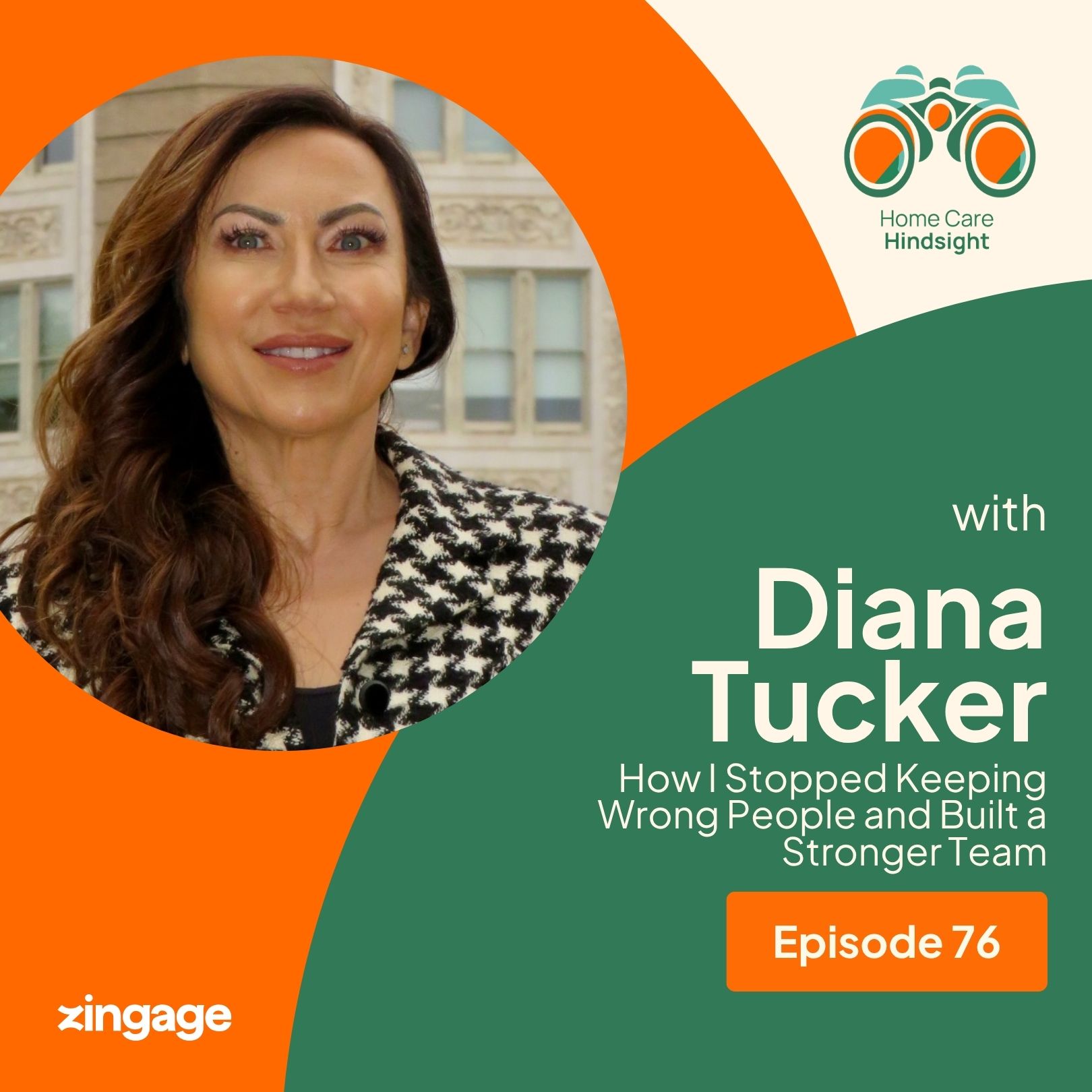
| 3/24/26 | ![]() How I Stopped Keeping Wrong People and Built a Stronger Team — Diana Tucker✨ | team buildinghome care+4 | Diana Tucker | Private Home CareZingage | St. LouisIllinois+1 | leadershiphome care+5 | — | 33m 10s | |
| 3/17/26 | ![]() The $19 Million HR Mistake (And Why Arbitration is Your Flood Insurance) — Angelo Spinola✨ | home care industrylegal compliance+4 | Angelo Spinola | PolsinelliDOJ+1 | — | home carearbitration+7 | — | 42m 07s | |
| 3/10/26 | ![]() How I Stopped Chasing Activity Metrics and Started Teaching Referral Partners Instead — Melanie Stover✨ | sales traininghome care+4 | Melanie Stover | Home Care Saleshome health+2 | — | activity metricsproductivity+6 | — | 44m 34s | |
| 3/4/26 | ![]() How I Stopped Trying to Do Everything and Built a Leadership Team Instead — Sandi McCann✨ | leadershipburnout+3 | Sandi McCann | HomeCare of the RockiesEOS+1 | — | leadership teamburnout+5 | — | 37m 17s | |
| 2/24/26 | ![]() How I Stopped Being the Bottleneck and Built a Team of Heroes Instead — Sara Wilson✨ | home careentrepreneurship+3 | Sara Wilson | Home Assist Health | Arizona | home careentrepreneur+3 | — | 28m 45s | |
| 2/17/26 | ![]() Home Care Hindsight Book Club #1 - The Coaching Habit | In this special solo episode and inaugural "book club" format, David Knack shares his journey from problem-solver to coach as his team at Zingage grows from one person to six. Facing the transition from customer-facing sales to internal leadership, David opens up about his struggle with being the "smartest guy in the room" and how The Coaching Habit by Michael Bungay Stanier transformed his approach. David walks through the seven essential questions that replaced his advice-giving habit with curiosity-driven leadership. He reveals why rhetorical questions disguised as coaching actually create the same dependency problems as direct advice, how silence became his most powerful tool, and why ending every one-on-one with "what was most useful for you?" unlocks strategic thinking in his team. This episode delivers practical frameworks for home care leaders navigating the shift from doing the work to leading the people who do the work. Lesson Takeaways: 1. Stay Curious Just a Little Bit Longer: Resist the urge to jump into problem-solving mode. Ask one more question than feels comfortable, then embrace the silence. This builds team capacity and reduces your role as the "hit by a bus" problem. 2. Kill Your Rhetorical Questions: Replace "have you tried..." with "what's the real challenge here for you?" to transform fake coaching into real development. Rhetorical questions are just advice with a question mark at the end. 3. Make Help Requests Bounded: Ask "how can I help?" to get specific, limited requests instead of taking on five new tasks. This maximizes team ownership while minimizing what lands on your plate as a leader. 4. End with Action and Reflection: Close every one-on-one with "what was most useful for you?" and "what's one action you'll take this week?" This builds strategic thinking habits and ensures conversations translate to results. 5. Understand What They Really Want: Ask "what do you want?" to uncover intrinsic motivation. This creates alignment between personal priorities and role expectations, preventing burnout and boosting performance across your team. Timestamps: 00:00 - Introduction: A new book club format for Home Care Hindsight 03:13 - The shift from revenue-generating time to internal leadership 06:09 - Creating cycles of dependence and the "hit by a bus" problem 09:35 - The seven questions that transform your leadership approach 12:24 - What's the real challenge here for you? Understanding the heart of issues 15:01 - What do you want? Emily Isbell's story about promoting caregivers 18:55 - If you're saying yes to this, what are you saying no to? 21:09 - Practical applications: End every one-on-one with reflection and action Quotes: David Knack: "There's an immediate dopamine hit that comes with having somebody bring you a problem and making that problem go away pretty quickly. But it's more work on my plate and creates this cycle of dependence." David Knack: "Often I find myself saying, what if we [insert solution], or have you tried [insert solution]. I'm creating the same problem, but it's just kind of wrapped in a slightly different dressing." David Knack: "Advice is overrated. Curiosity is underrated. As soon as I feel like I've understood the situation enough, I give advice. That's not the best way to help my team grow and be really effective." Resources: 1. The Coaching Habit by Michael Bungay Stanier: https://www.amazon.com/Coaching-Habit-Less-Change-Forever/dp/0978440749 2. Connect with David Knack on LinkedIn: https://www.linkedin.com/in/david-knack/ 3. Powered by Zingage: https://zingage.com 4. Watch this episode on Zingage's YouTube: https://www.youtube.com/@Zingage | — | ||||||
| 2/3/26 | ![]() The Broken Applicant Experience & Why Software Isn't a Magic Pill — Yvan Castilloux | Yvan Castilloux, Co-founder and CEO of Augusta.care joins host David Knack to discuss the fundamental challenges of recruiting in home care. Starting his journey in 2022, Yvan shares how discovering the "broken" applicant experience where half of potentially good candidates are confused and disengaged. This phenomenon motivated him to build solutions. He argues that solving home care's staffing problem requires aligning people, process, and technology, and debunks the myth of software as a "magic pill." The conversation dives into the critical need for sales and recruiting alignment, the surprising burnout rate among back-office staff (recruiters and schedulers), and why geographic and demographic focus is a superpower for agencies. Yvan also reflects on his biggest career mistake of reacting to every customer request instead of asking the right questions to build a unified solution, a lesson he now applies to help agencies hone their focus. Lesson Takeaways: 1. Fix the Broken Applicant Experience: Up to half of applicants are confused by generic job posts and agency messaging. Providing clear, specific information about the agency and the client match early in the process is key to engaging quality candidates. 2. Align Sales and Recruiting Strategically: Recruiting starts when sales begins. Agencies must align where they find clients with where they can successfully recruit caregivers, or risk constant fulfillment stress and recruiter burnout. 3. Embrace Focus as a Superpower: Trying to be everything to everyone dilutes effectiveness. Successful agencies consciously focus on a specific geography, client type (e.g., private pay), or caregiver demographic (e.g., students) and build their marketing and operations around it. 4. Software is a Tool, Not a Silver Bullet: Technology and AI enable automation but cannot replace the human-centric processes of home care. Success requires linking software to aligned internal operations. 5. Cross-Functional Insight Reduces Burnout: High turnover in back-office roles like scheduling is often due to burnout from inefficient, siloed processes. Enabling collaboration and data sharing between recruiters, schedulers, and sales creates a more sustainable and effective workflow. Timestamps: 00:00 – Introduction to the home care staffing challenge 01:10 – Welcome to Home Care Hindsight by Zingage 02:15 – The biggest surprise: How broken the applicant experience is 03:00 – Why caregivers are confused and how to fix it 04:10 – The importance of caregiver-client matching ("like dating") 09:10 – Reassessing strategy when you can't recruit in a sales area 10:10 – Yvan's Big Mistake: Reacting to customers instead of focusing 11:25 – A lesson from tech: Building too many tracking features 13:15 – Asking "why" to build unified solutions (The Ferrari vs. Cadillac example) 14:45 – Overrated in Home Care: Software as a magic pill 15:25 – Technology requires aligned people and processes to work 18:45 – The importance of implementation and onboarding for tech 18:55 – A Small Mistake to Quit: Lack of strategic focus 23:25 – Moving from a turnover metric to optimizing the employee journey 24:45 – The surprising problem of back-office (recruiter/scheduler) turnover 25:30 – Burnout from misalignment and inefficient processes 26:15 – Empowering collaboration between recruiters and schedulers 28:40 – A Recent Win: Evolving from a point solution to a core staffing partner 29:05 – Closing advice: Implement one change that can help your business Quotes: Yvan Castilloux: "Solving a problem in home care is both people and technology. Link both together and you'll find a solution." Yvan Castilloux: "AI is helping us do more automation, but it's not a magic pill. Like everybody says, AI will replace workers and so on. It's not gonna happen anytime soon." Yvan Castilloux: "If you're a home care agency, a caregiver is like a product… you want to build the right product for the audience you're targeting, but you also want the sales team to understand where the product fits the best." David Knack: "There are no silver bullets for this industry… it's something that's really complicated." Resources: 1. Connect with Yvan Castilloux LinkedIn: https://www.linkedin.com/in/yvancastilloux/ 2. Learn more about Augusta.care: https://www.augusta.care/ 3. Connect with David Knack on LinkedIn: https://www.linkedin.com/in/david-knack/ 4. Powered by Zingage: https://zingage.com 5. Watch this episode on Zingage's YouTube: https://www.youtube.com/@Zingage | — | ||||||
| 1/27/26 | ![]() I Let Likability Blind Me to Competence (How I Fixed My Hiring Process) — Adam Sall | Adam Sall, President and Co-founder of Advantage Pointe Home Care, joins host David Knack to discuss how his agency transitioned from traditional private duty care to becoming a vital partner for value-based healthcare entities. Drawing from his background on Wall Street, Adam explains the mechanics of risk-sharing models like MSOs and ACOs and how home care can save these organizations millions by preventing unnecessary 911 calls and hospitalizations. Adam opens up about his biggest mistake; being a "terrible interviewer" who let personal likability cloud his judgment and how he empowered an expert HR team to prioritize competence over "shooting the breeze." The conversation also explores Adam's philosophy on "sacrificing margin" to pay caregivers more, the implementation of a company-wide revenue share plan, and the critical art of having a real human conversation with staff rather than treating them like widgets. Lesson Takeaways: 1. Know Your Blind Spots in Hiring: Being a "people person" can lead to poor hiring decisions based on likability rather than skill. Trust specialized HR teams to use methodical processes to ensure the right fit. 2. Bridge the "Post-Acute" Gap: Value-based entities (MSOs/ACOs) often lack a mechanism to intervene in the home. Home care provides the "functional block" that prevents $18,000 hospitalizations for as little as $144 in triage care. 3. Align Incentives Through Revenue Sharing: Implementing a revenue share for the entire organization, from receptionists to operations, ensures everyone is invested in the quality of the "match" between caregiver and client. 4. Sacrifice Margin for Quality: Protecting margins at the expense of caregiver pay is a common industry blind spot. Charging more to pay caregivers better attracts higher-quality talent and supports retention. 5. Move from "Speaking At" to "Conversing With": Simply reading a list of patient requirements to a caregiver isn't a conversation. True engagement involves checking in on their day and vetting their specific comfort level with tasks like colostomy bag care or heavy transfers. Timestamps: 00:00 – Welcome to Home Care Hindsight by Zingage 01:25 – Introduction to Adam Sall and Advantage Pointe Home Care 01:54 – From Wall Street to Healthcare: The personal story behind the agency 03:32 – Transitioning into value-based care and care navigation 04:46 – Remedial Healthcare: Explaining ACOs vs. MSOs and risk-sharing 07:23 – The pitch: Using data to prove the value of home care to MSOs 08:49 – Real-world example: A $144 intervention vs. an $18,000 hospital bill 10:02 – Adam's Big Mistake: Being a "terrible interviewer" 11:58 – Building a methodical hiring process and stepping back from the final say 14:54 – Underrated practice: Sacrificing margin to attract better caregivers 17:24 – Creating a revenue share plan for the entire administrative team 21:14 – A common small mistake: Speaking at caregivers instead of having a conversation 25:03 – Personal values: How Adam's father influenced his leadership style 26:43 – A recent win: Scaling value-based success into Georgia, Texas, and Nevada 27:50 – Closing advice for healthcare leaders: Focus on the home Quotes: Adam Sall: "Skill and competence has to trump just me liking you as a person." Adam Sall: "You have to be willing to sacrifice margin to attract and retain a higher quality caregiver." Adam Sall: "If you don't know about what's happening post-acute... you're gonna get your clock cleaned by people who do have an in-home strategy." David Knack: "Home care is a very simple solution to a really complicated set of problems." Resources: 1. Connect with Adam Sall on LinkedIn: https://www.linkedin.com/in/adam-sall-01461856/ 2. Learn more about Advantage Pointe Home Care: https://www.advantagepointehomecare.com/ 3. Connect with David Knack on LinkedIn: https://www.linkedin.com/in/david-knack/ 4. Powered by Zingage: https://zingage.com 5. Watch this episode on Zingage's YouTube: https://www.youtube.com/@Zingage | — | ||||||
| 1/20/26 | ![]() The $10-an-Hour Hire That Saved My Business (And Why I Waited Too Long) — Lisa Fausey | Lisa Fausey, owner of 3 Home Helpers Home Care franchises, joins host David Knack to discuss her employee-centric approach to building a thriving home care business. Lisa shares how she shifted her focus from simply driving revenue to creating a culture where caregivers feel valued, heard, and supported. She opens up about her biggest early mistake, waiting over a year to hire her first office employee, and how overcoming that fear transformed her business and personal sanity. Lisa dives into the underrated power of "liberal leave" over traditional PTO, the importance of voluntary benefits for part-time caregivers, and why tracking the right KPIs like starts of care and overtime is essential for sustainable growth. She also explains how tools like Zingage help strengthen caregiver engagement and connection in a distributed workforce. The conversation highlights the tangible results of investing in people: stronger retention, a vibrant company culture, and a business that runs smoothly even when the owner steps away. Lesson Takeaways: 1. Hire Before You're Drowning: Don't let fear of spending stop you from hiring help. Delegating administrative tasks early frees you to focus on growth and prevents burnout. 2. Culture Is a Competitive Advantage: An employee-centric approach, listening, supporting, and investing in your team, differentiates you in a tight labor market and drives retention. 3. Liberal Leave Builds Trust: Offering flexible, responsibly managed time off can be more valued by staff than traditional PTO and reduces administrative complexity. 4. Track the Right KPIs, Not All of Them: Focus on actionable metrics like billable hours, starts of care, and overtime. These reflect real business health and growth more than vanity numbers. 5. Benefits Matter, Even for Part-Timers: Voluntary benefits like 401(k) matching, dental, and vision show caregivers they're valued and help build long-term financial security. Timestamps: 00:00 – Introduction to Lisa Fausey and Home Helpers Home Care 01:15 – Lisa's "why": Building a business to empower employees 02:30 – How an employee-centric culture sets her apart 04:00 – Using Zingage to engage and connect with caregivers 05:05 – How to successfully roll out an engagement platform 06:10 – Lisa's biggest mistake: Waiting too long to hire help 09:10 – The breaking point: "I was ready to give the franchise back" 10:20 – Hiring her first employee and scaling past 150–200 hours/week 11:40 – What made her first hire successful: Training and trust 13:00 – Learning from a bad hire: The importance of cultural fit 15:00 – Underrated industry practices: Liberal leave & voluntary benefits 17:45 – Most valuable benefit: Company-matched 401(k) 18:50 – A benefit that failed: Virtual health plans 20:05 – Caregiver dress code and professionalism standards 21:00 – The small mistake owners make: Not tracking KPIs 22:15 – Which KPIs matter most: Hours, starts of care, overtime 24:50 – A recent win: Revitalized company culture and holiday party success 28:10 – Closing thoughts Quotes: Lisa Fausey: "The main reason I opened this business was the ability to employ people and help change their lives." Lisa Fausey: "Don't wait. Hire as soon as you can. I was so afraid to spend money that wasn't generating money, and it almost cost me the business." Lisa Fausey: "If you don't track your numbers, you're just flying by the seat of your pants." David Knack: "Starts of care is a metric you can't hide from. It tells you if you're really growing or just deepening care with existing clients." Resources: 1. Connect with Lisa Fausey on LinkedIn: https://www.linkedin.com/in/lisafausey/ 2. Learn more about Home Helpers Home Care: https://www.homehelpershomecare.com/ 3. Connect with David Knack on LinkedIn: https://www.linkedin.com/in/david-knack/ 4. Powered by Zingage: https://zingage.com 5. Watch this episode on Zingage's YouTube: https://www.youtube.com/@Zingage | — | ||||||
| 1/13/26 | ![]() Don't Copy-Paste Your Growth Strategy (And Other Lessons From Scaling Into NYC) — Mordechai Wolhendler | Mordechai Wolhendler, CEO of GlattHealth Consulting Group and co-founder of the Home Care Show, joins host David Knack to discuss the complexities of scaling a home care business across different regions and the hard lessons learned along the way. Mordechai shares his experience expanding an agency from upstate New York into New York City, revealing how assumptions about "copy-paste" growth can lead to major operational and cultural missteps. He breaks down the stark differences in regulations, reimbursement models, caregiver pay, and even communication styles between markets, emphasizing that what works in one region may fail in another. The conversation explores the "why factor" in decision-making, the importance of understanding local demographics, and how the right supervisor can transform an underperforming employee into a star. Mordechai also highlights the upcoming Home Care Show in Miami, Florida, an event designed for multi-state operators and growing agencies, and reflects on the value of taking time for self-care, even in a demanding industry. Lesson Takeaways: 1. Growth Isn't Copy-Paste: Each market has unique regulations, reimbursement structures, and cultural dynamics. What works in one region may not translate to another. Research and adaptation are key. 2. Understand the "Why Factor": Whether dealing with employees, clients, or sellers, digging into the underlying motivations behind decisions can shape better outcomes and deal structures. 3. The Right Fit Can Change Everything: An employee's performance can dramatically shift under different leadership. Don't underestimate the impact of supervisor-employee alignment. 4. Local Knowledge Drives Success: To truly serve a community, you must understand its demographics, cultures, and daily rhythms, sometimes block by block. 5. Invest in Yourself, Too: As a leader, taking time for self-care (whether it's laser eye surgery or simply setting boundaries) is essential for sustained performance and well-being. Timestamps: 00:00 – Introduction to Mordechai Wolhendler and his background in home care 01:15 – Overview of Health Consulting Group's services: startups, growth, M&A 02:35 – Common projects: state reporting, grants, and regulatory compliance 03:30 – The "building permit" analogy for home care licensure 04:15 – Announcing the Home Care Show in Miami (Feb 17–18) 05:00 – The origin and vision behind the Home Care Show 06:25 – Mordechai's biggest mistake: assuming NYC expansion would be "copy-paste" 07:50 – How regulations and business models differ in NYC vs. upstate NY 09:40 – Reimbursement challenges in a Medicaid-heavy, volume-driven market 11:00 – Cultural and communication differences in NYC 12:00 – How they adapted: finding a niche and differentiating in a saturated market 13:30 – The importance of understanding local demographics and cultures 14:40 – Underrated in home care: the "why factor" 16:25 – How to dig beyond surface-level answers to uncover real motivations 18:10 – The challenge of working with human beings as your "product" 19:50 – A small mistake owners make: blaming yourself for employee underperformance 21:10 – Setting clear KPIs and knowing when to let go of a "good" employee 22:10 – Balancing "hire slow, fire fast" with employee growth potential 23:40 – How the right supervisor can turn a struggling employee into a top performer 25:00 – The disparity between hiring office staff vs. caregivers 26:30 – The difficulty of predicting caregiver reliability and fit 28:10 – A recent win: successfully scaling the Home Care Show to a two-day event 29:20 – Personal win: scheduling laser eye surgery consultation after years of hesitation 30:45 – Plug: The Home Care Show in Miami FL for multi-state and growth-focused operators 31:05 – Closing remarks Quotes: Mordechai Wolhendler: "A mistake is only a mistake if you don't learn anything." Mordechai Wolhendler: "New York City is a volume game. Outside of the city, even in the rest of the state, you don't have that the same way." Mordechai Wolhendler: "The 'why factor' is something people don't look at enough. Understanding why someone wants to sell their agency completely alters the deal structure." David Knack: "Sometimes you can copy-paste, but not always. You have to be ready to go back to the drawing board." Mordechai Wolhendler: "We often don't give ourselves enough time to ourselves. Taking care of yourself is something we need to do more of." Resources: 1. Connect with Mordechai Wolhendler on LinkedIn: https://www.linkedin.com/in/mordechai-wolhendler-353b63a2/ 2. Connect with David Knack on LinkedIn: https://www.linkedin.com/in/david-knack/ 3. Powered by Zingage: https://zingage.com 4. Watch this episode on Zingage's YouTube: https://www.youtube.com/@Zingage | — | ||||||
| 1/6/26 | ![]() How I Stopped Chasing Too Many Things and Mastered Focus — Matt Kroll | Matt Kroll, President of Personal Care Services at Bayada Home Health Care, joins host David Knack for a deep dive into the lessons from his 25-year career. Matt opens up about his biggest strategic mistake: trying to launch and manage too many different service lines at once in a search for an "easy way out," which diluted focus and resources. He explains how learning to master one thing before diversifying became the key to successfully scaling operations across over 100 offices. Matt shares Bayada's relentless focus on caregiver recognition, wages, and career advancement as their cultural north star. The conversation delves into the critical balance between investing in caregivers and maintaining financial health, the underrated need for the home care industry to embrace healthcare outcomes and data, and how Bayada is using predictive AI models to prevent hospitalizations and improve care. Lesson Takeaways: 1. Master One Thing Before You Diversify: The temptation to add new services when one gets challenging is strong, but it dilutes focus. True success comes from building excellence and infrastructure in one core service before expanding. 2. Link Short-Term Actions to Long-Term Vision: Avoid the exhausting cycle of week-to-week reactivity. Build business rhythms that connect daily and weekly metrics to quarterly and annual goals to create proactive, sustainable momentum. 3. Invest in Quality and Support, Not Just Wages: While competitive pay is crucial, caregivers and families deeply value consistent, reliable support. Investing in quality supervision and being present for your team builds loyalty and better care outcomes. 4. Embrace Data as a Healthcare Partner: To secure our place in the healthcare ecosystem, we must move beyond satisfaction metrics. Tracking and improving clinical outcomes like falls and hospitalizations demonstrates our value to payers and referral sources. 5. "Embrace the Chaos" with Consistent Execution: Private pay home care is inherently volatile. The key isn't controlling every discharge or admission, but maintaining consistent marketing, admissions, and quality efforts over the long term, like running a marathon. Timestamps: 00:00 - The privilege of care and what hooked Matt for 25 years 04:43 - The alternate path: Wall Street and the importance of relationships 06:50 - Bayada's cultural markers: Recognition, wages, and caregiver advancement 08:40 - The financial equation: Investing in caregivers while maintaining margins 11:30 - The big mistake: Trying to do too many things at once 14:25 - How to thoughtfully diversify payer sources (Medicaid vs. Private Pay) 16:40 - The underrated thing: Embracing our role in the healthcare ecosystem 18:20 - The metrics that matter: Tracking falls, hospitalizations, and ER visits 21:30 - Using predictive AI and care data to prevent adverse events 26:45 - Managing at scale: Building business rhythms beyond week-to-week volatility 29:50 - The little mistake: Managing week-to-week instead of long-term 32:15 - The importance of betting on quality and supervision 35:10 - A recent win: Using data to drive a new "Enhanced Quality of Care" model 37:45 - What to plug: Getting involved with industry advocacy Quotes: Matt Kroll: "I think what I learned is... the need to have a plan to be really good at one thing before you start trying to do multiple things." Matt Kroll: "Quality isn't just about going out and supervising to make sure things are done right. It's about being there when the caregivers and when the families need you." David Knack: "If all we are as a home care agency is a staffing company, it's gonna be really hard to compete... If you are finding other ways to add value... you make their life so many multiples better." David Knack: "You've got to stop being the 'hit by a bus' problems in our own businesses. It's gotta get out of our brains... thanks to the innovations of AI, you can systematize that knowledge." Resources: 1. Connect with Matt Kroll on LinkedIn: https://www.linkedin.com/in/matt-kroll/ 2. Learn more about Bayada Home Health Care: https://www.bayada.com/ 3. Get involved with the Home Care Association of America (HCAOA): https://www.hcaoa.org/ 4. Connect with David Knack on LinkedIn: https://www.linkedin.com/in/david-knack/ 5. Powered by Zingage: https://zingage.com 6. Watch this episode on Zingage's YouTube: https://www.youtube.com/@Zingage | — | ||||||
| 12/18/25 | ![]() How I Stopped Caring About "Tech" And Focused On What Works — Shauna Sweeney | Shauna Sweeney, founder and CEO of Tender Care, joins host David Knack to discuss the pivotal mistake that reshaped her approach to building technology for families navigating aging and care. Shauna, a former Facebook executive who entered the care space while caring for her father with Alzheimer's, opens up about how she initially overlooked a simple, physical solution, the Tender ID, because it didn't fit the "tech founder" mold. She shares how clinging to the vision of a complex, all-in-one digital platform delayed solving a critical, immediate need: giving first responders instant access to vital health information during emergencies. Shauna explains why "letting what a founder is supposed to look like get in the way of actually solving the problem" was a costly error, and how embracing a tangible, QR-based tool unlocked rapid adoption and real impact. The conversation explores the underrated power of video for home care marketing, the small mistake of ignoring online reputation, and how the industry must adapt to a more tech-savvy, time-starved family decision-maker. Shauna also shares exciting news about journalist Lisa Ling joining Tender Care as Chief Caregiver Advocate to amplify stories of care. Lesson Takeaways: 1. Problems Need Solutions, Not Your Ego: Don't let preconceived notions of what a "tech company" or "founder" should be stop you from building what the market clearly needs. If a simple, tangible solution works, build it, even if it's not the sleek software you envisioned. 2. Control What You Can Promise: Before building complex integrations reliant on other systems, start with solutions you can fully control and deliver flawlessly. This builds trust and allows you to make and keep clear promises to your users. 3. Show Your Humanity on Video: Home care is built on trust and human connection. Underutilized video is a powerful tool to let families see the compassionate, real people behind your agency. Authenticity beats polished production every time. 4. Tend Your Digital Reputation: A single unanswered negative review can undermine years of trust-building. Proactively manage your online presence; it's a small task with a massive impact on a family's decision to choose you. 5. Competition is Heating Up, Differentiate: As demand grows, so does competition. Compete on quality, trust, and hyper-local, personalized relationships. Big agencies must learn to "stay big but feel small" to win. Timestamps: 00:00 – Introduction to Shauna Sweeney and Tender Care's mission 02:10 – Shauna's background: From Facebook to family caregiver 05:30 – The recurring mistake: Ignoring market signal for a physical product 08:45 – The "Tender ID": A simple QR code that replaces the Vial of Life 11:13 – How the ID triggers emergency alerts and stabilizes families 16:10 – Letting founder ego block the right solution 20:18 – The most underrated tool in home care: Authentic video marketing 25:22 – The little mistake: Neglecting your online review reputation 28:09 – The future of home care: Tech-savvy buyers and hyper-local trust 33:20 – A recent win: Lisa Ling joins Tender Care as Chief Caregiver Advocate 35:07 – How to get Tender IDs for your clients and join the trusted network Quotes: Shauna Sweeney: "My big mistake was letting the better of what one is supposed to look like when solving a problem, get in the way of actually solving the problem. As soon as we actually built these [Tender IDs], they started to go. It's the classic story of the fish jumping into the boat." Shauna Sweeney: "Every day you have to choose to be in service of the solution more than your ego. You have to want to solve the problem more than you want to look cool." David Knack: "If all we are as a home care agency is a staffing company, it's gonna be really hard to compete... If you are finding other ways to add value, to provide useful resources... it doesn't matter that you cost 20% more, you make their life so many multiples better that they'll pay it." David Knack: "Families are gonna fall in love with you. You just have to go out there and let them." Resources: 1. Connect with Shauna Sweeney on LinkedIn: https://www.linkedin.com/in/shaunas/ 2. Learn more about Tender Care and the Tender ID: https://trytendercare.com/ 3. Apply to join the Tender Care Trusted Network: https://trytendercare.com/join-the-network/ 4. Connect with David Knack on LinkedIn: https://www.linkedin.com/in/david-knack/ 5. Powered by Zingage: https://zingage.com 6. Watch this episode on Zingage's YouTube: https://www.youtube.com/@Zingage | — | ||||||
| 12/9/25 | ![]() My Fear of Risks Slowed My Career Down — Michelle Cone | Michelle Cone, SVP of Industry Engagement at HomeWell Franchising, joins host David Knack for a conversation that spans from marathon running to mission-driven leadership. Michelle opens up about the career mistake that shaped her trajectory: playing it safe early on and not taking enough risks. She explains how saying "yes" to an unfamiliar role in home care as an inexperienced mom became the turning point that led to a 27-year career. Michelle dives into the underrated core of home care: delivering exceptional quality care as the ultimate growth engine. She unpacks why a strong intake process is a make-or-break function, how to avoid common pitfalls that waste time and trust, and why the industry's shift toward value-based care means every agency must pay attention to CMS and healthcare ecosystem changes, even if they're private-pay. The conversation also explores how to use AI and automation to free up time for human connection, why the best caregivers don't want to work with "bozos," and how to build a culture where mission drives every operational decision. Lesson Takeaways: 1. Take the Leap Before You Feel Ready: Waiting for the perfect moment or full confidence can cost you career-defining opportunities. Often, the best growth comes from saying "yes" and stretching into the unknown. 2. Quality Care is Your Best Marketing: Your first client and the quality of care you deliver set the tone for everything; caregiver recruitment, retention, client satisfaction, and community reputation. Start small, excel, and let the results speak. 3. Master the Intake Conversation: A great intake process isn't about selling, it's about listening, educating, and qualifying. By understanding a caller's real needs and fears, you build trust whether they become a client or not. 4. Automate the Robotic, Humanize the Relational: Use technology to handle administrative tasks so your team can focus on what matters: in-person introductions, caregiver support, and building trust with clients and families. 5. Pay Attention to the Healthcare Ecosystem: Even if you're private-pay, changes in CMS, Medicaid, and hospital-at-home models impact your referral sources and market opportunities. Ignoring these shifts is a strategic mistake. Timestamps: 00:00 – The loneliness of caregiving and the need for human connection 02:10 – Introducing Michelle Cone and her role at HomeWell Franchising 05:30 – The mistake of avoiding risk early in her career 08:45 – How a scheduling coordinator job changed her life 11:20 – Why self-awareness and team diversity drive success 14:50 – The most underrated thing in home care: exceptional quality care 18:10 – Why your best caregivers don't want to work with "bozos" 21:45 – The shiny object trap: AI, tech, and keeping the human touch 24:30 – How a solid intake process transforms conversion and trust 30:15 – Turning lost leads into future clients with education and empathy 34:00 – Michelle's recent win: Record franchise growth at HomeWell 36:20 – How to connect with HomeWell and explore franchising Quotes: Michelle Cone: "I wish in my earlier career I would've taken more risks. You're building confidence, you're becoming a subject matter expert, and we all face imposter syndrome. Take the jump and then stretch." Michelle Cone: "Your greatest asset starts with your very first client and providing exceptional care to that client. Great quality client care is your greatest acquisition tool; for clients, for caregivers, for retention." David Knack: "Your best caregivers don't want to work with inconsistent caregivers or bad hires. If they feel like they're the only ones who care, they'll wonder if they're in the right organization." David Knack: "The question is: what parts of the scheduler role can we automate to prevent them from being stuck in the office and instead allow them to be in clients' homes doing introductions?" Resources: 1. Learn more about HomeWell Franchising: https://homewellfranchising.com/ 2. Find a HomeWell agency near you: https://homewellcares.com/ 3. Connect with Michelle Cone on LinkedIn: https://www.linkedin.com/in/michelle-cone-748378127/ 4. Connect with David Knack on LinkedIn: https://www.linkedin.com/in/david-knack/ 5. Powered by Zingage: https://zingage.com 6. Watch this episode on Zingage's YouTube: https://www.youtube.com/@Zingage | — | ||||||
Showing 25 of 87
Pitch Fit is a Pro feature
See how bookable this show is for guests, which brands already advertise, the per-episode ad value, and the best-fit guest and sponsor profile. The numbers are blurred on the free plan.
How readily this show books outside guests like you.
How proven this show is for host-read sponsorships.
For Guests
ProFor Advertisers
ProUpgrade to Pro to unlock guest cadence, sponsor categories, fit scores, and per-episode ad value for this show.