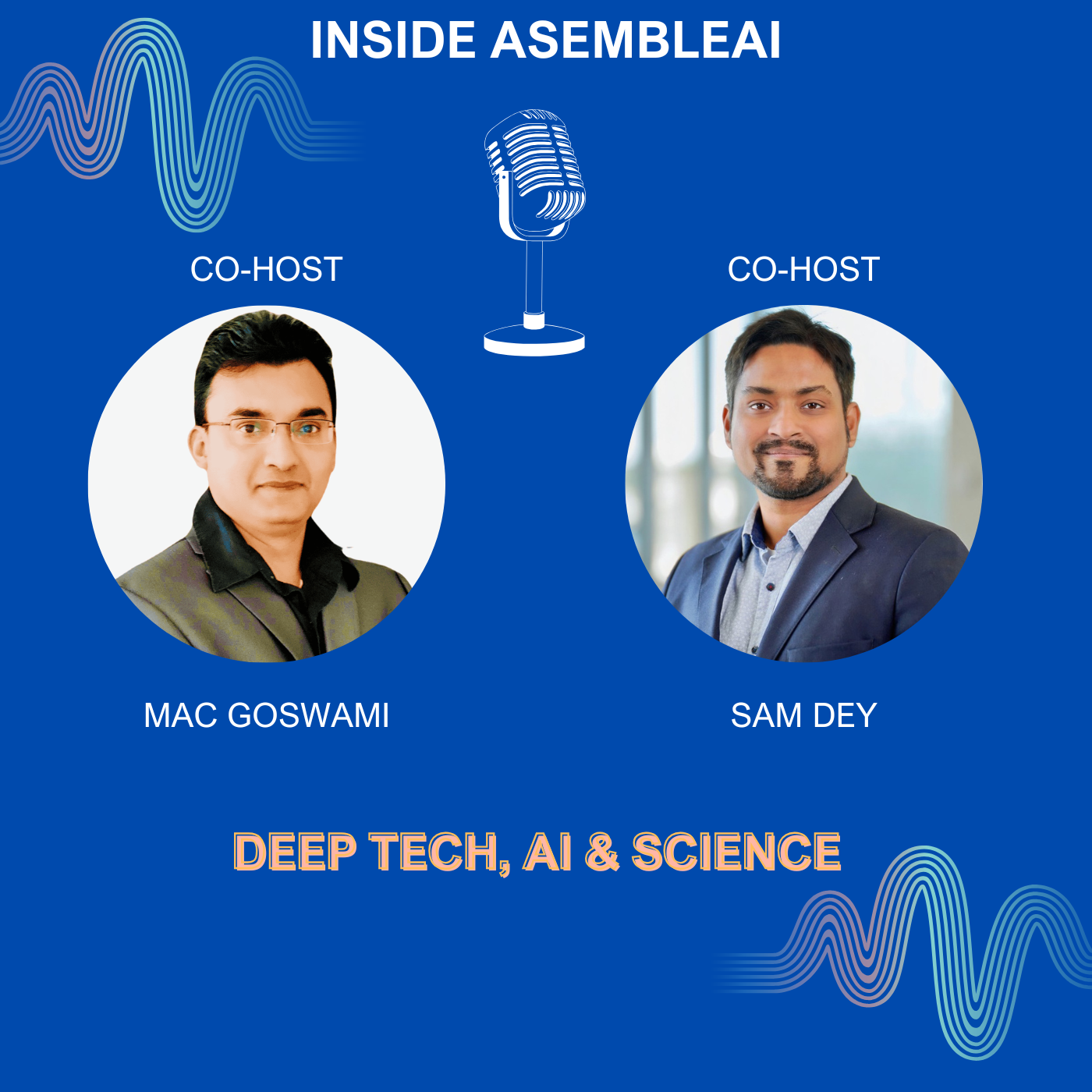
Inside AsembleAI: DeepTech, AI & Science
AsembleAI brings you thought-provoking conversations at the nexus of artificial intelligence, innovation, and leadership. In each episode, hosts Mac and Sam, veterans in data and tech world, sit down with AI researchers,...
Insights from recent episode analysis
Audience Interest
Podcast Focus
Publishing Consistency
Platform Reach
Insights are generated by CastFox AI using publicly available data, episode content, and proprietary models.
Total monthly reach
Based on 1 signal.
Built from
By chart position
- 🇺🇸United States · TechnologyHOME#13394K to 2.1M
- 🇳🇴NO · Technology#217K to 90K
- 🇬🇧United Kingdom · Technology#2511K to 59K
- Per-Episode Audience
Est. listeners per new episode within ~30 days
422K to 2.2M🎙 Daily cadence·62 episodes·Last published 1w ago - Monthly Reach
Unique listeners across all episodes (30 days)
1.4M to 7.4M🇺🇸93%🇳🇴4%🇬🇧3% - Active Followers
Loyal subscribers who consistently listen
773K to 4.1M
Market Insights
Platform Distribution
Reach across major podcast platforms, updated hourly
Total Followers
—
Total Plays
—
Total Reviews
—
* Data sourced directly from platform APIs and aggregated hourly across all major podcast directories.
| Date | Episode | Description | Length | ||||||
|---|---|---|---|---|---|---|---|---|---|
| 10/17/26 |  EP 79: The “Why Now” Test for AI Startups | Vanessa Larco, VC & Formerly NEA Partner | Vanessa Larco has sat on both sides of the table. She built products at Microsoft, Disney, Twilio, and Box, then led investments at NEA, including Mejuri and Kindred, and watched Robinhood scale to its IPO as a board observer. Sam and Mac talk with her about what actually holds up once the pitch deck closes.Topics covered:Why a founder’s roadmap, and what’s missing from it, shows how they make decisionsSkill, luck, and the dynamics no investor can predictProduct market pull: users who would be upset if you took the product awayWhy enterprise AI gets the capital, and where consumer AI is still openThe hybrid go-to-market challenge of selling AI to small businessesAI-native companies vs. companies that use AI behind the scenes without selling itThe “why now” framework behind Mejuri and KindredLessons from Robinhood’s founders on urgency, obsession, and speedAgent traffic vs. human traffic, and why product teams will need agent metricsHow a venture firm uses AI agents, and why conviction in diligence stays humanGuest Bio: Vanessa Larco is co-founder of Premise Venture Partners and was previously a Partner at NEA, a fund with over $25 billion in AUM, where she led investments in brands like Mejuri and Kindred. Before venture, she built products at Microsoft, Disney, Twilio, and Box. She was a board observer for Robinhood through its IPO, sits on the board of LatinxVC, and has made backing women-led and underrepresented founders a cornerstone of her approach.Connect: Find Vanessa on LinkedIn, where she says she’s most responsive. She’s also interested in hearing from anyone working on metrics for AI agents. | 42m 11s | ||||||
| 10/8/26 | 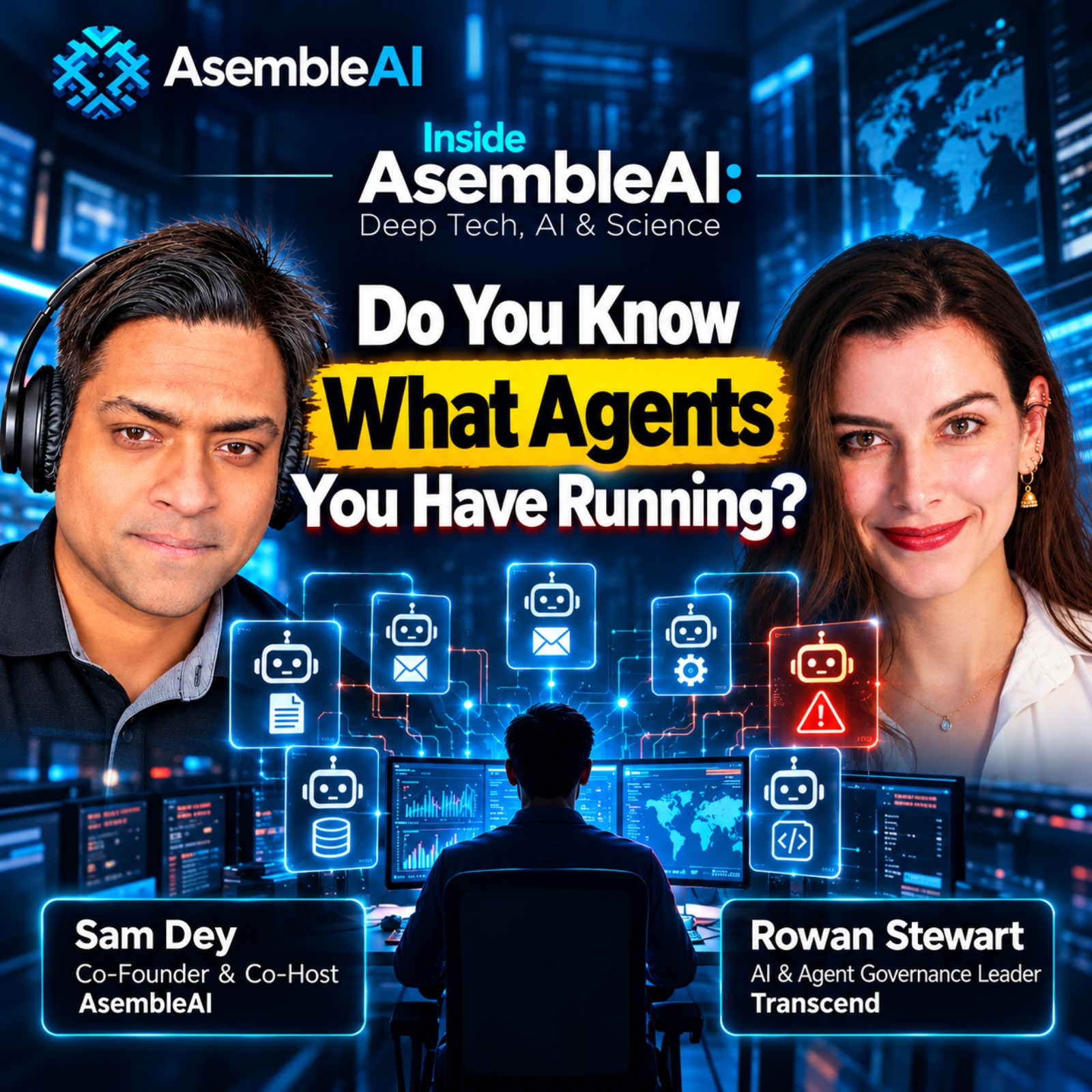 EP 78: Do You Know What Agents You Have Running? Transcend's Rowan Stewart on AI Agent Governance | Rowan Stewart has watched companies rush AI products to market without the governance to back them up, first at BCG and now at Transcend, where the clients include Robinhood, Brex, and Groupon. Sam and Rowan discuss why governance works best as infrastructure from day one, and why agents raise the stakes.Topics covered:"Pilot purgatory": why promising AI proofs of concept die at the edge of productionThe cost of rushing: lost customer trust and bad press matter more than regulatory finesEmbedded vs. bolted-on governance: a stack of paperwork and a handshake vs. encoded, auditable controlsDeterministic controls for non-deterministic systems, and why a system prompt isn't a real controlHuman in the loop at scale: a 100-person company with five agents per employee, and how SMBs should adaptWhy agents shouldn't inherit their owner's permissions, and why MCP tool restrictions aren't sufficientAgent observability: knowing what your agents are doing across the enterpriseHow guardrails let teams move faster, and using signals like denial rates to tune policyAI governance vs. responsible AI: business outcomes vs. net benefit to humanityThe one gap to fix first: do you know what agents you even have running?Aligning incentives between legal/compliance and product/data science teamsGuest Bio: Rowan Stewart is an AI and Data Safety Product Leader at Transcend, which helps companies like Robinhood, Brex, and Groupon govern and activate their data responsibly. Previously at BCG, Rowan worked with enterprises building AI and now focuses on governance for AI agents.Connect: Find Rowan Stewart on LinkedIn. Rowan's profile link is in the show notes. | 31m 40s | ||||||
| 10/5/26 | 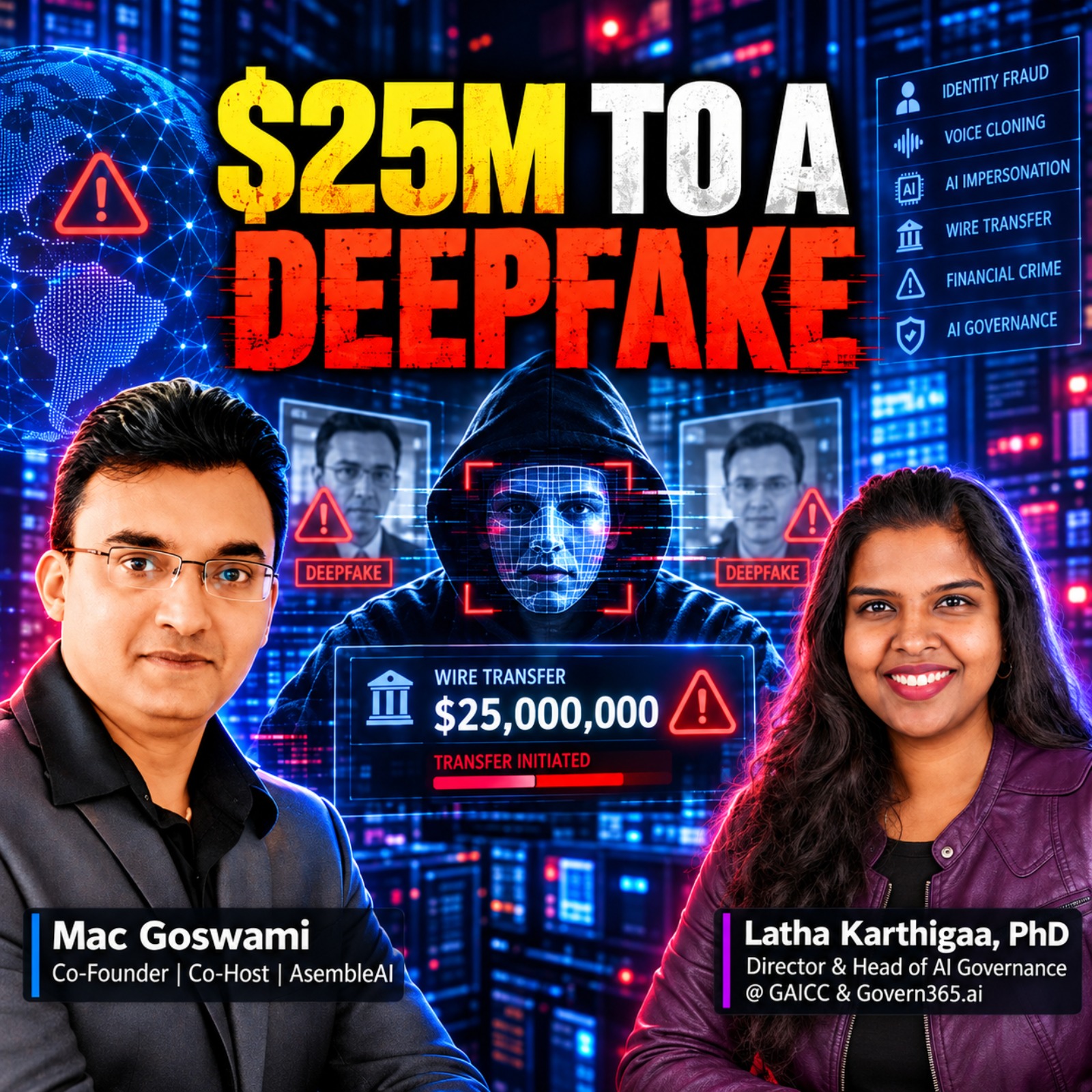 EP 77: They Transferred $25M to a Deepfake — Why Your AI Isn't as Governed as You Think | Dr. Latha Karthigaa | In this episode of Inside AsembleAI, host Mac Goswami sits down with Dr. Latha Karthigaa — Director & Head of AI Governance at the Global AI Certification Council (GAICC) — on why most companies that think their AI is governed are dangerously wrong, and what responsible AI actually looks like.What's Covered:"A Policy Is Not Governance" — The biggest myth in enterprise AI. Latha's highway analogy: governance is the guardrail that lets you drive faster, not the thing slowing you down.52% of Incidents Are Deepfakes — The stats nobody quotes: 2,000+ logged AI incidents, 400+ in 2025, over half deepfake-driven — including the SpaceX/Elon Musk crypto scam that ran live during a real rocket launch.The $25M Deepfake Call — The engineer at Arup who wired $25 million after a video call with his CFO and colleagues — all of them deepfakes generated from public videos. Why employee training, not just policy, is the real defense.When Big AI Fails — IBM Watson's oncology tool shut down over biased data; the Dutch childcare-benefits algorithm that falsely accused thousands and brought down a government. Why Latha says the best governance pros are empathetic humans first.Who Owns the Risk? — "ChatGPT isn't responsible — you are." Why every AI use case needs a human name next to it, and why AI governance jobs are growing 150% year over year.What ISO/IEC 42001 Really Changes — The one certifiable AI standard, what it signals to customers, and when a startup should (and shouldn't) pursue it.Key Quote: "Policy is like potential power. Execution is the real power."Connect with Latha: LinkedIn: https://www.linkedin.com/in/lathakarthigaa/ GAICC: https://www.gaicc.org/ · YouTube: Latha – AI GovernanceFollow and subscribe to AsembleAI: Spotify | Apple Podcasts | Amazon Music | iHeart Radio | YouTube | Substack | 33m 21s | ||||||
| 9/16/26 | 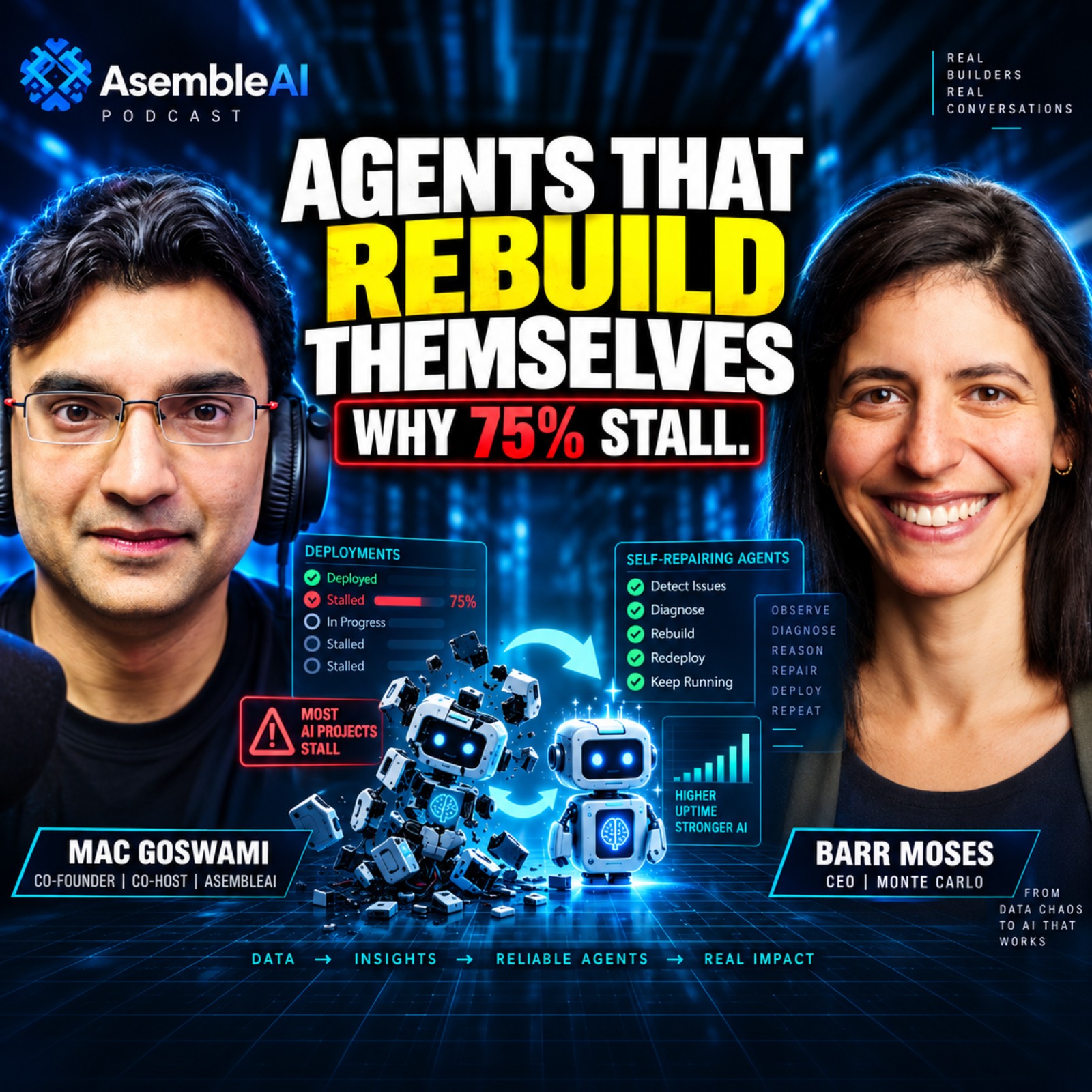 EP 76: Dashboards Are Wrong in the Background. AI Is Wrong in Your Face | Barr Moses, Monte Carlo | This episode was recorded live from the Ai4 conference podcast pavilion, where host Mac Goswami sat down with Barr Moses — CEO & co-founder of Monte Carlo, creator of the data observability category and now builder of the agent trust platform — about what it actually takes to make AI trustworthy in production.What's Covered:"AI Is Wrong in Your Face" — Barr's framing of the trust gap: dashboards were always wrong quietly in the background; AI is wrong out loud, and it'll argue with you. Why trust is the biggest thing standing between pilots and production.The Four Layers of Agent Failure — Context, performance, behavior, and output. Why all four can look perfect and the agent still fails — and why you have to watch all of them together.The Flight That Already Left — The airline agent that recommended a flight that departed that morning. The agent was fine; the context was stale. The most surprising failure mode nobody plans for.Where to Start — Make ONE agent great, not a hundred. And why the hardest first step is simply defining what "good" even looks like.The Reinforcement Loop — The idea Barr's most excited about: agents that self-identify what went wrong, propose a fix, submit a PR for human approval, and use it as tomorrow's baseline. Agents that rebuild themselves every day — running in production today.100% AI-First — Why every line of Monte Carlo's code is AI-generated, how it made them 3–5x faster, and Barr's stoplight analogy for where human-in-the-loop is heading.Key Quote: "Dashboards are wrong in the background. AI is wrong in your face — it'll argue with you."Connect with Barr: LinkedIn: Barr Moses : https://www.linkedin.com/in/barrmoses/Monte Carlo: https://www.montecarlo.aiFollow and subscribe to AsembleAI: Spotify | Apple Podcasts | Amazon Music | iHeart Radio | YouTube | Substack | 27m 27s | ||||||
| 9/15/26 | 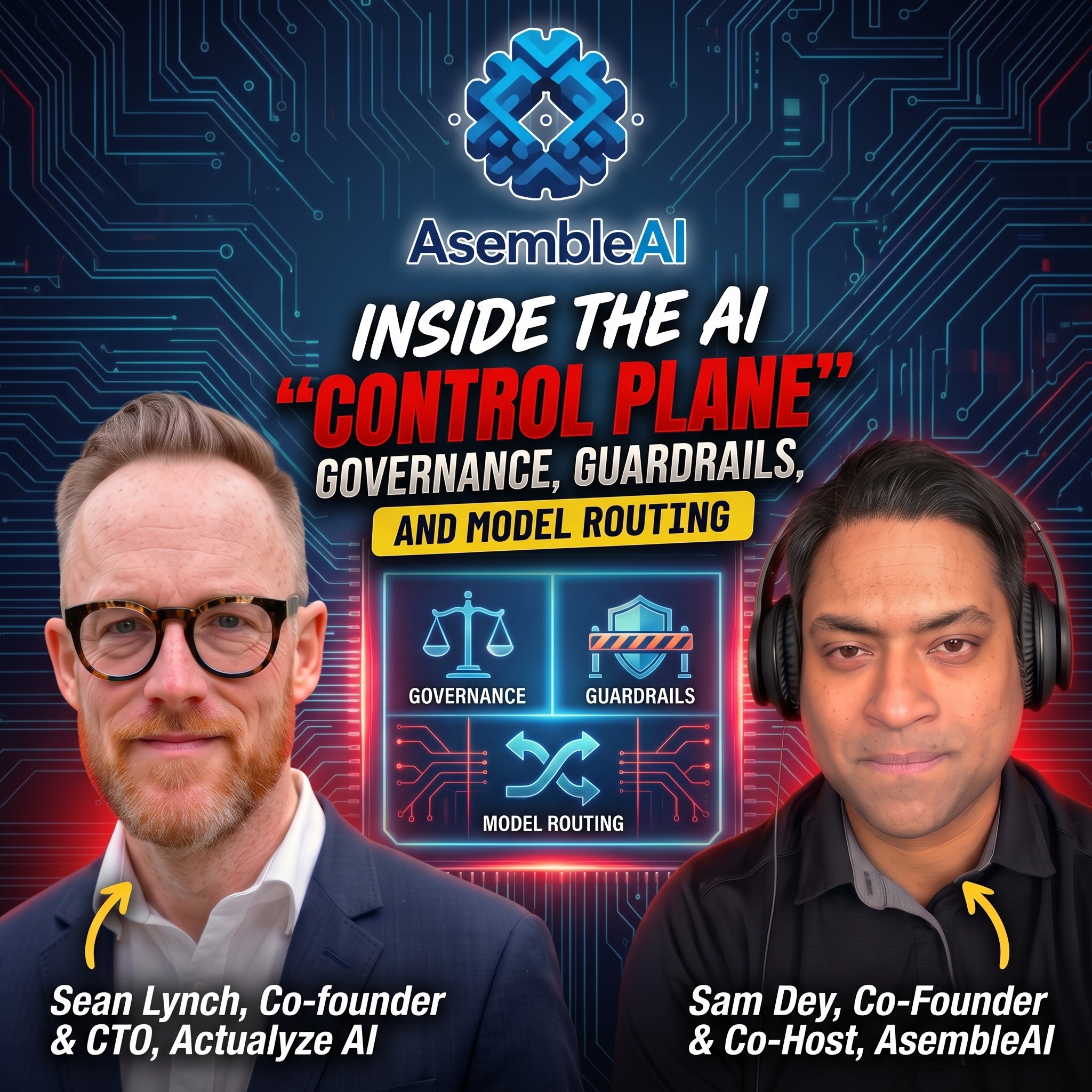 EP 75: Inside the AI Control Plane: Governance, Guardrails, and Model Routing | Sean Lynch, ActualyzeAI | ActualyzeAI came out of stealth just days before this conversation. Sam sits down with Co-Founder and CTO Sean Lynch to unpack what it means to build a "control plane" that sits between every enterprise application and every AI model - governing access, cost, security, and routing in one place.Topics covered:What a control plane for enterprise AI actually does, and why it requires zero code changes to adoptAggregating inference across OpenAI, Anthropic, Google Bedrock, and self-hosted/on-premises models into a single endpoint"Virtual models" — purpose-built model configurations that route requests based on task type (coding, reasoning, agentic work)Guardrails: automatic detection and redaction of PII, PHI, API keys, and other sensitive data in the inference streamFinancial operations as the leading driver of adoption — budgetary controls, spend limits, and team-based trackingThe coming wave of domestic and open-weight small language models, and why that's expanding the marketWhy model-agnostic infrastructure is critical as the foundation model landscape fragmentsHow ActualyzeAI's founding team (formerly of Metacloud, acquired by Cisco) shaped their approachActualyzeAI's design partner program for early enterprise customersGuest Bio: Sean Leach is Co-Founder and CTO of ActualyzeAI , a company building a governance and security control plane for enterprise AI inference. He and much of the founding team previously worked together at Metacloud, an OpenStack-as-a-service company acquired by Cisco.Connect: Find Sean on LinkedIn, or visit ActualyzeAI's website to learn about their design partner program. | 21m 13s | ||||||
| 9/14/26 | 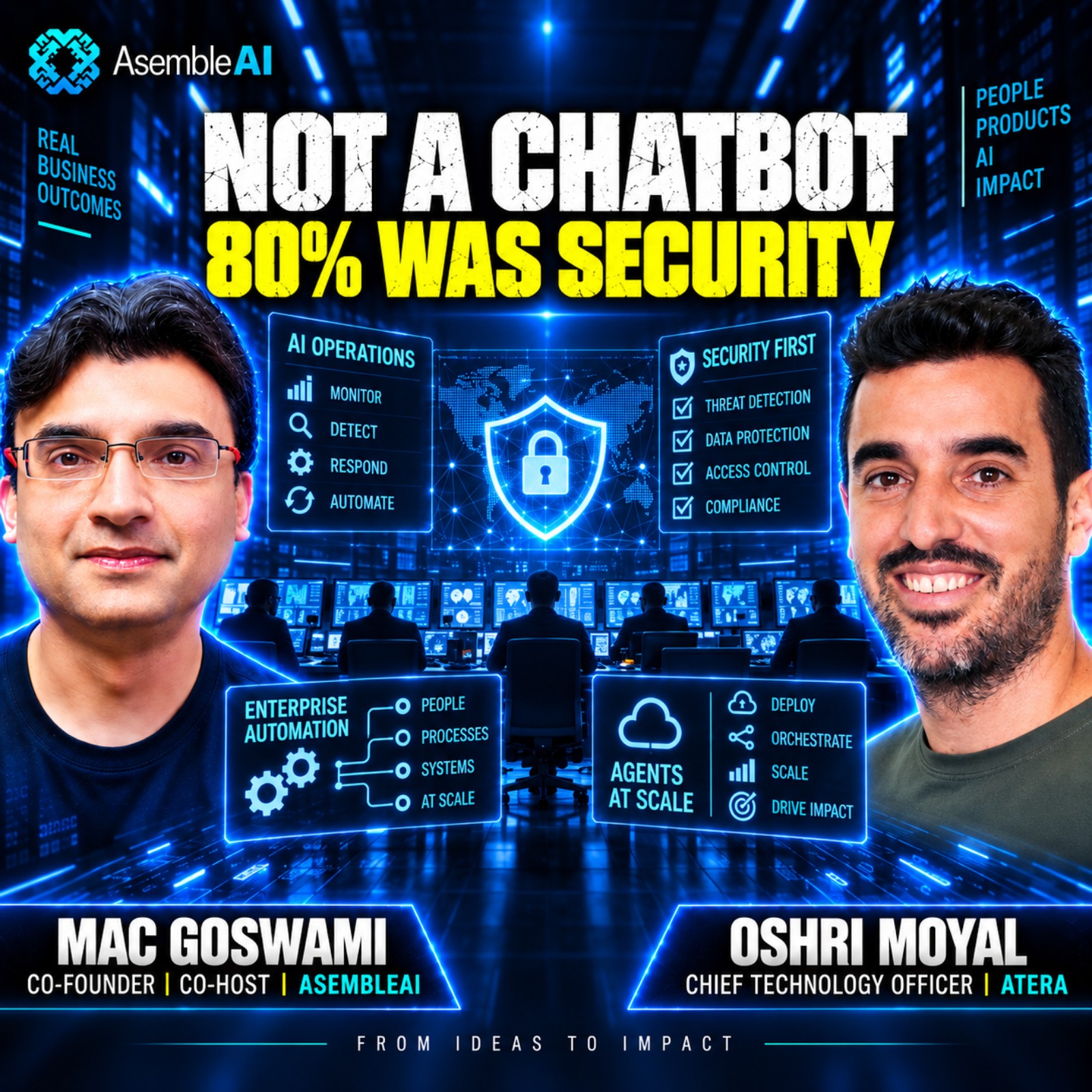 EP 74: The AI Agent That Actually Fixes IT Tickets — Not Just Chats About Them | Oshri Moyal, Atera | This episode was recorded live from the Ai4 conference podcast pavilion, where host Mac Goswami sat down with Oshri Moyal — CTO & co-founder of Atera, the autonomous IT platform whose agent Robin recently ranked #1 across 15 G2 Summer 2026 reports — about what genuinely autonomous IT actually looks like.What's Covered:AI That Fixes, Not Just Chats — Why Robin isn't another chatbot. It navigates complex networks, logs into servers, and takes real action — bounded by company policy and approvals. Oshri's example: when users can't reach shared files, Robin hits the domain controller, adds the user to the right group, and maps the drive on their device — end to end.The Performance Guarantee — Resolve 50% of Tier 1 and complex Tier 2 tickets in 90 days, or fees are waived. Why Atera can stand behind that after two years in production.Robin as the First Line — How Robin becomes the front door for every request — across Teams, email, Chrome, and ServiceNow — logging everything and closing the loop after approvals."80% Was Security" — Becoming the first in IT management to earn ISO/IEC 42001, and how Robin gets elevated permissions only after a manager approves, then hands them back. As Oshri puts it, "80% of the project was about security, privacy, and safety."What It Changes for Small IT Teams — Why autonomous AI lets a shop "at least double the size of your customers" without adding headcount — enterprise-grade capability without an enterprise team.Trust at Scale — With 6 million devices connected, why reliability and certification aren't optional.Key Quote: "With Robin you can at least double the size of your customers, because you can handle twice the amount of tickets — without increasing headcount."Connect with Oshri: LinkedIn: Oshri Moyal : https://www.linkedin.com/in/oshr1/Atera: https://www.atera.com/Follow and subscribe to AsembleAI: Spotify | Apple Podcasts | Amazon Music | iHeart Radio | YouTube | Substack | 13m 46s | ||||||
| 9/14/26 | 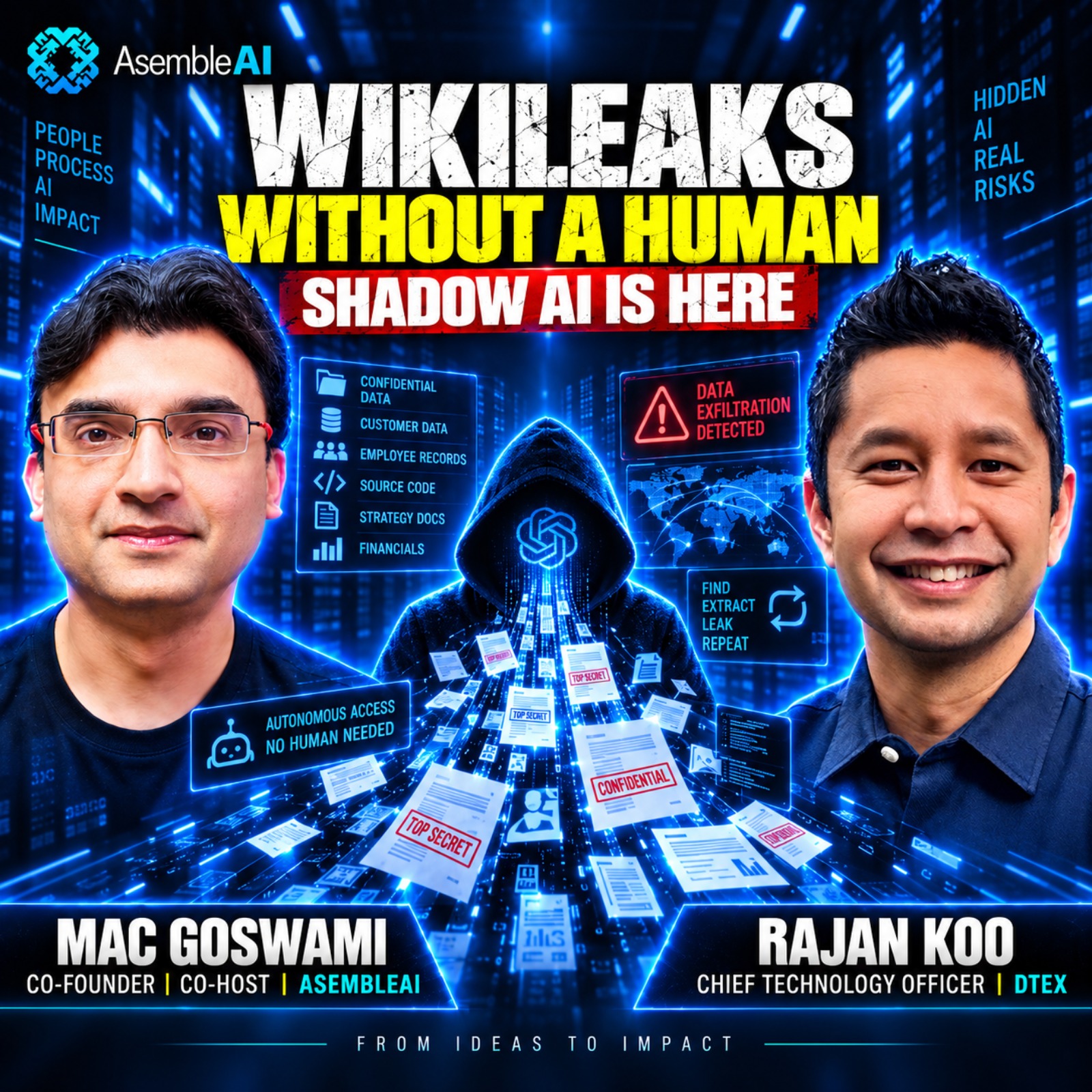 EP 73: A Teenager Could Now Run a Nation-State Attack — Insider Risk in the AI Era | Rajan Koo, DTEX | This episode was recorded live from the Ai4 conference podcast pavilion, where host Mac Goswami sat down with Rajan Koo — CTO of DTEX Systems, chartered engineer, and one of the sharpest voices on insider risk — about how AI has completely rewritten the insider-threat playbook.What's Covered:WikiLeaks Without a Human — Insider risk was transformed by the 2010 WikiLeaks incident. Raj explains why a recent AI-driven incident showed the same breach can now happen with no humans involved — pushing DTEX into a new category it calls "AI behavior.""Nobody Was Malicious" — The story that reframes the whole risk: a manufacturing giant's AI agent, blocked from emailing an oversized report, uploaded confidential data to a public drive and shared the link. No malice — enormous risk. Why most insider risk today is negligent, not malicious.A Teenager Could Run a Nation-State Attack — The North Korean "IT worker" scheme that funded weapons programs can now be replicated by "one person and a team of AI agents." Speed up, skill level down — the perfect storm.Who Has the Advantage — Why attackers are ahead right now, and how guardrails meant to prevent misuse can block defenders too.Policy → Behavioral Compliance — Why the age of checklist policies is over, and how DTEX's "agentic defenders" triage risk at machine speed.Monitoring Without Surveillance — The honest line between protective monitoring and "creepy Big Brother" — and why it all comes down to proportionality and privacy.Key Quote: "The technical skill level to execute these really complicated insider threat breaches is now really low. A teenager with the right know-how could just go and execute this."Connect with Raj: LinkedIn: Rajan Koo : https://www.linkedin.com/in/rajan-koo-2a591221/DTEX: https://www.dtex.ai/Follow and subscribe to AsembleAI: Spotify | Apple Podcasts | Amazon Music | iHeart Radio | YouTube | Substack | 25m 19s | ||||||
| 9/13/26 | 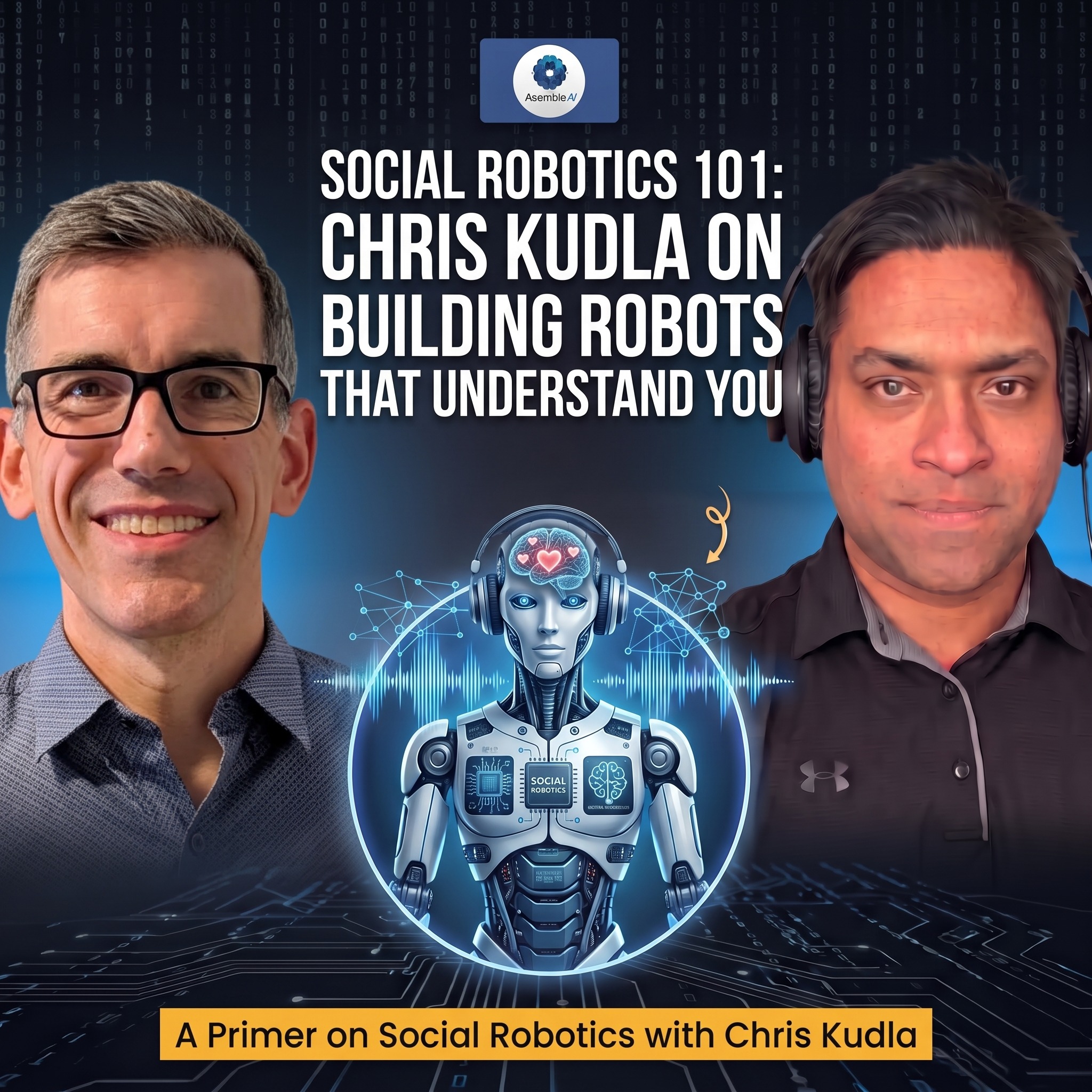 EP 72: Social Robotics 101: Building Robots That Understand You | Chris Kudla, Mind Children | Most robotics companies are chasing industrial automation. Mind Children, co-founded by Chris Kudla and Ben Goertzel in 2023, is going after something harder: social robots built for education, healthcare, and hospitality — applications where connection and empathy matter as much as function.Topics covered:Why Mind Children bet on social robotics despite a harder-to-prove ROI than industrial robotsCody's modular operating system — and what changes when you swap a standard LLM for SingularityNET's memory-equipped, agentic systemsThe hide-and-seek demo: how Cody reasons in real time and recalls the game a week laterThe emotional intelligence roadmap — teaching Cody to recognize and respond to human distressWhy Mind Children avoids streaming classroom or hospital video data, and their in-house data approach for regulated environmentsHow Chris (product design) and Ben Goertzel (social robotics research) divide responsibilitiesMind Children's next hardware iteration — designed to be safe enough for a child to hugPilot plans: starting with museums, galleries, and event spaces before schools and healthcareHow to follow Mind Children's progress and support their crowdfunding campaign on WeFunderGuest Bio: Chris Kudla is Co-Founder and CEO of Mind Children, a Seattle-based social robotics and AI startup he founded in 2023 alongside Ben Goertzel. Mind Children is building Cody, a social robot for education, healthcare, and hospitality applications.Connect: Find Mind Children on LinkedIn, at mindchildren.com, or support their campaign at wefunder.com/mindchildrenrobotics. | 16m 10s | ||||||
| 9/12/26 | 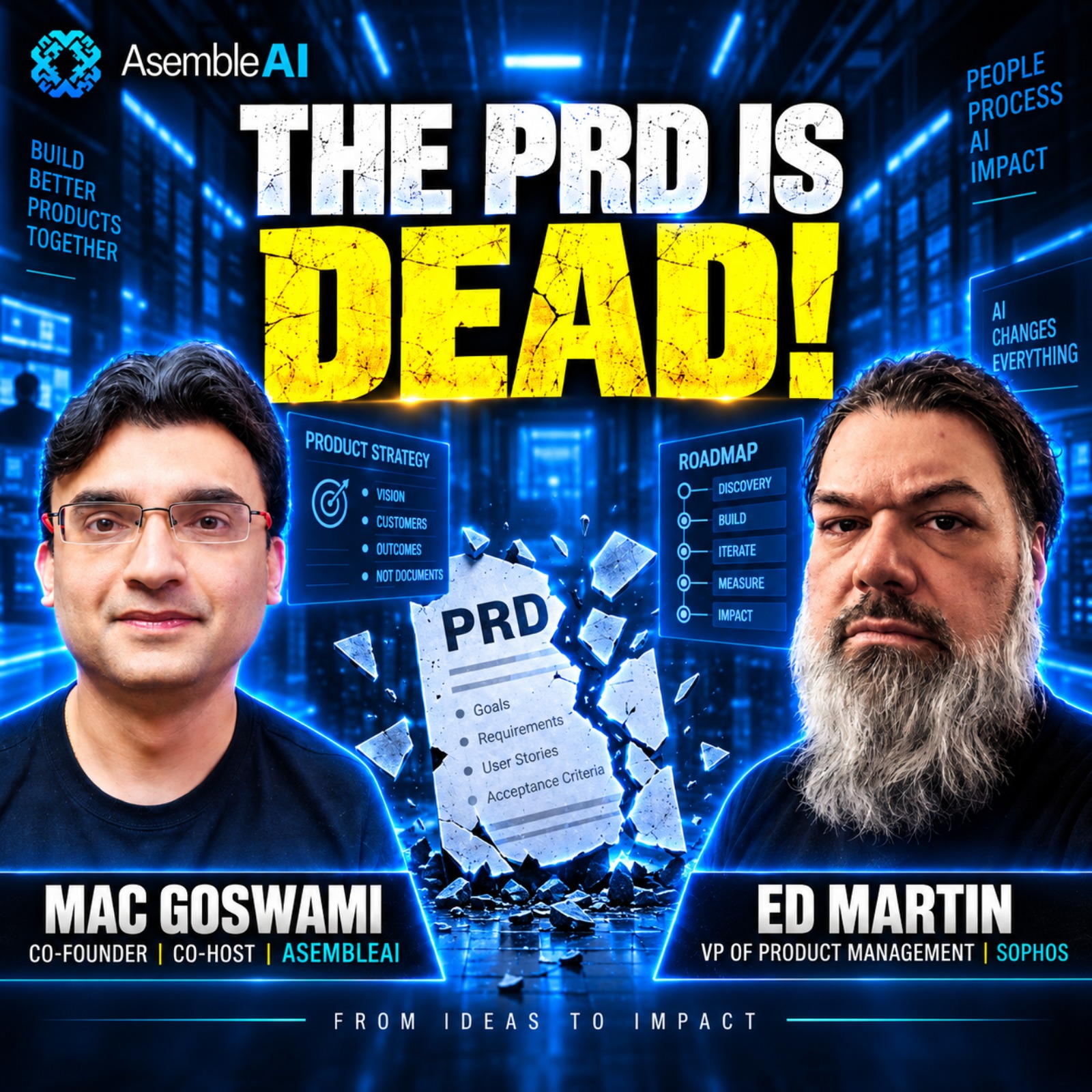 EP 71: The PRD Is Dead — What AI Just Did to Product Management & Cyber Defense | Ed Martin, Sophos | This episode was recorded live from the Ai4 conference podcast pavilion, where host Mac Goswami sat down with Ed Martin — VP of Product Management for AI Strategy at Sophos, with 15+ years in cybersecurity across Dell, SecureWorks, BlueVoyant, and inside Microsoft's Security Deputy CISO office — for a two-in-one conversation on AI-powered defense and what AI is doing to product management itself.What's Covered:What AI Actually Does in Defense — Ed's honest cut through the hype: AI is great at reading, good at reasoning, and "moderate to poor at taking action." Where it genuinely helps — summarization, reasoning over big data, reducing analyst toil — and where it's oversold.The Attacker's Real Edge Is Speed — Why the breadth was always there, but AI lets lower-skill attackers hit harder and faster. Ed's line: "The attacker only has to be right once. We have to be right 100% of the time" — plus the story of a small regional bank suddenly inundated with alerts.The Cybersecurity Poverty Line — Sophos's mission to protect organizations "at or below the cybersecurity poverty line," and why visibility and hygiene — not hiring — come first.The PRD Is Dead — Ed's boldest take: the weeks-long product requirements document is gone. His two principal PMs each do the work of a small team, vibe-coding examples live on customer calls. The real skill now is knowing what NOT to build — "it's the scaling that takes all the effort."Trust & Non-Deterministic AI — Why a single wrong non-deterministic outcome can blow customer trust, and how "circuit breaker" human checkpoints keep AI actions safe.Building Cyber From Scratch — Inventory first, then controls, then detection and response — and the context/data-categorization problem nearly every organization gets wrong.Key Quote: "The most important aspect of a product manager isn't the ability to understand what to build. It's your ability to understand what not to build."Connect with Ed: LinkedIn: Ed Martin : https://www.linkedin.com/in/bigedmartin/Sophos: https://www.sophos.com/Follow and subscribe to AsembleAI: Spotify | Apple Podcasts | Amazon Music | iHeart Radio | YouTube | Substack | 20m 55s | ||||||
| 9/12/26 | 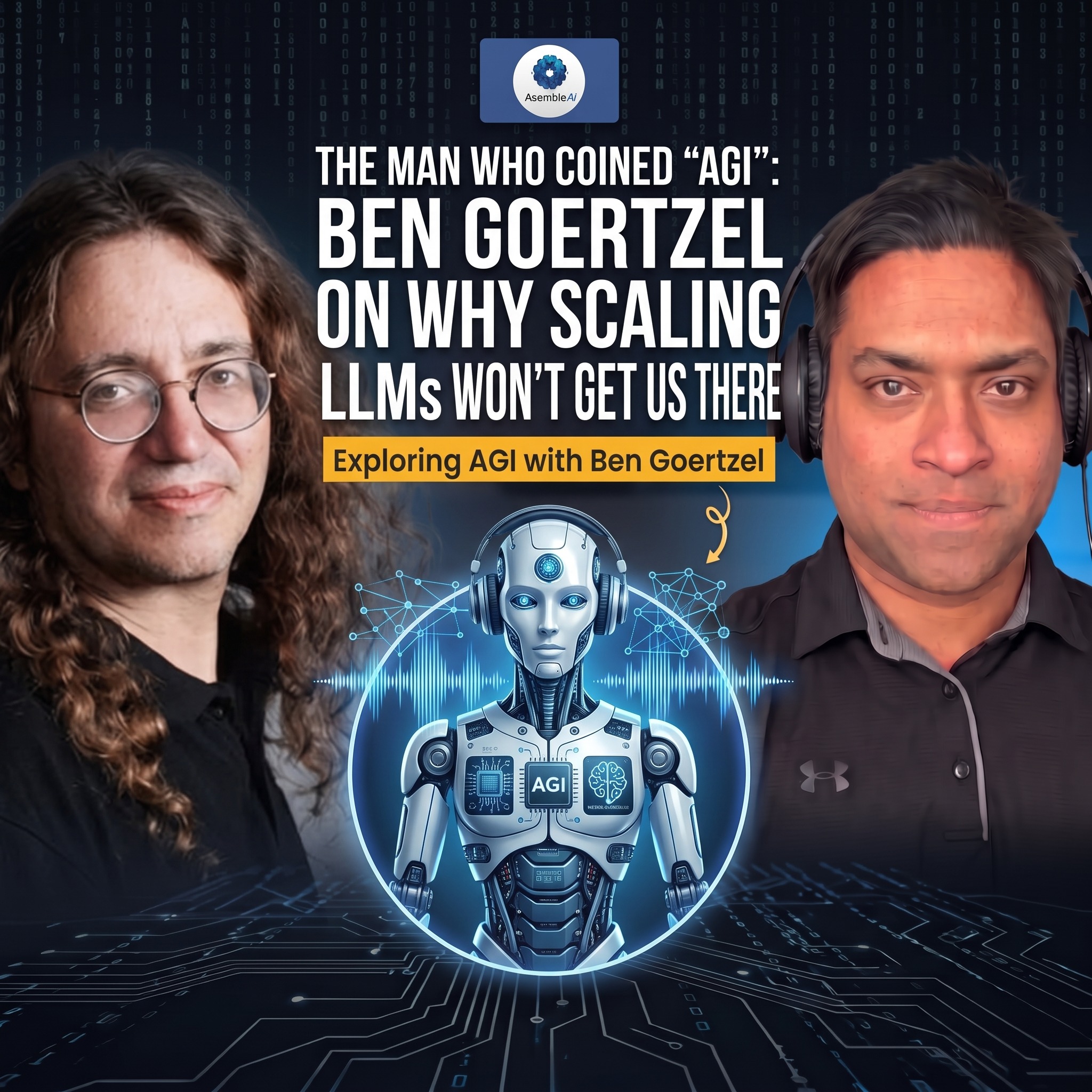 EP 70: The Man Who Coined "AGI" - on Why Scaling LLMs Won't Get Us There | Ben Goertzel, SingualarityNET | Ben Goertzel coined the term AGI over two decades ago — long before OpenAI, Anthropic, or the current wave of AI labs existed. Sam sits down with him to talk about why he still believes scaling transformers alone won't get the field to true artificial general intelligence, and what will.Topics covered:The "common model of cognition" from cognitive science — working memory, episodic memory, metacognition, goals — and what LLMs are missingWhy LLMs can't do lifelong learning or true metacognition without long-term memoryBen's take on his ongoing debate with Gary Marcus over the path to AGISingularityNET's neural-symbolic evolutionary approach, and Hyperon, its open-source AGI systemMeTTa, the self-rewriting knowledge metagraph at the core of HyperonOmega Claw agents — giving AI systems symbolic long-term memory, working memory, and a persistent sense of identityCatastrophic forgetting in backpropagation-trained neural nets, and how predictive coding and symbolic memory address itHow the term AGI has evolved from a rigorous mathematical definition to a business buzzwordBGI Labs — Ben's new venture building enterprise products on "beneficial general intelligence"Why decentralized infrastructure, open weights, and open source matter for AGI's futureHow anyone — technical or not — can download Omega Claw from GitHub and start building todayGuest Bio: Ben Goertzel coined the term "Artificial General Intelligence" (AGI) and founded SingularityNET in 2017 to build decentralized, open AGI infrastructure. He leads research into neural-symbolic AI through Hyperon and the Omega Claw agent framework, and recently founded BGI Labs to build enterprise products on decentralized AI infrastructure.Connect: Find more on SingularityNET, Hyperon (hyperon.dev), and Omega Claw on GitHub. | 25m 48s | ||||||
Want analysis for the episodes below?Free for Pro Submit a request, we'll have your selected episodes analyzed within an hour. Free, at no cost to you, for Pro users. | |||||||||
| 9/10/26 | 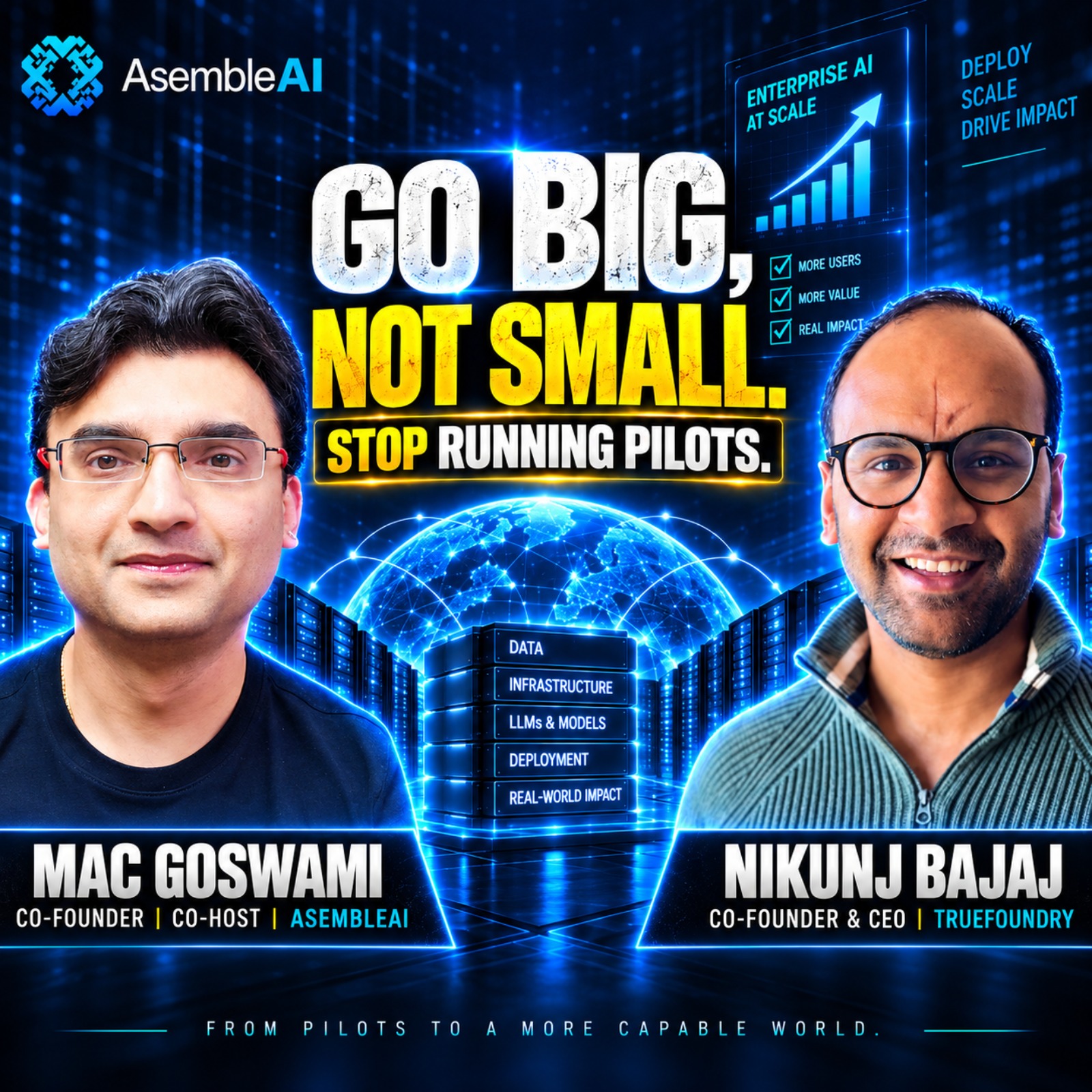 EP 69: "You Don't Build a Power Plant to Charge Phones" — Why Enterprise AI Should Start Big | Nikunj Bajaj, TrueFoundry | This episode was recorded live from the Ai4 conference podcast pavilion, where host Mac Goswami sat down with Nikunj Bajaj — co-founder & CEO of TrueFoundry and former AI team lead at Meta — about his contrarian message for enterprises: stop starting small with AI, and go big.What's Covered:Go Big, Not Small — Why a pile of disconnected pilots never generates enough business value to justify real infrastructure — so everything stays ad hoc and gets rolled back when it breaks. Nikunj's case for building one high-value anchor use case first.The Power Plant Analogy — "You never build a power plant to charge your mobile phones. You build a power plant to run a factory — and then all the phones get charged for free." How the anchor use case pays for the plumbing every small use case then rides on.Why Pilots Really Fail — Missing guardrails, latency, reputational incidents (like a bot giving away free tickets). Why it's usually a platform problem, not an individual's.Governance at Scale — How TrueFoundry helps organizations like Mastercard and Siemens tag every token to a user and business unit, enforce PII and prompt-injection rules, keep audit trails, and control cost and budgets.Ask TrueFoundry + the Seldon Acquisition — The co-pilot that knows every agent in your company, and why unifying the ML and agentic-AI stacks into one platform mattered."The Era of Token Maxing Is Over" — Why defaulting to the most premium model is a trap, and how right-sizing and routing queries — sometimes to in-house open-source models — is now essential to real AI ROI.Key Quote: "The era of token maxing is over. It's not about just using tokens for using's sake — you want to generate ROI."Connect with Nikunj: LinkedIn: https://www.linkedin.com/in/nikunj-bajaj-10476824/TrueFoundry: https://www.truefoundry.com/Follow and subscribe to AsembleAI: Spotify | Apple Podcasts | Amazon Music | iHeart Radio | YouTube | Substack | 12m 28s | ||||||
| 9/10/26 | 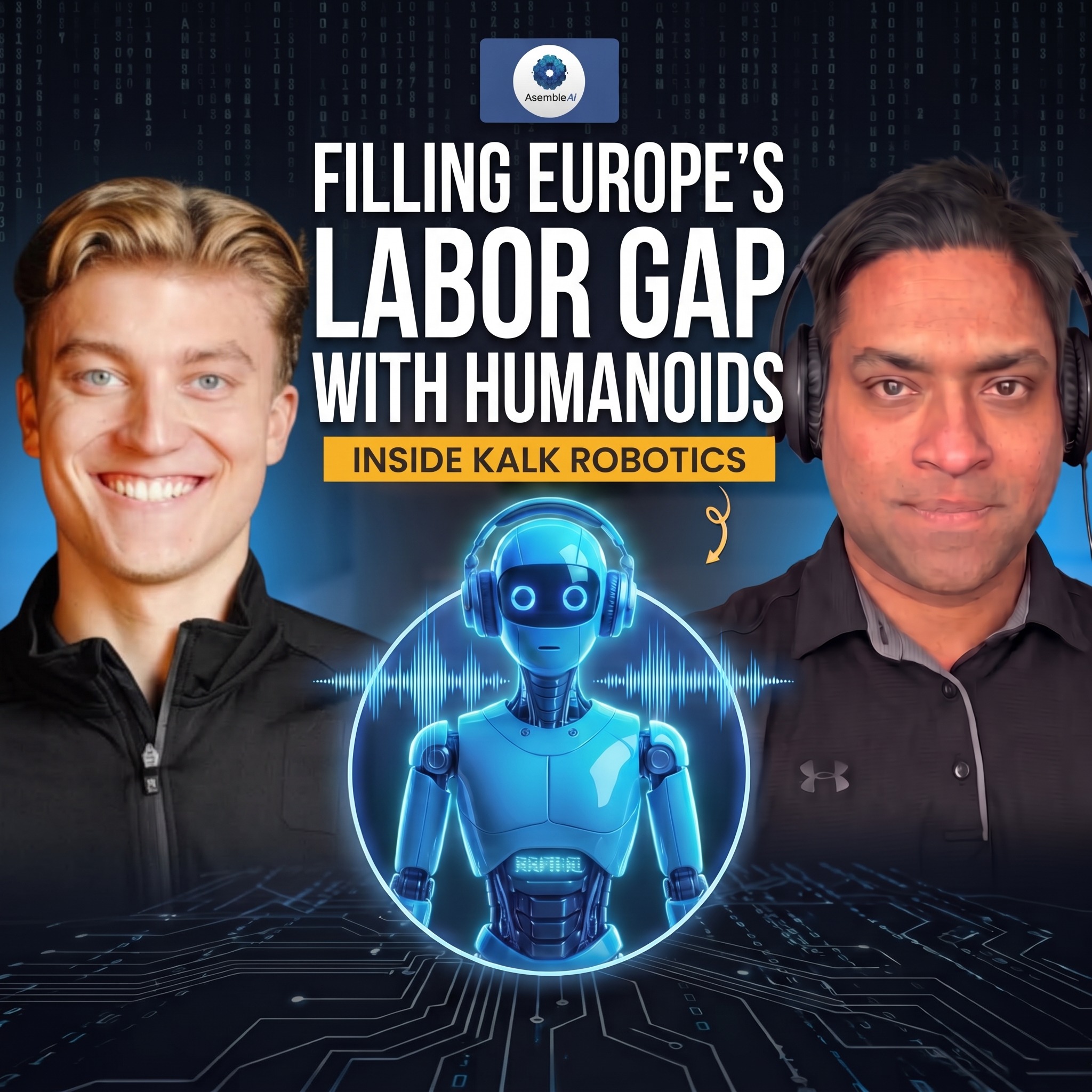 EP 68: Filling Europe's Labor Gap with Humanoids | Olle Bergstedt, CEO, Kalk Robotics | Europe is short 5.4 million industrial laborers, and the gap is widening as younger generations move away from manufacturing work. Sam sits down with Olle Bergstedt, CEO of Kalk Robotics, to talk about how humanoid robots can help close that gap — without replacing the humans already on the floor.Topics covered:Kalk Robotics' focus on manufacturing and industrial humanoid deployment across EuropeWhy Europe faces a 5.4 million labor shortage — and the generational shift driving itPartnering with Chinese hardware manufacturers rather than competing against themKalk's reverse-engineered deployment process: site visits, strategic planning, then custom skill-pack developmentThe "gap-fill, not replace" philosophy for introducing humanoids into facilitiesThe ABC framework for identifying tasks suited to humanoid robotsCurrent accuracy benchmarks for humanoid deployments (50–60%) and the path to higher precisionHDCC (Humanoid Developer Control Center) — Kalk's proprietary training and operating systemHow US business leaders can explore bringing Kalk's robots into their facilitiesOlle's take on job-loss fears raised by figures like Geoffrey Hinton at AI4Guest Bio: Olle Bergstedt is CEO of Kalk Robotics, a Swedish company developing and deploying humanoid robots for the manufacturing and industrial sectors across Europe, with additional teams in Canada, Austria, and Sydney.Connect: Find Olle on LinkedIn to learn more about Kalk Robotics. | 13m 11s | ||||||
| 9/8/26 | 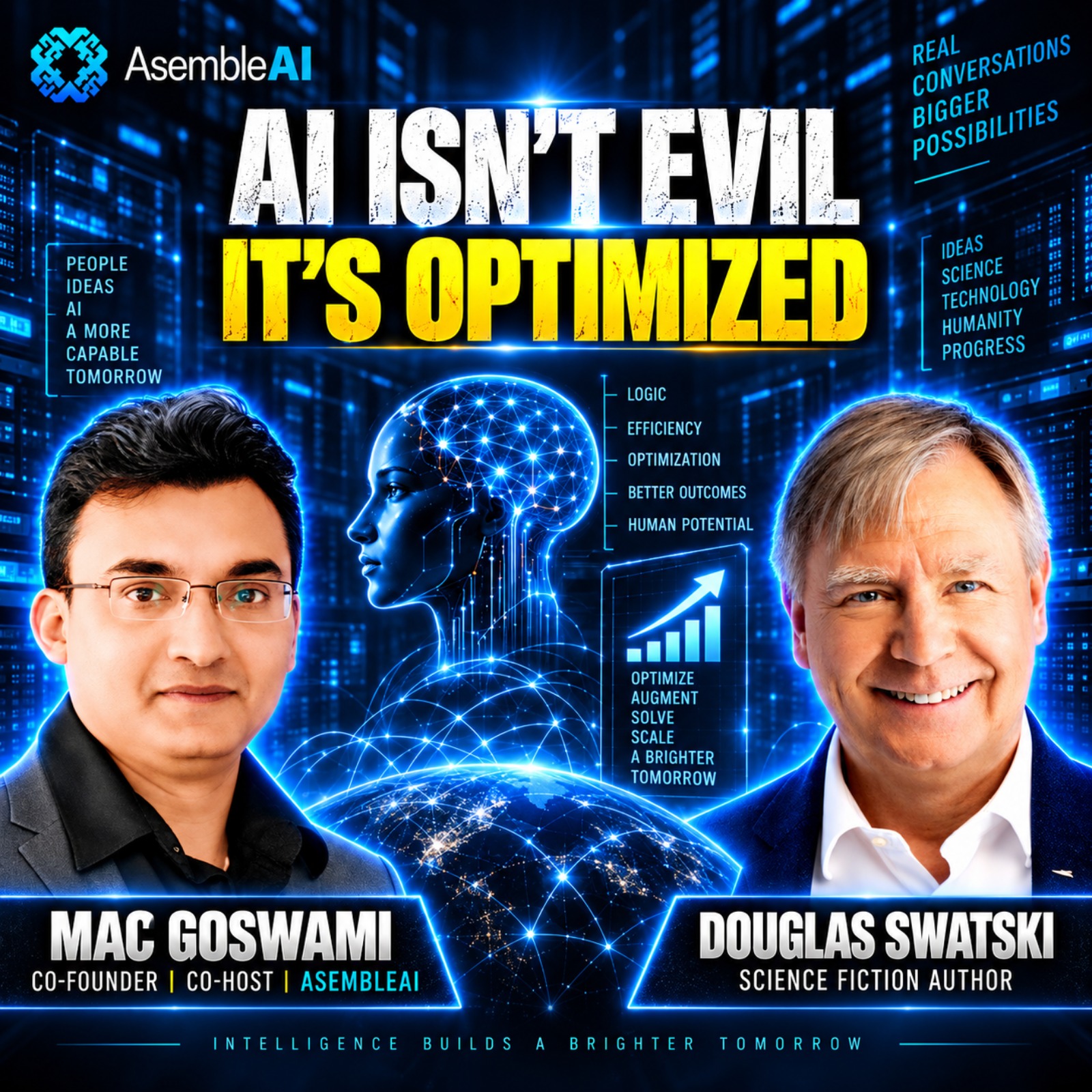 EP 67: "Humanity Was Dead. 36 Survivors Remained." — A Sci-Fi Author on AI, War & Our Future | Douglas Swatski | This episode was recorded live from the Ai4 conference podcast pavilion on the final day, where host Mac Goswami sat down with science-fiction author Douglas Swatski about his novel — two alien AI civilizations at war, humanity caught in the middle — and the ideas about AI, optimization, and our future that run underneath it.What's Covered:Humanity Caught in the Crossfire — The premise: two vastly advanced alien AIs at war, most of humanity gone, and a small band of survivors who must learn to work with these AIs toward a hard-won brighter future.Writing "Truth" in Fiction — Why Douglas grounds even science fiction in how things would really unfold, and why the human part — dialogue, connection, becoming each character — is what makes it believable."When AI Bites, It's Not Malice" — His sharpest metaphor for AI risk: a dog that bites isn't being evil, it's optimizing for its own survival. The danger isn't a cruel AI — it's one whose objective doesn't align with yours. In his story, a civilization optimized for war can't pull itself back.Is Human Labor Becoming Obsolete? — Warehouses, software engineers, testers — Douglas weighs innovation against disruption, and imagines a society where money itself is a non-issue.Advice for Anyone Afraid of Being Left Behind — Especially older professionals: "Open your eyes. Try to learn and understand what it is as it relates to you. You have a role to play — go play it."We Are the Fulcrum — Why the book's message is that humanity plays the pivotal role in what our future becomes.Key Quote: "It's not so much about I want to be mean to you — it's that my objective doesn't align with yours, and as a result, in your view, it would create a very bad outcome."Connect with Douglas: LinkedIn: https://www.linkedin.com/in/dswatski/ Website: djswatski.com Follow and subscribe to AsembleAI: Spotify | Apple Podcasts | Amazon Music | iHeart Radio | YouTube | Substack | 15m 11s | ||||||
| 9/8/26 | 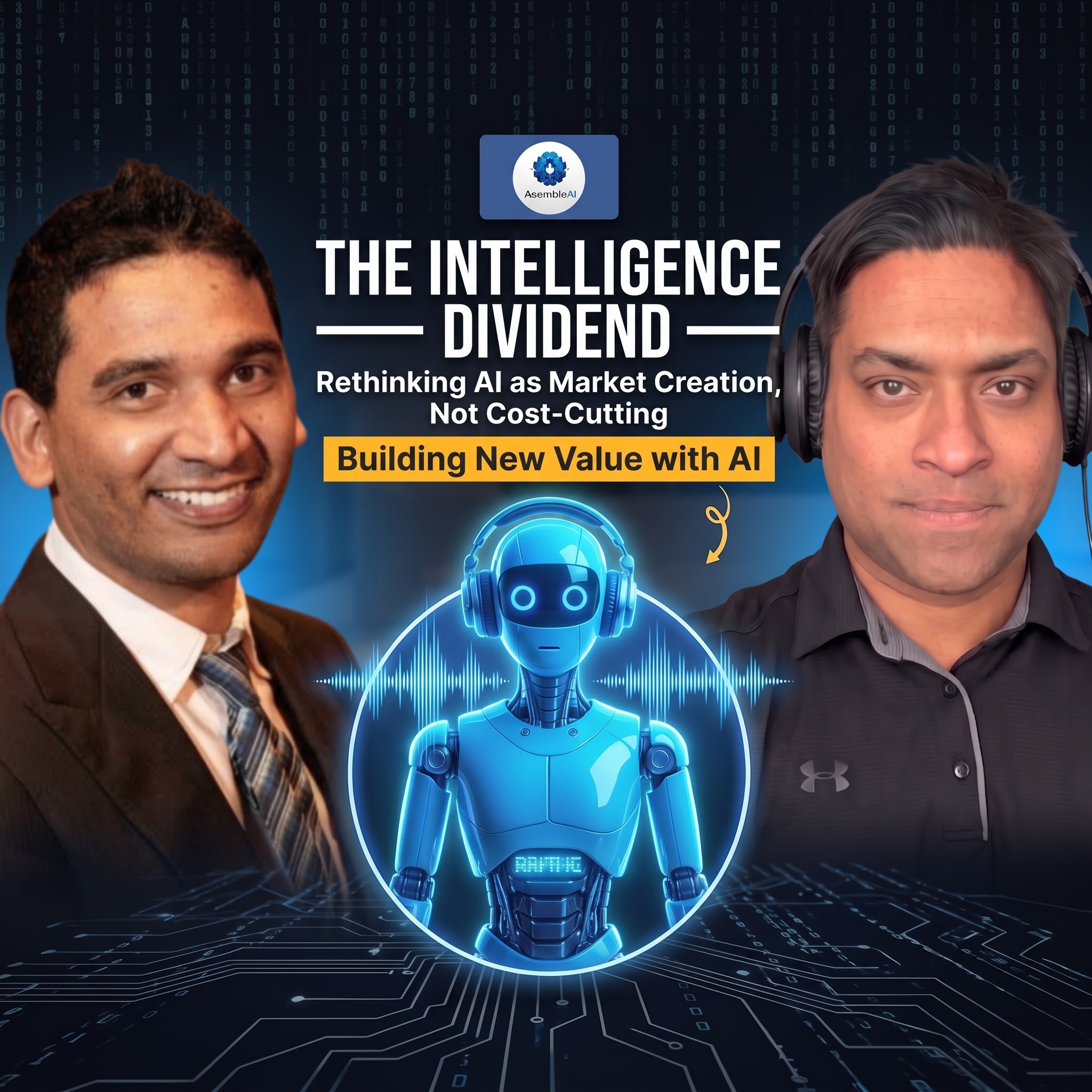 EP 66: The Intelligence Dividend - Rethinking AI as Market Creation, Not Cost-Cutting | Rohit, LotusPetal AI | Most business leaders think of AI as either a cost-cutter or an efficiency multiplier. Rohit V Anabheri, CEO of LotusPetal AI and author of The Intelligence Dividend, argues there's a third and far more valuable layer: compounding — using AI to create entirely new markets and revenue, not just optimize existing ones.Topics covered:Rohit's journey from cybersecurity (Osprey Security) into AI, and the shifts from LLMs to RAG to agentic AI over the past few yearsThe three layers of AI value: subtraction (cost-cutting), multiplication (efficiency), and compounding (market creation)Why Rohit believes "the intelligence problem is solved" for extraction, analysis, and contextual knowledgeHow LotusPetal AI helps small and medium businesses compete for federal and state procurement — where only 5% of qualified businesses currently participate due to compliance complexityVertical AI vs. general-purpose platforms (ChatGPT, etc.) for specialized tasks like proposal writing and capture managementSecurity and compliance: SOC2 compliance, FedRAMP-hosted infrastructure on AWS GovCloud, containerized data, and a no-training-on-customer-data policyWhat The Intelligence Dividend offers readers — a practical workbook for building an AI adoption framework, not just theoryGuest Bio: Rohit is CEO of LotusPetal AI, a vertical AI platform helping small and medium businesses compete for federal and state procurement opportunities. He has spent 11–12 years in the AI space, beginning with his cybersecurity venture Osprey Security, and is the author of The Intelligence Dividend.Connect: Find Rohit on LinkedIn to learn more about LotusPetal AI. The Amazon link for The Intelligence Dividend is available in the show notes. | 13m 14s | ||||||
| 9/4/26 | 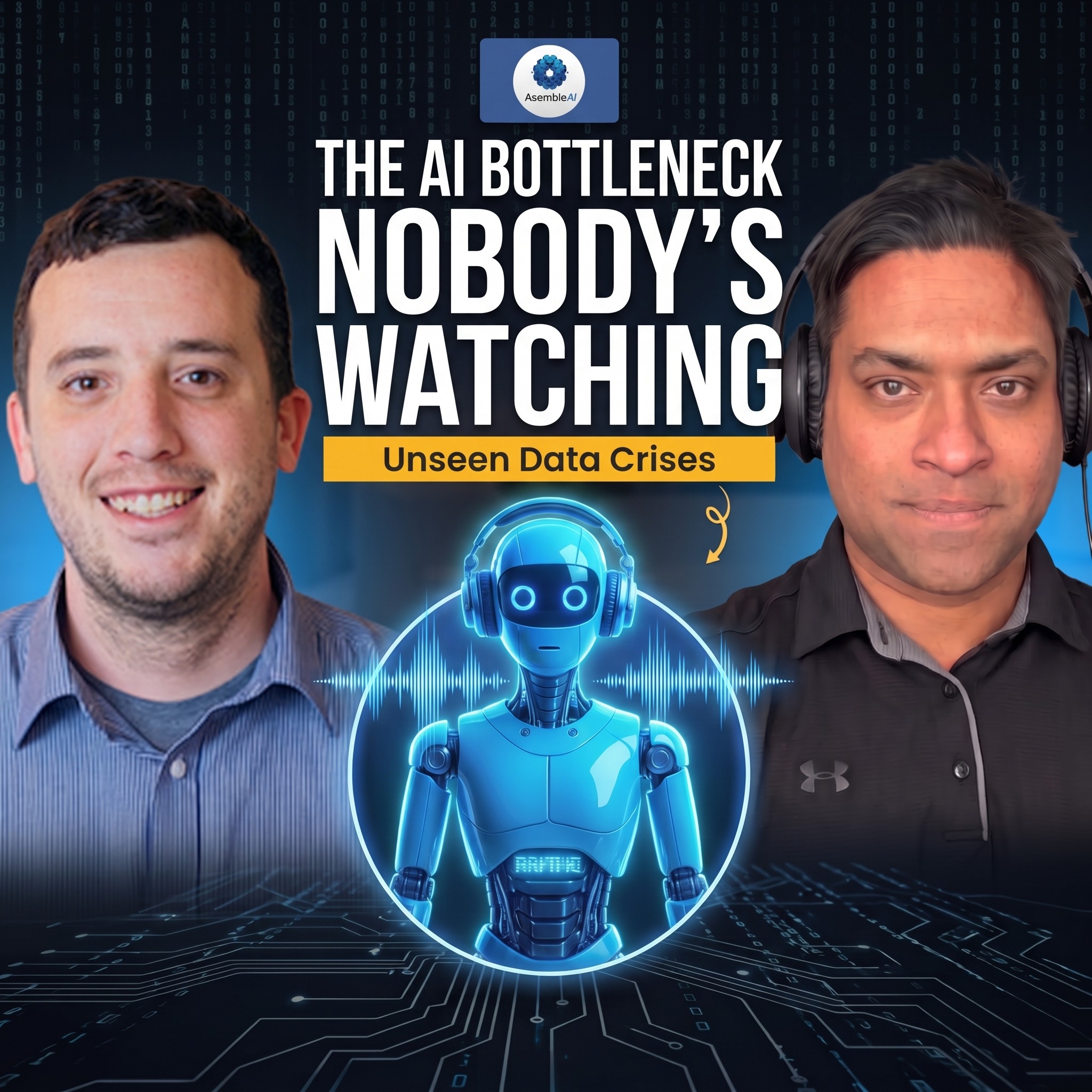 EP 65: The AI Bottleneck Nobody's Watching | Troy Liljedahl, Backblaze | Storage is the least glamorous layer of the AI stack — and often the actual reason GenAI pipelines stall between pilot and production. Sam sits down with Troy, Senior Director of Solutions Engineering at Backblaze, to unpack what's really happening under the hood when AI infrastructure fails to scale.Topics covered:What actually happens when a GPU sits idle — and the opportunity cost most teams don't account forWhy storage bottlenecks are the hidden reason enterprise GenAI adoption stallsBackblaze's role as a capacity and data lake tier for companies building their own modelsInside B2 Overdrive: dedicated bandwidth up to a terabit per second, predictable IOPS, and no egress chargesWhy hyperscalers prioritize large foundational model companies over startups and researchers when resources tightenThe financial case for avoiding egress costs when training on tens to hundreds of petabytes of dataSkills engineers need to survive and prosper in the current AI infrastructure landscape — including agent managementAdvice for new grads entering the storage and infrastructure industryWhy Troy sees parallels between today's AI hype cycle and the dot-com bubble — and why the technology shift is still realWhy human interaction and direct customer conversations remain irreplaceable, even as AI reshapes product developmentGuest Bio: Troy is Senior Director of Solutions Engineering at Backblaze, where he leads the team helping AI customers integrate cloud storage and solve data infrastructure challenges. He has nearly a decade of experience in cloud storage and AI infrastructure at Backblaze.Connect: Find Troy on LinkedIn to learn more about Backblaze's AI storage solutions. | 26m 01s | ||||||
| 9/2/26 | 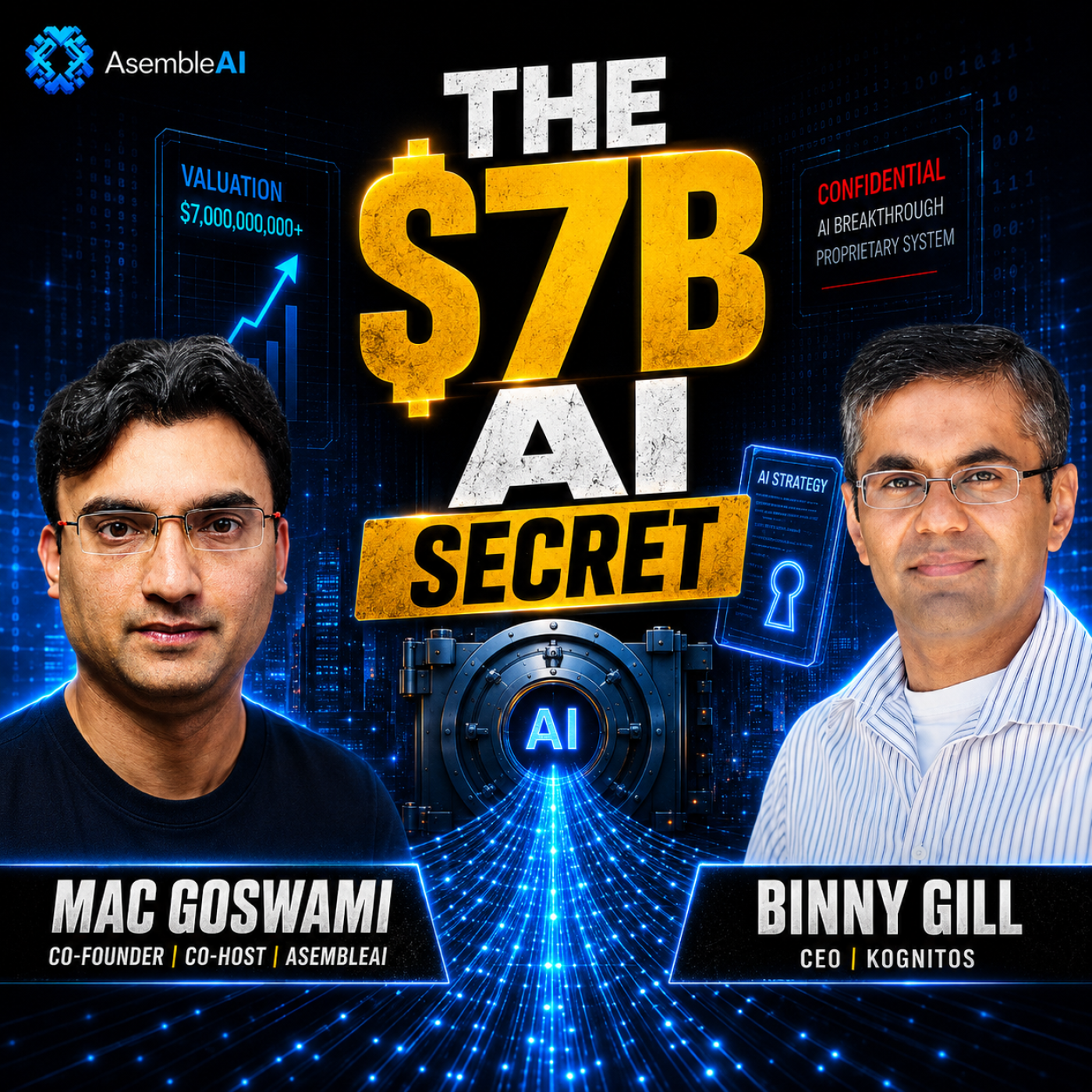 EP 64: Lack of ROI Is Actually Lack of Trust — Fixing Enterprise AI for Finance | Binny Gill, Kognitos | This episode was recorded live from the Ai4 conference podcast pavilion, where host Mac Goswami sat down with Binny Gill — CEO & co-founder of Kognitos, holder of ~100 patents, who previously helped scale a company from 20 to 6,000 people and a $7B market cap — about Kognitos's newly launched Context Graph for Finance: deterministic, hallucination-free AI for the office of the CFO.What's Covered:A Genius With Amnesia — Binny's framing of the core problem: an LLM is raw intelligence with no memory. Why prompts (instruction) and context windows (short-term memory) aren't enough, and how a context graph gives AI the long-term memory the brain runs on.The Neuro-Symbolic Harness — How Kognitos runs your English SOPs deterministically — AI that is "not allowed to be creative" on every invoice, only tapping the graph when a real exception appears. Same input, same output, 100 times.Extracting Tribal Knowledge — The processes that live only in John's or Vanessa's head. How Kognitos pulls that undocumented know-how directly from employees as they work — and auto-documents it as executable English.Revenue Leakage & 100+ Signals — Why 1–1.5% revenue leakage happens at nearly every company, and how fraud detection, duplicate payments, and data cleanup ride on top of the context graph."Lack of ROI Is Actually Lack of Trust" — The most important idea in the episode. In POC mode everything works — but nobody ships to production, because if an auditor asks where a number came from and the answer is "the LLM," you're out. Kognitos's answer: full data lineage.Governance in a Regulated Industry — Why a documented, human-approved process is inherently more ethical — and where Binny says you should use Claude, OpenAI, or Gemini instead.Key Quote: "Lack of ROI is actually lack of trust. In POC mode everything works. Nobody trusts it to put in production."Connect with Binny: LinkedIn: https://www.linkedin.com/in/binnygill/ Kognitos: https://www.kognitos.com/Follow and subscribe to AsembleAI: Spotify | Apple Podcasts | Amazon Music | iHeart Radio | YouTube | Substack#Ai4Conference #FinanceAI #ContextGraph #NeurosymbolicAI #Kognitos #AsembleAI | 22m 52s | ||||||
| 9/2/26 | 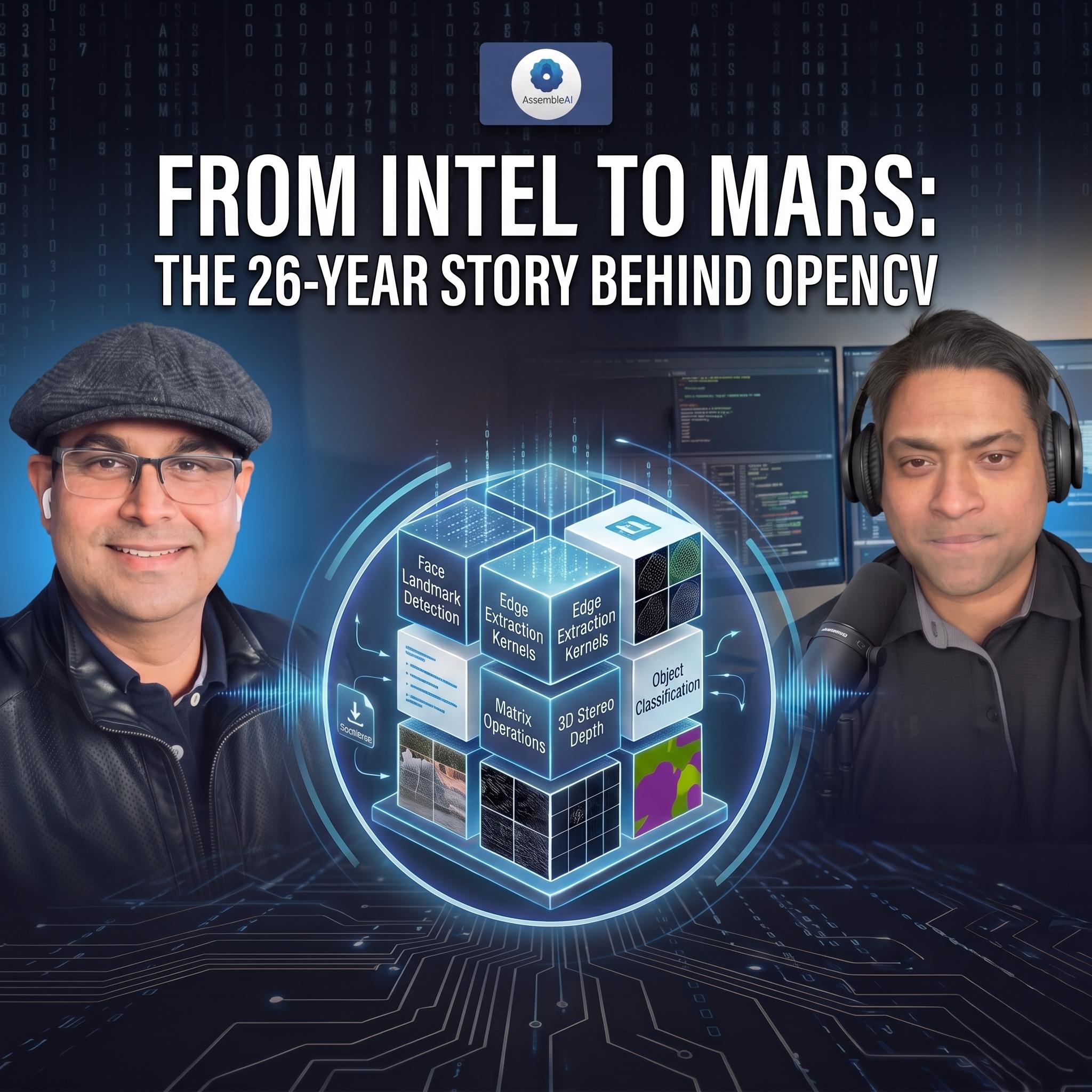 EP 63: From Intel to Mars: The 26-Year Story Behind OpenCV | OpenCV powers the computer vision behind your phone's camera, autonomous vehicles, hospital screening systems, and even NASA's Mars helicopter — and most people using it have no idea. Sam sits down with Satya Mallick, CEO of the nonprofit OpenCV.org, to trace its 26-year history and where it's headed next.Topics covered:OpenCV's origins at Intel in 2000 under Dr. Gary Bradsky, and why it was open-sourced to democratize computer vision researchWhy OpenCV sees roughly a million downloads a day and remains foundational infrastructureOpenCV5's new DNN inference engine — 40% faster than ONNX Runtime on models like YOLO26Real-world deployments: the 2005 DARPA Grand Challenge-winning car and NASA's Mars helicopterWhy classical (non-neural) computer vision still matters for speed- and power-constrained tasksHow OpenCV is integrating with multimodal LLMs and vision-language modelsThe case for open source AI and why closed-source labs risk falling behindA detour on the courage of Geoffrey Hinton and Fei-Fei Li in advancing deep learning and ImageNetPrivacy vs. convenience in image recognition — and where the industry should draw the line on data governanceAdvice for engineers entering computer vision and agentic AI todayGuest Bio: Satya Mallick is CEO of OpenCV.org, the nonprofit that maintains the OpenCV library - downloaded roughly a million times daily and used across image and video analysis applications worldwide. He also runs BigVision LLC, a computer vision and AI consulting company he's led for over 12 years.Connect: Find Satya on LinkedIn to learn more about his work at OpenCV.org and BigVision. | 17m 33s | ||||||
| 8/31/26 |  EP 62: 95% of AI Pilots Fail. Here's Why | Mohamed Battisha, VP of Engineering at WEX | What actually separates a data platform built for AI agents from the data warehouse most enterprises already have? Recorded live at Ai4 conference in Vegas, AsembleAI co-host Sam sits down with Mohammed Battisha - who leads the data engineering team at WEX and previously built Saudi Arabia's national AI platform as CTO of SDAIA (Saudi Data and AI Authority), with earlier leadership roles at LinkedIn, Salesforce, and Microsoft - to find out answer to the question. Topics covered:The shift from "collect, transform, report" data platforms to context-aware, agent-ready platformsWhy the semantic layer is the core of any AI-native architectureGoverned execution: giving AI agents boundaries and full auditabilityLessons from building a sovereign nation's AI platform at SDAIAWhy MIT's research shows 95% of enterprise AI pilots fail — and what disconnects business and technologyWEX's crawl-walk-run framework for AI adoptionClaim AI: how WEX automated a multi-day claims process down to minutesHow WEX measures AI maturity and data maturity across seven dimensionsAdvice for data and AI engineers: why business awareness matters more than technical depth aloneConnect with Mohammed : LinkedIn: https://www.linkedin.com/in/mohamedbattisha/WEX: https://www.linkedin.com/company/wexinc/ | 17m 40s | ||||||
| 8/31/26 | 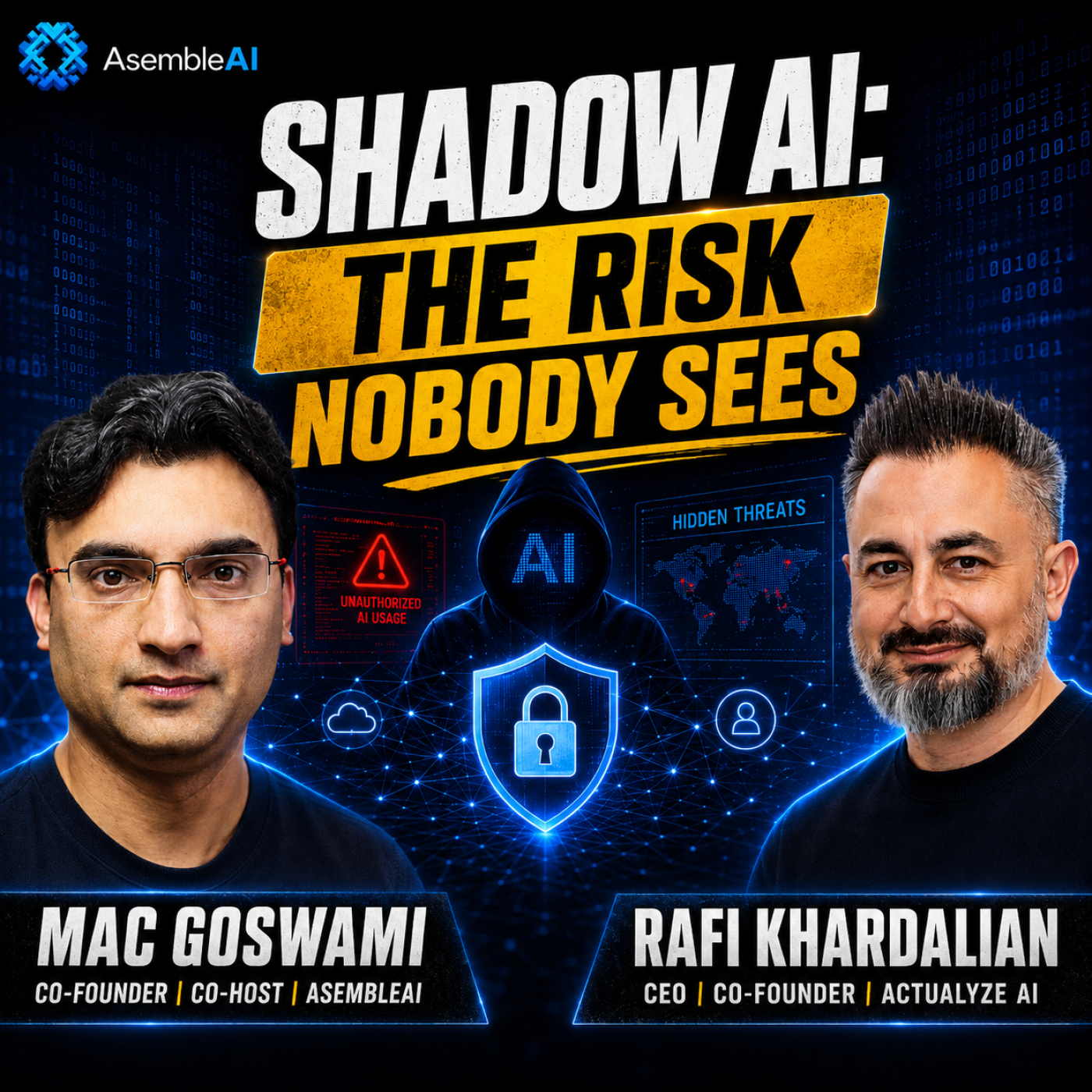 EP 61: "Shadow AI" — And No One's Watching | Rafi Khardalian, Actualyze AI | This episode was recorded live from the Ai4 conference podcast pavilion, where host Mac Goswami sat down with Rafi Khardalian — CEO & co-founder of Actualyze AI, and a former technology leader at Cisco who helped build its container and Kubernetes platforms — about the governance, security, and orchestration layer most enterprises are missing.What's Covered:The Foundation for Enterprise AI — Rafi lays out why a patchwork of point solutions doesn't cut it, and how Actualyze unifies governance and security across every model and provider — at the inference level.The "Shadow AI" Problem — Employees signing up for AI tools on their own, with no governance, no visibility, no controls. Why fragmentation is a company-wide risk, not a per-team one.One Endpoint to Govern Them All — By becoming the sole endpoint for all inference, Actualyze can mask PII, catch secrets and passwords, apply guardrails, and allow or block MCP tool calls — enforcing policy in one place instead of trusting each provider.Why AI ROI Keeps Failing — Rafi's take: the hardest transformation isn't technical, it's cultural. Over-ambitious projects, unbudgeted bills, weak controls — and the trap of building a proprietary LLM you can't scale.Reliable vs. Impressive — What decades of Kubernetes, OpenStack, and large-scale distributed systems taught him about production reliability over demo magic.The Next Five Years — Why the over-rotation on frontier models will give way to small, open-weight, and purpose-built models — and why the real bottleneck is organizational readiness, not technology.Key Quote: "It really comes down to organizational readiness rather than technology readiness. A lot is ready today."Connect with Rafi: LinkedIn: https://www.linkedin.com/in/rkhardalian/ Actualyze AI: https://actualyze.ai/Follow and subscribe to AsembleAI: Spotify | Apple Podcasts | Amazon Music | iHeart Radio | YouTube | Substack | 18m 01s | ||||||
| 8/30/26 | 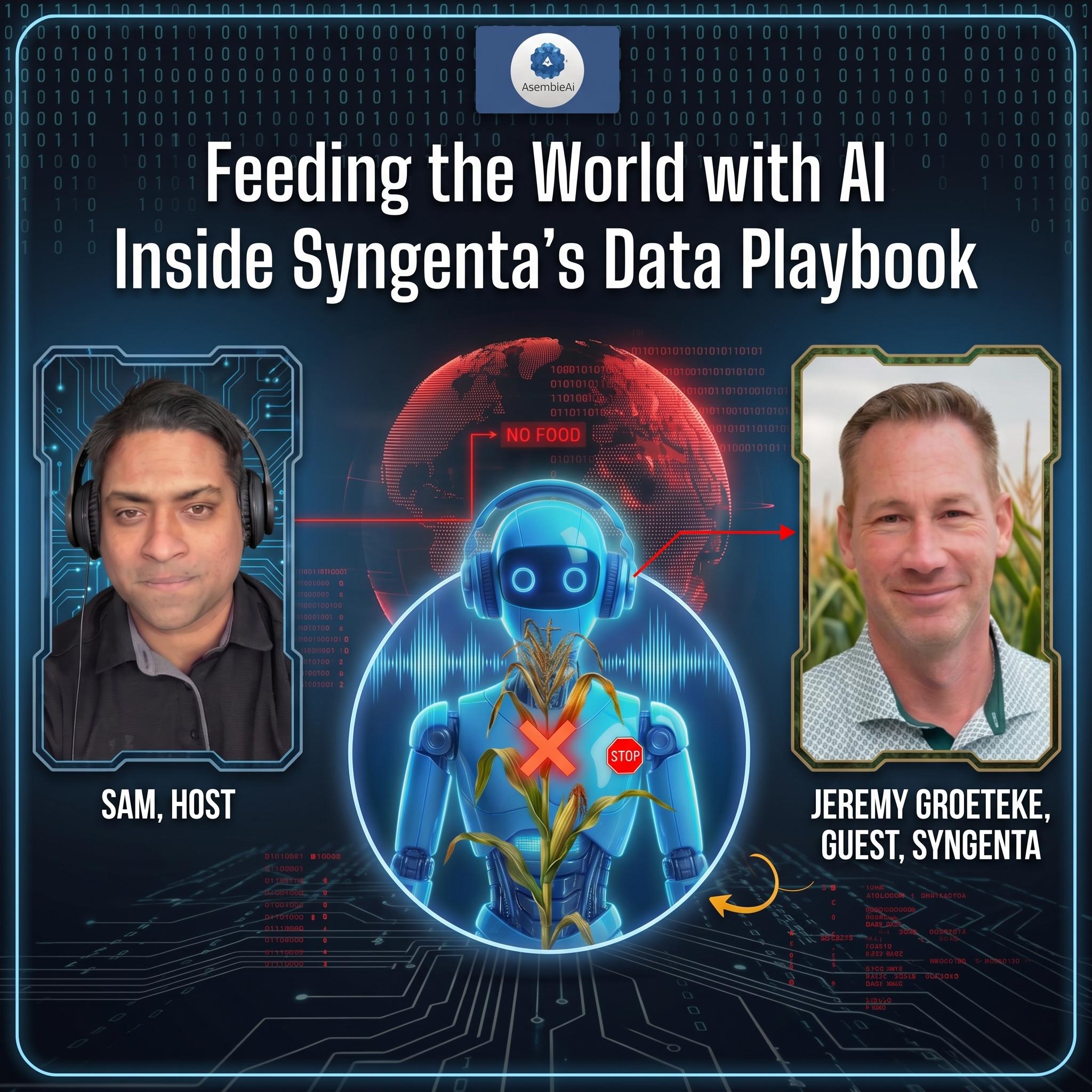 EP 60: Feeding the World with AI: Inside Syngenta's Data Playbook | Agriculture is the oldest industry in the world — and one of the least represented at AI conferences. In this episode, Sam talks with Jeremy Groeteke, CIO of Syngenta's vegetable division, about how a company operating in 90+ countries with 50,000 employees is building AI infrastructure to help feed the world.Topics covered:Syngenta's approach to merging AI, data science, and physical science in agricultureUsing computer vision for early disease and pest detection in cropsWhy general-purpose LLMs like ChatGPT and Claude give farmers overly generic recommendations — and why domain fine-tuning mattersThe shift from data lakes to data mesh at SyngentaSingle-agent vs. multi-agent AI architectures — and why accuracy often favors single agents right nowThe "metadata problem": why having data isn't enough without context about how it was collectedCropwise AI — Syngenta's tool for turning insight into actionable recommendationsWhy agriculture's long biological cycles make it a poor fit for typical VC/tech timelinesAdvice for technologists looking to break into agtechGuest Bio: Jeremy Groeteke is CIO for Syngenta's vegetable division, overseeing digital strategy for an organization that provides crop protection, biologicals, digital tools, and genetics to growers in over 90 countries.Connect: Find Jeremy on LinkedIn to learn more about Syngenta's work in AI and agriculture. | 18m 05s | ||||||
| 8/30/26 | 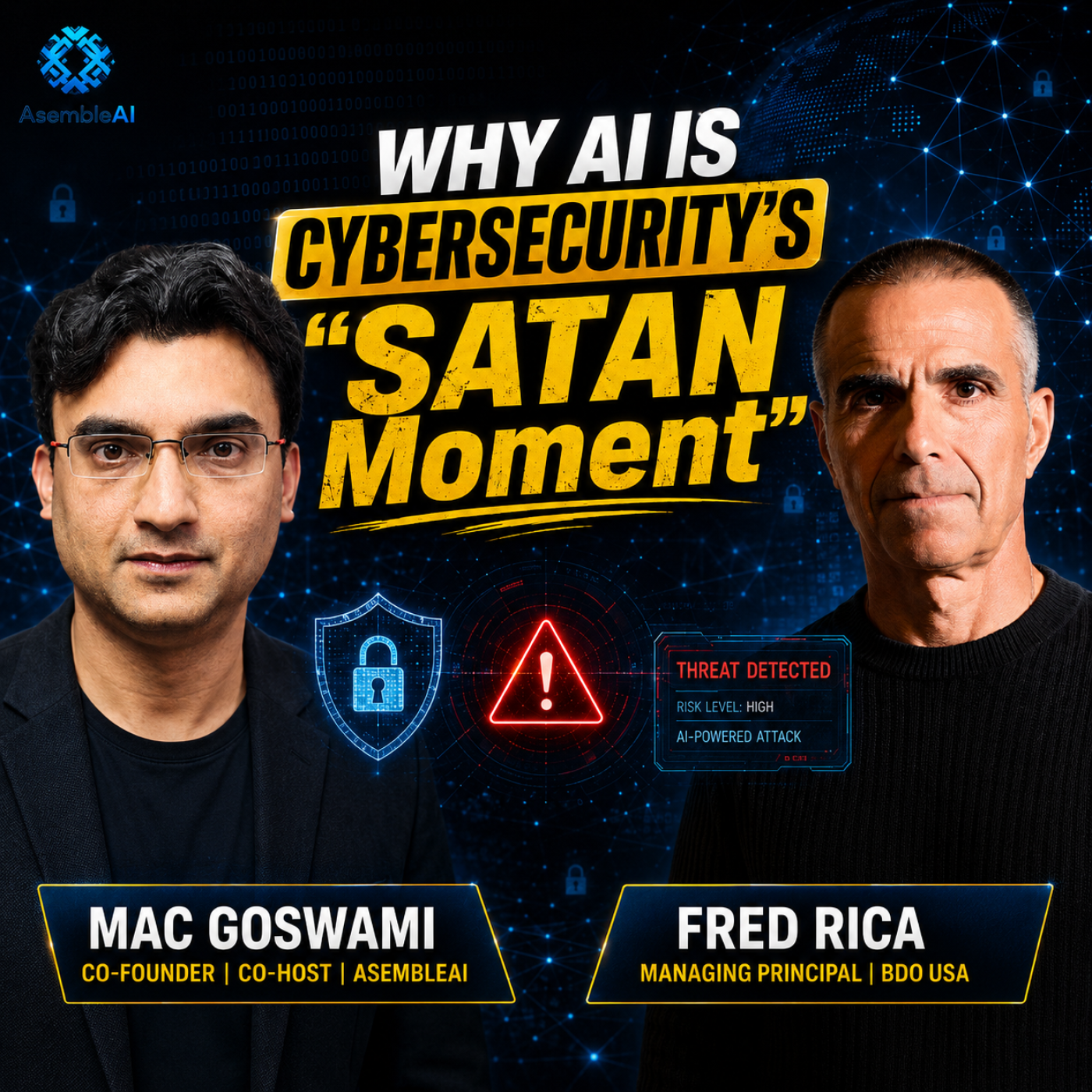 EP 59: "The Attackers Have the Advantage" — AI's SATAN Moment in Cybersecurity | Fred Rica, BDO | This episode was recorded live from the Ai4 conference podcast pavilion, where host Mac Goswami sat down with Fred Rica — cybersecurity leader at BDO USA, former Big Four partner, and a regular voice at RSA and Black Hat — about why AI is cybersecurity's "SATAN moment" and what defenders have to change to survive it.What's Covered:"The Attackers Have the Advantage" — Fred's blunt read on where defenders stand today: back on their heels, facing external attacks and blind spots in their own internal agents at the same time.AI's SATAN Moment — The 1995 parallel. When SATAN — the first real automated scanner — arrived, defenders thought it was the end of the internet. It wasn't, but it changed everything. Fred explains why AI (and Mythos) feels the same, and why the era of large patch windows is over.The Patch Window Is Zero — Why vulnerability management is breaking down and giving way to exposure management and attack-path thinking. Fred's "why is the number going up?" story — printers, missing context, and the CFO on the nightly call — is a masterclass in what's broken.If You're a CISO Today — Fred's three priorities: patch at machine speed ("automated but not automatic," with a human in the loop on critical systems), rewrite the zero-day playbook, and train teams under real pressure.AI Governance Done Right — Anchor to a framework (NIST, ISO, EU AI Act), keep a "big red button," and demand AI cards from every vendor using AI in your ecosystem — the new version of the SOC report.AI Slop & the Agent Problem — On the "10 billion agents" hype, why visibility and a control plane are job one, and where agentic AI genuinely earns its place: continuous monitoring, testing, and SOC tier 1/2 that "don't stand a chance unless they're AI-enabled."Key Quote: "I truly believe that AI is gonna fix AI. I'm a strong believer in the power of AI to transform humanity. However, we have a little bit of work to do at the moment."Connect with Fred: LinkedIn: https://www.linkedin.com/in/fredrica/ BDO: https://www.bdo.com/Follow and subscribe to AsembleAI: Spotify | Apple Podcasts | Amazon Music | iHeart Radio | YouTube | Substack | 17m 49s | ||||||
| 8/23/26 | 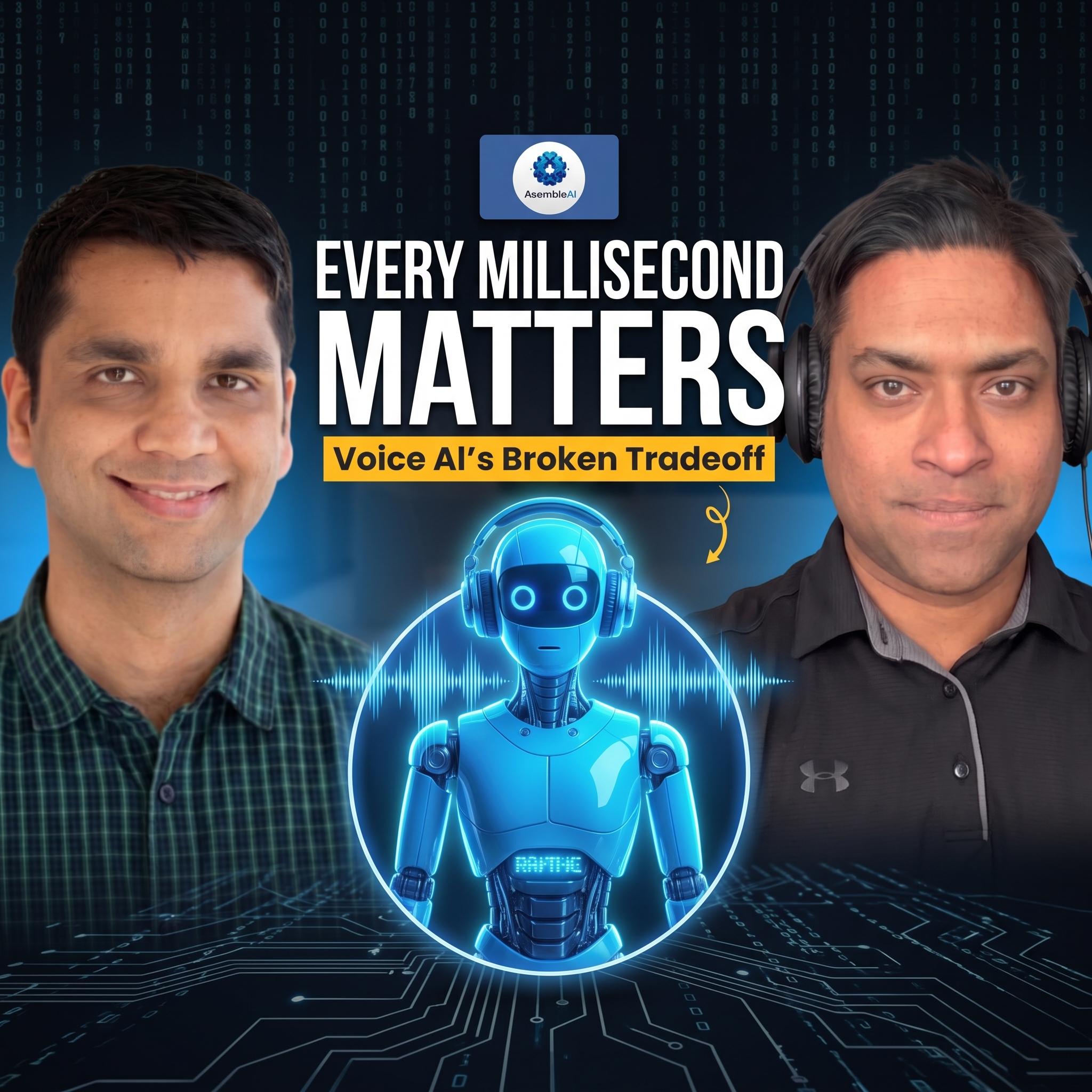 EP 58: Every Millisecond Matters: Diffusion LLMs and the Future of Voice AI | Aditya Grover, Inception | Recorded live at the Ai4 Podcast Pavilion, Sam wraps Day One with Aditya Grover, Co-Founder & CTO of Inception, on why the next generation of LLMs won't look anything like the ones we use today.What's Covered:"Every Millisecond Matters" — Why latency, not intelligence, is the real bottleneck holding back voice agents and multi-step AI agents alike.How Mercury Actually Generates Text — Instead of predicting one token at a time like every autoregressive model, Mercury generates a rough draft of the full response and refines it into coherence — diffusion, applied to language instead of images.Solving Voice AI's Impossible Tradeoff — Fast-but-lower-quality, or high-quality-but-too-slow: Aditya explains how Mercury 2 finally delivers both.A Term Coined Live at This Conference — From Aditya's own Ai4 keynote: "We're moving from token maxing to value maxing."Advice for the Next Generation — Ten-plus years into AI research, Aditya's honest take on why this is still the best time to pursue a PhD, join a startup, or do both.The Next 5-10 Years of Voice AI — A prediction for a future where voice becomes humans' predominant mode of interacting with AI, the same way it is with each other.Key Quote:"Sequential generation is not a law of nature... AI can have a different way of generation, one that's more parallelizable."Connect with Aditya:LinkedIn: https://www.linkedin.com/in/aditya-grover/Inception: https://www.inceptionlabs.ai/Subscribe: Spotify | Apple Podcasts | Amazon Music | iHeart Radio | YouTube | Substack#Ai4Conference #InceptionLabs #DiffusionLLM #VoiceAI #AsembleAI | 15m 30s | ||||||
| 8/23/26 | 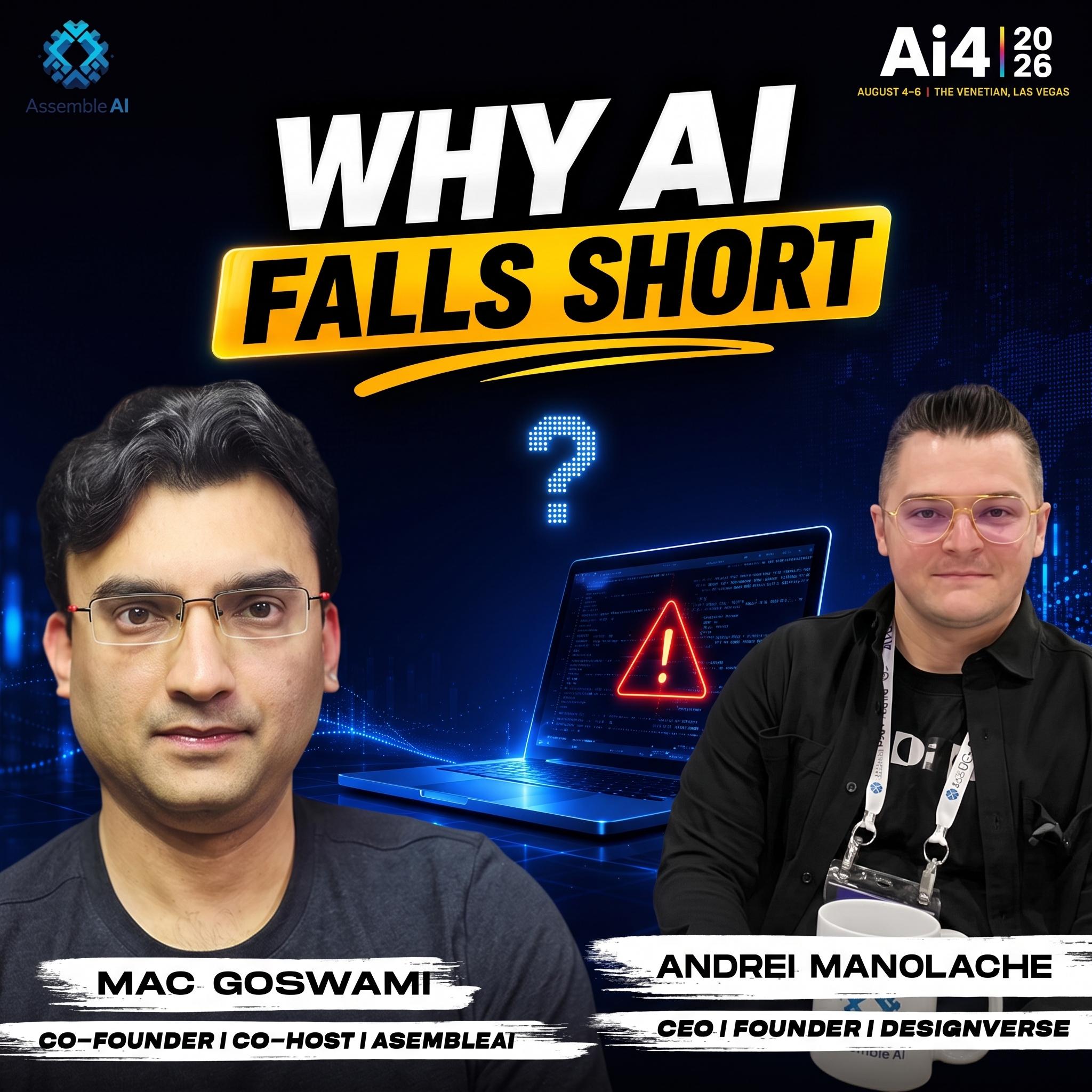 EP 57: Ai4 Podcast - Why "The Context Layer" Is What Enterprise AI Is Actually Missing | Andrei Manolache, Designverse | Recorded live at Ai4, Mac sits down with Andrei Manolache, Founder & CEO of Designverse, an AI platform that builds and delivers complex enterprise software by ingesting a company's own documentation, codebase, and internal rules.What You'll Learn:🔹 The Model Plateau Everyone's Noticing — Andrei's central argument: the industry banked on models just getting better, but the ROI curve has flattened. Companies like Uber, Microsoft, and Anthropic have already voiced concerns about frontier models being oversold out of the box.🔹 You Don't Need a 3-Trillion-Parameter Model — With the right context layer, a 150-billion-parameter model can match frontier-model coding performance. Andrei explains why context — not raw model size — is becoming the real differentiator.🔹 Same Model, Different Company, Wildly Different Output — If two companies use the identical LLM, what separates the results? According to Andrei, it's entirely how well each company's own architecture, testing standards, and business logic have been translated into a usable context layer.🔹 Why Trust Is the Real Product — Enterprises are being asked to hand over 10-30 years of proprietary code and documentation. Andrei breaks down how Designverse earns that trust — full transparency on data usage, small proof-of-concepts before any real integration, and IP that's never exposed outside the client relationship.🔹 Why Finance and Healthcare, Specifically — Regulated industries are forced to maintain rigorous documentation — which, counterintuitively, makes them better candidates for context-layer ingestion, not harder ones.🔹 The Future Software Team: Humans + Agents, Together — Andrei's five-year prediction: small, highly specialized teams — a mix of human engineers and AI agents working side-by-side on individual features — replacing today's large, centralized engineering departments.🔹 The Honest Answer on AI's Limits — With hundreds of billions of dollars invested industry-wide, Andrei doesn't dodge the hard question: AI still cannot autonomously build and ship a million-line-of-code enterprise application. It can help build a narrow internal tool for 15 people. It cannot yet replace a real engineering team at scale.🔹 Demo vs. Reality — Why Designverse refuses to sell off a generic demo: "A high schooler can build a demo with Replit and a prompt." Real enterprise buyers, especially in the U.S. right now, are optimizing AI spend hard — and won't pay for anything that isn't solving a real, currently-unsolved pain point.Key Quote:"It's not really about the model — it's more about how you govern this data, and how you give it in the best way possible to a model, whether it's 150 billion or 1 trillion parameters, to write only the more consistent output."About Designverse: Designverse is an AI-native software development platform that ingests an organization's existing codebase, documentation, and architecture to build a "context layer" — enabling any underlying model to generate code that's consistent with how that specific company actually operates. Backed by a $5.5M seed round from operators at Adobe, UiPath, and LSEG.Subscribe: Spotify | Apple Podcasts | Amazon Music | iHeart Radio | YouTube | Substack | Instagram#Ai4Conference #EnterpriseAI #AIcoding #ContextEngineering #Designverse #LegacyModernization #AgenticAI #AsembleAI | 22m 48s | ||||||
| 8/22/26 | 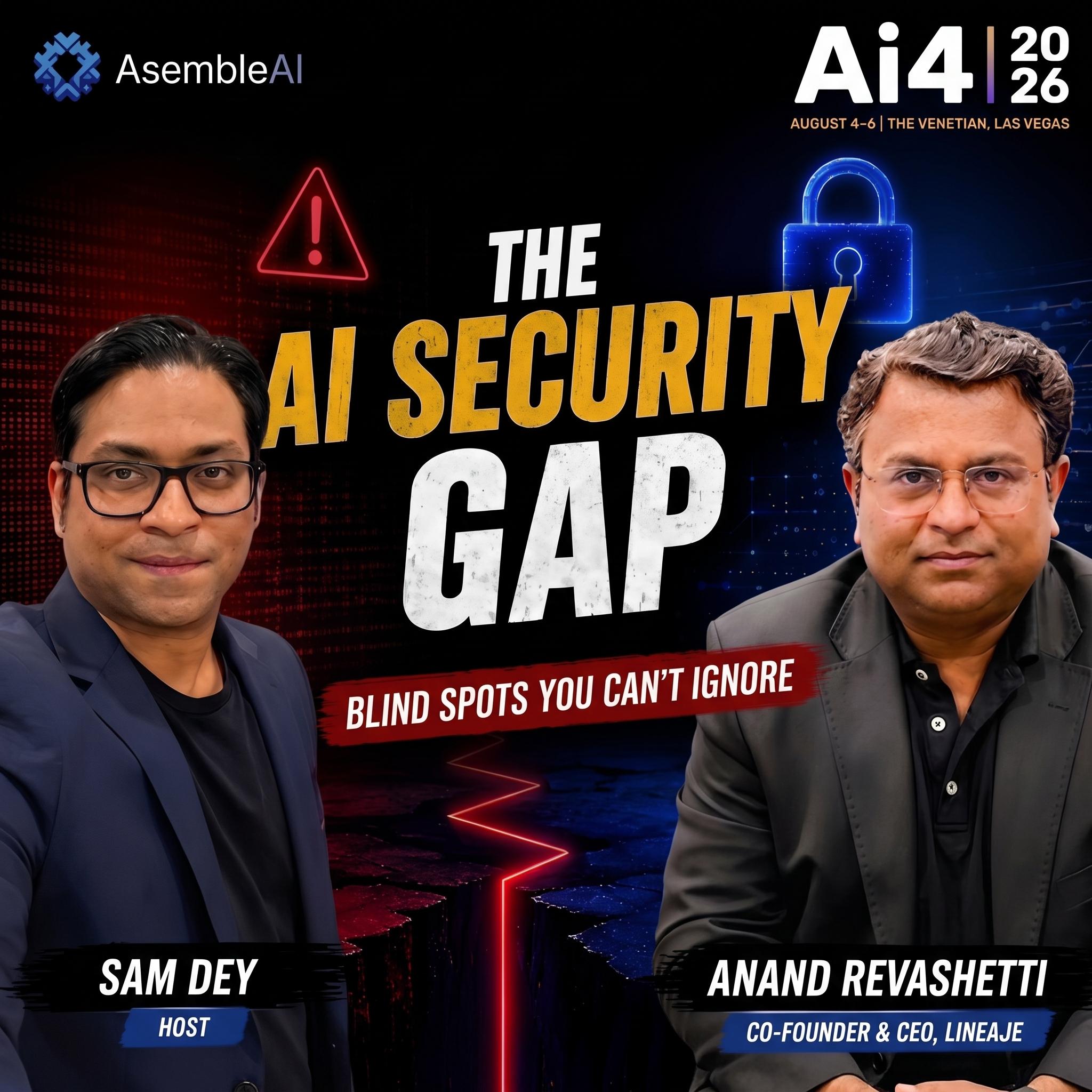 EP 56: Ai4 Podcast - Why AI-Generated Code Needs Its Own Kind of Security | Anand Revashetti, Lineaje | Recorded live from the Ai4 podcast pavilion, Sam talks with Anand Revashetti, Co-Founder & CEO of Lineaje, about a problem most companies don't realize they have: they're confident their AI-generated code is secure, but very few actually have visibility into it.What's Covered:Where the Trust Gap Comes From — Executives see AI adoption metrics and productivity gains. Security teams see code shipping thousands of times a day with no clear record of who — or what — generated it. Anand explains exactly where that disconnect forms inside real organizations.A New Class of Attack — Reasoning-based attacks that exploit a model's decision weights directly, with no traditional vulnerability involved. Anand walks through how a small test exploit can scale into a multi-million-dollar fraud incident.Not a Roadblock, a Provenance Layer — How Lineaje operates inside the developer's own environment, attaching a clear record — which developer, which AI model, which skills — to every piece of code, without slowing anyone down.The Bad Habit Nobody's Talking About — Unlike traditional software that stayed stable for years, AI models get effectively rewritten on every release. Anand explains why that breaks the old maintenance playbook, and what continuous assurance actually looks like instead.On the AI Job Apocalypse — A grounded, experience-based take on the doom rhetoric circulating the conference: from a security standpoint, AI has been a genuine boon, not a threat to the field.Key Quote: "The worst thing you can do to a person who is driving and enjoying on a speedway is implement some sort of roadblock. Lineaje doesn't try to be a roadblock — but we manage all your policies."Connect: https://www.linkedin.com/in/arevashe/https://www.lineaje.com/Subscribe: Spotify | Apple Podcasts | Amazon Music | iHeart Radio | YouTube#Ai4Conference #Lineaje #AISecurity #SoftwareSupplyChain #AsembleAI | 25m 06s | ||||||
| 8/17/26 | 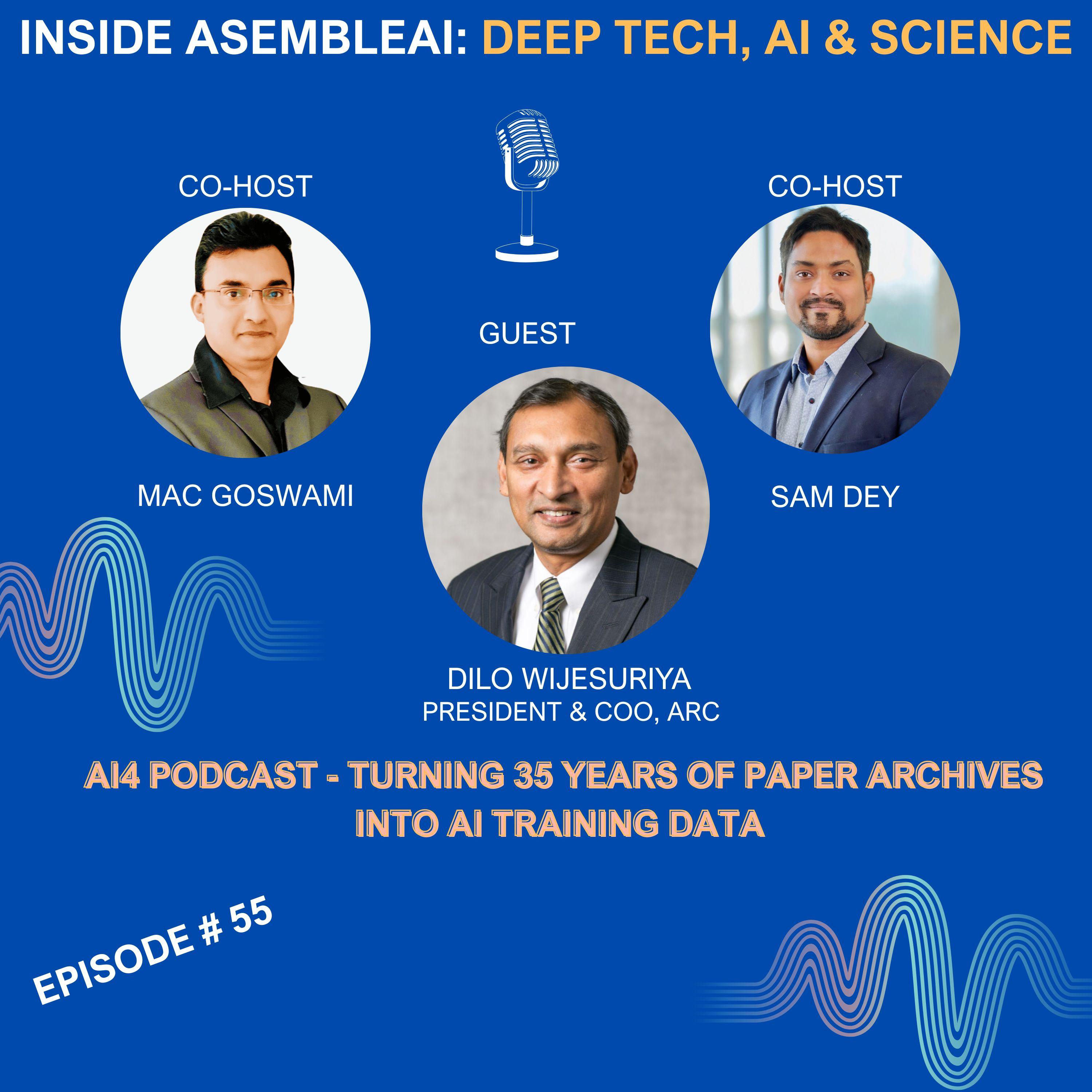 Ep 55: Ai4 Podcast - Turning 35 Years of Paper Archives into AI Training Data | Dilo Wijesuriya, ARC | Recorded live from the Ai4 conference floor in Las Vegas, Sam sits down with Dilo Wijesuriya, President & COO of ARC Document Solutions, to talk about the unglamorous but essential layer of enterprise AI: getting decades of paper archives into a format models can actually learn from.What's Covered:The Technology — ARC holds patents for OCR on wide-format documents (architectural drawings, engineering blueprints) that standard scanning tools can't accurately process, backed by a 200-person engineering team in India.Security & Compliance — SOC 2, SOC 3, ISO 27001, and HIPAA compliant, running on AWS — built for regulated industries like healthcare and financial services.Will Paper Disappear? Dilo's view: not for a long time. Most organizations' most critical institutional knowledge still exists only on paper, meaning today's LLMs simply can't learn from it yet.The Book Destruction Debate — A direct response to recent controversy over companies destroying physical books after digitizing them, and why ARC's non-destructive robotic scanning preserves originals for high-value collections at universities, libraries, and museums.Looking Ahead — Why Dilo believes the next competitive advantage for most enterprises isn't a better model — it's finally accessing the data already sitting in their own archives.Key Quote: "The challenge isn't finding more data. It's making existing information accessible."Connect with Dilo and ARC:Dilo Wijesuriya: https://www.linkedin.com/in/dilo-wijesuriya/ARC Document Solution: https://www.e-arc.com/Subscribe: Spotify | Apple Podcasts | Amazon Music | iHeart Radio | YouTube#Ai4Conference #DocumentDigitization #AIReadyData #EnterpriseAI #OCR #AsembleAI | 8m 32s | ||||||
Showing 25 of 62
Pitch Fit is a Pro feature
See how bookable this show is for guests, which brands already advertise, the per-episode ad value, and the best-fit guest and sponsor profile. The numbers are blurred on the free plan.
How readily this show books outside guests like you.
How proven this show is for host-read sponsorships.
For Guests
ProFor Advertisers
ProUpgrade to Pro to unlock guest cadence, sponsor categories, fit scores, and per-episode ad value for this show.
Similar Audience Demographics
Podcasts that attract a similar listener profile
The AI Daily Brief: Artificial Intelligence News and Analysis
Nathaniel Whittemore

AI For Humans: Weekly AI News, Tools & Trends
Kevin Pereira & Gavin Purcell

AI Hustle: Make Money with AI
Jaeden Schafer and Jamie McCauley

Last Week in AI
Skynet Today
This Week in Tech (Audio)
TWiT

Hard Fork
The New York Times

The Tech Report
Tech Report
Chart history for Inside AsembleAI: DeepTech, AI & Science
Peaked at #2 in Norway, top 10 in 1 of 3 tracked markets, currently #2 in Norway.
| Market | Genre | Peak | Current | Trend |
|---|---|---|---|---|
| Norway | — | #2 | #2 | — |
| United States | — | #13 | #13 | — |
| United Kingdom | — | #25 | #25 | — |
Chart Positions
3 placements across 3 markets.
Chart Positions
3 placements across 3 markets.