

Insights from recent episode analysis
Audience Interest
Podcast Focus
Publishing Consistency
Platform Reach
Insights are generated by CastFox AI using publicly available data, episode content, and proprietary models.
Total monthly reach
Estimated from 1 chart position in 1 market.
By chart position
- 🇦🇺AU · Health & Fitness#1145K to 30K
- Per-Episode Audience
Est. listeners per new episode within ~30 days
1.5K to 9K🎙 Daily cadence·290 episodes·Last published 3w ago - Monthly Reach
Unique listeners across all episodes (30 days)
5K to 30K🇦🇺100% - Active Followers
Loyal subscribers who consistently listen
2K to 12K
Market Insights
Platform Distribution
Reach across major podcast platforms, updated hourly
Total Followers
—
Total Plays
—
Total Reviews
—
* Data sourced directly from platform APIs and aggregated hourly across all major podcast directories.
On the show
Recent episodes
287 Exposed. Cyber Threats To Fertility Field. Chris Diamond & Jordan Spriegel
May 3, 2026
Unknown duration
286 The Dread and Excitement of 4 Genetic Counselors. Andria Besser, Lauri Black, Rachel Donnell, Amber Kaplun
Apr 19, 2026
Unknown duration
285 CCRM's Investments in 2027. Tracy Belsan
Apr 12, 2026
Unknown duration
284 Don't Get It Twisted. PGT-G Thwarts PGT-P In Battle for Embryo Genome Sequencing. Drs. Mili Thakur & Sasha Hakman
Apr 5, 2026
Unknown duration
283 Proof of Concept. IVF Lab Automation. Drs. Jason Barritt & Jacques Cohen
Mar 29, 2026
Unknown duration
Social Links & Contact
Official channels & resources
Official Website
Login
RSS Feed
Login
| Date | Episode | Description | Length | ||||||
|---|---|---|---|---|---|---|---|---|---|
| 5/3/26 |  287 Exposed. Cyber Threats To Fertility Field. Chris Diamond & Jordan Spriegel | Cyber threats in fertility aren’t abstract, they're active and closer than most clinics think.And with AI lowering the barrier, even inexperienced actors can cause serious damage.In this episode of Inside Reproductive Health, One Stop IT experts Chris Diamond and Jordan Spriegel share what’s really happening and how fertility centers can respond.How cyber attackers infiltrate fertility and OBGYN systemsWhy these threats aren’t limited to large healthcare organizationsWhat clinics should be doing now to protect their systems and patientsThe right and wrong way to approach EMR migrationWhere AI is already being used in fertility practices todayHow prepared is your clinic for this level of threat? | — | ||||||
| 4/19/26 |  286 The Dread and Excitement of 4 Genetic Counselors. Andria Besser, Lauri Black, Rachel Donnell, Amber Kaplun | Genetic testing in IVF is only getting more complex and more common. REIs, you’re not supposed to do this alone, help is already here.We speak with four genetic counselors, Amber Kaplun, Rachel Donnell, Andria Besser, and Lauri Black, about how this works in practice.We dive into:How to embed genetic counselors into your workflowHow to free up REI time while improving patient experienceWhy access to genetic counselors isn’t as limited as it seemsHow third-party services like GeneScreen fit into clinical operationsTheir perspective on PGT-P vs. PGT-G (and where the field is heading) | — | ||||||
| 4/12/26 |  285 CCRM's Investments in 2027. Tracy Belsan | What is CCRM building toward, and how are they preparing for what comes next? As part of Unified Women’s Healthcare, CCRM is positioning for a future where “hub and spoke” becomes more than just a buzzword. Tracy Belsan, President of CCRM Fertility, joins the episode to share how they’re thinking about growth, operations, and the patient journey.We dive into:The KPIs CCRM focuses onThe operational barrier they removed (Moving patients into care faster)How technology is being implemented across the patient journeyCCRM’s approach to patient finance and access to careThe role of APPs and evolving clinical modelsWhat it takes to consolidate an entire network onto a single EMR by 2027 | — | ||||||
| 4/5/26 |  284 Don't Get It Twisted. PGT-G Thwarts PGT-P In Battle for Embryo Genome Sequencing. Drs. Mili Thakur & Sasha Hakman | A tale of two PGTs.One is making bold promises and headlines, the other is quietly gaining traction and relevance.Between PGT-P & PGT-G…what’s actually moving the needle?Dr. Mili Thakur of Genome Ally and Dr. Sasha Hakman of HRC Fertility break down what they’re seeing in real patients, especially when everything else has already failed.We dive into:The real difference between PGT-P and PGT-GWhy some genetic claims are under scrutinyWhere whole genome sequencing is actually helpingHow PGT-G may reduce repeated failed IVF cyclesWhether this can truly shorten time to pregnancy | — | ||||||
| 3/29/26 |  283 Proof of Concept. IVF Lab Automation. Drs. Jason Barritt & Jacques Cohen | The results are in: 5 healthy babies born, 64.3% fertilization rate, zero eggs damaged across hundreds of oocytes.Lab automation in IVF is no longer theoretical, it’s been proven.Chief Scientific Officers Jason Barritt of Kindbody and Jacques Cohen of Conceivable Life Sciences join the episode to discuss a recent study published in Human Reproduction examining AURA, the robotic lab system developed by Conceivable Life Sciences.We dive into:What “proof of concept” actually means in IVF lab automationWhy this study matters (And where it falls short of current standards)The role of automation as a testing ground for new lab technologiesWhat a fully automated IVF lab could unlockWhether “hub and spoke” models in fertility have been misunderstood (and what they could actually become)If automation continues to progress, the scale of what’s possible in fertility care may look very different than it does today. | — | ||||||
| 3/15/26 |  282 Do Fertility Doctors Deserve To Be Happy? Dr. Jason Yeh | Do fertility doctors deserve happiness?It sounds like a strange question, but for many REIs it’s not abstract.We step back from operations, technology, and finance to ask a more fundamental question with Inception’s National Medical Director, Dr. Jason Yeh:What does a good life actually look like for a fertility specialist?In this conversation, we explore:Moral injury vs. burnoutThe X–Y axis of time and money in a physician’s careerHappiness vs. meaningWhy fertility doctors often benchmark happiness against the status and performance of peersLiving in the moment as an REIThe different kinds of regret fertility doctors describe at the end of their careersConversations like this are rare. If you find value in it, please tell us. Because if the field wants more conversations like this, we need to prove they’re worth having. | — | ||||||
| 3/15/26 |  281 Pharmaceuticals. Pharmacy. Supplements. Professional Services. Category Deep Dive | What are the drug makers up to?And who’s about to win or lose in fertility pharmacy?This final category overview takes a hard look at the shifting pharmaceutical landscape of legacy manufacturers, rising challengers, supplement disruptors, and the latest in professional services.We also dive into:Why the pharmacy “middle” may be hollowed outWhich models are positioned to scale (and which aren’t)Who operators are calling when they need expert guidanceThe consultants and firms quietly shaping growth behind the scenesDive deeper into any of these topics through our Inside Reproductive Health Digest Articles:Pharmacy, Pharmaceuticals, Professional Services, Supplements | — | ||||||
| 3/8/26 |  280 Transparency Now. Pricing Demands From Patients, Payors, and IVF Centers. Bret Anderson. Shruti Sood. Heather Stark | Patients want clearer pricing, clinics want operational sustainability, managed care wants predictable cost control……and everyone wants more transparency.This epiosde centers on the groundbreaking Journal of Assisted Reproduction and Genetics (JARG) paper on Activity-Based Costing in IVF and what it actually costs.We’re joined by Pinnacle CFO Shruti Sood, The Fertility Partners CEO Heather Stark, and Chartis Partner Bret Anderson to discuss:Why IVF costs have not been accurately accounted forHow activity-based costing could reshape pricing modelsThe real impact of payer consolidationWhere clinics confuse capacity problems with volume problemsWhether different prognosis patients should be priced differentlyHow managed care pressure will change IVF economics | — | ||||||
| 3/7/26 |  279 Genetics. Diagnostics. Third Party IVF. Patient Finance. Category Deep Dive | Clinics are feeling the pressure. And one year after the PGT class action lawsuits, the ripple effects are still unfolding.We’re back with another Fertility Field Overview, and this one looks at what’s happening across patient finance, IVF benefits and third-party reproduction, genetics and diagnostics, and the evolving self-pay landscape.We discuss:Whether IVF benefits managers are helping clinics (or squeezing them)Which lending institutions and loan programs are positioned to rise to the topWhy some say the third-party IVF experience is getting worseWhat’s changed in genetics and diagnostics since the PGT lawsuitHow clinics are reducing workload through at-home testing solutionsHow fertility compares to the broader self-pay healthcare marketDive deeper into any of these topics through our Inside Reproductive Health Digest Articles:Patient Finance, Third Party IVF, Genetics, Diagnostics | — | ||||||
| 3/1/26 |  278 Category Deep Dive: AI. Patient Journey. Software. Devices. Cryosafety. | Patients, providers, and staff are doing far too much manual work, and with today’s tech it’s time to operationalize.This Fertility Field Overview breaks down the current state of AI-enabled operations, patient journey software, device innovation, cryo safety……and where the field is falling behind.This episode covers:My bold prediction regarding IVI RMA’s approach to tech adoption (Hint: Think late 2000s Google)Why manual workflows are burning out staff and frustrating patientsThe operational tech stack clinics should already be building towardWhere large vendors are stalling (and where fertility-first companies are stepping up)How AI, automation, and safer cryo systems could redefine clinic operationsWhat recent conversations with operators, physicians, and scientists suggest about what’s coming next | — | ||||||
Want analysis for the episodes below?Free for Pro Submit a request, we'll have your selected episodes analyzed within an hour. Free, at no cost to you, for Pro users. | |||||||||
| 2/22/26 |  277 PGT's Crucial Moment. Drs. Meera Shah & Deirdre Conway | For more than a decade, the debate around PGT has felt like the same arguments, the same uncertainty, and little change in day-to-day clinical decision-making.So what’s different now?Joining the conversation are two REIs, Dr. Deirdre Conway of Utah Fertility Center and Dr. Meera Shah of Nova IVF. Together they examine how recent events, emerging data, and evolving lab practices are reshaping how physicians think about PGT.They discuss:What has changed since the late-2024 class action lawsuit against PGT labsHow practices and networks are evaluating PGT lab partnerships todayWhy IVY Fertility has not yet selected a single PGT labWhat additional evidence clinicians want to see around PGT-A and PGT-GWhich PGT lab stood out to Dr. Conway (And the story behind her first case)This is a grounded, clinician-led conversation about evidence, accountability, and what it would actually take for the PGT debate to move forward. | — | ||||||
| 2/22/26 |  276 Crazy Again. Fertility Network Overview with Griffin Jones. | “Everyone in our class is freaking out right now…”That’s the text I got from a fellow last year during the Park City retreat.In this episode, I break down the state of fertility center networks in 2026, based on what I’m hearing directly from physicians, operators, and investors across the field.This is not sponsored commentary, and none of the organizations mentioned had editorial control or preview access. This is my unfiltered read on what’s actually happening, and where things are headed.We cover:Why most large fertility networks are for sale (and why more consolidation is likely in 2026)How the war for REI talent is driving valuation, strategy, and cultureWhy groups of 5–10 physician-owned practices may be critical for innovation long-termWhat younger doctors are actually optimizing for (Hint: it’s not just comp)How burnout, autonomy, research, and safety are becoming competitive differentiatorsThe growing importance of embryology, lab automation, and patient safety infrastructureDon't miss the Inside Reproductive Health article diving even deeper into the state of fertility networks in 2026, which can be found here. | — | ||||||
| 2/15/26 |  275 What Will Happen to the Legacy of Boston IVF? Dr. Alan Penzias | As Boston IVF becomes part of a much larger organization, a natural question emerges: Does a legacy brand get diluted, or does its history shape what comes next?In this episode, Dr. Alan Penzias reflects on Boston IVF’s deep roots and how that heritage continues to influence the organization’s future within the RMA network.The conversation covers:Boston IVF’s founding history and the leaders who shaped itWhether scale threatens (or strengthens) institutional cultureThe “buy-versus-build” debate playing out across fertility networksDr. Penzias’s perspective on AI and evolving clinical infrastructureHow Boston IVF’s tradition of Grand Rounds has scaled across the networkServing patients in smaller cities and rural communities (without compromising quality)Dr. Penzias also shares updates on longtime Boston IVF leaders, including the evolving roles of Drs. Michael Alper and Selwyn Oskowitz, and reflects on how mentorship and tradition continue to drive innovation.This episode is a thoughtful look at legacy, leadership, and how fertility care evolves without losing its soul. | — | ||||||
| 2/8/26 |  274 Fertility Practices Have to Get This Right. The REI-FC Relationship. Dr. Allison Bloom. Cheryl Campbell | The gap between provider care and financial counseling may be costing you patients.This episode focuses on that gap.Joining the conversation are Dr. Allison Bloom, practicing REI at Main Line Fertility, and Cheryl Campbell, Director of Operations at BUNDL.Together they examine:Where the clinical care and financial counseling should intersectWhy patients fall out of care between the provider visit and financial counselingWhat physicians and financial counselors should (and should not) communicateHow misalignment leads to patient drop-off (Even among insured patients)How better preparation before the provider visit improves conversion and retentionWhy “covered” patients often still lack sufficient financial guidanceThis is a conversation about improving patient experience while strengthening the practice’s top line. | — | ||||||
| 1/19/26 | 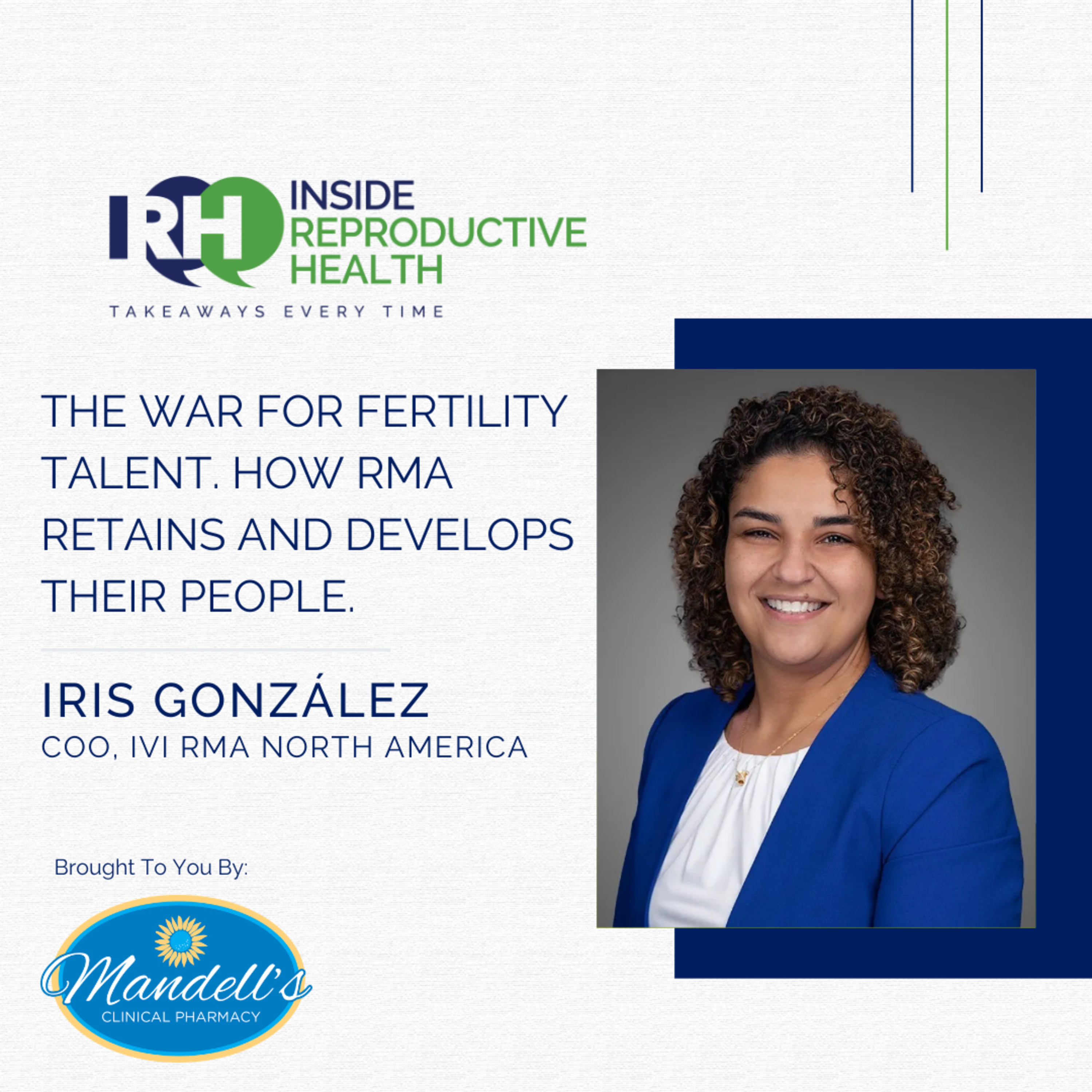 273 The War for Fertility Talent. How RMA Retains and Develops Their People. COO, Iris González | How do large fertility networks retain great people when everyone is struggling to do the same?In this week’s episode of Inside Reproductive Health, Iris González, Chief Operating Officer of IVI RMA North America, to talks about how one of the largest fertility organizations in the country approaches retention, leadership, and patient experience at scale.Iris shares:How IVI RMA uses regular operator meetings to address retention across practicesThe dyad leadership model used throughout the organizationIVI RMA’s built-in backup staffing strategiesWhy IVI RMA implemented patient advisory councils (and how they act on the feedback)The operational changes they made to improve financial counselingHow IVI RMA tripled patient survey participation (While improving NPS) | — | ||||||
| 11/30/25 | 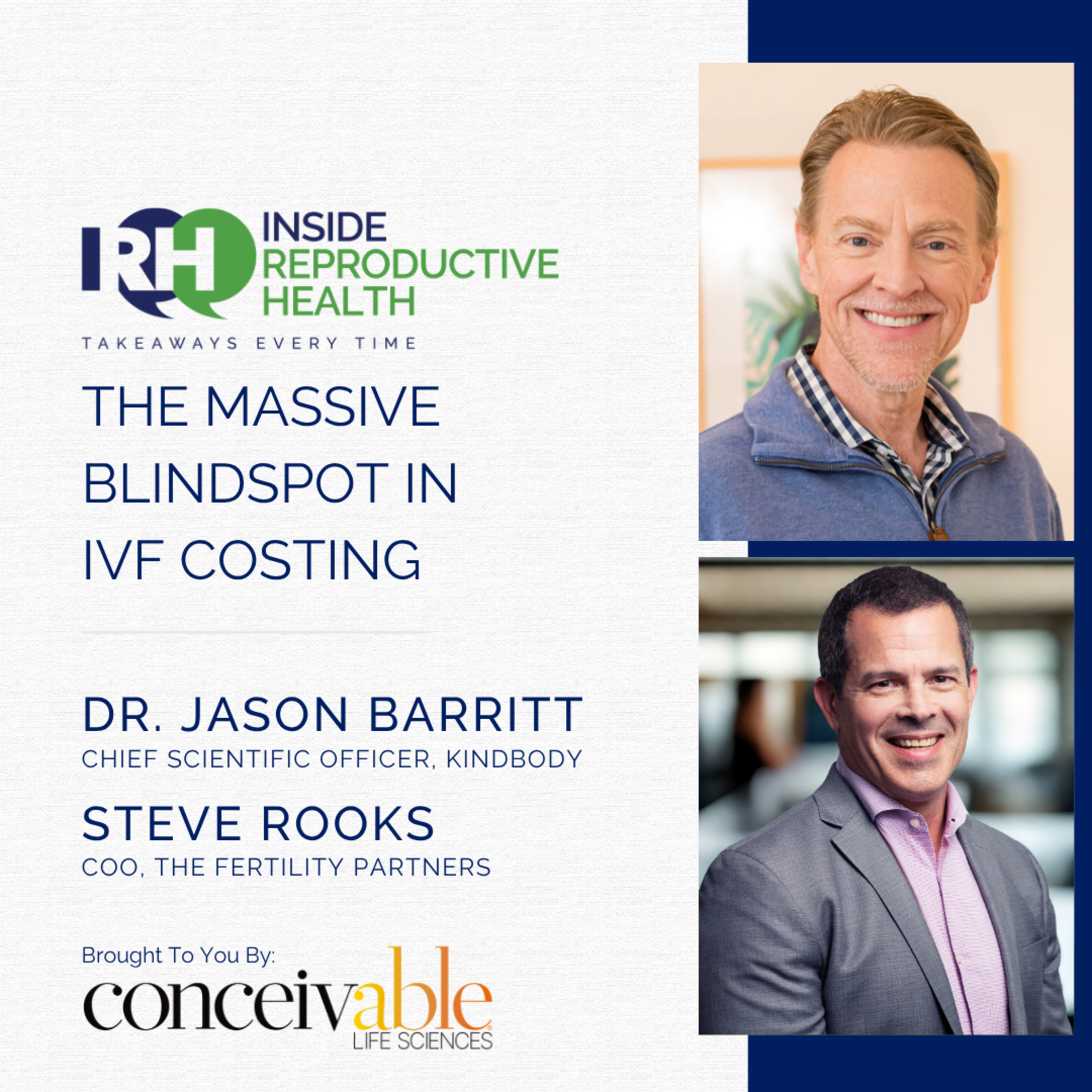 272 The Massive Blindspot in IVF Costing. Dr. Jason Barritt. Steve Rooks. | How much does an IVF cycle cost?Seems like a simple question. But as this week’s guests explain, it’s not.The way most of us account for “an IVF cycle” hides how many individual work orders and variables are actually involved. That lack of clarity can distort cost, efficiency, and strategy.This week on Inside Reproductive Health, Griffin talks with Steve Rooks, co-author of a groundbreaking paper in JARG on activity-based costing in IVF, and Dr. Jason Barritt, Chief Scientific Officer at Kindbody, to unpack what’s really behind those numbers.Together, they discuss:– Why “an IVF cycle” isn’t a single service but a set of unique work orders– How retrieval volume, ICSI, and PGT each reshape the cost per cycle– The dramatic efficiency differences between labs performing 200 vs. 4,000 cycles per year– The growing impact of managed care on margins– How scalable systems like AURA from Conceivable Life Sciences could expand IVF access | — | ||||||
| 11/23/25 | 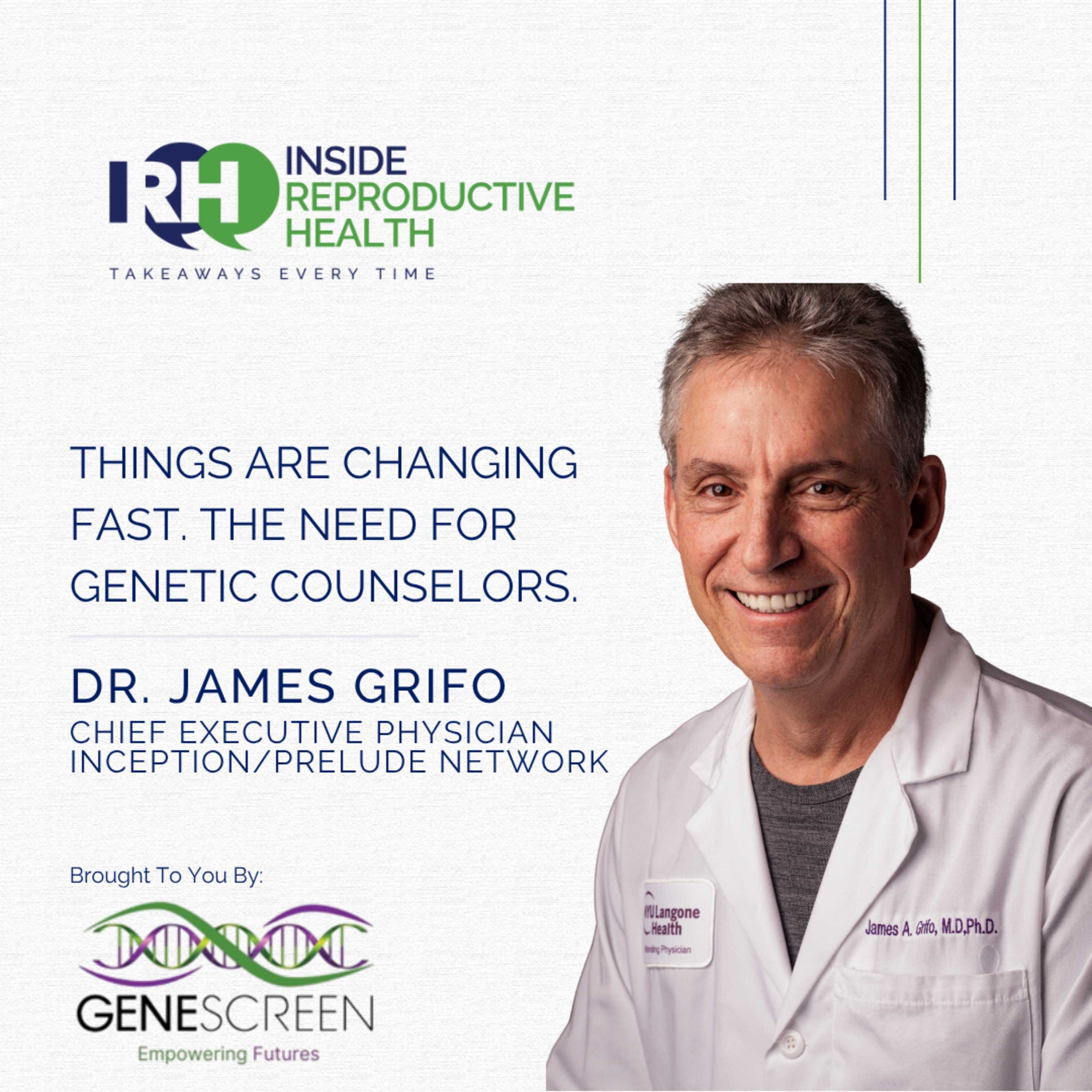 271 Things Are Changing Fast. The Need for Genetic Counselors. Dr. James Grifo | “They expect us to be perfect.”That’s how Dr. Jamie Grifo, Chief Executive Physician of the Inception/Prelude Network, describes the expectations placed on reproductive endocrinologists from patients, payors, and policymakers alike.And while perfection may be impossible, preparation and partnership aren’t.He discusses:– Why NYU Langone has three in-house genetic counselors in their REI department– How they counseled over 700 new patients last year– What led to 300 PGT-M cycles out of 5,500 retrievals– The challenges of sharing counselors across a growing network– Regulatory complexities from state and federal oversight– Why some REIs may be missing key opportunities to help patients with mosaic embryos | — | ||||||
| 11/19/25 | 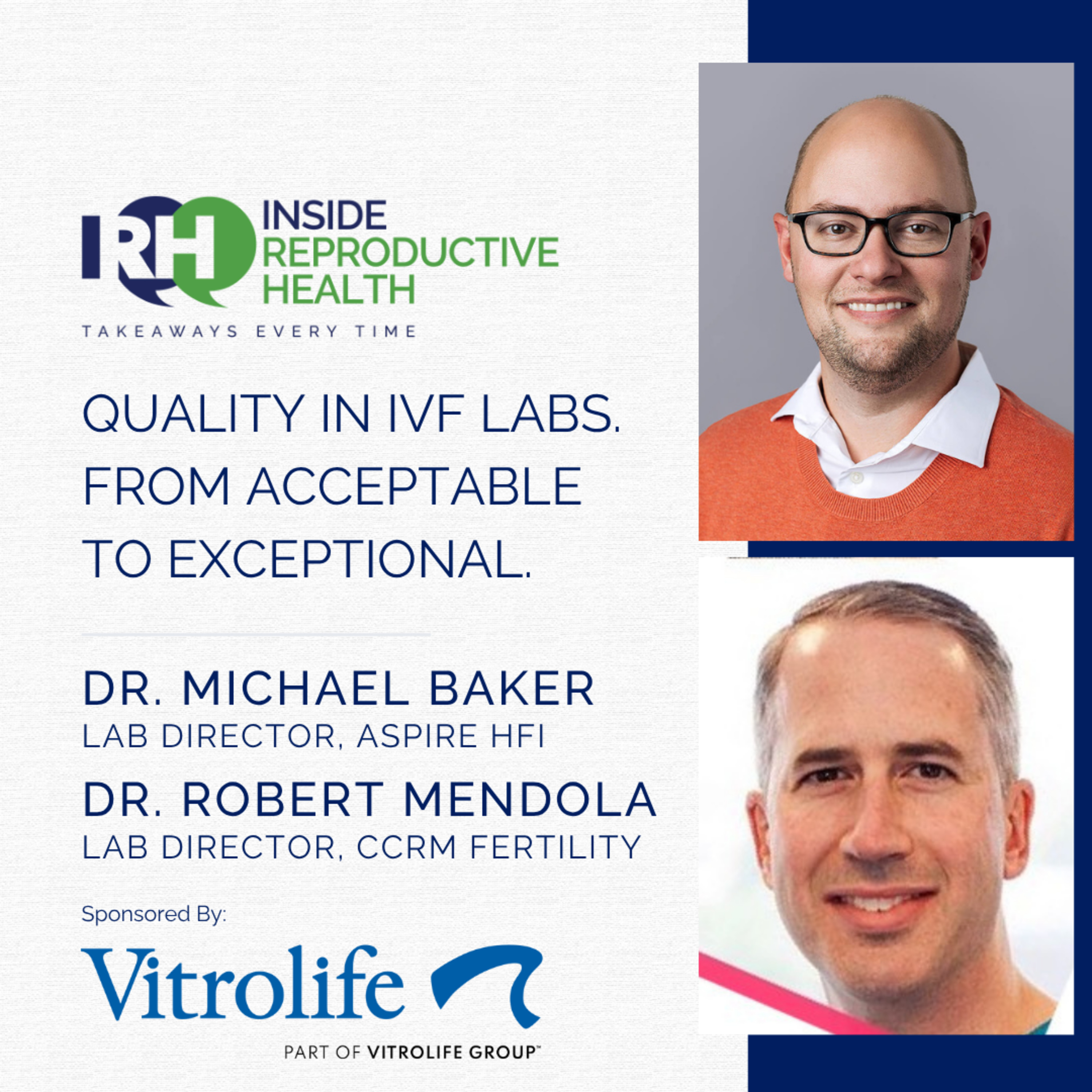 270 Quality in IVF Labs. From Acceptable to Exceptional. Drs. Michael Baker & Robert Mendola | Embryologists have a lot riding on the line.Bad supplies can cause big problems. Good supplies can create big improvements.Either way, success rates and patients’ lives hang in the balance. Every detail in the IVF lab matters. “Good enough” can cost more than it saves, because only the highest standards protect consistency, outcomes and trust.. We’re joined this week by two of the most respected leaders in embryology. Dr. Michael Baker, Lab Director at Aspire HFI, and Dr. Robert Mendola, Lab Director at CCRM and member of the network’s Innovation Advisory Board.Together, they break down:– The full chain of quality assurance, from suppliers to networks to individual lab– The burden and importance of retesting lab materials– Why labs should evaluate not just blastocyst formation but cell counts per blast– The tension between cost control, standardization, and lab autonomy– The suppliers and products that stand out for exceptional quality (including Vitrolife’s media and oils)– Why transparency and competition should set the standard for lab supply quality (instead of regulation) | — | ||||||
| 11/9/25 | 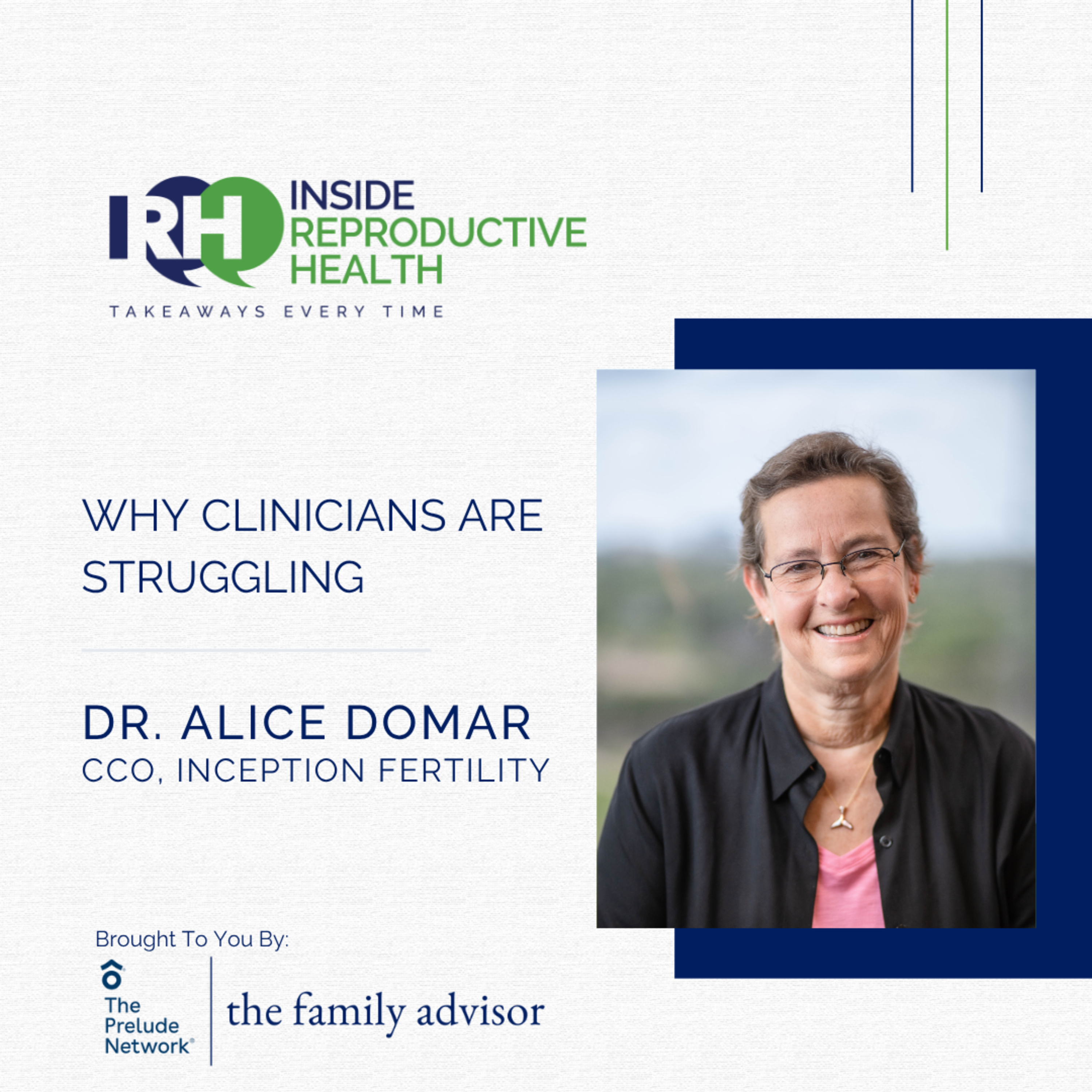 269 Why Clinicians Are Struggling. Dr. Alice Domar | How are clinicians doing?Patients are expecting more, offering less gratitude, and leaving negative reviews faster than ever. Sound familiar?Dr. Alice Domar, Chief Compassion Officer at Inception, talks about the emotional toll of working in reproductive medicine and what can be done about it.Dr. Domar shares:– Practical strategies for burnout prevention– The one small intervention proven to improve patient retention– Results from three psycho-social trials currently underway at Inception– The patient traits most predictive of treatment dropout– How Inception Fertility supports providers through empathic communication training- What needs to change to better support front-line fertility professionals. | — | ||||||
| 11/3/25 | 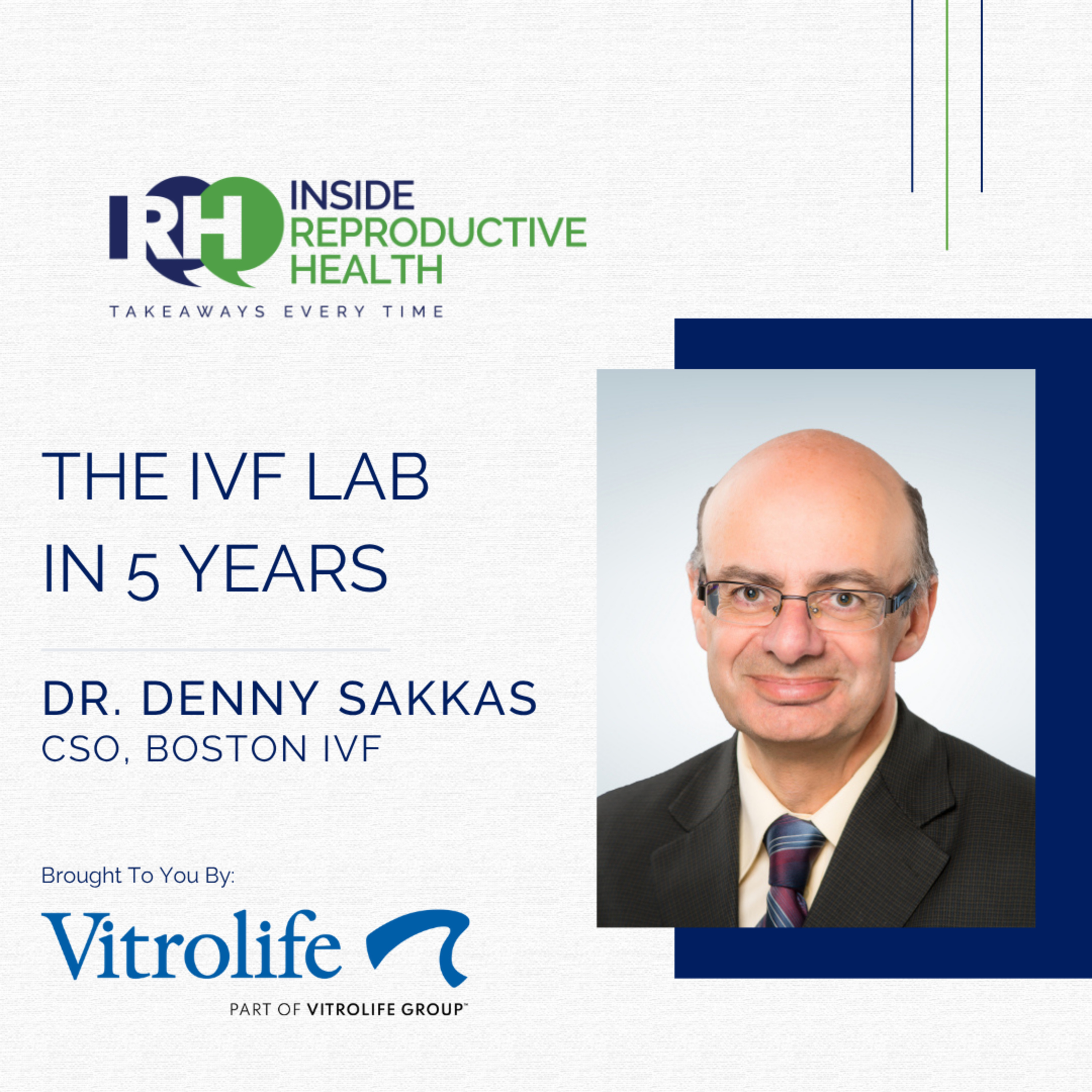 268 The IVF Lab in 5 Years. Dr. Denny Sakkas | What will the IVF lab look like in five years?Trying to predict and shape that response is Dr. Denny Sakkas, Chief Scientific Officer at Boston IVF and head of the scientific advisory board for AutoIVF.In this episode of Inside Reproductive Health, Dr. Sakkas about what automation really means for embryologists, and how new technologies could transform lab operations, chain of custody, and patient safety.Dr. Sakkas shares:– The potential downsides to automation and where caution is needed– How AutoIVF differs from AURA by Conceivable Life Sciences– His prediction about time-lapse imaging within five years– The areas where embryologists must hold firm on lab standards– The next big innovations he’s watching (and what Boston IVF plans to purchase next year) | — | ||||||
| 10/26/25 | 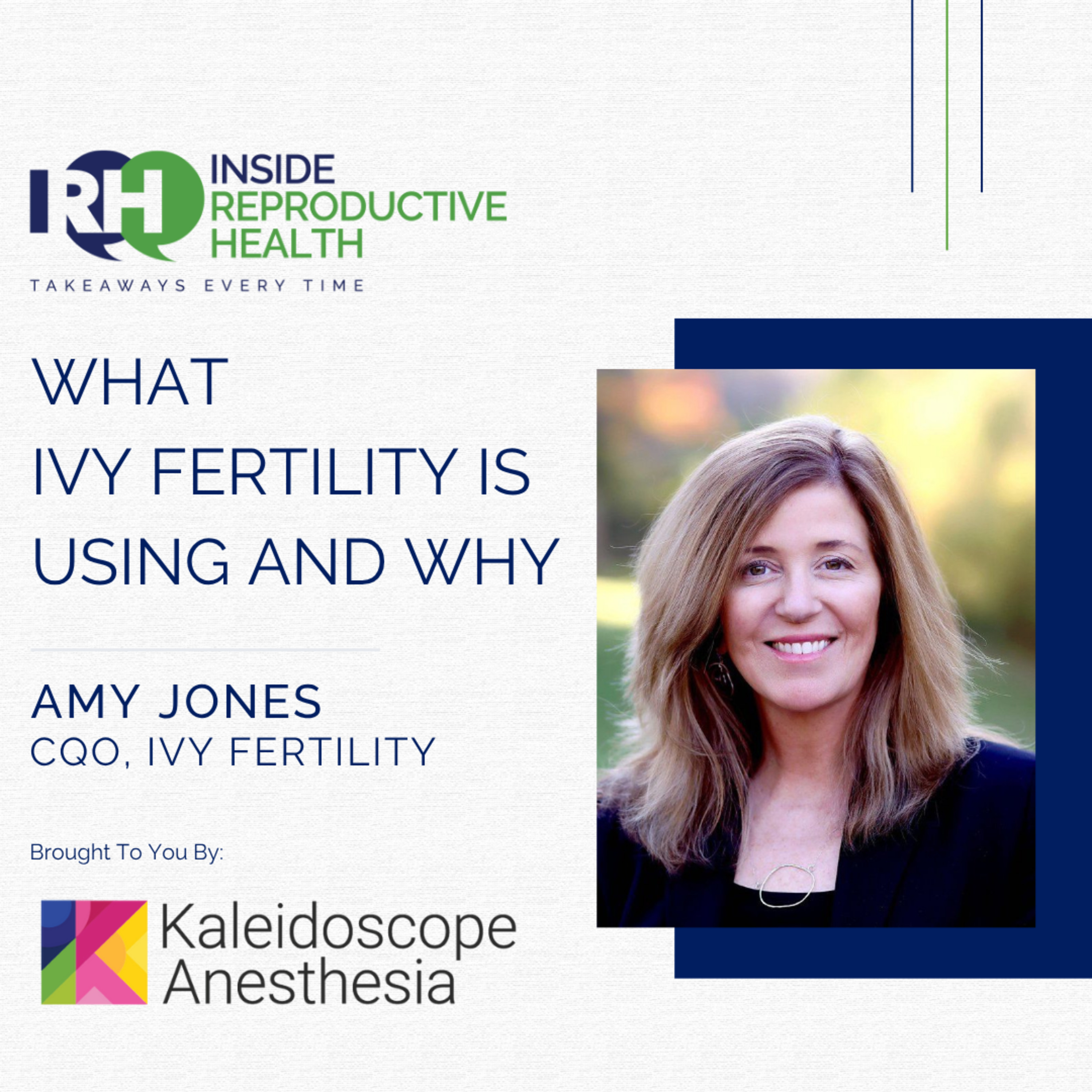 267 What IVY Fertility is Using And Why. Amy Jones | Lab directors, how do you make sure your concerns actually reach ownership?Vendors, how are you being vetted by the groups you serve?This week on Inside Reproductive Health, Amy Jones, Chief Quality Officer of Ivy Fertility, talks about how one of the country’s leading networks evaluates quality, chooses partners, and plans for growth.Amy shares:– The specific criteria Ivy uses to vet vendors for cryostorage and digital witnessing– How they’re implementing an AI solution to compare data across EMRs– The patient concierge platform guiding patients through the IVF journey– Where current patient education tools fall short– The tradeoffs of proactive expansion– And why fertility professionals get into trouble when they stay “too stuck in their own lane” | — | ||||||
| 10/19/25 | 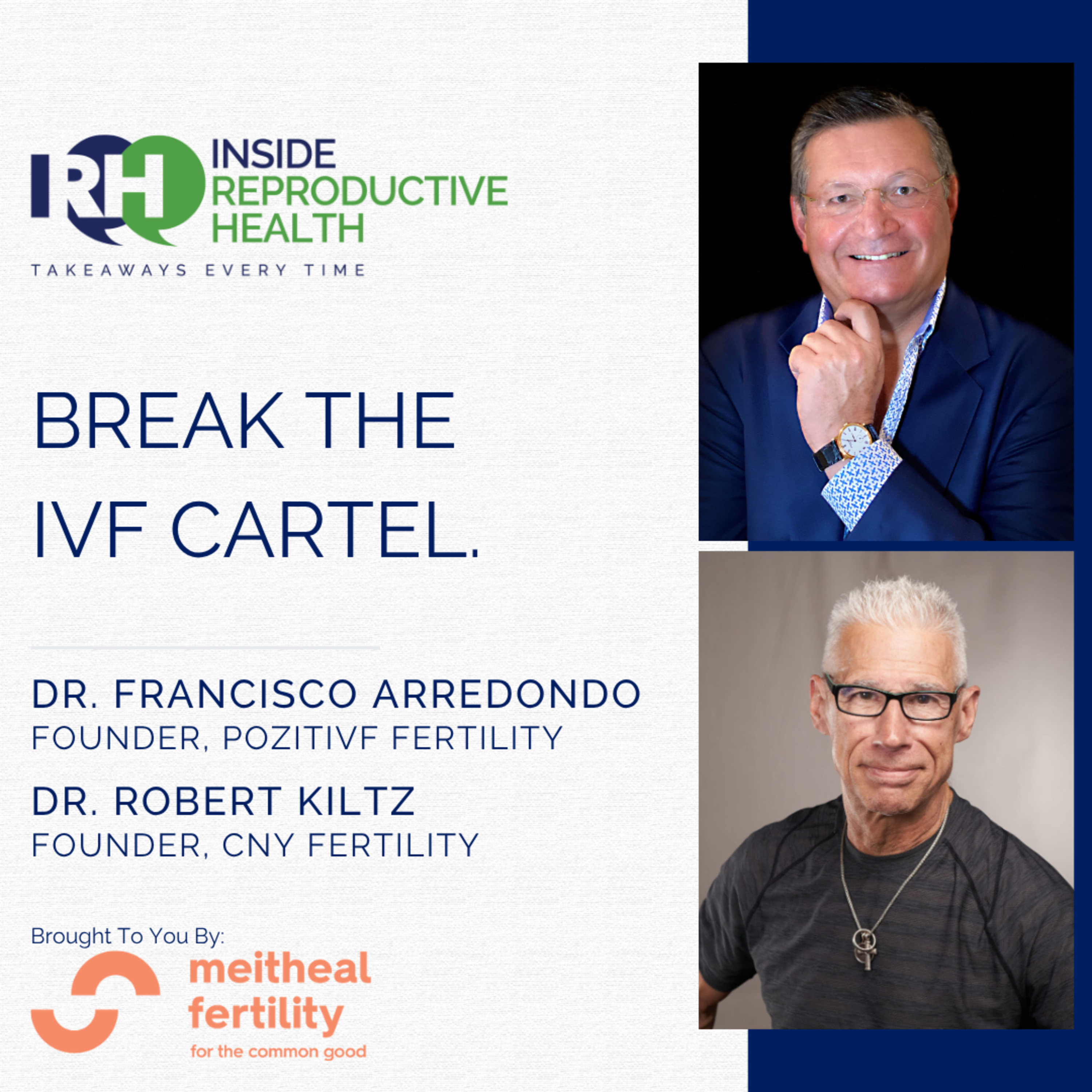 266 Break the IVF Cartel. Dr. Francisco Arredondo, Dr. Robert Kiltz | What’s the definition of a cartel, and has the way we pay for care created one in fertility?This week on Inside Reproductive Health, two practice-owning REIs with very different models join Griffin to push that question hard. Dr. Robert Kiltz (CNY Fertility) and Dr. Francisco Arredondo (Pozitvf IVF & The IVF Academy) dig into the economics, the ethics, and the possible alternatives to the status quo.They discuss:Dr. Arredondo’s argument that today’s IVF system resembles a cartel (and what can be done about it)The right question to ask about access and cost in IVFHow insurance helped create today’s medical-industrial complexDr. Kiltz’s meeting with HHS leadership and what it revealedLessons from Aravind Eye Care in India (Could that model work for IVF?)What the IVF Academy is teaching clinicians about entrepreneurship and sustainable practiceThis episode doesn’t offer easy answers. It’s a clear-eyed conversation about structural incentives, mission, and what it will take to make IVF more affordable and accessible. | — | ||||||
| 10/12/25 |  265 The Leadership Lesson. Dr. Alison Bartolucci. Cara Reymann. | If you’ve ever tried to get doctors, embryologists, and executives on the same page…you’ll want to hear this one.In this episode of Inside Reproductive Health, Dr. Alison Bartolucci (CSO) and Cara Reymann (CEO) of First Fertility talk candidly about leadership, lab management, and network-wide decision-making.They discuss:– The emotional cost of leading a fertility network– When to build consensus (and when to just drive the bus)– The decision to implement digital witnessing across all nine IVF labs– The “magic question” Cara uses to align stakeholders– Why First Fertility abandoned plans for a single EMR– Why Alison swears by using a lab monitoring service (and the business benefits beyond happy embryologists) | — | ||||||
| 10/6/25 |  264 Overwhelmed on a Daily Basis. Fertility Doctors Respond to Genetic Risk. | Overwhelm. Anxiety. Cases that stay with you.That’s how some of the field’s most experienced professionals describe genetics in reproductive medicine today.In this episode of Inside Reproductive Health, we brought together leaders from RMA, CCRM, Shady Grove, and GeneScreen to talk about the genetics overload in modern ART.They talk with Griffin about:The liability landmine that genetics has becomeWhy one lab’s “positive” is another lab’s “negative” (The Panel Paradox)Real cases where rare findings blindsided experienced REIsSmart strategies to stratify counseling (Without missing critical risks)The growing complexity of third-party reproductionThe coming wave of whole genome sequencing and polygenic risk scoresThis isn’t a high-level overview. It’s a blunt conversation about the real risks, broken workflows, and what’s coming next for your lab and patients. | — | ||||||
| 8/31/25 |  263 The Vanishing Fertility Doctor Dream. Drs. Kevin Maas, Cristin Slater, Kyle Tobler | Doctors used to dream not just of earning well, but of controlling how they practiced and how they cared for patients.Doctors Cristin Slater, Kevin Maas, and Kyle Tobler—partners at the independently owned Idaho Center for Reproductive Medicine—explain why that dream feels so far away for many.Here’s what we cover:Why Dr. Maas says he’d never go back to a private equity-owned networkHidden legal clauses & earn-outs that can trap REIsThe tug-of-war between business interests and clinical decisionsHow independent practices can innovate (including the tech they love)The advice they’d give to any fellow or young REI thinking about their future, and how they can still live the dream | — | ||||||
Showing 25 of 285
Sponsor Intelligence
Sign in to see which brands sponsor this podcast, their ad offers, and promo codes.
Chart Positions
1 placement across 1 market.
Chart Positions
1 placement across 1 market.